Antarctic Circle Cruise: Crossing 66 South
 By Oleg G.
Crossing 66 degrees 33 minutes south is the line most Peninsula voyages never reach. Circle itineraries are longer, costlier and a distinct purchasing tier, and the extra days buy a version of Antarctica most visitors never see.
Quick answer: An Antarctic Circle cruise is a Peninsula expedition that pushes south of 66°33′S, usually on a 13-to-20-day voyage rather than the classic 10-to-12-day route. Roster fares for ships sailing these longer itineraries run from $12,236 to $23,020 per person, and the crossing itself is always weather-and-ice dependent.
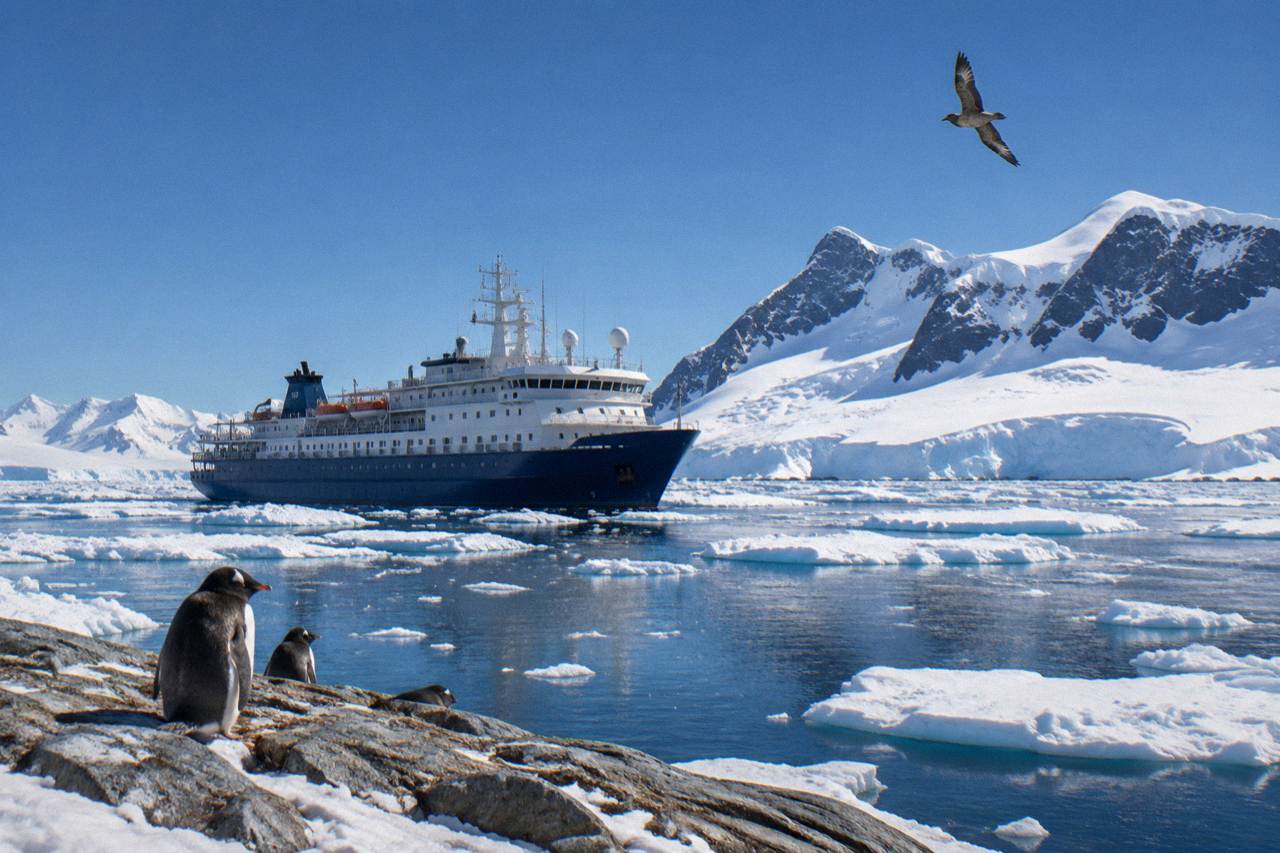
The Antarctic Circle sits at 66 degrees 33 minutes south, and the overwhelming majority of expedition cruises never reach it. The classic Antarctic Peninsula itinerary turns around somewhere in the Gerlache Strait or the Lemaire Channel, hands everyone a penguin colony and a Zodiac landing or two, and heads back north. A Circle itinerary keeps going south, past Detaille Island and the Gullet and into the sparse, high-latitude ice that most visitors to the continent never stand in front of. That extra distance is why these voyages exist as their own purchasing tier: they are longer, they cost more, and they sell a different promise than the standard Peninsula cruise. This guide lays out what the crossing actually involves, which ships on the current roster attempt it, and what the additional days and dollars buy.
What Is The Antarctic Circle And Why Does It Matter?
The Antarctic Circle is the latitude of 66°33′S, south of which the sun stays above the horizon for at least one full day each summer, and reaching it by ship means pushing well beyond the standard Peninsula turnaround. Some 2026-27 itineraries include attempts to cross it as an optional southern extension, which tells you the key fact up front: the crossing is attempted, never guaranteed, because ice and weather decide.
The circle is an astronomical line, not a border post. Nothing marks it on the water. What marks it in practice is sea ice: the farther south a ship sails along the Peninsula, the more late-season pack ice it meets, and the more the itinerary becomes a negotiation between the captain and the conditions. Operators word their Circle itineraries carefully for exactly this reason, and so should any traveller reading one. The Antarctic Treaty System's tourism framework, which concentrates almost all voyages on the Peninsula during the austral summer, is the regulatory backdrop; the ATS notes that roughly 98 percent of all tourism voyages occur in the Antarctic Peninsula region between October and April, and Circle sailing sits at the far southern edge of that footprint.
What the line changes for the traveller is light and solitude. Inside the circle in midsummer you get the true midnight sun, and the landing sites, places such as Detaille Island with its abandoned British survey hut, see a fraction of the traffic of the headline colonies farther north. IAATO's site coordination rules mean only one vessel may visit a landing site at any one time, but the sites south of the circle simply see fewer vessels in a season because fewer itineraries reach them. The trade-off is honest and worth stating plainly: fewer penguins, more ice, more distance, more days at sea.
Which Cruise Itineraries Actually Cross 66 Degrees South?
Circle attempts appear as extended Peninsula itineraries, typically 13 days and up, rather than as a separate route. On the current roster, ships whose voyage-day ranges include the longer sailings capable of a Circle attempt include Ocean Explorer with 8-to-20-day voyages, Sylvia Earle at 12 to 20 days, and Le Boréal at 19 days, alongside the 20-plus-day Falklands and South Georgia combinations that add the Circle as a southern extension.
The way to read an itinerary is to look at the day count first. A 10-to-12-day voyage spends roughly four to six days on landings in the South Shetland Islands and western Peninsula, per operator listings for 2026 departures, and that budget of landing days is consumed before the ship could push meaningfully south of the circle. The classic combos that run 20 to 23 days, Falklands plus South Georgia plus Peninsula, have the slack to attempt the crossing, and fresh 2026-27 route reporting describes Circle crossings as an optional southern extension on exactly these extended sailings. Shorter itineraries that advertise the Circle in their names exist in the market, but they are gambling on fast ice-free passage both ways, and the roster data gives no basis for promising one.
| Voyage length | Typical route | Circle attempt realistic? | Roster examples |
|---|---|---|---|
| 8-12 days | Classic Peninsula, Drake crossing | No, or a lucky technical dip past the line | Ocean Explorer 8-12 day voyages, Sylvia Earle 12 days |
| 13-15 days | Extended Peninsula with southern push | Yes, ice permitting | Sylvia Earle 13-day range, Ocean Explorer upper range |
| 16-20 days | Peninsula plus Circle, or Falklands combos | Yes, with buffer days built in | Ocean Explorer 20 days, Sylvia Earle 20 days, Le Boréal 19 days |
| 20-23+ days | Falklands, South Georgia, Peninsula, Circle extension | Yes, as the optional final leg | Multi-region combinations per operator listings |
The distinction matters commercially as much as logistically. A Circle cruise is a distinct purchasing tier: you are buying three to eight more days of ship time, more fuel, and a lower-probability payoff, and operators price it accordingly. If your heart is set on standing south of 66°33′S, choosing the voyage length that makes the attempt plausible is the single biggest decision, and it is worth getting help weighing the specific departures. A free consultation on Circle itineraries costs nothing and pairs your dates against the ships whose schedules genuinely include the southern push.
What Do The Extra Days South Of The Circle Buy You?
The extra days buy three things: a genuine attempt at the crossing and the midnight sun inside it, quieter landing sites that see far less vessel traffic than the northern Peninsula colonies, and the harder, older ice landscapes of the southern Bellingshausen and Crystal Sound approaches. They do not buy more penguins, because the big colonies sit north of the circle, and they add sea days rather than landing days.
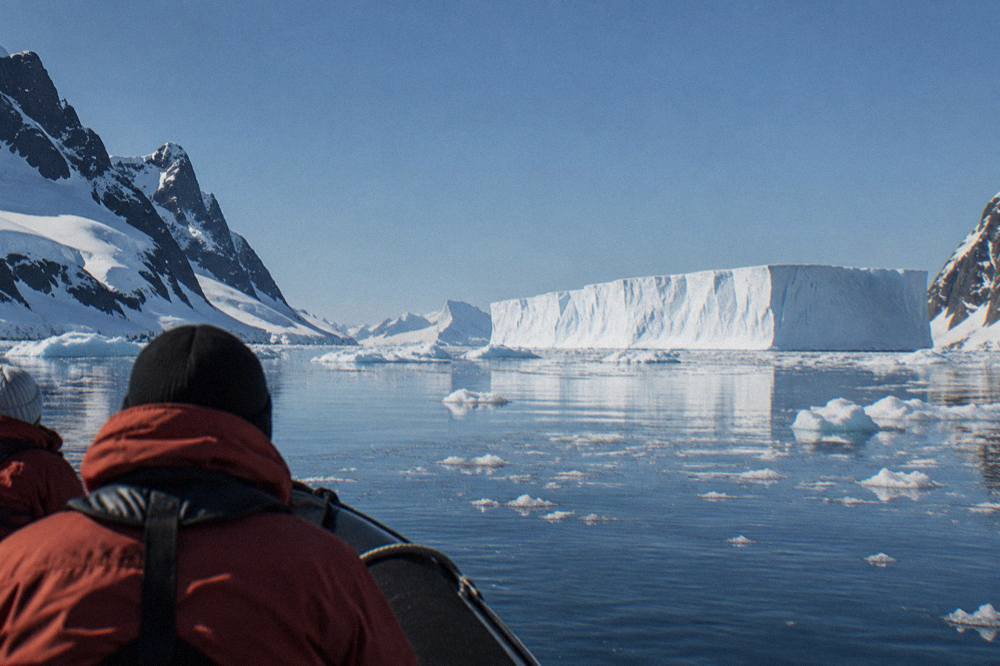
South of the circle the scenery changes character. The mountainous, colony-dotted western Peninsula gives way to broader ice: fast ice clinging to the coastline, tabular bergs calved from shelves, and water that is more often glassy with brash than open. Travellers who have already done a standard Peninsula cruise often choose the Circle itinerary precisely because it is the version they have not seen. First-time visitors should weigh that trade honestly, and our Antarctic Peninsula cruise guide lays out what the classic route delivers so you can compare the two products side by side.
Wildlife timing shifts too, and the season calendar matters more on a Circle voyage because the southern window is narrower. Penguin chicks typically begin hatching mid-December on the Peninsula, with most channels ice-free by January; whale sightings, especially humpbacks, increase from mid-January onward as krill draws marine mammals into Peninsula feeding grounds after the spring sea-ice recession. A January or February Circle departure therefore buys you the best odds of both open southern passages and whale activity, while an early-season attempt buys maximum ice drama and a real chance the ship cannot get through at all.
| What you get | Classic Peninsula (10-12 days) | Circle itinerary (13-20 days) |
|---|---|---|
| Landing days | About 4-6 days of landings | Similar landing count, plus southern attempts |
| Major penguin colonies | Yes, the headline sites | Fewer and smaller south of the circle |
| Midnight sun | Near-constant daylight, brief dusk | True 24-hour sun inside the circle |
| Ice character | Icebergs and seasonal brash | Fast ice, older and heavier ice forms |
| Crossing certainty | Not attempted | Attempted, ice and weather permitting |
| Typical fare tier | Lower, from around $7,050 pp on budget ships | Higher, from $12,236 pp on the ships profiled here |
How Much Does An Antarctic Circle Cruise Cost?
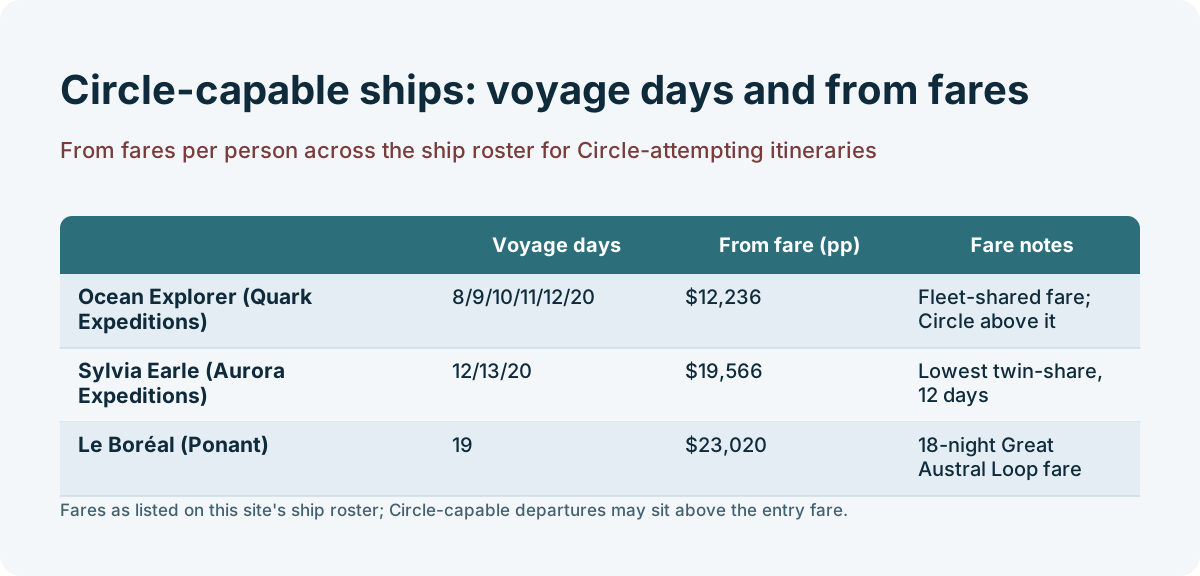
Circle-tier voyages on this site's ship roster run from $12,236 per person on Quark Expeditions' voyage-level fares, shared by Ocean Explorer, Ultramarine and World Voyager, up to $23,020 per person for Le Boréal's 19-night Great Austral Loop, with Aurora Expeditions' Sylvia Earle from $19,566 for a 12-day Peninsula voyage. The longer the voyage, the higher the tier, and the Circle premium is real.
The Quark figure needs careful reading. Quark's fares are voyage-level and shared across three ships, so a "from $12,236" card does not mean Ocean Explorer alone at that price; it means the lowest-listed Antarctic Peninsula voyage across the fleet, and the Circle-attempting departures sit above that entry point. One 2026 cost guide reports that live 2027-28 itineraries across ten lines range from $11,321 to more than $28,500 per person, and that entry-level expedition berths on Drake-crossing itineraries begin at roughly $7,500 to $8,995 for 10-to-11-day voyages in shared cabins. The Circle tier starts above that entry band because you are buying a longer product.
| Ship | Operator | Voyage days on roster | From fare (per person) | Notes on the fare |
|---|---|---|---|---|
| Ocean Explorer | Quark Expeditions | 8/9/10/11/12/20 | $12,236 | Voyage-level fare shared with Ultramarine and World Voyager; Circle-capable departures sit above the entry card |
| Sylvia Earle | Aurora Expeditions | 12/13/20 | $19,566 | Lowest twin-share fare on the ship's Antarctica cards, 12 days; longer sailings higher |
| Le Boréal | Ponant | 19 | $23,020 | Per-person fare on the 18-night Great Austral Loop listing |
Beyond the fare, budget for the surrounding costs. A realistic all-in budget for a 10-to-12-day mid-range Peninsula trip, fare plus flights plus gear plus tips plus insurance, runs $12,000 to $25,000 per person per one 2026 cost guide, and recommended tips average about $16 per person per day. Travel insurance with medical evacuation cover is required or recommended by most operators and is not in the base fare, with major operators imposing high evacuation minimums. Single supplements typically range from 25 percent extra to 1.5-to-2 times the twin rate, though some lines waive them on select sailings. Our full Antarctica cruise cost guide breaks these line items down in detail.
Faced with a spread this wide, most travellers benefit from a second opinion before committing. The consultation is free with no obligation, and it is the practical way to see which Circle departures on which ships fit a specific budget, since several roster ships, including Silversea's and Seabourn's vessels, have no published fare on file at all and a current price genuinely needs a conversation.
Which Ships Sail Circle Itineraries?
On this roster, the ships whose schedules and day counts support Circle attempts include Quark's Ocean Explorer (up to 20-day voyages, 138 passengers, PC6 ice class), Aurora's Sylvia Earle (up to 20 days, 130 passengers, Ulstein X-BOW) and Ponant's Le Boréal (19 days, luxury tier), while Viking's 378-guest Octantis and Polaris and the big-ship lines sail fixed Peninsula routes that do not advertise a crossing.
The comparison that matters is ice class, passenger count and voyage length together. Ice class determines how far south a ship can push into late-season pack; passenger count determines how fast a landing rotation goes, since IAATO rules cap landings at 100 passengers ashore at a time with a 1:20 guide-to-visitor ratio, and vessels over 500 fare-paying passengers cannot make landings at all; voyage length determines whether there is time for the southern push. Ocean Explorer, with PC6 ice class and 138 passengers, and Sylvia Earle, with an X-BOW hull designed for exactly this kind of seakeeping, are the natural Circle platforms on this roster, and Le Boréal offers the same southern reach in the luxury tier. The wider set of guides lives on Cruises In Antarctica.
| Ship | Class | Passengers | Ice class | From, per person | Voyage length | Departs from |
|---|---|---|---|---|---|---|
| Ocean ExplorerQuark Expeditions | Upscale Expedition | 138 | 1A, PC6 | from $12,236 | 8 to 20 days | Ushuaia, Buenos Aires, Punta Arenas |
| Le BoréalPonant | Luxury | 264 | – | from $23,020 | 19 days | Ushuaia, Buenos Aires |
| Sylvia EarleAurora Expeditions | Upscale Expedition | 130 | – | from $19,566 | 12 to 20 days | Ushuaia |
Ocean Explorer deserves its own paragraph because it is the featured ship here for a reason. It carries 138 passengers, holds PC6 ice class, lists voyage days up to 20, and carries 15 Zodiacs with almost all cabins featuring verandas, which on a Circle voyage means you can watch the ice change character from a private balcony on the southern approach. Its listed ports include Ushuaia, Buenos Aires and Punta Arenas, which matters for the fly-and-sail logistics we cover below. The ship's bow-level library is a small thing, but on the longer Circle sailings the sea-day count is higher and the ship itself becomes more of the experience.
When Should You Sail To Maximize The Chance Of Crossing?
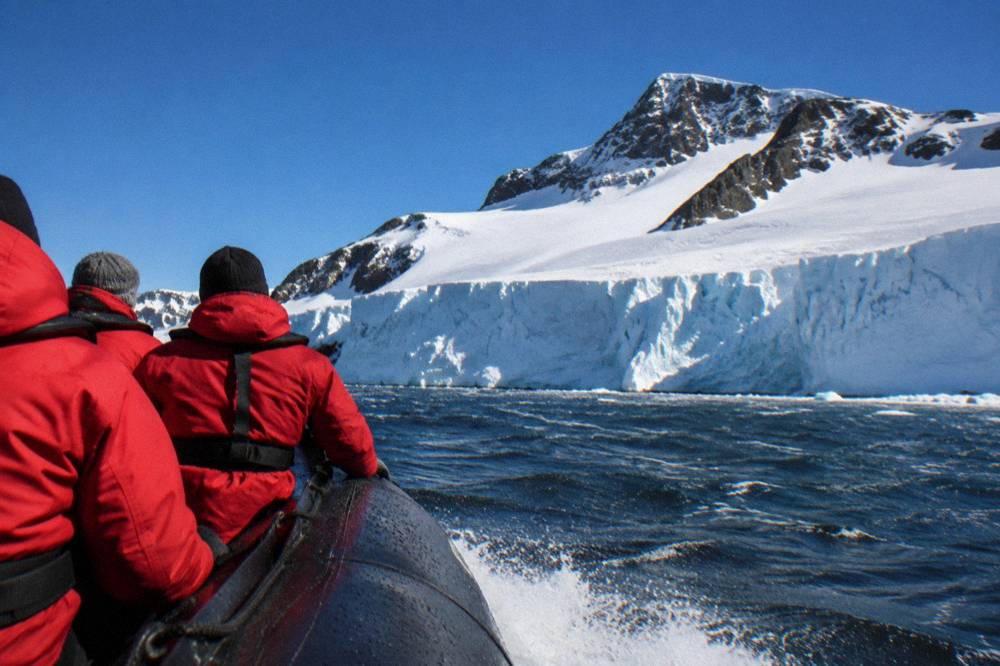
January and February give the best odds of a successful Circle crossing, because most channels and inlets become ice-free by January and February-March peaks for open water, whale activity and photography, while October and November departures offer maximum ice and pristine landings but the highest chance the southern route is closed. No month guarantees the crossing in either direction.
The season runs mid-October to mid-March for Peninsula expedition cruising. Early-season voyages encounter the most impressive sea-ice breakup, and November landings show courting penguins, maximum snow cover and pristine landscapes, but the same ice that makes November dramatic makes a Circle attempt least likely to succeed. By late January the picture inverts: channels are open, humpbacks are feeding in krill-rich waters, and February-March is the window for photography, whale watching and Circle crossings, with adult penguins molting and chicks learning to swim. March adds strong whale activity, humpbacks, minke and orca, but shortens the daylight and starts to refreeze the south.
One caution from the Drake reporting: no single month is significantly better or worse for the sea crossing itself, and conditions remain unpredictable year-round within the season, though December-to-February generally offers more stable windows. That means the month decision should be driven by the Circle odds and the wildlife calendar, not by hopes of a calm passage. Our best time to visit Antarctica guide works through the full month-by-month trade-offs.
How Do You Get To A Circle Cruise And What Are The Rules South Of The Line?
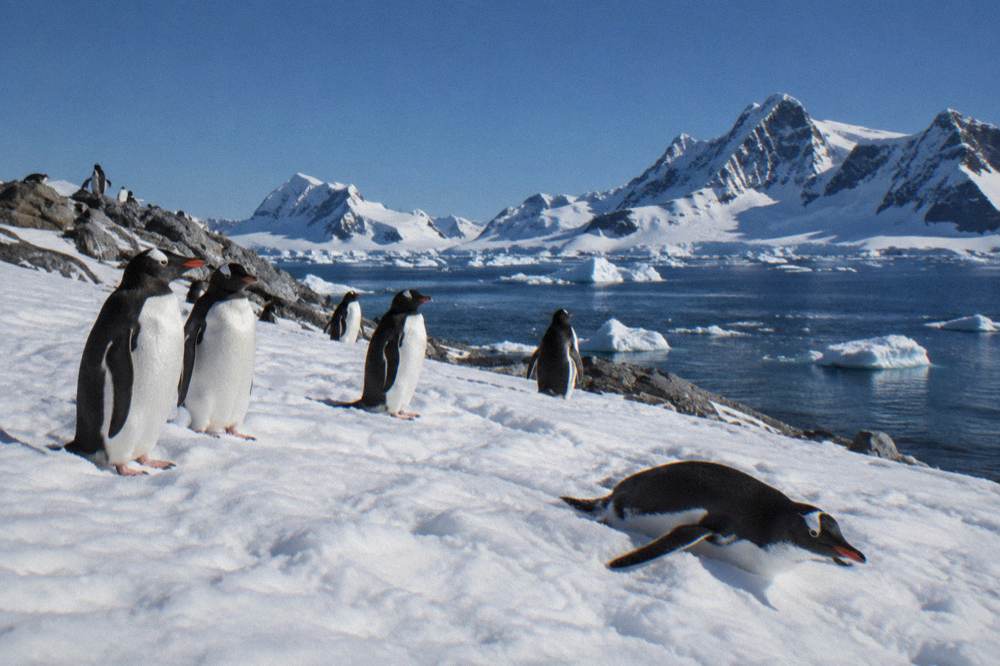
Circle voyages sail from Ushuaia, with Punta Arenas serving the fly-cruise gateway, and US citizens need no visa for Argentina or Chile for stays up to 90 days, just a valid passport. South of the circle the same IAATO rules apply as everywhere else: 100 passengers ashore maximum, 5 metres from wildlife, clean boots and gear between every site, and no drones near wildlife.
The logistics chain is the same as any Peninsula cruise, only longer at sea. US travellers typically route through Buenos Aires, connecting from the international airport to the domestic one for the flight to Ushuaia, with no direct US-Ushuaia flights; schedule data shows the corridor is weather-prone in peak season, and arrival a night or ideally two before embarkation is the standard recommendation. Argentina formally requires health and medical coverage including evacuation for foreign visitors, which aligns with the operator insurance minimums already discussed. The Drake crossing to the Peninsula takes roughly two days each way on a sailing itinerary, per operator guidance, so a Circle voyage's extra days include more of that passage, not less of it.
The rules do not relax south of 66°33′S. Biosecurity procedures, boot washing and gear cleaning between sites, apply throughout, and enhanced avian influenza protocols continue across the 2026-27 season, including pre-landing assessments and restrictions on sitting or kneeling on the ground in wildlife areas. The general visitor guidelines published by IAATO under the Antarctic Treaty framework are the operative document, and a good expedition team will brief all of this before your first landing. For the crossing itself and the sea days around it, our Drake Passage crossing guide covers preparation, conditions and timing in full.
Is An Antarctic Circle Cruise Worth The Extra Days And Dollars?
For a traveller who has already seen the classic Peninsula, a Circle cruise is the clearest upgrade in the market: it buys solitude, harder ice and the midnight sun for a fare premium of several thousand dollars per person. For a first-time visitor, the classic route delivers more wildlife per dollar, and the honest answer is that the Circle itinerary is a second-trip product sold as a first-trip option.
That framing is not a knock on the product. The Circle voyage is simply aimed at a different buyer, one whose priority is the line on the chart rather than the colony count. The market reflects this: extended itineraries carry the highest fares on the roster, and the same cost reporting that shows entry berths at $7,500 to $8,995 shows 2027-28 itineraries ranging up to $28,500 and beyond per person. Early-booking offers for the 2026-27 and 2027-28 seasons commonly reach 10-to-30 percent off per operator calendars, and last-minute discounts exist but are limited in availability and cabin choice, and are uncommon for peak December sailings, which book furthest ahead. If the Circle is the goal, booking early on a Circle-capable departure matters more than on a classic one, because there are fewer of them.
Deciding between the two tiers is exactly the kind of question a second opinion helps with. Talk through the Circle-versus-classic choice with someone who can check the actual departure list before you commit the extra days and dollars.
Common Questions About Antarctic Circle Cruises
Can Any Antarctica Cruise Cross The Antarctic Circle?
No. Most Peninsula itineraries turn around well north of 66°33′S. Circle attempts appear on extended voyages, typically 13 days and up, and even then the crossing is attempted rather than guaranteed, because ice and weather decide.
How Many Days Does An Antarctic Circle Cruise Take?
On this roster, Circle-capable voyages range up to 20 days on Ocean Explorer and Sylvia Earle and 19 days on Le Boréal, while classic Peninsula sailings run 10 to 12 days. The extra days buy the southern push plus more sea time on the Drake crossing.
How Much More Does A Circle Cruise Cost Than A Classic Peninsula Cruise?
Entry-level Peninsula berths begin around $7,050 to $8,995 per person on budget ships, while the Circle-capable ships profiled here start at $12,236 and reach $23,020. The premium reflects three to eight additional days of ship time and a lower-probability payoff.
What Month Is Best For Crossing The Antarctic Circle?
January and February, when most channels are ice-free and whale activity peaks. November offers maximum ice and pristine landings but the highest chance the southern route is closed. No month guarantees the crossing.
Do You See Penguins South Of The Antarctic Circle?
Fewer than on the classic route. The large gentoo, chinstrap and Adélie colonies sit north of the circle; south of it you trade colony density for fast ice, quieter landing sites and the midnight sun.
Which Ships On This Site's Roster Attempt The Crossing?
Ships whose voyage ranges include the longer sailings that support Circle attempts: Quark's Ocean Explorer up to 20 days, Aurora's Sylvia Earle up to 20 days, and Ponant's Le Boréal at 19 days. Fixed short-route ships do not advertise a crossing.