Antarctica Daylight Hours By Month: Midnight Sun And Late Sunsets
 By Oleg G.
Antarctica in summer gets very long days, and the amount changes sharply with latitude and month. Here is what the sun actually does at Ushuaia, the South Shetlands, Port Lockroy and the Antarctic Circle, and what those long days mean for your voyage.
Quick answer: Antarctic daylight runs from roughly 12.5 hours in March to about 24 hours at the Antarctic Circle around the December solstice. Ushuaia sees about 17 hours in December, the South Shetlands about 21 to 24, and Port Lockroy about 21 hours 49 minutes on its longest day. Nearly all voyages run November through March.
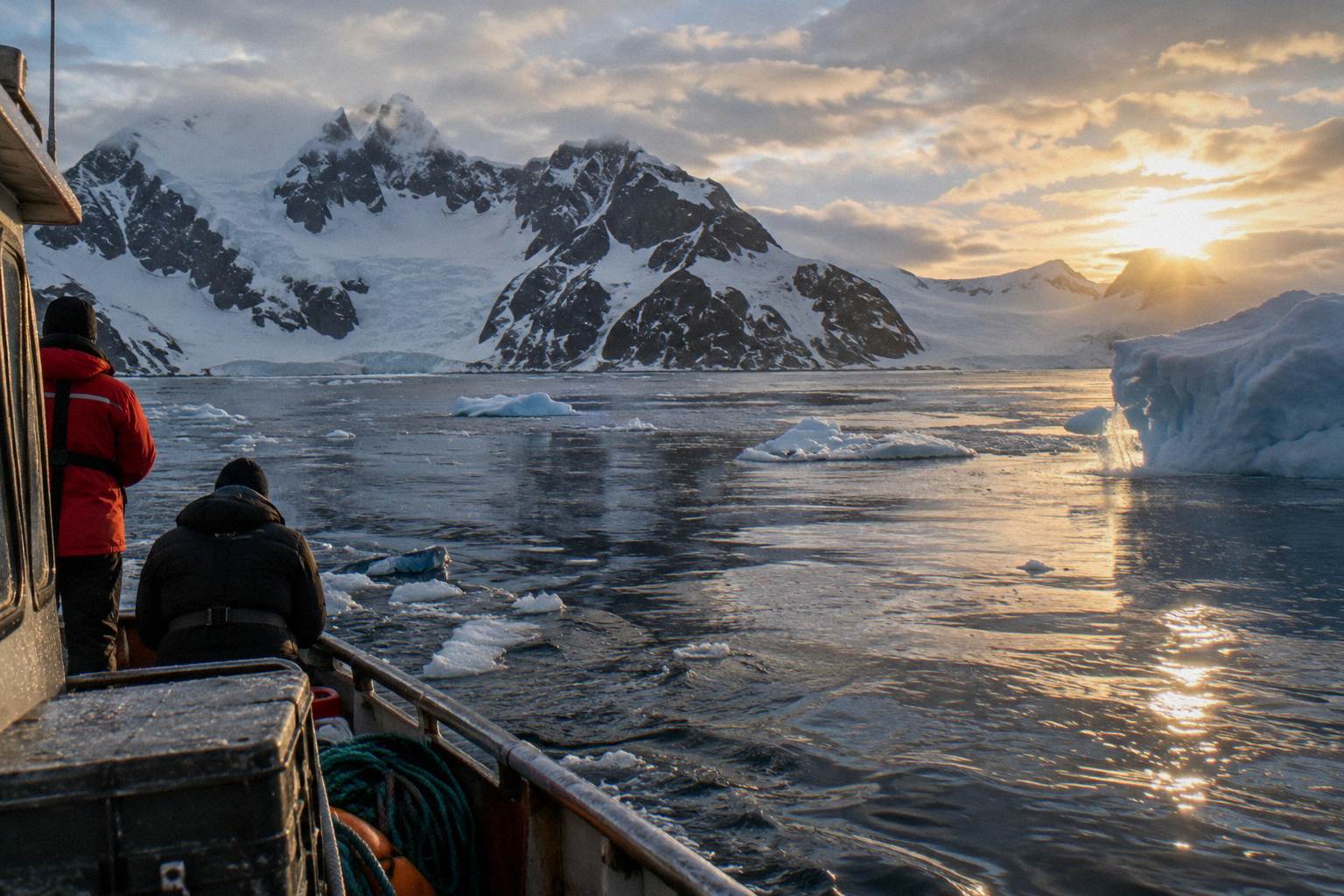
Daylight is one of the biggest differences between an Antarctic expedition cruise and most other trips. At the latitudes where these voyages operate, roughly 62 to 66 degrees south, the summer sun barely bothers to set, and in late December it does not set at all south of the Antarctic Circle. That shapes photography, landings, sleep and even the sailing schedule, because Cruises In Antarctica tends to focus on a season that barely resembles the calendar you know at home.
The tourist season itself is dictated by light. The Antarctic Treaty system notes that approximately 98 percent of all tourism voyages occur in the Antarctic Peninsula during the seven-month austral summer from October to April, according to the Antarctic Treaty's own tourism page. Almost every cabin-selling voyage you will actually book falls inside the November-to-March window, when the Peninsula sees roughly 12.5 to 21 hours of light.
The expedition cruise you are considering is therefore a product built entirely around extreme daylight. This guide sets out what published sunrise and sunset data says about light by month and latitude, when the midnight sun begins and ends, what long days do to landing rhythms and sleep on board, and how to match a ship and month to the light you want.
How Many Hours Of Daylight Does Antarctica Get Each Month?
Across the Antarctic Peninsula, at roughly 62 to 65 degrees south, monthly daylight runs about 17 to 18 hours in November, 19 to 21 hours in December around the solstice, about 18 hours in January, roughly 15 hours in February and about 12.5 hours in March. The further south you go, the steeper the swing: at the Antarctic Circle the sun does not set at all near 21 December. No voyages operate in the dark winter months.
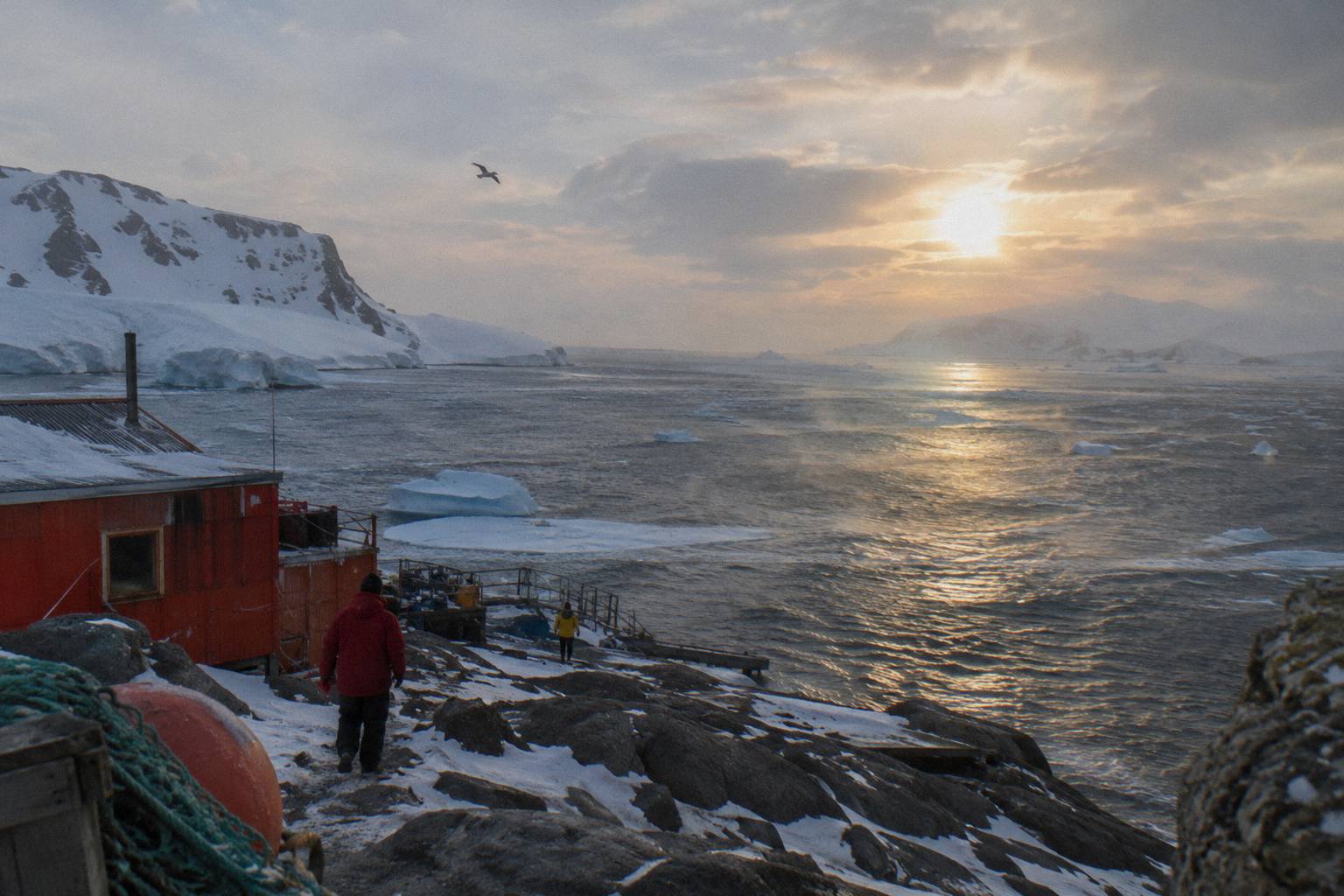
Seasonal reporting puts Peninsula daylight at about 17 to 18 hours in November, 19 to 21 hours in December with the longest days near the solstice, about 18 hours in January, roughly 15 hours in February and around 12.5 hours in March. These are approximate figures for the 62 to 65 degree south band where nearly all Peninsula landings happen, and they compress quickly as you move north. Ushuaia, the main Argentine gateway at roughly 54.8 degrees south, sees about 16 hours in November, around 17 hours 17 minutes to 17 hours 20 minutes in December and about 16 hours 40 minutes in January.
Two practical points follow. First, October and April are shoulder months at the very edges of the season: some operators position or reposition ships in October, but the working season of landings, Zodiacs and penguin colonies is November to March. Second, every one of these months gives you long days, which is worth remembering when you are packing eye masks and deciding how much photography you can realistically do.
| Month | Peninsula daylight (approx.) | What the light is doing | Season notes |
|---|---|---|---|
| November | ~17–18 h | Long days, real sunsets | Shoulder pricing, courtship and nest-building, most sea ice of the season |
| December | ~19–21 h | Near-continuous usable light, midnight sun at the Circle | Peak pricing, more ships operating, egg incubation, chicks from late month |
| January | ~18 h | Very long days, twilight nights | Peak demand, hatching and feeding chicks, whales arriving from mid-month |
| February | ~15 h | Long evenings return | Minimal sea ice, best Circle-crossing odds, whale numbers peak |
| March | ~12.5 h | Ordinary day and night | Late-season fares, fledging chicks, whales still strong, days shorten fast |
The month-by-month detail, including what each month's light means for wildlife and ice, is covered in our best month planning guide. If you already know you want the longest days, the answer is simply December, and specifically the days either side of 21 December.
Daylight Hours By Latitude: Ushuaia To The Antarctic Circle
At their December peak, published tables show about 17 hours 20 minutes of daylight at Ushuaia, roughly 21 to 24 hours in the South Shetland Islands, about 21 hours 49 minutes at Port Lockroy on its longest day, and a full 24 hours of midnight sun at the Antarctic Circle around 21 December. November and January sit just below those peaks, February drops to about 16.5 hours at the Circle, and March shortens everywhere fast.
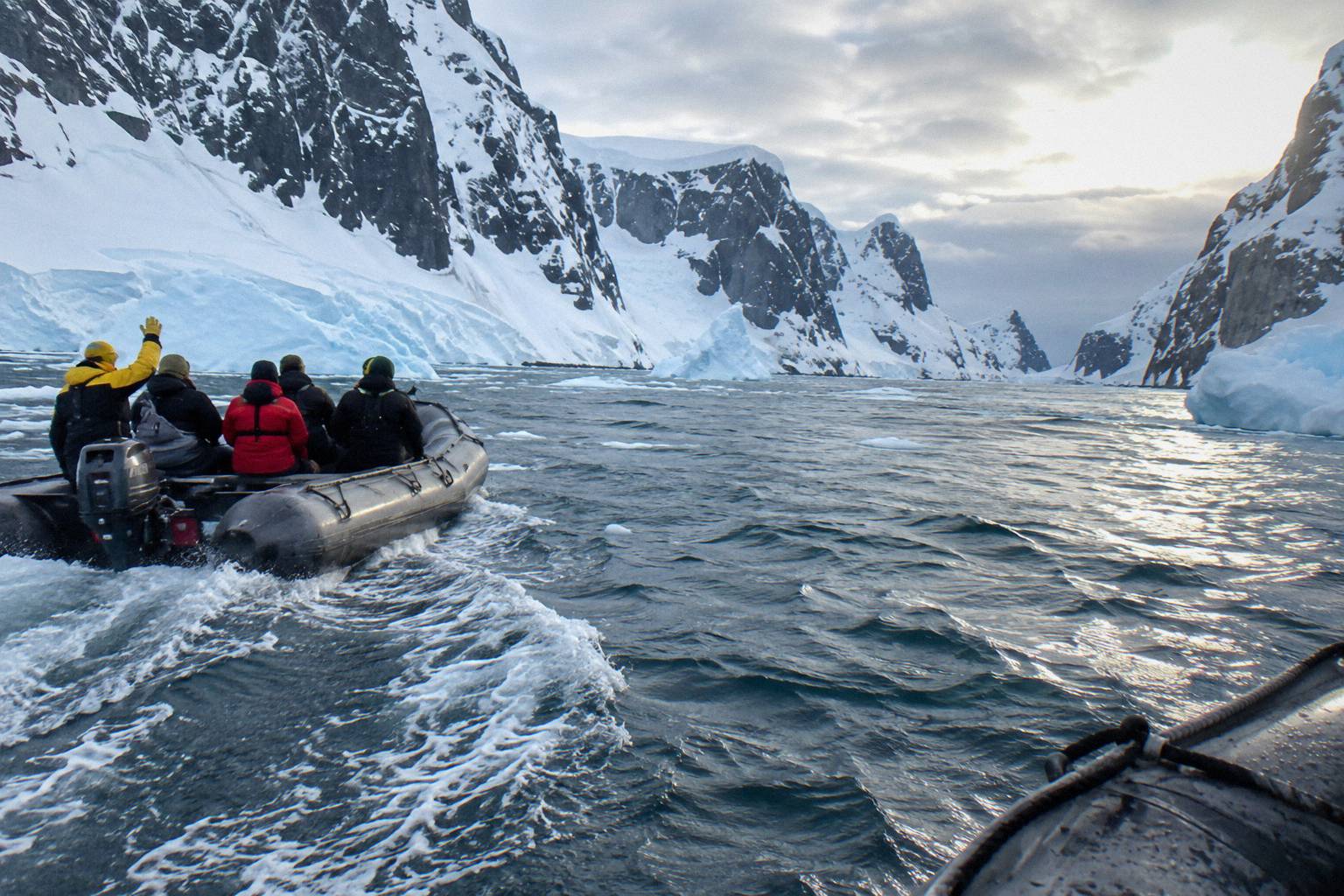
The light you get depends heavily on latitude, and an Antarctic itinerary can string together four quite different light regimes: the gateway city, the South Shetland Islands where most landings begin, the western Peninsula around Port Lockroy, and the Circle itself on the far-south itineraries. Sunrise and sunset data for these exact locations is published at sunrise-sunset.org for Port Lockroy, and the figures below are drawn from that and matching seasonal reporting.
| Location | Latitude (approx.) | November | December | January | February | March |
|---|---|---|---|---|---|---|
| Ushuaia, Argentina | ~54.8°S | ~16 h | ~17 h 17–20 m (longest ~21 Dec) | ~16 h 40 m | Not stated | Not stated |
| South Shetland Islands | ~62°S | ~15–18 h | ~21–24 h | ~19 h | ~15–18 h | Not stated |
| Port Lockroy | ~64.8°S | ~16–20 h range | ~21 h 49 m (longest day) | ~19–20 h | Not stated | Not stated |
| Antarctic Circle | ~66.5°S | ~19 h | up to 24 h, midnight sun | Not stated | ~16.5 h | Not stated |
Two clarifications keep this honest. Port Lockroy's headline figure, about 21 hours 49 minutes on 21 December, is the single longest day at that specific site, not the month-long average. And at the Circle the December entry reads "up to 24 hours" because around the solstice the sun genuinely does not set: that is the midnight sun, and it runs both directions, with roughly 19 hours of light already in November and about 16.5 hours left by February.
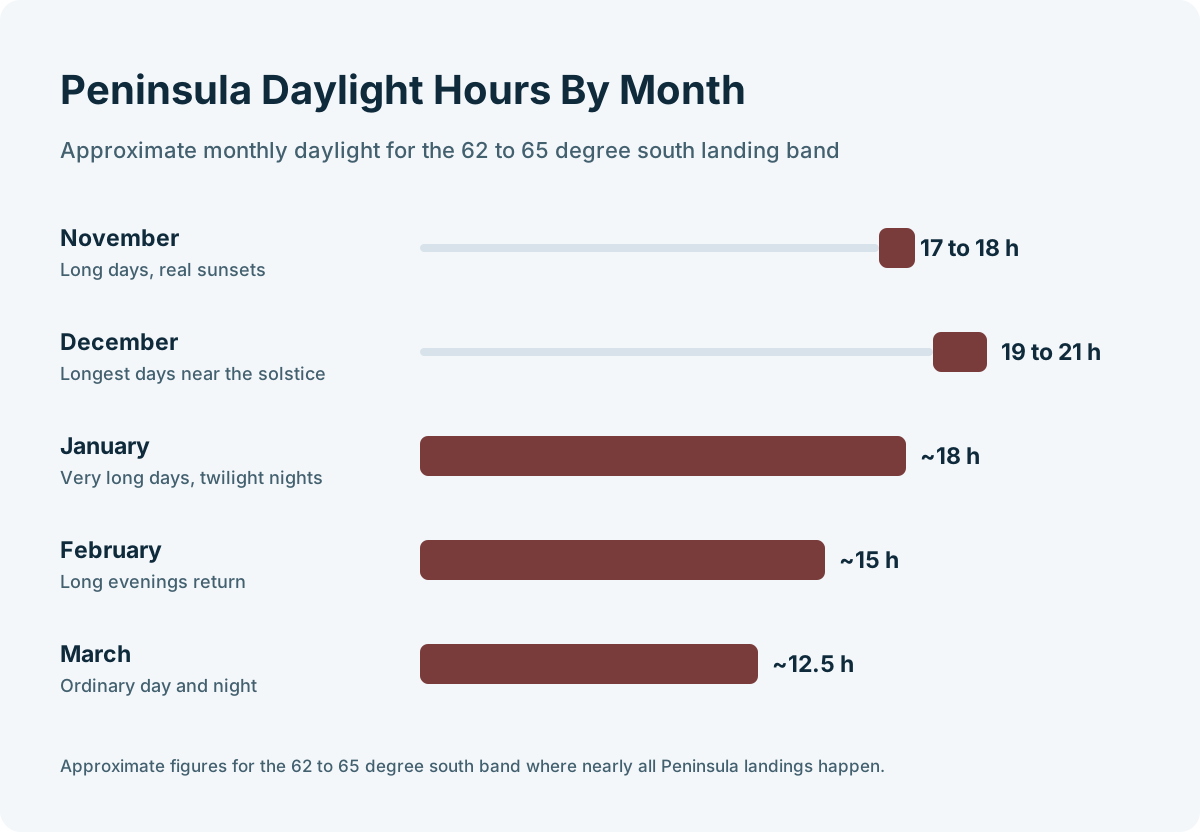
Latitude matters more than most first-timers expect. In November the South Shetlands get around 15 to 18 hours of light while the Antarctic Circle gets about 19, and around the December solstice the sun at the Circle does not set at all. If long, golden evenings are the point of the trip, ask specifically how far south your itinerary reaches, and whether the Circle crossing is a scheduled attempt or a bonus. This is exactly the kind of question a free Antarctica cruise consultation can answer with real itineraries in front of you.
When Is The Midnight Sun Visible In Antarctica?
The midnight sun, meaning a 24-hour period with no sunset, occurs south of the Antarctic Circle around the 21 December solstice, and seasonal reporting puts December daylight at the Circle at up to 24 hours. On the Peninsula proper, at 62 to 65 degrees south, the sun instead skims the horizon late at night without setting, so late December voyages get near-continuous light without true midnight sun.
Midnight sun is a latitude phenomenon, not a continent-wide one. South of 66 degrees 33 minutes south, the sun stays above the horizon for one or more full days around the solstice, which is why the Circle entries in the table above peak at 24 hours. North of that line, which includes almost every classic Peninsula landing site, the sun does set in December, but the sunset is so brief and so shallow that the sky never gets properly dark. At Port Lockroy, daylight peaks at about 21 hours 49 minutes on the longest day.
What this means for an itinerary is simple. Only voyages that push south of the Circle, often called Antarctic Circle or Polar Circle crossings, put you inside the true midnight sun zone, and even then only if you are there close to the solstice. A mid-February Circle sailing gets around 16.5 hours of light and a real night. If a 24-hour sun is on your wishlist, your dates are narrowly defined: around the 21 December solstice, on an itinerary that commits to the crossing.
Remember that the crossing is ice-dependent. Sea ice is at its seasonal minimum in late January and February, which is why many Circle attempts are scheduled then, but those months are precisely when the midnight sun has already ended. You are choosing between maximum light (December) and maximum ice access (February), and the ice does not check your calendar. Our Antarctic Circle cruise guide covers that trade in detail.
What Long Days Mean For Landings And Daily Rhythm
Long daylight stretches the working day rather than multiplying it. IAATO rules cap landings at 100 passengers ashore at a time with a minimum 1:20 guide-to-visitor ratio, and only one ship may visit a site at any one time, so a ship carrying more than 100 passengers still lands by rotation even when the sun is up all night. Ships typically run one or two landings or Zodiac outings a day when conditions allow, not continuously.
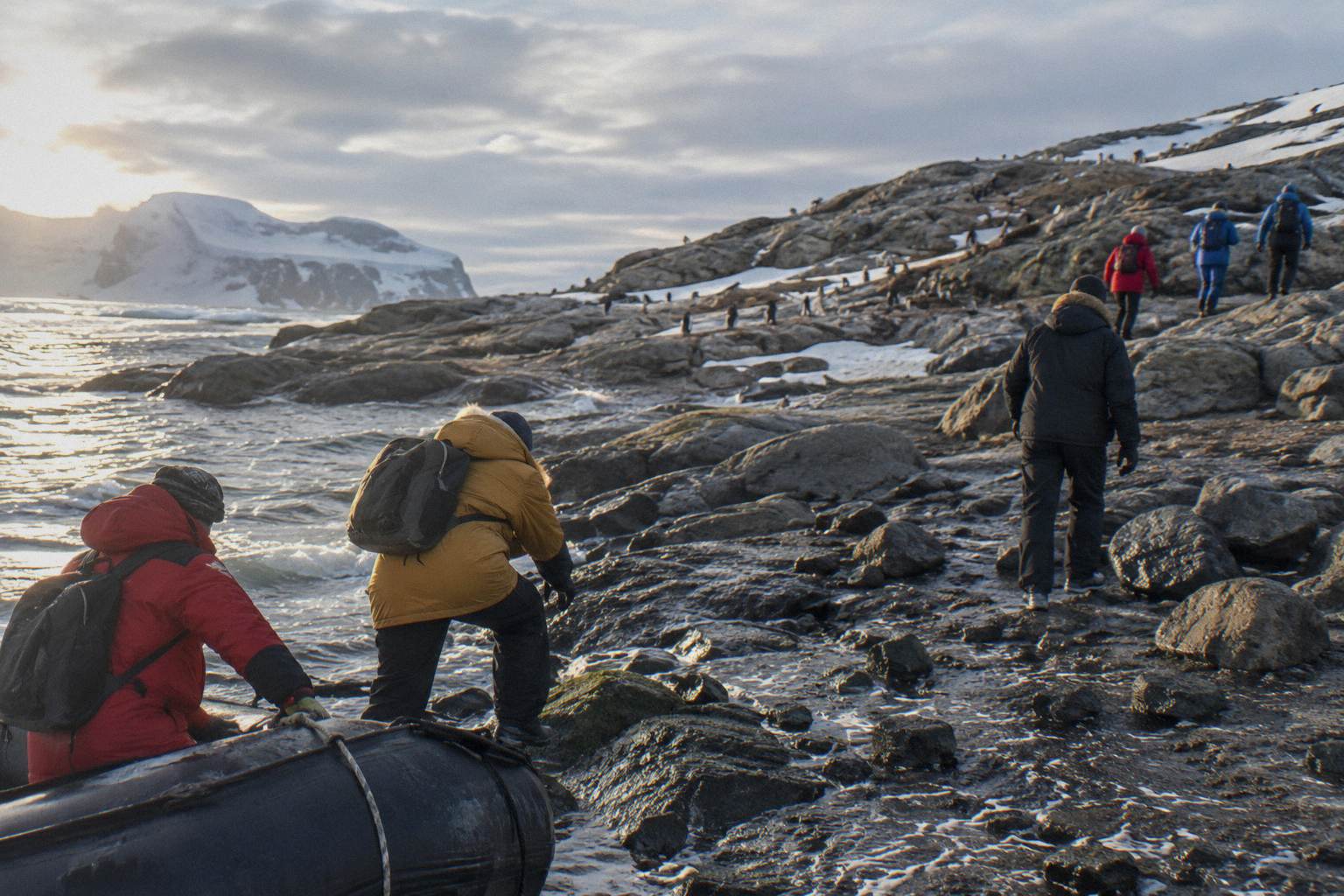
The rules come from the Antarctic Treaty's visitor guidelines, which the International Association of Antarctica Tour Operators enforces among its members: a maximum of 100 passengers ashore from a vessel at any one time unless site-specific guidance requires fewer, a minimum ratio of one actively guiding staff member per 20 visitors, and only one ship per site at a time. The current figures are published by IAATO. In the 2025-26 season, IAATO recorded 113,518 total visitors, of whom 85,195 landed on the continent or nearby islands, so site scheduling is a genuine constraint even in a very long day.
The practical rhythm on board is that light is a resource the expedition team spends deliberately. On a 200-passenger ship, the 100-ashore cap means everyone cannot land at once, so the day runs in rotations, and the team picks the hours when wind, swell and site protection line up best. In December the long light gives the team more hours in which to find that window.
Smaller ships bend this less awkwardly. On ships of 100 guests or fewer, one landing can put the whole complement ashore at once inside the 100-passenger cap, which means less rotation maths and more time per person on the ice. If the rhythm of landings matters more to you than onboard amenities, ship size is worth thinking about before you book, and it is exactly the kind of question a free consultation can help you sort through with real schedules in front of you.
Sleeping And Recovery When The Sun Barely Sets
Bring an eye mask and ask your operator how cabins are darkened: Peninsula daylight runs about 19 to 21 hours in December and about 18 in January, so nights are short or absent. Treating sleep as something you schedule, rather than something darkness prompts, is the practical answer.
The physiological problem is straightforward. Human sleep timing responds to light, and at Port Lockroy's roughly 64.8 degrees south in late December the sun sets for barely a couple of hours. Seasonal reporting on Peninsula conditions describes near-24-hour daylight in January and temperatures around 0 to 3 degrees Celsius in the January-to-March stretch, which leaves your body clock with little darkness to work with. An eye mask is cheap insurance.
| Sleep factor | What to expect in November | What to expect in December | What to expect in January | What to expect in February |
|---|---|---|---|---|
| True darkness at night | Yes, short nights | Barely, or not at all | Brief at best | Returning properly |
| Peninsula daylight (approx.) | ~17–18 h | ~19–21 h | ~18 h | ~15 h |
| Antarctic Circle daylight | ~19 h | Up to 24 h | Not stated | ~16.5 h |
| Suggested kit | Eye mask | Eye mask, scheduled naps | Eye mask, scheduled naps | Eye mask |
The second half of the problem is that the light is good in the evening. With the sun up so long, activities can run late into the evening when conditions allow. A practical approach is to decide your sleep window before the day starts, decline the optional late activity when you are running empty, and treat the mandatory briefings as fixed points around which you schedule rest. The ship will not stop for your nap.
Nobody should plan a December voyage assuming they will sleep badly, but if you are genuinely sensitive to light when sleeping, that is a real factor to weigh against the month you choose, and it is worth saying plainly to whoever helps you book: November or March gives you darkness back, December does not.
Which Ships And Months Suit Light-Hungry Travellers?
For maximum light, December around the solstice is the answer, ideally on an itinerary that attempts the Circle. For maximum affordability, November and March offer shoulder pricing, with about 17 to 18 hours of Peninsula light in November and about 12.5 in March. Small ships such as Hondius keep landing rotations simple, while Quark's Ultramarine adds helicopters and 20 Zodiacs; the right choice depends on whether light, activity or price leads your list.
Take the ships on this site's roster as concrete examples, because the fare differences are large. Oceanwide Expeditions' Hondius, a 107.6-metre Polar Class 6 vessel built in 2019 and the first-registered Polar Class 6 ship in the operator's own wording, carries 170 passengers in 80 cabins from Ushuaia, with Peninsula voyages listed from about $7,800 per person. Quark Expeditions' Ultramarine carries 199 passengers on 128 metres with an internal Zodiac hangar for 20 Zodiacs and two twin-engine Airbus H145 helicopters on two helidecks, with Antarctic Explorer voyages from about $12,236 per person, a voyage-level fare shared with World Voyager and Ocean Explorer. Oceanwide's Ortelius, a 1989-built former Russian research vessel of 90.95 metres carrying 108 passengers in 50 cabins, sails from Ushuaia with Peninsula voyages from about $7,800 per person as well.
| Ship | Operator | Class | Passengers | Length | Ice class | Peninsula fare from |
|---|---|---|---|---|---|---|
| Hondius | Oceanwide Expeditions | small-ship budget | 170 | 107.6 m | Polar Class 6 (1A-Super) | ~$7,800 pp |
| Ultramarine | Quark Expeditions | upscale expedition | 199 | 128 m | 1A+, PC6 | ~$12,236 pp |
| Ortelius | Oceanwide Expeditions | small-ship budget | 108 | 90.95 m | UL1 (equivalent to 1A) | ~$7,800 pp |
The two Oceanwide ships sit in the small-ship budget class, which is where daylight meets affordability most comfortably. Both Hondius and Ortelius sail from Ushuaia, and their 11-day Peninsula formats are the lowest-priced way into the long-day latitudes among the three ships here. We cover Hondius in detail on its dedicated ship page, and the comparison table below lines up all three ships side by side.
| Ship | Class | Passengers | Ice class | From, per person | Voyage length | Departs from |
|---|---|---|---|---|---|---|
| HondiusOceanwide Expeditions | Small-Ship Budget | 170 | Polar Class 6 | from $7,800 | 11 to 19 days | Ushuaia |
| UltramarineQuark Expeditions | Upscale Expedition | 199 | 1A+, PC6 | from $12,236 | 12 to 14 days | Buenos Aires, Ushuaia |
| OrteliusOceanwide Expeditions | Small-Ship Budget | 108 | UL1 | from $7,800 | 11 to 25 days | Ushuaia |
Match the ship to the month, not just to the price. A December departure on any of these vessels gives you the solstice light; a March departure costs less and returns your evenings, at the price of about 12.5 hours of light and dropping temperatures. The month question is genuinely a trade-off. If you would like help weighing a specific December sailing against a cheaper March one, a free consultation can put both in front of you with no obligation.
Does More Daylight Mean A Better Antarctic Experience?
Not automatically. Long light stretches the photography day and softens evenings, but December also carries peak pricing, more ships operating and penguin colonies mostly still incubating eggs rather than chasing chicks. November offers pristine snow and cheaper fares with fewer hours; late January and February deliver whale abundance and accessible ice with the midnight sun already gone. The honest answer is that the best light month and the best wildlife month are not the same month.
Seasonal reporting is consistent on this: whale sightings, especially humpbacks, increase from mid-January onward, and whale numbers peak in February to March in krill-rich Peninsula waters, while penguin chicks hatch from mid-December and form crèches later in the season. Sea ice is at its minimum in late January and February, opening southern routes and making Circle crossings more feasible, precisely when the 24-hour light has faded. December, meanwhile, brings more ships to the Peninsula, with holiday departures carrying a visible premium.
So the question to ask yourself is what the light is for. If it is for photography, the long golden December evenings win, and you should pay the December fare knowingly. If it is for whales and ice access, February is your month, and 16 hours of light is still more than any equatorial summer day. If it is simply to stand on the continent for the least money, November or March on a budget-class ship does that with change left over.
Our month-by-month breakdowns, including the January versus February comparison and the November versus December comparison, work through those trade month by month. And if the crossing rather than the light is what worries you, the Drake Passage guide covers sailing time and conditions separately.
Common Questions About Antarctica Daylight Hours
How many hours of daylight does Antarctica get in December?
Around 17 hours 20 minutes at Ushuaia, roughly 21 to 24 hours in the South Shetlands, about 21 hours 49 minutes at Port Lockroy on its longest day, and up to a full 24 hours of midnight sun at the Antarctic Circle near the 21 December solstice.
When is the midnight sun in Antarctica?
South of the Antarctic Circle, 66 degrees 33 minutes south, the sun stays above the horizon around the 21 December solstice. North of the Circle, including nearly all Peninsula landing sites, the sun sets briefly in December and the night never gets fully dark.
Does it ever get dark on an Antarctic cruise?
In December and January on the Peninsula, true darkness is brief or absent, and November nights are short. February brings roughly 15 hours of daylight with real nights returning, and March drops to about 12.5 hours with ordinary dark evenings.
Which month has the most daylight in Antarctica?
December, peaking at the solstice. January is a close second at the same latitudes, but only December puts the midnight sun within reach on itineraries that cross the Antarctic Circle.
How do you sleep on an Antarctic cruise with 20-hour days?
Bring an eye mask, ask your operator how cabins are darkened, and schedule sleep deliberately, because the light lasts late into the evening in December and January.
Do daylight hours affect how many landings I get?
Indirectly. IAATO caps landings at 100 passengers ashore at a time with a 1:20 guide ratio and one ship per site, so the day is organised in rotations regardless of light. Long December days give the team more windows to schedule around weather, rather than more landings by right.
More Season And Wildlife
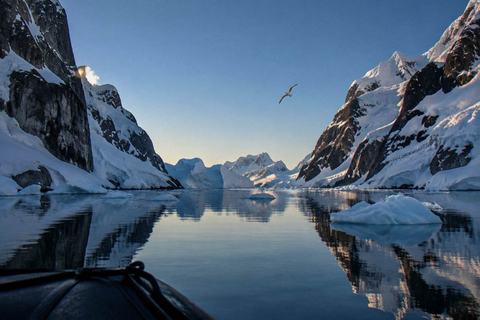 Best Time To VisitMonth by month through the Antarctic season: wildlife, ice, light and price compared.Read the guide
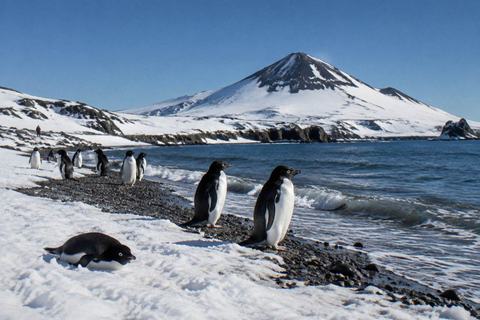 Antarctica WildlifePenguins, whales and seals by month: what to see, when to go, and which route and ship to book.Read the guide
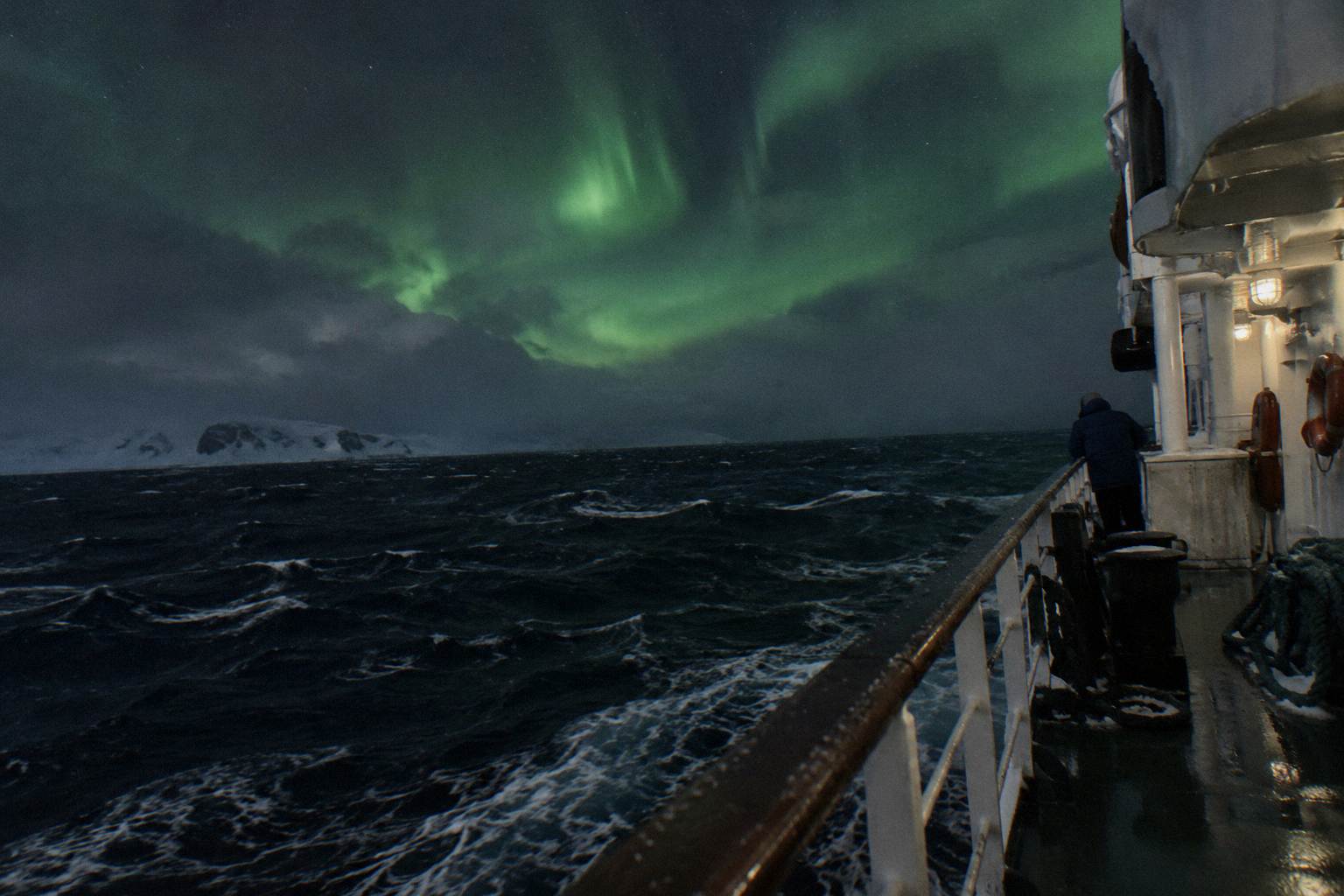 Southern Lights At SeaWhich Antarctic sailings give you a real night sky, and which never will.Read the guide
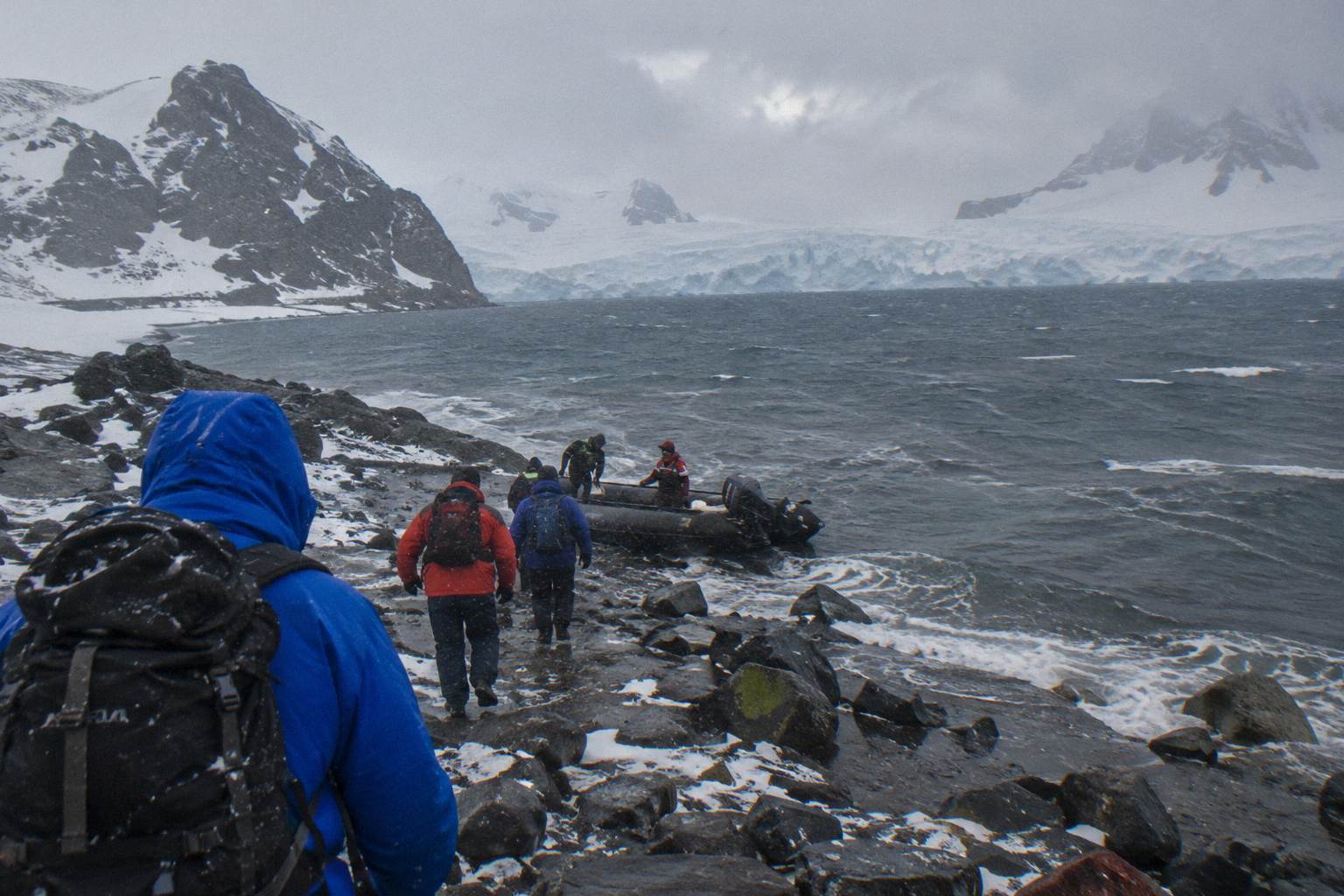 Snow Vs RainRain does reach the Antarctic Peninsula in summer. Here is what to expect and how to pack for it.Read the guide