South Georgia, Falklands And Antarctic Cruises
 By Oleg G.
South Georgia island is the wildlife engine of the longest Antarctic itineraries: an 18-to-22-day cruise that pairs the Falklands, South Georgia island and the Antarctic Peninsula, and the one that serious wildlife travellers save for.
Quick answer: The classic combo runs 18 to 22 days from Ushuaia and pairs the Falklands, South Georgia island and the Antarctic Peninsula in one voyage. Fares on the roster run from $7,800 per person on Oceanwide's Hondius to $26,780 per person on Ponant's Le Lyrial, and the best wildlife window is November to February.
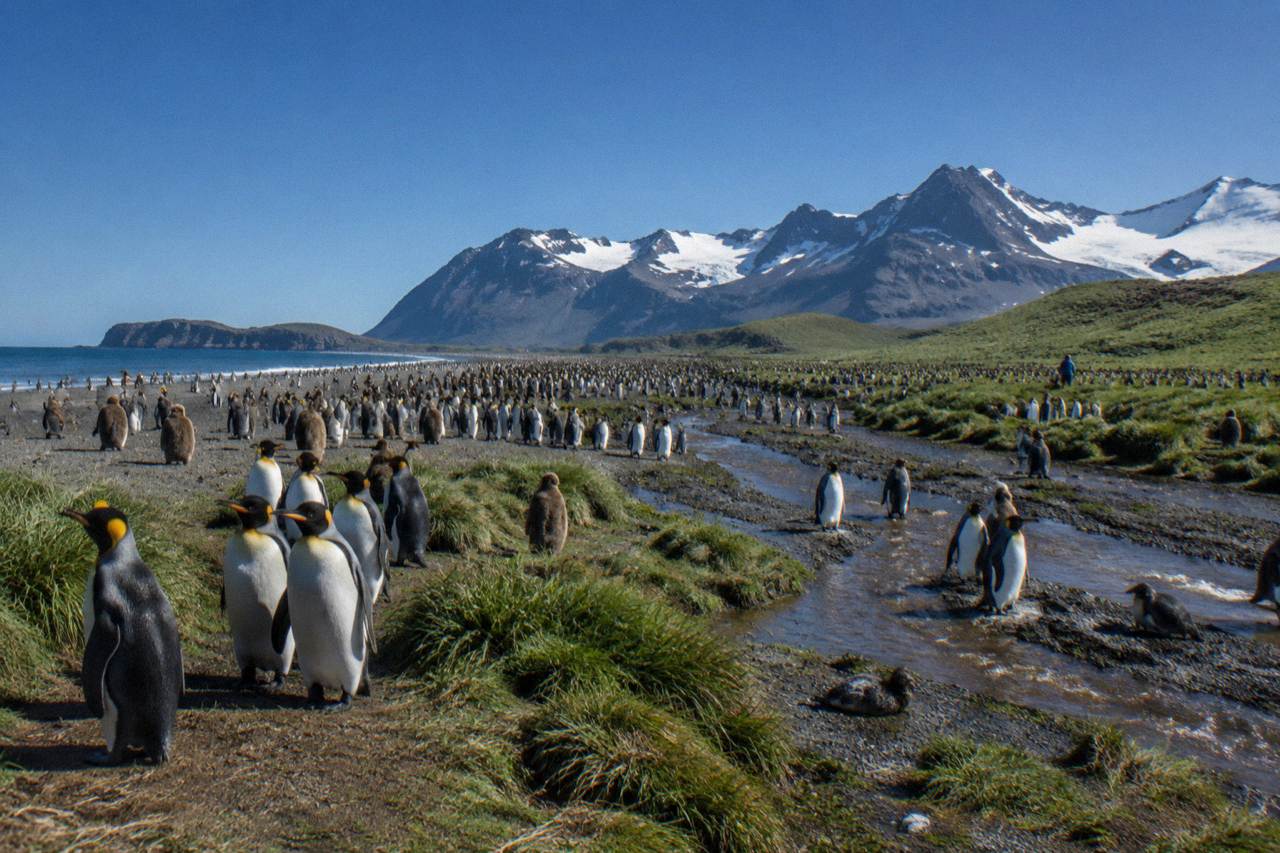
South Georgia island sits east of the Antarctic Peninsula across the Scotia Sea, a remote British territory of glaciers and tussock grass that hosts some of the densest wildlife concentrations on the planet. No cruise ship sails there on its own. Every itinerary that calls at South Georgia bundles it with the Falkland Islands and the Antarctic Peninsula, producing the 18-to-22-day combination voyage that the content map for this site treats as the premium wildlife itinerary in Antarctic cruising. It is the cruise that trades a short Peninsula sprint for king penguin colonies measured in the hundreds of thousands of pairs.
That trade has a price, in days and in dollars. This guide covers what the itinerary actually looks like, which ships on the current roster sail it, what the published fares run, and when to time a departure around the wildlife calendar.
What Is South Georgia Island And Why Do Cruises Include It?
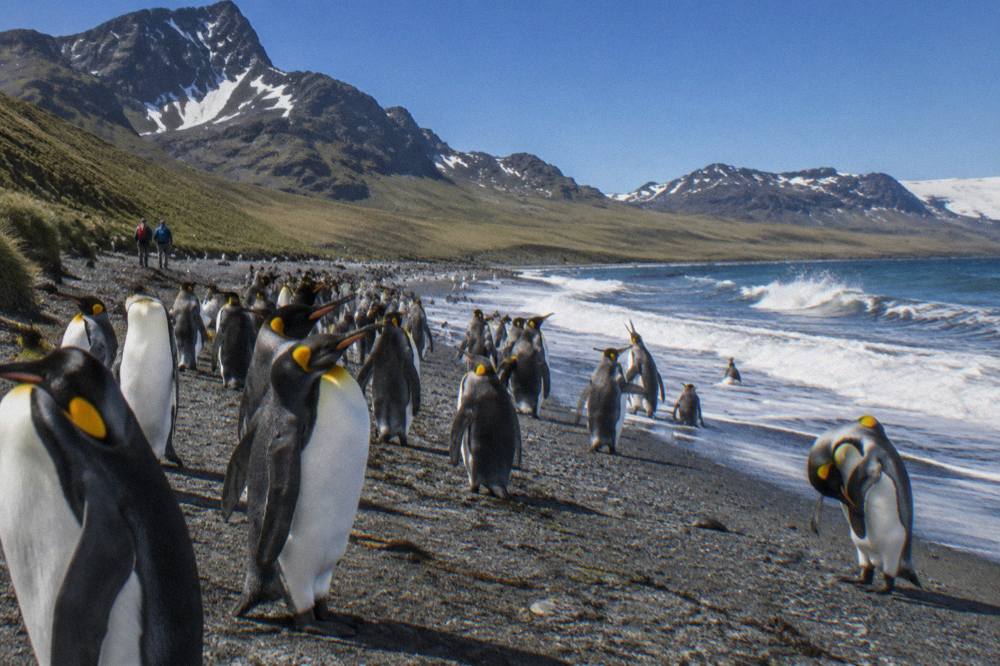
South Georgia is a sub-Antarctic island with no permanent residents, reachable only by ship or expedition aircraft, and cruise itineraries include it because its wildlife density dwarfs anything on the Antarctic Peninsula itself. King penguin colonies at sites like St. Andrews Bay hold roughly 250,000-plus pairs, and the island also carries huge fur seal and elephant seal populations. It is the difference between a good wildlife cruise and an extraordinary one.
The scale is hard to overstate. Poseidon Expeditions' own South Georgia page describes the St. Andrews Bay colony at more than 250,000 king penguin pairs, and the island's beaches in summer are fringed with fur seals in numbers that force landing parties to plan routes around them. The Antarctic Treaty system counts the island as sub-Antarctic rather than Antarctic proper, which is why the itineraries that include it are longer: the ship has to cross the Scotia Sea to reach it, then cross again to reach the Peninsula.
For a sense of how the wildlife differs from the Peninsula route, our Antarctica wildlife cruise guide covers what a Peninsula-only sailing delivers. South Georgia adds king penguins, which barely appear on the Peninsula at all, plus the breeding spectacle of fur seals and elephant seals in the austral summer. The Antarctic Peninsula cruise guide explains the shorter route in detail.
IAATO's 2025-26 season figures recorded 85,195 landed visitors across the whole Antarctic region, and only a fraction of those voyages reach South Georgia, because the crossing adds days that most short itineraries do not have. The island is the preserve of the long itineraries.
What Does The Falklands, South Georgia And Peninsula Itinerary Look Like?
A typical combo voyage runs 18 to 22 days round-trip from Ushuaia and divides into four blocks: the northeast run to the Falklands, the Scotia Sea crossing to South Georgia, two to four days of South Georgia landings, then the Drake Passage crossing to the Peninsula before returning. Roughly half the voyage is open-sea transit, which is exactly why the itinerary rewards a comfortable ship.
The exact split varies by operator. Ponant's Le Lyrial sails an 18-day Great Austral Loop that includes the Falklands and South Georgia before the Peninsula. Lindblad's National Geographic Endurance lists 21- and 22-day voyages in its 2026-27 range, the longest itineraries on its Antarctic schedule. Oceanwide's Hondius lists a 19-day voyage among its Antarctic departures, the longest of its three listed lengths.
A representative day-by-day shape, drawn from how these voyages are structured across operator listings:
| Segment | Typical days | What happens |
|---|---|---|
| Ushuaia to Falkland Islands | 2-3 | Northeast across the Patagonian Shelf, often with seabirds following the ship |
| Falkland Islands | 1-2 | Landings at settlements and penguin colonies, often including gentoo and king penguins |
| Scotia Sea crossing | 2-3 | Open-ocean transit toward South Georgia, lectures and wildlife watching from deck |
| South Georgia | 2-4 | Landings at king penguin colonies, seal beaches and historic sites including Grytviken |
| Scotia Sea to Peninsula | 2-3 | Southwest transit, temperature drop, first icebergs |
| Antarctic Peninsula | 4-6 | Zodiac landings and cruising among the South Shetlands and western Peninsula |
| Drake Passage return | 2 | North to Ushuaia, or a fly-back option on some hybrid itineraries |
The South Georgia days are the centrepiece, and operators schedule them mid-voyage so the ship can flex around weather. The island's landing sites sit on the exposed northeast coast, and the same weather systems that make the Scotia Sea crossing memorable decide how many landings actually happen. A voyage with four planned South Georgia days may deliver three good ones; that is normal expedition behaviour, not a failure of the operator.
If the open-sea share worries you, the Drake Passage crossing guide covers what the crossing is actually like, and our piece on whether the Drake Passage is dangerous puts the risk in context. The Scotia Sea legs are typically calmer than the Drake but longer in total.
Which Ships Sail South Georgia Island In The 2026-27 Season?
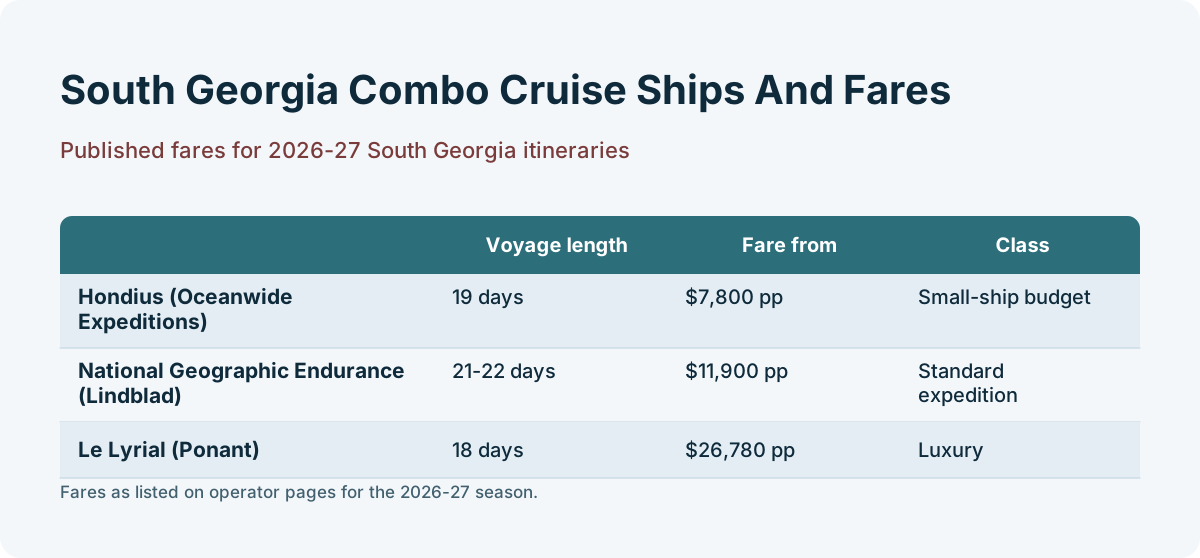
Three roster ships stand out for this route: Oceanwide's Hondius, which lists a 19-day Antarctic voyage from $7,800 per person; Lindblad's National Geographic Endurance, whose 21- and 22-day itineraries start at $11,900 per person; and Ponant's Le Lyrial, whose 18-day Great Austral Loop is listed from $26,780 per person. All three confirm 2026-27 schedules on their operator pages.
The class differences matter more on a 20-day voyage than on a 10-day one, because you live with the ship for three weeks. Hondius is a small-ship budget option, 170 passengers in 80 cabins, built in 2019 and the first vessel registered to Polar Class 6, a designation the operator notes with some pride. For a long itinerary the budget tier is a legitimate choice: the money goes into days on the water rather than into the spa.
Our Hondius guide covers the ship in detail, and the card below summarises the essentials.
At the other end, Le Lyrial is a Ponant luxury vessel of 245 passengers, and its 18-day Great Austral Loop fare of $26,780 per person buys French-line service levels across the same geography. Lindblad's National Geographic Endurance sits between: 138 guests, a PC5 ice class, the patented X-Bow hull, and a National Geographic photography framing that suits a wildlife-heavy itinerary. Its 12-day Peninsula voyage starts at $11,900, and the longer South Georgia itineraries price above that.
The comparison table below lines the three up side by side.
| Ship | Class | Passengers | Ice class | From, per person | Voyage length | Departs from |
|---|---|---|---|---|---|---|
| HondiusOceanwide Expeditions | Small-Ship Budget | 170 | Polar Class 6 | from $7,800 | 11 to 19 days | Ushuaia |
| National Geographic EnduranceLindblad Expeditions (with National Geographic) | Standard Expedition | 138 | PC5 | from $11,900 | 12 to 22 days | Ushuaia |
| Le LyrialPonant | Luxury | 245 | – | from $26,780 | 18 days | Ushuaia, Buenos Aires |
One planning note on ship size: IAATO rules cap landings at 100 passengers ashore at a time, with a minimum 1-to-20 guide-to-visitor ratio, and vessels carrying more than 500 passengers cannot make landings at all. All three of these ships land well inside those limits, which is the point of the expedition format. The rules come from the Antarctic Treaty's visitor guidelines, which also set the general 5-metre wildlife distance that South Georgia's dense colonies make very hard to keep without careful route planning.
If the ship choice feels like the biggest decision in front of you, a free South Georgia cruise consultation can walk through the operator differences with no obligation.
How Much Does A South Georgia Combo Cruise Cost?
Published fares on the roster run from $7,800 per person for Oceanwide's Antarctic voyages including the 19-day South Georgia route, through $11,900 per person for Lindblad's itineraries, to $26,780 per person for Ponant's 18-day Great Austral Loop on Le Lyrial. One 2026 cost guide reports realistic all-in budgets of $12,000 to $25,000 per person for a mid-range trip once flights, gear, tips and insurance are added.
The fare ladder is steep but legible. The budget tier buys the same landings as the luxury tier; what changes is cabin size, service level, and how much of the fare is bundled. Lindblad, for instance, bundles a pre-cruise Buenos Aires hotel, the charter flight to Ushuaia, alcoholic beverages, prepaid gratuities and an expedition jacket, which narrows the real gap between its headline fare and the budget lines' all-in cost. Our Antarctica cruise cost guide breaks the full budget down.
| Ship | Operator | Voyage length | Published fare from | Class |
|---|---|---|---|---|
| Hondius | Oceanwide Expeditions | 19 days | $7,800 pp | Small-ship budget |
| National Geographic Endurance | Lindblad Expeditions | 21-22 days | $11,900 pp (12-day Peninsula voyage) | Standard expedition |
| Le Lyrial | Ponant | 18 days | $26,780 pp | Luxury |
Two cost facts from the current research are worth holding onto. Single supplements across the industry typically run from 25 percent extra up to 1.5 to 2 times the twin rate, though some lines waive them on select sailings. And travel insurance with medical evacuation cover is required or recommended by most operators and is never in the base fare; operators set their own minimum evacuation-cover amounts, and one insurance comparison notes that proof is often required pre-departure or at check-in. Our Antarctica travel insurance guide covers that in depth.
Early-booking offers for the 2026-27 and 2027-28 seasons commonly reach 10 to 30 percent off according to operator calendars, and last-minute discounts exist but are limited in cabin choice and uncommon for peak December sailings. A long South Georgia itinerary is a bigger commitment than a Peninsula hop, and the booking dynamics reflect that.
When Is The Best Time For Wildlife On South Georgia?
King penguin breeding activity on South Georgia peaks November to January, with eggs laid from late November by early breeders and chicks forming creches by January, and seal pup viewing is best from mid-December to January on South Georgia and the Falklands. November brings fur seal mating rituals; December and January bring the chicks; February and March bring higher fur seal abundance on the Peninsula side of the trip.
The island's wildlife calendar does not line up neatly with the Peninsula's, which is why the combo itinerary exists in the first place. In November, king penguins lay eggs on South Georgia while fur seals engage in mating rituals there, and Adélie and gentoo penguins on the Peninsula are still in courtship and nest-building mode. By late December the king penguin chicks are hatching and forming creches, and the Peninsula colonies hatch their own chicks in late December and January. Other pages covering the same trip are gathered on Cruises In Antarctica.
| Month | South Georgia | Antarctic Peninsula |
|---|---|---|
| November | King penguins laying eggs, fur seal mating, courtship everywhere | Courtship and nest-building, snow still deep |
| December | Chicks hatching, creches forming by late month | Penguin chicks hatching from mid-month |
| January | King penguin creches at peak, elephant seal activity | Chicks growing, channels ice-free, humpbacks increasing |
| February | Adult moult beginning, colonies still dense | Molting adults, chicks learning to swim, whales peaking |
| March | Colonies thinning, fur seal abundance high | Fledging shags, strong whale activity |
The trade-off is weather and ice. Early-season voyages get maximum snow cover and pristine landscapes but colder conditions, with Peninsula temperatures in November that one expedition source puts as low as minus 5°C. January to March brings near-24-hour daylight and Peninsula temperatures of 0-3°C, plus the whale peak: humpback sightings increase from mid-January onward as krill draws whales to the feeding grounds. Our best time to visit Antarctica guide works through the full season logic.
For a South Georgia combo specifically, the November-to-January window is the strongest on wildlife grounds, and most operator departures cluster there anyway. If your priority is whales rather than penguin chicks, a February departure serves you better on the Peninsula half of the voyage.
What Are Landings On South Georgia Actually Like?
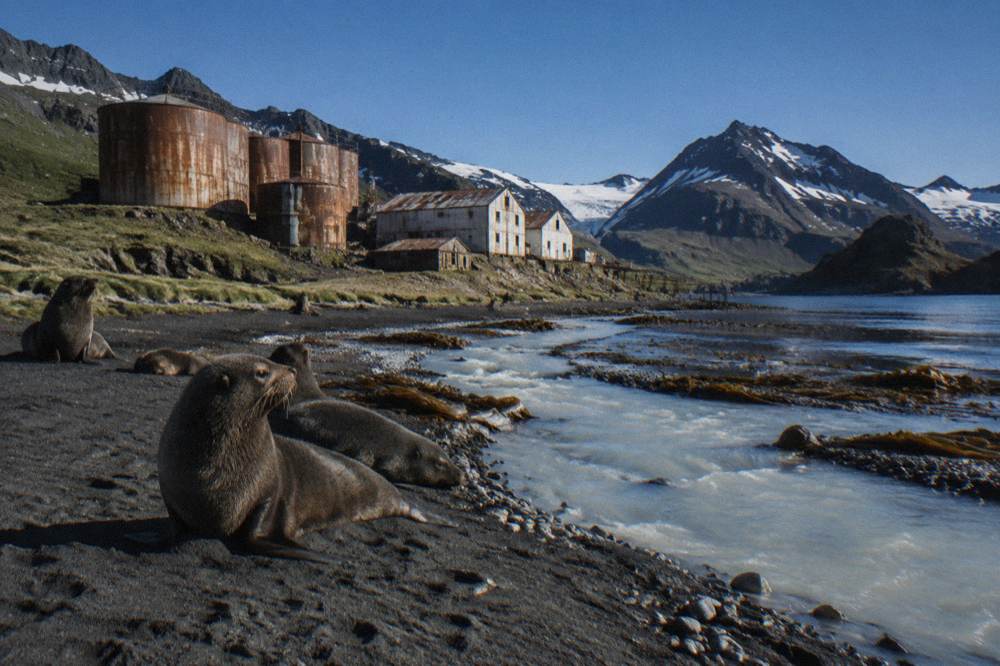
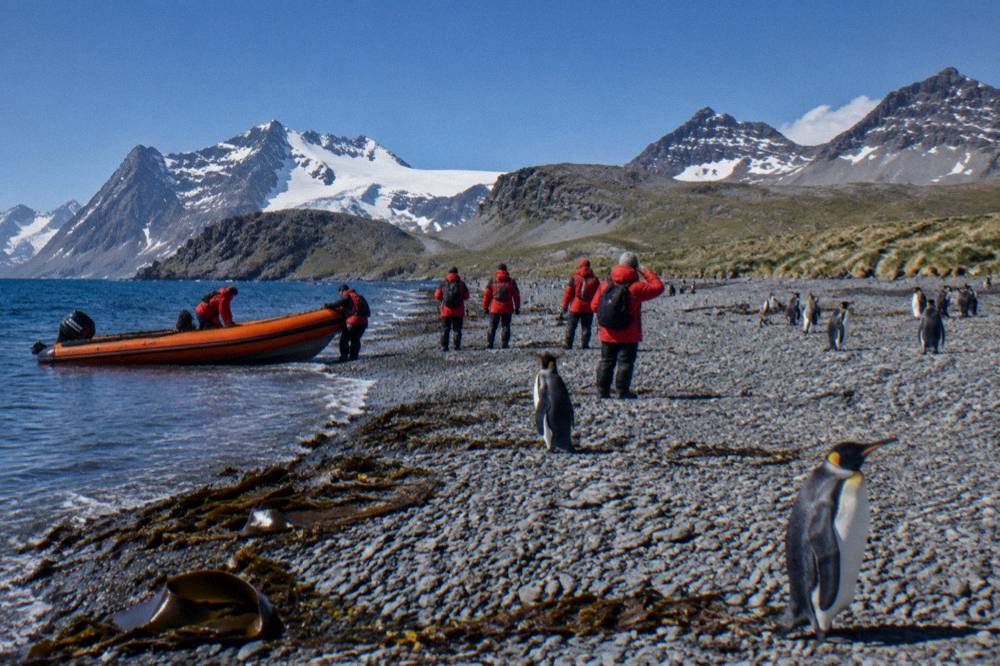
Landings are Zodiac beach arrivals on shores that can hold tens of thousands of animals, governed by the same IAATO rules as Peninsula landings: 100 passengers ashore at a time maximum, a 1-to-20 guide ratio, a general 5-metre wildlife distance, and boot-cleaning biosecurity between every site. The colonies are so dense that the guide-to-guest ratio matters more here than anywhere else in the region.
The biosecurity piece is not optional. The Antarctic Treaty visitor guidelines require travellers to carefully wash boots and clean all equipment, including clothes, bags, tripods and walking sticks, before bringing them to Antarctica, and to clean again between sites. On South Georgia that routine runs several times a day, because the island's sites are ecologically distinct from one another and the operators are strict about cross-contamination.
Wildlife behaviour also shapes the landings. Fur seals are abundant on the beaches, and expedition staff brief guests on giving them space before every landing. The general 5-metre rule from the visitor guidelines applies, with greater distances for nesting birds, moulting penguins or stressed animals, and in a colony of a quarter-million king penguins the practical skill is finding a route that keeps the distance without blocking the penguin highways between beach and colony.
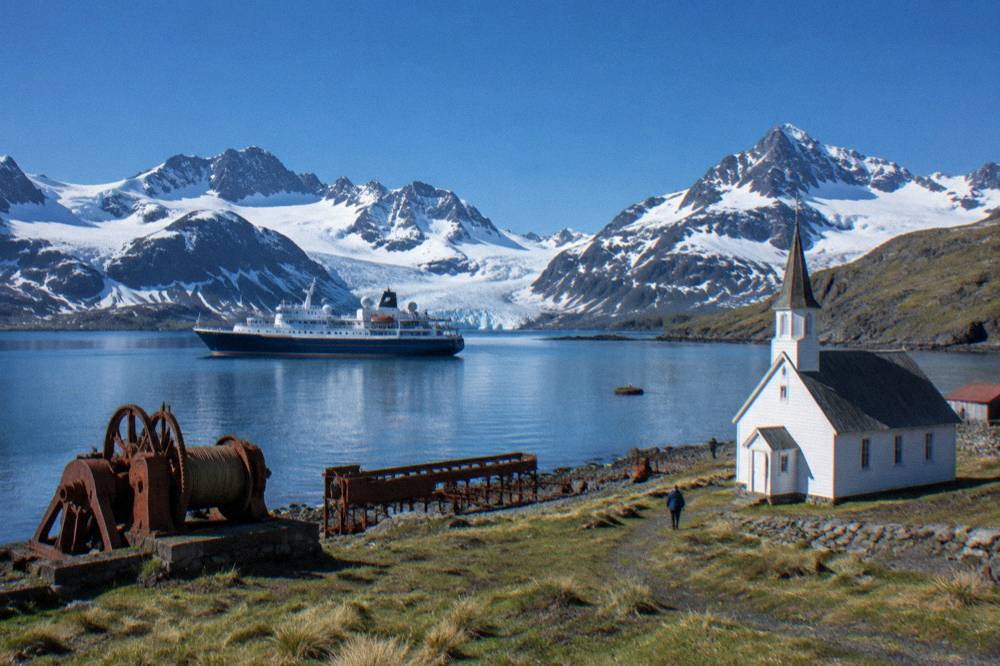
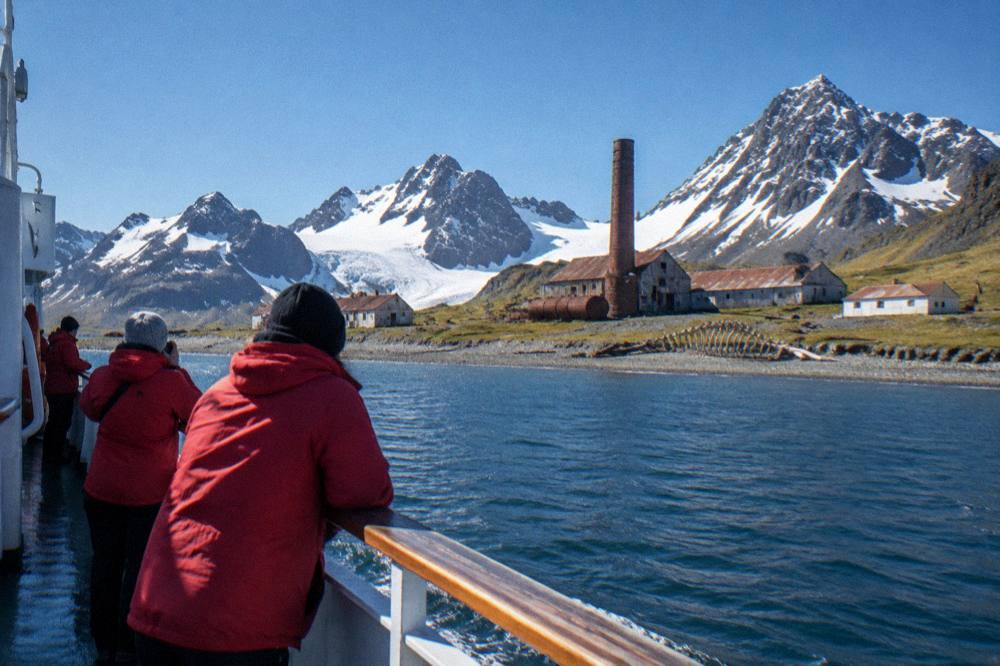
Sites with current or recently updated ATCM and IAATO guidelines include well-known names across the region, and South Georgia's most visited landings, places like Salisbury Plain, St. Andrews Bay and Grytviken, are managed under the same one-ship-at-a-time coordination that IAATO's scheduler enforces across the Antarctic Treaty area. Grytviken adds a historical layer the Peninsula cannot match: the abandoned whaling station and Shackleton's grave are part of most itineraries.
Is The Long Itinerary Worth It Against A Peninsula-Only Cruise?
The honest answer is that the combo costs roughly 60 to 100 percent more than a Peninsula-only voyage on the same ship class and adds about ten days, and it is worth it specifically for king penguins, the seal beaches and the sense of a genuine expedition rather than a highlights reel. If those do not move you, the shorter cruise delivers the ice and the gentoos for far less.
The Peninsula-only comparison is straightforward. The same operators that run 18-to-22-day combos run 10-to-13-day Peninsula voyages, and the roster's Peninsula fares start at $7,050 per person on Plancius against the $7,800 South Georgia tier on Hondius, though the fare difference widens sharply once you compare like-for-like lengths. The real cost is the extra fortnight of your life, plus the open-sea transit that comes with it.
What you get for that is geography almost no other cruise product offers. South Georgia's colonies have no equivalent on the Peninsula, and the Falklands leg adds a third ecosystem. Our blog piece on whether an Antarctica cruise is worth it works through the value question for the shorter trips, and the reasoning scales: the more the wildlife drives the trip, the stronger the case for the long itinerary.
One thing I would say from two years of comparing these voyages is that the people who regret the long itinerary are rarely the ones who found it expensive; they are the ones who did not want the sea days in the first place. If three weeks aboard a ship sounds like a price rather than a pleasure, the Peninsula route is the honest choice.
If you are weighing the two routes against a fixed budget or a fixed block of leave, talk through the itinerary trade-offs free before committing to either.
How Do You Book And Prepare For A South Georgia Voyage?
Book 12 to 18 months ahead for the best cabin choice, especially for peak December and January departures, arrive in Ushuaia at least one and ideally two nights before embarkation, and prepare for a 20-knots-of-nothing-then-everything packing list that covers sub-Antarctic rain and Antarctic cold in one bag. The consultation hand-off on this site goes to a vetted expedition-cruise agency partner and costs nothing.
The booking timeline is not marketing pressure; it is how the long itineraries actually sell out. Peak December sailings book 18 or more months ahead according to current cost reporting, and South Georgia combos carry fewer departures per season than Peninsula voyages, so the inventory is thinner to begin with. Early-booking discounts of 10 to 30 percent are common with deadlines into 2026, which tilts the economics the same way.
The arrival logistics deserve respect. Ushuaia's hotels ran at roughly 80 percent occupancy in January 2026 amid heavy cruise traffic, and the Buenos Aires to Ushuaia air corridor is weather-prone in peak season, so a buffer night or two before embarkation is standard advice. Our Ushuaia hotels guide and the packing list for Antarctica cover both ends of that problem.
Gear is simpler than people fear. Most expedition operators provide a complimentary parka, often to keep, and loan waterproof boots, so the shopping list narrows to layers, a good outer shell and decent binoculars, which on a South Georgia beach are the single most valuable object you will bring ashore. Tips average about $16 per person per day by one current estimate, and some lines, Lindblad among them, prepay gratuities into the fare.
Common Questions About South Georgia Cruises
How Long Is A Falklands, South Georgia And Antarctica Cruise?
The classic combination runs 18 to 22 days round-trip from Ushuaia. On the current roster, Le Lyrial sails an 18-day loop, Hondius lists a 19-day voyage, and National Geographic Endurance runs 21- and 22-day itineraries.
How Much Does A South Georgia Cruise Cost?
Published fares on the roster run from $7,800 per person on Oceanwide's Hondius to $26,780 per person on Ponant's Le Lyrial for the 18-day Great Austral Loop. One 2026 cost guide puts a realistic all-in budget, including flights, gear, tips and insurance, at $12,000 to $25,000 per person for a mid-range trip.
When Is The Best Time To See King Penguins On South Georgia?
King penguin breeding activity peaks November to January. Early breeders lay eggs from late November, chicks hatch through December, and creches form by January. December and January deliver the densest colony spectacle; February still shows large numbers as adults begin moulting.
Can You Land On South Georgia Island On A Cruise?
Yes. Expedition ships make Zodiac landings at sites such as Salisbury Plain, St. Andrews Bay and Grytviken, subject to the same IAATO rules as the Peninsula: a maximum of 100 passengers ashore at a time, a 1-to-20 guide ratio, and strict biosecurity cleaning between sites.
Is The South Georgia Itinerary Worth It Compared With A Peninsula-Only Cruise?
It costs roughly 60 to 100 percent more and adds about ten days, and it is worth it for the king penguin colonies, the seal beaches and the expedition feel. If those do not appeal, a 10-to-13-day Peninsula voyage delivers the ice and the penguins for far less money and time.
Which Ships Sail To South Georgia In The 2026-27 Season?
On this site's roster, Hondius (Oceanwide), National Geographic Endurance (Lindblad) and Le Lyrial (Ponant) all list South Georgia itineraries with confirmed 2026-27 schedules. Other operators run the route too; a free consultation can map the full field.