Ortelius Antarctic Cruises: Ice-Strengthened Value Ship
 By Oleg G.
The Ortelius is Oceanwide Expeditions' 108-passenger former Russian research vessel, built in Gdynia in 1989 and ice-strengthened to UL1, sailing 11-, 13- and 25-day Antarctic voyages from Ushuaia from $7,800 per person.
Quick answer: The Ortelius is a 108-passenger, 90.95-metre expedition ship built in 1989 as a Russian research vessel and now operated by Oceanwide Expeditions from Ushuaia. Its UL1 ice class (equivalent to 1A) is stronger than that of its fleetmates, and Peninsula voyages start from $7,800 per person, among the lowest fares on the site roster.
What Is The Ortelius?
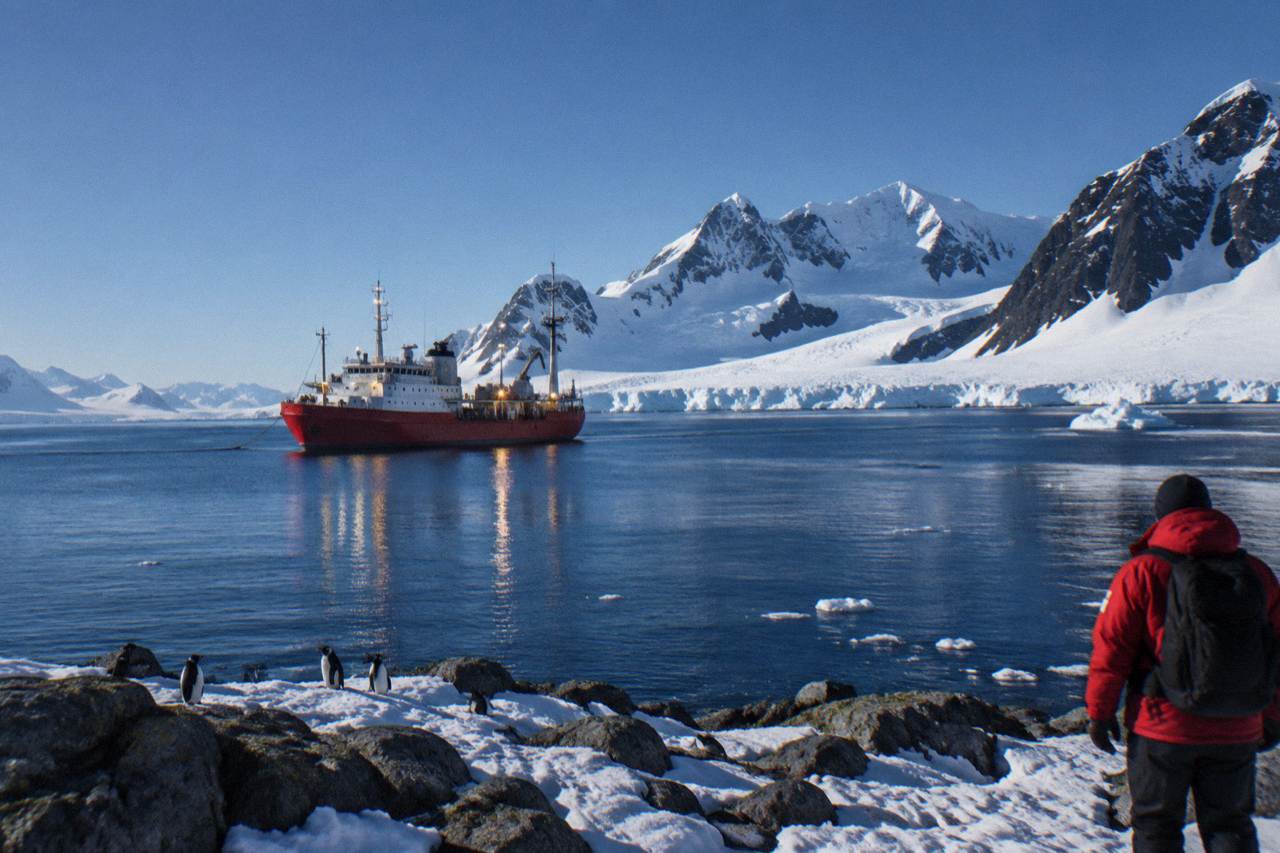
The Ortelius is a 108-passenger, 90.95-metre expedition ship built in Gdynia, Poland in 1989 as a Russian research vessel, converted for passenger expeditions, and now operated by Oceanwide Expeditions from the port of Ushuaia in Argentina. She carries an ice class of UL1, equivalent to Lloyd's 1A, which is the strongest ice rating of the three Oceanwide ships on this site's roster, and her Antarctic Peninsula voyages start from $7,800 per person. For a look at how a larger, hybrid-powered fleet compares, see our guide to HX's Fridtjof Nansen and Roald Amundsen ships.
That combination, a genuinely ice-capable hull at one of the lowest fares in Antarctic expedition cruising, is the whole reason the ship exists in the market. Most vessels at the budget end of the spectrum make compromises somewhere: older tonnage, weaker ice class, or a large passenger count that dilutes the landing experience. The Ortelius makes only the first of those compromises, and her operator leans into it, marketing her as a no-frills workhorse for people whose priority is time ashore rather than balcony suites and spa decks.
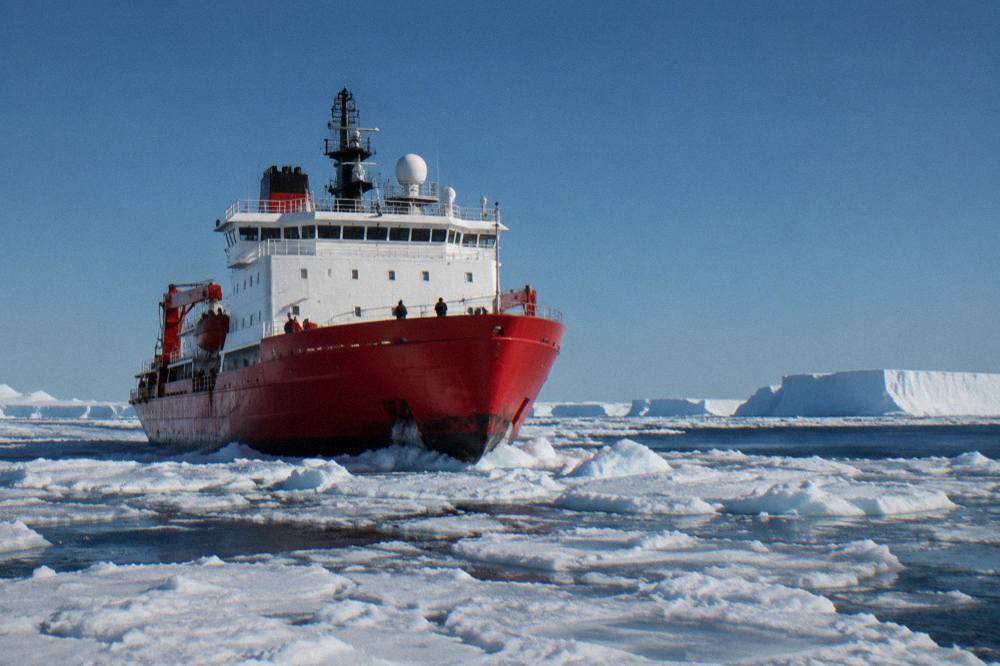
The ship's history matters more here than on most vessels. She was built for the Russian Academy of Sciences, and her hull was designed to take sea ice rather than dodge it. Oceanwide's own cruise pages list her at 108 passengers in 50 cabins, with voyage lengths of 11, 13 and 25 days out of Ushuaia. The 11- and 13-day trips cover the classic Antarctic Peninsula; the 25-day departure reaches the Ross Sea side of the continent, a route only a handful of ships attempt in any season.
If your starting point is price rather than ship, the Ortelius sits at the bottom of the fare range among the ships this site tracks. Only her fleetmate Plancius, from $7,050 per person, posts a lower "from" fare for Peninsula voyages, and Plancius is a 1976-built vessel with a weaker ice class. When the gap between ships is a few hundred dollars per person, the choice becomes about hull, hardware and programme rather than fare alone, and that is exactly the kind of trade-off a free consultation can sort out quickly.
Cabins And Life On Board
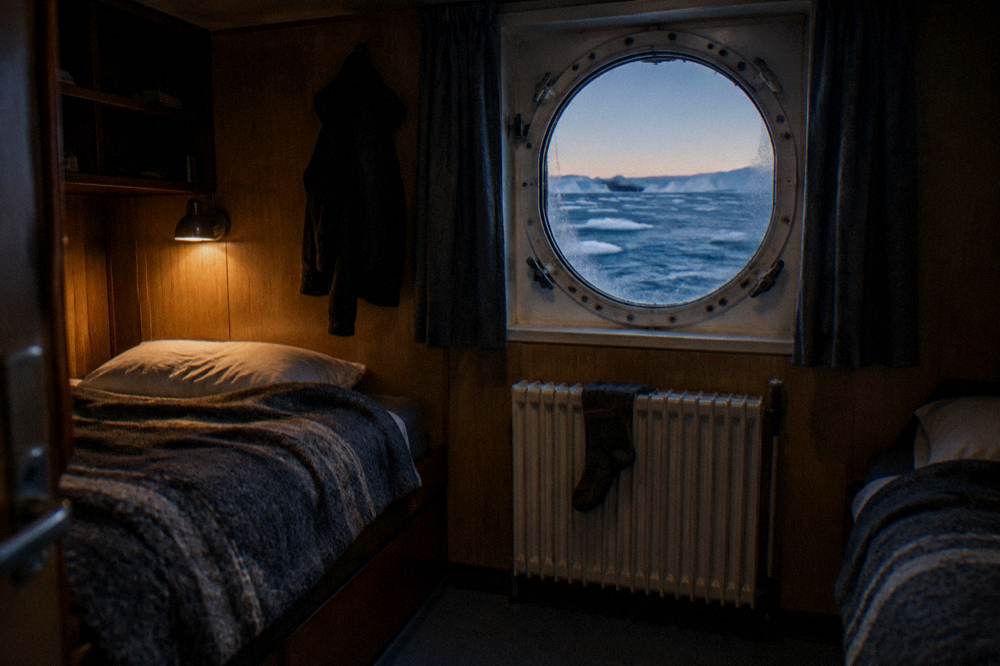
The Ortelius offers 50 cabins for 108 guests, ranging from shared quad and triple compartments up to twin cabins with private facilities and a small number of superior and suite categories, all deliberately basic: the operator's positioning is that you spend your money on the expedition, not on interior finish. Cabins are functional and compact, with the lower categories using shared shower and toilet arrangements, a configuration that has largely vanished from newer expedition ships but keeps per-person fares down for travellers flexible about privacy.
Life aboard follows the standard expedition rhythm. Days at sea are filled with lectures from the expedition staff in the lecture room, wildlife watching from the open decks, and meals served in a single dining room rather than a choice of restaurants. There is no spa, no pool and no specialty dining, and there is no pretence otherwise. What the ship does have is deck space proportionate to her small guest count, so crowding at the rail when a whale surfaces is rarely the problem it can be on a large vessel such as the 490-guest MS Fridtjof Nansen also tracked on this site.
The table below shows how the cabin ladder works in practice on a ship of this type.
| Cabin category | Typical occupancy | Facilities | What to expect |
|---|---|---|---|
| Quad / triple | 3-4 guests | Shared shower and toilet | Lowest fare per person, bunk-style berths |
| Twin, shared facilities | 2 guests | Shared shower and toilet | The classic budget expedition cabin |
| Twin, private facilities | 2 guests | En-suite shower and toilet | The most-booked mid category |
| Superior / suite | 2 guests | En-suite, window, more space | Limited number, books earliest |
One honest note on comfort at sea: the Drake Passage crossing is part of every Ushuaia-roundtrip voyage, and an older hull with a shallower ice-oriented design will move in heavy weather. Our guide to the Drake Passage crossing covers what the two-day transit each way actually feels like, and the seasickness guide on this site goes into prevention in detail. If the crossing is your main worry, it is worth weighing it before you commit to any ship, not just this one.
The Expedition Programme
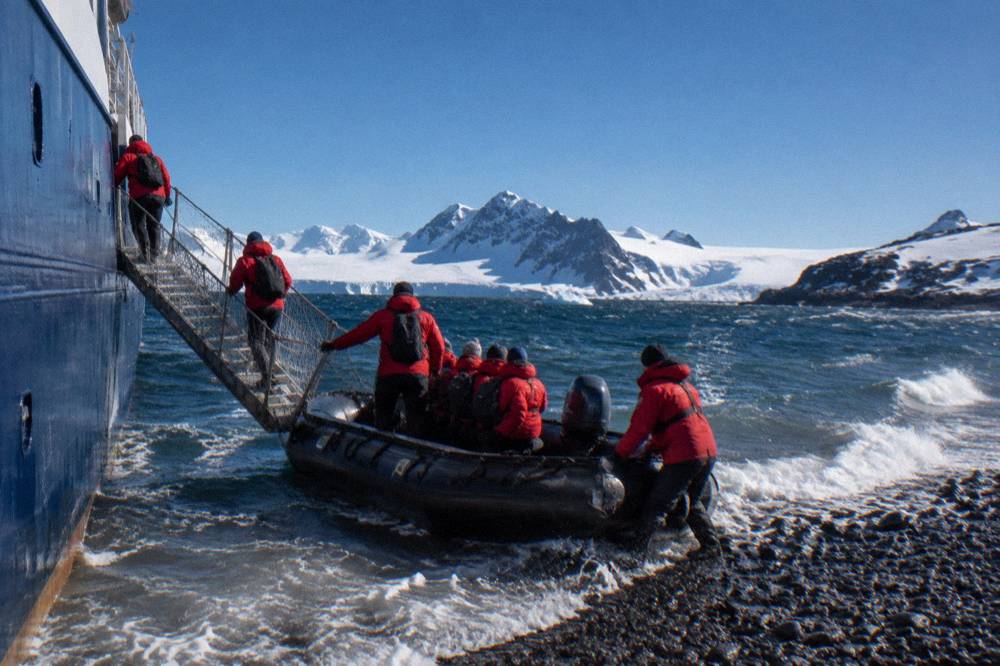
Every Ortelius voyage runs a full expedition programme built around Zodiac cruising and shore landings, with the 108-passenger count just over the IAATO ceiling of 100 passengers ashore at one time, which in practice means the ship lands in two quick groups rather than in the several rotations larger vessels need. That single fact is the strongest argument for small ships in Antarctic cruising, and it is worth understanding the rule behind it. If you want to see how a newer small expedition ship handles the same landing advantage, our guide to the Douglas Mawson, Aurora Expeditions' Ulstein X-BOW vessel covers its capacity, itineraries, and pricing in detail.
The International Association of Antarctica Tour Operators, through visitor guidelines adopted under the Antarctic Treaty system, sets the operational limits for all its member vessels: a maximum of 100 passengers may be ashore from a vessel at any one time, a minimum 1:20 ratio of actively guiding staff to visitors, and only one ship may visit a landing site at any one time. The guidelines are published by IAATO and apply across the fleet, old and new alike.
On a 108-guest ship, that ceiling is nearly invisible: one slightly split landing or a short rotation and everyone is ashore. On ships carrying 200 or more, guests alternate between landing and Zodiac cruising, halving each person's time on land. This is the real product you are buying on the Ortelius, and it is why the ship keeps a loyal following despite her age.
The programme itself includes the standard Antarctic repertoire: penguin colonies and seal beaches on the South Shetland Islands, scenic Zodiac runs through grounded icebergs, and landings on the western Peninsula at sites such as Neko Harbour and Paradise Bay. Optional activities typically include camping and kayaking where conditions and staffing allow, at an extra charge booked in advance. Photography guidance and citizen-science sessions round out the days. Our guide to Antarctic landing sites describes what the individual sites offer in detail.
Ortelius Versus Plancius And Hondius
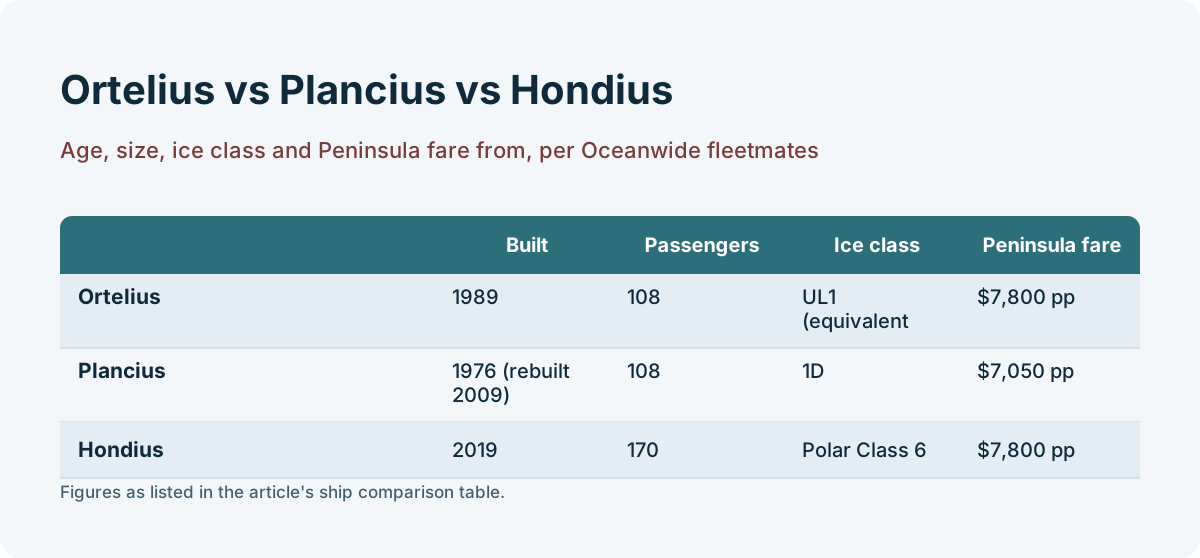
Against her two Oceanwide fleetmates, the Ortelius is the middle choice: newer and more ice-capable than the 1976-built Plancius but smaller and plainer than the 2019-built, 170-guest Hondius, with all three sailing from Ushuaia and all three posting Peninsula fares in the same low band, from $7,050 to $7,800 per person. The differences that matter are age, ice class and passenger count, and they map cleanly onto price and comfort.**
| Ship | Class | Passengers | Ice class | From, per person | Voyage length | Departs from |
|---|---|---|---|---|---|---|
| OrteliusOceanwide Expeditions | Small-Ship Budget | 108 | UL1 | from $7,800 | 11 to 25 days | Ushuaia |
| PlanciusOceanwide Expeditions | Small-Ship Budget | 108 | 1D | from $7,050 | 10 to 33 days | Ushuaia |
| HondiusOceanwide Expeditions | Small-Ship Budget | 170 | Polar Class 6 | from $7,800 | 11 to 19 days | Ushuaia |
The comparison deserves a closer look than the fare column alone. Plancius, a converted Dutch navy oceanographic vessel rebuilt as a passenger ship in 2009, is the cheapest entry point but carries the weakest ice class of the three, Lloyd's 1D. Hondius, the first-registered Polar Class 6 passenger ship in the world by her operator's wording, is the most modern and the largest at 170 guests, but she is also the one where the 100-ashore ceiling starts to bite, since 170 guests must land in two rotations. The Ortelius splits the difference: a 1989 hull with the fleet's strongest ice rating and a guest count low enough for effectively single-group landings.
| Ortelius | Plancius | Hondius | |
|---|---|---|---|
| Built | 1989 | 1976 (rebuilt 2009) | 2019 |
| Passengers | 108 | 108 | 170 |
| Ice class | UL1 (equivalent 1A) | 1D | Polar Class 6 |
| Length | 90.95 m | 89 m | 107.6 m |
| Peninsula fare from | $7,800 pp | $7,050 pp | $7,800 pp |
| Landing rotations | Effectively one group | Effectively one group | Two groups |
Our dedicated Hondius ship guide covers that ship in full if the newer vessel appeals. The Plancius question usually comes down to a few hundred dollars against a weaker hull, and it is a genuinely close call for Peninsula-only travellers; the ice class matters far more on ice-heavy early-season departures or any voyage that pushes south of the standard route.
What You Give Up For The Lower Fare
Choosing the Ortelius means accepting a 1989-built ship with basic cabins, no balcony suites, no spa or pool, fewer public rooms and a plainer interior than anything built in the last decade, in exchange for a fare thousands of dollars per person below the upscale and luxury expedition ships on this site's roster, which start at $12,236 and run up to $32,320. The trade is real and it is not for everyone.**
The fare gap is not an exaggeration. The lowest confirmed "from" fares on the roster run from about $7,050 on the Oceanwide trio up through roughly $12,236 on the Quark Expeditions voyages and $18,700 to $32,320 on the Ponant luxury ships. What the bottom of that range buys you is the same continent, the same penguins, the same Zodiac landings under the same IAATO rules, and often more time ashore per person than on bigger vessels. What it does not buy is interior polish, and it is worth being clear-eyed about that before booking rather than disappointed after.
The specific sacrifices, in the order most travellers notice them:
| What you give up | What you get instead | How much it matters |
|---|---|---|
| Modern cabin design and balconies | Compact, functional cabins, some shared facilities | High if you spend time in the cabin; low if you don't |
| Spa, pool, multiple restaurants | One dining room, lecture room, open decks | Low for most expedition travellers |
| Newest stabilisation technology | Conventional stabilisers on an older hull | Moderate on Drake crossings |
| Chartered pre-cruise hotel and flights bundled in | Fare covers the voyage; you arrange the rest | Budget separately for flights and Ushuaia hotels |
| Large cabins and suites | Lower per-person fare | The entire point of the ship |
Note that last row's flip side: the "from" fares on the roster cover the voyage itself. Flights to Ushuaia, pre-cruise hotel nights, gear and insurance are additional on the budget lines, while some operators bundle more of the journey. Our Antarctica cruise cost guide breaks down the full all-in budget, which for a mid-range Peninsula trip runs considerably higher than the fare alone.
Routes, Season And Fares
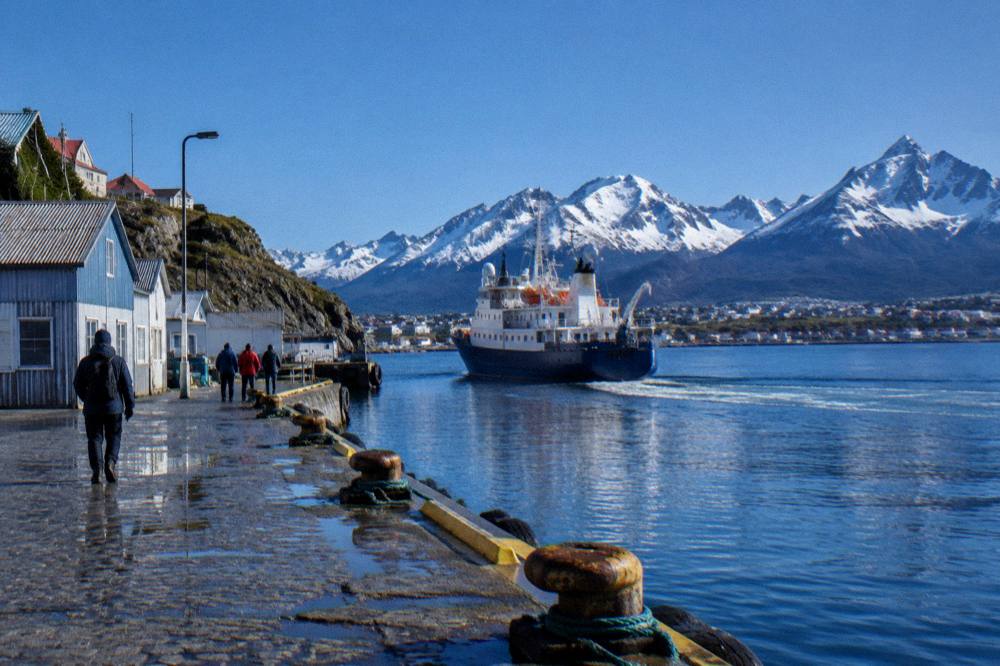
The Ortelius sails from Ushuaia on 11-day Antarctic Peninsula voyages, 13-day departures that extend the route, and a 25-day Ross Sea expedition, with Peninsula fares starting from $7,800 per person and the season running from late October to March or April. The operator's schedule for 2026-27 is confirmed on its own cruise pages, which list multiple Peninsula departures between October 2026 and April 2027.**
The 11-day itinerary is the workhorse: one Drake crossing down, roughly four to five days of landings in the South Shetlands and along the western Peninsula, and one crossing back. The 13-day versions add sea days or push further south, sometimes with an Antarctic Circle attempt, and the 25-day departure is a different animal entirely, a Ross Sea voyage reaching the far side of the continent with its historic expedition huts, a route with only a handful of sailings fleet-wide each season.
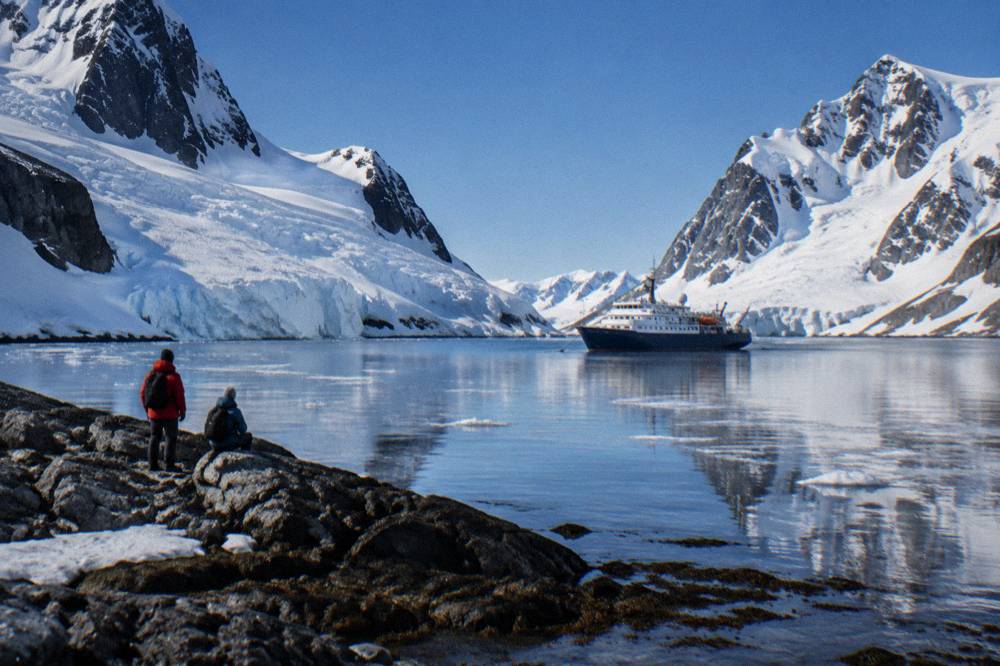
Season timing changes what you see more than it changes what you pay on this ship. November brings maximum sea ice, courtship behaviour at the penguin colonies and the most pristine snowscapes; December and January bring hatching chicks and the longest daylight; February and March bring whale activity at its peak as krill draws humpbacks into Peninsula waters. Our guide to the best time to visit Antarctica works through the month-by-month trade-offs.
| Voyage | Days | Typical route | Fare from |
|---|---|---|---|
| Antarctic Peninsula | 11 | Ushuaia, Drake, South Shetlands, western Peninsula | $7,800 pp |
| Extended Peninsula | 13 | As above with more sea days or a Circle attempt | $7,800 pp floor |
| Ross Sea expedition | 25 | Ushuaia to the Ross Sea and historic hut sites | Consultation needed for current fare |
Fares move with cabin category and season, and early-booking offers across the industry commonly reach 10 to 30 percent off according to operator calendars and deal trackers. If you are weighing the Ortelius against a pricier ship and the numbers are close after promotions, a quick chat about your options costs nothing and can surface departures the fare tables don't show.
A few practical notes on the sailing itself. The Ortelius carries a helicopter on Ross Sea departures, which is what makes the historic hut sites reachable on that 25-day route. On Peninsula trips, the ship operates with a hotel manager, doctor, expedition staff and a full crew, and the base fare covers all meals and snacks on board plus shore landings and Zodiac excursions. What is not included are drinks from the bar, staff and crew tips, and any optional activities such as camping or kayaking, which carry their own fees. Most travellers fly into Ushuaia through Buenos Aires, and the ship typically departs late in the afternoon, so arriving a day early is a common safeguard against flight delays.
Cabin choice also shapes the price. The cheapest berths are quadruple porthole cabins with shared facilities, while the top of the range is a superior double with a full bed and private bathroom, with several twin and triple categories in between. Solo travellers can book a single berth in a twin cabin, paying a supplement rather than a full double fare, which keeps the entry price lower than many expedition ships in this class.
Who Should Book The Ortelius?
The Ortelius suits travellers who want the maximum Antarctic experience per dollar and per hour ashore: budget-conscious first-timers, photographers and wildlife watchers who care about landings over luxury, and repeat visitors who want a stronger hull for ice-heavy or far-south routes, and it is the wrong ship for anyone who wants a balcony suite, a spa or the newest hardware. That is a clean split, and it makes the booking decision unusually easy to reason about.**
The ideal Ortelius guest is someone who will spend the sea days in the lecture room and the landing days on the beach with penguins, and who regards the cabin as a place to sleep. The ship also earns a specific niche among repeat visitors: her UL1 ice class and her Ross Sea itinerary make her one of the few genuinely affordable options for routes that need real ice capability, and the 25-day departure is the natural next step after a first Peninsula voyage.
If you are still deciding between the three Oceanwide ships, or between Oceanwide and the next fare tier up, the honest answer is that the differences are knowable in advance: they are age, ice class, passenger count and finish, all documented on the operator's own pages. The Antarctic Treaty Secretariat's tourism overview confirms where nearly all of these voyages actually go, which is the Peninsula, whichever ship you pick. When you have a shortlist in hand, the free consultation on Cruises In Antarctica can pressure-test it against your dates and budget before you commit to anything.
Common Questions About The Ortelius
Is The Ortelius A Good Ship For A First Antarctic Cruise?
Yes, for the right traveller. She delivers the full expedition programme, Zodiac landings, penguin colonies and the classic Peninsula route, at one of the lowest fares on the market, with a 108-guest count that means effectively single-group landings. The compromise is a 1989-built, no-frills interior, which matters little if your priority is time ashore.
How Much Does An Ortelius Antarctic Cruise Cost?
Antarctic Peninsula voyages start from $7,800 per person according to the operator's listed fares for the 2026-27 season, with the price rising by cabin category from shared-facility twins up to the limited superior and suite categories. Flights, hotels, gear and insurance are additional, so budget well beyond the fare itself.
What Is The Ortelius Ice Class And Does It Matter?
The Ortelius carries a UL1 ice class, equivalent to Lloyd's 1A, the strongest rating of the three Oceanwide ships on this site's roster. It matters most on early-season departures with heavy sea ice, on voyages pushing south of the standard route, and on her 25-day Ross Sea itinerary; for a mid-season Peninsula voyage it is a comfort factor rather than a deciding one.
Ortelius, Plancius Or Hondius: Which Should I Choose?
Plancius is the cheapest and the oldest with the weakest ice class; Hondius is the newest and largest at 170 guests, which means two landing rotations; Ortelius splits the difference with the strongest ice class and single-group landings at $7,800 per person. If price is everything, Plancius; if modern comfort matters, Hondius; for ice capability and landing time, Ortelius.
Will I Get Seasick Crossing The Drake Passage On The Ortelius?
Any ship can roll in the Drake, and an older hull with conventional stabilisers will move in rough conditions. Rough crossings occur on a minority of passages and calmer ones on the majority, but no operator can promise either. Come prepared with remedies and read the site's dedicated Drake Passage and seasickness guides before you book.
Does The Ortelius Visit The Ross Sea?
Yes, one 25-day Ross Sea expedition appears in her listed voyage lengths, a far-side route taking in historic expedition huts that only a handful of ships attempt each season. It is a specialist itinerary for repeat visitors; a current fare for it needs a consultation, and no number is printed here.