Can You See The Southern Lights On An Antarctica Cruise?
 By Oleg G.
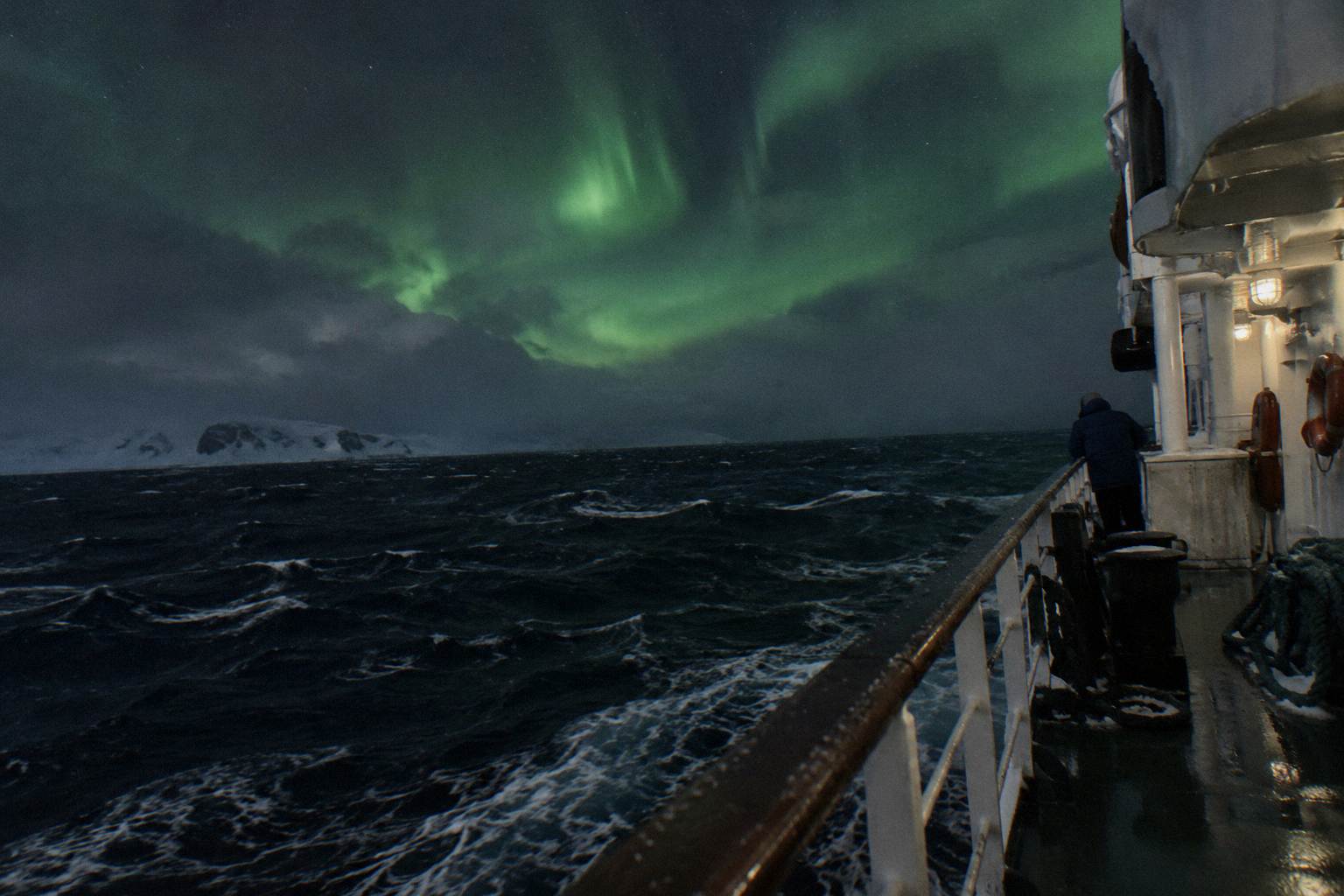
Aurora hunters ask whether an Antarctica cruise can deliver the southern lights. The honest answer is: only at the very edge of the season, and by luck.
Quick answer: Rarely, and mostly not by design. The Antarctic expedition season runs November to March, and Peninsula daylight stretches from roughly 12.5 to 21 hours across those months, with near-continuous light around the December solstice. Only late February and March sailings offer true dark nights, when general seasonal guides mention possible aurora australis displays, though no 2026-27 operator confirmation of passenger sightings exists.
The Honest Short Answer On Southern Lights At Sea
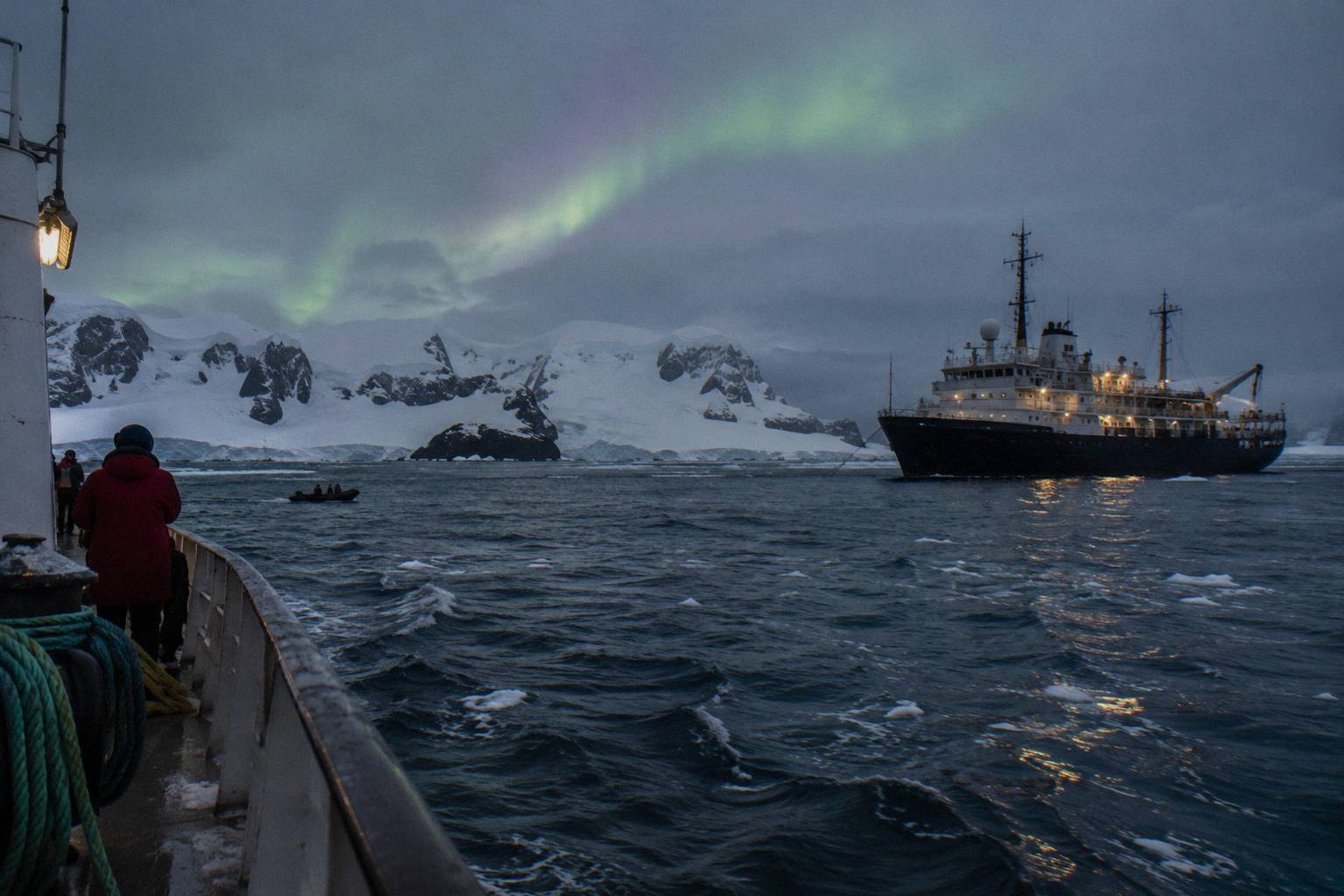
Yes, aurora australis is physically real over Antarctic waters and a ship can pass beneath it, but an Antarctica cruise is a poor instrument for chasing it. The expedition season runs November to March, Peninsula daylight ranges from about 12.5 to 21 hours, and true darkness only returns late in February and in March, when general seasonal guides mention possible displays as nights lengthen. We found no published 2026-27 operator confirmation of passenger sightings.
The southern lights are the southern twin of the aurora borealis: charged particles funneled along magnetic field lines into the upper atmosphere, glowing green and, on strong nights, violet and crimson. The problem for a cruise passenger is the calendar, because the same austral summer that opens the continent to tourism also floods the sky with light.
That tension is the whole story of this page. Operators sell you the midnight sun, twenty-hour days and landings among penguin colonies, and all of those things are genuinely wonderful, but every one of them is the enemy of the night sky. An expedition cruise is the wrong product to buy if the aurora is your primary goal, and a reasonable product to buy if you would be delighted by it as a bonus on a March sailing.
If what you actually want is a month-by-month read on light, ice and wildlife instead, our guide to the best time to visit Antarctica covers the whole season, and this page stays on the narrower question of the night sky.
Why The Antarctic Summer Erases The Night Sky
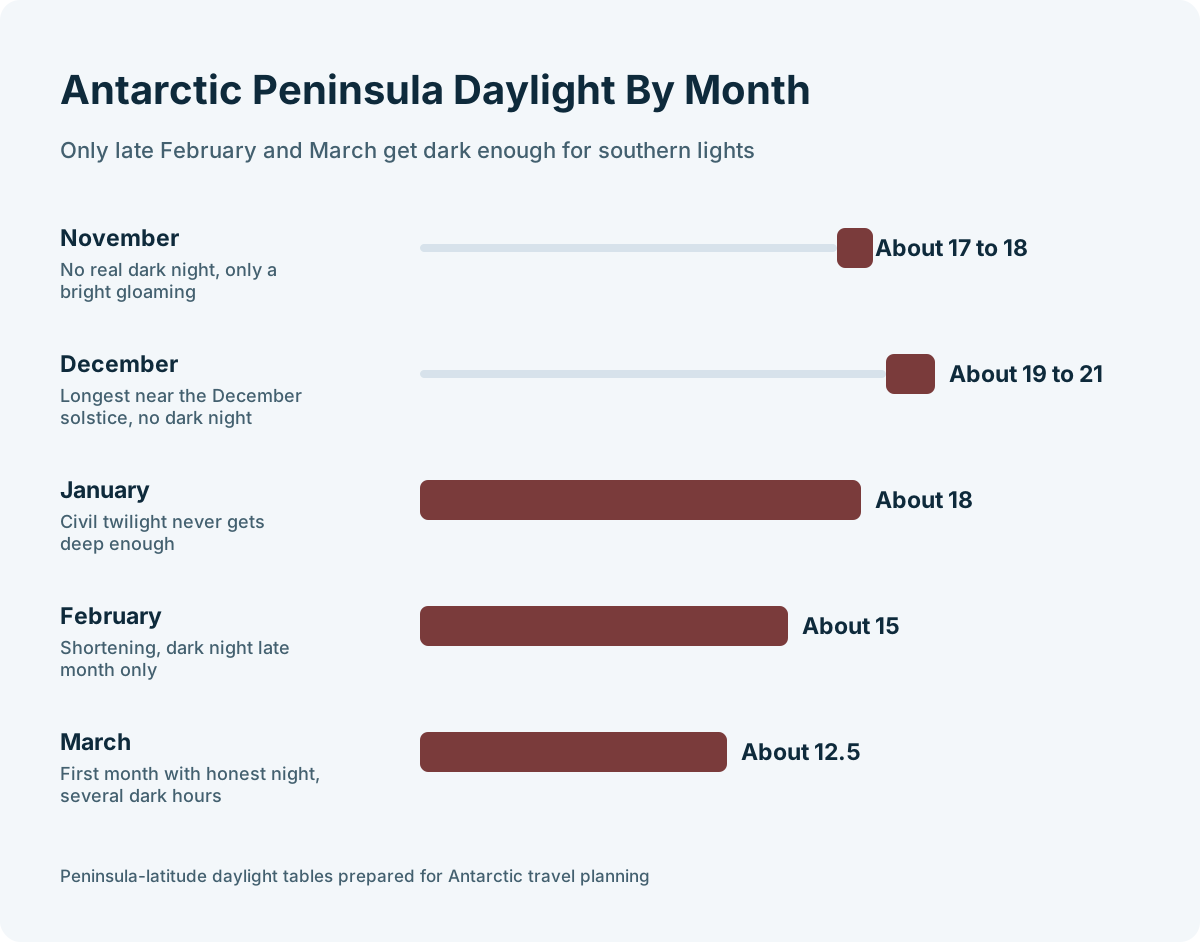
Daylight, not cloud and not geography, is what removes the southern lights from most Antarctic sailings. At Peninsula latitudes of roughly 62 to 65 degrees south, daylight runs about 17 to 18 hours in November, 19 to 21 hours around the December solstice, about 18 hours in January, around 15 hours in February and 12.5 hours in March. An aurora behind a bright sky is invisible, and most of the season offers no useful night at all.
A common mistake is to think of Antarctica's darkness in Arctic-cruise terms. People who have sailed Svalbard or Greenland in September expect a similar late-season darkening. The latitudes sound comparable, but the seasons are mirror images: the Arctic keeps tourist traffic through the equinox while the Antarctic does not, and operator schedules confirm that April through September brings zero tourist expedition voyages to the continent. By the time real polar night arrives in the far south, there is no cruise to be on.
The numbers that matter for aurora hunting are simple. Civil twilight never gets deep enough in December or January for a display to read against the sky, and even in November the roughly 17 to 18 hours of direct daylight leave a short, bright gloaming. February shortens toward about 15 hours, which begins to matter late in the month, and March at about 12.5 hours is the first month with honest night.
| Month on the Peninsula | Approximate daylight hours | Real dark night? |
|---|---|---|
| November | About 17 to 18 | No |
| December | About 19 to 21, longest near solstice | No |
| January | About 18 | No |
| February | About 15, shortening | Late month only |
| March | About 12.5 | Yes |
Those daylight figures come from Peninsula-latitude tables prepared for Antarctic travel planning, and they are the reason a mid-season voyage is a near-certain aurora miss even if the sun is active. Roughly 98 percent of Antarctic tourism voyages happen in this same Peninsula window of the austral summer, according to the Antarctic Treaty Secretariat's tourism page, so the fleet is massed exactly where and when the sky is lightest.
That is a decision point in itself. If a dark night is non-negotiable for you, the month choice is narrow, and it is worth talking through the season trade-offs in a free consultation before you fall in love with a December itinerary.
Where On The Route You Could Actually See Them
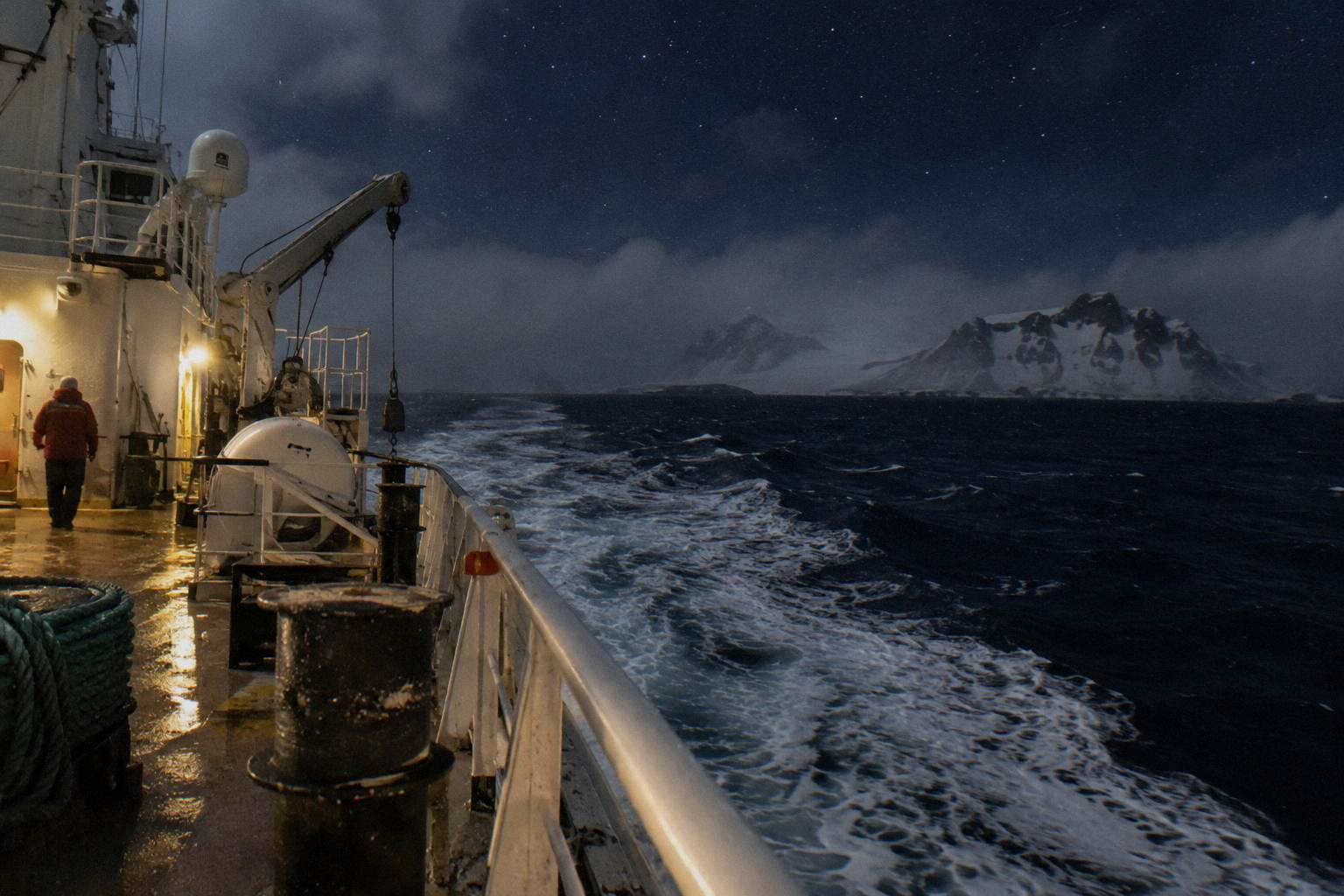
The best aurora real estate on a Peninsula itinerary is the Drake Passage crossing and any far-south sailing, because those nights are spent in open ocean. Inshore nights along the Peninsula are possible in theory, but landings and scenic cruising fill the schedule.
The crossing is the part of the voyage most travelers dread and an aurora hunter should quietly look forward to. Sailing south from Ushuaia takes roughly two days each way in typical conditions, and those nights are spent in open water with nothing to see but sky. Our notes on how long the Drake crossing takes cover the timing in detail.
The honest caveat is that we found no published operator confirmation of passenger aurora sightings on standard Peninsula or Drake routes for 2026-27. General seasonal guides mention March and sometimes late February as months when displays are possible as nights lengthen, but that is a statement about darkness, not a promise about solar activity or a particular route.
What this means for planning is that route selection buys you opportunity, not probability. A voyage that crosses the Drake by sea gives you two or four open-water nights. A fly-cruise that skips the passage by flying to King George Island removes exactly the nights where the sky is darkest relative to your schedule, so an aurora-minded traveler should generally prefer to sail.
There is also the question of what the ship itself does to your night vision. Deck lighting varies by ship, so ask before booking whether an open deck can be reached at night and how it is lit.
Which Months Give You A Real Shot
Only late February and March. November through mid-February offers no useful darkness at Peninsula latitudes, so an aurora on those sailings would be invisible regardless of solar activity. In March, with roughly 12.5 hours of daylight, the last departures of the season have several genuine dark hours per night, and March is the month the general seasonal guides mention for possible southern lights displays.
The seasonal arithmetic is unforgiving. A March sailing gives you the darkness but costs you other things: penguin colonies are emptying toward their late-March departure, fledging chicks and whale activity are the season's closing acts. Our month guide on Antarctica in March covers those trade-offs in full.
For aurora specifically, the month is really the fortnight. Days keep shortening through March, so the later the departure, the more darkness it gets. The 2026-27 season calendar shows exactly who is at the end of the line:
| Late-season departure (2026-27) | Ship | Route style |
|---|---|---|
| 18 to 28 March 2027 | Ortelius | Antarctic Peninsula round trip from Ushuaia |
| 7 to 17 March 2027 | Hondius | Late-season voyage from Ushuaia |
| 4 March 2027 | Polar Latitudes Discoverer | Late-season departure from Ushuaia |
| Early to late March 2027 | Various Ushuaia operators | Final sailings before the April shutdown |
That table is worth reading twice, because it is the whole aurora calendar compressed into four rows. Everything earlier in the season, from November through mid-February, is light-sky sailing. If your heart is set on the lights and your calendar only allows December, the honest advice is to choose a different trip, not a different ship. More of these guides are collected on Cruises In Antarctica.
March pricing helps a little. Shoulder-season fares in November and March run notably below the December and January peak in the pricing pattern across operators, and March's discount is on the month you would want anyway. On the budget end of the roster, Oceanwide's Peninsula fares for 2026-27 start from $7,800 per person on Hondius and Ortelius and from $7,050 on Plancius, against a peak-month premium elsewhere in the fleet. Those are voyage-level starting fares, and cabin category moves them a great deal.
Picking between the last few March departures, with fares this close, is exactly the kind of decision a specialist looks at all day. You can ask a free consultation to compare the late March options, cabin by cabin, before anything is booked.
What The Solar Cycle Means For Your Odds
Published season material does not detail solar-cycle conditions for the 2026-27 season, so this guide will not promise a strong or weak cycle. What can be said is that aurora australis depends on solar activity, on darkness and on clear sky, and only the second of those three is under your control through the Antarctic season. Book darkness, accept whatever the sun does.
This is a place where a lot of aurora content goes soft. Writers reach for a general statement about an eleven-year solar cycle and imply that some Antarctic March will be a fireworks display. Published seasonal guides stop well short of that: they mention March and late February as months when displays are possible, and they do not characterize the current cycle at all. A page that promised peak displays for a specific season would be inventing a source, and this site does not do that.
What the constraint implies is freeing, in a way. You cannot pick a good aurora year, so you stop trying. You pick a dark month, a route with open-water nights, and a sailing where the expedition team will tell you honestly whether anyone saw anything. The rest is the sun's business.
For contrast, the parts of an Antarctic voyage that are predictable are considerable: penguin behavior by month, whale timing, ice conditions, and the calendar of the season itself. The aurora is the one headline attraction that stays genuinely uncertain all the way to the night in question, and it deserves to be sold to yourself honestly on that basis.
How To Improve Your Chances On A Dark-Night Sailing
Choose the latest March sailing you can find, prefer a sea crossing over a fly-cruise for its open-water nights, pick a ship where you can reach a dark open deck at night, and then do the human things: watch the sky for hours, keep a camera in the lounge, and ask the expedition team to call the ship if something appears. None of it guarantees an aurora, but it stacks every factor you can control.
Start with the month, then the route, then the ship. On the ship question, the budget small-ship fleet is relevant mainly for its late-season fares and small passenger counts. Three of the roster's small-ship budget ships stand out for a late-season booking:
| Ship | Operator | Passengers | Ice class | 2026-27 Peninsula fare from |
|---|---|---|---|---|
| Hondius | Oceanwide Expeditions | 170 | Polar Class 6 | $7,800 pp |
| Plancius | Oceanwide Expeditions | 108 | Ice Class 1D | $7,050 pp |
| Ortelius | Oceanwide Expeditions | 108 | UL1, equivalent 1A | $7,800 pp |
| Ship | Class | Passengers | Ice class | From, per person | Voyage length | Departs from |
|---|---|---|---|---|---|---|
| HondiusOceanwide Expeditions | Small-Ship Budget | 170 | Polar Class 6 | from $7,800 | 11 to 19 days | Ushuaia |
| PlanciusOceanwide Expeditions | Small-Ship Budget | 108 | 1D | from $7,050 | 10 to 33 days | Ushuaia |
| OrteliusOceanwide Expeditions | Small-Ship Budget | 108 | UL1 | from $7,800 | 11 to 25 days | Ushuaia |
Hondius deserves its place at the top of that list for an aurora-minded booking. Built in 2019 as a new expedition vessel, 107.6 metres long with Polar Class 6 notation and space for 170 guests in 80 cabins, it is the most modern of the three, and its open decks are the platforms you would be using at 11 p.m. on a March night.
Plancius and Ortelius are the older souls of the fleet. Plancius was built in 1976 as a Dutch Navy oceanographic vessel and converted in 2009; Ortelius is a former Russian research ship built in Gdynia in 1989, and on specialist Weddell Sea emperor penguin voyages she carries helicopters for ice access. Neither is a luxury product, and neither pretends to be. Their fares sit at the low end of the 2026-27 Peninsula roster, which leaves budget for a longer or later itinerary.
Whether a bigger, more upscale expedition ship is worth the premium at night is partly a lights question too. Our comparison of whether a nicer ship is worth it in Antarctica works through that trade-off across the whole roster.
Once aboard, the habits matter more than the hardware. Find the darkest reachable deck in daylight, learn which stairs get you there without passing under floodlights, and note where the bridge wings are. Ask at the expedition desk, early in the voyage, whether the team will announce a display, because a hundred guests who know to look is the difference between a two-person sighting and a ship-wide event. Keep your camera ready with settings tested before it matters, and accept in advance that you may see nothing at all.
Who Should Not Book A Cruise For The Southern Lights
Travelers whose trip is ruined by a missing aurora should not buy an Antarctica cruise at all; they should buy a dedicated aurora holiday somewhere with real winter darkness. The expedition product delivers penguins, ice, whales and a crossing, and in 2026-27 it delivers darkness only on late-February and March sailings. Anyone who would weigh the whole voyage against one display is buying the wrong trip.
This is not a disclaimer, it is the most useful paragraph on the page. The Antarctica cruise is expensive, long and logistically demanding, and it should be justified by the things it reliably delivers. A March sailing with darkness is a bonus structure on top of that, not a substitute for a proper aurora expedition. If the lights are the goal and the continent is scenery, book elsewhere, at higher latitudes in winter, on land.
The reverse case is genuinely lovely, though. A traveler who books the last Hondius or Ortelius sailing of March for the empty end-of-season colonies, the whale activity and the calm of a fleet going home, and who then stands on a dark aft deck in the Drake with a thermos on the chance of it, has arranged the best version of this trip. The lights become what they are at sea: a possibility, not a product.
That framing should carry into how you book, too. A specialist who knows the season will not sell you a December sailing with aurora language around it; they will point you at the closing departures. If that is the booking you want to make, get a free consultation before the March cabins go. The decision of ship and month is exactly what this site's consultation exists to help with.
Common Questions About Southern Lights On An Antarctica Cruise
Can you see the southern lights on an Antarctica cruise?
Sometimes, but only at the very end of the season. The expedition season runs November to March, daylight on the Peninsula ranges from about 12.5 to 21 hours, and only late February and March sailings offer true dark nights. General seasonal guides mention possible aurora australis displays in March and late February, though no 2026-27 operator confirmation of passenger sightings has been published.
Which month is best for aurora australis from an Antarctic ship?
March. With roughly 12.5 hours of daylight on the Peninsula, late March departures have several genuine dark hours per night, and March is the month general seasonal guides mention for possible displays. November through mid-February offers little to no useful darkness, so an aurora then would be invisible even if it happened.
Does the Drake Passage crossing help or hurt your aurora chances?
It helps. The roughly two-day crossing in each direction gives you open-water nights with little to do but watch the sky. Fly-cruises that skip the passage by flying to King George Island remove exactly those nights, so a sailing voyage is generally the better aurora structure.
Is 2027 a good solar year for the southern lights?
Published season material does not characterize solar-cycle conditions for the 2026-27 season, so no promise can be made either way. Aurora depends on solar activity, darkness and clear sky, and only the darkness is within your control through the Antarctic season. Book a dark month and treat any display as a bonus.
Do any operators run aurora-focused Antarctica cruises?
We found none. Operators market the Peninsula season for penguins, whales, ice and landings, and no operator confirmation of aurora-focused programming or passenger sightings on standard 2026-27 Peninsula or Drake routes has been published. A standard March expedition sailing is the closest available product.
Should I pick a specific ship for the night sky?
Small ships help. A vessel like Hondius, Plancius or Ortelius has a small passenger count and a late-season schedule, but ask how the open decks are lit at night. On the 2026-27 roster, Oceanwide's Peninsula fares start from $7,050 per person on Plancius and $7,800 on Hondius and Ortelius, all at the budget end where late-season discounts also land.
More Season And Wildlife
 Best Time To VisitMonth by month through the Antarctic season: wildlife, ice, light and price compared.Read the guide
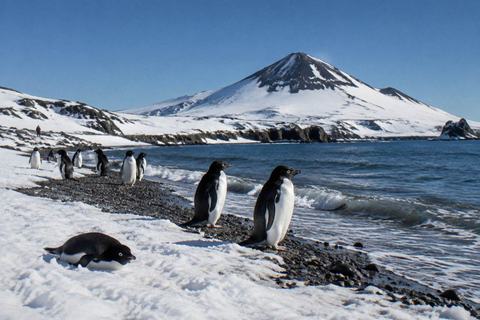 Antarctica WildlifePenguins, whales and seals by month: what to see, when to go, and which route and ship to book.Read the guide
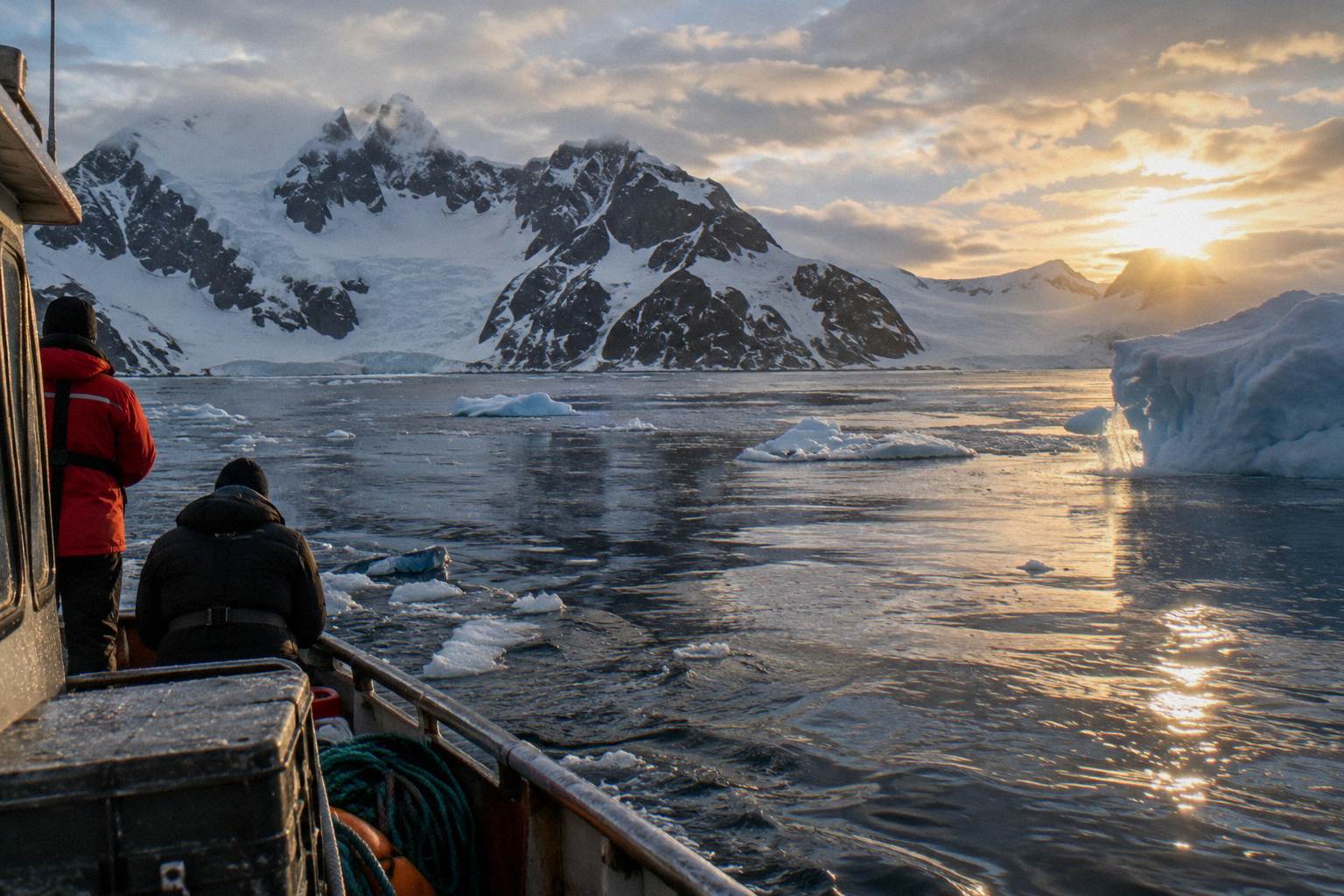 Antarctica DaylightMonth-by-month daylight hours from Ushuaia to the Antarctic Circle, midnight sun dates and what long days mean on board.Read the guide
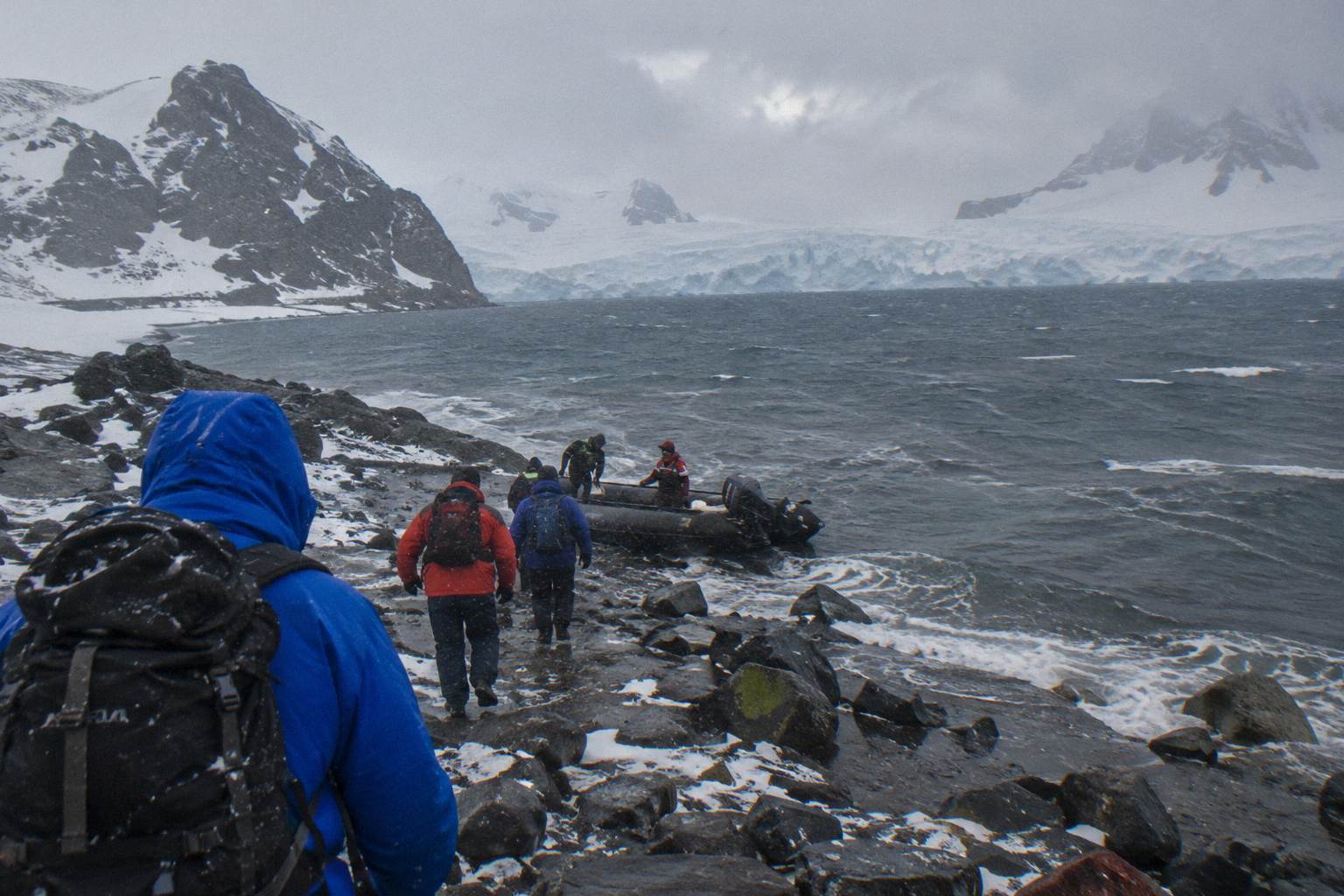 Snow Vs RainRain does reach the Antarctic Peninsula in summer. Here is what to expect and how to pack for it.Read the guide