Best Time To Visit Antarctica: November To March Compared
 By Oleg G.
The Antarctic cruise season runs roughly five usable months, and the month you pick changes almost everything: what the wildlife is doing, how much ice blocks the channels, what the light looks like and what the voyage costs. Here is each month compared.
Quick answer: Antarctic expedition cruises sail mid-October to mid-March. November offers pristine ice and courting penguins at the lowest fares, December and January bring chicks and long daylight, and February and March peak for whales and Circle crossings. There is no single best month; the right one depends on whether you prioritise wildlife, ice, price or daylight.
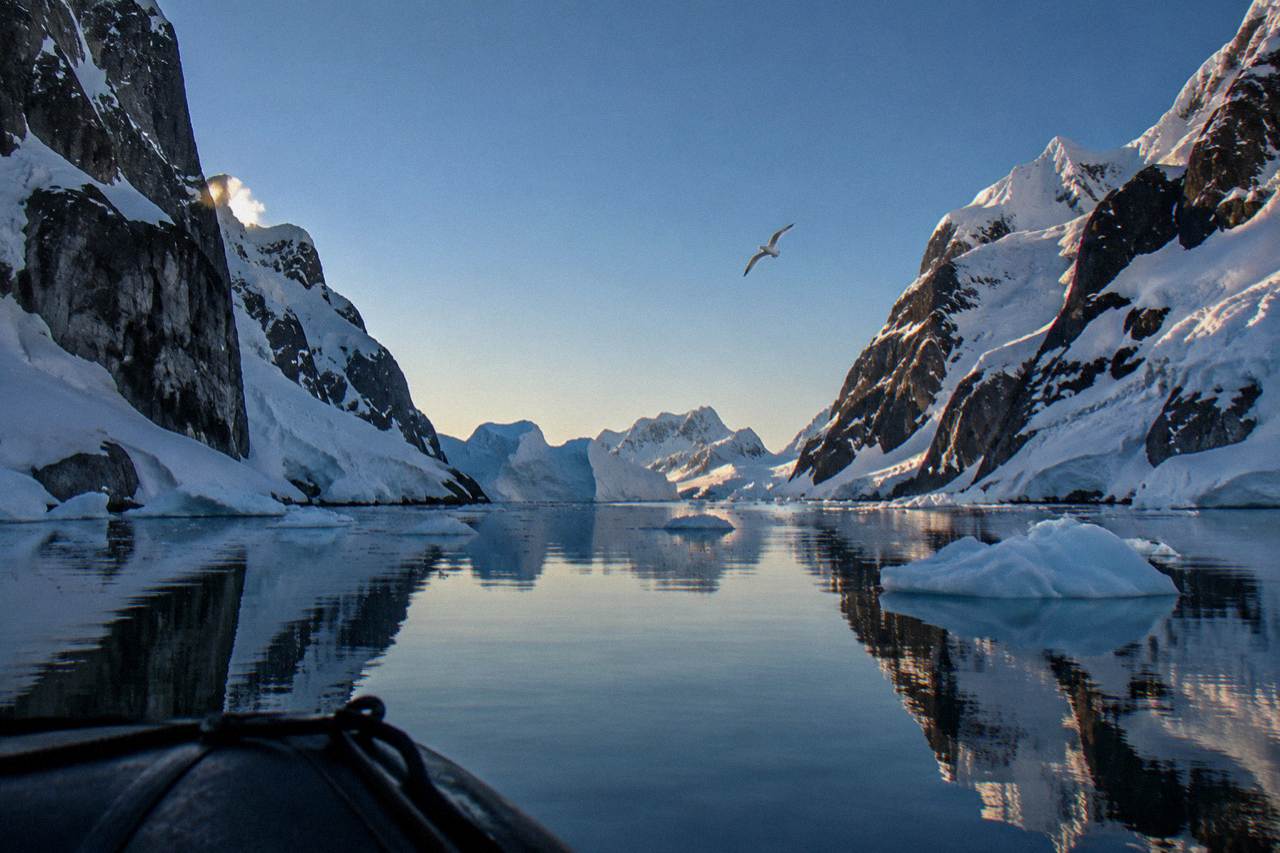
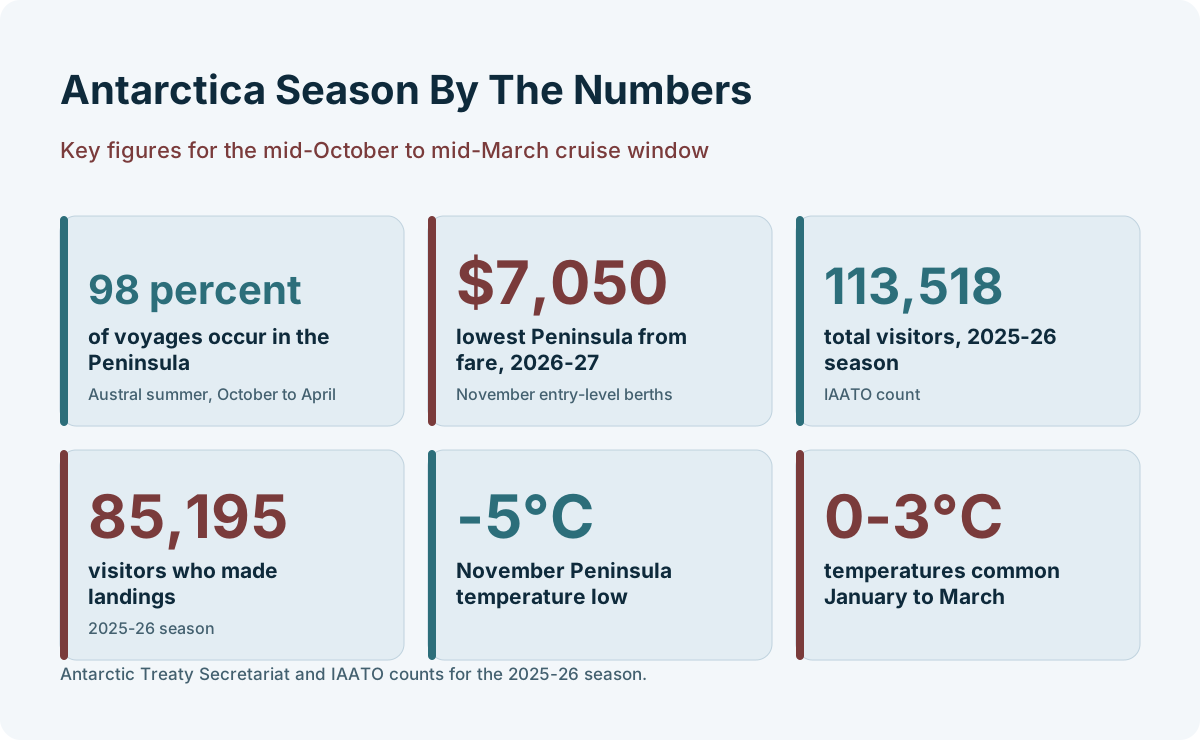
Antarctic tourism is compressed into a narrow window. According to the Antarctic Treaty Secretariat, approximately 98 percent of all tourism voyages occur in the Antarctic Peninsula during the seven-month austral summer from October to April, and the practical cruise season for most expedition lines runs mid-October to mid-March. Within that window, no two months look alike. November is a world of untouched snow and courting penguins; January is chick season under near-24-hour daylight; March is whale season with golden evening light and the lowest fares of the calendar. The expedition cruise itself changes character with each of these months, and so does its price.
This guide walks the season month by month, using operator and expedition-source data on wildlife timing, ice and weather, then shows how to match a month to your priorities and your budget. If you are still choosing a ship before you choose a date, the season decision is easier once the vessel is fixed, and a free consultation on dates and ships can put both decisions in one conversation.
When Can You Actually Cruise To Antarctica?
The season runs from mid-October to mid-March, and roughly 98 percent of Antarctic tourism happens in the Peninsula during the seven-month austral summer of October to April. Outside that window there are no scheduled passenger voyages at all, because sea ice closes the coast and daylight disappears. November through March is the range most travellers actually book, since October departures are few and the shoulder edges carry more weather risk.
The Antarctic Treaty Secretariat's tourism page states the concentration plainly: the Peninsula absorbs almost all voyages, in the austral summer, from October to April. Operator schedules follow that shape. On the roster of ships this site tracks, Antarctic Peninsula voyages cluster between late October and late March, with a handful of early-season departures in mid-October and the last sailings exiting before the ice returns in April.
That concentration matters for planning. Because everyone travels in the same five months, cabins for the peak weeks of December and January sell first, and the shoulder months of November and March carry both the lowest fares and the most open berths. The season is short enough that a two-month shift in your travel dates can change the price of the same itinerary by thousands of dollars, a point covered in detail in our Antarctica cruise cost guide.
November: Pristine Ice And Courtship
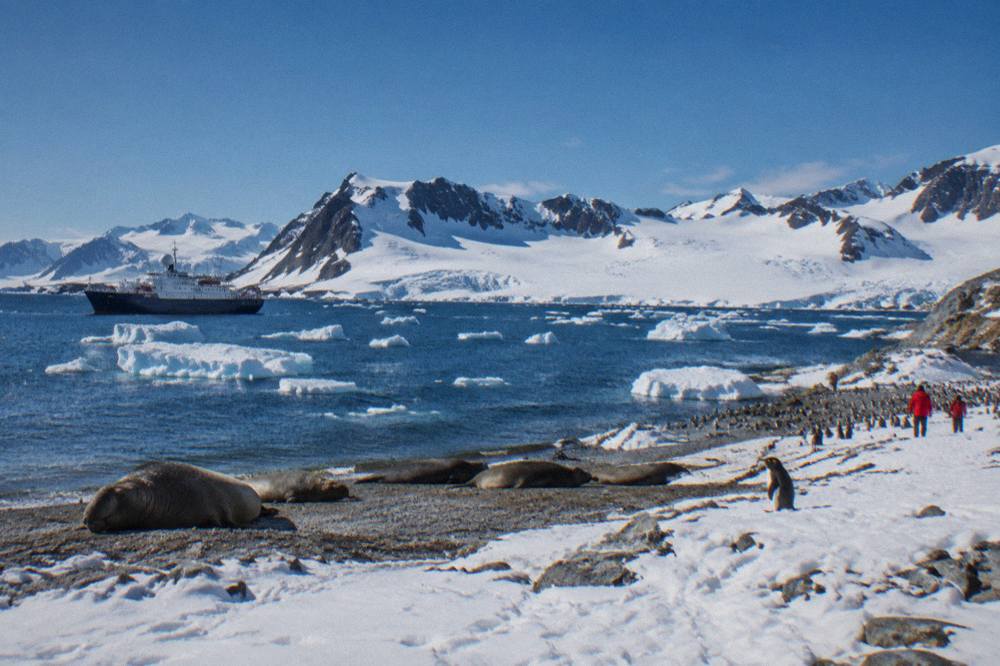
November is the month of maximum snow and untouched landscapes. Penguins are courting and building nests rather than rearing chicks, elephant seal pups appear in the South Shetlands, and Peninsula temperatures can drop to around -5°C. It is also the cheapest month of the season, with entry-level Peninsula berths at their lowest before demand builds toward Christmas.
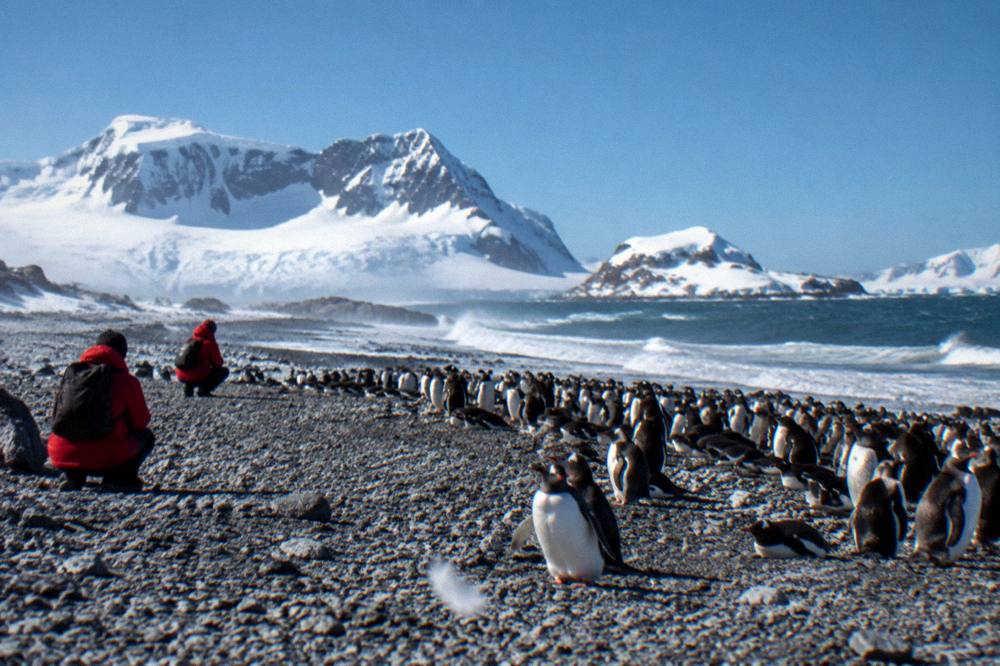
Early vessels arriving in late October and November encounter the most impressive sea ice breakup of the season, according to expedition-source data on the Peninsula: channels are still choked, icebergs are freshly calved and enormous, and landing sites sit under deep, unmarked snow. November temperatures on the Peninsula can drop to -5°C, and the penguin rookeries are focused on courtship and nest-building rather than chicks. Adélie and gentoo penguins display courtship behaviours like stone-gifting and nest assembly, a spectacle that is quieter than chick season but, in its own way, more dramatic: thousands of birds claiming territory on clean white ground.
Wildlife specifics for November, from the season and wildlife data this site tracks:
- Elephant seal pups in the South Shetlands, best in the earliest weeks
- Courting penguins across the Peninsula rookeries, with stone-gifting and nest assembly
- Maximum snow cover and the most pristine landing landscapes of the season
- On South Georgia, king penguins lay eggs while fur seals engage in mating rituals
The trade-off is simple. You will not see penguin chicks in November, and some southern channels may still be closed by ice, which can cut a landing or two from the itinerary. What you get instead is an Antarctica that almost nobody photographs: clean, white and empty. November fares reflect that. On the Oceanwide Expeditions roster, the lowest Antarctic Peninsula "from" fares for the 2026-27 season sit at $7,050 per person on Plancius and $7,800 on Hondius and Ortelius, and those fares are anchored on the early and late departures, not the Christmas weeks.
If November's combination of low fares and pristine ice appeals, it is worth confirming which ships still have November berths before you commit to dates, since the early-season sailing count is smaller than mid-season. A quick chat about November availability settles that in one step.
December: Chicks Begin And Daylight Peaks
Mid-December is when penguin chicks begin hatching on the Peninsula, and by the month's end the rookeries are at their noisiest. Daylight stretches toward its solstice maximum, sea ice continues to clear, and king penguin breeding activity peaks on South Georgia. December is the first genuinely high-demand month, and fares rise accordingly.
Penguin chicks typically begin hatching mid-December on the Peninsula, with prime hatching for gentoo, Adélie and chinstrap penguins running late December into January. The same period brings increased humpback whale sightings near the coast as the whales return to krill-rich feeding grounds after the sea ice recession. On South Georgia, king penguin breeding activity peaks November through January, with chicks forming creches by January; the colony at St. Andrews Bay holds roughly 250,000-plus pairs, so a December South Georgia itinerary puts you among one of the densest wildlife assemblies on the planet.
Daylight is the other December story. Around the solstice the Peninsula sits in near-continuous light, which extends landing windows and makes photography possible at hours that would be midnight anywhere else. Temperatures are milder than November, and most channels and inlets become ice-free by January, so December itineraries start reaching sites that were unreachable a few weeks earlier.
The cost of all this is literal. Peak December sailings are among the first to sell out, and last-minute discounts are uncommon for them, with the busiest December departures booking 18 or more months ahead according to booking-pattern reporting. If your heart is set on chicks and solstice light, book early and expect to pay closer to the top of a ship's fare range than the bottom.
January: Peak Season, Peak Wildlife
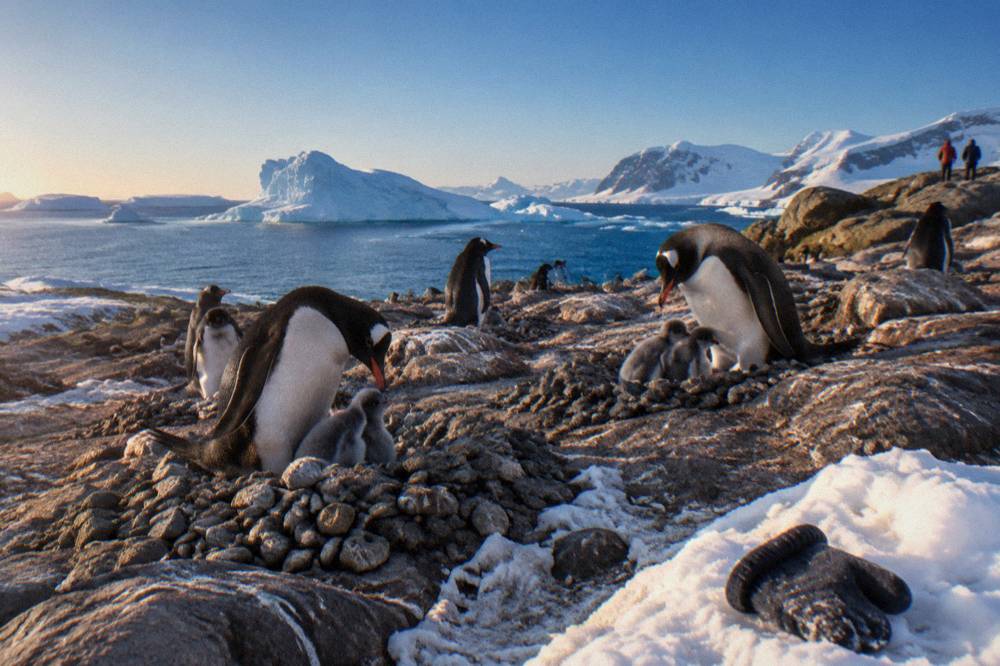
January is the season's peak: most penguin chicks have hatched, humpback whale sightings increase from mid-month onward, nearly all channels are ice-free, and temperatures of 0-3°C are common through to March. It is also the most expensive and most crowded month, with the highest visitor concentration of the calendar.
Prime penguin hatching continues through January, and the rookeries reach full volume: feeding adults, begging chicks and scavenging skuas all at once. Whale sightings, especially humpbacks, increase from mid-January onward, and the near-24-hour daylight of the solstice period carries into the month. On South Georgia and the Falklands, seal pups are best viewed mid-December to January, so combination itineraries that include those islands hit their stride now.
Operationally, January is the smoothest month. Most channels and inlets are ice-free, so expedition teams have the full menu of landing sites available, from the gentoo colonies of the South Shetlands to the continental landings at Neko Harbour and Paradise Bay. Some 2026-27 itineraries also attempt Antarctic Circle crossings as a southern extension, and January's open water makes those attempts more reliable than in the ice-heavy shoulder months.
The price of reliability is demand. IAATO counted 113,518 total visitors in the 2025-26 season, of whom 85,195 made landings, and those numbers concentrate heavily in the December-January core. If you sail in January you will share popular landing sites with other vessels' schedules, although IAATO's site coordination means only one vessel visits a landing site at a time, so the shore itself never feels like a pier. For a fuller picture of the rules that shape every landing, see our Antarctica wildlife cruise guide.
February: Whales, Molting Penguins And Circle Crossings
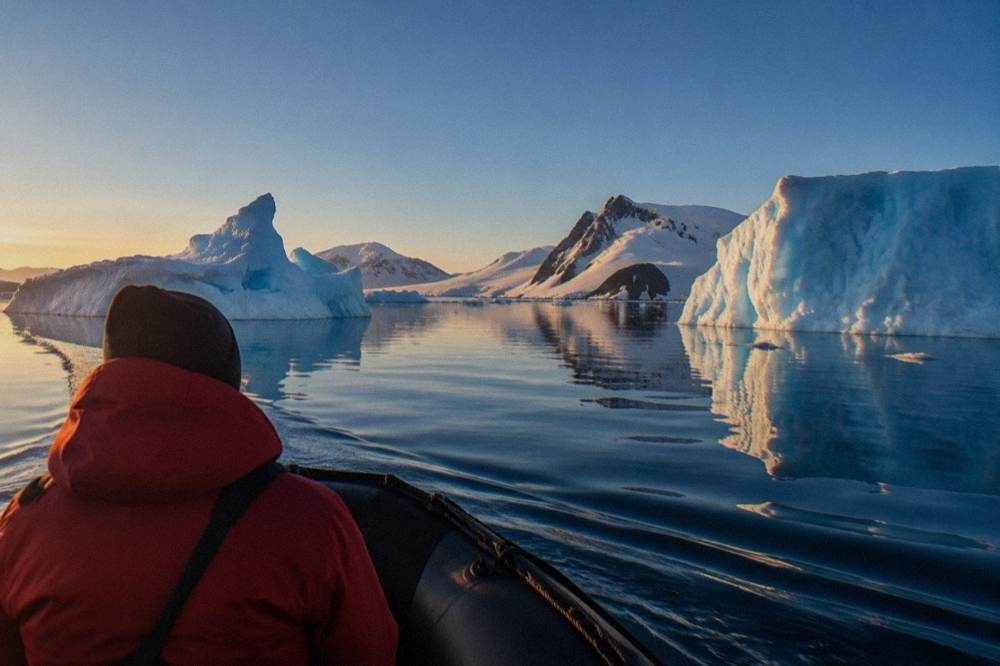
February is the best month for whale watching and a prime month for Antarctic Circle crossings. Adult penguins begin molting and chicks learn to swim on the Peninsula, leopard seals become possible sightings, and fur seal abundance rises. The snow is older and dirtier than November's, but the wildlife is at its most abundant.
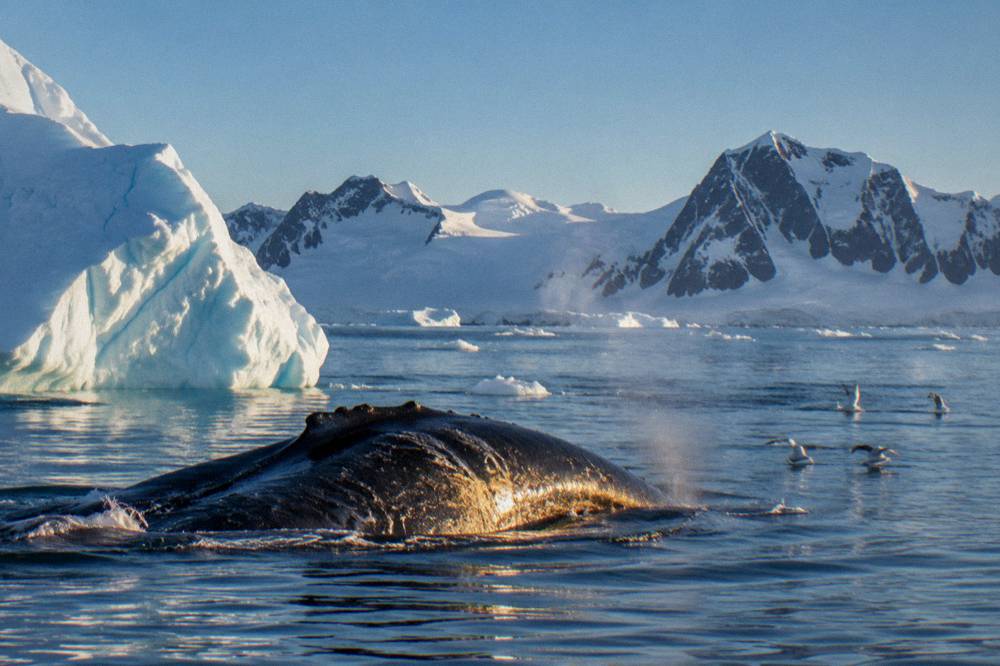
February through March is the peak for whale watching, photography and Circle crossings, according to operator season data. Humpbacks, minke whales and orcas feed in krill-rich Peninsula waters, and sightings are more consistent than earlier in the season because the feeding has been underway for weeks. On land, the rookeries shift character: adult penguins molt, and February features chicks at the creche stage learning to swim, which produces some of the season's most entertaining landing hours. Leopard seal sightings become possible, and fur seal abundance on the Peninsula is higher than in any other month.
February is also the month when the longer itineraries run. Voyages that include the Antarctic Circle attempt, 66°33′S, are scheduled with February departures because the southern channels are at their most open, and some extended Falklands, South Georgia and Peninsula combinations run in this window too. If a Circle crossing is the goal, February is the month with the best odds; our Antarctic Circle cruise guide covers those voyages in detail.
The compromises are cosmetic and chronological. The pristine November snow is gone, replaced by muddier rookery ground and well-tracked landing sites, and the first hints of autumn appear late in the month as daylight shortens. Fares sit below the December-January peak but above the November floor, making February a strong value month for travellers whose priority is wildlife over landscape.
March: Golden Light, Whales And The Lowest Fares
March closes the season with strong whale activity, fledging imperial shags and the best photographic light of the calendar, as the sun angle drops and evenings turn gold. It is also the cheapest month alongside November, with late-season departures carrying the lowest fares and the most cabin availability, at the cost of shorter days and a colder feel.
March offers fledging blue-eyed cormorants, or imperial shags, on the Peninsula and strong whale activity in krill-rich waters: humpback, minke and orca all remain through the month. Temperatures of 0-3°C remain common from January through March, so the cold is not dramatically worse than mid-season, but the light is. Photographers prize March for its low sun angle and long golden evenings, a genuine advantage over the flat midday light of the solstice weeks.
For budget travellers, March is one of the two value months. Operator "from" fares for the 2026-27 season anchor at the shoulder departures, and early-booking and late-season offers cluster at the edges of the calendar. The realistic all-in budget for a 10- to 12-day mid-range Peninsula trip, fare plus flights plus gear plus tips plus insurance, runs $12,000-$25,000 per person according to one 2026 cost guide, and choosing March rather than January moves you toward the lower end of that range on the fare component.
The trade-offs are real, though. Daylight shortens noticeably by mid-March, some penguin colonies thin out as chicks fledge and depart, and the season's last departures carry a slightly higher risk of weather-driven itinerary changes as conditions deteriorate toward winter. Whales, light and price are what you buy in March, and for many photographers that is a bargain.
Month By Month: What Each Month Of The Season Offers
The table below compresses the season into one view: November for ice and price, December and January for chicks and daylight, February for whales and Circle crossings, March for light and value. No month wins on every axis, which is why the season decision is a priorities decision rather than a facts decision.
| Month | Wildlife highlights | Ice and landscape | Light and weather | Fare level |
|---|---|---|---|---|
| November | Courting penguins, nest-building, elephant seal pups in the South Shetlands | Maximum snow, fresh icebergs, some channels blocked | Temperatures to around -5°C, cleanest landscapes | Lowest of the season |
| December | Chicks begin hatching mid-month, humpbacks return, South Georgia king penguin peak | Sea ice clearing, more sites reachable | Near-24-hour daylight around the solstice | High, first peak month |
| January | Peak chick season, humpback sightings increase from mid-month, seal pups on South Georgia | Most channels ice-free, full site menu | 0-3°C common, near-continuous light | Highest of the season |
| February | Peak whale watching, molting adults, chicks swimming, leopard seals possible | Open water, best odds for Circle crossings | Long golden evenings begin | Mid-range, below peak |
| March | Strong whale activity, fledging imperial shags, fur seal abundance high | Autumn hints, some colonies thinning | Best low-angle photographic light, shorter days | Low, alongside November |
Two patterns are worth pulling out of that table. First, wildlife and landscape peak at opposite ends of the season: November is the landscape month, February and March are the wildlife months, and December and January split the difference. Second, price tracks daylight and chicks rather than wildlife quality, so the traveller who wants whales over chicks can pay less by sailing later than the crowd.
How To Choose Your Month
Choose by your single strongest priority: penguin chicks mean December or January, whales mean February or March, pristine ice and the lowest fares mean November, and photography means March's low light or the solstice's endless days. Everything else, from ship to itinerary, flexes around that one choice.
Start with the wildlife question, because it is the one that cannot be fixed later. If seeing penguin chicks standing on their parents' feet is the image that brought you here, your window is late December through January, full stop; no other month offers it. If whales are the priority, mid-January onward, and especially February, is the answer. If the landscape itself is the draw, November's untouched snow has no equivalent later in the season, and March's golden light has no equivalent earlier. The table below maps the most common priorities onto the months that serve them best, with the trade-off each choice carries.
| Your priority | Best month(s) | The trade-off |
|---|---|---|
| Penguin chicks at the nest | Late December through January | Peak fares and the busiest weeks |
| Whale watching | February and March | Older snow, some colonies already thinning |
| Pristine ice and untouched snow | November | No chicks yet, colder, some channels closed |
| Golden photographic light | March | Shorter days and fewer landing hours |
| Antarctic Circle crossing attempt | February | More sea days, fewer chick-stage colonies |
| King penguins on South Georgia | December through February | Requires a longer, costlier voyage |
| Lowest possible fare | November or March | Shoulder wildlife timing |
Then overlay price and availability. The value months are November and March, the peak months are December and January, and February sits between. Entry-level expedition berths on Drake-crossing itineraries begin at roughly $7,500-$8,995 per person for 10- to 11-day Peninsula voyages in shared twin or triple cabins, according to 2026 reporting, and the same cabin in the same ship can differ by thousands between a November and a January departure. Early-booking offers for the 2026-27 and 2027-28 seasons commonly reach 10-30 percent off, with the deepest cuts on select unsold sailings, so locking a shoulder month early compounds the savings.
Finally, overlay the crossing. No single month is significantly better or worse for Drake Passage conditions, and conditions remain unpredictable year-round within the season, though the December-February summer core generally offers more stable windows. If the crossing worries you, that is a ship-and-route question rather than a month question, and our Drake Passage crossing guide covers it; the honest answer is that the calendar will not save you from the Drake Shake.
Does The Ship Change The Best Month?
Partly. Ice-classed ships with high polar ratings can push into heavier ice in October and November, helicopters open November-December emperor penguin voyages in the Weddell Sea, and small ships with 100 or fewer passengers ashore at a time land more often regardless of month. But the month's wildlife and price patterns hold across every vessel, so ship choice refines the season rather than overriding it.
A few ship-specific interactions are worth knowing. Ships with the strongest ice ratings, such as Hondius with its Polar Class 6 hull, have more options when November ice is still heavy, and the operator's Antarctic Peninsula voyages for 2026-27 are confirmed on its schedule from $7,800 per person. Vessels with helicopters, such as Quark's Ultramarine, are the ones that run the specialised Weddell Sea emperor penguin voyages, which target November-December departures and use helicopters for access when ice allows; if emperor penguins rather than Peninsula penguins are the goal, that single fact narrows your month for you.
Landing frequency is the other interaction. IAATO rules cap landings at 100 passengers ashore at a time from any vessel, so a ship at or below roughly 100 passengers can land everyone at once, while a 200-passenger ship must rotate groups. That does not change by month, but it changes how much of each month's wildlife you personally see. The National Geographic Endurance, carrying 138 guests with a PC5 ice class and a patented X-Bow hull, sits in the sweet spot: small enough to land in two rotations, large enough to carry the expedition staff and hardware that make landings rich. Its 12-day Voyage to Antarctica starts from $11,900 per person, and the ship's 2026-27 schedule is confirmed on the operator's page.
For a like-for-like look at how three very different ships price the same season, the table below compares the Endurance against a small-ship budget vessel and a luxury ship. The class differences, budget against standard against luxury, matter more for the onboard experience than for the wildlife, but the fare gaps are large enough to shape which months are realistic at each tier.
| Ship | Operator | Class | Passengers | Ice class | Season fare from |
|---|---|---|---|---|---|
| Hondius | Oceanwide Expeditions | small-ship budget | 170 | Polar Class 6 | $7,800 pp |
| National Geographic Endurance | Lindblad Expeditions | standard expedition | 138 | PC5 | $11,900 pp |
| Le Boréal | Ponant | luxury | 264 | not stated | $23,020 pp |
| Ship | Class | Passengers | Ice class | From, per person | Voyage length | Departs from |
|---|---|---|---|---|---|---|
| National Geographic EnduranceLindblad Expeditions (with National Geographic) | Standard Expedition | 138 | PC5 | from $11,900 | 12 to 22 days | Ushuaia |
| HondiusOceanwide Expeditions | Small-Ship Budget | 170 | Polar Class 6 | from $7,800 | 11 to 19 days | Ushuaia |
| Le BoréalPonant | Luxury | 264 | – | from $23,020 | 19 days | Ushuaia, Buenos Aires |
The pattern in that comparison repeats across the whole season: the budget tier anchors the November and March shoulders, the luxury tier prices long combination voyages such as Ponant's 19-day Great Austral Loop, and the standard expedition tier, where the Endurance sits, covers the full calendar with the deepest naturalist programming. Quark's fares, for reference, are voyage-level and shared across its ships, so the same Antarctic Explorer voyage price applies whichever of its vessels sails it; do not treat a Quark fare as ship-exclusive.
Booking Around The Season: Timing Your Reservation
Book 12 to 18 months ahead for December and January peak sailings, earlier for specific cabins such as solo berths or suites, and accept that shoulder-month travellers can sometimes wait longer. Early-booking offers commonly reach 10-30 percent off, while last-minute discounts are limited in availability and rare for peak December departures.
The booking calendar mirrors the season calendar. Peak December sailings book 18 or more months ahead, according to booking-pattern reporting, and the most desirable cabin categories on small ships go first because there are simply fewer of them. Solo travellers face a specific wrinkle: single supplements typically range from 25 percent extra to 1.5-2 times the twin rate, although some lines waive them on select sailings, and those waiver sailings are announced season by season rather than on a fixed schedule.
Shoulder-month travellers have more room. November and March departures retain cabin choice much later into the booking cycle, and the deepest discounts cluster on select unsold sailings, which by definition are the ones the crowd did not want, usually the shoulder edges. The risk of waiting is concentration: if your heart is set on one specific ship, such as a 138-guest vessel with only a handful of departures, the shoulder can sell out even when the peak does not.
Insurance is the last piece of seasonal timing. Travel insurance with medical evacuation cover is required or recommended by most operators and is never included in the base fare, and major operators set their own high minimums for evacuation coverage, with proof often required pre-departure or at check-in. Our Antarctica travel insurance guide covers the requirements; the seasonal point is simply that the policy belongs in the booking timeline, not the packing month.
If you know your month but not your ship, or the reverse, that is precisely the knot a consultation unties: match your dates to the right ship before fares move.
Common Questions About The Best Time To Visit Antarctica
What Is The Best Time To Visit Antarctica?
There is no single best month. December and January offer penguin chicks, near-24-hour daylight and the widest choice of landing sites; February and March are best for whales, photographic light and lower fares; November offers pristine snow, courting penguins and the lowest prices of the season.
What Is The Warmest Month In Antarctica?
On the Antarctic Peninsula, temperatures of 0-3°C are common from January through March, making these the mildest months. November can drop to around -5°C. Coastal Peninsula conditions are far milder than the continental interior at any time of year.
When Can You See Penguin Chicks In Antarctica?
Penguin chicks typically begin hatching mid-December on the Peninsula, with prime hatching for gentoo, Adélie and chinstrap penguins running late December into January. By February the chicks are at the creche stage and learning to swim, and by March many have fledged.
When Is Whale Season In Antarctica?
Whale sightings, especially humpbacks, increase from mid-January onward, and February through March is the peak for whale watching, with humpback, minke and orca feeding in krill-rich Peninsula waters.
What Is The Cheapest Month To Cruise Antarctica?
November and March, the shoulder months of the season, carry the lowest fares and the most cabin availability. Entry-level Drake-crossing berths begin around $7,500-$8,995 per person in shared cabins, and the lowest published fares anchor on early and late departures.
How Long Is The Antarctic Cruise Season?
Expedition cruises operate from mid-October to mid-March, within a seven-month austral summer running October to April. Roughly 98 percent of tourism voyages occur in the Antarctic Peninsula during that summer window.