Avian Flu In Antarctica: What H5N1 Changes For Visitors
 By Oleg G.
H5N1 avian influenza reached the Antarctic region in 2023 and has been detected there in every season since. Landings still happen, but under stricter biosecurity rules that shape what a day ashore looks like on any expedition cruise.
Quick answer: H5N1 avian flu was first confirmed at South Georgia in October 2023 and on the Antarctic Peninsula in December 2023. It has killed skuas, gulls, penguins and seals, with detections continuing into 2025-26, though no large-scale mass mortality has been reported. Landings still take place under IAATO protocols: scouting before landing, cancelled landings if sick birds are seen, no sitting or kneeling, and boot disinfection between sites.
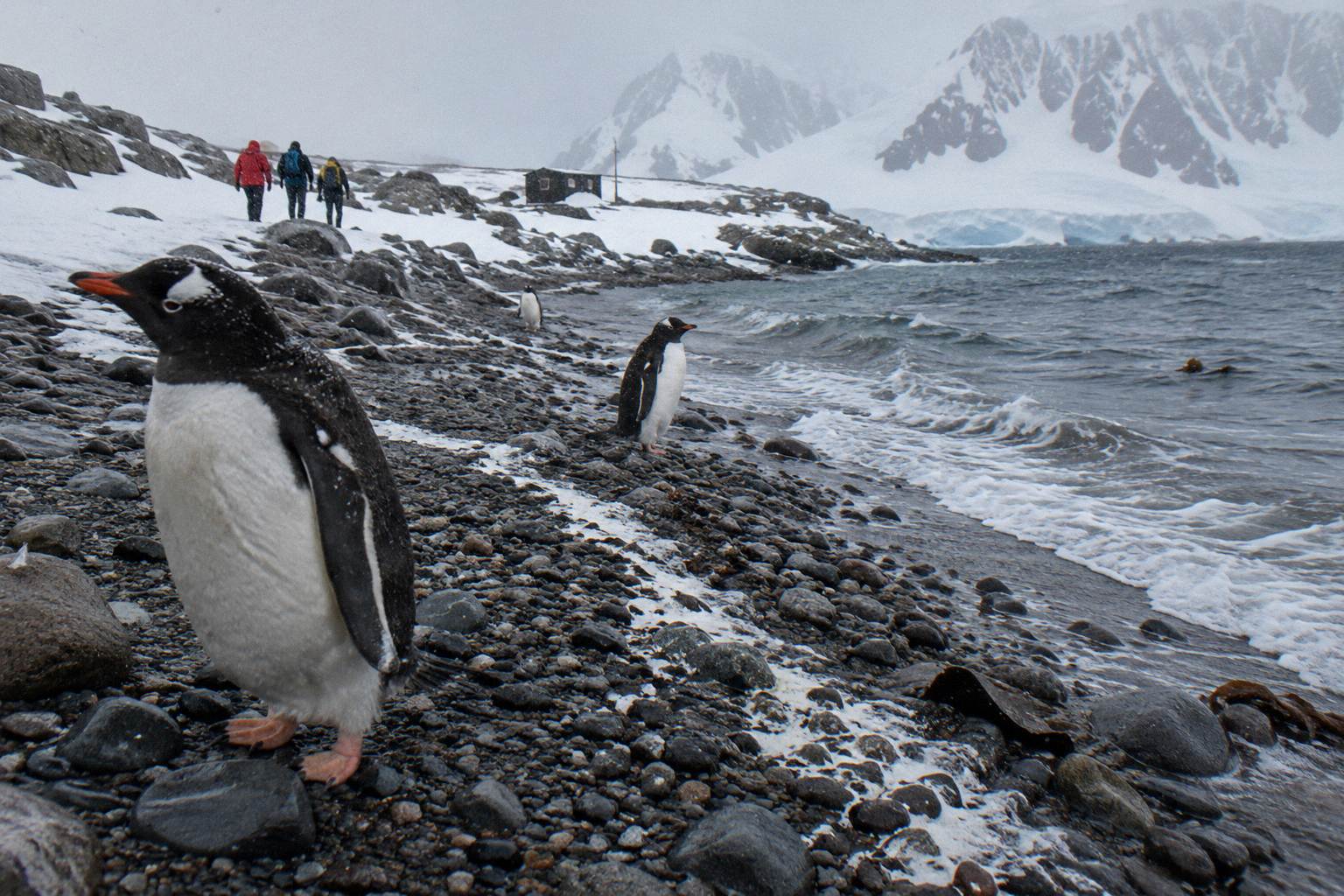
Avian influenza reached the Antarctic region in October 2023, when highly pathogenic H5N1 was confirmed at South Georgia, and it arrived on the Antarctic Peninsula itself two months later. For anyone planning an expedition cruise, the obvious questions follow: do landings still happen, are penguins dying, and will the rules change the trip? The short answers are yes, some have, and somewhat. This guide sets out what is known, what IAATO's protocols now require of operators, and how a day ashore on an Antarctica cruise differs from the one described in a pre-2023 brochure.
What Is Avian Flu In Antarctica?
Highly pathogenic avian influenza H5N1 is a virus that spreads among wild birds and, in Antarctica, has also affected marine mammals. It reached South Georgia in October 2023 and the Antarctic Peninsula in December 2023, according to Antarctica New Zealand guidance for the 2026-27 season. Detections have continued into 2025-26 in the Antarctic Peninsula region and as far as Heard Island. Landings by expedition cruise have continued throughout, under tightened biosecurity rules rather than blanket closures.
The strain involved is the same H5N1 lineage that has circulated widely among wild birds and poultry on other continents. In Antarctic wildlife it has caused mortality in seabirds, including skuas, gulls, albatrosses and penguins, and in marine mammals, with southern elephant seals described as particularly affected in the scientific literature. That is the recorded picture; it is not a reason to cancel a voyage, and it is not a signal that Antarctica tourism has stopped.
What it does change is operational. The International Association of Antarctica Tour Operators (IAATO), the industry body for tour operators working in the region, adopted enhanced biosecurity measures that remain in force. Every expedition cruise to the Peninsula now runs under these measures, from the largest 500-passenger landing vessels down to ships like Plancius, Oceanwide Expeditions' converted Dutch oceanographic vessel that carries 108 passengers in 50 cabins. The measures are the subject of the later sections here; first, the factual record.
When And Where Was H5N1 First Detected?
The first confirmed detections came at South Georgia in October 2023, followed by the Antarctic Peninsula in December 2023, according to Antarctica New Zealand's HPAI guidance for the 2026-27 season. A US Antarctic Program guidance document states the virus was first confirmed on the Peninsula in February 2024 and has spread through subsequent seasons, with detections continuing into 2025-26. Those two timelines differ on the exact first Peninsula date, and both are reported here.
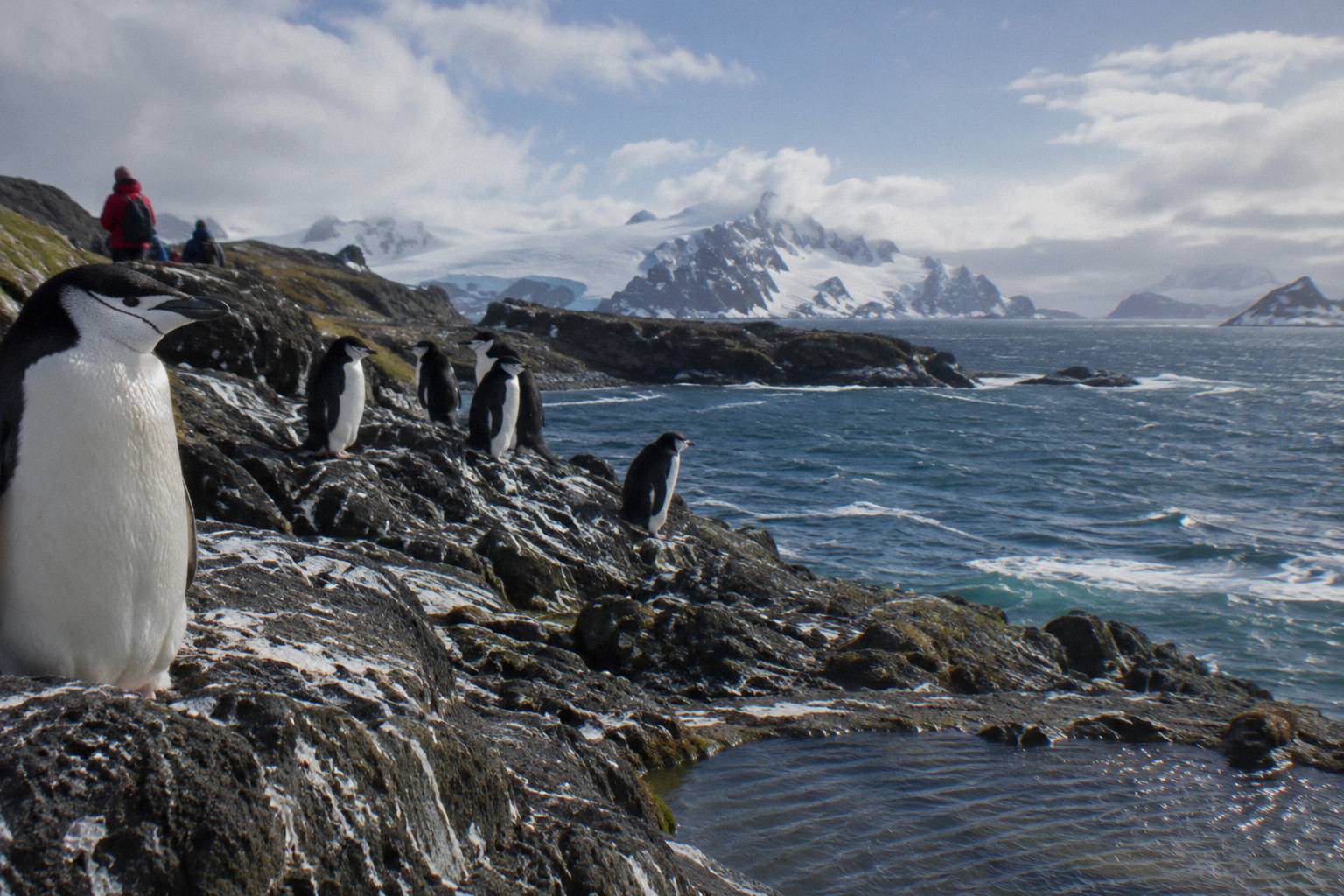
The timeline matters for travellers mainly because it establishes that this is not a one-off event that faded away. The US Antarctic Program's 2026 guidance notes an ongoing high risk of continued spread during the 2026-27 austral summer, and names skuas, gulls and fur seals as particularly susceptible species. Scientific reporting through mid-2026 recorded detections in the Antarctic Peninsula region and as distant as Heard Island without reporting large-scale mass mortality.
A peer-reviewed account of the expansion of H5N1 through the Antarctic region documents mortality across the Antarctic Peninsula, South Georgia and other sites, and an epidemiological study published in 2026 documented significant pup mortality in southern elephant seals at multiple sub-Antarctic and Antarctic locations. No collapse of penguin colonies at the main tourist landing sites has been reported.
If you are weighing whether to book an Antarctic expedition cruise for this season or next, the practical question is not whether the virus is present but how your chosen operator runs landings under the protocols. A free consultation on Antarctic voyage options can tell you which ships and itineraries are operating normally and what operators themselves are saying about site conditions.
Which Species Have Been Affected?
Species recorded as affected by H5N1 in the Antarctic region include skuas, gulls, albatrosses, penguins, and seals, specifically southern elephant seals, fur seals and crabeater seals. Adélie and gentoo penguins are named among affected penguin species in the verified reporting. Southern elephant seals have been particularly affected, with outbreak-linked pup mortality documented at multiple sub-Antarctic and Antarctic locations in a 2026 study.
The bird species on that list overlap heavily with what passengers hope to see. Skuas patrol most penguin colonies on the Peninsula; gentoos are the penguin you are most likely to stand among at sites like Port Lockroy and Neko Harbour; albatrosses follow ships across the Drake Passage in numbers that make the crossing a birdwatching event in its own right. The virus being present in these populations does not mean you will see sick animals; whether a given site shows signs of disease on the day is precisely what the scouting protocol checks for.
The table below summarises what is known, species group by species group.
| Species group | Species named | Recorded impact |
|---|---|---|
| Seabirds | Skuas, gulls, albatrosses | Mortality recorded across Peninsula and South Georgia sites |
| Penguins | Adélie, gentoo | Mortality recorded; no colony collapse at main landing sites reported |
| Seals | Southern elephant seal, fur seal, crabeater seal | Elephant seal pup mortality documented at multiple locations; fur seals named highly susceptible |
| Status | Whole region | Detections continuing into 2025-26; no large-scale mass mortality as of mid-2026 |
The distinction between bird mortality and mammal mortality is worth holding onto. The documented seal deaths, particularly among southern elephant seal pups, represent the most significant mammal impact in the record. For cruise passengers the seal species most often encountered at close range, Weddell seals and leopard seals hauled out on ice, have not been reported as mass-mortality victims, though crabeater seals are listed among affected species.
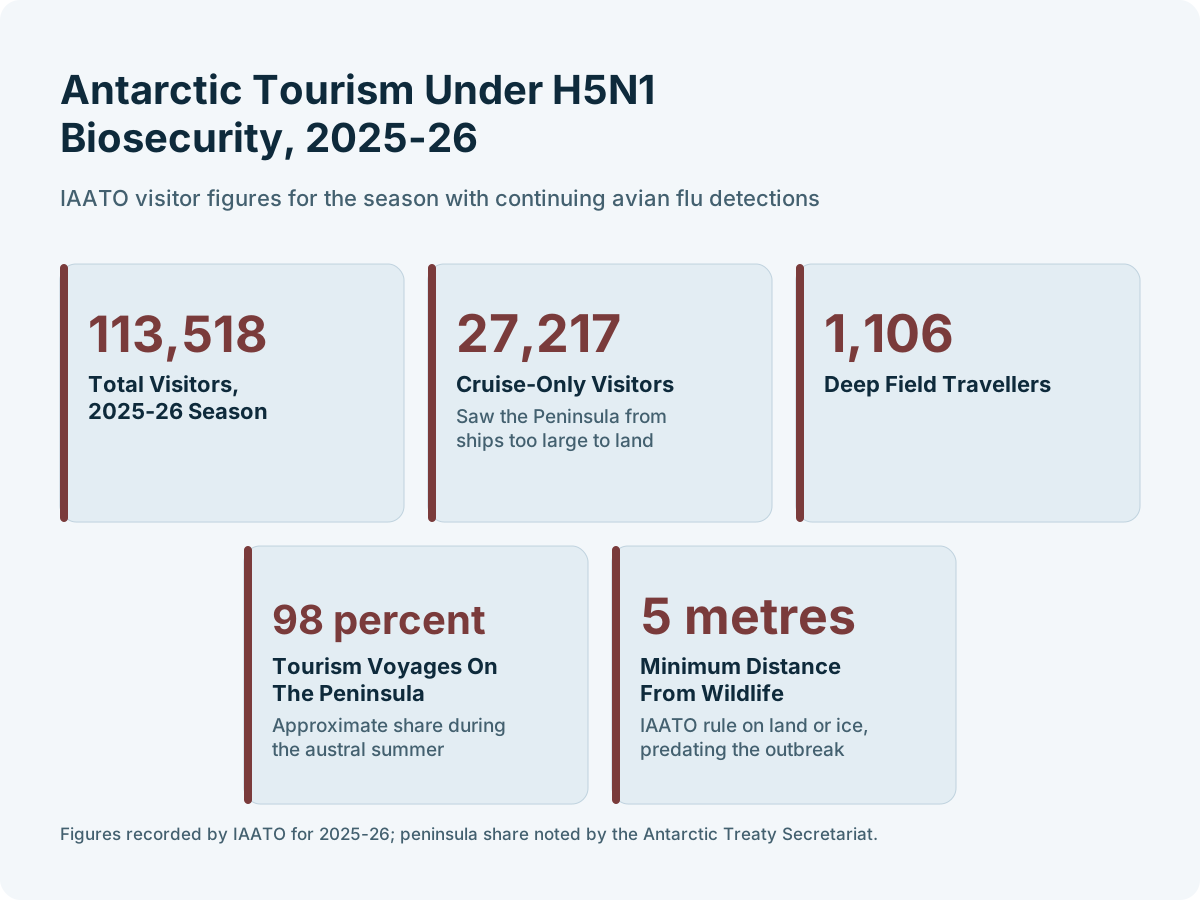
Total deaths across the region have not been quantified. Ask your operator's medical team about any personal health concern. The IAATO visitor rules that predate the outbreak, including keeping at least 5 metres from wildlife on land or ice, were already in force; the avian flu era adds biosecurity on top of them, not instead of them.
What Is The Current Status Of H5N1?
As of the 2025-26 season, H5N1 detections continued in the Antarctic Peninsula region and as far as Heard Island, with no large-scale mass mortality reported as of mid-2026, according to monitoring summaries. The US Antarctic Program's 2026 guidance rates the risk of continued spread during the 2026-27 austral summer as high. Tourism has continued throughout, with 113,518 total visitors recorded by IAATO for 2025-26, including 85,195 who made landings.
That last figure is the one worth dwelling on. The 2025-26 season, two full seasons after the virus arrived, saw more than eighty-five thousand people step ashore at Antarctic landing sites under the IAATO framework. Whatever else H5N1 has changed, it has not stopped the expedition cruise industry from operating, and it has not produced the region-wide landing bans that some early coverage feared.
The 2025-26 numbers also show the shape of Antarctic tourism clearly: 27,217 visitors were cruise-only, meaning they saw the Peninsula from ships too large to land, and 1,106 travelled deep field. The overwhelming majority of landed visits happen on the Antarctic Peninsula, which the Antarctic Treaty Secretariat notes hosts approximately 98 percent of all tourism voyages during the seven-month austral summer from October to April.
For a traveller choosing dates, the practical reading is that conditions are monitored continuously rather than resolved. Individual sites can be closed or restricted on short notice when dead or sick birds are found, which is why expedition leaders keep alternative plans; the same flexibility that has always applied to ice and weather now applies to disease. Antarctica21's published flight data from a different context, 346 fly-cruise flights through April 2025, shows how routinely polar operations absorb delays and reroute; wildlife disease is handled in the same operational spirit.
How IAATO Landing Protocols Have Changed
IAATO-aligned protocols for the 2025-26 and 2026-27 seasons require operators to scout landing sites before passengers go ashore, and to cancel or restrict landings if signs of disease are present. Passengers must keep minimum distances from wildlife, must not sit or kneel on the ground, and boots and gear must be disinfected with Virkon or equivalent before and after landings and between sites. These sit on top of standing IAATO rules on ashore numbers.
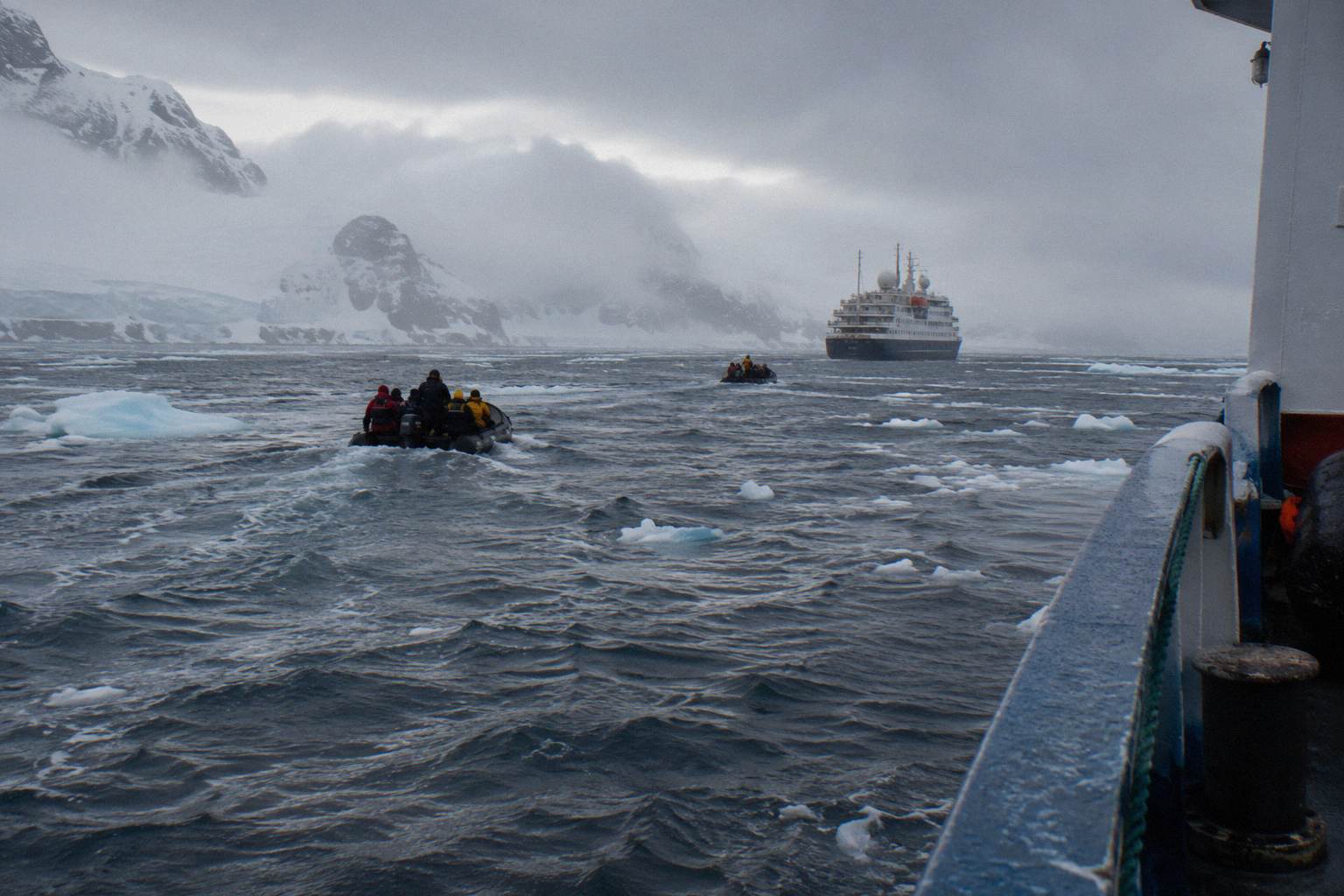
The scouting requirement is the structural change. Before a landing is confirmed, expedition staff go ashore first, or assess from Zodiacs, looking for dead birds, birds behaving oddly, or other signs of disease. If they find them, the landing is cancelled or converted to a Zodiac cruise, where passengers view wildlife from the water without setting foot on land. Passengers lose a walk among penguins; they usually still get the wildlife, at a greater distance. The wider set of guides lives on Cruises In Antarctica.
The no-sitting, no-kneeling rule surprises people who have read older accounts of Antarctic landings, in which photographers crouched at penguin-eye level. Under the current rules you stay on your feet, which changes how you photograph and how long you can comfortably stay out in wind and cold. The reasoning is straightforward: contact with contaminated ground, feathers or faeces is the transmission route the biosecurity measures target, and a kneeling human is a very effective sampler of all three.
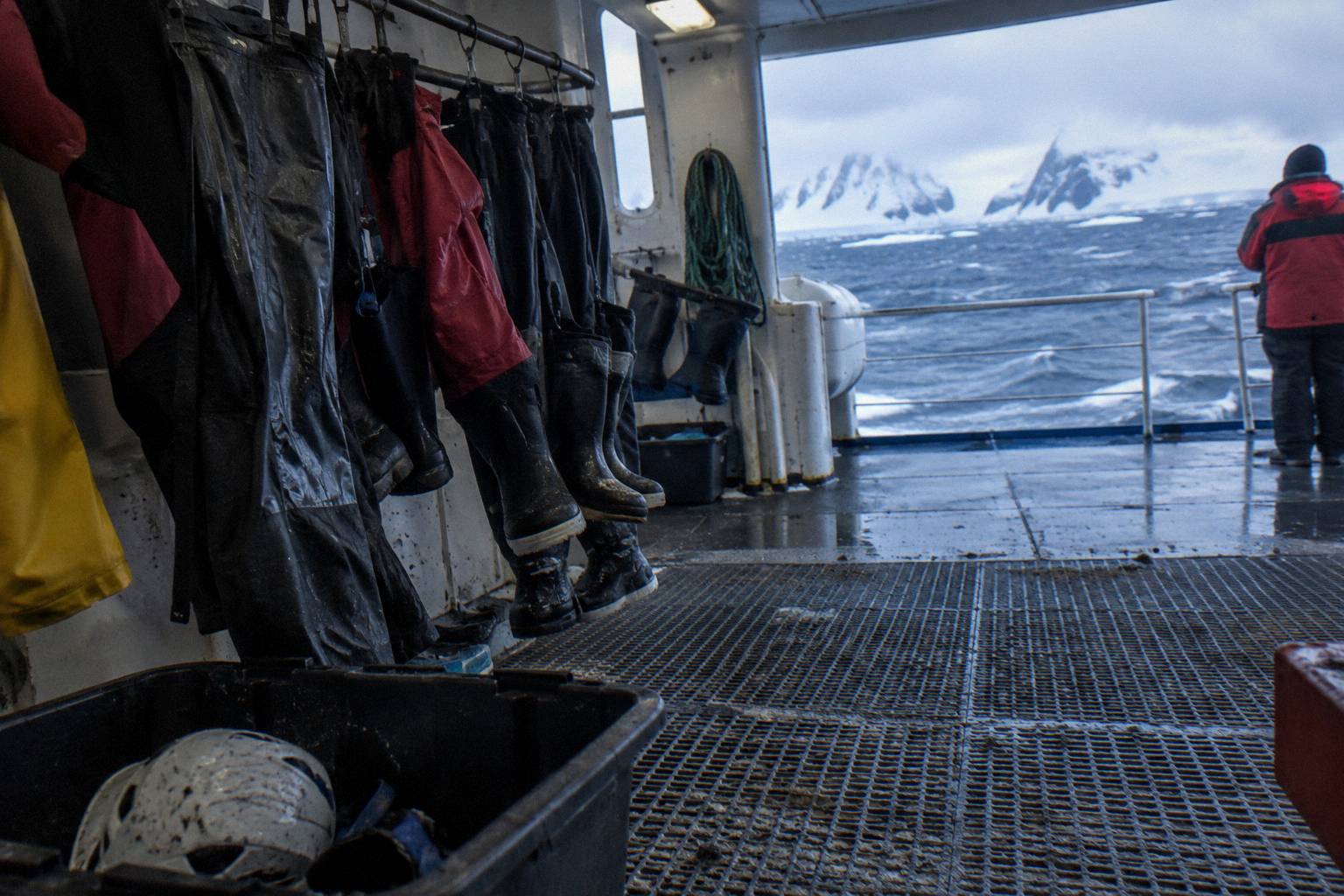
Disinfection is the most visible daily ritual. Before your first landing you will be asked to vacuum and clean every item of outdoor gear, including clothing, bags, tripods and walking sticks, in line with the general IAATO visitor guidance, and boot-washing stations with Virkon solution operate at the gangway or mudroom, used before and after every landing and between sites. On ships with a proper mudroom, such as the small expedition vessels described in our guide to how Antarctic shore landings work, this becomes a fixed part of the routine: off with muck boots, through the bath, boots into the rack, out to the briefing.
The measures that apply to you as a passenger, and the standing rules they layer onto, are summarised below.
| Requirement | What it means for you | Status |
|---|---|---|
| Gear cleaning before the voyage | Vacuum and wash all outdoor clothing, bags, tripods and sticks before travel | IAATO general guidance |
| Boot disinfection | Step through Virkon bath before and after every landing, and between sites | Avian flu protocol |
| No sitting or kneeling on the ground | Stay standing for the whole time ashore | Avian flu protocol |
| Pre-landing scouting | Staff check the site first; landing cancelled or restricted if disease signs found | Avian flu protocol |
| 5 metre wildlife distance | Keep back from all animals; more where site guidance requires | Standing IAATO rule |
| 100 ashore limit, one ship per site | Group rotations on larger vessels | Standing IAATO rule |
None of this is optional, and none of it is negotiable with the expedition team. The rules trace back through IAATO to the Antarctic Treaty System's environmental protocol, the same framework covered in detail in our guide to the IAATO rules that govern every Antarctic voyage. If you want a sense of how strictly a crew takes biosecurity before you book, ask in a consultation what their pre-landing assessment looks like this season.
How Avian Flu Changes A Day Ashore
A landing under the current protocols differs in four ways: your gear was vacuumed and inspected before you left the ship, you step through a Virkon boot bath at the gangway in both directions, you stay standing the whole time ashore, and there is a real chance the site switches to a Zodiac cruise at short notice if scouts find dead birds. The landing itself, typically one to two hours shared by no more than 100 people from your ship, runs otherwise much as it always has.
Consider a typical morning at a gentoo colony. The announcement comes over the ship's PA after breakfast: scouting complete, landing approved, first Zodiac group to the mudroom in twenty minutes. You are already wearing your cleaned layers; the boots you borrowed or brought were checked against the biosecurity list. At the gangway a crew member sprays or dips each sole in disinfectant. Ashore, guide ropes and staff positions mark where you may walk, and a guide reminds the group that nobody sits down.
The wildlife behaves as wildlife does. Penguins cross the pebbles on their penguin highways, seals haul out on the ice at the waterline, skuas circle the colony edges. You keep at least 5 metres back, more where species-specific guidance requires it, and you give any animal showing odd behaviour a wide berth and mention it to a guide. Back on board, the boot bath again, and the expedition leader opens the evening recap with a status update for tomorrow's sites.
What has not changed is the rhythm set by the IAATO framework that predates the virus: one landing at a time, one ship per site, groups rotated so the hundred-person limit holds. On a 108-passenger ship like Plancius the full complement sits just above the limit, so rotations are short; on larger vessels the rotation is the main mechanism that keeps the site compliant. The virus has added steps before and after the landing, not a reduction in landing frequency that has been documented.
If you are comparing ships partly on how much time ashore the protocols allow, a conversation about ships and itineraries will get you honest answers about passenger counts, mudroom design and how each operator has handled site closures this season.
What Biosecurity Means For Your Gear
The biosecurity obligations that fall on the passenger are gear hygiene before the voyage and compliance with disinfection routines on it. IAATO's general visitor guidance asks that you carefully wash boots and clean all equipment, including clothes, bags, tripods, tents and walking sticks, before bringing them to Antarctica, and clean again between sites. On board, the operator supplies the Virkon stations; your job is to use them every time.
The before-the-voyage step catches people out. That camera backpack that has been on a seabird cliff in Scotland, the tripod that stood in a farm field, the down jacket worn around domestic waterfowl: all of it is potential vector material. Vacuum the pockets, wipe the straps, wash what can be washed. Our guide to what to pack for an Antarctic cruise covers the practical kit list; the biosecurity addition is simply that everything arrives clean.
Two restrictions deserve mention because passengers ask about them often. Recreational drone flying is generally not allowed for passengers on IAATO member voyages, and the Antarctic Treaty visitor guidelines state that drones must not be used near wildlife. And the prohibition on removing natural items, rocks, feathers, bones, eggs and the rest, long predates avian flu, but it carries extra weight now: handling a dead bird's feather is both illegal and the exact contact route the protocols exist to prevent.
Clothing that cannot be cleaned properly should not travel. If your parka has a down-filled exterior that has been through a poultry farm, find another parka; in practice, several operators, Oceanwide and Quark among them, include a parka and loaned boots in the fare, which conveniently puts the most contaminated-prone items under the operator's own disinfection regime.
Choosing A Small Ship Under The New Rules
Small ships have an operational edge under biosecurity protocols because fewer passengers ashore means fewer rotations, shorter disinfection queues and more flexible site choices when a landing is cancelled. The budget tier is anchored by three Oceanwide Expeditions vessels, Plancius, Hondius and Ortelius, sailing from Ushuaia on voyages from 10 to 33 days, with Peninsula fares from $7,050 per person on Plancius according to the operator's listed fares.
Plancius herself is a useful case study in what the virus era rewards. She carries 108 passengers in 50 cabins, only a few above the 100-passenger limit ashore, so a landing needs little rotation, and her expedition program runs 10 Mark V Zodiacs with two gangways, which keeps landing logistics quick when a site window is short. She was built in 1976 as a Dutch Navy oceanographic vessel and rebuilt as a passenger ship in 2009, with an ice class of 1D at a 5 metre draught. She is a budget expedition ship rather than a luxury one, and her small size is what the biosecurity era rewards.
Her fleetmates cover different niches. Hondius, built in 2019 and the first-registered Polar Class 6 passenger vessel in the world, carries 170 passengers in 80 cabins and runs the Basecamp voyages on which camping, kayaking, snowshoeing and photo workshops are included activities; those off-ship programs give a cancelled landing more alternatives to absorb. Ortelius, a 1989-built former Russian research vessel carrying 108 passengers, is the ship for the remote itineraries, including helicopter-supported Weddell Sea emperor penguin voyages, where the expedition nature of the sailing is total. Deeper comparisons live in our guides to Hondius and Ortelius.
The table below sets the three ships side by side on the numbers that matter under the current protocols.
| Ship | Passengers | Built | Ice class | Voyage days | From fare (pp) |
|---|---|---|---|---|---|
| Plancius | 108 | 1976, rebuilt 2009 | 1D | 10/11/13/15/19/21/33 | $7,050 |
| Hondius | 170 | 2019 | Polar Class 6 | 11/13/19 | $7,800 |
| Ortelius | 108 | 1989 | UL1 (equivalent 1A) | 11/13/25 | $7,800 |
| Ship | Class | Passengers | Ice class | From, per person | Voyage length | Departs from |
|---|---|---|---|---|---|---|
| PlanciusOceanwide Expeditions | Small-Ship Budget | 108 | 1D | from $7,050 | 10 to 33 days | Ushuaia |
| HondiusOceanwide Expeditions | Small-Ship Budget | 170 | Polar Class 6 | from $7,800 | 11 to 19 days | Ushuaia |
| OrteliusOceanwide Expeditions | Small-Ship Budget | 108 | UL1 | from $7,800 | 11 to 25 days | Ushuaia |
Whether the budget tier is right for you at all is a fair question at this point in the research. The same season's fares on upscale expedition lines start roughly $5,000 per person higher, and the trade-offs between ship comfort and time ashore are covered in our guide to whether a nicer ship is worth it in Antarctica.
How The Virus Era Compounds With Weather And Season Choices
Site closures for disease overlap with the closures that ice, swell and wind have always caused, which makes any voyage slightly more exposed to itinerary change. Expedition teams have always run Plan A, B and C options, monitoring forecasts every four to six hours with the captain and switching landing sites for wind, swell or ice; disease scouting is now one more input into that same loop. No measurable increase in cancelled landings attributable to H5N1.
The honest framing is that Antarctic itineraries were never guaranteed. Landings can be cancelled or shortened due to weather, ice or wildlife conditions, and always could be; the virus adds a disease criterion to an existing list. Passengers who fixate on one named site, one specific channel, one particular colony, are the ones most often disappointed. Passengers who treat the itinerary as a menu the expedition leader works through tend to come home with more than they expected.
Season choice interacts with this only mildly. The virus's risk profile in the US Antarctic Program guidance is stated for the austral summer as a whole, not by month, so there is no basis for claiming November is safer or March riskier on disease grounds. The classic seasonal logic for choosing a month, penguin chicks in December and January, peak whale numbers in February and March, better Circle-crossing ice late season, still applies and is unaffected.
Insurance remains the quiet half of the preparation. Most operators require proof of medical evacuation cover, with minimums that vary by line, and full trip-cost insurance covering cancellation and weather delay is standard advice; the operator requirements comparison maintained by a specialist insurer lists the per-operator minimums. None of that is new to the H5N1 era, but a season with a live disease risk is not the season to travel underinsured.
Common Questions About Avian Flu In Antarctica
Is H5N1 avian flu in Antarctica?
Yes. The virus was first confirmed at South Georgia in October 2023 and at the Antarctic Peninsula in December 2023, and detections have continued in the Antarctic Peninsula region into the 2025-26 season.
Are Antarctic cruises still landing passengers?
Yes. IAATO recorded 85,195 landed visits in the 2025-26 season, all under enhanced biosecurity protocols including pre-landing scouting, disinfection and wildlife distance rules.
Which animals has avian flu killed in Antarctica?
Recorded mortality includes skuas, gulls, albatrosses, penguins including Adélie and gentoo, and seals including southern elephant seals, fur seals and crabeater seals, with elephant seal pup mortality documented at multiple locations.
Why can't you sit or kneel on the ground in Antarctica?
The restriction is a biosecurity measure: contact with contaminated ground, feathers or faeces is a transmission route for H5N1, so passengers stay on their feet at all landing sites.
Can a landing be cancelled because of avian flu?
Yes. Under IAATO protocols, operators scout sites before landing and cancel or restrict landings if sick or dead birds are found, often substituting a Zodiac cruise.
Does avian flu make it dangerous to visit Antarctica?
The measures in place are directed at protecting Antarctic wildlife from transmission. Ask your operator's medical team about any personal health concern.
More Rules, Safety And The Environment
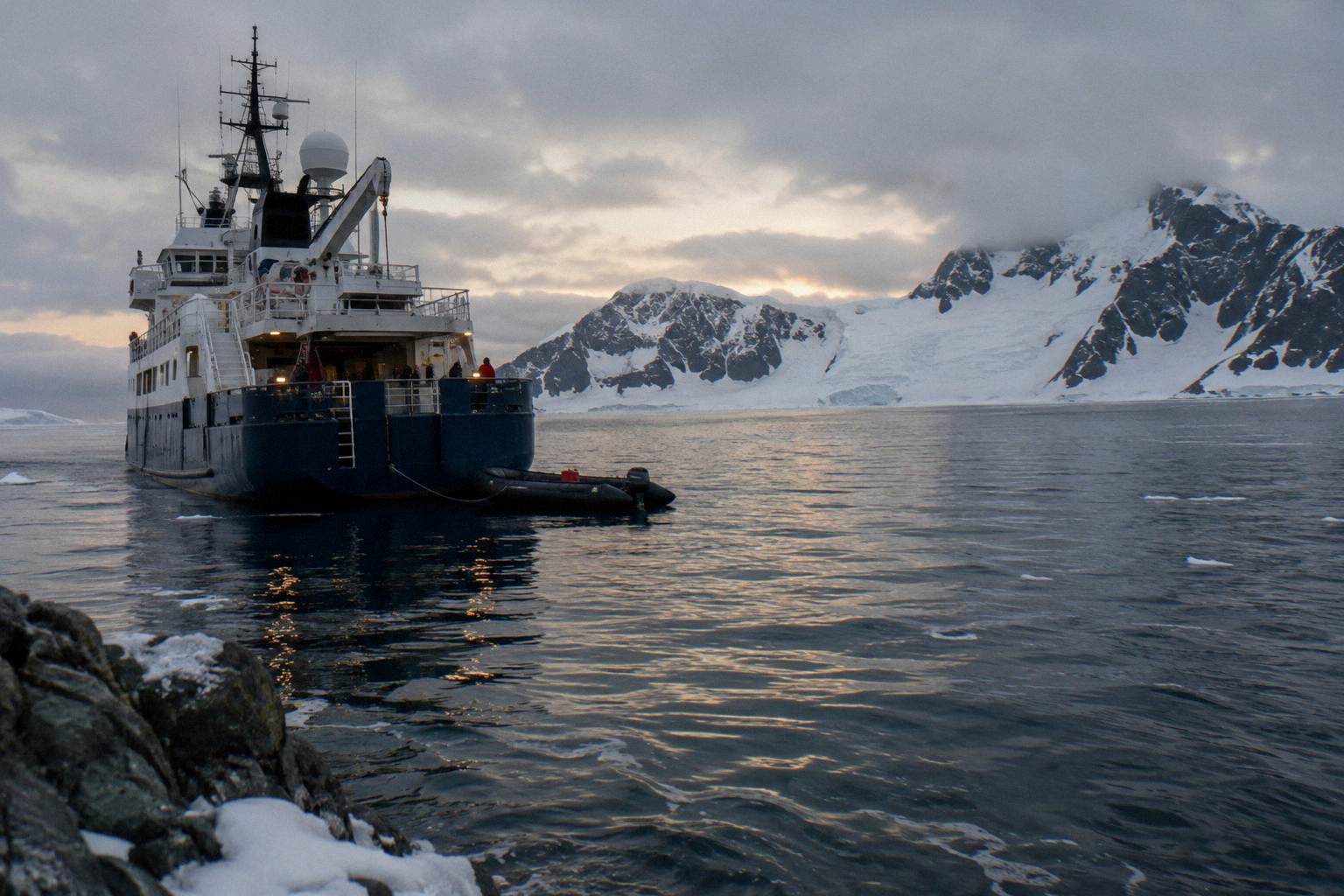 IAATO RulesThe rules every Antarctica visitor follows, from the 100-ashore limit to souvenir bans.Read the guide
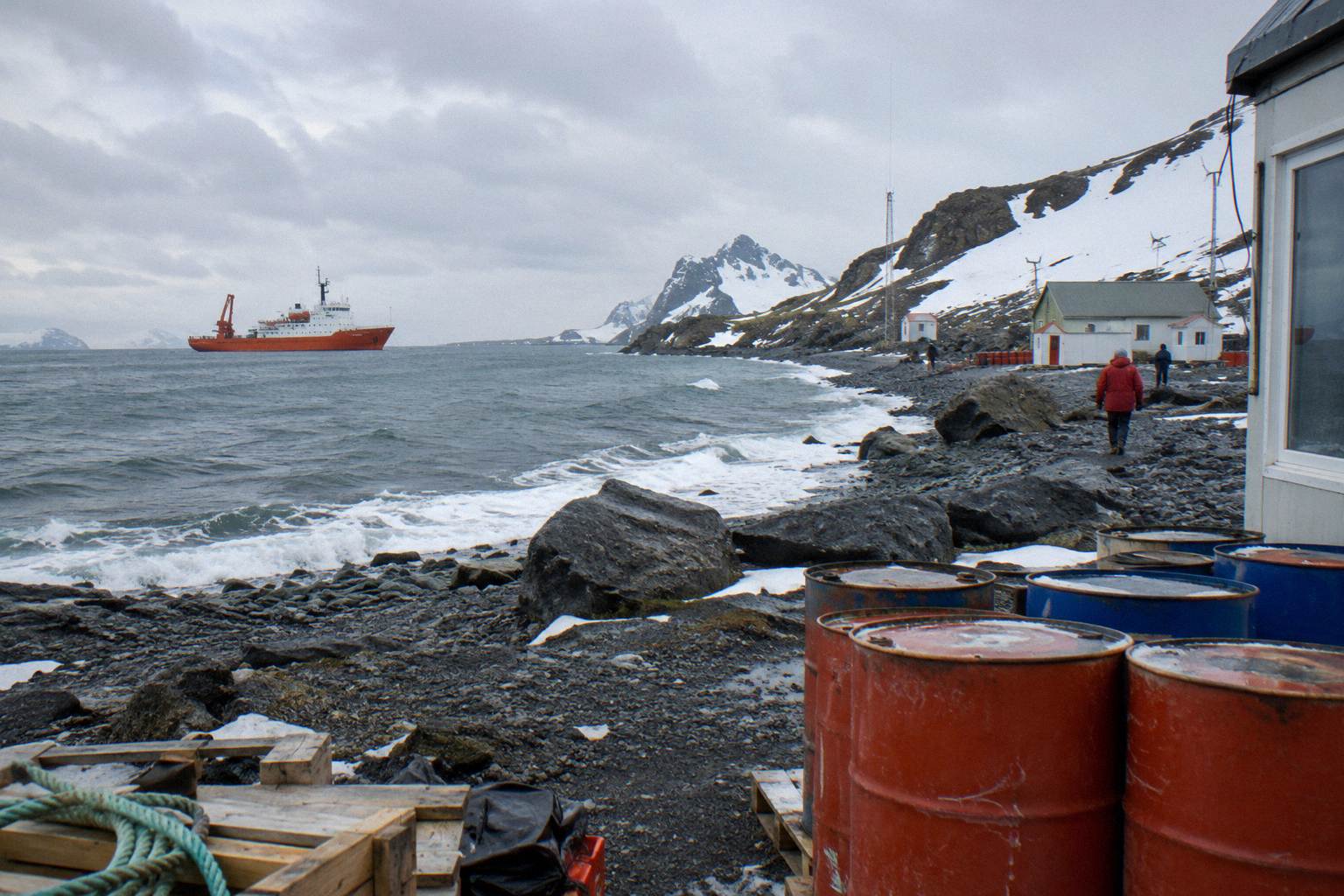 Research StationsWhich Antarctic bases let cruise passengers ashore, and which stay firmly closed.Read the guide
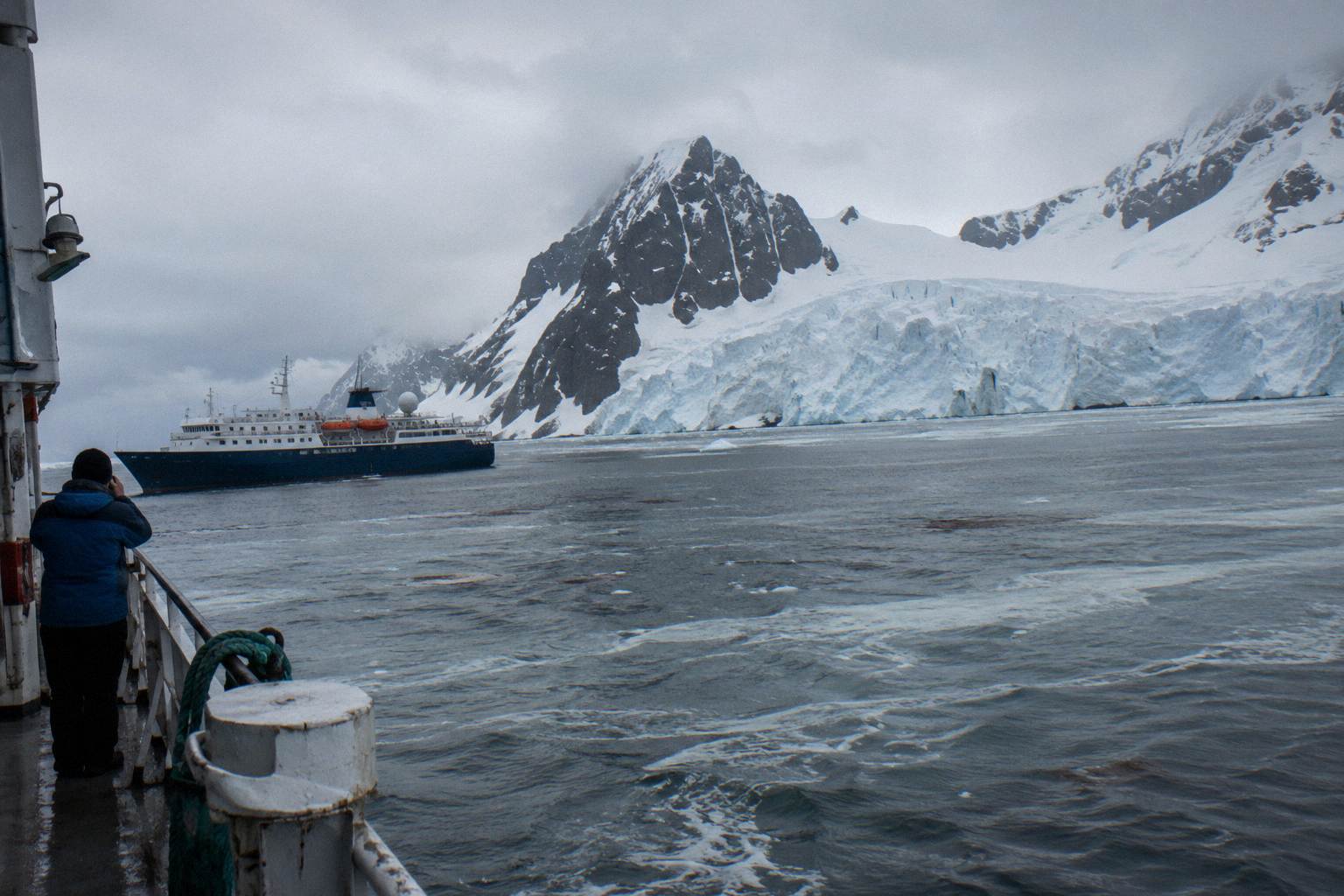 Cruise Environmental ImpactCarbon, black carbon, the fuel ban and lower-impact ship choices, with real numbers.Read the guide