Greg Mortimer Antarctica Cruise: Ship Review, Cabins And Itineraries
 By Oleg G.
The Greg Mortimer is Aurora Expeditions' original X-BOW expedition ship, carrying 130 guests on Antarctic voyages with four Zodiac boarding doors, balcony staterooms and a 2026-27 season running from the Peninsula to the Ross Sea.
Quick answer: The Greg Mortimer is a 2019-built, 104-metre expedition ship operated by Aurora Expeditions, carrying 130 passengers on expedition voyages in 76 cabins, about 85 percent with balconies. Antarctic fares start from $19,521 per person twin share for a 12-day voyage, and the ship's 2026-27 season spans the Peninsula, the Antarctic Circle and the Ross Sea.
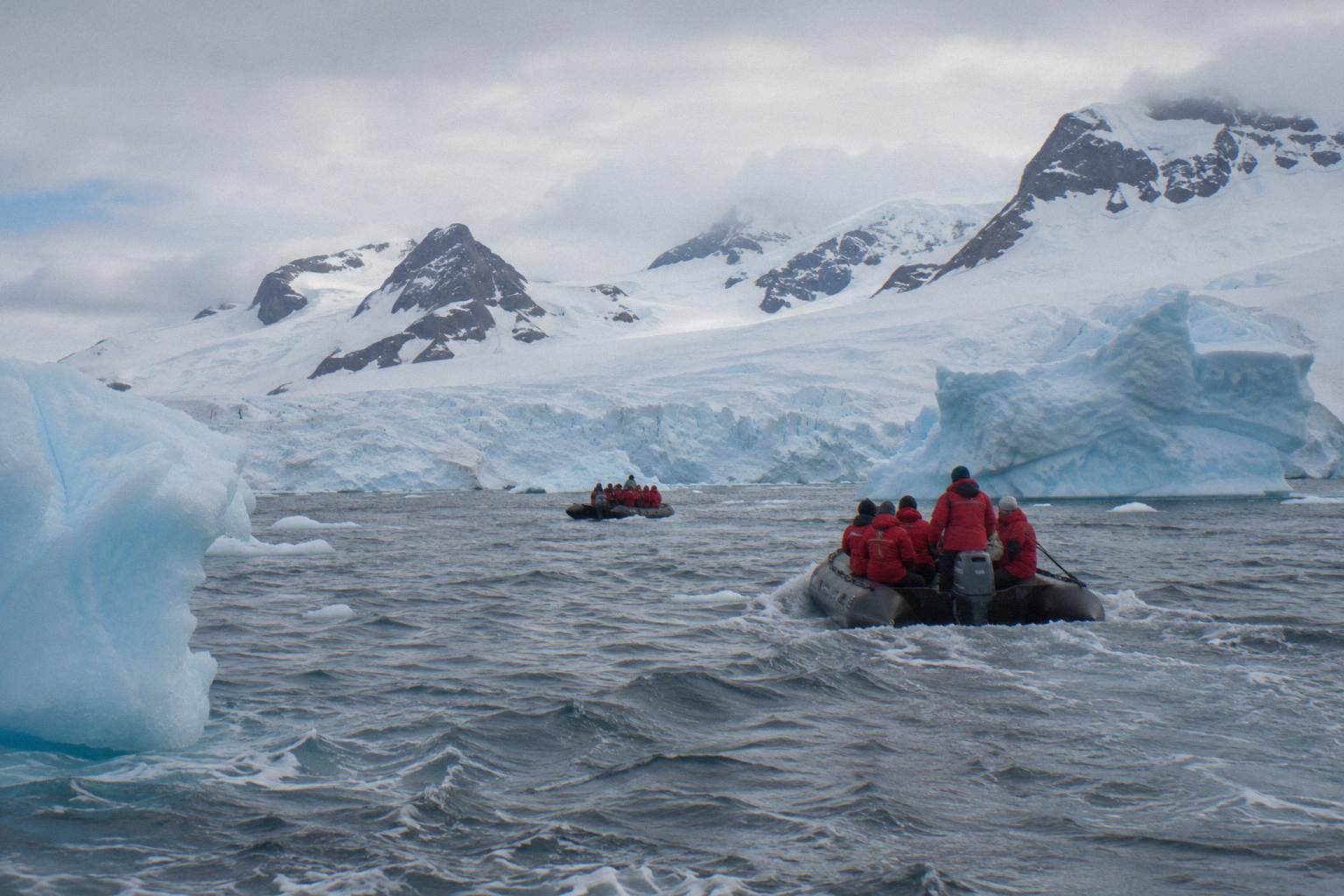
The Greg Mortimer was delivered on 6 September 2019 from China Merchants Haimen and holds a small but real place in expedition-cruise history: it was the first passenger ship ever built with the Ulstein X-BOW, the backwards-sloping bow design that several Antarctic fleets have since adopted. Aurora Expeditions operates it, the Australian line that also runs the younger Sylvia Earle and the new Douglas Mawson, and for the 2026-27 season the ship is scheduled across the Antarctic Peninsula, the Antarctic Circle, South Georgia routes and a 26-day Ross Sea Odyssey from Hobart to Dunedin.
That spread matters when you are shortlisting a vessel. Many Antarctic ships run one product, the classic 11-to-12-day Peninsula loop out of Ushuaia, on repeat. The Greg Mortimer does that too, with lead-in Antarctic fares from $19,521 per person twin share, but it also reaches much further south and east than most. If an Antarctica cruise on a mid-size, activity-heavy ship is what you are shopping for, this profile lays out the numbers: cabins, ice class, crew ratios, dining, fares and itineraries, plus an honest look at who the ship does not suit.
What Is The Greg Mortimer Ship?
The Greg Mortimer is a 104-metre, eight-deck expedition cruise ship built in 2019 for Aurora Expeditions, carrying a maximum of 148 guests and 130 on expedition voyages, with an Ulstein X-BOW hull, Polar Class 6 ice classification, 76 cabins and an expedition outfit of 15 Zodiacs launched from four dedicated boarding doors.
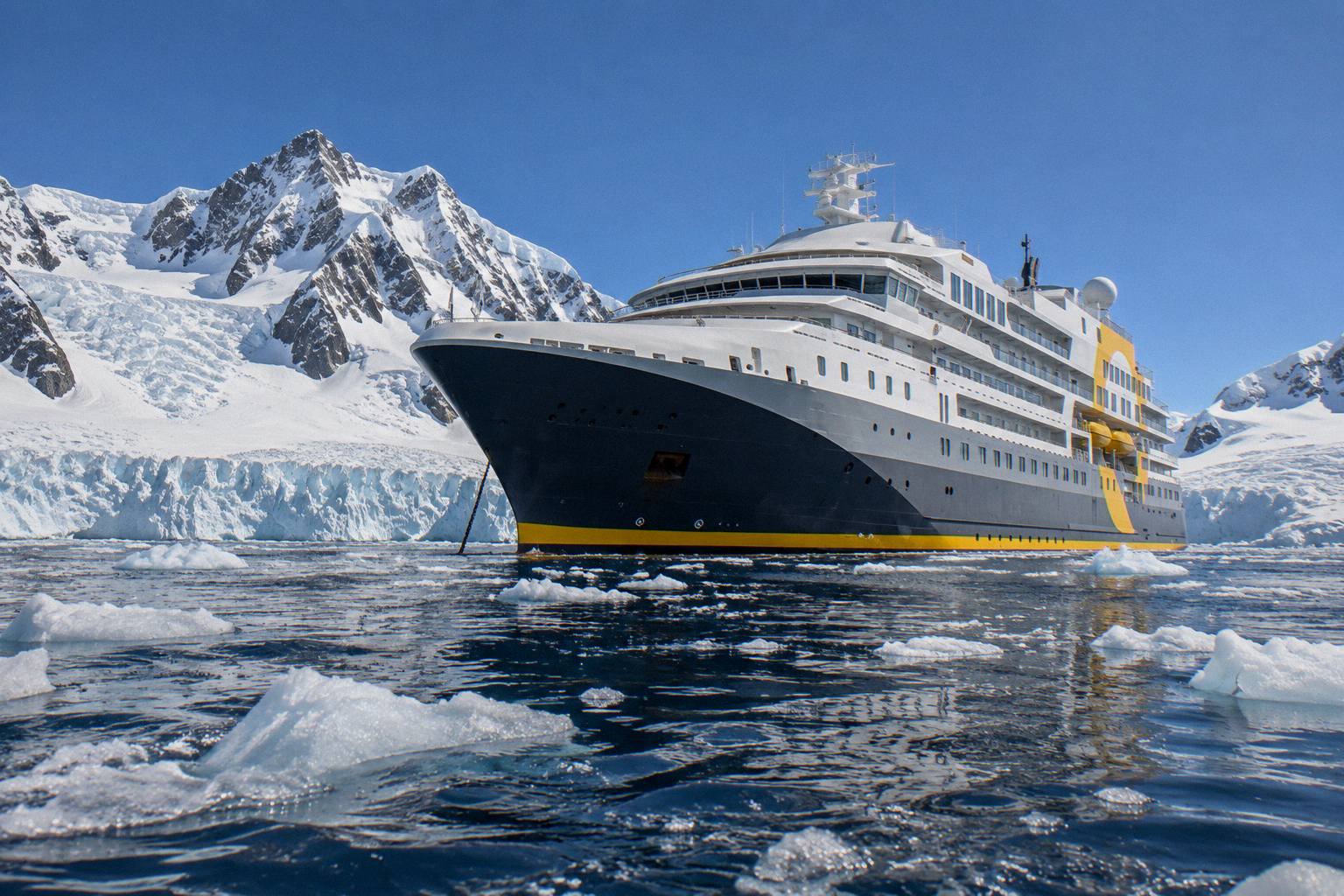
The X-BOW is the signature engineering feature: the inverted bow pierces waves rather than riding over them, which the shipyard and operator credit with a softer motion and less spray on open-water crossings such as the Drake Passage. Treat that as a design aim rather than a guarantee: the Drake still decides how a crossing feels.
The hull is Polar Class 6 with an ICE 1A* notation, as recorded by Ulstein, which designed the ship, and by its owner, SunStone. In plain terms, PC6 is a summer/autumn rating for medium first-year ice under the IACS Polar Class scale, the standard tier for Antarctic Peninsula expedition work, and it is the same class band held by widely sailed ships such as the Viking expedition pair and Silversea's Silver Endeavour. Gross tonnage is 8,035, draught 5.3 metres and cruising speed 10 to 12 knots, modest figures for a hull built for ice work rather than speed.
For shore operations, IAATO rules cap landings at 100 passengers ashore at a time with a minimum 1:20 guide-to-visitor ratio, and no vessel over 500 passengers may land at all, which is why ship size drives so much of the Antarctic experience. At 130 guests on expedition voyages, the Greg Mortimer sits just over the 100-ashore cap, so landings run in rotations, but only about 30 guests wait at any one time. That short wait is the biggest practical argument for a ship this size, and it is the reason the vessel suits travellers who prioritise time on the ice over onboard resort amenities.
The core specifications are gathered below for quick reference.
| Specification | Figure |
|---|---|
| Operator | Aurora Expeditions |
| Delivered | 6 September 2019, China Merchants Haimen |
| Guests | 148 maximum, 130 on expedition voyages |
| Cabins | 76, about 85 percent with balconies |
| Length | 104 m |
| Beam | 18.4 m |
| Draught | 5.3 m |
| Gross tonnage | 8,035 |
| Ice class | Polar Class 6 / ICE 1A* |
| Hull | Ulstein X-BOW |
| Zodiacs | 15, four dedicated boarding doors |
| Cruising speed | 10 to 12 knots |
Deciding whether the Greg Mortimer's blend of size and range fits your plans is exactly the kind of question a free consultation can settle quickly, before you commit to a cabin category or a departure date.
Cabins And Deck Layout On The Greg Mortimer
The Greg Mortimer has 76 cabins across eight decks, and about 85 percent of them have a private balcony. Categories run from Aurora twin and triple staterooms up through Balcony Categories A, B and C, solo balcony staterooms, Balcony Superior, a Junior Suite and a Captain's Suite.
Aurora's category ladder is unusually simple for an expedition ship. The Aurora twin and triple staterooms occupy the entry level, without balconies. Above them sit the Balcony Staterooms in Categories A, B and C, the workhorse cabins of the ship, each with a private balcony. Then come the Balcony Superior rooms, the Junior Suite and the Captain's Suite, the largest accommodation aboard. Aurora does not publish per-category counts or sizes for this ship, so ask for the square metres of the categories you are weighing.
Two layout features are worth flagging. First, the ship carries dedicated solo balcony staterooms in Categories A, B and C, a real asset in a market where solo travellers are routinely charged 25 to 100 percent over the twin fare in a shared cabin. Second, the sister ship Sylvia Earle adds dedicated single staterooms from April 2026, so solo pricing across the two ships deserves a side-by-side check for your specific departure.
A note on balcony use in Antarctica: balconies on expedition ships are frequently locked or unusable during Drake Passage crossings and high winds, and wind chill on a private terrace at 65 degrees south limits the appeal for much of the season. Balconies are pleasant, not essential. Travellers weighing that premium may find the site's broader cabin-choice guide for Antarctic cruises useful, since the same logic applies fleet-wide.
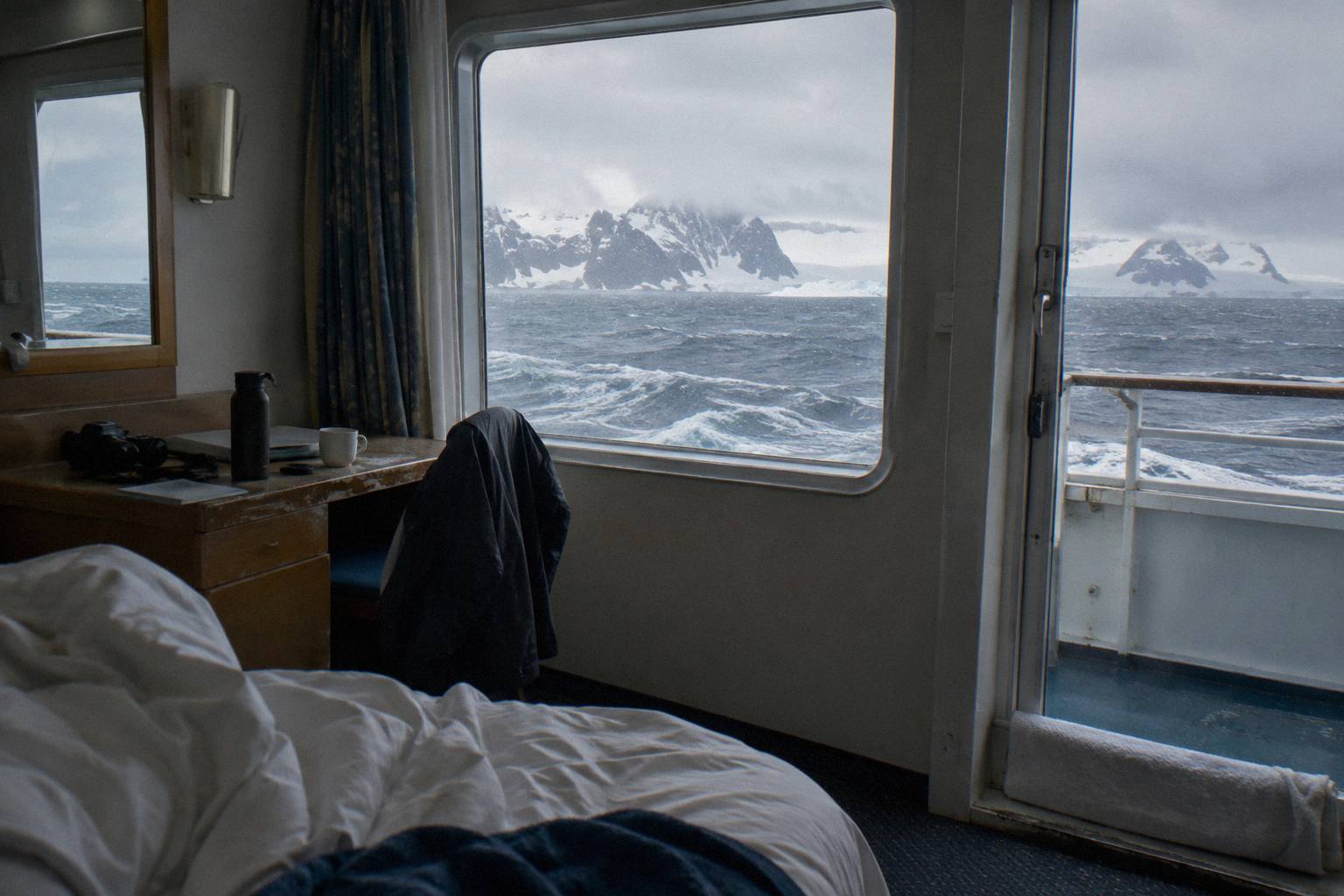
Cabin location matters more than most first-timers expect. Midship decks move least in a swell, which is why seasoned Antarctic cruisers book low and central rather than high and forward, and why the engine and thruster noise near the bow and stern is worth checking on a deck plan before you choose a cabin number.
Life Aboard: Dining, Spa And Public Spaces
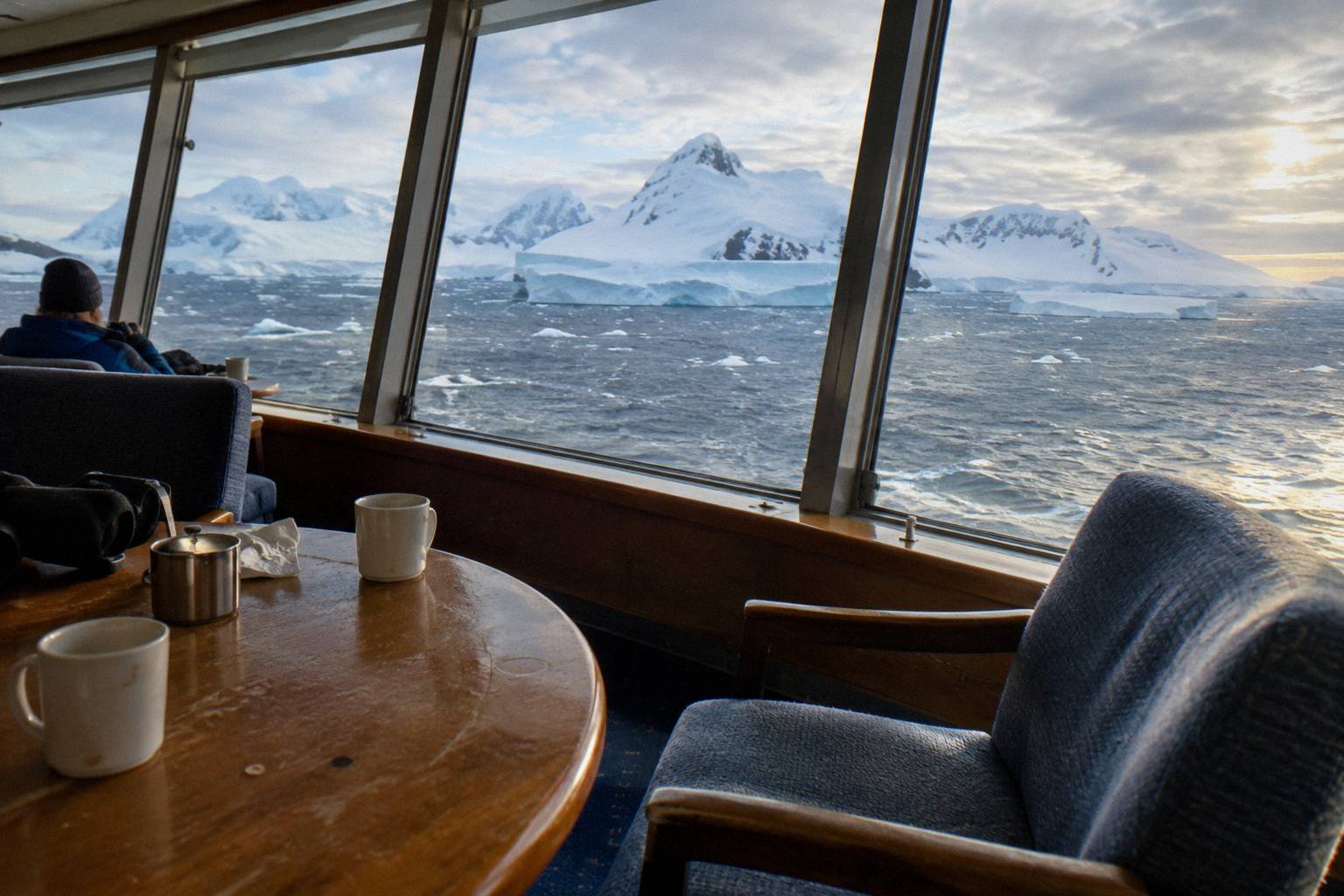
Onboard, the Greg Mortimer offers three dining venues, including a 162-seat main restaurant, a 36-seat speciality restaurant and a 48-seat observation restaurant, alongside a heated pool deck with two jacuzzis, a sauna, a gym, a spa treatment room, a lecture lounge, a library and hydraulic side platforms that lower for wildlife viewing.
The hydraulic viewing platforms are the ship's most distinctive public-space feature. They lower from the ship's side to bring small groups closer to the water for whale and iceberg viewing on calm days. The mudroom, the gear-staging area where passengers kit up for Zodiac operations, sits at the heart of the ship's daily rhythm, with four boarding doors feeding 15 Zodiacs, which keeps turnaround between landings quick compared with single-gangway ships.
The dining split gives the ship more variety than its size suggests. The main dining room serves buffet-style family meals with an à la carte dinner; the speciality restaurant, the Tuscan Grill, requires reservations; and the 48-seat observation restaurant adds a third option. Aurora's house style is sociable rather than formal, so travellers expecting a luxury-line dining theatre should calibrate expectations: this is a well-fed expedition ship, not a floating restaurant.
Wi-Fi aboard is Starlink-based and included in the fare. Connectivity in polar regions still varies with position and conditions, so remote workers should plan for messaging rather than video calls on the southern days.
2026-27 Antarctic Itineraries And Prices
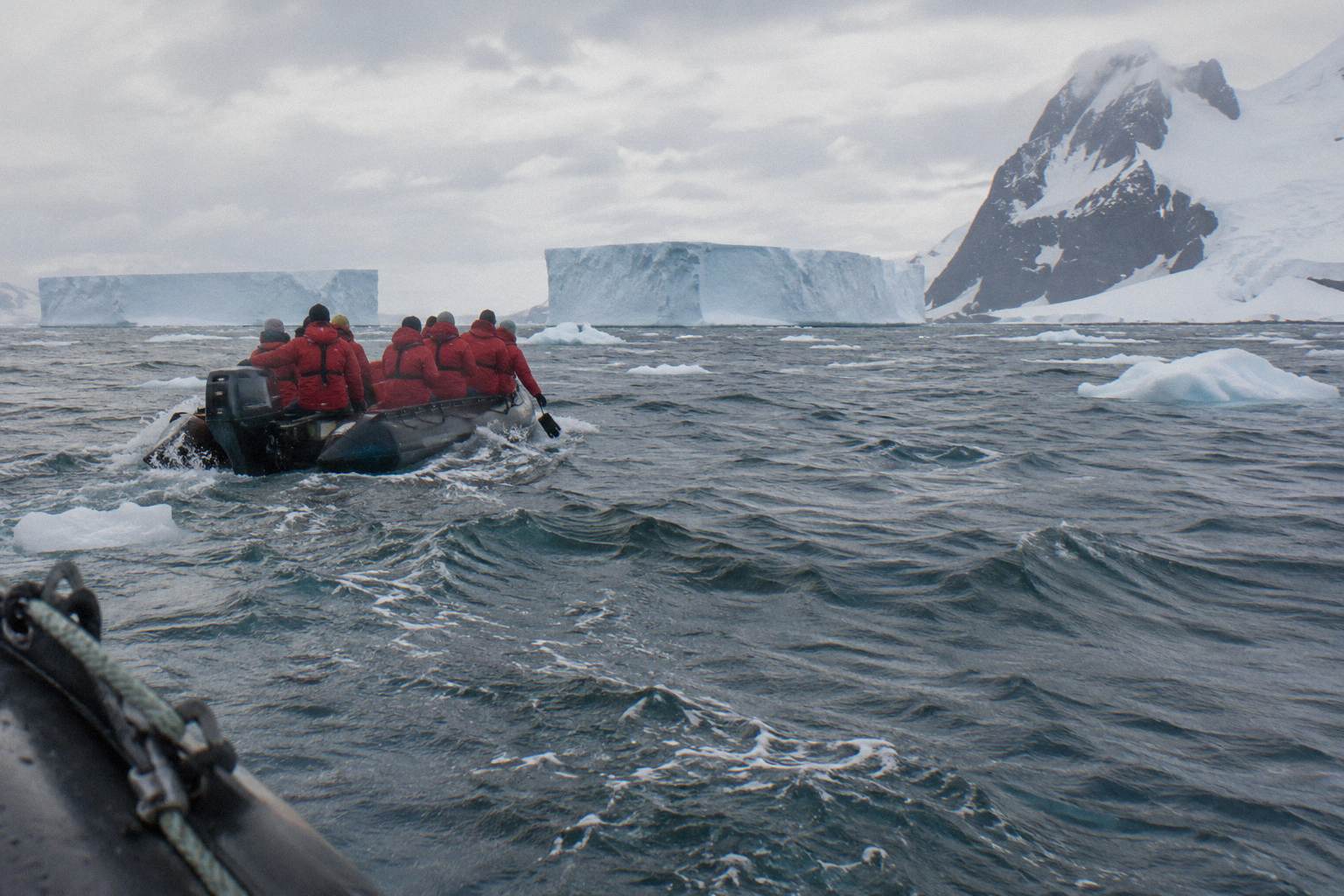
For 2026-27 the Greg Mortimer sails Antarctic voyages of 12 to 34 days from Ushuaia, Hobart and Dunedin, with lead-in fares from $19,521 per person twin share on a 12-day Peninsula departure, a 26-day Ross Sea Odyssey from $37,616 and a 34-day Epic Antarctica departure from $37,836.
The $19,521 per person twin-share lead-in belongs to the 12-day Antarctica: Through the Lens photography voyage on the ship's Antarctic cards, which do not show departure dates. Aurora's 2026-27 calendar places the ship on four dated Antarctic products, summarised below. Two of them carry fares Aurora also uses for its other ships, so ask for this ship's own price. The rest of the planning pages sit on Cruises In Antarctica.
| Voyage | Dates | Days | Route | Published fare (pp) |
|---|---|---|---|---|
| Ross Sea Odyssey (ROS002G) | 14 Dec 2026 – 8 Jan 2027 | 26 | Hobart to Dunedin | From $37,616 (was $41,795) |
| Epic Antarctica: Crossing the 7th Continent (ASC002G) | 7 Jan – 8 Feb 2027 | 34 | Dunedin to Ushuaia | From $37,836 (was $47,295) |
| Antarctica Complete (ACO008G) | 7 Feb – 1 Mar 2027 | 23 | Ushuaia roundtrip | Ask for this departure's fare |
| Across the Antarctic Circle (ANC021G) | 28 Feb – 12 Mar 2027 | 13 | Ushuaia roundtrip | Itinerary from $18,536 (was $20,595) |
Note what dominates that list: the 2026-27 Antarctic season on this vessel is weighted hard toward long, deep-itinerary voyages. The Ross Sea and Epic Antarctica departures account for 60 of the season's sailing days between them and reach the Ross Sea side of the continent, far from the Peninsula routes most ships sail. Travellers who specifically want a short Peninsula trip on this ship have the 13-day Circle departure in late February, or can check which Aurora ship holds the dates they can travel.
Seasonality moves the price too. On the sister ship Sylvia Earle, the 13 November Circle departure is listed from $23,695 against $24,995 for the Christmas sailing of the same itinerary. The wider pattern is covered in the month-by-month Antarctic cruise pricing by month guide.
The two long voyages also link up. The Ross Sea Odyssey finishes in Dunedin, which is where Epic Antarctica: Crossing the 7th Continent begins, and that voyage ends in Ushuaia, the start of Antarctica Complete. The ship then closes its season with the 13-day Across the Antarctic Circle from 28 February to 12 March 2027. Read as a whole, the calendar shows one ship working its way from the Ross Sea side of the continent to the Peninsula side over a single summer, and a traveller with the time could pick the leg that suits them rather than the whole run.
When a 13-day Circle crossing and a 34-day epic differ by nearly twenty thousand dollars, the decision is genuinely strategic. A quick conversation about itinerary length and budget can save you from overbuying days you do not need.
What The Aurora Expeditions Fare Includes
Aurora's published inclusions for the 2026-27 Antarctic season cover all meals and soft drinks, beer, wine, spirits and cocktails, a 3-in-1 polar jacket to keep, muck boots on loan, Starlink Wi-Fi, the Zodiac and shore program, and one pre-voyage hotel night with arrival transfer on selected flights. Gratuities are not in the standard list; Junior and Captain's Suite guests have a daily gratuity allowance built in.
The drinks inclusion is new from the 2026-27 season, when Aurora moved to include premium spirits, cocktails, beer, wine and liqueurs from lunch on sea days and from 15:00 on excursion days. Combined with the jacket, boots, Wi-Fi and hotel night, the fare now bundles most of the extras that budget operators leave as line items, and that materially changes the like-for-like price gap between Aurora and cheaper-shared-cabin lines such as Oceanwide's fleet, whose fares include meals and Zodiacs but suggest gratuities separately at 10 to 15 dollars or euros per person per day.
Flights to and from the gateway, travel insurance and medical-form requirements are excluded and sit on top of the fare. Aurora requires at least $250,000 in accident and emergency evacuation and repatriation cover. Evacuation from the Antarctic Peninsula typically runs through King George Island to Punta Arenas, and the passenger bears costs beyond what the policy pays, which is why the medical-evacuation minimum is not a detail to skimp on. The site's dedicated Antarctic travel insurance guide covers operator minimums line by line.
How The Greg Mortimer Compares With Sylvia Earle And Douglas Mawson
Against its two fleetmates, the Greg Mortimer is the oldest and most proven hull: Sylvia Earle (2022) is nearly identical in size and layout at 130 passengers and 71 cabins, while Douglas Mawson (2025) is the newest and largest, carrying up to 154 guests with 130 on expedition, currently listed only on a 34-day voyage with no published fare.
The three Aurora ships share the X-BOW hull family, the same cabin-category logic, the same inclusions and the same activity program, so the choice between them usually comes down to dates, price and itinerary rather than hardware. The table below sets the numbers side by side.
| Greg Mortimer | Sylvia Earle | Douglas Mawson | |
|---|---|---|---|
| Operator | Aurora Expeditions | Aurora Expeditions | Aurora Expeditions |
| Built | 2019 | 2022 | 2025 |
| Guests (Antarctic voyage) | 130 (148 max) | 130 | 130 (154 max) |
| Cabins | 76 | 71 | Not published |
| Length | 104 m | 104 m | Not published |
| Hull | Ulstein X-BOW | Ulstein X-BOW | Ulstein X-BOW |
| Antarctic voyage days | 12/13/14/23/26 | 12/13/20 | 34 |
| Published from-fare | From $19,521 pp | From $19,566 pp | Not published |
| Ship | Class | Passengers | Ice class | From, per person | Voyage length | Departs from |
|---|---|---|---|---|---|---|
| Greg MortimerAurora Expeditions | Upscale Expedition | 130 | – | from $19,521 | 12 to 26 days | Ushuaia |
| Sylvia EarleAurora Expeditions | Upscale Expedition | 130 | – | from $19,566 | 12 to 20 days | Ushuaia |
| Douglas MawsonAurora Expeditions | Upscale Expedition | 154 (130 in Antarctica) | – | – | 34 days | Ushuaia |
Two practical differences are worth knowing. The Greg Mortimer and Sylvia Earle are close enough in spec, with lead-in fares just $45 apart, that the choice is usually about dates; the dedicated head-to-head at Sylvia Earle versus Greg Mortimer works through the fine detail. The Douglas Mawson is the wildcard: it is the newest ship in the fleet, its 2026-27 Antarctic listing shows only a 34-day voyage with no published fare, so pricing it requires a live enquiry. Against non-Aurora alternatives, a natural comparison is Greg Mortimer versus the National Geographic Explorer, where the trade-off is Aurora's activity-heavy model against Lindblad's photo-and-lecture tradition.
Who The Greg Mortimer Suits (And Who Should Look Elsewhere)
The Greg Mortimer suits active travellers who want maximum time off the ship on a mid-size vessel, solo travellers who value dedicated solo balcony cabins, and long-itinerary buyers targeting the Ross Sea or a continental crossing. It suits luxury-first shoppers and travellers who need a short, cheap Peninsula trip less well, and both groups have better options elsewhere in the fleet market.
The activity argument is the strongest one. Aurora's model on this ship leans on sea kayaking, snowshoeing, snorkelling, paddling and, on select itineraries, scuba diving, with gear and guides staged through the mudroom and the four-door Zodiac operation. A 130-guest ship rotates only about 30 guests at a time under IAATO's 100-ashore cap, so passengers get more minutes on shore per landing day than on much larger vessels. For travellers whose priority is standing on the continent rather than watching it from a pool deck, that is the pitch.
Price shoppers should look elsewhere. From $19,521 per person for 12 days, the Greg Mortimer sits in the upper-middle band of the Antarctic market, well above shared-cabin budget lines such as Plancius from $7,050 and Hondius from $7,800, and well above Quark's 11-day Antarctic Explorer lead-in of $12,236, though Aurora's heavier inclusions narrow the real gap. The site's breakdown of whether a nicer ship is worth it in Antarctica covers the trade honestly. Luxury-first travellers, meanwhile, will find the Greg Mortimer comfortable but not opulent; Silversea, Seabourn and Scenic operate in a different tier of suite, service and dining, described in the Antarctic luxury cruise guide.
One thing the ship cannot control is the Drake. Two days of open-ocean crossing each way on Ushuaia roundtrips is part of the deal, X-BOW or not, and a minority of crossings run rough. If four sea days is a hard no, a fly-cruise product such as the Magellan Explorer air-cruises is the alternative, at a higher per-day cost.
If you are weighing the Greg Mortimer against a budget ship or a luxury line for specific 2027 dates, that three-way decision is precisely what a free ship-choice consultation covers, with no obligation attached.
Common Questions About The Greg Mortimer Ship
What is the Greg Mortimer ship?
The Greg Mortimer is a 2019-built expedition cruise ship operated by Aurora Expeditions, and it is 104 metres long, carries 130 guests on expedition voyages, was the first passenger ship built with the Ulstein X-BOW, and sails Antarctic itineraries from 12 to 34 days.
How many passengers does the Greg Mortimer carry?
The ship carries a maximum of 148 guests, reduced to 130 on expedition voyages, in 76 cabins. That is just over IAATO's 100-ashore limit, so landings run in rotations, with only about 30 guests waiting at a time.
What ice class does the Greg Mortimer have?
The hull is Polar Class 6 with an ICE 1A* notation, a summer/autumn rating for medium first-year ice and the standard band for Antarctic Peninsula expedition operations.
How much does a Greg Mortimer Antarctic cruise cost?
Published lead-in fares start from $19,521 per person twin share for a 12-day Antarctic voyage. Long 2026-27 products run higher: the 26-day Ross Sea Odyssey from $37,616 and the 34-day Epic Antarctica departure from $37,836. Fares include meals, drinks, a jacket, boots, Wi-Fi and the shore program.
Is the Greg Mortimer a luxury ship?
It is an upscale expedition ship rather than a luxury liner. Cabins, dining and spa facilities are comfortable and well equipped, with about 85 percent of cabins having balconies, but the onboard style is expedition-focused and sociable rather than formal luxury.
Are there solo cabins on the Greg Mortimer?
Yes. The ship has dedicated solo balcony staterooms in Categories A, B and C, useful in an Antarctic market where solo supplements in a shared cabin commonly run 25 to 100 percent of the twin fare.
More Antarctic Ship Profiles
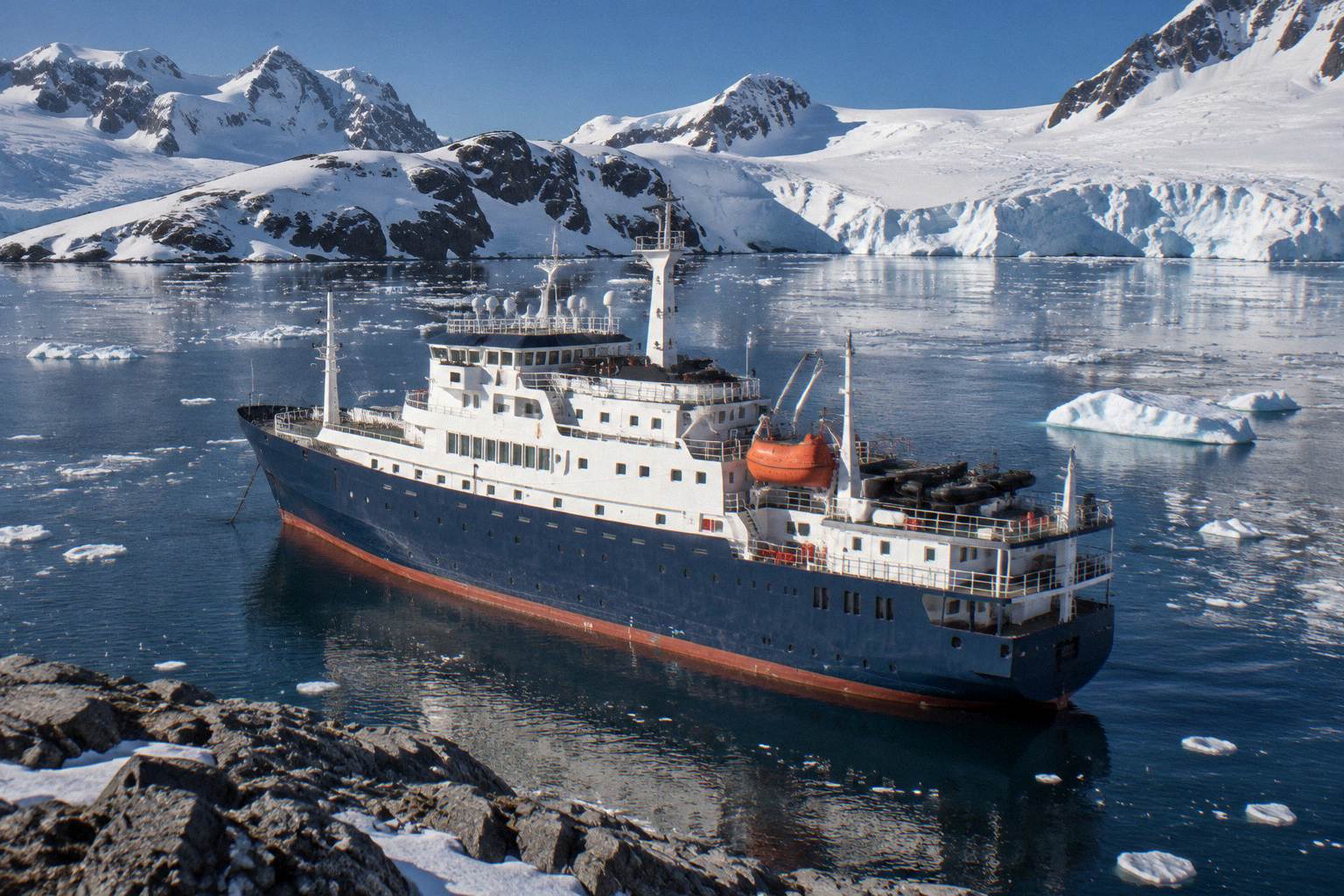 MV Plancius ReviewA no-balcony, 108-guest expedition ship with straightforward cabins, strong ice handling for its age, and Oceanwide's activity-focused Basecamp voyages.Read the guide
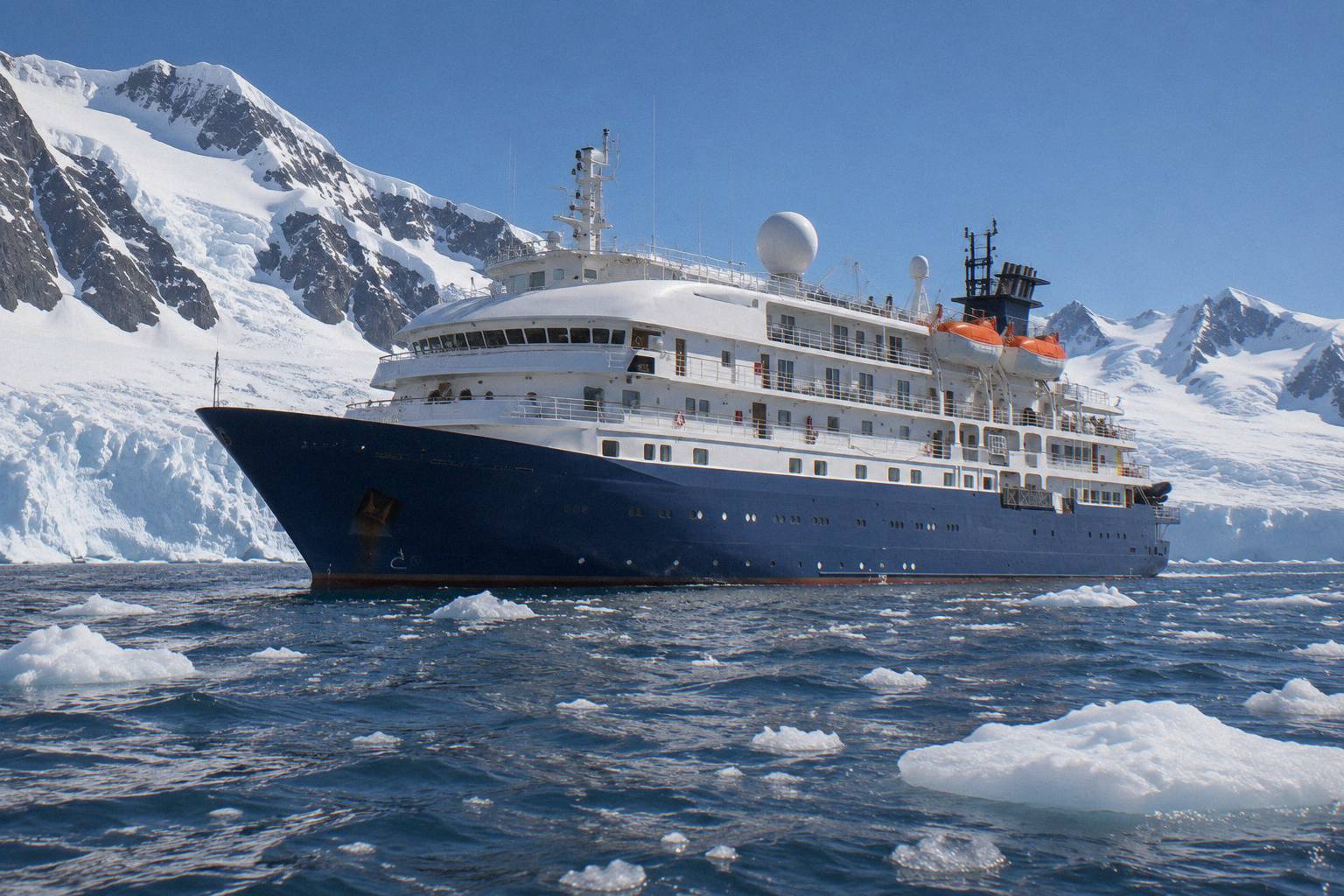 Sea Spirit ReviewPoseidon's 114-guest Sea Spirit reviewed: cabins, fares, itineraries and who it suits.Read the guide
 Ultramarine ReviewQuark's helicopter flagship reviewed: cabins, dining, itineraries and fares.Read the guide
 Ocean ExplorerQuark's 138-guest X-BOW ship reviewed: cabins, ice class, itineraries and fares.Read the guide