Antarctica Wildlife On A Cruise: Penguins, Whales And Seals
 By Oleg G.
Wildlife, not scenery, is what makes most people pick their Antarctica month and route. Here is what you can actually see, when, and how the rules and the route shape the experience.
Quick answer: Antarctica cruise wildlife peaks between November and March. Penguins court in November, chicks hatch from mid-December, whales build from mid-January and peak in February and March. IAATO rules keep you at least 5 metres from any animal, so the ship, the month and the route you choose decide almost everything else.
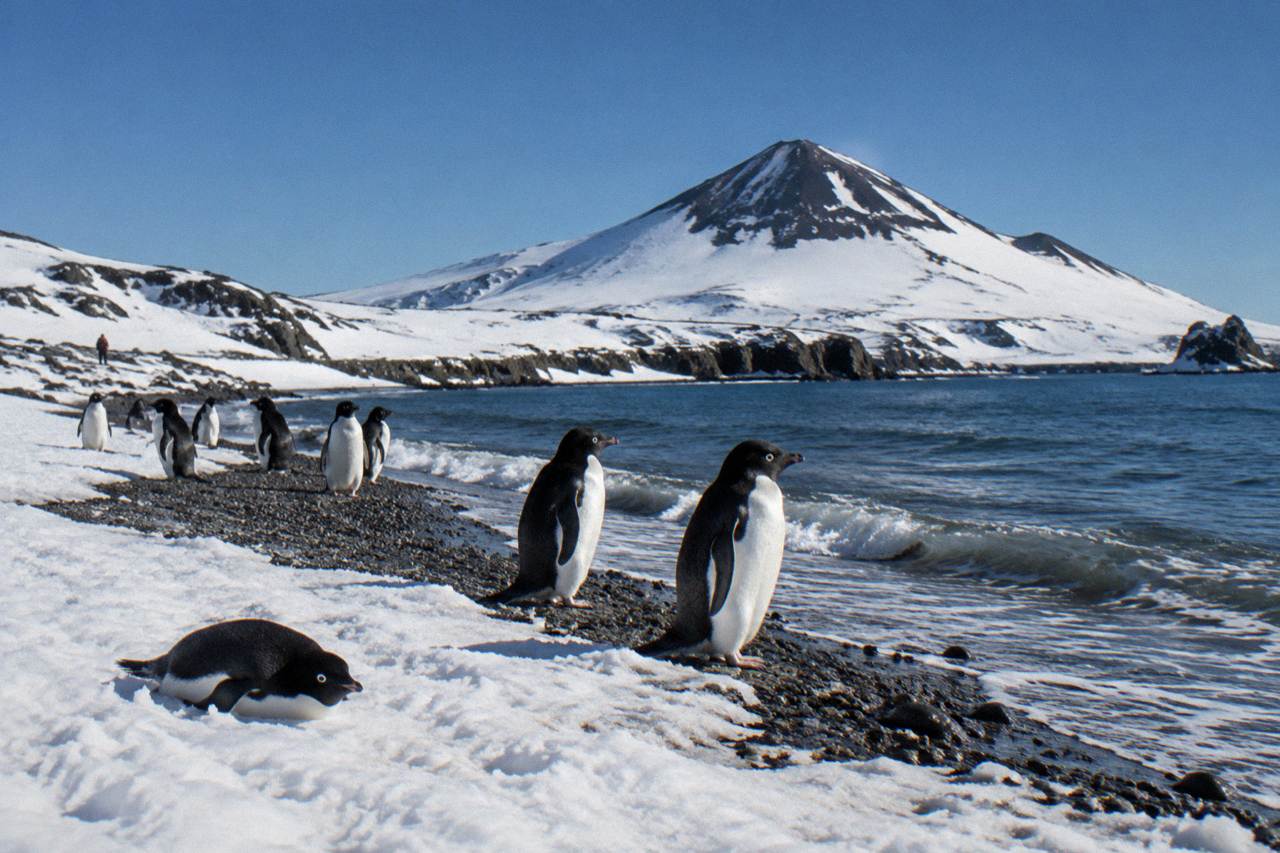
Wildlife is the reason most people give for the month they pick. An Antarctic cruise is not a safari with guaranteed sightings, but the calendar is remarkably predictable: penguins court in November, chicks hatch from mid-December, whale numbers build from mid-January and peak through February and March. The rules are predictable too. IAATO guidance keeps visitors at least 5 metres from wildlife on land, no more than 100 passengers ashore at a time, and one vessel per landing site at a time. Your month, your route and your ship together decide what you will actually stand next to.
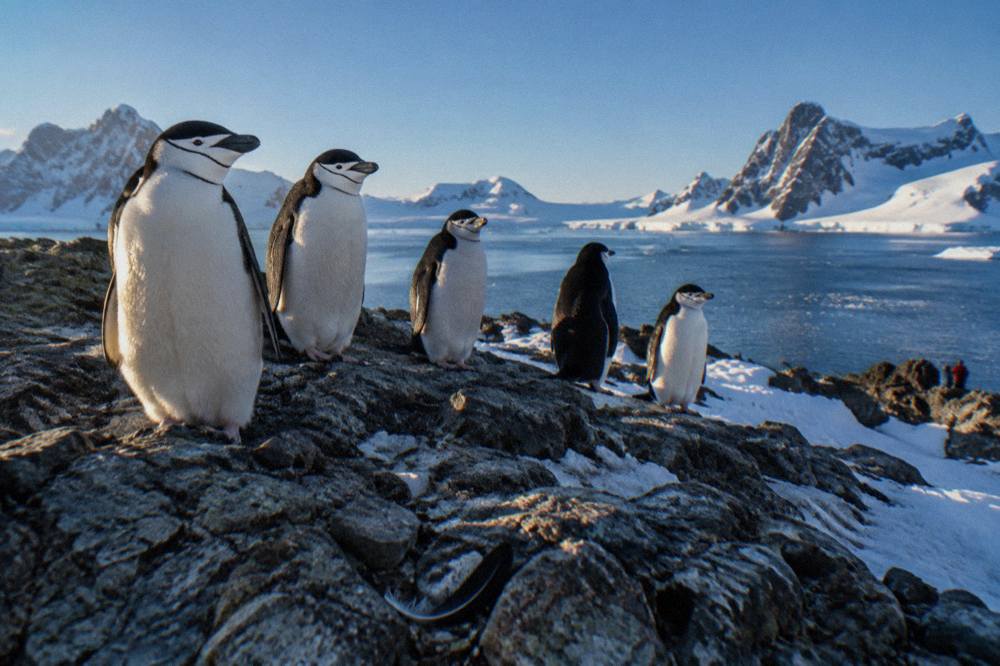
What Wildlife Can You Actually See On An Antarctica Cruise?
The three species groups almost every Peninsula voyage delivers are penguins, seals and whales, with penguins the near-certain one. Gentoo, chinstrap and Adélie penguins dominate the western Peninsula and the South Shetland Islands, while humpback, minke and occasionally orca whales arrive in feeding grounds from mid-season. Leopard, crabeater, Weddell and fur seals appear on landings and from the ship. Seabirds, including albatrosses and petrels, follow most vessels across the Drake Passage.
Operator season pages are candid that nothing is guaranteed, but the pattern holds across every operator season page. Penguin rookeries on the Peninsula focus on courtship and nest-building in November, chicks begin hatching mid-December, and by February the adults are molting while the chicks learn to swim. Whale sightings, especially humpbacks, increase from mid-January onward as krill draws them into Peninsula feeding grounds after the sea ice recedes. That is the skeleton of every Antarctic wildlife season, and it is why the month question matters more than the ship question for most travellers.
The scale is worth knowing too. IAATO recorded 85,195 landed visits in the 2025-26 season, plus 27,217 cruise-only passengers, and roughly 98 percent of all tourism voyages, per the Antarctic Treaty Secretariat's tourism page, occur in the Peninsula region during the austral summer. You will be one of a large crowd, but the one-vessel-per-site rule and the 100-passenger landing cap keep each landing small. The Cruises In Antarctica guides on this site follow the same month-by-month logic because wildlife genuinely is the deciding variable for most bookings.
Which Month Is Best For Penguins?
December and January are the strongest penguin months on the Antarctic Peninsula. Chicks of gentoo, Adélie and chinstrap penguins begin hatching mid-December, and by January most channels and inlets are ice-free, giving landing access to the largest number of active rookeries. November offers courting displays, stone-gifting and nest-building with maximum snow cover, while February brings molting adults and swimming lessons for fledging chicks.
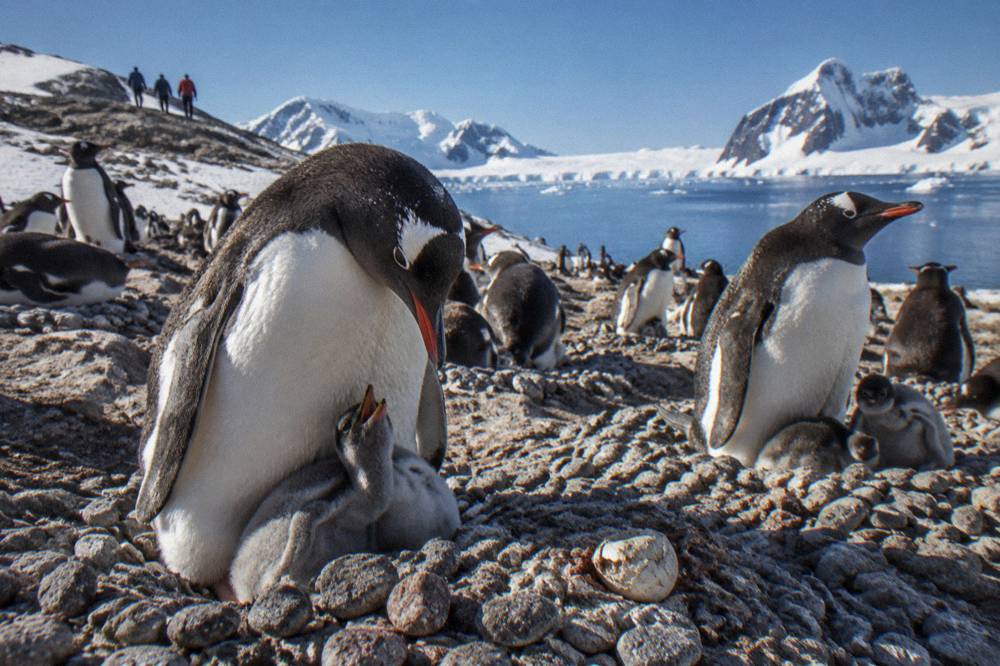
November is the connoisseur's month. Operator wildlife pages describe late-October and November landings as the time of maximum sea ice and pristine snow, with elephant seal pups in the South Shetlands and penguins in full courtship mode. The trade-off is simple: fewer open landing sites, because ice still blocks some channels, but fewer ships and untouched landscapes. If penguin behaviour rather than penguin volume is what you want, November delivers courtship, stone-gifting and nest assembly in close detail.
December through January is when the rookeries are loudest and busiest. Chicks hatch mid-December on the Peninsula, and by late December the colonies are a mix of brooding adults and grey downy chicks. January adds near-24-hour daylight and the widest choice of landings as the ice clears. February shifts the show: adults molt, chicks fledge and learn to swim, and leopard seal sightings become more likely. Every one of these phases is visible from a standard Peninsula cruise; the difference is purely which weeks you book. If you are weighing weather, daylight and crowds alongside the wildlife calendar, our best month to visit Antarctica guide works through the same decision from the comfort side.
| Month | Penguin stage on the Peninsula | What you will notice most |
|---|---|---|
| November | Courtship, nest-building, stone-gifting | Pristine snow, active rookeries, elephant seal pups |
| December | Eggs hatch from mid-month | Downy chicks in nests, peak colony noise |
| January | Chicks in creches, channels ice-free | Most landing options, long daylight |
| February | Chicks fledging, adults molting | Swimming chicks, leopard seal chances |
| March | Colonies thinning, adults at sea | Quieter landings, moulting remnants |
If penguin chicks are the single reason you are travelling, the decision is effectively made for you: a mid-December to late-January departure. If you are flexible, or you want help weighing chick season against whale season on real 2026-27 departures, a free consultation can narrow the dates against live availability, at no cost and with no obligation.
Which Month Is Best For Whales?
February and March are the best whale months on the Antarctic Peninsula. Humpback sightings increase from mid-January as krill becomes accessible in ice-free waters, and whale activity, including humpback, minke and orca, peaks in the late season. March also brings fledging seabirds and some of the calmest sea states of the season. Book February or March if whales are your priority over penguin chicks.
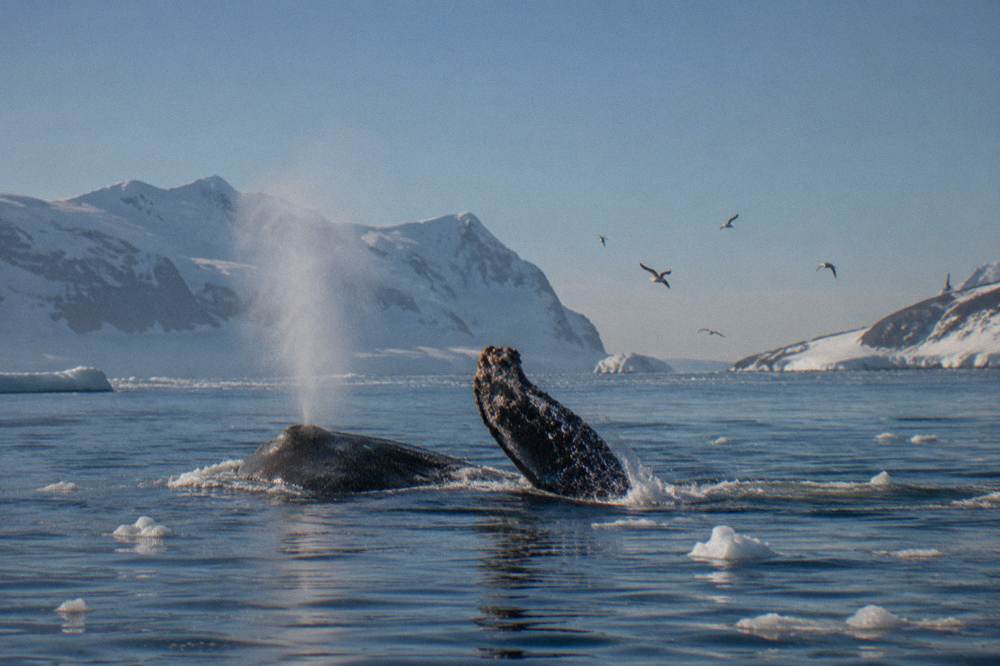
The mechanism is krill. After the October-November sea ice recession, krill abundance draws whales, seals and other marine mammals into Peninsula feeding grounds, and their numbers build through the season rather than arriving all at once. Quark's marine mammal expedition page and the Atlas wildlife calendar we reviewed agree on the shape: mid-January is when humpback sightings near the coast become routine, February is when they become the headline, and March is when the feeding activity is at its strongest before the animals begin moving north.
There is a genuine trade-off, and it is worth stating plainly. Peak whale months are past peak penguin months. By late February the rookeries are thinning, the chicks are fledging and the adults are spending more time at sea. Some travellers read that as the best of both worlds: fewer people, calmer water, whales everywhere, penguins still present in reduced numbers. Others want the full December rookery spectacle and accept that whales will be a bonus rather than a feature. Neither choice is wrong, but you cannot have both peaks in one week.
One late-season note from the regulatory file: IAATO has introduced a voluntary geofenced whale area around the South Orkney Islands with a 10-knot speed restriction for the 2026-27 and 2027-28 seasons. It does not change what you will see, but it is a sign of how seriously the operators take whale protection in exactly the waters where sightings are best. A whale-focused Antarctic expedition cruise in February or March is the single most reliable way to see humpbacks feeding in the wild.
What About Seals And Seabirds?
Seals are present all season but change character by month: elephant seal pups appear in October and November in the South Shetlands, fur seal abundance on the Peninsula rises in February and March, and Weddell and crabeater seals appear on ice and in water throughout. Seabirds, including wandering albatrosses and giant petrels, follow most ships across the Drake Passage and are a constant from the first day at sea.
The seal calendar is less famous than the penguin one but just as structured. Elephant seals pup in the spring window, so late-October and November voyages encounter the pups in the South Shetlands while the beaches are still snow-covered. Fur seals, which are actually sea lions and can move surprisingly fast on land, become more numerous on Peninsula landings in February and March. Leopard seals, the predator everyone hopes to photograph, patrol penguin colonies late in the season when the chicks are fledging, so February is the month with the best odds.
Seabirds deserve more attention than they get. The Drake Passage crossing, two days each way on a sailing itinerary, is one of the best pelagic birding stretches on the planet, and the birds come to you: no binoculars chase required, just a deck chair and patience. Albatrosses, petrels and prions follow the ship's wake for much of the crossing; our Drake Passage crossing guide covers what those sea days actually feel like. If birds are a serious interest, a sailing itinerary beats a fly-cruise precisely because it gives you those four days of open-ocean birding that a two-hour charter flight skips entirely.
| Month | Seal activity | Seabird activity |
|---|---|---|
| Late Oct-Nov | Elephant seal pups in the South Shetlands; fur seals in mating rituals in South Georgia | Albatrosses, petrels and prions follow the ship across the Drake |
| Dec-Jan | Fur seal pups best viewed mid-December to January on South Georgia and the Falklands | Skuas and sheathbills hunt the chick-filled rookeries |
| February | Fur seal abundance rises on the Peninsula; leopard seal sightings become more likely | Adult penguins molt; giant petrels gather near the colonies |
| March | Seals feeding widely ahead of winter | Fledging blue-eyed cormorants on the Peninsula |
How Close Can You Actually Get To The Animals?
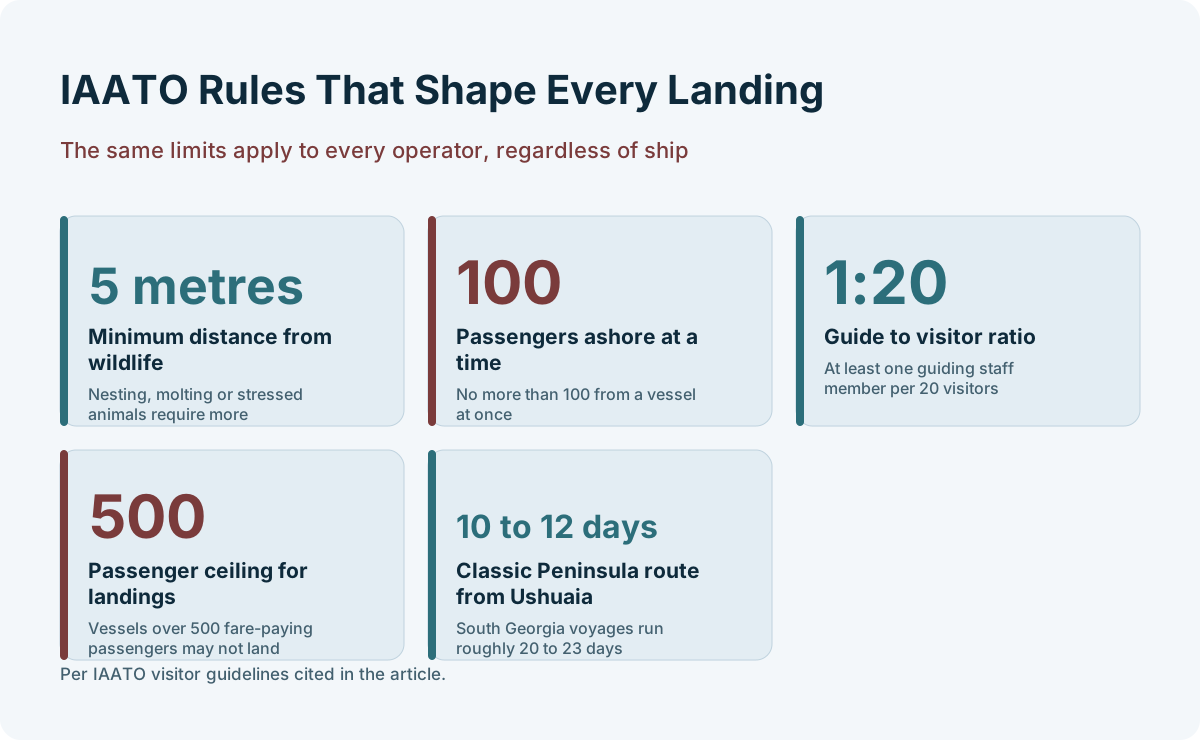
IAATO rules require you to keep at least 5 metres from wildlife on land, with greater distances for nesting birds, molting penguins or stressed animals, and drones must not be used near wildlife. No more than 100 passengers may be ashore from a vessel at one time, and only one ship may visit a site at a time. In practice you stand still and the penguins decide the distance.
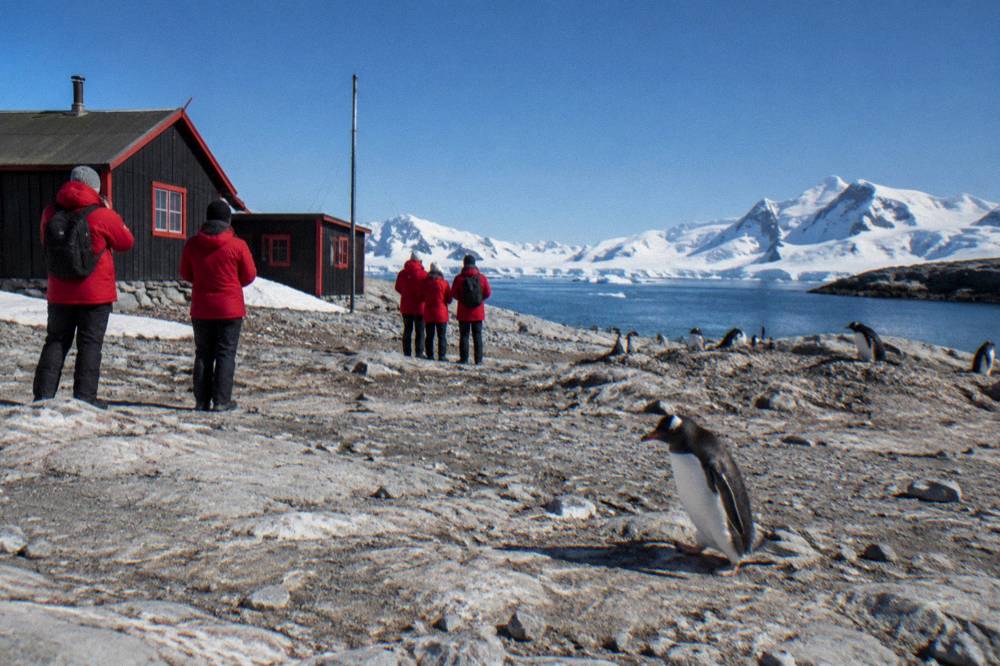
The 5-metre rule is the one number that shapes every landing. The IAATO visitor guidelines state it plainly, and your expedition staff will mark landing zones and brief you before every Zodiac run. The rule runs in your favour more often than not: penguins have no fear of humans, they walk where they want to walk, and a chick that decides to inspect your boot does so at its own initiative. You may not close the distance yourself, and you may not touch, feed or block any animal.
Biosecurity is the other half of the contract. The same guidelines require you to carefully wash boots and clean all equipment, including clothes, bags, tripods, tents and walking sticks, before bringing them to Antarctica, and to clean again between sites. Every ship runs a boot-wash station and a vacuum station for your jacket seams, and the checks happen before every landing, not once at the start. Some operators also ask visitors not to sit or kneel on the ground in wildlife areas, a rule that has grown out of recent biosecurity practice.
| IAATO rule | What it means on a landing |
|---|---|
| 5-metre wildlife distance | Stay at least 5 m from any animal on land; nesting, molting or stressed animals require more |
| 100 ashore at a time | No more than 100 passengers from a vessel may be on land at once, unless site guidance sets fewer |
| 1:20 guide ratio | At least one actively guiding staff member per 20 visitors during landings |
| One ship per site | The ship scheduler keeps landing sites to a single vessel at any one time |
| 500-passenger ceiling | Vessels carrying more than 500 fare-paying passengers may not make landings at all |
| Biosecurity between sites | Boots and gear washed before the trip and cleaned again between every landing |
What this means for choosing a cruise: none of the rules depend on which ship you book, because every IAATO operator works under the same guidelines. What the ship controls is how many landings you get, how long each one lasts, and how small your shore party is. A ship carrying 170 passengers rotates groups of 100 or fewer; a ship carrying 490 puts more people on each rotation and spends longer getting everyone ashore. If wildlife time ashore is your priority, that arithmetic matters more than any onboard amenity.
Which Route Should You Choose For Wildlife?
The classic Antarctic Peninsula route delivers penguins, seals and late-season whales in 10 to 12 days from Ushuaia. Adding South Georgia transforms the wildlife: king penguin colonies with hundreds of thousands of pairs, plus peak seal and whale density, on voyages of roughly 20 to 23 days. The Falklands add a third penguin species set. Ross Sea and Weddell Sea itineraries are rarer and target emperors and remote colonies.
Route choice is the second-biggest wildlife decision after month. The Peninsula itinerary is the standard for good reason: it concentrates on the sites where gentoo, chinstrap and Adélie penguins breed, and it is the only route that fits into a two-week trip. The Antarctic Treaty Secretariat notes that approximately 98 percent of tourism voyages occur in the Peninsula region, which tells you both that the wildlife there is reliable and that you will not have it alone.
South Georgia is the upgrade that wildlife photographers plan years around. Poseidon's South Georgia page describes king penguin colonies such as St Andrews Bay with roughly 250,000-plus pairs, and king penguin breeding activity peaks November through January, with chicks forming creches by January. Add the fur seal breeding spectacle and the sheer biomass of a South Georgia beach in December, and the 20-to-23-day voyage length stops looking like a cost and starts looking like the point. Our South Georgia cruise guide breaks down those beaches and landing windows in detail. The trade-off is time and money: these voyages run roughly double the length of a Peninsula trip.
| Route | Typical length | Signature wildlife | Best months |
|---|---|---|---|
| Antarctic Peninsula | 10-12 days | Gentoo, chinstrap, Adélie penguins, leopard seals, humpbacks | Dec-Jan for chicks, Feb-Mar for whales |
| Peninsula plus Falklands | 14-19 days | Add rockhopper and magellanic penguins, albatross colonies | Nov-Dec |
| Falklands, South Georgia, Peninsula | 20-23 days | King penguin colonies, fur and elephant seals, peak whale density | Nov-Jan for colonies |
| Weddell Sea emperor voyages | 11-14 days | Emperor penguins at Snow Hill, accessed by helicopter where ice allows | Nov-Dec |
The emperor penguin route deserves a special note. Specialized Weddell Sea voyages targeting the Snow Hill Island rookery run in November and December and often use helicopters for access when ice conditions allow, which is why they are among the most expensive and most sought-after departures in the Antarctic cruise market. They are also the only realistic way for a tourist to stand near an emperor penguin colony, since emperors breed on sea ice far beyond the standard Peninsula range.
If you are weighing a Peninsula trip against a South Georgia combination, that is exactly the kind of decision where the numbers and the dates deserve a second opinion. You can talk through the route trade-offs for free with someone who sees the live departure calendars all season.
Which Ships Work Best For A Wildlife Cruise?
Small ships maximise wildlife time: fewer passengers means faster shore rotations under the 100-ashore cap. Oceanwide's Hondius carries 170 guests, Quark's Ocean Explorer 138, and Lindblad's National Geographic Endurance 138, all well under the 500-passenger landing ceiling. A budget ship like Hondius from $7,800 per person buys the same IAATO landings as a luxury line, while larger vessels like HX's 490-guest ships trade shore speed for onboard space.
The passenger count is the number to check first. Every IAATO vessel works under the same landing rules, so the difference between ships is how quickly and how often you get ashore, and how long you stay. A 108-to-170-guest expedition ship can put its full complement ashore in two rotations; a 490-guest ship needs five or more, and each guest spends more of the day waiting. For a wildlife-focused Antarctic voyage, where the landing is the product, small wins.
Oceanwide Expeditions' Hondius, built 2019 and the first-registered Polar Class 6 passenger vessel in the world by the operator's own wording, is a strong example of the value end of this logic. It carries 170 guests in 80 cabins from Ushuaia, with Peninsula voyages from $7,800 per person across the 2026-27 season, and it exists almost entirely to run landings efficiently. The money you save relative to an upscale line goes into more days at sea, not fewer penguins. We cover the ship in full in our Hondius ship guide.
The step up in price buys comfort and program depth rather than wildlife access. Quark's Ocean Explorer, 138 passengers with almost all cabins having verandas, shares voyage-level fares with Ultramarine and World Voyager, from $12,236 per person on the operator's Antarctic Explorer itinerary, and Quark's 2026-27 season is its most helicopter-focused yet, which matters if an emperor or Weddell itinerary is on your list. Lindblad's National Geographic Endurance, 138 passengers with a patented X-Bow hull, starts from $11,900 for the 12-day Voyage to Antarctica and bundles the National Geographic photo program, a genuine advantage if your wildlife trip is really a photography trip.
| Ship | Class | Passengers | Ice class | From, per person | Voyage length | Departs from |
|---|---|---|---|---|---|---|
| HondiusOceanwide Expeditions | Small-Ship Budget | 170 | Polar Class 6 | from $7,800 | 11 to 19 days | Ushuaia |
| Ocean ExplorerQuark Expeditions | Upscale Expedition | 138 | 1A, PC6 | from $12,236 | 8 to 20 days | Ushuaia, Buenos Aires, Punta Arenas |
| National Geographic EnduranceLindblad Expeditions (with National Geographic) | Standard Expedition | 138 | PC5 | from $11,900 | 12 to 22 days | Ushuaia |
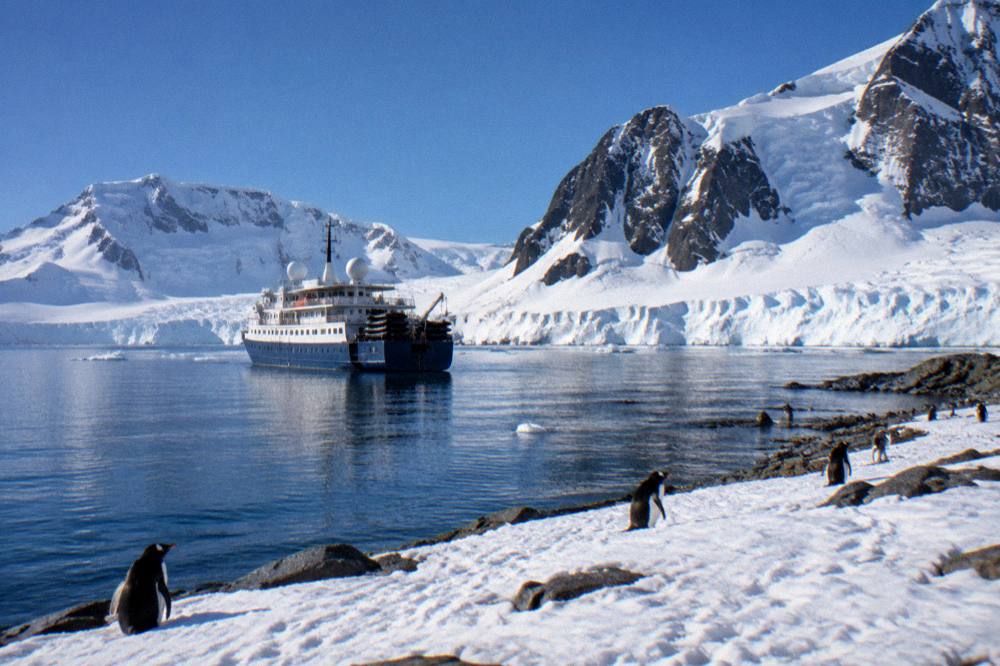
There is a case for the bigger ships too, and it should be stated fairly. HX's 490-guest vessels offer more onboard space, more dining options and often lower fares per day, with fares from around $10,485 per person. The wildlife trade-off is mechanical: more guests per landing rotation, and a lower share of your day spent ashore. Some travellers happily accept that on a first trip; serious wildlife watchers rarely do twice.
How Do You Book Around The Wildlife Calendar?
Pick the month first, the route second and the ship last, then book early: peak December sailings fill furthest ahead, sometimes 18 months or more, and early-booking offers commonly reach 10 to 30 percent off. Budget $12,000 to $25,000 per person all-in for a mid-range 10-to-12-day Peninsula trip including flights, gear, tips and insurance, and expect the fare alone to start around $7,800 at the budget end.
The booking order matters because the month is the scarce variable. Fares and cabins flex across a season, but the penguin hatching window and the whale peak do not, and the December departures that hit both are the ones that sell out first. The cost research we reviewed puts realistic all-in budgets at $12,000 to $25,000 per person for a mid-range Peninsula trip, with entry-level berths on Drake-crossing itineraries beginning at roughly $7,500 to $8,995 per person in shared cabins, and tips averaging about $16 per person per day. Insurance with medical evacuation is required by most operators and is never in the base fare.
Early booking is the honest advice. Last-minute discounts exist, but they are limited in availability and cabin choice and are uncommon for peak December sailings, which book furthest ahead. Early-booking offers for the current and next seasons commonly reach 10 to 30 percent off, with deadlines through the year. If your wildlife priority is December chicks or February whales, waiting for a deal is a strategy that mostly rewards people whose dates are flexible, and those dates are exactly the ones that go first.
If you would like help matching a specific wildlife goal to a specific departure, a free consultation can do that mapping against the live 2026-27 calendars, with no obligation attached.
Common Questions About Antarctica Wildlife
What Is The Best Month To See Penguins On An Antarctica Cruise?
December and January. Chicks of gentoo, Adélie and chinstrap penguins begin hatching mid-December on the Peninsula, and by January most channels are ice-free so landings reach the largest number of active rookeries.
What Is The Best Month To See Whales In Antarctica?
February and March. Humpback sightings increase from mid-January as krill becomes accessible, and whale activity including humpback, minke and orca peaks late in the season before the animals move north.
How Close Can You Get To Penguins In Antarctica?
IAATO rules require at least 5 metres from wildlife on land, with greater distances for nesting or stressed animals. Penguins have no fear of humans and may approach you, but you may not close the distance yourself.
Can You See Emperor Penguins On A Regular Antarctica Cruise?
Not on a standard Peninsula itinerary. Emperor penguins breed on sea ice in the Weddell Sea, and seeing them requires a specialized November or December voyage targeting the Snow Hill rookery, often using helicopters for access.
Do More Expensive Ships Get You Closer To Wildlife?
No. Every IAATO operator works under the same landing rules, including the 100-passenger ashore cap and the one-ship-per-site rule. A budget ship like Hondius delivers the same landings as a luxury line; the price difference is cabin comfort and onboard program.
Are Drone Flights Allowed Near Antarctic Wildlife?
No. The IAATO visitor guidelines state that drones must not be used near wildlife, and operators enforce this on all landings.