Antarctica In January: High Summer Weather, Wildlife And Sailings
 By Oleg G.
January is peak high summer in Antarctica: the warmest temperatures of the season, penguin chicks hatching across the Peninsula, whales arriving in growing numbers, and the highest fares of the year. Here is what a January voyage actually looks like, what it costs, and how the landing rules shape your days ashore.
Quick answer: January is the warmest month on the Antarctic Peninsula, with coastal averages around 4°C highs and 0°C lows and roughly 18 hours of daylight. Penguins are hatching chicks, whale sightings increase from mid-January onward, and fares sit at their seasonal peak, with published examples from about $14,959 per person. Landings still follow the 100-passengers-ashore rule, so ship size matters.
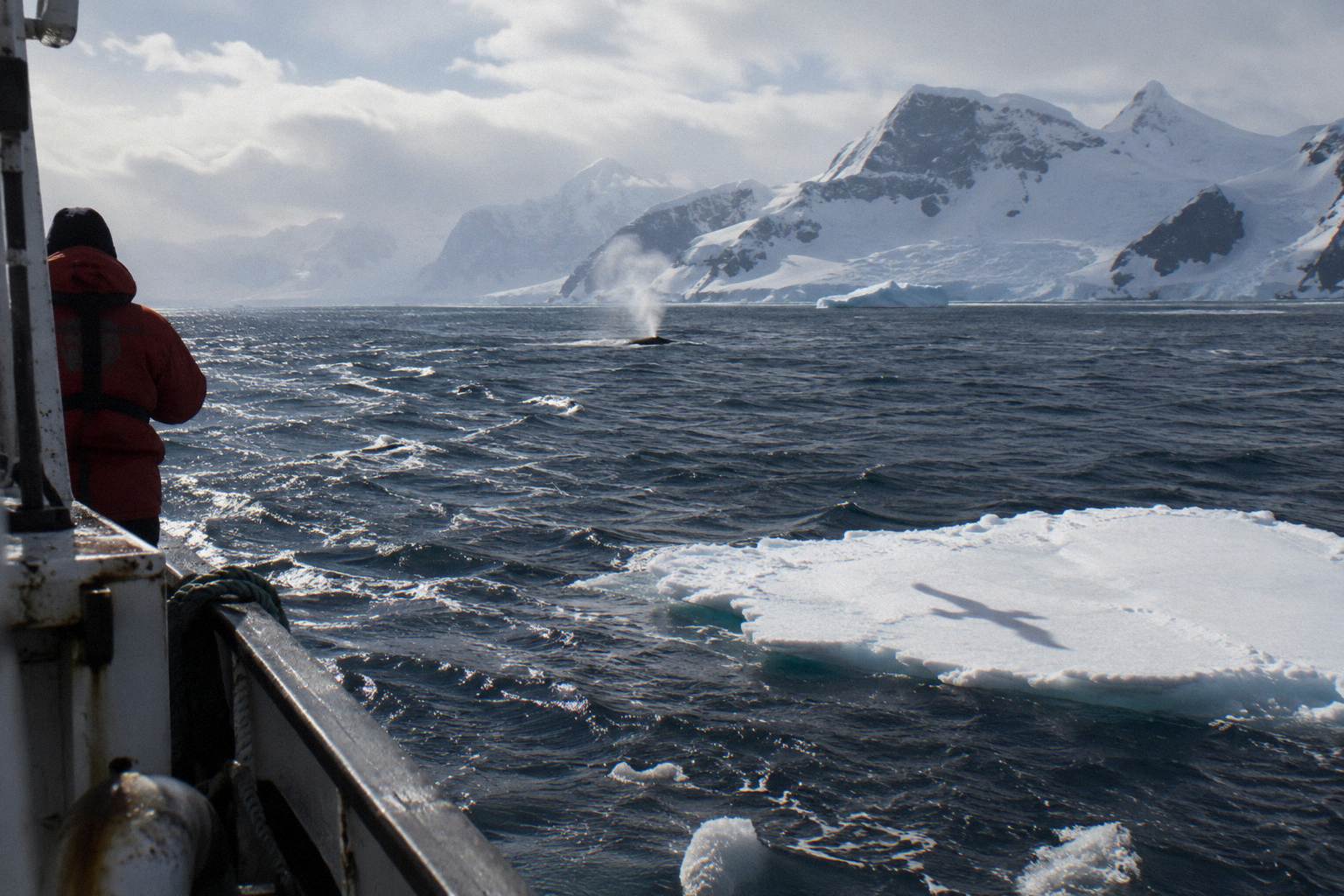
January is the month everything on the Antarctic Peninsula is awake. It is the warmest stretch of the austral summer, the daylight runs long, penguin colonies are at their loudest with newly hatched chicks, and the first serious whale arrivals show up along the krill-rich coasts. It is also the most expensive month to book, because everyone else wants exactly this combination. If your travel window is fixed in January, a cruise absolutely works, and this guide walks through what the month gives you, what it costs, and how to pick a ship that maximises your time on the ice. For the full month-by-month picture, start with our best time to visit Antarctica guide.
What January In Antarctica Actually Looks Like
January sits at the centre of the five-month season and delivers the season's warmest temperatures, long daylight, busy penguin colonies and peak-season fares, roughly around 4°C average Peninsula highs, about 18 hours of daylight at the height of the month, and voyage pricing that runs well above the November and March shoulders.
The Antarctic tourist season runs November through March, with no expedition ships in April through September. Within that window, January is the warmest month on the Peninsula, with coastal averages around 4°C for highs and near 0°C for lows. Ushuaia, the main gateway, is warmer still, with January highs around 13-14°C and lows of 5-6°C, which matters for the days you spend travelling to and from the ship.
Daylight is the quiet superpower of the month. At the Peninsula's latitude you get roughly 18 hours of light in January, down slightly from the December peak of 19-21 hours but far more than the 12.5 hours of March. For an expedition cruise, that translates directly into more usable hours for Zodiac cruising, landings and whale watching from the deck, and sunsets that arrive late enough to photograph after dinner.
| January at a glance | What the month gives you |
|---|---|
| Season window | Peak month of the November to March season; no ships April to September |
| Peninsula temperatures | Around 4°C average highs, near 0°C lows; warmest month of the season |
| Ushuaia gateway | Highs around 13-14°C, lows 5-6°C |
| Daylight | Roughly 18 hours at the Peninsula's latitude |
| Sea ice | Most channels and inlets ice-free; Circle crossings become feasible late month |
| Penguins | Gentoo, Adélie and chinstrap chicks hatching across the colonies |
| Whales | Sightings increasing from mid-January onward |
| Fares | Peak tier; shoulder months often 20 percent or more cheaper |
| Landings | Maximum 100 passengers ashore per vessel at a time, 1:20 guide ratio |
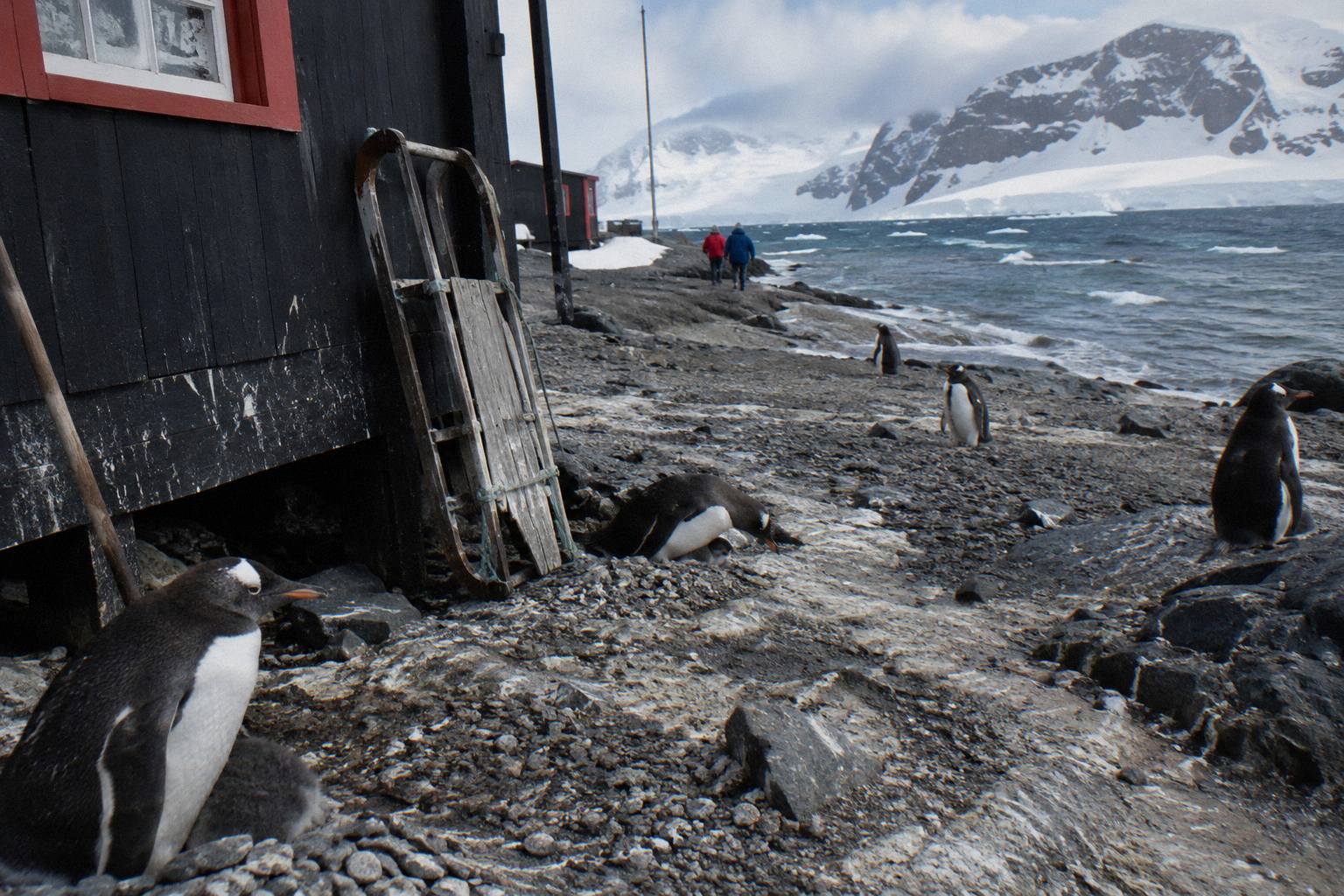
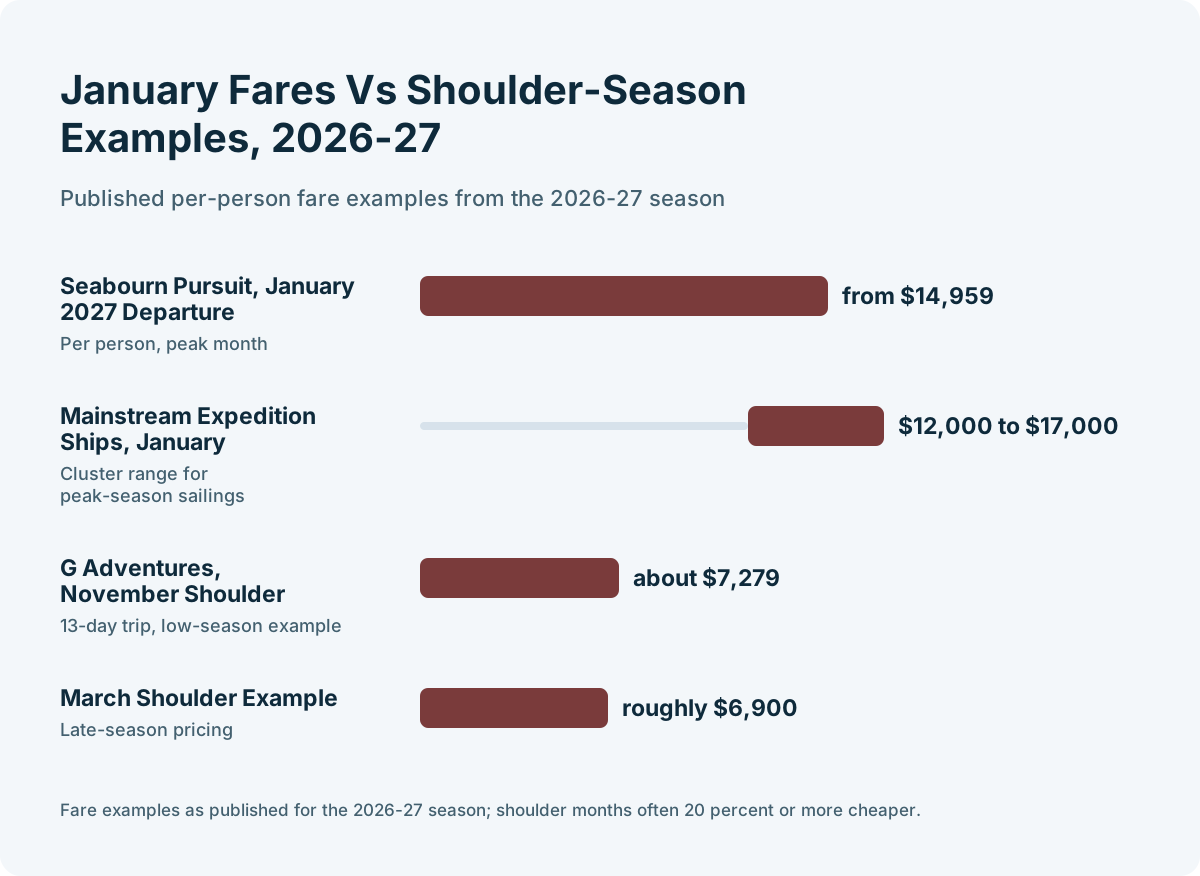
The trade-off is demand. January is the peak of peak season. Published fare examples from the 2026-27 season show a Seabourn Pursuit January 2027 departure from $14,959 per person, against November examples as low as $7,279 for a G Adventures 13-day trip. Shoulder months often price 20 percent or more below this level. If January is when you can travel, that premium buys the best all-round conditions of the season, but it is worth confirming exactly what you want from the voyage before committing. A free Antarctica cruise consultation is the quickest way to check whether your budget matches the January market or whether a neighbouring month would serve you better.
January Weather And Daylight On The Peninsula
Expect Peninsula coastal temperatures around 4°C at the warmest part of the day and near freezing overnight, roughly 18 hours of daylight, the most ice-free channels of the season and variable weather that still swings between sunshine, wind and snow squalls.
January is typically the warmest month on the Antarctic Peninsula, with station data showing average highs around 4°C and lows around 0°C for the coastal areas where expedition ships operate. That is genuinely mild by Antarctic standards, but it is not a beach destination: wind chill on a Zodiac can push the felt temperature well below zero, and precipitation in the form of rain, sleet or wet snow is possible at any time.
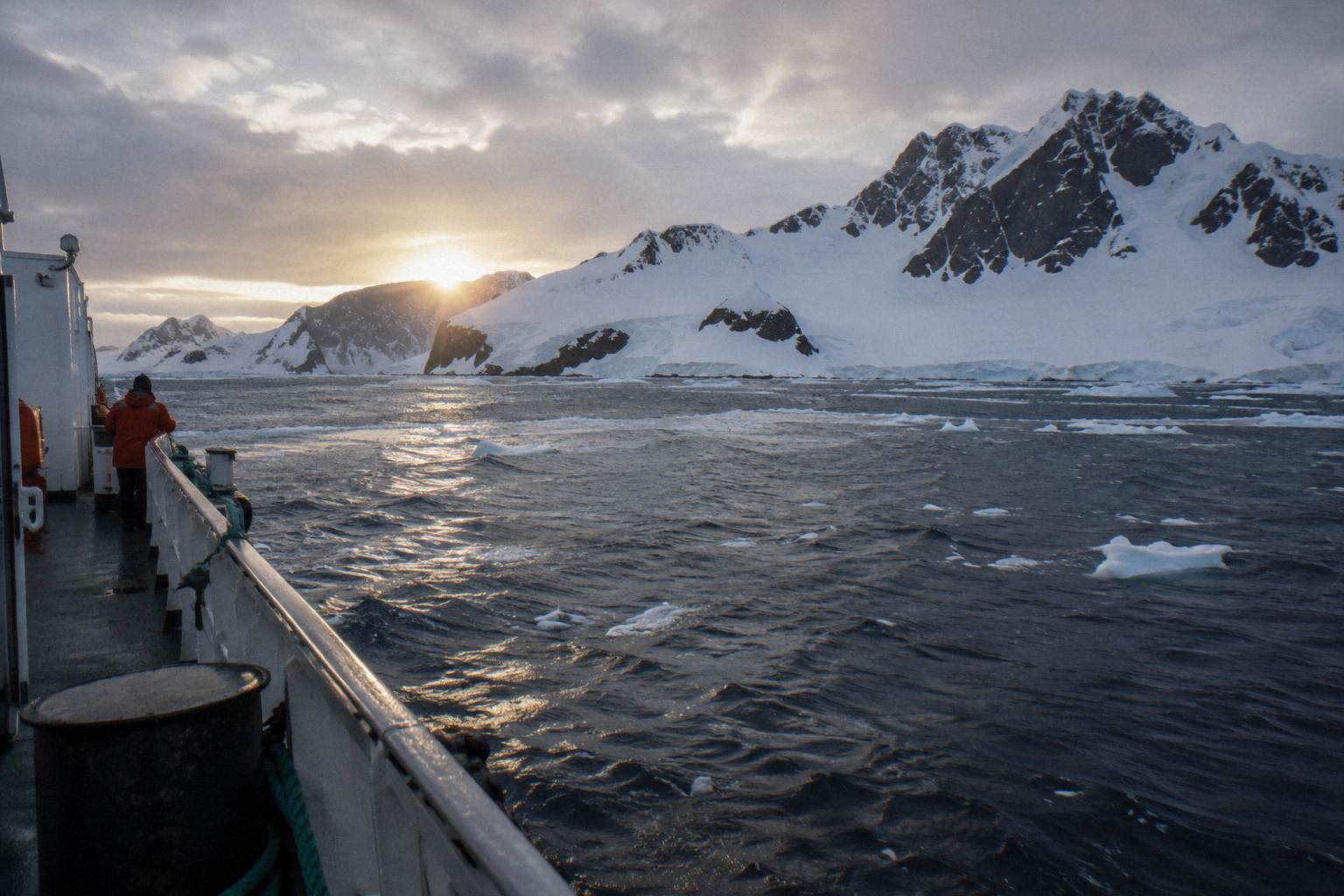
Sea ice is at its most accommodating in January. Early-season voyages in November contend with greater ice coverage and limited access to some landing sites, but by January most channels and inlets around the western Peninsula have become ice-free. That opens up the full spread of classic sites, from the South Shetland Islands to the Lemaire Channel and the bays of the western coast. It is also the month when Antarctic Circle crossings become more feasible, as the retreating ice allows ships to push south toward 66°33′S; late January through February is the most reliable window for those itineraries.
Daylight deserves its own planning note. Around 18 hours of light in January means landings can happen later in the evening than most travellers expect, and expedition teams often use the long evenings for extra Zodiac cruises or deck wildlife watches. Pack for variety: sun protection matters as much as warm layers, and our Antarctica packing list covers both.
Wildlife In January: Chicks, Whales And Seals
January is prime time for penguin chicks, with hatching of gentoo, Adélie and chinstrap penguins at its peak across Peninsula colonies, whale sightings building steadily from mid-January onward, and strong seal activity in the water and on the beaches, all under roughly 18 hours of usable daylight.
For many travellers, the wildlife is the whole reason to pick January. Gentoo, Adélie and chinstrap penguins, the three brush-tailed species of the Peninsula, begin hatching their chicks in late December, and by January the colonies are full of noisy, begging chicks being fed by commuting parents. That makes January a strong month to see penguin chicks at their downy, photogenic stage. By February those chicks gather into crèches and start learning to swim, so January is the sweet spot if fluffy chicks on the nest are the goal.
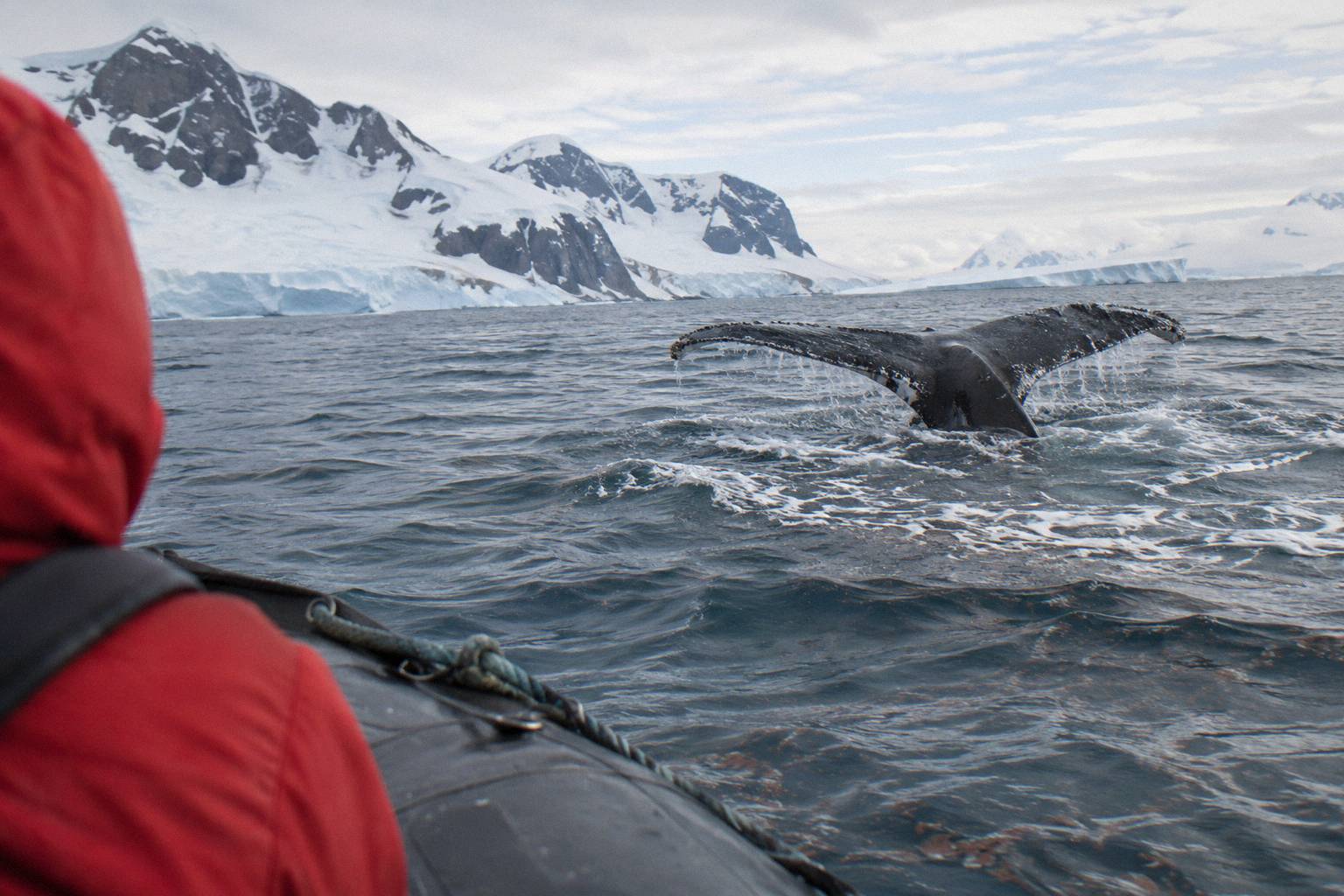
Whales follow a different clock. Humpback sightings increase from mid-January onward, and whale numbers peak later, in February and March, as krill abundance draws humpbacks, minkes and orcas into Peninsula feeding grounds. A January voyage will not deliver the February whale density, but the trend is upward through the month, and near-24-hour daylight with temperatures of 0-3°C is common from January through March, which makes long deck watches genuinely comfortable. The specialised Weddell Sea voyages that use helicopters to reach the Snow Hill Island emperor penguin rookery target November and December departures, not January.
Seals round out the picture. February and March bring higher fur seal abundance on the Peninsula, while South Georgia, on the longer combined itineraries, shows peak king penguin breeding activity from November through January, with chicks forming crèches by January. If king penguin chicks at the great South Georgia colonies like St Andrews Bay are on your list, a longer Falklands-South Georgia-Antarctica combination is the itinerary class that reaches them; see our South Georgia cruise guide for the detail. Wherever you land, the visitor guidelines say to keep at least 5 metres from wildlife on land in general, more where species or site guidance requires it, and drones must not be used near wildlife.
January Pricing And Peak-Season Booking Pressure
January fares sit at the top of the season's range: published 2026-27 examples include a Seabourn Pursuit January 2027 departure from $14,959 per person, with mainstream expedition ships clustering in the $12,000 to $17,000 range, against shoulder-season examples as low as about $7,279 in November and roughly $6,900 in March.
Peak pricing is the honest cost of peak conditions. December and January carry the highest base fares, with a premium for holiday sailings around Christmas and New Year, and published examples show December and January commonly at $12,000-$17,000 and above. Budget operators keep the entry point lower, with Oceanwide's small-ship Peninsula voyages from about $6,900-$10,750 depending on cabin and date, and some March Oceanwide examples around $6,900.
The booking window matters as much as the price. Peak December sailings are reported to book 18 or more months ahead, so plan early for any peak-season cabin. Early-booking discounts for the following season are typically released 12-18 months in advance and commonly reach 10-30 percent off, with select promotions steeper still; last-minute discounts do exist, but they are limited in availability and cabin choice and are uncommon for peak-month departures.
| Fare tier (2026-27 published examples) | Typical per-person from-price | Notes |
|---|---|---|
| Budget expedition (e.g. Oceanwide Plancius, Ortelius, Hondius) | ~$6,900-$10,750 | 10-12 day Peninsula voyages, shared twin or triple cabins common |
| Upscale expedition (e.g. Quark, Aurora, Lindblad) | ~$12,000-$19,000+ | Similar 10-12 day trips, higher guide ratios and inclusions |
| Luxury (e.g. Silversea, Seabourn, Scenic, Ponant) | ~$11,600-$21,473+ | 10-13 day Peninsula voyages, higher per-day rates |
| Peak-month example | Seabourn Pursuit, Jan 2027, from $14,959 | January is at the top of the seasonal range |
| Shoulder comparison | G Adventures, Nov 2026, from $7,279 | November and March often 20%+ below peak |
Single travellers should budget carefully: single supplements typically range from 25 percent extra to 1.5-2 times the twin rate, though some lines waive them on select sailings. Whether a January premium is worth paying versus a cheaper February or March sailing with even better whale numbers is a genuine judgement call, and a free consultation with an expedition specialist can lay real fares side by side before you commit.
Crowds, Landing Slots And The 100-Ashore Rule
Antarctica landings are capped at 100 passengers ashore from one vessel at a time, with a 1:20 guide ratio and only one ship per site at a time, so in busy January your time on land depends heavily on your ship's passenger count.
January falls in the peak stretch of the season, and the regulatory framework shapes how that feels on the ground. IAATO rules, aligned with Antarctic Treaty visitor guidelines, allow a maximum of 100 passengers ashore from a vessel at any one time unless site-specific guidance requires fewer, and only one ship may visit a landing site at a time. A ship carrying 200 passengers therefore has to run its landing operation in shifts, while a ship of 100 or fewer can put everyone ashore at once. On a peak-month voyage, that difference repeats at every landing.
Ships carrying more than 500 fare-paying passengers cannot make landings at all; they are cruise-only, offering scenic sailing through Peninsula waters without a single step on the continent. Larger vessels in the 201-500 passenger range do make landings, but with rotations that shorten each passenger's individual time ashore. The practical January advice is that smaller is better if landings are your priority, and that mid-size ships around 130-200 passengers are a workable compromise. The concentration is real: the Antarctic Treaty Secretariat's tourism page notes that approximately 98 percent of all tourism voyages occur in the Antarctic Peninsula during the austral summer, so the whole season's traffic funnels into the same stretch of coast you will be sailing.
Coordination keeps the sites themselves from feeling crowded. IAATO operators use a ship scheduler and site coordination so that only one vessel visits a landing site at a time, and ATCM 48 in 2026 adopted updated site-specific guidelines with approach distances, boundaries and capacities for frequently visited places such as Deception Island, Half Moon Island, Neko Harbour and Port Lockroy. Biosecurity also applies at every landing: boots and all equipment must be carefully washed and cleaned before you arrive, and cleaned again between sites, which is why kneeling or sitting on the ground in wildlife areas is restricted. Our Antarctica landing sites guide covers the individual sites in depth.
Ships And Itineraries Sailing In January
Expedition operators across every tier sail in January, from small-ship budget vessels to luxury ships, on itineraries covering the classic Peninsula route, Antarctic Circle extensions and Falklands-South Georgia combinations.
January is a full-fleet month. Oceanwide's Hondius, Ortelius and Plancius run Peninsula, Basecamp and combination voyages from Ushuaia; Quark's Antarctic Explorer and helicopter-focused itineraries sail on Ultramarine; Atlas Ocean Voyages operates World Navigator and World Traveller; and the luxury lines, Silversea, Seabourn, Scenic and Ponant, all have their ships in the region. That cuts both ways: more choice, but more competition for the best cabins.
Three ships illustrate the spread of what a January fare buys. Seabourn Pursuit is the luxury end of the range, a Seabourn expedition ship sailing from Ushuaia on 10-12 day and 20-21 day voyages, with a January 2027 departure published from $14,959 per person. Hondius represents the small-ship budget tier: a 170-passenger, Polar Class 6 vessel built in 2019, sailing from Ushuaia with fares from $7,800 per person. National Geographic Endurance sits in between as a standard expedition option, a 138-guest ship with a PC5 Category A ice class, patented X-Bow and voyages from $11,900 per person. The operator page does not state every spec for every ship, so treat gaps as gaps, and confirm current fares before deciding anything.
| Ship | Class | Passengers | Ice class | From, per person | Voyage length | Departs from |
|---|---|---|---|---|---|---|
| Seabourn PursuitSeabourn | Luxury | – | – | – | 10 to 21 days | Ushuaia |
| HondiusOceanwide Expeditions | Small-Ship Budget | 170 | Polar Class 6 | from $7,800 | 11 to 19 days | Ushuaia |
| National Geographic EnduranceLindblad Expeditions (with National Geographic) | Standard Expedition | 138 | PC5 | from $11,900 | 12 to 22 days | Ushuaia |
For luxury travellers weighing the Seabourn option specifically, our ship roster holds no standing from-fare for Seabourn Pursuit, so the January 2027 published example of $14,959 is the best guide to the tier, and cabin category and date move the number substantially. A consultation is the way to get a current fare.
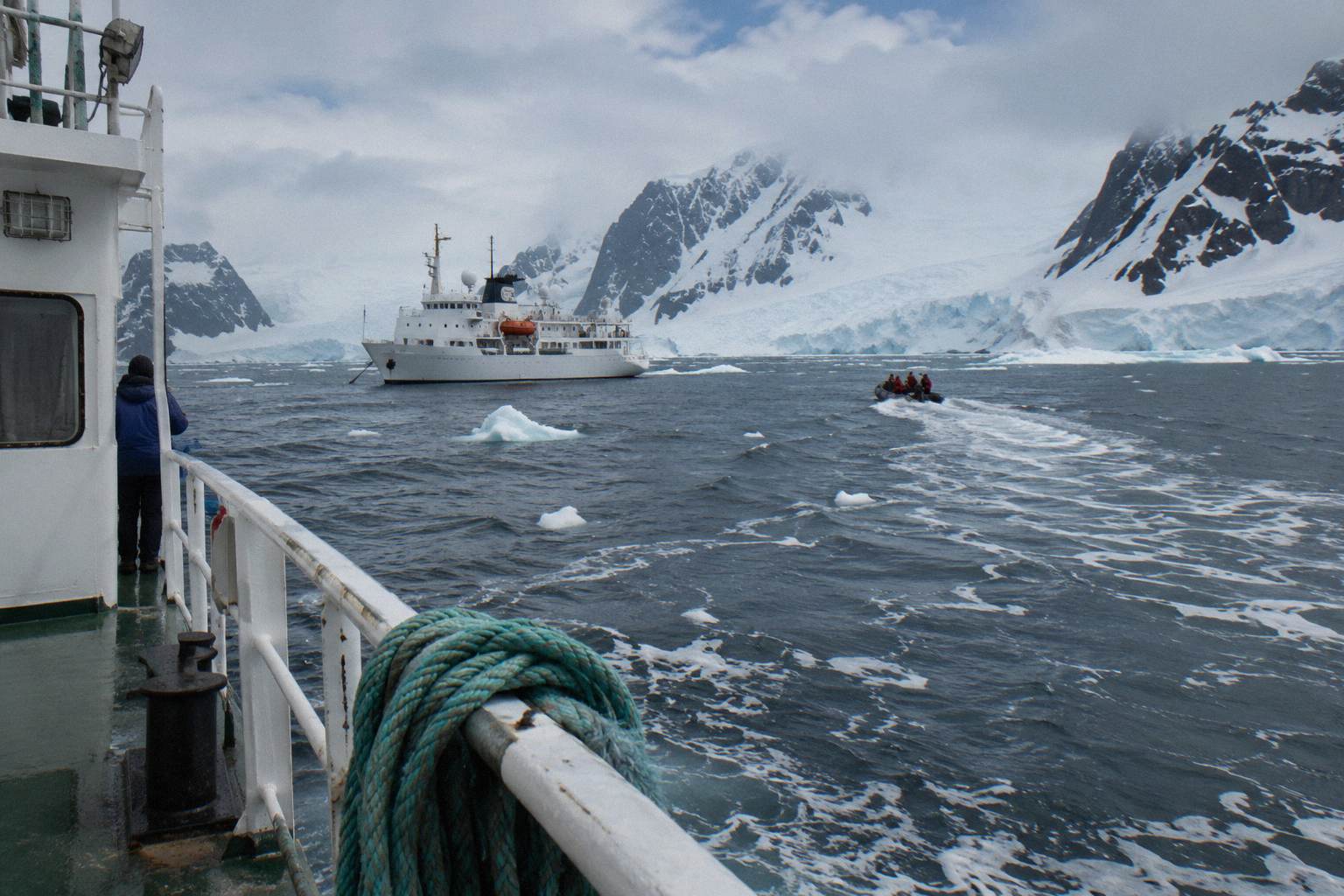
Itinerary length is the other January decision. The classic Peninsula route runs about 10-13 days in the South Shetland Islands and western Peninsula. Fly-cruise options, such as Antarctica21's air-cruise model, cut the Drake Passage down to a roughly two-hour charter flight to King George Island, trading sea days for weather risk on the flight. Falklands, South Georgia and Peninsula combinations run much longer and deliver the king penguin spectacle alongside the Peninsula. And Circle-crossing itineraries attempt 66°33′S, most feasibly from late January onward as the ice retreats. Our Antarctic Circle cruise guide and fly versus sail Drake analysis unpack those two choices.
January Versus The Neighbouring Months
January trades the lowest prices of November and March for the season's best all-round conditions, and it beats December on settled ice and hatched chicks while falling short of February and March on whale numbers and Circle-crossing reliability, though every month of the season trades something.
Every month of the season trades something. November offers courting penguins, pristine snow and shoulder-season discounts, but more sea ice limits access. December brings the longest daylight, egg incubation and the beginning of the whale arrivals, plus the holiday-price spike around Christmas. January delivers hatched chicks, the warmest temperatures, open channels and building whale numbers at peak fares. February adds crèche-stage chicks, molting adults, the season's best whale watching and the most reliable Circle crossings. March delivers fledging penguins, strong whale activity and shoulder-season pricing again, with shorter daylight and cooling temperatures.
| Month | Peninsula temps (avg) | Penguins | Whales | Price level |
|---|---|---|---|---|
| November | ~1-3°C high, -2 to -4°C low | Courtship, nest building, egg laying starts | Before the main December-January arrivals | Shoulder, discounts common |
| December | ~3-4°C high, -1 to 0°C low | Eggs and incubation, hatching begins mid-month | Arrivals begin | Peak, holiday premium |
| January | ~4°C high, 0°C low | Hatching and young chicks at peak | Increasing from mid-month | Peak |
| February | ~4°C high, 0°C low | Chicks in crèches, adults molting | Season peak | Below the December-January peak |
| March | ~2-3°C high, -1 to -5°C low | Chicks fledging, colonies emptying late month | Strong, humpback, minke, orca | Shoulder, discounts common |
The neighbouring-month pages carry the full detail: Antarctica in December for holiday sailings and incubating colonies, and Antarctica in February for peak whale watching and Circle crossings. If your dates have any flex, February quietly offers much of January's wildlife with better whales and slightly softer pricing, and March goes further still on price.
Is January The Right Month For Your Antarctica Cruise
January is the best month to choose if you want the warmest, most open, most wildlife-rich version of the Peninsula in one package and are prepared to pay peak fares and book early; it is the wrong month only if whales are your single priority or the budget points you at the shoulders.
Stack up what January offers against what it does not. You get the warmest temperatures of the season, channels that are largely ice-free, roughly 18 hours of daylight, penguin chicks at the classic landing sites, growing whale activity and the full fleet of ships and itineraries to choose from. You pay for it: fares run at the top of the range, and landing sites carry peak-season traffic, mitigated by the 100-ashore cap and the one-ship-per-site rule.
The ship decision matters more in January than in any other month precisely because so many ships are sailing. A 90-passenger vessel like the Ushuaia-based small ships lands everyone at once; a 199-passenger ship rotates in shifts; a 490-passenger ship spends more of each day managing its rotation. If landing time is the point of the trip, size is the single most consequential choice you will make, ahead of cabin category, ahead of line, arguably ahead of price. Whether your answer is a luxury ship like Seabourn Pursuit or a budget workhorse like Hondius, the calculus is the same, and January's crowded calendar rewards travellers who have thought it through in advance, which is exactly why Cruises In Antarctica exists as a research resource. That is also a good moment for a free Antarctica voyage consultation: it costs nothing, carries no obligation, and an expedition specialist can tell you which January departures still have the cabin you actually want.
Common Questions About Antarctica In January
Is January a good month to cruise to Antarctica?
Yes. January is the warmest month on the Antarctic Peninsula, with average highs around 4°C, about 18 hours of daylight, penguin chicks hatching across the colonies and whale sightings increasing from mid-month. It is also the most expensive month, so book early.
How cold is Antarctica in January?
Antarctic Peninsula coastal areas average around 4°C for daytime highs and near 0°C for lows in January, making it the warmest month of the season. Ushuaia, the main gateway, is milder still, with highs around 13-14°C.
What wildlife can I see in Antarctica in January?
Gentoo, Adélie and chinstrap penguin chicks are at their hatching and downy-chick peak, humpback whale sightings increase from mid-January onward, and seals are active in Peninsula waters. South Georgia itineraries add king penguin chicks forming creches by January.
How much does a January Antarctica cruise cost?
Peak-season fares cluster roughly between $12,000 and $17,000 and above on many lines, with a published Seabourn Pursuit January 2027 example from $14,959 per person and budget small-ship options from roughly $6,900-$10,750 depending on cabin and date.
Is January more crowded than other months in Antarctica?
January falls in peak season, but landings are regulated: a maximum of 100 passengers may be ashore from a vessel at any one time, only one ship may visit a site at a time, and ships carrying more than 500 passengers cannot land at all. Smaller ships give you more time ashore regardless of the month.
Can you cross the Antarctic Circle in January?
Yes, some 2026-27 itineraries attempt the crossing at 66°33′S as a southern extension of the classic Peninsula route. Late January through February is the most reliable window, as sea ice retreat makes the southward push more feasible.
More Antarctica By Month
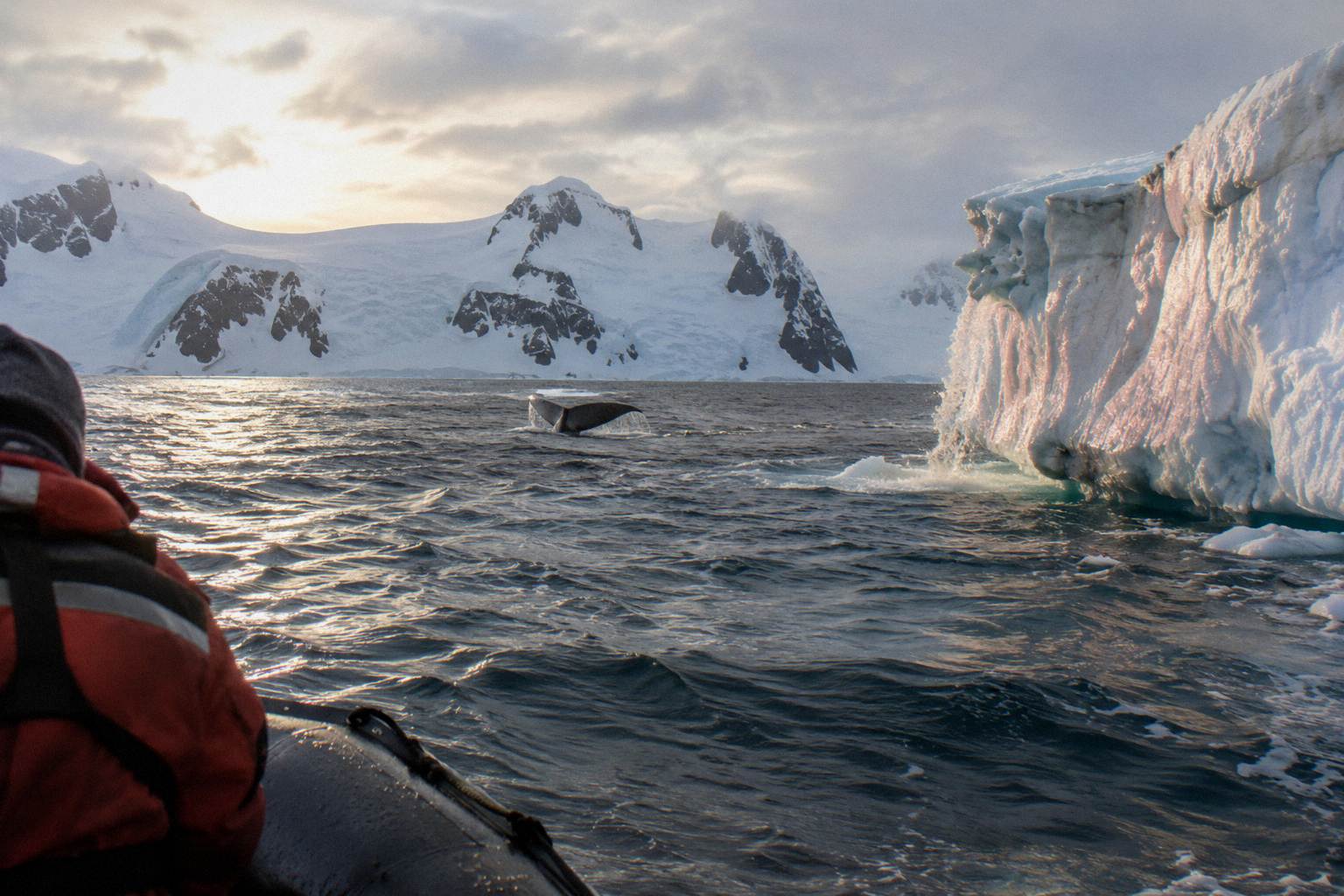 Antarctica In FebruaryLate-summer whales, chick creches, open ice and Circle crossings: what a February sailing gives you.Read the guide
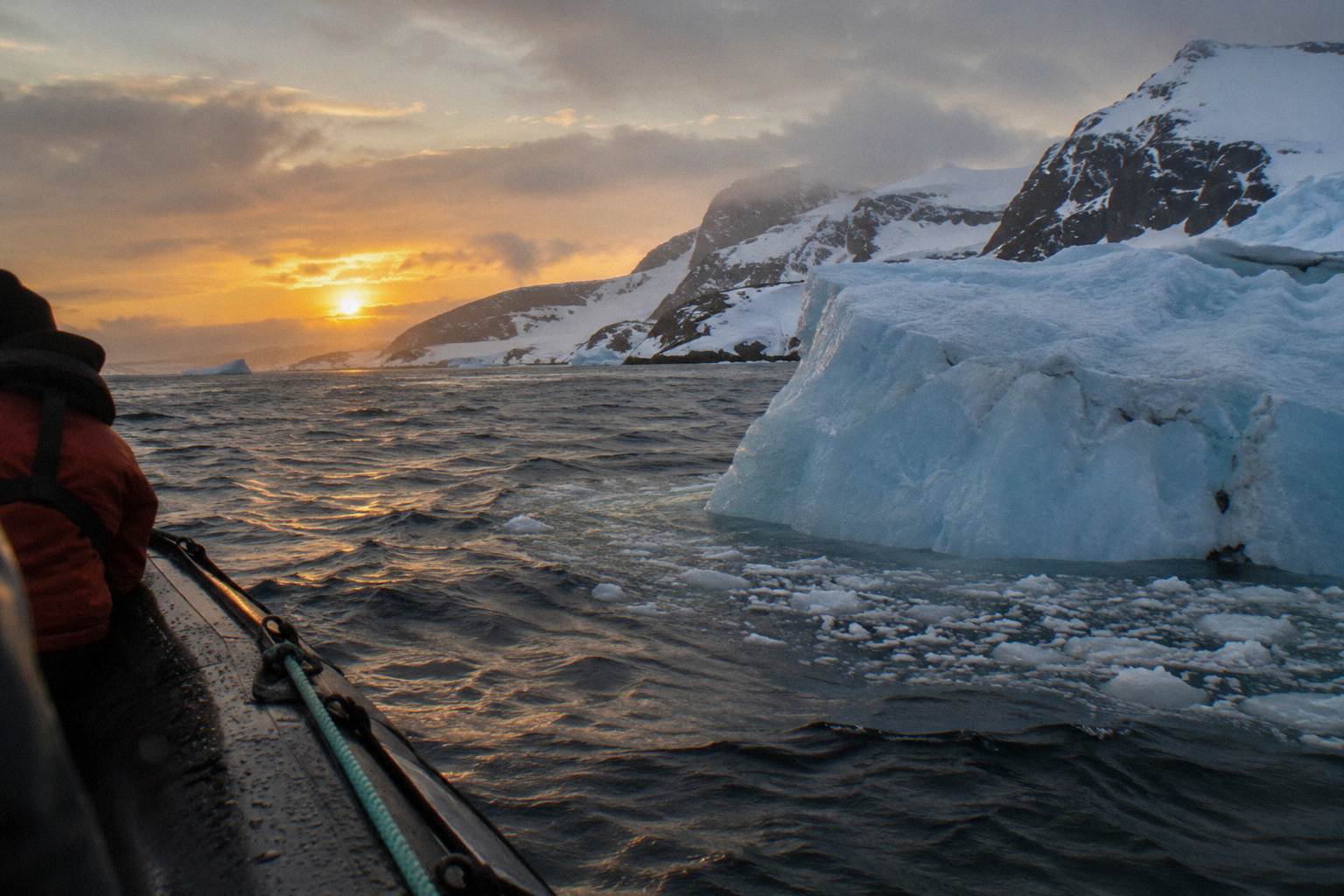 Antarctica In MarchEnd-of-season weather, wildlife and the last sailings of the Antarctic cruise year.Read the guide
 Antarctica In AprilApril has no Antarctic sailings. Here is why, and what to do with that travel window instead.Read the guide
 Antarctica In MayWhy no ship sails to Antarctica in May, and what to do with the month instead.Read the guide