Antarctica Cruise Cost: What You Actually Pay Per Person
 By Oleg G.
Entry fares across the current roster run from $7,050 per person on a small budget ship to $32,320 on a luxury Ross Sea voyage, and the sticker fare is only the start of the maths.
Quick answer: An Antarctica cruise costs from $7,050 per person for an entry berth on a small budget ship to $32,320 for a 22-day luxury Ross Sea voyage. Most classic Peninsula expedition cruises sit between $10,485 and $19,566 before flights, tips and insurance, and one cost guide puts realistic all-in spending for a mid-range trip at $12,000 to $25,000 per person.
How Much Does An Antarctica Cruise Cost Per Person?
Entry fares on the current roster run from $7,050 per person for a shared berth on Plancius to $32,320 for a 22-day luxury voyage to the Ross Sea aboard Le Soléal. Verified classic Peninsula expedition cruises cluster between $10,485 and $19,566, and one cost guide puts realistic all-in spending for a mid-range trip at $12,000 to $25,000 per person. If the Ross Sea route has caught your eye, our guide to visiting McMurdo Station as a tourist explains what you can actually see there and how those voyages differ from standard Peninsula itineraries.
The honest version of this answer starts with a definition. Every "from" fare on an operator's page is the lowest published price for one cabin category, usually a shared triple or quad, on the cheapest departure of the season. A traveller who books a twin cabin in January should expect the number to move, sometimes by a lot. The from-fares in this guide come from the operator pages behind our ship roster, plus named cost guides where a line publishes nothing, and they are real entry points rather than teasers.
Above that entry point the market spreads fast. One survey of live 2027-28 itineraries across ten lines found per-person fares from $11,321 to more than $28,500, which works out to roughly $950 to $2,600 per person per night in double occupancy on classic sailings, according to that small-ship cost survey. Separate operator checks found the cheapest published Peninsula fares on mainstream expedition lines running about $9,000 to $12,000. The floor of the whole market sits below both figures: entry berths on Drake-crossing voyages begin around $7,500 to $8,995 for 10 to 11 days in shared cabins, and the roster's lowest verified fare is lower still.
Context matters when you read any of these numbers. The Antarctic Treaty Secretariat notes that approximately 98 percent of all tourism voyages occur in the Antarctic Peninsula during the austral summer, which is why nearly every fare in this guide prices a Peninsula expedition cruise rather than a deep polar itinerary, per the Secretariat's tourism page. IAATO counted 85,195 visitors who landed in the 2025-26 season and another 27,217 who toured without landing, a volume that keeps demand, and therefore prices, firm.
Every figure in the tables below traces to an operator page or a named source, and where a cruise line publishes no fare at all, this guide says so instead of guessing. That discipline is the reason Cruises In Antarctica exists: pricing this continent is a research job, not a search-box job, and the gap between a fare and a final bill is usually four figures.
The Price Ladder By Ship Class
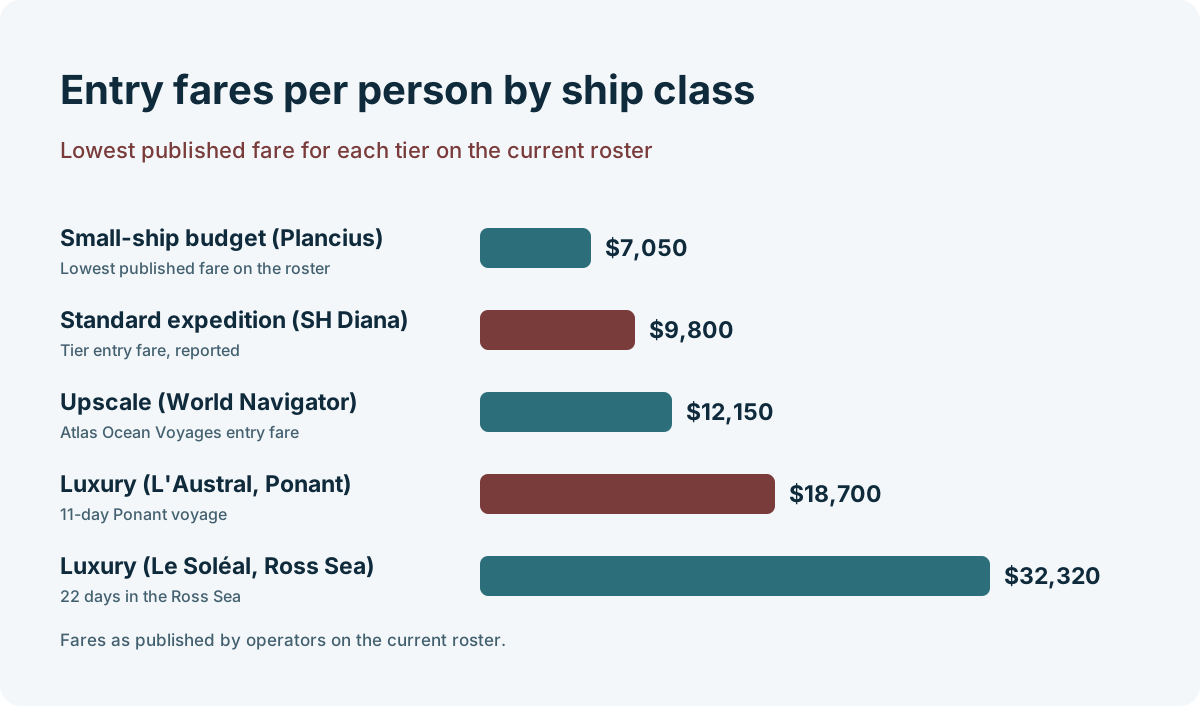
Small-ship budget fares start at $7,050 on Plancius and top out near $8,846 on Sea Spirit. Standard expedition ships publish entry fares from $9,800 to $11,900, upscale ships from $12,150 to $19,566, and the luxury tier runs from $18,700 for an 11-day Ponant voyage to $32,320 for 22 days in the Ross Sea.
Class is the single biggest price lever on an Antarctic expedition cruise, bigger than the month you pick or the cabin you choose. The ladder below is built only from the roster's from-fares and their price notes, so a line that publishes nothing, like Silversea or Seabourn, simply does not appear with a number.
| Class | Ship (operator) | Passengers | Voyage days | Entry fare per person |
|---|---|---|---|---|
| Small-ship budget | Plancius (Oceanwide Expeditions) | 108 | 10/11/13 and longer | From $7,050 |
| Small-ship budget | Hondius (Oceanwide Expeditions) | 170 | 11/13/19 | From $7,800 |
| Small-ship budget | Ortelius (Oceanwide Expeditions) | 108 | 11/13/25 | From $7,800 |
| Small-ship budget | Sea Spirit (Poseidon Expeditions) | 114 | 12/15/19 and longer | From $8,846 (reported) |
| Standard expedition | SH Diana (Swan Hellenic) | 192 | 9/11/17 | From $9,800 (reported) |
| Standard expedition | MS Fridtjof Nansen (HX) | 490 | 15/18/19 | From $10,485 (reported) |
| Standard expedition | MS Roald Amundsen (HX) | 490 | 12/16 | From $10,863 (reported) |
| Standard expedition | National Geographic Endurance (Lindblad) | 138 | 12/16/21/22 | From $11,900 |
| Upscale expedition | World Navigator (Atlas Ocean Voyages) | 196 | 10/12 | From $12,150 |
| Upscale expedition | Ultramarine, Ocean Explorer, World Voyager (Quark) | 199/138/168 | 8 to 14 | From $12,236, voyage-level |
| Upscale expedition | National Geographic Explorer (Lindblad) | 148 | 10/12/18 and longer | From $12,250 |
| Fly-cruise | Magellan Explorer (Antarctica21) | 88 | 8 | From $13,795 |
| Luxury | L'Austral (Ponant) | 264 | 11/19 | From $18,700 |
| Luxury | Le Boréal (Ponant) | 264 | 19 | From $23,020 |
| Luxury | Le Lyrial (Ponant) | 245 | 18 | From $26,780 |
| Luxury | Le Soléal (Ponant, Ross Sea) | 264 | 22 | From $32,320 |
Read the ladder as tiers, not as a ranking of quality. Plancius, a converted Dutch Navy oceanographic vessel rebuilt as a passenger ship in 2009, carries 108 guests from Ushuaia with a verified entry fare of $7,050, and that figure is the lowest published fare anywhere on the roster. Hondius and Ortelius sit a step above at $7,800, with Hondius holding Polar Class 6 registration and Ortelius sailing on a former Russian research hull. These are working expedition ships: small cabins, no balconies in the cheap categories, and every dollar going into days on the water rather than wallpaper.
One tier up, the differences are about scale and inclusions more than the route. Standard expedition ships like the National Geographic Endurance pair, verified from $11,900 for the 12-day Voyage to Antarctica, and HX's 490-guest sisters add bigger platforms and bundled extras. Upscale ships such as Atlas Ocean Voyages' World Navigator publish from $12,150, and operator checks found most 9- to 11-night Atlas Ushuaia sailings landing between roughly $14,400 and $22,000 with charter flights included, per one cost guide's booking-page checks. The luxury tier then re-prices the same coastline: Ponant's L'Austral starts at $18,700 for an 11-day voyage, while its Ross Sea expedition aboard Le Soléal, 22 days and a genuinely different itinerary, opens at $32,320.
Comparing the three ends of the ladder side by side shows what each price step actually buys: a 108-guest budget workhorse, a 138-guest Lindblad vessel with a PC5 hull and bundled charter flights, and a 220-guest luxury ship whose fares are not published at all.
| Ship | Class | Passengers | Ice class | From, per person | Voyage length | Departs from |
|---|---|---|---|---|---|---|
| PlanciusOceanwide Expeditions | Small-Ship Budget | 108 | 1D | from $7,050 | 10 to 33 days | Ushuaia |
| National Geographic EnduranceLindblad Expeditions (with National Geographic) | Standard Expedition | 138 | PC5 | from $11,900 | 12 to 22 days | Ushuaia |
| Silver EndeavourSilversea | Luxury | 220 | PC6 | – | 6 to 13 days | King George Island, Puerto Williams |
One warning belongs right here, at the moment of choosing a tier: Quark Expeditions prices at the voyage level, and its from-fare of $12,236 is shared across Ultramarine, Ocean Explorer and World Voyager. The number is not attached to a specific ship, so a reader comparing hulls needs to compare departure dates as well. If the ladder leaves you torn between a budget berth and an upscale cabin, it is worth a free consultation on ship and fare before anything is booked, because the same voyage-level fare can sit under three different vessels.
What The Fare Includes And What It Leaves Out
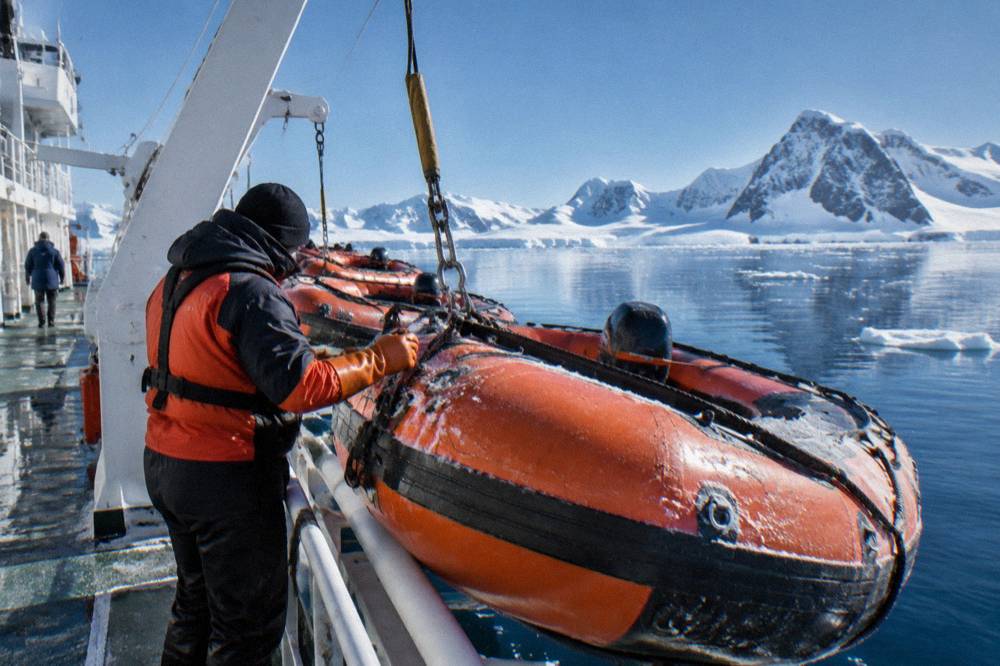
Most Peninsula expedition fares cover the cabin, all meals, Zodiac excursions and landings, lectures, and a parka you usually keep, with waterproof boots loaned on board. They exclude international flights, hotels, travel insurance with medical evacuation, tips at roughly $15 to $25 per person per day, and optional kayaking or camping.
The base fare on an expedition cruise buys more than the equivalent fare in the Caribbean. Because the ship is the transport, the hotel, the lecture hall and the landing platform, the published price normally sweeps in daily Zodiac operations and shore landings, expedition staff, and full board. Most operators also provide a complimentary parka, often yours to keep, and loan waterproof boots for the duration, per one gear-focused cost guide.
What the fare quietly leaves out is where budgets break. Gratuities typically run $15 to $25 per person per day unless the line prepaid them, and insurance with medical evacuation cover is required or recommended by most operators and never sits inside the base fare. Some lines soften the edges: Lindblad bundles a pre-cruise Buenos Aires hotel, the charter flight to Ushuaia, alcoholic beverages, prepaid gratuities and an expedition jacket, per a cruise-cost breakdown. That bundling is why a $11,900 fare and a $12,236 fare can land closer together in real spending than their stickers suggest.
| Item | Typical treatment in an Antarctic fare |
|---|---|
| Cabin and all meals | Included on every roster line |
| Zodiac excursions and landings | Included; landings capped at 100 passengers ashore per vessel |
| Expedition parka | Complimentary on most lines, often yours to keep |
| Waterproof boots | Usually loaned on board |
| Gratuities | Usually extra, $15 to $25 per person per day unless prepaid |
| Travel insurance with evacuation | Never in the base fare; minimums of $150,000 to $500,000 by line |
| International flights and gateway hotels | Extra on most lines; Lindblad bundles hotel and charter flight |
| Kayaking, camping, paddling | Optional activities, priced separately |
The inclusions explain a chunk of the price ladder itself. When an upscale fare looks $4,000 above a budget fare for the same coastline, part of that gap is charter flights, drinks and gratuities already inside the ticket, and part is hardware such as helicopters on Ultramarine or balconies on World Voyager. The trick is comparing like with like, which is easier said than done across a dozen cabin categories. This is the first genuine decision moment in pricing a trip, and readers who want the bundle maths laid out for specific voyages can get a free Antarctica cruise consultation rather than reverse-engineering every operator's fine print.
How Cabin Category, Season And Solo Travel Move The Price
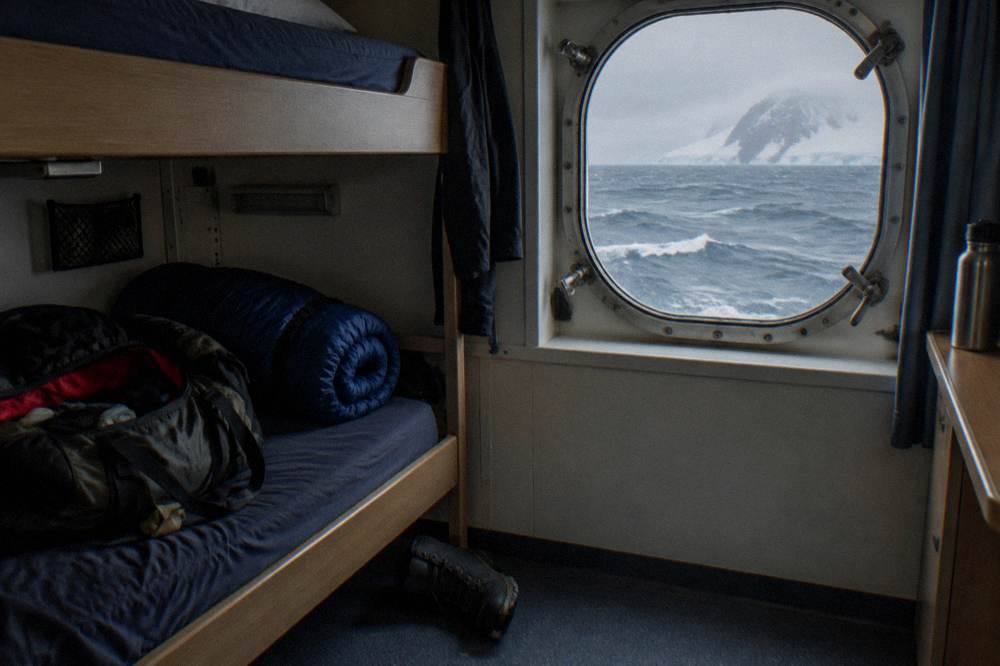
Cabin category moves the fare more than any other lever: one cost guide pegs per-night costs at roughly $950 to $2,600 in double occupancy across classic sailings. Single supplements run from 25 percent above the twin rate to 1.5 to 2 times it, though a few lines waive them on select departures.
The from-fare is the floor of a cabin ladder that can double or triple inside one voyage. A shared triple on Plancius starts the scale, a private twin sits above it, and suites with balconies on the upscale ships sit well above that. The survey of live 2027-28 itineraries found that per-night spread of roughly $950 to $2,600 across classic sailings, which is the cleanest available way to describe how far one departure's cabin range stretches. Viking's published 2026-27 pricing shows the same shape inside a single line: a 13-day Antarctic Explorer from $14,999 and a 15-day Into the Antarctic Circle from $18,499, per operator-page checks.
Timing is the second lever, and it rewards patience of a specific kind. Early-booking offers for the 2026-27 and 2027-28 seasons commonly reach 10 to 30 percent off, and up to 40 percent on select unsold sailings, with deadlines running through 2026, per deal trackers. Last-minute discounts exist but are limited in availability and cabin choice, and they are uncommon for peak December sailings, which the same trackers note book 18 or more months ahead. Atlas has run promotions with savings up to $6,779 per person plus onboard credit, with fares scheduled to rise on a published date, so the calendar is a real pricing instrument rather than a suggestion.
| Lever | What it does to the fare | Direction |
|---|---|---|
| Shared triple or quad cabin | The published from-fare on most lines | Cheapest |
| Private twin cabin | Usually the largest single step up from the from-fare | Up |
| Suite or balcony category | Can multiply the entry fare on upscale and luxury ships | Up sharply |
| Early-booking window | Commonly 10 to 30 percent off, up to 40 percent on select sailings | Down |
| Peak December dates | Book 18 or more months ahead, rare last-minute deals | Up |
| Solo occupancy | 25 percent above twin, up to 1.5 to 2 times the twin rate | Up |
Solo travellers get the harshest arithmetic. Single supplements across the market range from 25 percent extra to 1.5 to 2 times the twin rate, though lines such as Silversea and Ponant waive them on select sailings and sharing options often exist in lower categories. For a traveller pricing a voyage around a specific month, our guide to the best time to visit Antarctica covers the season trade-offs, and the cost logic in this section applies to whichever month you land on. When the cabin ladder, the season and a solo supplement all point in different directions, that is the moment to talk through fares with a specialist and see which lever is worth pulling.
Fly-Cruise Or Sail: What The Crossing Costs
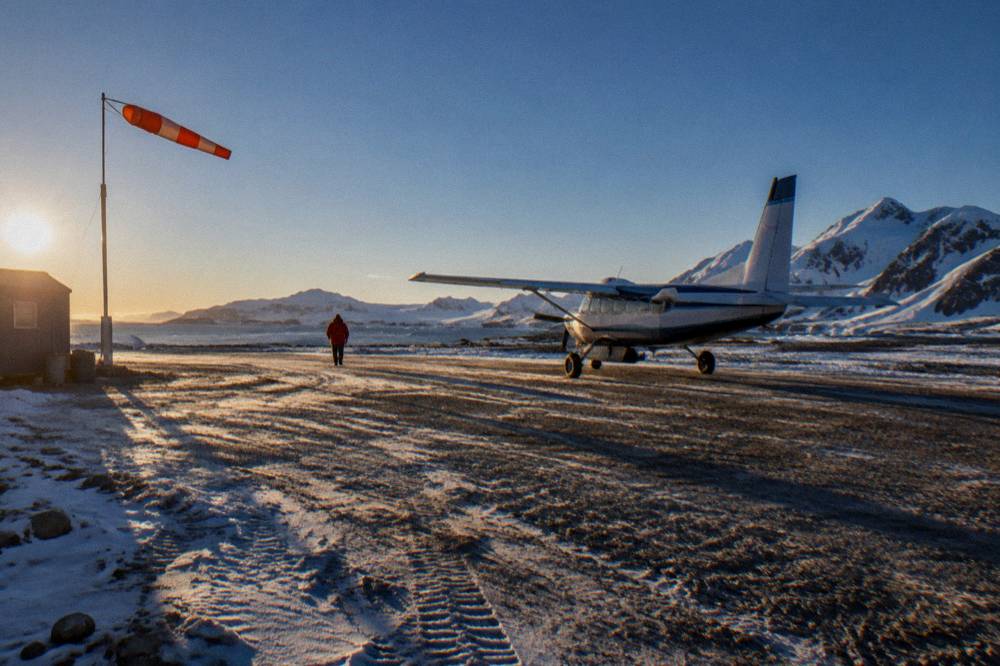
Flying the Drake Passage instead of sailing it usually adds money, not saves it: charter flights from Punta Arenas to King George Island typically add about $2,000 to $5,000 over a comparable sailing voyage. Quark's 8-day Antarctic Express fly-cruise starts at $17,591, against $12,236 for its 11-day sailed voyage.
The logic is simple once you see the fare sheets. A sailed voyage spends roughly two days crossing the Drake Passage in each direction, which is cheap hull time, while a fly-cruise buys every passenger a seat on a charter aircraft and a hotel night before it. Multiple operator comparisons put that premium at roughly $2,000 to $5,000 over a comparable sailing itinerary. The roster bears it out: Antarctica21's 8-day Classic Antarctica air-cruise starts at $13,795 per person for seven nights, a per-night figure well above any sailed budget berth.
Time is what you buy back. The flight from Punta Arenas to King George Island takes roughly two hours against two days at sea, so an 8-day fly-cruise delivers more landings per week than an 11-day sailed trip. Operators describe the classic crossing as 18 to 48 hours each way depending on conditions, and one operator account reports a fast following-wind crossing completed in about a day. Sail-and-fly hybrids split the difference, crossing by ship one way and flying the other, which halves the open-ocean exposure while keeping a taste of the classic passage.
The choice is partly a cost question and partly a temperament question, and the two answers do not always agree. A reader who hates the idea of two rough days at sea may happily pay the fly premium, while a reader with more time than budget will take the $7,050 sailed berth and the sea stories. Our comparison of whether it is cheaper to fly or cruise works through the maths in detail, and readers hovering between the two can settle it quickly with a free consultation on crossing options before the January cabins thin out.
Extra Costs Beyond The Fare
Plan on airfare to Ushuaia or Punta Arenas, a night or two in a gateway hotel, insurance with high evacuation minimums, tips, and gear gaps. One cost guide's realistic all-in figure for a 10 to 12 day mid-range Peninsula trip, fare plus flights plus gear plus tips plus insurance, is $12,000 to $25,000 per person.
The gateways are farther than most travellers expect, and nothing about reaching them is free. There are no direct flights from the United States to Ushuaia; the standard routing runs through Buenos Aires, connecting from the international airport to the domestic one, with frequent but weather-prone legs to the world's southernmost city. Punta Arenas in Chile serves the fly-cruise operators. Plan a buffer night or two in the gateway before embarkation, because a missed domestic connection should cost a hotel room, not a voyage.
Insurance deserves its own line in the budget. Major operators impose high medical evacuation minimums, with figures such as $500,000 for Quark, $250,000 for Ponant and $150,000 for Lindblad, plus full trip-cost cancellation cover, and proof is often required before departure or at check-in. Argentina formally requires health coverage including evacuation for foreign visitors under its 2025 rule update. None of that sits inside a cruise fare, and a policy that clears every operator threshold costs real money on a five-figure trip.
| Extra cost | Planning figure |
|---|---|
| Gateway hotel nights | One to two nights in Ushuaia or Punta Arenas |
| Gratuities | $15 to $25 per person per day, about $16 on average per one guide |
| Travel insurance | Evacuation minimums of $150,000 to $500,000 depending on line |
| Gear gaps | Base layers and camera gear beyond the included parka and loaned boots |
| Optional activities | Kayaking and camping priced separately on most lines |
| All-in mid-range trip | $12,000 to $25,000 per person for 10 to 12 days, per one cost guide |
Put together, the extras explain why two travellers on the same ship can spend $8,000 apart. The all-in planning range of $12,000 to $25,000 per person for a mid-range trip, published by one 2026 cost guide, starts from a fare that might read $9,000 and ends with everything above it. For readers weighing whether the whole project is worth that number, our piece on whether an Antarctica cruise is worth it covers the value question directly, and our guide to a cheap Antarctica cruise covers every legitimate way to shave the fare.
When A Free Consultation Actually Helps
A consultation earns its keep when fares are shared across ships, when a line publishes no fare at all, or when the cabin spread inside one voyage spans thousands of dollars. Quark's from-fares are voyage-level across three ships, and several luxury lines publish nothing, so for those voyages a specialist quote is the only price that exists.
Three situations make the published-price approach break down, and all three are common. First, shared fares: Quark's $12,236 entry figure belongs to a voyage, not a hull, so choosing between Ultramarine, Ocean Explorer and World Voyager requires reading the departure grid rather than the ship page. Second, unpublished fares: Silver Endeavour, Silver Wind, Silver Cloud, both Seabourn expedition ships, both Scenic Eclipse ships, both Viking polar ships, Heritage Adventurer, Douglas Mawson and the Ocean Albatros group all show "fare not on file" on the roster, and for those a current fare genuinely needs a consultation rather than a number this site could print.
Third, cabin sprawl: once a voyage's cabin ladder runs from a shared triple to an owner's suite, the from-fare stops describing what any particular traveller will pay. The same survey that found the $950 to $2,600 per-night spread also noted that promotions, cabin category, occupancy and the exact sailing all move the number, so two quotes for the "same" cruise can differ by more than the gap between two different ships. A specialist who can see live cabin availability closes that gap in a single conversation.
The hand-off is simple and free. Readers describe a budget and dates, and a vetted expedition-cruise agency partner comes back with matched ships, cabins and fares, with no obligation attached. It costs nothing to ask, and on a purchase this size the cabin-category and voyage-level questions above are exactly what a consultation resolves fastest.
For readers who want the background on why these voyages cost what they do before asking, our breakdown of why expedition cruises are expensive covers the economics, and our two-week Antarctica trip cost analysis prices a full itinerary the same way this guide prices a fare.
Common Questions About Antarctica Cruise Costs
How Much Does An Antarctica Cruise Cost Per Person?
Entry fares run from $7,050 per person on Plancius to $32,320 for Le Soléal's 22-day Ross Sea voyage, with most classic Peninsula expedition cruises between $10,485 and $19,566 before flights, tips and insurance.
What Is The Cheapest Antarctica Cruise?
The lowest verified fare on the roster is Plancius from $7,050 per person, and entry berths on Drake-crossing voyages generally begin around $7,500 to $8,995 in shared twin or triple cabins.
What Does The Fare Include?
Cabin, all meals, Zodiac excursions and landings, lectures, a complimentary parka on most lines and usually loaned waterproof boots. Flights, hotels, insurance, gratuities of roughly $15 to $25 per person per day and optional activities are extra.
Is A Fly-Cruise More Expensive Than Sailing?
Usually yes. Charter flights from Punta Arenas to King George Island typically add about $2,000 to $5,000 over a comparable sailing voyage; Quark's 8-day Antarctic Express fly-cruise starts at $17,591 against $12,236 for its 11-day sailed voyage.
How Much Should I Budget Beyond The Fare?
One cost guide's realistic all-in figure for a 10 to 12 day mid-range Peninsula trip, covering fare, flights, gear, tips and insurance, is $12,000 to $25,000 per person.
Do Single Supplements Apply?
Yes, typically from 25 percent above the twin rate to 1.5 to 2 times it, though some lines waive them on select sailings and sharing options often exist in lower cabin categories.