Le Commandant Charcot: Polar Icebreaker Cruise Guide
 By Oleg G.
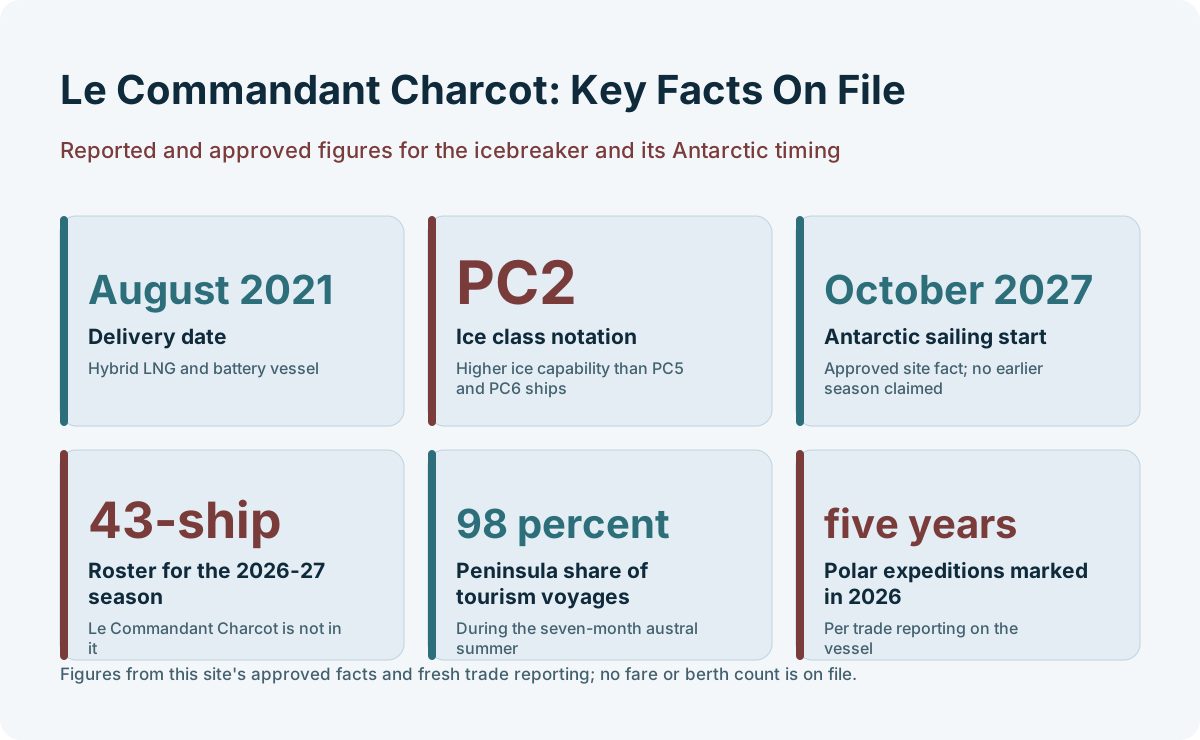
Le Commandant Charcot is the most unusual vessel in the Ponant fleet, a hybrid LNG-battery icebreaker built to reach ice edges other cruise ships cannot. On this site it is not part of the 43-ship roster of vessels sailing Antarctica in 2026-27, and the approved fact is that it sails Antarctica from October 2027.
Quick answer: Le Commandant Charcot is a polar icebreaker with hybrid LNG and battery propulsion, delivered in August 2021, and it is due to sail Antarctica from October 2027. For 2026-27 Antarctic voyages, Ponant sails Le Boréal, Le Lyrial and L'Austral, with confirmed fares from $18,700 per person.
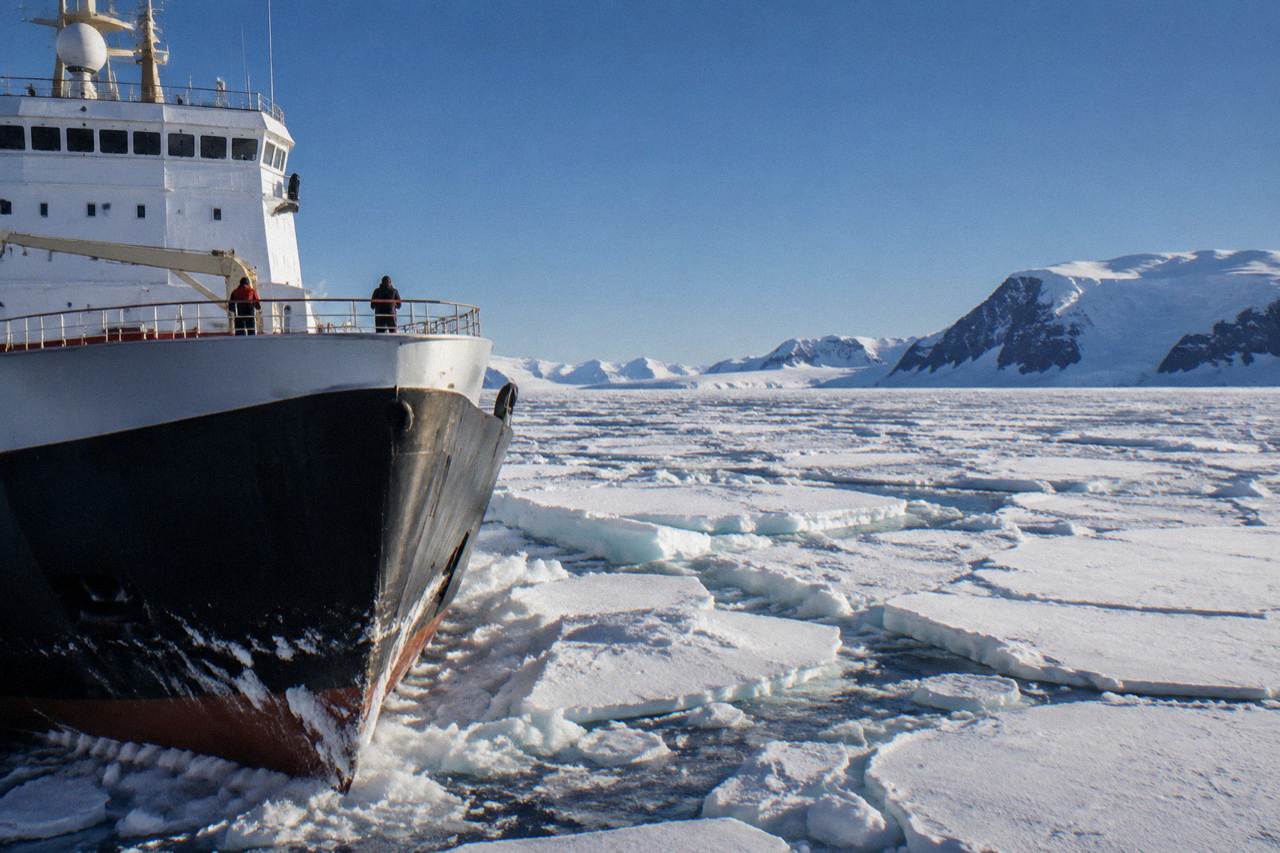
The most distinctive ship in Antarctic cruising is one you cannot book for the current season, at least not on this site's roster. Le Commandant Charcot is Ponant's polar icebreaker, a hybrid LNG-battery vessel delivered in August 2021, and the approved position on this site is that it sails Antarctica from October 2027. Everything else on this page is either what the fresh reporting says about the ship itself, or a working comparison with the three Ponant ships that are sailing Antarctic waters right now: Le Boréal, Le Lyrial and L'Austral.
That comparison matters more than most buyers realize. An icebreaker cruise is a different product from a luxury expedition cruise, aimed at Ross Sea and Weddell Sea itineraries rather than the classic Peninsula run, and the price and the calendar behave differently too. If you are weighing a 2026-27 Antarctic cruise against waiting for the icebreaker, this guide lays out what is sourced and what is not.
What Is Le Commandant Charcot?
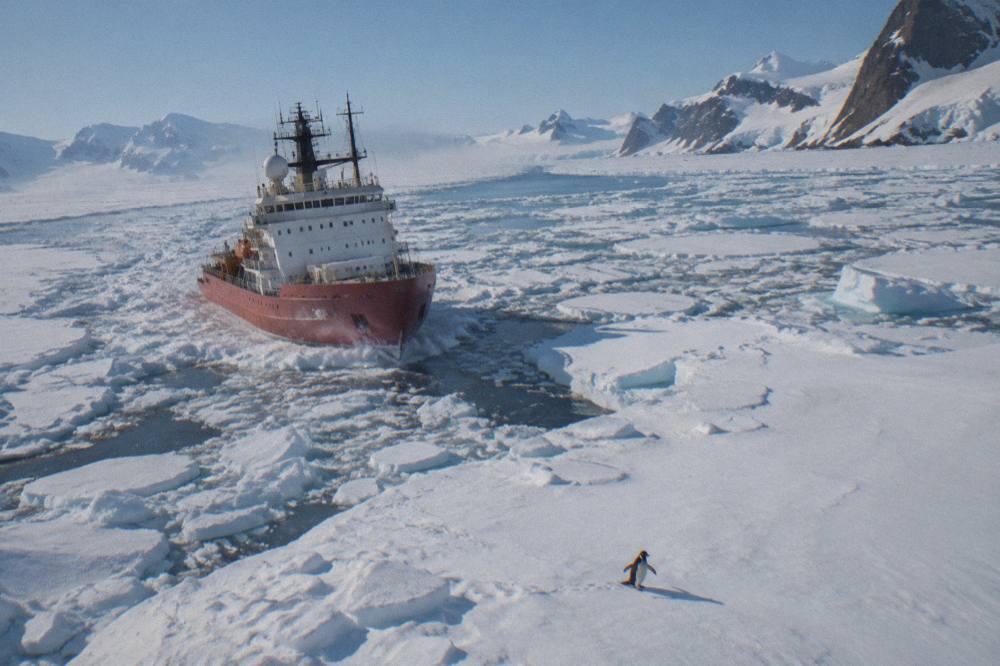
Le Commandant Charcot is a polar icebreaker operated by Ponant, built with hybrid LNG and battery propulsion and delivered in August 2021, and it is the ship that gives Ponant access to remote polar areas such as the Weddell Sea and the Ross Sea. It is not part of the 43-ship roster of vessels sailing Antarctica in 2026-27 on this site, and it is due to sail Antarctica from October 2027.
The fresh reporting on this ship is thin, and that thinness is itself the story. A World Ports Organization piece notes that Le Commandant Charcot marked five years of polar expeditions in 2026 and continues hybrid LNG and battery operations as a PC2 icebreaker to remote areas including the Weddell and Ross Seas. That is about the full extent of what this site's sources say about the vessel's Antarctic program.
What this site will not do is invent specifications. There is no passenger count, no fare, no cabin list and no 2027-28 itinerary detail on file for Le Commandant Charcot in the roster or the fresh files, so none appears here. If a page elsewhere quotes a from-price or a berth count for an Antarctic sailing, treat it as unsourced until an operator page confirms it.
The distinction between a reported fact and an operator-confirmed fact runs through this whole page, so it is worth pausing on. The five-year milestone and the PC2 notation come from trade reporting on the vessel, and the October 2027 Antarctic start date is the position this site has approved from its fresh files. Neither of those is a schedule, a cabin configuration or a price. When Ponant's own Antarctic pages for the ship carry those details, they will be read and added; until then this guide compares the icebreaker as a concept against ships whose details are confirmed.
The ship's product category, though, is clear from its design. A PC2 ice-class hull is built to operate in ice that stops conventional expedition ships, which is why the vessel is associated with the least-visited corners of the Antarctic map. The Ross Sea and the Weddell Sea itineraries remain far less frequent than Peninsula routes across the whole industry, with only a handful of departures annually, and an icebreaker is one of the few platforms that can reliably attempt them.

When Does Le Commandant Charcot Sail To Antarctica?
Le Commandant Charcot is due to sail Antarctica from October 2027, and no earlier Antarctic season is claimed on this site. For the 2026-27 season, the ship does not appear in this site's 43-ship roster at all, which means no Antarctic fare, schedule or cabin detail is on file for it.
That date has practical consequences for anyone planning a trip now. The current Antarctic season runs from roughly October 2026 to March 2027, and the one after it is the season in which the icebreaker's Antarctic program begins. If your heart is set on an icebreaker voyage to the Ross Sea or the Weddell Sea, you are planning for a departure more than a year out, and the information that exists today is necessarily incomplete.
One more piece of calendar context: the Antarctic season itself is narrow. The Antarctic Treaty Secretariat's tourism page states that approximately 98 percent of tourism voyages occur in the Antarctic Peninsula during the seven-month austral summer from October to April, and expedition cruise departures cluster between mid-October and mid-March. An October 2027 start therefore means the ship enters at the head of a season, with its first Antarctic departures in the opening weeks rather than in mid-summer.
Buyers should also understand what "from October 2027" does and does not promise. It is a start date for the ship's Antarctic sailing, not a published schedule, and it is not a fare. Nothing in this site's sources gives a price for a Le Commandant Charcot Antarctic voyage, and this site prints no number it does not have. Anyone quoting you a firm icebreaker fare today is going beyond what the operator pages in this site's research support.
The honest planning move is to hold two tracks in your head at once. One track is the icebreaker, a 2027-28 or later project with details still to come. The other is the Ponant fleet that is sailing Antarctica this season, with confirmed itineraries and confirmed fares on the operator's listings. If your dates are fixed for 2026-27 or early 2027-28, the second track is the only one that can actually produce a booking.
How Does An Icebreaker Differ From An Expedition Ship?
An icebreaker is built to break ice that conventional expedition ships avoid, which opens itineraries like deep Weddell Sea and Ross Sea voyages, while a standard expedition ship is optimized for ice-edge cruising, Zodiac landings and comfort in open water. The distinction shows up in the routes, not just in the hull ratings.
The roster on this site shows the range of what "expedition ship" means in Antarctica today. Most vessels carry Polar Class 6 or ice class 1A ratings, meaning they can operate in first-year ice with some old ice inclusions, along the Peninsula's sheltered channels. The Swan Hellenic ships carry PC5. Le Commandant Charcot's PC2 rating, as reported in the fresh ships file, sits in a different category entirely, the territory of purpose-built polar vessels.
Seen against the roster, the gap is visible in the hull ratings alone. The table below pulls the ice-class notations this site has on file for a cross-section of the 2026-27 fleet, from small-ship budget tier to luxury, alongside the reported PC2 notation for the icebreaker. In the Polar Code system, lower numbers denote higher ice capability, which is why a PC2 vessel sits apart from the PC5 and PC6 ships that make up most of the Peninsula fleet.
| Ship | Ice class on file | Passengers |
|---|---|---|
| Le Commandant Charcot | PC2, trade-reported | not on file |
| National Geographic Endurance | PC5, Category A | 138 |
| SH Vega | PC5 | 152 |
| SH Diana | PC5 | 192 |
| Hondius | Polar Class 6, 1A-Super equivalent | 170 |
| Ultramarine | 1A+, PC6 | 199 |
| Silver Endeavour | PC6 | 220 |
| Magellan Explorer | LR PC6 | 88 |
Two honest caveats belong beside that table. Ice class describes what a hull is built to withstand, not where an operator chooses to sail: a PC6 ship like Hondius runs classic Peninsula voyages, while Le Soléal, also in the Ponant fleet, carries a Ross Sea itinerary with only its listed 22-day voyage length on file. And passenger counts are maximum capacities or stated expedition loads, not a promise of a particular experience; the 100-passenger landing cap is the number that actually shapes your time ashore.
For a buyer, the practical question is not the class notation but the itinerary. A PC6 expedition ship gives you the classic product: Zodiac landings at penguin colonies, scenic cruising in the Lemaire Channel, and four to six landing days on a Peninsula voyage. An icebreaker gives you reach, the ability to attempt the Ross Sea, the Weddell Sea and emperor penguin latitude at the Snow Hill rookery, places the industry reaches with only a handful of departures a year.
There is a regulatory floor underneath all of it, whichever hull you choose. IAATO and Antarctic Treaty rules cap landings at 100 passengers ashore at a time, require a one-to-twenty guide-to-visitor ratio, and prohibit vessels carrying more than 500 passengers from making landings at all. Those rules apply to the icebreaker just as they do to a 90-guest budget ship, and you can read the landing rules in this site's guide to Antarctic landing sites.
Which Ponant Ships Sail Antarctica Now?
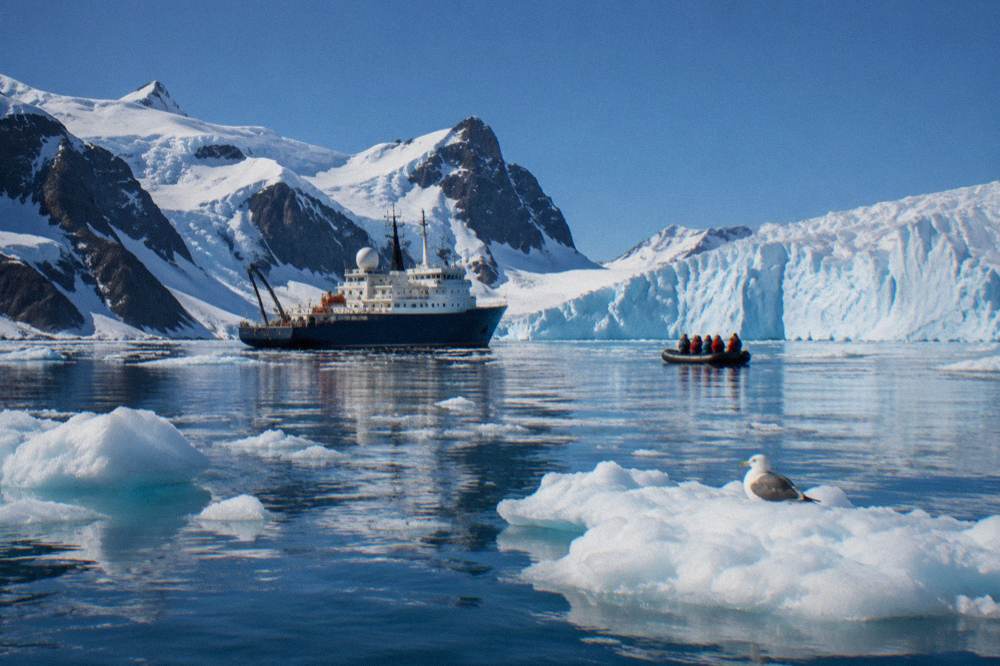
For the 2026-27 season the Ponant ships on this site's roster are Le Boréal, Le Lyrial and L'Austral, all luxury vessels sailing from Ushuaia and Buenos Aires, with confirmed fares from $18,700 per person. These three are the real, bookable alternative while the icebreaker's Antarctic program waits for October 2027.
Le Boréal is the featured ship on this page because it is the closest thing in the current fleet to the flagship role the icebreaker will take over. The roster lists it at up to 264 passengers, with a 19-day voyage from $23,020 per person on the operator's Great Austral Loop listing. Its sister ships cover complementary itineraries: Le Lyrial at up to 245 passengers with an 18-day Great Austral Loop from $26,780, and L'Austral at up to 264 passengers with an 11-day Emblematic Antarctica voyage from $18,700.
These are luxury vessels, and the fare structure reflects that. Ponant's listings are per-person fares on named departures, and the figures above come straight from the operator's Antarctica pages as read by this site's research. The table below puts the three ships side by side on the details that are on file.
| Ship | Passengers | Voyage days on file | Confirmed from fare | Gateway ports |
|---|---|---|---|---|
| Le Boréal | 264 max | 19 | $23,020 pp | Ushuaia, Buenos Aires |
| Le Lyrial | 245 max | 18 | $26,780 pp | Ushuaia, Buenos Aires |
| L'Austral | 264 max | 11 / 19 | $18,700 pp | Ushuaia, Buenos Aires |
The three ships also illustrate how much itinerary length drives the price. L'Austral's shortest listed voyage is 11 days, roughly the classic Peninsula shape, and it carries the lowest confirmed fare of the three. The Great Austral Loop voyages on Le Boréal and Le Lyrial run 18 to 19 days and include the Falklands and South Georgia, which is why their fares sit five figures higher. You can see how that itinerary logic works across the whole market in the luxury Antarctica cruise guide.
| Ship | Class | Passengers | Ice class | From, per person | Voyage length | Departs from |
|---|---|---|---|---|---|---|
| Le BoréalPonant | Luxury | 264 | – | from $23,020 | 19 days | Ushuaia, Buenos Aires |
| Le LyrialPonant | Luxury | 245 | – | from $26,780 | 18 days | Ushuaia, Buenos Aires |
| L'AustralPonant | Luxury | 264 | – | from $18,700 | 11 to 19 days | Ushuaia, Buenos Aires |
What the three ships share matters as much as their differences. All three are listed in the luxury class on this site's roster, all three work the Ushuaia and Buenos Aires gateways, and all three run the classic Peninsula and Great Austral Loop itineraries rather than the deep-south routes. None of them carries the icebreaking capability associated with the icebreaker, and none needs it for the waters they sail. In IAATO terms they operate under the same landing rules as every other vessel: 100 guests ashore at a time, one vessel per site at a time, and a guide ratio of one to twenty.
One caveat worth carrying: the passenger figures above are maximum ship capacities as stated on the operator's ship pages, and the roster notes that an Antarctica-voyage cap is not stated for these vessels. IAATO's landing rules, not the ship's brochure, are what determine how many guests go ashore at once, and that cap is 100.
What Do Ponant Antarctica Voyages Cost?
Confirmed Ponant fares on this site's roster run from $18,700 per person for an 11-day L'Austral voyage to $26,780 for Le Lyrial's 18-day Great Austral Loop, with Le Boréal's 19-day Loop at $23,020. No fare exists on file for Le Commandant Charcot, so any icebreaker price you see today is not one this site can back.
Those are per-person figures on named departures read from the operator's listings, and they behave the way luxury fares behave everywhere: the departure date, the cabin category and the itinerary length move the number more than the ship does. The Great Austral Loop fare covers a voyage that includes the Falkland Islands and South Georgia, a 19-day commitment that competes with 20-to-23-day combos across the wider market rather than with 11-day Peninsula trips.
Beyond the base fare, the cost file for the wider market gives useful planning ranges. A realistic all-in budget for a 10-to-12-day mid-range Peninsula trip, including the fare, flights, gear, tips and insurance, runs $12,000 to $25,000 per person according to one 2026 cost guide. Travel insurance with medical evacuation coverage is required or recommended by most operators and is never in the base fare, and several operators ask for proof of coverage before departure. This site's Antarctica travel insurance guide covers that in full. The table below breaks the moving parts into the ranges the cost reporting gives.
| Cost item | Typical range on file | Notes |
|---|---|---|
| Gratuities | about $16 per person per day on average; commonly $15-$25 unless prepaid | some lines bundle them into the fare |
| Single supplements | 25 percent extra, up to 1.5-2x the twin rate | sharing options often exist in lower categories |
| Parka and boots | parka often complimentary, often to keep; boots usually loaned | check what your specific fare includes |
| Fly-the-Drake premium | adds roughly $2,000-$5,000 over a comparable sailing voyage | charter flight cost is the driver |
| Early-booking offers | commonly 10-30 percent off, up to 40 on select unsold sailings | deadlines fall through 2026 |
| Insurance with evacuation | required or recommended, not in the base fare | operators may ask for proof at set minimums |
Those ranges come from cost reporting on the 2026-27 and 2027-28 seasons, and they move with promotions and cabin category, so treat them as planning bands rather than quotes. What they show is that the gap between a headline fare and a final budget is real but predictable, and that the decisions with the largest swing are itinerary length, cabin type and whether you fly or sail the Drake Passage.
Where the icebreaker will land on price is genuinely unknown from this site's sources, and it is safer to say so than to guess. There is one sourced data point that speaks to the icebreaker era without guessing at it: live 2027-28 itineraries across ten lines were listed between $11,321 and more than $28,500 per person in July 2026 checks, roughly $950 to $2,600 per person per night on classic sailings, and entry-level berths on Drake-crossing trips begin around $7,500 to $8,995 for shared twin or triple cabins. Icebreaker voyages to the Ross Sea sit at the extreme end of the market in general: the roster's one confirmed Ross Sea fare, on a different operator's ship, is $32,320 per person for a 22-day expedition. That is a market signal, not a Ponant price, and it should be read as the neighborhood rather than the number.
If the budget question is the one holding up your decision, a free consultation on Ponant voyage options can put the confirmed 2026-27 fares and the icebreaker timeline side by side for your dates. It costs nothing and carries no obligation.
Should You Wait For The Icebreaker Or Book A Ponant Ship Now?
If your travel window is 2026-27 or the first half of 2027-28, the choice is already made for you: only Le Boréal, Le Lyrial and L'Austral are sailing, and the icebreaker's Antarctic program starts from October 2027. If your window is late 2027 or beyond, the icebreaker becomes a real option, but its fares and itineraries are not yet on file here.
The deciding factors are itinerary and risk appetite. If what you want is the classic Antarctic product, penguin landings, Zodiac cruising, the Lemaire Channel and a Drake crossing, the current Ponant fleet delivers it with confirmed schedules, and there is nothing the icebreaker adds except a longer route. If what you want is the Ross Sea, the deep Weddell Sea or emperor penguin latitude at Snow Hill, those are the itineraries an icebreaker exists for, and the current Ponant ships do not attempt them.
If the long routes are what pull you toward the icebreaker, it helps to see how few ships work that territory in the current season. The roster holds only a small set of vessels whose listed voyage days or stated features point at the Ross Sea and the deep south, and the table below shows what is on file for each, including the icebreaker itself.
| Ship | Operator | Listed voyage days | Route signal on file | From fare |
|---|---|---|---|---|
| Le Soléal | Ponant | 22 | Ross Sea and New Zealand sub-Antarctic voyages only in 2026-27 | $32,320 pp |
| Heritage Adventurer | Heritage Expeditions | 28 | Ross Sea exploration and historic huts, sails from New Zealand | fare not on file |
| Douglas Mawson | Aurora Expeditions | 34 | long-haul voyages from Ushuaia, built 2025 | fare not on file |
| Le Commandant Charcot | Ponant | not on file | Weddell and Ross Seas, hybrid LNG-battery PC2 | not on file |
The pattern in that table is the real decision. Long-route Antarctic voyages exist today, on ships you can book this season, but they are few, they are long, and where fares are published they sit at the top of the market. The icebreaker will add reach and a different comfort standard to that niche, not replace it. Whether that is worth waiting for depends on whether your priority is the destination itself, which the current ships deliver, or the specific corners of it that only an icebreaker attempts.
Timing pressure is real on the bookable side. Peak December sailings in this market book furthest ahead, with one cost guide noting they can book 18 or more months out, and early-booking offers for the 2026-27 and 2027-28 seasons commonly reach 10 to 30 percent off according to operator calendars. Waiting for icebreaker details to firm up can mean paying more, or getting a worse cabin choice, on the voyage you could have booked in the meantime.
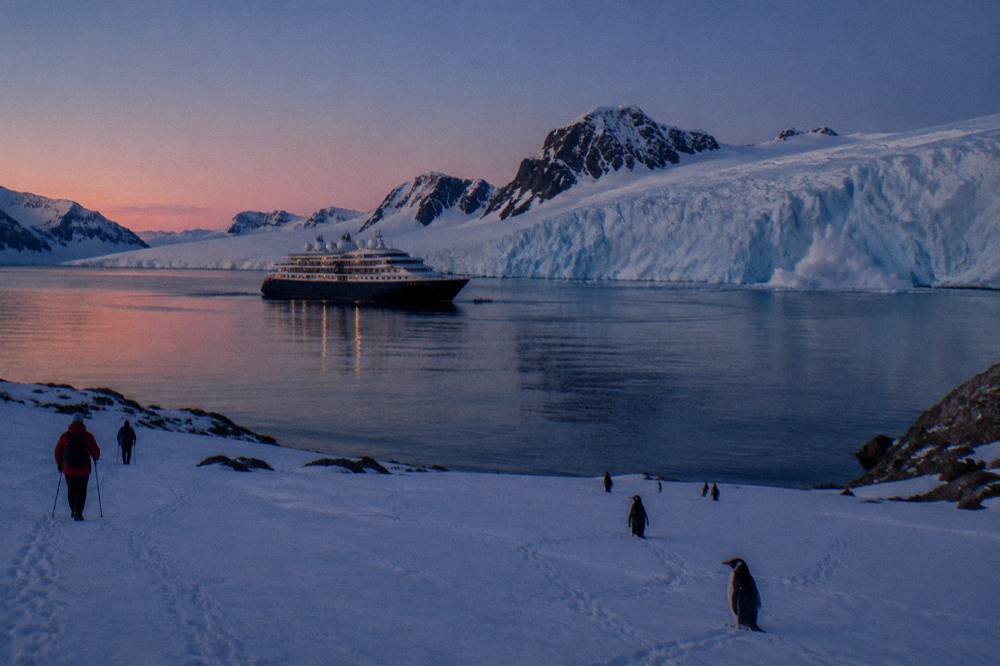
There is also a middle path worth naming: book the voyage that sails, and keep the icebreaker on the watch list. Ponant buyers who take Le Boréal's 19-day Great Austral Loop get South Georgia's king penguin colonies, at St Andrews Bay with roughly 250,000-plus pairs according to one operator description, which is wildlife spectacle on a scale the Peninsula cannot match. The South Georgia and Antarctica cruise guide covers what that itinerary buys you.

The site-level view on Cruises In Antarctica is that the icebreaker is a distinct product for Ross Sea and Weddell Sea buyers, not an upgrade of the Peninsula cruise. Treat it as a second trip or a specialist trip, and let the current fleet carry the classic one. IAATO's own numbers show how concentrated the market is: roughly 98 percent of tourism voyages occur in the Antarctic Peninsula during the austral summer, per the Antarctic Treaty Secretariat's tourism page, and IAATO's published season data recorded 85,195 landed visitors for 2025-26. The icebreaker's territory is the other two percent.
If you are genuinely torn between the two calendars, that is exactly the kind of question the free consultation is built for, and talking through season timing with a specialist costs nothing.
Common Questions About Le Commandant Charcot
Is Le Commandant Charcot Sailing Antarctica In 2026-27?
No, not on this site's roster. Le Commandant Charcot is due to sail Antarctica from October 2027, and the 43 ships listed for the 2026-27 season do not include it.
What Kind Of Ship Is Le Commandant Charcot?
It is a polar icebreaker operated by Ponant with hybrid LNG and battery propulsion, delivered in August 2021, reported as a PC2 ice-class vessel serving remote areas such as the Weddell and Ross Seas.
How Much Does A Le Commandant Charcot Antarctica Cruise Cost?
No fare is on file for its Antarctic voyages, so this site prints no number. A current fare would need a consultation. For comparison, the confirmed Ponant fares sailing now run from $18,700 per person.
Which Ponant Ships Sail Antarctica Now?
Le Boréal, Le Lyrial and L'Austral, all luxury vessels sailing from Ushuaia and Buenos Aires, with confirmed fares from $18,700 to $26,780 per person on the operator's listings.
Why Would Someone Choose An Icebreaker Over An Expedition Ship?
Reach. An icebreaker can attempt deep Weddell Sea and Ross Sea itineraries, including emperor penguin latitude, that conventional expedition ships cannot reliably reach. Those routes run only a handful of departures a year industry-wide.
Where Can I Compare The Ponant Ships Sailing This Season?
The luxury Antarctica cruise guide on this site covers the segment, and a free consultation can compare Le Boréal, Le Lyrial and L'Austral against your dates and budget with no obligation.