Drake Shake: How To Handle Seasickness On An Antarctica Cruise
 By Oleg G.
The Drake Shake is the rough-sea stretch of the Drake Passage that scares more would-be Antarctica travellers than any other part of the trip. It is manageable, and in some cases entirely avoidable.
Quick answer: The Drake Shake, rough conditions on the Drake Passage crossing, occurs on roughly 30 percent of journeys by one estimate, with calmer Drake Lake conditions on about 70 percent. A sailing crossing takes roughly two days each way. Prevention works: medication categories, cabin choice, stabilizers, or a fly-cruise that skips the passage in about two hours.
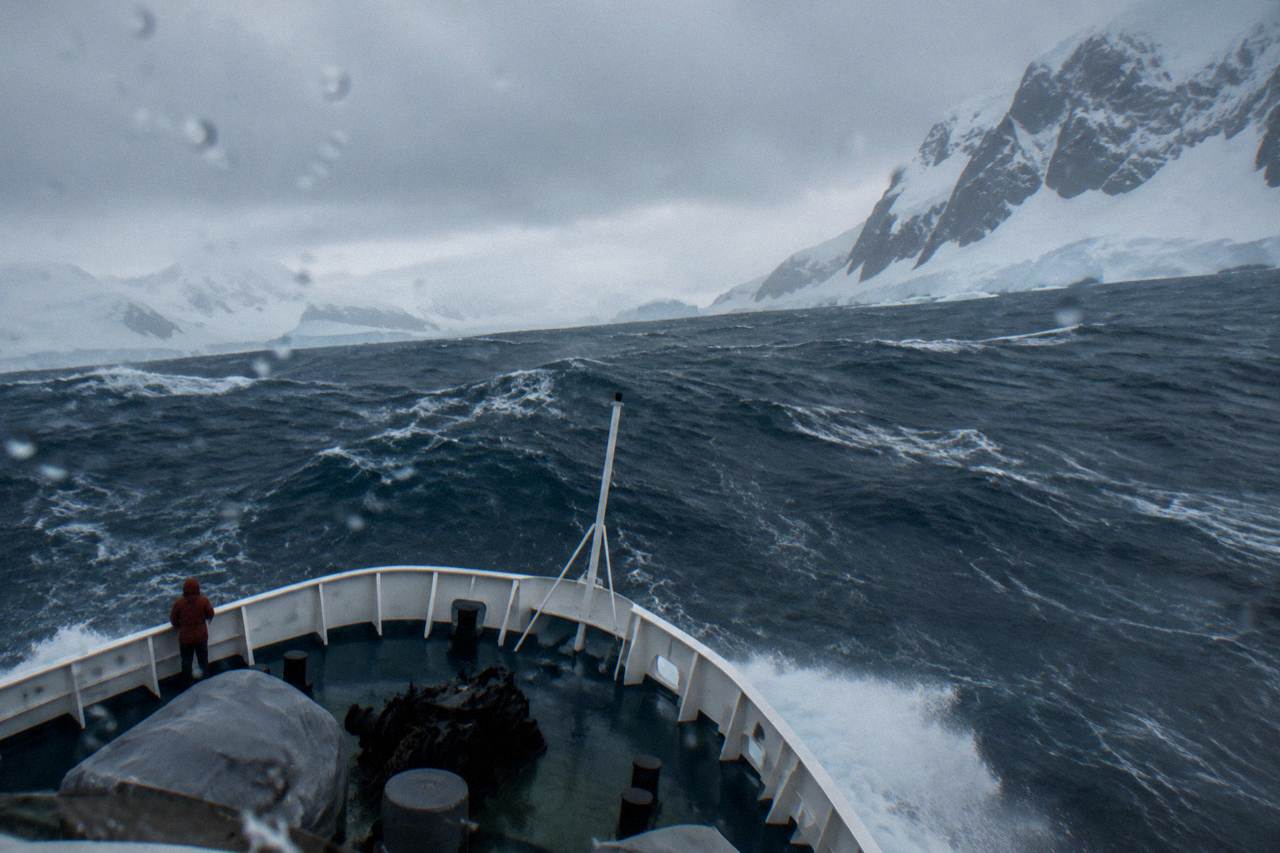
The Drake Shake is the name travellers and expedition crews use for the rough side of the Drake Passage, the stretch of open ocean between Cape Horn and the Antarctic Peninsula. It is the single most common reason people hesitate before booking an Antarctica cruise, and it is also one of the most manageable risks in adventure travel. Rough conditions happen, they last a defined window of roughly two days, and there are now several proven ways to reduce or skip the exposure entirely.
This guide covers what the Drake Shake actually is, how often it occurs, what prevention looks like in practice, which cabins and ships ride most comfortably, and when a fly-cruise is the smarter choice. It draws on the same operator pages, maritime reporting and official visitor guidance behind every Drake Passage guide on Cruises In Antarctica, not on folklore.
What Is The Drake Shake?
The Drake Shake is the colloquial name for rough sea conditions on the Drake Passage, the body of water between South America and the Antarctic Peninsula. One widely cited estimate puts rough conditions on roughly 30 percent of crossings and calmer Drake Lake conditions on about 70 percent, and a typical expedition ship crossing takes roughly two days in each direction.
The Drake Passage is where the Pacific, Atlantic and Southern Oceans collide around the tip of South America, with no significant landmass to slow the swell. Expedition ships on classic Peninsula itineraries sail it between Ushuaia and the South Shetland Islands. According to Quark Expeditions' own crossing guide, passages take 18 to 24 hours in optimal conditions and 36 to 48 hours in rougher seas, though that figure comes from an operator page rather than a neutral source. Quasar Expeditions gives the standard planning figure of about two days each way, varying with weather, sea state, the captain's course and vessel speed.
The nickname has a gentler twin. When the passage is calm, crews call it the Drake Lake, and by the Geographical magazine's explainer that happens on roughly 70 percent of journeys. The same crossing can be glassy in one direction and lively on the return, and nobody can promise which you will get. That unpredictability is exactly why planning matters more than luck.
How Rough Does The Drake Passage Actually Get?
Typical swells in the Drake Passage average 3 to 5 meters (10 to 16 feet), with documented severe conditions reaching 13 to 15 meters (42 to 49 feet), according to a Pole to Pole guide on Drake Passage waves. One reported fast crossing with following winds took about a day instead of two, with a maximum wave of 11 feet.
Those numbers are worth sitting with for a moment. The 3 to 5 meter average is ordinary open-ocean weather for a purpose-built expedition ship, and modern polar vessels are designed and classed for far worse. The severe end of the range is real but rare, and ships reroute, slow down or adjust arrival times when it appears.
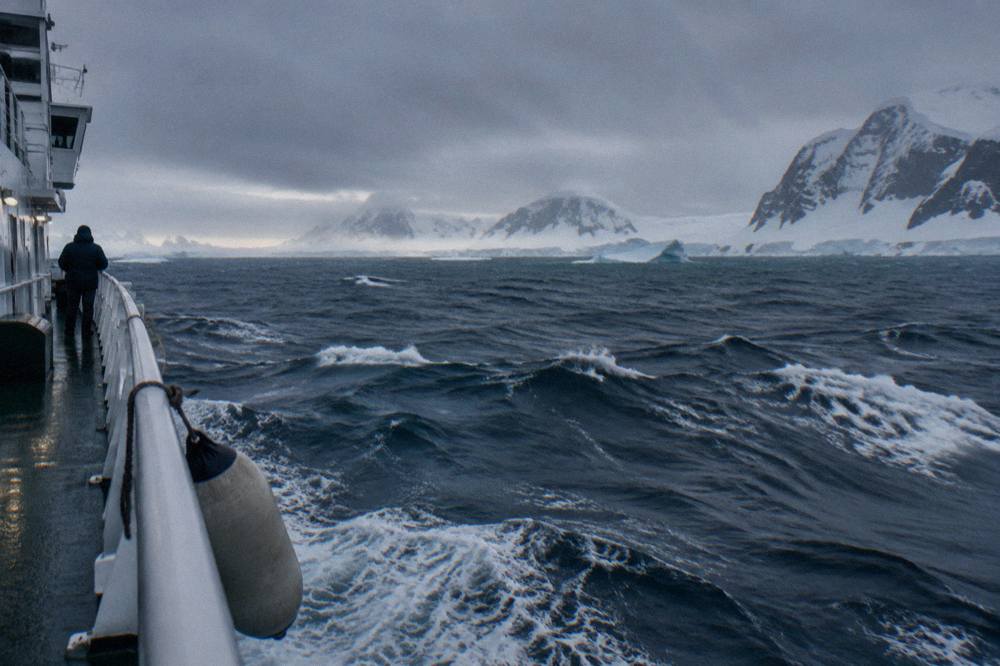
Two incidents from recent seasons show the passage demands respect without being a horror story. The Viking Polaris was struck by a breaking wave southeast of Cape Horn on 29 November 2022, shattering seven stateroom windows, with one passenger killed and eight injured. In October 2025, the Clelia II lost power in one engine after heavy weather with 50-knot winds and 7 to 8 meter waves, and was assisted while limping toward Ushuaia before regaining mobility. Both ships made it to port. Neither event is a reason to cancel a trip, but both explain why operators take weather routing seriously and why the Drake Shake deserves preparation rather than bravado.
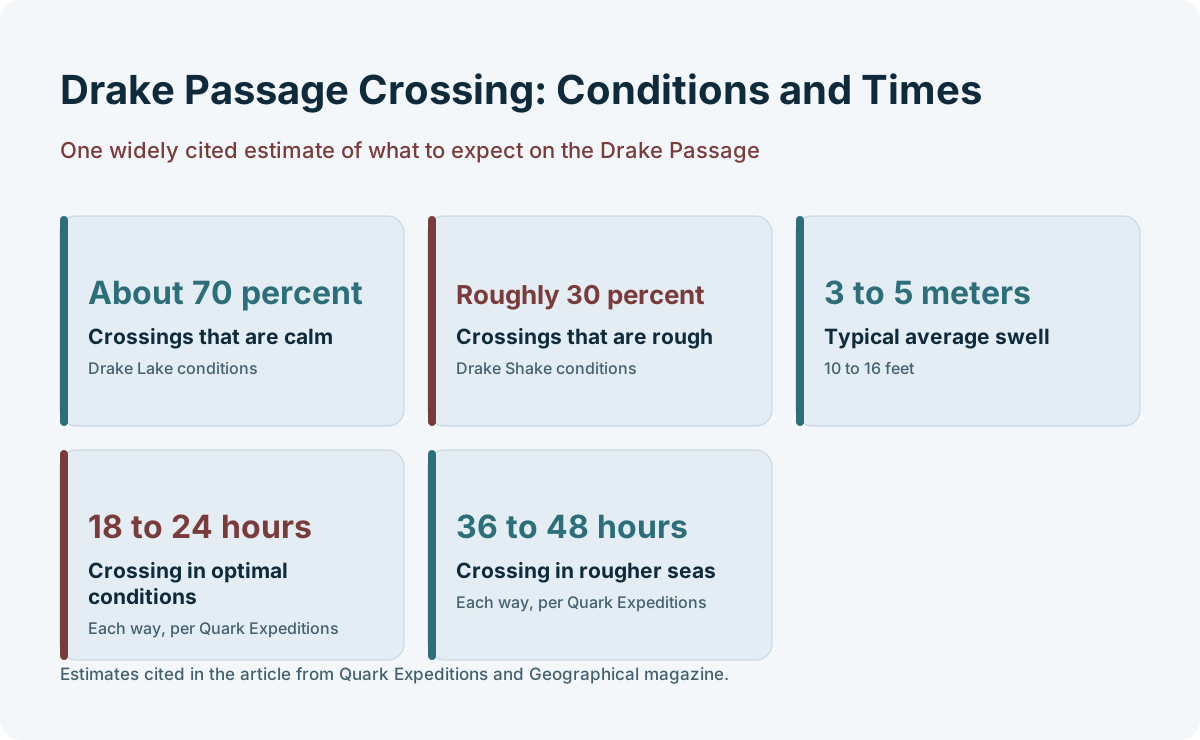
| Condition | Share of crossings (one estimate) | Typical swell | Typical crossing time |
|---|---|---|---|
| Drake Lake (calm) | About 70 percent | Small to moderate | 18 to 24 hours each way |
| Drake Shake (rough) | About 30 percent | 3 to 5 meters average | 24 to 48 hours each way |
| Severe events | Rare, documented | Up to 13 to 15 meters | Rerouting or delay possible |
For a fuller picture of the crossing itself, including timing and route options, see our guide to the Drake Passage crossing. If your real question is safety rather than comfort, the incidents above are the honest starting point.
What Actually Prevents Seasickness On The Crossing?
Prevention works best when it starts before the ship leaves the dock: take your chosen remedy before boarding or before the swell builds, eat lightly, stay hydrated, keep your eyes on the horizon, and get horizontal in a mid-ship cabin when symptoms begin. Motion sickness is far easier to prevent than to reverse once it has started.
The single most common mistake on Drake crossings is waiting. Remedies of every kind, from tablets to patches to pressure bands, work far better taken before the motion begins than after nausea arrives. Most expedition ships hold a briefing in Ushuaia the evening before departure, and that is the moment to start, not the moment the ship first rolls.
Practical habits matter more than people expect:
- Eat something before and during the crossing, but lightly. An empty stomach does not prevent nausea, and a heavy one invites it.
- Stay in the middle of the ship, vertically and horizontally, where motion is least. Lower decks mid-ship move less than high decks at the bow.
- Fix your eyes on the horizon or a distant fixed point. Reading, screens and close work make the sensory conflict worse.
- Get fresh air on an open deck when you can, and lie down with your eyes closed in a stable berth when you cannot.
- Sleep helps. Many travellers sleep through the worst of a crossing, and crew routinely advise guests to do exactly that.
Ginger, acupressure wrist bands and plain crackers are low-risk standbys that many expedition regulars swear by, though we describe them as comfort measures rather than cures. The ship's medical officer is also a resource: every Antarctica cruise carries a doctor, and they treat motion sickness routinely. If you already know you are a hard case, the honest answer is that this decision, remedy plus cabin plus possibly a fly-cruise, is worth a conversation before you commit to a specific voyage, and a free consultation covers all of it at no cost.
Which Medication Options Should You Ask Your Doctor About?
Talk to a doctor before the trip about the standard motion-sickness categories: over-the-counter antihistamines such as dimenhydrinate or meclizine, prescription scopolamine patches, and promethazine-type prescription options. Each has different timing, side effects and duration, and only your own doctor can match one to your health history and the rest of your kit.
We deliberately describe categories, not doses. The right choice depends on your age, other medications, and how drowsy you can afford to be during a crossing that includes mandatory lifeboat drills and briefings. Antihistamines are cheap and widely used, but drowsiness is a real side effect, and drowsiness plus a rolling ship is a poor combination for some people. Scopolamine patches last days rather than hours, which suits a two-day crossing well, but they require a prescription and careful placement.
Timing differs by category, which is the part people get wrong. Oral tablets generally need to be on board before the motion begins, following the product's own directions. Patches are typically applied several hours, sometimes longer, before departure. Whatever your doctor prescribes, test it once at home before you fly south, so a surprise reaction happens in your living room rather than in the Drake Passage.
| Category | How it is taken | Timing before motion | Notes to raise with your doctor |
|---|---|---|---|
| Antihistamines (dimenhydrinate, meclizine) | Oral tablet | Before departure, per product directions | Drowsiness is a common side effect |
| Scopolamine patch | Patch behind the ear | Several hours before, per prescription | Multi-day duration suits a two-day crossing |
| Prescription alternatives | Oral or injection, per doctor | Varies | Discuss if other medications interact |
One more medical note that is not motion sickness but belongs here: travel insurance with medical evacuation cover is required or recommended by most Antarctic operators, and it is not included in base fares, so budget for it alongside the cruise fare.
Does Cabin Location Change How The Drake Shake Feels?
Yes, materially. A mid-ship cabin on a lower deck experiences less motion than a high-deck cabin near the bow or stern, because pitch and roll are greatest at the extremes of the ship. On an expedition cruise, where you spend landing days off the ship anyway, trading a fancier view cabin for a stable mid-ship one is a legitimate comfort strategy.
The physics is simple. A ship rotates around a point near its middle, so the ends of the ship travel a larger arc for the same roll. High decks amplify everything. If you are booking an Antarctica cruise and you know you are susceptible, pick mid-ship and low, and pick a cabin whose bed lets you lie with your head supported when the swell builds.
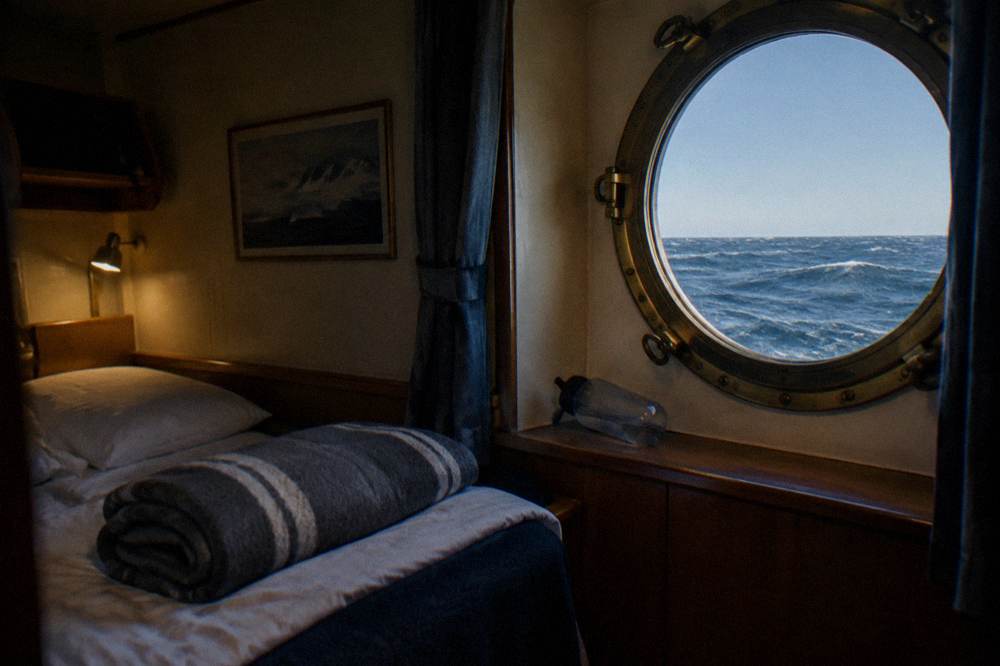
Ship design matters alongside cabin location. Newer expedition vessels feature zero-speed stabilizers that reduce roll both underway and while stationary, and Poseidon Expeditions describes modern retractable fin stabilizers of this type, retrofitted to its Sea Spirit in 2019, that work even while drifting or at anchor. Some newer ships carry fins 50 percent larger than standard, paired with advanced weather routing. Hull forms matter too: X-Bow and X-BOW designs split swells rather than slapping them, which several operators credit with a quieter ride.
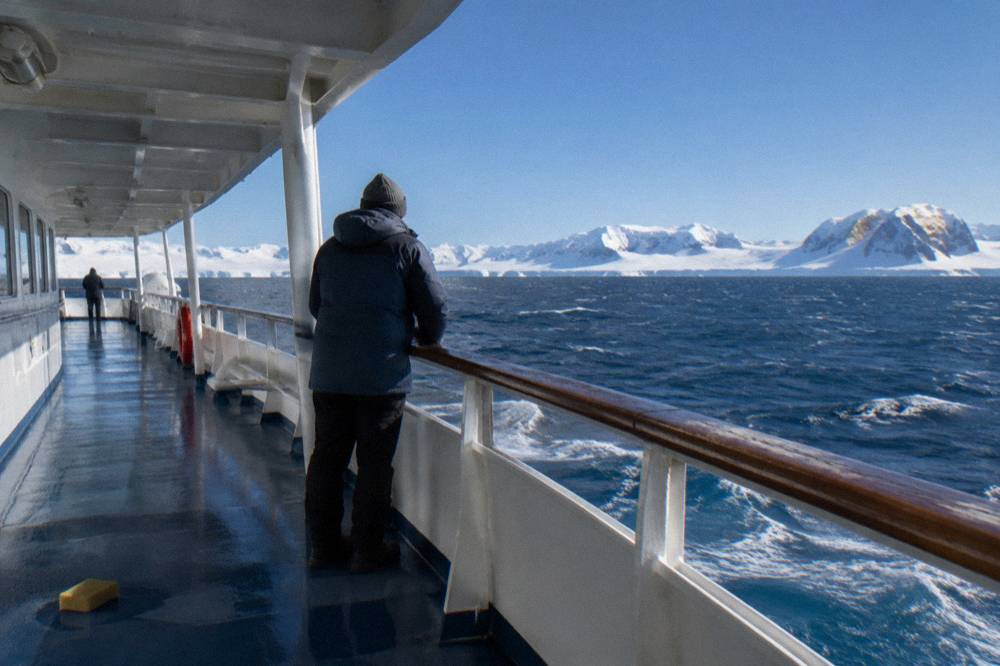
One honest impression from guest accounts: the crossing often feels less like a storm and more like a slow, rocking ferry ride, with the ship's motion noticeable but never dramatic. That matches the 70 percent Drake Lake odds, and it matches how most guests describe the experience when the passage behaves.
Which Ships Handle The Drake Shake Best?
Ships with higher ice classes, modern stabilizers and X-BOW hull forms tend to ride the Drake Passage more comfortably, and smaller expedition ships generally handle the crossing better than large mainstream vessels. On this site's roster, the Hondius, National Geographic Endurance and Magellan Explorer represent three different answers to the same question.
The comparison below is the trio we most often put in front of worried travellers, because it spans the whole spectrum of Drake Shake strategies.
| Ship | Class | Passengers | Ice class | From, per person | Voyage length | Departs from |
|---|---|---|---|---|---|---|
| HondiusOceanwide Expeditions | Small-Ship Budget | 170 | Polar Class 6 | from $7,800 | 11 to 19 days | Ushuaia |
| National Geographic EnduranceLindblad Expeditions (with National Geographic) | Standard Expedition | 138 | PC5 | from $11,900 | 12 to 22 days | Ushuaia |
| Magellan ExplorerAntarctica21 | Fly-Cruise | 96 (88 in Antarctica) | LR PC6 | from $13,795 | 8 days | Punta Arenas (fly) to King George Island |
| Ship | Operator | Passengers | Key comfort features | Drake strategy |
|---|---|---|---|---|
| Hondius | Oceanwide Expeditions | 170 | Polar Class 6 hull, first-registered PC6 vessel (operator wording) | Sail the crossing on a purpose-built polar ship |
| National Geographic Endurance | Lindblad Expeditions | 138 | Patented X-Bow hull | Sail with a hull form built to split swells |
| Magellan Explorer | Antarctica21 | 88 on air-cruises | Fly-cruise, PC6-class sister ship arriving new | Skip the Drake Passage by charter flight |
The Hondius is the budget-friendly answer. Oceanwide's ship carries 170 guests in 80 cabins, was built in 2019, and holds Polar Class 6, the first-registered PC6 vessel in the world in the operator's own wording. Peninsula voyages from Ushuaia start from $7,800 per person on current Oceanwide listings, the lowest entry point among the three ships here. You sail the Drake Passage, but you sail it on a ship designed for polar seas, and the fare you save can fund flights, gear and insurance. Our full profile covers Hondius Antarctica cruises in detail.
The National Geographic Endurance takes the engineering answer. Lindblad's 2021-built, 138-guest ship uses a patented X-Bow that slices oncoming swell rather than riding over it, and her sister ship Resolution shares the design. Voyages from Ushuaia start from $11,900 per person on the operator's ship page. If you want to sail the classic crossing but give yourself every comfort advantage the hull can provide, this is the design that gets cited most often.
The Magellan Explorer removes the question entirely. Antarctica21's fly-cruise ship takes 88 guests on air-cruises, flying guests from Punta Arenas to King George Island in roughly two hours and boarding the ship in the South Shetlands, so the Drake Passage is skipped in both directions. Classic Antarctica air-cruises start from $13,795 per person. You trade the sailing experience for certainty, and for many travellers who dread the Drake Shake, that trade is the whole decision. See our Magellan Explorer guide for the full picture.
Can You Skip The Drake Shake Entirely?
Yes. A fly-cruise replaces the two-day sailing crossing with a roughly two-hour charter flight from Punta Arenas to King George Island, in both directions, eliminating up to four days of sea transit and the seasickness exposure that comes with it. The trade-offs are cost, weather dependence on the flight, and strict baggage limits.
The fly-cruise model is not a niche hack. Antarctica21 has run air-cruises since 2003, and multiple operators now offer fly-in options or sail-and-fly hybrids that cross by ship one way and fly the return, halving open-ocean exposure while keeping a taste of the classic crossing. Fly-the-Drake options typically add roughly $2,000 to $5,000 over comparable sailing voyages due to charter flights, according to operator comparisons.

The logistics have real edges worth knowing before you book. Fly-cruise guests must typically arrive in Punta Arenas the day before the charter flight, with one operator requiring arrival at a named hotel by 14:00, and a strict 20 kilogram checked baggage limit applies on the Punta Arenas to King George Island flight. The flight itself is weather-dependent, which is the model's honest weakness: if the island is fogged in, your itinerary flexes. Operators build buffer days for exactly this reason.
| Factor | Sailing crossing | Fly-cruise |
|---|---|---|
| Drake Passage transit | Roughly two days each way by ship | Roughly two hours by charter flight |
| Seasickness exposure | Full crossing, both directions | Effectively none |
| Typical cost difference | Base fare | Typically about $2,000 to $5,000 more |
| Main risk | Rough seas | Flight weather delays |
| Baggage | Standard ship allowance | Strict limits, e.g. 20 kg checked |
If you are torn between the two, our guide on flying the Drake Passage walks the trade-offs in depth, and the honest way to decide is with current fares and departure dates in front of you. Get help choosing fly or sail through a free consultation, where the timing, cost and weather questions get answered against real 2026-27 sailings.
What Should You Pack For A Rough Crossing?
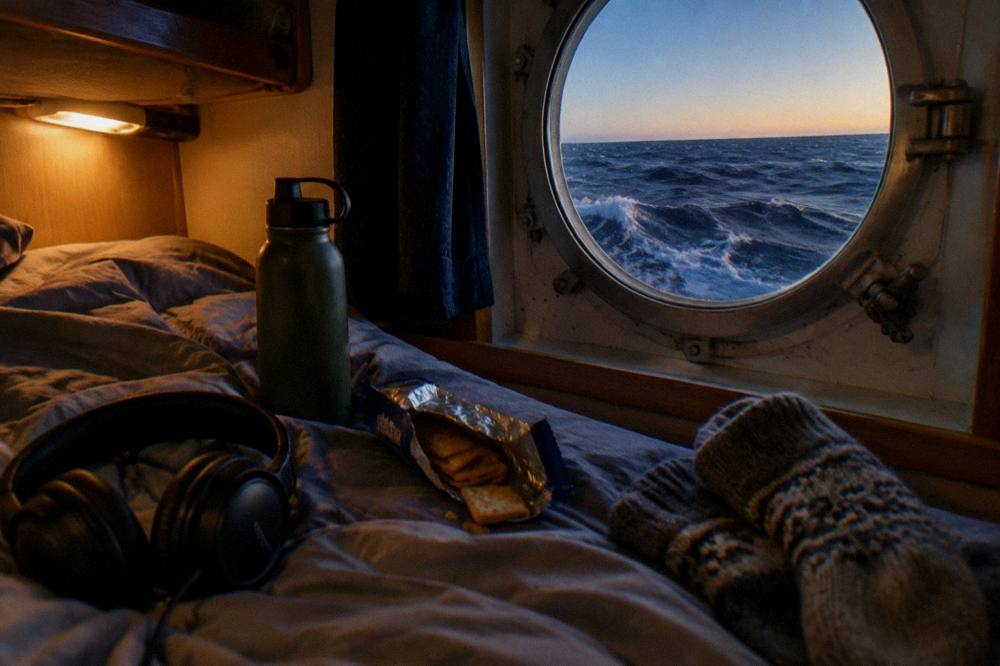
Pack for the Drake Shake the way you would pack for a long flight: motion-sickness remedy started before departure, light snacks and water at hand, a stable mid-ship retreat plan, loose comfortable clothing, and something to listen to rather than read. Most expedition ships also provide a complimentary parka and loan waterproof boots, so save your packing energy for the crossing kit.
A short checklist covers almost everything:
- Your chosen motion-sickness remedy, plus a backup of a different category, both discussed with your doctor before the trip.
- Water bottle within reach of your bed; dehydration makes nausea worse.
- Plain snacks such as crackers or pretzels, which many guests find easier than ship food in the first hours.
- Audio podcasts or music, which do not require the close focus that aggravates motion sickness.
- A sleep mask and earplugs, because sleeping through the crossing is a legitimate strategy, not a defeat.
- Slip-on shoes, so you can move around the cabin and to open decks without bending to lace boots.
Biosecurity is the one packing rule that surprises people. Official visitor guidance asks travellers to carefully wash boots and clean all equipment including clothes, bags, tripods, tents and walking sticks before bringing them to Antarctica, and to clean again between sites. A full Antarctic packing guide builds the complete kit, crossing days included.
One last planning note on timing. No single month is significantly better or worse for Drake Passage crossings; conditions stay unpredictable across the season, though December to February generally offers more stable windows. Wildlife and ice, not crossing calm, should decide your voyage dates.
Common Questions About Drake Shake Seasickness
What Is The Drake Shake?
The Drake Shake is the colloquial name for rough sea conditions on the Drake Passage between South America and the Antarctic Peninsula. One widely cited estimate puts rough conditions on roughly 30 percent of crossings, with calmer Drake Lake conditions on about 70 percent.
How Long Does The Drake Shake Last?
A typical sailing crossing takes roughly two days in each direction. According to Quark Expeditions, passages take 18 to 24 hours in optimal conditions and 36 to 48 hours in rougher seas, so the uncomfortable stretch is measured in hours, not weeks.
Can You Avoid The Drake Shake?
Yes. A fly-cruise replaces the sailing crossing with a roughly two-hour charter flight from Punta Arenas to King George Island, in both directions. Sail-and-fly hybrids cross by ship one way and fly the other, halving open-ocean exposure.
What Is The Best Seasickness Medication For The Drake Passage?
There is no single best option. Ask your doctor about antihistamines such as dimenhydrinate or meclizine, scopolamine patches, and prescription alternatives, each of which differs in timing, duration and side effects. Whatever you choose, start it before the motion begins.
Does Cabin Location Help With The Drake Shake?
Yes. Mid-ship cabins on lower decks experience less motion than cabins high up or near the bow and stern, because the ends of a ship travel a larger arc for the same roll. Modern stabilizers and X-BOW hull designs also reduce felt motion.
Is The Drake Shake Dangerous?
Expedition ships are purpose-built for these waters, and severe incidents are rare, though documented: the Viking Polaris was struck by a breaking wave in 2022 and the Clelia II lost power in one engine in heavy weather in October 2025, and both ships reached port. The Drake Shake is a comfort problem far more often than a safety problem.