Things To Do In Ushuaia Before Your Antarctica Cruise
 By Oleg G.
Almost every Antarctic Peninsula voyage starts in Ushuaia, and what you do in the two nights before boarding decides whether the expedition begins calmly or in a panic. This guide covers the buffer nights, the Buenos Aires connection, the port, and the Punta Arenas alternative, using only verified season logistics from operator pages, port reporting and official Antarctic tourism sources.
Quick answer: Plan one or two nights in Ushuaia before your Antarctica cruise sails. There are no direct flights from the United States, so you connect through Buenos Aires, and that domestic leg is weather-prone in peak season. Ushuaia hotel occupancy ran near 80 percent in January 2026 with more than 43,720 cruise passengers passing through, so book rooms and buffer time early.
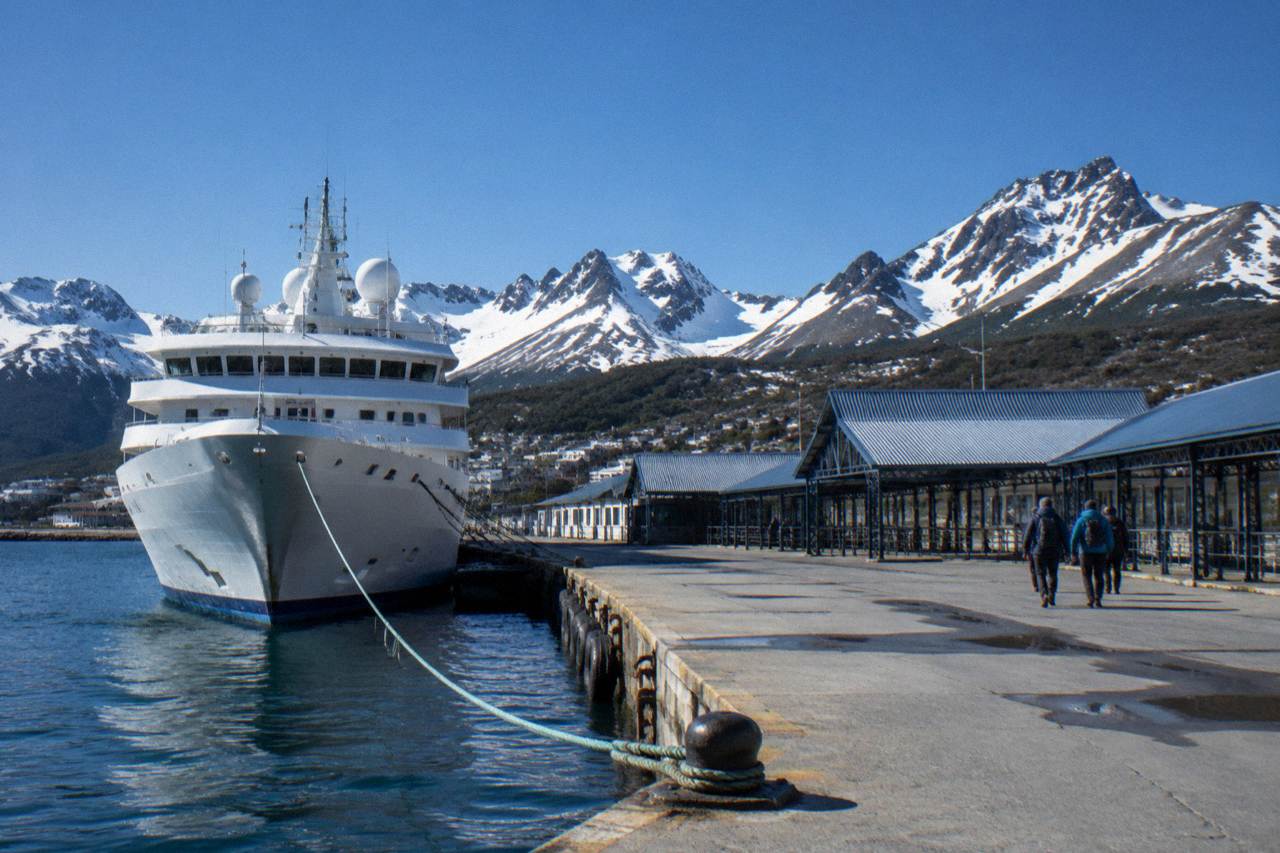
Ushuaia, on the Argentine side of Tierra del Fuego, is the embarkation port for the overwhelming majority of Antarctic Peninsula expedition cruises. The town functions less as a destination in its own right and more as the airlock of an Antarctica trip: nearly everything about your voyage, from the charter logistics to the weather calls, is filtered through what happens in this one small port city first. The operator pages for the current season show ships such as Hondius, Ocean Explorer and National Geographic Endurance all sailing from here, and the practical reality is that you will spend at least one night, probably two, in town before any of them departs.
That buffer is not optional padding. The Buenos Aires to Ushuaia air corridor is the single most common point of failure in an Antarctica itinerary, and the port itself has been under a federal intervention order since early 2026, which changed how ships are sequenced into berths. This guide walks through what the verified logistics actually say: how many nights to plan, how the flights work, what a full day in town looks like, how embarkation runs, and how the Punta Arenas fly-cruise gateway differs. Everything here comes from operator pages, port reporting and official Antarctic tourism sources, not from invented attraction lists.
Why Ushuaia Is The Gateway For Nearly Every Antarctica Cruise
Ushuaia is the embarkation port for the classic Antarctic Peninsula expedition cruise because it sits roughly a thousand kilometers from the peninsula across the Drake Passage, and the port, airport and hotel infrastructure to load small expedition ships already exists there. The Antarctic Treaty system's tourism statistics show about 98 percent of all tourism voyages occur in the Antarctic Peninsula region during the austral summer, and Ushuaia is the natural staging point for those voyages.
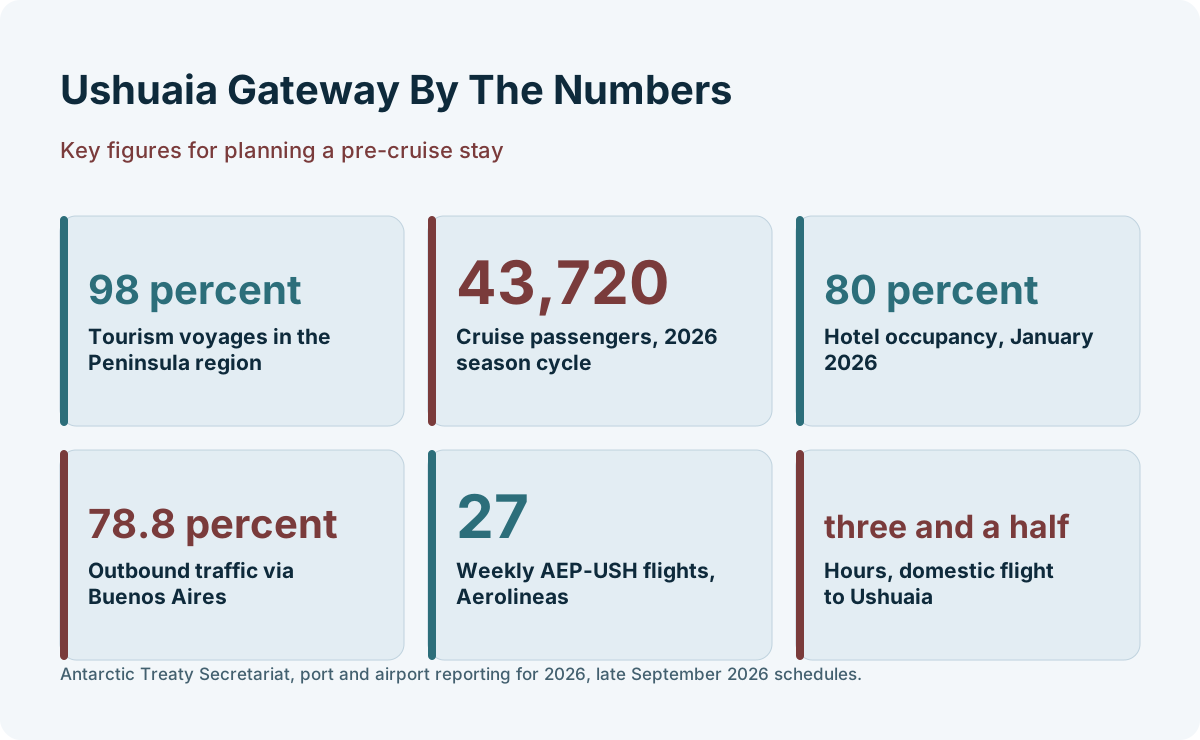
The concentration is stark. The Antarctic Treaty Secretariat's own tourism page states that approximately 98 percent of all tourism voyages occur in the Antarctic Peninsula during the seven-month austral summer from October to April, and the port data backs that up: Ushuaia handled more than 43,720 cruise passengers in the 2026 season cycle, with January 2026 alone pushing hotel occupancy in the city to roughly 80 percent. When that many people are moving through a town of Ushuaia's size on their way to an expedition cruise, the whole local economy orients around embarkation day.
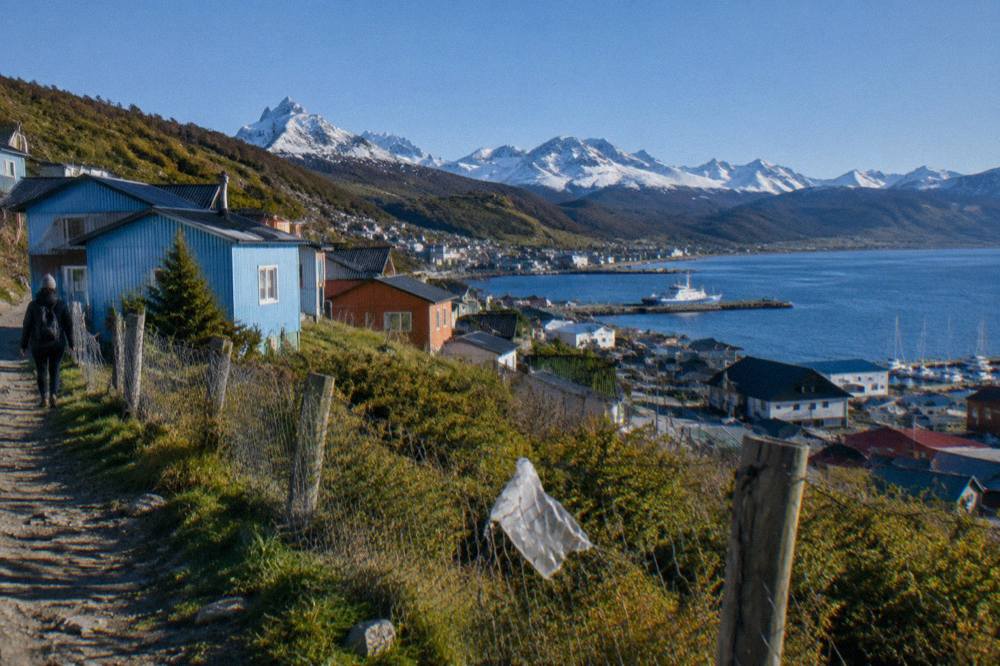
For you as a passenger, this concentration has a practical upside: the town knows exactly what an Antarctica cruise needs. Hotels are used to storing luggage, gear rental and biosecurity checks are routine, and the transfer between airport, hotel and pier is short. The downside is peak-season congestion. Argentina's National Ports and Navigation Agency issued Resolution 51/2026, which established dynamic berth allocation and entry sequencing at Ushuaia port based on real-time capacity, precisely because ships were clustering. If you want the deeper story on the port and the city as a cruise base, our Antarctica cruise from Ushuaia guide covers the port side in detail.
The other gateway, Punta Arenas in Chile, exists only for the fly-the-Drake model, where a charter flight replaces the two-day sailing. That is a genuinely different product with different logistics, and we treat it separately below, because confusing the two gateways is one of the fastest ways to book the wrong pre-cruise plan.
How Many Nights Should You Stay In Ushuaia Before Boarding?
Plan two nights in Ushuaia before your expedition cruise departs, with one night as the absolute minimum. Port and airport reporting for 2026 recommends at least one pre-cruise arrival night, ideally two, because the Buenos Aires to Ushuaia flight corridor is weather-prone in peak season and a missed domestic connection can mean a missed ship. The same reporting shows 78.8 percent of Ushuaia's outbound passengers travel via Buenos Aires routes, so almost everyone shares this exposure.
The arithmetic behind the buffer is simple and unforgiving. There are no direct flights from the United States to Ushuaia. You fly long-haul into Buenos Aires, almost always into Ezeiza (EZE), then transfer to the domestic airport, Aeroparque (AEP), for the flight south, and schedule aggregators advise a buffer of four to five hours or more for that transfer. The domestic leg itself runs roughly three and a half hours down to Ushuaia, and in peak season, which is exactly when Antarctica cruises sail, the weather at the southern end of the corridor can close the airport. If you fly in on embarkation morning and the flight cancels, the ship does not wait.
| Night | What it protects against | What the evening looks like |
|---|---|---|
| Two nights before sailing | A full cancellation of your AEP-USH flight; luggage delay on the international leg | Unhurried arrival, gear check, time to adjust |
| One night before sailing | A same-day delay or a missed EZE-AEP transfer | Tight but workable if all flights run |
| Same-day arrival | Nothing | Not recommended; a single weather event costs the voyage |
Two nights also give you the time the expedition itself will demand of you before boarding. Operators require biosecurity preparation, gear checks and, on many voyages, a briefing the evening before departure. Fly-cruise operators in Punta Arenas make the pre-flight hotel stay and gear check mandatory, and the sailing operators in Ushuaia run a softer version of the same pattern. If you are still deciding how much buffer your dates and airline routing can absorb, a free consultation on your arrival plan costs nothing and can catch a routing problem before you pay for it.
Hotel pressure is the other reason to decide early. With January occupancy near 80 percent and more than 43,720 cruise passengers cycling through in the season, the well-located rooms go first, and the properties closest to the pier fill with expedition passengers months ahead. Our Ushuaia hotels guide goes deeper on where to stay relative to the port.
Getting To Ushuaia: The Buenos Aires Connection
You reach Ushuaia through Buenos Aires, transferring from Ezeiza international airport to Aeroparque for a domestic flight of about three and a half hours. As of late September 2026 schedules, Aerolineas Argentinas operates roughly 27 weekly flights on the AEP-USH route and JetSMART operates several weekly low-cost flights, with departures spread across the day from early morning to evening. Build a four to five hour buffer for the EZE-AEP transfer.
The route structure matters more than most travelers expect. Because 78.8 percent of Ushuaia's outbound traffic flows via Buenos Aires, that single corridor carries nearly the entire Antarctica cruise season, and it shows: the schedule aggregators for late September 2026 list departures from 03:50 to 18:00, but capacity thins fast once weather starts cancelling rotations. One budget carrier, Flybondi, suspended its Buenos Aires to Ushuaia route from 29 April 2026 through the low season, planning to double frequency to six weekly from July 2026, which tells you how seasonal demand on this corridor is. In October through March, the Antarctica months, everyone is competing for the same seats.
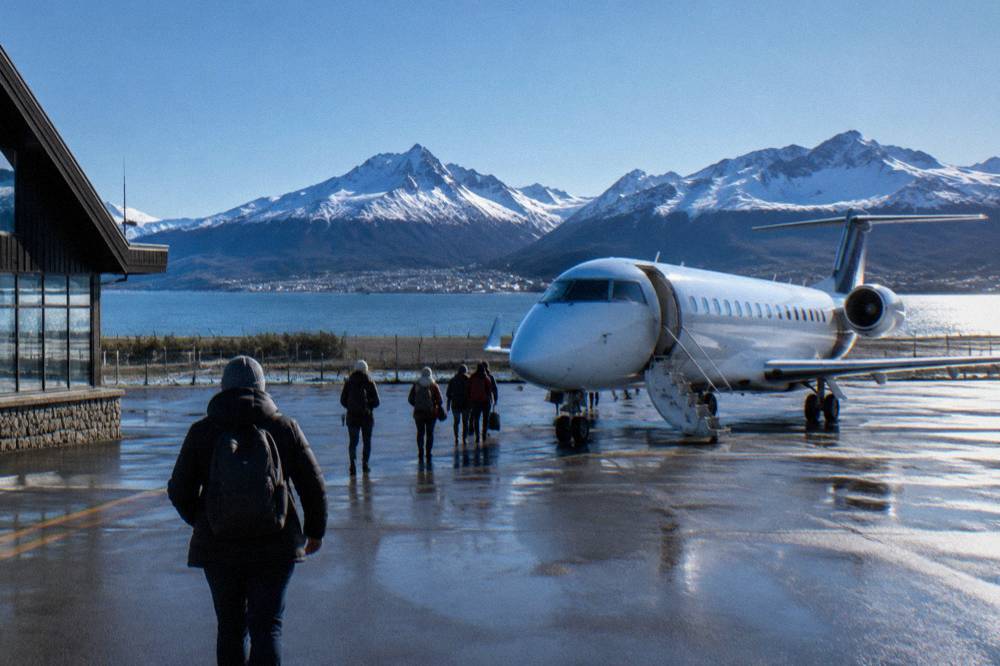
The immigration and entry side is straightforward for US citizens: Argentina admits US passport holders visa-free for tourism stays of up to 90 days, and the old reciprocity fee is gone. Chile, relevant if you are considering the Punta Arenas gateway or a post-cruise Patagonia leg, likewise requires no visa for tourist stays of 90 days or fewer on a US passport. Argentina formally requires health and medical coverage, including evacuation, for foreign visitors under a 2025 rule update, which dovetails with what your expedition operator will demand anyway; the major operators impose their own high medical evacuation minimums, and our Antarctica travel insurance guide breaks those requirements down.
One practical note on timing your international arrival: if you can land in Buenos Aires the day before your domestic flight south rather than the same night, do it. The EZE to AEP transfer crosses a congested city, and the aggregators' four to five hour buffer advice exists because same-evening connections fail often enough to be a known pattern. An overnight in Buenos Aires converts a two-leg gamble into two calm single legs.
What A Full Buffer Day In Ushuaia Actually Looks Like
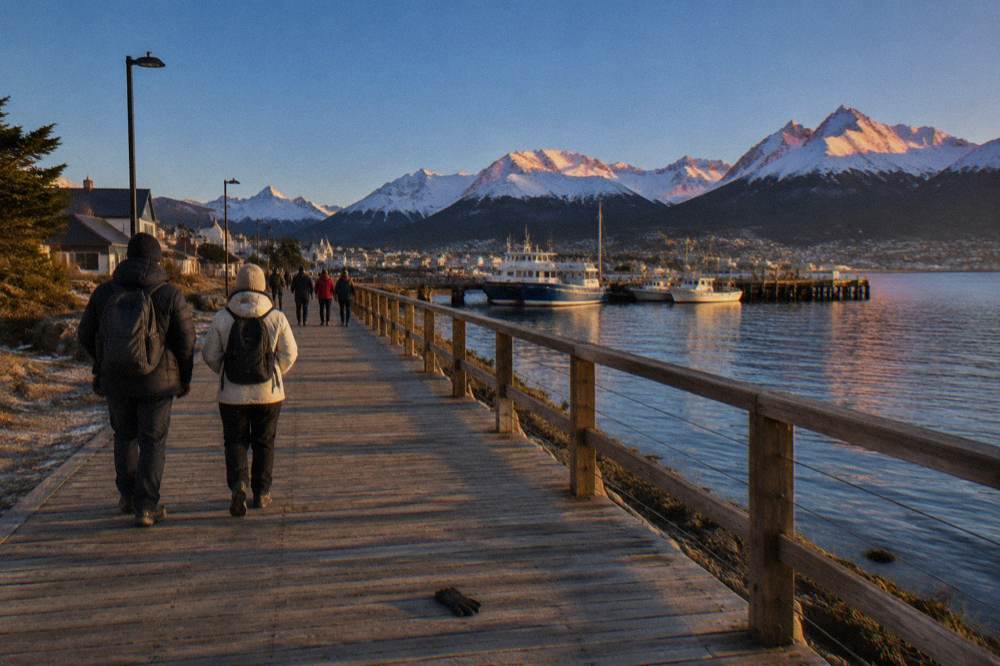
A buffer day in Ushuaia is a short, walkable town day: a slow morning adjusting to the light, a walk along the Beagle Channel waterfront, an unhurried lunch, then the operator's pre-voyage contact, usually a gear and biosecurity check or an evening briefing at the hotel or a local venue. Nothing on the day is strenuous, and nothing about it should be scheduled tightly, because its whole job is to absorb delay.
The town itself is small enough that you will learn its shape in an afternoon. The waterfront along the Beagle Channel is the natural spine of any walk, with the port at one end and the mountains rising directly behind the streets. Expedition passengers fill the cafes and gear shops in the blocks behind the pier in season, and the atmosphere in October through March is unmistakably a staging town: half the people in any given restaurant are going to Antarctica tomorrow. That pre-boarding hum, everyone quietly comparing parkas and itineraries, is a large part of the character of the port day, so it is worth giving the town an afternoon rather than rushing through.
The genuinely important item on the day's agenda is the operator's pre-voyage routine. For sailing voyages out of Ushuaia this is typically a luggage drop or tagging, a boot and parka fitting where the line provides gear, and a briefing that covers the IAATO rules you will be living under for the next week or two. Those rules are not fine print. The Antarctic Treaty visitor guidelines cap landings at a maximum of 100 passengers ashore from a vessel at any one time, require a one-to-twenty guide-to-visitor ratio, and mandate biosecurity: boots and equipment must be carefully washed and cleaned before you bring them to Antarctica, and cleaned again between sites. Your buffer day is when that happens in practice.
| Time of day | What to do | Why it belongs on the buffer day |
|---|---|---|
| Morning | Slow breakfast, walk the Beagle Channel waterfront | Absorbs jet lag; the town is walkable in an hour or two |
| Midday | Unhurried lunch near the pier; check in with the operator's local contact | Operators confirm boarding windows and briefing times |
| Afternoon | Gear and biosecurity check: clean boots, velcro, bags, tripods | Antarctic Treaty guidelines require clean equipment before boarding |
| Evening | Operator briefing at the hotel or a local venue | Covers landing rules, Zodiac drill and the sailing schedule |
If your buffer day is also your contingency day, keep it that way. Do not book a paid excursion far out of town for the afternoon before embarkation, because if your inbound flight was delayed a day, that excursion is where your slack lives. The disciplined pattern that the port reporting supports is: fly in, sleep, do the town day with the gear check, sleep again, board. Anything more ambitious belongs after the voyage, when the ship has already sailed without you if something goes wrong.
Embarkation Day At The World's Southernmost Cruise Port
Embarkation in Ushuaia is a clustered, well-drilled afternoon: ships load in sequence at the pier under the port's dynamic berth allocation system, passengers are assigned boarding windows by the operator, and the ship typically sails in the evening across the Beagle Channel toward the Drake Passage. Argentina's port agency installed the dynamic sequencing system under Resolution 51/2026, alongside about 2.5 million dollars in fender and utility upgrades for the current season.
The port's operational reality changed in 2026. Ushuaia port has been under a federal intervention order with a twelve-month term from early 2026, and the authorities deferred a full suspension of the port's license specifically to protect the cruise season, applying new operational rules and maintenance instead. For a passenger, none of this changes your experience directly, but it explains why berth times are sequenced rather than fixed: with expedition ships clustering on peak days, your ship's slot is assigned by real-time capacity, and operators pass your boarding window to you the day before.
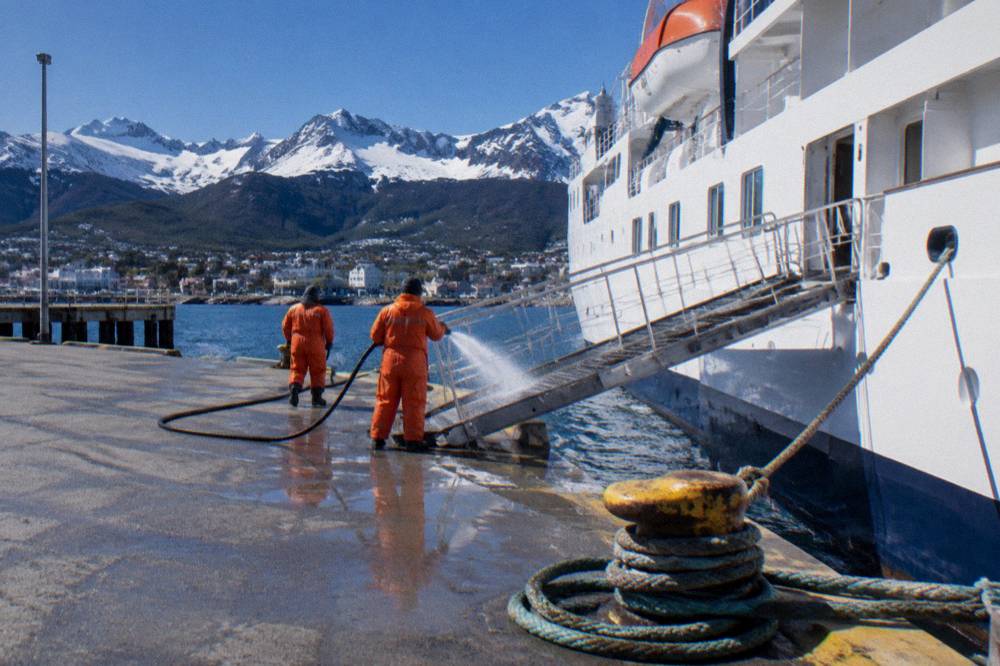
Your job on the day is mostly waiting gracefully. Check out, store bags with the hotel if there is a gap, keep the passport and the insurance proof the operator asked for accessible, and be at the pier for your window rather than hours early, because the shed at the pier is functional, not comfortable. Once aboard, the ship spends the first hours in the Beagle Channel, a sheltered and usually calm stretch, before turning south into open water. That transition, from a protected channel evening to the first hours of the Drake Passage overnight, is the moment the voyage actually begins, and it is worth being on deck for it.
If you are still weighing which ship to book out of this port, the differences between vessels matter more than the differences between ports, because almost all of them leave from the same pier. That is a ship decision rather than a Ushuaia decision, and it is worth talking through the ship choice with a specialist before you commit a deposit.
Punta Arenas: The Fly-Cruise Alternative Gateway
Punta Arenas in Chile replaces the two-day Drake Passage crossing with a roughly two-hour charter flight to King George Island, and it imposes its own pre-departure routine: arrival at a designated Punta Arenas hotel by a set time the day before, a mandatory overnight, a biosecurity and gear check, and a strict checked baggage limit of 20 kilograms on the charter segment. Antarctica21's Classic Antarctica air-cruise runs 8 days and 7 nights.
The two gateways produce two different pre-cruise experiences, and the choice between them is really a choice about the Drake Passage. Sailing from Ushuaia costs you roughly two days at sea in each direction, with crossing times that Quark's operator page puts at 18 to 24 hours in optimal conditions and 36 to 48 hours in rougher seas. Flying from Punta Arenas removes that transit entirely, but it concentrates risk into a single weather-dependent charter flight: if the flight cannot land at King George Island on schedule, the itinerary compresses. The fresh operator comparisons note fly-the-Drake options typically add roughly 2,000 to 5,000 dollars over comparable sailing voyages due to the charter flights.
| Ushuaia (sailing gateway) | Punta Arenas (fly-cruise gateway) | |
|---|---|---|
| Country | Argentina | Chile |
| Getting there | Via Buenos Aires, AEP-USH domestic flight | Direct international service into Punta Arenas, or via Santiago |
| Pre-departure routine | Operator briefing and gear check, hotel stay recommended | Mandatory hotel arrival by a set time, overnight, biosecurity check |
| Baggage limit | Standard airline rules on the way in | 20 kg checked on the King George Island charter |
| Sea time to Antarctica | Roughly two days each way across the Drake | None; about a two-hour flight |
| Typical voyage length | 10 to 14 days round trip | 8 days for the classic air-cruise |
| Fare direction | Lower entry fares | Charter flights add roughly $2,000-$5,000 |
The Punta Arenas routine is stricter than Ushuaia's for a reason. Polar Latitudes, for example, requires its fly-cruise guests to arrive at the Hotel Cabo de Hornos in Punta Arenas by 14:00 the day before the charter flight, and the 20 kilogram checked limit on the Punta Arenas to King George Island flight is enforced, not advisory. Silversea's planned hotel in Puerto Williams, further south, had its opening delayed to October 2026 for the current season, which shifted some early fly-cruise guests back through Punta Arenas. If you are comparing the two gateways seriously, our Punta Arenas Antarctica guide covers the Chilean side in full, and the question of whether flying or sailing is cheaper has its own detailed comparison.
One framing worth keeping: the gateway choice and the ship choice are linked, because a given ship only sails from one of them. The Antarctica21 air-cruise fleet, Magellan Explorer and the new Magellan Discoverer, exists only on the Punta Arenas side, while the bulk of the classic expedition fleet, from budget small ships to luxury vessels, loads at Ushuaia.
Choosing A Ship That Sails From Ushuaia
The Ushuaia fleet spans a wide fare range for classic Peninsula voyages, and the three ships that illustrate the spread are Hondius, a 170-guest Polar Class 6 vessel from Oceanwide Expeditions from 7,800 dollars, National Geographic Endurance, a 138-guest Lindblad ship from 11,900 dollars, and Ocean Explorer, a 138-guest Quark ship from 12,236 dollars on shared voyage-level fares. All three have confirmed schedules on their operator pages.
These three ships sit at different points on the same pier. Hondius, built in 2019, was the first-registered Polar Class 6 passenger vessel in the world in its operator's wording, and it anchors the value end of the Ushuaia fleet: Oceanwide's Antarctic Peninsula departures for October 2026 through April 2027 start from 7,800 dollars per person. It carries 170 guests in 80 cabins, which keeps it comfortably inside the IAATO landing limits, and its 11, 13 and 19-day voyages out of Ushuaia cover the classic Peninsula route and longer combinations. If the budget end of the fleet is where you are shopping, our Hondius guide goes deck by deck.
National Geographic Endurance represents the mid-premium tier. The 138-guest ship, built in 2021 with a Polar Code PC5 Category A hull and Lindblad's patented X-Bow, lists its 12-day Voyage to Antarctica from 11,900 dollars per person, and Lindblad bundles a pre-cruise Buenos Aires hotel night, the charter flight from Buenos Aires to Ushuaia, alcoholic beverages, prepaid gratuities and an expedition jacket into the fare. That bundling quietly solves half of the logistics this guide describes, which is worth weighing when comparing a bundled fare against a lower unbundled one.
Ocean Explorer sits on the Quark side of the fleet, a 138-guest upscale expedition ship with 15 Zodiacs and verandas on almost all cabins, sailing voyages of 8 to 20 days from Ushuaia, Buenos Aires and Punta Arenas. Its fares are voyage-level and shared across Quark's Antarctic Explorer product, so the same 11 to 12-day voyage from 12,236 dollars per person can be sailed on Ocean Explorer or on the World Voyager depending on departure. Never treat a Quark fare as ship-exclusive, because the operator prices the voyage, not the vessel.
| Ship | Class | Passengers | Ice class | From, per person | Voyage length | Departs from |
|---|---|---|---|---|---|---|
| HondiusOceanwide Expeditions | Small-Ship Budget | 170 | Polar Class 6 | from $7,800 | 11 to 19 days | Ushuaia |
| National Geographic EnduranceLindblad Expeditions (with National Geographic) | Standard Expedition | 138 | PC5 | from $11,900 | 12 to 22 days | Ushuaia |
| Ocean ExplorerQuark Expeditions | Upscale Expedition | 138 | 1A, PC6 | from $12,236 | 8 to 20 days | Ushuaia, Buenos Aires, Punta Arenas |
The honest summary of the tier spread: the gap between the value ships and the premium ships is mostly a gap in cabin, onboard comfort and bundled inclusions, not a gap in whether you stand on the Antarctic continent, because the IAATO landing rules apply identically to a budget berth and a premium suite. Where the ship choice genuinely changes the trip is in passenger count, which drives how fast everyone gets ashore, and in the bundled logistics, which determines how much of the Buenos Aires and Ushuaia puzzle the operator solves for you.
Preparing For The Voyage: Gear, Biosecurity And Insurance
Three preparation items define your Ushuaia buffer: gear, biosecurity and insurance. Most expedition operators provide a complimentary parka, often yours to keep, and loan waterproof boots, so the gear you must bring yourself narrows to layers and camera equipment. Insurance requirements are operator-enforced, with high medical evacuation minimums plus full trip-cost cancellation cover, and proof is often required before departure or at check-in.
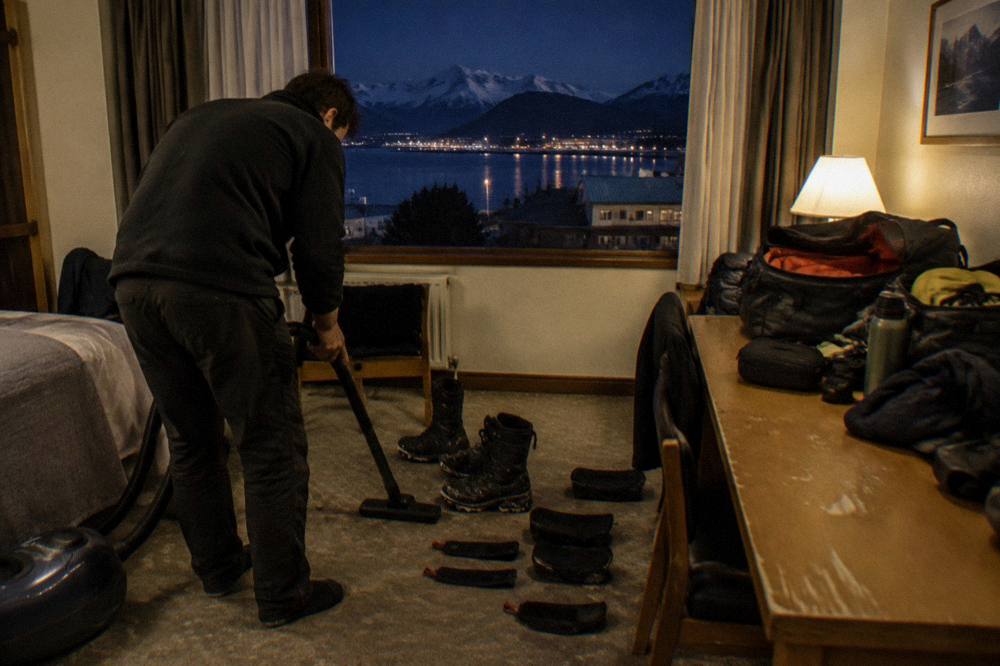
Biosecurity is the part that surprises people. The Antarctic Treaty visitor guidelines require that you carefully wash boots and clean all equipment, including clothes, bags, tripods, tents and walking sticks, before bringing them to Antarctica, and clean again between sites. In practice, your buffer day in Ushuaia includes a vacuum of every seam and velcro strap you are carrying, because the operator's expedition team will check, and a failed check delays the whole landing operation, not just yours. If you want the full list of what to pack versus what the ship lends, our Antarctica packing list guide is the detailed version.
Insurance is the item that can stop a boarding. The operators' minimums are not suggestions; proof of cover is demanded at or before check-in on the major lines, and Argentina's own entry rules now formally require health and medical coverage including evacuation for foreign visitors. A policy with the required evacuation ceiling and full trip-cost cancellation cover is the single cheapest protection in an itinerary where the voyage itself runs five figures, and the operator's documentation will state the exact minimums you must meet. Tips, by comparison, average around 16 dollars per person per day on the planning figures, with some lines prepaid gratuities bundled, as Lindblad does.
The last preparation item is calendar discipline. The fresh cost reporting is blunt on this point: peak December sailings book 18 or more months ahead, last-minute discounts exist but are limited in availability and cabin choice, and early booking on upcoming seasons commonly unlocks 10 to 30 percent off, with select unsold sailings reaching 40 percent. Your Ushuaia buffer is a two-night decision, but your berth on the ship is an eighteen-month decision, and the two should be made together. If the season, the ship and the budget are still unresolved, a free Antarctica voyage consultation puts all three in front of a specialist at once.
Common Questions About Ushuaia Before An Antarctica Cruise
Things To Do In Ushuaia: How Many Nights Do I Really Need?
One night is the minimum and two is the recommended buffer before an Antarctica cruise sails from Ushuaia. The Buenos Aires to Ushuaia domestic flight is weather-prone in peak season, and a missed connection can mean a missed ship. Two nights convert that risk into a recoverable delay.
Things To Do In Ushuaia: Can I Fly In The Same Day My Cruise Departs?
It is possible on paper and not advisable in practice. You must transfer between Buenos Aires airports, Ezeiza and Aeroparque, with a recommended buffer of four to five hours, then fly about three and a half hours to Ushuaia. A single weather cancellation on the domestic leg costs the entire voyage.
Do US Citizens Need A Visa For Ushuaia?
No. US citizens enter Argentina visa-free for tourism stays of up to 90 days with a valid passport, and the old reciprocity fee has been abolished. Chile, relevant for the Punta Arenas fly-cruise gateway, likewise requires no visa for tourist stays of 90 days or fewer.
What Happens On Embarkation Day At Ushuaia Port?
Ships load in sequence under the port's dynamic berth allocation system, and your operator assigns a boarding window the day before. You check out, store bags if needed, keep passport and insurance proof accessible, and board in your assigned window. The ship usually sails in the evening through the Beagle Channel.
Is Ushuaia Or Punta Arenas The Better Gateway?
Ushuaia serves the classic sailing voyages across the Drake Passage, roughly two days at sea each way. Punta Arenas serves fly-cruises, with a roughly two-hour charter flight to King George Island, a mandatory pre-flight hotel night, gear checks and a strict 20 kilogram checked baggage limit. The choice is really about whether you want to sail the Drake or fly it.
Where Can I Get Help Planning The Ushuaia Part Of An Antarctica Trip?
Use a free consultation through Cruises In Antarctica, which matches you with a vetted expedition-cruise agency partner at no cost and with no obligation. It covers the buffer nights, the flight routing and the ship choice in one conversation.