How To Compare Antarctica Cruise Quotes Line By Line
 By Oleg G.
Two Antarctica cruise quotes rarely mean the same thing by the same number. This guide walks through every line you should compare, from the per-person basis to the cancellation small print, using published 2026-27 operator figures.
Quick answer: Compare Antarctica cruise quotes on a per-person, double-occupancy basis first, then align cabin category, embarkation port, flights, hotels, supplements, gratuities, insurance and cancellation terms before looking at the headline fare. Published 2026-27 Peninsula fares range from about $6,900 in March to over $30,000 for holiday departures, so a fair comparison depends on matching what each quote actually buys.
How Do You Compare Two Antarctica Cruise Quotes Fairly?
You compare Antarctica cruise quotes by normalising them first: same per-person basis, same cabin category, same month, same embarkation arrangements, then adding every excluded item (flights, hotels, insurance, tips, activity fees) to both sides before judging the totals. A quote that looks thousands cheaper on the headline can end up the more expensive option once the missing pieces are priced in. The headline fare is the start of the comparison, never the end.
Most people compare Antarctica cruise quotes the way they compare airfares: lowest number wins. That instinct fails badly here, because expedition fares vary enormously in what they bundle. One operator includes a parka, loaner boots and Zodiac excursions in the base fare; another charges extra for kayaking and camping; a third bundles charter flights and hotel nights that its competitor leaves you to buy separately. Rate parity agreements maintained by major operators such as Silversea, Seabourn, Ponant, Viking and HX mean a specialist agent generally sells the same published fare you would pay booking direct, so the price itself is rarely the differentiator between channels. What differs is what sits inside the number.
The cruise you are quoting is a specific ship, a specific voyage and a specific cabin on a specific date, and every one of those four variables moves the fare. Published 2026-27 Peninsula fares on the roster run from about $7,050 per person on Plancius and $7,800 on Hondius, through $12,236 on Quark's Antarctic Explorer voyages and $11,900 on Lindblad's National Geographic Endurance, up to $30,205 for a holiday departure. Comparing a March quad-porthole quote against a Christmas balcony-suite quote tells you nothing except that December costs more.
Before you go further, it helps to have a plain-language picture of what the overall budget looks like; our Antarctica cruise cost guide breaks the full all-in number down, and a realistic all-in budget for a 10- to 12-day mid-range Peninsula trip (fare plus flights, gear, tips and insurance) runs $12,000 to $25,000 per person. If you are holding two quotes right now, a free quote comparison consultation will do this line-by-line work with you at no cost.
The Quote-Comparison Checklist
Work down a fixed checklist on every quote you collect: per-person basis, cabin category and location, embarkation port, flights and transfers, hotel nights, single supplement, gratuities, insurance minimums, activity fees, and the deposit and cancellation schedule. Writing the answers side by side surfaces the differences in five minutes that a weekend of browsing operator pages will not. The checklist below is the one to copy.
The core checks come from published booking guidance: confirm the figures are per person on a double-occupancy basis; note the exact cabin category and deck; check whether the embarkation city is Ushuaia, Buenos Aires or Punta Arenas; and ask what happens to each item if you cancel.
| Line to compare | What to confirm | Why it moves the total |
|---|---|---|
| Fare basis | Per person, double occupancy? Or whole cabin? | A "cabin price" can hide a 2x per-person figure |
| Cabin category | Exact category name, deck, window/porthole/balcony | Same voyage can vary thousands by category |
| Voyage length | Nights aboard, not "days" of the trip | Day counts sometimes include travel days |
| Embarkation port | Ushuaia, Buenos Aires or Punta Arenas | Changes your flights and hotel nights |
| Flights | Included? Charter or commercial? From where? | Charter flights to Ushuaia can be bundled or extra |
| Hotel nights | Pre-cruise night included? Gateway city? | One Buenos Aires night is real money |
| Transfers | Airport-to-ship and ship-to-airport included? | Often excluded on budget quotes |
| Single supplement | Percentage over the twin rate, or waived? | Typically 25% to 100% extra for solo travelers |
| Gratuities | Included, prepaid, or suggested per day? | Suggested tips run roughly $15 to $25 per person per day |
| Insurance | Operator minimums for evacuation cover | Typically $100,000 to $500,000 required, not included |
| Activities | Kayaking, camping, helicopter fees | Optional activities commonly run $350 to $2,000 |
| Deposit | Percentage due at booking | Quark 25%, Oceanwide 20%, varies by operator |
| Final payment | Days before departure | Commonly 60 to 150 days out |
| Cancellation | Penalty tiers and refund window | Escalates to 100% close to departure |
Two quotes that look identical on fare can differ on six of those fourteen lines. A common mistake is comparing a fare that includes a charter flight and hotel night against one that does not, and treating the difference as operator pricing rather than inclusions.
Which Fares Are Actually Comparable?
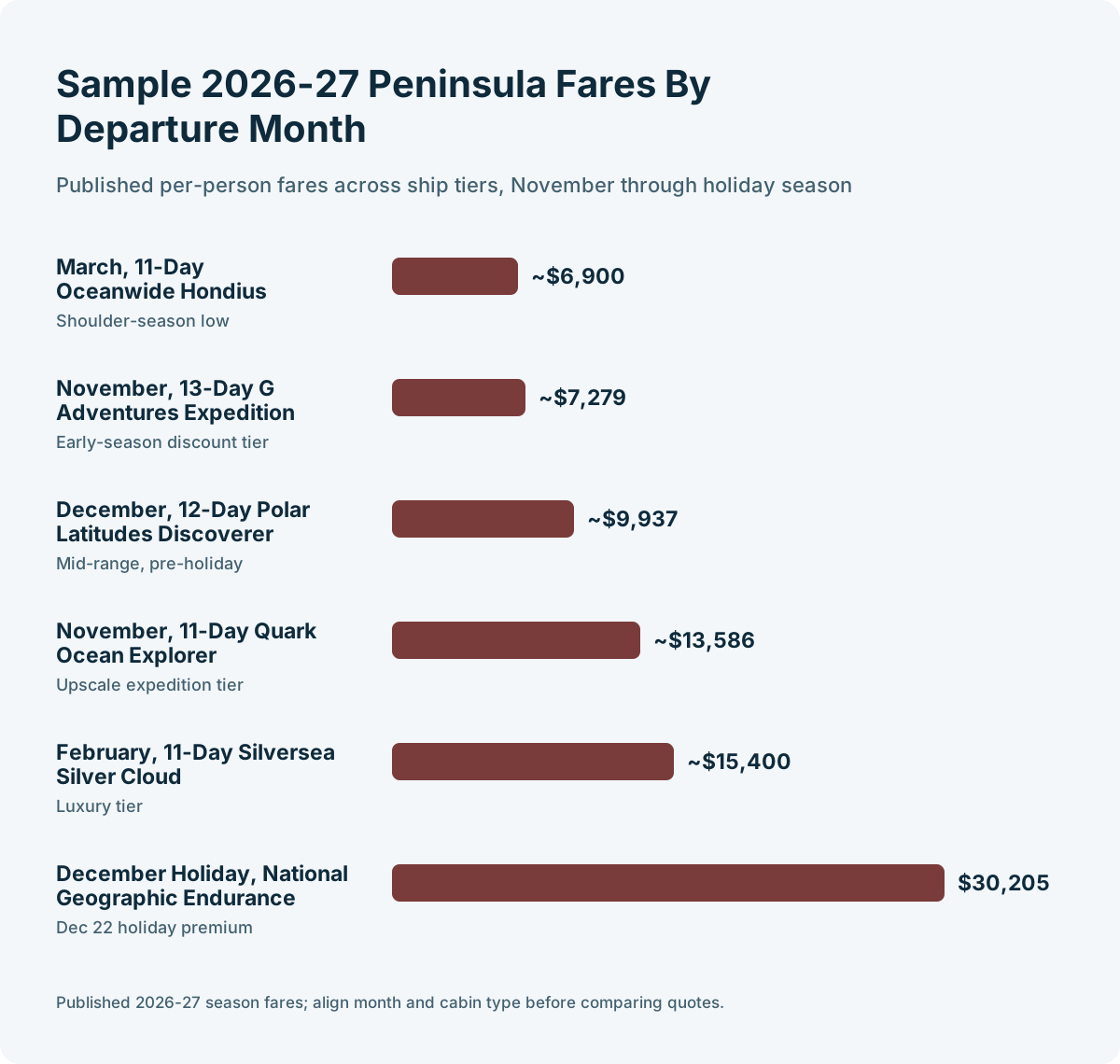
Only fares from the same month, similar cabin standard and same route style are comparable. Published 2026-27 examples show a roughly $6,900 March departure on a budget small ship against $30,205 for a holiday-season National Geographic Endurance sailing, and everything between. Align month, ship tier and cabin type before you conclude one quote is better value, because shoulder-season November and March fares often sit 20 percent or more below peak.
The season moves the price as much as the ship does. Sample 2026-27 published fares make the spread plain: an 11-day Oceanwide Hondius departure in early March was listed around $6,900 per person, a 13-day G Adventures Expedition sailing in November around $7,279, a 12-day Polar Latitudes Discoverer voyage in December around $9,937, an 11-day Quark Ocean Explorer departure around $13,586, an 11-day Silversea Silver Cloud sailing in February around $15,400, and a December 22 National Geographic Endurance holiday departure from $30,205. None of those six numbers is "the price of an Antarctica cruise"; each is the price of one cabin on one ship in one week.
| Month (2026-27 season) | Sample published fare | Voyage and ship | Notes |
|---|---|---|---|
| March | ~$6,900 pp | 11-day Oceanwide Hondius | Shoulder-season low |
| November | ~$7,279 pp | 13-day G Adventures Expedition | Early-season discount tier |
| December | ~$9,937 pp | 12-day Polar Latitudes Discoverer | Mid-range, pre-holiday |
| November | ~$13,586 pp | 11-day Quark Ocean Explorer | Upscale expedition tier |
| February | ~$15,400 pp | 11-day Silversea Silver Cloud | Luxury tier |
| December (holiday) | From $30,205 pp | National Geographic Endurance, Dec 22 | Holiday premium |
Cabin category moves the number just as hard within a single voyage. Sample 2026-27 Oceanwide Hondius categories ran from roughly $9,600 to $10,150 in a quad porthole to $11,400 to $12,500 in a twin porthole and $15,000-plus for suite categories with a balcony. On Quark's Ultramarine, promo examples ran from about $16,890 in an Explorer triple to $19,690 to $21,490 in balcony categories and $25,000 to $37,990 in deluxe, terrace and penthouse suites. So when a second quote arrives, first ask: same category ladder rung? Same month? If not, you are comparing apples to filet mignon.
If matching months and categories across operators feels like a part-time job, a free consultation on your shortlist will line the quotes up for you; there is no obligation attached.
What Is Included And Excluded By Operator
Inclusion policies differ enough to reverse a comparison. Oceanwide includes meals, Zodiacs, lectures, a parka on some voyages and boot loan, but excludes flights, alcohol and gratuities; Lindblad bundles many activities, gratuities and some drinks; Atlas includes drinks, gratuities and some flights and transfers; Silversea, Seabourn, Scenic and Ponant run inclusive models covering drinks, gratuities and Wi-Fi, and Viking includes drinks with meals. Add the excluded items to both quotes before deciding.
The pattern across the 2026-27 season is that budget expedition lines quote a lower base fare with more exclusions, while upscale and luxury lines quote a higher fare with more bundled. Neither is dishonest; they are different accounting systems, and your job is to convert both to the same all-in figure. The full index of guides sits on Cruises In Antarctica.
| Operator | Included | Extra cost |
|---|---|---|
| Oceanwide | Meals, Zodiacs, lectures, parka on some voyages, boot loan | Flights, alcohol, gratuities (suggested), kayaking and camping add-ons on non-Basecamp voyages |
| Quark | Meals, Zodiacs, some adventure options on select voyages | Flights (charter sometimes bundled on fly-cruises), alcohol, gratuities, kayaking and camping add-ons |
| G Adventures | Hotel night in Ushuaia, transfers, meals, parka to keep, boot loan | Flights, alcohol, tips ($10 to $15 per day suggested), kayaking ( |
| Lindblad | Many activities, gratuities, some drinks | International flights, insurance, optional add-ons |
| Atlas | Drinks, gratuities, some flights and transfers on packages | Varies by package |
| Silversea, Seabourn, Scenic, Ponant, Viking | Meals, drinks, gratuities and Wi-Fi on most; Viking includes drinks with meals | International flights unless bundled, some specialist activities |
The hidden lines are the ones that sting. Typical add-ons reported across 2026-27 pricing include international flights to the gateway city of $530 to $1,200 or more, travel insurance with medical evacuation at $200 to $500 or more (with $100,000 to $500,000 cover commonly required), single supplements of 40 to 100 percent, and optional activities from $350 to $2,000. A mid-range quote that excludes all of those can quietly exceed a higher-tier quote that bundles most of them.
Deposits, Payment Deadlines And Cancellation Terms
Read the payment schedule as part of the quote, not the fine print. Quark requires a 25 percent deposit if booked 151 or more days before departure and full payment inside 150 days; Oceanwide takes a 20 percent deposit with the balance due 60 days before departure; cancellation penalties escalate in tiers to 100 percent close to sailing. Two quotes with identical fares can carry very different cash-flow and refund risk.
The deposit line matters for two reasons. First, it sets how much money you have at risk from the day you say yes. Second, the final-payment date determines how long you hold the option to change your mind, cancel, or rebook, which is exactly when weather, health or work can intervene. Quark's 2026 terms, effective June 2026, set a 25 percent deposit for bookings made 151 or more days before Day 1 and 100 percent for bookings inside 150 days, with final payment due 150 days before Day 1, per its booking terms page. Oceanwide's terms take 20 percent on confirmation, with full payment if you book within two months of departure and the balance otherwise due 60 days out, per its terms and conditions.
Cancellation tiers follow the same logic. Oceanwide's published terms charge 20 percent of the total price up to 90 days prior, 50 percent at 89 to 60 days, and 100 percent at 59 days or less. That schedule is why insurance with trip-cancellation cover belongs in the comparison from the start, not as an afterthought. When you lay two quotes side by side, copy each operator's deposit, final-payment and cancellation lines into your table; our deposits and payments guide covers the schedules in more depth.
One more channel note: booking direct gives you immediate access to the operator's system, while a specialist agent can match itineraries across multiple operators and often adds perks such as shipboard credits or upgrades while charging the same published fare. Whichever route you take, verify the operator itself is legitimate: the IAATO membership directory publicly lists current operators, provisional operators and associates, and not every Antarctic seller is on it.
Common Traps When Comparing Quotes
The recurring traps are comparing whole-cabin prices against per-person fares, ignoring the single supplement, treating "days" as nights aboard, forgetting that flights and hotels are often excluded, and assuming the advertised itinerary is guaranteed. Each trap makes one quote look cheaper than it is, and each is avoidable with one extra question before you commit.
The traps worth naming, all drawn from operator booking and pricing material for the 2026-27 season:
| Trap | What it looks like | The question that defuses it |
|---|---|---|
| Basis mismatch | One quote per person, one per cabin | "Is this per person, double occupancy?" |
| Day-count padding | "12-day trip" that includes 2 travel days | "How many nights are we actually aboard?" |
| Flight ambiguity | Fare looks low because the charter flight is excluded | "Are flights to embarkation included, and from where?" |
| Single supplement shock | Solo quote arrives 40 to 100 percent above the twin rate | "What is the supplement, and are share cabins available?" |
| Activity fees | Kayaking, camping or helicopter options billed separately, $350 to $2,000 | "Which activities are in the fare and which are extra?" |
| Gratuities drift | Tips suggested at $15 to $25 per day, not prepaid | "Are gratuities included or prepaid?" |
| Insurance minimums | Operator requires $100,000 to $500,000 evacuation cover you must buy | "What coverage do you require proof of?" |
| Itinerary certainty | Advertised route treated as a promise | Weather and ice can force changes; is flexibility stated? |
The single-supplement line deserves special attention if you travel alone. Typical supplements range from 25 to 100 percent of the twin-share fare depending on ship, cabin and date, though some lines waive or reduce them on select sailings, and shared-cabin options exist on some operators. A solo quote that arrives without the supplement spelled out is not a finished quote.
And the itinerary trap is real on every voyage: weather, ice and wildlife conditions can cancel or shorten landings, so a quote built around a specific landing site or a Circle crossing is quoting an attempt, not a guarantee. That is not a reason to avoid the trip; it is a reason to compare operators on how they describe flexibility, not on which one promises the most.
A Worked Comparison: Three Ships, Three Price Tiers
A fair three-way comparison looks like this: Hondius from $7,800 per person in the budget expedition tier, National Geographic Endurance from $11,900 in the standard expedition tier, and Ultramarine from $12,236 in the upscale tier, each with different inclusions and payment terms behind those fares. The right choice depends on traveller type, not on which number is lowest.
Take three roster ships a reader might realistically be quoting for the 2026-27 season. Oceanwide's Hondius carries 170 passengers in 80 cabins, was built in 2019, holds Polar Class 6, and lists Peninsula voyages from $7,800 per person, with suggested gratuities of 10 to 15 EUR or USD per passenger per day and a 20 percent deposit with balance due 60 days out. Lindblad's National Geographic Endurance carries 138 guests, holds PC5 Category A, and lists its 12-day Voyage to Antarctica from $11,900, with the operator noted for bundling activities, gratuities and some drinks. Quark's Ultramarine carries 199 passengers, holds ice class 1A+ and PC6, and lists Antarctic Explorer voyages from $12,236, a voyage-level fare shared with other Quark ships, with two twin-engine helicopters and 20 Zodiacs aboard.
| Ship | Class | Passengers | Ice class | From, per person | Voyage length | Departs from |
|---|---|---|---|---|---|---|
| UltramarineQuark Expeditions | Upscale Expedition | 199 | 1A+, PC6 | from $12,236 | 12 to 14 days | Buenos Aires, Ushuaia |
| HondiusOceanwide Expeditions | Small-Ship Budget | 170 | Polar Class 6 | from $7,800 | 11 to 19 days | Ushuaia |
| National Geographic EnduranceLindblad Expeditions (with National Geographic) | Standard Expedition | 138 | PC5 | from $11,900 | 12 to 22 days | Ushuaia |
Notice what the fares do not tell you. Hondius at $7,800 is a starting point on a small-ship budget voyage where flights, alcohol and tips sit outside the fare. Endurance at $11,900 starts a bundler's fare where more of the extras are inside. Ultramarine at $12,236 starts an upscale expedition fare on the ship with helicopter capability, and that fare is voyage-level, not ship-exclusive, so an identical number may appear against other Quark vessels. Same order of magnitude, three different products.
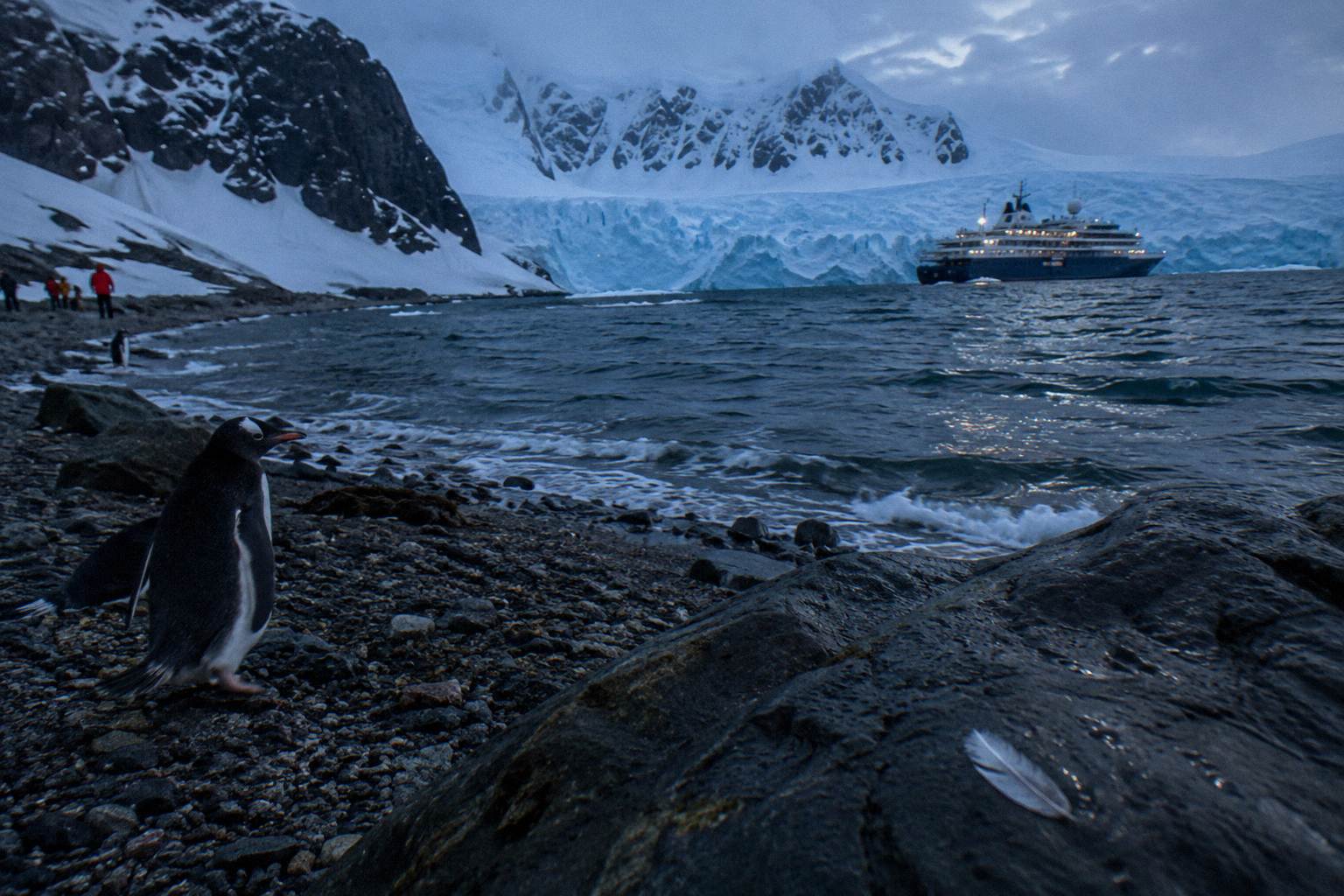
If helicopters, a balcony suite or a specific month matter to you, the featured ship here is worth a closer look on its own terms.
Ultramarine, for reference, is Quark's upscale expedition ship with aviation options: 199 passengers, 128 metres, two helidecks, an internal Zodiac hangar and two ready rooms, with 2026-27 departures confirmed on the operator page. Once you have shortlisted a ship and a month, compare your two quotes with a free consultation rather than guessing at the inclusions; the consultation is free and carries no obligation.
When A Free Consultation Makes Sense
Use a free consultation when you hold two or more quotes that differ in inclusions, when you are matching cabin categories across operators, or when the deposit and cancellation schedules differ enough to change your risk. A specialist who knows the operators can normalise the quotes, flag missing lines and check the small print, at no cost to you, since agents are compensated by the operator rather than the traveller.
Not every reader needs help. If both quotes come from the same operator, same month and same cabin category, the comparison is arithmetic. But the moment the quotes cross operators, the lines stop aligning on their own: one bundles a hotel night, the other does not; one pre-pays gratuities, the other suggests $15 to $25 a day; one requires a 25 percent deposit, the other 20 percent with a different final-payment date. That is the point where an hour of expert eyes saves more than it could ever cost, because the consultation itself is free.
The hand-off, when you choose to take it, is to a vetted expedition-cruise agency partner; nothing is sold on this site. Bring your quotes, your dates and your must-haves, and ask the same fourteen questions from the checklist earlier in this guide. If you are still assembling the shortlist rather than comparing final quotes, start with our how to book an Antarctica cruise guide and the what's included on an Antarctica cruise breakdown, then come back to this page when the numbers arrive.
Common Questions About Comparing Antarctica Cruise Quotes
How do you compare Antarctica cruise quotes?
Normalise both quotes first: per-person double-occupancy basis, same month, similar cabin category, same embarkation arrangements. Then add every excluded item (flights, hotels, insurance, gratuities, activity fees) to both sides, and compare the deposit, final-payment and cancellation schedules. Only then look at the headline fares.
What should be included in an Antarctica cruise quote?
At minimum: the fare basis per person, the exact cabin category, voyage length in nights, embarkation port, any included flights, hotel nights and transfers, the single supplement policy, gratuity treatment, insurance requirements, activity fees, and the deposit and cancellation terms.
Why do Antarctica cruise quotes differ so much for the same trip?
Month, ship tier, cabin category and inclusions all move the fare. Published 2026-27 Peninsula fares run from roughly $6,900 in shoulder-season March to over $30,000 for holiday departures, and operators differ in whether flights, drinks, gratuities and activities sit inside or outside the base fare.
Is it cheaper to book an Antarctica cruise direct or through an agent?
Generally the same either way: rate parity agreements maintained by major operators mean agents sell the published fare and are paid by the operator. Agents add itinerary matching across operators and sometimes perks such as shipboard credits or upgrades; direct booking gives you control over changes in the operator's own system.
What deposit is required on an Antarctica cruise?
It varies by operator. Quark's 2026 terms require 25 percent if booked 151 or more days before Day 1 and full payment inside 150 days; Oceanwide takes 20 percent with the balance due 60 days before departure. Always read the deposit and final-payment lines as part of any quote comparison.
What hidden costs appear on Antarctica cruise quotes?
Commonly: international flights to the gateway city ($530 to $1,200 or more), travel insurance with medical evacuation ($200 to $500 or more, with operator minimums typically $100,000 to $500,000), single supplements of 40 to 100 percent, suggested gratuities of $15 to $25 per person per day, and optional activities from $350 to $2,000.
More Cost And Booking
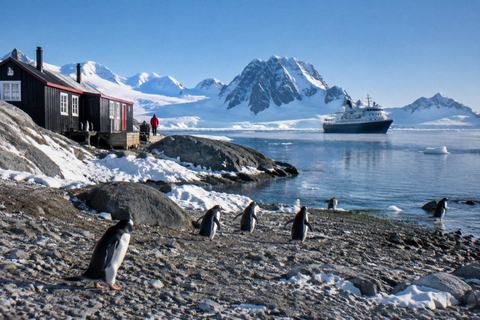 Cruise CostA per-person price ladder from $7,050 berths to $32,320 luxury voyages, with what fares include and what they quietly leave out.Read the guide
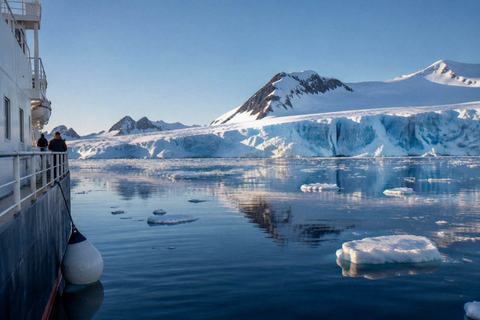 Cheap Antarctica CruisesThe honest floor for Antarctica fares, which ships carry it, and what it costs all-in.Read the guide
 Last-Minute DealsDo last-minute Antarctica berths still exist, and what do they really save?Read the guide
 What Is IncludedWhat an Antarctica fare really covers, operator by operator, plus the hidden costs with published amounts.Read the guide