National Geographic Resolution Antarctica Cruise: Ship Review, Cabins And Itineraries
 By Oleg G.
The National Geographic Resolution is one of two near-identical Polar Class 5 ships Lindblad Expeditions built for polar work, carrying 138 guests with 116 staff and crew. This review covers the cabins, the ice class, the 2026-27 Antarctic voyages and their fares, and whether this expedition cruise is the right pick for your money.
Quick answer: The National Geographic Resolution carries 138 guests, holds Polar Class PC5 Category A, which Lindblad calls its highest ice class, and sails 12 to 25 day Antarctic voyages from Ushuaia from $10,800 per person. Fares include drinks, gratuities, kayaks and, on select voyages, a parka; boots and airfare are extra.
The National Geographic Resolution At A Glance
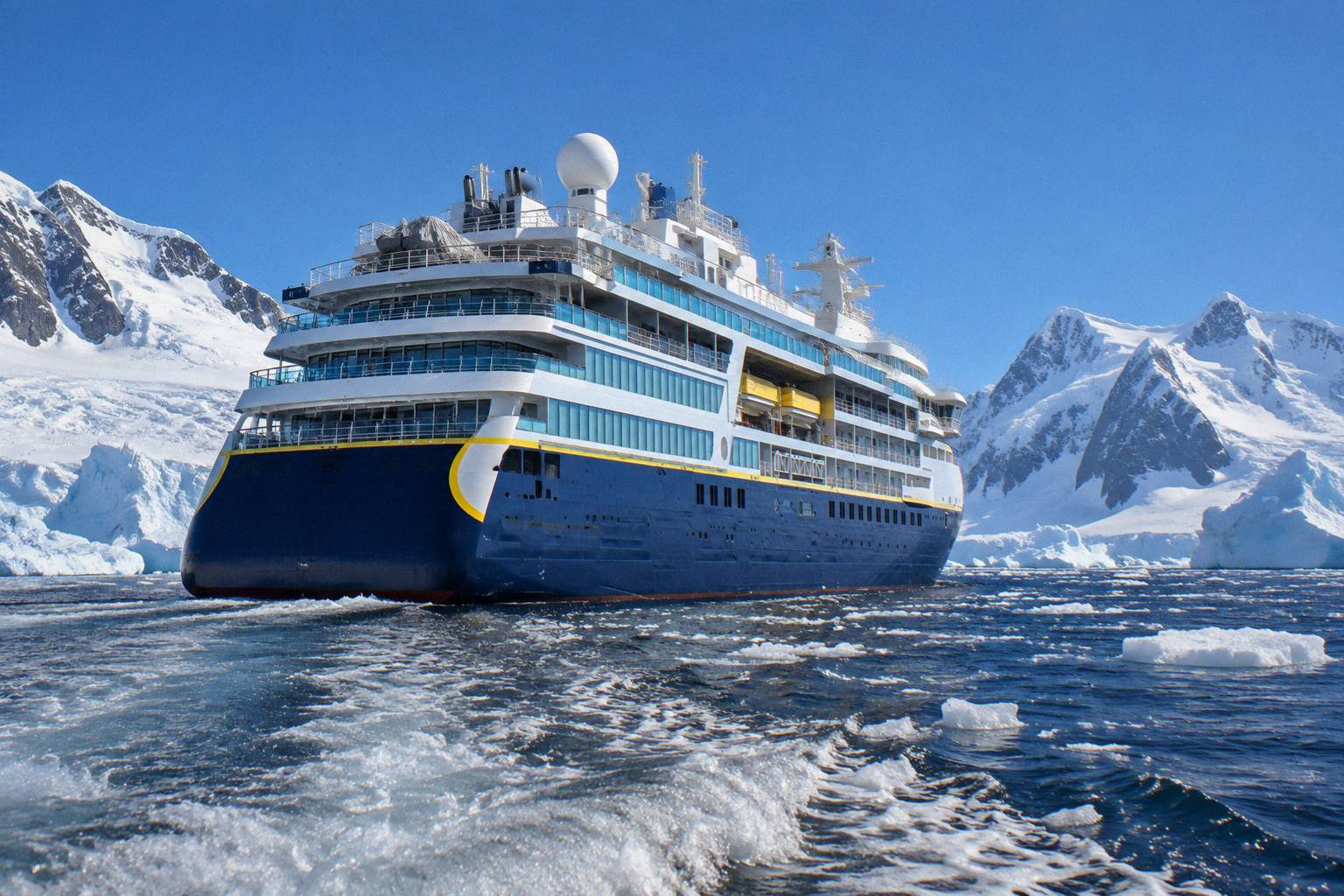
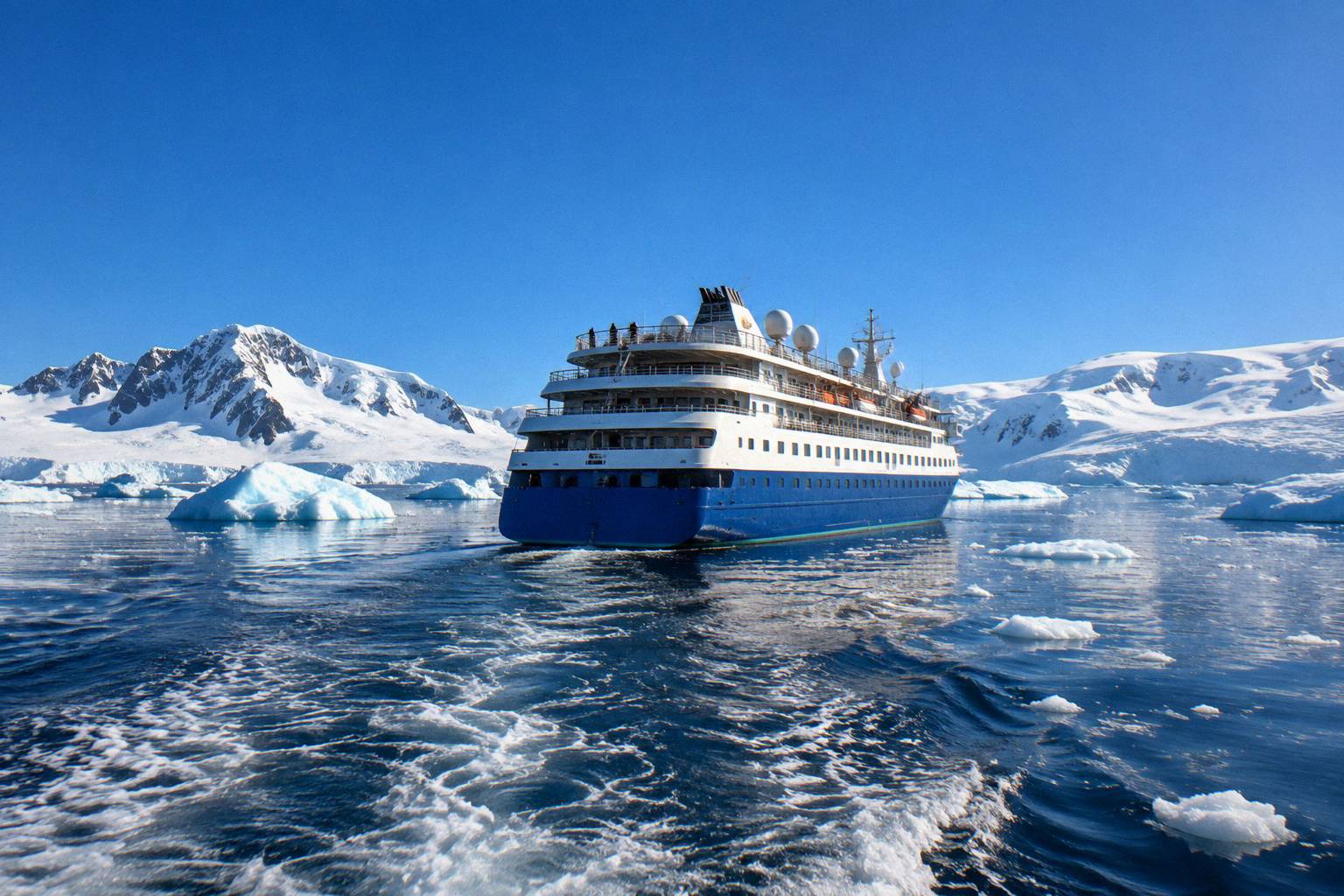
The National Geographic Resolution is a 138-guest expedition ship operated by Lindblad Expeditions in partnership with National Geographic, delivered in September 2021 as the sister ship of the National Geographic Endurance. She carries 116 staff and crew, holds Polar Class PC5 Category A, and spends the austral summer on 12 to 25 day Antarctic voyages embarking from Ushuaia. For anyone shortlisting a single vessel for an Antarctica cruise, she sits at the well-staffed, nature-heavy end of the market: the operator publishes a staff and crew count of 116 against 138 guests, and the National Geographic pairing adds photographers and naturalists rather than casinos or boutiques full of jewellery.
Lindblad took delivery of the ship on 30 September 2021, and she was christened on 24 November 2021. She is the sister of National Geographic Endurance, which Ulstein Verft delivered in Norway in March 2020. Wikipedia lists her gross tonnage as 12,786 GT; Lindblad does not publish a tonnage figure on its own ship page. She is 408 feet long with a 69-foot beam, six decks and 76 cabins, and Lindblad publishes no refit since delivery.
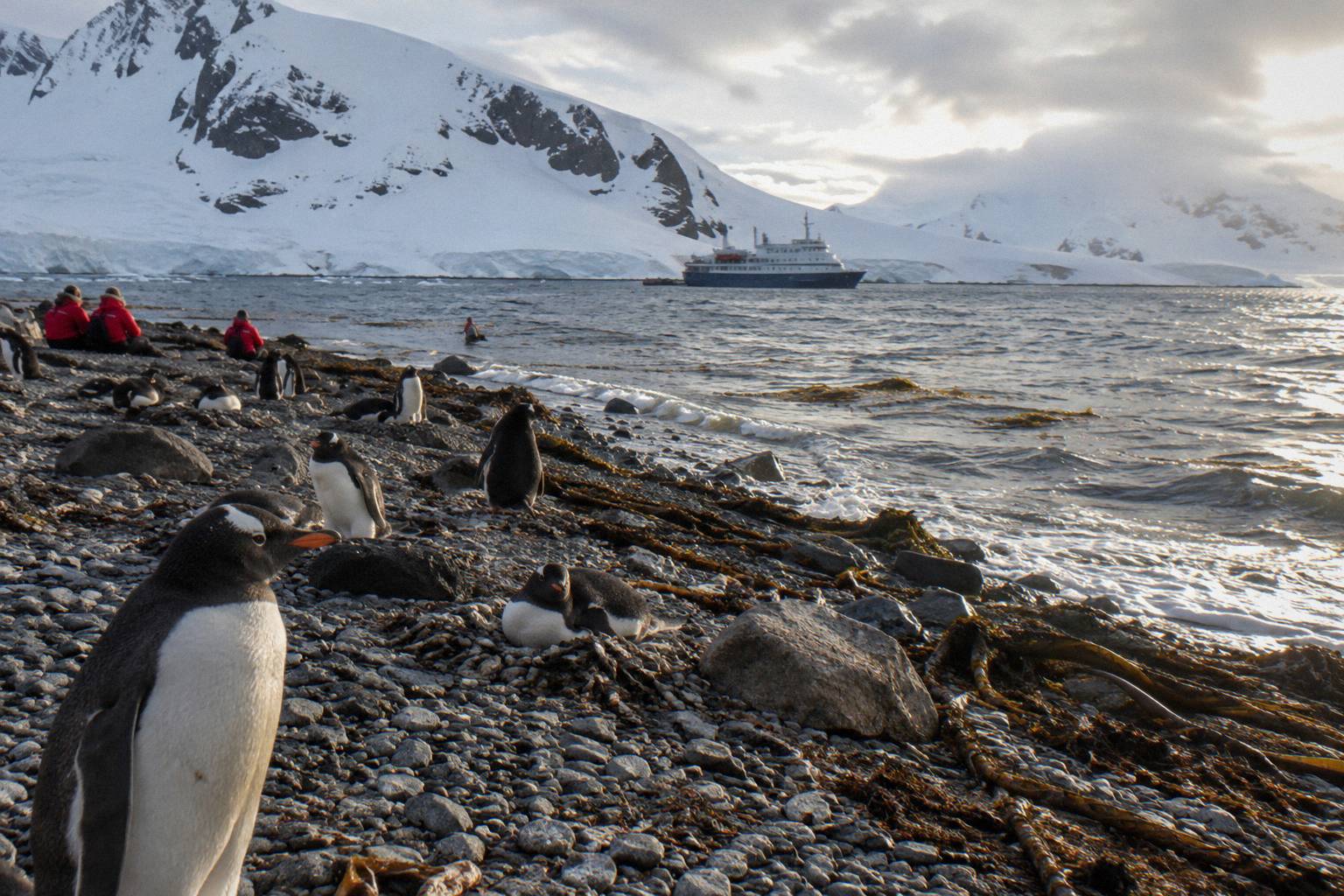
Two things define the ship before you even look at a deck plan. The first is the Ulstein X-BOW, the inverted bow the yard also supplied to Aurora Expeditions' fleet and Quark's Ocean Explorer; the ship pages credit it with a smoother, quieter ride into head seas, though Lindblad publishes no independent measurement of that claim. The second is scale: at 138 guests she is well under the 200-passenger mark, which matters because IAATO rules allow a maximum of 100 passengers ashore at any one time. On a ship this size, up to 100 guests can be ashore while the rest take a Zodiac cruise, and the two groups then swap, so landings run in two rotations rather than three or four.
If you are comparing her directly with her sister, our head-to-head guide at Endurance versus Resolution works through the differences in detail; the short version is that the operator publishes identical specifications for both hulls, so cabin category and departure date usually decide it. That choice, sister ship against sister ship with the same fare sheet, is exactly the kind of question worth putting to a specialist before you commit a deposit; you can start with a free Antarctica cruise consultation and compare both ships' live dates.
Ship Specifications And Ice Class
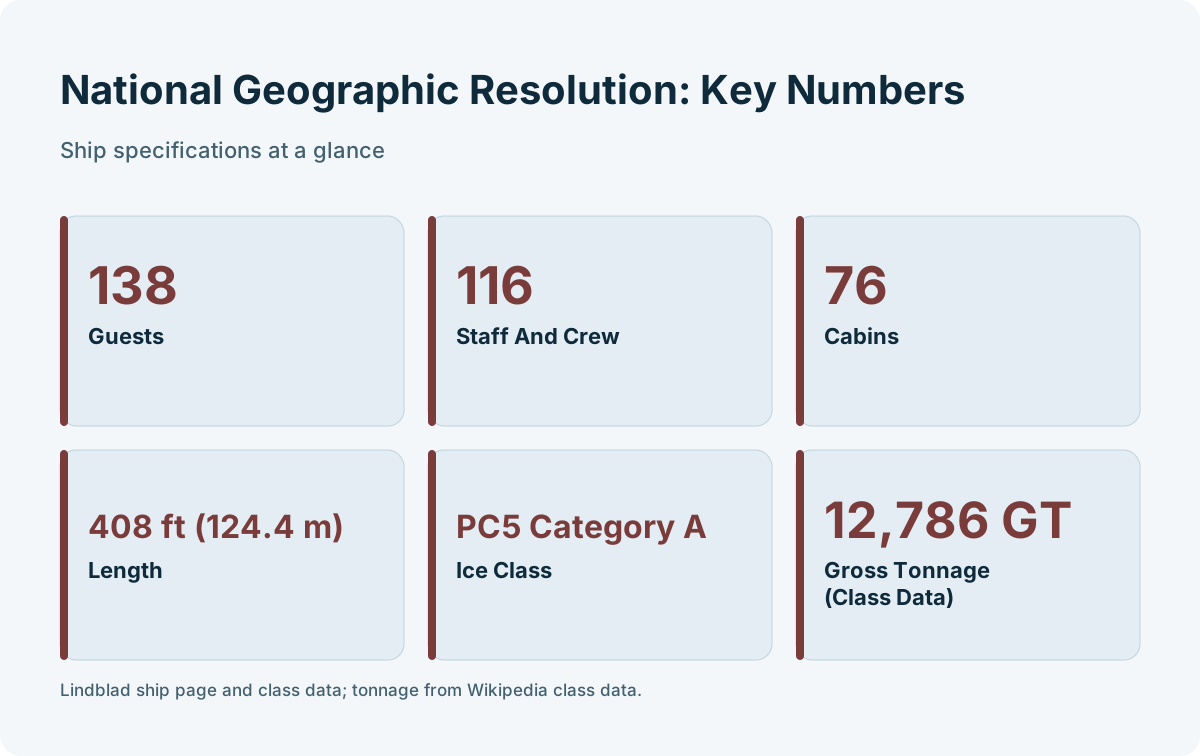
The Resolution's core numbers: 138 guests, 76 cabins, 116 staff and crew, 408 feet long, Polar Class PC5 Category A, X-BOW hull, delivered 2021. Lindblad calls PC5 Category A its highest ice class, and it is a step above the PC6 rating carried by Quark's Ultramarine and Viking's expedition ships.
Ice class deserves a plain explanation because it drives price. Under the IACS Polar Code scale, PC5 means year-round operation in medium first-year ice, while PC6 ships are rated for summer and autumn operation in the same ice. For an Antarctic Peninsula cruise in November through March, both ratings are more than sufficient; the PC5 hull matters more on Lindblad's longer itineraries, such as the Antarctic Circle voyage, where heavier ice is more likely. The X-BOW is the second headline feature. Ulstein, the yard that built her, supplies the same hull design to several polar operators; the claim is reduced wave impact, slamming, pitch, noise and spray. Neither Ulstein nor Lindblad publishes comfort measurements for this specific ship, so treat it as a design intent rather than a guarantee.
The crew figure is worth dwelling on because Lindblad merges hotel staff and expedition team into one number: 116 staff and crew for 138 guests. The expedition side includes naturalists, photographers and certified photo instructors under the National Geographic banner. That works out to roughly one staff or crew member for every 1.2 guests. For context on the rules that shape every landing regardless of operator, IAATO's own guidance pages describe the 100-passenger and 1:20 guide ratios that apply fleet-wide; you can read the operator landscape in the IAATO member directory, where Lindblad appears among the operators.
Here are the published specifications side by side:
| Specification | National Geographic Resolution |
|---|---|
| Operator | Lindblad Expeditions with National Geographic |
| Delivered | 30 September 2021 |
| Guests | 138 |
| Staff and crew | 116 |
| Cabins | 76 |
| Decks | 6 |
| Length | 408 ft (124.4 m) |
| Beam | 69 ft (21 m) |
| Ice class | Polar Code PC5, Category A |
| Hull | Ulstein X-BOW |
| Gross tonnage | 12,786 GT (class data; Lindblad does not publish GT) |
| Embarkation port (Antarctica) | Ushuaia |
Whether that spec sheet justifies the fare premium over a larger PC6 ship like Viking's 378-guest expedition vessels is a genuine decision point, and it depends on how much you value the staff ratio and the smaller landing rotations. This is the moment in the research where a conversation about ship size and price pays for itself in avoided mistakes.
Cabins And Suites On Board
The 76 cabins sit in seven main categories plus two dedicated solo categories, and Lindblad uses the same category names on Resolution as on her sister Endurance. Categories 3 through 7 and both solo categories have private balconies; Categories 1 and 2 on the Fore deck have windows only. Square footage per cabin is not printed on the current operator deck plan.
The category ladder runs from Category 1 and 2 forward cabins with windows, up through Categories 3, 4 and 5 with balconies on progressively higher decks, a Category 6 balcony junior suite, and Category 7 large balcony suites on the Bridge deck. The solo categories, A and B, are balcony cabins aimed at single travellers, and Lindblad's dedicated solo inventory, priced at solo rates, is one of the ship's quieter selling points. Single supplements on Antarctic voyages typically run from 40 to 100 percent of the twin rate, so dedicated solo cabins materially change the maths for solo travellers booking this cruise.
Lindblad does not publish cabin sizes per category, so ask for the square footage of your specific cabin when you hold one. The April 2026 deck plan Lindblad publishes for the class shows the balcony split: the window-only Category 1 and 2 cabins sit on the Fore deck (cabins in the 400s), while the balcony categories run from the Main deck (500s) through the Lounge deck (600s) to the Bridge deck (700s), with the junior suite at 714 and the large-balcony suites at 708 to 711, 716, 718, 719 and 721. If you are prone to motion sickness, the usual naval-architecture advice applies: midship and lower beats high and forward, and on an X-BOW ship the bow is where the design does its work but also where you feel the most spray.
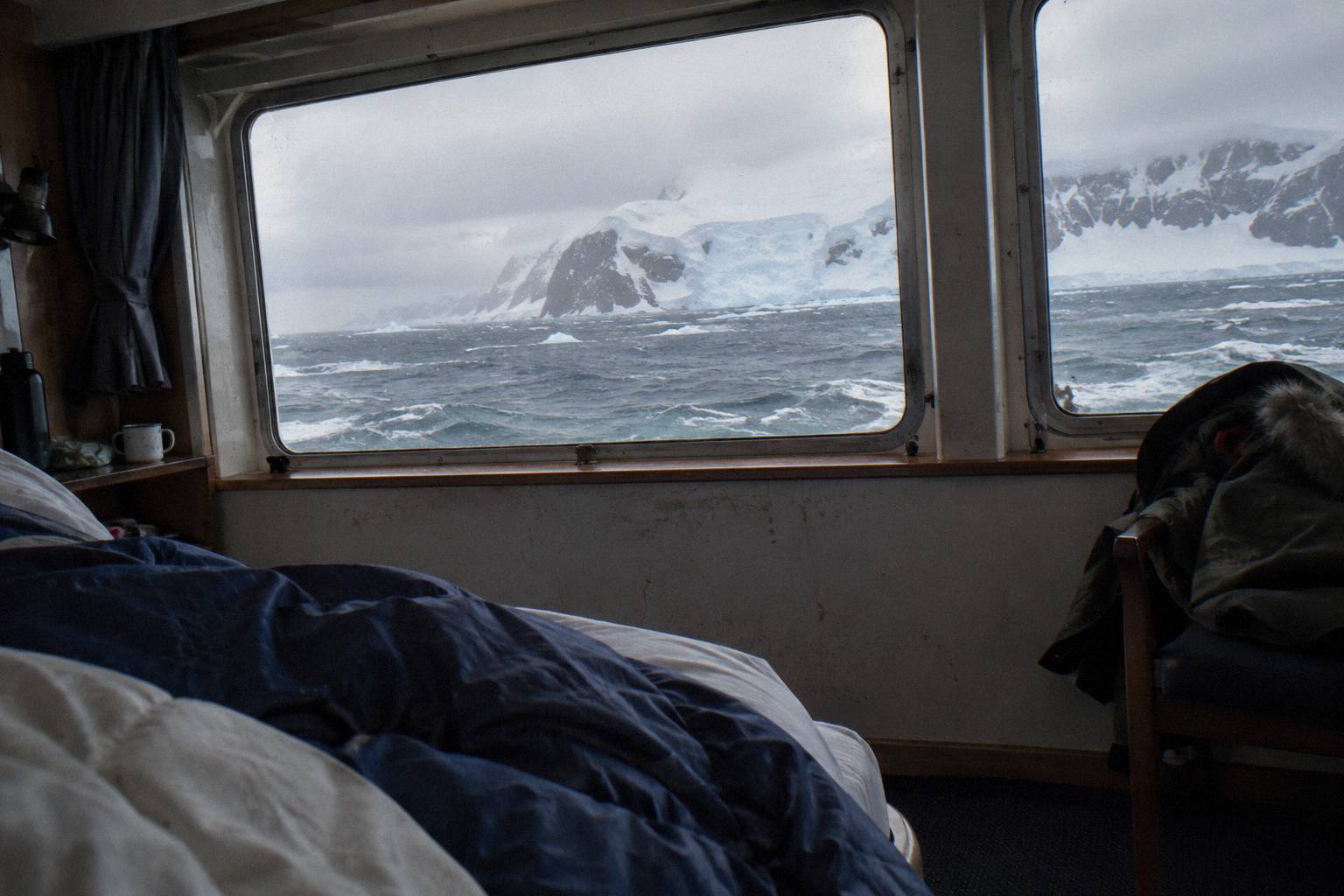
A note on balcony expectations in Antarctica specifically: wind, cold and sea state mean balconies see limited use on Drake Passage days. A balcony on this cruise is a fair-weather perk for scenic mornings in the Gerlache Strait, not a daily feature. Solo cabin availability, balcony versus window pricing on your specific departure date, and the choice between this ship and her sister all shift month to month, which is a good reason to ask a specialist for current cabin availability before booking.
Signature Features, Public Spaces And Dining
The Resolution's signature spaces are Restaurant 270 degrees with wraparound views, two further dining areas, an observation lounge, a library, a main lounge, an expedition base, two glass igloos and infinity-edge outdoor hot tubs, plus an open bridge. The class deck plan adds a gym, yoga studio, treatment rooms and saunas, and Lindblad's expedition tool list for the class includes Zodiacs, kayaks, snowshoes, cross-country skis, a remotely operated vehicle and an underwater video camera.
Dining is a genuine differentiator rather than an afterthought. Restaurant 270° is the main venue, a dining room with wraparound views; the class deck plan also names C. Green's Restaurant, C. Green's Bar, a BBQ Grill and Charlie's Table, and Lindblad describes the two other venues as places for lighter fare or small-group dinners. The bar list is included in the fare up to premium brands, which we cover below. Three venues for 138 guests is a generous ratio, and it suits the ship's scale. The rest of the planning pages sit on Cruises In Antarctica.
The wellness and observation spaces do double duty on sea days. The observation lounge and library sit at the top of the ship with forward views; the two glass igloos and the infinity-edge hot tubs are the features Lindblad photographs most for this class. Hot tubs and saunas give sea days something besides lectures. There is no pool, no casino and no theatre in the mainstream-cruise sense; evening entertainment is expedition team recaps and National Geographic photography talks, which is the point of the partnership.
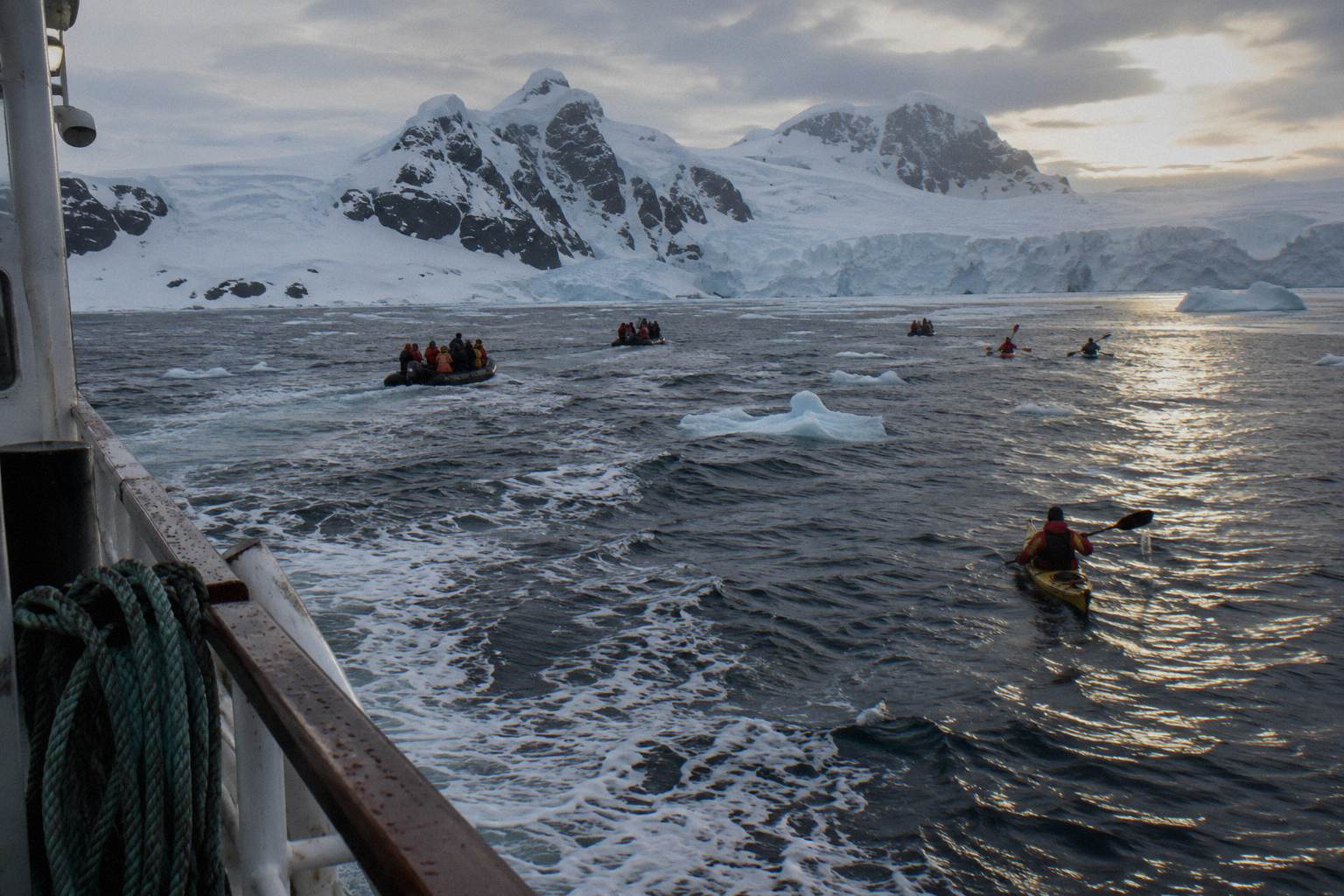
On the expedition side, the tool list matters more than the amenity list. Zodiacs and kayaks are the daily workhorses, and kayaks are included in the fare rather than sold as an add-on, a real cost difference against operators that charge for kayak programs. Snowshoes and cross-country skis add options on deep-snow landings, and the ROV, hydrophone and underwater video camera bring back footage and sound from below the surface. No helicopter and no guest submarine are listed on the operator page, so if flightseeing is on your wishlist, that is a Quark or Scenic capability, not this ship's. For the day-to-day rhythm of landings and Zodiac operations, our shore landings explained guide covers what actually happens at a site.
Antarctic Itineraries And 2026-27 Fares
Four Antarctic products use the Resolution in 2026-27: Voyage to Antarctica (12 days, from $10,800 per person, was $13,500), Quest for the Antarctic Circle (16 days, from $16,650), Antarctica, South Georgia, and the Falklands (21 or 22 days, from $30,000), and the Resolution-only 25-day Odyssey (from $50,000). An 18-day Antarctica and Patagonia voyage from $20,000 is also listed. All fares are per person, double occupancy.
The 12-day Voyage to Antarctica is the volume product and the one most first-timers book. On Endurance the routing starts with a Buenos Aires hotel night and a flight to Ushuaia; Resolution departures of this itinerary route roundtrip via Santiago through the 2027-28 season instead, with the ship itself embarking at Ushuaia either way. Both crossings of the Drake Passage are sailed, so budget sea days at each end of the trip. The 16-day Circle itinerary, sold for January, November and December, pushes south of 66 degrees 33 minutes when ice allows, which is an ice-condition contingency rather than a guarantee, and our Antarctic Circle cruise guide breaks down the odds by month.
The two long products suit wildlife-first travellers. The 21 or 22-day Falklands and South Georgia itinerary, from $30,000, runs in February, March, October and November and adds the sub-Antarctic islands to the Peninsula. The 25-day Odyssey, from $50,000, sails in January, is Resolution-only in the fleet listing, starts with a Santiago hotel night, and stitches Patagonia, the Falklands, South Georgia and the Peninsula into one departure from Ushuaia. Here is the current fare sheet as published:
| Itinerary | Length | Routing | From price (pp, double) |
|---|---|---|---|
| Voyage to Antarctica | 12 days | Via Santiago on Resolution, Ushuaia embarkation | $10,800 (was $13,500) |
| Quest for the Antarctic Circle | 16 days | Ushuaia embarkation; Jan, Nov, Dec | $16,650 (was $18,500) |
| Antarctica and Patagonia: Legendary Ice and Epic Fjords | 18 days | Feb and Nov departures | $20,000 |
| Antarctica, South Georgia, and the Falklands | 21-22 days | Ushuaia roundtrip; Feb, Mar, Oct, Nov | $30,000 |
| Patagonia, Falklands, South Georgia and Antarctica Odyssey | 25 days | Ushuaia roundtrip, Santiago hotel on Day 1, January, Resolution only | $50,000 |
Two practical notes on those numbers. First, holiday departures price far above the lead-ins; holiday-peak 12-day departures on the two sisters have been listed as high as $30,205, which tells you how steep the Christmas premium runs. Second, these fares do not include airfare, so the true all-in cost of booking the cruise adds international flights, gateway hotels and insurance on top. Published planning estimates for a realistic all-in budget on a mid-range 10 to 12 day Peninsula trip, fare plus flights plus gear plus tips plus insurance, run $12,000 to $25,000 per person, and this ship sits at the upper end of that band. If the fare sheet leaves you unsure which itinerary matches your budget and month, a free consultation on dates and fares will pin down real numbers for your window.
What The Fare Includes
Lindblad's Antarctic fares on this ship include all meals, beer, wine, cocktails and spirits outside premium brands, crew gratuities, kayak use and expedition gear, Starlink-enabled basic Wi-Fi with paid enhanced tiers, a complimentary parka on select Antarctic voyages, and hotels and excursions as written in each itinerary. Not included: airfare and charter flights unless the itinerary says so, expedition boot rental, premium drinks and travel insurance.
The drinks-and-gratuities inclusion is worth real money when you compare quotes across operators. Quark's 2026-27 inclusions, for instance, cover select beer, wine and cocktails but list gratuities as excluded; Oceanwide suggests 10 to 15 dollars or euros per passenger per day on top of the fare. Against those sheets, Lindblad's prepaid-gratuities model removes an invisible few hundred dollars from the ledger. On the other side of the ledger, boots are a genuine gap: the operator directs passengers to a rental program rather than lending muck boots the way Quark, Poseidon and Aurora do, so budget and pack for that.
Insurance deserves its own paragraph because it is mandatory in practice. Every major Antarctic operator requires medical evacuation coverage before you board, and the published minimums range from Lindblad's $150,000 up to Quark's $500,000 depending on the operator. Our Antarctica travel insurance guide works through the minimums; the short version for this ship is that evacuation cover of at least $150,000 plus trip-cancellation cover is the floor, not the ceiling. Wi-Fi, for remote workers, runs on Speedcast and Starlink: the basic plan is included, while enhanced and premium plans cost extra, and speeds in polar latitudes vary.
| Item | Included in Resolution fare |
|---|---|
| All meals, three dining venues | Yes |
| Beer, wine, cocktails, spirits (premium brands extra) | Yes |
| Crew gratuities | Yes |
| Kayaks and expedition gear | Yes |
| Basic Wi-Fi (Starlink-enabled) | Yes |
| Parka | Yes, on select Antarctic voyages |
| Expedition boots | No, rental available |
| Airfare and charter flights | No, unless the itinerary states it |
| Travel insurance | No, required separately |
Who The Resolution Suits, And Who Should Look Elsewhere
The Resolution suits travellers who want the smallest practical landing rotations, a dense staff ratio, included drinks and gratuities, and the National Geographic photo and naturalist program, and who are willing to pay from $10,800 for the 12-day product. She is the wrong ship for budget-first buyers, anyone who wants a helicopter, submarine, pool or casino, and travellers who need a balcony-heavy resort ship.
If your priority is maximum time ashore per passenger, the logic of ship size works in her favour: with 138 guests and the IAATO 100-ashore cap, the ship runs two rotations rather than three or four, which keeps the wait between groups short. Add the expedition staffing and the included kayak program and you get an activity-dense week in Antarctica. Photographers get the certified photo instructors, and solo travellers get dedicated balcony cabins in two categories. Against that, the money question is fair: a Drake-sailing berth on an older small ship such as Oceanwide's Plancius starts from $7,050, and our Plancius review shows exactly what you give up for the saving. Whether that trade is worth the difference is precisely what a specialist consultation on ship versus budget exists to answer.
Within the Lindblad family itself the comparison is three-way, and the operator publishes specifications that make Endurance and Resolution effectively interchangeable on paper while Explorer, built in 1982 and later rebuilt for expedition work, is a different proposition: 148 guests, 81 cabins, an ice-reinforced hull without a Polar Class numeral, and the fleet's fly-the-Drake products. Here is the fleet side by side:
| Ship | Class | Passengers | Ice class | From, per person | Voyage length | Departs from |
|---|---|---|---|---|---|---|
| National Geographic ResolutionLindblad Expeditions (with National Geographic) | Standard Expedition | 138 | PC5 | from $11,900 | 12 to 25 days | Ushuaia |
| National Geographic EnduranceLindblad Expeditions (with National Geographic) | Standard Expedition | 138 | PC5 | from $11,900 | 12 to 22 days | Ushuaia |
| National Geographic ExplorerLindblad Expeditions (with National Geographic) | Upscale Expedition | 148 | Ice-reinforced hull | from $12,250 | 10 to 22 days | Ushuaia |
The practical differences are itinerary-driven rather than hardware-driven. Endurance and Resolution share every Antarctic product and fare; Explorer carries the Antarctica Direct sail-and-fly and fly-the-Drake products that skip one or both Drake crossings, from $10,400 and $12,600 respectively with required flights included, which is the right answer for travellers with severe seasickness concerns or a hard limit on days. If your heart is set on a helicopter flightseeing day or a submarine dive, look at Quark's Ultramarine or Scenic's Eclipse ships instead; neither capability exists on any Lindblad hull. And if the fare itself is the constraint, the honest answer is that the same continent is reachable from $7,050 on older tonnage such as the Plancius, covered in our cheap Antarctica cruise guide.
Common Questions About The National Geographic Resolution
How much does a National Geographic Resolution Antarctica cruise cost?
The 12-day Voyage to Antarctica starts from $10,800 per person (was $13,500), the 16-day Circle itinerary from $16,650, the 21 to 22 day South Georgia and Falklands voyage from $30,000, and the Resolution-only 25-day Odyssey from $50,000. Airfare, boot rental and insurance are extra, while meals, most drinks, gratuities, kayaks and a parka on select voyages are included.
What is the difference between the National Geographic Resolution and Endurance?
On published specifications, almost nothing: both have the Ulstein X-BOW, both carry 138 guests with 116 staff and crew in 76 cabins, both hold PC5 Category A, and both share the same Antarctic itineraries and fares. Resolution was delivered in 2021, a year and a half after Endurance. Departure date and cabin availability usually decide between them.
What is the ice class of the National Geographic Resolution?
Polar Code PC5, Category A, which Lindblad describes as its highest ice class. Under the IACS scale, PC5 permits year-round operation in medium first-year ice, a step above the PC6 summer-and-autumn rating carried by many competing expedition ships.
Are balconies available on the National Geographic Resolution?
Yes. Categories 3 through 7 and both dedicated solo categories have private balconies; Categories 1 and 2 are window-only cabins on the Fore deck. In practice, Drake Passage weather limits balcony use, so treat a balcony as a scenic-water perk rather than a daily feature of the cruise.
Does the Resolution have Wi-Fi?
Yes. Basic Wi-Fi over Speedcast and Starlink is included in the fare, with paid enhanced and premium plans for heavier use. Speeds in polar regions vary with location and conditions.
Is the National Geographic Resolution good for solo travellers?
It is a strong option, because Lindblad publishes dedicated solo balcony cabins in two categories rather than relying only on single supplements. Industry-wide, single supplements typically range from 25 percent extra to double the twin rate, so dedicated solo inventory can materially cut the cost of sailing alone.
More Antarctic Ship Profiles
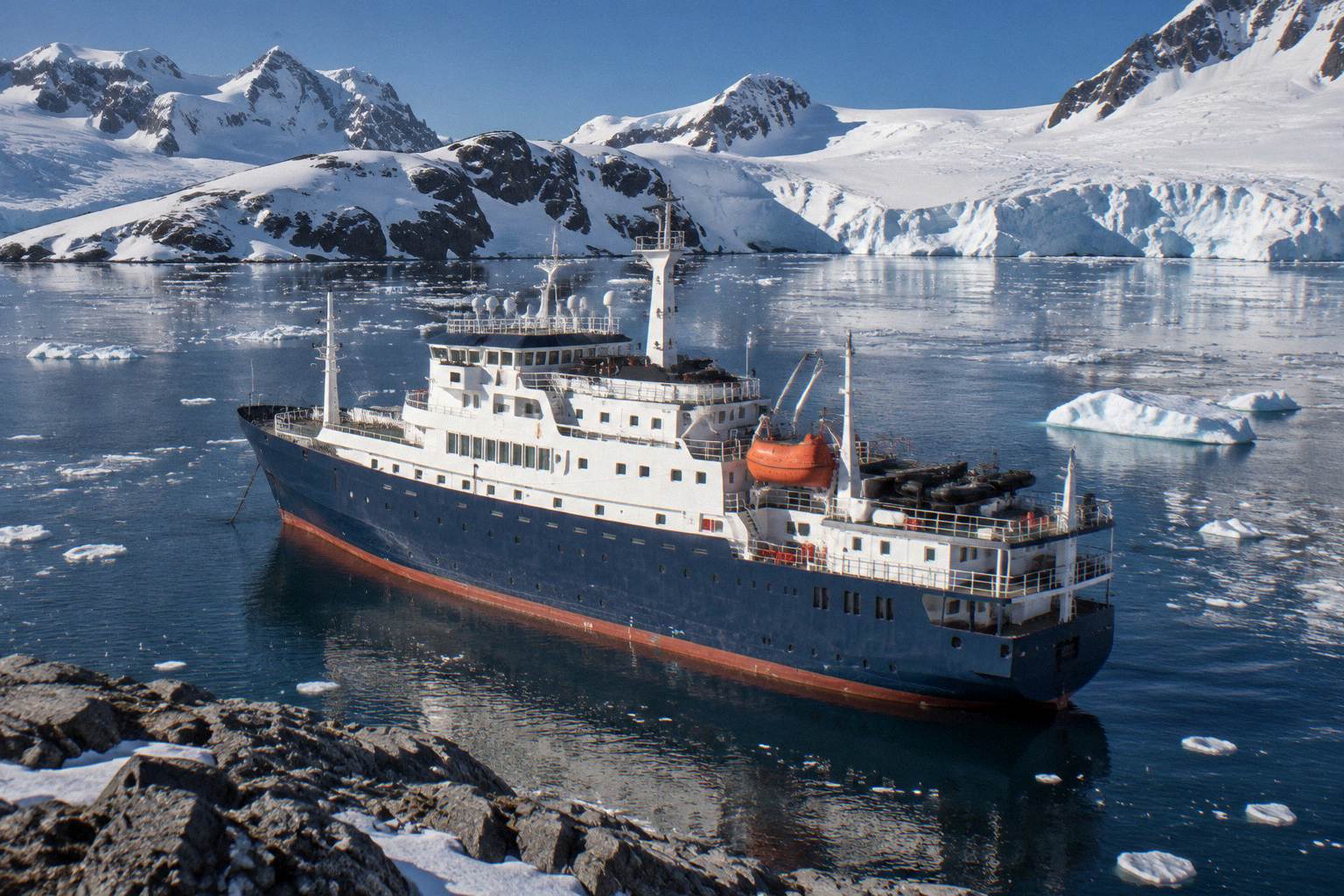 MV Plancius ReviewA no-balcony, 108-guest expedition ship with straightforward cabins, strong ice handling for its age, and Oceanwide's activity-focused Basecamp voyages.Read the guide
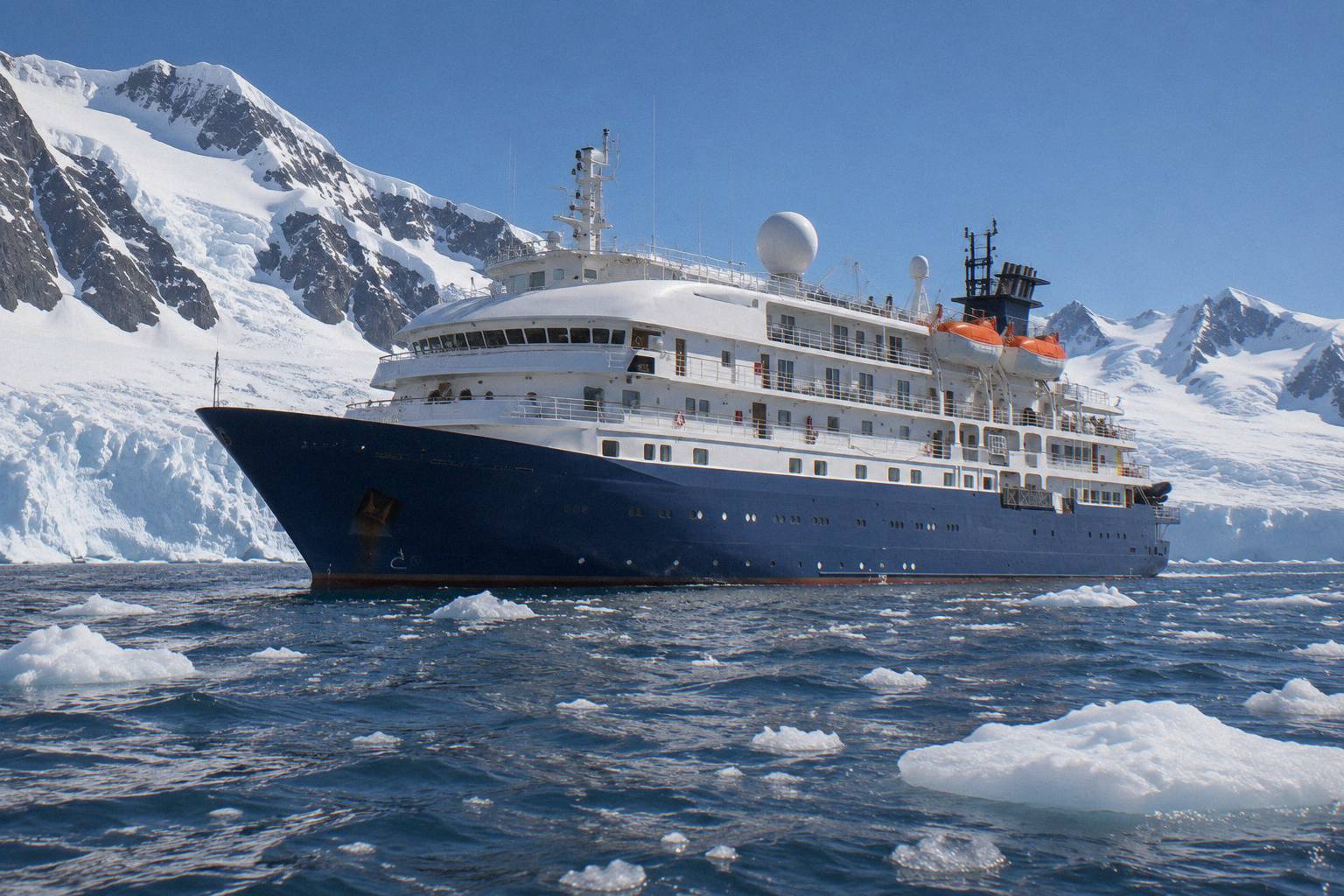 Sea Spirit ReviewPoseidon's 114-guest Sea Spirit reviewed: cabins, fares, itineraries and who it suits.Read the guide
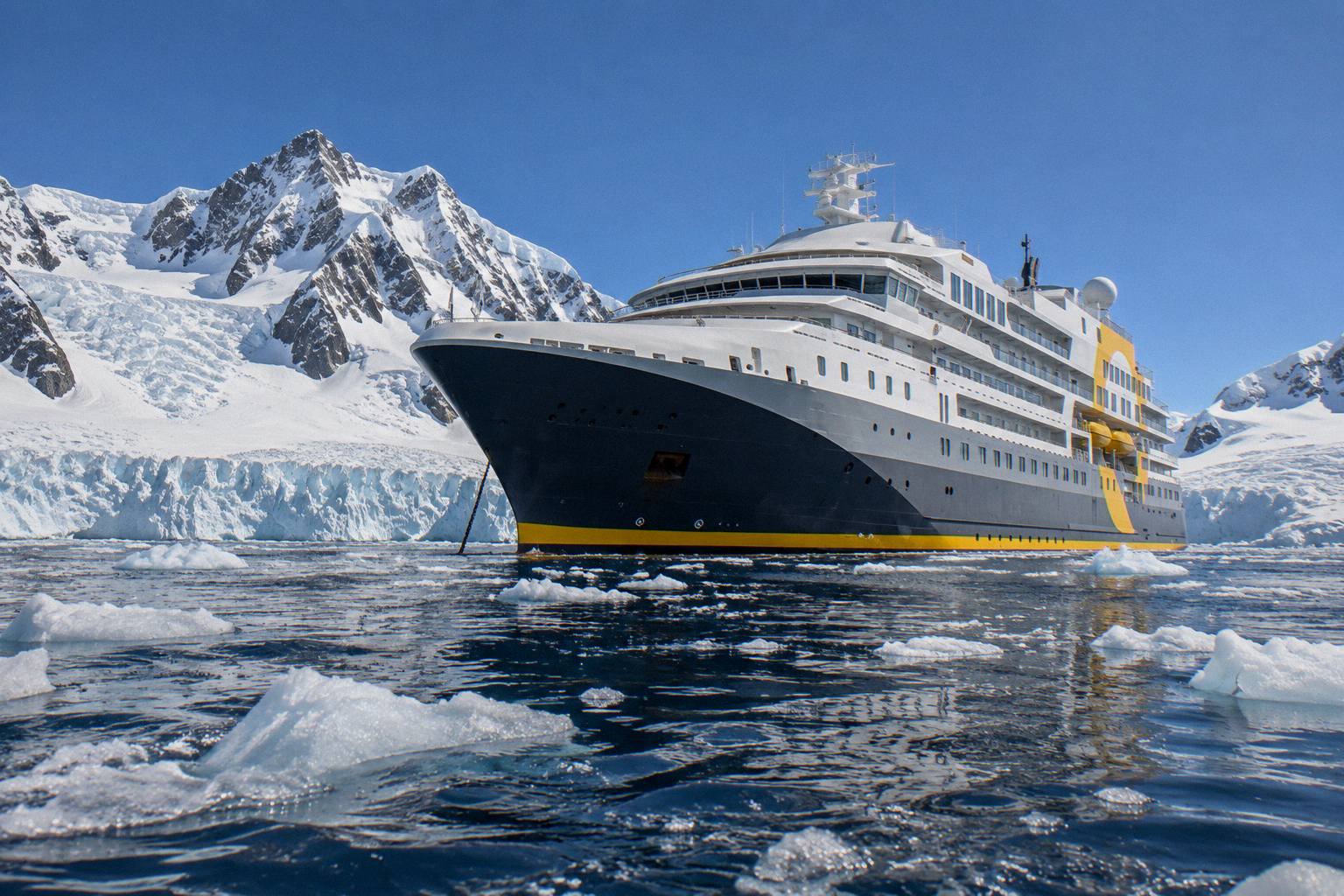 Ultramarine ReviewQuark's helicopter flagship reviewed: cabins, dining, itineraries and fares.Read the guide
 Ocean ExplorerQuark's 138-guest X-BOW ship reviewed: cabins, ice class, itineraries and fares.Read the guide