How Much Does A 2 Week Trip To Antarctica Cost?
 By Oleg G.
A two-week Antarctica trip costs roughly $7,000 to $25,000 per person all-in, depending almost entirely on the ship you pick. Here is where every dollar goes.
How Much Does A 2 Week Trip To Antarctica Cost?
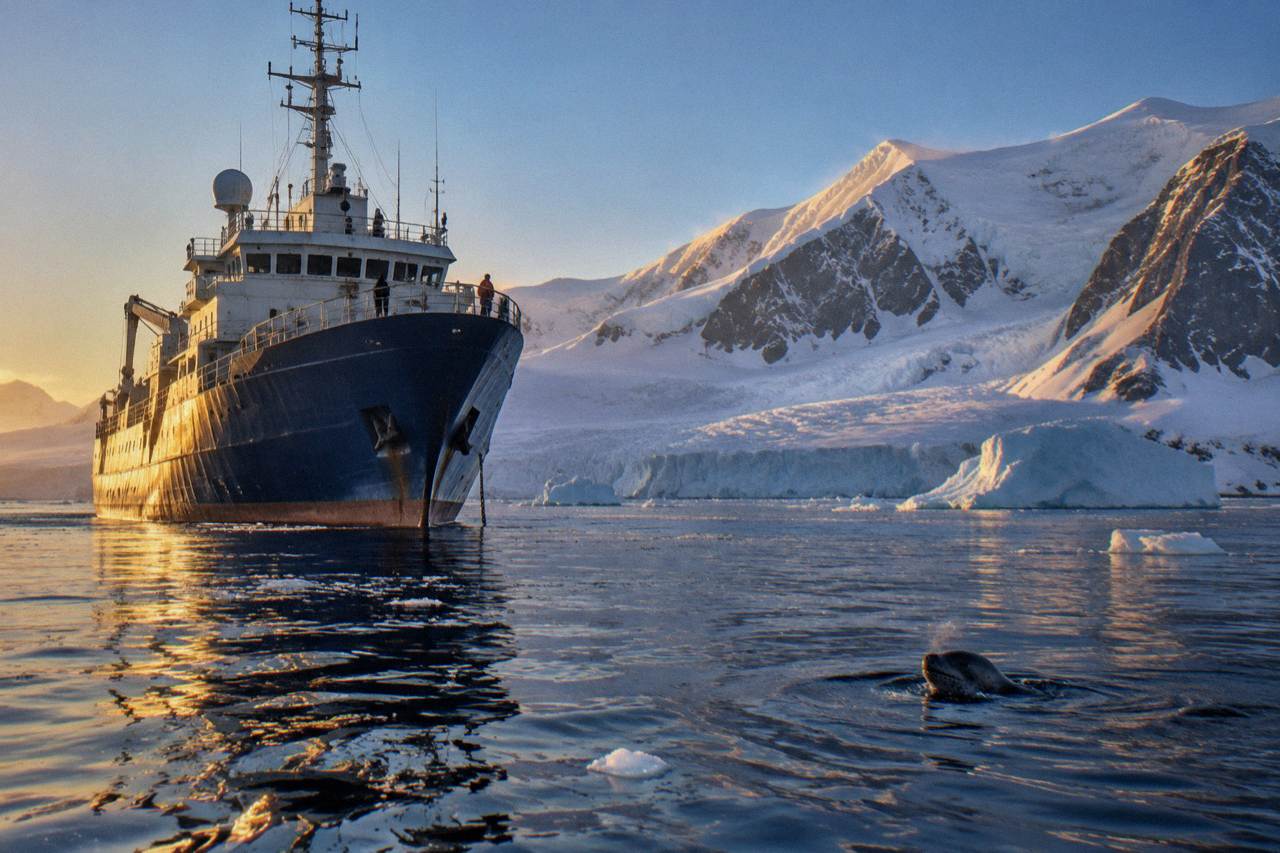
A two-week Antarctica trip costs $7,800 to $23,020 per person for the voyage alone, and a realistic all-in budget runs $12,000 to $25,000 once flights, hotels, insurance, tips and gear are added. The biggest lever is the ship: the small-ship budget Hondius starts at $7,800 for an 11 to 13 day Peninsula voyage, while Ponant's Le Boréal lists from $23,020.
That spread is not marketing noise. It reflects three genuinely different products: a converted research vessel with simple cabins, an upscale expedition cruise ship with helicopters or balconies, and a luxury ship with a French crew and open bar. The days at sea, the landings and the penguins are largely the same. The price differences come from the cabin, the onboard service and the ship's build.
This article works through the whole stack, layer by layer. Everything below uses the roster of operator fares that Cruises In Antarctica keeps on file for the 2026-27 season, plus the cost of getting yourself to the bottom of South America. If you are still choosing between ships rather than pricing one specific departure, a free Antarctica cruise consultation is the fastest way to narrow it down; it costs nothing and comes with no obligation.
What The Voyage Fare Actually Buys You
The voyage fare is the largest single cost, typically $7,050 to $14,114 per person across the published Peninsula fares, and it generally covers the cabin, all meals, Zodiac excursions and lectures. What it does not cover is the journey to the port, travel insurance, gratuities in some cases, and optional activities like kayaking or camping.
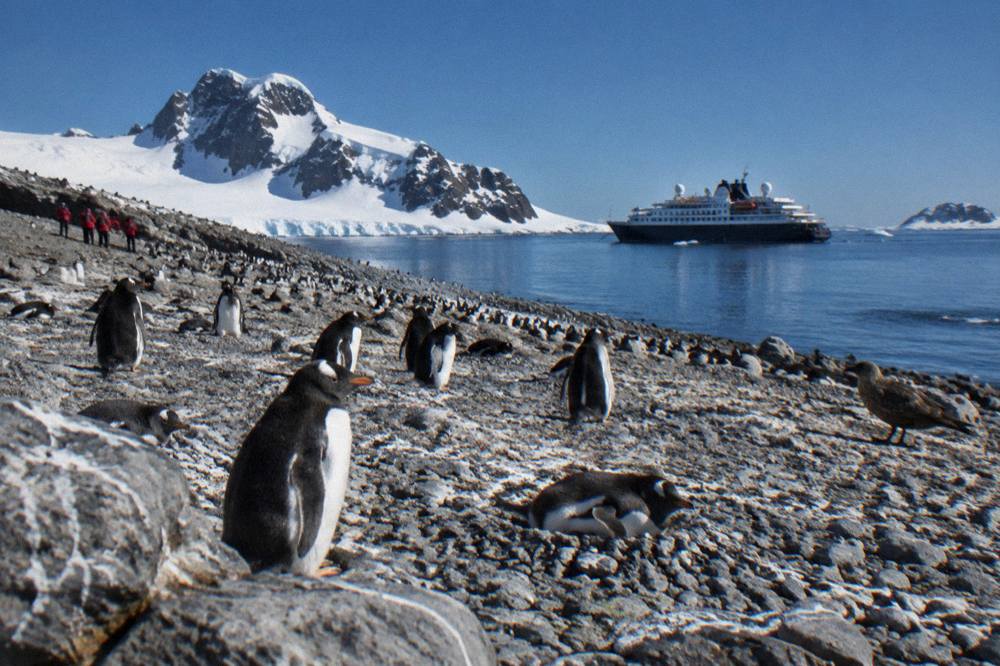
Two weeks is the sweet spot of Antarctic cruising precisely because it matches the classic Peninsula itinerary. Most ships sail 11 to 13 day voyages out of Ushuaia: roughly two days crossing the Drake Passage each way, four to six days of landings and cruising in the South Shetland Islands and along the western Peninsula, and a day or two of buffer. Quark's crossing guide puts the Drake at 18 to 48 hours each way depending on conditions, so the sailing itself is a known quantity, not a gamble.
First, the honest caveat about fare reading. Fares move constantly with promotions, cabin category and how early you book. Early-booking offers for the 2026-27 and 2027-28 seasons commonly reach 10 to 30 percent off, and some lines run deeper discounts on unsold sailings, according to operator deal calendars. The figures below are the published starting fares on the operator pages and should be treated as the floor, not the average.
| Ship | Operator | Class | Passengers | Voyage days | Published from (pp) |
|---|---|---|---|---|---|
| Plancius | Oceanwide Expeditions | Small-ship budget | 108 | 10/11/13/15 | $7,050 |
| Hondius | Oceanwide Expeditions | Small-ship budget | 170 | 11/13/19 | $7,800 |
| Ortelius | Oceanwide Expeditions | Small-ship budget | 108 | 11/13/25 | $7,800 |
| Sea Spirit | Poseidon Expeditions | Small-ship budget | 114 | 12/15/19 | $8,846 |
| SH Diana | Swan Hellenic | Standard expedition | 192 | 9/11/17/20 | $9,800 |
| MS Fridtjof Nansen | HX | Standard expedition | 490 | 15/18/19 | $10,485 |
| National Geographic Endurance | Lindblad Expeditions | Standard expedition | 138 | 12/16/21 | $11,900 |
| World Navigator | Atlas Ocean Voyages | Upscale expedition | 196 | 10/12 | $12,150 |
| Ocean Explorer | Quark Expeditions | Upscale expedition | 138 | 8-20 | $12,236 |
| Sylvia Earle | Aurora Expeditions | Upscale expedition | 130 | 12/13/20 | $19,566 |
| L'Austral | Ponant | Luxury | 264 | 11/19 | $18,700 |
A few notes on reading that table. The Ocean Explorer fare is a voyage-level figure shared across three Quark ships, the Ultramarine, the Ocean Explorer and the World Voyager, so it is not exclusive to any one of them. Aurora's figures are per person in twin share, and Ponant's are per-person fares on specific dated departures, so the cards behind them are not strictly like for like.
One more thing the fare buys that surprises people: on most expedition cruise ships, the daily program of Zodiac cruises and landings is included, and the number of shore days is regulated. IAATO's visitor guidelines cap landings at 100 passengers ashore at a time from any vessel, and ships carrying more than 500 passengers cannot make landings at all. So a 170-passenger ship like the Hondius and a 490-passenger ship like the Fridtjof Nansen both land you on the same beaches; the smaller ship simply cycles its groups faster. If you are weighing ship size against price, that is the trade-off in plain terms.
Getting To The Ship: Flights And Gateway Nights
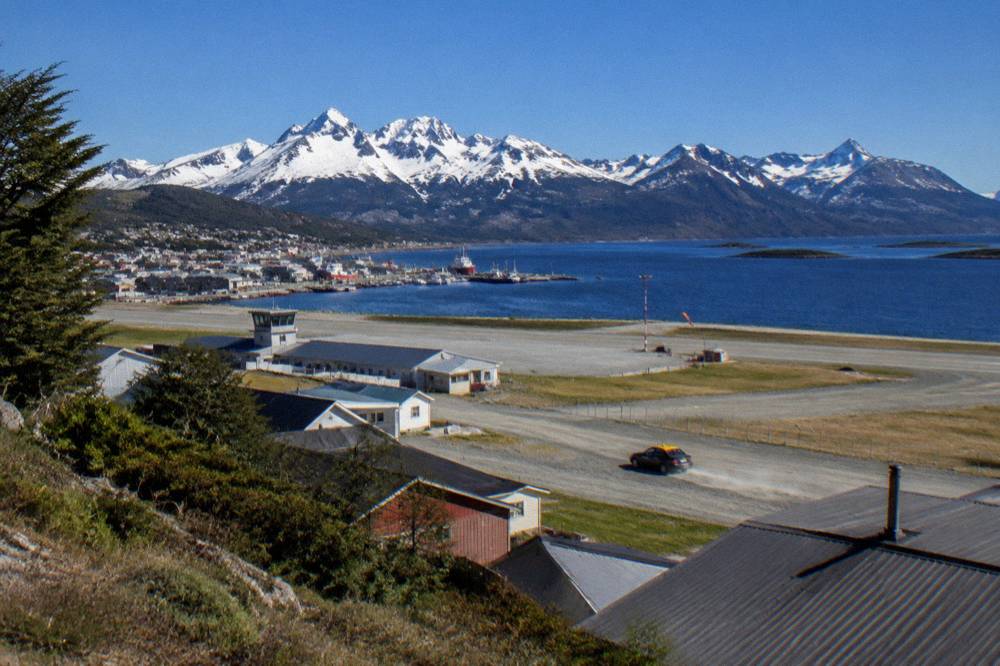
Airfare to Ushuaia is the line quoted per traveller: it depends on your home airport, the season and how early you book, and no fixed range is on file here. There are no direct flights from the United States to Ushuaia; everyone routes through Buenos Aires, transferring between the international airport EZE and the domestic airport AEP.
This is the line item people forget, and on a two-week trip it can approach a quarter of the total. The standard routing is a long-haul flight into Buenos Aires Ezeiza (EZE), a transfer across the city to Aeroparque (AEP), then a domestic flight of a bit over three hours down to Ushuaia (USH). Schedule data from late September 2026 shows Aerolineas Argentinas flying the AEP-USH corridor roughly 27 times a week, with the low-cost JetSMART adding several weekly frequencies, so the domestic leg itself is not scarce. What it is, in peak season, is weather-prone.
The paperwork is the easy part: US citizens enter Argentina visa-free for up to 90 days on a valid passport. The harder part is the connection. Schedule analyses of the corridor advise a buffer of four to five hours between the international arrival and the domestic departure, because the transfer is across a large city and the domestic leg itself can slip.
That weather risk is why the standard advice is to arrive in Ushuaia at least one full day before embarkation, ideally two. Ushuaia hotel occupancy reached roughly 80 percent in January 2026 amid more than 43,720 cruise passengers, so the good hotels near the port also fill early. A missed domestic connection on embarkation morning can cost you the entire voyage, and the usual fix is a $150 hotel night you did not plan to book.
Count the other side too. Most Peninsula voyages disembark in Ushuaia in the morning, and the earliest same-day flight north you can reliably make is mid-afternoon. Some travellers add a night in Buenos Aires on the return, which is a pleasant problem rather than a cost problem, but it belongs in the honest tally.
If you are already leaning toward a specific departure date, this is a good moment to get the flights, the hotel buffer and the voyage checked together rather than in sequence. A consultation on matching a departure can do that in one pass, free.
The Extras That Stack On Top Of The Fare
Insurance with medical evacuation coverage is required by most operators, gratuities average around $16 per person per day where not prepaid, and expedition gear adds a few hundred dollars even with the parka and boots most lines provide. No single extras figure fits everyone, which is why the sourced all-in planning range for a mid-range trip, $12,000 to $25,000 per person, exists.
Travel insurance is not optional here. Operators impose high medical evacuation minimums, with figures reported at $500k for Quark, $250k for Ponant and $150k for Lindblad, plus full trip-cost cancellation cover, and proof is often required before departure or at check-in. Argentina also formally requires health and medical coverage, including evacuation, for foreign visitors under its 2025 rule update. The premium itself is quoted on your age and the fare insured, so get a quote rather than a guess.
Gratuities are the quiet daily drain. Where they are not prepaid, recommended tips average about $16 per person per day, and some lines suggest $15 to $25. On a 13 day voyage that is roughly $200 to $325 per person. Luxury lines often bundle gratuities into the fare, which is one honest reason their headline numbers look bigger.
Gear is cheaper than most people fear, because the ships carry a lot of it. Most expedition operators provide a complimentary parka, often yours to keep, and loan waterproof boots for the landings. What you still need to buy or rent: base layers, a warm mid-layer, waterproof gloves, a hat, sunglasses and good sunscreen. If you own winter sports clothing already, the outlay can stay under $300. If you are starting from zero, budget $600 to $1,000 or look into rental packages from gateway outfitters.
The one figure worth repeating from the cost research, because it reframes everything above: a realistic all-in budget for a 10 to 12 day mid-range Peninsula trip, fare plus flights plus gear plus tips plus insurance, is $12,000 to $25,000 per person. If your spreadsheet is showing less than that, something is probably missing from it.
How The Ship You Pick Moves The Total
Moving from a small-ship budget vessel to an upscale expedition ship roughly adds $4,000 to $5,000 to the fare; moving to a luxury ship can add $10,000 or more. The itineraries overlap heavily, so this is a decision about cabin comfort, service level and ship build, not about seeing more penguins.
To make the tiers concrete, compare three ships that all sail Antarctic waters in the same season but sit in different classes. The Hondius, Oceanwide's 170-passenger Polar Class 6 vessel, represents the value tier: functional cabins, a strong expedition program, and fares on the operator page from $7,800 per person for Peninsula departures. Quark's Ocean Explorer, an upscale 138-passenger ship where almost all cabins have verandas, sits at voyage fares from $12,236. And Ponant's Le Boréal, a 264-passenger luxury ship, lists its Great Austral Loop departure from $23,020 per person for an 18 night voyage.
| Ship | Class | Passengers | Ice class | From, per person | Voyage length | Departs from |
|---|---|---|---|---|---|---|
| HondiusOceanwide Expeditions | Small-Ship Budget | 170 | Polar Class 6 | from $7,800 | 11 to 19 days | Ushuaia |
| Ocean ExplorerQuark Expeditions | Upscale Expedition | 138 | 1A, PC6 | from $12,236 | 8 to 20 days | Ushuaia, Buenos Aires, Punta Arenas |
| Le BoréalPonant | Luxury | 264 | – | from $23,020 | 19 days | Ushuaia, Buenos Aires |
The Hondius deserves a specific word because it is the ship most two-week budget planners end up comparing against. Built in 2019, it was the first-registered Polar Class 6 passenger vessel in the world, in the operator's own wording, and it sails 11, 13 and 19 day voyages from Ushuaia. The 11 and 13 day itineraries fit a two-week window almost perfectly, and the published from-fare of $7,800 per person is among the lowest on the entire roster for a modern purpose-built expedition ship. There is a deeper look at the vessel in the Hondius Antarctica ship guide if you want the cabin and deck detail.
The luxury tier is not a scam, to be clear. Bundles differ by line, and one cost breakdown notes that Lindblad's fare includes the pre-cruise Buenos Aires hotel, the charter flight to Ushuaia, alcoholic beverages, prepaid gratuities and an expedition jacket. If you were going to buy those items separately on a mid-range ship anyway, the gap narrows. But if your question is the plain one in the title of this article, the honest answer is that the classic two-week Peninsula experience is fully delivered by the value tier, and the extra spend buys comfort rather than access.
Can You Do Two Weeks For Less?
Yes, but the savings come from the cabin category and the booking date, not from a different destination. Entry-level berths on Drake-crossing Peninsula voyages begin around $7,500 to $8,995 per person in shared twin or triple cabins, and early-booking discounts of 10 to 30 percent are common for the 2026-27 and 2027-28 seasons.
The triple and quad cabins are the real secret of the value tier. Ships like the Plancius, Ortelius and Hondius carry a handful of shared cabins at fares well below the twin-share starting prices, and they sell out first precisely because everyone who reads the pricing pages carefully finds them. The trade is space and privacy, not the expedition: you get the same Zodiacs, the same landings, the same lectures.
Timing works on two axes. Book early, 12 to 18 months out, and you get the best cabin selection plus the early-booking offers. Book genuinely last-minute and discounts do exist, but availability is limited, cabin choice is poor, and peak December sailings rarely discount at all because they book 18 or more months ahead. The middle path, deciding in spring for a November departure, is usually where the worst prices live.
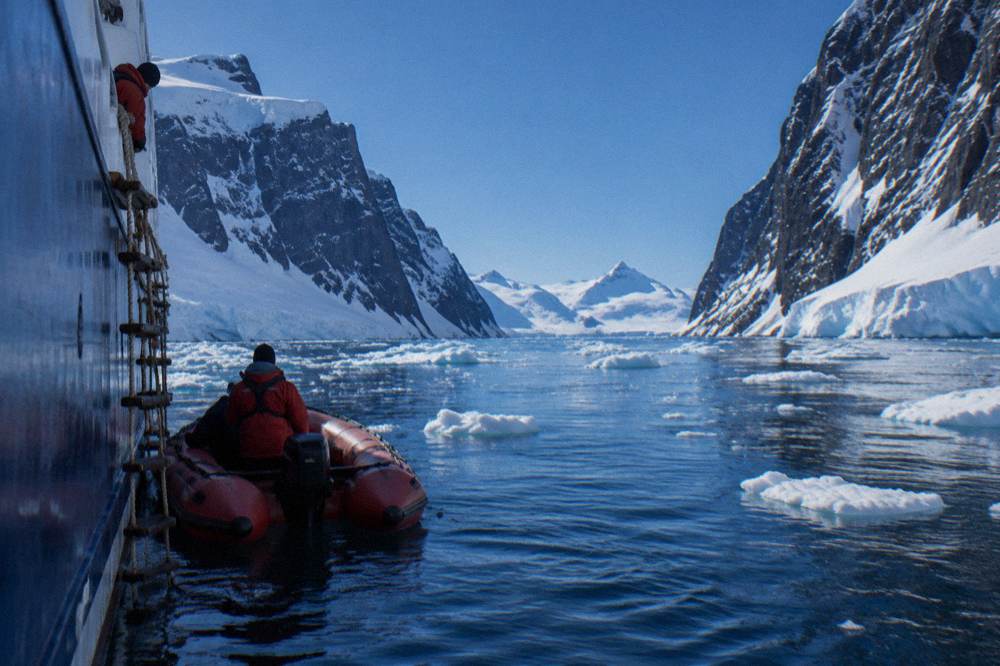
The other lever is the crossing itself. Fly-the-Drake options, which put you on a two-hour charter flight from Punta Arenas to King George Island instead of two days of open ocean, typically add $2,000 to $5,000 over a comparable sailing voyage because of the charter flight cost. So they are a comfort purchase, not a saving. The full trade-off between the two models is covered in the fly versus cruise cost comparison, and the broader pricing landscape sits in the complete Antarctica cruise cost guide.
One cost that does not bend: the season. Peninsula voyages run roughly mid-October to mid-March, and every month inside that window is priced by demand, not by weather quality. Travellers flexible on month usually pay less outside the December peak, and the shoulder months are genuinely good voyages; they just show you a different phase of the season, more ice and courtship early, more whales and molting chicks late.
A Realistic Two-Week Budget, Laid Out
For a traveller from a US city booking a 12 to 13 day Peninsula voyage, one 2026 cost guide puts the realistic all-in budget at $12,000 to $25,000 per person for a mid-range trip: the voyage, flights, gear, tips and insurance together. The fare itself runs from $9,000 to $12,000 on mainstream expedition lines, with the extras below stacked on top.
Here is that budget as a table, with the budget-ship and luxury-ship variants alongside so you can see how the tiers cascade through the lines that carry fixed numbers. Flights and insurance are shown as quoted lines because that is exactly what they are: priced per traveller, not per tier.
| Cost line | Budget ship (e.g. Hondius) | Mid-range ship | Luxury ship (e.g. Ponant) |
|---|---|---|---|
| Voyage fare (12-13 day Peninsula) | from $7,800 | from $10,485 | from $18,700 |
| Gratuities, 13 days | $200 to $325 | $200 to $325 | usually included |
| Hotel nights in the gateway | $300 to $700 | $300 to $700 | $300 to $700 |
| Gear and extras | $300 to $1,000 | $300 to $1,000 | $300 to $1,000 |
| Flights, US city to Ushuaia return | quoted per traveller | quoted per traveller | quoted per traveller |
| Travel insurance with evacuation | quoted per traveller | quoted per traveller | quoted per traveller |
Read the table with two cautions. First, the two quoted lines, flights and insurance, can move the total as much as the fare tier does; the airfare is set by your home airport and booking date, the premium by your age and the fare insured. Second, bundles differ between lines, as the Lindblad example above shows, so headline fares are not always comparable line for line.
The pattern worth internalising: the voyage fare is the only line that scales cleanly with the tier. Hotels, gear and tips cost broadly the same whether you sleep in a porthole cabin on the Ortelius or a suite on a Ponant ship. That is why the value tier is such a lever; a fare difference at the ship level flows straight through to the final total, undiluted by anything else.
A concrete example makes it tangible. A traveller who books the Hondius 11 day Peninsula voyage at the published from-fare, adds the gratuities, a gateway hotel night or two and a gear top-up, then prices flights and insurance for their own age and home airport, lands comfortably inside the $12,000 to $25,000 all-in planning band, and often below the bottom of it. That is the arithmetic behind every "I did Antarctica for less than you think" story, and it starts with the ship, not the calendar.
If your total is sitting above what you wanted to spend, or you want a second opinion on whether a specific departure justifies its price, that is exactly the kind of question a free consultation with an expert handles well. The consultation costs nothing and you are matched with a vetted expedition-cruise agency partner who can check live cabin availability across operators.
Common Questions About A Two Week Antarctica Trip Cost
How Much Does A 2 Week Trip To Antarctica Cost?
The voyage fare alone runs from about $7,050 (Plancius) to $23,020 (Le Boréal) per person depending on ship and cabin. A sourced all-in planning range for a mid-range 10 to 12 day trip is $12,000 to $25,000 per person once flights, hotels, insurance, tips and gear are counted, with the value tier coming in below that band.
What Is The Cheapest Way To Do A Two-Week Antarctica Trip?
Book an 11 to 13 day Drake-crossing Peninsula voyage on a small-ship budget line such as Oceanwide Expeditions or Poseidon Expeditions, take a shared triple or quad cabin, travel outside the December peak, and book early to capture the 10 to 30 percent early-booking offers that are common for the coming seasons.
Is The Fly-Cruise Option Cheaper Than Sailing The Drake Passage?
No. Fly-the-Drake itineraries typically add $2,000 to $5,000 per person over a comparable sailing voyage because of the charter flight to King George Island. They buy you two days of time and no open-ocean seasickness risk, not a lower price.
What Does The Cruise Fare Include On An Antarctica Expedition?
Generally the cabin, all meals, Zodiac excursions, landings and the lecture program. Most operators also provide a complimentary parka and loan waterproof boots. Not usually included: international and domestic flights, hotels, travel insurance, gratuities where not prepaid, and optional activities such as kayaking or camping.
How Much Should I Budget For Travel Insurance?
There is no fixed figure: premiums are quoted on your age and the fare insured, so get a quote early. Operators require cover with high medical evacuation minimums, reported at $500k for Quark, $250k for Ponant and $150k for Lindblad, plus trip-cancellation cover for the full fare.
Do I Need To Arrive In Ushuaia Before Embarkation Day?
Yes. Plan at least one full night in Ushuaia before your voyage, ideally two. The Buenos Aires to Ushuaia domestic corridor is weather-prone in peak season, there are no direct flights from the United States, and a missed connection on embarkation morning can cost you the entire trip.