National Geographic Antarctic Cruises: Endurance And Resolution
 By Oleg G.
Lindblad Expeditions operates the National Geographic Antarctica cruise programme on three ships: the Polar Code PC5 twins Endurance and Resolution, and the ice-reinforced Explorer. Here is what the operator pages and the roster actually say about each.
Quick answer: A National Geographic Antarctica cruise runs on three Lindblad ships: Endurance and Resolution, both Polar Code PC5 and carrying 138 guests, and Explorer, an ice-reinforced ship for 148. Peninsula voyages start from $11,900 per person for a 12-day sailing, with the fly-and-sail Antarctica Direct route from $12,250.
What Is A National Geographic Antarctica Cruise?
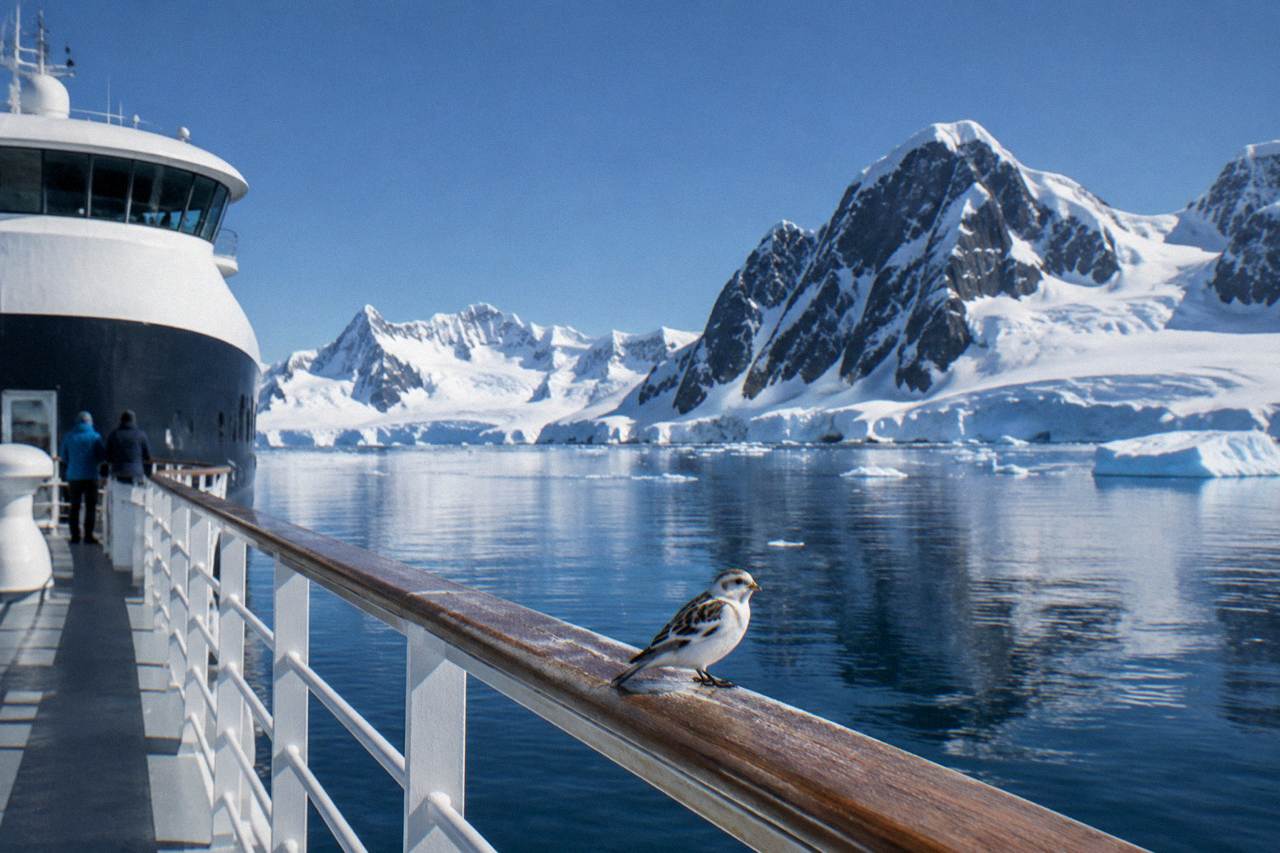
A National Geographic Antarctica cruise is an expedition voyage run by Lindblad Expeditions in partnership with National Geographic, sailing from Ushuaia on three ships: Endurance, Resolution and Explorer. The two newer ships carry 138 guests each and hold Polar Code PC5 certification; Explorer carries 148 on an ice-reinforced hull. Peninsula voyages start from $11,900 per person for 12 days according to the operator's own ship page. The brand pairing matters to the people who search for it. Lindblad handles the maritime and expedition side, the ships, the Zodiacs, the guiding staff, while National Geographic contributes the photography and science framing: naturalists, certified photo instructors, and a lecture programme built around the regions the ships visit. For a buyer comparing expedition cruises, this is one of the most explicitly education-led products on the market, and it is priced accordingly.
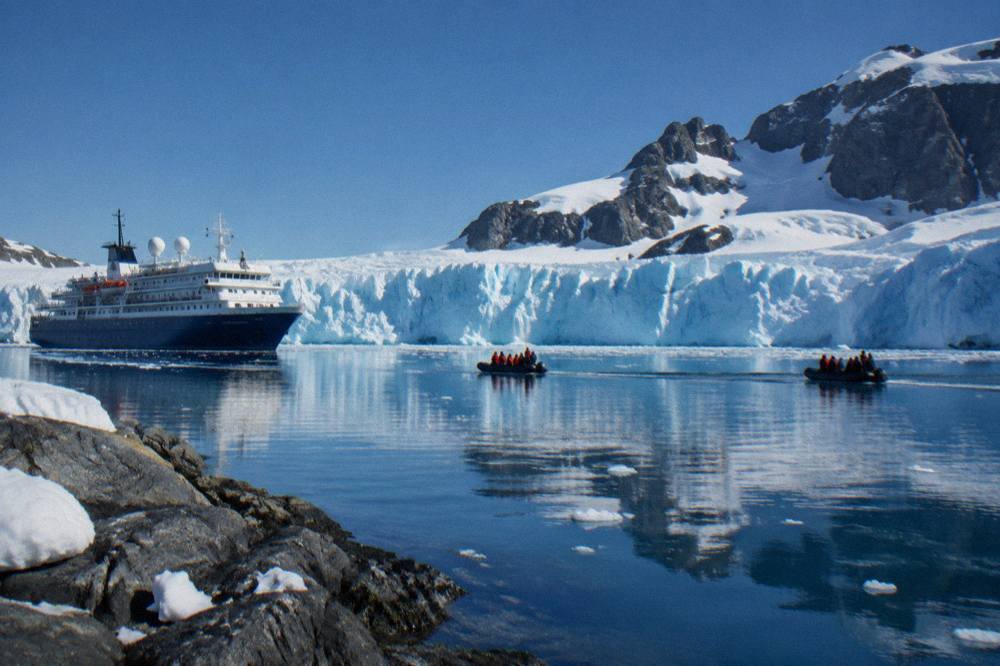
The collaboration is not a licensing sticker on someone else's ship. The vessels carry National Geographic branding, the onboard teams include National Geographic-trained staff, and the itineraries are Lindblad's own. The roster shows all three ships home-porting at Ushuaia for the Antarctic season; the Antarctic Treaty Secretariat notes that around 98 percent of tourism voyages occur in the Antarctic Peninsula region during the austral summer. That concentration is why the differences between these three ships, rather than the route, are what actually drive the decision.
If your starting point is the wider expedition market rather than one brand, our Antarctica expedition cruise guide sets out how these voyages work in general, and the cruise cost guide covers the full price picture. This page stays on the National Geographic fleet, part of the set of ship and line guides Cruises In Antarctica maintains across every operator. One thing worth knowing before the ship-by-ship detail: the IAATO and Antarctic Treaty framework that governs all landings caps shore parties at 100 passengers at a time and requires a 1:20 guide-to-visitor ratio, per the general visitor guidelines. A 138-guest ship can land everyone in one or two rotations; a large cruise ship cannot land at all, since vessels over 500 passengers are barred from landings entirely.
National Geographic Endurance And Resolution: The Twin Polar Ships
Endurance and Resolution are sister ships, both delivered in 2021, both certified to Polar Code PC5 Category A, and both carrying 138 guests. The roster lists both from $11,900 per person for the 12-day Voyage to Antarctica. Their signature feature is the patented X-Bow hull, which pierces waves rather than riding over them, plus glass geodesic igloos on the observation deck at an extra charge.
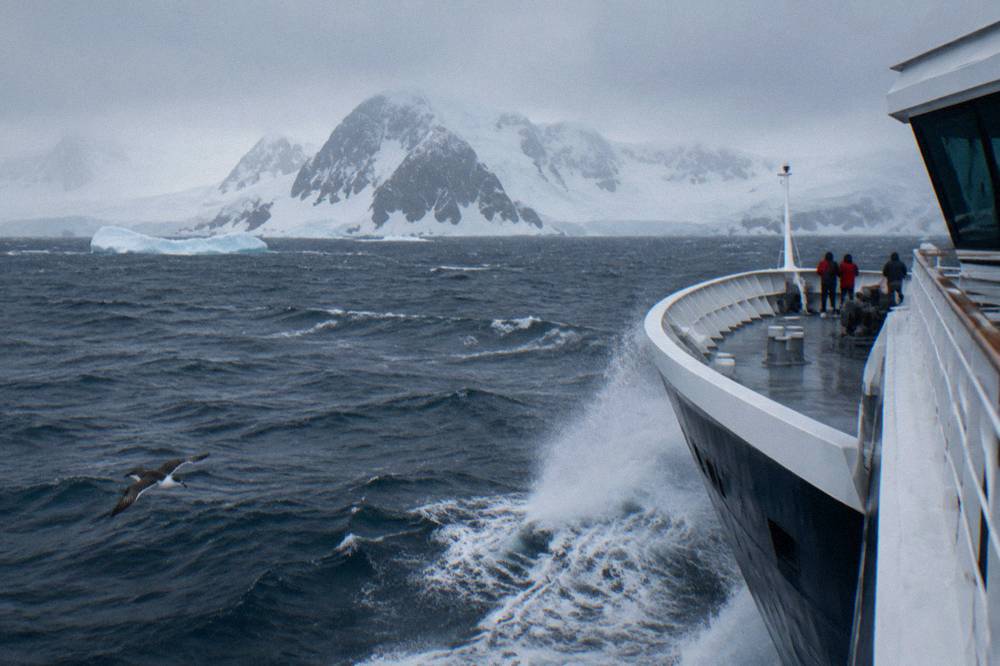
The X-Bow is the engineering story here. Conventional bows lift over a wave and slam down on the far side; an X-Bow's inverted profile pierces the wave, which the shipyard and operator credit with softer motion and less spray in head seas. On a Drake Passage crossing, where conditions vary from near-flat to several metres of swell, that hull form is the single most marketable comfort feature any ship in this class carries. Our Drake Passage crossing guide covers what that crossing is actually like; the short version is that no ship eliminates the Drake, but hull design changes how it feels.
Polar Code PC5 is the other headline. The Polar Code categories run from PC1 (year-round all-ice) down to PC7 (summer thin ice); PC5 certifies a ship for medium first-year ice, which is what a Peninsula itinerary realistically meets in mid-season. It is a statutory classification, not marketing wording, and it places Endurance and Resolution among the more formally capable passenger ships operating in the region. For comparison within the roster, Quark's Ultramarine holds PC6, one category lower, while Ponant's luxury ships carry no stated ice class at all on their pages.
Between the two twins there is no meaningful difference for a buyer. Cabins, ice class, guest count and published fares are identical on the roster; voyage days differ slightly, with Endurance listed at 12/16/21/22-day itineraries and Resolution at 12/16/18/21/22/25. The practical choice is simply which ship is sailing the date you want. If one twin's calendar has the departure that fits your window, that is the ship, and the decision is over. When the dates are open, a free sailing calendar comparison can pull both schedules together, at no cost and with no obligation.
National Geographic Explorer: The Ice-Reinforced Fleetmate
Explorer is the older-style ship of the three: 148 guests, a fully stabilised and ice-reinforced hull with no formal ice class stated on the roster, and the widest itinerary spread, from 10 to 22 days. Its published entry point is the Antarctica Direct sail-and-fly route, from $12,250 per person for a 10-12 day voyage, which is the fleet's option for cutting one Drake leg down to a two-hour flight. Where Endurance and Resolution are purpose-built polar ships, Explorer is a converted and strengthened vessel in the classic expedition mould. "Ice-reinforced" without a stated class means the hull is strengthened for ice contact but the ship has not been certified to a Polar Code category on the material we have; that is a real distinction, and it is worth asking about directly rather than assuming equivalence. For a Peninsula itinerary in high summer it is not a practical limitation, but a buyer comparing ships on paper should know the difference is real, not cosmetic.
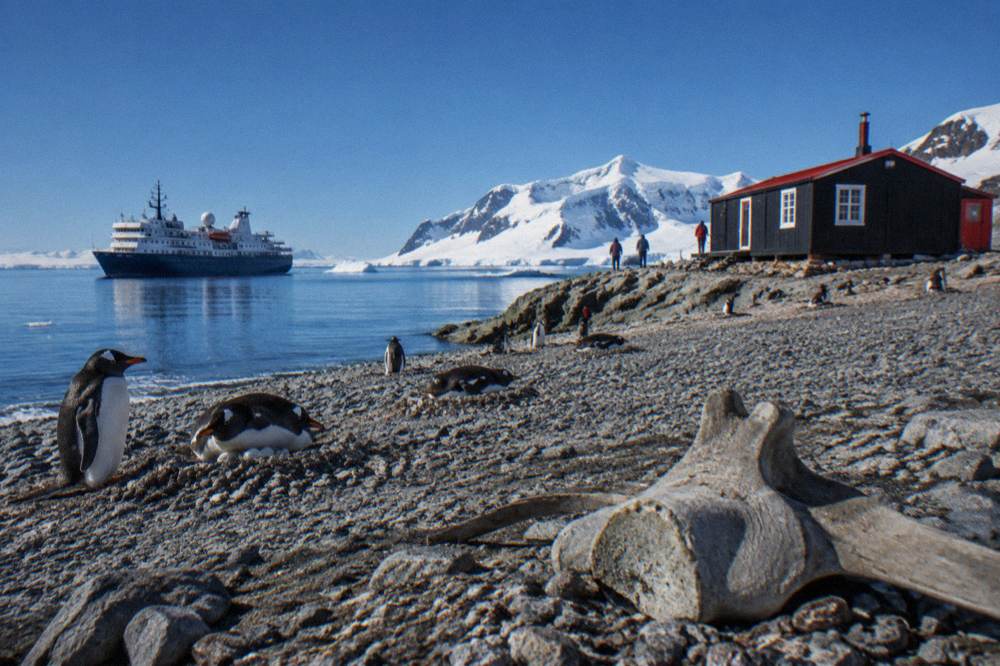
Explorer's role in the fleet is range. The 18, 21 and 22-day voyages on its roster, and Resolution's 25-day maximum, are the Falklands and South Georgia combinations that National Geographic travellers often book as a once-only trip. Our South Georgia Antarctica cruise guide explains why that island, with king penguin colonies running to hundreds of thousands of pairs, is the draw that justifies the extra week. The shorter 10-day Antarctica Direct routing, meanwhile, is the fleet's answer to the fly-the-Drake question, pairing one sailing leg with a charter flight segment.
How The Three Ships Compare
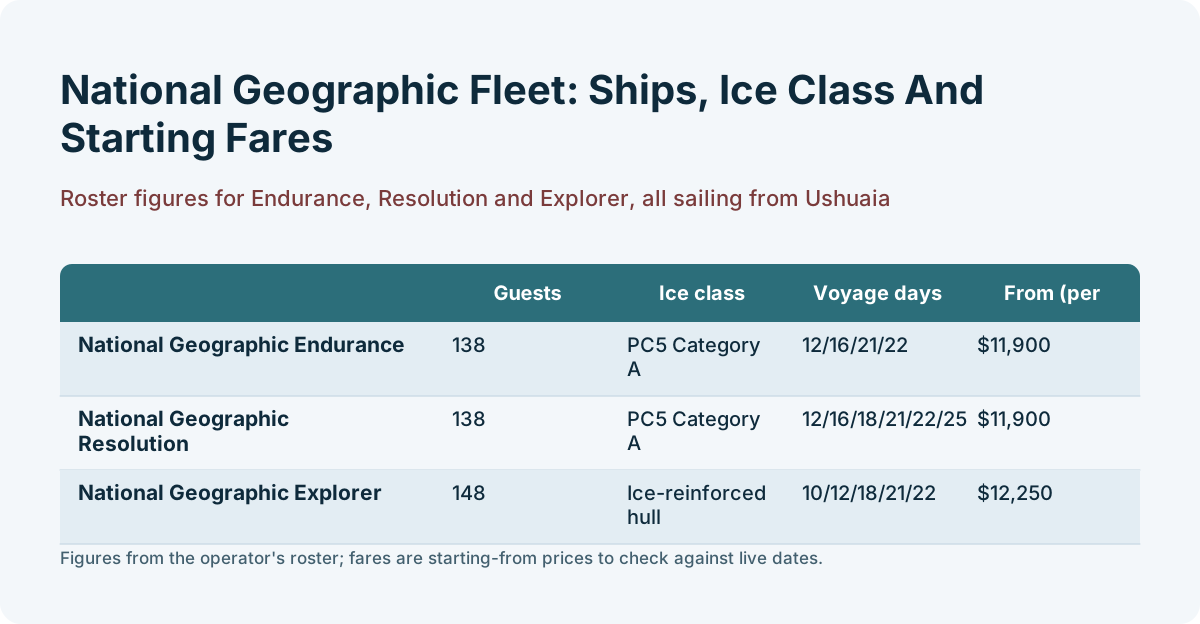
Endurance and Resolution are identical: 138 guests, PC5, X-Bow, from $11,900. Explorer carries 148 on an ice-reinforced hull with no stated ice class, from $12,250, and offers the fleet's only 10-day routing. All three sail from Ushuaia and all three run the same landing model under IAATO rules. The table below sets out every figure the roster records.
| Ship | Guests | Built | Ice class | Voyage days | From (per person) |
|---|---|---|---|---|---|
| National Geographic Endurance | 138 | 2021 | PC5 Category A | 12/16/21/22 | $11,900 |
| National Geographic Resolution | 138 | 2021 | PC5 Category A | 12/16/18/21/22/25 | $11,900 |
| National Geographic Explorer | 148 | not stated | Ice-reinforced (no class stated) | 10/12/18/21/22 | $12,250 |
| Ship | Class | Passengers | Ice class | From, per person | Voyage length | Departs from |
|---|---|---|---|---|---|---|
| National Geographic EnduranceLindblad Expeditions (with National Geographic) | Standard Expedition | 138 | PC5 | from $11,900 | 12 to 22 days | Ushuaia |
| National Geographic ResolutionLindblad Expeditions (with National Geographic) | Standard Expedition | 138 | PC5 | from $11,900 | 12 to 25 days | Ushuaia |
| National Geographic ExplorerLindblad Expeditions (with National Geographic) | Upscale Expedition | 148 | Ice-reinforced hull | from $12,250 | 10 to 22 days | Ushuaia |
Read the fare column carefully. The $11,900 figure is the operator's "starting from" card for the 12-day Voyage to Antarctica, the lowest category cabin on the least expensive date; it is a floor, not a typical price, and suite categories run well above it. The roster notes the card shows months only, not a year, so treat both numbers as entry points to check against live dates rather than quoted prices for a specific departure.
What A National Geographic Antarctica Cruise Costs
The published entry point is $11,900 per person for a 12-day Peninsula voyage on Endurance or Resolution, and $12,250 for the 10-12 day Antarctica Direct routing on Explorer. One cost guide reports that Lindblad fares bundle a pre-cruise Buenos Aires hotel, the charter flight to Ushuaia, drinks, prepaid gratuities and an expedition jacket. A realistic all-in budget for a mid-range Peninsula trip runs $12,000-$25,000 per person.
The bundling is where the value question actually lives. On a competitor's lower headline fare you may still be paying separately for the gateway hotel, the domestic flight to Ushuaia, drinks and tips, and those items add up before you board. On a Lindblad fare much of that is already inside the number. The comparison only works when you price both voyages the same way, all-in, which is exactly the exercise a free side-by-side fare comparison walks through: two itineraries, fully loaded, side by side.
Two costs sit outside every base fare. Travel insurance with medical evacuation cover is required or strongly recommended by operators, and the major expedition lines impose high medical evacuation coverage minimums plus full trip-cost cancellation cover, with proof often required before departure or at check-in. And flights to Buenos Aires are your own booking. US citizens need no visa for Argentina for tourist stays up to 90 days, but the domestic leg from Buenos Aires to Ushuaia is weather-prone in peak season, and the standard advice is to arrive with at least a night, ideally two, of buffer before embarkation.
Life On Board: The Expedition Part Of The Cruise
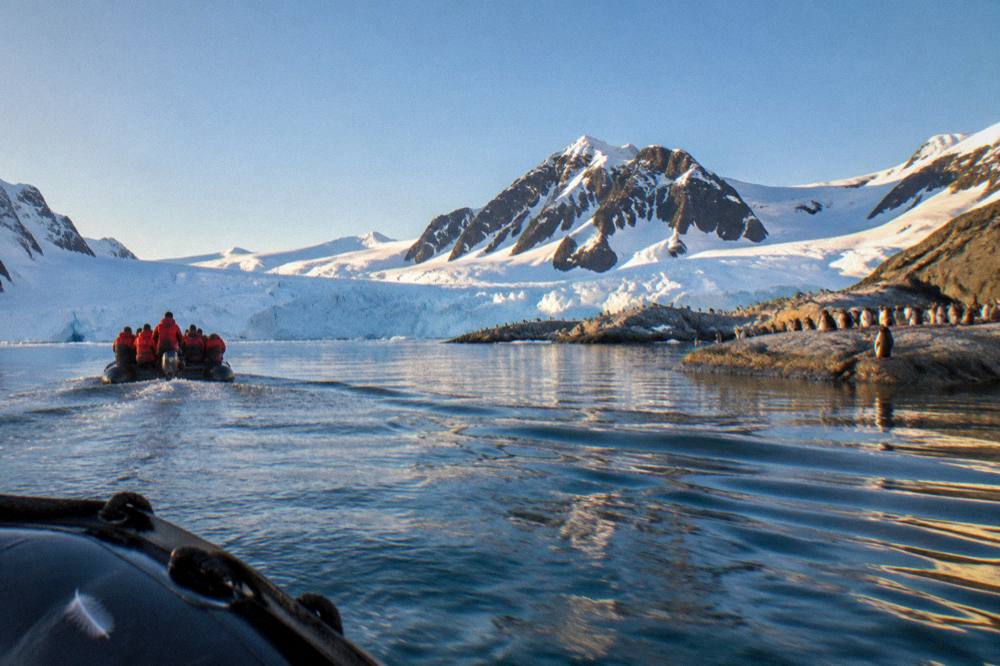
The onboard product is built around the National Geographic partnership: a naturalist team, a certified photo instructor, and daily lectures in the lounge. Landings run to the IAATO model, Zodiac transfers with a maximum of 100 guests ashore at a time and a 1:20 guide ratio. The igloos on the twins' observation deck are the one headline amenity that carries an extra charge. A National Geographic voyage is a working expedition in tone, not a resort at sea. Days are structured around the landing schedule: breakfast, a morning excursion, lunch aboard, an afternoon landing or Zodiac cruise, then a recap session where the staff talk through what the day showed and what tomorrow's options are. The ships carry the Zodiac fleet for full expedition operations. Biosecurity is part of daily routine, boots and gear washed before Antarctica and cleaned again between sites, per the IAATO visitor guidelines.
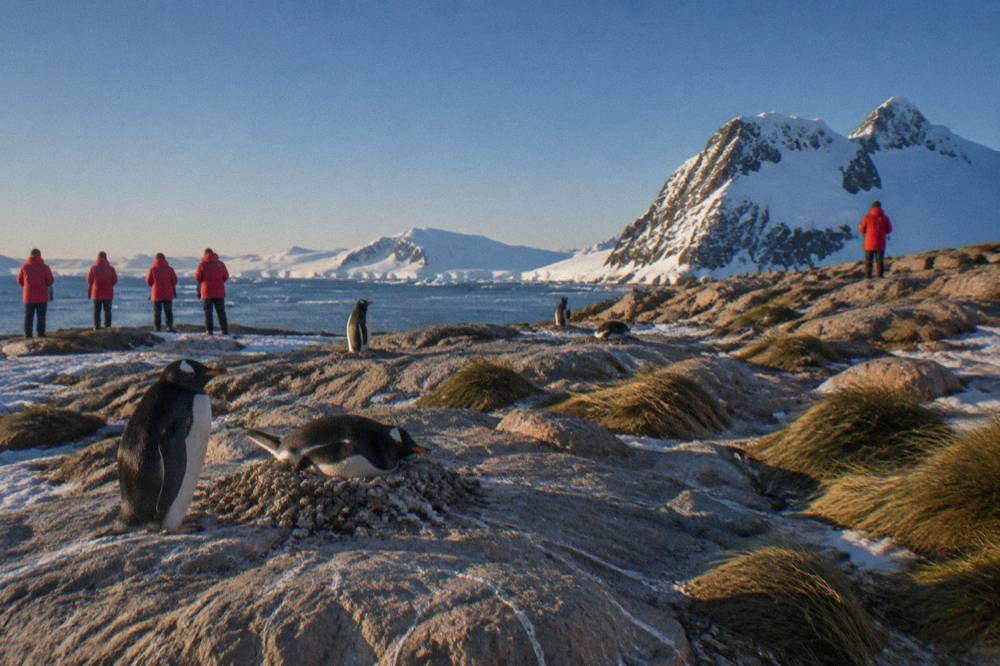
The photography programme is the brand's differentiator. Certified photo instructors run sessions for all skill levels, and the naturalist lectures draw on the National Geographic relationship. If your interest in the continent is primarily wildlife timing, our Antarctica wildlife cruise guide maps the season: penguin chicks hatch from mid-December, humpback sightings build from mid-January, and February-March is the whale peak. The season runs mid-October to mid-March, and every one of these ships is in Antarctica only within that window.
Itineraries And Voyage Lengths
The fleet's core product is the 12-day Peninsula voyage on Endurance or Resolution, from $11,900. Longer combinations run 16 to 25 days and add the Falklands and South Georgia; Explorer's 10-12 day Antarctica Direct routing is the shortest option, from $12,250. Classic Peninsula itineraries across the market allocate roughly four to six days of landings in the South Shetlands and western Peninsula, and the National Geographic ships follow that same shape.
| Voyage type | Days | Ships | What it adds |
|---|---|---|---|
| Antarctic Peninsula | 12 | Endurance, Resolution | The classic Ushuaia round trip, Drake crossing both ways |
| Antarctica Direct (sail and fly) | 10-12 | Explorer | One Drake leg replaced by a charter flight segment |
| Falklands and South Georgia | 18-22 | Explorer, Resolution | King penguin colonies and fur seal beaches |
| Extended combinations | 21-25 | Endurance, Resolution, Explorer | South Georgia plus the Peninsula at length |
The choice of length is really a choice of subject. A 12-day voyage is penguins, ice and the Peninsula; an 18-22 day voyage is South Georgia, which many travellers rate above the Peninsula itself for sheer density of wildlife. The longer voyages also carry proportionally more sea days, so the X-Bow comfort argument matters more on them than on a short Peninsula trip. Some 2026-27 itineraries across the market also attempt an Antarctic Circle crossing as a southern extension; our Antarctic Circle cruise guide covers that option if pushing past 66 degrees south is the ambition.
How Endurance Compares With Other Expedition Ships
Against the wider market, Endurance and Resolution sit mid-field on price and above it on ice class. Oceanwide's Plancius anchors the value end at from $7,050 for a 10-11 day Peninsula voyage on a converted research vessel; Quark's Ultramarine, with helicopters, starts at $12,236; Ponant's L'Austral opens at $18,700. The twins' $11,900 entry point buys PC5 certification and the X-Bow.
| Ship (operator) | Guests | Ice class | Peninsula fare from | Standout feature |
|---|---|---|---|---|
| Plancius (Oceanwide) | 108 | 1D | $7,050 | Converted navy research vessel, budget tier |
| Hondius (Oceanwide) | 170 | PC6 | $7,800 | First-registered PC6 passenger vessel |
| National Geographic Endurance (Lindblad) | 138 | PC5 | $11,900 | X-Bow hull, geodesic igloos |
| Ultramarine (Quark) | 199 | PC6, 1A+ | $12,236 | Twin helicopters, Zodiac hangar |
| L'Austral (Ponant) | 264 | not stated | $18,700 | Luxury French-flag product |
The honest read of this table: the step up from Plancius at $7,050 to Endurance at $11,900 buys the hull, the staff ratio and the brand programme, and the budget tier still lands you on the same beaches under the same IAATO rules. Whether that premium is worth it depends on what the voyage is for. Someone checking a box may be perfectly served by Plancius; someone treating the trip as a once-in-a-lifetime education may find the National Geographic product earns its fare. Our best Antarctica cruise guide works through that trade-off across the whole market, and our Hondius guide covers the value benchmark in detail.
How To Book A National Geographic Antarctica Cruise
Booking works through Lindblad directly or through an expedition cruise specialist, and the choice matters more than on most trips: cabin categories on these ships vary widely in price, the bundled inclusions shift the true cost, and the popular December-January dates fill first. The consultation on this site is free, carries no obligation, and puts your dates and cabin preferences in front of a vetted expedition-cruise agency partner who can quote across the fleet. Timing is the other lever. Early-booking offers for the 2026-27 and 2027-28 seasons commonly reach 10 to 30 percent off, with deeper cuts on select unsold sailings, according to deal trackers; peak December sailings book furthest ahead, sometimes 18 months or more, while last-minute discounts exist but with limited cabin choice. The operator's live listing is the only place a current fare for a specific date exists, and the roster's $11,900 figure is explicitly a "starting from" card rather than a quote.
One regulatory note completes the picture for US travellers: American-based operators are required to submit environmental documentation to the EPA before conducting expeditions to Antarctica, per the EPA's impact assessment page. That obligation sits with the operator, not the passenger, but it is part of why the market is structured around established lines rather than ad hoc charters. If you are weighing the National Geographic fleet against Silversea, Viking or Seabourn as well, the Antarctica cruise lines guide compares every operator in one place.
Common Questions About National Geographic Cruises To Antarctica
What Is A National Geographic Antarctica Cruise?
It is an expedition voyage run by Lindblad Expeditions in partnership with National Geographic, sailing from Ushuaia on three ships: Endurance and Resolution (138 guests each, Polar Code PC5) and Explorer (148 guests, ice-reinforced). Peninsula voyages start from $11,900 per person for 12 days.
Which National Geographic Ship Is Best For Antarctica?
Endurance and Resolution are identical twins, so the choice between them comes down to sailing dates. They carry the PC5 ice class and the X-Bow hull. Explorer is the ship for the 10-12 day Antarctica Direct sail-and-fly routing and the widest spread of longer itineraries.
How Much Does A National Geographic Antarctica Cruise Cost?
From $11,900 per person for the 12-day Voyage to Antarctica on Endurance or Resolution, and from $12,250 for the 10-12 day Antarctica Direct route on Explorer. Those are starting-from figures for the lowest cabin category; one cost guide reports that Lindblad fares bundle the pre-cruise hotel, charter flight, drinks, gratuities and expedition jacket.
What Is The Difference Between Endurance And Resolution?
Very little. Both were delivered in 2021, both carry 138 guests, both hold PC5 Category A certification and the patented X-Bow, and both list the same $11,900 starting fare. Resolution's itinerary list runs slightly longer, to 25 days, versus 22 on Endurance.
Do National Geographic Cruises Land In Antarctica?
Yes. All three ships carry well under the IAATO thresholds, so every guest can land in rotations under the 100-passengers-ashore and 1:20 guide-ratio rules. Vessels carrying more than 500 passengers are prohibited from making landings at all.
How Long Is A National Geographic Antarctica Cruise?
From 10 days on Explorer's Antarctica Direct routing to 25 days on Resolution's longest combination. The core product is the 12-day Peninsula voyage; 18-22 day voyages add the Falklands and South Georgia.