What Is Not Allowed In Antarctica?
 By Oleg G.
Antarctica has no police force and no permanent residents, yet its visitor rules are short, written and enforced by your expedition team before you ever reach the beach.
What Is Not Allowed In Antarctica?
Antarctica's written visitor rules ban five things: approaching wildlife closer than five metres, using drones near wildlife, landing with dirty boots or gear, going ashore in groups larger than 100, and any landing at all from a ship carrying more than 500 passengers. Operators layer their own policies on top, and your expedition team enforces the lot before you reach the beach.
There is no town hall on the continent, no border post and no resident to complain about you, yet Antarctica runs one of the more disciplined visitor systems in travel. The rules come out of the Antarctic Treaty system, and the version you will actually meet on the water is written by IAATO, the association that coordinates landing-based tourism and keeps operators to a common standard. Its general visitor guidelines are short enough to fit on a single poster, and every expedition cruise makes you learn them before your first landing.
The scope is narrower than the map suggests. The Antarctic Treaty Secretariat notes that about 98 percent of tourism voyages happen in the Antarctic Peninsula during the seven-month austral summer from October to April. So the five bans above are the rules you will live under on a classic Peninsula expedition cruise out of Ushuaia or Punta Arenas, which is what most people mean when they start shopping for a cabin.
What the rules quietly decide is what kind of cruise you should be shopping for at all. A 90-guest fly-cruise, a 170-guest expedition ship and a large cruise-only vessel all deliver the same coastline under three completely different rulebooks, and the differences show up on shore, not on the deck. Before you compare fares or cabin categories, it is worth a free conversation to match the rules to a ship, because the wrong hull size cannot be fixed by an upgrade.
How Close Can You Get To Antarctic Wildlife?
The general visitor guidelines set a minimum distance of five metres from any wildlife on land or ice, and species or site guidance can require more for nesting birds, molting penguins or stressed animals. Drones fall under the same principle: they must not be used near wildlife at all. Your expedition team marks the actual boundary at every landing.
Five metres is the floor, not the target. The published general visitor guidelines phrase it as keeping "at least 5m from wildlife on land," then hand the rest to species and site rules that can push the buffer much wider. Nesting birds get more space. A molting penguin, which cannot swim and is at its most vulnerable, gets more space. An animal that changes behaviour because of you is, by definition, too close, and a guide will tell you so.
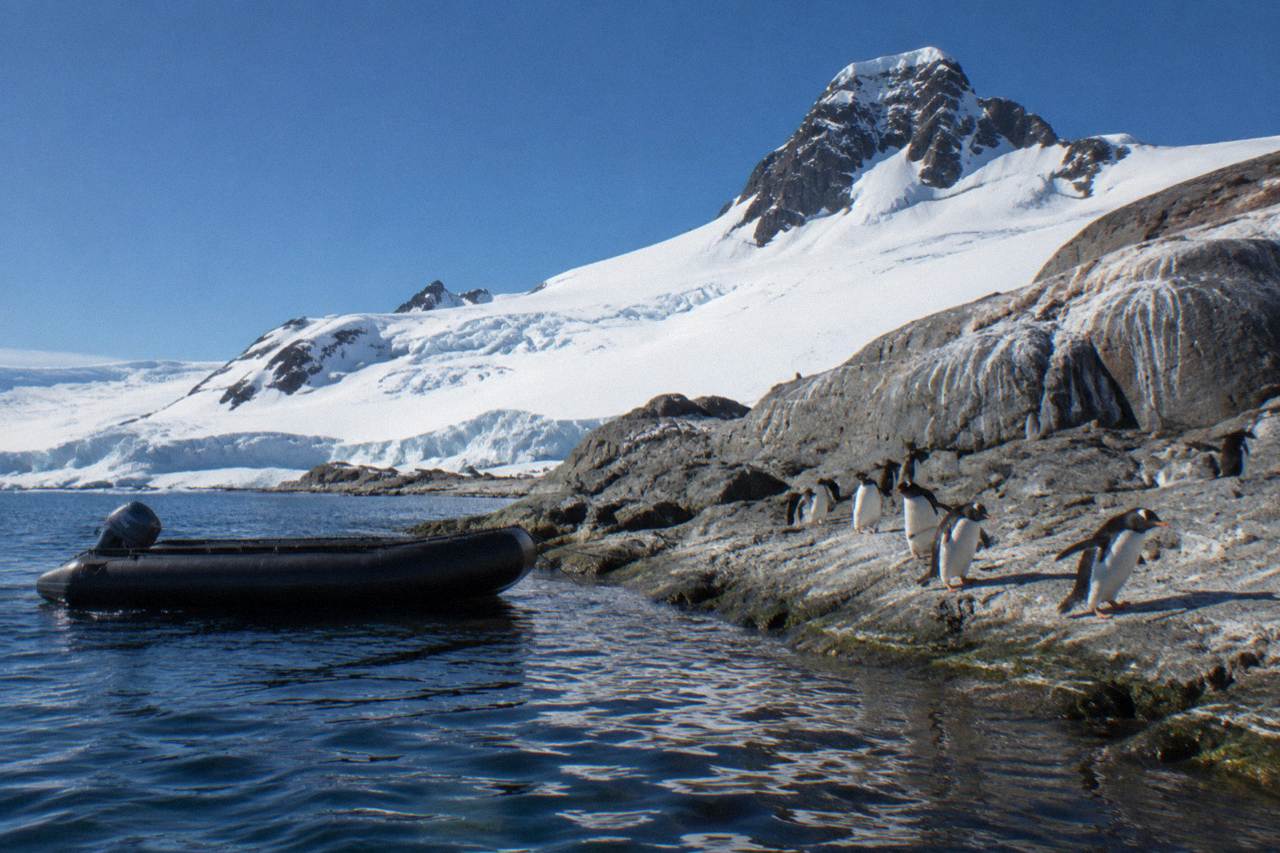
In practice the distance is marked on the ground before you leave the Zodiac. Expedition staff walk the landing site first, flag the approach path, and position themselves between you and any colony. You walk where they walked. The system works because it is the same for every passenger on every ship in the association, from a 90-guest fly-cruise to a full expedition vessel, and because the guide ratio on landings is fixed by rule rather than by budget, a point covered in detail further down this page.
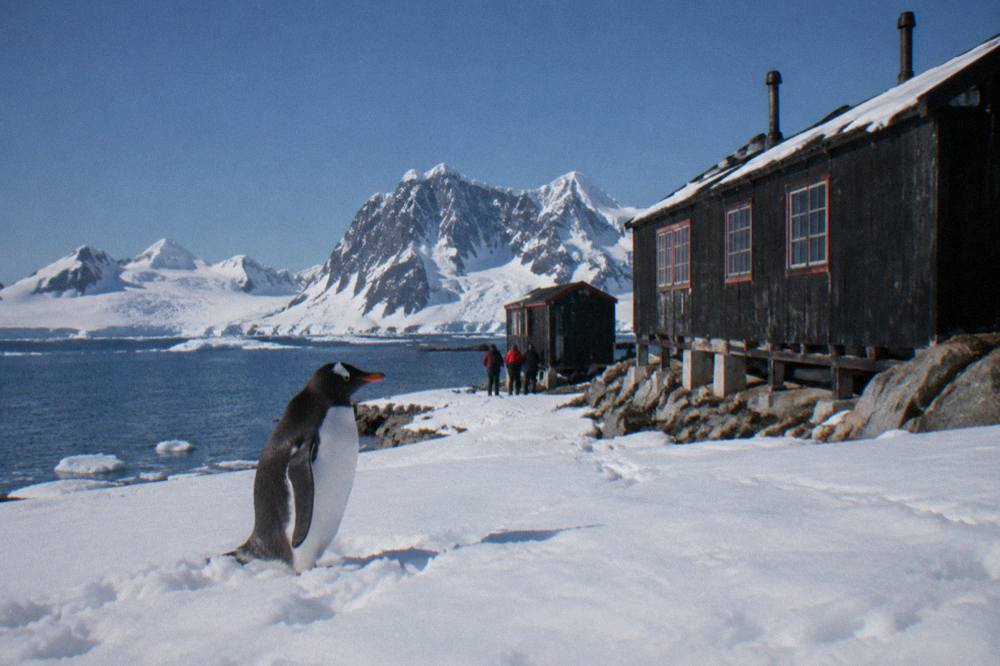
The habit worth building before you travel is patience with the animals' own agenda. Penguins do not read the guidelines, and a chick curious about a red parka zip will close the gap itself. The rule does not give you permission to close it back.
| Situation | The written rule | What it means on the beach |
|---|---|---|
| Any wildlife on land or ice | Keep at least 5 metres away | Staff flag the path; you keep to it |
| Nesting, molting or stressed animals | Species and site guidance may require more | Widen the gap whenever told |
| Drones near wildlife | Must not be used near wildlife | The drone stays packed near animals |
Are Drones Allowed In Antarctica?
The one written rule on drones is blunt: they must not be used near wildlife. Because wildlife is the reason most people book the cruise, and because operators and site guidelines can add limits of their own, the practical answer for a passenger packing a drone is to check with the expedition line first and expect a no near any animals.
The drone clause sits inside the same visitor guidelines as the five-metre rule, and it exists for the same reason: a bird cannot tell a camera from a predator. Beyond that single prohibition, the written sources go quiet. Site guidelines updated in recent seasons can carry approach distances, time restrictions and boundaries of their own, and individual operators set whatever cabin-level and deck-level policies they like. Nothing in the public rulebook grants a tourist a right to fly.
For photographers this is the section that stings, so it is worth being direct. The footage that made you want Antarctica in the first place was almost certainly shot under permits, from Zodiacs, or by people whose job is the camera. A passenger drone adds risk to wildlife, to the landing operation and to the ship's schedule, and expedition teams treat it accordingly.
The planning advice is simple: assume you will not fly, and if aerial footage matters to you, ask your operator before you pack. Some lines run their own filmed content or have photographer-focused voyages, and a two-minute question at the time of booking saves an argument at the gangway. The trip does not need the drone. Antarctica at sea level, from a Zodiac, at eye height with a penguin, is the shot.
Why Do Your Boots Get Washed Before Every Landing?
Biosecurity is the rule most visitors feel before they feel Antarctica itself. Every item of gear, from boots and bags to tripods, tents and walking sticks, must be cleaned before you bring it south, and boots and equipment are washed again between landing sites to stop seeds, soil and disease moving around the continent. The requirement applies before you leave home and again between every site.
Antarctica's isolation is its fragility. A seed in a boot tread, soil on a tripod leg or a pathogen on a jacket hem can hitch a ride between colonies that would otherwise never exchange anything. The guidelines say it plainly: carefully wash boots and clean all equipment, including clothes, bags, tripods, tents and walking sticks, before bringing them to Antarctica, then clean again between sites. That second wash is not a suggestion, and on every expedition ship it happens at a designated station between almost every landing.
The disease part is not theoretical. Operators have run enhanced biosecurity protocols in recent seasons amid avian influenza concerns, which adds pre-landing assessments and a rule that surprises many first-timers: no sitting or kneeling on the ground in wildlife areas. There is a fuller explanation of why you cannot kneel on Antarctic ground in our related post, but the short version is that your gear picks up what the ground leaves, and the ground leaves more than you think.
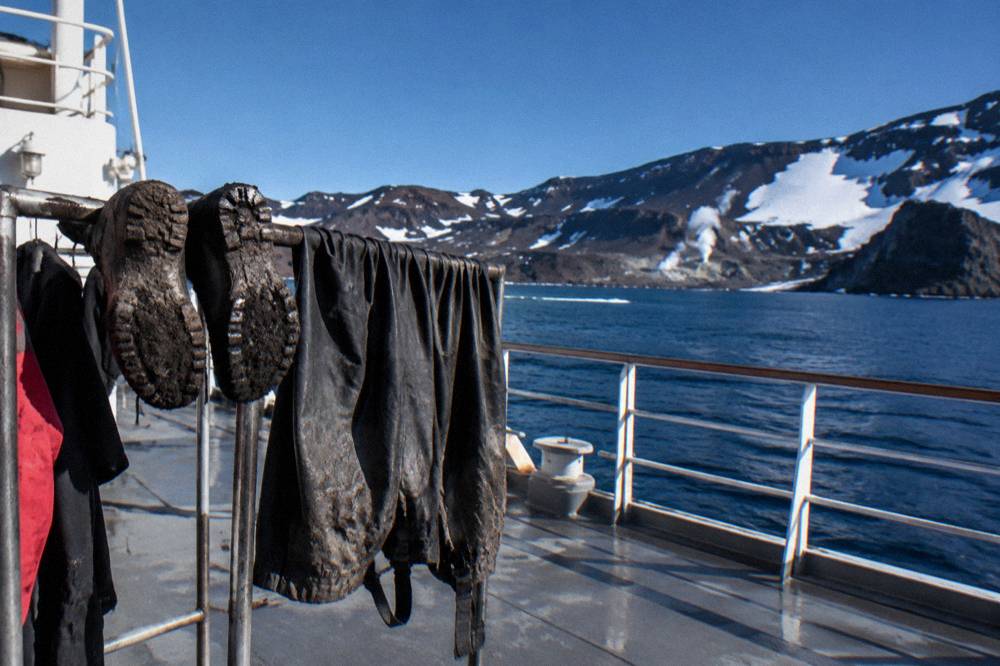
What this means for packing is good news. Gear that is new, freshly laundered or freshly scrubbed causes no delays at inspection, so the boots you gardened in last summer either get a serious wash or stay home. Vacuum the camera bag. Brush the tripod feet. The five minutes you spend on it in your hallway is five minutes the whole zodiac queue does not spend waiting behind you on day one.
How Many Passengers Can Be Ashore At Once?
No more than 100 passengers from any one vessel may be ashore at a time, and some sites allow fewer. Every landing needs at least one actively guiding staff member per 20 visitors. Ships carrying more than 500 passengers cannot make landings at all, and only one vessel may visit a site at any one time. These four numbers shape every Antarctic cruise itinerary.
This is where the rulebook stops being etiquette and starts being naval logistics. A ship with 170 guests cannot put everyone on the beach at once, so landings run in rotations: one group ashore while the other tours by Zodiac or attends a lecture, then a swap. The 100-passenger cap is a maximum, not a entitlement, because individual site guidelines can lower it, and the one-guide-per-20-visitors ratio applies to everyone standing on the beach regardless of who they paid for their cabin. IAATO's coordination goes further still: a ship scheduler exists so that only one vessel visits a landing site at any given time, which is why Antarctic beaches never look like a Mediterranean port call.
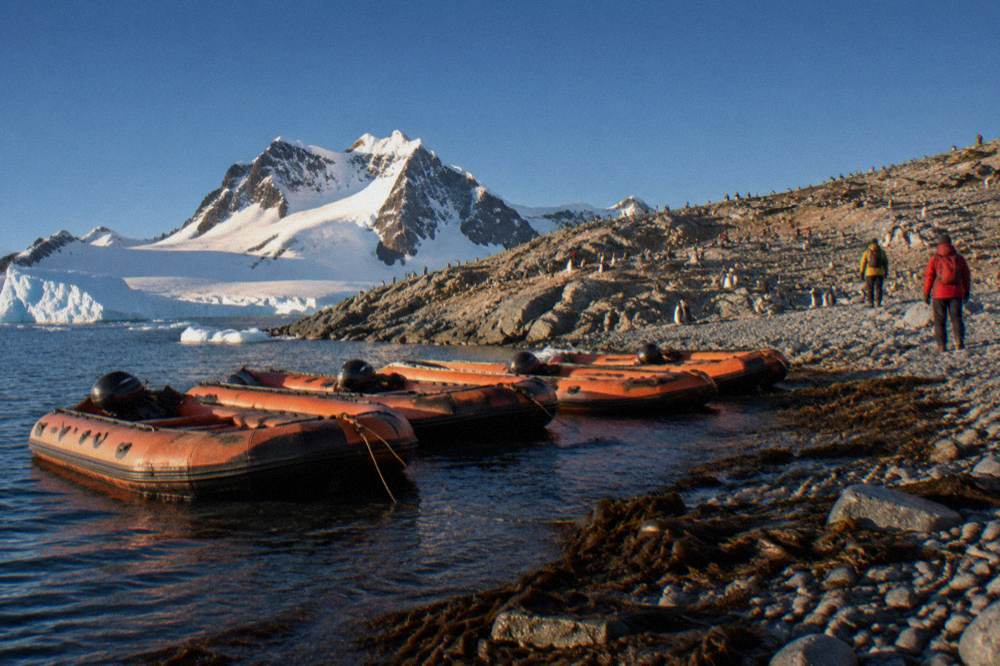
Ship size, in other words, is a rules question before it is a luxury question. Hondius, operated by Oceanwide Expeditions, is the case study this site keeps returning to: 170 guests in 80 cabins, built in 2019, and registered to Polar Class 6, which the operator calls a first for a passenger vessel. Her Antarctic Peninsula voyages out of Ushuaia run 11, 13 and 19 days, with fares from $7,800 per person on the operator's own listing. At 170 guests, a typical landing runs in two rotations rather than one, and the 100-ashore cap is met without anyone rushing. There is a fuller write-up in the complete Hondius ship guide.
The contrast is easiest to see across three ships built for three different answers to the same rules. National Geographic Endurance, from Lindblad Expeditions, carries 138 guests with a PC5 ice class and a patented X-Bow, with the 12-day Voyage to Antarctica showing from $11,900 per person on the ship's card. Magellan Explorer, the Antarctica21 fly-cruise ship, carries just 88 guests on air-cruises, flies you from Punta Arenas to King George Island in about two hours, and starts from $13,795 for the 8-day Classic Antarctica programme. An 88-guest ship can land everyone at once where a 170-guest ship rotates, and that difference is felt twice a day, every day, of the voyage.
| Ship | Class | Passengers | Ice class | From, per person | Voyage length | Departs from |
|---|---|---|---|---|---|---|
| HondiusOceanwide Expeditions | Small-Ship Budget | 170 | Polar Class 6 | from $7,800 | 11 to 19 days | Ushuaia |
| National Geographic EnduranceLindblad Expeditions (with National Geographic) | Standard Expedition | 138 | PC5 | from $11,900 | 12 to 22 days | Ushuaia |
| Magellan ExplorerAntarctica21 | Fly-Cruise | 96 (88 in Antarctica) | LR PC6 | from $13,795 | 8 days | Punta Arenas (fly) to King George Island |
Read as a rulebook rather than a brochure, the tiers look like this.
| Ship situation | What the rules allow ashore |
|---|---|
| Vessel carrying more than 500 passengers | No landings at all, cruise-only sightseeing |
| Between 100 and 500 guests on board | Landings in rotations of at most 100 |
| 100 guests or fewer | The whole ship lands at once, where the site allows |
| Every landing, on any ship | At least one actively guiding staff member per 20 visitors |
The landing sites themselves are named in the guidelines, from Whalers Bay on Deception Island to Neko Harbour and Port Lockroy, and each carries its own boundaries and capacities; our guide to the main Antarctic landing sites walks through what you actually see at each. If you are weighing a 170-guest expedition ship against an 88-guest fly-cruise against a fare from $7,800, that is precisely the comparison a free consultation is built to settle.
What Can You Not Bring On An Antarctic Cruise?
You cannot bring dirty gear, and on fly-cruise routes you cannot bring much weight either: the charter flight from Punta Arenas to King George Island works to a strict 20 kilogram checked-bag limit on at least one operator's programme. Most expedition lines lend you waterproof boots and hand you a parka, so the packing list is shorter than people expect.
The fly-cruise weight rule is the one that catches people. Polar Latitudes, for example, requires its guests to be at the Hotel Cabo de Hornos in Punta Arenas by 14:00 the day before the charter flight, and enforces a 20 kilogram checked limit on the flight to King George Island. The aircraft that land on gravel strips at the edge of the continent are small, and every kilogram of your luggage is a kilogram of something else left behind. If your Antarctic plan involves flying rather than sailing the Drake Passage, pack like it.
The gear list shrinks for a different reason: the industry lends you the expensive parts. Most expedition operators provide a complimentary parka, often yours to keep, and loan waterproof boots for the duration, so the wellingtons and the oversized snow kit stay home. What you bring instead is layers, a good hat, and gear you can clean, for the biosecurity reasons two sections up.
Then there is the luggage that is unwelcome everywhere: the drone you were already told about, and anything that cannot survive a boot wash. One practical note on timing belongs here because it is a packing-adjacent decision: build buffer nights into the front of the trip. Port reports put Ushuaia near 80 percent hotel occupancy in January 2026 with more than 43,000 cruise passengers passing through, and the standard advice on the Buenos Aires to Ushuaia corridor is to arrive at least one night, ideally two, before your voyage. The rules of Antarctica cannot help you if the domestic flight was the thing that failed.
Who Enforces The Rules In A Place With No Government?
Nobody hands you a ticket on the ice. Enforcement runs through your operator: expedition teams brief passengers and run every landing, operators bind themselves to IAATO's rules as a condition of membership, and companies must file environmental documentation with national authorities, such as the US EPA, before running expeditions at all.
The chain of accountability is longer than it looks. A tour operator working out of the United States, for instance, submits environmental impact documentation to the EPA before its expeditions are allowed to proceed. Antarctica itself has no immigration desk, so the paperwork happens at the operator's home end, months before you board. IAATO then holds its members to the shared rulebook on the water, and a membership system only works if the members police it, which is why briefings are repeated and landings are staffed to the fixed ratio.
What struck me most when I first read the actual visitor guidelines is how short they are. The core fits on a poster, and most of it is ordinary courtesy written down: keep your distance, carry nothing in, carry nothing out, clean your gear, listen to the people whose job is the place. The severity is not in the sentences. It is in the fact that 85,195 people stepped ashore in the 2025-26 season and the system ran without a police force, because the rules were embedded in the operation before the passengers arrived.
The rules also tighten at the site level faster than most travellers notice. Eight new or updated visitor site guidelines came in during the 2025-26 season alone, and heritage sites carry their own constraints: Port Lockroy has been under a multi-year structural conservation effort by the UK Antarctic Heritage Trust, which shapes what a visit there looks like. The poster you memorise on deck is the floor, and the site briefings each morning are where the real, current limits live.
Do The Rules Change Which Cruise You Should Book?
Yes, and more than most people realize. If stepping ashore matters to you, the rules rule out every vessel over 500 passengers and make ships under about 200 guests the practical zone for quick landings. Cabin choice, month and route all matter too, but ship size is the one decision most directly set by the Antarctic rulebook.
Start from what you want from the continent. If your Antarctic dream is standing among penguins, the over-500 vessels are not an option no matter what the brochure implies, because those ships are barred from landings outright. They still sell, and they still sail: 27,217 visitors experienced Antarctica cruise-only in 2025-26, according to IAATO's own season count, watching glaciers from the deck without ever stepping off. For some budgets and some stomachs, that is a legitimate product. It is simply a different one, and knowing which you are buying is the difference between a trip of a lifetime and an expensive boat ride.
If landings are the point, the buying logic inverts. Small and mid-size expedition ships deliver the rules as an experience rather than a restriction: rotations that feel organized rather than rationed, a guide ratio that means someone is always within shouting distance on the beach, and a biosecurity routine that becomes part of the rhythm of the day. The three ships compared earlier in this article, a 170-guest Polar Class 6 workhorse from $7,800, a 138-guest X-Bow ship from $11,900 and an 88-guest fly-cruise from $13,795, are all answers to the same rules at three price points. That pairing of rules and ships is exactly what Cruises In Antarctica is here to untangle.
The last step is honestly assessing your own priorities: landings or comfort, sailing the Drake or flying over it, 11 days or 19, and what the whole budget looks like once flights and gear are counted. If you want a second opinion before committing a five-figure sum to a cabin, you can talk ship size through for free with someone who books these voyages for a living, at no cost and with no obligation to proceed.
Common Questions About Antarctica Rules
What Is Not Allowed In Antarctica?
The written bans are: approaching wildlife closer than five metres, using drones near wildlife, landing with dirty boots or gear, going ashore in groups larger than 100, and making any landing from a ship carrying more than 500 passengers. Operators add their own policies, and your expedition team enforces everything before the first landing.
Can You Touch A Penguin In Antarctica?
No. The general visitor guidelines require at least five metres from wildlife on land or ice, and nesting birds, molting penguins or stressed animals require more distance under species and site rules. If a penguin approaches you out of curiosity, the rule still belongs to you, not the bird.
Are Drones Allowed In Antarctica?
Not near wildlife. The visitor guidelines state that drones must not be used near wildlife, and operators plus site guidelines can add further limits. Assume you will not fly on an expedition cruise unless your operator explicitly tells you otherwise.
Why Can You Not Kneel On The Ground In Antarctica?
Under the enhanced biosecurity protocols operators have run in recent seasons amid avian influenza concerns, sitting or kneeling on the ground in wildlife areas is not allowed. Pre-landing assessments and strict gear cleaning exist to stop disease and invasive material moving between sites.
Can Large Cruise Ships Land Passengers In Antarctica?
No. Vessels carrying more than 500 fare-paying passengers are prohibited from making landings, so their guests experience Antarctica from the deck only. Some 27,217 visitors did exactly that in the 2025-26 season.
Do You Need A Permit To Visit Antarctica?
Not as an individual tourist. The paperwork sits with the operators, who must file environmental documentation with their national authorities, such as the US EPA, before running expeditions. You agree to the visitor rules through your expedition line rather than applying for anything yourself.