National Geographic Explorer Antarctica Cruise: Ship Review, Cabins And Itineraries
 By Oleg G.
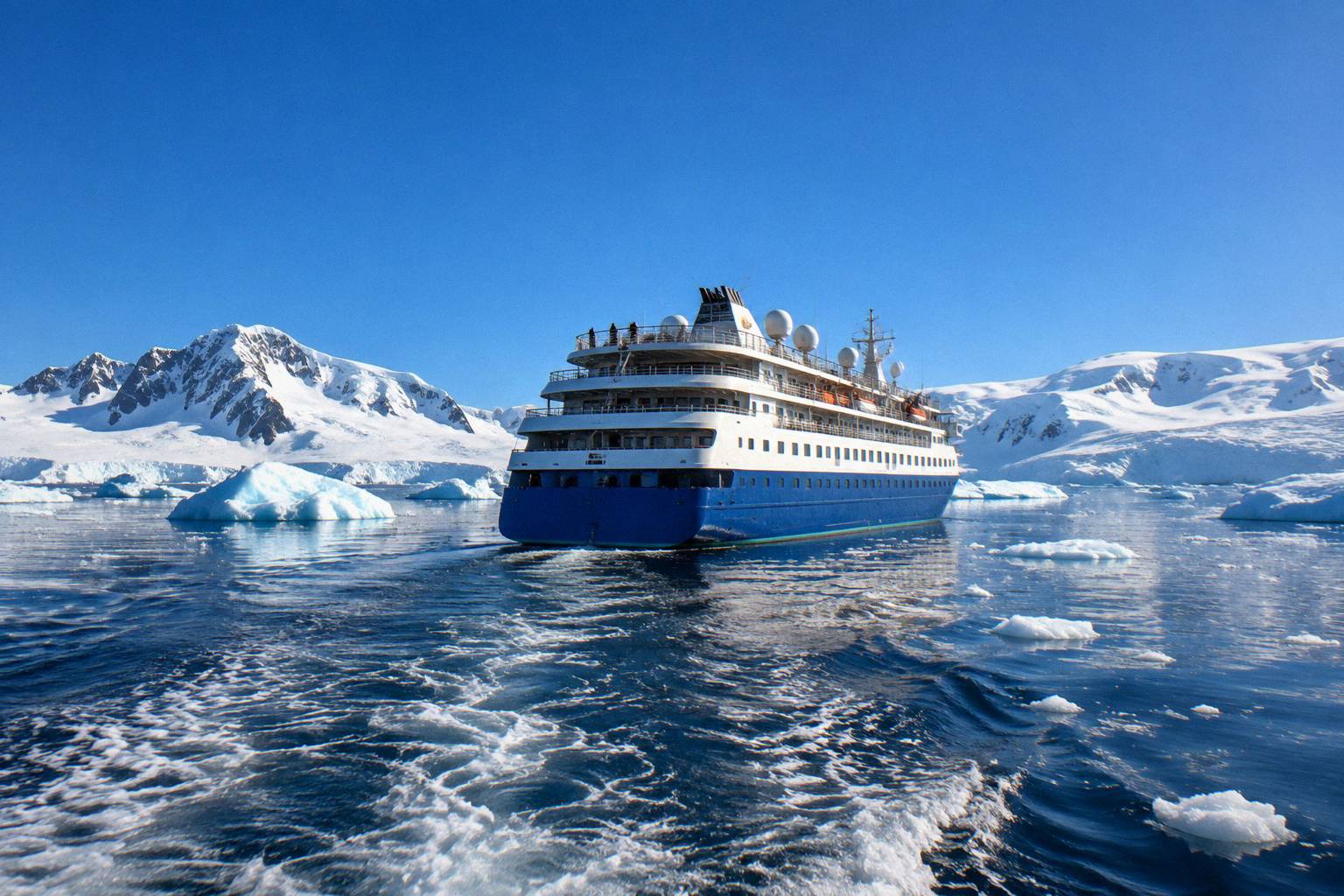
National Geographic Explorer is the veteran of the Lindblad fleet, an ice-reinforced ship carrying 148 guests to Antarctica on sail-and-fly, fly-the-Drake and South Georgia voyages. Here is what Lindblad states about her cabins, fares and 2026-27 itineraries.
Quick answer: National Geographic Explorer carries 148 guests with 99 staff and crew for Lindblad Expeditions. Antarctic voyages run 8 to 22 days; the Antarctica Direct sail-and-fly product starts in Ushuaia and is listed from $10,400 per person (was $12,500). Gratuities, most drinks and a parka on select voyages are included; boots are not.
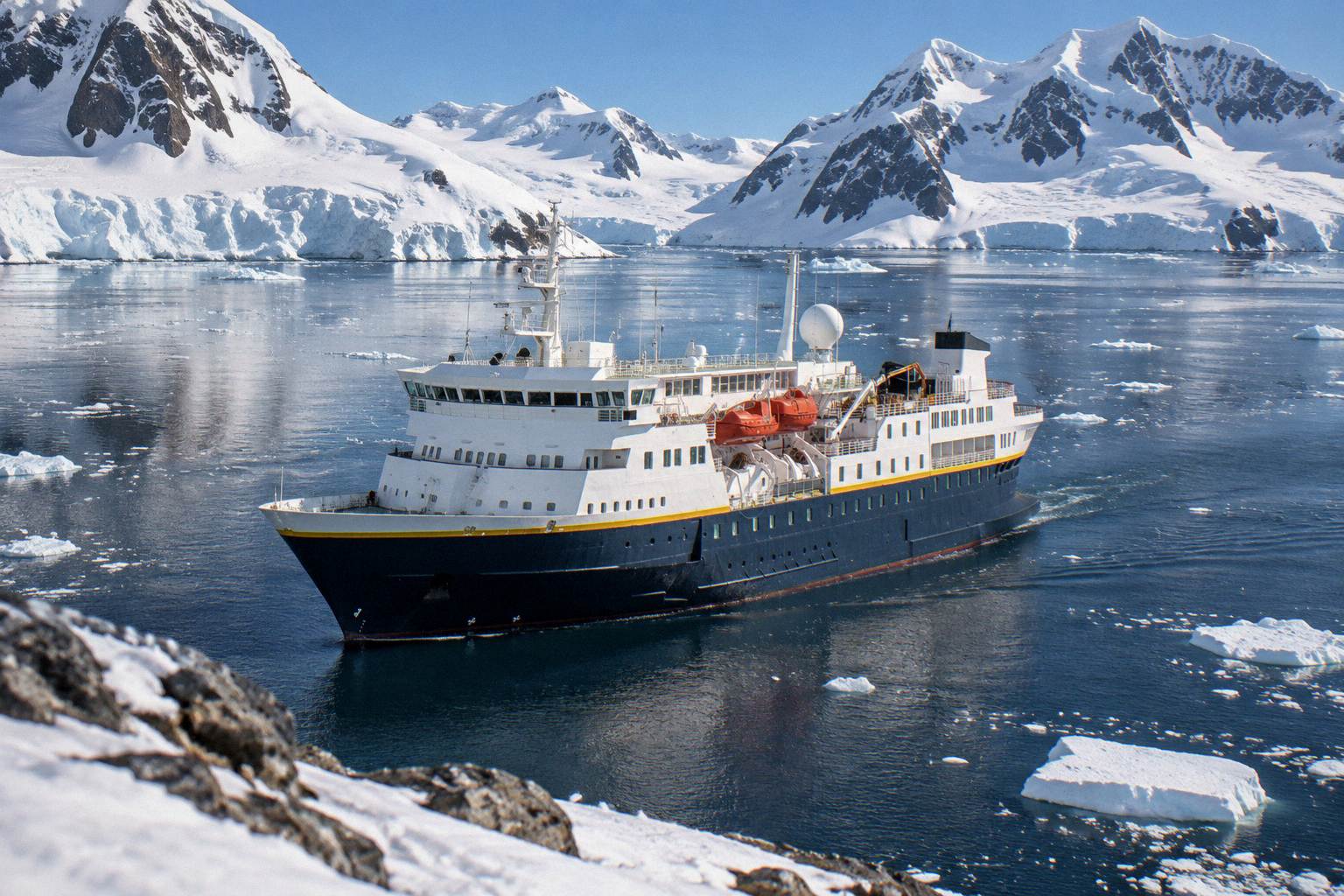
National Geographic Explorer was built in 1982 by Ulstein as the Norwegian coastal ship Midnatsol, and Lindblad later had her completely rebuilt for pole-to-pole expedition work. Today she is the senior Lindblad Expeditions ship, sailing the Antarctic Peninsula with 148 guests and 99 staff and crew. Her 2026-27 Antarctic program leans on fly-the-Drake products, from $12,600, and a sail-one-way, fly-one-way routing from $10,400.
That flying is the real story with this ship. Her younger fleetmates Endurance and Resolution sell classic two-way Drake sailings; Explorer is the Lindblad hull that shortens the trip by putting you on a plane to King George Island for one or both crossings. If your time is tight, or the Drake worries you, that matters more than any spec line.
What Kind Of Ship Is National Geographic Explorer?
National Geographic Explorer is a 367-foot, ice-reinforced expedition ship operated by Lindblad Expeditions in partnership with National Geographic, carrying 148 guests in 81 cabins with 99 staff and crew across six decks. She was built in 1982 and completely rebuilt for expedition service, with her Category 6 and 7 suites renovated in May 2023. Lindblad's ship page gives no Polar Class numeral and describes her as an ice-class vessel with an ice-reinforced hull. Wikipedia lists her ice class as 1A, her length as 112 metres (367 ft 5 in), her beam as 16.51 metres and her gross tonnage as 6,471; Lindblad itself publishes neither a tonnage figure nor a class number.
Put those numbers next to her fleetmates and the difference in scale is plain. Endurance and Resolution are 408 feet long with a 69-foot beam and about 12,786 gross tons, nearly twice Explorer's volume, yet they carry ten fewer guests (138). Explorer's beam is 54 feet on the operator page. A narrower, older hull carrying more people is the trade you make for her lower fly-cruise fares.
For a cruise buyer, the honest read is that Explorer is an older, proven hull rather than a newbuild. Guests comparing her against purpose-built sisters should read the National Geographic Endurance ship review, since Endurance and Resolution carry the PC5 Category A class and the X-BOW that Explorer lacks. What Explorer offers instead is a long-serving platform and the Lindblad-National Geographic expedition program, with naturalists, photographers and certified photo instructors running photo workshops and field mentoring on voyages.
Her staffing works out to roughly one staff or crew member for every 1.5 guests (148 guests, 99 staff and crew). On Endurance the same arithmetic gives about one for every 1.2 (138 guests, 116 staff and crew). Both are high by expedition standards, but the newer ships are the denser of the two.
She suits travellers who value the expedition program, included drinks and gratuities, and the option to fly the Drake over the newest hardware. Travellers who want the newest hull, more ice capability and a wrap-around-view dining room should look at her sisterships instead.
Cabins, Categories And Balconies On National Geographic Explorer
National Geographic Explorer has 81 cabins across Categories 1 through 7, from Main Deck porthole cabins to renovated balcony suites. Balconies appear in Category 5, in one Category 6 cabin (#213) and in the Category 7 suites. Lindblad does not print cabin sizes in square feet for this ship, and it does not publish a total balcony count. Lindblad's cabin copy lays the categories out by deck and cabin number:
- Category 1, Main Deck, portholes: #301 to #308, eight cabins at the lowest guest level.
- Category 2, Main Deck, window: #317 to #320, #335 and #336.
- Category 3, Main Deck, window: #313 to #316, #321 to #328, #337 to #340, #342, #344, #348 and #350. Cabins #341 and #343 have a sofa bed, the ones to ask about if a third person is sharing.
- Category 4, Upper Deck, window: #201, #202, #204 to #207, #210, #212, #217, #226 and #228.
- Category 5, Upper Deck, balcony: #209, #211, #214, #216, #218, #220 to #222 and #224.
- Category 6: #101 and #102 with windows, and #213 with a balcony, all renovated in May 2023.
- Category 7, balcony suites: #215, #219 and #230, renovated in May 2023.
Those lists come from Lindblad's cabin copy and do not add up neatly to 81, so treat them as a guide to where each category sits, not a full inventory. Count what is listed and the picture is clear enough: the large majority of Explorer's cabins are window or porthole cabins on the Main and Upper decks, and balcony stock is a minority concentrated in Categories 5 and 7. That is the opposite of Aurora's Greg Mortimer, where 85 percent of staterooms have a balcony.
Practical implications for a Peninsula cruise: the Main Deck porthole and window cabins sit lower in the ship, which many travellers prefer for a sailed Drake crossing, while Upper Deck balcony cabins sit higher. The Antarctica best cabin guide covers this trade-off across the whole fleet. On the fly-the-Drake products, where you spend no nights crossing open ocean, the motion argument largely falls away and the choice becomes about space, light and budget.
| Cabin grade | Deck | View | Balcony | Cabin numbers |
|---|---|---|---|---|
| Category 1 | Main | Portholes | No | #301-308 |
| Category 2 | Main | Window | No | #317-320, 335-336 |
| Category 3 | Main | Window | No | #313-316, 321-328, 337-340, 342, 344, 348, 350; #341, #343 have sofa beds |
| Category 4 | Upper | Window | No | #201-202, 204-207, 210, 212, 217, 226, 228 |
| Category 5 | Upper | Window and balcony | Yes | #209, 211, 214, 216, 218, 220-222, 224 |
| Category 6 | Mixed | Windows (#101-102), balcony (#213) | #213 only | Renovated May 2023 |
| Category 7 | Mixed | Balcony suites | Yes | #215, #219, #230; renovated May 2023 |
Lindblad does not publish a solo-cabin count for Explorer. Solo travellers who want a dedicated single cabin will find published solo categories on Endurance (Categories A and B Solo, both with balconies) and on Greg Mortimer (solo balcony categories), and should ask about single-occupancy terms on Explorer before booking.
Dining And Onboard Spaces
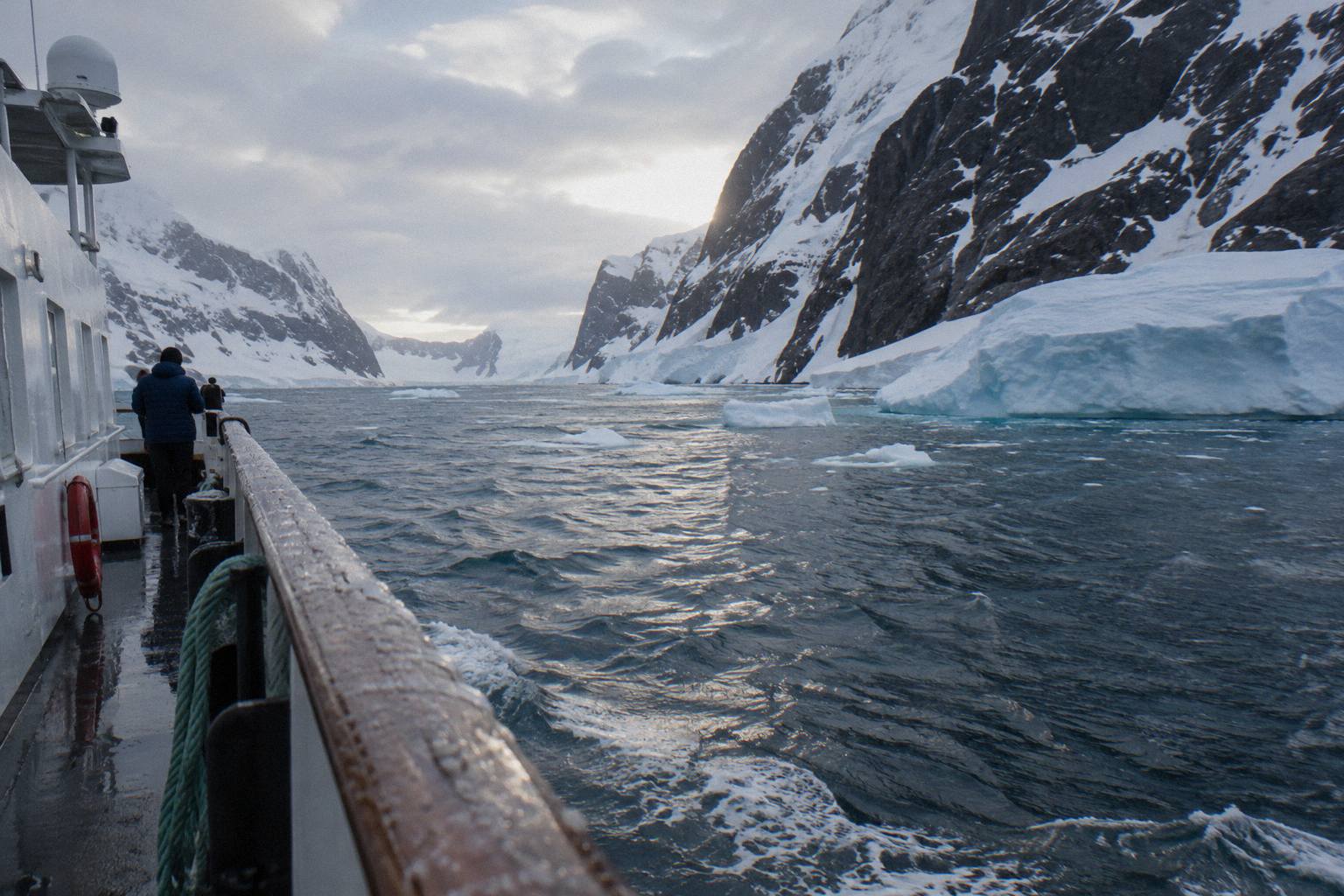
Dining on National Geographic Explorer runs across three areas, the dining room, the Bistro bar and the observation lounge, with meals, beer, wine, cocktails and spirits included in the fare outside premium brands. Public spaces include an open bridge, a chart room, the observation lounge, a library, a lounge with a bar and presentation facilities, a global gallery and a mudroom for expedition gear. The mudroom is the working heart of the ship on Antarctic voyages: it is where boots, parkas and life vests are staged before each Zodiac outing.
The open bridge lets guests stand with the officers while the ship works through ice, and the chart room is part of the same published space list. Lectures, recaps and photo reviews need a room with screens and seating, and that is the role of the lounge with its presentation facilities.
Lindblad does not list a pool, gym, sauna, hot tub, helicopter, guest submarine or dedicated science centre for this ship. That is the clearest gap against her fleetmates. Endurance and Resolution list a gym, yoga studio, treatment rooms, high- and low-heat saunas, infinity-edge outdoor hot tubs and two glass igloos, plus a science hub and Restaurant 270° with wrap-around views. Greg Mortimer has a pool deck, two jacuzzis, a gym, a sauna and a treatment room. On Explorer, the leisure time is spent in the lounges and on deck.
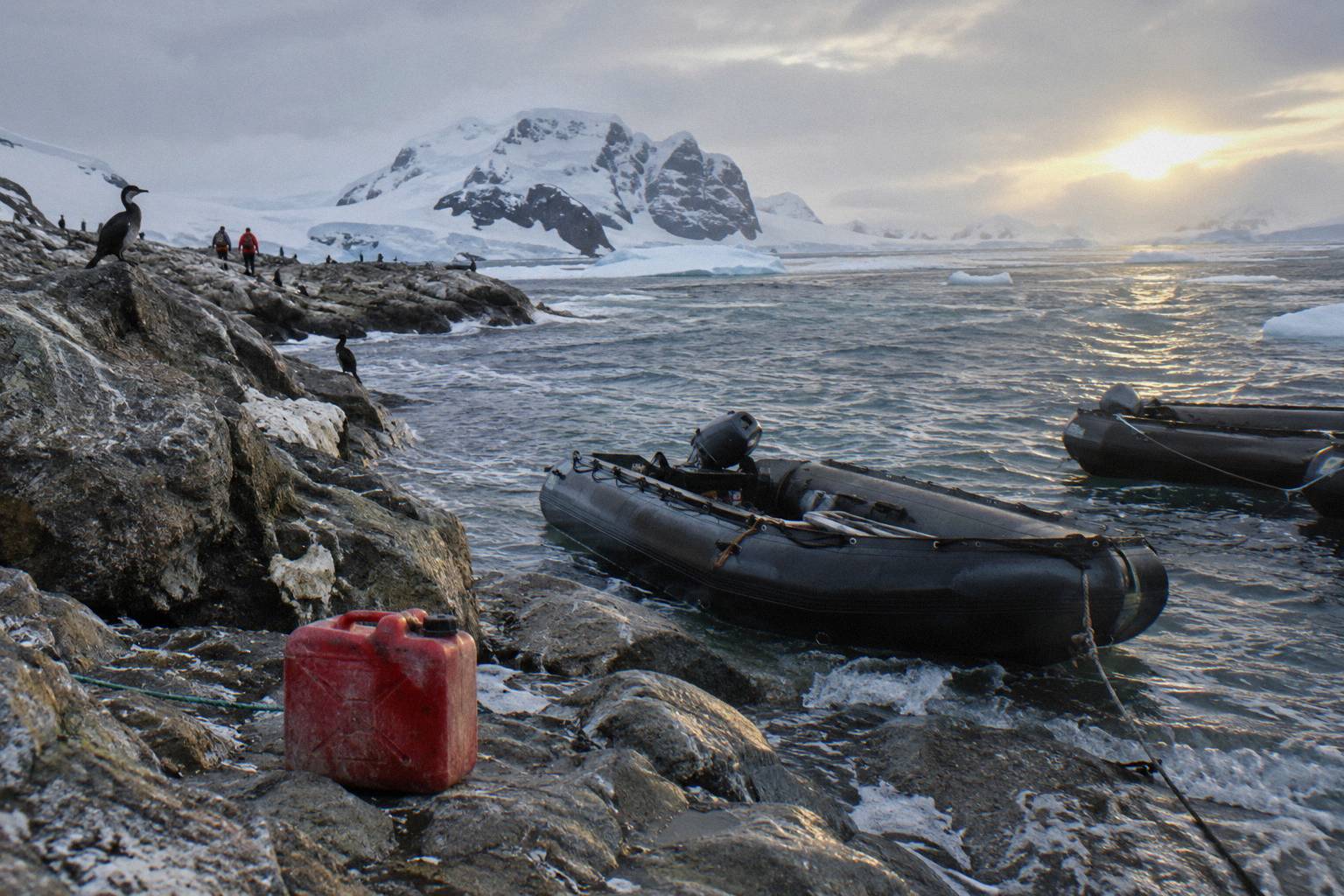
Expedition gear is the fleet's shared kit: Zodiac landing craft and kayaks, with Lindblad's Explorer page also listing a remotely operated vehicle (ROV) for underwater footage. Kayaking is part of the fare on Lindblad ships rather than a paid add-on, which is not the case on every line; Aurora, for example, often sells kayaking as an extra.
2026-27 Antarctic Itineraries, Ports And From-Prices
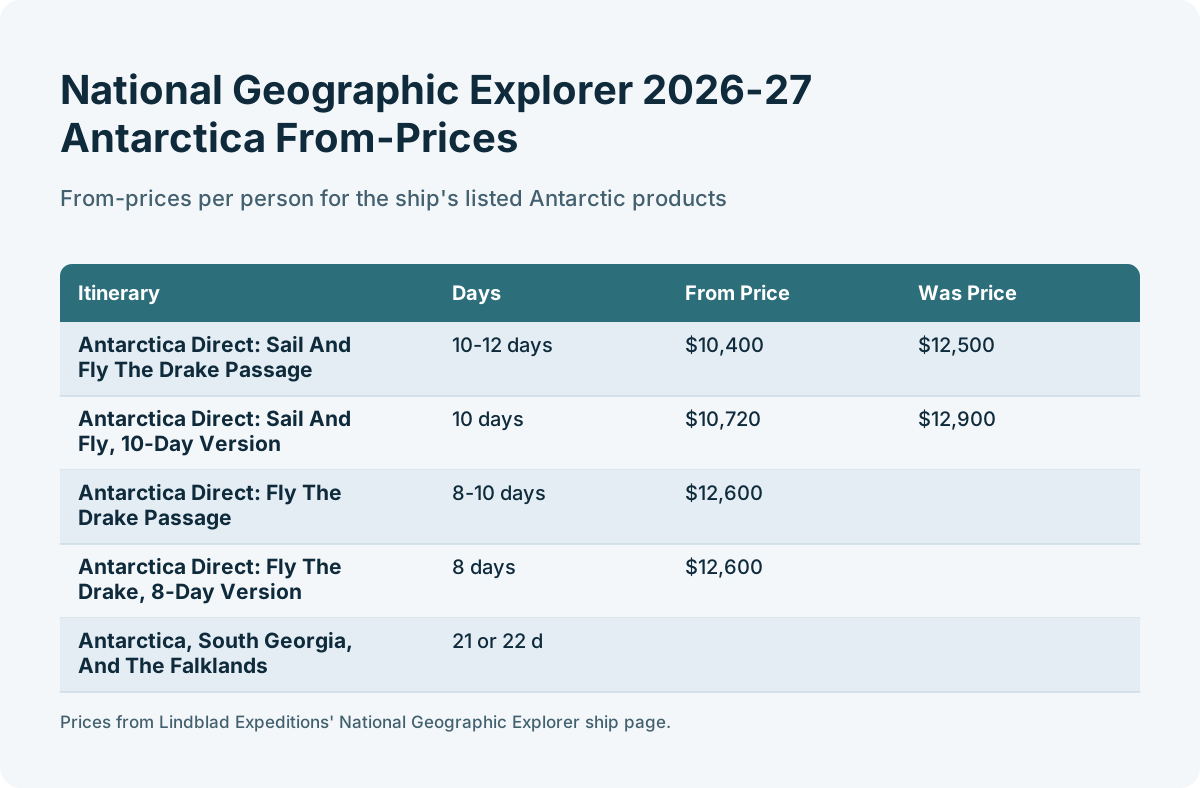
National Geographic Explorer's ship page lists these Antarctic products for 2026-27: Antarctica Direct: Sail and Fly the Drake Passage (10-12 days, from $10,400 per person, was $12,500), a 10-day Sail and Fly version (from $10,720, was $12,900), Antarctica Direct: Fly the Drake Passage (8-10 days, from $12,600, with a separate 8-day version at the same fare), Antarctica, South Georgia, and the Falklands (21 or 22 days, from $30,000), and Antarctica and Patagonia: Legendary Ice and Epic Fjords (18 days, from $20,000). Lindblad's ship-page "starting from" card has also shown the sail-and-fly product at $12,250. These fares move with promotions, so treat any number here as a lead-in, not a promise.
The routings matter as much as the prices. The Antarctica Direct sail-and-fly product starts in Ushuaia with a hotel night, embarks on Day 2, and ends in Puerto Natales after a flight from King George Island, so you sail one Drake leg and fly the other. The fly-the-Drake product starts and ends in Puerto Natales, with a two-hour flight to King George Island to meet the ship and the same flight back, plus a hotel night in Puerto Natales at each end. On both Direct products the required flights are included in the fare. Lindblad also sells both Direct products on its smaller ship, National Geographic Orion, so check which hull your departure uses.
The South Georgia and Falklands itinerary, from $30,000, runs three weeks and is the wildlife-maximizing choice; see the South Georgia cruise guide for why. Its published route starts and ends in Ushuaia, with Day 1 as a hotel night in Buenos Aires, and Lindblad sells it on all three of its large polar ships: Explorer, Endurance and Resolution. The 18-day Patagonia combination adds the fjords of southern South America to the Peninsula.
| Itinerary | Length | Months | Routing | From price (pp) | Flights |
|---|---|---|---|---|---|
| Antarctica Direct: Sail and Fly the Drake | 10-12 days | Jan, Feb, Mar, Nov, Dec | Ushuaia to Puerto Natales | $10,400 (was $12,500) | Required flights included |
| Sail and Fly (10-day version) | 10 days | Listed on ship page | Listed on the ship page | $10,720 (was $12,900) | Required flights included |
| Antarctica Direct: Fly the Drake Passage | 8-10 days | Jan, Feb, Nov, Dec | Puerto Natales roundtrip via King George Island flights | $12,600 | Required flights included; hotel nights at both ends |
| Antarctica, South Georgia, and the Falklands | 21 or 22 days | Feb, Mar, Oct, Nov | Ushuaia roundtrip, Buenos Aires hotel on Day 1 | $30,000 | Not included unless stated |
| Antarctica and Patagonia: Legendary Ice and Epic Fjords | 18 days | Feb, Nov | Embarkation port not stated on the ship page | $20,000 | Not included unless stated |
A note on season: the Direct products run from November to March, the core of the Antarctic summer, and the South Georgia voyage adds October departures. The Antarctica in January guide and its sibling month pages cover what each month does to wildlife, ice and price.
How the fares stack up per day is worth a moment. The 10-12 day sail-and-fly from $10,400 works out to roughly $870 to $1,040 a day, with the King George Island flight included. The three-week South Georgia voyage at $30,000 is about $1,360 to $1,430 a day before flights. The fly-the-Drake product costs the most per day, from $12,600 for 8-10 days, because you are paying for two charter legs in place of sea days.
What The Fare Includes And What It Does Not
The Lindblad fare on this ship includes meals, beer, wine, cocktails and spirits outside premium brands, crew gratuities, kayaks and listed expedition gear, hotels and excursions as written in the itinerary, a complimentary parka or jacket on select Antarctic voyages, and basic Wi-Fi over Speedcast and Starlink with paid enhanced and premium tiers. It does not include boots, international airfare, or charter flights unless the itinerary names them. The boots point is a genuine budget line: Lindblad rents boots through its Ship to Shore program rather than loaning them as many competitors do. The parka is limited to select Antarctic voyages, so confirm it for your specific departure.
Compare that with Aurora Expeditions on Greg Mortimer. Aurora loans muck boots for the voyage and gives you a 3-in-1 polar jacket, includes Starlink Wi-Fi, includes a pre-voyage hotel night and arrival transfer on selected flights, and from the 2026-27 season includes beer, wine, cocktails and spirits. What Aurora does not include as standard is gratuities, apart from its Junior and Captain's Suites, which carry $20 per person per day. So the two packages trade line items: Lindblad covers tips, Aurora covers boots.
Insurance is a separate requirement. Operators in this market require proof of medical evacuation coverage, and expedition insurance comparisons put Lindblad's minimum at $150,000 for medical evacuation. Check the current figure on your booking documents, and see the Antarctica travel insurance guide for how these policies work in practice.
When you weigh Explorer's fare against a cheaper berth on another line, the honest comparison is per person with everything counted: gratuities and drinks included here can close part of the gap to a budget operator that charges for both. If you want help running that comparison across quotes, a free consultation on ships and fares walks through the arithmetic with no obligation.
Who National Geographic Explorer Suits, And Who Should Look Elsewhere
Explorer suits travellers who prioritize the Lindblad-National Geographic expedition program, a high staff ratio, included drinks and gratuities, and the option to fly the Drake, with fares from $10,400 per person. Travellers who want the newest hull, PC5 ice class, an X-BOW for the Drake crossing or balcony-heavy accommodation should book her sisterships or another line, and budget travellers can find Peninsula berths from roughly $7,500 on other operators. The ship's expedition tools include Zodiacs, kayaks and a remotely operated vehicle, and photo workshops run by certified photo instructors are part of the Lindblad program.
Three kinds of traveller get the most from her. The first is the time-poor traveller, who can be on the Peninsula and home inside 8 to 10 days on the fly-the-Drake product. The second is the seasickness-wary traveller, who can skip one or both crossings. The third is the first-timer who wants everything from drinks to tips settled in one fare and would rather spend on the expedition team than on a spa.
Solo travellers should note that dedicated solo cabins are published for Endurance (Categories A and B Solo) but not for Explorer. Families should confirm the minimum-age policy for their sailing directly with Lindblad. Travellers with limited mobility should ask specifically about Zodiac boarding, since expedition landings require a step across an often-moving gap and about the King George Island flights on the Direct products.
How Explorer Compares With Two Alternatives
Against National Geographic Endurance, Explorer is older and smaller in tonnage, trading the PC5 ice class, the X-BOW, the spa and the glass igloos for fly-the-Drake routings Endurance does not sell; against Aurora Expeditions' Greg Mortimer, Explorer offers included gratuities while Mortimer counters with a 2019 X-BOW newbuild, a pool deck and balconies in 85 percent of staterooms. Endurance carries 138 guests in 76 cabins, and her Voyage to Antarctica product starts at $10,800 for 12 days (was $13,500), against $10,400 for Explorer's 10-12 day sail-and-fly. Greg Mortimer carries up to 148 passengers, capped at 130 on expedition voyages, with published solo balcony categories.
Explorer versus Endurance in detail. Endurance was delivered by Ulstein in March 2020 and Resolution followed in September 2021. Both are 408-foot PC5 Category A ships with Ulstein's X-BOW, 76 cabins and 116 staff and crew. Endurance's cabin plan runs from window cabins in Categories 1 and 2 to balcony cabins in Categories 3 to 7, with a large-balcony suite tier and two solo balcony categories. Her expedition kit goes further than Explorer's: snowshoes, cross-country skis, a hydrophone, an aerial remote-controlled camera and a video microscope join the Zodiacs, kayaks and ROV. Endurance routings run roundtrip via Buenos Aires, and Resolution's run roundtrip via Santiago through 2027-28, with the ship itself embarking at Ushuaia. Endurance and Resolution both sell the 16-day Quest for the Antarctic Circle from $16,650, and Resolution alone sells a 25-day Patagonia, Falklands, South Georgia and Antarctica Odyssey from $50,000. Explorer sells none of those; her niche is the flying.
Explorer versus Greg Mortimer in detail. Greg Mortimer was delivered in September 2019 as the first passenger ship with the X-BOW. She is 104 metres long over eight decks, holds Polar Class 6 and ICE 1A* notation, and carries 15 Zodiacs, four boarding doors and hydraulic side viewing platforms. Her owner lists a 162-seat restaurant, a 36-seat speciality restaurant and a 48-seat observation restaurant. Aurora's dated 2026-27 departures for her include a 26-day Ross Sea Odyssey from Hobart to Dunedin from $37,616 and a 13-day Across the Antarctic Circle from Ushuaia. Her listed departures are full sea voyages, with no King George Island flight leg.
| Ship | Class | Passengers | Ice class | From, per person | Voyage length | Departs from |
|---|---|---|---|---|---|---|
| National Geographic ExplorerLindblad Expeditions (with National Geographic) | Upscale Expedition | 148 | Ice-reinforced hull | from $12,250 | 10 to 22 days | Ushuaia |
| National Geographic EnduranceLindblad Expeditions (with National Geographic) | Standard Expedition | 138 | PC5 | from $11,900 | 12 to 22 days | Ushuaia |
| Greg MortimerAurora Expeditions | Upscale Expedition | 130 | – | from $19,521 | 12 to 26 days | Ushuaia |
The head-to-head detail lives in dedicated pages, including the Greg Mortimer versus National Geographic Explorer comparison and the Endurance versus Resolution sibling matchup. If you are torn between the fly-the-Drake speed of Explorer's Direct products and a full two-way sailing, the Drake Passage crossing guide lays out the trade-offs; in good conditions a crossing takes 18 to 24 hours, and in rough seas 36 to 48.
Planning Your Voyage: Timing, Booking And Cost
Book 12 or more months ahead for peak December and January departures, budget from about $10,400 to $20,000 per person for Explorer's Peninsula products before international flights, and expect a hotel night in the gateway city on Day 1, which both Antarctica Direct products include. December and January carry peak pricing; November and March shoulder dates price lower, with the wider market showing shoulder-season prices 20 percent or more below peak, a pattern also covered in the cheap Antarctica cruise guide.
Payment terms follow the expedition pattern: a deposit at booking and final payment due months before departure, with cancellation penalties rising as the date gets closer. The exact deadlines vary by operator, so read Lindblad's terms for your departure before you pay. Explorer's Antarctica Direct products include the required flights to and from King George Island in the fare, which is a real saving over operators who charge the charter as an add-on, but your international flights to Ushuaia or Puerto Natales, usually via Buenos Aires or Santiago, are your own booking either way. If deciding between a fly-heavy routing and a longer sailing itinerary feels close, talk through the options free before committing a deposit.
Sail And Fly Or Fly Both Ways: Which Explorer Voyage Fits You?
Choose the 10-12 day sail-and-fly if you want to experience one Drake crossing and arrive by sea, and the 8-10 day fly-the-Drake if time or seasickness is the deciding factor; choose the 21-22 day South Georgia and Falklands voyage if wildlife depth matters more than days away from home. The sail-and-fly is the cheaper of the two Direct products, from $10,400 against $12,600, and it gives you the classic approach by sea from Ushuaia with the flight saved for the return to Puerto Natales.
The fly-both-ways product removes the crossings entirely. You start and finish in Puerto Natales in Chilean Patagonia, fly two hours to King George Island in the South Shetlands, and board the ship there. That makes it the shortest way to reach the Peninsula on a Lindblad ship. The trade-off is weather: flights to King George Island depend on conditions at a remote airstrip, so build slack into your onward travel plans on both ends.
The South Georgia voyage is a different trip altogether. At three weeks, with Falklands and South Georgia stops added to the Peninsula, it is the one for travellers who want the sub-Antarctic islands as well as the Peninsula, and it is sold on Endurance and Resolution as well, so compare cabin availability across all three ships before choosing a departure.
Common Questions About National Geographic Explorer
How much does a National Geographic Explorer Antarctica cruise cost?
The 10-12 day Antarctica Direct sail-and-fly product is listed from $10,400 per person (was $12,500), and Lindblad's ship-page card has also shown it at $12,250. Fly-the-Drake starts from $12,600, the 18-day Patagonia combination from $20,000 and the 21-22 day South Georgia and Falklands itinerary from $30,000. Gratuities and most drinks are included; boots and international flights are not.
How many passengers does National Geographic Explorer carry?
The operator page states 148 guests, with 99 staff and crew and 81 cabins across six decks.
Is National Geographic Explorer an icebreaker?
No. The operator describes her as an ice-class vessel with an ice-reinforced hull, and no Polar Class numeral appears on her ship page; Wikipedia lists her ice class as 1A. For higher ice class within the same fleet, National Geographic Endurance and Resolution hold PC5 Category A.
Do all cabins on National Geographic Explorer have balconies?
No. Categories 1 through 4 have portholes or windows only. Balconies appear in Category 5, in cabin #213 in Category 6, and in the Category 7 suites renovated in May 2023. Lindblad does not publish a total balcony count.
Does the fare include flights?
On the Antarctica Direct products, the required flights, including the King George Island legs, are included. International flights to South America are excluded on all itineraries unless a specific itinerary states otherwise.
Who should choose a different ship?
Travellers seeking the newest hull, X-BOW seakeeping, higher ice class, a spa or a high share of balcony cabins should compare Endurance, Resolution or Greg Mortimer. Budget-focused travellers can find Peninsula berths on other operators from roughly $7,500 per person, with fewer inclusions.
More Antarctic Ship Profiles
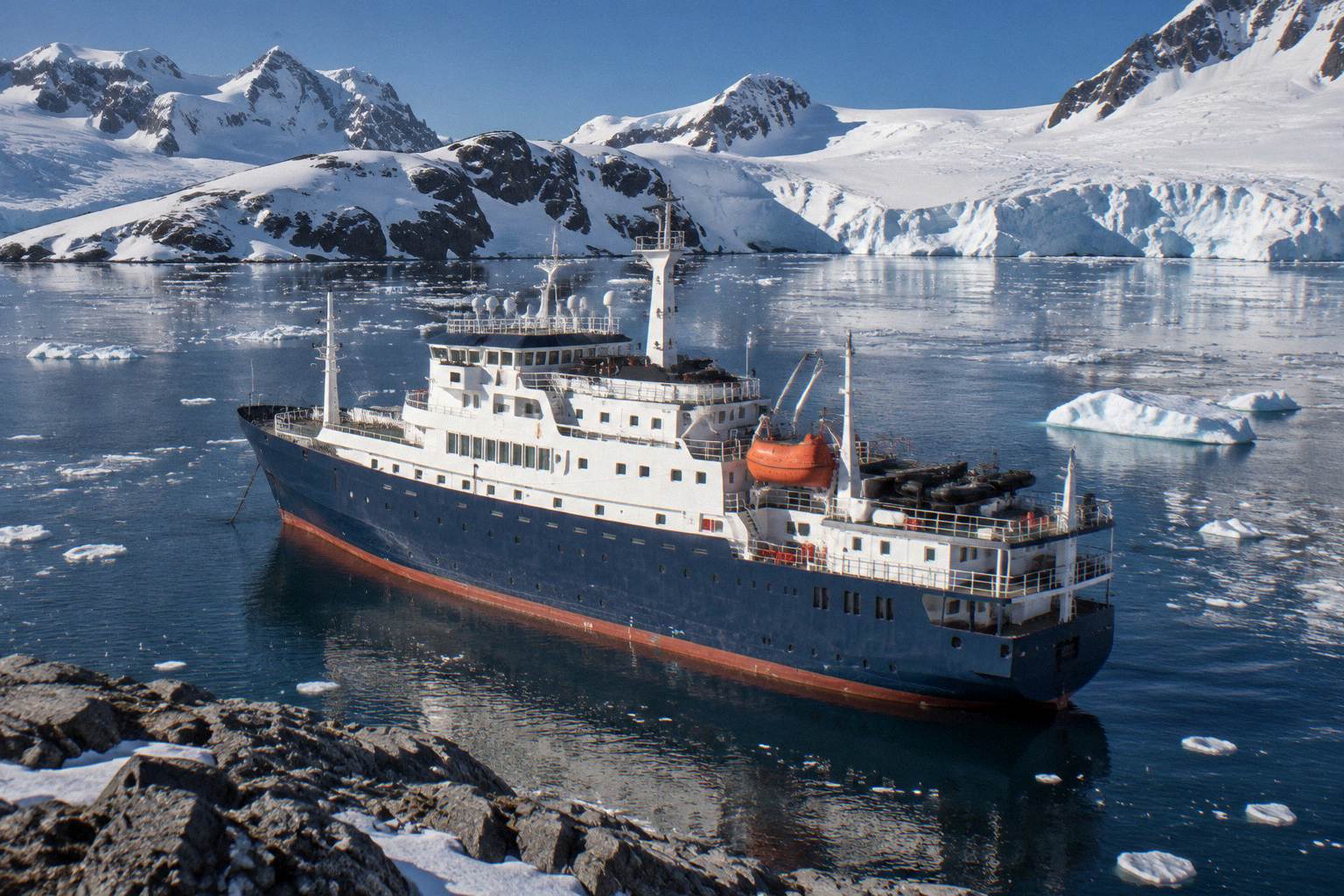 MV Plancius ReviewA no-balcony, 108-guest expedition ship with straightforward cabins, strong ice handling for its age, and Oceanwide's activity-focused Basecamp voyages.Read the guide
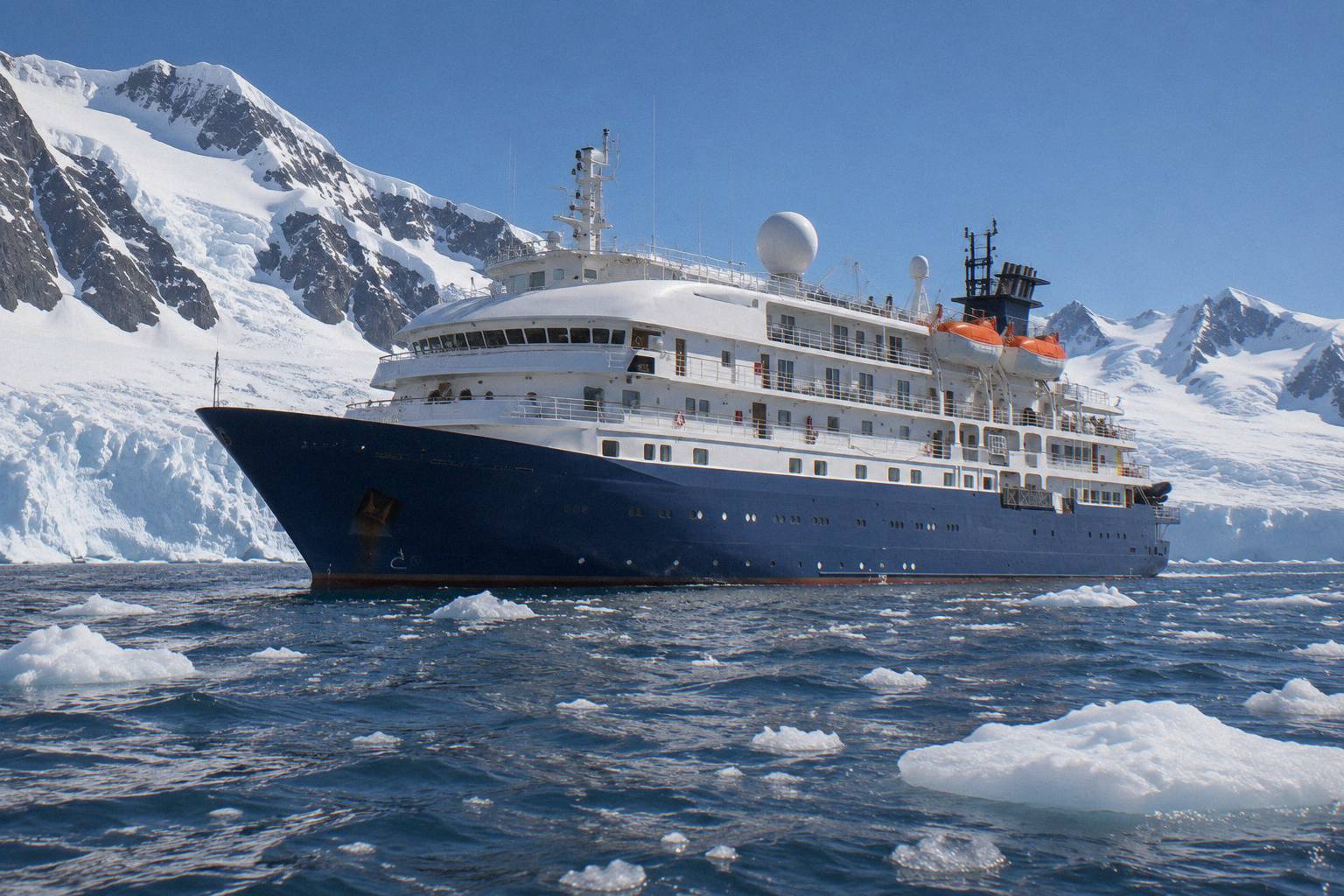 Sea Spirit ReviewPoseidon's 114-guest Sea Spirit reviewed: cabins, fares, itineraries and who it suits.Read the guide
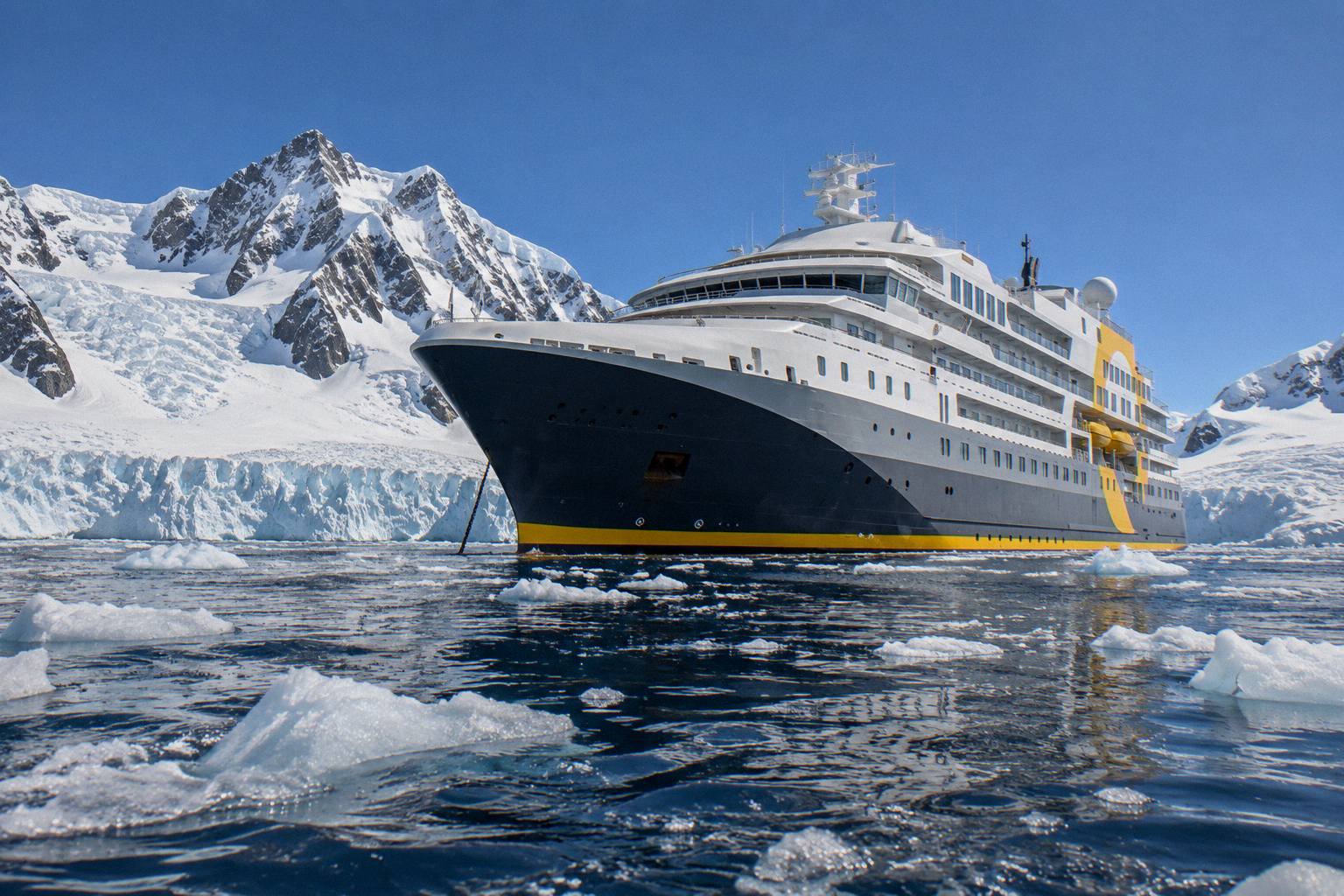 Ultramarine ReviewQuark's helicopter flagship reviewed: cabins, dining, itineraries and fares.Read the guide
 Ocean ExplorerQuark's 138-guest X-BOW ship reviewed: cabins, ice class, itineraries and fares.Read the guide