Severe Weather On An Antarctica Cruise: What Really Happens
 By Oleg G.
Antarctica cruise weather is the single biggest force shaping your voyage: it decides whether you land, whether the ship sails at all, and whether your fly-cruise flight leaves on time. Here is what the operators' own incident reports, delay statistics and booking terms say about what really happens when the weather turns.
Quick answer: Analysis of 2010-2025 Drake crossings shows 55% of November-March sailings met 13-foot seas and 12% met 20-foot seas. Weather routinely forces landing changes and can cancel whole sailings: one storm with 50-plus knot winds cancelled an HX Antarctica voyage in November 2026. Crews run Plan A, B and C options and monitor forecasts every 4-6 hours.
How Does Severe Weather Change An Antarctica Cruise?
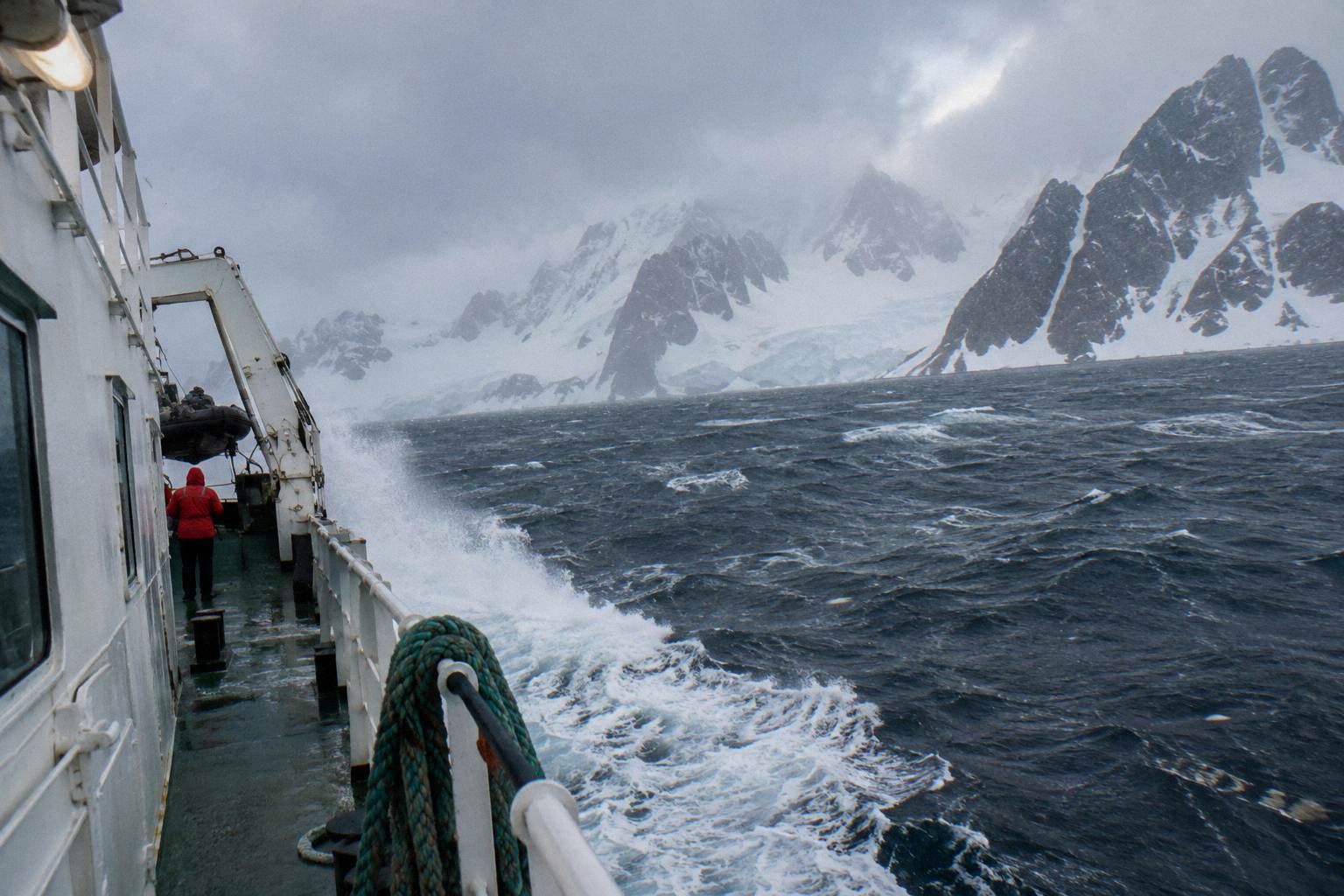
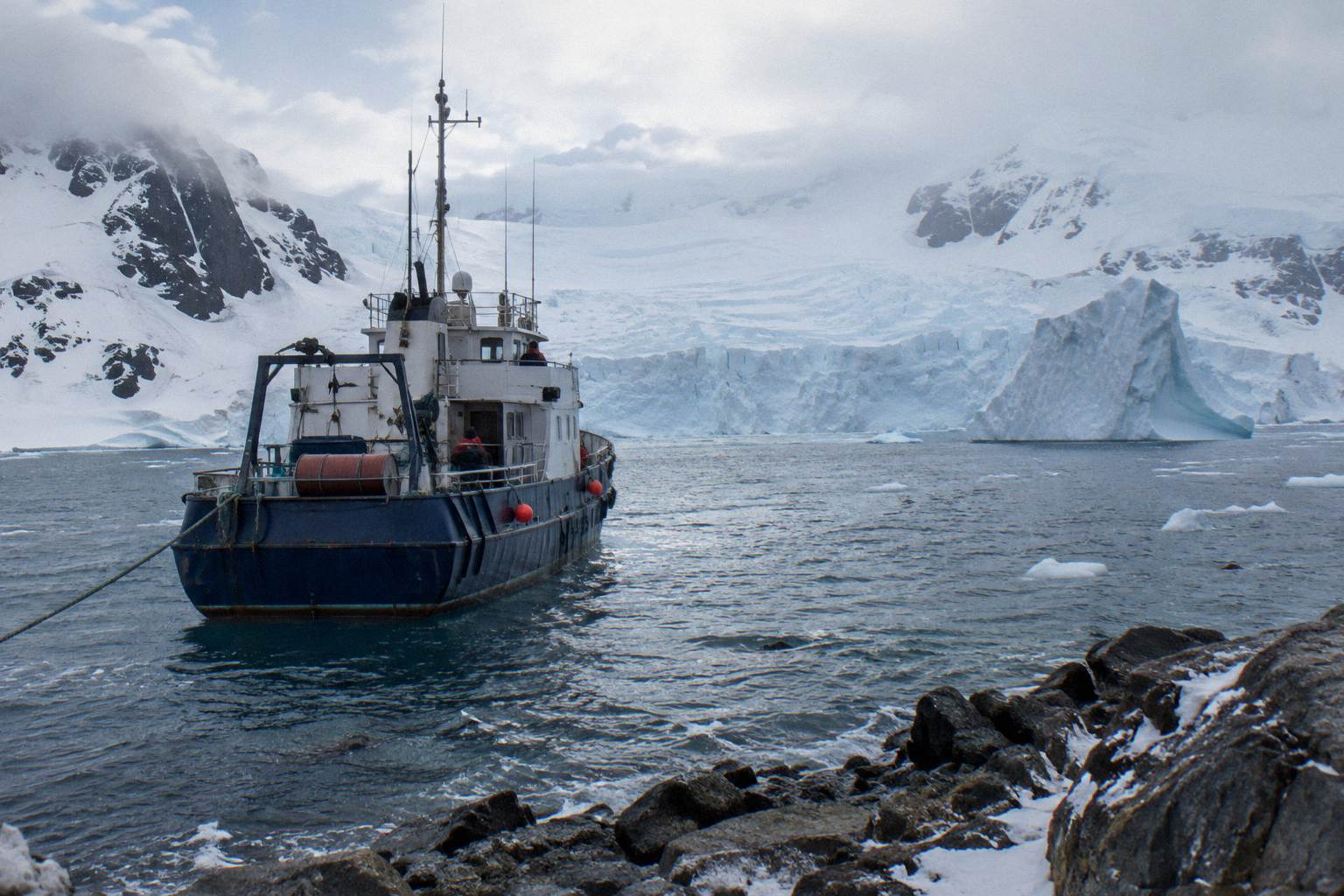
Severe weather changes an Antarctica cruise in three ways: it swaps or cancels individual landings, it reroutes or shortens whole itineraries, and occasionally it cancels a sailing before departure. Expedition crews treat this as normal operations rather than emergency, monitoring forecasts every 4-6 hours with the captain and holding Plan A, B and C options for every day. The voyage still happens; the specific plan for any given morning can change overnight.
The first thing to understand is that Antarctica cruise weather is not an edge case the operator hopes to avoid. It is the operating environment. The austral summer season runs roughly October or November through March, and within that window the Antarctic Peninsula serves up wind, fog, swell and sea ice on a schedule nobody controls. An expedition ship that promised "daily landings" in its brochure is really promising daily attempts, and the difference between those two words is where most weather stories begin.
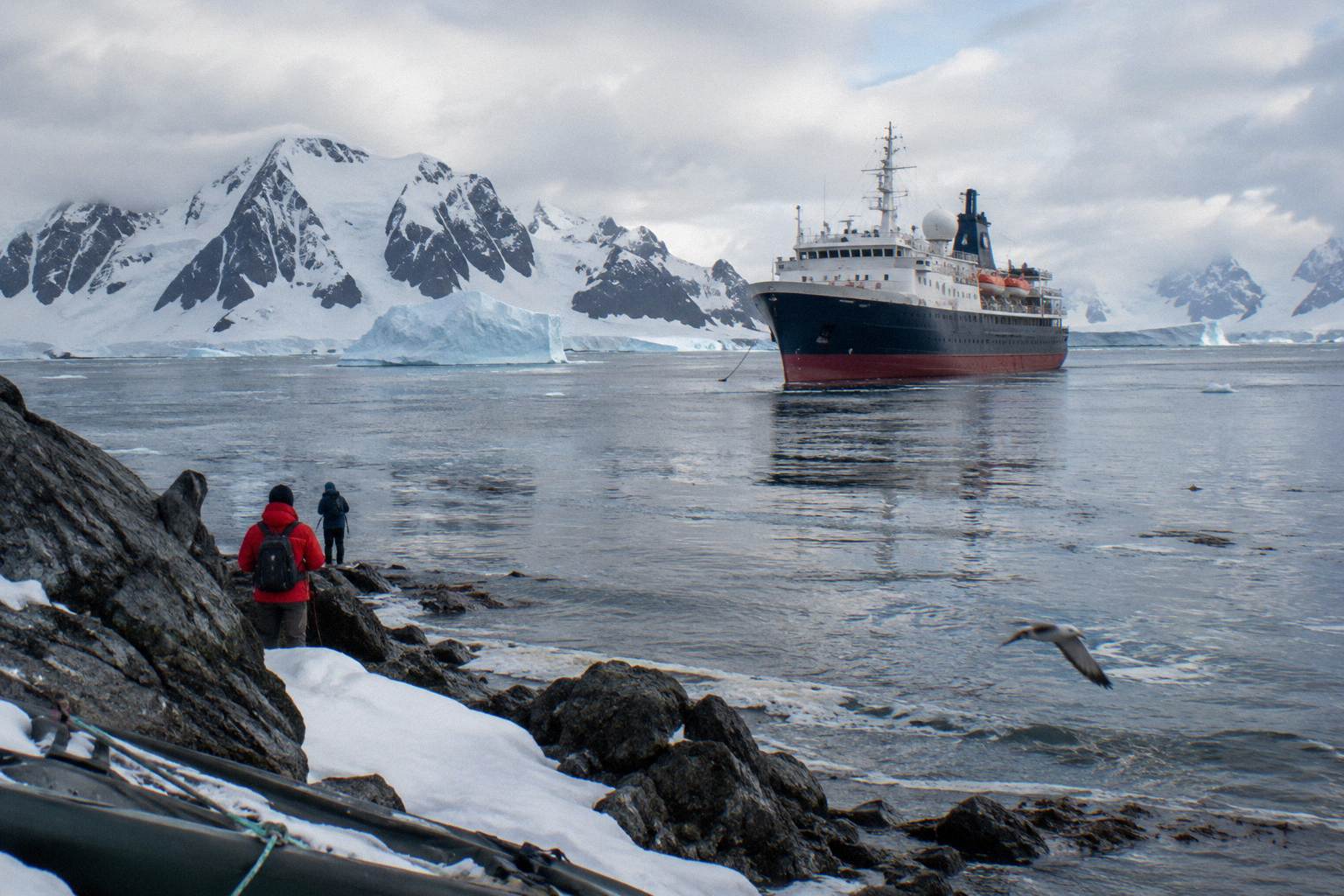
Wind is the biggest single factor. Katabatic winds, sudden strong downslope gusts that pour off the Antarctic ice sheet, can develop without warning and directly affect whether Zodiacs can run. A landing site that was calm at breakfast can be unflyable and unlandable by lunch. Fog and low cloud do the same from the other direction, hiding the anchorages and making small-boat navigation unsafe. Sea ice shifts the goalposts again: a channel that was open yesterday may be choked with brash ice today, closing a scenic cruise through it entirely.
| Weather factor | What it disrupts | Typical crew response |
|---|---|---|
| Katabatic wind gusts | Zodiac launch and landing safety | Switch to a sheltered backup site or run a scenic cruise instead |
| Fog and low cloud | Small-boat navigation, visibility | Delay the landing, relocate, or substitute a shipboard program |
| Heavy swell at the gangway | Safe boarding and beach landings | Rotate to a protected anchorage from the Plan B list |
| Sea ice or brash ice | Access to channels and scenic routes | Reroute to open water or adjust the day's landing sequence |
| Storm system over the region | The entire sailing, in extreme cases | Cancel or reroute the voyage per operator contingency terms |
None of this is hidden from passengers. On a well-run expedition ship the plan is announced at nightly briefings, and the expedition leader explains not just what tomorrow looks like but what the alternatives are if the forecast shifts. Weather apps and synoptic charts are part of the daily rhythm of the voyage, and guests are usually shown the same forecast picture the captain is working from.
The practical takeaway for a nervous booker is simple: build a voyage with slack in it. A 10-to-12-day Peninsula itinerary has four to six potential landing days, so one lost morning to wind costs you a fraction of the trip. A tight fly-cruise schedule has far less room for the weather to be wrong, which is a separate problem we cover further down this page.
What Does The Drake Passage Throw At A Ship?
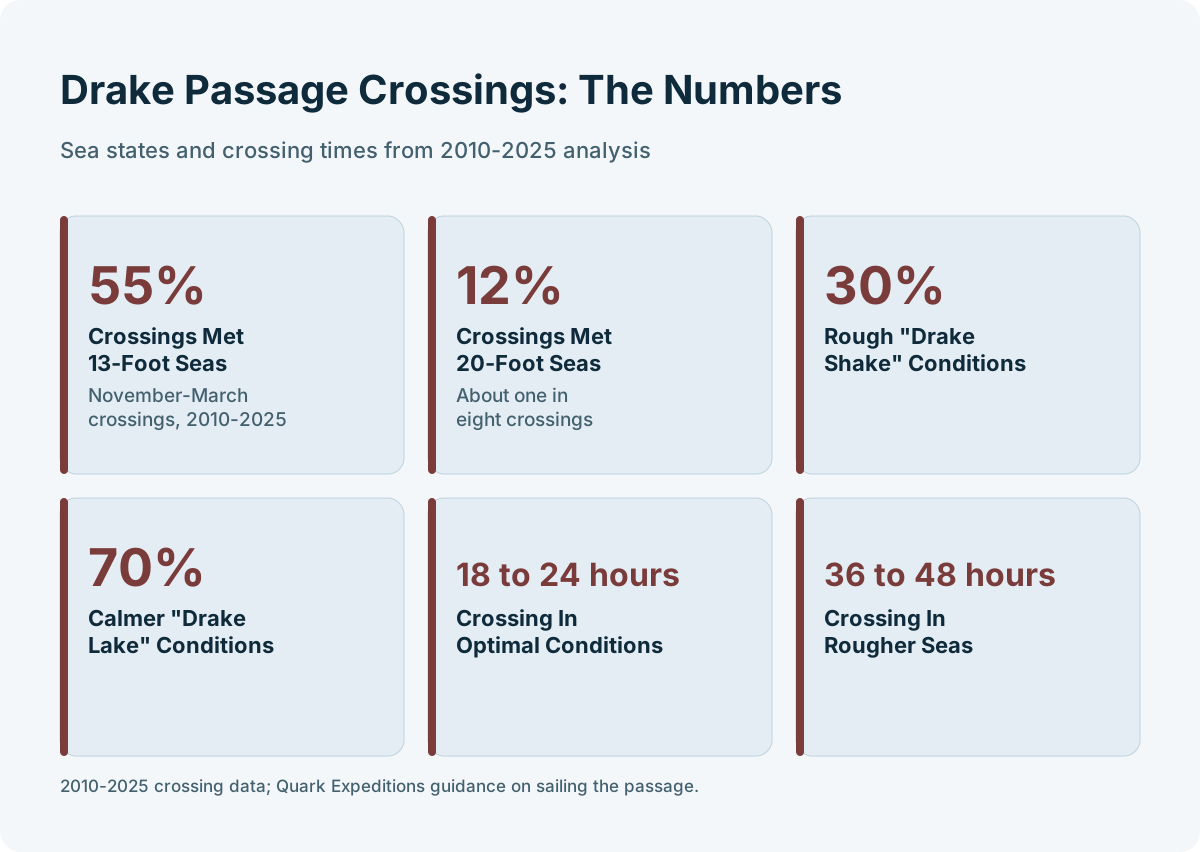
Analysis of 2010-2025 crossing data shows 55% of November-March Drake crossings met 13-foot (4-metre) seas and 12% met 20-foot (6-metre) seas. The same body of reporting notes that rough "Drake Shake" conditions occur around 30% of the time and calmer "Drake Lake" conditions around 70%. No single month is reliably better; conditions stay unpredictable across the whole season, though December to February generally offers more stable windows.
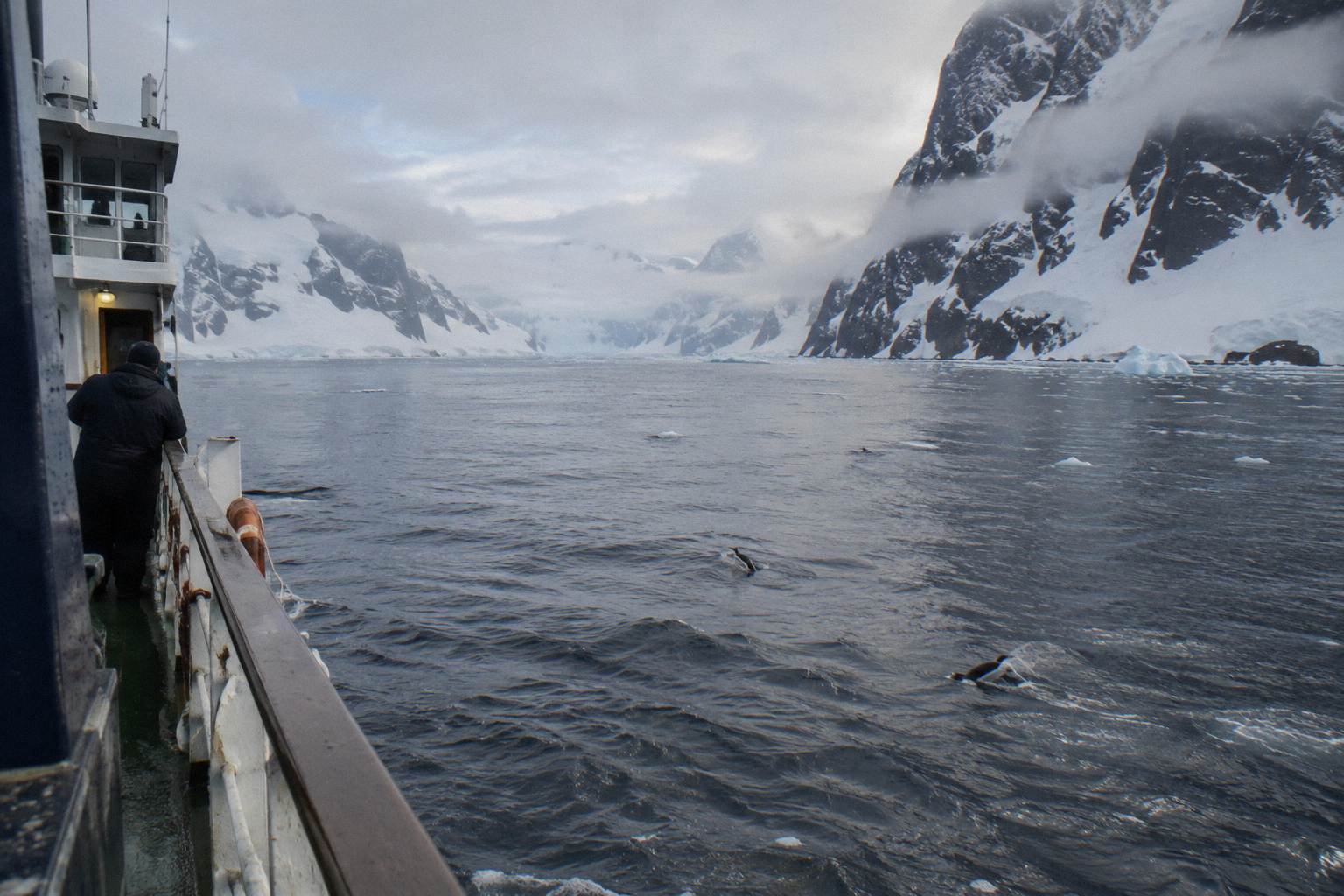
The Drake Passage is the stretch of open ocean between South America and the Antarctic Peninsula, and every sailing voyage crosses it twice. It has a reputation, and the reputation is earned: this is one of the few places on earth where multiple oceans' weather systems collide with no land to slow them down. Typical swells average 3 to 5 metres, and documented severe conditions have reached 13 to 15 metres.
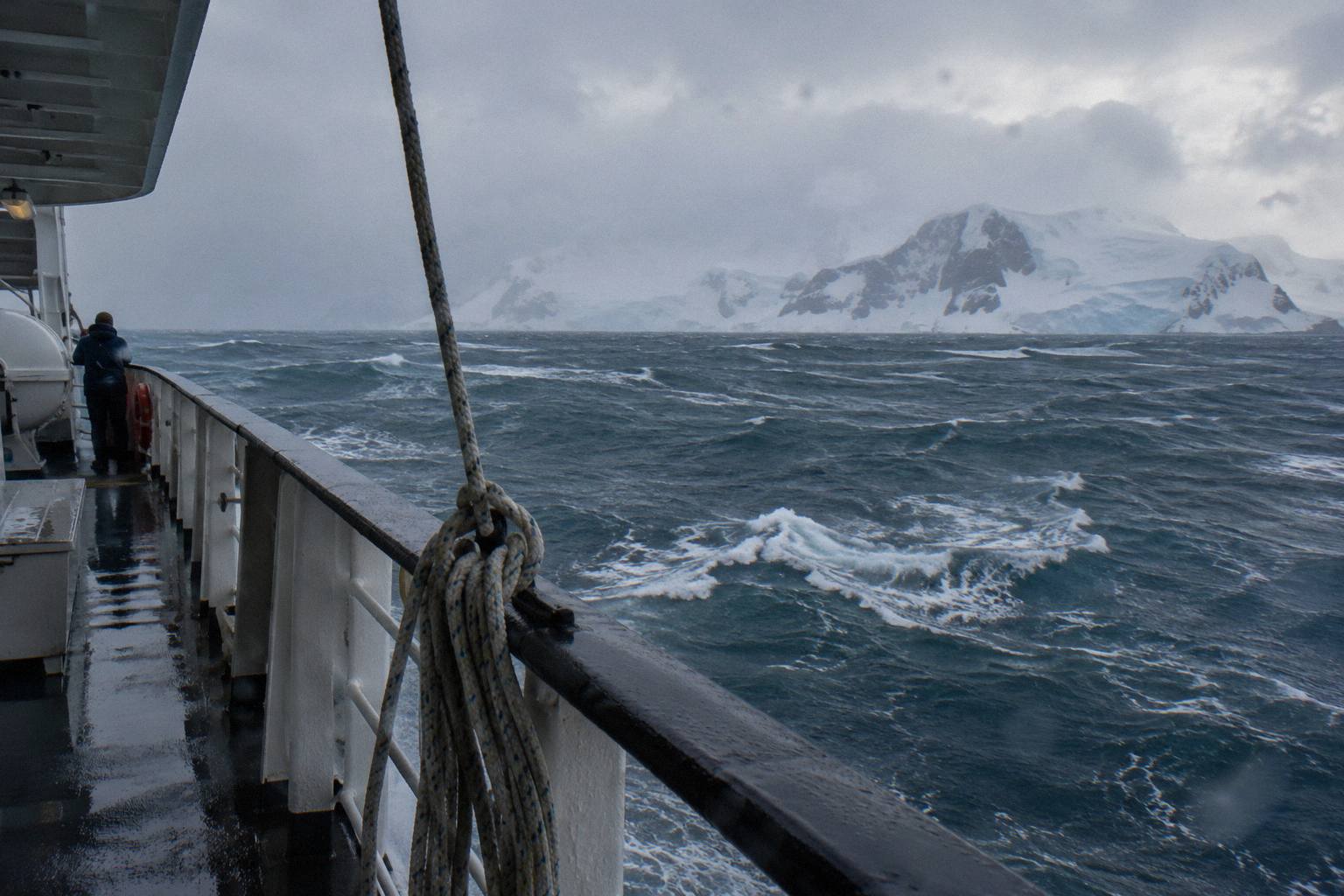
But the numbers matter more than the folklore. A crossing in optimal conditions takes 18 to 24 hours; in rougher seas it extends to 36 to 48 hours, according to Quark Expeditions' own guidance on flying versus sailing the passage. That spread is the real weather risk on a sailing itinerary: a slow, rough crossing eats time that was budgeted for landings on the other side, and the expedition team quietly rebuilds the plan to fit.
Modern ships are built for this. Newer expedition vessels carry zero-speed stabilizers, some 50% larger than standard, that keep working when the ship is stationary rather than only underway, alongside advanced weather routing that steers around the worst of a system. The Sea Spirit, for example, carries retractable fin stabilizers retrofitted in 2019 that reduce roll both underway and at anchor. Hull design helps too: X-BOW vessels slice through head seas differently from conventional bows.
The crossing also cuts both ways in time. One reported fast crossing with following winds completed the Drake in about a day against the usual two, meeting a maximum wave of just 11 feet. The passage you get is a coin weighted by the season, not by your departure date. If the crossing itself is what worries you, the deeper comparison lives in our guide to the Drake Passage crossing day by day, and the question of whether it is genuinely dangerous is tackled separately in is the Drake Passage dangerous.
If you already know you want to minimise that exposure rather than manage it, the honest move is to compare sailing and flying options with someone who books both constantly. A free consultation on your crossing options costs nothing and often saves a week of second-guessing.
Can A Storm Cancel Or Cut Short The Voyage?
Yes, and it has. In November 2026, HX Expeditions cancelled an Antarctica sailing outright because of a multi-day storm with 50-plus knot winds and 30-to-40-foot swells, rerouting the ship to the Falklands instead. In November 2022 the Viking Polaris was struck by a breaking wave south-east of Cape Horn, shattering seven stateroom windows; one passenger died and eight were injured, and the following December voyage was cancelled.
These are the two cases people ask about, so they deserve to be stated exactly as reported. The HX cancellation is the more common pattern of the two: a storm system parked over the region long enough that the operator judged the whole departure unviable and substituted a different destination. Guests got a Falklands voyage instead of an Antarctic one. That is a bitter swap if you have waited years for Antarctica, but it is the system working as designed, and operator cancellation terms typically provide refunds or rebooking options per the contract.
The Viking Polaris incident is the rarer and more serious category: a single rogue wave, in this case a breaking wave south-east of Cape Horn in the Drake Passage on 29 November 2022, striking the ship with enough force to shatter windows in seven staterooms. One passenger was killed by the shattered glass and eight were injured. The damage itself was described as limited, but the next voyage was cancelled. It remains the starkest reminder that the Drake is real ocean, not a theme-park transit.
There are also quieter, more frequent versions of weather cutting a trip. Storms in the Drake can force early returns to Ushuaia or trimmed itineraries, and mechanical trouble compounds weather trouble: the Clelia II lost power in one engine after heavy weather with 50-knot winds and 7-to-8-metre waves in October 2025 and limped toward Ushuaia with assistance before regaining mobility.
What this means for booking is that the cancellation and rebooking terms in your contract are not boilerplate. They are the weather insurance you are signing before you ever see a forecast. The table further down this page sets out what two major operators actually charge if you cancel, and the mirror-image question, what happens when the operator cancels, is answered by the same documents: force majeure clauses often limit liability to a refund of amounts paid without further compensation.
What Happens When Fly-Cruise Flights Are Delayed?
Fly-cruise flights to King George Island are frequently delayed by fog, low cloud or wind at the gravel airstrip. Antarctica21 data on 346 flights through April 2025 shows 264 departed on the scheduled day, 26 left early, 40 were delayed one day, 13 by two days and 3 by three days. Silversea reports about 80% of its fly-cruises depart on schedule, with delays of one to three days occurring and operators providing gateway hotel stays and meals.
Flying the Drake trades two days of open ocean for a roughly two-hour charter flight from Punta Arenas to King George Island, and that trade has its own weather signature. The airstrip is basic, the weather at that latitude is capricious, and the consequence is a delay statistic that every fly-cruise booker should see before paying a deposit. It is not a rare event: 56 of the 346 flights in the Antarctica21 dataset, roughly one in six, left a day or more late. The rest of the planning pages sit on Cruises In Antarctica.
| Delay length | Flights (of 346, through Apr 2025) |
|---|---|
| Departed early | 26 |
| On scheduled day | 264 |
| One day late | 40 |
| Two days late | 13 |
| Three days late | 3 |
The operators' contingency is built around this reality. When a flight is delayed, the operator provides hotel stays and meals at the gateway, adjusts the onboard itinerary, and in the worst cases compresses the time actually spent in Antarctica. Antarctica21 has run its air-cruise model since 2003, and its guests arrive in Punta Arenas a day early for a mandatory briefing and hotel night, with strict baggage limits on the charter segment.
What the contingency usually cannot do is extend your international flights home. If your return flight from Punta Arenas or Santiago leaves no slack, a two-day delay on the way back becomes your problem, not the operator's. That asymmetry is the strongest argument for building buffer time at both ends of a fly-cruise, and it is the single most useful thing to raise in a conversation about fly versus sail timing before you commit. The full trade-off, including cost differences, is laid out in our guide on flying the Drake instead of sailing it.
How Does The Expedition Leader Run Plan B?
Expedition leaders maintain Plan A, B and C options for every day, monitor forecasts every 4-6 hours with the captain, and switch landing sites or activities for wind, swell or ice. There is no fixed wind-speed cutoff: Quark's own environmental documentation states the company has no fixed maximum wind threshold and relies on case-by-case judgment of wind speed, swell at the gangway, beach waves, site protection and driver experience.
A day in Antarctica is planned the night before and replanned at breakfast. The expedition leader and captain work from forecasts refreshed every 4-6 hours, and each proposed landing carries backup options ranked in advance: if the wind is too strong at the first site, the ship moves to a more sheltered bay; if fog closes the second, there is a third. Nightly briefings share the plan and the forecast with passengers, so the changes are visible rather than mysterious.
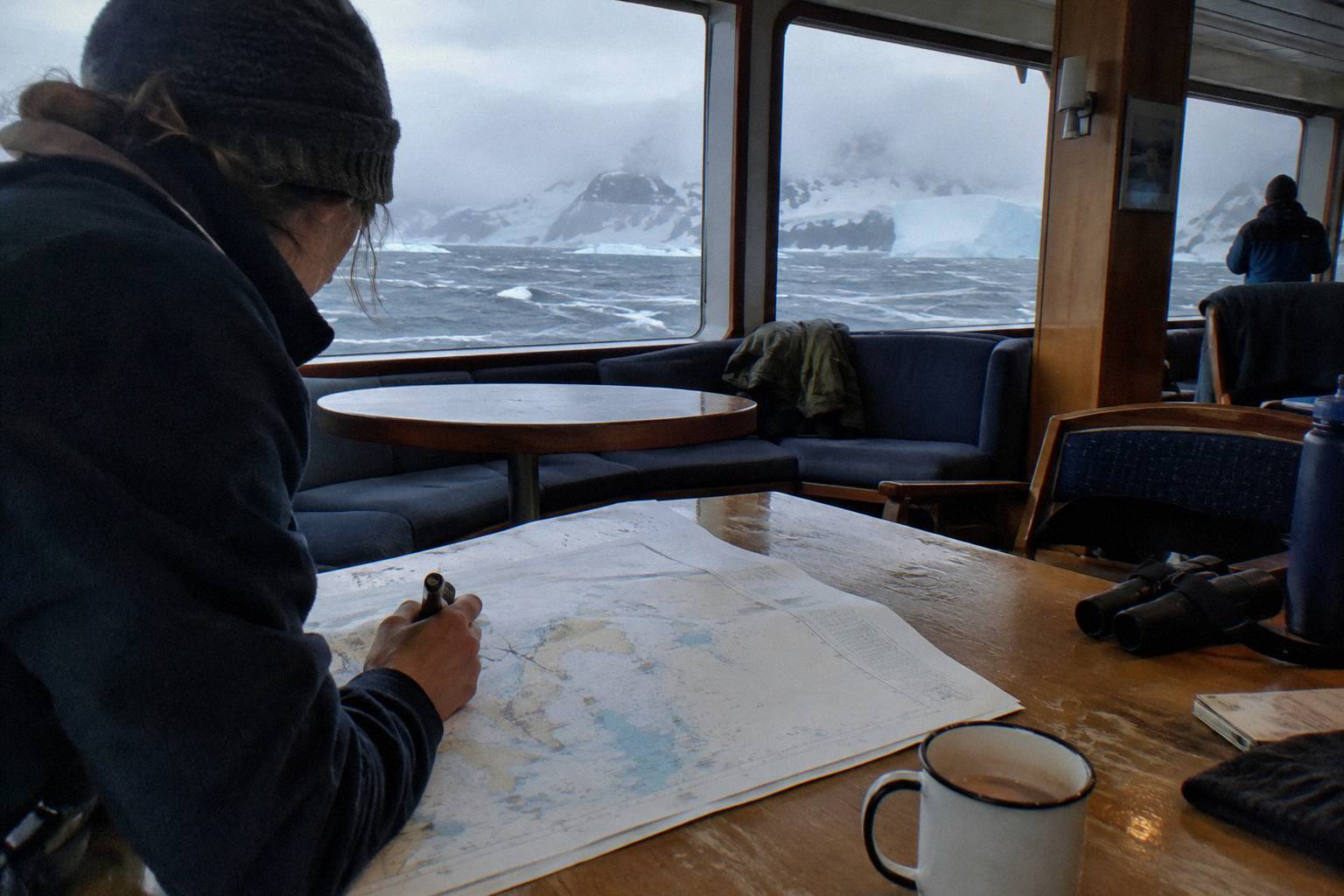
The judgment calls are more granular than most passengers expect. Wind speed alone does not kill a landing: a sheltered site with an experienced Zodiac driver may run in winds that would be unsafe at an exposed beach. Swell at the gangway, wave action on the beach, the shape of the anchorage and the competence of the boat team all enter the decision. This is why two ships in the same area can make different calls on the same morning, and why the rule that only one vessel may visit a landing site at a time, still leaves room for each captain's own weather judgment.
Katabatic winds are the classic Antarctica-specific wildcard. These are dense, cold air masses that pour down from the ice sheet under gravity, arriving with little warning and sometimes violent speed. A site can be calm and then, in minutes, hold gusts that make Zodiac operations impossible.
For passengers, the practical read is this: the itinerary you booked is a menu, not a contract. The ships that handle weather best are the ones with experienced expedition teams and captains who have done dozens of these seasons, and the difference shows up exactly on the mornings when the forecast is wrong. If seasickness rather than safety is your real worry, the countermeasures are covered in detail in handling the Drake Shake.
Which Ship And Booking Terms Protect You Best?
No ship can out-sail a storm, so protection comes from three things: an ice-class hull and experienced crew, an itinerary with landing-day slack, and cancellation terms you have actually read. Quark charges a 25% deposit with final payment about 120 days out, then 25% penalties to 120 days, 75% from 119-90 days and 100% inside 89 days. Oceanwide charges 20% up to 90 days prior, 50% from 89-60 days and 100% inside 59 days.
The ship choice matters less for weather avoidance than people assume, but it matters for weather comfort and for how much of the itinerary survives a bad forecast. A Polar Class 6 hull like the Hondius gives the captain more options in ice, and Oceanwide's small-ship budget model means the 170-passenger vessel carries a schedule built around flexible landing attempts rather than fixed port times. Hondius's Antarctic Peninsula voyages start from $7,800 per person for the 2026-27 season, and Oceanwide's terms, quoted above, step up less steeply than Quark's inside 90 days.
Compare that with the two other ways people commonly book Antarctica. The fly-cruise route on the Magellan Explorer, from $13,795 per person for the Classic Antarctica air-cruise, removes the Drake entirely but replaces it with the King George Island delay lottery described above. The Viking Polaris, at 378 guests with a Polar Class 6 hull, offers the most stability in open water of the three, but its larger passenger count means rotation logistics at landing sites. Which of these profiles fits your risk tolerance is a genuine decision point.
| Ship | Class | Passengers | Ice class | From, per person | Voyage length | Departs from |
|---|---|---|---|---|---|---|
| HondiusOceanwide Expeditions | Small-Ship Budget | 170 | Polar Class 6 | from $7,800 | 11 to 19 days | Ushuaia |
| Magellan ExplorerAntarctica21 | Fly-Cruise | 96 (88 in Antarctica) | LR PC6 | from $13,795 | 8 days | Punta Arenas (fly) to King George Island |
| Viking PolarisViking | Upscale Expedition | 378 | Polar Class 6 | – | – | – |
The booking terms deserve the same attention as the hull. Here is what two major operators' published penalty schedules actually look like if you, not the weather, are the one who cancels:
| Cancellation window | Quark Expeditions | Oceanwide Expeditions |
|---|---|---|
| Deposit | 25% of total price | Not stated |
| Final payment due | ~120 days before departure | Not stated |
| To 120 / 90 days out | 25% penalty | 20% penalty (to 90 days) |
| 119-90 / 89-60 days | 75% penalty | 50% penalty |
| Inside 89 / 59 days | 100% penalty | 100% penalty |
Two patterns are worth noticing. First, both penalty curves steepen sharply in the final three months, which is exactly when weather forecasts start being meaningful, so you cannot wait for a good forecast before committing. Second, missing embarkation because of a flight delay is typically treated as a no-show with full penalty, which is why operators consistently recommend flexible flights and insurance. Travel insurance with medical evacuation cover is required or recommended by most operators and is not included in base fares, and major operators impose high evacuation minimums with proof often required before departure. The insurance landscape is covered in full in our Antarctica travel insurance guide.
What Should You Book Around The Weather?
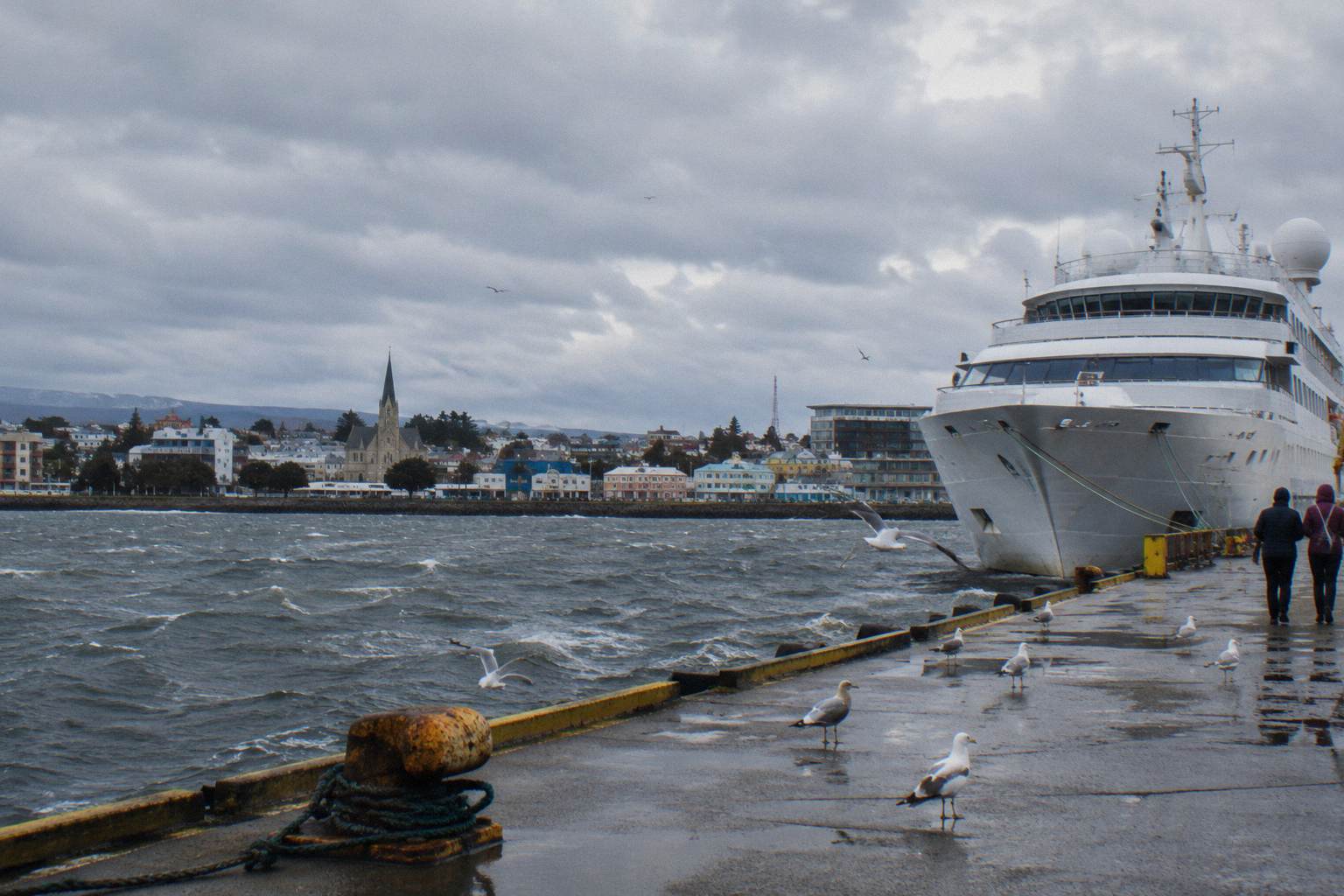
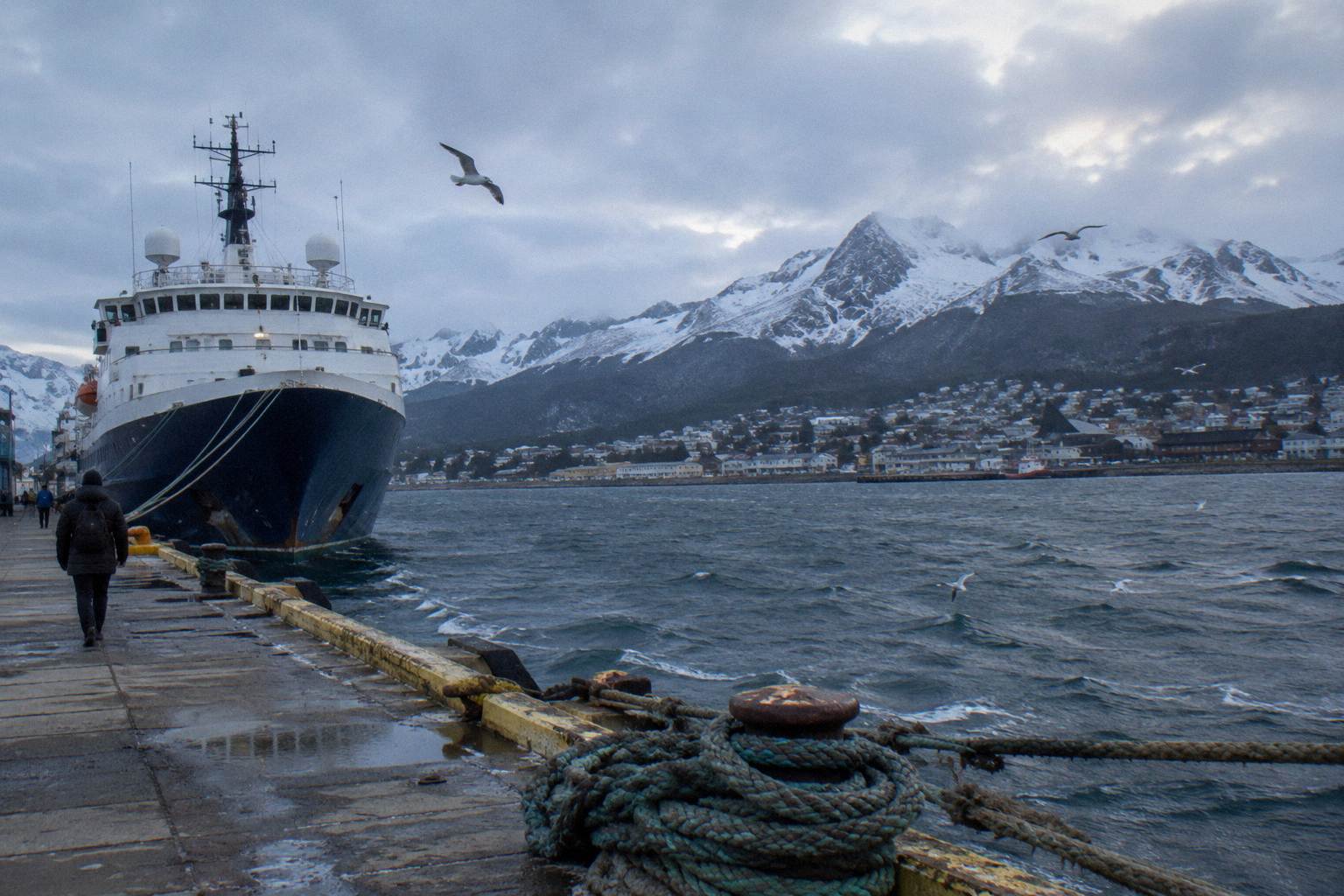
Book at least one, ideally two, hotel nights in your gateway city before embarkation, and leave slack after disembarkation too. Operators recommend this because weather and flight risk on the Buenos Aires-Ushuaia corridor is real: Ushuaia hotels reached about 80% occupancy in January 2026 amid more than 43,720 cruise passengers, and missing the ship because of a delayed flight is typically treated as a no-show with full penalty.
The buffer-night advice is not generic travel wisdom, it is specific to this corridor. Almost everyone reaches Ushuaia through Buenos Aires on a domestic connection, and those flights are weather-prone in peak season. Arriving a day or more early converts a missed-embarkation disaster into an inconvenience. The same logic applies at the other end: a storm-delayed return to Ushuaia should not cost you an international flight home.
Beyond buffers, three booking habits genuinely reduce weather risk. Choose an itinerary with four to six landing days rather than the shortest available, so one lost day is not the whole story. Read the cancellation terms before paying the deposit rather than after, and note that early-booking discounts and last-minute pricing both exist, with last-minute reductions sometimes deeper than standard early offers on the same operators. And buy the insurance the operator requires, understanding that trip cancellation cover protects you when you cancel, while force majeure clauses govern what the operator owes when the weather cancels on them.
The seasonal angle is subtler than people hope. No single month is significantly better or worse for Drake crossings; conditions remain unpredictable year-round within the season, though December to February generally offers more stable windows. Shoulder-season November and March sailings are often cheaper, and peak December and January fares carry no weather guarantee at all. The month-by-month trade-offs are laid out in our guide to the best time to visit Antarctica.
This is also where a second opinion earns its keep. Matching your dates, ship, gateway and insurance to your actual risk tolerance is a multi-variable problem, and the operator pages do not compare themselves against each other. A free consultation before you book lets you put those questions to someone who sees the real cancellation and delay outcomes across every line, with no obligation attached.
Common Questions About Severe Weather On An Antarctica Cruise
How often does weather cancel an Antarctica cruise landing?
Individual landing changes are routine and happen on most voyages: expedition leaders hold Plan A, B and C options for every day and switch sites for wind, swell or ice. Whole-sailing cancellations are far rarer, but they do happen, as the November 2026 HX cancellation due to a multi-day storm with 50-plus knot winds showed.
What happens if the Drake Passage is too rough?
The ship still crosses. Analysis of 2010-2025 data shows 55% of November-March crossings met 13-foot seas and 12% met 20-foot seas. A rough crossing extends transit from 18-24 hours toward 36-48 hours, and the expedition team compresses or adjusts the landing plan on the other side.
Can an Antarctica cruise be cancelled because of a storm?
Yes. In November 2026, HX Expeditions cancelled an Antarctica sailing due to a multi-day storm with 50-plus knot winds and 30-to-40-foot swells, rerouting the ship to the Falklands. Operator terms typically provide refunds or rebooking per the contract, and force majeure clauses often limit liability to a refund of amounts paid.
How often are fly-cruise flights to Antarctica delayed?
Antarctica21 data on 346 flights through April 2025 shows 264 departed on the scheduled day, 26 early, 40 one day late, 13 two days late and 3 three days late. Silversea reports about 80% of its fly-cruises depart on schedule, with operators providing gateway hotel stays and meals during delays.
What was the Viking Polaris rogue wave incident?
On 29 November 2022 the Viking Polaris was struck by a breaking wave south-east of Cape Horn in the Drake Passage. Seven stateroom windows shattered, one passenger died and eight were injured. Damage was described as limited, but the following December voyage was cancelled.
How many buffer nights should I book before an Antarctica cruise?
At least one, ideally two, in your gateway city. Weather and flight risk on the Buenos Aires-Ushuaia corridor is real in peak season, and missing embarkation due to a flight delay is typically treated as a no-show with full penalty under operator cancellation terms.
More Weather, Cancellations And Terms
 Cruise CancellationsOperator and passenger cancellation terms for Antarctic voyages, with real storm examples and four operators' penalty schedules.Read the guide
 Deposits And PaymentsDeposit sizes, final payment deadlines and cancellation penalties for Antarctica cruises, operator by operator.Read the guide
 Weather ForecastsHow far Antarctic forecasts hold, what captains watch, and how to read the Drake outlook yourself.Read the guide
 Is It SafeThe Polar Code, the 2022 incidents, evacuation routes and insurance minimums, stated plainly.Read the guide