Seabourn Antarctic Cruises: Venture And Pursuit
 By Oleg G.
Seabourn sent two purpose-built expedition ships to Antarctica, and the line sells them hard as luxury with a science program attached. Here is what the verified record actually shows about Venture, Pursuit, fares, and how they stack against the other luxury expedition brands.
Quick answer: Seabourn sails Antarctica with two expedition ships, Seabourn Venture and Seabourn Pursuit, running roundtrip Ushuaia voyages of roughly 10 to 12 days, plus longer 20-day sailings that add South Georgia and the Falklands. Published per-person fares are not on file with the sources this site tracks, so a current price needs a direct check.
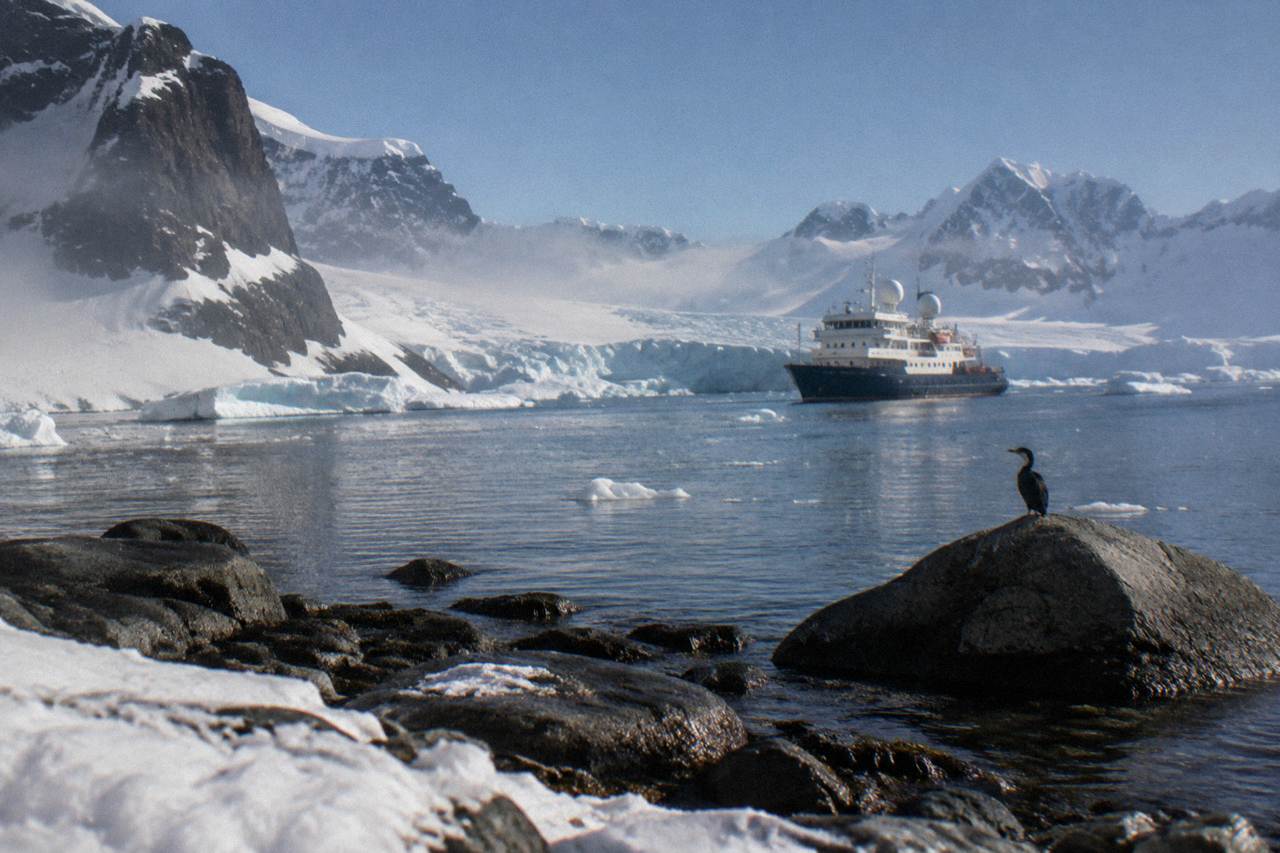
Seabourn built its Antarctic reputation on two ships, Seabourn Venture and Seabourn Pursuit, and for the 2026-27 season the operator has scheduled 19 roundtrip Ushuaia sailings on them, running November 2026 through March 2027. That is the headline. The details that matter to a buyer, cabin prices above all, sit behind a wall this site will not climb by guessing: the roster data this site maintains records no published fare for either ship, so every price question in this guide ends at the same honest place, a check of current listings.
What the record does show is a line that committed seriously to polar water. Both ships sail 10, 11 and 12-day Peninsula voyages, plus 20 and 21-day itineraries that reach the Falklands and South Georgia. They depart from Ushuaia. Beyond that, several fields in the verified roster are simply blank: no passenger capacity figure was captured for either ship, no build year, no ice class notation. Rather than pad those gaps with plausible numbers, this guide says so plainly and shows you what a comparison against other luxury expedition ships looks like on the facts that are on file.
What Ships Does Seabourn Send To Antarctica?
Seabourn operates two purpose-built expedition ships in Antarctica, Seabourn Venture and Seabourn Pursuit, both sailing roundtrip from Ushuaia. For 2026-27 the operator has scheduled 19 departures between November 2026 and March 2027, on itineraries of 10 to 12 days to the Peninsula and 20 to 21 days that add the Falklands and South Georgia.
The two ships are sisters in program if not in every specification. According to the operator's season announcement, both carry expert-led expedition teams and run the same route families: short Peninsula sailings that spend the Drake Passage days at sea, and long-loop voyages that thread South Georgia's king penguin colonies and the Falklands into a single three-week trip. The shorter sailings are the volume product; the 20-day loops are the ones wildlife photographers plan years around.
Seabourn Venture is the ship this site tracks most closely, and its roster entry shows the same itinerary pattern as its sister: 10, 11, 12, 20 and 21-day voyages from Ushuaia, with Zodiac excursions and expert guides listed among its features. The entry also shows the same blanks, no capacity, no build year, no ice class, which is why this guide keeps pointing to a live check rather than a spec sheet.
One thing worth knowing early: the roster lists no passenger capacity for either ship, and no ice class. That is not the same as saying the ships lack an ice class notation, it means this site's verified sources did not capture one, and a claim this guide will not manufacture. If a small-ship feel is the reason you are considering Seabourn over a 490-guest vessel like MS Fridtjof Nansen, the exact guest count is a number to confirm rather than assume. Capacity also has operational consequences: under IAATO rules a vessel may land at most 100 passengers ashore at a time, so on any ship larger than that, guests rotate through landings in groups while the rest of the ship watches for wildlife from the decks.
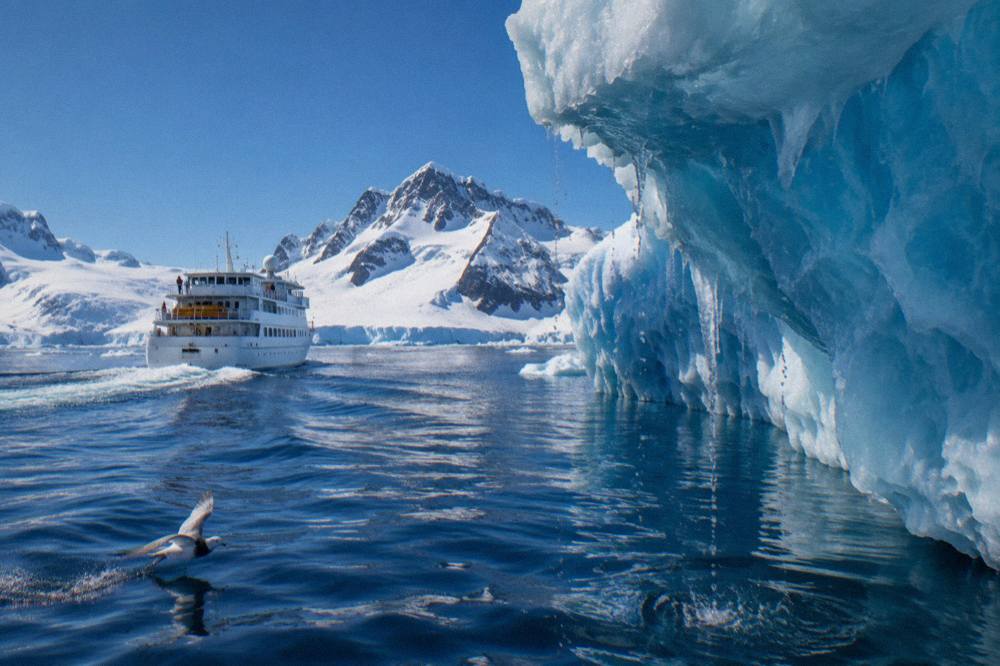
If you are weighing the whole luxury field rather than one line, the broader comparison of Cruises In Antarctica ships by class is worth a look, and our guide to Antarctica luxury cruise options breaks the segment down ship by ship.
How Much Does A Seabourn Antarctica Cruise Cost?
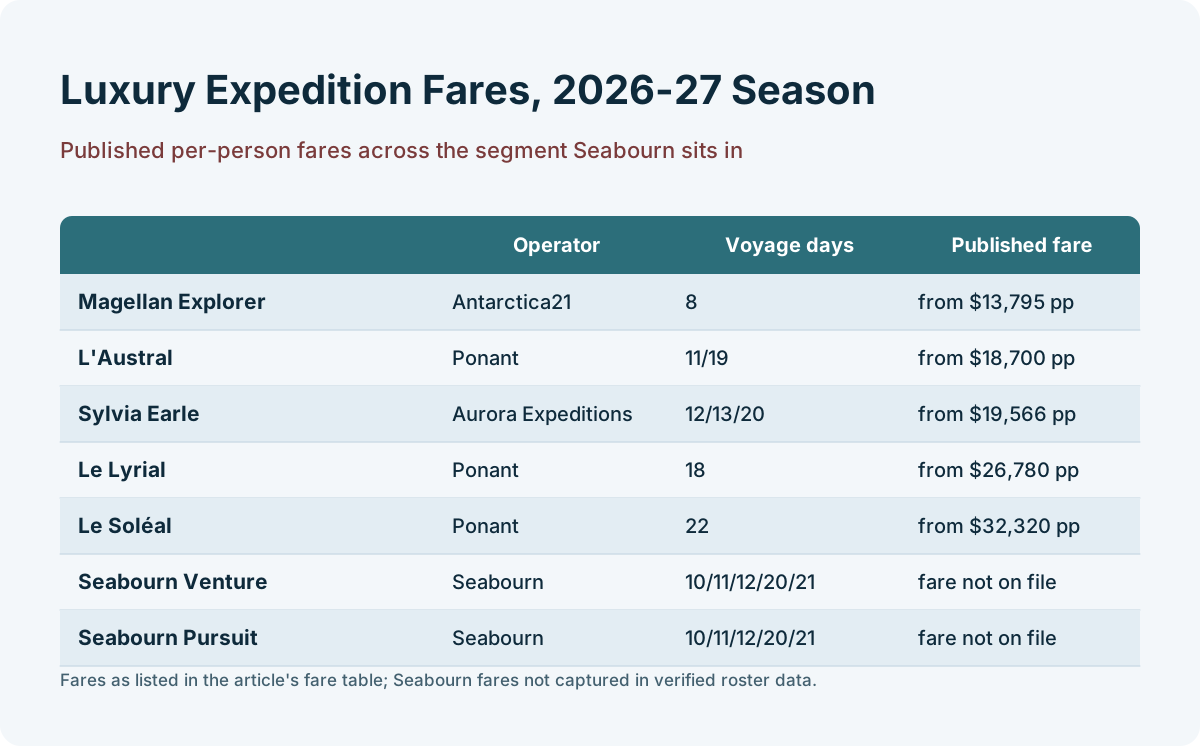
No published per-person fare for Seabourn Venture or Seabourn Pursuit appears in the verified roster data this site tracks, so no number can honestly be printed here. For context, confirmed fares on other luxury expedition ships in the 2026-27 season run from roughly $13,795 per person on a fly-cruise to $26,780 per person on Ponant's longer loops.
That spread is the honest picture of the segment Seabourn sits in. At the value edge of luxury, Antarctica21's Magellan Explorer fly-cruise lists from $13,795 per person. At the top, Ponant's Le Lyrial shows a Great Austral Loop departure from $26,780 per person, and Le Soléal's Ross Sea expedition from $32,320. Aurora Expeditions' X-BOW ships, upscale rather than full luxury, show twin-share fares from the high teens. Where Seabourn lands inside that band depends on cabin category, season and promotion, and the only way to know is a current check.
For planning purposes, one 2026 cost guide reports that a realistic all-in budget for a 10 to 12-day mid-range Peninsula trip, fare plus flights, gear, tips and insurance, runs $12,000 to $25,000 per person. Luxury berths sit at the top of that range and above it. Gratuities on most expedition lines run $15 to $25 per person per day unless prepaid by the line, and travel insurance with medical evacuation cover is required or recommended by most operators and is never in the base fare.
Because Seabourn's pricing is not on file, this is a genuine decision point: a free consultation on current Seabourn fares costs nothing and returns real numbers for your dates and cabin category.
Fare Context Across The Luxury Expedition Segment
| Ship | Operator | Class | Voyage days | Published fare |
|---|---|---|---|---|
| Magellan Explorer | Antarctica21 | fly-cruise | 8 | from $13,795 pp |
| L'Austral | Ponant | luxury | 11/19 | from $18,700 pp |
| Sylvia Earle | Aurora Expeditions | upscale expedition | 12/13/20 | from $19,566 pp |
| Le Lyrial | Ponant | luxury | 18 | from $26,780 pp |
| Le Soléal | Ponant | luxury | 22 | from $32,320 pp |
| Seabourn Venture | Seabourn | luxury | 10/11/12/20/21 | fare not on file |
| Seabourn Pursuit | Seabourn | luxury | 10/11/12/20/21 | fare not on file |
What Are The Voyages And Itineraries Like?
Both ships run 10 to 12-day Antarctic Peninsula voyages from Ushuaia, which spend roughly four days crossing the Drake and four to six days in landing and Zodiac territory, plus 20 to 21-day voyages that add the Falklands and South Georgia. The 2026-27 season runs 19 departures from November 2026 to March 2027.
The short itinerary is the classic Peninsula loop: two days down the Drake, landings in the South Shetland Islands and along the western Peninsula, and two days back. The long loops are a different animal. South Georgia carries the wildlife weight, with king penguin colonies that Poseidon Expeditions' own materials describe in the hundreds of thousands of pairs at sites like St. Andrews Bay, and the Falklands add a gentler first act before the Southern Ocean. Our South Georgia cruise guide covers that leg in detail.
Timing inside the season matters as much as the route. Penguin chicks typically begin hatching mid-December on the Peninsula, whale sightings build from mid-January onward, and February to March is the peak window for whale activity and Antarctic Circle attempts. November offers courting penguins and maximum snow cover but colder temperatures, down to around -5°C. There is no single best month; there is a best month for what you want to see.
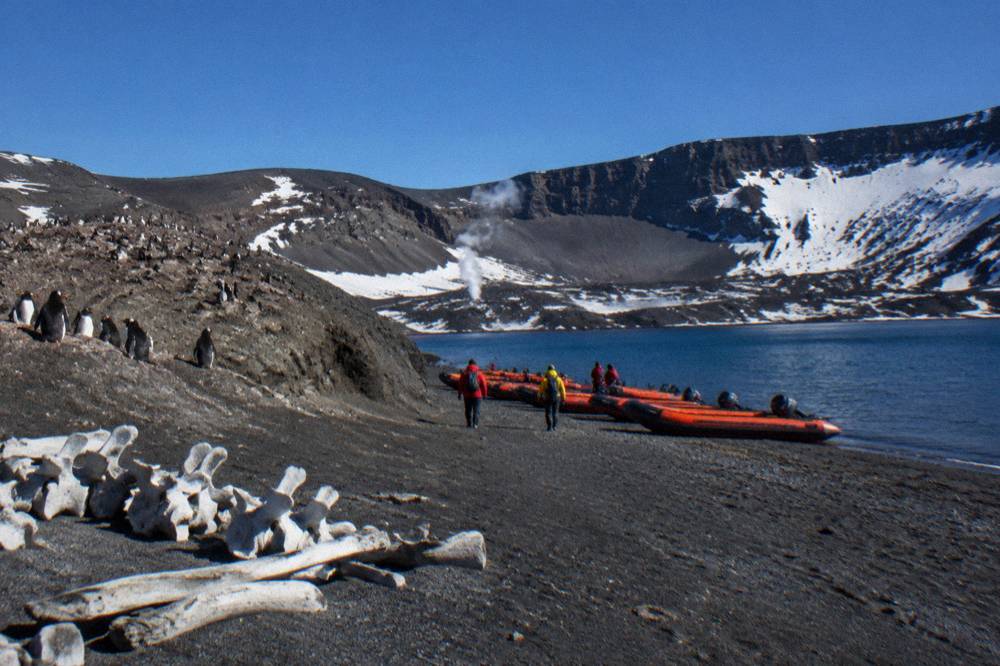
Landing rules cap what any ship can do ashore, Seabourn included. IAATO guidance limits landings to a maximum of 100 passengers ashore from a vessel at any one time, unless site-specific rules require fewer, and requires a minimum 1:20 actively guiding staff-to-visitor ratio. Vessels carrying more than 500 fare-paying passengers cannot make landings at all, a rule that keeps the big mainstream ships to scenic cruising. Only one ship may visit a site at any one time, which is why the Peninsula never feels crowded even in peak February, whatever the total visitor count.
How Do Venture And Pursuit Compare With Other Luxury Expedition Ships?
On the verified record, Seabourn Venture and Pursuit match Scenic Eclipse on itinerary length, both offering voyages in the 10 to 22-day band, but the roster shows blanks where Seabourn's capacity, build year and ice class would sit. Scenic Eclipse's page mentions a helicopter capability; no equivalent feature appears in the verified Seabourn roster entries, and this guide will not invent one.
That last point deserves emphasis, because Seabourn marketing talks about submarines and the roster data this site holds says nothing about them. A claim that appears nowhere in the verified sources cannot be printed here as fact. If submersible dives matter to your decision, that is a question to put directly to a specialist before booking, not a feature to assume.
The comparison that can be made honestly is structural. All three ships below sail luxury-class expedition voyages from the standard southern gateways, all three run itineraries in the same length bands, and the differences that remain are in the details this table shows.
| Ship | Class | Passengers | Ice class | From, per person | Voyage length | Departs from |
|---|---|---|---|---|---|---|
| Seabourn VentureSeabourn | Luxury | – | – | – | 10 to 21 days | Ushuaia |
| Seabourn PursuitSeabourn | Luxury | – | – | – | 10 to 21 days | Ushuaia |
| Scenic EclipseScenic | Luxury | – | – | – | 13 to 22 days | – |
Scenic Eclipse's roster entry notes a helicopter, which is the one hardware difference on file between it and the Seabourn pair. Against Silversea, the contrast is gateway: Silversea's ships list Puerto Williams and King George Island among their ports, reflecting that line's fly-cruise options, while Seabourn sails roundtrip from Ushuaia. Our Silversea Antarctica guide covers that model in full.

If the choice between luxury lines is where you are stuck, a chat about which expedition line fits can lay the real differences, inclusions and fares side by side in one conversation.
What Is The Drake Passage Crossing Like On These Voyages?
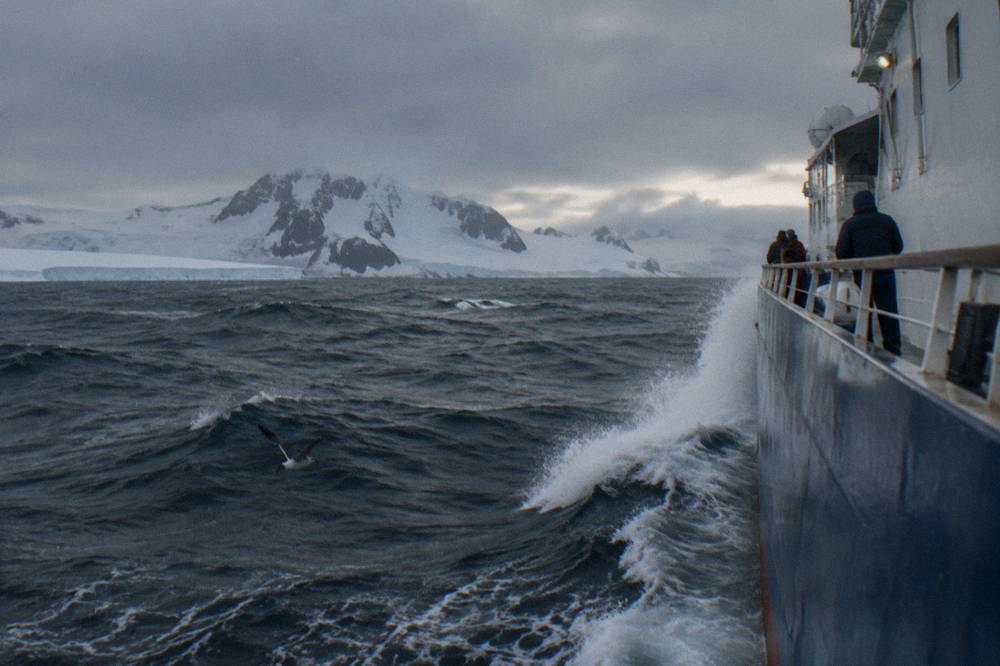
Every Seabourn Antarctic sailing from Ushuaia crosses the Drake Passage by sea, roughly two days each way in typical conditions, with crossing times ranging from 18 to 48 hours depending on weather. Rough "Drake Shake" conditions occur around 30 percent of the time and calmer "Drake Lake" conditions around 70 percent, according to a geographical publication's summary.
Those numbers come with an honest caveat: the 18 to 48-hour duration figure comes from an operator page, Quark's, not a neutral source, so treat it as the industry's own working estimate. Typical swells average 3 to 5 meters, with documented severe conditions reaching far higher. No single month is reliably calmer; conditions stay unpredictable year-round, though December to February generally offers more stable windows.
Seabourn does not offer a fly-the-Drake product on these sailings; the roundtrip Ushuaia format means four sea days are part of the package on the short itineraries. Some travellers treat that as the price of the classic experience, others as four lost days. If skipping the crossing matters to you, the fly-cruise model, sailing to the Peninsula but flying one or both directions, is covered in our fly vs Drake guide, and our Drake Passage crossing guide has the full picture.
Crossing Formats Compared
| Format | Time in the Drake | Typical extra cost | Trade-off |
|---|---|---|---|
| Sail roundtrip from Ushuaia (Seabourn's format) | ~4 days total | included in fare | Full classic crossing, weather exposure both ways |
| Fly-cruise (Antarctica21, Silversea options) | ~2-hour charter flight each way | adds roughly $2,000-$5,000 over comparable sailing voyages | No sea crossing, but weather-dependent flights |
| Sail one way, fly the other | ~2 days total | charter flight cost one way | Half the exposure, half the experience |
When Should You Book, And What Should You Budget Beyond The Fare?
Peak December sailings book furthest ahead, with reports of December departures filling 18 months or more in advance, while early-booking offers across the industry commonly run 10 to 30 percent off and occasionally reach 40 percent on select unsold sailings. Last-minute discounts exist but are limited in availability and cabin choice.
The practical Seabourn-specific advice follows from that. Since no fare is on file for Venture or Pursuit, the main advantage a buyer can act on is timing: early-booking windows and cabin selection, especially on the 20-day South Georgia loops where the best categories are few. A realistic all-in budget for a luxury Peninsula trip starts at the fare, whatever it proves to be, and adds international flights to Ushuaia, a pre-cruise night or two, insurance with medical evacuation, gratuities and gear.
Insurance deserves its own sentence rather than a clause. Major operators impose high medical evacuation minimums, with six-figure dollar figures cited for Quark, Ponant and Lindblad in one operator comparison, and proof is often required before departure. Argentina formally requires health and medical coverage, including evacuation, for foreign visitors under a 2025 rule update.
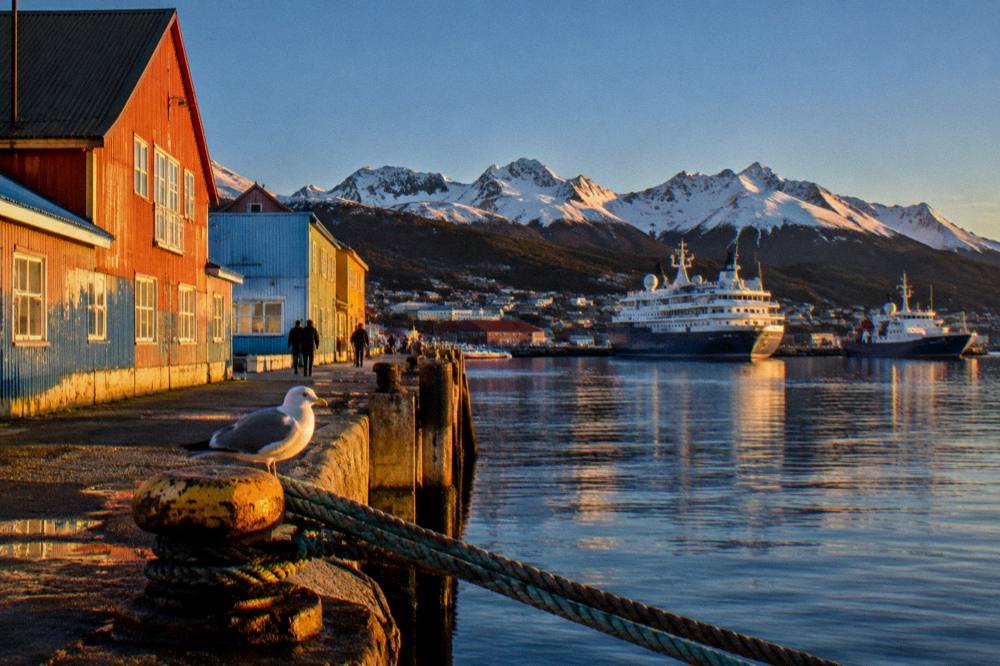
Logistics to Ushuaia are their own small project. There are no direct US flights; the standard routing is long-haul into Buenos Aires, a transfer to the domestic airport, and a connection south, with a buffer of four to five hours advised for the transfer and at least one pre-cruise night in Ushuaia recommended, ideally two, because the corridor is weather-prone in peak season. Our getting to Antarctica guide walks the whole route.
Beyond The Base Fare: What To Budget
| Item | Typical range or rule | Notes |
|---|---|---|
| Gratuities | $15-$25 pp per day | Sometimes prepaid by the line; check what Seabourn includes |
| Insurance with medevac | required or recommended by most operators | Not in base fares; evacuation minimums can be high |
| Flights to Ushuaia | via Buenos Aires, no direct US service | Budget a 4-5 hour transfer buffer at EZE to AEP |
| Pre-cruise hotel | at least one night, ideally two | Ushuaia hotels ran near 80% occupancy in January 2026 |
| Gear | parka often complimentary, boots often loaned | Verify Seabourn's specific inclusions before buying kit |
At this point the decision usually comes down to a handful of specifics: which departure, which cabin, and what the fare actually is this week. A free, no-obligation planning consultation is the fastest way to pin all three down.
A few timing details sharpen the picture. The Antarctic season is short, roughly November through March, and demand concentrates in the December-January window when daylight is longest and wildlife activity peaks, which is exactly when cabins tighten first. Shoulder departures in November and March tend to be the softest in pricing, and March carries the added draw of whales feeding in the Peninsula waters late in the season. If your dates are flexible, asking which departures still have early-booking offers attached is often more productive than chasing a specific week.
On the flight side, the Buenos Aires to Ushuaia leg is roughly three and a half hours, and domestic Argentine flights are themselves subject to weather delays in peak season, which is a second reason the overnight buffer in Ushuaia matters beyond the international connection. Some travelers route through Santiago instead, though the standard US routing remains via Buenos Aires. Booking the domestic leg on the same ticket as the international arrival, or leaving a full day of slack, reduces the risk of a missed embarkation, since ships do not wait for late passengers.
For gear, the practical approach is to confirm what Seabourn provides before buying anything beyond layers and basics. Expedition lines commonly include a waterproof parka and loaner muck boots for landings, and some also lend waterproof pants or binoculars. What almost nobody provides is appropriate base and mid layers, gloves, hats, and seasickness remedies, so those are the items worth sourcing early, since sizing and availability get harder the closer you get to peak season.
Common Questions About Seabourn Cruises To Antarctica
What Ships Does Seabourn Use In Antarctica?
Seabourn Venture and Seabourn Pursuit, both sailing roundtrip from Ushuaia on 10 to 12-day Peninsula voyages and 20 to 21-day itineraries that add the Falklands and South Georgia. The operator has 19 Antarctic departures scheduled between November 2026 and March 2027.
How Much Does A Seabourn Antarctica Cruise Cost?
No published fare for either ship appears in the verified data this site tracks, so no number can be printed. Comparable luxury expedition fares in the 2026-27 season range from roughly $13,795 per person on a fly-cruise to $26,780 per person on Ponant's longer loops. A free consultation is the way to get current Seabourn pricing.
Do Seabourn's Antarctic Ships Have Submarines?
Seabourn's marketing has referenced submersibles, but nothing in the verified roster or fresh-source files this site holds confirms submarine operations in Antarctica, so this guide states no claim either way. If submersible dives matter to your decision, confirm directly before booking.
Does Seabourn Fly Over The Drake Passage?
No. Seabourn's Antarctic sailings run roundtrip from Ushuaia and cross the Drake Passage by sea, roughly two days each way. Travellers who want to skip the crossing need a fly-cruise product from another operator, such as Antarctica21 or Silversea's fly options.
How Many Passengers Do The Seabourn Expedition Ships Carry?
The verified roster records no passenger capacity figure for Seabourn Venture or Seabourn Pursuit. Rather than guess, this guide flags it as a blank; confirm the current guest count when you check fares, since capacity affects landing logistics under IAATO's 100-passenger ashore cap.
When Is The Best Time To Sail With Seabourn In Antarctica?
Penguin chicks hatch from mid-December, whale sightings build from mid-January, and February to March peaks for whales and Circle-crossing attempts. November offers courting penguins and pristine snow but colder conditions. December sailings book furthest ahead, often 18 months or more.