Can A US Citizen Visit Antarctica?
 By Oleg G.
There is no US passport control at the bottom of the world, no Antarctic visa, and no embassy. The short answer is yes, and the paperwork that matters is mostly your operator's job, not yours.
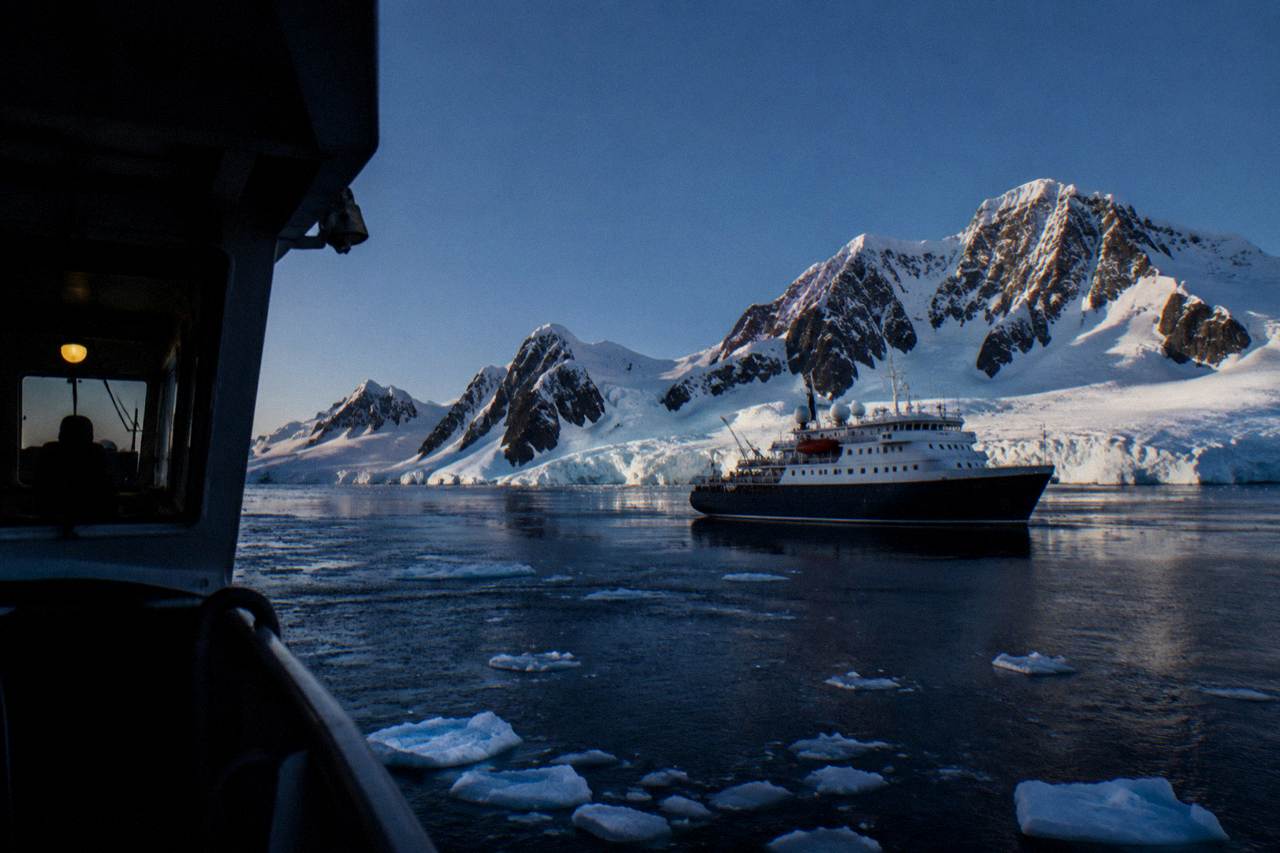
Yes, a US citizen can visit Antarctica, and thousands do every season. IAATO recorded 113,518 total visitors for the 2025-26 season, and American travellers make up one of the largest shares of that traffic. Antarctica itself has no visa, no border agency and no entry stamp, because no country owns it. The rules that actually touch you are the environmental documentation your operator files with the US EPA, the visa-free tourist entries into Argentina and Chile, and the IAATO conduct rules that govern every landing. An expedition cruise is how almost everyone gets there.
Can A US Citizen Visit Antarctica?
Yes, and no special permission is required from you personally. When nongovernmental operators, including tour operators, plan expeditions to Antarctica, they are required to submit environmental documentation to the US Environmental Protection Agency. The operator files it, not the passenger. On the ground you travel under the Antarctic Treaty system and IAATO rules, which cap landings at 100 passengers ashore per vessel at one time.
That EPA requirement comes straight from the agency's own page on nongovernmental expeditions, so it applies to US-based operators and US-organized trips. You will never see this paperwork. You book the expedition cruise, the operator files the environmental impact assessment, and you show up in Ushuaia or Punta Arenas with a passport. The system has run this way for decades, and it is one of the quiet conveniences of Antarctic travel: the continent is the only major destination on earth where the traveller's own government requires nothing of the traveller directly.
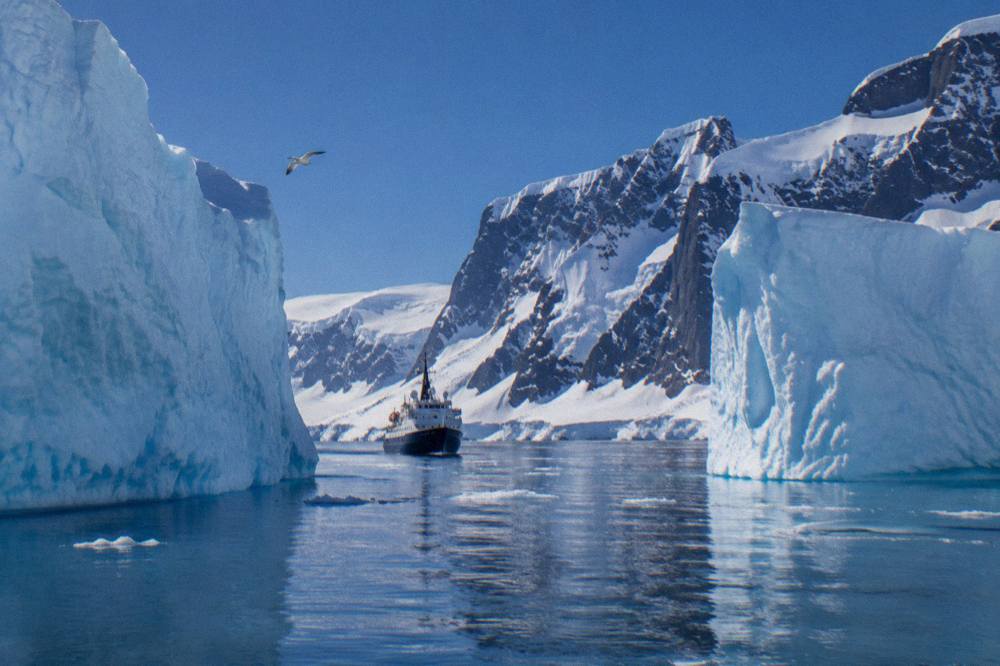
What you do experience is the IAATO framework. The verified visitor guidelines state that a maximum of 100 passengers may be ashore from a vessel at any one time, that vessels carrying more than 500 passengers shall not make landings at all, and that guides must maintain at least a 1:20 staff-to-visitor ratio during landings. There is also a five-metre minimum distance from wildlife, and biosecurity rules that require you to wash boots and clean all equipment, clothes, bags, tripods and walking sticks before bringing them to Antarctica, then clean again between sites. IAATO also coordinates a ship scheduler so that only one vessel visits a landing site at a time, which is why a busy Peninsula day still feels uncrowded.
None of this is a barrier. It is the operating manual of every legitimate Antarctic expedition cruise, and every operator on this site's roster works inside it. If you are weighing which kind of voyage fits you, a free consultation on your options costs nothing and comes with no obligation.
Do US Citizens Need A Visa For Antarctica?
No. Antarctica has no government that issues visas, no immigration posts and no entry requirements for individuals. The Antarctic Treaty, signed by the United States and more than fifty other parties, reserves the continent for peaceful scientific use and sets environmental conduct rules rather than travel permits. Your passport is never checked on the continent itself.
The practical paperwork is entirely at the gateways. Almost every Antarctic expedition cruise departs from Ushuaia in Argentina or Punta Arenas in Chile, so the entry rules that matter to a US traveller are those two countries'. Both are straightforward, and both were checked for this article rather than assumed.
| Question | Argentina (Ushuaia gateway) | Chile (Punta Arenas gateway) |
|---|---|---|
| Visa needed for US tourists? | No, for stays up to 90 days | No, for stays up to 90 days |
| Passport requirement | Valid passport required | Valid tourist passport required |
| Basis | US listed as visa-exempt in Argentine resolution; State Department country page | State Department country page for Chile |
For a closer look at the passport, health coverage, and Buenos Aires connection details, see our guide on Ushuaia visa requirements for US travelers.
A note on sources: the Argentina and Chile visa-free entries for US citizens rest on the US State Department country pages and an Argentine government resolution, and since entry rules change, treat the summary above as accurate but worth a glance at travel.state.gov before you fly. The core facts, 90 days, tourism, valid passport, are stable and long-standing for both countries. Neither country applies a reciprocity fee to US citizens any more; Argentina abolished its fee and Chile's has been gone since 2014.
Argentina also formally requires health and medical coverage, including evacuation, for foreign visitors under a 2025 rule update, which lines up with what expedition operators demand anyway. Major lines impose their own high medical evacuation minimums plus full trip-cost cancellation cover, with proof often required before departure or at check-in, according to a specialist insurance comparison. That is a decision point worth help with: talk through insurance and paperwork free before you commit to a cabin.
How Does A US Citizen Actually Get To Antarctica?
You fly to a gateway city and join an expedition cruise. About 98 percent of all tourism voyages go to the Antarctic Peninsula during the austral summer, October to April, and nearly all of them start from Ushuaia or Punta Arenas. There are no direct flights from the United States to Ushuaia; you connect through Buenos Aires, usually from EZE to the domestic airport AEP.
The Buenos Aires to Ushuaia corridor is busy and weather-prone. Aerolineas Argentinas runs roughly 27 weekly flights on the AEP to Ushuaia route and JetSMART adds several low-cost frequencies, with departures spread from early morning to evening. Port analyses of 2026 traffic note that 78.8 percent of Ushuaia's outbound passengers routed via Buenos Aires, and the standard advice is a buffer of four to five hours or more for the EZE to AEP transfer, plus at least one night, ideally two, in Ushuaia before embarkation. Ushuaia hotels hit roughly 80 percent occupancy in January 2026 while handling more than 43,720 cruise passengers that season, so pre-cruise rooms are worth booking early. The port itself is under new operational rules for 2026-27, with dynamic berth allocation introduced by Argentina's ports agency and berth upgrades underway, all of which is invisible to you but keeps the season moving.
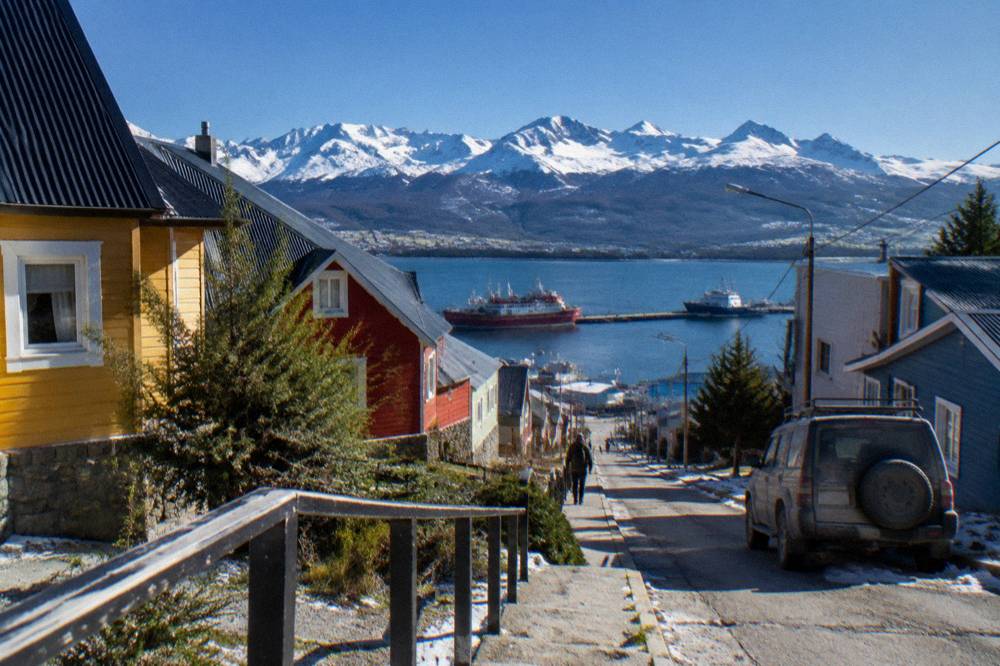
From Punta Arenas, the route is different: you fly. Fly-cruise operators such as Antarctica21 put you on a roughly two-hour charter flight to King George Island and skip the Drake Passage entirely. That model has mandatory pre-flight overnight stays and strict baggage limits, with Polar Latitudes requiring arrival at a named Punta Arenas hotel by 14:00 the day before and a 20 kg checked limit on the charter segment. Operators also run biosecurity and gear checks the day before departure, so the fly-cruise gateway day is more structured than Ushuaia's. Our guide to flying versus sailing cost differences covers the trade-offs.
Whether you sail the Drake or fly over it, the vessel is the trip. If the crossing question is the one holding you back, the Drake Passage crossing guide and the calmest-time comparison in when the Drake is calmest are the pages to read next.
What Kind Of Cruise Can A US Citizen Book?
Anything on the market. US travellers book the same expedition cruises as everyone else, from small-ship budget vessels like the Hondius and Plancius to luxury lines like Ponant and Silversea. Fares on the roster currently run from about $7,050 per person for a 10-day Oceanwide Peninsula departure to $32,320 for a 22-night Ross Sea voyage on Ponant's Le Soléal, with the mainstream middle sitting between those poles.
The budget end of the Peninsula market is where many first-time US visitors land. Oceanwide Expeditions lists Antarctic Peninsula departures from $7,800 per person on the Hondius, a 170-guest, 80-cabin ship built in 2019 and registered as the first Polar Class 6 passenger vessel in the world in the operator's own wording. Its sister ships Ortelius and Plancius carry 108 guests each and list from $7,800 and $7,050 respectively. G Adventures' Expedition runs 11-day Antarctica Classic trips from $7,439, and Poseidon's Sea Spirit, an ice-strengthened 114-guest ship, shows a 12-day Classic Antarctica voyage from $8,846. Other pages covering the same trip are gathered on Cruises In Antarctica.
At the other end, Lindblad's National Geographic Endurance and Resolution, 138 guests each with PC5 ice class and the patented X-Bow, show Voyage to Antarctica from $11,900. The fly-cruise specialist Magellan Explorer carries 88 guests on 8-day air-cruises from $13,795, flights from Punta Arenas included in the model. Aurora's Sylvia Earle and Greg Mortimer, both Ulstein X-BOW ships of 130 guests, list 12-day voyages from $19,566 and $19,521 per person twin share. Atlas Ocean Voyages publishes World Navigator Peninsula departures from $12,150 and World Traveller from $14,114, and Quark's voyage-level fares, shared across Ultramarine, Ocean Explorer and World Voyager, start at $12,236 for the 11 to 12 day Antarctic Explorer.
| Ship | Operator | Passengers | Style | Listed from |
|---|---|---|---|---|
| Hondius | Oceanwide Expeditions | 170 | Small-ship budget | $7,800 pp |
| National Geographic Endurance | Lindblad Expeditions | 138 | Standard expedition | $11,900 pp |
| Magellan Explorer | Antarctica21 | 88 | Fly-cruise | $13,795 pp |
| Ship | Class | Passengers | Ice class | From, per person | Voyage length | Departs from |
|---|---|---|---|---|---|---|
| HondiusOceanwide Expeditions | Small-Ship Budget | 170 | Polar Class 6 | from $7,800 | 11 to 19 days | Ushuaia |
| National Geographic EnduranceLindblad Expeditions (with National Geographic) | Standard Expedition | 138 | PC5 | from $11,900 | 12 to 22 days | Ushuaia |
| Magellan ExplorerAntarctica21 | Fly-Cruise | 96 (88 in Antarctica) | LR PC6 | from $13,795 | 8 days | Punta Arenas (fly) to King George Island |
The ship choice is the single biggest decision after the calendar, and it is exactly the kind of question a free consultation with a specialist answers well: which vessel, which month, which gateway, at which price. There is no charge and no obligation.
What Rules Apply Once You Are There?
IAATO conduct rules, and they apply to everyone regardless of nationality. No vessel over 500 passengers may make landings, only 100 passengers from any ship may be ashore at once, guides work at a 1:20 ratio, you keep five metres from wildlife, and you clean your gear before arrival and between sites. One ship visits a landing site at a time.
The biosecurity requirement surprises people. The verified visitor guidelines require you to carefully wash boots and clean all equipment including clothes, bags, tripods, tents and walking sticks before bringing them to Antarctica, and to clean again between sites. Operators run gear checks at the gateway, and in the current environment of enhanced avian influenza protocols, some operators also ask visitors not to sit or kneel on the ground in wildlife areas, a rule our explanation of the kneeling ban covers in detail. IAATO even replaced its old Polar Guide app with a new Antarctic Expedition App in September 2025, giving staff offline access to the field operations manual, wildlife and biosecurity guidance.
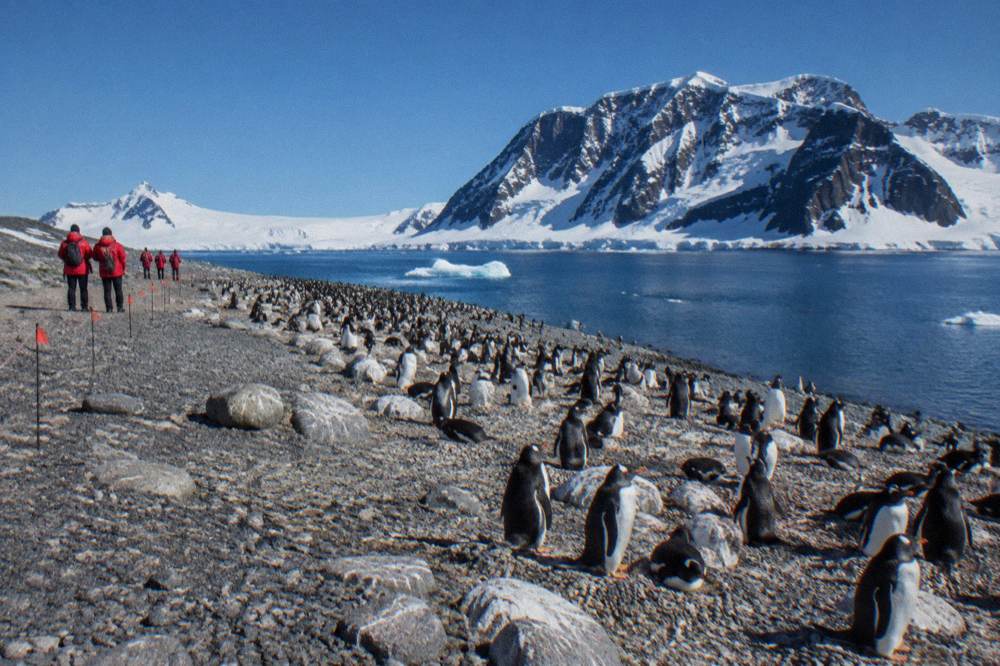
Drones must not be flown near wildlife, and the 2025-26 season ran without any widespread site closures. ATCM 48 in 2026 adopted Resolution 3, updating site-specific visitor guidelines with approach distances, temporal restrictions, boundaries and capacities for frequently visited locations, including Whalers Bay and Baily Head on Deception Island, Half Moon Island, Neko Harbour and Port Lockroy. None of this changes your planning; your expedition team enforces it all on the ground. For the 2026-27 season IAATO has also introduced a voluntary geofenced whale area around the South Orkney Islands with a 10-knot speed restriction running November to May, an initial two-year measure that passengers will simply notice as a slower, quieter ship in that region.
The season shape is worth knowing too. Voyages run mid-October to mid-March, with penguin chicks hatching from mid-December, whale sightings building from mid-January, and February to March peaking for whale watching and Antarctic Circle attempts. The full month-by-month picture is in our best time to visit guide.
What Does The Whole Trip Cost A US Traveller?
A realistic all-in budget for a 10 to 12 day mid-range Peninsula trip, fare plus flights plus gear plus tips plus insurance, runs about $12,000 to $25,000 per person according to one 2026 cost guide. The fare alone spans roughly $7,050 to $32,320 across the roster, entry-level berths on Drake-crossing itineraries start around $7,500 to $8,995, and fly-cruises typically add $2,000 to $5,000 over comparable sailing voyages.
Flights from the United States to Ushuaia are the wildcard. There are no direct US to Ushuaia services, so you buy a long-haul into Buenos Aires EZE, transfer to AEP, and take the four-hour domestic hop south, or route via Santiago for Punta Arenas. Add the recommended one or two pre-cruise nights in Ushuaia, where January occupancy ran near 80 percent, and the land side of the trip can add a few hundred to a couple of thousand dollars depending on how early you book. Our two-week Antarctica trip cost breakdown works through a full example.
On board, most expedition operators provide a complimentary parka, often yours to keep, and loan waterproof boots, with gratuities typically running $15 to $25 per person per day unless the line prepays them. Lindblad bundles a pre-cruise Buenos Aires hotel, the charter flight to Ushuaia, alcoholic beverages, prepaid gratuities and an expedition jacket into its fare, which is why its headline prices sit above the bare-fare budget lines. Single travellers should know that supplements typically range from 25 percent extra to 1.5 to 2 times the twin rate, though some lines waive them on select sailings and sharing options often exist in lower cabin categories.
Early-booking offers for the 2026-27 and 2027-28 seasons commonly reach 10 to 30 percent off, with select unsold sailings discounted up to 40 percent, while last-minute deals exist but are limited in availability and cabin choice and are uncommon for peak December sailings, which book 18 or more months ahead. If the budget question is what decides this for you, get free help pricing your trip before the early-booking windows close.
One line item many first-time Antarctic travellers underestimate is travel insurance. Because these voyages cross the Drake Passage and operate far from major medical facilities, expedition lines require every passenger to carry insurance that covers emergency medical evacuation, and most operators specify evacuation coverage of at least $250,000, with some asking for $500,000. Standard trip cancellation coverage is not enough on its own; confirm your policy explicitly includes expedition cruising, since some general travel plans exclude trips above a certain latitude or vessels carrying more than a set number of passengers. If your regular policy does not meet the operator's requirements, you will need to purchase a supplemental plan before final payment, and the cost scales with your total trip price rather than a flat fee.
Budgeting for the gear side is more manageable than most people expect. Beyond the parka and loaner boots the ship provides, your personal packing list is mostly non-technical: insulated layers, waterproof gloves, a warm hat, and binoculars. If you plan to camp, kayak, or paddleboard, those activities usually carry a separate charge, and some operators require you to reserve them in advance because participation is capped, so check whether your preferred activities are included in the fare or billed as add-ons when comparing quotes.
Timing also shapes what you pay. Shoulder-season departures in November and March generally come in cheaper than peak December and January sailings, and the same cabin on the same ship can vary meaningfully across the season.
Common Questions About US Citizens Visiting Antarctica
Can A US Citizen Visit Antarctica?
Yes. No visa or permit is required from you personally. Your operator files the environmental documentation with the US EPA, Argentina and Chile admit US tourists visa-free for up to 90 days, and you travel under IAATO conduct rules once on the continent.
Is A Passport Enough For US Citizens Going To Antarctica?
Yes. Antarctica itself has no entry controls. You need a valid US passport for the visa-free 90-day tourist entries into Argentina and Chile, and your cruise booking. No Antarctic visa exists because no country owns the continent.
Do US Citizens Need Permission From The US Government To Go To Antarctica?
Not personally. Under US rules, nongovernmental operators planning Antarctic expeditions, including tour operators, must submit environmental documentation to the EPA. The operator handles that filing; the passenger does not.
What Documents Does A US Citizen Need For An Antarctica Cruise?
A valid passport, travel insurance with medical evacuation coverage meeting your operator's minimum, and your booking. Operators also require biosecurity cleaning of boots and gear before the voyage, checked at the gateway.
How Much Does It Cost A US Citizen To Visit Antarctica?
Peninsula expedition fares on this site's roster run from about $7,050 per person to $32,320, with a realistic all-in budget of $12,000 to $25,000 per person for a mid-range 10 to 12 day trip including flights, gear, tips and insurance.
Can A US Citizen Visit Antarctica Without A Cruise?
Almost nobody does. Deep-field and air tourism reached 1,106 participants in 2025-26, the first season over a thousand, but for practical purposes an expedition cruise from Ushuaia or Punta Arenas is how US travellers reach the continent.