Celebrity, Princess, Holland America, Norwegian: Antarctica Without Landings
 By Oleg G.
A search for an Antarctica Celebrity cruise usually ends at an itchy truth: the big-brand ships that look affordable and familiar almost never let you off the ship. Antarctic rules bar vessels carrying more than 500 passengers from making landings at all, so Celebrity, Princess, Holland America and Norwegian itineraries are scenic sail-bys, while expedition ships under that cap are the ones that put you on shore with the penguins.
Quick answer: Mainstream lines including Celebrity, Princess, Holland America and Norwegian cruise past the Antarctic Peninsula but cannot land passengers, because Antarctic rules prohibit vessels with more than 500 passengers from making landings. Landing-based trips run on expedition ships such as Hondius (from $7,800) or National Geographic Endurance (from $11,900).
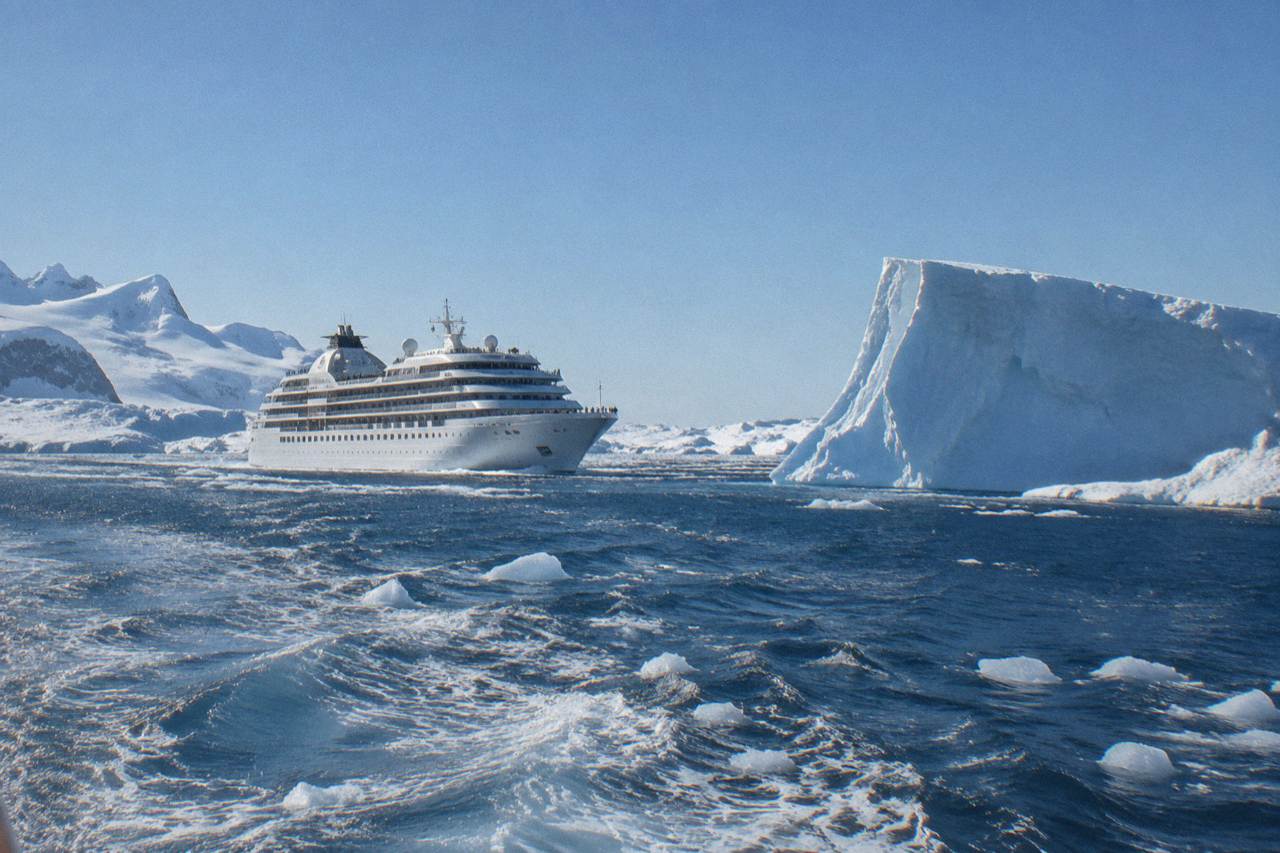
A search for an Antarctica Celebrity cruise usually starts with a price that looks almost too good: a week or more at sea, glacier scenery, and a fare far below the five-figure expedition quotes you keep seeing. The catch is buried in the fine print of how Antarctic tourism actually works. The big-brand ships, Celebrity, Princess, Holland America and Norwegian among them, are cruise-only visitors. They sail spectacular routes past the Peninsula and return, and their passengers never set foot on the continent.
That is not a corner the lines quietly cut to save money. It is regulation. The Antarctic Treaty system's visitor guidelines, as summarised by the International Association of Antarctica Tour Operators (IAATO), state plainly that "vessels with more than 500 passengers shall not make landings in Antarctica." A ship carrying thousands of guests is legally excluded from shore excursions in Antarctic waters, no matter how much you paid for a suite. This guide explains what that means for the trip you are picturing, what a cruise-only itinerary delivers instead, and which expedition ships, the kind that do land, fit different budgets. The cruise itself is the product either way, but the two versions of it are barely the same holiday.
Can You Land On A Celebrity Antarctica Cruise?
No. Celebrity, along with Princess, Holland America and Norwegian, operates ships that exceed the 500-passenger landing cap, so their Antarctic itineraries are scenic cruises past the coastline with no shore landings anywhere on the continent. Passengers watch icebergs, penguin colonies and glaciers from deck. The rules come from the Antarctic Treaty system and apply to every operator, regardless of brand.
The rule is not ambiguous and it is not discretionary. The general visitor guidelines adopted under the Antarctic Treaty Consultative Meetings state that vessels with more than 500 fare-paying passengers shall not make landings in Antarctica, and that only one ship may visit a site at any one time. Those constraints are published on IAATO's visitor guidelines poster, which is the document your expedition team will brief you from on any landing-based trip.
So when a Celebrity Antarctica cruise shows up in a search result at a fare well under what expedition lines charge, what is being sold is a different experience, not a cheaper version of the same one. The ship approaches the Antarctic Peninsula, often along the Gerlache Strait or past the South Shetland Islands, slows down for scenic cruising among ice, and then turns back toward South America. Everything is viewed from the ship. Some passengers love exactly this: warm cabins, familiar dining, no Zodiac rides, no wet landings, and the white continent unspooling past the rail. Others get off the ship in Ushuaia feeling they watched a documentary from a very good hotel.
Neither reaction is wrong, but they are reactions to two different products. If landing matters to you, the decision is not "which big-brand line," it is "which expedition ship," and the rest of this guide works through that side. If a free consultation on the right ship would help sort which version you actually want, that conversation costs nothing and carries no obligation.
Why The 500-Passenger Rule Exists
The landing cap exists to protect Antarctic sites and wildlife from overcrowding. The same rules also limit shore groups to 100 passengers at a time and require one guide for every twenty visitors, which only small expedition vessels can satisfy in practice. A large mainstream ship could never rotate everyone ashore within a landing window even if the cap disappeared.
Antarctica has no permanent government, no local population and no infrastructure for mass tourism. The Antarctic Treaty Consultative Parties, the nations that jointly manage the continent, manage visitor pressure through agreed resolutions that IAATO operators adopt as binding practice. The three structural limits are the 500-passenger landing prohibition, a maximum of 100 passengers ashore from a vessel at any one time unless site guidance requires fewer, and a minimum ratio of one actively guiding staff member per twenty visitors during landings.
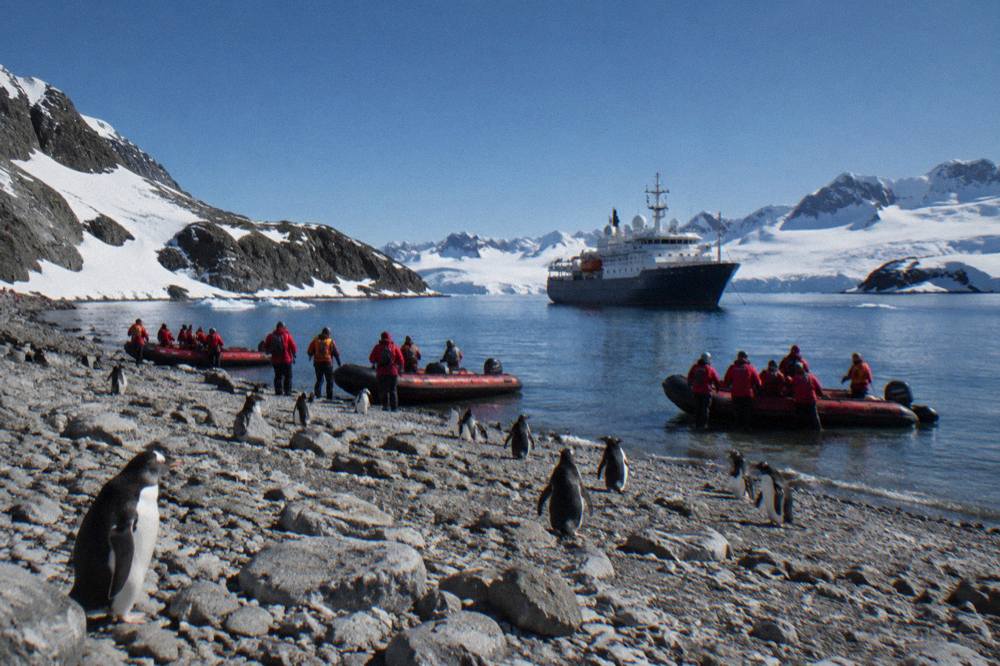
Do the arithmetic on any ship above the cap and the rule stops feeling arbitrary. A vessel even modestly over the 500-passenger line would need multiple rotations of its 100-person shore parties to put every guest on a beach once, and a mainstream megaship would need far more, all within landing windows the guidelines do not stretch, on beaches where penguins are actively nesting. Landing sites are small, often a few hundred metres of beach, and the one-ship-per-site rule means no queueing behind a competitor. The system is designed so that a visit leaves the site essentially as it was found.
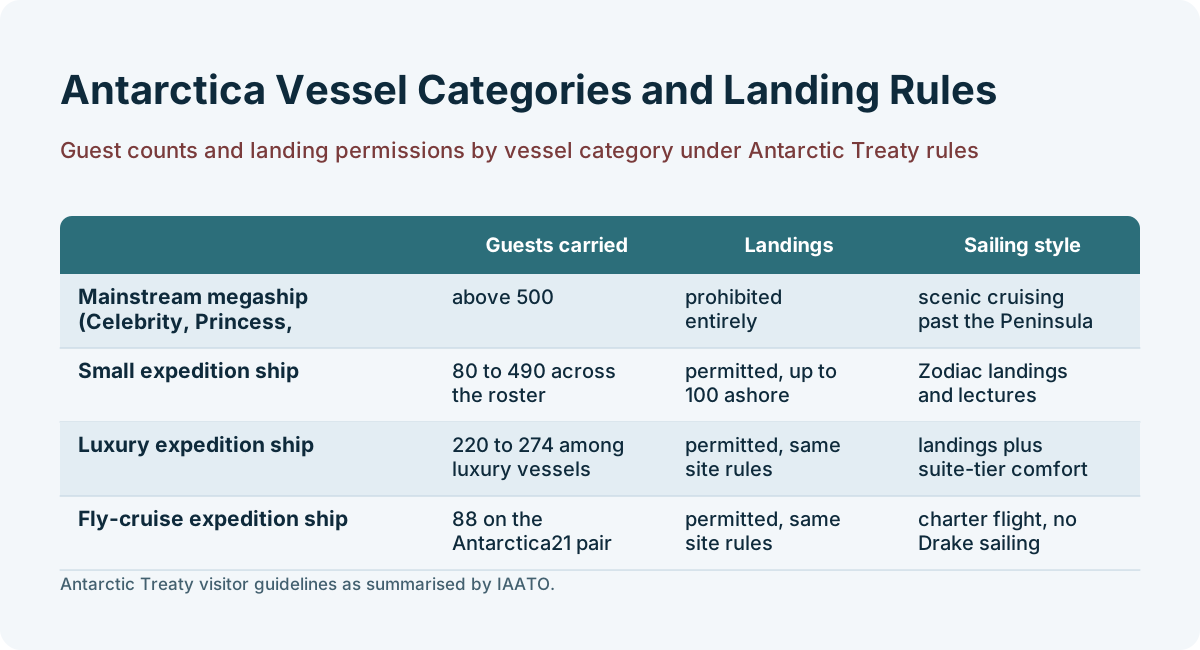
The table below sorts the fleet by what the rules allow each vessel type to do, using guest counts from the current ship roster.
| Vessel category | Guests carried | Landings under Antarctic rules | What the sailing looks like |
|---|---|---|---|
| Mainstream megaship (Celebrity, Princess, Holland America, Norwegian) | above 500 | prohibited entirely | scenic cruising past the Peninsula, all viewing from deck |
| Small expedition ship | 80 to 490 across the current roster | permitted, up to 100 ashore at a time | Zodiac landings, lectures, optional kayaking |
| Luxury expedition ship | 220 to 274 among the roster's luxury vessels | permitted, same site rules | landings plus suite-tier comfort and service |
| Fly-cruise expedition ship | 88 on the Antarctica21 pair | permitted, same site rules | charter flight to King George Island, no Drake sailing |
There is an environmental layer too. Operators planning tourist expeditions to Antarctica from the United States are required to submit environmental documentation to the EPA under US regulations, and biosecurity rules require every boot, bag and tripod to be washed before arrival and cleaned again between sites. All of this is manageable with 130 or 170 guests rotating through a ship's Zodiac fleet. It is not manageable with a megaship.
The practical consequence for a buyer is simple and worth internalising before you compare fares: passenger count is the single variable that decides whether Antarctica is something you visit or something you watch. Every ship that lands is, by necessity, a small ship.
What A Cruise-Only Antarctica Itinerary Is Actually Like
Cruise-only itineraries deliver scenery, comfort and long daylight hours from the deck of a large ship, typically over one to three days of scenic cruising near the Peninsula, bracketed by sea days crossing the Drake Passage or routing via Chilean fjords. Weather and ice decide how close the ship gets. Landings, Zodiacs, kayaking and camping are not part of the product.
The mainstream lines' Antarctic product is built around scenic cruising rather than expedition operations. The ship spends its Antarctic time in ice-fringed channels, and the bridge narrates glaciers, whale blows and penguin colonies over the public-address system. Public rooms, pools and shows continue running, because the ship is the destination in a way that is not true on an expedition vessel. The trade is comfort for access, and the fare reflects it: cruise-only sailings are frequently priced at a fraction of expedition quotes for the same number of days.
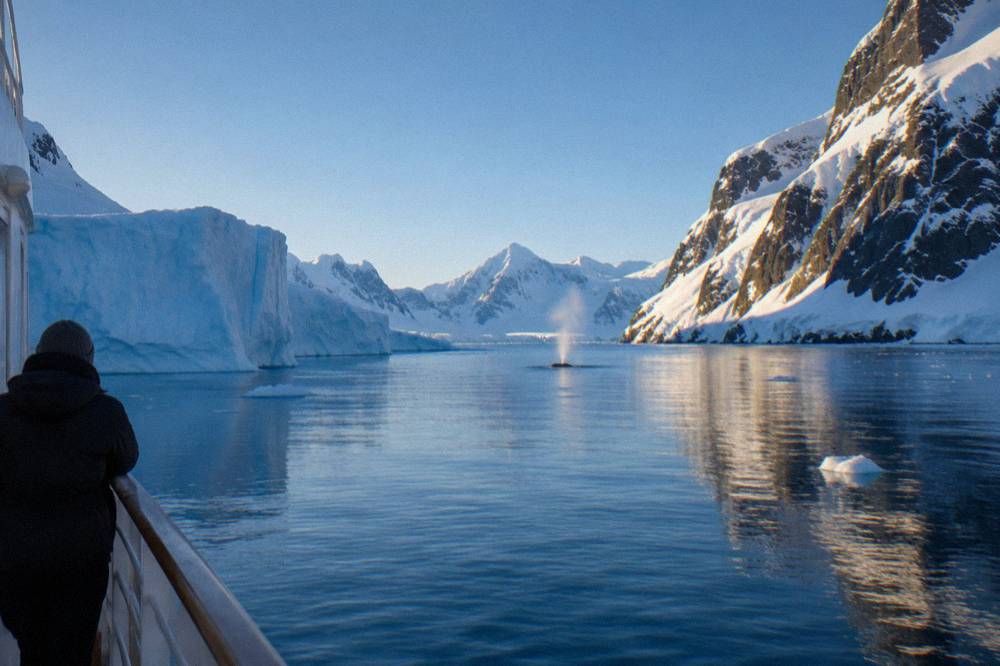
Two honest caveats apply. First, the Drake Passage does not care how big your ship is. Rough conditions occur on roughly 30 percent of crossings according to a Geographical explainer on the passage, and typical swells run three to five metres; a stabilised megaship handles them differently than a 100-guest expedition boat, but nobody is exempt. Our guide to the Drake Passage crossing covers what the transit actually involves. Second, itinerary flexibility runs the other way: a large ship cannot dodge far or squeeze into narrow bays, so ice and weather can shorten scenic cruising more abruptly than they would shorten an expedition's plans.
For some travellers this is genuinely the right product. If you want to see Antarctica's scale, its light and its icebergs without camping gear, wet landings or a small-ship cabin, a big-brand sailing delivers that at a fare that can leave budget for a Patagonia extension. The mistake to avoid is buying it while picturing yourself standing among penguins. That picture requires a different ship, and usually a different budget, which is exactly the comparison a free consultation can settle quickly.
The Expedition Alternative: Ships That Actually Land
Expedition ships carry fewer than 500 passengers, almost always far fewer, and operate Zodiac landings, kayaking and sometimes camping under the 100-ashore and 1:20 guide rules. Ships such as Hondius, Ocean Albatros and National Geographic Endurance carry between roughly 130 and 170 guests and spend their Antarctic days rotating everyone ashore at sites across the Peninsula.
On a landing-based Antarctic cruise, the daily rhythm is inverted from the megaship version. Mornings and afternoons are built around landings and Zodiac cruises: a beach with gentoo penguins, a historic hut, a leak in the ice where humpbacks feed. The ship repositions while you eat. Lectures from the expedition team fill sea days, and the crew ratio is high enough that the 1:20 guide requirement is met comfortably on vessels of this size.
The range of ships that land is wide, and the fare spread is wider than most first-time buyers expect. On the budget end, Oceanwide Expeditions' Plancius lists Antarctic Peninsula departures from $7,050 per person, and its Hondius, a 170-guest, Polar Class 6 ship built in 2019, lists from $7,800. At the standard-to-premium end, Lindblad's National Geographic Endurance, a 138-guest PC5 ship with the patented X-Bow hull, lists its 12-day Voyage to Antarctica from $11,900. These are published operator starting fares for the lowest cabin categories; higher categories and peak departures climb steeply from there.
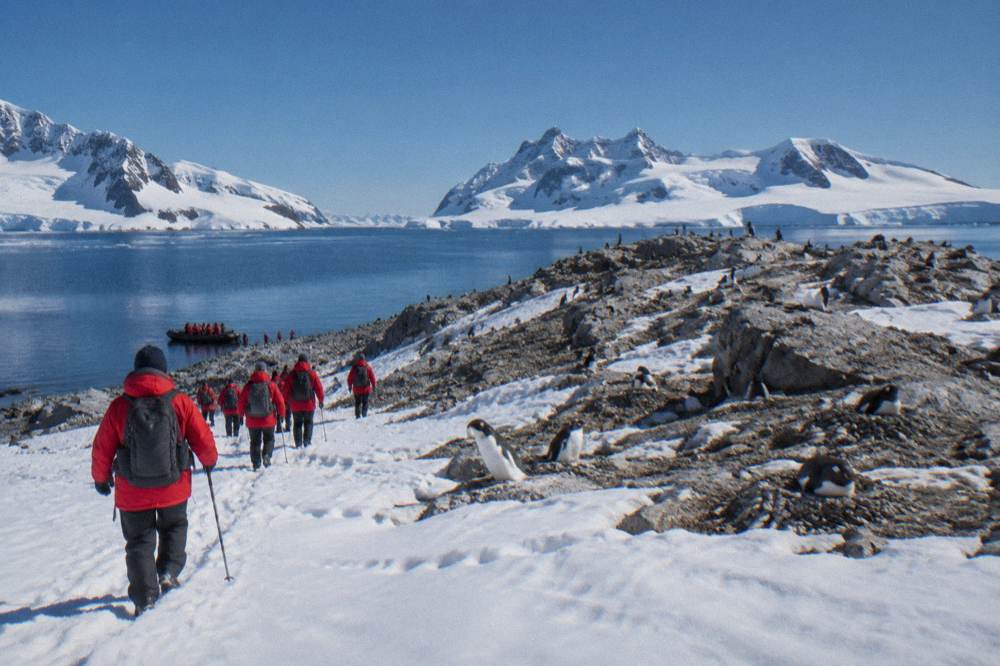
One ship worth understanding in this space is Ocean Albatros, an Albatros Expeditions vessel sold via Polar Latitudes. She carries a patented X-Bow hull, runs a kayak program, and operates 10- and 11-day Peninsula voyages from Ushuaia, in the standard expedition class rather than the luxury tier. A current fare for her is not on file, so a number would have to come from a consultation rather than a listing. Her guide ships in the same class bracket as Swan Hellenic's PC5 vessels and the mid-fleet ships of the larger operators, which makes her a useful benchmark when you are weighing what a mid-priced expedition berth buys.
If you are trying to map the whole expedition fleet rather than just these three, our Antarctica cruise ships guide breaks the roster down by class and price tier, and the best Antarctica cruise guide works through the same question from a value angle.
Comparing Three Ships That Land
Hondius, Ocean Albatros and National Geographic Endurance represent three price and style points of the landing fleet: Hondius at the budget end from $7,800, Ocean Albatros in the standard expedition tier with a kayak program, and National Geographic Endurance in the premium tier from $11,900 with a PC5 hull and the National Geographic partnership. All three land passengers; none is a cruise-only vessel.
The table below is the comparison in one view, using the roster's published figures. Where a fare is not on file, no number is printed, because quoting one would be a guess.
| Ship | Operator | Passengers | Ice class | Voyage days | Published fare from |
|---|---|---|---|---|---|
| Hondius | Oceanwide Expeditions | 170 | Polar Class 6 | 11/13/19 | $7,800 pp |
| Ocean Albatros | Albatros Expeditions (via Polar Latitudes) | not on file | 1A | 10/11 | not on file |
| National Geographic Endurance | Lindblad Expeditions | 138 | PC5 | 12/16/21/22 | $11,900 pp |
| Ship | Class | Passengers | Ice class | From, per person | Voyage length | Departs from |
|---|---|---|---|---|---|---|
| Ocean AlbatrosAlbatros Expeditions (sold via Polar Latitudes) | Standard Expedition | – | 1A | – | 10 to 11 days | Ushuaia |
| HondiusOceanwide Expeditions | Small-Ship Budget | 170 | Polar Class 6 | from $7,800 | 11 to 19 days | Ushuaia |
| National Geographic EnduranceLindblad Expeditions (with National Geographic) | Standard Expedition | 138 | PC5 | from $11,900 | 12 to 22 days | Ushuaia |
What the fare column hides is what the fare includes, and inclusions differ sharply between operators. According to one 2026 cost guide, Lindblad bundles a pre-cruise Buenos Aires hotel, the charter flight to Ushuaia, alcoholic beverages, prepaid gratuities and an expedition jacket into its fares. Budget operators typically price the voyage itself and leave flights, hotels and some gear to you. Most expedition operators provide a complimentary parka, often yours to keep, and loan waterproof boots, while gratuities on expedition ships typically run $15 to $25 per person per day unless prepaid.
The honest way to read the spread is this: the gap between a $7,800 berth and an $11,900 berth is partly real quality, partly inclusions, and partly brand. Only a line-by-line comparison of a specific departure tells you which, and that is a task a consultation exists for. When you are weighing two or three of these ships against each other, talking through the ship choice with a specialist is free and often saves a booking mistake that costs far more.
Cruise-Only Versus Expedition: The Real Price Gap
Cruise-only fares can start several thousand dollars below expedition quotes, but the two products are not comparable per day. A realistic all-in budget for a 10- to 12-day mid-range landing trip, fare plus flights, gear, tips and insurance, runs $12,000 to $25,000 per person according to a 2026 cost guide, while a cruise-only sailing can come in well under that once its fewer inclusions are accounted for.
The published entry points make the gap look dramatic. Entry-level expedition berths on Drake-crossing itineraries begin at roughly $7,500 to $8,995 per person for 10- to 11-day Peninsula voyages in shared twin or triple cabins, per one 2026 cost guide. Mainstream sailings, when they appear, are often cheaper still for a similar length. But the cruise-only fare buys scenery from a deck; the expedition fare buys the deck plus the continent underfoot.
| Cost item | Cruise-only megaship | Landing expedition ship |
|---|---|---|
| Typical entry fare | lowest of the three styles, varies by sailing | from about $7,050-$7,800 pp (shared cabins, Drake crossing) |
| Shore landings | not permitted on vessels over 500 passengers | included, up to 100 ashore at a time |
| Zodiacs, kayaking | generally not offered | Zodiacs standard; kayaking on ships with programs |
| Parka and boots | dress warmly on your own | usually provided or loaned |
| Gratuities | auto-charged per line policy | typically $15-$25 pp/day unless prepaid |
| Insurance with evacuation | recommended | required or strongly required by most operators |
Insurance deserves its own line because it is the item buyers forget until the operator asks for proof. Major operators impose high medical evacuation minimums plus full trip-cost cancellation cover, and proof is often requested before departure or at check-in; most operators do not include this cover in base fares. Argentina also formally requires health and medical coverage, including evacuation, for foreign visitors under its current rules. Budget for it on either style of trip.
The last variable is timing. Peak December sailings on expedition ships can book 18 or more months ahead, and last-minute discounts exist but are limited in availability and cabin choice, so waiting rarely rescues a peak-season budget. Early-booking offers for the 2026-27 and 2027-28 seasons commonly reach 10 to 30 percent off according to operator calendars, with the deepest cuts on select unsold sailings.
How To Decide Which Antarctica You Want
Decide on one question first: does stepping onto the continent matter? If yes, book an expedition ship under the landing cap and budget from $7,050 per person upward. If no, a big-brand scenic cruise is a legitimate, cheaper way to see the ice, provided you go in knowing landings are legally off the menu. Everything else, fare, line, month, is a second-order decision.
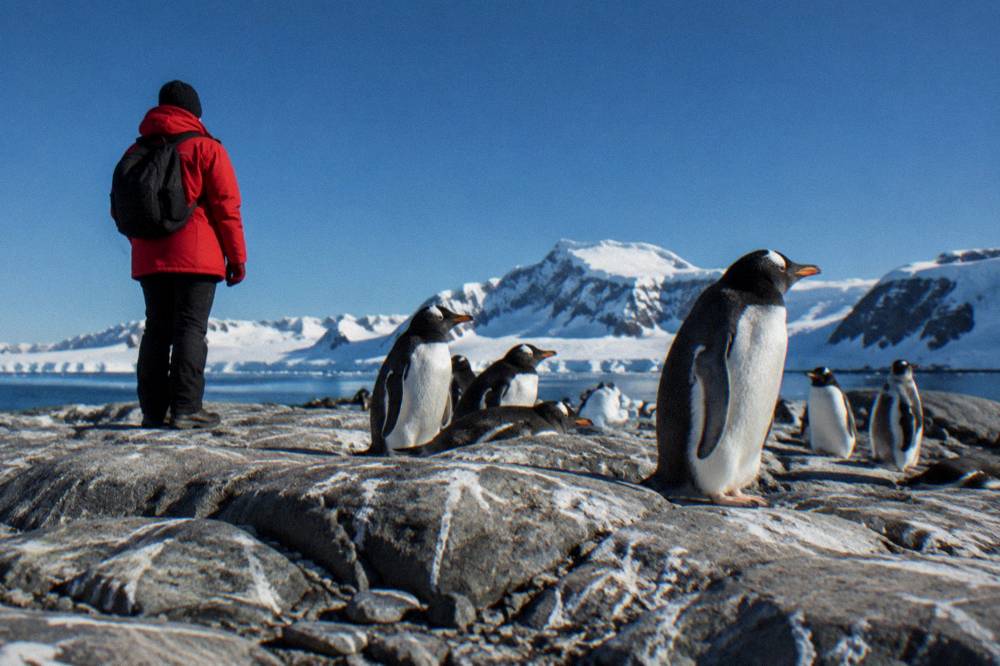
The framing that helps most buyers is the documentary-versus-participant one. A cruise-only sailing on a mainstream line is a viewing experience: excellent for travellers with mobility constraints, for those who dislike small-ship cabins, or for anyone whose main goal is to say they saw Antarctica from the water. The landing expedition is a participation experience: wet landings, cold hands, penguins at arm's length under the five-metre wildlife distance rule, and a ship that exists to get you off itself as often as conditions allow.
If you land on the expedition side, the season question comes next. The austral summer runs October to April, and the Antarctic Treaty Secretariat notes that roughly 98 percent of tourism voyages occur in the Peninsula region during that window. Within it, November offers courtship and pristine snow, December and January bring penguin chicks and the return of humpbacks, and February to March peak for whales and photography. Our best time to visit Antarctica guide works through the trade-offs month by month, and the Antarctica expedition cruise guide covers what the day-to-day actually feels like on a landing ship.
One thing worth knowing about scale: IAATO recorded 113,518 total visitors for the 2025-26 season, of whom 85,195 made landings and 27,217 were cruise-only. Both kinds of traveller are common, and the industry is built to serve both, but they are served by different ships with different rules attached. Choosing the ship is choosing the rules you will live under for a week or more, which is why this decision rewards a conversation before it rewards a credit card.
Common Questions About Mainstream Lines And Antarctica
Can You Land On A Celebrity Antarctica Cruise?
No. Ships carrying more than 500 passengers are prohibited from making landings in Antarctica under the Antarctic Treaty system's visitor guidelines, and Celebrity's ships exceed that cap. The itinerary is a scenic cruise past the Peninsula with all viewing from the ship.
Why Can't Big Cruise Ships Land In Antarctica?
The rules protect small landing sites and wildlife from overcrowding. They cap shore groups at 100 passengers at a time, require one guide per twenty visitors, and prohibit vessels over 500 passengers from landing at all. A megaship could not rotate thousands of guests ashore within those limits.
Is A Cruise-Only Antarctica Trip Worth It?
It can be, for the right traveller. You see icebergs, glaciers and wildlife from deck in comfort at a lower fare, which suits some priorities well. But it does not include landings, Zodiacs or time ashore, so it should be bought as a viewing trip, not a cheaper version of an expedition.
Which Ships Are Allowed To Land In Antarctica?
Any vessel carrying 500 or fewer passengers can operate landings within the site rules, and in practice the landing fleet consists of small expedition ships carrying roughly 80 to 500 guests. Examples include Hondius at 170 passengers, National Geographic Endurance at 138, and Ocean Albatros.
How Much Cheaper Is A Mainstream Antarctica Cruise Than An Expedition?
Mainstream sailings are often priced well below expedition quotes for similar lengths, but entry-level expedition berths start around $7,050 to $7,800 per person in shared cabins on Drake-crossing routes. A realistic all-in budget for a mid-range landing trip runs $12,000 to $25,000 per person including flights, gear, tips and insurance.
Do Norwegian, Princess Or Holland America Land In Antarctica?
No. Like Celebrity, these lines operate ships above the 500-passenger cap, so their Antarctic itineraries are scenic cruising without landings. Any Antarctic itinerary on a vessel over that limit is cruise-only by rule, not by choice.