Antarctica In March: End Of Season Weather, Wildlife And Sailings
 By Oleg G.
March is the last month of the Antarctic cruise season: whales at their peak, penguin chicks fledging, the first real sunsets, and the final sailings of the year.
Quick answer: Yes, March works well for an Antarctica cruise. It is the final month of the season, with the last expedition sailings departing in late March. Whale sightings peak, penguin chicks fledge, temperatures run roughly 2-3°C by day on the Peninsula, and shoulder-season fares return, often 20 percent or more below the December-January peak.
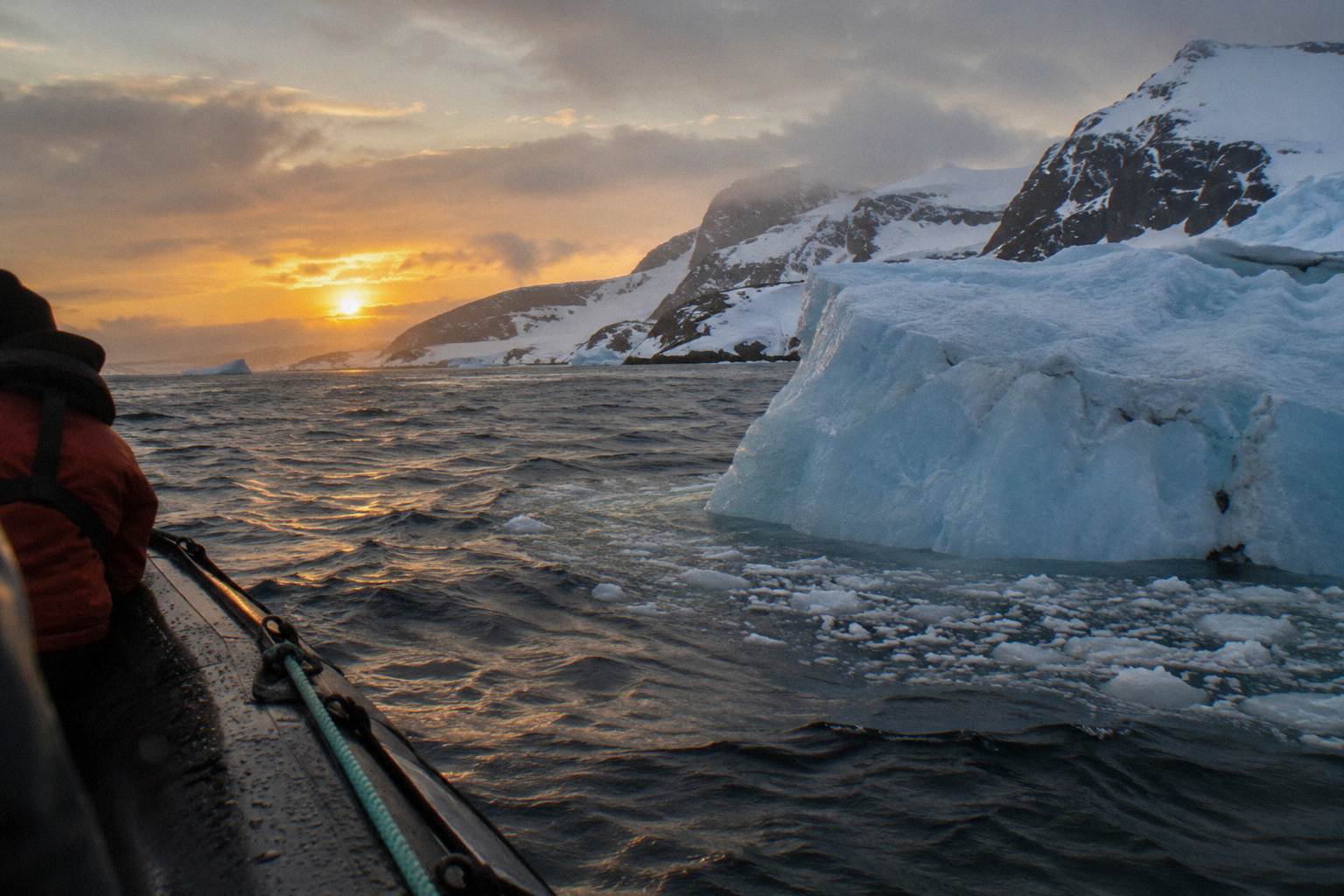
March is the month the Antarctic cruise season winds down, and it rewards travellers who arrive last. The whales are at their peak, the penguin chicks are learning to swim, the sunsets come back after months of near-constant daylight, and the ships that are still sailing carry shoulder-season fares. Roughly 98 percent of Antarctic tourism voyages happen in the October-to-April austral summer window, according to the Antarctic Treaty Secretariat, and March sits at the very end of it, with the last expedition departures leaving Ushuaia in the third and fourth weeks of the month.
This guide walks through what an Antarctica cruise in March actually looks like: the weather you should pack for, the wildlife you will see, which ships are still sailing and when they stop, and how the month compares with February on one side and April on the other. If you are weighing March against other months, our broader best time to visit Antarctica breakdown covers the whole season, and the neighbouring month guides on Antarctica in February and Antarctica in April fill in the picture on either side.
Is March A Good Month For An Antarctica Cruise?
Yes, March is a strong month, with three specific advantages: whale sightings peak, late-season fares drop, and the light becomes photographic in a way it is not midsummer. The trade-offs are colder nights, emptier penguin colonies as chicks fledge, and a hard deadline, because the last sailings leave in late March. Anyone whose priority is peak penguin activity should look at December or January instead.
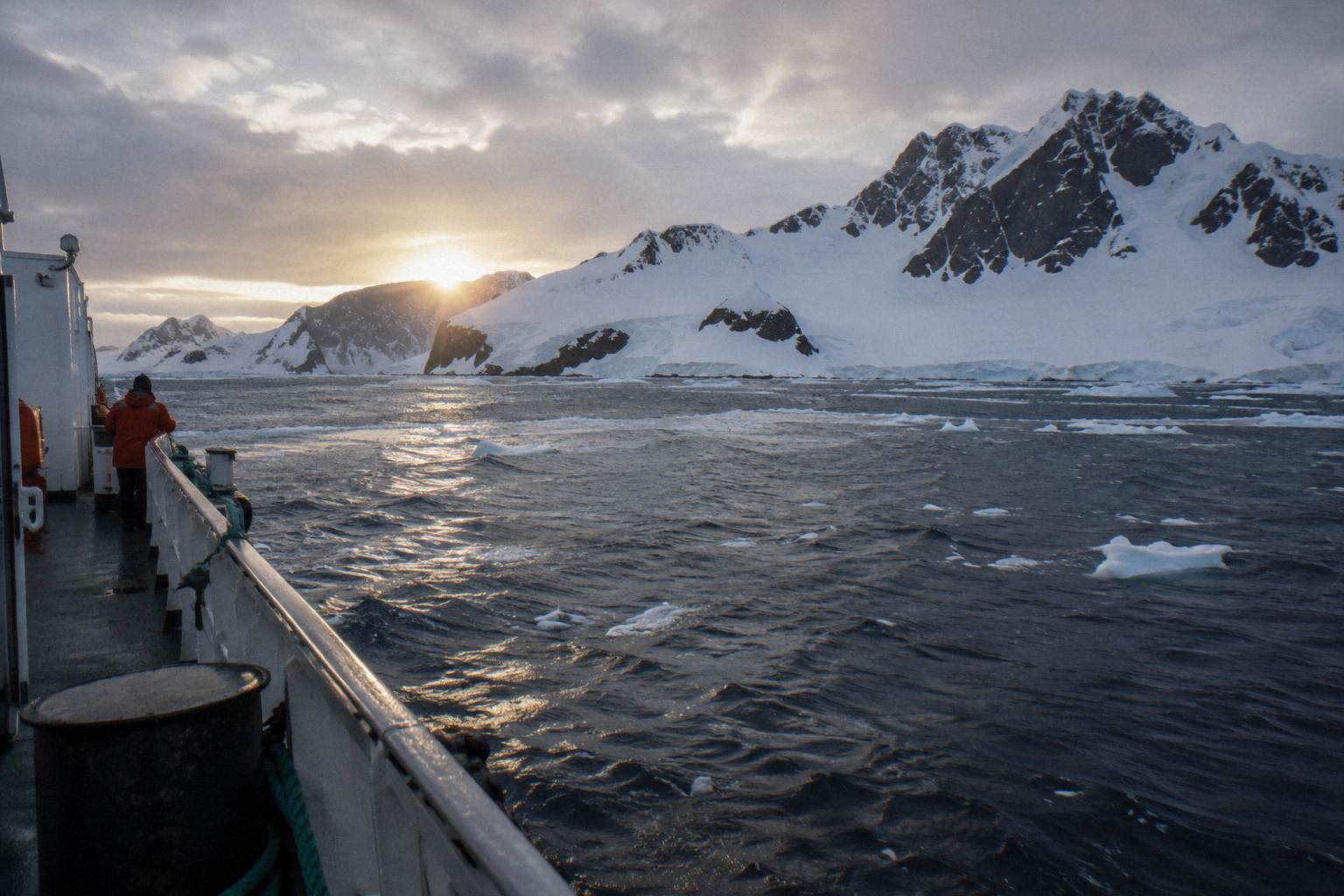
March sits at the tail of the roughly seven-month austral summer during which, per the Antarctic Treaty Secretariat's tourism page, approximately 98 percent of all tourism voyages occur, concentrated in the Peninsula region. By March the season's rhythm has shifted: the whales that began arriving in December and January are feeding in Peninsula waters in their greatest numbers of the year, the penguin chicks that hatched in January are fledging and leaving the colonies, and the near-24-hour daylight of midsummer gives way to roughly 12.5 hours of light and returning sunsets.
The month divides roughly in two. Early March still feels like late summer: temperatures on the Peninsula coast average around 2-3°C at the height of the day, and the sea ice has retreated about as far as it goes, which opens up access to the southernmost stretches of the Peninsula and, in some years, Antarctic Circle crossings. Late March is colder, darker at night, and quieter: fewer ships, fewer people, and the last departures of the year.
For the right traveller this is the best month of the season. For someone whose dream is a colony packed with downy chicks, it is the wrong one. Deciding which kind of traveller you are is the first real decision, and it is worth doing with help: a free consultation on your March plans costs nothing and pairs you with the voyages that match what you actually want to see.
What Is The Weather Like In Antarctica In March?
Expect daytime highs of roughly 2-3°C on the Antarctic Peninsula coast, overnight lows between -1 and -5°C, about 12.5 hours of daylight, and the return of genuine sunsets. In Ushuaia, the departure gateway, March highs run around 12°C. It is colder than February but milder than what most visitors expect from the word "Antarctica", and waterproof layers matter more than extreme cold gear.
March temperatures on the Peninsula coast average approximately 2-3°C at the high and -1 to -5°C at the low, based on station-derived climate summaries. That is a couple of degrees down from January's peak of about 4°C, and the wind chill on Zodiac landings can push the effective temperature well below the raw numbers. The bigger change is the light: after months of near-continuous daylight, the Peninsula drops to roughly 12.5 hours of daylight in March, which means golden hours, low-angle light on icebergs, and returning sunsets. For photographers this is the single biggest draw of the month.
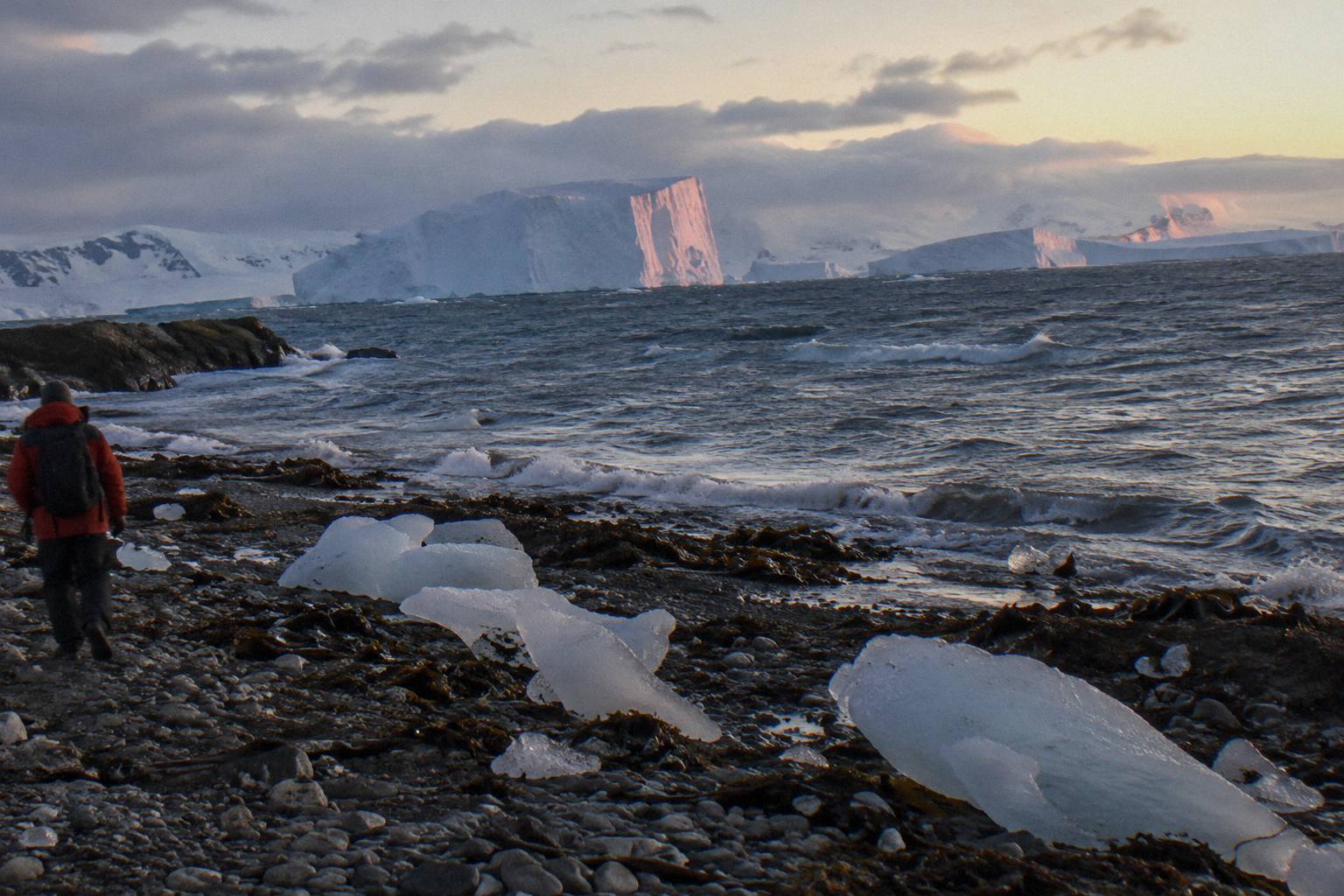
Rain and snow both happen in March. The crossing itself is the same passage year-round; our Drake Passage crossing guide covers what the two-day transit involves, and no single month is reliably calmer than another within the season.
Pack for wet, wind and cold rather than for the interior of the continent. Layers, waterproof shell top and bottom, and a good hat cover most of it; our full Antarctica packing list goes into detail. Ships lend or provide expedition boots, and most operators provide a complimentary parka, with loan waterproof boots standard across the industry, so the boots you bring matter less than the layers between them.
Month At A Glance: March
March delivers the season's peak whale watching, fledging penguin chicks, roughly 12.5 hours of daylight, and shoulder-season fares, at the cost of colder nights and thinning wildlife colonies. It is the last month with regular expedition departures.
The table below is the quick reference for the month. The figures are Peninsula-coast averages and Ushuaia gateway figures drawn from the climate and schedule data in our research files.
| March at a glance | |
|---|---|
| Peninsula daytime high | ~2-3°C |
| Peninsula overnight low | ~-1 to -5°C |
| Daylight hours (Peninsula) | ~12.5 hours |
| Ushuaia gateway temperature | Highs ~12°C, lows ~4°C |
| Wildlife highlights | Peak whale season; fledging penguin chicks; fur seal activity on the Peninsula |
| Light and photography | Low-angle light, returning sunsets |
| Pricing pattern | Shoulder-season fares, often 20%+ below peak |
| Season position | Final month of the November-to-March expedition season |
| Last sailings | Late March (examples: Hondius Mar 7-17; Ortelius Mar 18-28) |
What Wildlife Do You See In Antarctica In March?
March shares the season's whale peak with February. Humpback, minke and orca sightings peak in February and March as krill-rich waters draw feeding marine mammals, while penguin chicks fledge and learn to swim, leopard seals become more visible, and blue-eyed cormorant chicks fledge on the Peninsula. Penguin colonies are noticeably quieter than in January.
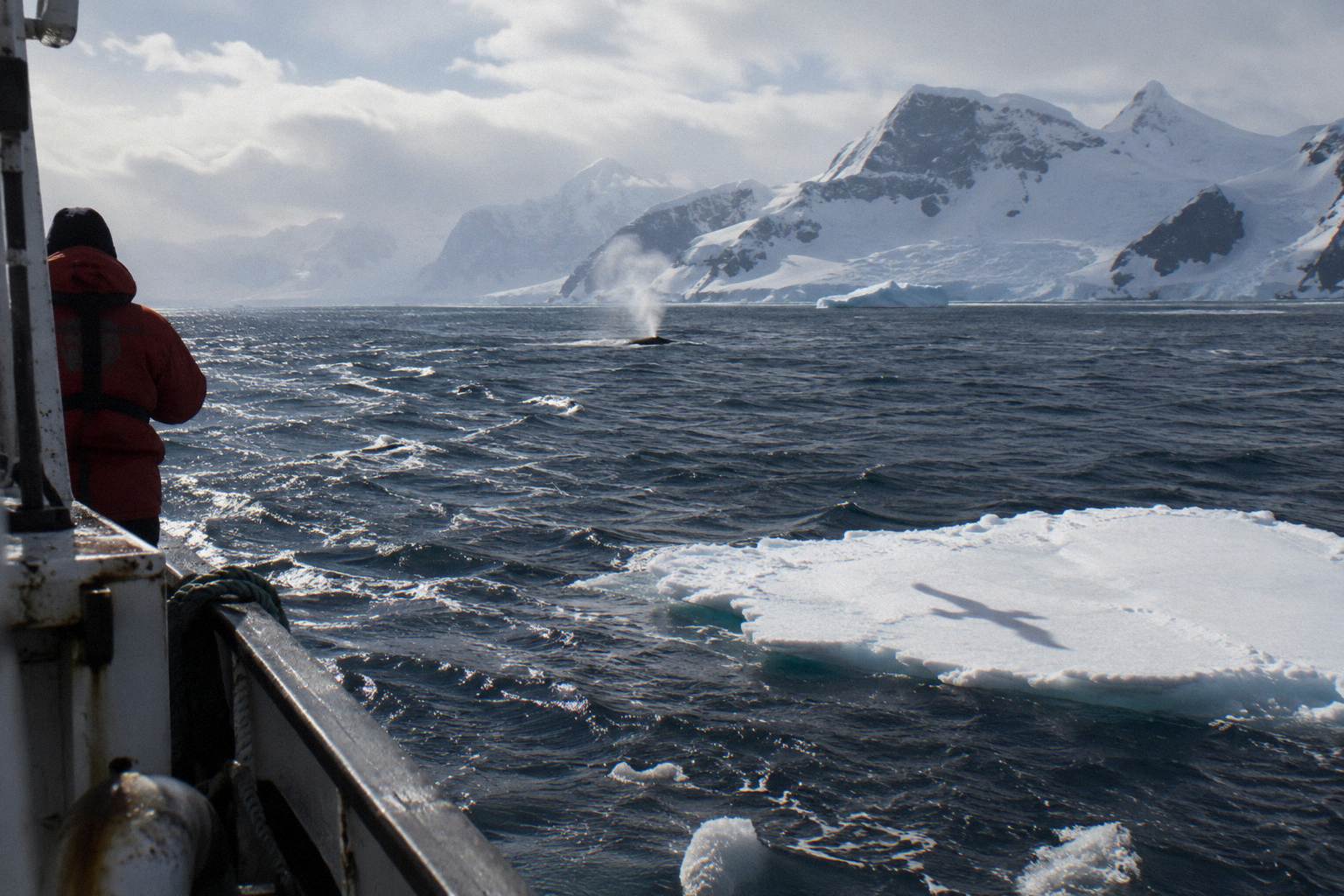
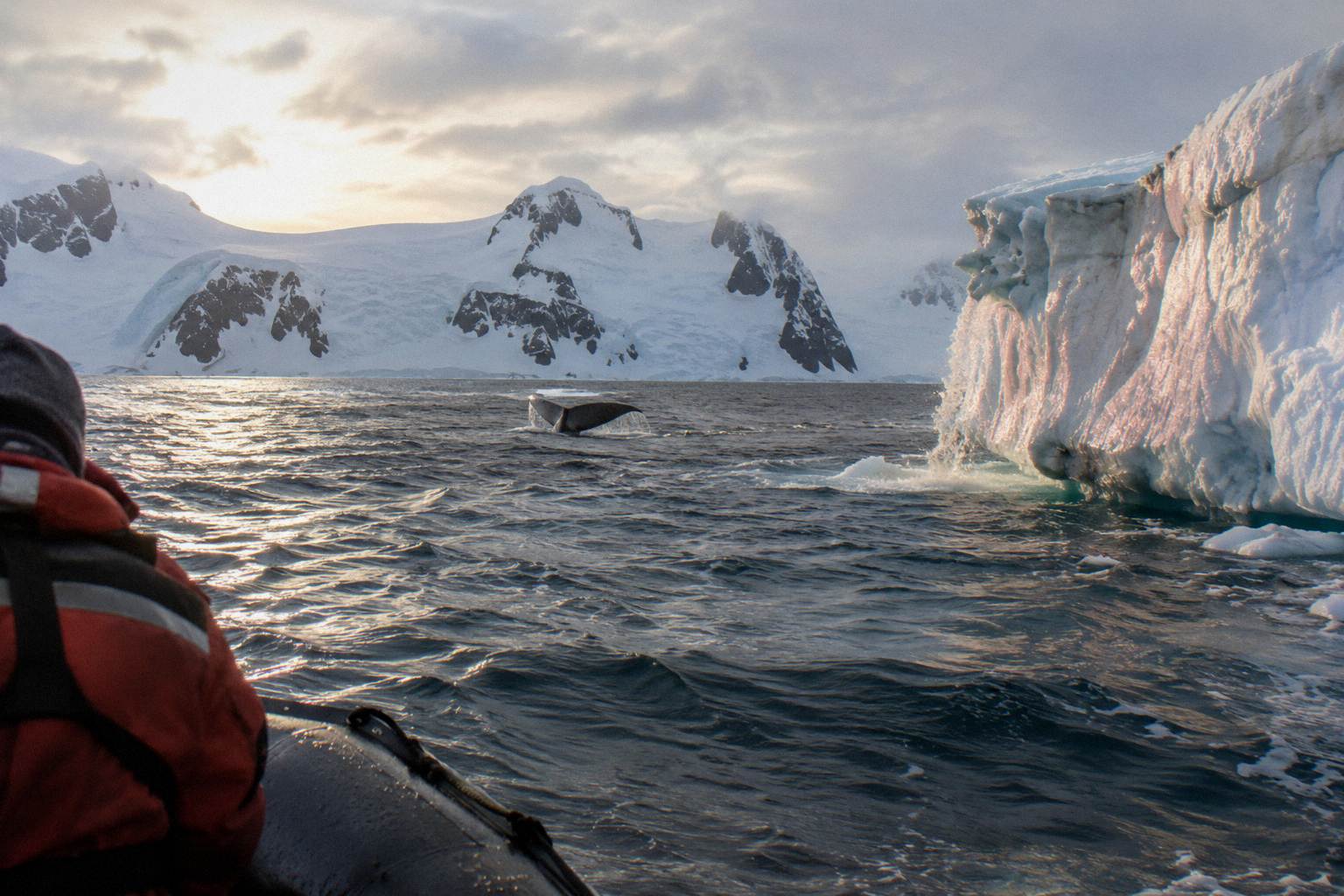
The whale show is the headline. Whale sightings, especially humpbacks, increase from mid-January onward and the February-March window is the peak of the season, with humpback, minke and orca activity strong in krill-rich Peninsula waters. If whales are the reason you are going, February and March are the months to target.
The penguin picture is the opposite of January's. By March the gentoo, chinstrap and Adélie chicks that hatched in January have grown, fledged and are learning to swim, and the colonies progressively empty toward late March and early April. February features adult penguins molting and chicks learning to swim; by March that process is well advanced. Anyone who has seen photographs of densely packed, downy chicks should calibrate expectations: you will still see plenty of penguins, but the rookeries are thinning, the adults are molting, and the fluffy-chick aesthetic is over.
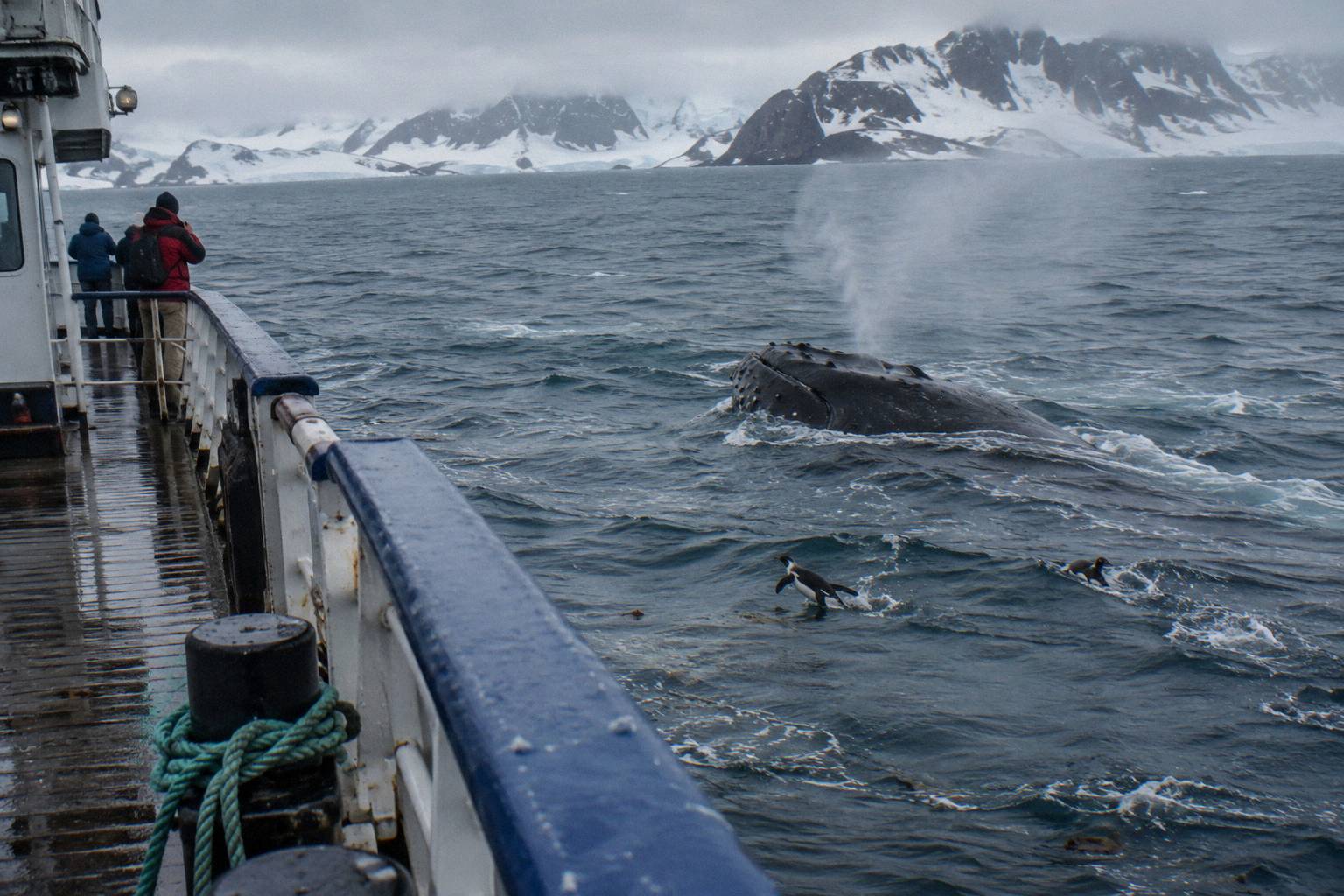
The table below summarises what each wildlife group is doing in March, drawn from the operator and season data in our research files.
| Wildlife group | What is happening in March |
|---|---|
| Humpback, minke and orca whales | Peak feeding activity in krill-rich Peninsula waters |
| Gentoo, chinstrap and Adélie penguins | Chicks fledging and learning to swim; colonies emptying toward early April |
| Adult penguins | Molting phase, well advanced from February |
| Fur seals | Higher abundance on the Peninsula than earlier in the season |
| Leopard seals | Sightings more likely as young penguins take to the water |
| Blue-eyed cormorants (imperial shags) | Chicks fledging on the Peninsula |
| South Georgia king penguins (combo itineraries) | Past peak breeding activity, but chicks still visible through March |
Seals are a quiet highlight. Fur seal abundance on the Peninsula is higher in February and March than earlier in the season, and leopard seal sightings become more likely as the young penguins take to the water. South Georgia, on the longer combo itineraries, is past its king penguin peak, though chicks remain visible there through March.
Remember that wildlife rules apply year-round: keep at least 5 metres from wildlife on land, per IAATO visitor guidelines, and never approach or feed animals. The expedition team enforces these distances on every landing.
How Does March Compare With February And April?
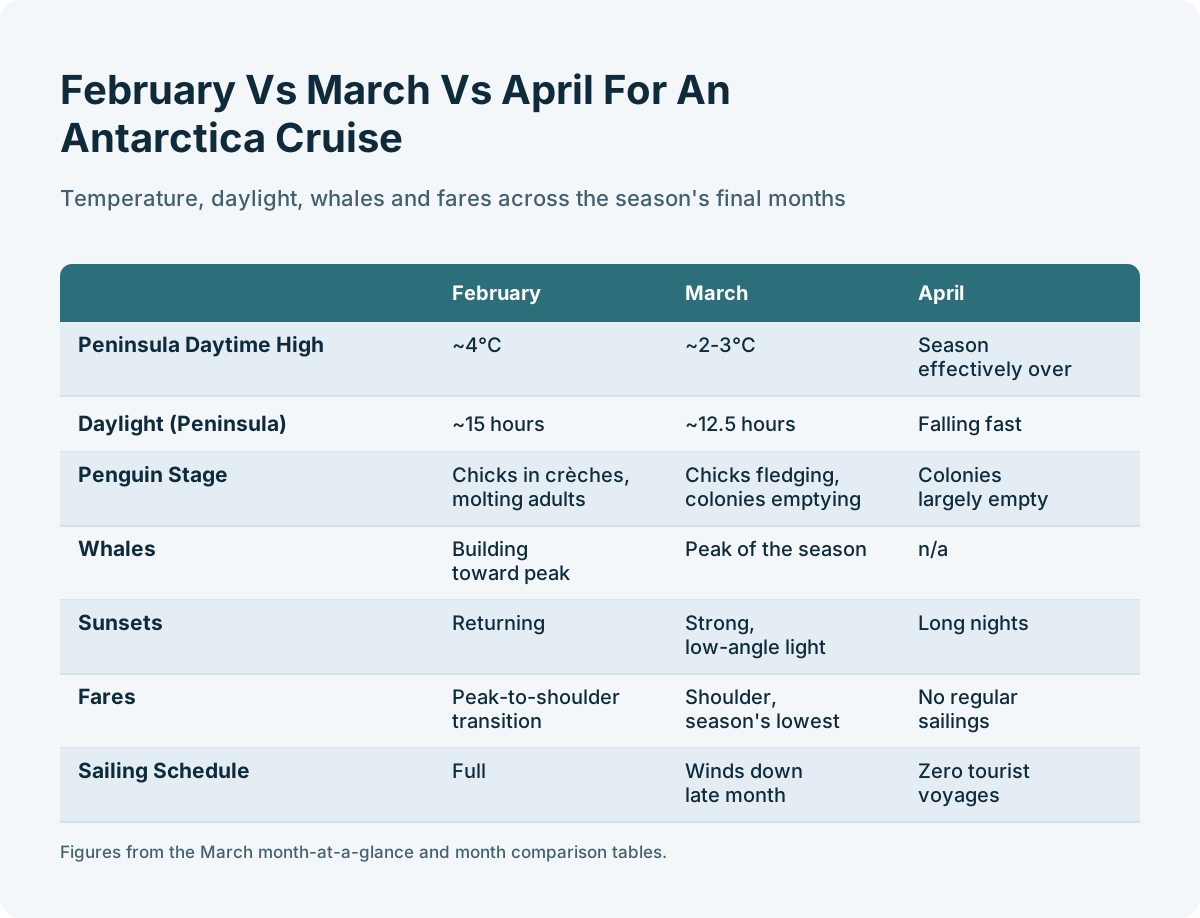
March sits between February's late-summer abundance and April's closure: it is colder and darker than February but shares the whale peak and returns to shoulder fares; it is the last month with a real sailing schedule, whereas April has effectively none. February wins on penguin chicks and warmth; March wins on whales, light and price; April is not a realistic cruise month.
| February | March | April | |
|---|---|---|---|
| Peninsula daytime high | ~4°C | ~2-3°C | Season effectively over |
| Penguin stage | Chicks in crèches, molting adults | Chicks fledging, colonies emptying | Colonies largely empty |
| Whales | Season peak | Peak continues | n/a |
| Daylight (Peninsula) | ~15 hours | ~12.5 hours | Falling fast |
| Sunsets | Not published | Returning, low-angle light | Long nights |
| Fares | Below the December-January peak | Shoulder, discounts on late departures | No regular sailings |
| Sailing schedule | Full | Winds down late month | Zero tourist voyages |
The February comparison is the one most travellers actually face. February gives you warmer days, more daylight, penguin chicks in crèches and the best odds for an Antarctic Circle crossing, since late January and February are when the ice retreats farthest. March gives you whales still at their February-March peak, photographic light, and fares that in published examples run meaningfully below the December-January peak, with Oceanwide March Peninsula fares from around $6,900 and late-March departures carrying 25 percent advantage fares in one operator's pricing. If penguins are your priority, choose February; if whales and value are, choose March. The full index of guides sits on Cruises In Antarctica.
On the April side the comparison is short: no tourist expedition ships operate in Antarctica from April through September, and zero tourist voyages are confirmed for that window in the 2026-27 season. Anyone with an April window should shift to late March or to the following November.
Which Ships Sail In March And When Does The Season End?
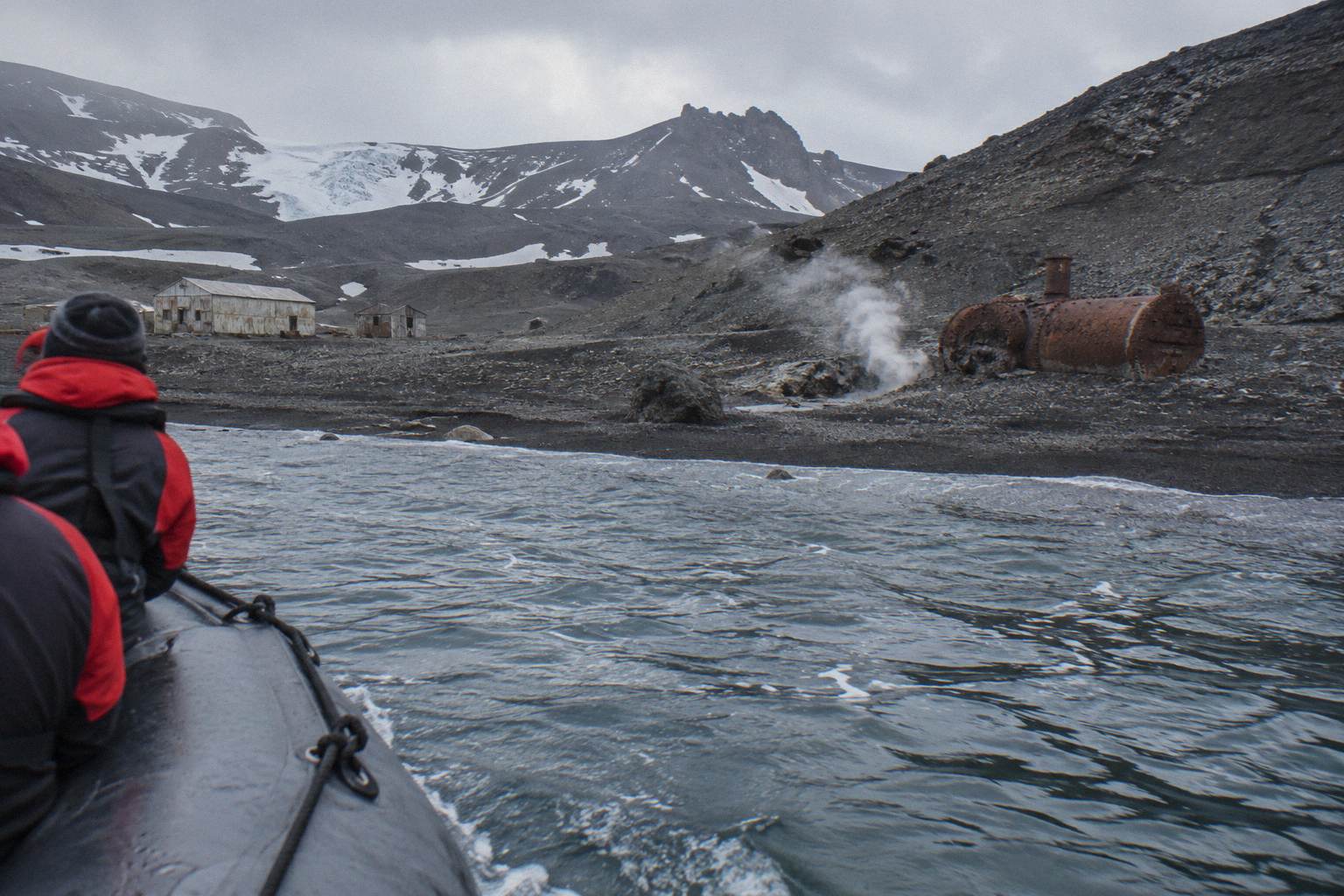
The last expedition sailings of the season leave Ushuaia in mid-to-late March. Published examples include Oceanwide's Hondius on a 7 to 17 March voyage and Ortelius on 18 to 28 March, with the season effectively closed by the end of the month. Atlas Ocean Voyages and Polar Latitudes also publish March departures.
Published March departures come from several operators. Oceanwide Expeditions runs Hondius on a 7 to 17 March 2027 voyage and Ortelius on 18 to 28 March. Atlas Ocean Voyages lists World Traveller on 2 March and World Navigator on 8 March 2027, Polar Latitudes' Discoverer departs on 4 March, and other final departures fall on 9, 18, 19 and 27 March.
The three Oceanwide ships make a useful comparison for a March booking, since they represent the value end of the market with three quite different vessels:
| Ship | Class | Passengers | Ice class | From, per person | Voyage length | Departs from |
|---|---|---|---|---|---|---|
| HondiusOceanwide Expeditions | Small-Ship Budget | 170 | Polar Class 6 | from $7,800 | 11 to 19 days | Ushuaia |
| OrteliusOceanwide Expeditions | Small-Ship Budget | 108 | UL1 | from $7,800 | 11 to 25 days | Ushuaia |
| PlanciusOceanwide Expeditions | Small-Ship Budget | 108 | 1D | from $7,050 | 10 to 33 days | Ushuaia |
Hondius is the newest of the three: built in 2019, Polar Class 6 (equivalent 1A-Super), 170 passengers in 80 cabins, 107.6 metres long. It is the ship we feature for this guide, because its 7 to 17 March voyage is one of the late-season sailings and its cabin range runs from quad porthole cabins for budget travellers up to a Grand Suite with private balcony. Ortelius, a 1989-built former Russian research vessel carrying 108 passengers in 50 cabins, runs the late-season 18 to 28 March departure, and earlier in the season her helicopter-supported Weddell Sea voyages. Plancius, a converted Dutch Navy oceanographic vessel rebuilt for passengers in 2009, also carries 108 in 50 cabins and offers the classic no-frills Peninsula product. Fares from these ships anchor the budget tier, with Plancius sailings from around $7,050 per person and Hondius and Ortelius Peninsula departures from around $7,800, per the operator's own listings.
Choosing between them is a genuine decision point: ship comfort versus price versus departure date. If you would like help weighing a late-season Oceanwide sailing against a March departure on a more upscale ship, a free consultation on ship choice will lay the options side by side.
What Does An Antarctica Cruise In March Cost?
March sits at the bottom of the season's price curve. Published examples include Oceanwide March Peninsula fares from roughly $6,900, Plancius fares from $7,050 per person, and 25 percent advantage fares on late-March departures. Entry-level expedition berths across the market run roughly $7,500-$8,995 for 10-to-11-day Peninsula voyages in shared cabins, with early-booking discounts for the following season commonly reaching 10-30 percent off.
The pricing pattern across the season is consistent in the published data: November and March are the shoulder months, with fares often 20 percent or more below the December-January peak, and concrete examples of March Oceanwide fares around $6,900 and November G Adventures fares around $7,279 against December-January fares of $12,000-$17,000 and up on mainstream lines. Holiday-period December departures sit at the very top of the market, with one Lindblad December 22 departure noted in the pricing data at a significant premium to shoulder-season fares.
Budget expedition berths on Drake-crossing itineraries begin at roughly $7,500-$8,995 per person for 10-to-11-day Peninsula voyages in shared twin or triple cabins, per one 2026 cost guide, and Oceanwide's own March fares sit at or below that band. A realistic all-in budget for a 10-to-12-day mid-range Peninsula trip, covering fare, flights, gear, tips and insurance, runs $12,000-$25,000 per person according to the same guide. Tips average about $16 per person per day, and travel insurance with medical evacuation cover is required or recommended by most operators and is never in the base fare; our Antarctica travel insurance guide covers the evacuation minimums major operators impose.
Last-minute discounts do exist, with savings of 40-54 percent reported on late bookings, but availability and cabin choice are limited and they are uncommon for peak December sailings, which book 18 or more months ahead. The disciplined way to buy a March berth is early: early-booking discounts for future seasons commonly reach 10-30 percent off, and booking early secures both the fare and the cabin category you want.
Why Do The Last Sailings Matter For Planning?
Because the season has a hard stop. The final expedition departures leave in the second half of March, and by April there are no tourist voyages at all. If your travel window is late March, your ship choice is constrained to whichever operators are still sailing, and missing the embarkation window in Ushuaia usually means missing the season.
The scheduling reality of March is that you are buying from a shrinking menu. The published schedule data shows late Oceanwide voyages on March 7-17 (Hondius) and March 18-28 (Ortelius), Polar Latitudes' Discoverer departing March 4, and a cluster of other final departures on March 2, 8, 9, 18, 19 and 27 across the fleet. After those, no tourist ship sails until November.
That hard stop has knock-on effects for logistics. Ushuaia is the departure port for the overwhelming majority of Peninsula voyages, and the Buenos Aires-Ushuaia air corridor is weather-prone in peak season; the standard advice from the gateway research is to arrive at least one, ideally two, nights before embarkation. In January 2026 Ushuaia hotel occupancy reached about 80 percent amid more than 43,720 cruise passengers, and while March is quieter, a missed flight on embarkation day is typically treated as a no-show with full penalty. Build the buffer.
It also affects the booking timeline. If a March sailing is the plan, the decision of which ship and which departure is worth making with current schedule and fare information in hand, and a conversation about your March options is the easiest way to get it.
Who Should Choose March (And Who Should Not)?
Choose March if whales are your top priority, you want the season's lowest fares and smallest crowds, and you value photographic light over chick-filled colonies. Choose another month if your dream is dense penguin rookeries or the longest daylight: December and January serve those better. March suits flexible travellers who can handle colder nights and a tighter sailing schedule.
The March traveller profile is specific. You are unmoved by the fluffy-chick photograph and drawn instead by the idea of a bay full of feeding humpbacks. You would rather pay $7,000 than $17,000 and accept a quad cabin or a twin porthole to do it. You like the idea of a sunset over Antarctic water. And you are comfortable with the fact that the season is closing around you: fewer ships, fewer people, and a schedule that will not wait.
The March sceptic's case is equally real. The penguin colonies are visibly emptier than a month earlier, the weather is more volatile, nights drop below freezing, and if anything goes wrong with your travel plans the season does not offer a second chance. Families with children should also check minimum ages, which vary by operator; Viking's expedition ships are adults-only at 18, Seabourn's minimum for expedition voyages is 6, and many operators do not state a minimum on their official pages.
For most travellers the honest answer is that March is a specialist's month, excellent at two or three things and ordinary at others. Whether it is the right month for you depends on which of those things you are buying, and that is exactly the kind of question a short conversation resolves quickly. The consultation is free, there is no obligation, and it ends with a shortlist of real sailings rather than a sales pitch.
Common Questions About Antarctica In March
Is March a good month for an Antarctica cruise?
Yes, for the right priorities. Whale sightings peak in February and March, shoulder-season fares return, and the returning sunsets make for outstanding photography. Penguin colonies are thinning as chicks fledge, so travellers focused on dense rookeries should consider December or January instead.
What is the weather like in Antarctica in March?
Peninsula coastal daytime highs average roughly 2-3°C, with overnight lows between -1 and -5°C. Daylight runs about 12.5 hours. In Ushuaia, the main departure port, March highs are around 12°C. Expect more volatile weather than midsummer and pack waterproof layers.
When does the Antarctic cruise season end?
The last expedition sailings depart in mid-to-late March. Published examples include a Hondius voyage from 7 to 17 March and an Ortelius voyage from 18 to 28 March 2027. No tourist expedition ships operate from April through September.
Can you see penguins in Antarctica in March?
Yes, but the colonies are quieter than earlier in the season. Chicks fledge and learn to swim in February and March, and rookeries progressively empty. Fur seal abundance on the Peninsula is higher, and leopard seal sightings become more likely.
Are Antarctica cruises cheaper in March?
March is one of the two shoulder months, alongside November, with fares often 20 percent or more below the December-January peak. Published examples include Oceanwide March Peninsula fares from around $6,900, and last-minute discounts of 40-54 percent have been reported on late bookings, though cabin choice is limited.
Is March or February better for whales?
Both. Whale activity builds from mid-January and peaks across February and March. February is better for penguin chicks and warmer days; March is better for light and price.
More Antarctica By Month
 Antarctica In JanuaryHigh summer in Antarctica: warmest weather, penguin chicks, whales and peak fares.Read the guide
 Antarctica In FebruaryLate-summer whales, chick creches, open ice and Circle crossings: what a February sailing gives you.Read the guide
 Antarctica In AprilApril has no Antarctic sailings. Here is why, and what to do with that travel window instead.Read the guide
 Antarctica In MayWhy no ship sails to Antarctica in May, and what to do with the month instead.Read the guide