Getting Married In Antarctica: What Is Legal And What Is Possible
 By Oleg G.
A legal marriage on the Antarctic continent is possible but rare, and almost never the way couples imagine it. Here is what the law actually allows, which operators host ceremonies, and the route most couples take.
Quick answer: Legal marriages are possible in the British Antarctic Territory under its Marriage Ordinance 2016, but they need a registered Marriage Officer, a licence applied for at least three months ahead and a £500 administration fee. Most cruise passengers instead marry legally at home and hold a symbolic ceremony or vow renewal on board or ashore, arranged through operators such as Polar Latitudes or Poseidon Expeditions.
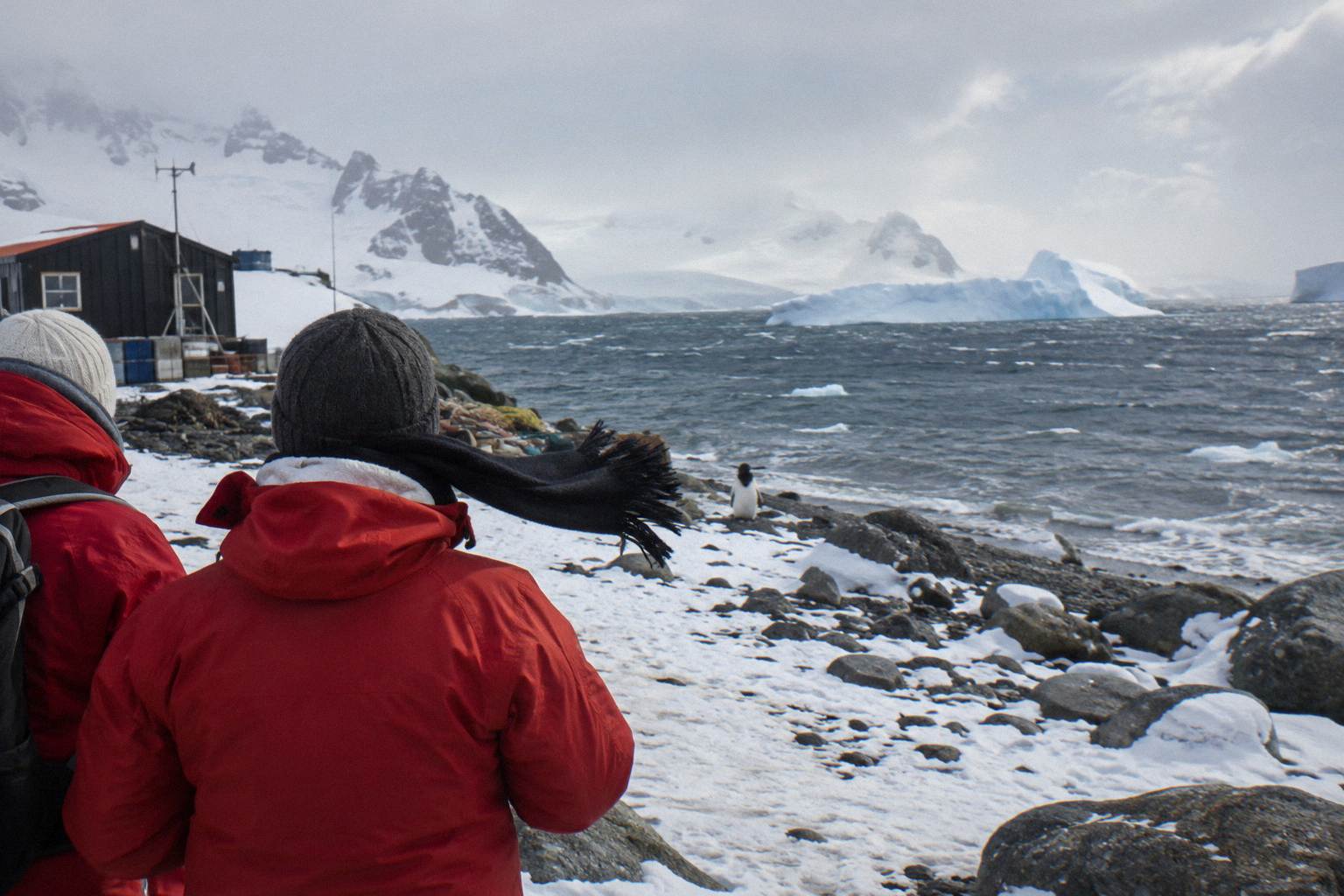
Getting married in Antarctica sounds like the most romantic thing a couple can book, and for a small number of people each season it genuinely happens. But the legal reality is narrower than the brochures suggest. A wedding on the ice is usually a symbolic ceremony, not a legally binding marriage, and the difference matters when you are spending five figures on an expedition cruise. This guide sets out what the law allows, who has actually married on the continent, which operators host ceremonies, and how to plan a voyage around one.
Can You Legally Get Married In Antarctica?
Yes, but only in one territory and only under strict conditions. Legal marriages are possible in the British Antarctic Territory, which covers the Antarctic Peninsula where most expedition cruises operate, under the Marriage Ordinance 2016. The ordinance aligns with England and Wales law and permits same-sex marriage. Couples need a Marriage Officer registered in the territory, a licence applied for at least three months in advance, and a £500 administration fee at the time of the guidance.
The British Antarctic Territory is the only part of Antarctica with a marriage framework that tourists can realistically use, because it mirrors the law of England and Wales rather than leaving couples in a legal vacuum. The UK government guidance on getting married in Antarctica sets out the mechanics: the application goes in at least three months before the ceremony, and the £500 administration fee applies at the time of that guidance. The marriage is then recognised in the UK for British citizens. Non-UK nationals have to check separately whether their home country recognises it, which is where many plans quietly stall.
That three-month lead time and the officer requirement are the practical filters. A cruise departure is not enough on its own; you need an operator with a licensed Marriage Officer actually sailing on your voyage, and most operators do not have one. The first official wedding in the territory happened in 2017, between two British Antarctic Survey guides at Rothera Research Station, and the first same-sex wedding followed in 2022 aboard the RRS Sir David Attenborough near Rothera. Both were station and research-community weddings, not cruise-passenger weddings.
If a legal Antarctic marriage is the goal, the honest starting point is a conversation about which voyages, if any, carry a licensed officer in the season you can travel. A free consultation on wedding voyages can tell you quickly whether the legal route is open for your dates before you commit to a ship.
Who Has Actually Married On The Continent?
The documented legal marriages in Antarctica are rare and mostly tied to research stations, not cruise ships. The first official British Antarctic Territory wedding took place in 2017 at Rothera Research Station between two British Antarctic Survey guides. The first same-sex wedding in the territory followed in 2022, held on the RRS Sir David Attenborough near Rothera. No verified recent examples of legally registered marriages at Argentina's Esperanza base or Chilean sites appear in the available sources.
The 2017 Rothera wedding is the anchor case because it proved the Marriage Ordinance 2016 works. Two people who already lived and worked at the station married under a licence issued through the territory's framework, with a registered Marriage Officer present. The 2022 same-sex wedding on the research vessel extended that precedent to the water. Both cases share something important: the couple had a pre-existing connection to the Antarctic programme and months of lead time, which is exactly what a two-week cruise passenger does not have.
For cruise passengers, the sources are blunt. Tourists can pursue legal marriages only via operators with a licensed officer on select voyages, and most operators do not offer this at all. The gap between "legal marriage possible in the territory" and "legal marriage available on the ship you booked" is where most couples need to reset expectations. A symbolic ceremony ashore, done properly, can carry the same emotional weight without the legal machinery, and it is the route the wedding-planning sources recommend.
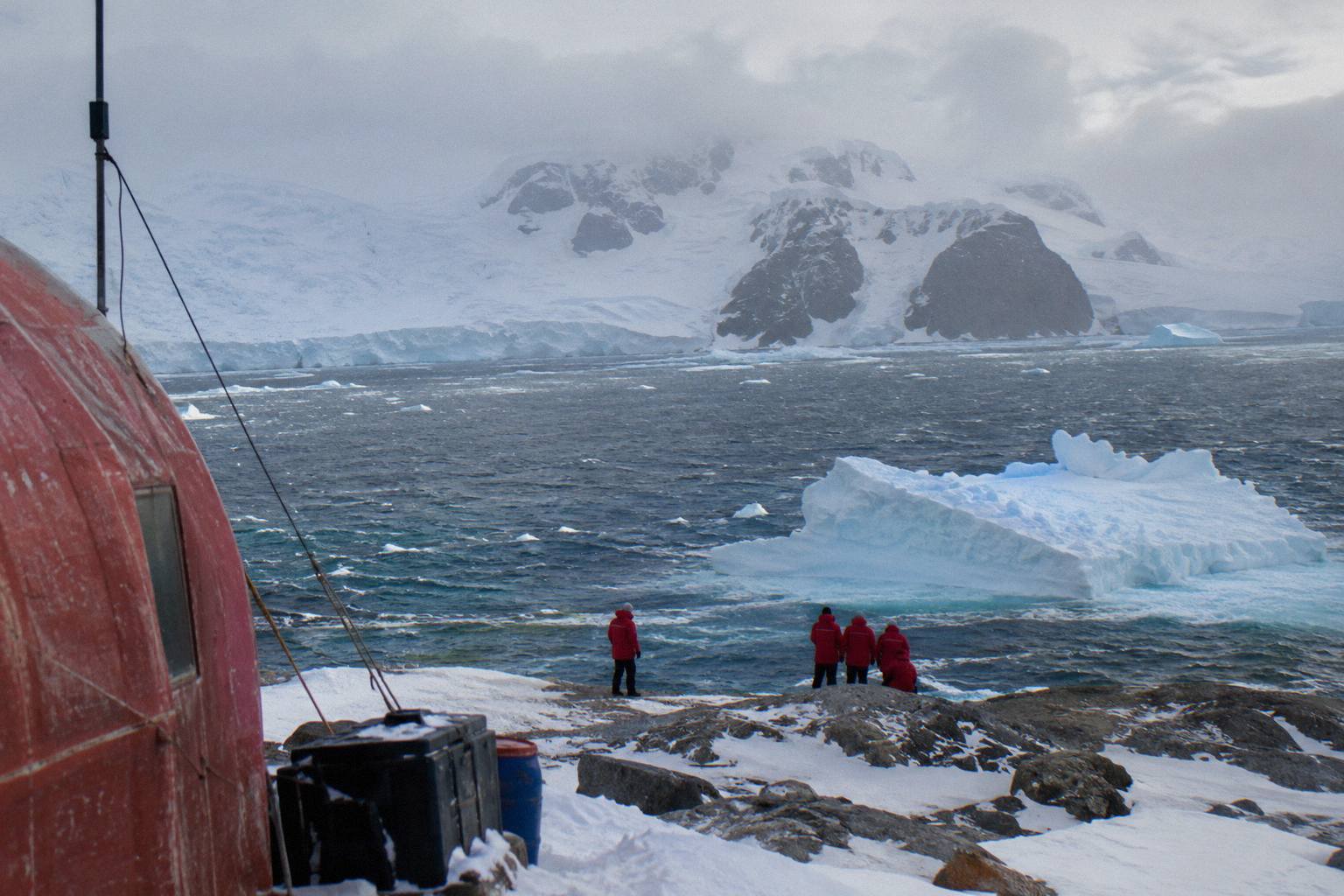
Why A Ship Captain Cannot Marry You In Antarctica
A ship captain can only officiate a marriage under the flag-state rules of the country where the ship is registered, typically in international waters, and that authority does not automatically extend to ceremonies on Antarctic land or in territorial waters. A captain registered under Bermuda, Malta or Bahamas rules may marry people at sea, but a ceremony on the ice in the British Antarctic Territory still needs a territory-registered Marriage Officer.
This is the single most common misconception couples arrive with. The captain's authority is real but narrow: it flows from the ship's flag state, so a vessel registered in Bermuda, Malta or the Bahamas may have a captain who can conduct a legally recognised marriage, generally in international waters. The moment that ceremony moves onto Antarctic land or into territorial waters, a different legal regime applies, and in the British Antarctic Territory that regime is the Marriage Ordinance 2016 with its own officer and licence requirements. A captain's blessing on a landing beach is exactly that, a blessing.
The practical consequence for planning is that "the captain married us in Antarctica" is almost never a legally accurate sentence. Operators know this, which is why the ones that host weddings at all lean on the symbolic route. The recommendation that appears across the wedding-planning sources is simple: complete the legal marriage at home first, then hold the symbolic ceremony or vow renewal on the ice or on board. It removes the legal risk entirely, keeps immigration and name-change paperwork in your own country's system, and lets the Antarctic moment be about the moment.
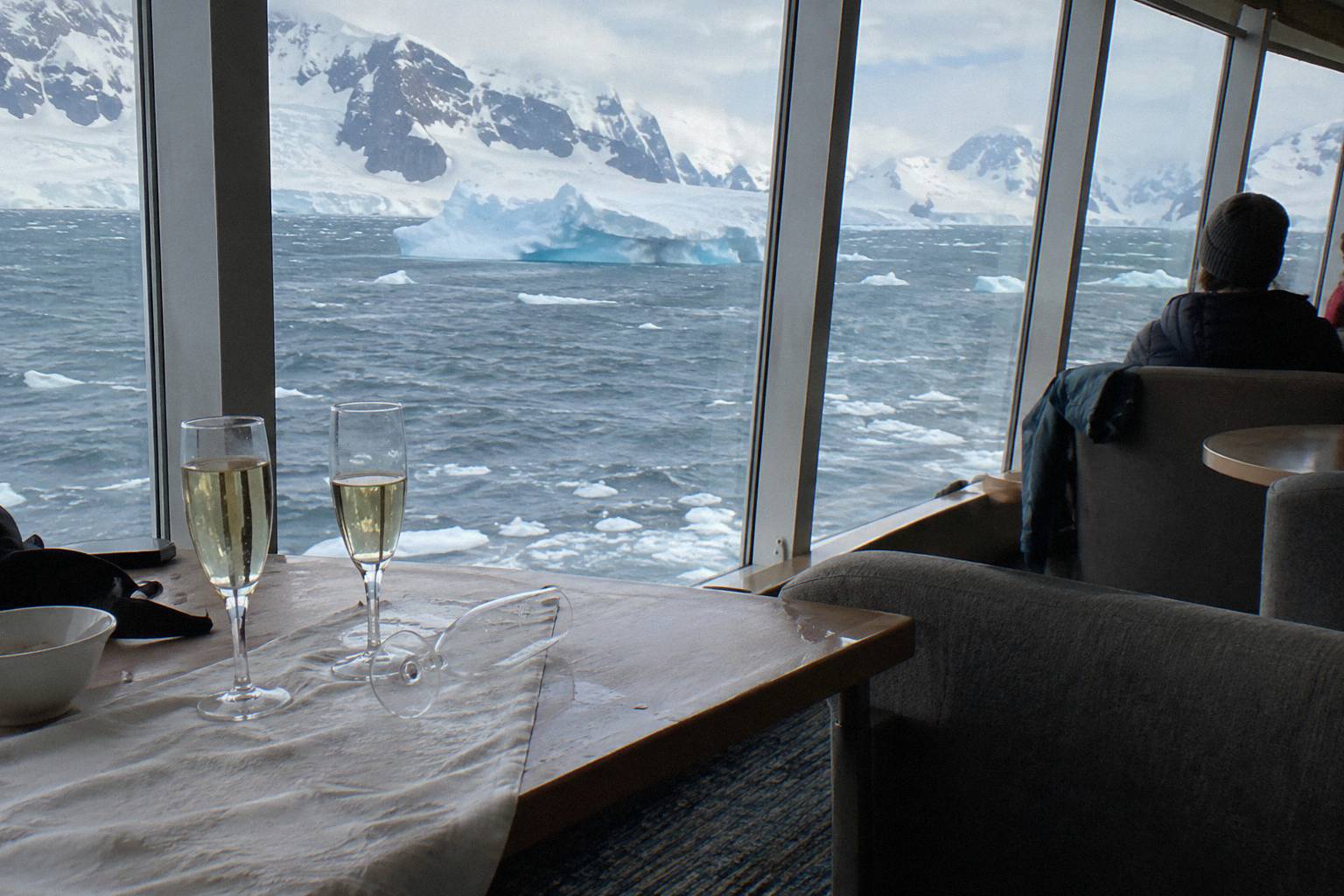
If a legal-at-sea ceremony matters to you, the flag state of the ship becomes a real selection criterion, and it is one most travellers never think to ask about. That question alone is worth raising before any deposit changes hands.
The Practical Route Most Couples Take
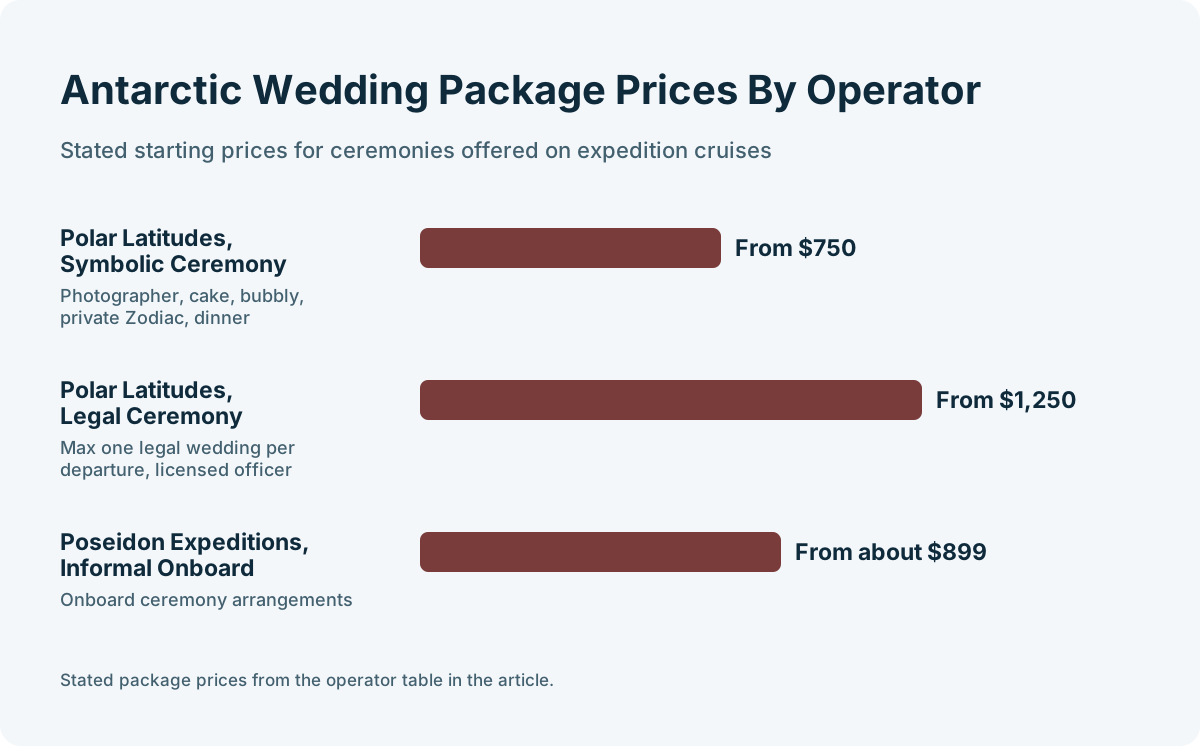
Most couples complete the legal marriage at home first, then hold a symbolic ceremony or vow renewal in Antarctica through an operator with wedding packages. Polar Latitudes runs packages on select voyages, allowing at most one legal wedding per departure, starting at $750 for a symbolic ceremony and $1,250 for a legal one, with a photographer, cake, bubbly, a private Zodiac and a dinner included. Poseidon Expeditions offers informal onboard packages from about $899.
Marrying at home first is not a compromise in these sources, it is the design. Your marriage certificate comes from your own registry office with no recognition questions, and the Antarctic ceremony becomes a celebration rather than a legal event. Operators that host ceremonies have built their products around that structure. Polar Latitudes caps its legal weddings at one per departure, and its symbolic package covers the things a couple actually remembers: a photographer, cake, champagne, a private Zodiac run and a dinner. Quark has hosted symbolic ceremonies, including one officiated by the ship's doctor on a landing, and Atlas has moved to symbolic-only ceremonies after previously offering legal ones.
The table below sets out what the operators listed here offer and at what stated price.
| Operator | Type of ceremony offered | Stated package price | What the package includes |
|---|---|---|---|
| Polar Latitudes | Symbolic, and legal (one per departure max, licensed officer) | From $750 symbolic, from $1,250 legal | Photographer, cake, bubbly, private Zodiac, dinner |
| Poseidon Expeditions | Informal onboard package | From about $899 | Onboard ceremony arrangements |
| Quark Expeditions | Symbolic ceremonies on select voyages | Not stated in the sources | Example hosted: doctor-officiated ceremony on a landing |
| Atlas Ocean Voyages | Symbolic only | Not stated in the sources | Moved to symbolic-only after earlier legal offerings |
Two caveats belong here. First, package prices and availability change between seasons, and the sources for Quark and Atlas do not state current pricing, so treat those rows as capability, not quotes. Second, a ceremony ashore depends on the landing actually happening, and landings depend on weather, ice and the site rules in the next section. The ship you choose determines how much of this is even possible, which makes the vessel decision a wedding decision. When the ship choice starts to feel like the whole plan, a consultation can match a ship to your ceremony at no cost.
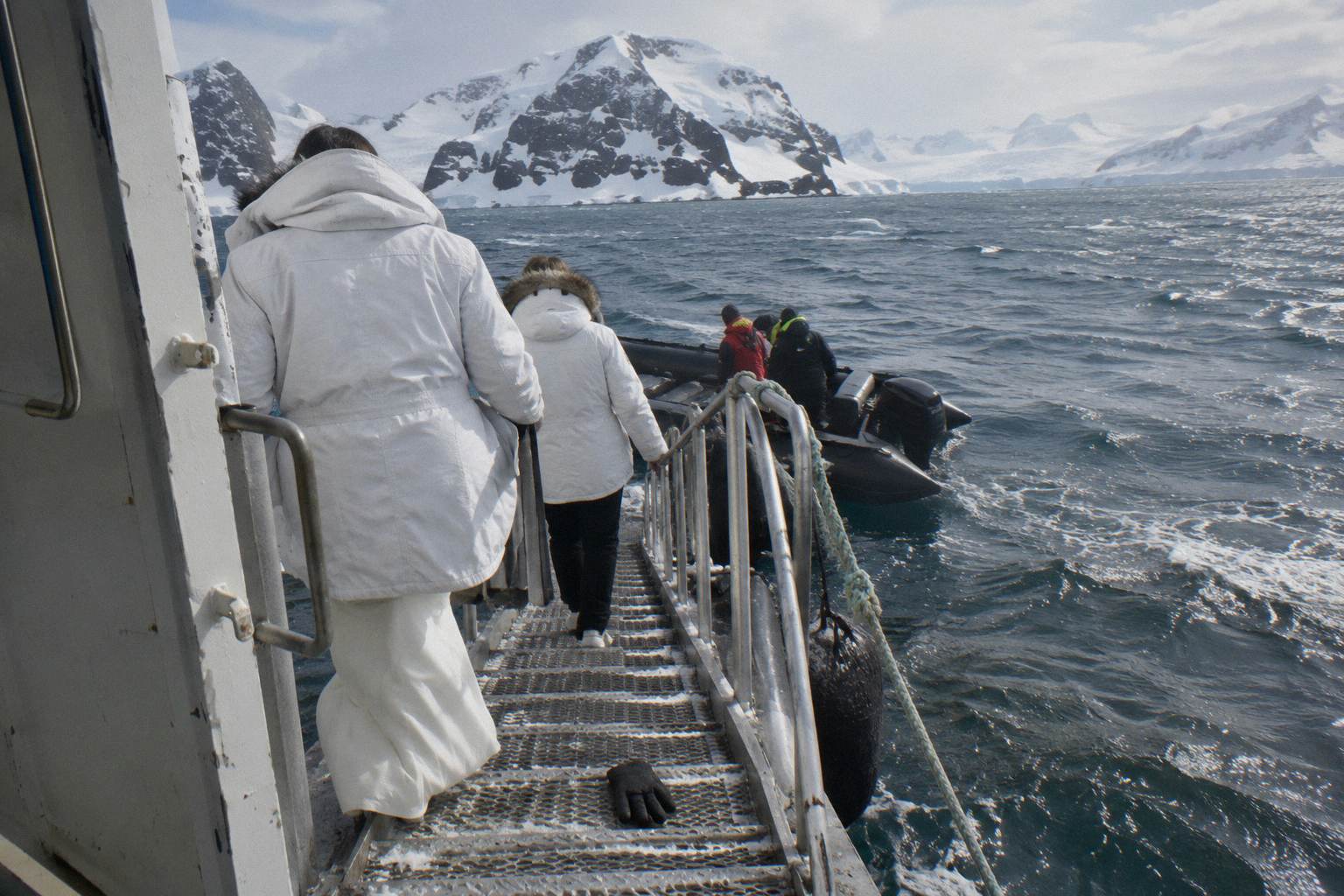
What IAATO Rules Mean For Your Ceremony
IAATO rules cap any landing at 100 passengers ashore from a vessel at any one time, require a guide-to-visitor ratio of at least 1:20, and prohibit leaving anything behind, so no decorations, confetti, rice or items may remain at the site. Biosecurity rules also require boots and equipment to be washed before arrival and cleaned between sites. A wedding ashore therefore means a small, guided group with nothing left on the ice.
The 100-passenger cap and the 1:20 guide ratio come from the general visitor guidelines adopted through the Antarctic Treaty system, and they shape every landing, wedding or not. For a ceremony, the effect is that your ashore moment is a scheduled expedition activity, not a private hire of a beach. The expedition team will choose a site that is protected from wind and swell, time the Zodiac runs, and keep the group within the site boundaries. Couples who imagine chairs, arches and aisle runners should replace that image with a short, wind-proofed gathering of the people on your Zodiac rotation, which in practice often feels more genuine anyway.
The nothing-left-behind rule is absolute in the guidance: activities must have no more than minor or transitory environmental impact, and no decorations or items may be left. That rules out petals, lanterns, ribbon wands and anything released. Drones, which wedding photographers love, must not be used near wildlife, and visitors keep at least 5 metres from wildlife on land, more where species or site guidance requires it, so the penguin-colony backdrop is a backdrop, never a photo prop you walk into. Permits for the activity sit with the operator, filed through their national competent authority under the Antarctic Treaty, which is another reason ceremonies run through operators rather than as private arrangements.
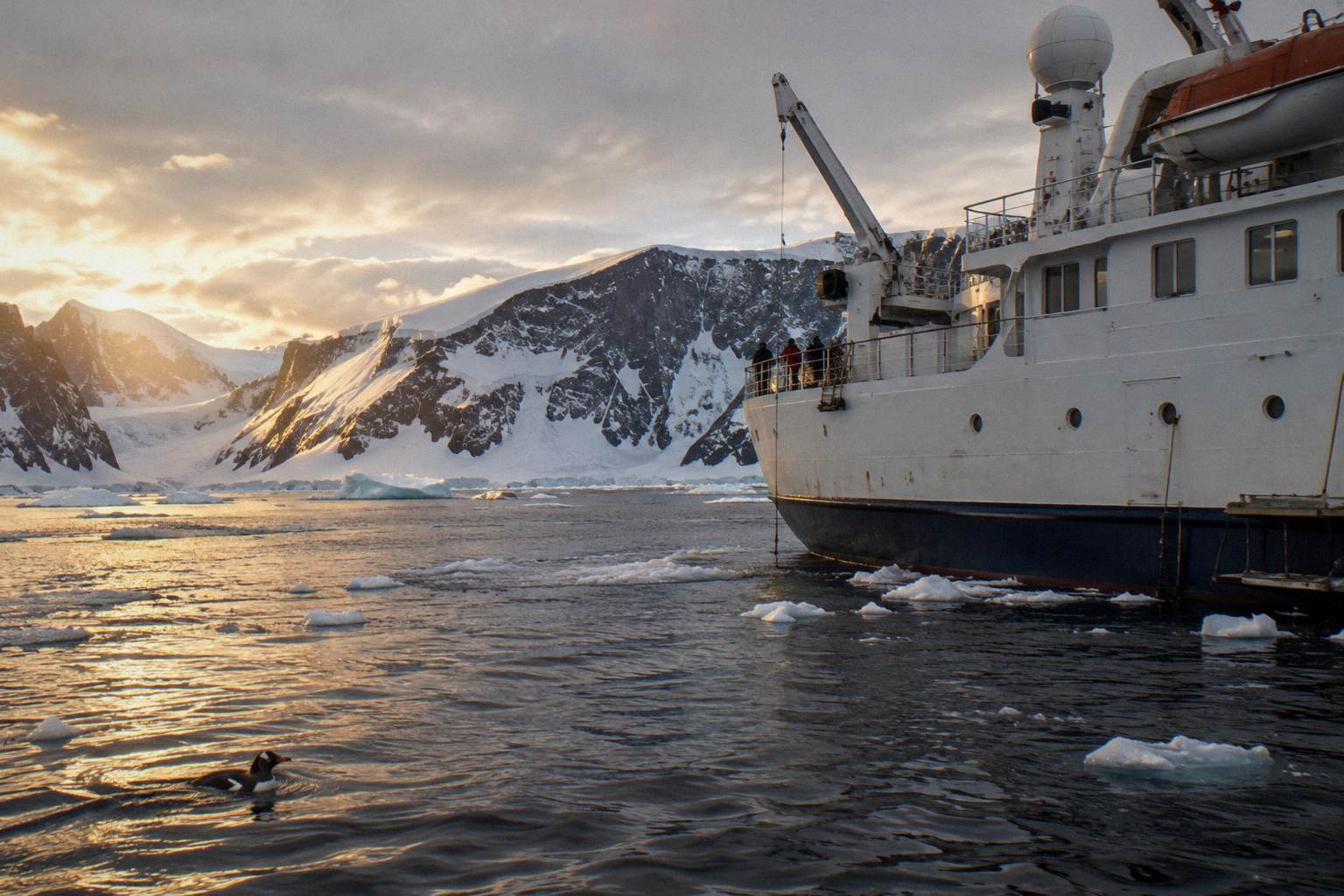
None of this prevents a beautiful ceremony; it just defines its shape. The couples who are happiest with their Antarctic wedding are the ones who planned around the rules rather than against them, and an experienced expedition team has run these events within them before.
What To Wear For An Antarctic Wedding
Wedding attire in Antarctica is feasible with cold-weather layering under the outfit, and the sources describe costumes and dresses as workable when paired with operator guidance on gear. Peninsula temperatures in the season run roughly from -5 to 4°C, so a dress over thermal base layers, insulated boots, a parka over the top for the walk, and hand warmers are the realistic version of the plan.
The wedding file states plainly that costumes and dresses are feasible with cold-weather layering and operator guidance, and that conditions are weather-dependent. That last phrase is doing a lot of work: a November ceremony can face lows of around -2 to -4°C on the Peninsula, while January sits closer to 4°C, and wind can subtract several felt degrees in seconds on an exposed beach. The practical wardrobe that follows from the climate data looks like this.
| Layer or item | What works for a ceremony | Why |
|---|---|---|
| Base | Thermal base layers, top and bottom, under the dress or suit | Holds warmth without bulk in photos |
| Mid | Fleece or light down layer worn until the moment | Removed for the vows, back on immediately after |
| Outer | Expedition parka over the outfit for the Zodiac ride | The Zodiac ride is cold, wet and windy |
| Feet | Insulated waterproof boots, not wedding shoes | Wet landings and snow are standard |
| Hands and head | Gloves, hand warmers, a headband or hood | Wind chill hits extremities first |
Operators commonly provide or facilitate rental of expedition boots and parkas for their guests, so the outer layers may already be covered by your voyage. The dress itself should be something you can move in on uneven ground, and the photographer will want the parka-off window kept short, usually a few minutes at a time. In my own recollection of standing on a Peninsula beach in expedition gear, the wind and the light do more for a photograph than any fabric ever could, which is worth remembering when packing. The full Antarctica packing list on this site covers the rest of the kit in detail.
Choosing A Ship For A Honeymoon Voyage
The ship matters as much as the season for a wedding or honeymoon voyage, because the vessel determines the lounges and decks available for a ceremony, the landing style, and the comfort of the crossing. Luxury lines such as Silversea, Ponant, Seabourn, Scenic, Atlas and Viking emphasise all-suite ships with veranda cabins, spas and all-inclusive elements, while expedition lines like Quark, Lindblad, HX and Aurora offer smaller ships with an adventure focus and fewer dedicated couple perks.
For couples, the luxury tier lines up well with a wedding brief. Silversea, Ponant, Seabourn, Scenic, Atlas and Viking all field all-suite ships with veranda or balcony cabins, double beds, spas and wellness areas, private dining options and broadly all-inclusive elements such as drinks and gratuities on many sailings, per the line comparisons in the current sources. Expedition-focused lines offer the adventure and the smaller-group landings but fewer couple-specific amenities. No dedicated honeymoon packages or wedding-registry integrations appear in the sources for 2026-27, so celebrations run through custom requests such as cake, photos or private dining, which the lines handle as add-ons.
Three ships from the roster show the spread of what a couple can book. Le Lyrial, Ponant's 245-guest luxury vessel, sails 18-day Antarctic voyages from Ushuaia and Buenos Aires with fares from $26,780 per person, and Ponant accepts children from age 6 on expedition cruises if the celebration becomes a family affair. Scenic Eclipse carries a helicopter and runs 13-to-22-day voyages, with a 228-guest capacity and 200 in Antarctic waters per the sister-ship data. Silver Endeavour, at 220 guests with a PC6 ice class, sails from King George Island and Puerto Williams, which puts her on the fly-cruise side of the Drake question, and her fares need a consultation since no figure is published.
| Ship | Class | Passengers | Ice class | From, per person | Voyage length | Departs from |
|---|---|---|---|---|---|---|
| Le LyrialPonant | Luxury | 245 | – | from $26,780 | 18 days | Ushuaia, Buenos Aires |
| Scenic EclipseScenic | Luxury | – | – | – | 13 to 22 days | – |
| Silver EndeavourSilversea | Luxury | 220 | PC6 | – | 6 to 13 days | King George Island, Puerto Williams |
Le Lyrial is the featured ship here because a longer 18-day luxury voyage gives a ceremony more than one weather window and more than one stretch of Peninsula days to work with. Her guide page on this site covers the ship in more depth for couples weighing the Ponant route.
Costs for a couple sit in a wide band. A 10-to-12-day Peninsula voyage in the 2026-27 season runs from roughly $15,500 to $25,000-plus total for two on budget-to-midrange expedition ships, and from roughly $25,000 to $50,000-plus total on luxury lines, per the published fare comparisons. Shoulder months, early November and March, often price lower than the December-January peak, and the Antarctic season runs November through March with no tourist voyages outside it. Our Cruises In Antarctica coverage of the best months goes deeper on that trade-off, the best time to visit Antarctica guide breaks the month-by-month wildlife down, and the Antarctica honeymoon cruise guide covers the couple-specific angles in more detail.
How To Plan The Whole Trip Around The Ceremony
A wedding or vow-renewal voyage needs the legal paperwork done at home, the operator's ceremony package confirmed in writing, travel insurance with medical evacuation cover, and buffer nights at the gateway city before embarkation. Major operators impose high medical evacuation minimums on their Antarctica sailings, plus trip-cost cancellation cover, and proof of insurance is often required before departure or at check-in.
The sequence that works, assembled from the logistics and wedding sources, runs in four steps. First, complete the legal marriage or the licence work at home, and if you are pursuing the rare legal Antarctic route, start the British Antarctic Territory application at least three months out with the £500 fee budgeted. Second, confirm the ceremony package with the operator in writing, including what happens if the landing is cancelled for weather, because a symbolic ceremony moved to the lounge is a normal outcome, not a failure. Third, buy insurance that clears the operator's evacuation minimum and covers the full trip cost, since cover with medical evacuation is required or recommended by most operators and is not included in base fares. Fourth, arrive at the gateway with a night or two of buffer: Ushuaia hotels hit about 80 per cent occupancy in peak January, and Punta Arenas fly-cruise guests must be at their hotel by 14:00 the day before the charter flight.
| Planning step | What to lock down | Timing |
|---|---|---|
| Legal paperwork | Marriage at home, or BAT licence application plus £500 fee | At least 3 months ahead for the BAT route |
| Ceremony package | Operator confirmation in writing, weather fallback clause | At booking, before deposit |
| Insurance | Evacuation minimum per operator, full trip-cost cover | Before departure; proof is often checked at check-in |
| Gateway arrival | One to two buffer nights in Ushuaia or Punta Arenas | Before embarkation day |
The insurance step deserves its own mention because it is the one that catches cruise couples out. The requirements are compared in detail in our Antarctica travel insurance guide, and the short version is that major operators set high evacuation minimums and often ask for proof before departure or at check-in. Couples combining the voyage with Patagonia or Buenos Aires will find operators frequently bundle South American add-ons through Ushuaia or the fly-cruise gateways, which is a natural way to build a honeymoon around the wedding. The consultation on this site exists for exactly this stitching-together stage, and a free planning conversation covers all of it without obligation.
Common Questions About Getting Married In Antarctica
Can you legally get married in Antarctica?
Yes, in the British Antarctic Territory, under the Marriage Ordinance 2016. You need a registered Marriage Officer, a licence applied for at least three months in advance, and a £500 administration fee. The marriage is recognised in the UK for British citizens; other nationals must check their home country's recognition.
Can a cruise ship captain marry you in Antarctica?
Only under the flag-state rules of the ship's registration, typically in international waters, and that authority does not automatically apply to ceremonies on Antarctic land or in territorial waters. A British Antarctic Territory ceremony needs a territory-registered Marriage Officer regardless.
Which operators offer wedding ceremonies in Antarctica?
Polar Latitudes offers symbolic packages from $750 and legal weddings from $1,250, at most one legal wedding per departure. Poseidon Expeditions offers informal onboard packages from about $899. Quark has hosted symbolic ceremonies, and Atlas offers symbolic ceremonies only.
Can you leave decorations at an Antarctic wedding site?
No. IAATO guidance prohibits leaving anything behind, and activities must have no more than minor or transitory environmental impact. No decorations, confetti or items may remain at the site.
How many guests can attend a wedding ashore in Antarctica?
Landings are capped at 100 passengers ashore from a vessel at any one time, with a guide-to-visitor ratio of at least 1:20. In practice your ceremony group is a Zodiac rotation within those limits, not the whole ship.
What should you wear for an Antarctic wedding?
Wedding attire is feasible with cold-weather layering underneath, an expedition parka over the outfit for the Zodiac ride, and insulated waterproof boots. Season temperatures on the Peninsula run roughly from -5 to 4°C, and operators provide or facilitate parka and boot rental.
More Couples, Solo Travellers And Adults
 Honeymoon CruiseShips, suites, costs and timing for an Antarctic honeymoon, built from operator fares.Read the guide
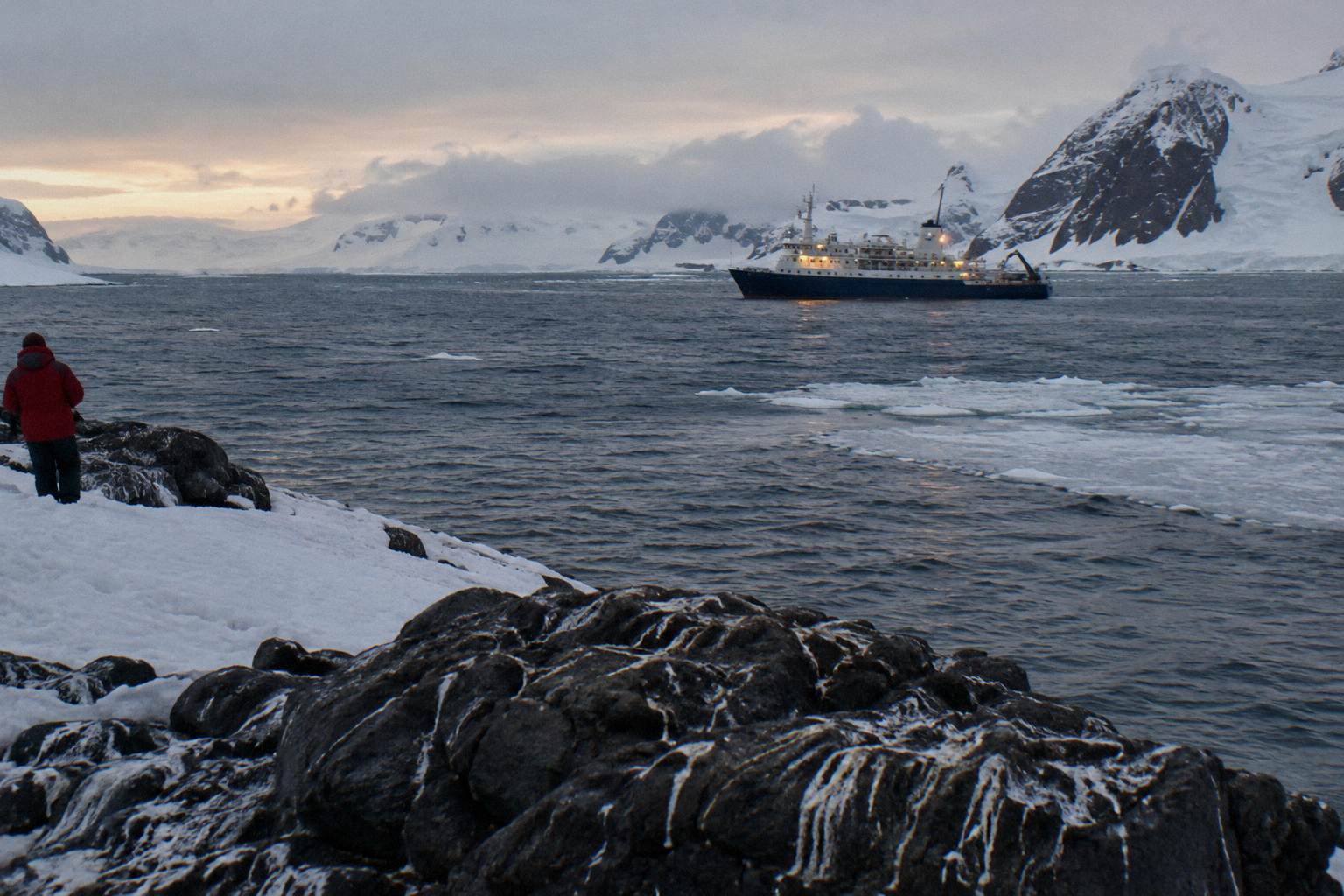 Solo Antarctica TravelSingle supplements, share cabins and the ships with dedicated solo berths, priced from real operator fares.Read the guide
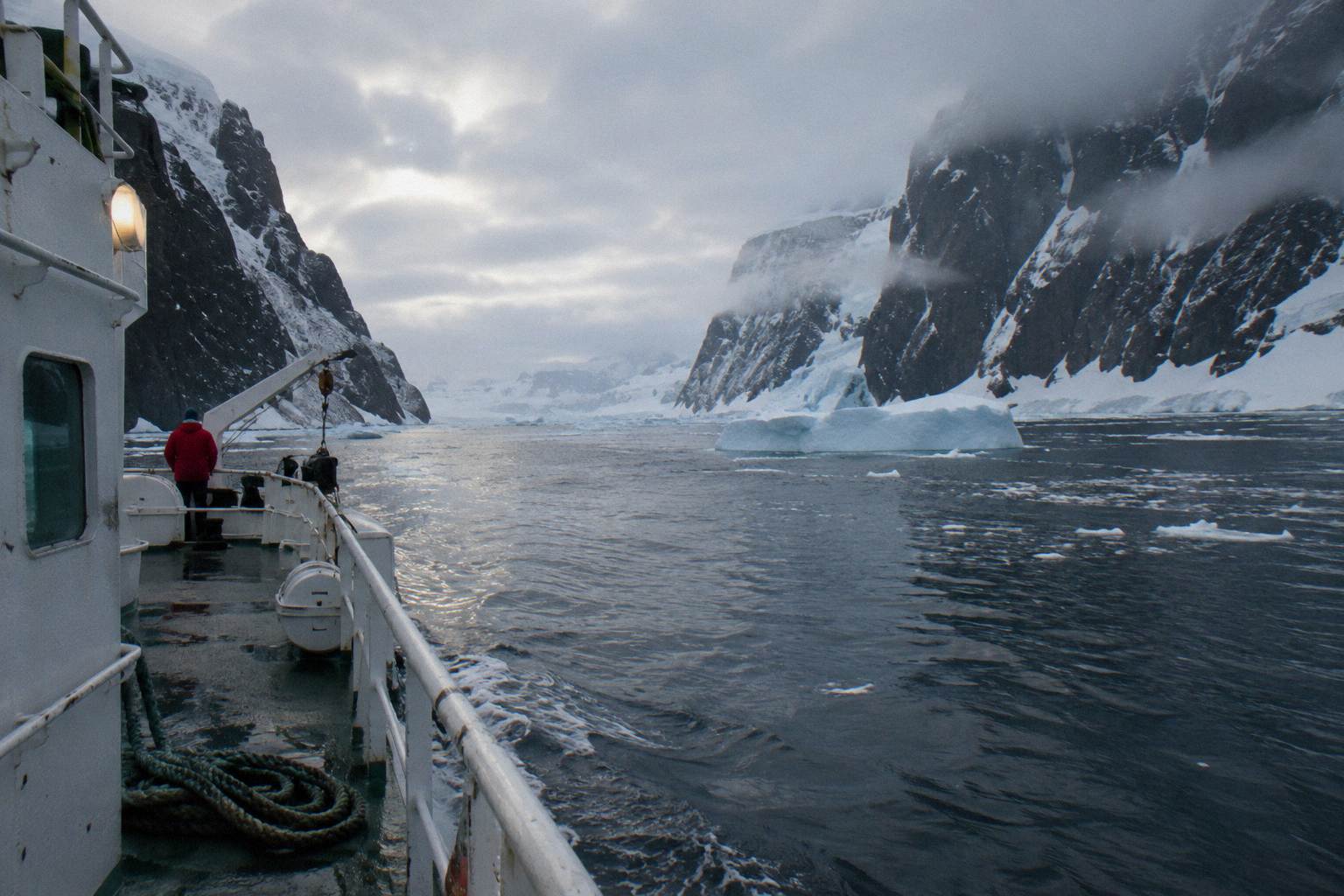 Adults-Only Antarctic CruisesMinimum ages by operator, the one true adults-only line, and how to book a quieter Antarctic voyage.Read the guide
 Antarctica With KidsMinimum ages, family programmes and the ships that take children to Antarctica.Read the guide