Antarctica Cruise For Seniors: Mobility, Pace, And Medical Support
 By Oleg G.
Older travellers make up a large share of Antarctic expedition cruise bookings, and the questions they ask are the right ones: can I board a Zodiac, will the crossing wear me down, and what happens if my health changes mid-voyage.
Quick answer: Most healthy travellers in their 60s, 70s and 80s complete an Antarctic Peninsula cruise without problems. The physical demands centre on a waist-high Zodiac step and wet, uneven landings, not hiking. IAATO rules cap 100 passengers ashore at a time, and ships carry medical staff, but there is no hospital ashore.
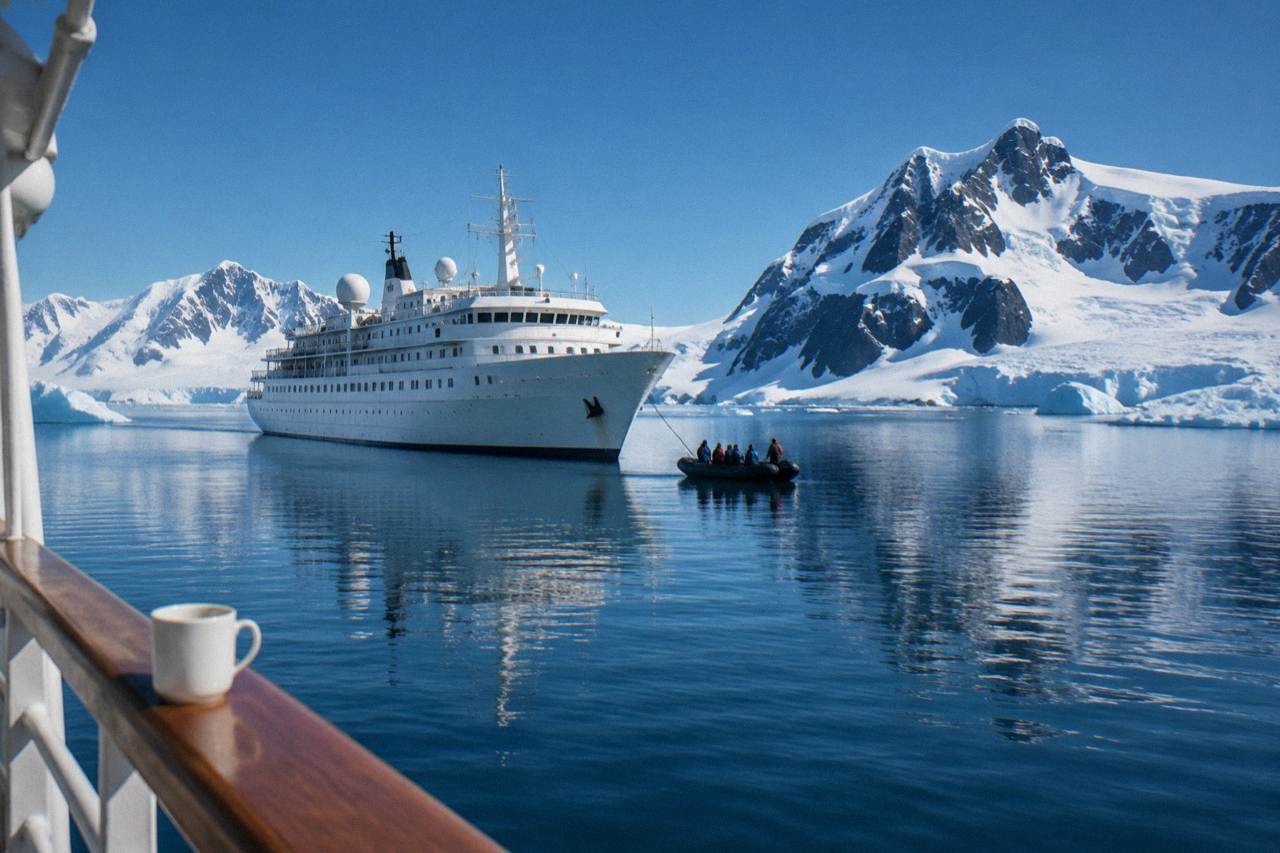
Antarctic expedition cruising is not a young person's market. Operators report steady bookings from travellers in their sixties and seventies, and the typical 11- to 12-day Peninsula cruise is, physically, far gentler than most people assume. The real questions are narrower than "am I too old": they are about the step into a Zodiac, the two-day Drake Passage crossing, and what medical help exists when the nearest hospital is days away. This guide works through each of those, using IAATO rules, operator pages and the ship roster on this site, and finishes with a comparison of the three ships that suit older travellers best.
How Physically Demanding Is An Antarctica Cruise For Seniors?
A classic Antarctic Peninsula cruise demands less stamina than most guided walking holidays, and healthy travellers in their seventies and eighties complete these voyages routinely. Daily activity is built around short Zodiac rides and landings of one to three hours on gentle terrain, with IAATO rules capping 100 passengers ashore at a time and requiring a one-to-twenty guide-to-visitor ratio. There are no forced marches, no altitude, and no obligation to leave the ship at all.
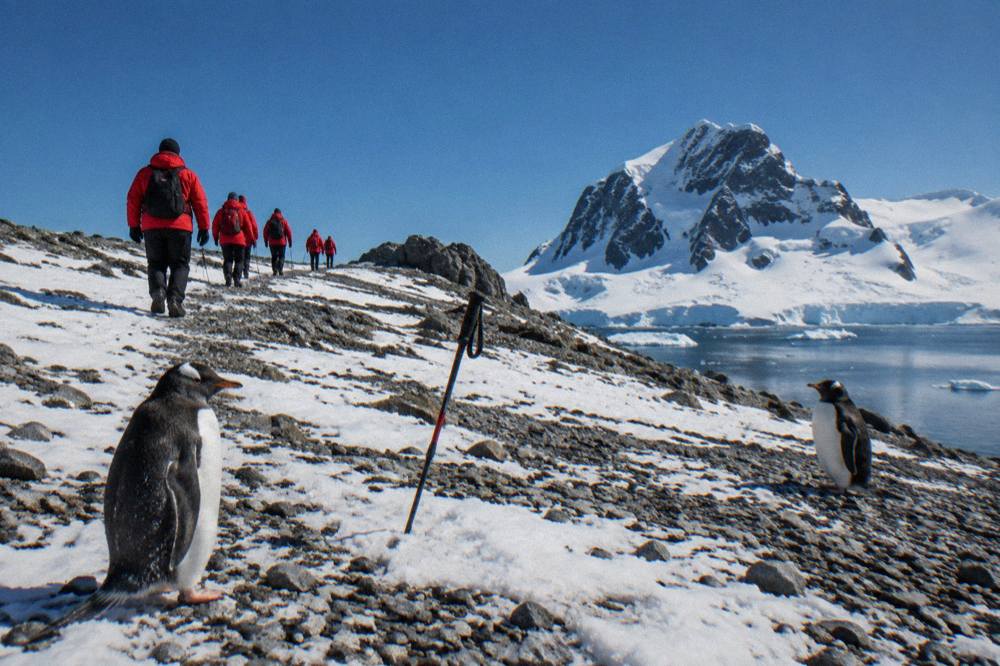
Landings are optional and graded. Expedition teams brief passengers every evening on the next day's options, and it is entirely normal for a portion of the ship, often older guests, to skip a wet landing and instead watch from the deck or take a calm Zodiac cruise along the ice edge without stepping ashore. The IAATO visitor guidelines also require everyone to keep at least five metres from wildlife, which sets a slow, observational pace rather than a strenuous one.
The demands that do exist are specific. First, the Zodiac transfer itself: a step of roughly knee to waist height from a gangway or marine deck into an inflatable boat, with crew holding both your hands or arms. Second, walking on surfaces that can be wet rock, soft snow or slippery gravel, where a walking pole helps. Third, the ship's stairs, since many expedition vessels have small lifts but not to every deck. If you can climb a flight of stairs unaided and walk twenty minutes on uneven ground, the standard Peninsula cruise is comfortably within reach.
Shipboard life rewards a little planning too. Cabins mid-ship and on a lower deck move least in a swell, so they are worth requesting at booking rather than accepting whatever is left over. Most expedition vessels have lifts between the main public decks, but stairs are often the quicker route, and a handrail habit pays for itself. Days at sea, including the Drake legs, are filled with lectures, wildlife watching from the observation lounge and long meals, none of them physically demanding. The expedition cruise itself is paced like a slow small-ship holiday rather than an adventure race, which is precisely why the format works so well for older travellers.
Can Seniors Manage Zodiac Boarding And Landings?
Yes, with two honest caveats: you must be able to take a short assisted step over a gap of up to a metre, and you must accept that some landings happen at a wet, moving surface rather than a fixed dock. Crew hold you at both sides, the Zodiac driver braces the boat against the ship, and the standard instruction is always the same: hands to the crew first, then feet. You never jump and you never step unaided.
The mechanics are worth picturing before you book. On most ships you descend an interior stair or a short gangway to a water-level deck, where staff position the Zodiac against a gate or platform. The gap between ship and boat moves with the swell, usually a few tens of centimetres, occasionally more. Once seated in the Zodiac you wear a life jacket the whole ride. At the shore the bow is pushed onto the beach and the driver calls the exit: swing your legs over the pontoon, stand in shallow water or on rocks, and walk a few steps clear. Rubber boots, usually lent by the operator, do the wet work.
Help is close by on every landing. IAATO's landing rules require a one-to-twenty ratio of actively guiding staff to visitors ashore, so on a 100-passenger beach there are typically five guides spread along the shoreline, and at least one stands at the Zodiac exit point for the whole landing. Nobody is timed, nobody must complete a circuit, and the ship's doctor is a radio call away. If a landing becomes tiring, you simply ride the next Zodiac back to the ship and warm up with tea.
Passengers with limited mobility do complete these voyages, but the honest planning line is this: if you cannot manage the Zodiac step even with assistance, a landing-based cruise is the wrong product, and a cruise-only itinerary aboard a larger vessel, where you see the Peninsula from the deck without going ashore, is the realistic alternative. IAATO's own rules acknowledge that category: 27,217 cruise-only visitors in 2025-26 saw Antarctica without a single landing. Some ships also carry a small number of cabins designed for reduced mobility, though availability is scarce and worth raising early, which is exactly the kind of question a free consultation can settle before you commit.
Is The Drake Passage Crossing Manageable For Older Travellers?
Most of the time, yes. The crossing takes roughly two days each way on a traditional sailing, conditions vary widely, and the widely repeated split is that the calm "Drake Lake" happens around 70 percent of crossings and the rough "Drake Shake" around 30 percent. Neither figure is a promise, and no month is reliably calmer than another within the November-to-March season.
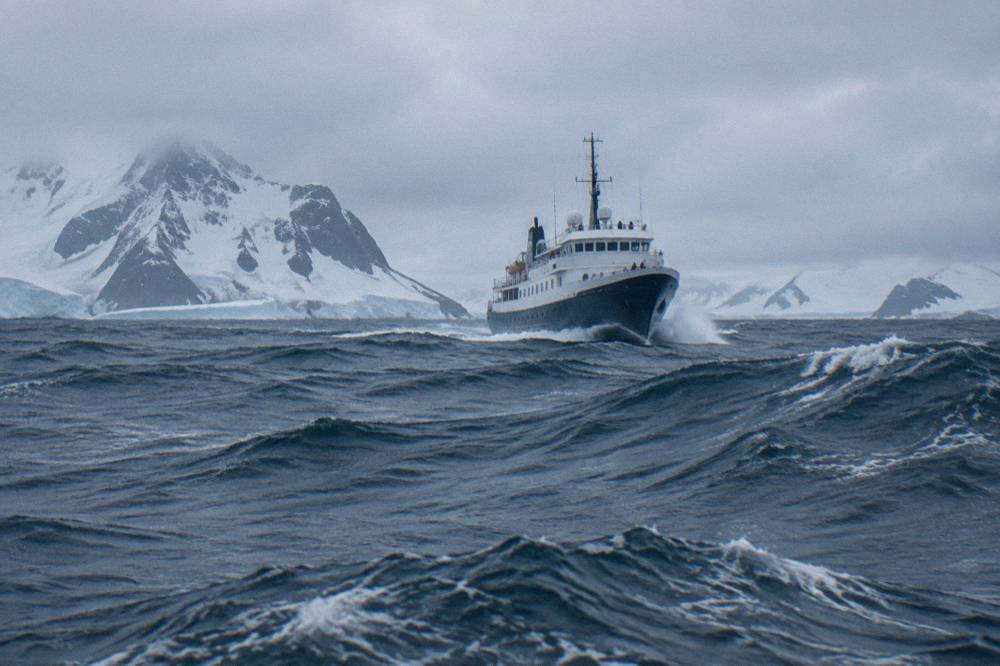
Quark's operator page gives the standard range: in optimal conditions a Drake crossing takes 18 to 24 hours, in rougher seas 36 to 48 hours. Typical swells average three to five metres, with documented severe conditions far higher. For an older traveller the practical points are medication, stability and patience. Modern expedition ships carry fin stabilizers, and some newer hulls, such as the X-Bow designs on several Aurora and Albatros vessels, are built to soften head seas. The Sea Spirit, a 114-guest ship on this site's roster, was retrofitted in 2019 with retractable zero-speed stabilizers that dampen roll even when the ship is drifting or at anchor, according to Poseidon Expeditions' own article on the retrofit.
Seasickness is the manageable part. Medication, patches and acupressure bands all work, and expedition doctors onboard can help. The bigger senior-specific consideration is mobility in a swell: a rolling corridor is where falls happen, so handrails, well-placed furniture and a mid-ship, lower-deck cabin all reduce risk. If two days each way of open ocean sounds like the wrong trade, the crossing question has its own full treatment in our guide to the Drake Passage crossing, and the fly-cruise alternative below removes it almost entirely.
Sail-and-fly hybrids split the difference. You cross by ship in one direction and fly the other, halving the open-ocean exposure while keeping a taste of the classic crossing, and several operators, including Lindblad and Quark, run itineraries in this format. For travellers who want to say they made the crossing but not to pay for it twice, it is a genuine middle path.
| Route type | Days at sea each way | Landing access | Best suited to |
|---|---|---|---|
| Classic sailing from Ushuaia | About 2 | Full | Travellers who want the full experience and tolerate open water |
| Fly-cruise from Punta Arenas | About 2 hours by air | Full | Those with limited time, seasickness worries or mobility concerns |
| Sail one way, fly the other | 2 one way, none the other | Full | A compromise that halves the open-ocean exposure |
| Cruise-only aboard a larger ship | Varies | None, viewing from deck only | Travellers who cannot manage the Zodiac step |
How Does A Fly-Cruise Reduce Time At Sea?
A fly-cruise replaces the two-day Drake crossing with a charter flight of roughly two hours from Punta Arenas in Chile to King George Island in the South Shetlands, where you board the expedition ship and begin the Peninsula program without any open-ocean transit at all. The trade is weather dependency: Antarctic fly-cruises are the one Antarctic product where the schedule can genuinely slip, because the King George Island airstrip has no instrument landing in bad weather and flights wait for windows.
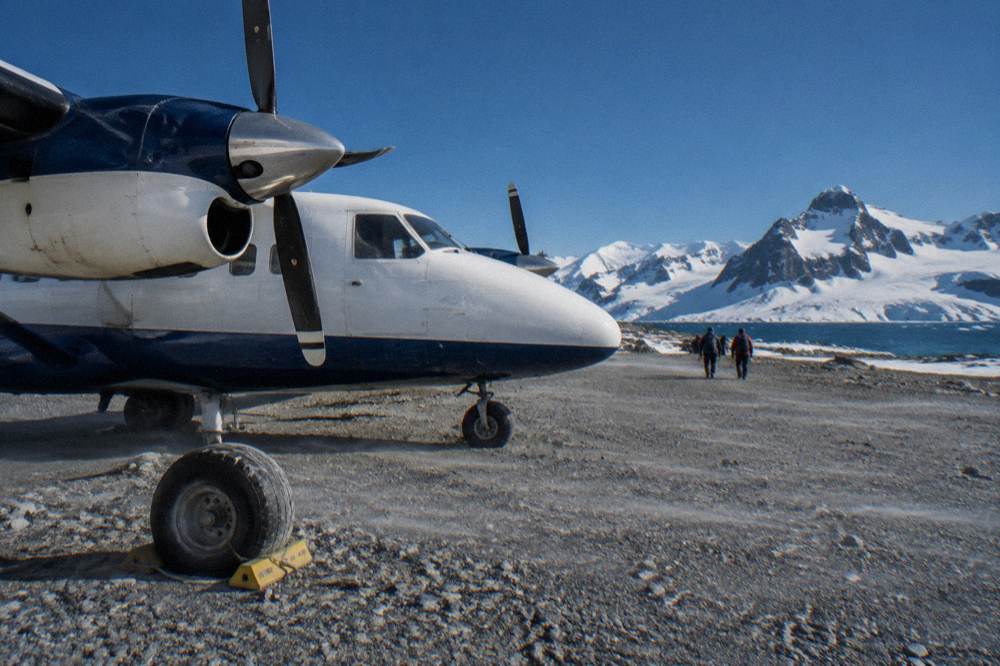
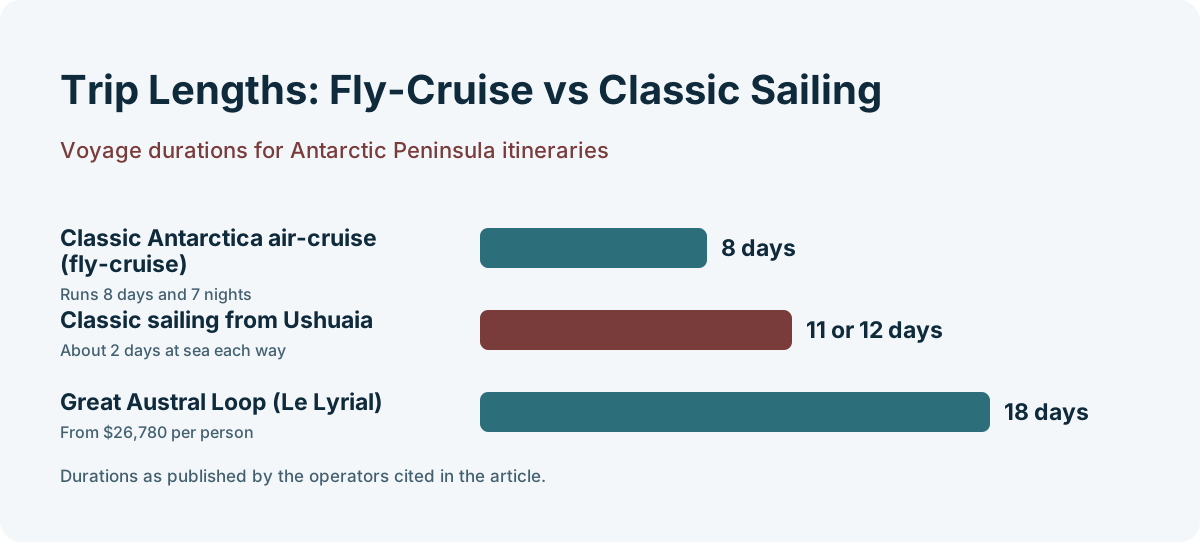
For seniors the fly-cruise has three real advantages. It removes up to four days of sea transit from an 8-day trip, which matters if long days at sea tire you. It removes the seasickness question entirely. And it shortens the overall commitment: Antarctica21's Classic Antarctica air-cruise runs 8 days and 7 nights, versus 11 or 12 days for the classic sailing. The counterweights are the strict baggage limit, 20 kg checked on the Punta Arenas to King George Island charter according to Polar Latitudes' fly-cruise page, and a mandatory pre-flight overnight in Punta Arenas with biosecurity and gear checks the day before departure.
The pre-flight requirements deserve a line of their own. One operator's fly-cruise conditions ask guests to arrive at its Punta Arenas hotel by 14:00 the day before the charter flight, with gear and biosecurity checks the same afternoon, so the effective trip length is a day longer than the voyage itself. Plan the international flights around that, not around the embarkation date alone.
The flagship fly-cruise ship on this site's roster is the Magellan Explorer, an 88-guest vessel built in 2019 with seven cabin categories and a kayak program, sailing from Punta Arenas by air to King George Island. Its 8-day Classic Antarctica air-cruise starts from $13,795 per person according to the ship page. Her sister Magellan Discoverer, PC6 ice class and new to the fleet, begins her first Antarctic season in 2026-27 with the same starting fare on the ship page. If the fly-versus-sail decision is the hinge of your planning, it is worth weighing the fly-the-Drake option in full before choosing.
What Medical Support Exists On An Antarctic Cruise?
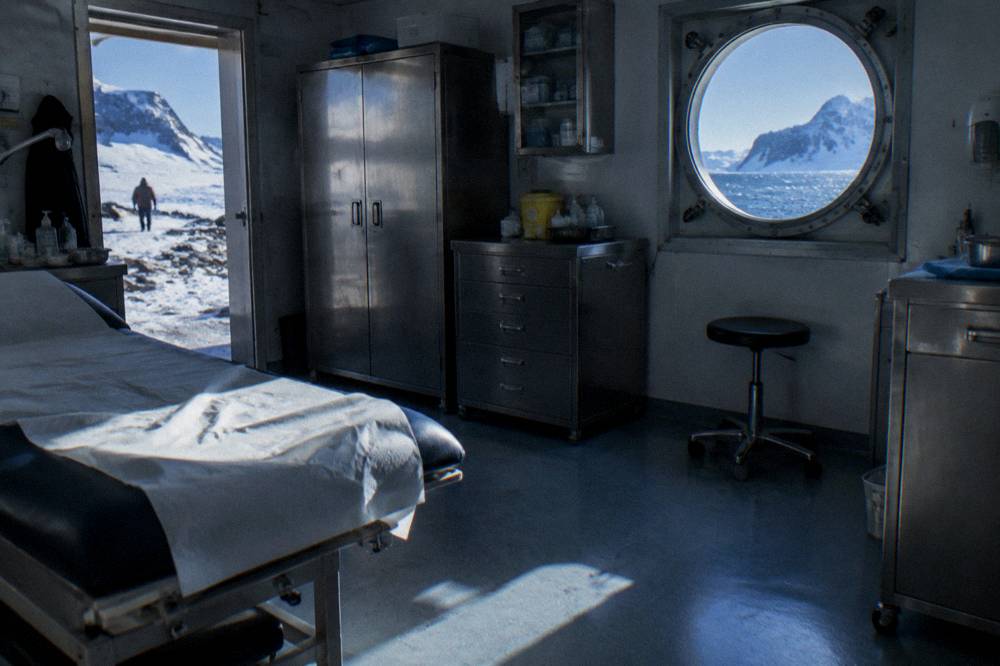
Every serious expedition vessel sails with a qualified doctor or medical team, an infirmary, and the ability to consult shore-side specialists by satellite, but Antarctica itself has no hospital and evacuation, when it is possible at all, can take days and cost tens of thousands of dollars. That is why travel insurance with a high medical evacuation minimum is not optional on these voyages.
The insurance requirements are specific and worth checking before you book. According to a 2026 operator comparison, major lines impose high medical evacuation minimums, with published examples running from $150k to $500k depending on the operator, plus full trip-cost cancellation cover, and proof is often required before departure or at check-in. Argentina also formally requires health coverage including evacuation for foreign visitors under its 2025 rule update. Our full guide to Antarctica travel insurance walks through the coverage levels.
On board, the medical team handles the routine: seasickness, minor injuries, blood pressure checks and medication management. Declaring existing conditions is part of the booking process on most lines, though each operator phrases its requirements differently, so read your specific booking terms rather than assuming. The practical senior advice is to carry medication in hand luggage for the full trip plus several days of buffer, bring written prescriptions, and tell the ship's doctor early about anything relevant rather than waiting for a problem.
A few habits close the remaining gap. See your own doctor before you travel, ideally with your medication list to hand, and ask for a short written summary of your conditions and current prescriptions to carry alongside your insurance documents. Keep every medication, including over-the-counter staples, in your hand luggage for the whole voyage plus a buffer, since checked bags can be delayed and resupply is out of the question south of Ushuaia. Bring spare glasses and spare hearing-aid batteries too; the shop that replaces them does not exist in Antarctica. If your health situation is complex, the choice of ship matters more, not less, and a conversation about your specific needs is the cheapest way to test whether a voyage is realistic.
Which Ships Suit Older Travellers Best?
The ships that suit seniors best combine a small passenger count, a high crew-to-guest ratio, stabilised hulls, a lift serving most decks, and a medical team, and the three that stand out on this site's roster are the National Geographic Endurance, Le Lyrial and Magellan Explorer. They represent three different answers to the same question: comfort at sea, luxury at anchor, and the shortest possible route in.
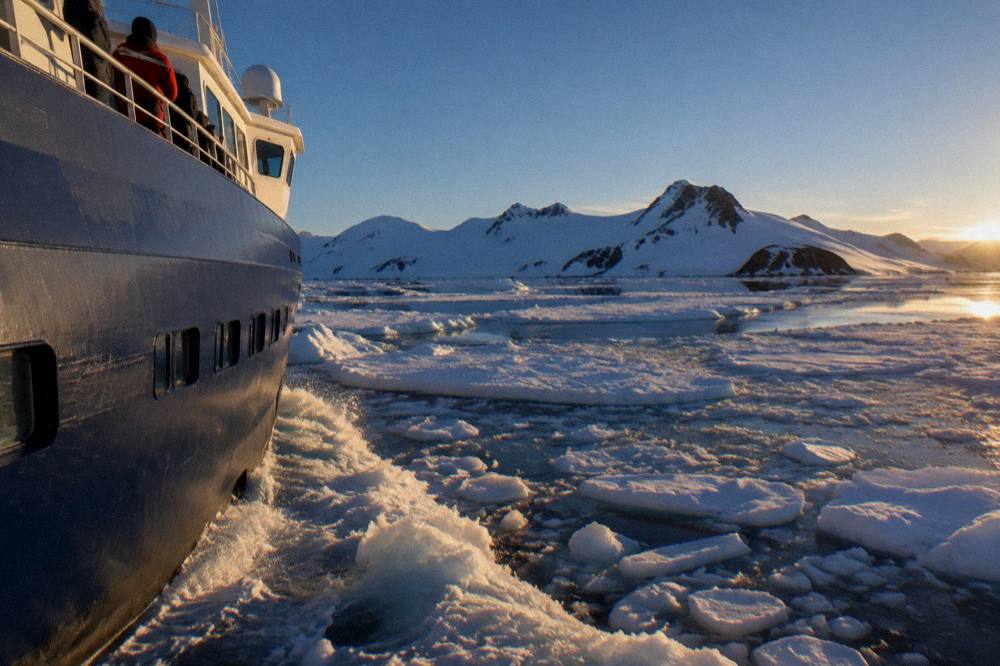
The National Geographic Endurance, a 138-guest ship built in 2021 with a PC5 ice class, is the strongest all-round senior pick. Her patented X-Bow hull splits head seas instead of slamming into them, which materially reduces motion on the Drake, and the Lindblad operation bundles a pre-cruise Buenos Aires hotel, the charter flight to Ushuaia, alcoholic beverages, prepaid gratuities and an expedition jacket into the fare, according to a 2026 cost guide. Her 12-day Voyage to Antarctica starts from $11,900 per person on the ship page. The X-Bow's effect on ride comfort is a genuine advantage for older travellers, and it is the single feature I would prioritise if a smooth crossing matters to you.
Le Lyrial, a Ponant luxury ship carrying up to 245 passengers, offers a different proposition: French-service comfort, a more hotel-like interior and 18-day Great Austral Loop voyages from $26,780 per person on the Ponant listing. Ponant's insurance minimum for evacuation cover matters for older travellers, as noted above. The longer 18-night format suits travellers who want the Falklands and South Georgia woven in and who tolerate longer days at sea comfortably. For the fullest picture of the fleet, our guide to Antarctica cruise ships compares all 43 vessels on the roster.
The Magellan Explorer, covered above, is the fly-cruise answer: 88 guests, an 8-day itinerary, and no Drake at all. Put side by side, the three ships frame the real decision.
| Ship | Class | Passengers | Ice class | From, per person | Voyage length | Departs from |
|---|---|---|---|---|---|---|
| National Geographic EnduranceLindblad Expeditions (with National Geographic) | Standard Expedition | 138 | PC5 | from $11,900 | 12 to 22 days | Ushuaia |
| Le LyrialPonant | Luxury | 245 | – | from $26,780 | 18 days | Ushuaia, Buenos Aires |
| Magellan ExplorerAntarctica21 | Fly-Cruise | 96 (88 in Antarctica) | LR PC6 | from $13,795 | 8 days | Punta Arenas (fly) to King George Island |
| Ship | Guests | Route type | Voyage days | From (per person) | Senior-relevant strength |
|---|---|---|---|---|---|
| National Geographic Endurance | 138 | Sailing from Ushuaia | 12/16/21/22 | $11,900 | X-Bow hull softens the crossing; inclusive fare |
| Le Lyrial | 245 | Sailing from Ushuaia | 18 | $26,780 | Hotel-like comfort; longer loop itinerary |
| Magellan Explorer | 88 | Fly-cruise from Punta Arenas | 8 | $13,795 | No Drake crossing; shortest commitment |
| Hondius | 170 | Sailing from Ushuaia | 11/13/19 | $7,800 | Lowest fare; Polar Class 6 hull |
| Sylvia Earle | 130 | Sailing from Ushuaia | 12/13/20 | $19,566 | X-Bow hull; small guest count |
| Demand | Classic sailing cruise | Fly-cruise | Cruise-only (500+ guests) |
|---|---|---|---|
| Days at sea before first landing | About 2 | None | Varies |
| Zodiac step required | Yes | Yes | No |
| Landings permitted | Yes | Yes | No |
| Weather schedule risk | Moderate | Higher (flight windows) | Lower |
| Typical length | 11-12 days | 8 days | Varies |
When Should Seniors Book, And What About Timing?
Peak season runs December through February, and the senior-relevant timing questions are ice, daylight, crowd levels and cabin availability rather than price alone. December and January bring the longest daylight hours and penguin chicks hatching; February and March bring the strongest whale sightings. No month is reliably calmer for the Drake, so the month you choose should follow what you want to see, not a sea forecast you cannot have in advance.
Month by month, the season looks like this:
| Month | Typical conditions | Wildlife | Senior considerations |
|---|---|---|---|
| November | Temperatures can drop to about -5°C; maximum snow cover | Courtship and nest-building at the rookeries | Pristine landings and more sea ice; warmest layers needed |
| December | Longest daylight; chicks begin hatching mid-month | Penguin eggs hatching, first chicks | Peak sailings book far ahead; plan cabin choice early |
| January | Most channels ice-free; 0 to 3 degrees Celsius common | Humpback sightings increase from mid-month | Warmest month; near-24-hour daylight, so pack an eye mask |
| February | Adults molting, chicks learning to swim | Whale activity builds along the coast | Longer daylight suits slow-paced landings |
| March | Season winds down | Humpbacks, minkes and orcas feeding on krill | Strong whale watching; colder mornings return |
Booking early matters more for seniors than for most travellers, for one specific reason: accessible-adjacent cabins, mid-ship and low, are a limited subset of every deck plan, and they go first. Peak December sailings on the popular small ships can book 18 months ahead, according to one 2026 cost guide. Early-booking offers for the 2026-27 and 2027-28 seasons commonly reach 10 to 30 percent off, and single supplements, a real cost factor for many older travellers, range from 25 percent extra to 1.5 to 2 times the twin rate, though some lines waive them on select sailings. For the month-by-month breakdown, see our guide to the best time to visit Antarctica.
Budget lines matter at this stage too, because almost nothing beyond the fare is included on some lines while rivals bundle heavily. One 2026 cost guide puts the realistic all-in budget for a 10- to 12-day mid-range Peninsula trip, fare plus flights, gear, tips and insurance, at $12,000 to $25,000 per person, with recommended tips averaging about $16 per person per day. Most expedition operators provide a complimentary parka and loan waterproof boots, which trims the gear bill, and the fly-the-Drake premium typically adds $2,000 to $5,000 over a comparable sailing voyage.
Getting to the ship is its own logistics exercise. There are no direct flights from the United States to Ushuaia; the standard routing is a long-haul arrival into Buenos Aires Ezeiza, a cross-city transfer to the domestic Aeroparque airport, and a domestic flight south, with one 2026 airport analysis advising a buffer of four to five hours for the transfer. Aerolineas Argentinas flies Aeroparque to Ushuaia roughly 27 times a week with JetSMART adding low-cost frequencies, yet weather still delays flights in peak season, which is the case for the buffer night once more.
On Cruises In Antarctica, the standing advice for older travellers is the same as for everyone else, only more so: arrive in Ushuaia at least one night, ideally two, before embarkation. The Buenos Aires to Ushuaia corridor is weather-prone, and a missed domestic flight is the cheapest disaster to insure against by simply buying the buffer night. One 2026 port report recorded about 80 percent hotel occupancy in Ushuaia in January amid heavy cruise traffic, so book that pre-cruise room early too.
Common Questions About Antarctic Cruises For Seniors
How Physically Demanding Is An Antarctica Cruise For Seniors?
A classic Peninsula cruise is gentler than most walking holidays. Landings last one to three hours on easy terrain, IAATO caps 100 passengers ashore at a time, and every landing is optional. The fixed demands are the assisted Zodiac step and walking on wet or snowy ground.
Can Seniors Manage Zodiac Boarding?
Most can. Crew hold you on both sides and the driver braces the boat against the ship. You need to manage a short step over a moving gap of up to about a metre. If that is not realistic even with help, a cruise-only itinerary without landings is the honest alternative.
Is The Drake Passage Dangerous For Older Travellers?
It is uncomfortable rather than dangerous for most. Crossings take roughly 18 to 48 hours each way, the calm "Drake Lake" is reported around 70 percent of the time, and modern stabilizers and X-Bow hulls reduce motion. A fly-cruise removes the crossing entirely.
Is There A Doctor On An Antarctic Cruise Ship?
Yes, serious expedition vessels sail with a qualified medical professional and an infirmary, with satellite access to shore-side specialists. There is no hospital in Antarctica itself, which is why operators require insurance with high evacuation minimums, with published examples at the major lines running from $150k to $500k.
What Is The Best Antarctica Cruise For Seniors Who Get Seasick?
A fly-cruise from Punta Arenas, such as the 8-day Magellan Explorer air-cruise from $13,795 per person, replaces the two-day Drake crossing with a roughly two-hour charter flight. If you prefer to sail, an X-Bow ship like the National Geographic Endurance softens the head seas.
Do Seniors Need To Declare Medical Conditions When Booking?
Most operators ask for a medical declaration or health questionnaire during the booking process, and requirements vary by line, so read your specific booking terms. Carry medication in hand luggage with several days of buffer and introduce yourself to the ship's doctor early in the voyage.