How Long Does It Take A Cruise Ship To Cross The Drake Passage?
 By Oleg G.
The crossing between South America and the Antarctic Peninsula is the single biggest schedule item on any sailing-based Antarctica cruise, and its length decides how many days your voyage spends at sea versus on landings.
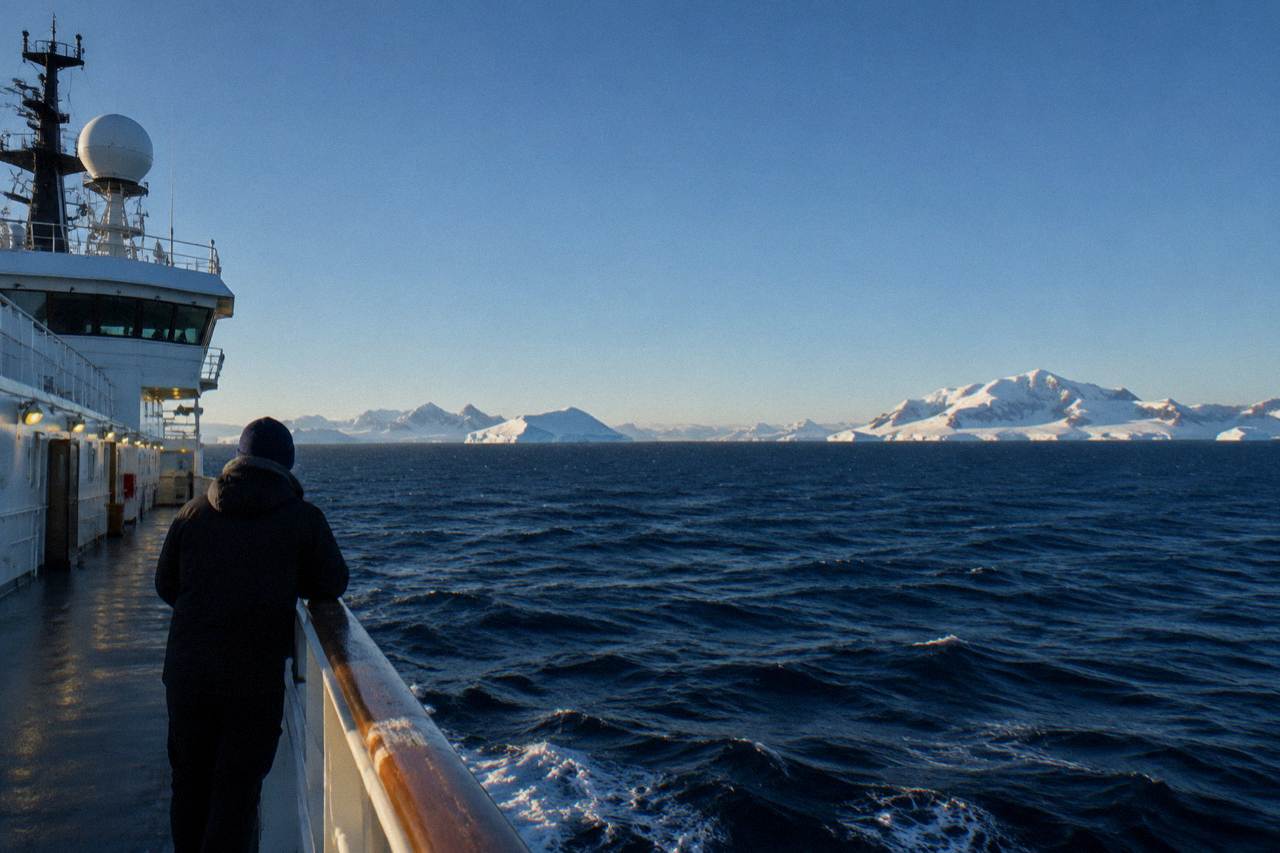
The Drake Passage is the roughly 1,000 kilometre stretch of open ocean between the southern tip of South America and the South Shetland Islands, and it is the reason an Antarctica cruise is measured in days rather than hours. Every sailing itinerary built around Ushuaia has to budget for this water twice, once going down and once coming back, and the time it takes is the difference between a 10 day voyage and a 14 day one. The Antarctic Treaty Secretariat notes that approximately 98 percent of all tourism voyages occur in the Antarctic Peninsula region during the austral summer, which means the Drake is the front door nearly everyone passes through.
That front door has a price and a schedule attached. The crossing consumes sea days, sea days cost money like any other day aboard, and the choice between sailing it and flying over it is one of the two or three decisions that define the whole trip. Before any of that, though, a reader asking this question usually wants the raw numbers, so here they are, with the sources and caveats attached.
How Long Does It Take A Cruise Ship To Cross The Drake Passage?
A cruise ship typically needs about two days to cross the Drake Passage in each direction, which is roughly four days of round-trip transit on a classic Peninsula sailing. According to Quark Expeditions, passages take 18 to 24 hours in optimal conditions and extend to 36 to 48 hours in rougher seas. The alternative, a charter flight from Punta Arenas to King George Island, covers the same distance in about two hours.
Those numbers come from an operator page rather than a neutral maritime source, so treat them as typical ranges rather than guarantees. The practical takeaway for anyone comparing itineraries is simple: a ship that sails the Drake spends around four of its days in open water, and a fly-cruise spends close to none. On an 11 day classic voyage, that transit time is the difference between roughly four days of potential landings and the shorter, flight-based equivalents that compress the whole trip into eight days.
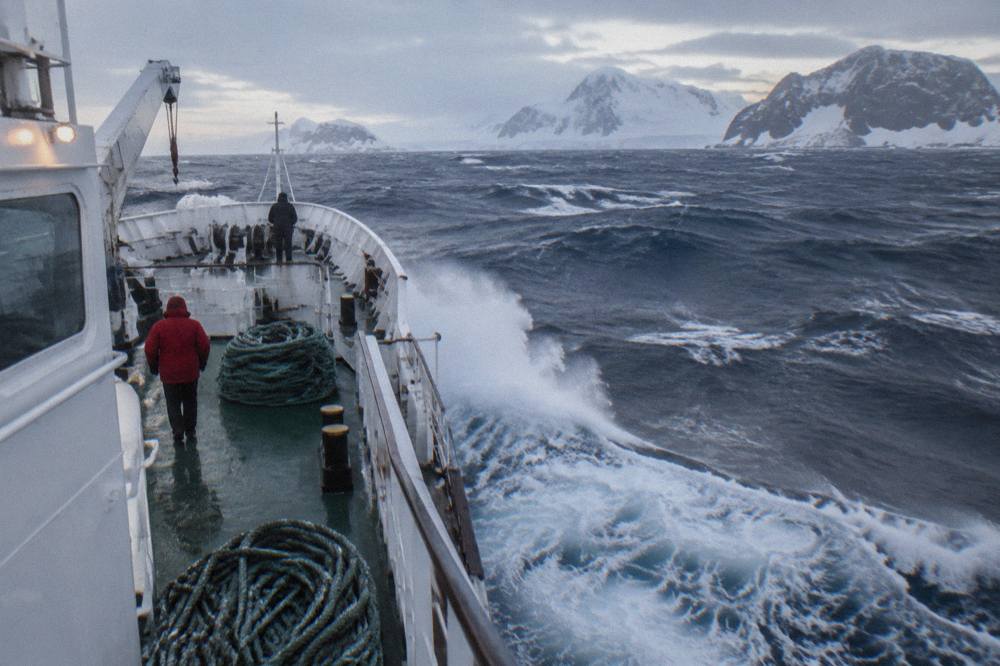
Why does it take this long? The distance is fixed, but the variables stack up. Expedition ships cruise at moderate speeds, weather routing can add or subtract hours, and captains adjust course around the worst sea states rather than driving straight through them. A reported fast crossing with following winds completed the passage in about one day against the usual two, with a maximum wave of about 11 feet, which shows how much the conditions, not the ship alone, set the clock. In the other direction, a crossing into heavy weather can stretch toward the 48 hour end of the range, and the itinerary still absorbs it because the sea days are planned with slack built in.
It is worth being clear about what the two-day figure is: a planning assumption, not a promise. Operators do not publish per-departure crossing times because nobody knows them in advance. The captain decides the route and speed on the day, and the expedition team fills the sea days with lectures, briefings, biosecurity preparation and wildlife watching from the deck. Some crossings deliver albatross and dolphins within an hour of leaving the Beagle Channel; others deliver a lot of time horizontal in a cabin. The schedule is the same either way. You can read more about the crossing itself in our guide to the Drake Passage crossing experience.
What Actually Sets The Crossing Time
Three things decide how long the Drake takes on your sailing: the speed the captain chooses, the sea state on the day, and the route taken around or through weather systems. The same ship can make the crossing in a day in favourable following seas, or need two full days when it is punching into head seas. None of these are knowable before departure, which is why operators plan itineraries around the two-day assumption.
The sea state statistics explain the planning. One summary of the passage reports that rough conditions, the so-called Drake Shake, occur around 30 percent of the time, while calmer Drake Lake conditions occur around 70 percent of journeys. Typical swells average 3 to 5 metres, with documented severe conditions far higher. None of this changes the schedule, because the itinerary is built on the typical case, but it changes how those two days feel aboard. A passenger on a Drake Lake crossing will remember the seabirds; a passenger on a Drake Shake crossing will remember the stabilizers.
Ship design softens the experience even when it cannot shorten it. The Sea Spirit, for instance, carries modern retractable fin stabilizers of the Rolls-Royce Zero Speed type, retrofitted in 2019, which reduce roll both underway and while the vessel is drifting or at anchor. Newer expedition ships across several fleets feature zero-speed stabilizers, some reported as 50 percent larger than standard, alongside advanced weather routing. These features are why two ships on the same route on the same day can produce very different passenger reports about the same body of water.
There is also no reliably calm month to aim for. Guidance from operators and polar travel specialists is consistent on this point: no single month is significantly better or worse for Drake crossings, and conditions stay unpredictable year-round within the October to March season, though the December to February midsummer window generally offers more stable weather patterns. If you are choosing a departure date around the crossing itself, our piece on the calmest time of year on the Drake walks through the seasonal trade-offs in detail.
Modern hull design helps with comfort, though not with speed. Ships with Ulstein X-BOW hulls, zero-speed stabilizers and dynamic positioning handle the open-ocean stretch more comfortably than older tonnage, and several operators highlight these features specifically for the Drake transit. The crossing time, though, stays anchored to distance and weather. For a full treatment of the risk question, including the incidents that get cited most often, see whether the Drake Passage is dangerous.
Deciding between a ship that sails the Drake and a flight that skips it is one of the genuinely consequential choices in planning an Antarctica cruise, and it is exactly the kind of question a free Antarctica cruise consultation can settle against your dates and budget.
Sailing Versus Flying: The Time Comparison
Sailing the Drake costs about two days each way, roughly 18 to 48 hours per crossing depending on conditions. Flying it costs about two hours in a charter aircraft from Punta Arenas to King George Island, but adds a mandatory pre-flight overnight, strict baggage limits of around 20 kg checked, and weather dependency on the flight itself. The time saved is real, roughly four days, but it is not free.
The fly-cruise model, operated by lines such as Antarctica21 from Punta Arenas, eliminates up to four days of sea transit by using a roughly two-hour flight each way. Operators in this model commonly require guests to arrive in Punta Arenas by early afternoon the day before the charter flight, with a pre-flight briefing, biosecurity and gear checks built into that day. The flight windows are weather-dependent in both directions, so the time saving carries a scheduling risk that a sailing voyage does not have: a ship can slow down or reroute, but a charter flight waits for visibility.
There is a third option that splits the difference. Sail-and-fly hybrid itineraries cross the Drake by ship in one direction and fly the other, halving the open-ocean exposure while keeping a taste of the classic crossing. Operators including Lindblad and Quark have run versions of this routing. For travellers who want to say they made the crossing but not twice, it is the compromise format, though it inherits the flight dependency on one leg.
| Option | Typical one-way time | Round-trip transit | Main trade-off |
|---|---|---|---|
| Sailing the Drake | 18-48 hours | About 4 days | Sea time and possible rough conditions, no flight dependency |
| Fly-cruise (Punta Arenas to King George Island) | About 2 hours | Under half a day of flying | Weather-dependent flights, 20 kg baggage limit, pre-flight overnight required |
| Sail one way, fly the other | Mixed | About 2 days at sea | Halves sea exposure, keeps a classic crossing, depends on flight timing |
On cost, the two models sit in different bands. A fly-cruise typically adds roughly $2,000 to $5,000 over a comparable sailing voyage because of the charter flights, according to operator comparisons. One 2026 cost guide reports Quark's Antarctic Express fly-the-Drake voyage from $17,591 per person for eight days, while entry-level sailing berths on Drake-crossing itineraries begin around $7,500 to $8,995 per person in shared cabins. Our broader comparison of whether flying or cruising the Drake is cheaper covers the full budget picture.
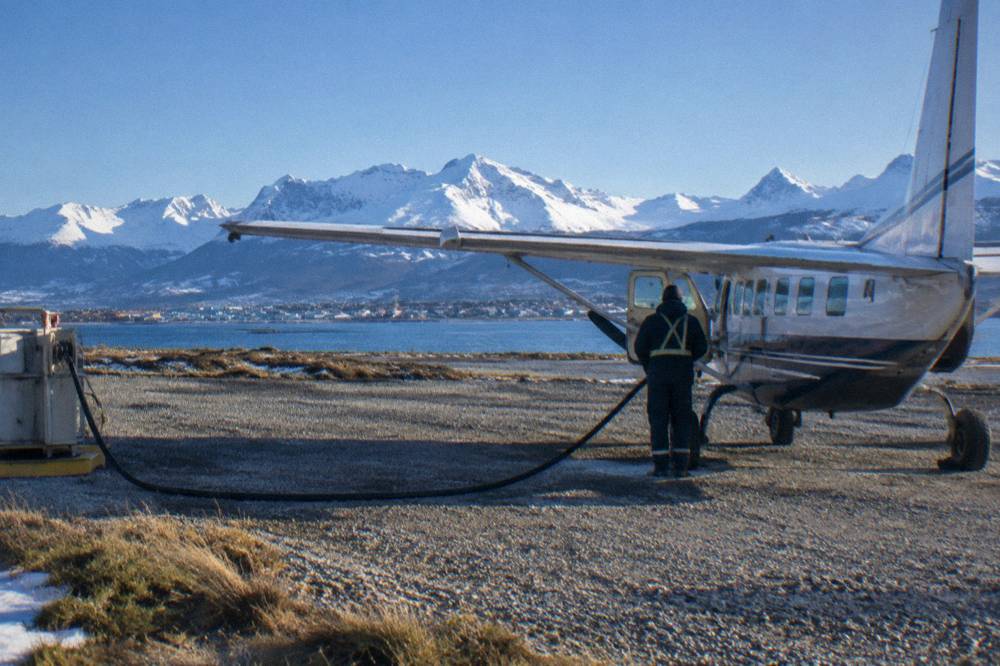
The honest framing is that neither format wins outright. The sailing voyage buys you the full expedition narrative, sea days, seabirds, and the slow latitude change that makes the first iceberg land like an event. The fly-cruise buys you efficiency, more of your holiday spent on landings rather than in transit, at the price of a compressed experience and a flight that can be delayed by the same weather the ship would simply plough through. Travellers who regret their choice usually regret it in the direction of wishing they had picked the other format, which is why it is worth deciding deliberately rather than by default.
How The Crossing Time Shapes The Itinerary You Buy
The two-day each-way crossing is why classic Peninsula voyages run 10 to 12 days but only deliver about four to six days of landings: the rest is transit, the Beagle Channel and port days. Fly-cruise voyages compress the same landing time into eight days. If total days ashore matter more than the journey, the math favours flying; if the crossing is part of the point of the trip, sailing gives you more of it.
Operator listings make the arithmetic visible. A typical sailing itinerary from Ushuaia spends days two and three crossing south, days four to eight on the South Shetland Islands and western Peninsula, and days nine and ten crossing back. The landing window, roughly four to six days, is the product you are actually paying for, and it is bounded on both sides by the Drake. IAATO rules shape that window too: no more than 100 passengers from a vessel may be ashore at any one time, and vessels carrying more than 500 passengers cannot make landings at all, which is why the ships on these itineraries are small by mainstream cruise standards.
The landing rules also mean ship size interacts with the crossing time in a subtle way. On a vessel carrying close to the landing cap, passengers go ashore in staggered groups, so a shorter landing window is further divided. On a ship of 100 to 170 guests, by contrast, most of the ship can be ashore in a single rotation, which effectively gives each landing day more time on the ground per person. When you compare a four-day landing window on a 490-guest ship against the same window on a 130-guest ship, the calendar looks identical but the experience does not.
This is also where ship choice meets schedule. The Oceanwide Expeditions ship Hondius, a 170-guest Polar Class 6 vessel built in 2019, sails 11, 13 and 19 day voyages from Ushuaia, with fares on current operator listings from $7,800 per person. On the 11 day format, the two-day crossings each way are structural: you get the full classic experience, sea days included. Quark Expeditions' Ocean Explorer, an upscale 138-guest ship, sails voyages from 8 to 20 days from Ushuaia and Punta Arenas, with voyage-level fares from $12,236 per person shared across Quark's Peninsula departures. The fly-cruise alternative is Antarctica21's Magellan Explorer, an 88-guest ship reached by a roughly two-hour flight from Punta Arenas to King George Island, with air-cruise fares from $13,795 per person for an eight day trip.
Each of those three formats answers the crossing-time question differently, and the table below puts them side by side so the trade-offs are visible at a glance.
| Ship | Class | Passengers | Ice class | From, per person | Voyage length | Departs from |
|---|---|---|---|---|---|---|
| HondiusOceanwide Expeditions | Small-Ship Budget | 170 | Polar Class 6 | from $7,800 | 11 to 19 days | Ushuaia |
| Magellan ExplorerAntarctica21 | Fly-Cruise | 96 (88 in Antarctica) | LR PC6 | from $13,795 | 8 days | Punta Arenas (fly) to King George Island |
| Ocean ExplorerQuark Expeditions | Upscale Expedition | 138 | 1A, PC6 | from $12,236 | 8 to 20 days | Ushuaia, Buenos Aires, Punta Arenas |
Comparing those three formats against your available travel dates is the decision moment where a consultation on Drake routing options earns its keep, because the right answer depends on how many days you can take, your tolerance for sea days, and your budget band.
Planning Around The Crossing: Buffers, Ports And Season
Plan at least one, ideally two, nights in your gateway city before the voyage, because the Buenos Aires to Ushuaia air corridor is weather-prone and the ship does not wait. Sailings depart from Ushuaia; fly-cruises stage from Punta Arenas with a mandatory pre-flight overnight. The crossing itself needs no buffer, since the itinerary already absorbs its typical two days, but the flights to the ship do.
The gateway logistics are the part travellers underestimate. There are no direct flights from the United States to Ushuaia; the standard routing is a long-haul arrival into Buenos Aires, a transfer between airports, and a domestic flight south, with several hours of buffer advised for the connection. Port reports from the 2026 season describe heavy cruise traffic through Ushuaia and hotel occupancy around 80 percent in peak January, which is another reason to arrive early rather than on the day of departure. Our guide to cruising from Ushuaia covers the port and the practicalities.
Ushuaia's port itself has been in the news through 2026. Argentina's National Ports and Navigation Agency issued Resolution 51/2026 establishing dynamic berth allocation and entry sequencing at the port based on real-time capacity, with upgrades to fenders and utilities underway for the 2026-27 season, and the port has operated under a federal intervention order since early 2026. None of this has stopped the cruise season, but it is a reminder that the world's busiest Antarctica gateway is a working port with its own constraints, another argument for building slack into your arrival.
For fly-cruise passengers the equivalent staging happens in Punta Arenas, where operators require arrival by early afternoon the day before the charter flight, with a strict checked baggage limit of about 20 kg on the King George Island leg. Expedition boots and parkas are commonly provided or rented through the operator, which matters because the baggage limit leaves little room for gear. The fly-the-Drake guide details that model end to end.
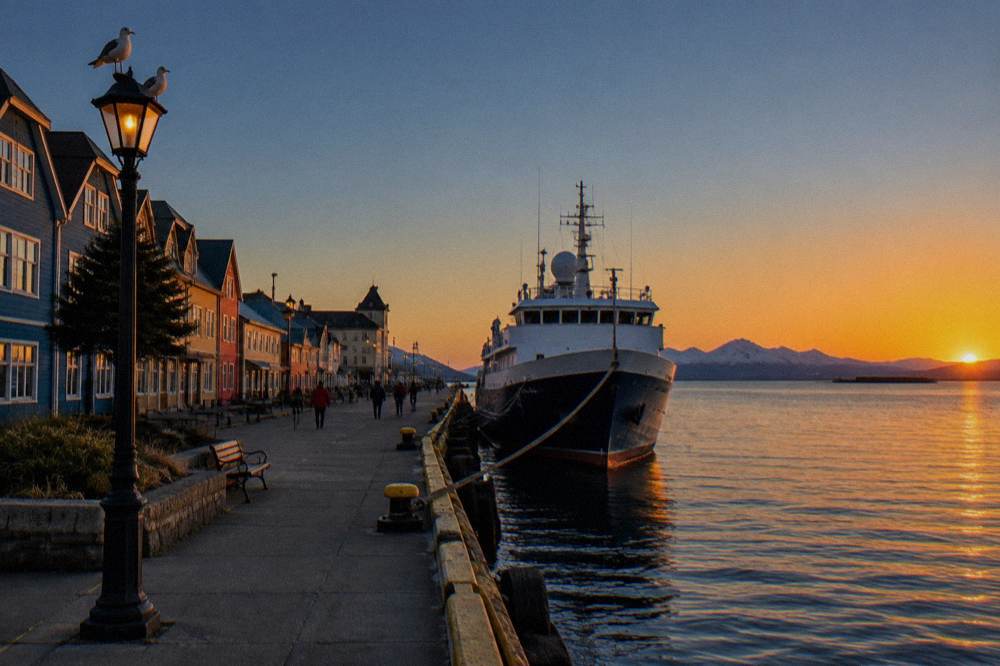
Seasonally, the whole machine runs from roughly October or November to March. Early season crossings can meet the most dramatic sea ice conditions near the Peninsula, midsummer offers the longest daylight for the sea days, and late season favours whale activity. None of these shift the crossing time itself: the two-day planning assumption holds across the season, and the choice of month is about what you want on the Peninsula side of the water.
Once the format is clear, whether that is a sailing voyage on a ship like Hondius or a compressed air-cruise, a free consultation on your Antarctica options can pin down departures that fit.
Common Questions About Drake Passage Crossing Time
How Long Does It Take A Cruise Ship To Cross The Drake Passage?
About two days in each direction on a typical sailing. Quark Expeditions states passages take 18 to 24 hours in optimal conditions and 36 to 48 hours in rougher seas, so a round trip on a classic Peninsula voyage spends roughly four days in transit. A charter flight covers the same distance in about two hours.
Is The Drake Passage Always Rough?
No. One summary of the passage reports rough conditions around 30 percent of the time and calmer conditions around 70 percent. Conditions are unpredictable year-round within the season, so there is no month that reliably avoids rough seas.
Can You Skip The Drake Passage Crossing?
Yes, with a fly-cruise. Charter flights from Punta Arenas to King George Island take roughly two hours and replace both sea crossings. The trade-offs are weather-dependent flights, a mandatory pre-flight overnight and a strict baggage limit, and typically a higher fare than comparable sailing voyages.
Why Do Antarctica Cruises Take 10 Days Or More If The Landings Only Take A Few Days?
Because the two-day crossing each way is built into the schedule. A classic 11 day sailing spends roughly four days crossing the Drake plus port days, leaving about four to six days for landings on the Peninsula and South Shetland Islands.
Do Cruise Ships Cross The Drake Passage At Night?
Yes, the ship runs 24 hours a day. The crossing is continuous sailing, with no scheduled stops, and passengers are usually at sea through multiple nights each way.