Is The Drake Passage Dangerous? Safety Record And Ship Standards
 By Oleg G.
The Drake Passage has a reputation that keeps a lot of people from ever booking an Antarctica cruise. Here is what the documented record, the ship standards and the operator procedures actually say about the risk.
Quick answer: The Drake Passage is a genuinely serious body of water, not a marketing exaggeration: swells average 3 to 5 metres and crossings take 18 to 48 hours. But passenger expedition ships cross it routinely under strict Polar Code rules, and the documented incident record shows rare, mostly non-fatal events. Rough conditions occur on roughly 30 percent of crossings according to one summary; calmer ones on about 70 percent.
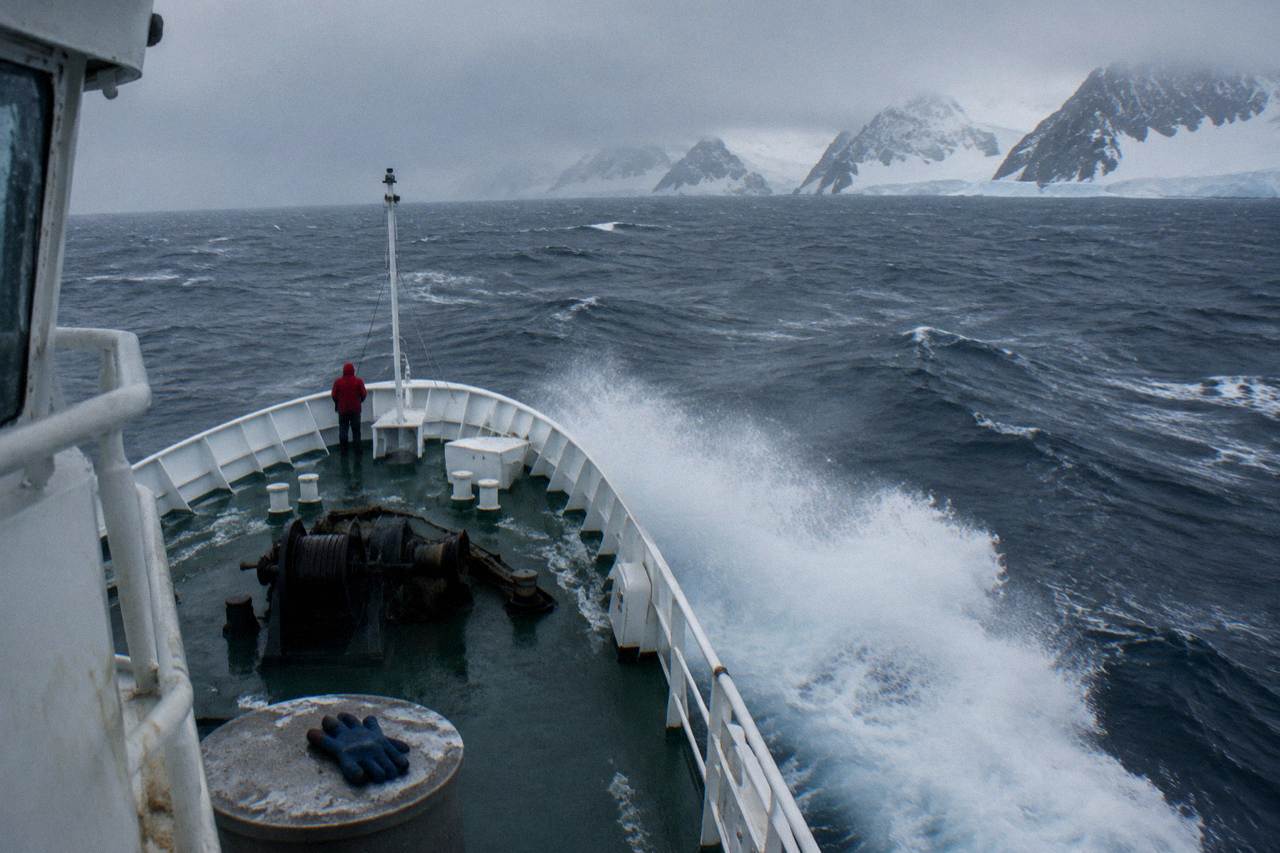
The Drake Passage is the stretch of open ocean between Cape Horn and the Antarctic Peninsula, and it is the single most common reason people hesitate before booking an Antarctica cruise. It has no land to break the wind anywhere in its circular latitude belt, so the Pacific, Atlantic and Southern Ocean swells funnel straight through it. The honest answer to whether it is dangerous has two parts, and both matter. The passage itself is one of the roughest stretches of water on Earth for small and large vessels alike. The ships that carry paying passengers across it, though, operate under some of the strictest construction and operating rules in the cruise industry, and the documented incident record is thin compared with the volume of traffic. This guide separates the fear from the facts: what has actually gone wrong and when, what the Polar Code and ice class standards require of every expedition cruise, and what happens operationally when the forecast turns bad.
Why Is The Drake Passage So Dangerous?
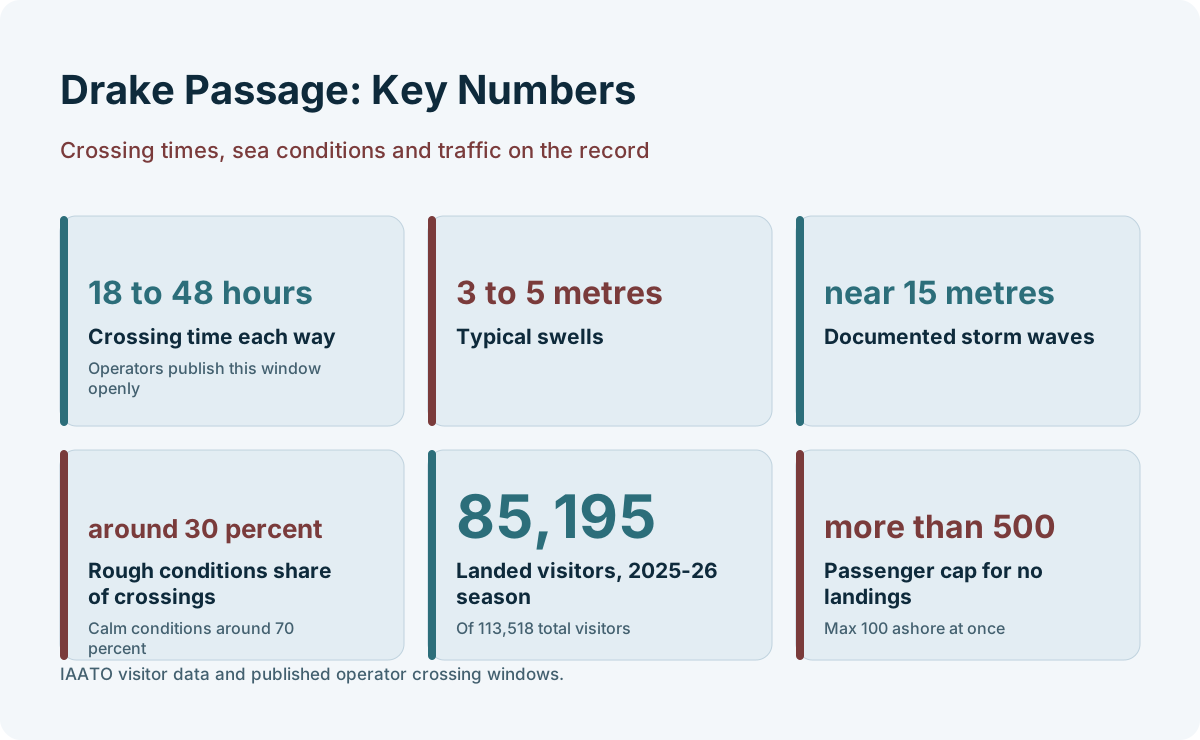
The danger is real but specific: the passage combines the strongest average winds of any ocean latitude with no land barrier, producing typical swells of 3 to 5 metres and documented storm waves near 15 metres. Crossings take 18 to 48 hours each way, and one summary reports rough conditions around 30 percent of the time and calm conditions around 70 percent. The risk to a modern expedition cruise is discomfort far more often than disaster.
The Southern Ocean latitudes known as the Furious Fifties and Shouting Sixties have no continents in the way. Wind circles the globe unbroken, dragging the sea with it, and the Drake is the narrow pinch point where all of that energy squeezes between South America and the Peninsula. A Geographical explainer on the passage reports the split that crew shorthand has made famous: the "Drake Shake" on roughly 30 percent of crossings, the "Drake Lake" on roughly 70 percent. Typical swells run 3 to 5 metres, and one guide to the passage's waves documents severe conditions reaching 13 to 15 metres in recorded observations.
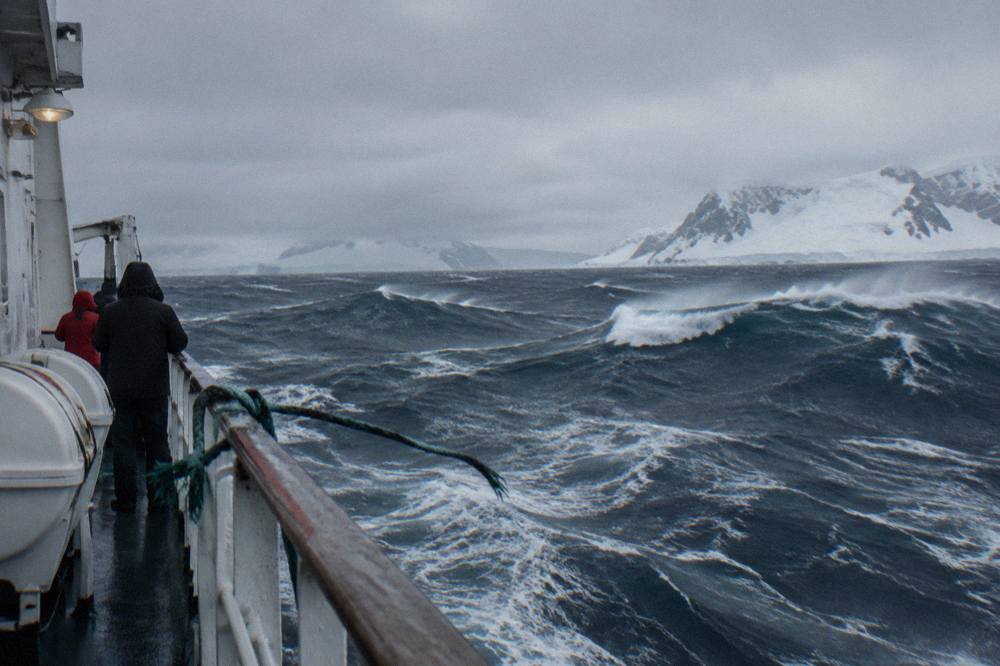
None of that is hidden from passengers. Operators publish crossing windows of 18 to 48 hours openly, and the schedule of a classic Peninsula voyage, usually 10 to 12 days, simply budgets two days of transit each way. What makes the passage feel dangerous is that it is the one part of the trip where the ship is a passenger of the weather rather than the reverse. Once you are in the islands and channels of the Peninsula itself, the water is largely protected. The Drake is the toll booth, and every expedition cruise that sails rather than flies pays it. If the toll is the thing standing between you and booking, a free consultation on crossing options can tell you which itineraries minimise it.
What The Safety Record Actually Shows?
The documented record shows a small number of serious incidents across decades of passenger operations: the Viking Polaris was struck by a breaking wave on 29 November 2022, shattering seven stateroom windows, with one passenger death and eight injuries, and the Clelia II lost power in one engine in heavy weather in October 2025 before being assisted toward Ushuaia. Against that, IAATO recorded 85,195 landed visitors in 2025-26 alone.
Fear of the Drake is usually fed by a handful of dramatic stories, so it is worth listing exactly what is on the record, with dates. The most serious passenger-vessel event in recent memory is the Viking Polaris incident: on 29 November 2022, southeast of Cape Horn, a breaking wave shattered windows in seven staterooms, killing one passenger and injuring eight, according to the investigation referenced in US Coast Guard industry reporting. It is the event that anchors our account of what happened to the Viking Polaris, and it is genuinely sobering. It is also, in two decades of mass passenger tourism, the fatal outlier rather than the pattern.
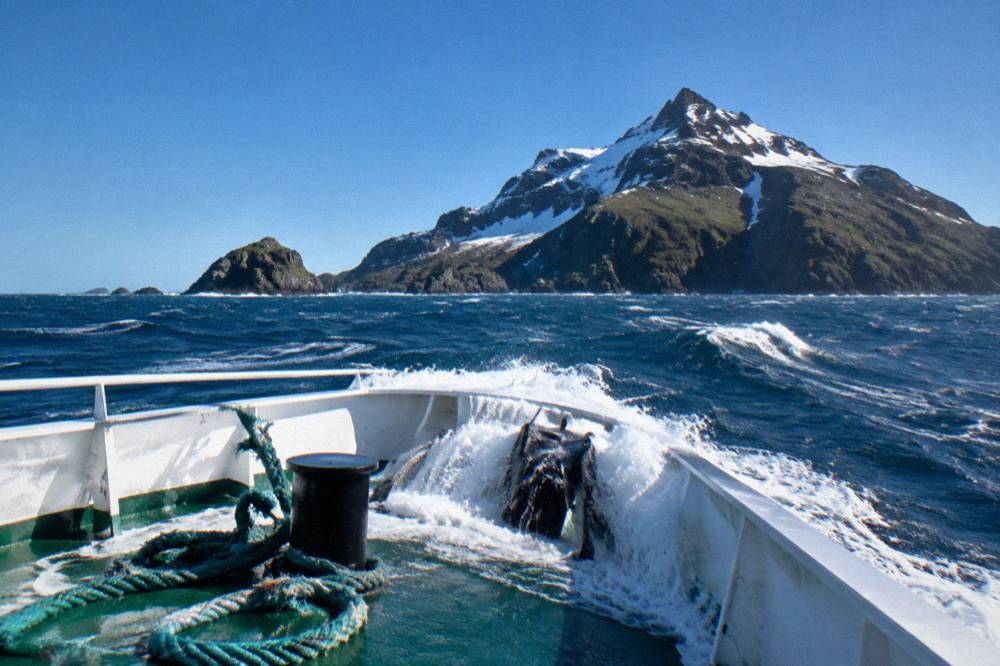
The second widely reported event is the Clelia II, which in October 2025 lost power in one engine in 50-knot winds and 7 to 8 metre waves in the passage and was assisted while limping toward Ushuaia before regaining mobility, per a World Ports Organization report. No passenger deaths resulted. The third incident in the recent record is not a cruise at all: the Australian research vessel RSV Nuyina briefly grounded off Heard Island on 13 October 2025 during a season voyage, with limited hull damage, per the Australian Transport Safety Bureau's preliminary report. It is a reminder that the Southern Ocean punishes every kind of vessel, but it involved a government research and supply ship, not a passenger expedition cruise.
| Incident | Date | Vessel type | What happened | Source |
|---|---|---|---|---|
| Breaking wave struck southeast of Cape Horn | 29 November 2022 | Passenger expedition ship (Viking Polaris) | Seven stateroom windows shattered; one passenger died, eight injured | Investigation referenced in USCG industry reporting |
| Engine power loss in heavy weather | October 2025 | Passenger expedition ship (Clelia II) | One engine lost in 50-knot winds, 7-8 m waves; assisted toward Ushuaia, mobility regained | World Ports Organization |
| Brief grounding off Heard Island | 13 October 2025 | Research and supply vessel (RSV Nuyina) | Drop keel and hull contacted seabed; scratches and paint damage, instruments lost | ATSB preliminary report MO-2025-011 |
Set against that record is the traffic. IAATO's own data counted 113,518 total visitors for the 2025-26 season, of whom 85,195 made landings, and roughly 98 percent of tourism voyages run to the Antarctic Peninsula, per the Antarctic Treaty System's tourism page, which means nearly all of them cross the Drake or fly over it. After two years of studying these numbers, the honest reading is that the passage is uncomfortable fairly often and dangerous very rarely. If your question is whether ships have gone down in the passage, our history of sinkings in the Drake Passage covers the record, which is dominated by historical and cargo losses rather than modern passenger vessels.
What The Polar Code And Ice Classes Actually Require?
Every passenger ship that operates in Antarctic waters must comply with the IMO Polar Code, which mandates hull ice-class standards, cold-weather survival equipment, ice-navigation training and polar-specific safety planning. The roster of ships sailing the Peninsula shows ice classes from Lloyd's 1D up to Polar Class 5 and 1A-Super, and IAATO rules add a hard cap: vessels carrying more than 500 passengers cannot make landings at all.
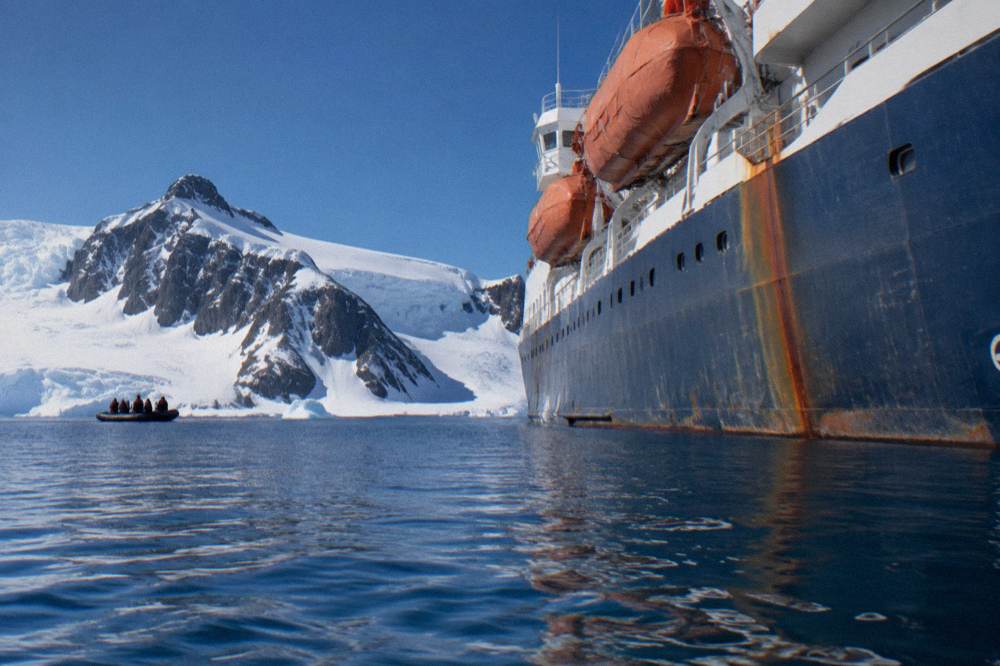
The Polar Code is the legal floor under every expedition cruise to Antarctica, and it is far stricter than anything applying to a Caribbean cruise ship. It requires an appropriate ice class for the intended operating area, structural protection for the hull, closed or protected lifeboats, cold-water immersion suits for everyone aboard, and bridge crews trained in ice navigation. The ship roster for the 2026-27 season shows what that looks like in practice: Oceanwide's Hondius is Polar Class 6, which the operator notes was the first-registered PC6 vessel in the world; Lindblad's National Geographic Endurance and Resolution carry Polar Code PC5, Category A; Quark's Ultramarine is ice class 1A+, PC6; and the budget end of the fleet, such as Oceanwide's Plancius, sails on a Lloyd's 1D class at a stated 5 metre draught.
| Standard or rule | Who it applies to | What it requires |
|---|---|---|
| IMO Polar Code | All passenger ships in polar waters | Ice-class hull appropriate to the area, cold-weather survival equipment, ice-navigation training, polar water operational manual |
| Polar Class 5 (PC5, Category A) | e.g. National Geographic Endurance, SH Vega | Hull built for medium first-year ice, may operate in it continuously |
| Polar Class 6 / 1A+ (e.g. Hondius, Ultramarine) | Ice-strengthened expedition ships | Hull built for thin first-year ice with old ice inclusion |
| IAATO 500-passenger rule | Every vessel in Antarctic waters | Vessels with more than 500 passengers make no landings; max 100 ashore at once; 1:20 guide ratio |
The IAATO and Antarctic Treaty rules govern operations rather than construction, and they are the reason a Drake crossing cruise feels different from a mainstream one. The visitor guidelines adopted through the Antarctic Treaty system state plainly that vessels with more than 500 passengers shall not make landings, that a maximum of 100 passengers may be ashore from a vessel at any one time, and that operators must maintain a 1:20 guide-to-visitor ratio during landings. The full visitor guidelines are published by IAATO. In practice this pushes the fleet toward small, purpose-built ships: the largest HX vessels in the roster carry 490 guests, and most expedition ships carry between 88 and 200.
| Ship (roster) | Operator | Ice class | Passengers |
|---|---|---|---|
| National Geographic Endurance | Lindblad Expeditions | PC5, Category A | 138 |
| Hondius | Oceanwide Expeditions | Polar Class 6 | 170 |
| Ultramarine | Quark Expeditions | 1A+, PC6 | 199 |
| Plancius | Oceanwide Expeditions | 1D (Lloyd's, at 5 m draught) | 108 |
| Magellan Explorer | Antarctica21 | LR PC6 | 88 |
That size question cuts both ways for a nervous crosser. A bigger ship rides the Drake more comfortably, but the ships that can actually land you ashore are the smaller, ice-classed ones, and the roster shows operators choosing those deliberately. If you want help weighing ship size against comfort on the crossing, the free Antarctica cruise consultation walks through exactly that trade-off.
How Modern Expedition Ships Handle The Drake Shake?
Stabilizers and hull design have changed the crossing experience materially: the Sea Spirit carries retractable fin stabilizers retrofitted in 2019 that work even at zero speed, newer expedition ships carry zero-speed stabilizers up to 50 percent larger than standard, and inverted X-BOW hulls on ships like the Sylvia Earle, Greg Mortimer and Douglas Mawson split waves rather than slapping them. None of this removes the swell; it reduces the roll.
Stabilizers are the most honest topic in this whole debate, because they help with roll, not with pitch or heave, and the Drake delivers all three. What the sources do say is specific. Poseidon Expeditions documents that its Sea Spirit carries modern retractable fin stabilizers of the Rolls-Royce Zero Speed type, retrofitted in 2019, which reduce roll both underway and while drifting or at anchor, with fins that retract fully for ice navigation, per the operator's own stabilizers article. AFAR reported in August 2026 that newer expedition ships feature zero-speed stabilizers, some 50 percent larger than standard, that work effectively even when the vessel is stationary, alongside advanced weather routing.
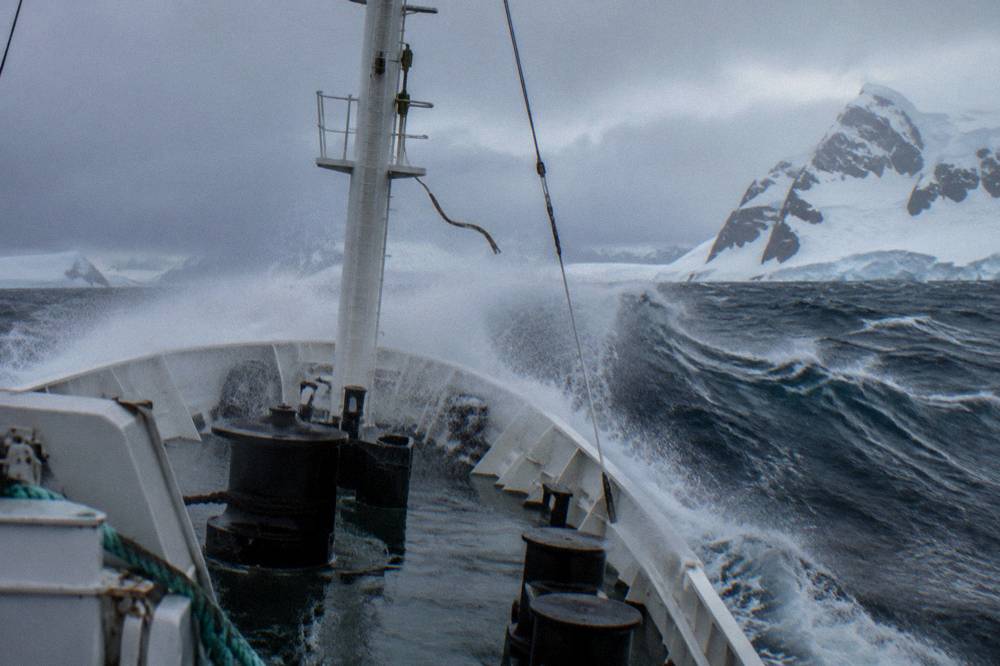
Hull design is the second lever. The Ulstein X-BOW, an inverted bow that pierces waves instead of riding over them, appears across the Aurora fleet in the roster: the Sylvia Earle, Greg Mortimer and the 2025-built Douglas Mawson all carry it, as do the Ocean Albatros and Ocean Victory. Lindblad's National Geographic Endurance and Resolution carry a patented X-Bow of their own. The effect, as the designers describe it, is a softer entry into head seas and less slamming, which is precisely the motion that exhausts passengers on a two-day crossing. You can read more about the crossing experience itself in our guide to the Drake Passage crossing day by day.
None of this is a promise of calm water. A stabilizer cannot flatten a 5 metre swell, and an X-BOW cannot repeal the Furious Fifties. What the technology does is widen the band of conditions in which the ship is merely unpleasant rather than punishing, and it is one reason the modern incident record looks so different from the historical one. For the practical side of enduring the Shake, our Drake Shake seasickness guide covers medication timing, cabin choice and what actually works.
What Operators Do When The Forecast Turns Bad?
Bad-weather practice is built around avoidance rather than endurance: expedition ships use weather routing to time and angle the crossing, captains slow down or alter course when the forecast worsens, and landings are cancelled or swapped for Zodiac cruising when conditions exceed limits. Fly-cruise operators cancel or delay the charter flight itself, because the two-hour flight window is far more weather-limited than a two-day sail.
The most important fact about Drake danger is that nobody attempts to "power through" it. AFAR's August 2026 reporting on the crossing names advanced weather routing as a core mitigation on modern vessels, and it is standard for a captain to leave Ushuaia early, leave late, or take a longer southerly or northerly track based on the forecast for the next 48 hours. The 18 to 48 hour crossing window exists precisely because the captain controls the variable. A ship that expects a hard passage simply spends longer at sea, and the expedition team compresses the landing schedule to make up the time in the Peninsula.
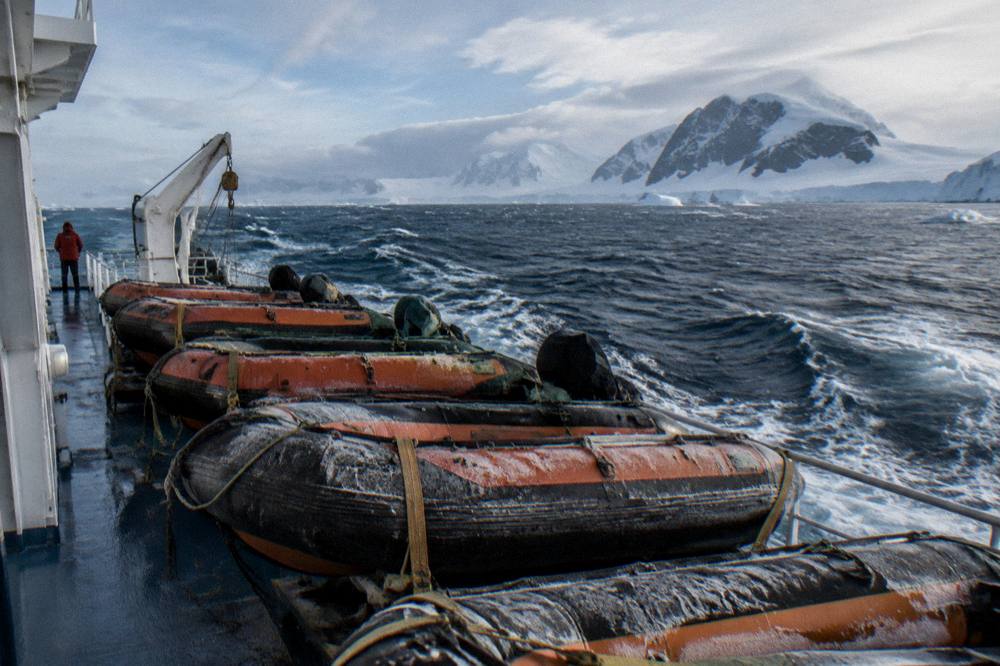
Inside the Peninsula, the same logic applies to landings. IAATO's framework caps passengers ashore and requires a guide ratio, but the day-to-day decisions are weather calls: if a site is blowing out, the ship moves to a sheltered bay, or the landing becomes a Zodiac cruise along the ice edge. Passengers routinely experience this as a changed itinerary rather than a safety event. On the fly side, the operators that fly the Drake from Punta Arenas to King George Island are more weather-exposed, not less: Polar Latitudes requires its fly-cruise guests to be in Punta Arenas by 14:00 the day before the charter flight, with a strict 20 kg checked baggage limit, precisely because the flight itself has a narrow window. Quark's own comparison of flying versus sailing notes flights of roughly two hours against sea crossings that take 18 to 48 hours.
The pattern across all of this is that the danger is managed by never being in the worst of it. That is also the honest limit of the reassurance: a crossing can still be rough, and the crew will still tell you to secure your cabin. What you are buying with an expedition cruise rather than a mainstream one is a ship, a crew and an operating culture built around respecting that water.
Should You Fly The Drake Instead Of Sailing It?
Flying eliminates the passage entirely: a charter flight from Punta Arenas to King George Island takes roughly two hours against 18 to 48 hours of sailing each way, and Antarctica21's Classic Antarctica air-cruise runs 8 days from $13,795 per person. The trade-offs are real: the flight is weather-dependent, baggage is capped at 20 kg on Polar Latitudes charters, and you skip the seabirds and the crossing itself.
The fly-cruise is the fastest-growing answer to Drake fear, and the roster shows what it looks like. Antarctica21's Magellan Explorer carries 88 guests on air-cruises, flies from Punta Arenas to King George Island, and lists its Classic Antarctica voyage, 8 days and 7 nights, from $13,795 per person. The operator requires a pre-flight overnight stay and briefing in Punta Arenas, and the season runs November to early March. The newest ship in that fleet, the Magellan Discoverer, sails its first Antarctic season in 2026-27, per the operator's own wording, with the same fly-cruise model from Punta Arenas.
Whether flying is safer is a fair question with an unsatisfying answer. The sail crossing is longer but the ship can slow down and wait. The flight is brief but binary: it goes when the weather at King George Island allows, and the schedule absorbs the delay. Our comparison of flying versus sailing the Drake works through the safety argument in detail. Cost-wise, fly options typically add roughly $2,000 to $5,000 over comparable sailing voyages due to charter flights, per operator comparisons, and Quark's Antarctic Express fly-the-Drake voyage starts from $17,591 for 8 days, per one 2026 cost guide. If the choice between flying and sailing is where you are stuck, that is exactly the decision a free consultation on fly versus sail exists to settle.
Which Ship Should A Nervous Crosser Choose?
For nervous crossers, the National Geographic Endurance is the strongest choice, pairing a patented X-Bow with PC5 Category A ice class and carrying just 138 guests, with its 12-day Voyage to Antarctica starting from $11,900 per person. If budget matters more, the Hondius offers the lowest confirmed entry fare at $7,800 with Polar Class 6, while the Magellan Explorer removes the Drake crossing altogether from $13,795.
The three ships in the comparison below cover the whole decision space. The National Geographic Endurance is the featured ship here because it represents the "manage it" answer: a PC5 Category A hull, a patented X-Bow for wave entry, and 138 passengers, small enough to land everywhere. Lindblad's ship page lists its 12-day Voyage to Antarctica from $11,900 per person, and the operator bundles a pre-cruise Buenos Aires hotel, the charter flight to Ushuaia, beverages and prepaid gratuities, per one cost guide's summary of what Lindblad includes. The Hondius, Oceanwide's Polar Class 6 vessel carrying 170 guests, is the budget-anchored sailing option from $7,800, and the Magellan Explorer is the skip-it option, an 88-guest fly-cruise ship from $13,795.
| Ship | Class | Passengers | Ice class | From, per person | Voyage length | Departs from |
|---|---|---|---|---|---|---|
| National Geographic EnduranceLindblad Expeditions (with National Geographic) | Standard Expedition | 138 | PC5 | from $11,900 | 12 to 22 days | Ushuaia |
| HondiusOceanwide Expeditions | Small-Ship Budget | 170 | Polar Class 6 | from $7,800 | 11 to 19 days | Ushuaia |
| Magellan ExplorerAntarctica21 | Fly-Cruise | 96 (88 in Antarctica) | LR PC6 | from $13,795 | 8 days | Punta Arenas (fly) to King George Island |
The Endurance deserves its own word. Beyond the hull class and the X-Bow, it carries the observation-deck igloos and the Lindblad expedition culture, and its sister ship, the National Geographic Resolution, shares the same PC5 Category A standard. For a traveller whose real fear is being trapped and helpless on a big ship, a 138-guest vessel where the bridge is accessible and the expedition team is visible is a different psychological proposition from a 490-guest one, even though the larger HX ships are themselves well-found vessels. Passengers often report that the fear shrinks once the ship is moving and the crew is visibly unbothered, which is a generic impression but a consistent one.
The final consideration is timing. No single month is reliably calmer in the Drake: sources on the passage report that conditions stay unpredictable year-round within the season, though December to February generally offers more stable windows. Our guide to the best time to visit Antarctica covers the wildlife and ice trade-offs month by month, and the calmest-crossing question specifically is covered in our piece on the calmest time to cross the Drake. The choice is best made on fares and ship data rather than on fear.
Common Questions About Drake Passage Danger
Why Is The Drake Passage So Dangerous?
It sits in the Furious Fifties and Shouting Sixties, latitude belts with no land anywhere to break the wind, so ocean swells funnel through a narrow gap between South America and the Peninsula. Typical swells run 3 to 5 metres, severe documented conditions reach 13 to 15 metres, and crossings take 18 to 48 hours each way.
Is The Drake Passage Dangerous For Cruise Ships?
It is uncomfortable fairly often and dangerous rarely. The documented record for passenger expedition ships includes the Viking Polaris breaking-wave incident of 29 November 2022, with one death and eight injuries, and the Clelia II engine loss of October 2025, which ended without casualties. Tens of thousands of passengers cross each season.
How Rough Is The Drake Passage Usually?
One summary of crossings reports rough "Drake Shake" conditions on roughly 30 percent of crossings and calm "Drake Lake" conditions on about 70 percent. Typical swells average 3 to 5 metres, and no month within the season is reliably calmer, though December to February generally offers more stable windows.
Do Stabilizers Work In The Drake Passage?
They reduce roll, not the swell itself. The Sea Spirit carries Rolls-Royce Zero Speed retractable fins retrofitted in 2019 that work even when the ship is stationary, and newer expedition ships carry zero-speed stabilizers up to 50 percent larger than standard, per AFAR reporting. X-BOW hulls on several roster ships additionally soften wave entry.
Can You Avoid Crossing The Drake Passage?
Yes. Fly-cruise operators such as Antarctica21 fly guests from Punta Arenas to King George Island in roughly two hours, replacing up to four days of sea transit. The Magellan Explorer runs an 8-day Classic Antarctica air-cruise from $13,795 per person, and the flight is weather-dependent with strict baggage limits.
What Happens If The Weather Is Bad During A Drake Crossing?
Captains use weather routing to time and angle the crossing, slow down, or take a longer track, which is why the crossing window spans 18 to 48 hours. Inside the Peninsula, landings are swapped or converted to Zodiac cruising when a site is blowing out. Fly-cruise charters delay rather than fly in bad conditions.