What Is The Best Month To Visit Ushuaia?
 By Oleg G.
The best month for Ushuaia is the month that fits the Antarctic sailing season: what November through March each mean for hotels, flights and landings.
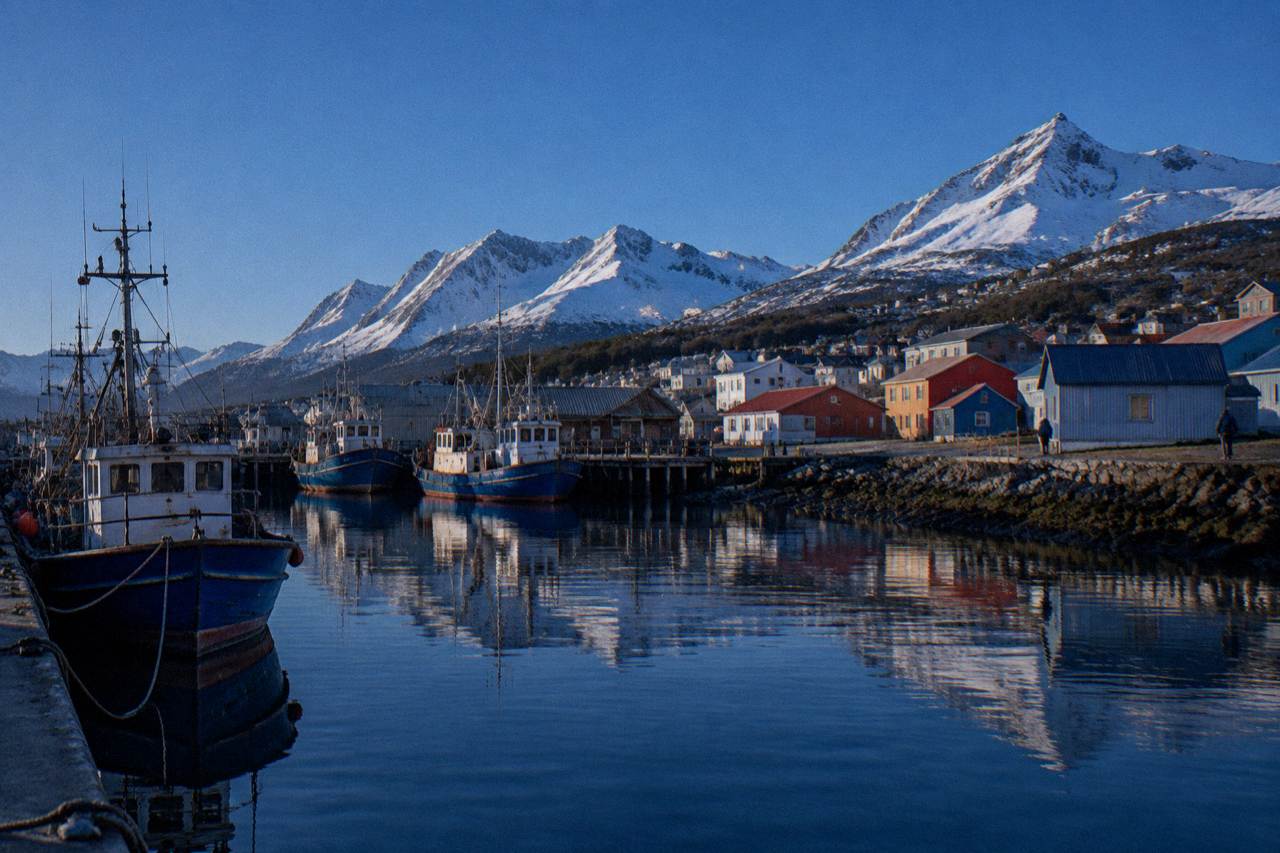
What Is The Best Month To Visit Ushuaia?
For a trip built around an expedition cruise, November through March is the practical window, because that is when ships sail; December and January bring penguin chicks and busy hotels, February and March bring the strongest whale watching, and November and late March buy quieter streets at either end of the season.
Ushuaia's hotel rooms ran at about 80 percent occupancy in January 2026, in a season that pushed 43,720-plus cruise passengers through the port city at the tip of Argentina. That single number explains why the best-month question is really a cruise question wearing a town's clothes. The month that suits you depends less on Ushuaia's own calendar than on which weeks the expedition ships are sailing, which wildlife you want on the Peninsula, and how much company you will accept at the embarkation pier.
The town serves the schedule of the cruise lines. Between mid-October and mid-March, ships leave the pier for the Antarctic Peninsula; outside that window the pier empties and Ushuaia belongs to hikers and residents. That is the working frame behind Cruises In Antarctica: pick the month by what you want from the voyage, then let the town's rhythms follow from it.
The shorthand is simple. November buys quiet streets and pristine, snow-covered landings. December and January deliver penguin chicks and the tightest hotel market of the year. February and March bring peak whale activity and a town that starts to loosen. April through September has no Antarctic sailings at all, so a visit then is a Patagonia trip, not a cruise trip.

How The Antarctic Sailing Season Sets Ushuaia's Calendar
Ushuaia's year is split by the water, not the calendar: roughly 98 percent of Antarctic tourism voyages happen in the Peninsula between October and April, and expedition ships run from mid-October to mid-March. Before and after that window the port empties, the town slows, and the reason most visitors come disappears.
The Antarctic Treaty Secretariat's tourism page puts approximately 98 percent of all tourism voyages in the Antarctic Peninsula during the seven-month austral summer from October to April. Within that stretch, operator listings show the classic expedition cruise sailing from mid-October to mid-March. Ushuaia sits at the centre of it: nearly every voyage that rounds the continent's northern tip starts or ends at its single pier.
The port itself is being tuned for the load. Argentina's National Ports and Navigation Agency issued Resolution 51/2026, which establishes dynamic berth allocation and entry sequencing at Ushuaia based on real-time capacity, and reports describe $2.5 million in upgrades, including fenders and utilities, underway for the 2026-27 season. The port has also been under federal intervention on a 12-month term from early 2026, with a full suspension deferred specifically to protect the cruise season. In plain terms: the city and the state treat the sailing season as the thing that cannot be dropped.
Two years spent researching departures for this site left me with one durable impression: the calendar that matters in Ushuaia is printed on the cruise schedule, not on the weather map. Everything else, from hotel prices to flight frequency, arranges itself around those sailings.
The month-by-month picture looks like this, combining the operator season data with the port-city reporting:
| Month | Conditions On The Peninsula | What It Means In Ushuaia |
|---|---|---|
| October | Season opens mid-month; late-month voyages meet sea ice breakup and elephant seal pups in the South Shetlands | First embarkations; town still quiet ahead of the peak |
| November | Courting and nest-building penguins; snow cover at its maximum; Peninsula temperatures can drop to -5°C | Shoulder-season rooms; pristine, uncrowded landings |
| December | Chicks begin hatching mid-month; king penguins lay eggs in South Georgia | Hotel pressure builds toward January; peak sailings |
| January | Most channels and inlets go ice-free; near-24-hour daylight; 0-3°C common into March | The month a port-city report measured about 80 percent hotel occupancy |
| February | Adult penguins molt; chicks learn to swim; fur seals more numerous | Whale watching at its strongest; town starts to loosen |
| March | Humpback, minke and orca feeding; cormorant chicks fledge | Season closes mid-month; last departures, then quiet |
Per IAATO's visitor statistics, 85,195 people landed on the continent in 2025-26, a rise of about 6 percent on the season before, and almost all of them passed through gateway towns like this one. If you want a single month rather than a window, the choice collapses to December-January for chicks or February-March for whales, and that choice is worth making before you look at a single cabin.
November In Ushuaia: Quiet Streets And Early-Season Ice
November is the month for travellers who want the town quiet and the landings pristine: penguins are courting and nest-building, snow cover is at its maximum, and the first elephant seal pups appear in the South Shetlands. Temperatures on the Peninsula can drop to minus five, and Ushuaia has not yet filled with season traffic.
Early-season voyages meet a different Antarctica, and a different Ushuaia. Operator season guides describe October-November as the window for courting penguins, maximum snow cover and pristine landscapes on landings: gentoo and Adélie penguins are still stone-gifting and assembling nests, the beaches are untracked, and the photographic light on fresh snow is at its cleanest. ExplorEarth's Peninsula guide notes that the earliest vessels, sailing in late October, encounter the most impressive sea ice breakup and elephant seal pups in the South Shetlands, and November inherits both.
What you trade is obvious and worth stating plainly: no chicks yet, colder conditions on the water, and a higher chance that snow or fast ice closes a landing or two. What you gain is elbow room. The one-hundred-passengers-ashore cap applies all season, but in November the landing sites themselves see fewer vessels in the scheduler, and the town's hotels and restaurants are still at shoulder-season ease rather than January's crush.
Price is the quiet argument for the early season. One 2026 cost guide reports that entry-level berths on Drake-crossing itineraries begin at roughly $7,500 to $8,995 per person for 10- and 11-day Peninsula voyages in shared twin or triple cabins, and that early-booking offers for the 2026-27 and 2027-28 seasons commonly reach 10 to 30 percent off, with deadlines running into 2026. November travellers who plan ahead sit in the gap between those two mechanics: past the panic of peak-season inventory, ahead of the thin pickings of a true last-minute deal.
Getting there is also steadier than the deepest peak. Flybondi suspended its Buenos Aires to Ushuaia route for the southern autumn from late April 2026 and returned at six weekly frequencies from July, so by November the low-cost option is back alongside the established carriers. The cruise pier is busy from the first mid-October departure, but the streets behind it are not, and a pre-cruise night or two is easier to arrange than it will be in six weeks' time.
December And January: Peak Chicks, Peak Crowds
December and January are the peak: penguin chicks begin hatching mid-December, most channels and inlets go ice-free in January, and hotel occupancy in Ushuaia reaches about 80 percent in January amid 43,720-plus cruise passengers. Book flights and rooms early, and plan at least one, ideally two, nights in town before embarkation.
This is the stretch most people picture when they book an Antarctic cruise. Penguin chicks typically begin hatching mid-December on the Peninsula, with prime hatching for gentoo, Adélie and chinstrap penguins running late December into January. By January, most channels and inlets have become ice-free, near-24-hour daylight is standard, and temperatures of 0-3°C are common from January into March. Humpback sightings increase from mid-January onward as the whales return to the coast.
The town feels it. One port-city hotel report measured roughly 80 percent room occupancy in January 2026, and the same reporting recommends arriving at least one, ideally two, nights before embarkation because of weather and flight risk on the Buenos Aires corridor. The buffer is not paranoia; it is arithmetic. A missed domestic connection in a month with near-full hotels can cost more than the extra night costs, and the room you need for the recovery night may not exist at all.
Timing matters on the booking side too. One 2026 cost guide reports that peak December sailings book 18 or more months ahead, and that last-minute discounts, where they exist, come with limited cabin choice. If your month is January, the practical sequence is: fix the voyage, fix the hotel nights, then fix the flights, in that order. Our where to sleep before embarkation guide covers the town's hotel zones in detail.
If you are weighing chick season against whale season and want a second opinion on the trade, get a free Antarctica cruise consultation before you commit to dates: the consultation carries no cost and no obligation, and month choice is exactly the kind of question it settles.
February And March: Whales And The Wind-Down
February and March deliver the season's strongest whale watching, with humpbacks, minke whales and orcas feeding in krill-rich waters, while adult penguins molt and chicks learn to swim. Days shorten toward the mid-March finish, the town loosens, and late-season travellers trade chick sightings for marine mammal action and easier reservations.
After the sea ice recedes in October and November, krill abundance draws whales, seals and other marine mammals to the Peninsula's feeding grounds, and the payoff peaks late. Season guides put February-March as the peak for whale watching, with humpback, minke and orca activity strong in krill-rich waters through March. February adds adult penguins molting and chicks learning to swim, possible leopard seal sightings, and higher fur seal abundance on the Peninsula; March brings fledging blue-eyed cormorants, also called imperial shags.
Late-season travel also fits the Antarctic Circle ambition. Some 2026-27 itineraries include attempts to cross 66°33′S as a southern extension, and brochure guidance lists February-March as the peak window for those crossings, when the ice has retreated far enough to open the route. It is one more reason the "best month" answer splits by goal rather than by a single winner.
The late season has a second, quieter advantage: the calendar itself thins out. The sailing season closes in mid-March, and as the lines wrap up their programs the number of vessels working the Peninsula falls week by week, which eases pressure on the landing-site scheduler and on the hotel desks back in Ushuaia. Days are shorter and the light sits lower, which some photographers prefer and some do not. It is a month for people whose priority list starts with whales rather than with chicks.
In town, the mood shifts. The last sailings leave in mid-March, and once they go, the pier empties and the calendar flips back to local life. For the final six weeks of the season, you get the full wildlife show with a hotel and restaurant scene that is measurably easier than January's, and a flight corridor under slightly less pressure. The trade is colder, shorter days, which is worth weighing honestly before you commit.
What About April Through September?
Between April and September Ushuaia has no Antarctic departures at all: the expedition ships stop sailing by mid-March and the first do not return until mid-October. The town stays open as a Patagonia base, but flight frequency thins with demand, and one low-cost carrier suspended its Buenos Aires route across the southern autumn before rebuilding it from July.
The clearest signal of how quiet the off-season gets is aviation behaviour. Flybondi suspended its Buenos Aires to Ushuaia route from 29 April 2026 through May and June, citing low-season demand, and planned to double its frequency to six weekly services from July. When an airline pulls a route for the southern autumn and rebuilds it for spring, it is telling you when the town works and when it sleeps. Visitors in the winter months should expect thinner flight schedules, colder and darker days, and a connection through Buenos Aires that deserves the same respect the peak season demands.
None of this makes winter a bad time for Ushuaia itself. Hikers still come for the trails, and the town serves its residents year-round. But the framing matters: an April or September visit is a Patagonia trip that happens to include the world's southernmost city, not an Antarctica trip with a town attached. If the continent is the point, the best-month question is bounded at both ends by the sailing calendar, mid-October to mid-March, and every other consideration in this article sits inside that frame.
Getting To Ushuaia: The Buenos Aires Corridor
Almost everyone reaches Ushuaia through Buenos Aires: 78.8 percent of the airport's outbound passengers travel on Buenos Aires routes, on roughly 27 weekly Aerolineas Argentinas flights plus JetSMART services. Allow four to five hours between the international and domestic airports, and arrive a night or two early, because the corridor is weather-prone in peak season.
There are no direct flights from the United States to Ushuaia. The standard routing is a long-haul arrival into Buenos Aires' Ezeiza airport, a transfer to the domestic Aeroparque, and a domestic flight south to Ushuaia. Schedule data for the Buenos Aires to Ushuaia corridor shows Aerolineas Argentinas at around 27 weekly services plus several weekly JetSMART flights, with departures spread across the day. US citizens do not need a visa for tourist stays of 90 days or fewer in Argentina, nor in Chile, which matters if your plan touches both gateways.
The corridor's weak point is weather. Flight analyses note that Ushuaia's traffic is heavily dependent on the Buenos Aires routes and that the domestic legs are weather-prone in peak season, which is why the standard advice is the one-two night buffer covered in the December and January section above.
Insurance deserves its own line in any month's plan. Argentina formally requires health and medical coverage, including evacuation, for foreign visitors under its 2025 rule update, and operators layer their own minimums on top: a specialist comparison lists medical evacuation minimums of $500,000 at Quark, $250,000 at Ponant and $150,000 at Lindblad, with proof often required before departure or at check-in. That cover is not bundled into base fares, so budget it as part of the month you choose rather than as an afterthought at the pier.
Ushuaia is not the only gateway, and the month question sometimes hides a gateway question. The comparison below sets the three southern ports against each other:
| Gateway | What Sails From There | Practical Notes |
|---|---|---|
| Ushuaia | Classic Drake-sailing expedition ships, including Hondius, National Geographic Endurance and Ocean Explorer | 78.8 percent of outbound passengers travel via Buenos Aires; allow four to five hours between airports |
| Punta Arenas | Fly-cruise ships such as Magellan Explorer and Magellan Discoverer, from $13,795 per person | Roughly two-hour charter flight to King George Island; 20 kg checked limit on one operator's charter; arrive the day before |
| Puerto Williams | Silversea ships listing Puerto Williams and King George Island as ports | A Silversea hotel opening slipped to October 2026, shifting some early fly-cruise guests to Punta Arenas |
The choice is really about the Drake Passage. Operator guidance puts a sailing crossing at 18 to 48 hours depending on conditions, roughly two days in each direction, while a charter flight from Punta Arenas to King George Island takes about two hours and skips the open ocean entirely; one science explainer puts rough "Drake Shake" crossings at around 30 percent of journeys and calmer "Drake Lake" conditions at around 70 percent. The sailings that leave from Ushuaia remain the classic and most numerous option, and fly-cruise itineraries from Punta Arenas trade sea days for weather-dependent flights and a strict baggage limit.
Which Ships Sail From Ushuaia Each Month?
Every month of the season has ships leaving Ushuaia, and the month matters more than the day: Oceanwide's 170-guest Hondius sails 11, 13 and 19-day voyages from Ushuaia from $7,800 per person, Lindblad's 138-guest National Geographic Endurance starts at $11,900, and Quark's 138-guest Ocean Explorer shares voyage-level fares from $12,236.
The ship most closely tied to the Ushuaia calendar in the budget tier is Hondius. Oceanwide Expeditions built her in 2019 as the first-registered Polar Class 6 passenger vessel in the world, in the operator's own wording, and she carries 170 guests in 80 cabins on 11, 13 and 19-day voyages that depart from and return to Ushuaia, with Peninsula fares listed from $7,800 per person. Because her whole Antarctic program is a classic sailing program, every one of her departures passes through the same mid-October to mid-March window this article maps. Our full Hondius ship guide covers cabins and deck layout.
Two very different neighbours share the pier. Lindblad Expeditions' National Geographic Endurance, a 138-guest ship built in 2021 with a Polar Code PC5 category A rating and a patented X-Bow, lists its 12-day Voyage to Antarctica from $11,900 per person, with the line bundling a pre-cruise Buenos Aires hotel, the charter flight to Ushuaia, drinks and gratuities into the fare. Quark Expeditions' Ocean Explorer, a 138-guest upscale ship carrying 15 Zodiacs and verandas on almost all cabins, sails 8 to 20-day voyages from Ushuaia, Buenos Aires and Punta Arenas, with fares from $12,236 per person at the voyage level, a fare shared across the Quark fleet rather than exclusive to this ship.
| Ship | Class | Passengers | Ice class | From, per person | Voyage length | Departs from |
|---|---|---|---|---|---|---|
| HondiusOceanwide Expeditions | Small-Ship Budget | 170 | Polar Class 6 | from $7,800 | 11 to 19 days | Ushuaia |
| National Geographic EnduranceLindblad Expeditions (with National Geographic) | Standard Expedition | 138 | PC5 | from $11,900 | 12 to 22 days | Ushuaia |
| Ocean ExplorerQuark Expeditions | Upscale Expedition | 138 | 1A, PC6 | from $12,236 | 8 to 20 days | Ushuaia, Buenos Aires, Punta Arenas |
Read the three columns against your month, not just your budget. Hondius departs Ushuaia all season at the lowest entry fare; Endurance pairs a PC5 hull with an inclusive package that removes the hotel-and-flight puzzle from your planning; Ocean Explorer spans everything from 8-day express voyages to 20-day combinations, with the widest month range of the trio. Once the month and the ship start pointing at each other, time your sailing month with free advice rather than guessing at cabin availability across three fleets.
Common Questions About Visiting Ushuaia
What Is The Best Month To Visit Ushuaia?
For a cruise-based trip, December and January if penguin chicks and full summer conditions matter most, February and March for peak whale watching and an easier hotel market, November for quiet streets and pristine snow. The sailing season runs mid-October to mid-March; outside it, Ushuaia has no Antarctic departures at all.
How Many Nights Should You Stay In Ushuaia Before A Cruise?
At least one and ideally two. Port-city reporting recommends the buffer because the Buenos Aires to Ushuaia flight corridor is weather-prone in peak season, and a missed connection in January, when hotels run near their ceiling, is a costly problem.
Is Ushuaia Busy In January?
Yes, by hotel occupancy it is the tightest month of the season: one port-city report measured about 80 percent room occupancy in January 2026 amid 43,720-plus cruise passengers across the season. Book rooms and flights before you book anything else that month.
Can You Visit Ushuaia Outside The Cruise Season?
Yes, the town operates year-round and makes a Patagonia base in its own right. But the Antarctic expedition ships sail only from mid-October to mid-March, and even the flight schedules thin out in the southern autumn: Flybondi suspended its Buenos Aires route over that low season before returning at higher frequency.
Which Gateway Is Better, Ushuaia Or Punta Arenas?
Ushuaia for the classic sailing voyage, with a roughly two-day Drake crossing each way; Punta Arenas for fly-cruise departures that replace the crossing with a two-hour charter flight, on air-cruises listed from $13,795 per person, at the cost of weather dependence and a 20 kg checked-bag limit.