Antarctica Cruise Packing List: What To Wear And What To Skip
 By Oleg G.
Most of what you think you need for Antarctica, the ship already carries. This guide covers the layering system that actually works, the gear operators lend or give, the biosecurity cleaning rules that shape your bag, and the expensive items to skip.
Quick answer: Pack a three-layer system: moisture-wicking base layers, insulating mid layers, and a waterproof shell, plus waterproof pants for Zodiac landings. Most expedition cruise operators lend muck boots and give you a parka, so buy neither. Skip heavy ski gear, cotton anything, and duplicate cameras. Budget roughly $16 per person per day for tips and keep 20 kg in mind if you fly the Drake.
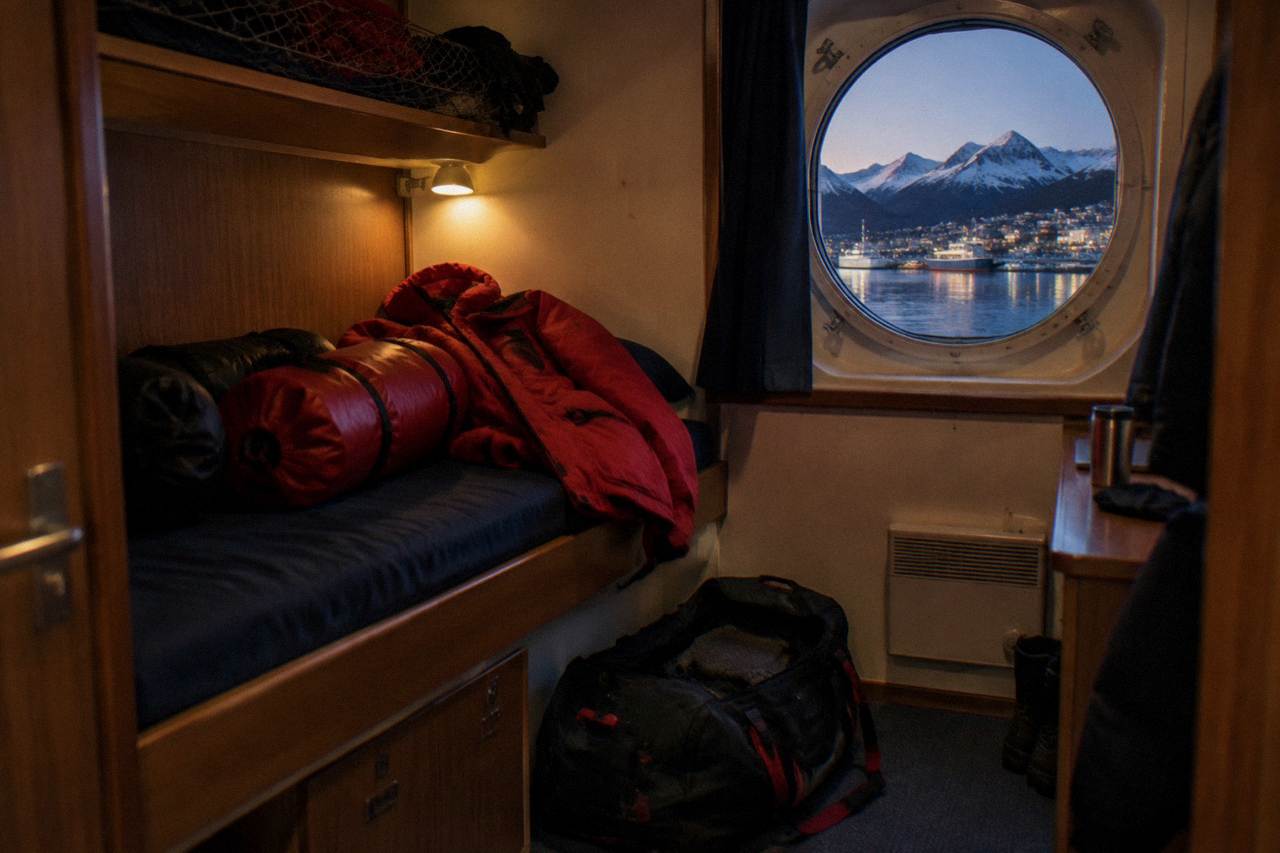
The biggest packing mistake for Antarctica is overpacking. Expedition cruise operators supply far more than most first-time polar travellers expect: boots, parkas, waterproof pants on many lines, even thermal underlayers on some. The gear you actually buy yourself is a short list, and the rules that shape it, like biosecurity cleaning requirements and strict charter-flight weight limits, are not obvious from a generic cold-weather checklist. This guide walks through every category, what to skip, and how the ship you choose changes the answer.
What Is The Best Layering System For An Antarctic Expedition?
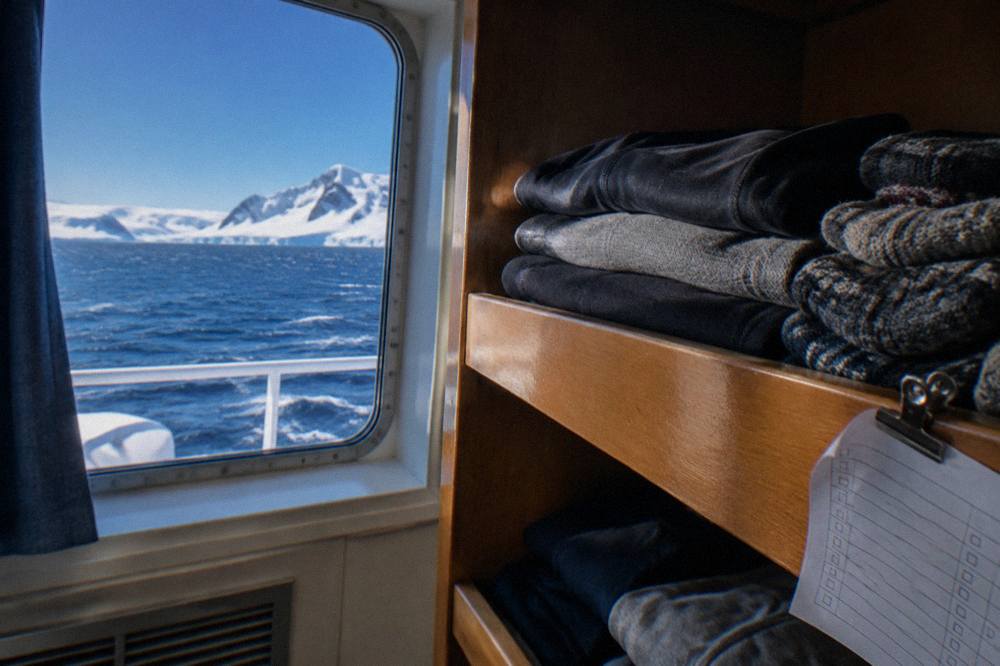
The system that works is three layers worn together: a moisture-wicking base layer against skin, an insulating mid layer of fleece or light down, and a fully waterproof, not water-resistant, outer shell. On the Antarctic Peninsula you add and remove the mid layer constantly as you move between Zodiac rides, landings and the heated ship, so every layer needs to work alone. Cotton fails at every level because it holds sweat and loses all insulation when damp.
Start with base layers. Two or three sets of synthetic or merino long underwear, tops and bottoms, cover an 11-day expedition cruise with laundry access aboard. Merino resists odour better on longer voyages; synthetic dries faster. Either works. What matters is fit: a base layer should sit close to skin, not hang loose like a pyjama.
The mid layer does most of the warmth work. A midweight fleece jacket plus a packable down or synthetic puffer gives you two adjustable insulation steps. You will wear the fleece almost constantly and the puffer on cold Zodiac rides and evening deck time. Temperatures on the Peninsula in November can drop to around -5°C, while January through March commonly sits at 0-3°C, so this is not Himalayan-grade cold, it is damp, windy, changeable cold.
The outer layer is where people under-spend. A genuinely waterproof shell jacket and, critically, waterproof over-pants get worn on every single Zodiac landing, because sitting on the pontoon tube means spray and splash on your legs in nearly all conditions. Water-resistant gear fails within days. Over-pants need side zips wide enough to pull on over boots on the wet deck.
| Layer | What To Pack | Why It Matters |
|---|---|---|
| Base | 2-3 sets merino or synthetic long underwear, tops and bottoms | Wicks sweat; cotton holds moisture and chills you |
| Mid | Midweight fleece jacket plus packable puffer | Two adjustable warmth steps for changing conditions |
| Outer | Waterproof shell jacket and side-zip waterproof pants | Worn on every Zodiac ride; spray is constant |
| Extremities | Waterproof gloves (2 pairs), warm hat, buff, wool socks | Hands take the worst of the wind on landings |
For feet and hands: two pairs of waterproof gloves or warm mittens, because one pair will get wet, a warm hat that covers ears, a neck buff, and several pairs of thick wool socks. A glove liner system helps photographers who need finger dexterity between shots. Sunglasses with high UV protection matter more than people expect; the sun reflects off water, snow and ice from every angle, and near-24-hour daylight runs through the height of summer. Pack sunscreen and lip balm for exactly the same reason, and keep both in your landing daypack rather than the cabin.
If you are still comparing ships and voyages before you buy gear, the right move is a free Antarctica cruise consultation first, because the ship you pick determines what you do not need to buy at all. The consultation is free and carries no obligation.
Do You Need To Buy Expedition Boots?
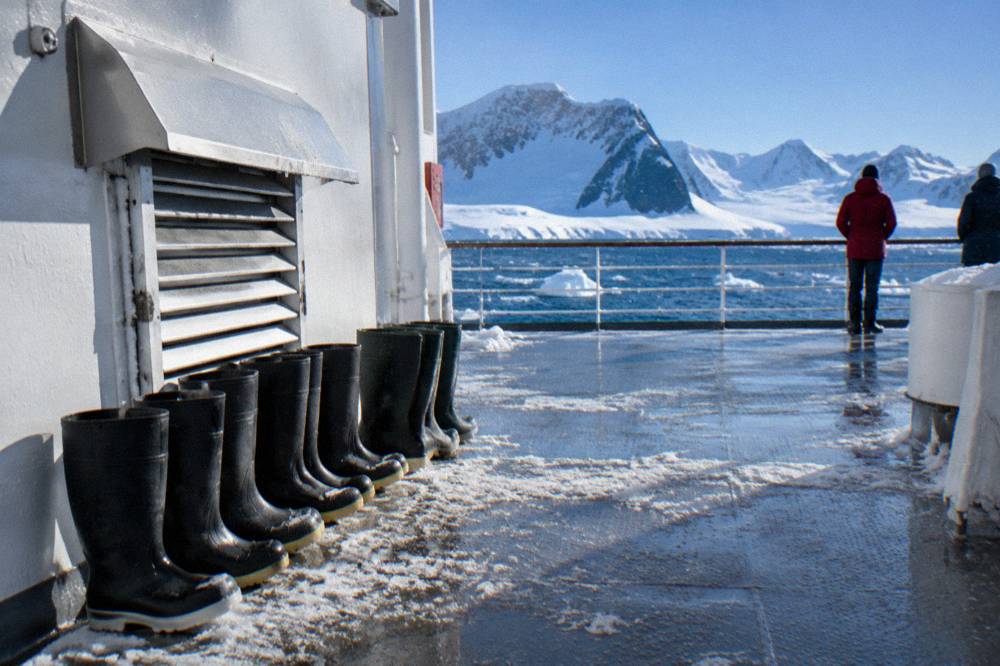
Most travellers on mainstream expedition cruise lines do not need to buy boots at all. Operators lend insulated, knee-high muck boots for wet landings free of charge, and most also provide a complimentary parka, often yours to keep. Buy boots only if you sail with a budget line that does not lend them, or if you have hard-to-fit feet. Check your operator's gear list before spending $200 or more.
The landing boot question is the single most common packing question, and the answer is operator-specific. The general pattern across the industry, per one 2026 cost guide, is that most expedition operators provide a complimentary parka, often kept, and loan waterproof boots. Antarctica21, Polar Latitudes and similar fly-cruise operators commonly provide or facilitate rental of expedition boots and parkas as well.
What you do need for the ship: comfortable indoor shoes or slippers, and a pair of light hikers or sneakers for the odd deck walk. Some travellers bring trail running shoes for optional activities like kayaking programs offered on ships such as the Ocean Albatros and Ocean Victory, but the operator's activity briefing lists any specialised kit needed for those. Gaiters are unnecessary; the lent boots are already knee-high and the landings are short walks, not treks.
Where boots matter as a purchase decision: budget lines. The Hondius, Oceanwide Expeditions' 170-passenger Polar Class 6 ship sailing from Ushuaia on 11, 13 and 19-day voyages from $7,800 per person, is the kind of small-ship budget expedition where you should read the gear list closely rather than assume lending. Its dedicated guide page covers what the fare includes and what it does not: Hondius Antarctic cruise guide.
The same logic applies to the parka. On upscale lines the complimentary parka is genuinely expedition-grade and becomes your outer shell for the whole voyage, which means your own jacket budget can drop to a waterproof rain shell for the walk to the ship. On lines where the parka is basic, bring your own insulated, waterproof layer instead. Either way, do not buy a heavy resort ski jacket before you know what is hanging in your cabin when you arrive.
What Gear Do Operators Lend Or Include?
Beyond boots and parkas, expedition cruise operators typically lend waterproof pants on many lines, include all meals and Zodiac excursions in the fare, and supply landing life vests. What they almost never include: base layers, gloves, hats, socks, binoculars and any camera gear. Insurance with high medical evacuation cover is required by major operators and is not part of the fare, so it belongs on your preparation list rather than in your suitcase.
The lending picture is why the packing list for an expedition cruise is shorter than for a self-guided cold trip. A typical mainstream line hands you, on loan or to keep: muck boots, parka, and on many ships waterproof over-pants. The Zodiac, the driver, the guide at the required 1:20 ratio and the landing logistics are all part of the voyage you booked.
What is never included, and where your money should go instead:
| Item | Included Or Lent? | Your Move |
|---|---|---|
| Insulated muck boots | Lent free on most mainstream lines | Verify with operator; buy only if not lent |
| Expedition parka | Complimentary on most lines, often kept | Skip buying a heavy ski jacket |
| Waterproof over-pants | Lent on many lines | Check; buy side-zip pants if not |
| Base layers, gloves, hat, socks | Never included | This is your real shopping list |
| Binoculars | Sometimes a few shared pairs aboard | Bring your own for whale watching |
| Travel insurance | Required, not included | Major operators impose high evacuation minimums |
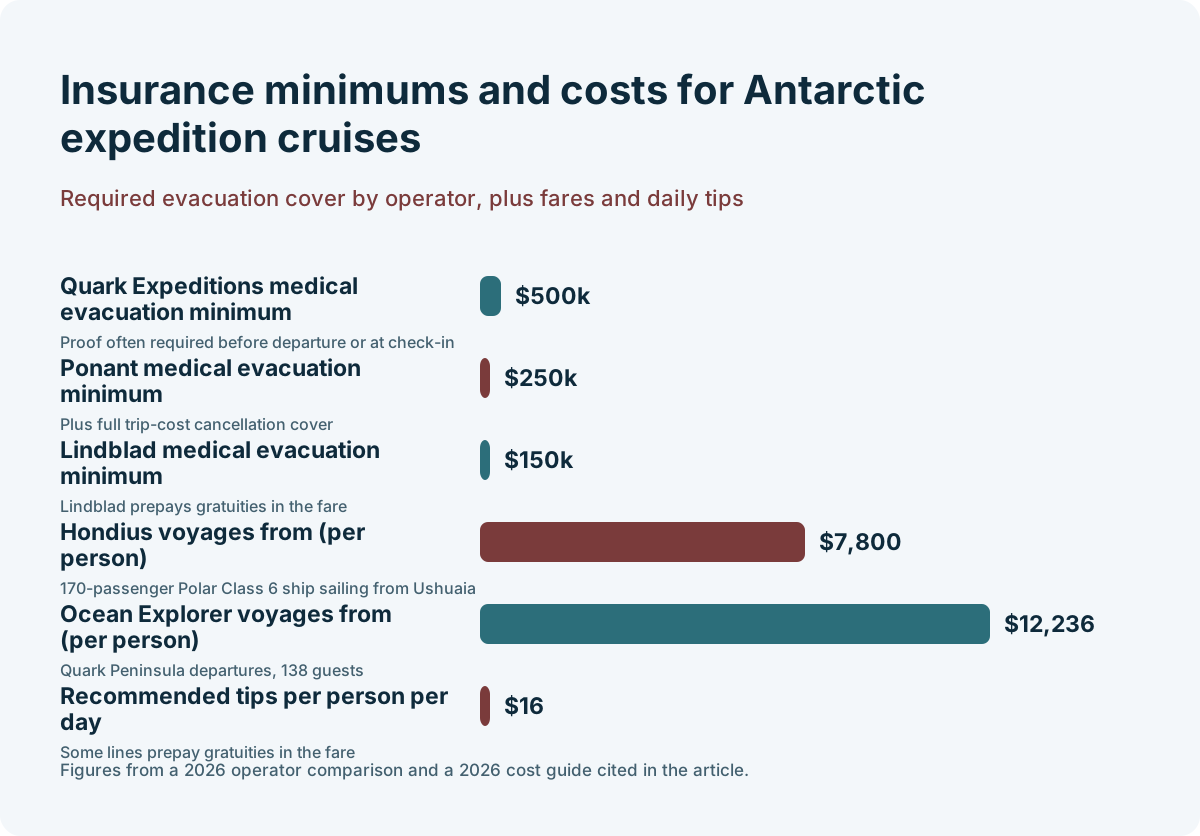
On insurance minimums, the figures are real and worth knowing before you shop: one 2026 operator comparison reports minimums of $500k medical evacuation cover at Quark Expeditions, $250k at Ponant and $150k at Lindblad, plus full trip-cost cancellation cover, with proof often required before departure or at check-in. Argentina also formally requires health coverage including evacuation for foreign visitors under a 2025 rule update. The details are covered in full in the Antarctica travel insurance guide.
Gratuities are a packing-adjacent budget item most lists forget. Recommended tips average about $16 per person per day, per one 2026 cost guide, and some lines, Lindblad among them, prepay gratuities in the fare. Fold that into your cash plan rather than your suitcase.
The line you choose changes the lending answer enough that it is worth comparing ships before you finalise a shopping list. A quick side-by-side of three representative expedition ships shows the spread of passenger counts and fare levels:
| Ship | Class | Passengers | Ice class | From, per person | Voyage length | Departs from |
|---|---|---|---|---|---|---|
| HondiusOceanwide Expeditions | Small-Ship Budget | 170 | Polar Class 6 | from $7,800 | 11 to 19 days | Ushuaia |
| National Geographic EnduranceLindblad Expeditions (with National Geographic) | Standard Expedition | 138 | PC5 | from $11,900 | 12 to 22 days | Ushuaia |
| Ocean ExplorerQuark Expeditions | Upscale Expedition | 138 | 1A, PC6 | from $12,236 | 8 to 20 days | Ushuaia, Buenos Aires, Punta Arenas |
The National Geographic Endurance, a 138-guest PC5 ship with a patented X-Bow hull, and Quark Expeditions' Ocean Explorer, also 138 guests with verandas on almost all cabins, sit at higher fare points than the Hondius, and both bundle more into the fare. The Ocean Explorer's Antarctic voyages start from $12,236 per person, a voyage-level fare shared across Quark's Peninsula departures, while the Endurance's 12-day Voyage to Antarctica starts from $11,900.
If working out which bundle matches your budget is the part that stalls your booking, a consultation on the right expedition cruise costs nothing and answers it in one conversation.
What Goes In Your Daypack For Landings?
A waterproof dry bag or lined daypack, spare gloves, a warm hat, sunglasses, sunscreen and lip balm, a water bottle, and your camera with a spare battery kept warm inside your jacket. Nothing else earns its weight, and anything that cannot be wiped clean should stay aboard, because the same bag sits in the Zodiac, on the pebble beach and back in your cabin.
The dry bag point deserves emphasis. Zodiac rides are wet by design, and a soft daypack without a liner soaks through in one landing. A roll-top dry bag inside your regular pack, or a dedicated waterproof pack, protects the camera and anything else you carry. Many travellers bring two dry bags: one for the boat and one inside it for electronics.
Keep the bag light. You are ashore for a couple of hours at most, walking flat ground between the landing point and the wildlife colonies, and the ship is never out of sight. A heavy pack ruins the experience more than any missing gadget. Water, spare gloves and sun protection cover almost every contingency; snacks and hot drinks are usually served back on the ship after the landing.
One habit worth building before you travel: nothing goes on the ground. IAATO protocols ask visitors not to sit or kneel on the ground in wildlife areas, partly for biosecurity and partly for the wildlife itself, so a daypack that doubles as a clean place to rest things, or a small sit-mat if your operator permits one, is more useful than it sounds.
What Should You Leave At Home?
Skip heavy ski suits, cotton jeans, more than two pairs of shoes, hair dryers (cabins have them), beach towels, and duplicate camera bodies you will not carry on a Zodiac. Also skip buying expedition-grade mountaineering kit: Peninsula landings are gentle walks, not climbs. Every kilogram you save matters more if your itinerary includes a charter flight with a strict baggage limit.
The overpacking pattern is remarkably consistent: people pack for a ski resort. A one-piece ski suit is useless because you cannot shed layers in it. Jeans are useless because cotton stays wet. Formal wear is unnecessary; expedition ships have no dress code beyond "no muddy boots in the lounge". You need fewer clothes than you think because the ship almost certainly has laundry, which caps your base-layer count and your sock drawer.
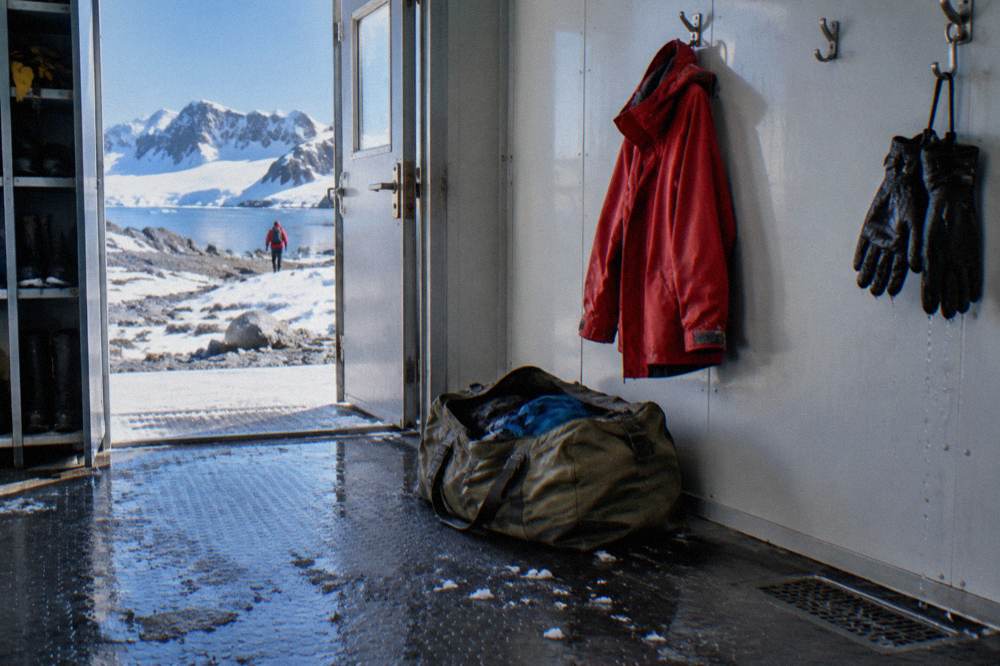
Camera gear deserves restraint. One weather-sealed body, one versatile zoom, spare batteries kept warm in an inside pocket, and a dry bag for the Zodiac ride. Cold drains batteries fast; carry spares against your skin, not in the outer pocket of the parka the operator gave you. A tripod is optional; the light in December and January lasts nearly all night, and most photographers shoot handheld from the Zodiac.
Medications and seasickness kit: bring your own, in original packaging, plus motion-sickness remedies if you sail the Drake rather than fly it. The crossing takes roughly two days each way on a classic Peninsula expedition cruise, and conditions vary; one explainer puts calm "Drake Lake" crossings at around 70 percent of journeys. The full transit picture is in the Drake Passage crossing guide.
Electronics are simple: the ship has power, so one adapter for the cabin outlets, a spare memory card wallet and a small power strip if you charge multiple devices. Leave the laptop behind if you can. Satellite messaging devices are worth checking with your operator first, since some lines restrict their use around wildlife.
How Does Biosecurity Change The Way You Pack?
Antarctic biosecurity rules mean every item that touches the ground, boots, pants, bags, tripod legs, walking sticks, must be scrupulously clean before you board, and cleaned again between landing sites. Pack gear that can be washed or wiped down, and nothing with mud from previous trips. This is not optional etiquette: it is a binding IAATO requirement enforced through pre-landing checks on the ship.
The rules are explicit. IAATO's visitor guidelines require that you "carefully wash boots and clean all equipment including clothes, bags, tripods, tents and walking sticks before bringing them to Antarctica", and clean again between sites. The practical packing consequences: choose a backpack with a wipeable lining over a fabric one that has hiked Patagonia for a month; clean your camera bag and tripod legs before departure; and expect the ship's boot-washing station to be part of daily life.
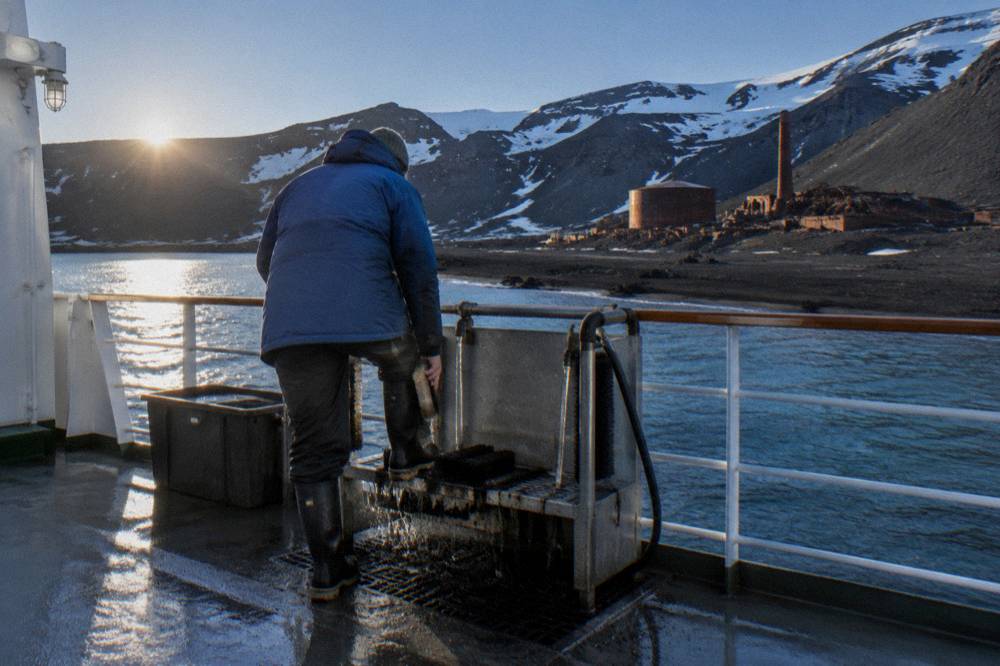
The same guidelines set the wildlife distance rule: keep at least 5 metres from wildlife on land, with greater distances for nesting birds, molting penguins or stressed animals, and no drone use near wildlife. That affects gear choices too: leave the drone at home, since restrictions make it nearly useless on a Peninsula voyage.
On the ship itself, landings are tightly managed: a maximum of 100 passengers may be ashore from a vessel at any one time, vessels carrying more than 500 passengers cannot make landings at all, and only one ship may visit a site at a time, per the IAATO visitor guidelines. You do not need to pack for self-sufficiency on land; you are never far from the Zodiac, and a guide stands within the required ratio on every landing.
How Does Packing Differ For A Fly-Cruise Versus Sailing?
A fly-cruise replaces roughly two days at sea in each direction with a roughly two-hour charter flight to King George Island, but it imposes a hard checked-baggage limit of around 20 kg on that flight. If you fly the Drake, pack light and wear your heaviest items on the plane. If you sail, weight barely matters, but you need full seasickness preparedness and sea-comfort clothing for four transit days.
The fly-cruise weight limit is the detail that reshapes the whole list. Polar Latitudes, for example, requires fly-cruise guests to arrive at the Hotel Cabo de Hornos in Punta Arenas by 14:00 the day before the charter flight and enforces a strict 20 kg (44 lb) checked baggage limit on the Punta Arenas to King George Island leg, per its published fly-cruise guidance. Antarctica21's air-cruises run the same model: an 8-day Classic Antarctica itinerary from $13,795 per person built around the roughly two-hour flight, with a mandatory pre-flight overnight and biosecurity gear checks in Punta Arenas.
| Constraint | Sailing The Drake | Fly-Cruise |
|---|---|---|
| Checked baggage | Standard airline allowance | Strict limit, around 20 kg on charter |
| Seasickness kit | Essential, four transit days | Largely unnecessary |
| Time cost | About 2 days each way | About 2 hours each way |
| Weather risk | Schedule buffer at sea | Flight can be delayed by weather |
| Packing strategy | Weight barely matters | Wear boots and parka on the flight |
The trade-offs go beyond the bag. Fly-the-Drake options typically add roughly $2,000 to $5,000 over comparable sailing voyages because of charter flights, per one operator comparison, so the lighter suitcase also costs more. And the flight itself is weather-dependent: a delayed charter can compress your Antarctic days, which is why operators build in the mandatory Punta Arenas overnight before departure.
On Cruises In Antarctica the position on this trade is simple: match the transit style to your budget, your schedule and your stomach first, then pack for it. A traveller who dreads four days of open ocean packs a completely different bag from one who wants the classic crossing, and neither choice is wrong.
What Do You Pack For Ushuaia And Punta Arenas?
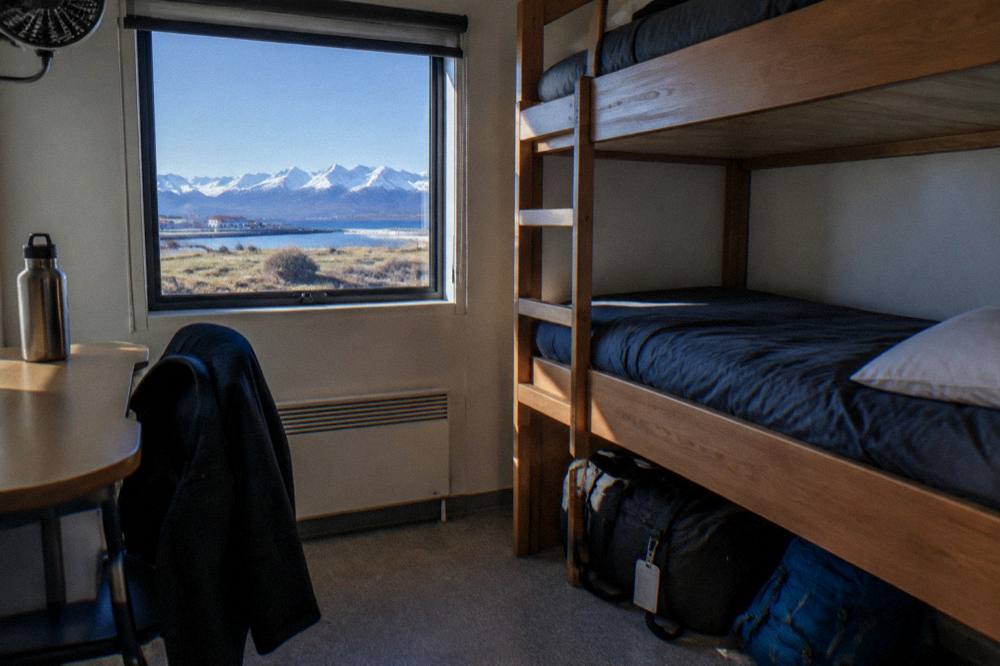
Treat the gateways as a separate trip: mild, windy Patagonian summer weather that swings between sunshine and horizontal rain within an afternoon. A light shell, one warm mid layer, comfortable walking shoes and sun protection cover both Ushuaia and Punta Arenas. Keep the expedition kit sealed until embarkation day, and arrive at least one night, ideally two, before the voyage begins.
The buffer matters more than the extra shirts. Ushuaia hotels reached about 80 percent occupancy in January 2026 while more than 43,720 cruise passengers passed through the port, and the Buenos Aires to Ushuaia flight corridor is weather-prone in peak season, with no direct flights from the United States at all. Arriving a day or two early turns a missed connection from a catastrophe into an inconvenience. If you have time to fill, the things to do in Ushuaia guide covers the town and the Tierra del Fuego park.
Gateway clothes are ordinary travel clothes. You will wear your city shell and walking shoes for a day or two, then swap into expedition gear on embarkation morning, so pack the polar kit in one identifiable bag and keep the gateway outfit at the top. Soft duffels beat hard suitcases on every count here: they stow in small expedition cabins, they weigh less, and fly-cruise handlers can squeeze them into charter holds.
Whichever way you cross, the final pre-departure checklist is short: biosecurity-clean everything, pack medications in original packaging, keep insurance proof accessible, and photograph your passport. Then stop adding. The voyage itself supplies the rest, from the parka on your back to the Zodiac under your boots.
If you are weighing sailing versus flying, or budget versus upscale lines, and want a second opinion before committing, a free voyage planning consultation puts those questions in front of someone who books these ships for a living.
Common Questions About Antarctic Cruise Packing
Do I Need To Buy An Expedition Parka For An Antarctic Cruise?
Usually no. Most expedition cruise operators provide a complimentary parka, often yours to keep, and lend waterproof boots. Verify your specific line's inclusions before buying; if the parka is basic or absent, bring your own insulated waterproof jacket.
What Is The Best Layering System For Antarctica?
Three layers: a moisture-wicking merino or synthetic base, an insulating fleece plus packable puffer mid layer, and a fully waterproof shell jacket and pants. You adjust the mid layer constantly, so each layer must work on its own. Avoid cotton entirely.
Do I Need Special Boots For Wet Landings?
Most mainstream operators lend insulated knee-high muck boots for Zodiac landings free of charge. Buy your own only if your line does not lend them or you have hard-to-fit feet. Bring comfortable indoor shoes and light sneakers for aboard the ship.
How Much Luggage Can I Bring On A Fly-Cruise To Antarctica?
Fly-cruise charter flights impose strict limits, around 20 kg (44 lb) checked on the Punta Arenas to King George Island leg on Polar Latitudes, with similar rules across operators. Wear your heaviest items on the flight and pack in a soft duffel rather than a hard suitcase.
Why Does My Gear Need To Be Cleaned Before Departure?
IAATO biosecurity rules require boots, clothes, bags, tripods, tents and walking sticks to be carefully washed before you bring them to Antarctica, and cleaned again between landing sites. The rule prevents transferring seeds, soil and pathogens between sites and between continents.
Should I Pack Seasickness Medication If I Sail The Drake Passage?
Yes. A classic sailing expedition cruise spends roughly two days crossing the Drake each way, and conditions vary widely. Bring your preferred remedy plus a backup, and start it before the crossing begins rather than after symptoms appear.