Viking Antarctic Cruises: Octantis And Polaris Explained
 By Oleg G.
Viking is one of the most-searched premium names in Antarctic travel, and its two expedition ships, Viking Octantis and Viking Polaris, take a very different approach from the small-ship expedition fleet: bigger vessels, fewer passengers per guide on paper, and a heavy science emphasis. Here is what the operator pages and published schedules actually show.
Quick answer: Viking sails Antarctica with two near-identical ships, Viking Octantis and Viking Polaris, both built in 2022, Polar Class 6, carrying 378 guests with 256 crew. The roster shows no published fare for either ship, while one 2026 cost guide reports a 13-day Antarctic Explorer itinerary from $14,999 per person.
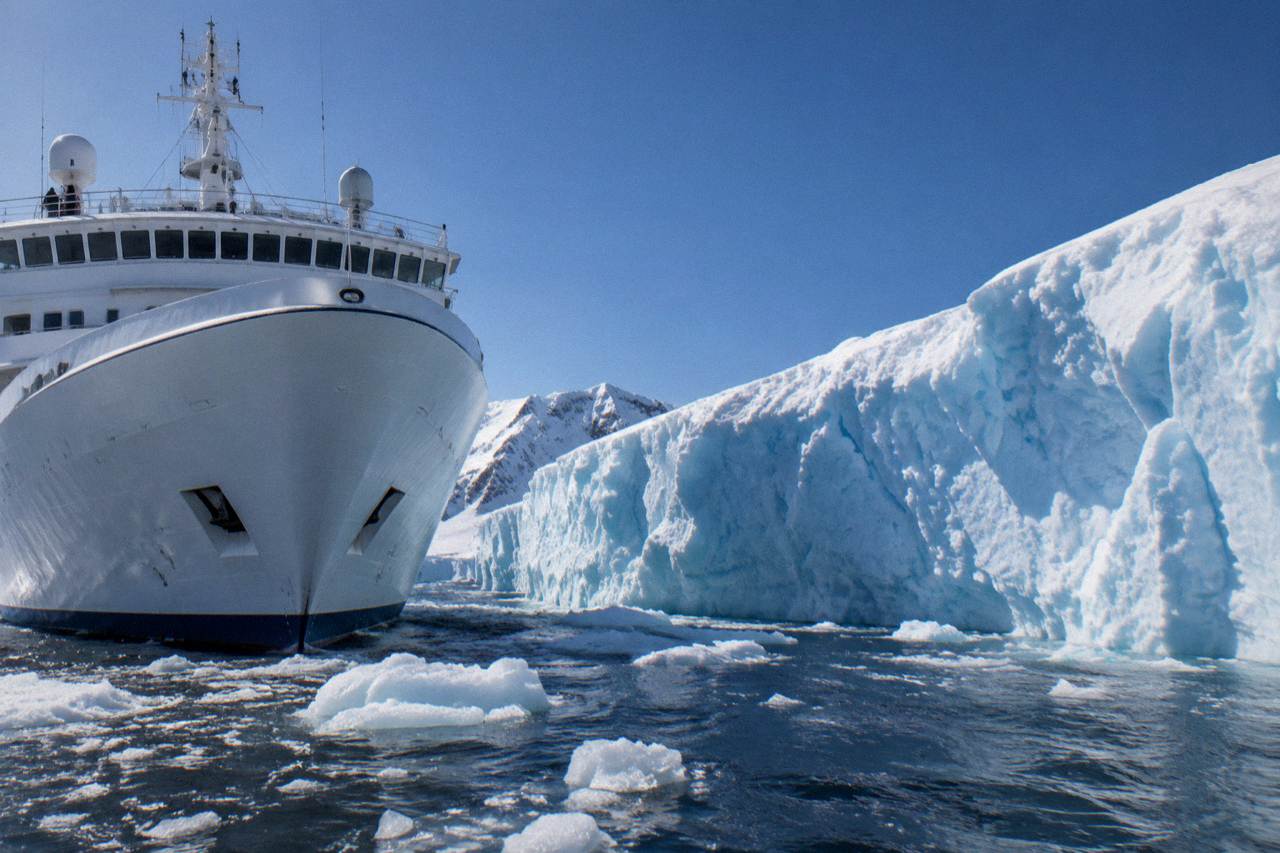
Viking arrived in Antarctica in 2022 with two purpose-built expedition ships, and the line now sits near the top of most search lists for premium polar travel. That popularity is real, but so is the confusion around what a Viking Antarctica cruise actually delivers: the ships are larger than most expedition vessels, the fares are not published on the roster we verified, and the schedule picture for 2026-27 is genuinely unclear. This guide separates what the operator's own pages show from what press reports claim, and puts Viking's two ships side by side with a leading rival.
The two ships, Viking Octantis and Viking Polaris, are sisters. Both were built in 2022, both carry 378 guests with a crew of 256, both measure 665 feet (202.7 metres) and both hold Polar Class 6 ice classification. The expedition cruise you buy is therefore less a choice between ships and more a choice of dates, direction and cabin category. That simplicity is part of the appeal, and part of the reason buyers ask so many questions about what the fare includes.
What A Viking Antarctica Cruise Actually Includes
A Viking Antarctic expedition is a cruise on a 378-guest Polar Class 6 ship, with Zodiac landings, kayaking and a resident science program, sold as a fairly inclusive package. The roster we verified publishes no fare for either ship, so any price you see quoted elsewhere needs checking against the operator's own listing before you commit.
Viking's positioning is premium-inclusive: the line's marketing stresses that expedition gear, a science program and a range of dining venues come inside the fare. The expedition cruise itself follows the classic pattern of the Antarctic Peninsula, with landings and Zodiac cruising in the South Shetland Islands and along the western Peninsula, governed by the same IAATO rules that apply to every operator. Those rules, set through the Antarctic Treaty system, cap landings at 100 passengers ashore at a time from any vessel and require a minimum 1:20 guide-to-visitor ratio, as the IAATO visitor guidelines state.
What that means on a 378-guest ship is worth spelling out. Viking carries roughly three times the passengers of a typical small expedition vessel, so landing operations are rotated: passenger groups go ashore in shifts, and time aboard the ship between rotations is filled with lectures, the science lab and the onboard amenities. Some travellers read that as a drawback, others as the whole point, a comfortable base with more facilities than a 130-guest ship can offer. Neither reading is wrong; it depends on what you want from an Antarctic expedition cruise.
The Antarctic Treaty Secretariat notes that roughly 98 percent of tourism voyages occur in the Antarctic Peninsula region during the austral summer, and its tourism pages are the primary source for that figure. Viking, like nearly every line, concentrates its Antarctic program there.
If the inclusive-versus-small-ship trade-off is the decision you are circling, a free consultation on ship size is the fastest way to test it against your own priorities.
Viking Octantis And Viking Polaris: The Two Ships Compared
Viking Octantis and Viking Polaris are sister ships built in 2022, each 202.7 metres long, Polar Class 6, carrying 378 guests and 256 crew. The roster shows no difference between them in capacity, ice class or size, so the choice between them comes down to dates and itinerary, not hardware.
Both ships were purpose-built for Viking's expedition program and named for polar exploration history: Octantis for the southern sky's octans constellation, Polaris for the north star. The operator's ship pages describe both in identical terms, 378 guests, 256 crew, 665 feet of length, and the roster we verified adds Polar Class 6 ice classification to both. Polar Class 6 is a mid-range polar standard, suitable for summer and autumn operation in medium first-year ice, which matches the Peninsula season these ships work.
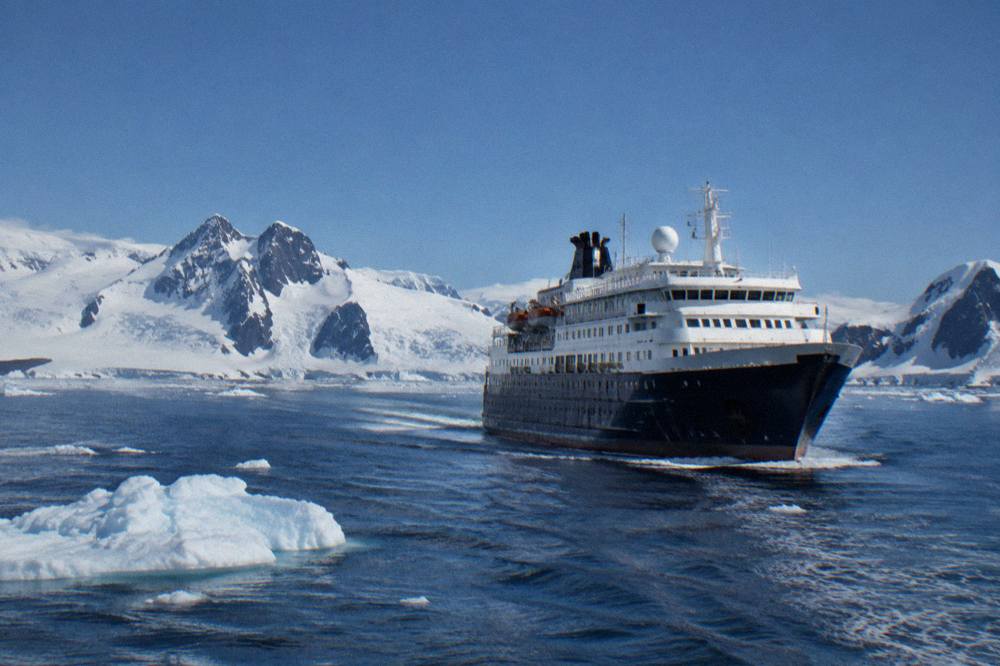
The roster shows no fare for either ship, which is worth taking seriously rather than working around. It means the published price you see in a search result may be a promotion, a charter release or an aggregator's stale figure. The honest position, and the one this site takes, is that a current Viking fare needs a live check, either on the operator's listing or through a consultation.
The onboard layout of both ships leans Scandinavian: a continuous wraparound promenade, an enclosed two-deck science lab, a folding stern slipway that launches kayaks and small boats from water level, and a hangar for the expedition equipment. The ships also carry two six-guest submarines of the type marketed as part of the Viking expedition package, plus a small fleet of Zodiacs for landings and cruising. That hardware list is drawn from the operator's own ship pages.
If you are weighing the two ships against each other, the practical answer is that you are really weighing itineraries and departure dates. We break that comparison out in detail in our guide to Viking Octantis versus Viking Polaris, including what the identical specs mean for cabin choice.
The Itineraries And The 2026-27 Schedule Question
Viking's Antarctic program centres on a 13-day Antarctic Explorer voyage between Buenos Aires and Ushuaia, with longer options reaching the Antarctic Circle and South Georgia. The roster notes 2026-27 Antarctica departures were not seen on the operator page we read, while 2027-28 itineraries are open, and press reports fill part of the gap.
This is the single most confusing part of researching a Viking Antarctica cruise right now, so it deserves plain reporting. That is the verified position, and we will not dress it up.
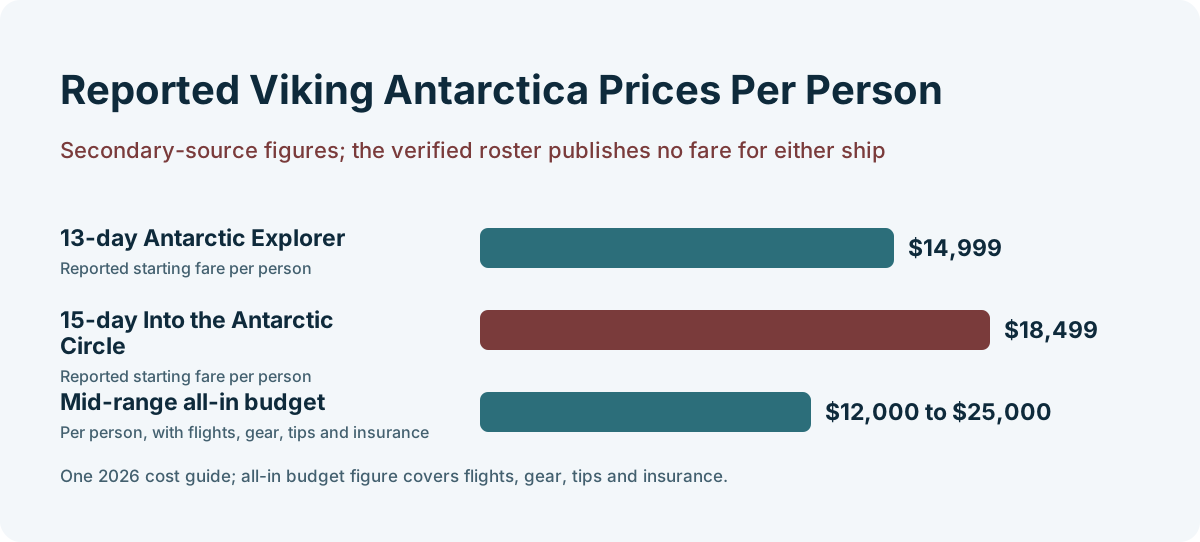
Meanwhile, secondary sources point in different directions. One 2026 cost guide reports Viking pricing for 2026/27 that included a 13-day Antarctic Explorer from $14,999 per person and a 15-day Into the Antarctic Circle from $18,499, with a seasonal sale noted. Other industry reporting places Viking Polaris on Antarctic Explorer departures from December 2026 through March 2027. Both may be true, a schedule can exist in the trade press before it surfaces cleanly on every operator page, but a buyer should treat the 2026-27 picture as needing confirmation rather than settled.
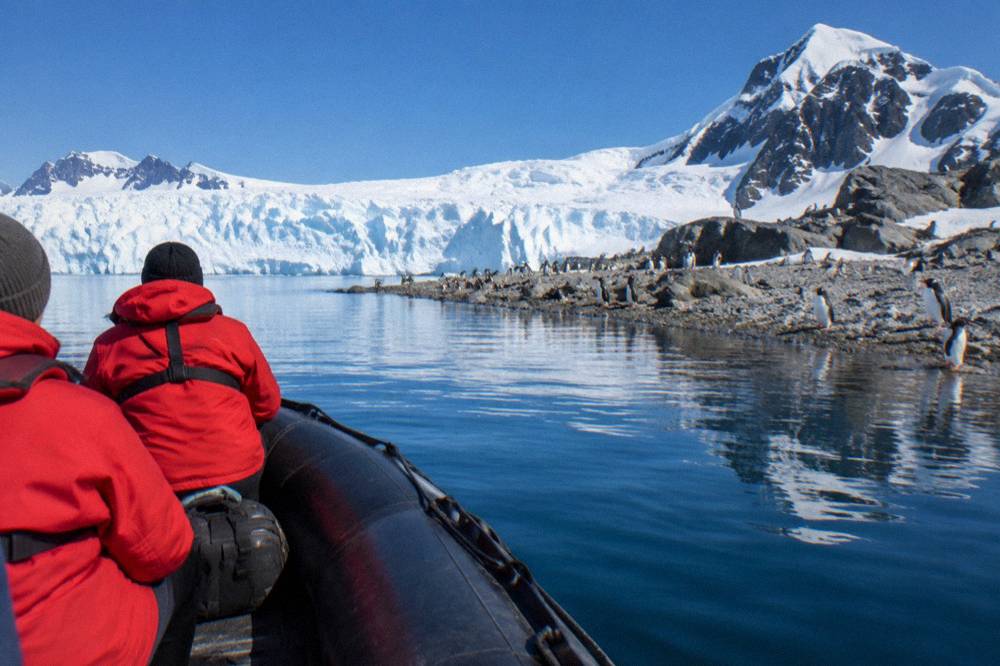
The itinerary pattern itself is stable across seasons. Antarctic Explorer is the core voyage: two days crossing the Drake Passage each way, roughly four to five days of landings and cruising along the Peninsula, then the return to Ushuaia and a flight back to Buenos Aires. The longer options add the Falklands, South Georgia or a push south across the Antarctic Circle at 66 degrees 33 minutes south. The Drake crossing is the same open-ocean passage every sailing ship faces, and our guide to crossing the Drake Passage covers what that means in practice.
Because Viking's schedule and fares are exactly the kind of moving target that punishes DIY research, this is a natural point to get a second pair of eyes. A free check on current Viking departures costs nothing and carries no obligation.
What A Viking Antarctic Fare Buys, And What It Does Not
No Viking Antarctic fare appears in the verified roster, so this site prints no number for the ships themselves. One 2026 cost guide reports a 13-day Antarctic Explorer from $14,999 per person, and a realistic all-in budget for a mid-range Peninsula trip runs $12,000 to $25,000 per person once flights, gear, tips and insurance are counted.
Start with what we can verify: nothing. The roster entry for both Viking ships says fare not on file, and the honest reading of that is simple, a current fare needs a live check before you plan around it. The figures that circulate in search results come from secondary sources. One 2026 cost guide reports the 13-day Antarctic Explorer from $14,999 and the 15-day Into the Antarctic Circle from $18,499, both with a seasonal sale noted at the time of reading. Treat those as reported numbers, not quoted ones.
The budget that matters is the all-in one. The same cost reporting puts a realistic total for a 10- to 12-day mid-range Peninsula trip, fare plus flights plus gear plus tips plus insurance, at $12,000 to $25,000 per person. Insurance deserves its own line: travel cover with medical evacuation is required or strongly recommended by most operators, and the minimums are high, with major lines requiring evacuation cover in the hundreds of thousands of dollars. Our guide to Antarctica travel insurance covers the details.
| Cost element | What published sources show | Notes |
|---|---|---|
| Viking voyage fare | Not on file in the verified roster | One 2026 cost guide reports Antarctic Explorer from $14,999 pp |
| All-in budget, mid-range Peninsula trip | $12,000 to $25,000 pp | Fare, flights, gear, tips and insurance combined |
| Tips | Around $16 per person per day on average | Some premium lines prepay gratuities; check the fare terms |
| Insurance | Required or recommended by most operators | Evacuation minimums run high; not in base fares |
| Fly-the-Drake premium | Roughly $2,000 to $5,000 over comparable sailing voyages | Charter flights drive the difference |
Two practical notes from the cost reporting are worth keeping. Early-booking offers for the coming seasons commonly reach 10 to 30 percent off, and last-minute discounts exist but are limited in cabin choice and uncommon for peak December sailings, which book furthest ahead. Neither is a Viking-specific promise; both are patterns across the expedition market.
How Viking Compares With A Rival Expedition Ship
Against National Geographic Endurance, Viking offers a much larger ship with more amenities, while the rival offers 138 guests, Polar Class 5 hull and a roster-listed fare from $11,900. The trade is scale and comfort against intimacy and a stronger ice class.
National Geographic Endurance is the fairest single comparison, because it competes for the same premium buyer. The roster shows a 138-guest ship built in 2021 with Polar Class 5 classification, Category A, a patented X-Bow hull and an observation deck with geodesic igloos at an extra charge. Its listed fare, from $11,900 per person for a 12-day Voyage to Antarctica, is on the operator's own ship page. Polar Class 5 is a step above Viking's Polar Class 6 in ice capability, though for Peninsula-season sailing the practical difference is modest.
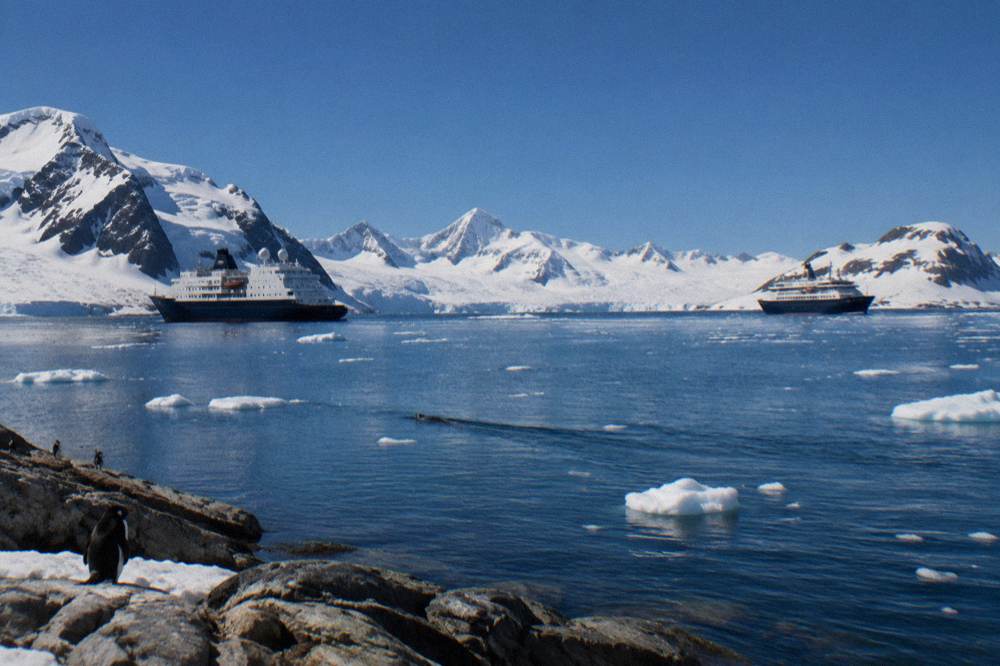
The real difference is the shape of the day. On a 138-guest ship, the whole ship can go ashore within the 100-passenger landing rules with one rotation; on a 378-guest ship, rotations are the norm. The Endurance also bundles a different package: pre-cruise hotel in Buenos Aires, the charter flight to Ushuaia, alcoholic beverages, prepaid gratuities and an expedition jacket are reported as included in its fare structure. Viking's inclusions overlap but are not identical, which is exactly why a side-by-side of the two packages, rather than the headline fares, is the comparison worth making before you book a cabin.
| Ship | Class | Passengers | Ice class | From, per person | Voyage length | Departs from |
|---|---|---|---|---|---|---|
| Viking OctantisViking | Upscale Expedition | 378 | Polar Class 6 | – | – | – |
| Viking PolarisViking | Upscale Expedition | 378 | Polar Class 6 | – | – | – |
| National Geographic EnduranceLindblad Expeditions (with National Geographic) | Standard Expedition | 138 | PC5 | from $11,900 | 12 to 22 days | Ushuaia |
| Comparison point | Viking Octantis and Polaris | National Geographic Endurance |
|---|---|---|
| Guests | 378 | 138 |
| Built | 2022 | 2021 |
| Ice class | Polar Class 6 | Polar Class 5, Category A |
| Length | 202.7 m | Not stated in roster |
| Roster fare | Not on file | From $11,900 pp |
| Hull feature | Purpose-built expedition design | Patented X-Bow |
| Landing pattern | Rotations of passenger groups | Whole ship ashore in one rotation |
The wider field matters too. If Viking's scale appeals but the price does not, our guide to the cost of an Antarctica cruise lays out the tiers from budget small ships to luxury, and our comparison of Antarctica cruise ships covers the fleet landscape.
The Science Program And The Onboard Experience
Viking runs a resident-science program on both Antarctic ships, with working labs, partnerships with research bodies and guest participation in data collection, alongside the dining, spa and theater facilities of a larger vessel. It is the most distinctive thing about the Viking expedition product.
The science program is not a marketing garnish. Both ships carry a dedicated laboratory space, and the operator has publicised arrangements under which visiting researchers work aboard during Antarctic seasons, with guests able to observe and assist with sampling. The expedition cruise becomes part education, part vacation, and for a certain buyer that combination is decisive. It also softens the larger-ship trade-off: time aboard between landing rotations is filled with something more substantive than a hot tub.
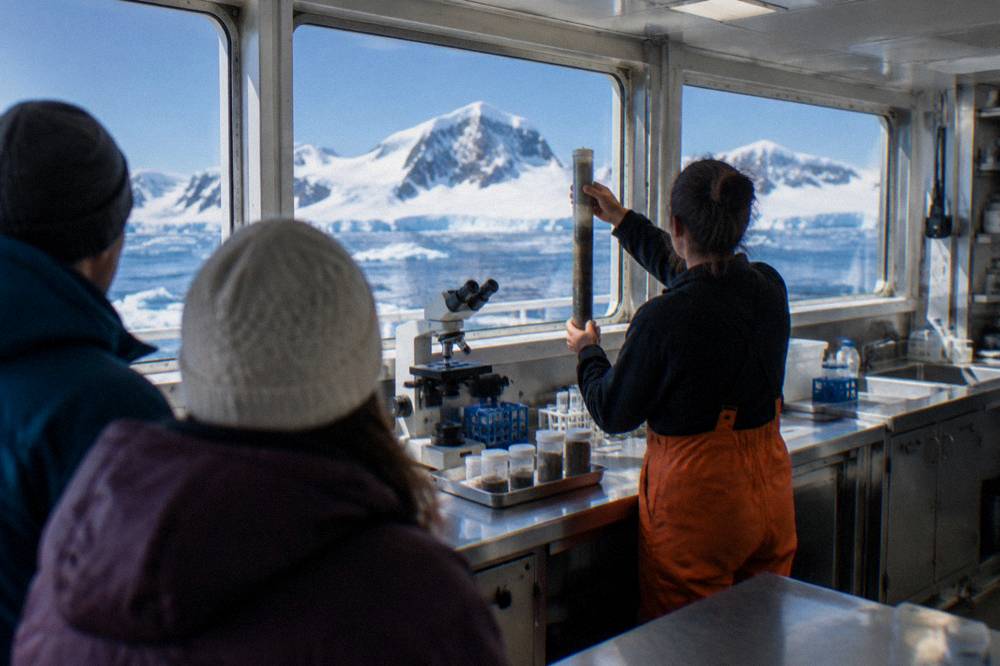
The rest of the onboard picture is what you would expect from a line whose river and ocean ships are known for calm, Scandinavian interiors: multiple restaurants, a spa, a pool, an enclosed winter garden and a lecture theater. None of that is unusual among premium expedition ships, but Viking executes it at a scale the 130-guest vessels cannot match. The trade, again, is intimacy: fewer passengers per Zodiac, more noise, more scheduling.
Wildlife viewing follows the season like everywhere else, and the Peninsula calendar below is the one every operator, Viking included, works around. Penguin chicks typically begin hatching mid-December, whale sightings increase from mid-January onward, and February to March peaks for whale activity. Our guide to the best time to visit Antarctica maps the same calendar month by month.
| Month window | What the Peninsula season shows |
|---|---|
| November | Courtship and nest-building at penguin rookeries; maximum snow cover; sea ice beginning to break up |
| Mid-December to January | Penguin chicks hatching (gentoo, Adélie, chinstrap); most channels and inlets becoming ice-free |
| Mid-January onward | Humpback whale sightings increasing near the coast |
| February to March | Peak whale activity in krill-rich waters; adult penguins molting; chicks fledging |
Who A Viking Antarctica Cruise Suits Best
A Viking Antarctic cruise suits travellers who want a polished, inclusive premium ship with genuine science content and are relaxed about rotating landings on a 378-guest vessel. It suits less well those for whom small-ship intimacy, or the lowest fare, is the priority.
That is the honest summary of every verified fact on this page, and it is the standard Cruises In Antarctica applies to every line we cover. The ships are excellent at what they are, and what they are is big. If your mental image of an Antarctic expedition is twelve people in a Zodiac with a guide, a 378-guest ship will not deliver it; if your image is a comfortable base with a lab, a spa and a structured landing program, it will. The verified roster publishes no fare, the 2026-27 schedule was not seen on the operator page while 2027-28 is open, and every price you encounter in the wild deserves a live check.
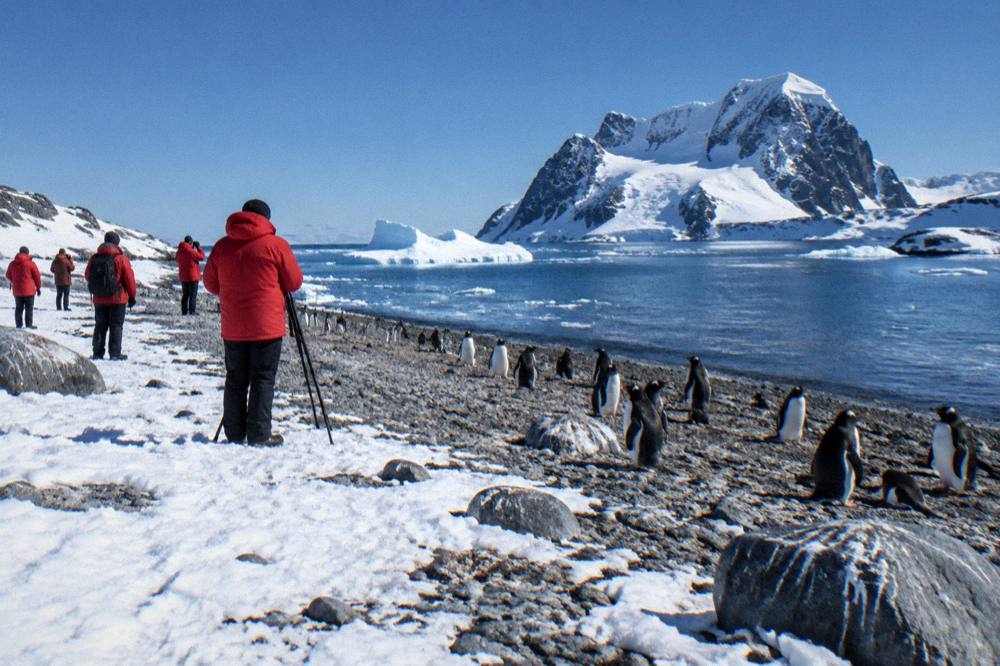
The landing rules frame the day for every operator, and they are worth knowing as a buyer. IAATO's coordination system puts only one vessel at a landing site at any one time, and vessels carrying more than 500 passengers cannot make landings at all, rules that keep Viking's ships inside the landing fleet but also explain why the rotation system exists. The IAATO statistics pages publish the season visitor numbers, 85,195 landed visits in 2025-26, if you want the scale of the activity in context.
For a decision this size, with an unpublished fare and an unsettled schedule picture, a second opinion is cheap insurance. A free expedition-cruise consultation with a vetted agency partner will pressure-test the Viking option against smaller rivals for your dates, at no cost and with no obligation.
Common Questions About Viking Antarctic Voyages
Are Viking Octantis And Viking Polaris The Same Ship?
Effectively, for an Antarctic buyer. Both were built in 2022, both carry 378 guests with 256 crew, both measure 202.7 metres and hold Polar Class 6 classification. Choose between them on dates and itinerary, not hardware.
How Much Does A Viking Antarctica Cruise Cost?
The verified roster publishes no fare for either ship, so this site prints no number. One 2026 cost guide reports a 13-day Antarctic Explorer from $14,999 per person, but that figure needs a live check before you plan around it.
Will Viking Sail Antarctica In 2026-27?
2027-28 itineraries are open. Trade press has reported Viking Polaris departures from December 2026, so treat the near season as needing confirmation.
Is Viking's Ship Too Big For Antarctic Landings?
No, but it changes the experience. IAATO rules cap 100 passengers ashore at a time, so a 378-guest ship rotates groups through landings while the rest of the ship runs lectures and the science program. Ships over 500 passengers cannot land at all; Viking is well under that line.
What Is Included In A Viking Antarctic Expedition Fare?
Viking positions its expedition fares as fairly inclusive, with expedition gear, dining venues and the resident science program inside the fare. The exact package varies by sailing and promotion, so verify inclusions against the operator's listing for your specific departure.
How Does Viking Compare With National Geographic Endurance?
The Endurance carries 138 guests against Viking's 378, holds a stronger Polar Class 5 rating against Viking's Polar Class 6, and lists a roster fare from $11,900 per person. Viking offers more onboard scale and amenities; the Endurance offers intimacy and single-rotation landings.