Ocean Explorer Antarctica Cruise: Ship Review, Cabins And Itineraries
 By Oleg G.
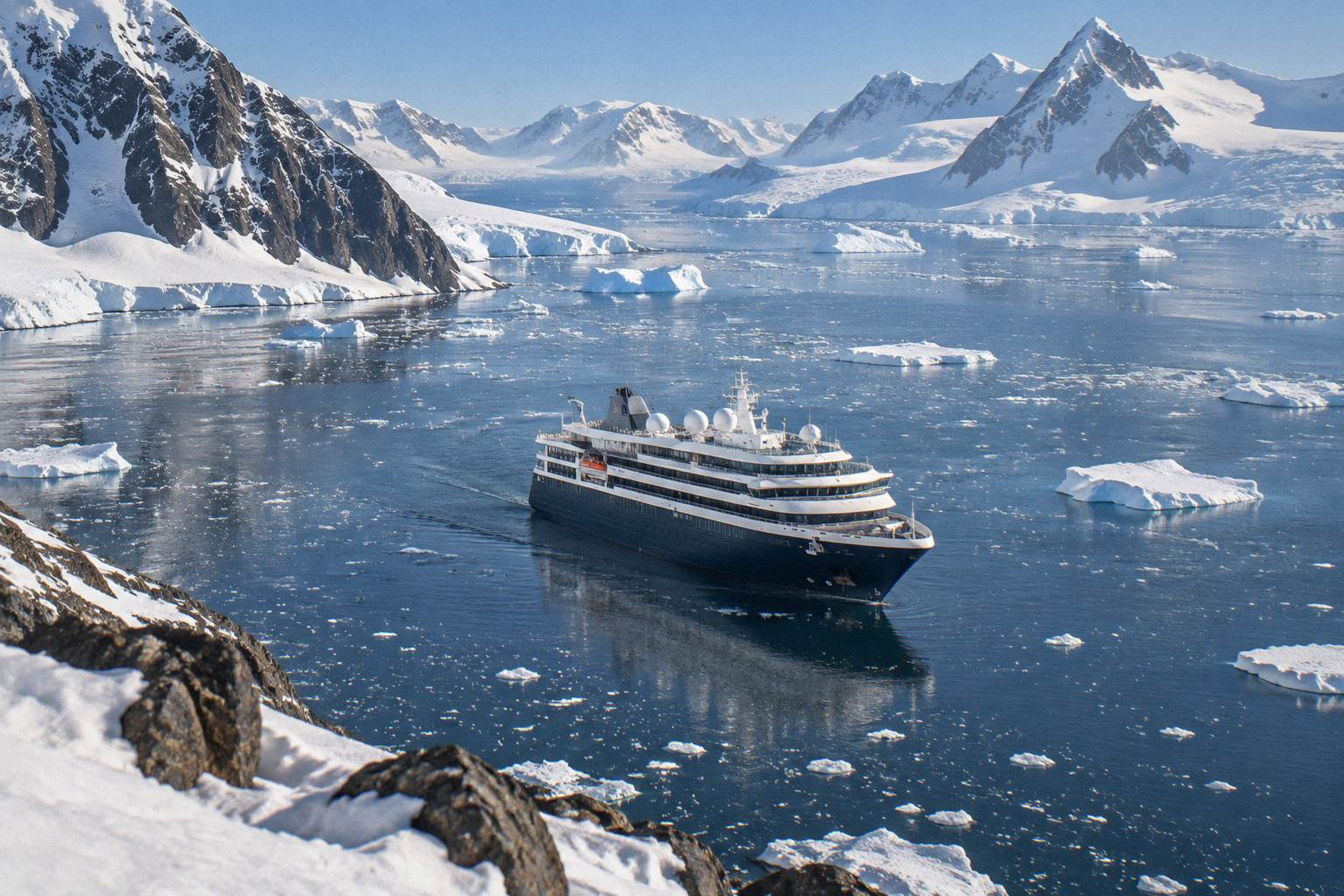
The Ocean Explorer is Quark Expeditions' 138-guest, X-BOW expedition ship sailing the Antarctic Peninsula from Ushuaia. Here is what the operator pages, the ship's owner and the 2026-27 schedule actually say about cabins, fares and itineraries.
Quick answer: The Ocean Explorer carries 138 guests, measures 104.4 metres, holds Ice Class 1A (PC6) and sails 9- to 11-day Antarctic voyages from Ushuaia and Punta Arenas in 2026-27. Quark's voyage-level Antarctic Explorer fares start from $12,236 per person, shared across its ships. Almost all cabins have verandas.
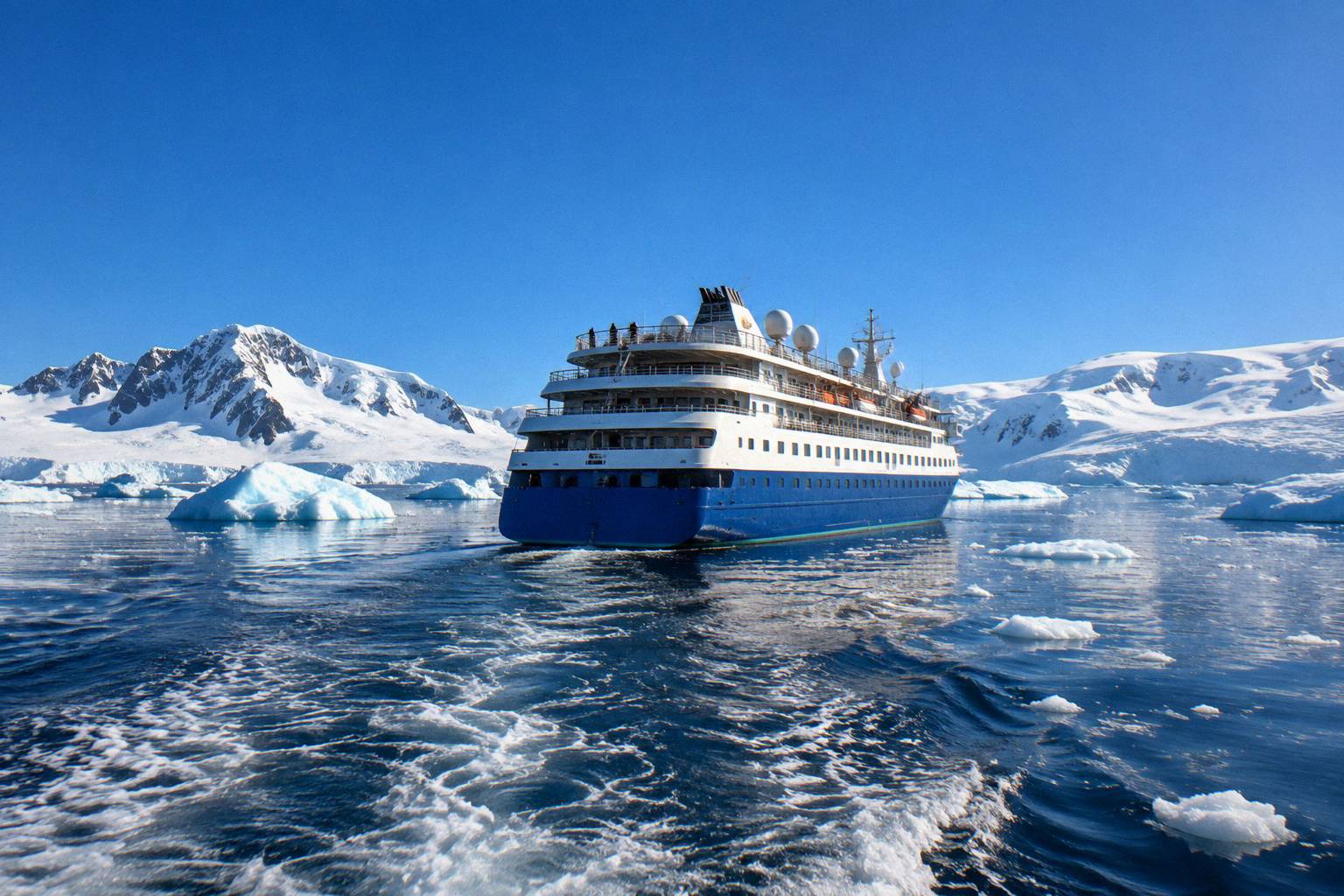
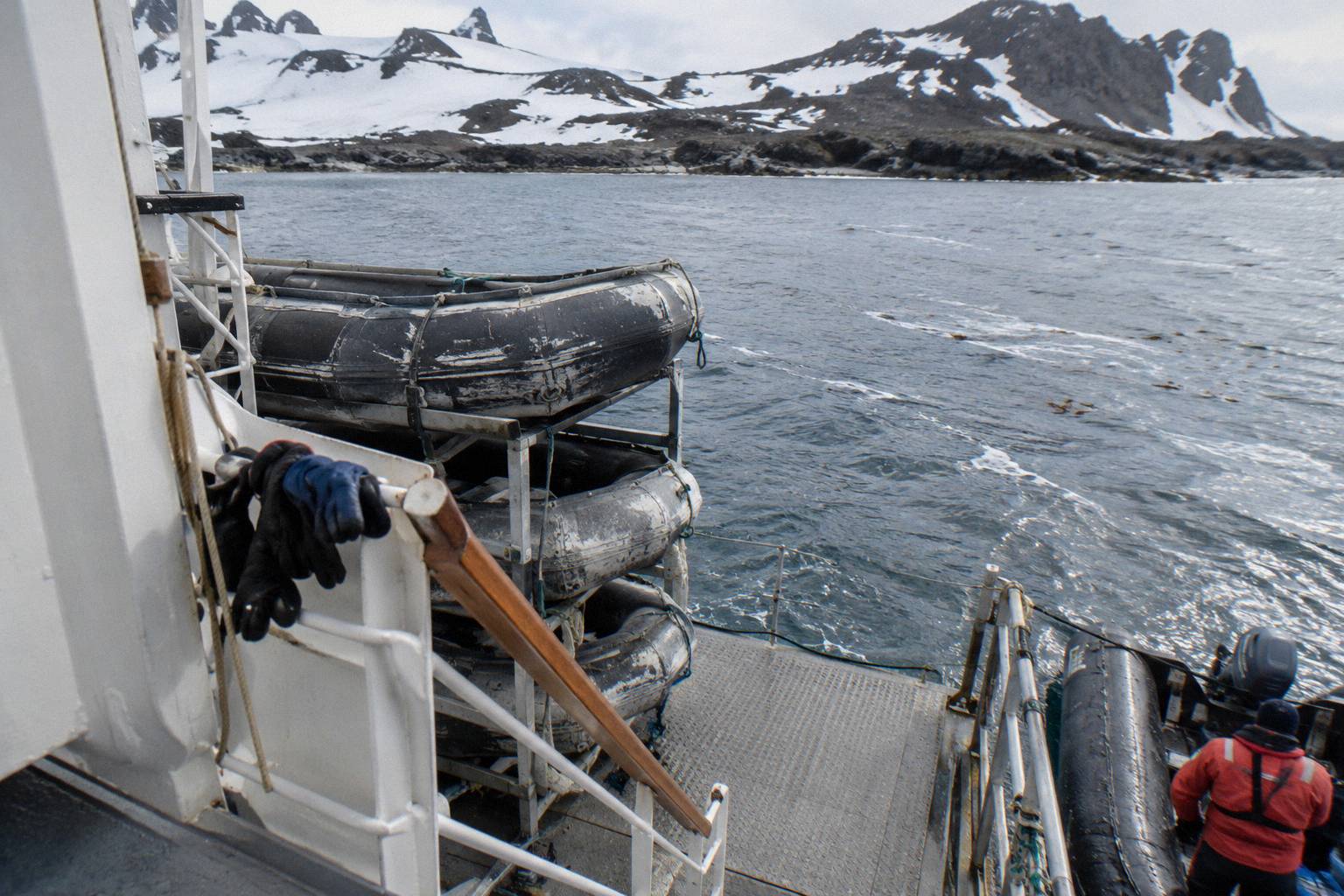
The Ocean Explorer is one of three ships Quark Expeditions is sailing in Antarctica for 2026-27, and it sits in an interesting middle position in that fleet: smaller and more veranda-focused than the 199-guest Ultramarine, and longer with the line than the 168-guest World Voyager, which makes her Quark debut this season. This cruise is built around a ULSTEIN X-BOW hull, 15 Zodiacs and a two-story library, and almost every cabin on the ship has a walk-out balcony. According to Quark's own ship page, it carries 138 guests with 105 staff and crew, holds Ice Class 1A (PC6) and measures 104.4 metres, which places it in the mid-size expedition band: small enough for quick landing rotations under IAATO's 100-passengers-ashore limit.
If you are shortlisting this specific vessel, the useful facts sit in three places: Quark's ship and dates-and-rates pages, the owner SunStone's vessel specification, and Quark's 2026-27 itinerary PDFs. Where the operator does not publish something, such as cabin counts per category, this review leaves it out.
Who Operates The Ocean Explorer And What Kind Of Ship Is It?
The Ocean Explorer is operated by Quark Expeditions, the Canada-based polar specialist founded in 1991, on a year-round charter from owner SunStone Ships, which delivered the vessel in 2021 as part of its Infinity-class series. It is an upscale expedition ship: 138 guests, 105 staff and crew, Ice Class 1A (PC6), 104.4 metres long, with a ULSTEIN X-BOW bow and a stated 16.5 knots in open water.
The X-BOW is the ship's signature design feature. The inverted bow is intended to split waves below deck level rather than slam into them, which matters on a Drake Passage crossing that takes 18 to 24 hours in good conditions and 36 to 48 in rough seas, according to Quark's own Drake guidance. The same hull design appears on other SunStone-built expedition ships across the industry, so it is a proven platform rather than a one-off. SunStone's vessel page lists the ship at 8,228 gross tonnes with a beam of 18.40 metres and a draught of 5.30 metres; Quark's consumer page does not publish tonnage, so those owner figures are the ones to use.
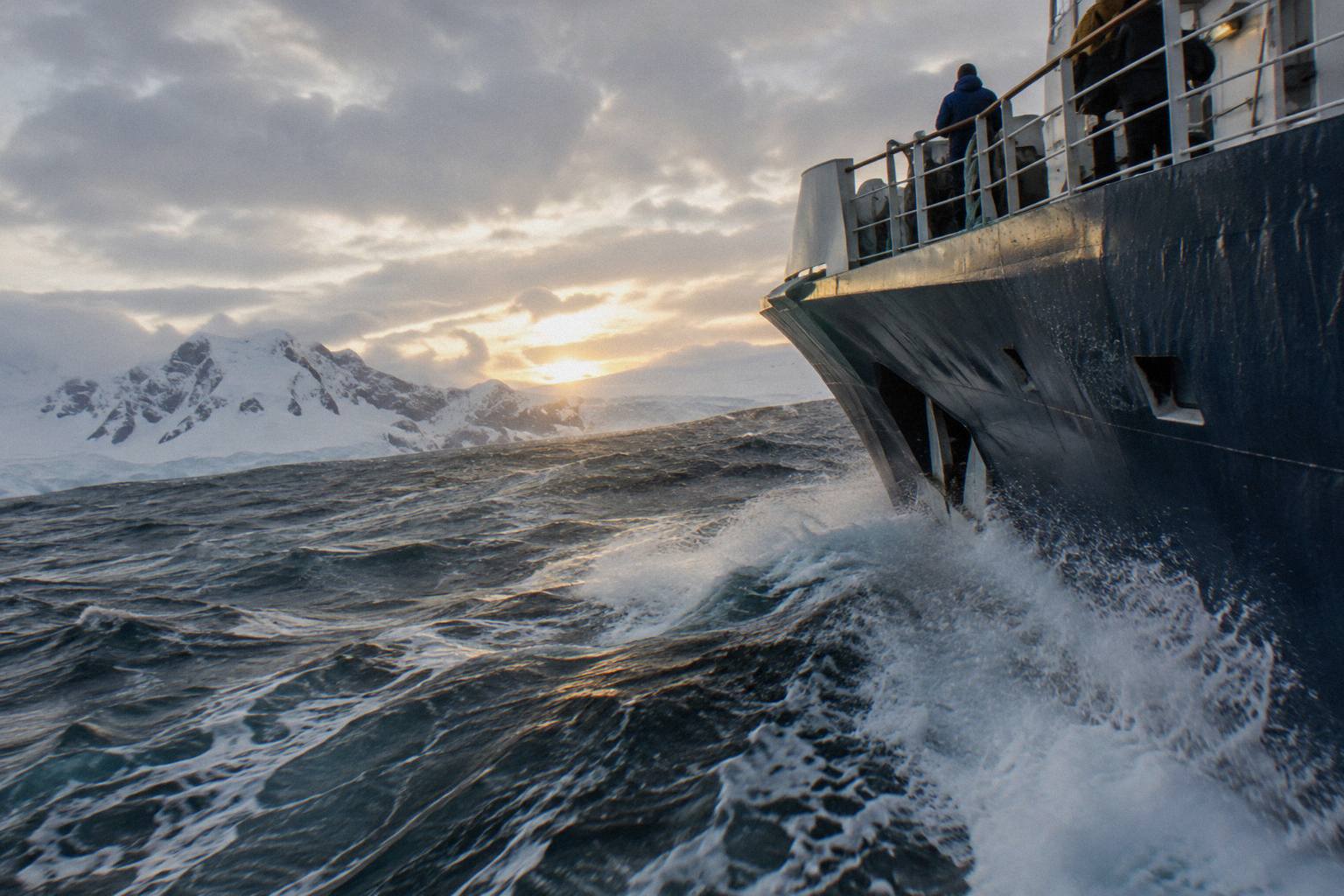
The comfort side of the ship is modest but real: there is a sauna with large windows, a gym, two outdoor jacuzzis and a two-story library seating up to 47 people, alongside the expedition gear of 15 Zodiacs. Quark also credits the ship with MAGS waste-to-energy treatment and Rolls-Royce engines. What the operator page does not mention: a pool, a helicopter hangar or a submarine. If helicopters are the draw, that is the Ultramarine's territory, not this ship's.
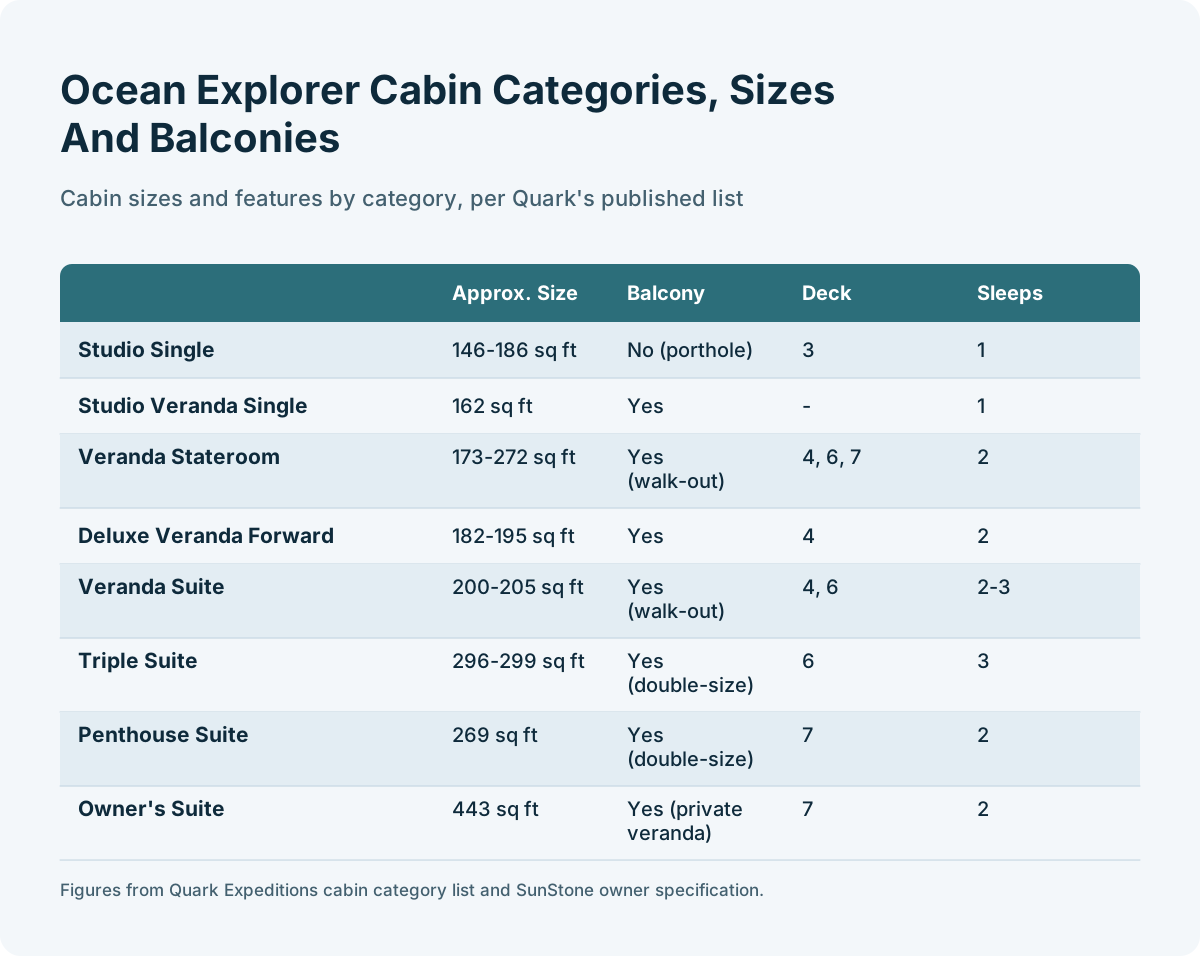
Cabins, Sizes And Balconies On The Ocean Explorer
The Ocean Explorer has 77 passenger cabins according to owner SunStone, with Quark's own category list running from a 146-186 sq ft single studio to a 443 sq ft Owner's Suite. Almost all cabins have verandas; the only stated exception is the Studio Single, which has a porthole. An exact balcony count is not published.
Quark's cabin copy gives sizes for each category. Studio Single cabins sit on Deck 3 with a porthole and sleep one. Veranda Staterooms, roughly 208 sq ft on average across a 173-272 sq ft range, have walk-out balconies on Decks 4, 6 and 7. Deluxe Veranda Forward cabins are about 182-195 sq ft on Deck 4 with a balcony. Veranda Suites run 200-205 sq ft with a sofa bed, and the Triple Suite, 296-299 sq ft on Deck 6, sleeps three with a double-size balcony. The Penthouse Suite (269 sq ft, Deck 7, two rooms) and the Owner's Suite (443 sq ft, Deck 7, two rooms with a private veranda) sit at the top. Quark's dates-and-rates page also sells a Studio Veranda Single at 162 sq ft.
How many of each category exist is not published, and Quark says only "almost all" cabins have verandas, so treat any precise balcony count you see elsewhere as an estimate. For a buyer, the practical takeaway is simpler: solo travellers get two dedicated options (one porthole, one veranda), triples get a real suite rather than a bolted-together berth, and the balcony premium is spread across most of the ship rather than confined to the top decks.
| Cabin category | Approx. size | Balcony | Deck | Sleeps |
|---|---|---|---|---|
| Studio Single | 146-186 sq ft | No (porthole) | 3 | 1 |
| Studio Veranda Single | 162 sq ft | Yes | - | 1 |
| Veranda Stateroom | 173-272 sq ft | Yes (walk-out) | 4, 6, 7 | 2 |
| Deluxe Veranda Forward | 182-195 sq ft | Yes | 4 | 2 |
| Veranda Suite | 200-205 sq ft | Yes (walk-out) | 4, 6 | 2-3 |
| Triple Suite | 296-299 sq ft | Yes (double-size) | 6 | 3 |
| Penthouse Suite | 269 sq ft | Yes (double-size) | 7 | 2 |
| Owner's Suite | 443 sq ft | Yes (private veranda) | 7 | 2 |
Cabin choice on this ship is a genuine cost decision, since the spread between a Studio Single and an Owner's Suite is effectively two different price tiers of the same voyage. If you are weighing how much a balcony is worth in Antarctic cold and wind, get help weighing cabin categories here; the consultation is free.
Signature Features, Dining And Life Aboard
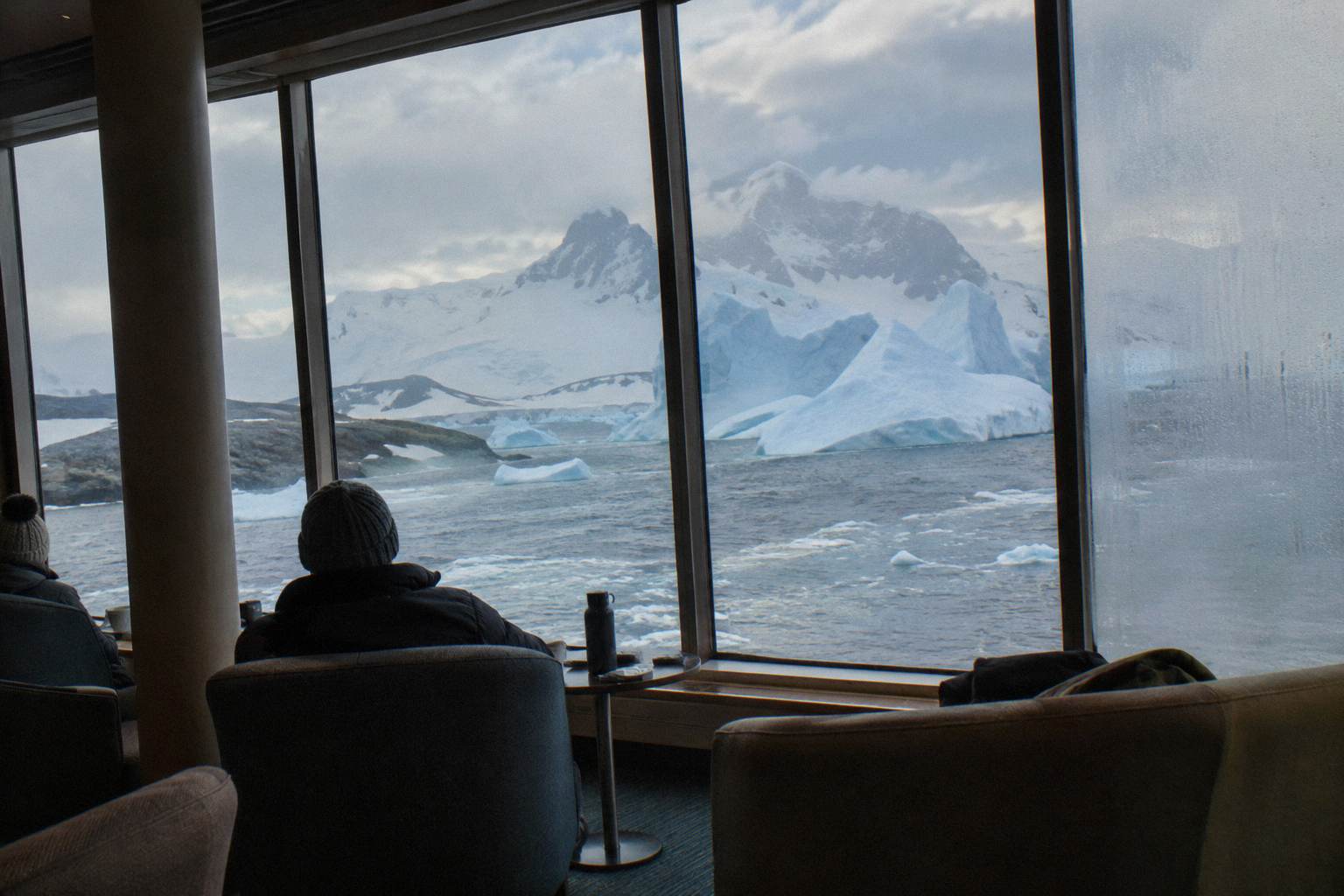
The Ocean Explorer's stated features are a ULSTEIN X-BOW, 15 Zodiacs, a Tundra Spa with a large-window sauna, a gym, two outdoor jacuzzis, a two-story library and an Observation Lounge on Deck 8 seating 63. Dining runs across a 144-seat main dining room, a 36-seat private dining room and the 46-seat Latitude Bar. There is no pool, theatre, helicopter or submarine.
The public-space math tells you what kind of cruise this is. A 63-seat observation lounge and a 47-seat library on a 138-guest ship mean most of the ship can gather in one place at once, which suits the lecture-and-briefing rhythm of an expedition voyage. The two-story library is the detail that stands out on Quark's ship page, a room built for long reading hours on sea days rather than a shelf in a corridor.
Dining is included. Quark's 2026-27 inclusions list covers all meals, snacks, soft drinks and juices, plus select beer, wine and cocktails during bar service and dinner, and coffee, tea and cocoa. SunStone's owner specification additionally lists a 44-seat observation restaurant and a 36-seat specialty restaurant; Quark's consumer page does not name these venues, so what operates on your sailing is best confirmed in the pre-departure documents.
Wi-Fi is basic and included, one device at a time, with premium packages sold on board. Starlink is not stated by name on the ship page, so do not plan a remote-working voyage around it.
Ice Class, Size And Seaworthiness Explained
The Ocean Explorer holds Ice Class 1A, stated alongside Polar Code PC6 by both Quark and SunStone. In plain terms, that is a hull built for summer and autumn operation in medium first-year ice, the standard band for Antarctic Peninsula expedition ships. At 104.4 metres and 138 guests it is mid-size: large enough for 16.5 knots in open water, small enough that every passenger rotates ashore quickly.
PC6 is the classification the IMO Polar Code assigns for operation in medium first-year ice that may include old-ice inclusions, during summer and autumn. It is the same class held by the Silver Endeavour and the Viking expedition ships, and one notch below the PC5 held by Lindblad's National Geographic Endurance and Resolution. For Peninsula voyages, where ships follow open-water channels between November and March, PC6 is comfortably within the operational envelope; it is not an icebreaker rating and the ship does not push deep into multi-year pack ice.
The 100-passenger rule is where size really bites. IAATO guidance allows a maximum of 100 passengers ashore from a vessel at any one time, with a minimum 1:20 guide ratio, so on a full 138-guest sailing the ship runs two rotations per landing. On ships at or under 100 guests everyone goes ashore at once. That is the real trade-off you accept in exchange for the Ocean Explorer's balconies, X-BOW and speed.
2026-27 Antarctic Itineraries, Dates And Fares
The Ocean Explorer's 2026-27 Antarctic programme centres on the 11-day Antarctic Explorer: Discovering the 7th Continent, sailing Ushuaia roundtrip on seven dates from 12 November 2026 to 15 January 2027, plus 9- and 10-day Antarctic Express fly-and-sail combinations between Ushuaia and Punta Arenas. Quark's voyage-level fares for Antarctic Explorer start from $12,236 per person, shared across its three ships.
The seven Antarctic Explorer dates on Quark's itinerary PDF are: 12-22 November 2026, 21 November-1 December 2026, 30 November-10 December 2026, 9-19 December 2026, 18-28 December 2026, 27 December 2026-6 January 2027 and 5-15 January 2027, all 11 days and all Ushuaia to Ushuaia. The dates-and-rates selector for this ship shows discounted lead-in fares ranging from $12,661 up to $20,911 across those departures; one confirmed pairing is 18-28 December 2026, where the Triple Suite was listed at a brochure $16,595, discounted to $14,106, and was sold out. Which lead-in matches which other date is not published cleanly, so treat the range, not a single number, as the picture.
The fly-and-sail products cut the Drake down to one crossing. Antarctic Express: Sail South, Fly North runs 10 days from Ushuaia to Punta Arenas, with open lead-ins shown at $15,566 and $17,636. Antarctic Express: Fly South, Sail North runs 9 days starting with a flight from Punta Arenas, with lead-ins including $13,241, $15,551, $15,566, $16,146 and $17,121. Again, Quark does not publish which fare belongs to which date in a readable way, and these are promotional lead-ins that move with each sale cycle.
One important framing point: Quark's fares are voyage-level and shared across Ultramarine, Ocean Explorer and World Voyager. The $12,236 starting figure for Antarctic Explorer is not Ocean Explorer-exclusive, and any given departure is assigned one ship. If your heart is set on this specific vessel, the sailing date and the ship are the same decision, and a free consultation can confirm which ship sails which date before you commit.
| Itinerary | Length | Route | 2026-27 status |
|---|---|---|---|
| Antarctic Explorer: Discovering the 7th Continent | 11 days | Ushuaia roundtrip | 7 dates, Nov 2026 - Jan 2027 |
| Antarctic Express: Sail South, Fly North | 10 days | Ushuaia to Punta Arenas | Lead-ins $15,566-$17,636 shown |
| Antarctic Express: Fly South, Sail North | 9 days | Punta Arenas to Ushuaia | Lead-ins from $13,241 shown |
What The Fare Includes, And What Costs Extra
Quark's 2026-27 Antarctic inclusions on this ship cover the expedition parka to keep, muck boots on loan, all meals, select beer, wine and cocktails at bar service and dinner, soft drinks, basic Wi-Fi, taxes and port charges, Zodiac landings and the lecture programme. Gratuities, international flights, kayaking and other paid adventure options are excluded. On Ushuaia roundtrips, no hotel night or charter flight is included in the base fare.
The paid options matter on this ship because the Ocean Explorer carries no helicopters. Sea kayaking was priced at $1,995 on the 18-28 December 2026 departure, and camping and paddling are sold as add-ons on applicable dates. If an activity-forward voyage is the goal, budget these on top of the cabin fare, and note that limited-capacity options like kayaking are best reserved at booking rather than on board.
The Ushuaia-roundtrip structure is worth understanding before you book flights. Day 1 of the Antarctic Explorer itinerary says you may arrive in Ushuaia at any time, with no hotel night or flights included, unlike Quark's Buenos Aires-departing packages on other ships that bundle a hotel night and group charter. You arrange your own arrival, and most travellers add at least one buffer night in Ushuaia, a habit operators recommend because the ship cannot wait for a delayed flight. Insurance with medical evacuation coverage is required, and expedition insurance comparisons put Quark's minimum at $500,000 of medical evacuation cover.
Ocean Explorer Versus Ultramarine And World Voyager
Against its two Quark fleet-mates, the Ocean Explorer is the smallest at 138 guests, the only one with an X-BOW, and the ship with the most uniformly veranda-based cabin stock. The Ultramarine (199 guests) is the activity flagship with two helicopters and 20 Zodiacs; the World Voyager (168 guests) counters with a heated outdoor pool, an all-balcony-suite layout and a Science Hub. All three share the same voyage-level fares.
The Ultramarine, covered in full in our Ultramarine ship profile, is the ship for helicopter flightseeing and heli-landings on dedicated itineraries, with twin Airbus H145s on two helidecks and an internal Zodiac hangar. It is bigger, at 128 metres and 199 guests, and 64 of its 102 suites have balconies, a lower share than on the Ocean Explorer. The World Voyager, reviewed in our World Voyager ship guide, brings resort-style amenities: a heated outdoor pool, jacuzzis, an outdoor running track and all-balcony suites, in a 126-metre, 168-guest hull with Ice Class 1B, a notch below the Ocean Explorer's 1A.
Because the fares are shared, the choice between the three is genuinely about the ship, not the price of the voyage. A full side-by-side of this ship and the World Voyager is in our Ocean Explorer versus World Voyager comparison, and the helicopter question is settled in Ultramarine versus Ocean Explorer.
| Ocean Explorer | Ultramarine | World Voyager | |
|---|---|---|---|
| Guests | 138 | 199 | 168 |
| Length | 104.4 m | 128 m | 126 m |
| Ice class | 1A, PC6 | 1A+, PC6 | 1B |
| Zodiacs | 15 | 20 | 18 |
| Signature | X-BOW, two-story library | 2 helicopters | Pool, all-balcony suites |
| Antarctic from-fare | $12,236 (shared) | $12,236 (shared) | $12,236 (shared) |
| Ship | Class | Passengers | Ice class | From, per person | Voyage length | Departs from |
|---|---|---|---|---|---|---|
| Ocean ExplorerQuark Expeditions | Upscale Expedition | 138 | 1A, PC6 | from $12,236 | 8 to 20 days | Ushuaia, Buenos Aires, Punta Arenas |
| UltramarineQuark Expeditions | Upscale Expedition | 199 | 1A+, PC6 | from $12,236 | 12 to 14 days | Buenos Aires, Ushuaia |
| World VoyagerQuark Expeditions | Upscale Expedition | 168 | 1B | from $12,236 | 8 to 14 days | Buenos Aires, Ushuaia, Punta Arenas |
Who The Ship Suits, And Who Should Look Elsewhere
The Ocean Explorer suits travellers who want a modern, balcony-heavy mid-size ship with an X-BOW hull designed to cut wave slamming and a quieter, library-and-observation-lounge atmosphere, sailing the classic Peninsula route. It does not suit anyone booking for helicopters, submarines, a pool or the smallest-possible ship experience, because it has none of those.
For solo travellers it is one of the better platforms in the Quark fleet thanks to the two dedicated single categories, including a veranda single, which not every expedition ship offers. For couples wanting a balcony without stepping up to luxury-line pricing, the veranda categories cover most of the ship. For photographers and birders who plan to spend Drake crossings on deck or in the lounge, the X-BOW hull and the 63-seat Deck 8 lounge are the practical selling points.
Look elsewhere if: you want helicopter access to Snow Hill emperor penguins, which is the Ultramarine's programme; you want a heated pool and running track, which is the World Voyager; or you want a smaller ship with fewer people per landing, which means leaving Quark's fleet for an operator like Oceanwide or Poseidon, both covered elsewhere on Cruises In Antarctica. One further cross-check worth making if fly-cruising appeals: our Magellan Explorer versus Ocean Explorer comparison sets this ship against Antarctica21's purpose-built air-cruise vessel.
Full Ship Specification
The specification of the Ocean Explorer: delivered 2021 by SunStone Ships on year-round charter to Quark Expeditions, 138 guests, 105 staff and crew, 77 cabins, 104.4 metres, 18.40-metre beam, 5.30-metre draught, 8,228 gross tonnes, Ice Class 1A (PC6), 16.5 knots in open water, 15 Zodiacs, ULSTEIN X-BOW, port registry Portugal.
Quark publishes the guest and crew figures, length, speed, ice class and Zodiac count; SunStone, the owner, publishes tonnage, beam, draught and the 77-cabin total. The table shows which figure comes from which.
| Specification | Figure | Source |
|---|---|---|
| Operator | Quark Expeditions | Quark |
| Owner / delivery | SunStone Ships, 2021 | SunStone |
| Guests | 138 | Quark |
| Staff and crew | 105 | Quark |
| Cabins | 77 | SunStone |
| Length | 104.4 m | Quark / SunStone |
| Beam / draught | 18.40 m / 5.30 m | SunStone |
| Gross tonnage | 8,228 GT | SunStone |
| Ice class | 1A, PC6 | Quark / SunStone |
| Speed (open water) | 16.5 knots | Quark |
| Zodiacs | 15 | Quark |
| Bow | ULSTEIN X-BOW | Quark |
| Registry | Portugal | Quark |
The booking mechanics, for completeness: Quark's terms call for a 25% deposit when booked more than 150 days before departure, with final payment due 150 days out. If that timing and the ship choice are starting to fit together, a free consultation on your Ocean Explorer options costs nothing and carries no obligation.
Common Questions About The Ocean Explorer
How many passengers does the Ocean Explorer carry in Antarctica?
138 guests, with 105 staff and crew, according to Quark's ship page. Under IAATO rules a maximum of 100 passengers may be ashore at one time, so full sailings run landing rotations.
Does the Ocean Explorer have balconies?
Almost all cabins have verandas, in Quark's own wording. The stated exception is the Studio Single with a porthole; an exact balcony count per category is not published.
How much does an Ocean Explorer Antarctica cruise cost?
Quark's Antarctic Explorer voyages, shared across its three ships, start from $12,236 per person. Date-specific discounted lead-ins observed for this ship ranged from $12,661 to $20,911, and fly-and-sail Express products showed lead-ins from $13,241.
Does the Ocean Explorer have helicopters or a submarine?
No. The ship's stated expedition equipment is 15 Zodiacs, with kayaking and camping as paid options. Helicopter programmes run on the sister ship Ultramarine.
What is included in the Ocean Explorer fare?
Meals, select beer, wine and cocktails at dinner and bar service, soft drinks, basic Wi-Fi, a parka to keep, loaner muck boots, Zodiac landings, lectures, and taxes and port charges. Gratuities, flights and paid activities are extra, and Ushuaia roundtrips include no hotel night.
Where does the Ocean Explorer sail from in 2026-27?
Ushuaia, Argentina for the Antarctic Explorer roundtrips, and Ushuaia or Punta Arenas, Chile for the Antarctic Express fly-and-sail combinations in either direction.
More Antarctic Ship Profiles
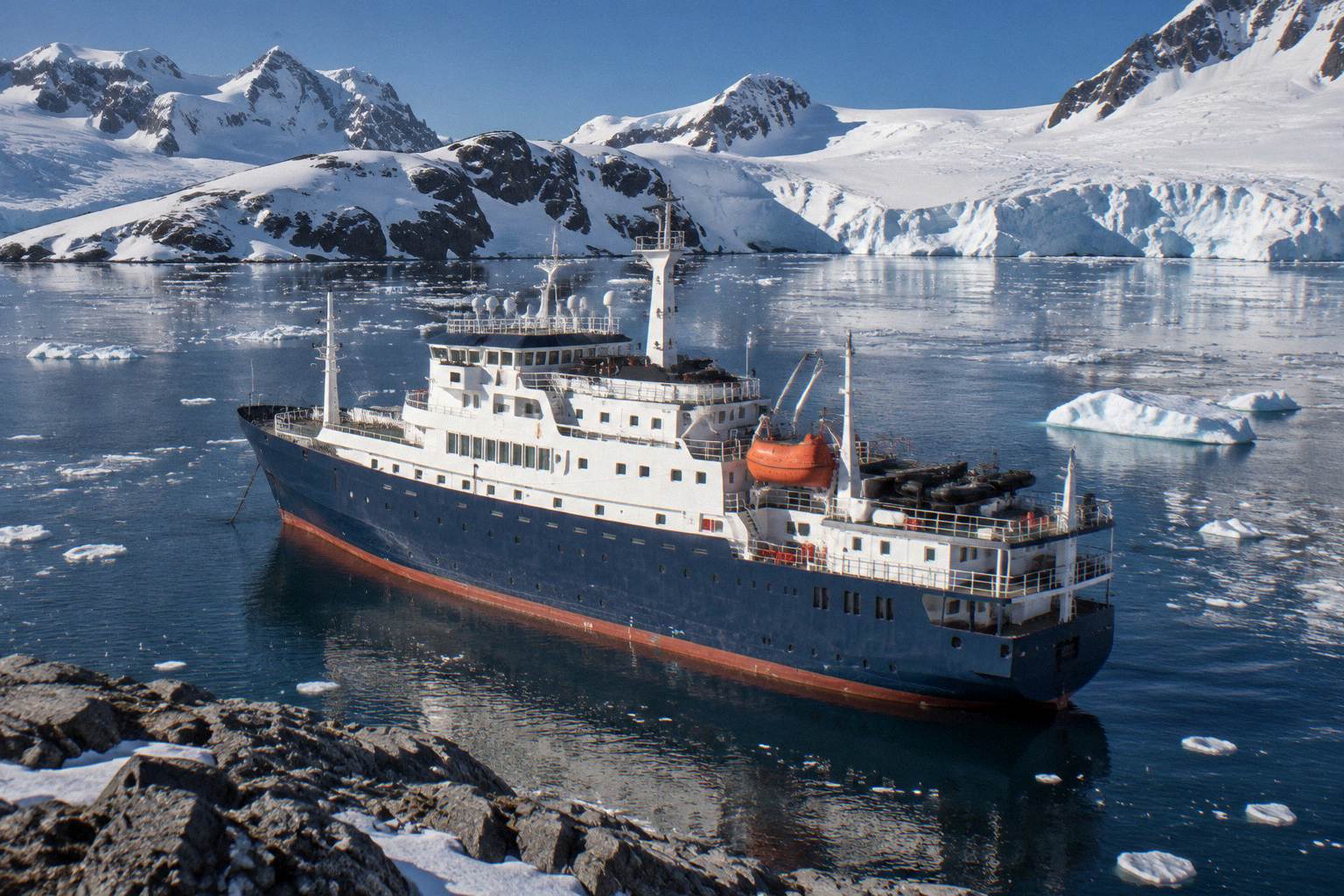 MV Plancius ReviewA no-balcony, 108-guest expedition ship with straightforward cabins, strong ice handling for its age, and Oceanwide's activity-focused Basecamp voyages.Read the guide
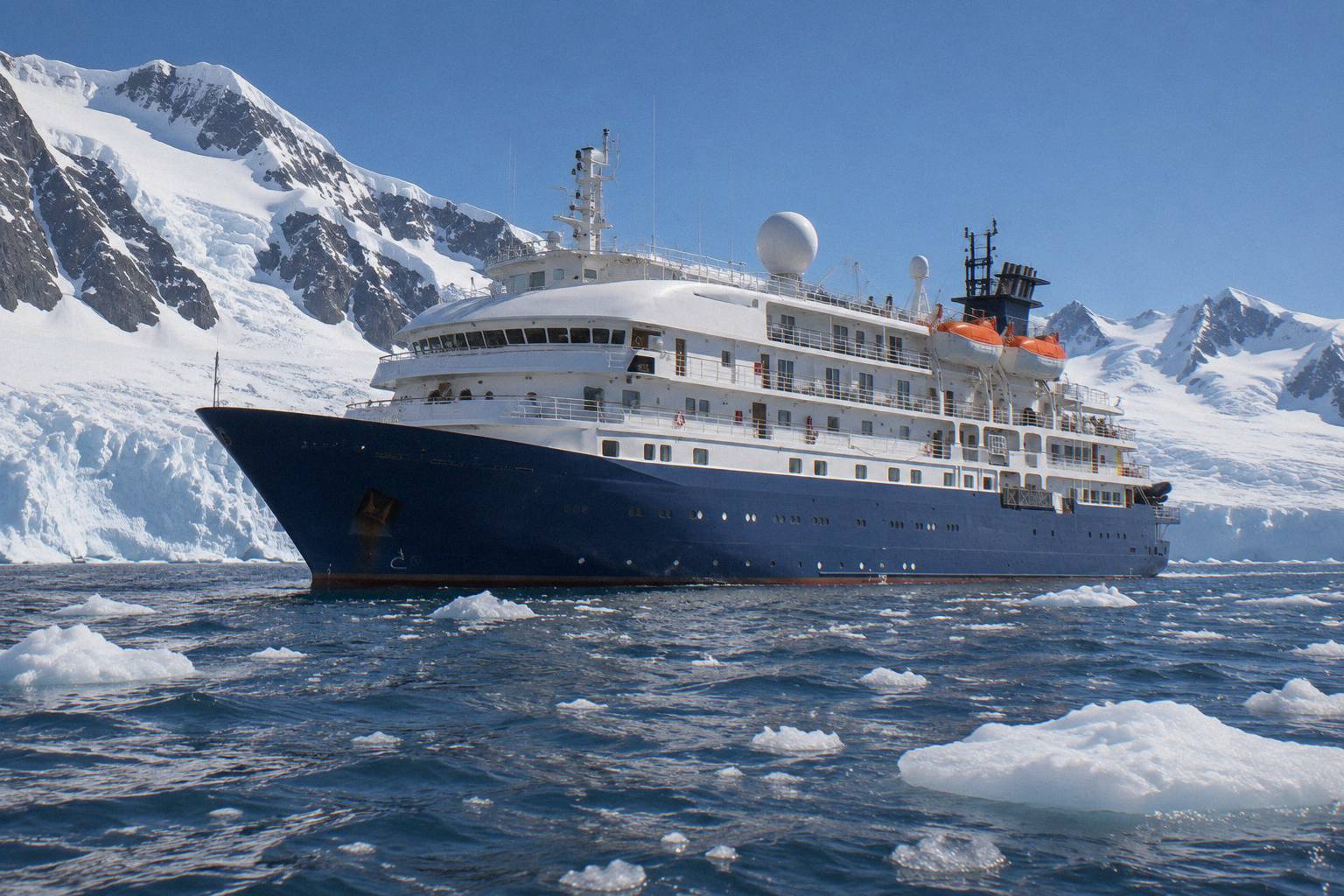 Sea Spirit ReviewPoseidon's 114-guest Sea Spirit reviewed: cabins, fares, itineraries and who it suits.Read the guide
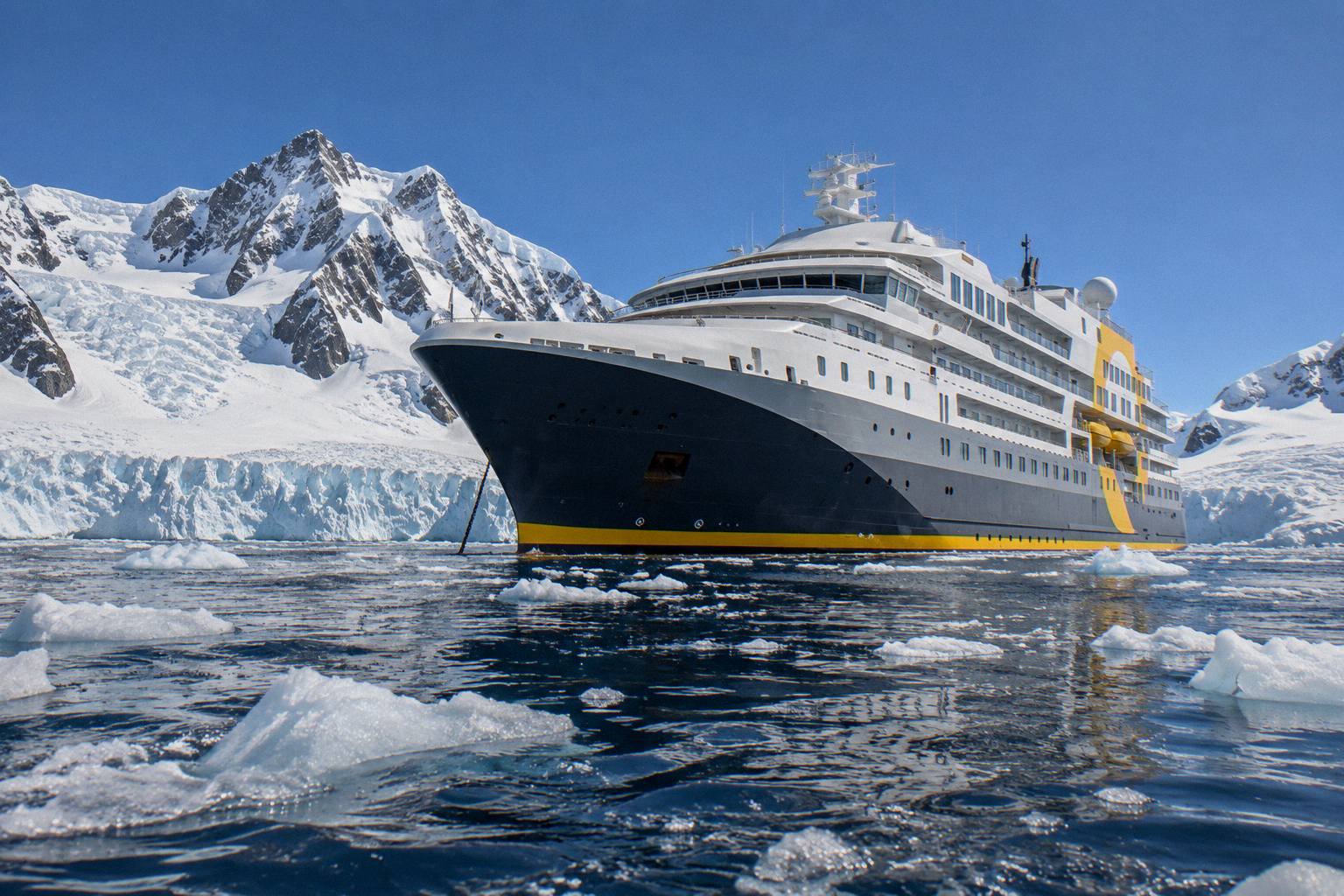 Ultramarine ReviewQuark's helicopter flagship reviewed: cabins, dining, itineraries and fares.Read the guide
 World Voyager ReviewShip review of Quark's World Voyager: cabins, ice class, itineraries and fares.Read the guide