Douglas Mawson Antarctica Cruise: Aurora Expeditions Ship
 By Oleg G.
The Douglas Mawson is the newest ship in the Aurora Expeditions fleet, a 130-guest Ulstein X-BOW vessel built in 2025 and deployed on long Antarctic itineraries out of Ushuaia. This guide covers what the ship is, where it sails, and how it compares with its two fleetmates.
Quick answer: The Douglas Mawson is Aurora Expeditions' newest expedition cruise ship, built in 2025 with an Ulstein X-BOW hull and space for 130 expedition guests, with a maximum of 154. Its 2026-27 Antarctic program centres on a 34-day voyage from Ushuaia. No published fare is on file for that voyage, so a current price needs a consultation; fleetmates Greg Mortimer and Sylvia Earle list Peninsula voyages from $19,521 and $19,566 per person.
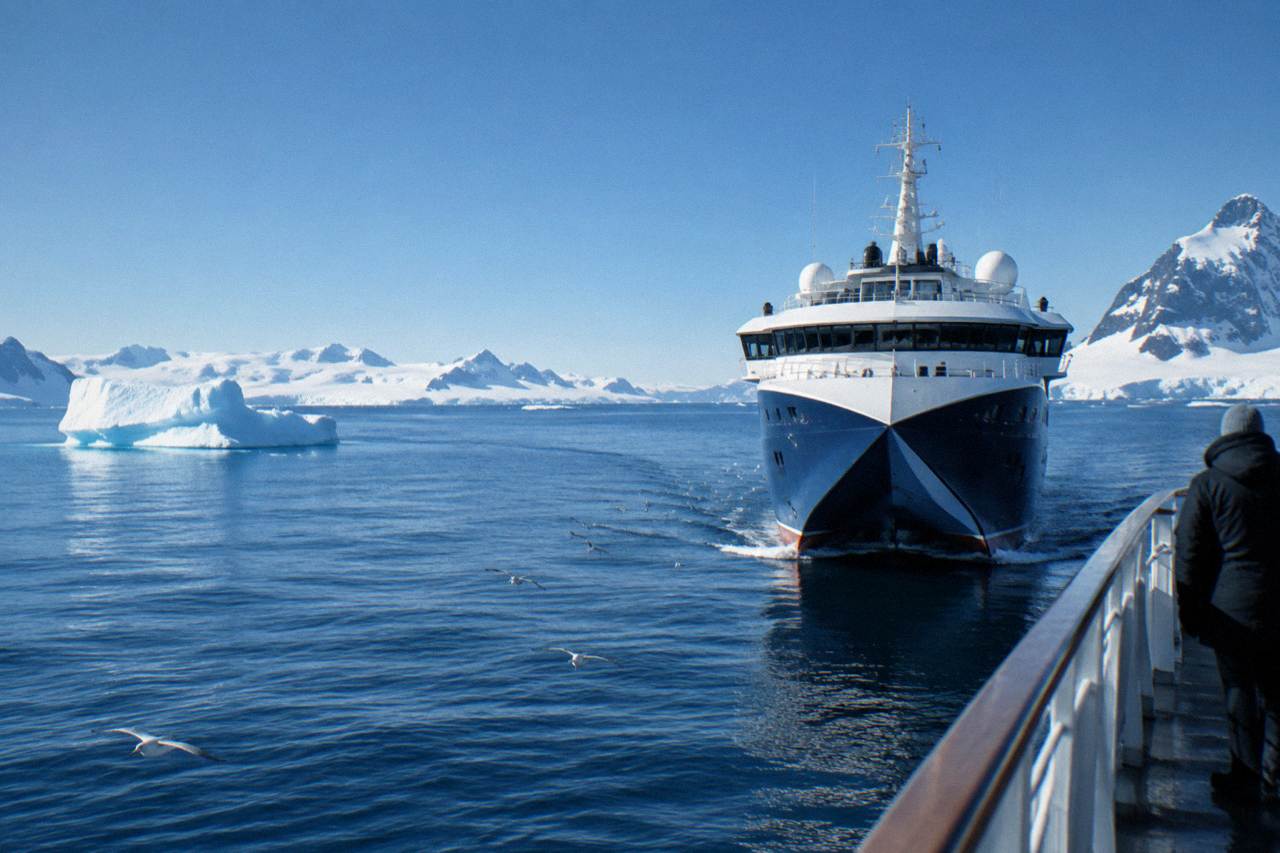
The Douglas Mawson is the newest vessel in the Aurora Expeditions fleet, a 2025-built expedition ship carrying 130 guests on expedition voyages, 154 at maximum capacity. It is the third Ulstein X-BOW ship the operator has fielded, and for the 2026-27 season it is deployed on the longest itineraries in the fleet's Antarctic program, including a 34-day voyage sailing from Ushuaia. If you have been shortlisting this specific vessel for an Antarctica cruise, this guide sets out what the ship is, where it goes, and how it stacks up against its two fleetmates.
One thing to know at the outset: the operator has not published a per-person fare for the Douglas Mawson's Antarctic voyages on the pages tracked for this site, so any current price for this ship needs a free consultation to price the voyage. The two sister ships do have published fares, and those give a realistic sense of the bracket this vessel sits in.
What Is The Douglas Mawson?
The Douglas Mawson is a 130-passenger expedition cruise ship built in 2025 for Aurora Expeditions, the Australian expedition operator. It features an Ulstein X-BOW hull design, the third such ship in the fleet after Greg Mortimer and Sylvia Earle, and sails from Ushuaia in Argentina. Its published Antarctic program for 2026-27 is a 34-day voyage, the longest in the fleet's schedule.
The ship is named for the Australian Antarctic explorer, which fits the operator's home market: Aurora Expeditions is an Australian company, and its fleet is built around small-ship expedition cruising rather than conventional cruising. The expedition model matters here. Under IAATO rules, a maximum of 100 passengers may be ashore from a vessel at any one time, and vessels carrying more than 500 passengers are prohibited from making landings in Antarctica at all. A 130-guest ship sits comfortably inside those limits, which is the whole point of the design.
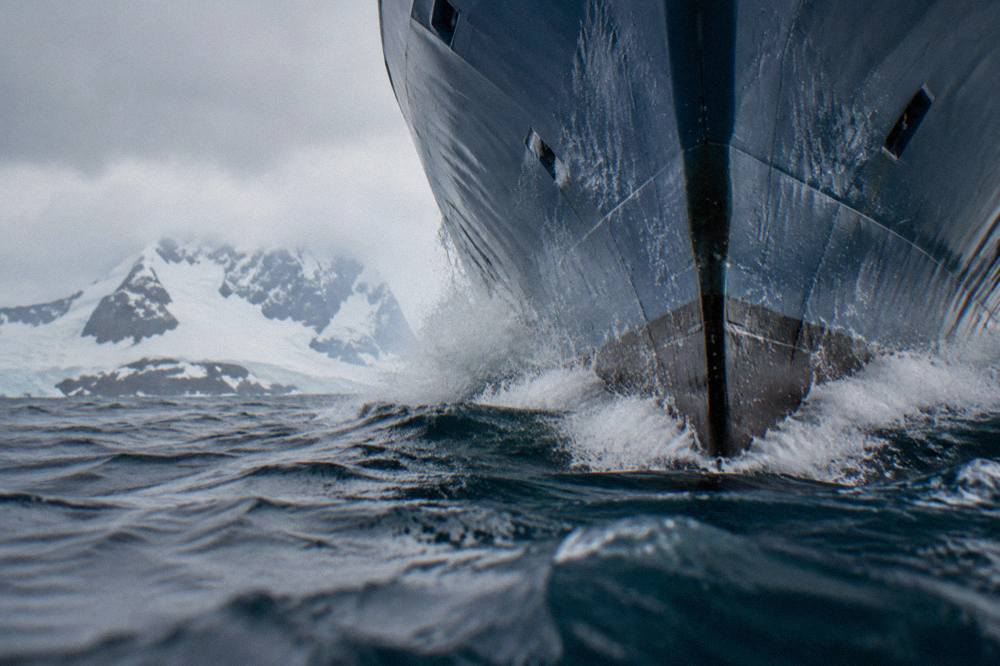
The X-BOW is the signature feature. The inverted bow splits oncoming waves rather than riding over them, which the operator and naval architects credit with a smoother motion in heavy seas and reduced spray, useful on the Drake Passage crossing between Ushuaia and the Antarctic Peninsula. Aurora's two earlier ships use the same hull form, so the Douglas Mawson is an evolution of a proven design rather than a first attempt.
For the 2026-27 season, reports on the operator's program say AE Expeditions plans 27 voyages across Greg Mortimer, Sylvia Earle and Douglas Mawson, reaching from the Antarctic Peninsula to the Ross Sea and East Antarctica, with 18 scientists joining 11 of those voyages for research on whale ecology, penguins, biodiversity and colossal squid. The Douglas Mawson carries the deep-itinerary end of that program. If your shortlist is really about the ship class rather than one hull, the fleet comparison later in this guide covers how the three vessels divide the work.
Who Operates It And Where Does It Sail From?
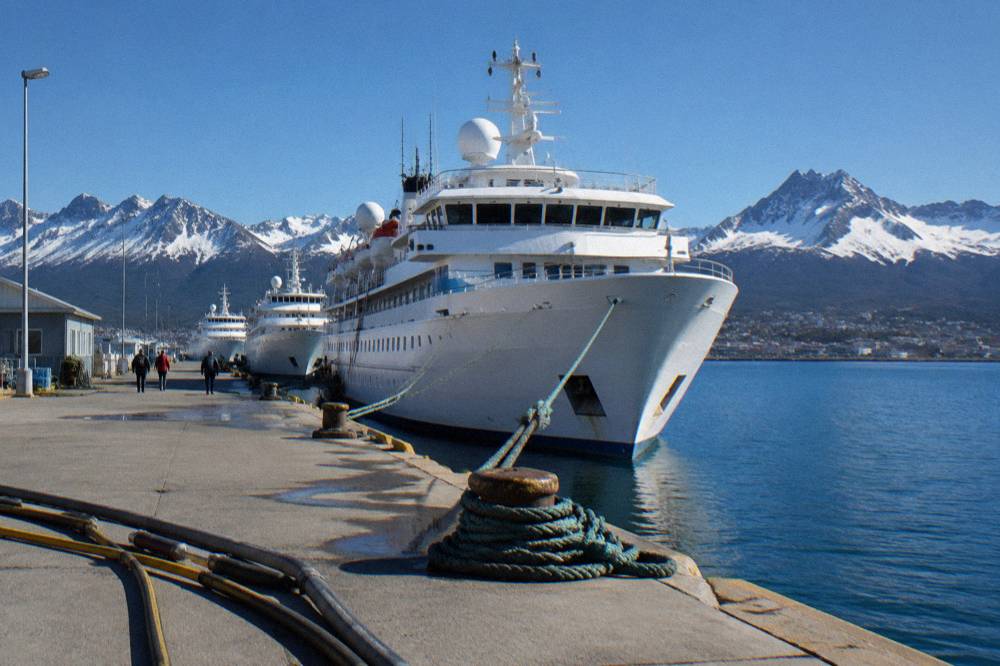
Aurora Expeditions operates the Douglas Mawson, sailing from Ushuaia, the world's southernmost city and the main gateway port for Antarctic Peninsula expedition cruises. The ship's 2026-27 Antarctic program is built around a 34-day voyage, which places it among the longest expedition cruises available to the region.
Ushuaia is where nearly all classic Peninsula expedition cruises begin. The operator's other ships also list Ushuaia as their port, and the logistics of getting there are their own project: most travellers from the United States fly into Buenos Aires and connect on a domestic flight to Ushuaia, with no direct US services into the southern city. Schedule data for the corridor shows roughly 27 weekly direct flights between Buenos Aires and Ushuaia on the main carrier plus low-cost options, but the route is weather-prone in peak season, which is why arriving at least one night, ideally two, before embarkation is the standard advice.
A 34-day voyage is a different proposition from the 11- to 14-day Peninsula classics. Voyages of that length typically reach the Ross Sea or East Antarctica, the far side of the continent, where tourism is a fraction of Peninsula volume. IAATO's records for the 2025-26 season counted 113,518 total visitors, of whom 85,195 made landings, and roughly 98 percent of all tourism voyages call on the Antarctic Peninsula during the austral summer. The Douglas Mawson's program puts it in the small cohort that goes beyond.
That has practical consequences for planning. A 34-day commitment means a bigger budget, more leave from work, and different insurance requirements than a short Peninsula sailing. Major operators impose high medical evacuation minimums on Antarctic travellers, plus full trip-cost cancellation cover, with proof often required before departure or at check-in (see Travel Insurance). On a long voyage the trip-cost figure that has to be insured is correspondingly large. This is the kind of trade-off worth putting to a specialist before committing, and a consultation on long Antarctic voyages costs nothing.
How Does The Douglas Mawson Compare With Greg Mortimer And Sylvia Earle?
All three Aurora ships are Ulstein X-BOW expedition vessels carrying 130 guests. Greg Mortimer (2019) and Sylvia Earle (2022) sail the standard Peninsula and South Georgia programs, from $19,521 and $19,566 per person respectively on their lowest published Antarctic cards. The Douglas Mawson (2025) is the newest and carries the fleet's longest voyage, a 34-day itinerary, with no published fare on file.
The three ships are close cousins, so the real choice between them is itinerary and date, not hardware. Greg Mortimer, the 2019 original, lists Antarctic voyages from $19,521 per person twin share on a 12-day sailing. Sylvia Earle, built 2022, lists from $19,566 on a 12-day Spirit of Antarctica voyage. The Douglas Mawson, built 2025, is the newest of the three and the only one whose Antarctic program on file is the single 34-day voyage.
| Ship | Class | Passengers | Ice class | From, per person | Voyage length | Departs from |
|---|---|---|---|---|---|---|
| Douglas MawsonAurora Expeditions | Upscale Expedition | 154 (130 in Antarctica) | – | – | 34 days | Ushuaia |
| Greg MortimerAurora Expeditions | Upscale Expedition | 130 | – | from $19,521 | 12 to 26 days | Ushuaia |
| Sylvia EarleAurora Expeditions | Upscale Expedition | 130 | – | from $19,566 | 12 to 20 days | Ushuaia |
A few differences are worth knowing beyond the headline numbers. The Douglas Mawson's maximum capacity is 154, with 130 the figure on expedition operation, the same guest count its sisters carry. Sylvia Earle and Greg Mortimer both list 12- and 13-day Antarctic voyages plus longer combinations, while Sylvia Earle's card also shows a 20-day program. If your priority is a short, classic Peninsula expedition cruise, the two older ships have the schedule for it. If the draw is the newest hull in the fleet on a deep-itinerary voyage, the Douglas Mawson is the one.
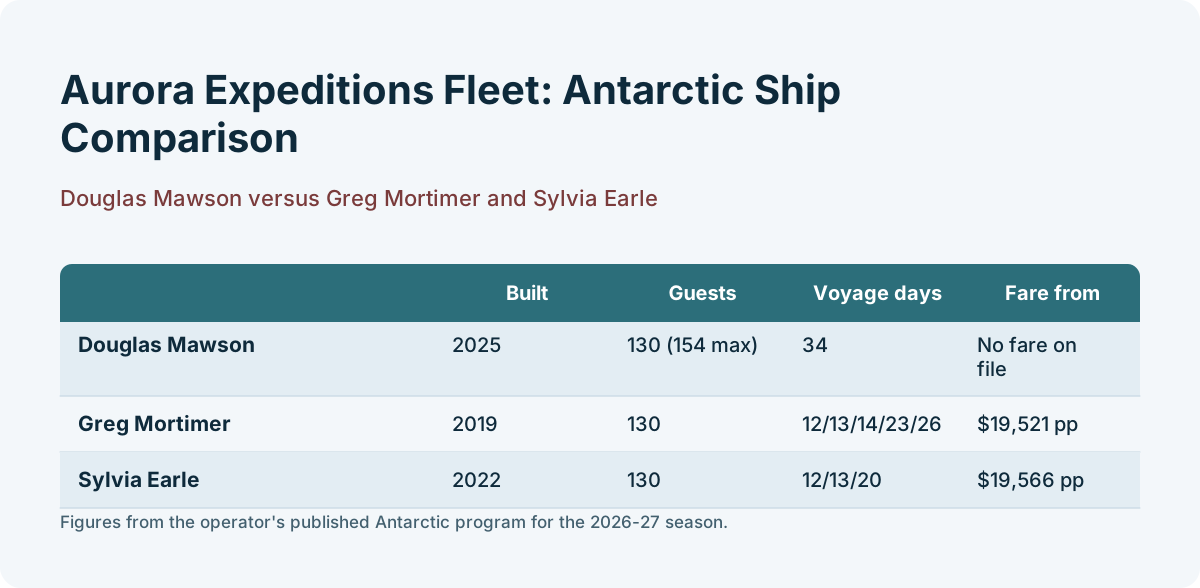
The table below pulls the comparison together from the operator's own pages.
| Ship | Built | Guests | Antarctic voyage days | Published fare from |
|---|---|---|---|---|
| Douglas Mawson | 2025 | 130 (154 max) | 34 | No fare on file, consultation needed |
| Greg Mortimer | 2019 | 130 | 12/13/14/23/26 | $19,521 pp |
| Sylvia Earle | 2022 | 130 | 12/13/20 | $19,566 pp |
Capacity and ice class deserve a note. The roster lists no formal ice class for any of the three Aurora ships, though all share the X-BOW hull form designed for polar waters. The ships' small guest counts keep them inside the IAATO landing limits with room to spare, and the operator's expedition staffing is built around the 1:20 guide-to-visitor ratio the association requires during landings.
How Much Does A Douglas Mawson Cruise Cost?
No published fare is on file for the Douglas Mawson's Antarctic voyage, so a current price needs a consultation rather than a quoted number. For calibration, its fleetmates list Antarctic voyages from $19,521 and $19,566 per person twin share for 12-day sailings, and the Douglas Mawson's 34-day itinerary would sit well above a short Peninsula fare once length is factored in.
The honest answer on price is that the operator's pages do not show a per-person figure for this ship's Antarctic program, and this site does not print numbers it cannot source. What can be said from the wider market is that entry-level expedition berths on Drake-crossing itineraries begin at roughly $7,500 to $8,995 per person for 10- to 11-day Peninsula voyages in shared cabins, according to one 2026 cost guide, and one 2026 cost guide reports mainstream expedition lines' cheapest published Peninsula fares at around $9,000 to $12,000 per person. Aurora's pricing sits above those entry tiers, and a 34-day voyage on the newest ship in the fleet will price accordingly.
Beyond the fare itself, a realistic all-in budget for a 10- to 12-day mid-range Peninsula trip, covering fare, flights, gear, tips and insurance, runs $12,000 to $25,000 per person by the same guide's estimate, and a 34-day voyage stretches several of those lines. Flights to Ushuaia, expedition gear, gratuities and travel insurance with medical evacuation cover all sit outside most base fares. Early-booking offers across the industry commonly reach 10 to 30 percent off, with deadlines through 2026, and single supplements typically run from 25 percent extra up to 1.5 to 2 times the twin rate, though some lines waive them on select sailings. The table below sets out the costs that sit outside the fare, using figures from current cost guides.
| Item outside the base fare | Typical figure | What to know |
|---|---|---|
| Gratuities | $15-$25 per person per day unless prepaid | One cost guide averages tips at about $16 per person per day |
| Expedition parka | Usually complimentary, often yours to keep | Waterproof boots are typically loaned rather than bought |
| Travel insurance | Not included in base fares | Most operators require medical evacuation cover alongside trip-cancellation protection |
| Single supplement | 25 percent extra up to 1.5-2 times the twin rate | Some lines waive it on select sailings |
| All-in trip budget | $12,000-$25,000 per person | One guide's estimate for a 10-12 day mid-range Peninsula trip, covering fare, flights, gear, tips and insurance |

Because the Douglas Mawson's fare is not published, the practical move is to ask. The free consultation on this site puts your dates, cabin preference and budget in front of a vetted expedition-cruise agency partner who can quote the live fare, and it carries no obligation. If you are weighing the 34-day commitment against a 12-day sailing on Greg Mortimer or Sylvia Earle, that comparison is exactly what a consultation resolves.
What Is Life On Board Like?
The Douglas Mawson carries 130 expedition guests in a small-ship format: Zodiac landings, kayaking where conditions allow, an expedition team running lectures and briefings, and the X-BOW hull smoothing the open-water passages. As the fleet's newest ship, delivered in 2025, it carries Aurora's current cabin and public-space design rather than a refit of an older vessel.
Aurora's expedition style is consistent across the fleet, and the ship is built around it. Days are structured around landings and Zodiac cruising, with the expedition team deciding each day's program based on ice, weather and wildlife, and IAATO's site coordination rules mean only one vessel visits a landing site at a time, so the ship's schedule is deliberately flexible. On the longer Ross Sea and East Antarctica itineraries, sea days are a bigger share of the voyage, and the lecture program, observation spaces and onboard science activities fill them. The 2026-27 program puts scientists on a third of the fleet's voyages, covering whale ecology, penguin research and cephalopod studies, and guests on those sailings get direct exposure to the research.
The X-BOW matters most on the crossings. Typical swells in the Drake Passage average 3 to 5 metres, with severe conditions documented far higher, and the hull form's claimed benefit is a softer entry into oncoming seas. Rough passages occur around 30 percent of the time by one widely cited estimate, calm ones around 70 percent, and no single month is reliably better or worse within the season. On a 34-day voyage the ship spends far more days in open polar water than a Peninsula classic, so hull comfort is not a minor consideration.
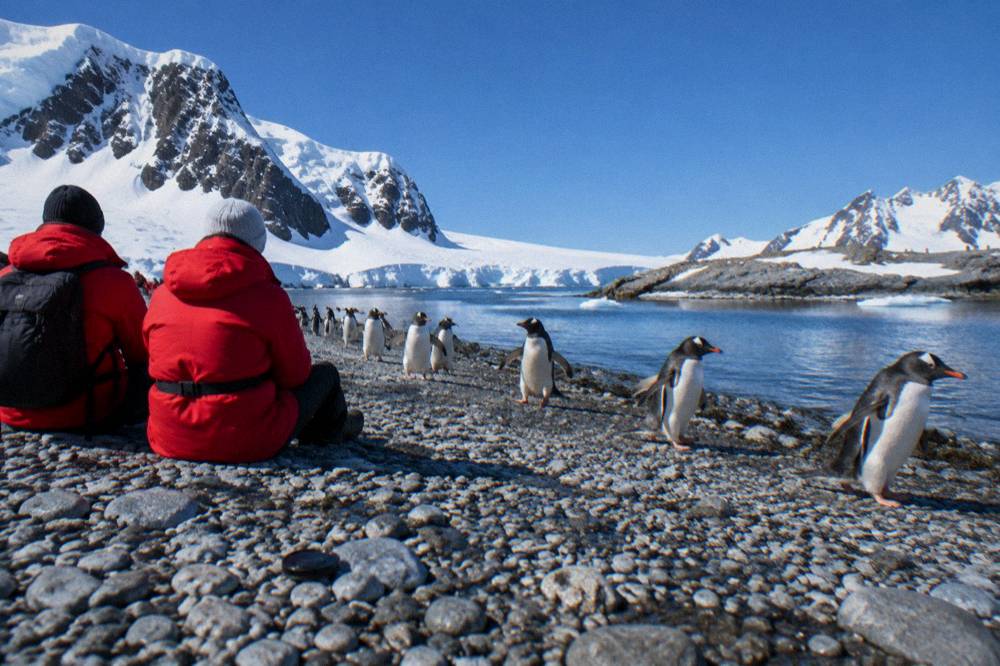
Wildlife viewing follows the season's rhythm rather than the ship's schedule. Penguin chicks typically begin hatching mid-December on the Peninsula, whale sightings increase from mid-January onward, and February to March peaks for whale activity as krill draws humpbacks, minkes and orcas into Peninsula feeding grounds. On the far-side itineraries the Douglas Mawson sails, the wildlife and landscape mix is different again: historic expedition huts, emperor penguin country and the Ross Ice Shelf replace the Peninsula's gentoo colonies. IAATO's wildlife rules apply everywhere: keep at least 5 metres from animals on land or ice, more where site guidance requires it, and drones must not be used near wildlife.
When Should You Sail, And When Should You Book?
The Antarctic expedition season runs mid-October to mid-March, and the Douglas Mawson's long voyages occupy specific windows within it. Peak December and January departures book furthest ahead, with reports of peak sailings filling 18 months or more in advance, so a 34-day voyage on a 130-guest ship is something to book early rather than late.
Season timing shapes what you see. October and November bring maximum snow cover, courting penguins and the most dramatic sea ice, with Peninsula temperatures that can drop to around -5°C in November. December and January deliver near-24-hour daylight, hatching chicks and returning humpbacks. February and March bring molting penguins, swimming lessons for the next generation, and the strongest whale activity of the season. The operator's 27-voyage program spreads across that window, and the Douglas Mawson's single long itinerary sits at a specific point in it, which is worth confirming against your own dates before anything else.
Booking dynamics are less forgiving than in warm-water cruising. Last-minute discounts exist but are limited in availability and cabin choice, and they are uncommon for peak December sailings, which book furthest ahead. Early booking secures both the better rates and the better cabins, and industry early-booking offers commonly reach 10 to 30 percent off. On a ship carrying 130 guests, the cabin categories sell out in a different order than on a 2,000-passenger cruise ship, and the categories with the best positions for the crossing go first.
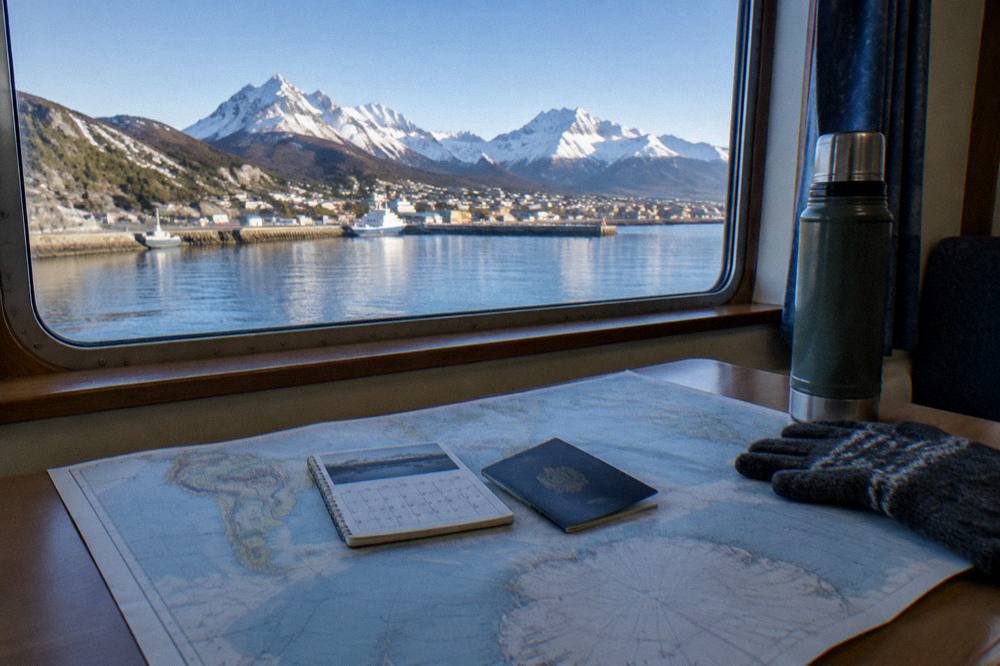
If the timing question is really a ship question, whether the 34-day itinerary or a shorter Peninsula sailing on a fleetmate suits your calendar, the season and the ship choice can be settled in one conversation. A free voyage timing consultation covers both, with nothing to pay and no commitment.
How Do You Choose Between The Three Aurora Ships?
Choose the Douglas Mawson for the newest hull and the longest, deepest itinerary; choose Greg Mortimer or Sylvia Earle for the classic 12- to 14-day Peninsula and South Georgia voyages, which list published fares from $19,521 per person. All three carry 130 guests with the same X-BOW design, so the decision comes down to itinerary length, dates and price rather than ship quality.
The practical shortlist logic looks like this. If you want the shortest Antarctic commitment, the 12-day Peninsula voyages on Greg Mortimer or Sylvia Earle are the fleet's standard product, with published fares to plan against. If you want South Georgia's king penguin colonies in the same voyage, the 20- to 26-day combinations on the older ships cover it. If you want the Ross Sea, East Antarctica or the far side of the continent, the Douglas Mawson's 34-day program is the fleet's vehicle, and its fare is quoted rather than published.
The table below summarises the decision points.
| Your priority | Best-fit Aurora ship | Why |
|---|---|---|
| Classic Peninsula, shortest trip | Greg Mortimer or Sylvia Earle | 12-day voyages, published fares from $19,521 and $19,566 pp |
| South Georgia and Falklands combined | Greg Mortimer or Sylvia Earle | 20- to 26-day combination itineraries on file |
| Ross Sea and East Antarctica | Douglas Mawson | The fleet's 34-day deep-itinerary voyage |
| Newest ship and hull | Douglas Mawson | 2025 build, the newest in the fleet |
| Firm budget planning before enquiry | Greg Mortimer or Sylvia Earle | Published per-person fares on the operator's cards |
Two planning notes round this out. First, the published fares for the two older ships are per person twin share on the lowest cabin category of the lowest listed voyage, so a balcony cabin, a solo occupancy or a longer combination moves the number substantially. Second, the Douglas Mawson's single long itinerary means limited departure dates each season, and a ship with 130 guests and a handful of sailings does not have the inventory to wait on. If Aurora is only one of the lines on your shortlist, the wider fleet is covered in Cruises In Antarctica guides such as the Antarctic expedition cruise ships overview and the Drake Passage crossing guide.
Common Questions About The Douglas Mawson
How Many Passengers Does The Douglas Mawson Carry?
The ship carries 130 guests on expedition operation, with a maximum capacity of 154 stated on the operator's ship page. That guest count keeps it well inside the IAATO landing rules, which cap passengers ashore at 100 per vessel at any one time.
When Was The Douglas Mawson Built?
It was built in 2025, making it the newest ship in the Aurora Expeditions fleet and its third Ulstein X-BOW vessel after Greg Mortimer (2019) and Sylvia Earle (2022).
How Much Does A Douglas Mawson Antarctica Cruise Cost?
No published fare is on file for the ship's Antarctic voyage, so a current price needs a consultation. Its fleetmates list Antarctic voyages from $19,521 and $19,566 per person twin share for 12-day sailings, which gives a sense of the fleet's price bracket, though a 34-day voyage prices above a short Peninsula trip.
Where Does The Douglas Mawson Sail From?
Ushuaia the main gateway port for Antarctic expedition cruises. Most travellers reach it via Buenos Aires on a domestic connection, and arriving at least a night before embarkation is the standard advice given weather-prone flights in peak season.
What Makes The X-BOW Design Different?
The Ulstein X-BOW is an inverted bow that splits oncoming waves rather than riding over them, which is credited with smoother motion in heavy seas and less spray. That matters on the Drake Passage, where typical swells average 3 to 5 metres and rough crossings occur roughly 30 percent of the time by one cited estimate.
Is The Douglas Mawson A Good Choice For A First Antarctica Trip?
It depends on the trip you want. Its 34-day voyage is a deep commitment aimed at the Ross Sea and East Antarctica, while a first-time visitor wanting the classic Peninsula experience may find the 12-day voyages on Greg Mortimer or Sylvia Earle a better fit, with published fares to plan against.