Which Antarctic Research Stations Can Cruise Passengers Visit?
 By Oleg G.
Most Antarctic expedition voyages never step inside a working research base, but a handful of stations do accept cruise visitors under strict conditions. Here is what is actually possible, which bases say yes, and which ones turn ships away.
Quick answer: Yes, but rarely and never by right. Port Lockroy is the reliable one, with a museum, post office and shop, while Vernadsky sells souvenirs at its bar and Palmer accepts visits only by prior arrangement. Many other stations are closed or restricted, and no operator can promise a station landing.
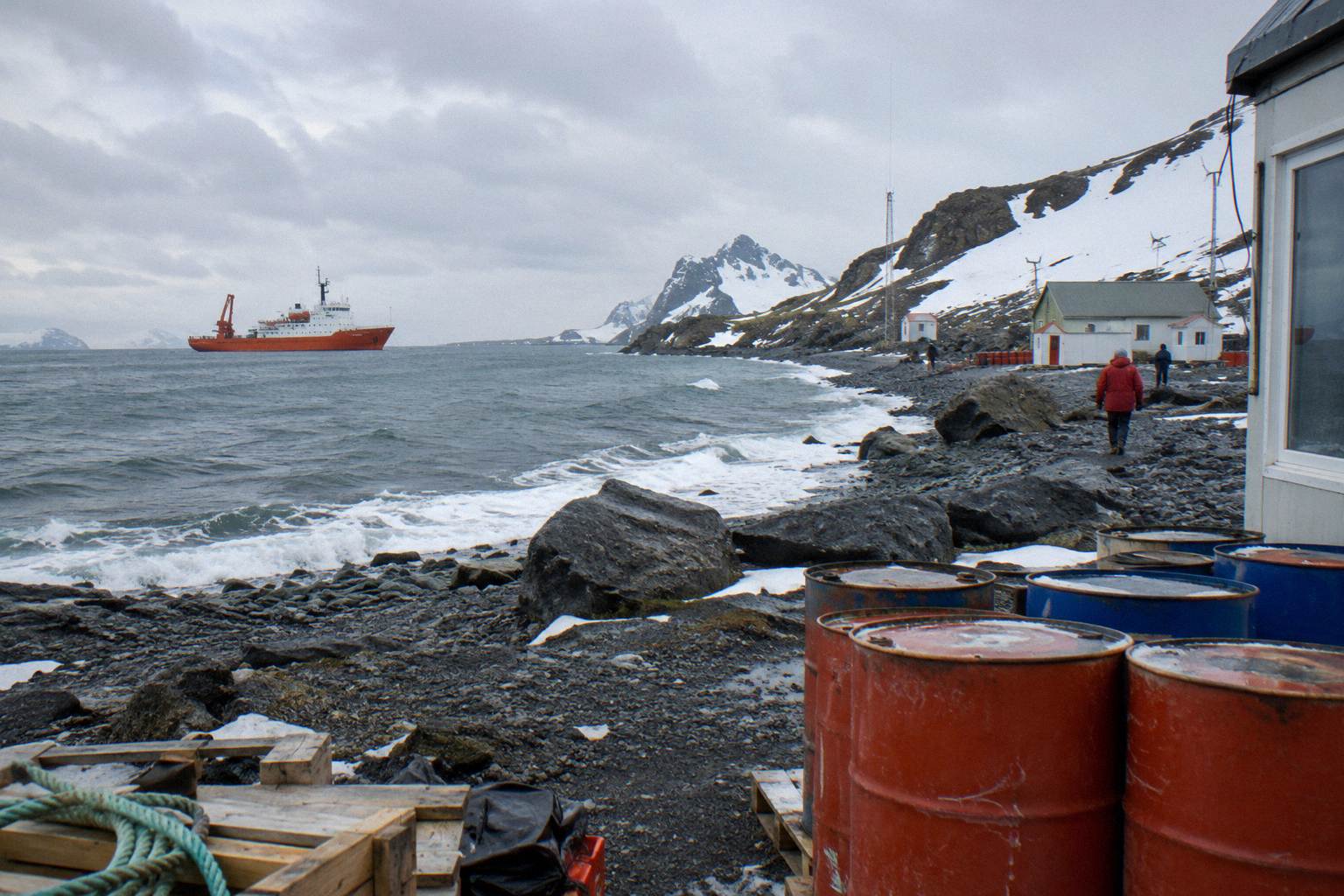
Antarctic tourism is concentrated in roughly one corner of the continent. The Antarctic Treaty Secretariat notes that about 98 percent of tourism voyages occur in the Antarctic Peninsula during the austral summer, which happens to be the same neighbourhood where most research stations sit. That overlap creates a question almost every expedition cruiser asks: will we actually get to walk around a base? The honest answer is that a station visit is possible, occasionally wonderful, and never guaranteed. IAATO counted 113,518 total visitors in the 2025-26 season, and only a fraction of those people stood inside a research building.
This guide sets out what is actually possible. Port Lockroy is the station that reliably welcomes guests. Vernadsky, the Ukrainian base, runs a souvenir shop and a famous bar. Palmer Station in the United States programme accepts visits only by prior arrangement, and access has been limited since the pandemic. Beyond those, the picture gets restrictive quickly, and understanding why will change how you read any expedition itinerary that mentions "station visits".
Can Cruise Passengers Actually Visit Research Stations In Antarctica?
Yes, a small number of Antarctic stations accept cruise visitors, but every visit depends on prior permission, scheduling and conditions on the day. Port Lockroy is staffed specifically for visitors, Vernadsky operates a small shop and bar, and Palmer Station permits visits only when arrangements are made in advance. Most other bases restrict or refuse tourist access, and no operator can promise a station stop in its itinerary.
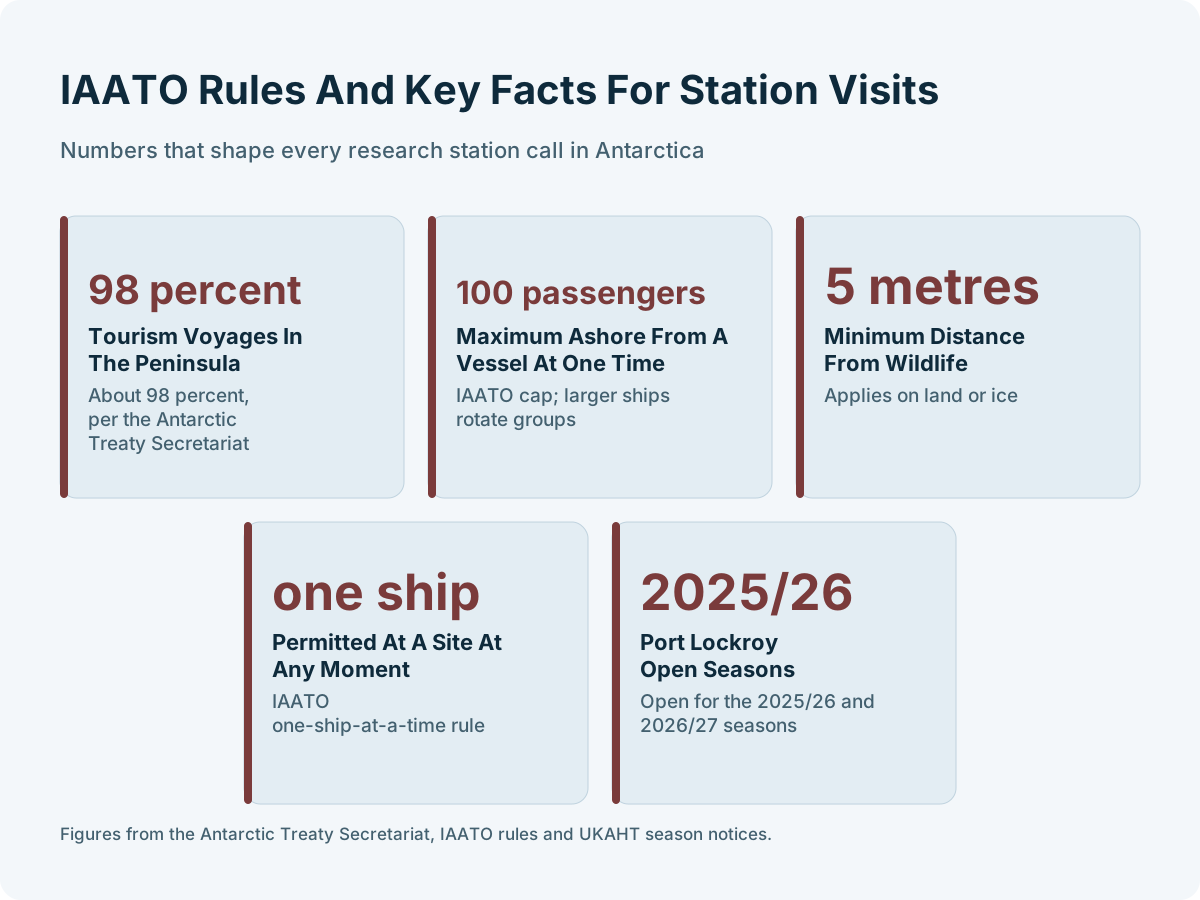
Research stations in Antarctica exist for science, not tourism, and the legal framework treats them that way. Under Antarctic Treaty and IAATO practice, tourist visits to stations require the agreement of the station's national operator, coordinated well before the season starts. A cruise line cannot simply anchor and send Zodiacs ashore. IAATO rules also shape what happens at any landing: a maximum of 100 passengers may be ashore from a vessel at any one time, only one ship may visit a site at any one time, and vessels carrying more than 500 passengers shall not make landings in Antarctica at all.
That last rule quietly decides the whole question for many travellers. Large mainstream ships, of the kind that scenic-cruise the Peninsula without landings, will never visit a station, because they cannot land anyone anywhere. Only expedition vessels in the IAATO landing categories get near the question, and even then the station has to say yes. The Cruises In Antarctica site exists partly because this distinction is the single biggest fork in Antarctic trip planning, and it is worth settling before you look at any specific voyage.
Here is the status of the stations most often discussed, as they are currently described.
| Station | Operator | What visitors can do | Access status |
|---|---|---|---|
| Port Lockroy (Base A, Goudier Island) | UK Antarctic Heritage Trust | Museum, post office and gift shop | Open for the 2025/26 and 2026/27 seasons, with conservation works ongoing |
| Vernadsky | Ukraine (National Antarctic Scientific Center) | Souvenir shop and bar, recycled plastic souvenirs | Accepts tourist visits; passport stamps reported |
| Palmer Station | US Antarctic Program | Station visit by arrangement | Requires prior arrangements and permission; limited tourist access since the pandemic |
| Arctowski | Poland | Research activity | New station nearing completion; tourist visits not routinely confirmed |
| Esperanza, Brown, Carlini, Bellingshausen/Frei, Gonzalez Videla | Argentina and Chile | Historically popular with cruise visitors | Many closed or restricted; visits require prior permission |
If your heart is set on a station visit, the voyage you choose matters as much as the station. Small ships with flexible scheduling, sailing the classic Peninsula routes from Ushuaia, are the ones that occasionally add a station call, and a free chat about station visit odds will quickly sort which itineraries have a realistic chance from those that merely sail past.
Port Lockroy: The Station Almost Every Peninsula Voyage Can Reach?
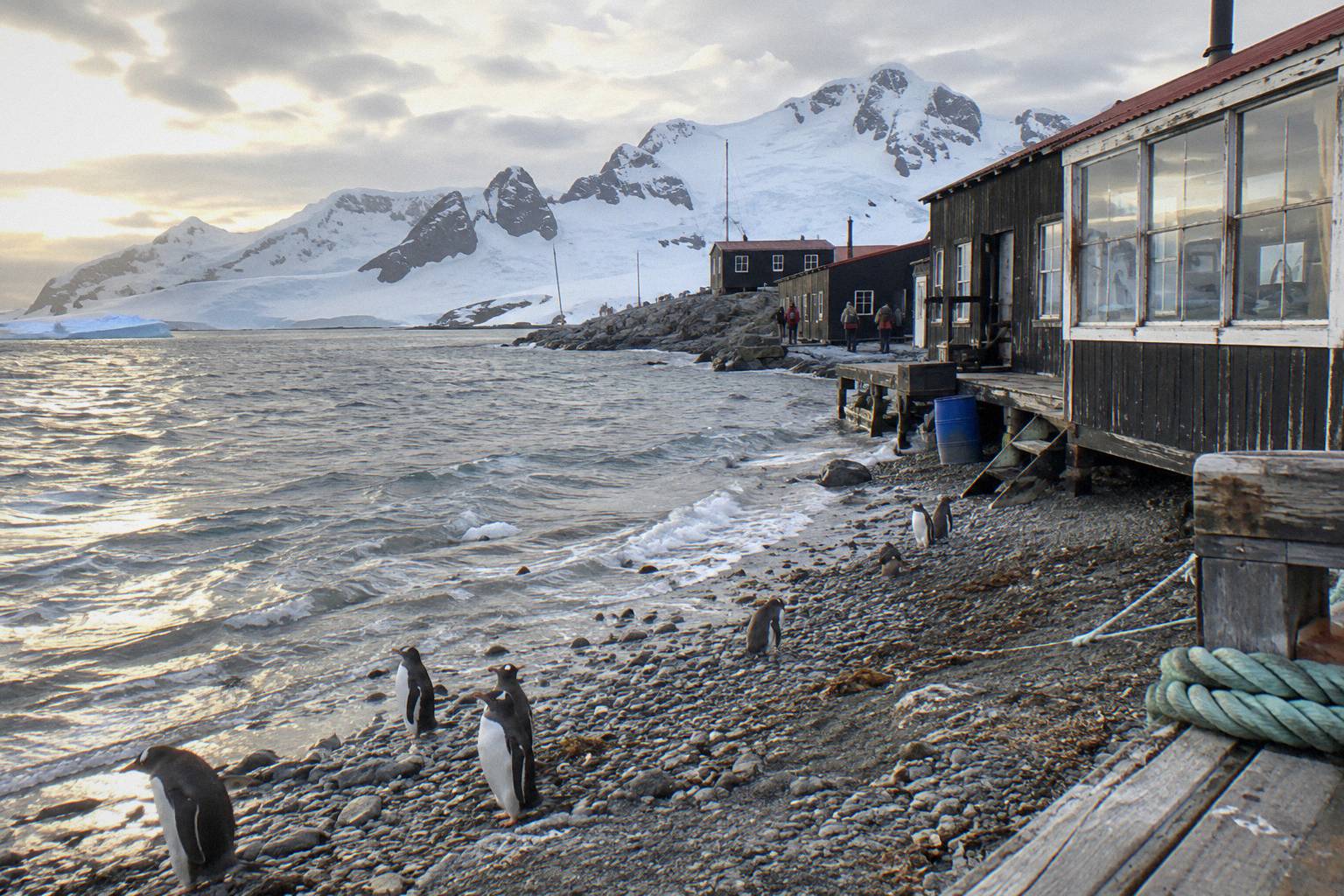
Port Lockroy, on Goudier Island, is the one Antarctic station genuinely set up for cruise visitors, run by the UK Antarctic Heritage Trust as a living museum with the world's southernmost post office. It is open for the 2025/26 and 2026/27 seasons, though major structural conservation works are under way, which can limit access to parts of the site. Expect a museum, a shop and a working post office, not a science base.
The station began life as British Base A, part of Operation Tabarin in 1944, and was later restored as a heritage site rather than an active research facility. That history is exactly why it welcomes tourists: there is no sensitive science to disrupt, and the Trust that runs the shop is the same body carrying out the conservation of the buildings. The site is also home to a gentoo penguin colony, which visitors watch from marked areas under the standard IAATO wildlife distances.
The 2026/27 season is a working season at Port Lockroy. The Trust describes a three-year structural conservation programme, with major works in 2026/27 that include roof beams and props for the historic buildings. A visit is still a visit: the museum, shop and post office have operated with teams on site through the works. But travellers who imagine a pristine, empty heritage building should picture scaffolding and conservation staff instead, and be glad of it, because that work is what keeps the station standing.
Practical notes matter here. Port Lockroy is one of the busiest sites in Antarctica, and its popularity is managed through the same IAATO scheduling used everywhere else: one ship at a time, capped numbers ashore, and coordination across operators for the whole season. Your expedition team will confirm a Port Lockroy call only when weather and ice allow, and the site guidelines keep island numbers tight (no more than 60 visitors at once, 35 inside the base, 350 per day), so the stop is oriented around the museum, the shop and posting your postcards. Nothing about the stop is guaranteed until the Zodiacs are actually lowered, a point worth repeating to yourself for every landing on any Antarctic cruise.
Vernadsky Station: The Southernmost Bar And Souvenir Shop?
Vernadsky, the Ukrainian station on the Argentine Islands, is the station most cruise visitors actually get to wander inside, because it operates a souvenir shop and a bar for tourists. The National Antarctic Scientific Center of Ukraine sells recycled plastic souvenirs on site. Like every station call, a visit depends on the station agreeing in advance.
Vernadsky is an active Ukrainian research facility that also makes room for tourists. What makes Vernadsky unusual is the warmth of the welcome: a functioning bar, a shop, and reports of passport stamps offered to visitors, a small ritual that several Antarctic stations have practised over the years. Nobody treats the stamp as an official immigration act, and you should not either, but as a souvenir it beats a fridge magnet.
The recycled plastic souvenirs deserve a mention of their own. Polar Journal reporting on the station describes plastic being turned into souvenirs sold in the shop, a neat bit of reuse at the bottom of the world, and a small way for a visit to put something back into a working national programme.
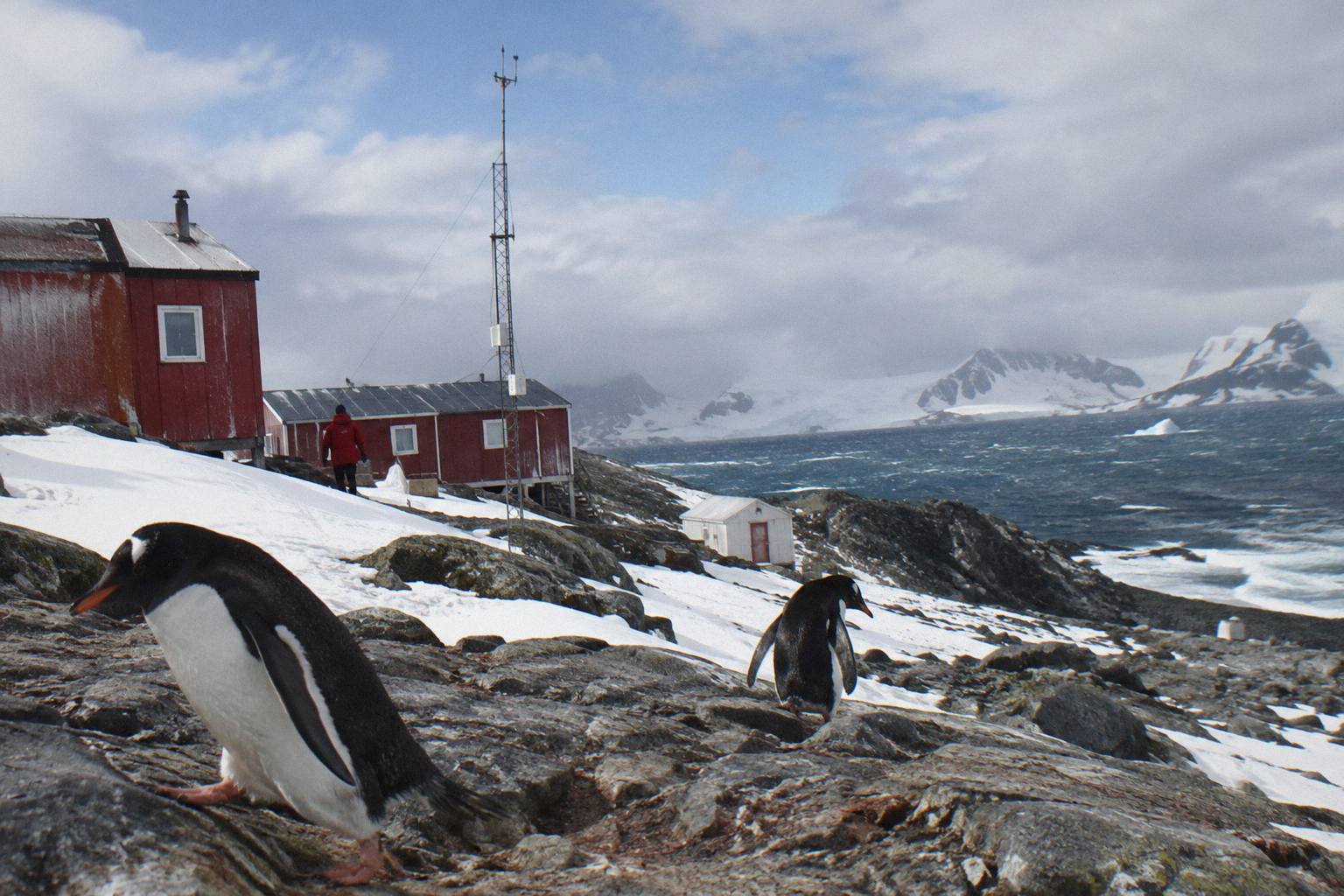
Because Vernadsky is a working station, visits depend on the science calendar and the station's capacity on the day. Your expedition team submits the request, the station confirms or declines, and the weather has the final word. Whether a given itinerary reaches it depends on how far south along the Peninsula the ship plans to sail. If stepping inside a base is a genuine priority rather than a nice-to-have, that geographic detail should shape which itinerary you book, and a free consultation on route choices costs you nothing to check.
Palmer Station And The Bases That Need Prior Arrangement?
Palmer Station, the United States base on the Antarctic Peninsula, accepts tourist visits only where prior arrangements and permission have been made, and access has been limited since the pandemic. The same pattern applies to a wider group of stations: Argentine and Chilean bases that were once popular stops, including Esperanza, Brown, Carlini, Bellingshausen and Frei on King George Island, and Gonzalez Videla, now mostly closed or restricted, with every visit requiring permission ahead of time.
Palmer is worth understanding because it illustrates the whole category. The US Antarctic Program's guidance, reflected in the Antarctic Treaty visitor guidelines, treats station visits as something to be arranged, not assumed. Tourist access since the pandemic has been limited, and cruise reporting consistently describes reopenings as partial and conditional. None of this makes Palmer hostile to visitors; it makes Palmer a workplace where science comes first and a tour happens only when it fits.
The Argentine and Chilean stations tell a similar story with more history. Bases such as Esperanza in Argentina's programme and Gonzalez Videla in Chile's were historically popular stops with cruise visitors. Post-pandemic, current guidance says many of these stations closed or restricted tourist access, and those that do receive visitors require prior permission. An itinerary that lists "research station visit, subject to permission" is being honest with you, and an itinerary that simply promises one is being optimistic.
Poland's Arctowski station rounds out the picture. It remains primarily a research facility, with a new station building reported as nearing completion, and routine tourist visits are not confirmed in the recent material. King George Island deserves its own look because it combines several bases with the fly-cruise gateway, which we come to next.
King George Island: The Fly-Cruise Window On Station Life?
King George Island, the arrival point for Antarctic fly-cruises, hosts a cluster of national stations including Frei and Bellingshausen, which gives fly-cruise passengers a rare view of station life without a ship's Zodiac operation. Scheduled visits still require prior arrangement, and the airstrip, not tourism, is the island's real job. Visitors land there because of the gravel Teniente Rodolfo Marsh Martin airstrip at Frei, and any station exposure is a bonus layered on top.
The island concentrates a remarkable amount of Antarctica's international presence into a small footprint. The airstrip that fly-cruise passengers land on belongs to the station complex, and the broader site includes the bases listed earlier among the restricted-access group. For travellers on air-cruise itineraries, the practical effect is that you may see station infrastructure up close, buildings, vehicles and personnel, without the much rarer experience of entering one as a guest. The distinction is worth holding onto when comparing a fly-cruise with a sailing voyage from Ushuaia, and our guide to flying versus sailing the Drake covers the trade-offs in full.
Whether any permission-based visit comes off is a scheduling question as much as a diplomatic one. IAATO operators coordinate station requests through the season, stations confirm windows around their science programmes, and ice or weather can still cancel a confirmed call. The only station stops an operator can plan around with any confidence are the ones set up for tourism, Port Lockroy and, to a lesser extent, Vernadsky. Everything else is a request in a queue.
There is one famous exception to everything on this page, and it sits a very long way from the Peninsula. McMurdo Station, the main United States base on the Ross Sea side of Antarctica, is a different world from the Peninsula circuit, and the question of whether tourists can visit it has its own answer. Our companion piece on whether tourists can visit McMurdo covers the Ross Sea context, where voyages run roughly 22 to 34 days and station exposure, when it happens at all, looks nothing like a Peninsula Zodiac morning.
To put the three realistic station experiences side by side, here is how they differ in practice for a cruise passenger.
| Experience | Port Lockroy | Vernadsky | Palmer Station |
|---|---|---|---|
| What you do ashore | Museum, post office, shop, penguin colony | Shop, bar, station visit | Station visit by arrangement |
| Who staffs it for you | UKAHT heritage team | Ukrainian station personnel | US programme staff |
| Booking mechanism | IAATO ship scheduler, one ship at a time | Prior request via operator | Prior arrangement and permission |
| Reliability of a call | High when scheduled, weather permitting | Moderate, depends on station capacity | Low, limited access since the pandemic |
| Souvenirs and stamps | UKAHT shop; postcards posted | Recycled plastic souvenirs; stamps reported | Not a souvenir stop |
Postcards, Passport Stamps And Souvenirs: What Can You Take Home?
Postcards posted at Port Lockroy's post office typically take several weeks to months to arrive, and the souvenirs sold there and at Vernadsky are among the few things you can legitimately bring home. Taking anything else from Antarctica is prohibited: rocks, feathers, bones, eggs, vegetation, soil, meteorites and fossils are all protected, and the same rules forbid damaging or removing any biological or geological item.
The post office detail is the one that surprises people. Your card from Goudier Island has to wait for onward transport out of Antarctica, and published guidance gives delivery in several weeks to months, not days. Post your cards early in the voyage if you can, accept that they will arrive after you do, and enjoy the fact that they were cancelled at the world's southernmost post office.
The shopping is more meaningful than it sounds. Port Lockroy's shop sells items including recycled plastic goods, maps and apparel, run by the same Trust that conserves the buildings, and Vernadsky's shop sells recycled plastic souvenirs for Ukraine's station. Both are small, legitimate ways to come home with something from Antarctica. Passport stamps, reported at Vernadsky and historically at some Argentine bases, are a memento rather than an official record, so do not plan any border crossing around them.
What you cannot take matters as much as what you can buy. The visitor guidelines under the Antarctic Treaty Environmental Protocol prohibit taking or damaging rocks, feathers, bones, eggs, vegetation, soil, meteorites, fossils or any biological or geological items. The rules run the other direction too: biosecurity procedures require you to carefully wash boots and clean all equipment, including clothes, bags, tripods, tents and walking sticks, before bringing them to Antarctica, and to clean again between sites. A station visit is not exempt from any of this, and if anything the scrutiny around buildings is tighter, because non-native species are the specific threat biosecurity exists to prevent.
How Do IAATO Rules Shape A Station Visit?
IAATO rules govern every station visit from start to finish: no more than 100 passengers from a vessel ashore at any one time, only one ship per site at any given moment, a minimum of 5 metres from wildlife on land or ice, and strict biosecurity including boot washing and gear cleaning between sites. The same rules apply at heritage stations and active bases alike, which is why large ships cannot make station calls at all.
The 100-passenger cap is the quiet hero of Antarctic site management. On a ship carrying more than 100 guests, a station visit means rotations, with groups taking turns ashore while others wait, which shortens everyone's time on site. On a ship at or under the cap, the whole complement can go ashore in one movement, which is why the smallest vessels often have the most workable station calls. IAATO's one-ship-at-a-time rule adds the other constraint: even a small ship has to book its slot, and a busy heritage site like Port Lockroy is scheduled across the entire season so that operators do not collide.
The wildlife rules follow you everywhere, including the built environment, because penguins nest in and around several stations. The general visitor guidelines keep people at least 5 metres from wildlife on land or ice, with site or species guidance sometimes requiring more, and the same document prohibits drone use near wildlife. If a station landing coincides with a colony, and at Port Lockroy it always does, the expedition team will mark the routes and the rules will be the same as any wilderness landing.
| IAATO rule at a station site | What it means for your visit |
|---|---|
| Max 100 passengers ashore from a vessel at once | Ships over 100 guests rotate groups; small ships land everyone together |
| One ship at a site at any one time | Your slot is scheduled in advance across the whole season |
| Vessels over 500 passengers make no landings | Mainstream scenic-cruise ships cannot visit any station |
| Minimum 5 metres from wildlife on land or ice | Applies around station buildings where penguins nest |
| Biosecurity: wash boots, clean gear, between sites | Station landings include disinfection steps, no exceptions |
| Drones must not be used near wildlife | Leave the drone packed at any station call |
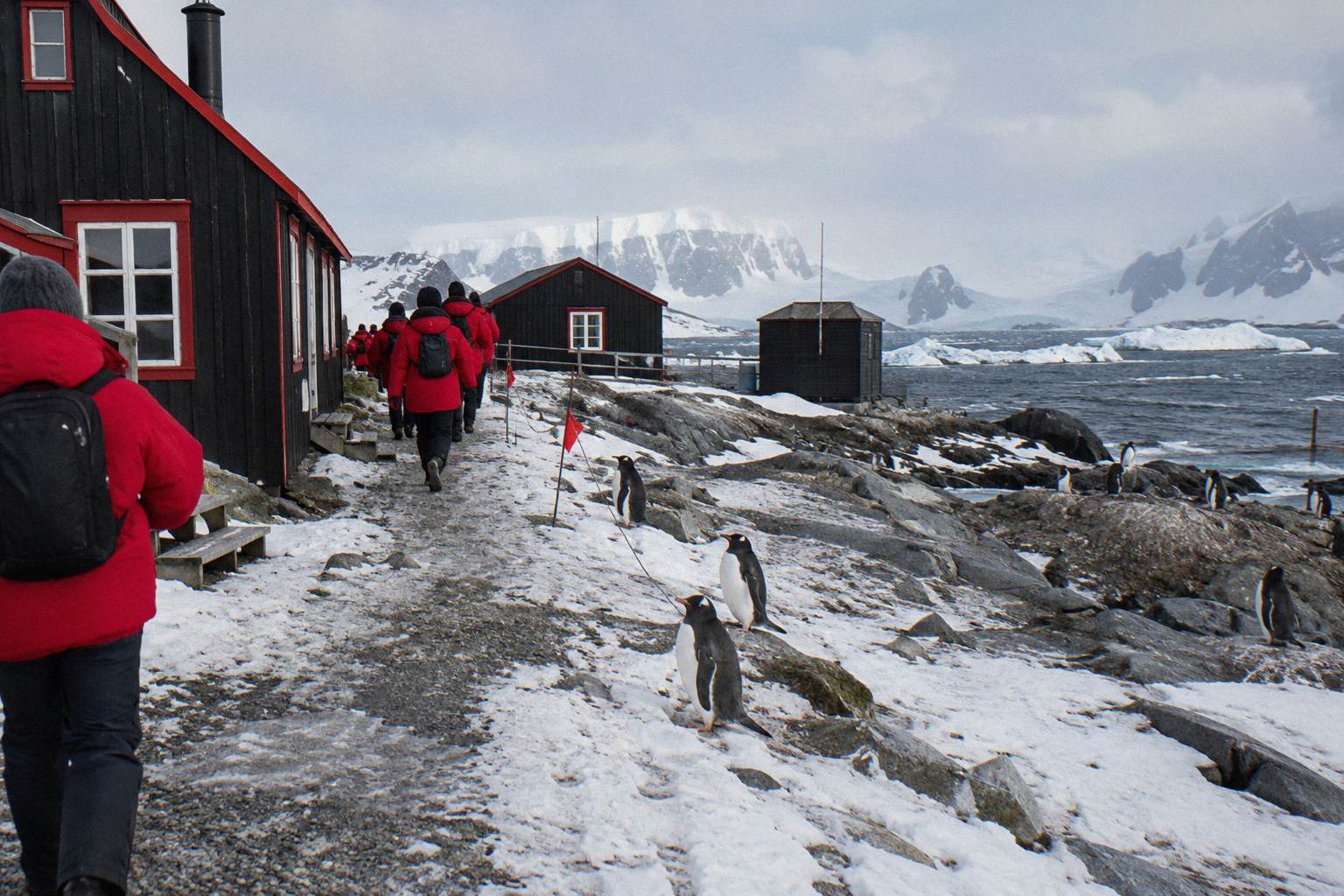
None of this is negotiable on the day, and none of it should feel like bureaucracy. The visitor figures IAATO publishes, 113,518 total visitors in 2025-26 of whom 85,195 actually landed, exist because someone counts, and the rules exist because a century of Antarctic practice shows what happens without them. For a deeper treatment of the whole framework, see our guide to IAATO rules for Antarctic visitors.
Which Ships Actually Fit Station Calls Into An Itinerary?
Small expedition ships, roughly 100 to 200 passengers, are the vessels that most plausibly include a station stop, because they can land their full complement at once inside the 100-ashore cap and slot into the one-ship-at-a-time scheduler. Budget-class vessels such as Oceanwide Expeditions' Plancius, Ortelius and Hondius sail the classic Peninsula routes where Port Lockroy and Vernadsky sit, giving them the geography and the flexibility that station calls require.
Oceanwide's trio is a useful case study because the ships are so different in character while sharing the same routes. Plancius, built in 1976 as a Dutch Navy oceanographic vessel and rebuilt as a passenger ship in 2009, carries 108 passengers in 50 cabins, which puts her at or near the 100-ashore threshold where landings run smoothly. Ortelius, a 1989-built former Russian research vessel, carries the same 108-passenger count, holds an ice class of UL1, equivalent to 1A, and is the Oceanwide ship that runs the helicopter-supported Weddell Sea emperor voyages. Hondius, built in 2019 and the first-registered Polar Class 6 vessel in the world by her operator's own wording, carries 170 passengers across 80 cabins and offers cabin categories from quadruple portholes up to a grand suite with a private balcony.
| Ship | Class | Passengers | Ice class | From, per person | Voyage length | Departs from |
|---|---|---|---|---|---|---|
| PlanciusOceanwide Expeditions | Small-Ship Budget | 108 | 1D | from $7,050 | 10 to 33 days | Ushuaia |
| OrteliusOceanwide Expeditions | Small-Ship Budget | 108 | UL1 | from $7,800 | 11 to 25 days | Ushuaia |
| HondiusOceanwide Expeditions | Small-Ship Budget | 170 | Polar Class 6 | from $7,800 | 11 to 19 days | Ushuaia |
Plancius deserves a closer look for station-minded travellers, and you can read the full profile in our guide to Plancius compared with G Adventures' Expedition. Her Antarctic Peninsula voyages run from 10 to 33 days from Ushuaia, with published fares from $7,050 per person, and her Basecamp departures bundle activities like camping, kayaking, snowshoe hiking, mountaineering and a photo workshop into the fare. Ten Zodiacs with two gangways give her team flexibility on landing logistics, which is exactly what a scheduled station slot needs, and the operator suggests gratuities of 10 to 15 euros or dollars per passenger per day as a blanket contribution. Nothing in her schedule promises a station, but everything about her size and routing makes one possible.
Choosing between these ships is a genuine decision point: same operator, same gateway, different comfort levels and prices. Ortelius and Hondius share an Oceanwide entry fare of $7,800 per person on Peninsula departures, Plancius undercuts them at $7,050, and all three confirm their 2026-27 schedules on the operator's pages. A free consultation on the right ship can weigh the cabin categories, the ice classes and the activity inclusions against your priorities, with no obligation attached.
Common Questions About Antarctic Research Stations
Can cruise passengers visit McMurdo Station?
McMurdo sits on the Ross Sea side of Antarctica, reached by voyages of roughly 22 to 34 days, most of them from New Zealand or Australia, and tourist exposure to it is rare and limited. It is not part of any Peninsula cruise itinerary. See our dedicated article on whether tourists can visit McMurdo for the full picture.
Is Port Lockroy open in the 2026-27 season?
Yes. The UK Antarctic Heritage Trust has the station open for the 2025/26 and 2026/27 seasons with museum, post office and shop operational, while a multi-year structural conservation programme continues, and some areas may have restricted access during the works.
Can you buy souvenirs at an Antarctic research station?
At two of them, yes. Port Lockroy's shop sells items including recycled plastic goods, maps and apparel, and Ukraine's Vernadsky station runs a souvenir shop and bar, with reporting describing recycled plastic souvenirs made at the base.
How long do postcards from Port Lockroy take to arrive?
Typically several weeks to months. Cards wait for onward transport out of Antarctica, so post early in your voyage and expect them well after you are home.
Why can't large cruise ships visit research stations?
IAATO rules state that vessels with more than 500 passengers shall not make landings in Antarctica, so big scenic-cruise ships cannot put anyone ashore anywhere, stations included. Even among landing-capable expedition ships, the 100-passengers-ashore cap and the one-ship-at-a-time rule shape which vessels can use a station slot well.
Can I get a passport stamp in Antarctica?
Passport stamps have been reported at Vernadsky station and historically at some Argentine bases, but they are a memento rather than an official immigration record. Treat one as a souvenir, not a border entry.
More Rules, Safety And The Environment
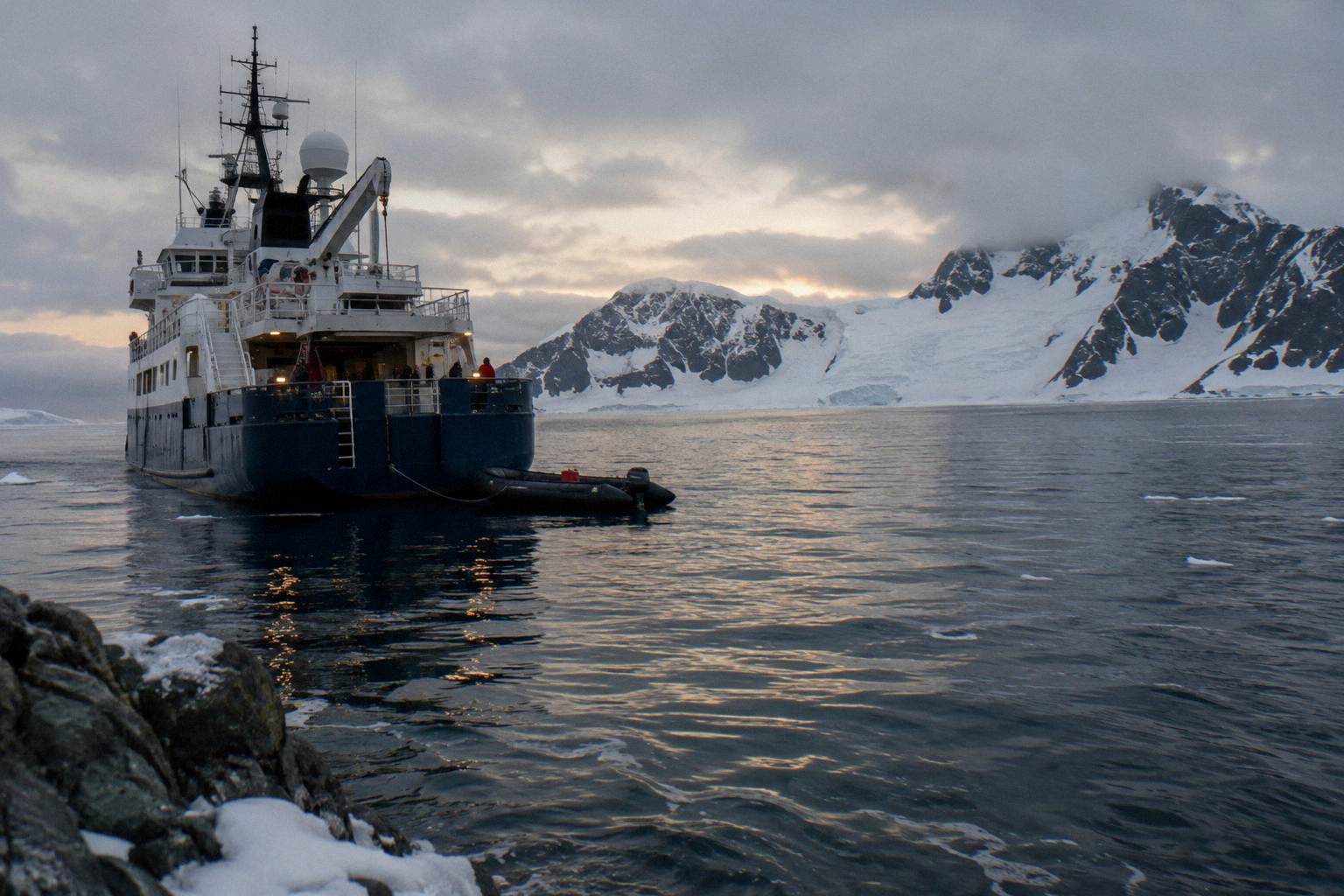 IAATO RulesThe rules every Antarctica visitor follows, from the 100-ashore limit to souvenir bans.Read the guide
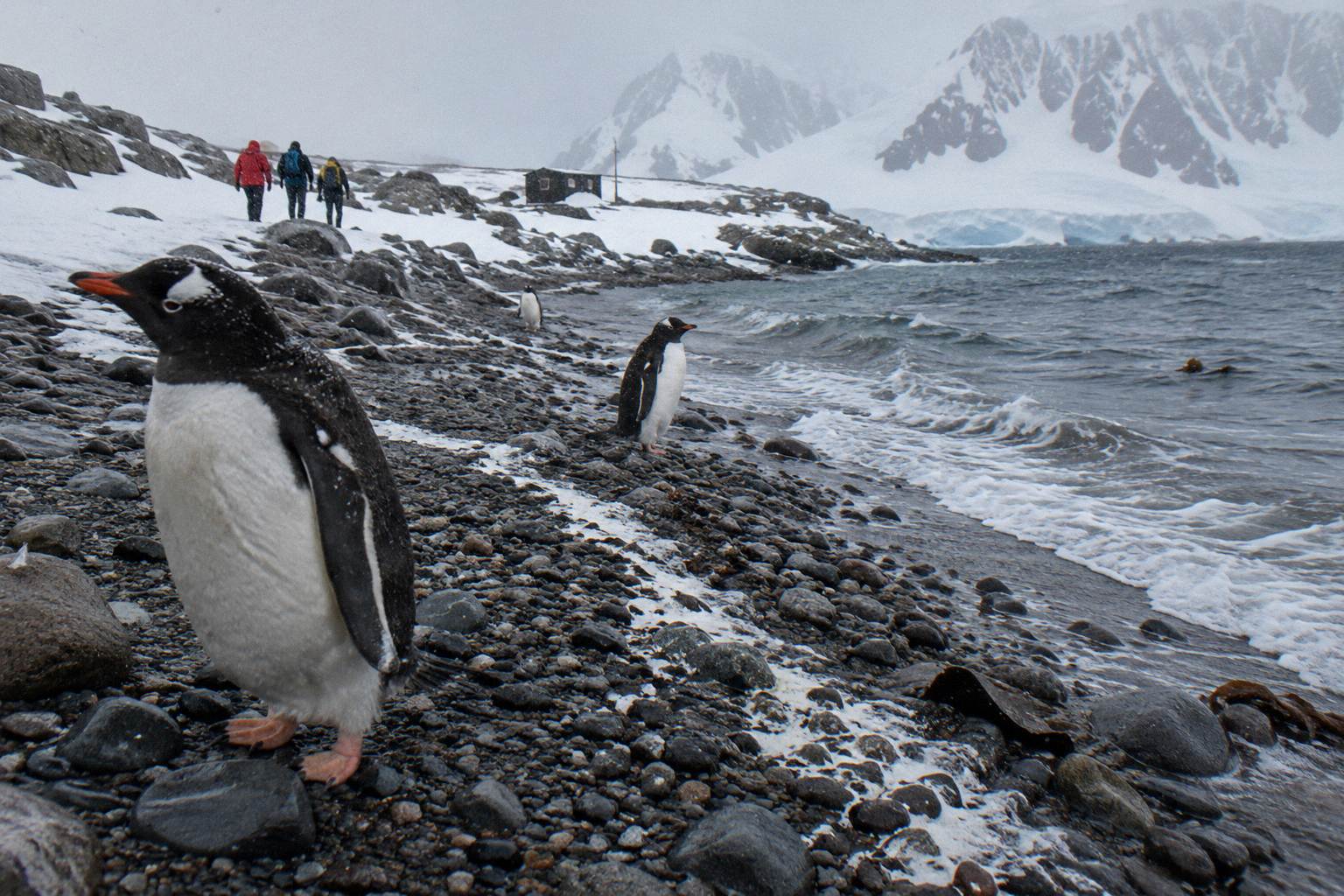 Avian Flu In AntarcticaWhat H5N1 means for Antarctic landings, wildlife and your voyage.Read the guide
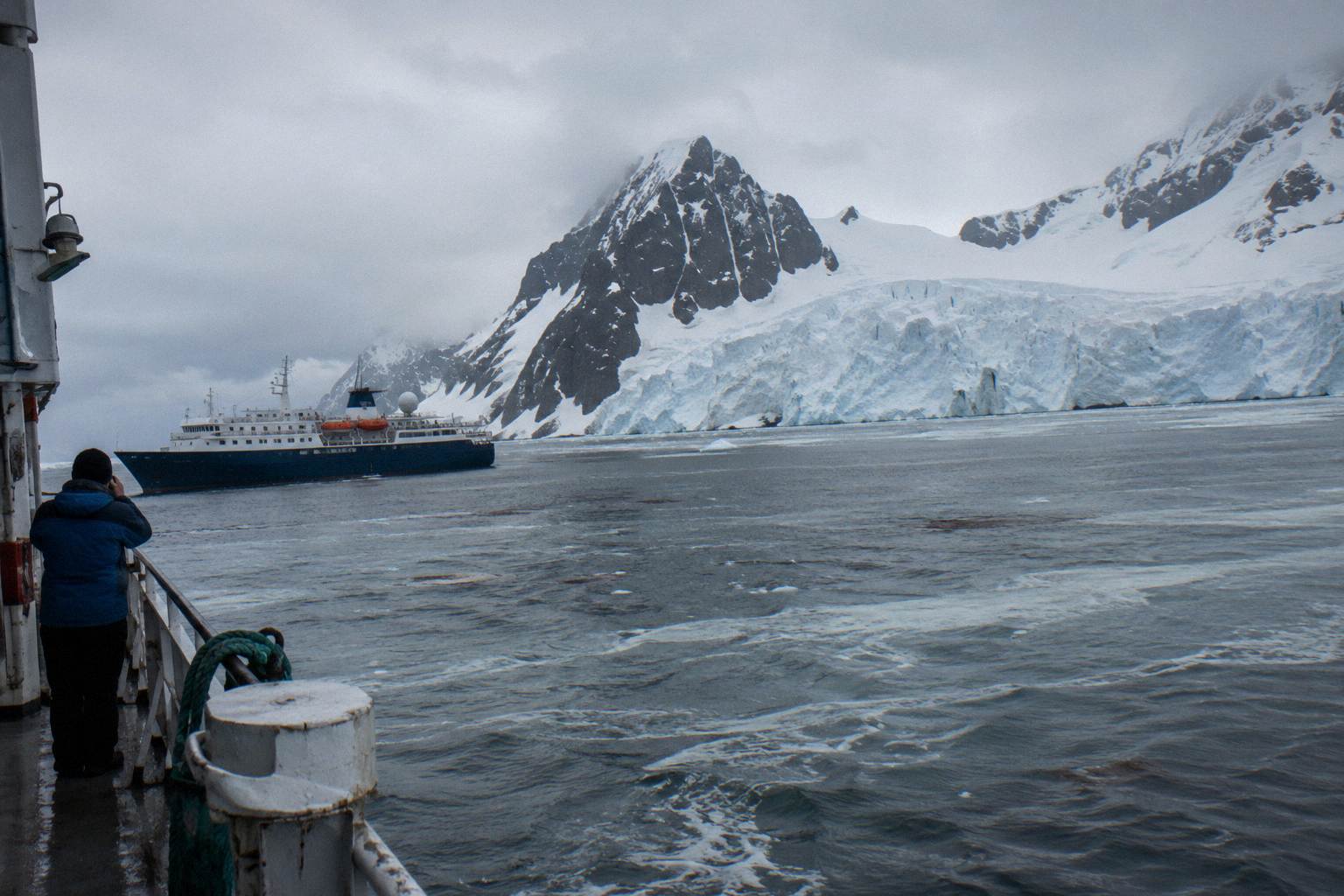 Cruise Environmental ImpactCarbon, black carbon, the fuel ban and lower-impact ship choices, with real numbers.Read the guide