Atlas Ocean Voyages Antarctica: All-Inclusive Yacht-Style Expeditions
 By Oleg G.
Atlas Ocean Voyages sells itself on yacht-style Antarctica expeditions with an all-inclusive fare. Here is what the operator actually publishes, what it does not, and who the product suits.
Quick answer: Atlas Ocean Voyages sails two yacht-style ships to Antarctica in 2026-27, World Navigator and World Traveller, each carrying 196 guests. Published Antarctic fares start from $12,150 per guest. The fare is billed as all-inclusive, with drinks and gratuities included, but flights to the gateway are not.
Who Is Atlas Ocean Voyages?
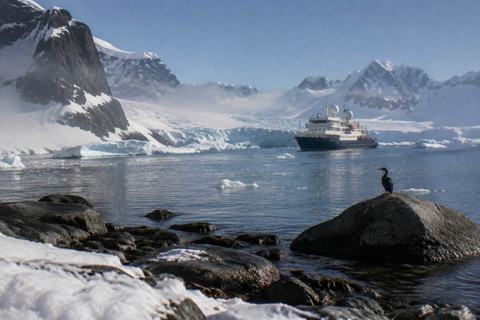
Atlas Ocean Voyages is a luxury-adventure cruise line that markets itself on small, yacht-style expedition ships, and it is an IAATO member, so its Antarctica landings follow the industry's environmental rules rather than a private standard. The line operates two ships relevant to Antarctica in the 2026-27 season, World Navigator and World Traveller, both billed as yacht-style vessels carrying 196 guests. Its positioning sits between the budget expedition operators and the classic luxury lines: the fare is sold as all-inclusive, the ships are small enough to run landings, and the onboard product leans upscale. For a buyer shortlisting operators, the useful framing is that Atlas competes on inclusions and ship style rather than on headline price alone.
The operator's Antarctica program for 2026-27 runs 23 departures between November 2026 and March 2027, according to Cruise Industry News reporting on the line's fifth Antarctica season. That is a meaningful schedule for a two-ship line. The line is a member of the International Association of Antarctica Tour Operators, which you can verify yourself through the IAATO membership directory; membership matters because IAATO rules cap landings at 100 passengers ashore at a time and require a 1:20 guide ratio, which shapes what a 196-guest ship can actually deliver on the ice.
Where Atlas does not publish something, this guide says so plainly. The line does not publish a per-ship expedition team size, a minimum age, or a detailed solo-traveller policy on the pages reviewed here, and those gaps are noted in the relevant sections rather than filled with guesses. The same discipline applies to fares: every number in this article comes from the operator's own listing pages or from published trade and cost reporting, and where a figure was read but not verified, that is stated too.
What Ships Does Atlas Ocean Voyages Sail To Antarctica?
Atlas sails two ships in Antarctic waters in 2026-27: World Navigator, launched 2021, and World Traveller, launched 2022, both carrying up to 196 guests with 100 suites and staterooms each and a fleet ice rating of Ice Class 1B and Polar Category C. Both ships are roughly 129 metres long, and their ice rating is lower than the PC5 and PC6 ships elsewhere in the market. A third Atlas ship, World Voyager, is under full charter and is not part of the line's own 2026-27 Antarctic deployment; a ship of that name sails in Quark's 2026-27 Antarctic fleet.
The pair are genuinely small by cruise standards. At 196 guests they sit in IAATO's landing-capable category, and the fleet page describes them as yacht-style with about 100 suites and staterooms per ship. Cabin categories run from Horizon and Veranda Staterooms up to Navigator, Discovery and Journey suites, with many cabins featuring private balconies or verandas, per the line's accommodations pages. The ships' FAQ page carries the Polar Category C and Ice Class 1B wording for the fleet as a whole rather than per vessel, which is worth knowing if you like to see the class notation attached to the exact ship you are booking.
| Ship | Guests | Length | Ice class | Typical Antarctic ports | 2026-27 schedule |
|---|---|---|---|---|---|
| World Navigator | 196 | ~129 m | Ice Class 1B, Polar Category C | Ushuaia, Buenos Aires | Confirmed on operator page |
| World Traveller | 196 | ~129 m | Ice Class 1B, Polar Category C | Ushuaia, Buenos Aires | Confirmed on operator page |
| Ship | Class | Passengers | Ice class | From, per person | Voyage length | Departs from |
|---|---|---|---|---|---|---|
| World NavigatorAtlas Ocean Voyages | Upscale Expedition | – | Ice Class 1B, Polar Category C | from $12,150 | 10 to 12 days | Ushuaia, Buenos Aires |
| World TravellerAtlas Ocean Voyages | Upscale Expedition | – | Ice Class 1B, Polar Category C | from $14,114 | 8 to 19 days | Ushuaia, Buenos Aires |
| UltramarineQuark Expeditions | Upscale Expedition | 199 | 1A+, PC6 | from $12,236 | 12 to 14 days | Buenos Aires, Ushuaia |
World Navigator is the featured Atlas ship on this site. It entered service in 2021 and, with 196 guests, it is small enough that landings do not require the heavy rotation a 500-guest ship would need. The roster shows its Antarctic voyage days running 10 and 12 days, sailing from Ushuaia and Buenos Aires, with the season confirmed on the operator's own page.
World Traveller is the newer of the two, launched 2022, and carries the same 196-guest capacity and 100-suite layout. Its Antarctic fares run somewhat higher than its sister's on the published departures we reviewed, and its voyage-day range is wider, from 8 to 19 days, which includes a 16-night Ushuaia-to-Buenos Aires voyage.
What Itineraries And Prices Does Atlas Publish For 2026-27?
Published Atlas Antarctic fares start from $12,150 per guest for an 11-night Ushuaia roundtrip on World Navigator in March 2027, with World Traveller departures listed from $14,114, and the line's listing page shows nine World Navigator and twelve World Traveller departures between October 2026 and April 2027. Itinerary lengths published on the roster run 10 and 12 days for World Navigator and 8 to 19 days for World Traveller, with the longer options reaching toward the Falklands and South Georgia. All fares are per person on a double-occupancy basis.
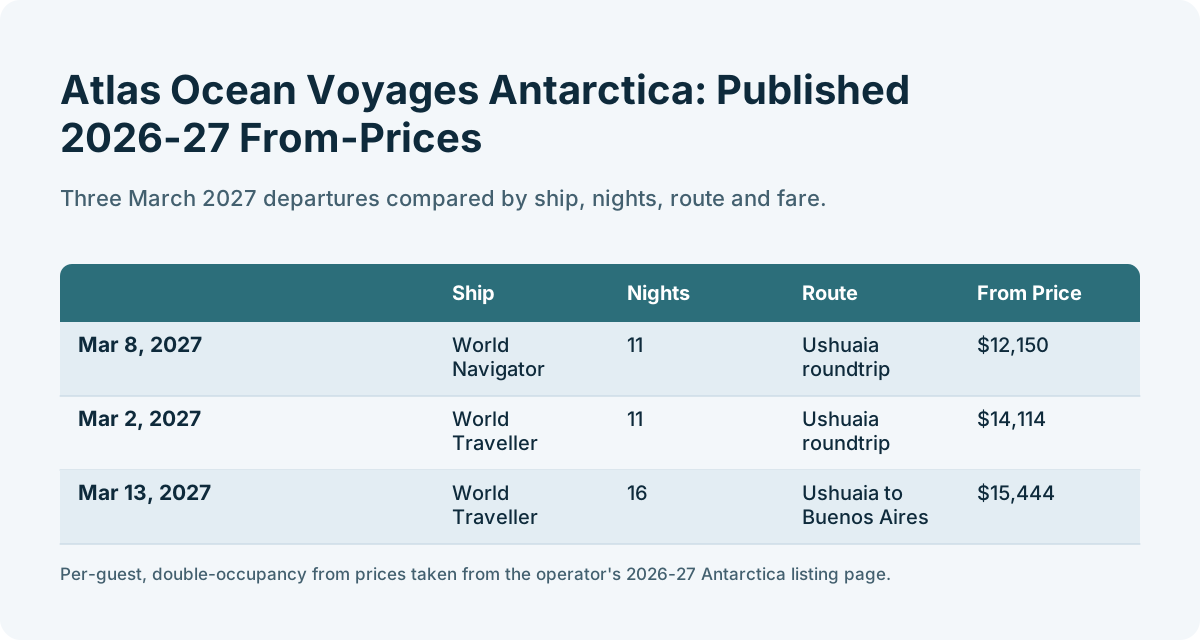
The entry fare of $12,150 attaches to an 11-night Ushuaia roundtrip sailing on March 8, 2027, per the operator's own Antarctica listing page. A comparable 16-night Ushuaia-to-Buenos-Aires voyage on World Traveller in March 2027 was listed from $15,444 per guest. These are per-person, double-occupancy from-prices, and the operator runs promotions that can move the real paid figure considerably: one 2026 cost guide reports Atlas ran aggressive 2026-27 promotions with savings of up to $6,779 per person plus onboard credit, with fares scheduled to rise on October 1. Treat every published number as a starting point, not a promise.
| Departure (2026-27) | Ship | Nights | Route | From price (pp) |
|---|---|---|---|---|
| Mar 8, 2027 | World Navigator | 11 | Ushuaia roundtrip | $12,150 |
| Mar 2, 2027 | World Traveller | 11 | Ushuaia roundtrip | $14,114 |
| Mar 13, 2027 | World Traveller | 16 | Ushuaia to Buenos Aires | $15,444 |
The month you choose moves the price more than the ship does. Shoulder-season departures in November and March typically price below the December and January peak across every operator, and the same pattern shows in Atlas's own listing, where the cheapest published fares sit in March 2027. If your dates are flexible, that is the single biggest lever on cost. Our guide to Antarctica cruise prices by month breaks the season down in detail.
If you are weighing these fares against other lines, the honest comparison is per night and per inclusion, not headline from-prices. Quark's voyage-level fares, shared across Ultramarine, Ocean Explorer and World Voyager, start at $12,236 for an 11-12 day Peninsula voyage, while budget operators such as Oceanwide start lower still. A free consultation is the cleanest way to lay the quotes side by side: compare Atlas against other operators with someone who tracks the promotions and can tell you which inclusions each fare actually carries.
What Does The Atlas Fare Include And Exclude?
Atlas markets an all-inclusive onboard experience, and published cost comparisons list drinks, gratuities and some flights and transfers among its inclusions, but the operator's ship pages do not itemise parkas, boots, flights or excursion gear the way some competitors do, so the fine detail lives in the booking documents rather than the marketing pages. The line's marketing references an all-inclusive experience and charter air on some packages, while parkas and boots do not appear as itemised entries on the official ship pages. That is an honest gap: where a competitor like Poseidon states a parka is included and gratuities are discretionary, Atlas leaves the detail to its booking documents.
The practical reading for a buyer: confirm what your departure includes, and expect to pay separately for international flights to the gateway city, travel insurance, and any premium activities or upgrades. Insurance deserves special attention on any Antarctic booking, because operators commonly require evacuation coverage minimums and the base fare never includes it. One cost guide puts the realistic all-in budget for a mid-range Peninsula trip, fare plus flights plus gear plus tips plus insurance, at $12,000 to $25,000 per person, which is a useful sanity check against any from-price you are quoted.
| Item | Atlas position |
|---|---|
| Meals | Not itemised on official ship pages |
| Zodiac excursions | Included |
| Drinks and gratuities | Included per published cost comparisons |
| Parkas and boots | Not itemised on official ship pages |
| Flights to gateway | Charter air on some packages; international flights not included |
| Travel insurance | Not included |
For a fuller treatment of what expedition fares typically cover across operators, see our guide on what an Antarctica cruise fare includes. The short version: the more the fare bundles, the smaller the gap between the sticker price and the real cost of the trip, and Atlas bundles more than Quark at a similar entry fare.
What Are The Distinctive Features Of The Atlas Product?
Atlas's distinguishing claims are the yacht-style small ship, the all-inclusive fare, and a polished onboard product, with a reported expedition team of up to 17 guides, though the line does not publish a Zodiac count, a guide ratio, or a per-voyage activity list on its official pages. The line's polar expedition marketing cites an expert team of up to 17 guides, optional kayaking and camping, private charter air on some packages, and what it calls Atlas Immersive Experiences. The ships' Ice Class 1B and Polar Category C rating is a mid-tier specification: adequate for the Peninsula in summer, not a deep-ice hull.
What the line does not advertise: helicopters (Quark's Ultramarine, Scenic's Eclipse ships), a submersible (Scenic), or a Science Hub of the kind on Quark's World Voyager. The expedition extras are real but conventional, meaning Zodiacs, kayaks and camping on select sailings. The ship pages do not publish a Zodiac count or a guide-to-guest ratio, and the line does not state which specific activities carry a fee. If kayaking matters to you, confirm it is offered and priced on your specific departure before booking, since the operator pages do not state it per voyage.
The onboard style is where Atlas makes its pitch. Each ship has about 100 suites and staterooms for 196 guests, and the line's SeaSpa by L'Occitane is referenced in its about materials. Dining specifics per ship are not itemised on the pages reviewed here, so treat the food experience as reported by the line's marketing rather than a verified specification. The same caution applies to the lounges and observation decks: they are referenced in general terms on the line's site, but the per-ship facility lists that competitors publish are not there.
What Are The Minimum Age And Solo Policies?
Atlas does not publish a minimum age or a solo-traveller single-supplement policy on the official pages reviewed for this guide, which places it in the "not stated" column on both questions, and that silence is itself a planning fact you should weigh before booking. On the age question, our research across operator pages found that Viking is the only clearly adults-only expedition line at 18+, while lines like Seabourn, Silversea and Ponant publish minimum ages of 5 or 6 for expedition voyages; Atlas appears in the "not stated" column. The same is true of solo pricing: single supplements across the industry typically range from 25 percent extra to 1.5-2x the twin rate, but Atlas's own figure is not published.
This is a gap worth flagging rather than glossing. If you travel solo or with children, ask the question explicitly before committing, and get the answer in writing. Some operators in the same tier publish dedicated solo cabins with no supplement at all, and others waive supplements on select departures, so the difference between lines can be thousands of dollars on a single booking. A free consultation on solo options can surface the operators that publish no-supplement solo cabins, such as the dedicated solo staterooms some lines offer, and put real numbers next to Atlas's silence.
What Is New For Atlas In 2026-27?
The 2026-27 season is Atlas's fifth Antarctica campaign, with 23 departures scheduled on the two ships between November 2026 and March 2027, while the third fleet ship, World Voyager, sails under full charter elsewhere and does not appear in the line's own Antarctic deployment. Cruise Industry News reported the 23-departure schedule when bookings opened, along with World Voyager's full charter. The line has also been active with promotions, with one 2026 cost guide reporting savings up to $6,779 per person on 2026-27 departures alongside onboard credit offers.
For context on the competitive set, the same reporting season saw Seabourn schedule 19 roundtrip Ushuaia Antarctic sailings and Antarctica21 add the new Magellan Discoverer for its fly-cruise program. Atlas remains a two-ship line in Antarctica, against three ships each for Quark and HX. That has a practical consequence for buyers: fewer departure dates means less flexibility if your preferred month sells out, and the popular December and January dates across the whole industry are reported to book furthest ahead. If you want a deeper line-by-line comparison, our Atlas versus Swan Hellenic comparison covers the differences in detail.
Who Should Choose Atlas, And Who Should Look Elsewhere?
Atlas suits travellers who want a small-ship, all-inclusive Peninsula voyage with a polished onboard product, and it suits them less if they need helicopters, a published solo policy, or the lowest possible fare, because the line is silent on the second and does not offer the first or the third. The line's sweet spot is the buyer who finds Oceanwide's converted research vessels too spartan and Silversea or Seabourn too expensive, and who values drinks and gratuities bundled into the fare. The 196-guest ships keep landings manageable under the IAATO 100-ashore rule, and the yacht-style hardware is newer than most of the budget fleet.
Look elsewhere if any of these apply. If your priority is helicopters or flightseeing, Quark's Ultramarine publishes that capability, with two twin-engine helicopters and 20 Zodiacs on a 199-guest ship. If you want the lowest fare, the small-ship budget class starts near $7,000 on published Oceanwide departures. If you need a published minimum age or solo policy before you book, Atlas's silence on both is a real limitation. And if you want maximum time ashore, note that IAATO rules, not the operator, set the landing caps, so the differentiator is really ship size and guide team, and at 196 guests Atlas is mid-pack rather than best-in-class on that metric.
The crossing question matters too. Most Atlas Antarctic itineraries sail the Drake Passage, though the line also lists Drake Express fly-cruise options. A sailed crossing takes roughly 18 to 48 hours each way depending on conditions. Our guide on flying versus sailing the Drake lays out the trade-offs, including the weather-delay risk that fly-cruises carry in exchange for skipping the open water.
How Does Atlas Compare On Price And Ship Against The Alternatives?
On published from-prices Atlas sits in the middle of the upscale expedition tier: above the budget operators, below the luxury lines, with a fare that bundles more than Quark's but less than Silversea's, and its entry point of $12,150 lands within a few dollars of Quark's voyage-level $12,236. Quark's from-fare is shared across Ultramarine, Ocean Explorer and World Voyager, so it is a voyage price rather than a ship price, but the comparison is still fair for a buyer looking at the bottom line. Swan Hellenic's SH Diana lists from $9,800 on reported figures, while Ponant's Peninsula fares start at $18,700. Atlas's all-inclusive bundling is the differentiator inside that spread.
On ship hardware, the comparison with Quark's Ultramarine is instructive. Ultramarine carries 199 guests with a 1A+/PC6 ice class and two helicopters; World Navigator carries 196 with Ice Class 1B and no aviation. The guest counts are nearly identical; the expedition capability is not, and that is the honest trade a buyer is making between the two lines.
| Operator | Entry Antarctic from-fare (pp) | Ship example | Guests | Signature capability |
|---|---|---|---|---|
| Atlas Ocean Voyages | $12,150 | World Navigator | 196 | All-inclusive yacht-style fare |
| Quark Expeditions | $12,236 | Ultramarine | 199 | Helicopters, 20 Zodiacs |
| Swan Hellenic | $9,800 (reported) | SH Diana | 192 | PC5 hull |
| Ponant | $18,700 | L'Austral | 264 | French luxury product |
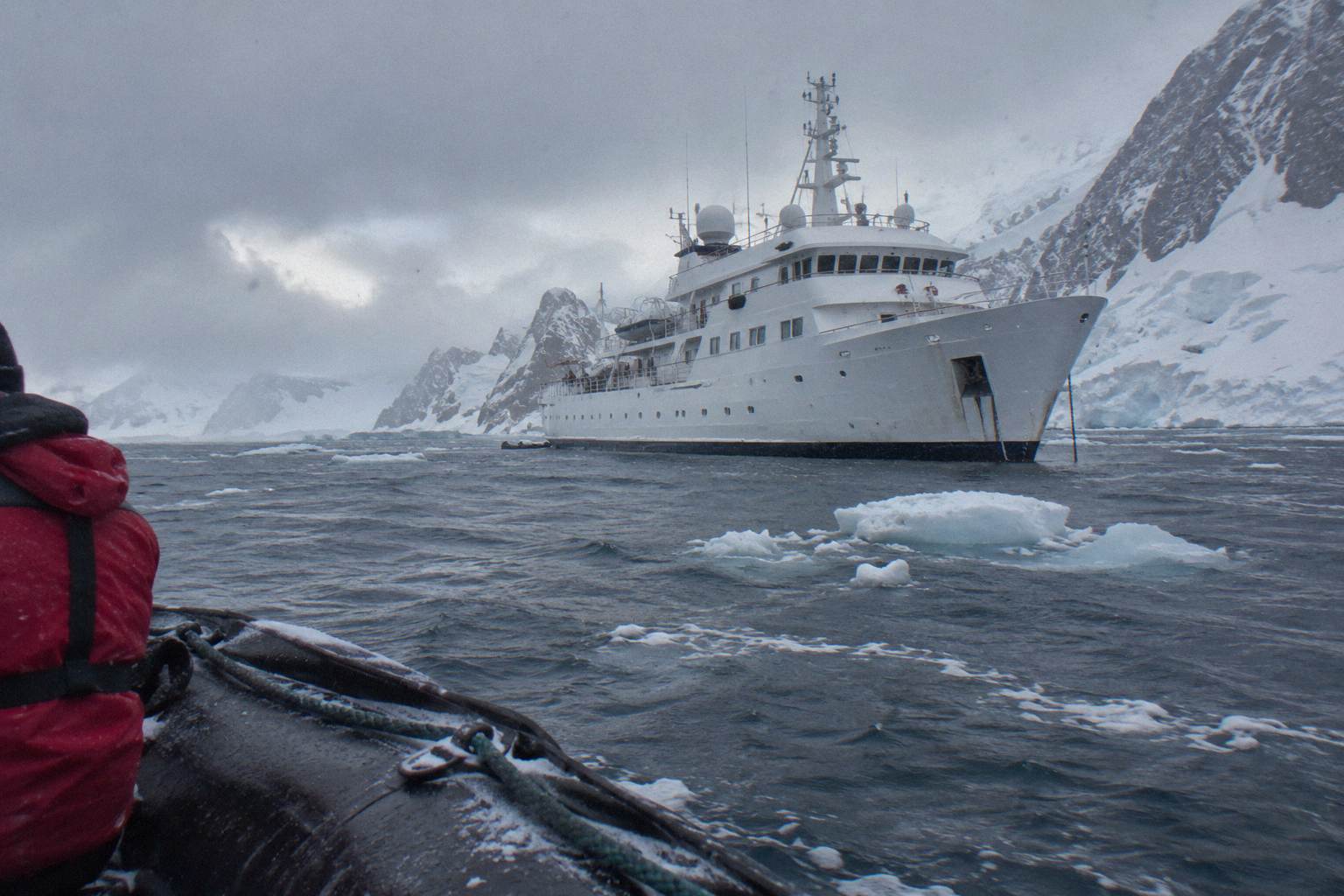
Deciding between these lines is exactly the kind of question a consultation exists for. The site's publisher, Cruises In Antarctica, maintains research on every operator's fares and inclusions, and a free consultation maps your priorities against the whole field, from the budget twin-berth cabins to the all-suite luxury ships. The consultation is free, carries no obligation, and the hand-off is to a vetted expedition-cruise agency partner rather than to any single operator's sales desk.
Common Questions About Atlas Ocean Voyages Antarctica
How much does an Atlas Ocean Voyages Antarctica cruise cost?
Published Atlas Antarctic fares start from $12,150 per guest for an 11-night Ushuaia roundtrip on World Navigator in March 2027, with World Traveller departures from $14,114. Promotions can reduce the paid price materially, and the fare is marketed as all-inclusive.
Which ships does Atlas Ocean Voyages use in Antarctica?
World Navigator and World Traveller, both yacht-style ships carrying 196 guests in about 100 suites and staterooms, with Ice Class 1B and Polar Category C ratings.
Does the Atlas fare include drinks and gratuities?
Atlas markets an all-inclusive experience that includes drinks and gratuities. Parkas, boots and flights are not itemised as included on the official pages reviewed, so confirm inclusions for your specific departure before booking.
Is Atlas Ocean Voyages an IAATO member?
Yes, Atlas appears in the IAATO membership directory, and its landings follow IAATO rules: maximum 100 passengers ashore at a time and a 1:20 guide ratio.
What is the minimum age on Atlas Antarctica voyages?
Atlas does not publish a minimum age on the pages reviewed for this guide. Ask the operator or your consultation contact for the current policy if travelling with children.
Does Atlas fly the Drake Passage?
Mostly no. Most Atlas itineraries sail the Drake Passage from Ushuaia or Buenos Aires, though the line also lists Drake Express fly-cruise options. Travellers who want to fly both ways should look at air-cruise operators such as Antarctica21.
More Ship And Line Guides
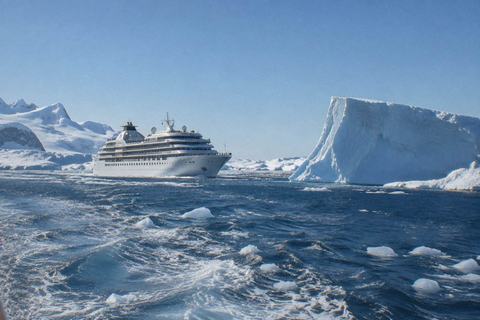 Mainstream LinesBig-brand Antarctica cruises sail past but never land; here is why, and what to book instead.Read the guide
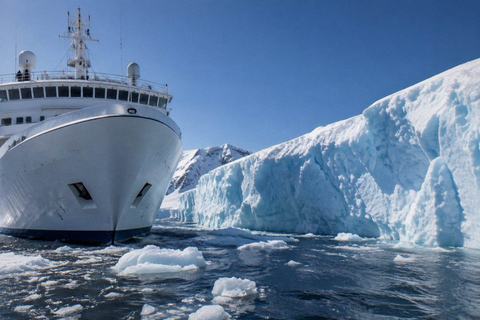 Viking AntarcticaViking Octantis and Polaris explained: specs, itineraries, fares and how they compare.Read the guide
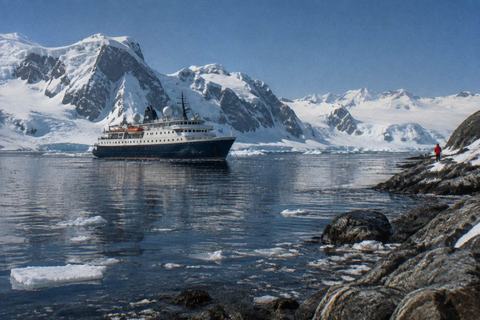 Silversea AntarcticaSilversea's three Antarctic ships, their voyages and how they compare with rival luxury lines.Read the guide
 Seabourn AntarcticaSeabourn's two expedition ships in Antarctica: what is verified, what is not, and how they compare.Read the guide