January Or February For Antarctica? Chicks, Whales And Ice
 By Oleg G.
January and February are the two warmest months of the Antarctic cruise season, and they split travellers down the middle: January delivers peak penguin chick action and the busiest landing sites, February delivers peak whale numbers and the best shot at crossing the Antarctic Circle.
Quick answer: Choose January for hatching penguin chicks, the mildest Peninsula temperatures and the fullest activity on land, accepting the highest prices and busiest sites. Choose February for peak whale sightings, larger chicks in creches, the least sea ice and the best Antarctic Circle crossings, at prices that ease toward the end of the month.
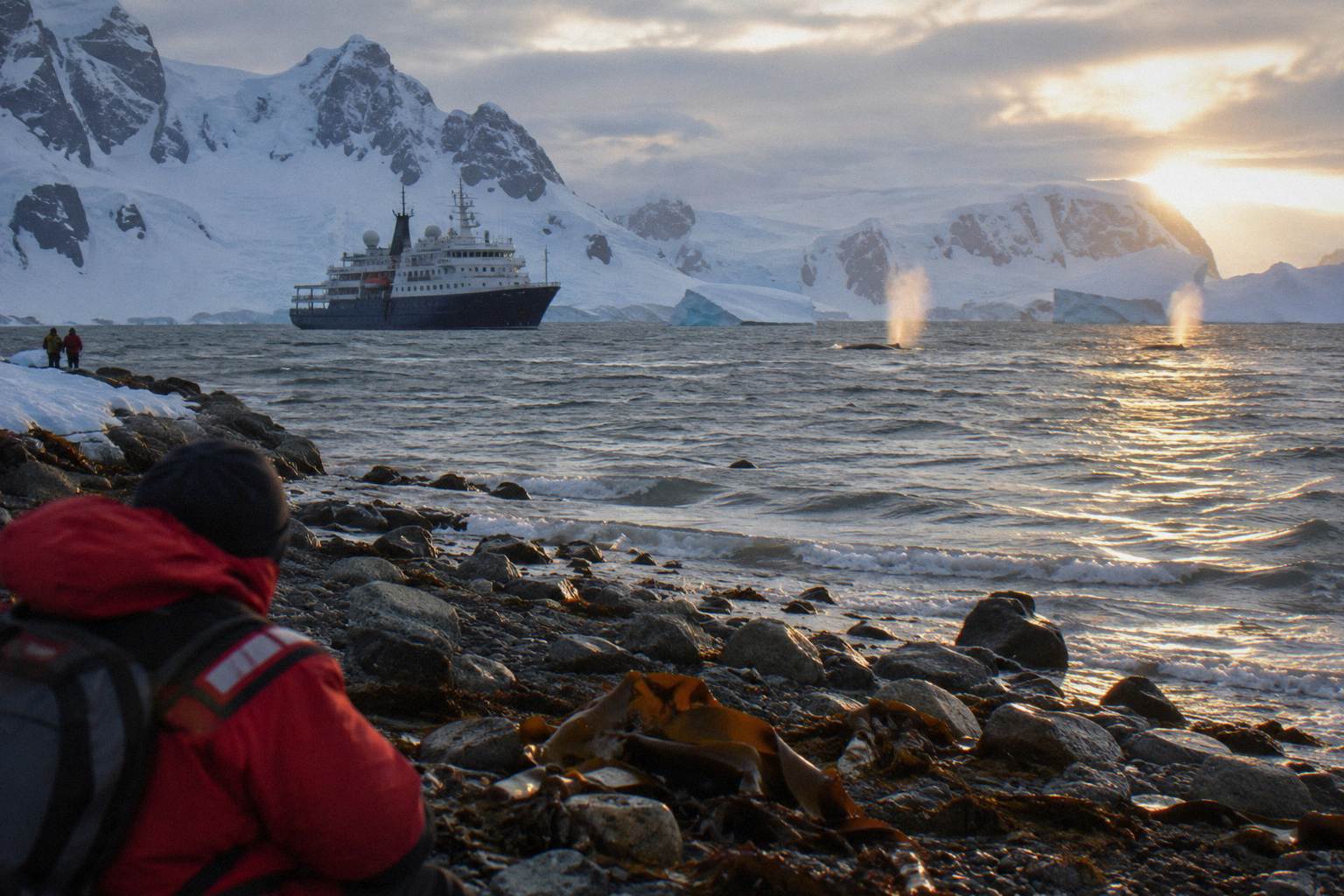
The Antarctic cruise season runs from November to March, and the two months travellers agonise over most are January and February. Both sit in the heart of austral summer. Both sit at the warm peak of the Peninsula year, and both are peak months for expedition cruising rather than shoulder-season gambles. But they are not the same voyage, and the difference shows up everywhere that matters: in the penguin colonies, in the whale feeding grounds, on the sea ice charts, in the length of the days and in the fare you finally pay for the berth.
Roughly 98 percent of all tourism voyages occur in the Antarctic Peninsula during the austral summer, according to the Antarctic Treaty Secretariat's tourism page, so whichever month you pick, the geography of your trip is broadly settled before you start. The real question is timing within that window, and that is a question of trade-offs rather than of a right answer. This guide puts the two months side by side using operator schedules, IAATO visitor data and month-by-month season research, then says plainly which month suits which traveller.
Once plans narrow to peak summer, this is the comparison Cruises In Antarctica readers face, and it deserves a straight answer rather than a shrug: the choice depends on whether you are going for the penguins or for the whales, and almost everything else follows from that single preference.
January Or February For Antarctica?
January is the warmest, busiest and most expensive month of the season, with penguin chicks hatching and being fed across the Peninsula. February brings peak whale numbers, larger chicks in creches, the least sea ice of the year and the best odds of crossing the Antarctic Circle, and fares begin easing late in the month. Neither wins outright: the trade-off between the colony show and the whale show is the whole decision.
The trade-off in one line: January is the classic peak-summer Antarctica cruise, while February is the month the whales take over. Temperatures barely move between them, about 4°C for a high and around 0°C for a low on the Peninsula coast in both months, so weather should not decide this for you. What moves is the wildlife calendar, the ice edge, the number of daylight hours and the price of the cabin.
Here is the full picture in one table, drawn from published season descriptions:
| Factor | January | February |
|---|---|---|
| Penguin chicks | Hatching and being fed; small chicks in the nests | Larger chicks in creches, some learning to swim |
| Whales | Sightings increase from mid-month | Peak numbers of the season |
| Sea ice | Close to minimum, most channels open | Seasonal minimum, best far-south access |
| Antarctic Circle | Attempts begin late in the month | Best odds of a crossing at 66°33′S |
| Daylight on the Peninsula | About 18 hours | About 15 hours |
| Prices | Peak of the season | High early, easing late in the month |
| Ship traffic | Busiest month for landings | Quieter than January |
Read down those rows and the pattern is hard to miss: January wins the colony rows, February wins the water rows, and the price row becomes the tiebreaker for many budgets. The two months are close enough in comfort that the wildlife rows do the deciding. If you are still weighing the shoulder months against these two as well, the fuller picture is in our best time to visit Antarctica guide, where November and March get the same treatment.
Neither month is a consolation prize, which is what makes the choice genuinely difficult. A January voyage is not a watered-down February or vice versa; they are two different versions of the same expedition cruise, one tuned to the land and one tuned to the sea. Decide which show you would regret missing more, and the rest of the table falls into place.
What The Wildlife Does In Each Month
In January, penguin chicks hatch and adults feed them constantly, seal pups are best viewed on South Georgia and the Falklands, and whale sightings increase from mid-month. In February, the chicks are larger and gathered in creches, adult penguins begin moulting, and whale numbers peak, with humpbacks and minkes in krill-rich waters. For penguins, January; for whales, February.
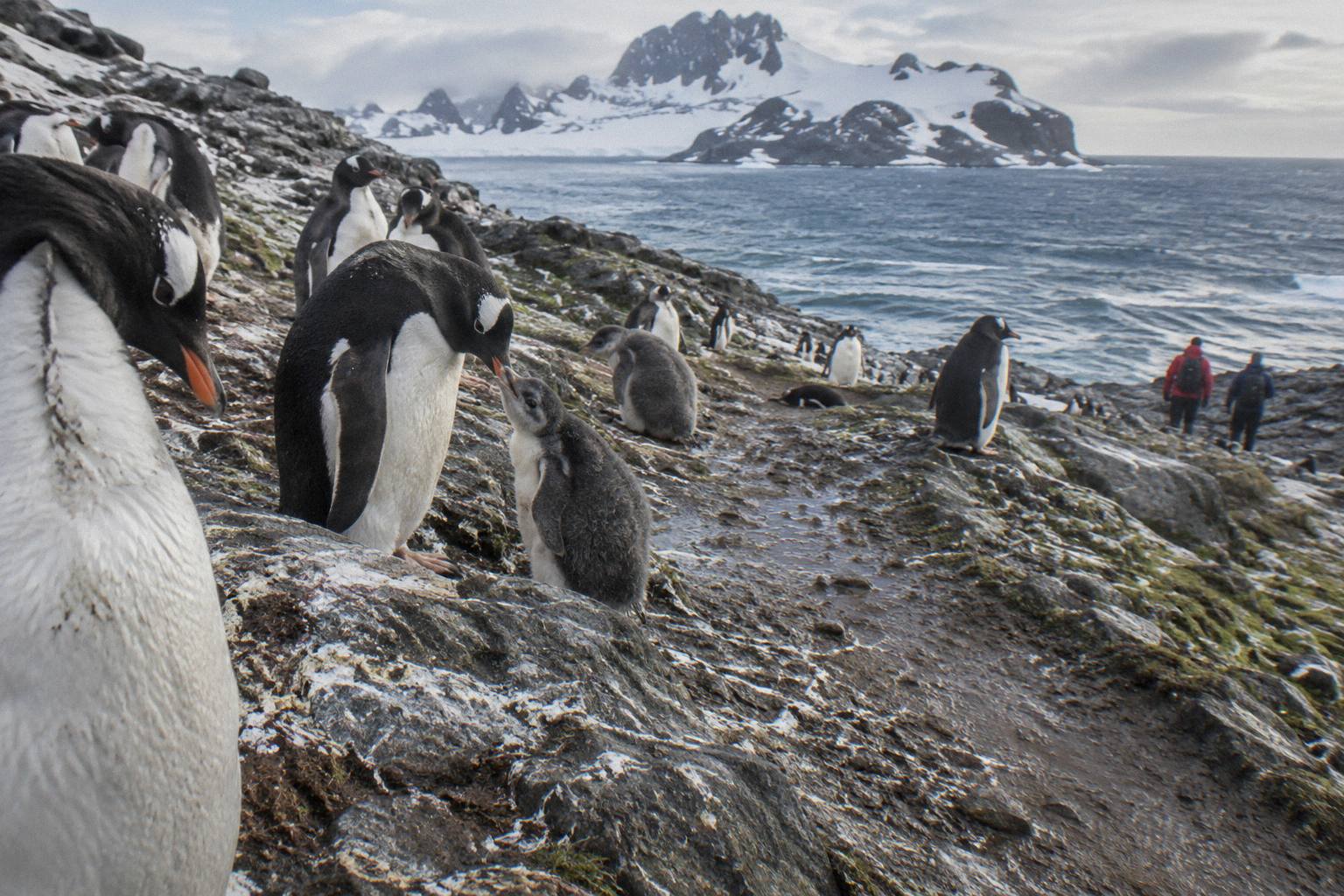
The penguin calendar drives most of the January-versus-February debate. On the Peninsula, prime hatching for gentoo, Adélie and chinstrap penguins runs from late December into January, so a January voyage puts you among colonies at their most hectic: adults shuttling to and from the sea, eggs hatching, and the first unsteady chicks appearing in the nests. By February those chicks are larger and gather in creches, the nursery groups that let both parents go to sea and feed. Colonies are messier in February, with more mud and commotion, but the chicks are more mobile and, honestly, more entertaining to watch.
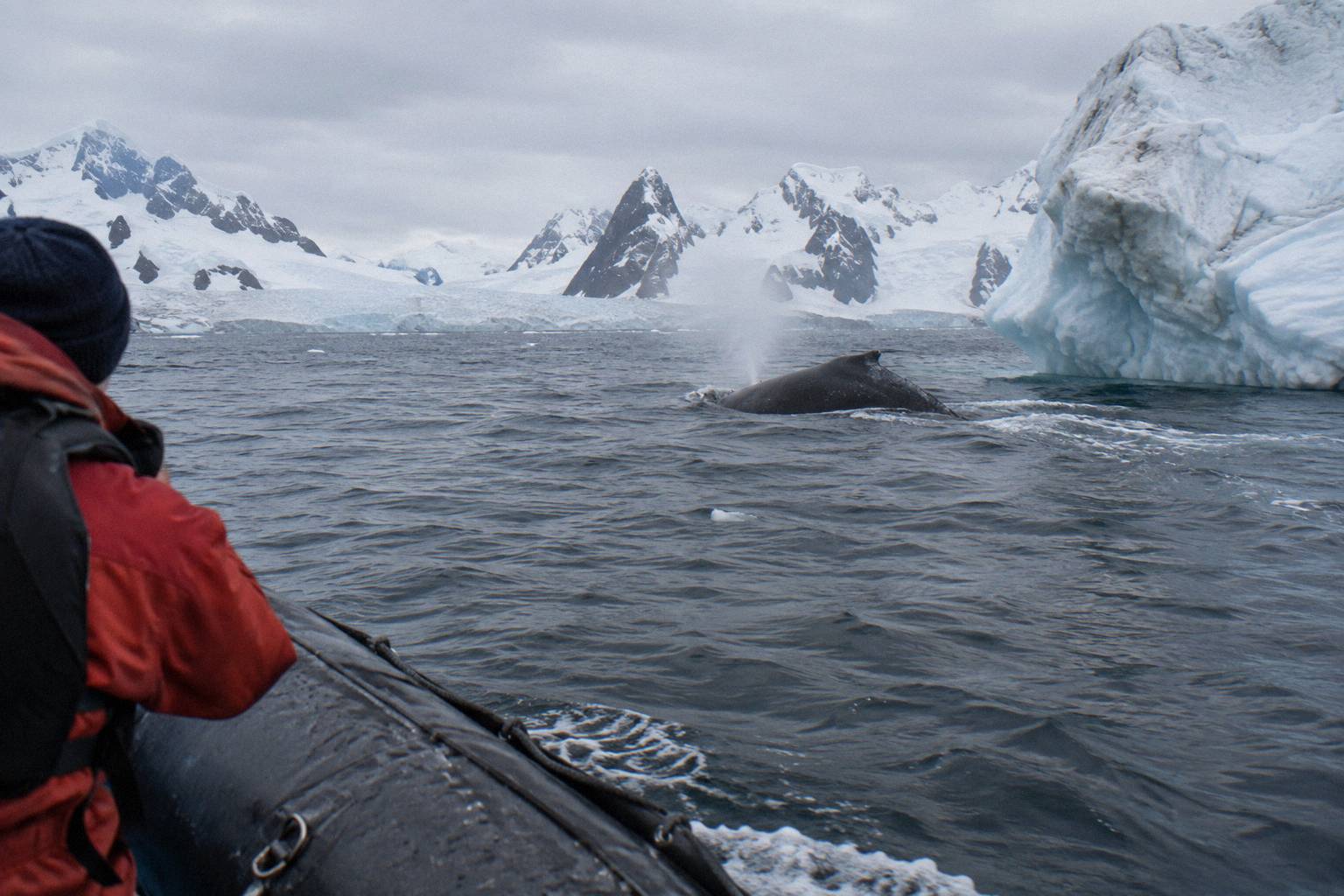
The whale calendar runs the other way. Whale sightings, especially humpbacks, increase from mid-January onward, and February to March is the peak for whale watching on the Peninsula. After the October-to-November sea ice recession, krill abundance draws whales, seals and other marine mammals into Peninsula feeding grounds, and by February they are there in force. If close-up whale time is the reason you are booking an expedition cruise rather than a scenic-only large ship, February has the clear edge.
Seals split the difference between the months. Seal pups are best viewed from mid-December to January on South Georgia and the Falklands, while February and March bring higher fur seal abundance on the Peninsula itself. Leopard seal sightings are listed as a February possibility. South Georgia is a different itinerary question entirely, covered in our South Georgia expedition cruise guide, but it is worth knowing the pup window overlaps January.
The wildlife timing in detail:
| Wildlife moment | Typical window | Stronger month |
|---|---|---|
| Penguin chick hatching (gentoo, Adélie, chinstrap) | Late December into January | January |
| Chicks in creches | February | February |
| Chicks learning to swim | February | February |
| Adult penguins moulting | February | February |
| Humpback and minke whales | Increase from mid-January, peak February to March | February |
| Seal pups on South Georgia and the Falklands | Mid-December to January | January |
| Fur seals on the Peninsula | February to March | February |
| Leopard seal sightings | February possibility | February |
Whatever the month, the rules on the ice are identical. IAATO visitor guidelines require you to keep at least 5 metres from wildlife on land, and site guidance can require more for nesting birds or stressed animals. A maximum of 100 passengers may be ashore from a vessel at any one time, with at least one guide for every 20 visitors, so your time on the ice is shaped by your ship's passenger count in both months equally.
Ice, The Antarctic Circle And Daylight
January has the mildest temperatures of the season, often near or above freezing on the northern Peninsula, with sea ice close to its minimum and most channels open. February has the least sea ice of the year, the best conditions for crossing the Antarctic Circle, and roughly 15 hours of Peninsula daylight, down from January's 18. The further into February you sail, the further south a ship can usually reach.
Sea ice is the invisible hand behind every Antarctic itinerary, and it keeps retreating long after the calendar turns. November opens the season with the most extensive ice and fresh deep snow, and some landing sites stay snowed in or blocked. By January the ice has receded and most channels and inlets are ice-free, which is why January feels like the season's full-access month. But the retreat continues, and February is when the ice reaches its minimum, giving expedition ships their best chance at the far-south routes, including the Antarctic Circle crossing at 66°33′S.
Circle-crossing voyages are mainly a late-season product: crossings are described as most feasible from late January through February and March, when ice is least. One example from the 2026-27 schedule: Oceanwide's Hondius runs a Falklands, South Georgia, Elephant Island and Polar Circle voyage from 13 February to 7 March 2027. Success is never guaranteed, since passage south of 66°33′S depends on the ice of the season, but February buys you the best odds on the calendar.
Daylight narrows across the two months, and the loss is real but not dramatic. Around the South Shetlands at about 62°S, December delivers roughly 21 to 24 hours of light near the solstice, January about 19 hours, and February somewhere in the 15-to-18 hour range. At the Antarctic Circle itself, February still sees about 16.5 hours of daylight, down from the continuous daylight around the 21 December solstice. In practice you lose roughly three hours of light between a mid-January and a mid-February departure: slightly longer golden evenings for photography in January, slightly earlier sunsets in February.
| Measure | January | February |
|---|---|---|
| Sea ice on the Peninsula | Close to seasonal minimum, most channels open | Seasonal minimum, least ice of the year |
| Antarctic Circle access | Attempts begin late in the month | Best conditions for a crossing |
| Daylight at about 62°S, South Shetlands | Roughly 19 hours | Roughly 15 to 18 hours |
| Daylight on the Peninsula generally | About 18 hours | About 15 hours |
| Average high on the Peninsula coast | About 4°C | About 4°C |
| Average low on the Peninsula coast | About 0°C | About 0°C |
Temperatures, as the last two rows show, are effectively a tie: these are the two warmest months of the Antarctic year, and wind chill on deck or in a Zodiac will feel well below the printed averages in either one. The packing list does not change between them, and neither month demands gear the other does not.
What Each Month Costs
January sits at the top of the Antarctic price curve, with peak demand, the busiest ships and holiday-adjacent late-December departures pushing some fares far higher. February starts near January levels and then declines toward the end of the month, so a late-February departure is one of the better-value windows in peak wildlife season.
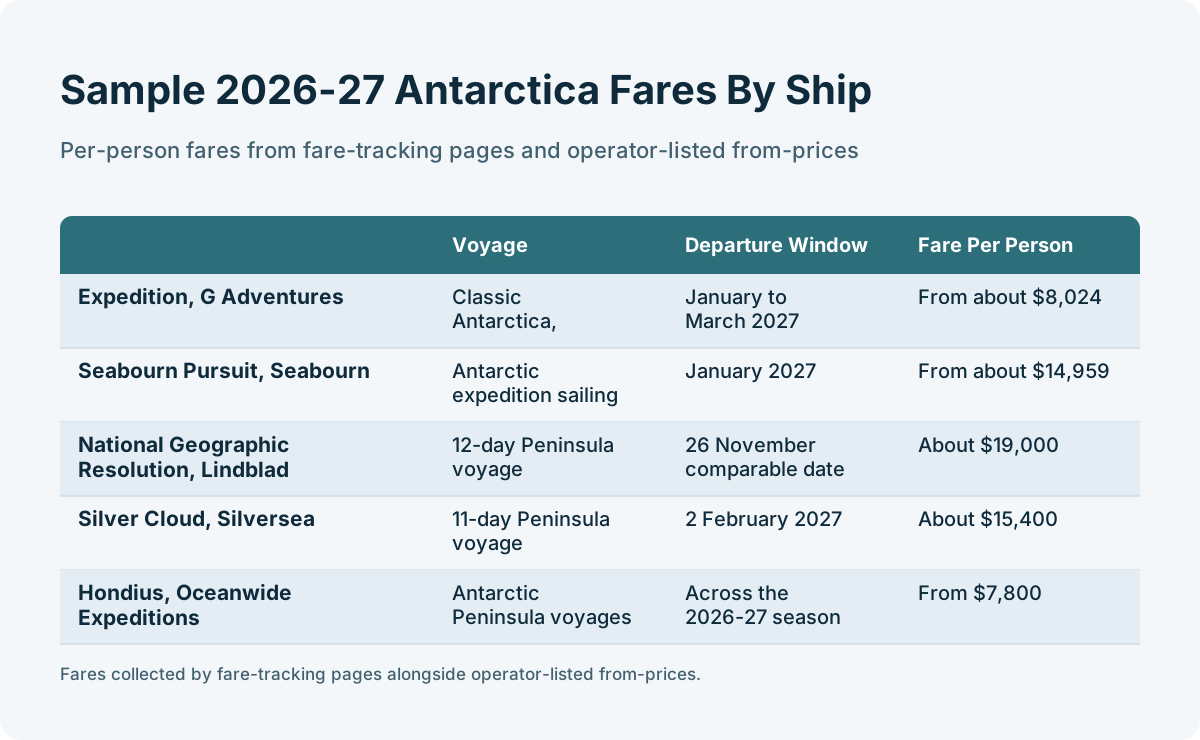
Sample 2026-27 fares collected by fare-tracking pages, alongside operator-listed from-prices, show the shape of the curve:
| Ship and operator | Voyage | Departure window | Sample fare per person |
|---|---|---|---|
| Expedition, G Adventures | Classic Antarctica, 11 days | January to March 2027 | From about $8,024 |
| Seabourn Pursuit, Seabourn | Antarctic expedition sailing | January 2027 | From about $14,959 |
| National Geographic Resolution, Lindblad | 12-day Peninsula voyage | Listed against a 26 November comparable date | About $19,000 |
| Silver Cloud, Silversea | 11-day Peninsula voyage | 2 February 2027 | About $15,400 |
| Hondius, Oceanwide Expeditions | Antarctic Peninsula voyages | Across the 2026-27 season | From $7,800 |
The pattern to plan around: February prices start high and decline toward the end of the month, and late-season advantage fares appear from there into March. If your heart is set on peak whales and you want the best fare, the end of February is the window to watch. November and shoulder-season March run cheaper still, but you trade away the February whale peak to get there. If seeing live numbers for a specific departure would settle it, you can get both months priced side by side through a free consultation, with no obligation attached.
Booking timing matters as much as month choice. Popular peak departures typically book 12 to 18 months ahead, and last-minute discounts are uncommon for peak December sailings, so deciding early pays if January is your month.
Which Ships Suit Which Month
Ships matter as much as months. Under the 100-passengers-ashore rule, a 170-guest ship like Hondius lands in fewer rotations than a bigger vessel, which leaves each person more time on land in either month. For February Circle attempts and whale-heavy routes, an ice-classed small ship with a flexible schedule is the tool that gets the job done.
The featured ship for this comparison is Hondius, Oceanwide Expeditions' 2019-built, Polar Class 6 vessel, and she is a natural fit for the February side of the debate. She carries 170 passengers in 80 cabins, sails from Ushuaia on 11, 13 and 19-day voyages, and lists Antarctic Peninsula fares from $7,800 per person, the lowest tier among the ships compared here. Her February 2027 Polar Circle voyage is exactly the kind of itinerary February exists for: long, far-south and ice-dependent. Oceanwide's Basecamp departures also bundle in camping, kayaking, snowshoeing and mountaineering on select voyages, which suits the active February traveller who wants more than landings. She is covered in more depth in the Hondius ship guide.
Set beside two very different peak-season ships, the contrast in class and price becomes obvious:
| Ship | Class | Passengers | Ice class | From, per person | Voyage length | Departs from |
|---|---|---|---|---|---|---|
| HondiusOceanwide Expeditions | Small-Ship Budget | 170 | Polar Class 6 | from $7,800 | 11 to 19 days | Ushuaia |
| Seabourn PursuitSeabourn | Luxury | – | – | – | 10 to 21 days | Ushuaia |
| UltramarineQuark Expeditions | Upscale Expedition | 199 | 1A+, PC6 | from $12,236 | 12 to 14 days | Buenos Aires, Ushuaia |
Ultramarine, Quark Expeditions' 199-passenger ship with a 1A+ ice class, is a January natural. Her 12 and 14-day Antarctic voyages from Buenos Aires and Ushuaia start from $12,236 per person, and that fare is voyage-level and shared across Quark's Antarctic fleet rather than exclusive to the ship, so treat it as a line entry, not a promise. Her two twin-engine helicopters and 20-Zodiac operation give her a wide activity menu in the peak month.
Seabourn Pursuit occupies the luxury pole of this trio: an all-suite expedition ship sailing 10 to 21-day voyages from Ushuaia, with 24 Zodiacs and a 19-person expedition team. Her current Antarctic fares are not published in a form we can quote, so there is no honest number to print here; a current fare needs a consultation rather than a guess.
One practical note applies to all three: the IAATO ratio of one guide per 20 visitors and the 100-passenger ashore cap are constant, so a ship of 100 or fewer guests can land everyone at once, while bigger ships split the day. If time on the ice is your priority, ship size is worth as much thought as month, and it helps to talk through ship and month together before committing.
Who Should Choose January, Who Should Choose February
Choose January if penguin chicks at their most charming, maximum daylight, the mildest weather and full peak-season energy matter most, and you can accept the highest fares and the busiest landings. Choose February if whales are the priority, if you want the Antarctic Circle attempt, if you prefer slightly quieter sites, or if a late-month fare saving would make the trip possible at all.
The January traveller profile: photographers chasing long golden evening light, first-timers who want the classic postcard Antarctica, and anyone whose must-see list is penguin chicks rather than whales. January is also the right call if your dates are fixed by school holidays or leave that lands in early summer, and you would rather go in peak conditions than wait a month. The cost is real: January is the busiest month for ships and landings, and the site-scheduling system means you share the Peninsula with more vessels than at any other point in the season.
The February traveller profile: whale watchers above all, second-time visitors who saw January's chicks on a previous trip, and anyone drawn to the Circle. February also suits travellers who like their wilderness slightly less scheduled and slightly more wild, with messier colonies, receding ice and the season's best southern access. Budget-conscious travellers who still want peak wildlife should look hard at the second half of February, where fares begin their slide toward shoulder pricing without giving up the whale peak.
A few practical notes apply to both months equally. Landings are usually wet, stepping into shallow water from a Zodiac, and any landing can be cancelled or shortened for weather, ice or wildlife conditions. Onboard internet is satellite-based and often limited. Typical landings last one to three hours depending on site, weather and ship size, with one or two outings per day when conditions allow. None of that changes between the months, so it should not tilt your decision.
Scale is worth keeping in mind when you picture "busy". IAATO's own season statistics recorded 85,195 landed visitors across the whole 2025-26 season, spread over five months and dozens of sites, with one ship per site at a time. January is the densest slice of that, but the rules that keep landing sites orderly are the same rules that keep February orderly.
For the deeper month-by-month breakdowns, including day-by-day wildlife expectations and sample itineraries, see our dedicated guides to Antarctica in January and Antarctica in February. If after all this you are still split, that is usually a sign the decision needs a human looking at your actual dates and budget.
Common Questions About January Or February For Antarctica
January or February for Antarctica?
January for hatching penguin chicks, the warmest temperatures, the longest daylight and peak-season activity, at the highest prices and the busiest sites. February for peak whale numbers, chicks in creches, the least sea ice, the best Antarctic Circle access and fares that soften late in the month. Neither is better; the choice depends on whether your priority is the colonies or the whales.
Are there more whales in January or February in Antarctica?
February. Whale sightings, especially humpbacks, increase from mid-January onward, and February to March is the peak for whale watching on the Peninsula, with humpbacks, minkes and orcas feeding in krill-rich waters before the season closes.
When can I see baby penguins in Antarctica?
Penguin chicks begin hatching from mid-December on the Peninsula, with prime hatching for gentoo, Adélie and chinstrap penguins running late December into January. In February the chicks are larger and gathered in creches, and they start learning to swim late in the month.
Is the Antarctic Circle crossing possible in January?
Attempts begin from late January onward, but February has the best odds because sea ice reaches its seasonal minimum then, giving ships the clearest passage south of 66°33′S. Success always depends on the ice conditions of the season.
Is February cheaper than January for an Antarctica cruise?
Usually, but mainly late in the month. February fares start high and decline toward the end of February as the season winds down. January is a peak-demand month alongside December, and its prime sailings book furthest ahead.
How cold is Antarctica in January and February?
They are the two warmest months, with Peninsula coastal averages of about 4°C for highs and around 0°C for lows in both. Wind chill on deck or in a Zodiac feels well below those figures, so layered expedition clothing is needed in either month.
More Antarctica By Month
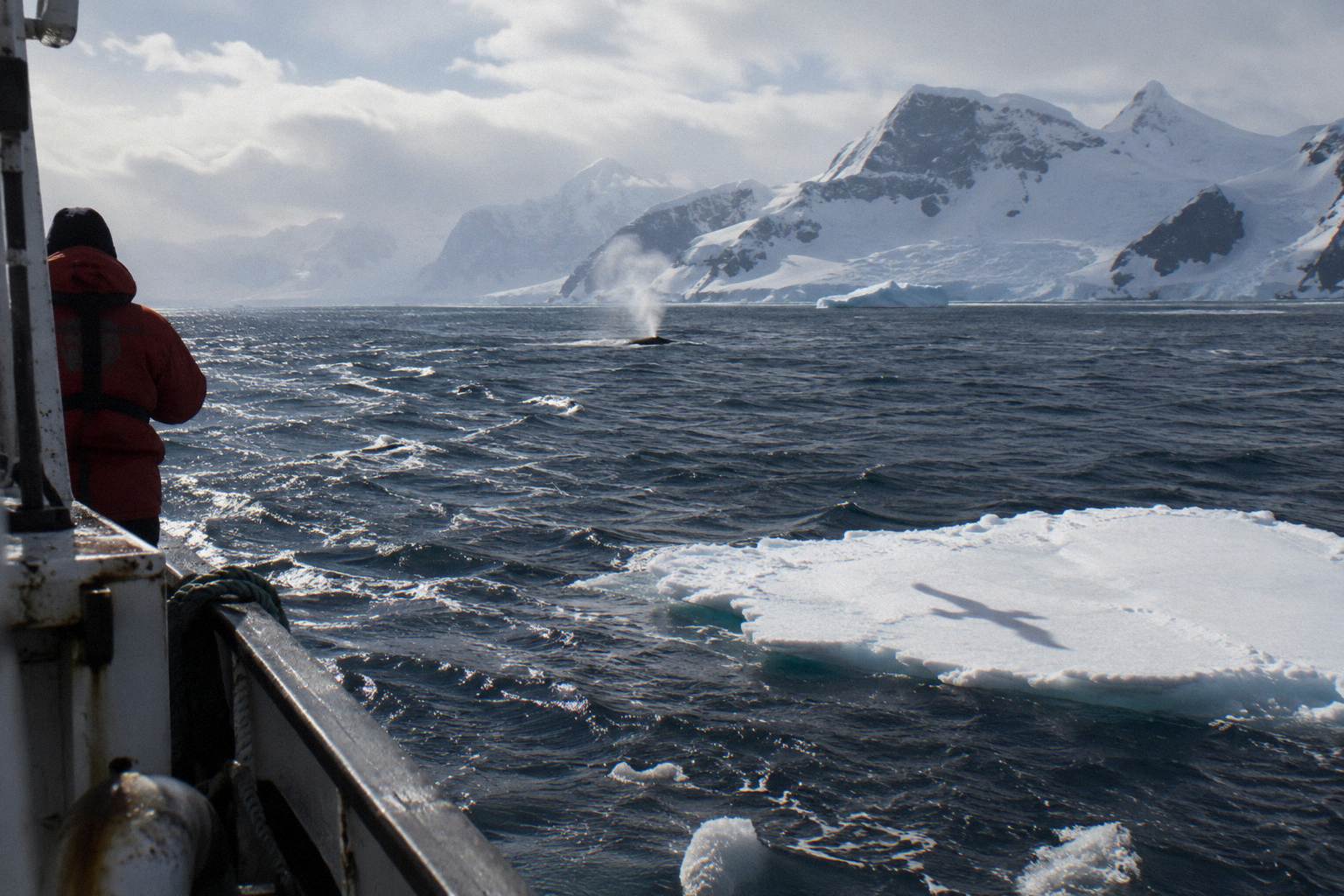 Antarctica In JanuaryHigh summer in Antarctica: warmest weather, penguin chicks, whales and peak fares.Read the guide
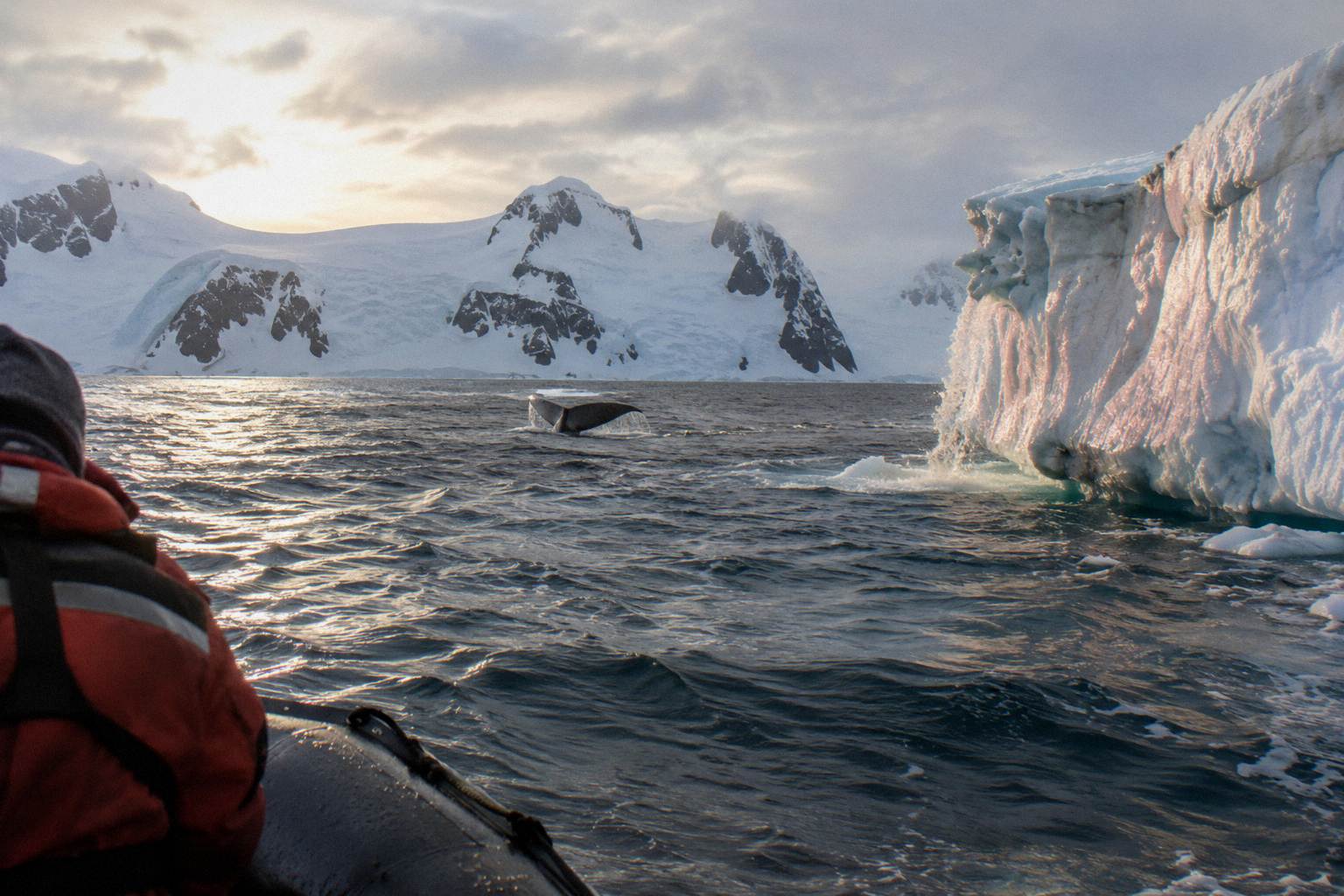 Antarctica In FebruaryLate-summer whales, chick creches, open ice and Circle crossings: what a February sailing gives you.Read the guide
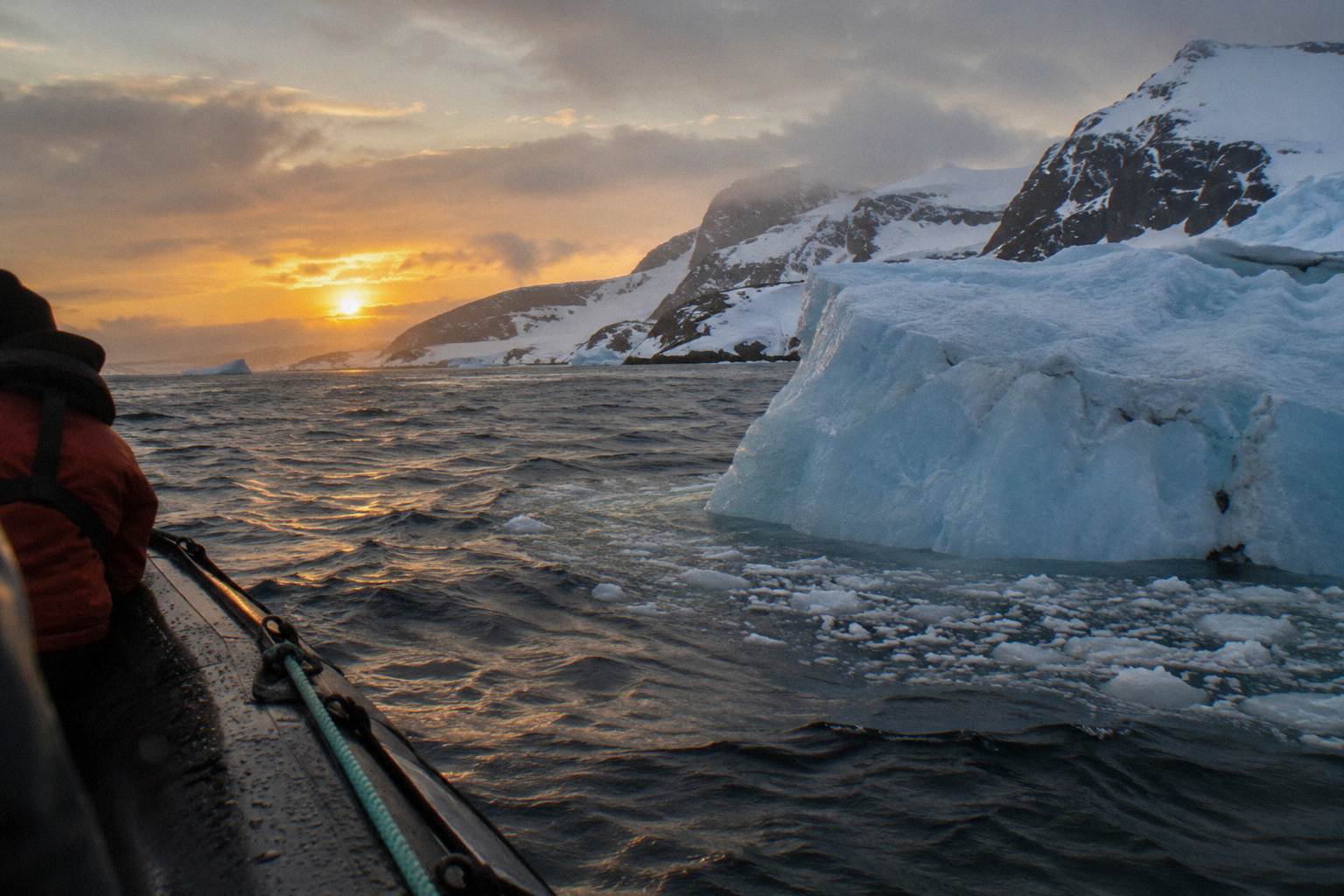 Antarctica In MarchEnd-of-season weather, wildlife and the last sailings of the Antarctic cruise year.Read the guide
 Antarctica In AprilApril has no Antarctic sailings. Here is why, and what to do with that travel window instead.Read the guide