Port Lockroy: The Antarctic Post Office And Museum
 By Oleg G.
Port Lockroy is an island stop on the Antarctic Peninsula where you can mail a postcard from the bottom of the world, walk through a historic British base turned museum, and stand among gentoo penguins, all within strict visitor limits.
Quick answer: Port Lockroy sits on Goudier Island at roughly 64°49′S, 63°29′W and is run by the UK Antarctic Heritage Trust as a living museum, post office and shop. Landing is limited to 60 visitors ashore at a time and 350 per day, with no more than 35 inside Bransfield House at once. It is one of the busiest landing sites on Peninsula expedition cruises.
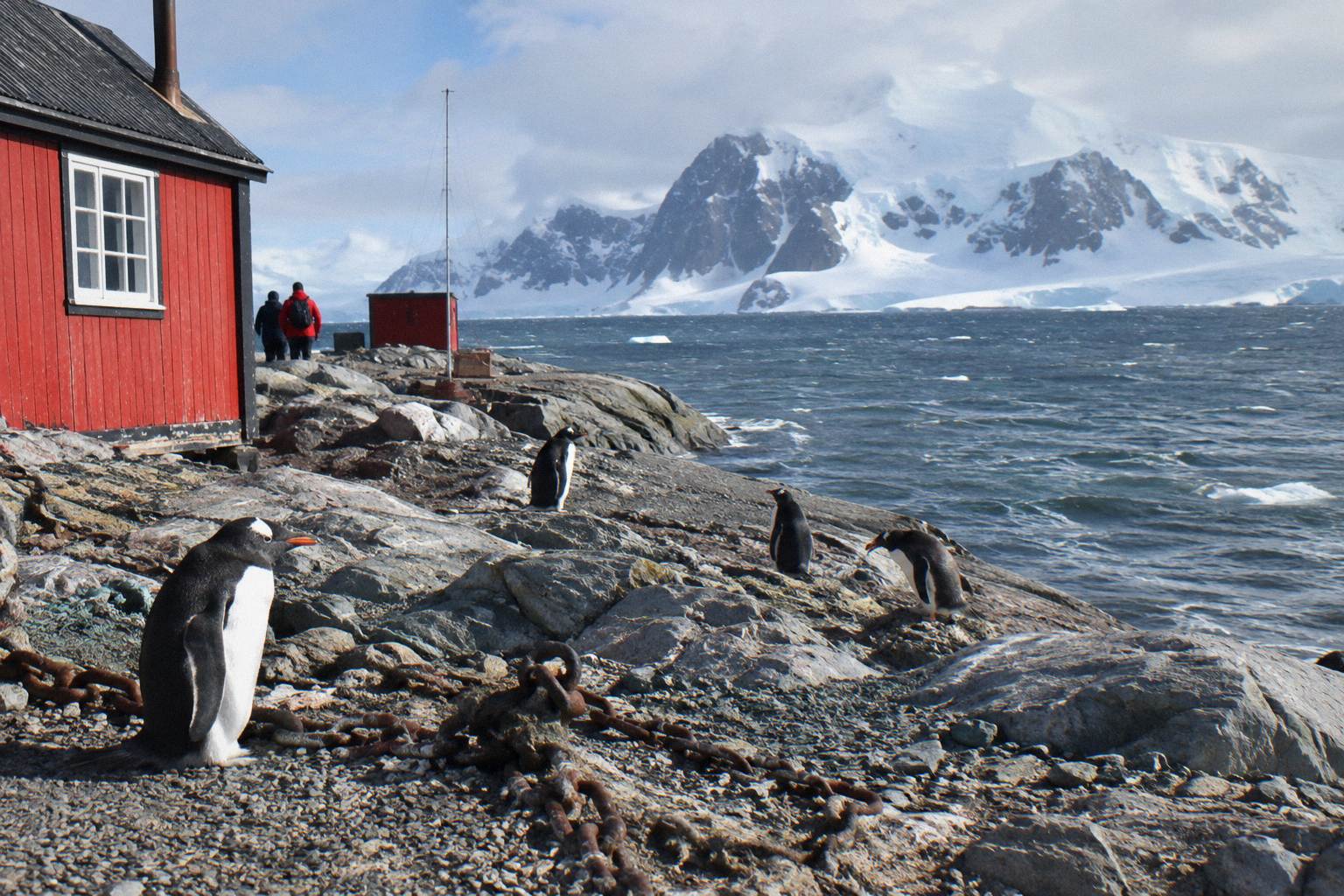
Port Lockroy is the closest thing Antarctica has to a village square: a historic base on Goudier Island with a working post office, a museum, a shop and a gentoo penguin colony. It sits at roughly 64°49′S, 63°29′W on the Antarctic Peninsula, and it is one of the busiest landing sites on expedition cruises. No voyage can promise it in advance, because landings depend on weather, ice and the IAATO ship scheduler that spreads ships across sites.
The site is operated by the UK Antarctic Heritage Trust (UKAHT), whose seasonal team runs the museum, the shop and the post office, and monitors the penguin colony at the same time. What makes the place unusual is that everything is genuinely working: postcards go out by ship mail, the museum is the base building, and shop sales fund conservation. It is a landing where the human history of Antarctica is as visible as the wildlife.
What Is Port Lockroy And Why Is It Famous?
Port Lockroy is a historic British Antarctic base on Goudier Island, established as Base A under Operation Tabarin in 1944 and now run by the UK Antarctic Heritage Trust as a museum, post office and shop. It is one of the most frequently visited landing sites on the Peninsula, and it is a rare stop where you can touch Antarctic history rather than just view scenery.
The base dates from Operation Tabarin in 1944, when it became British Base A. Today Bransfield House is a museum, and rooms such as the ionospheric room are part of the building, though access to some areas may be restricted while conservation works continue.
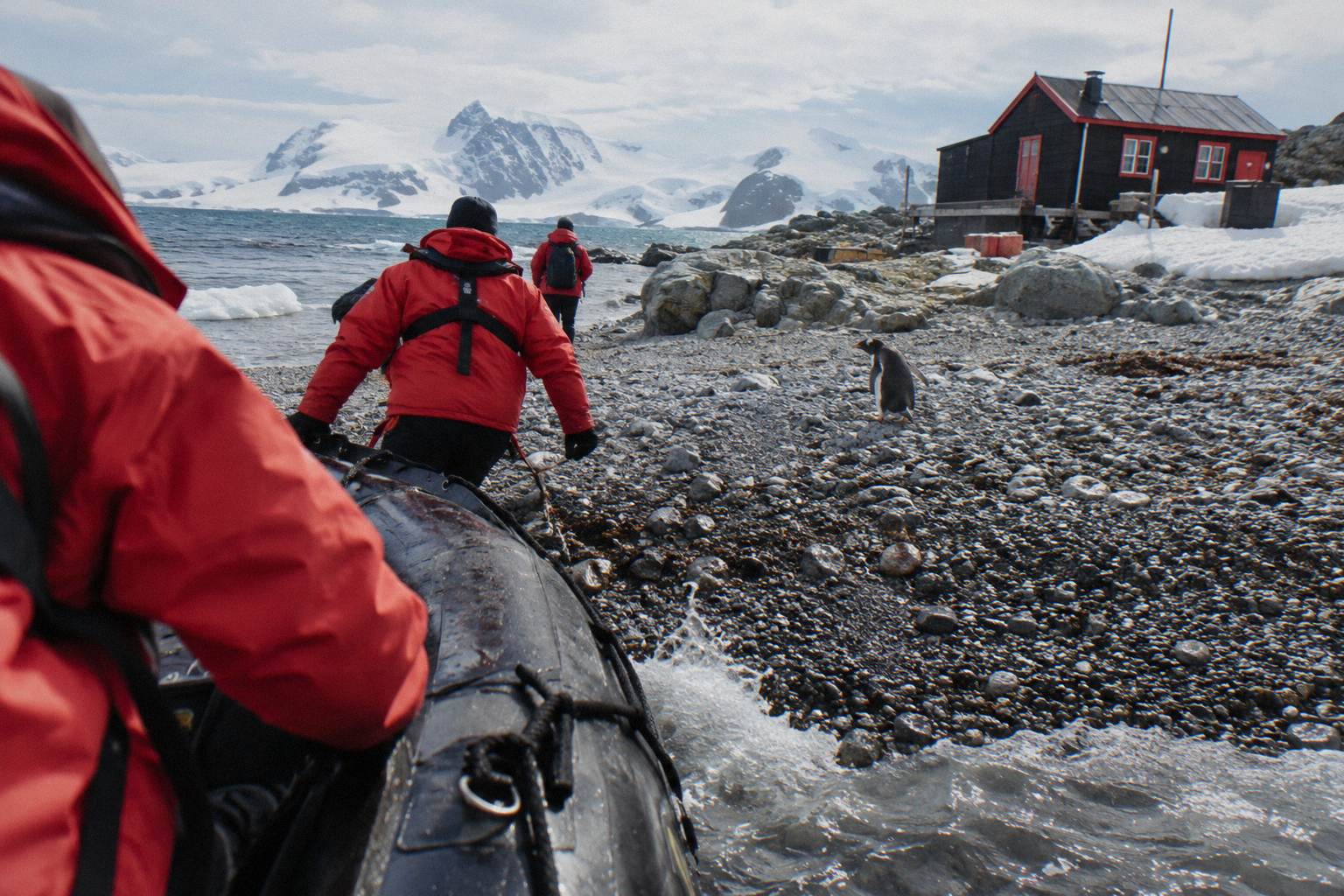
The preferred landing point is on the western side of the island, near the old whalers' chains, with a northern alternative. Whaling came before the base here, and the chains are a reminder of that era. The museum, shop and post office are a short walk from the beach.
UKAHT's work at the site is ongoing. The trust has been running a multi-year structural conservation project at Port Lockroy, reinforcing the floors and roof of Bransfield House, a project that entered its second year in the 2026 season. Some interior areas, such as the ionospheric room, may have restricted access while works continue, but the museum, shop and post office remain operational, and an experienced seasonal team handles everything from visitor reception to penguin monitoring.
Can You Send A Postcard From Antarctica?
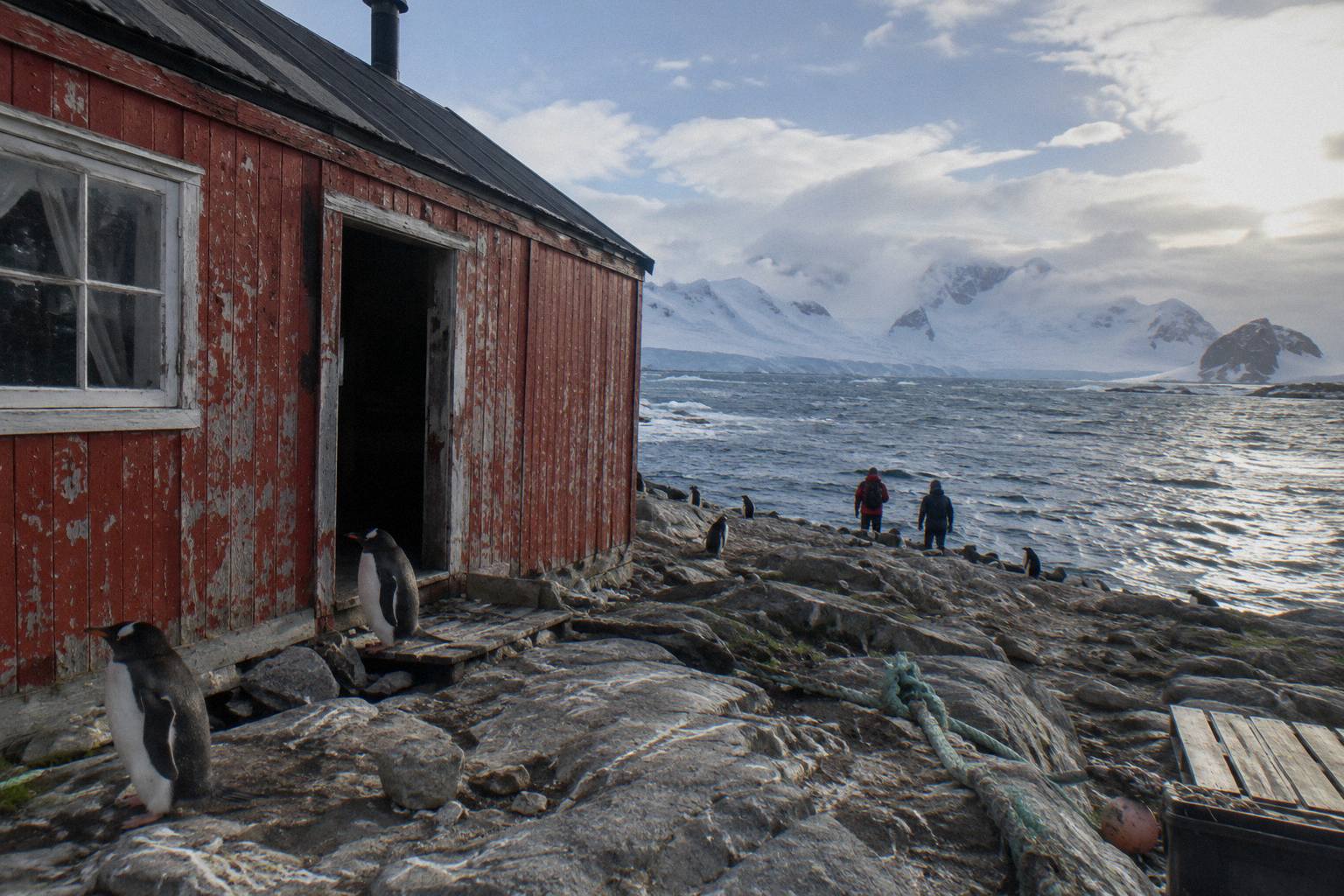
Yes. Port Lockroy runs a working post office during the staffed season, and postcards are sent onward by ship mail. Delivery timing depends on the next departure and that vessel's return to a gateway port, so expect a wait rather than a fixed date.
The post office is a highlight of the island, alongside the shop. The mechanics matter for expectations: postcards travel out by ship mail, and their timing depends on the next departure and its return to a gateway port. That means delivery times vary, and nobody can promise a date. If you are mailing a card for a birthday or anniversary, buy it early in the season and post it early in your voyage.
Sending a card from Antarctica is the point for most people, whether to yourself or to family back home. Bring a short address list written down somewhere dry, because writing addresses from memory in a cold breeze is harder than it sounds.
One practical note: ask your expedition team how your cruise handles Port Lockroy shop purchases before you land, because payment arrangements are not something to work out on the beach. If you want a voyage that includes this stop and the time ashore to enjoy it, get help choosing the right expedition cruise, since not every Peninsula itinerary attempts Goudier Island.
What Is Inside The Bransfield House Museum?
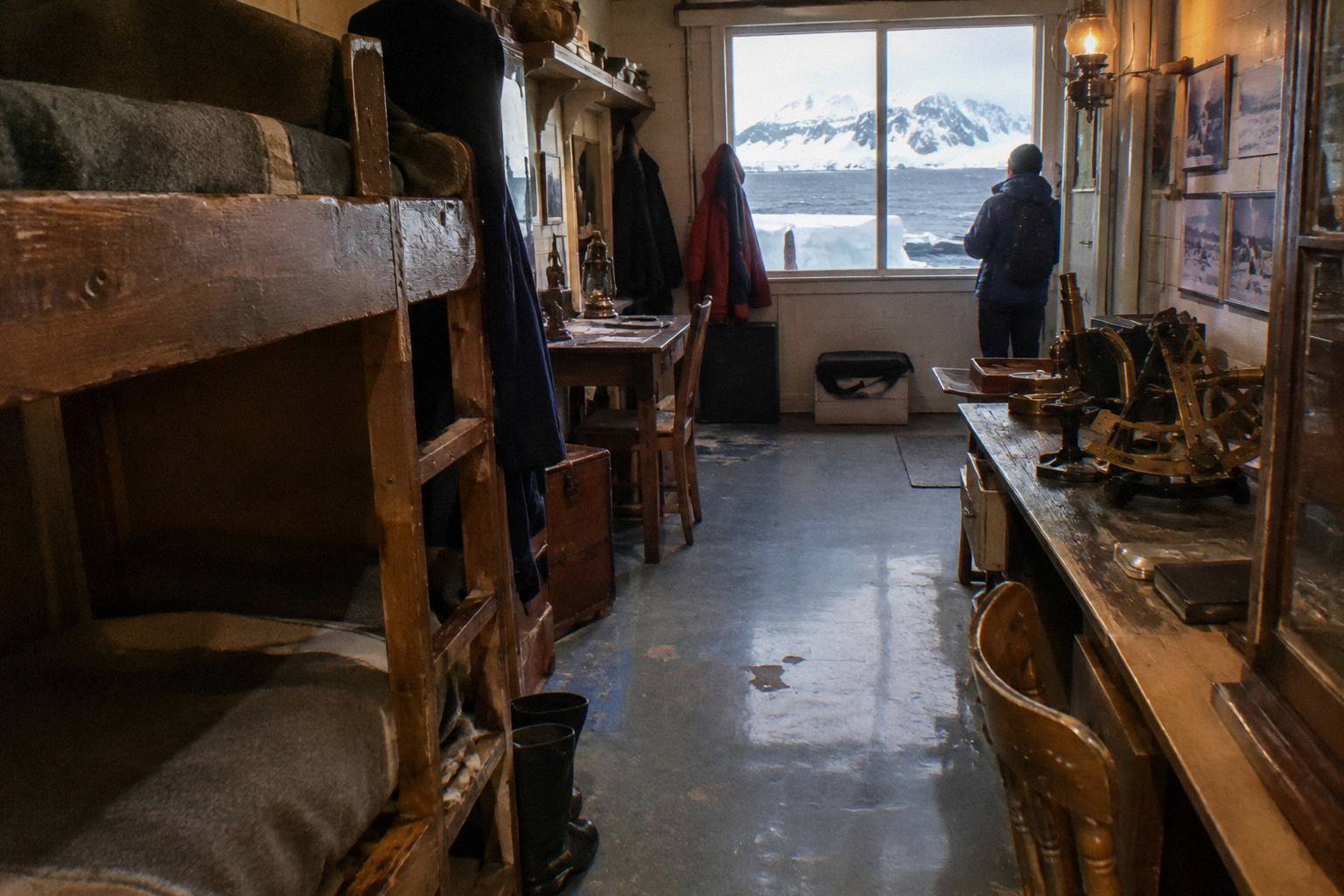
Bransfield House is the Base A building, now a museum run by UKAHT. A maximum of 35 visitors may be inside at one time, so on busy days your ship rotates groups through the building.
The museum is small, and that is part of its charm. UKAHT's current conservation work has focused on the structure itself, reinforcing the floors and roof, as part of a multi-year project, and some areas such as the ionospheric room may have restricted access while the work continues.
Because only 35 people may be inside at once, the experience is managed. On a ship carrying 170 guests, such as Oceanwide Expeditions' Hondius, the 60-ashore cap means passengers land in groups and rotate. The curfew rule also shapes the day: no landings are permitted between 18:00 and 07:00 without the base leader's agreement, so every visit happens in the long daylight of the austral summer, about 19 to 21 hours in December at Peninsula latitudes.
The shop deserves a mention of its own because sales fund conservation, so the money you spend on a frivolous penguin badge goes into keeping the building you are standing in.
The Gentoo Penguin Colony On Goudier Island
Goudier Island carries a monitored gentoo penguin colony, with the eastern side of the island closed as a control area for the monitoring. Visitors keep at least five metres from wildlife, and the seasonal team handles penguin monitoring alongside the tourist operation.
The penguins are not an attraction bolted onto the museum. The colony is monitored, and the eastern side of the island is a closed control area, which is why you will see penguins you cannot walk toward.
For visitors, the practical rules come from the general IAATO and Antarctic Treaty visitor guidelines that apply at every landing: keep at least five metres from wildlife on land, give nesting birds and molting penguins more space, do not feed or touch anything, and follow the flagged routes. If a penguin walks up to you, the rule still stands: you hold still and let it pass. Drones must not be used near wildlife, and the biosecurity routine you will have performed before every landing, washing boots and cleaning gear, applies here as everywhere.
The breeding cycle shapes what you see. Early in the season, from November, gentoos are courting and building stone nests. By late December and January there are chicks in the nests, and by February the chicks have gathered into crèches while the adults molt. Which stage you see depends on your travel month. If penguins are the main reason you are booking a voyage, our guide to the best Antarctica wildlife cruise timing breaks down the season month by month.
| Month | Gentoo activity at Port Lockroy | What visitors typically see |
|---|---|---|
| November | Courtship, nest building, egg laying | Courtship, pristine snow |
| December | Incubation, first chicks late in the month | Adults on nests, early chicks from mid-month |
| January | Chicks hatching and being fed | Chicks in the colony |
| February | Chicks in crèches, adults molting | Chicks in crèches |
| March | Chicks fledging, colony thinning | Fledging chicks, strong whale activity in Peninsula waters |
Visitor Rules And Caps: How Many People Can Land?
Port Lockroy's site guidelines allow a maximum of 60 visitors ashore at any one time, guides excluded, a maximum of 350 visitors per day, and no more than 35 people inside the base at once. Landings are not permitted between 18:00 and 07:00 without the base leader's agreement, and only one ship may visit the site at a time.
These caps come from the ATCM visitor site guideline for Goudier Island, and visitor caps and scheduling run through the IAATO ship scheduler. The consequence for you depends on your ship's size. On a vessel carrying 60 or fewer guests, everyone can land together; above that, the 60-ashore cap means groups. On a ship carrying 170 or 200 guests, you land in rotations, and your time on the island is a defined window rather than an open-ended stay. Everything else covered here is indexed on Cruises In Antarctica.
The general IAATO framework sits behind all of this: a maximum of 100 passengers ashore from a vessel at any one time at most sites, a minimum 1:20 guide-to-visitor ratio, and a flat prohibition on landings from any vessel carrying more than 500 passengers. Port Lockroy's own numbers are stricter than the general rule, which is worth knowing when you compare ships. A smaller vessel does not just feel cosier; it measurably changes how much time you get at the museum and post office.
| Rule | Port Lockroy limit | General IAATO rule |
|---|---|---|
| Visitors ashore at once | 60 (guides excluded) | 100 at most sites |
| Visitors per day | 350 | No fixed daily site cap |
| Inside Bransfield House | 35 at once | Not applicable |
| Landing curfew | 18:00 to 07:00, unless base leader agrees | Site-specific |
| Ships at the site | One at a time | One vessel per site at a time |
The landing itself is on the western side of the island, the preferred spot near the whalers' chains, with a northern alternative when conditions demand it. Waterproof boots and sure steps are the order of the day. The walk from the beach to the buildings is short, and landings in general last one to three hours depending on site, weather and ship size.
Which Ships And Cruises Call At Port Lockroy?
No operator can guarantee Port Lockroy in advance, but it is one of the busiest landing sites on Antarctic Peninsula expedition cruises, and visits are scheduled through the IAATO ship scheduler. Larger traditional cruise ships over 500 passengers cannot land here at all.
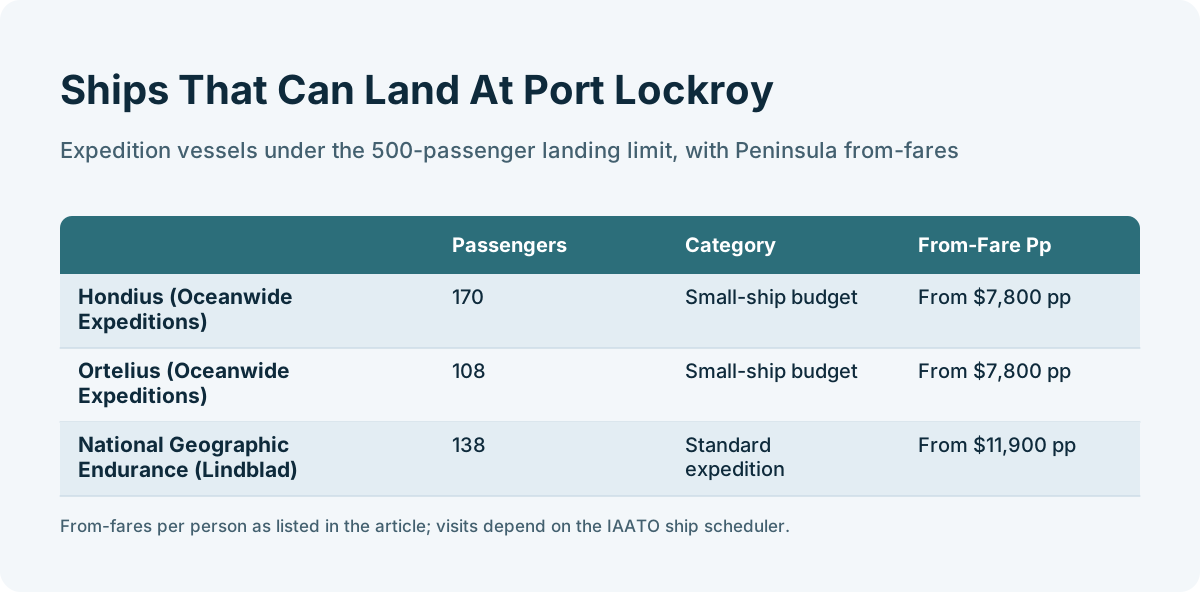
The ships that can land here are expedition vessels under the 500-passenger landing limit. On the budget side, Oceanwide Expeditions' Hondius, a 170-passenger Polar Class 6 vessel built in 2019 and the first-registered PC6 ship in the world in the operator's wording, sails 11, 13 and 19-day Antarctic voyages from Ushuaia with from-fares around $7,800 per person. Her fleet-mates Ortelius, a 108-passenger former Russian research vessel, and Plancius run similar routes at similar price points, on the same Peninsula landing-site network.
At the other end of the scale, upscale expedition ships also call. Lindblad Expeditions' National Geographic Endurance, a 138-guest Polar Class 5 ship with the patented X-Bow hull, runs 12-day Voyage to Antarctica sailings from Ushuaia with from-fares around $11,900 per person. The choice between a budget small ship and an upscale expedition vessel rarely changes whether you reach Port Lockroy; it changes the cabin, the onboard comfort and the price. If you are weighing that trade-off, compare ships with a free consultation before you commit to a fare.
| Ship | Operator | Passengers | Class | Peninsula from-fare |
|---|---|---|---|---|
| Hondius | Oceanwide Expeditions | 170 | Small-ship budget | From $7,800 pp |
| Ortelius | Oceanwide Expeditions | 108 | Small-ship budget | From $7,800 pp |
| National Geographic Endurance | Lindblad Expeditions | 138 | Standard expedition | From $11,900 pp |
| Ship | Class | Passengers | Ice class | From, per person | Voyage length | Departs from |
|---|---|---|---|---|---|---|
| HondiusOceanwide Expeditions | Small-Ship Budget | 170 | Polar Class 6 | from $7,800 | 11 to 19 days | Ushuaia |
| OrteliusOceanwide Expeditions | Small-Ship Budget | 108 | UL1 | from $7,800 | 11 to 25 days | Ushuaia |
| National Geographic EnduranceLindblad Expeditions (with National Geographic) | Standard Expedition | 138 | PC5 | from $10,800 | 12 to 22 days | Ushuaia |
Itineraries matter as much as ships. The classic Peninsula route runs 10 to 13 days with four to six days in Antarctic waters. Longer combinations that add the Falklands and South Georgia spend only 3 to 9 days in Antarctica, so their Peninsula days are spread thinner. Fly-cruise itineraries spend 4 to 6 days in Antarctica; check any departure's day-by-day plan for Port Lockroy. Our overview of Antarctic landing sites puts Port Lockroy in context with the other stops on a typical route.
When To Go And What A Port Lockroy Landing Is Like
Port Lockroy's post office and museum are open during the staffed season, typically November to March, and every landing is weather-dependent. Expect a Zodiac landing, a short walk, time split between museum, post office, shop and penguins, and the constant possibility that wind or swell cancels the call.
The seasonal shape is the same as the rest of the Peninsula. Early season brings more sea ice, pristine snow on the island and courting penguins, with fares typically lower in November and March. December brings the longest daylight, about 19 to 21 hours around the solstice at Peninsula latitudes, and December and January bring eggs and chicks, along with peak pricing. February brings whale numbers at their highest in Peninsula waters and chicks in crèches, and March brings the last sailings and shorter days. There is no month that guarantees a Port Lockroy landing, because ice and swell can affect landings.
On the day itself, biosecurity checks are repeated, and Zodiacs run to the western beach near the whalers' chains, or to the northern alternative. From there it is a short walk to the museum, shop and post office, with gentoos around you. Ships over 60 guests rotate, so listen for your group's call time.
What a landing costs you in planning terms is the reason to book carefully rather than quickly. Port Lockroy appears on itineraries as a highlight, but the landing depends on the scheduler, the weather and your ship's size, and with a 60-ashore cap, the difference between a small vessel and a 200-guest vessel is real in minutes spent ashore. The same logic applies to the season you choose and the fare you pay, and those three decisions, ship, season and route, interact. When you are ready to weigh them, a free Antarctica voyage consultation lines up the options against your dates and budget.
How Port Lockroy Fits The Antarctic Treaty System
Port Lockroy is run by UKAHT under its own ATCM site guideline, with a monitored gentoo colony and a closed control area on the island's eastern side. Every visitor, operator and landing at the island operates inside the treaty's environmental framework, which is why the rules feel strict and are strictly kept.
The legal background is worth a paragraph because it explains the caps and the curfew. The site guideline sets them, and tourism operators work inside a permit framework too; in the United States, the EPA receives environmental impact assessments from non-governmental operators planning expeditions to Antarctica. Nothing about a visit is casual paperwork-wise, even though the experience on the beach feels relaxed.
The penguin monitoring is part of the same picture. The team greeting you at the beach is also running conservation and monitoring work, and the five-metre wildlife distance and the closed eastern side are part of the conditions of every visit.
Common Questions About Port Lockroy
Can you send a postcard from Antarctica?
Yes. Port Lockroy has a working post office on Goudier Island where postcards are cancelled with an Antarctic postmark and carried out by ship mail. Delivery timing depends on the next departure and its return to a gateway port.
Can you visit Port Lockroy?
Yes, on an expedition cruise that includes Antarctic Peninsula landings, subject to weather, ice and the IAATO ship scheduler. Vessels carrying more than 500 passengers cannot make landings, so only expedition ships can put you ashore at Goudier Island.
How many people can visit Port Lockroy per day?
The site guidelines allow a maximum of 350 visitors per day, with no more than 60 ashore at any one time and no more than 35 inside Bransfield House at once. Only one ship may visit the site at a time, and landings are not permitted between 18:00 and 07:00 without the base leader's agreement.
Who runs the museum and post office at Port Lockroy?
The UK Antarctic Heritage Trust, which staffs the island each season. Shop sales fund conservation.
Are there penguins at Port Lockroy?
Yes, a gentoo penguin colony lives on Goudier Island alongside the historic base. The eastern side is a closed control area for penguin monitoring, and visitors keep at least five metres from wildlife, following the same IAATO guidelines that apply at every Antarctic landing.
When is Port Lockroy open?
The post office and museum open during the staffed season, typically November through March. No tourist voyages run from April through September. Structural repairs to Bransfield House continue into 2026-27, and some areas may have restricted access during the works.
More Routes And Landings
 Peninsula CruisesThe classic Peninsula route explained: lengths, fares, landing sites and timing.Read the guide
 Antarctic CircleLonger, costlier voyages that push past 66 degrees south, and what the extra days buy.Read the guide
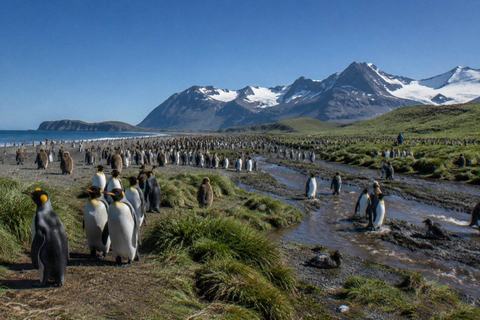 South Georgia CruisesThe 18-to-22-day Falklands, South Georgia and Peninsula itinerary, the premium wildlife cruise.Read the guide
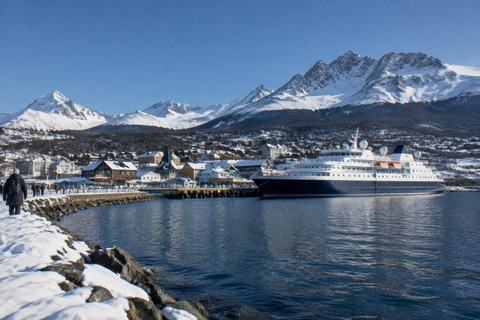 Cruises From UshuaiaShips, routes, fares and arrival logistics for the world's main Antarctica departure port.Read the guide