Elephant Island And The Shackleton Route: What Voyages Can Show You
 By Oleg G.
Point Wild is a rarely landed stop on Antarctic cruises, and the fuller Shackleton route lives on the long South Georgia itineraries. Here is what each voyage can actually show you.
Quick answer: Elephant Island's Point Wild is a rare landing: most visits are Zodiac cruises, because going ashore is rarely possible. The fuller Shackleton route sits on Falklands, South Georgia and Antarctica itineraries of 16 to 28 days, from about $17,809 per person, which call at King Haakon Bay, Grytviken's grave and the Fortuna Bay to Stromness walk.
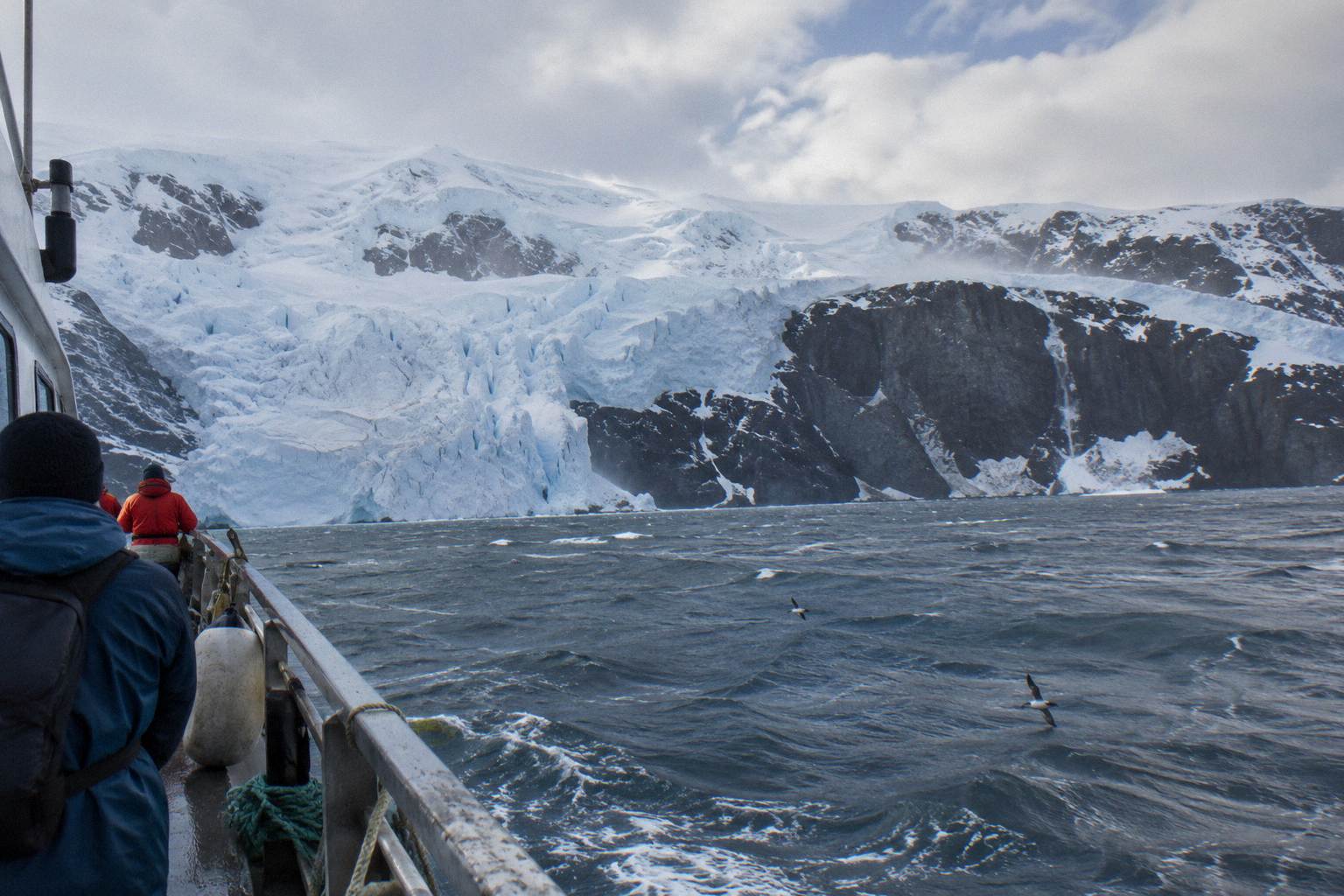
Point Wild, on Elephant Island, is the name that opens the Shackleton route on cruise itineraries, and it is a site where landings are rarely possible. Operators still list it, ships still steam toward it, and the sea, not the schedule, decides what happens next.
This guide covers what a modern expedition voyage can realistically show you of the Shackleton route: the state of play at Point Wild, which itineraries include Elephant Island and South Georgia's key sites, which ships sail them, and what expectations you should carry on board. I have spent two years reading operator route maps and fare pages for this site, and the Shackleton story is a thread that runs through many of them, even when the marketing never says the name.
Where Is Elephant Island And Why Are Point Wild Landings So Rare?
Point Wild on Elephant Island is a rare landing: published route notes say a landing there is rarely possible and Zodiac cruises are the common way to see it. The island appears on Shackleton-themed and Falklands, South Georgia and Antarctica itineraries.
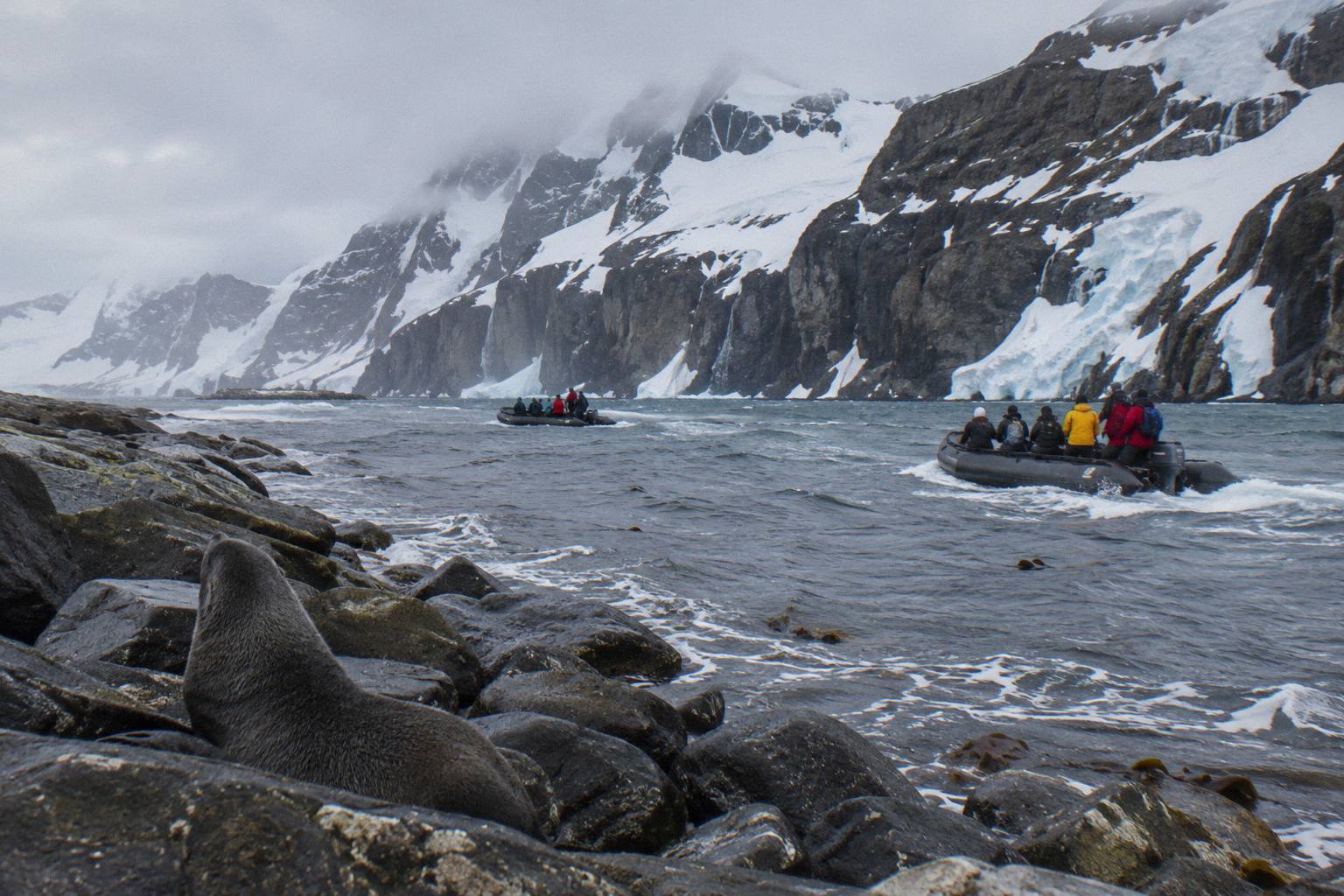
Operator route notes are blunt about it: a landing at Point Wild is rarely possible, and Zodiac cruising along the shore is the common way to see it.
That matters for planning. If an Elephant Island landing is the reason you are booking a cruise, you are building the trip around a stop that is rarely landed. If seeing the island from the water, and hearing the story told close to where it happened, is the goal, then almost any visit counts as a success.
For a traveller weighing this site against the rest of a trip, the honest framing is that Point Wild rewards the story rather than the scenery checklist. A Zodiac cruise puts you at water level close to the shore, and that is the visit most travellers should plan on.
There are rules layered on top of the weather. Antarctic Treaty visitor guidelines cap shore parties at 100 passengers from a vessel at any one time, require a minimum one-to-twenty guide ratio, and allow only one ship at a site at a time, as set out in the official visitor guidelines. None of that stops a Point Wild landing on a calm day, but it does mean that even a ship positioned perfectly may send groups out in rotations, or not at all.
Put together, the route's signature sites look like this:
| Site | Region | What Voyages Can Show You |
|---|---|---|
| Point Wild, Elephant Island | Elephant Island | Zodiac cruises are the norm; landings are rarely possible |
| King Haakon Bay, South Georgia | South Georgia | A call on select South Georgia itineraries |
| Grytviken, South Georgia | South Georgia | Shackleton's grave |
| Fortuna Bay to Stromness | South Georgia | A walk offered on select itineraries |
| Cape Royds hut | Ross Sea | Shackleton's expedition hut, on rare 26 to 34-day Ross Sea voyages |
If you already know that a Point Wild landing is a lottery ticket rather than a promise, the next question is which voyage buys you the most tickets, and that is a route choice before it is a ship choice. It is worth mapping your options with a free consultation before you commit, because the difference between a Peninsula classic and a South Georgia route is thousands of dollars and several days of your life.
Which Voyages Actually Follow The Shackleton Route?
No single voyage retraces the whole story. Elephant Island appears on Shackleton-themed and Falklands, South Georgia and Antarctica itineraries, which run 16 to 28 days from about $17,809 per person. South Georgia's sites, King Haakon Bay, Grytviken and the Fortuna Bay to Stromness walk, sit on the same itineraries.
Operators sell the route under two labels. Some voyages are explicitly named "In Shackleton's footsteps" or close variants, and these are the ones that build the whole itinerary around the story. More commonly, the Shackleton sites are folded into the standard Falklands, South Georgia and Antarctica route, the long itinerary that can include Elephant Island, South Georgia and the Peninsula. Either way, the same sites do the work.
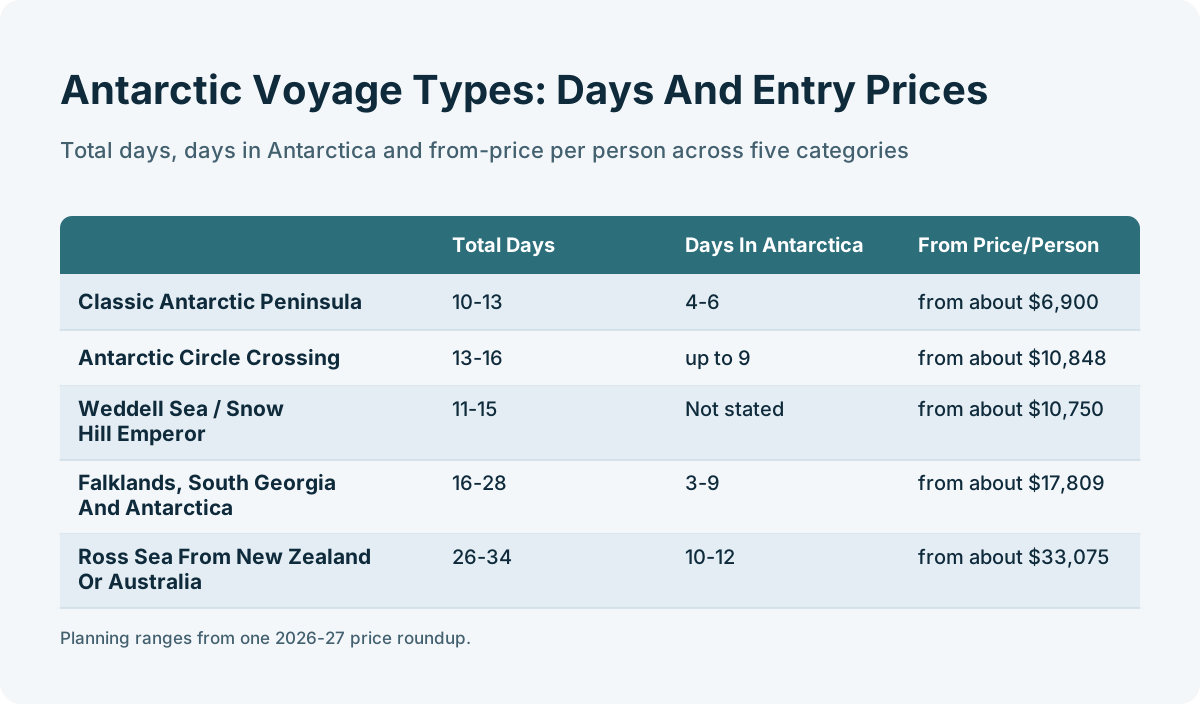
One 2026-27 price roundup reports the Falklands, South Georgia and Antarctica category at 16 to 28 days total with three to nine days spent in Antarctica proper, from about $17,809 per person. That is the fare level to hold in your head as the entry point for the genuine article. By contrast, a classic Antarctic Peninsula voyage runs 10 to 13 days with four to six days on the Peninsula, from roughly $6,900 at the low end to a median around $13,499, and it does not include South Georgia. A Weddell Sea or Snow Hill emperor voyage, 11 to 15 days from about $10,750 on Oceanwide's Ortelius, is the emperor-focused alternative.
Getting to any of these routes starts with the same body of water. These voyages sail from Ushuaia, or from Buenos Aires on some Falklands combinations, and between Tierra del Fuego and the South Shetlands lies the Drake Passage; Quark's own guidance puts the crossing at 18 to 24 hours in optimal conditions and 36 to 48 hours when the seas are rougher. Add two crossings to a 16 to 28-day itinerary and the scale of the commitment becomes clear: this is a trip you buy in weeks, not days. The long routes also carry a far smaller share of the season's departures than the Peninsula classics, a concentration the Antarctic Treaty Secretariat itself notes, with roughly 98 percent of tourism voyages centred on the Peninsula.
The rest of the decision looks like this:
| Voyage Type | Total Days | Days In Antarctica | From Price Per Person |
|---|---|---|---|
| Classic Antarctic Peninsula | 10-13 | 4-6 | from about $6,900 |
| Antarctic Circle crossing | 13-16 | up to 9 | from about $10,848 |
| Weddell Sea / Snow Hill emperor | 11-15 | Not stated | from about $10,750 |
| Falklands, South Georgia and Antarctica | 16-28 | 3-9 | from about $17,809 |
| Ross Sea from New Zealand or Australia | 26-34 | 10-12 | from about $33,075 |
Two honest footnotes belong here. First, the emperor penguin angle: the Snow Hill Island rookery, roughly 4,000 breeding pairs on the sea ice, is reached by helicopter from ships such as Oceanwide's Ortelius or Quark's Ultramarine, and operator notes put the chance of a successful landing in recent seasons at under 50 percent because of ice and weather. Second, the prices above are planning ranges from a single 2026-27 roundup, not quotes; cabins, months and promotions move them substantially. When a voyage of this size is on the table, a free chat about route and budget costs nothing and usually saves a costly mismatch.
What Can You See At South Georgia's Shackleton Sites?
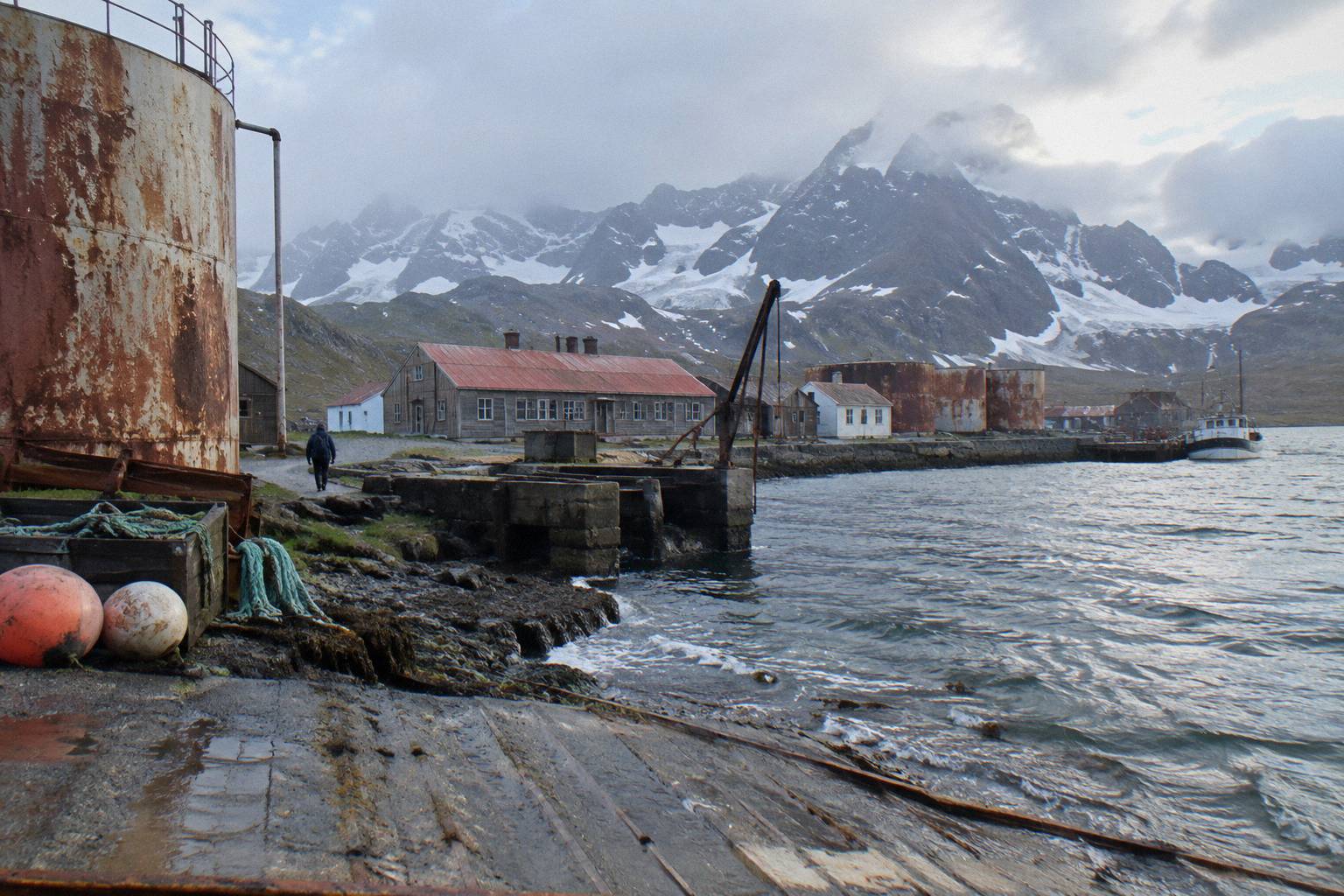
Three Shackleton stops anchor South Georgia. King Haakon Bay, Grytviken with Shackleton's grave, and the Fortuna Bay to Stromness walk are all offered on select South Georgia itineraries. All three appear on Falklands and South Georgia routes, not on Peninsula-only voyages.
Published route notes list three South Georgia elements for Shackleton travellers: King Haakon Bay, Grytviken, where Shackleton is buried, and the walk from Fortuna Bay to Stromness, all offered on select South Georgia itineraries.
What each stop offers on a modern voyage:
| Site | The Story There | What A Voyage Offers |
|---|---|---|
| King Haakon Bay | Named Shackleton site | A call on select South Georgia itineraries |
| Grytviken | Shackleton's grave | A stop on select South Georgia itineraries |
| Fortuna Bay | Start of the Fortuna Bay to Stromness walk | The walk to Stromness on select departures |
| Stromness | End of the walk | The endpoint of the Fortuna Bay hike, conditions permitting |
The practical point is that all three are offered on select itineraries only, so none is automatic on a voyage that lists South Georgia. Our South Georgia cruise guide covers the island's other landings, but for the Shackleton traveller the three sites above are the ones worth checking against a specific departure's itinerary before you book anything.
The practical trap is the brochure phrase "Antarctica and South Georgia". It can mean a single day anchored off one bay, or several days working the north coast, and the difference decides whether King Haakon Bay or the Fortuna Bay walk appear at all. Before you commit to a departure, ask for its day-by-day itinerary and read the South Georgia line items specifically: Grytviken, King Haakon Bay, Fortuna Bay, Stromness. A specialist can pull that plan for the exact sailing quickly, and it is the only document that answers the question that matters here, which is not whether a voyage visits South Georgia but which parts of it your particular departure actually touches.
That check is where many travellers slip: they book the region and assume every site is on every sailing. Treat the walk as a bonus rather than a guarantee.
Which Ships Sail The Shackleton Route?
The route is sailed by long-range expedition ships rather than big cruise liners. On this site's roster, Oceanwide's Hondius and Plancius carry the budget end with voyages up to 19 and 33 days, while Quark's Ultramarine adds helicopters for Weddell Sea access. Cabin choice matters less than itinerary: pick the voyage that lists South Georgia, then the ship.
Start with Oceanwide Expeditions, whose fleet sails these long routes from Ushuaia. The Hondius carries 170 guests in 80 cabins, was built in 2019 as the first Polar Class 6-registered passenger vessel in the world in the operator's own wording, and lists Antarctic voyages of 11, 13 and 19 days; its 2026-27 schedule includes a Falklands, South Georgia, Elephant Island and Antarctica Polar Circle voyage from 13 February to 7 March 2027. Oceanwide's listed Peninsula fares start at $7,800 per person, which makes the ship one of the more accessible ways into the full route. Our full Hondius guide goes deeper on cabins and onboard life.
The stablemates are worth a look too. Plancius, a converted Dutch Navy oceanographic vessel rebuilt as a passenger ship in 2009, takes just 108 guests and lists voyages from 10 days all the way to 33, with fares from $7,050 per person, the lowest entry point on the roster. At the other end, Quark's Ultramarine carries 199 guests on a 128-metre hull with two twin-engine helicopters on two helidecks, which is what makes the Weddell Sea and Snow Hill emperor itineraries possible from her; her Antarctic voyages start at $12,236 per person, a voyage-level fare Quark shares across three of its ships, so the number belongs to the itinerary rather than to the vessel alone.
One rule of the region explains why only expedition ships appear on this route at all. Antarctic Treaty visitor guidelines state that vessels with more than 500 passengers shall not make landings in Antarctica, so the large resort ships that advertise Antarctic scenic cruising cannot put anyone ashore at Point Wild, at Grytviken or anywhere else; their version of the story is a view from the deck. Among the helicopter-capable vessels, Oceanwide's Ortelius deserves a mention too: a former Russian research vessel built in 1989, she carries 108 guests with an ice class the operator lists as UL1, equivalent to 1A, and it is her Weddell Sea departures that carry helicopter access toward the emperor ice, with Peninsula fares on the roster from $7,800 per person.
For a side-by-side look at the three roster headliners, this comparison pulls the facts together:
| Ship | Class | Passengers | Ice class | From, per person | Voyage length | Departs from |
|---|---|---|---|---|---|---|
| HondiusOceanwide Expeditions | Small-Ship Budget | 170 | Polar Class 6 | from $7,800 | 11 to 19 days | Ushuaia |
| UltramarineQuark Expeditions | Upscale Expedition | 199 | 1A+, PC6 | from $12,236 | 12 to 14 days | Buenos Aires, Ushuaia |
| PlanciusOceanwide Expeditions | Small-Ship Budget | 108 | 1D | from $7,050 | 10 to 33 days | Ushuaia |
One caution on ship size: the Antarctic Treaty rules cap shore parties at 100 passengers at a time, so a 170-guest ship lands in two rotations while a 108-guest ship can put nearly everyone ashore at once. On a route where the headline stop is already unreliable, the smaller vessel buys you more minutes wherever you do get ashore. When the ship decision feels close, compare expedition ships with free advice rather than guessing from deck plans.
What Should You Realistically Expect When Retracing Shackleton?
Expect a Zodiac cruise, not a landing, at Point Wild, and treat every Shackleton site as weather-dependent. The South Georgia stops, the Fortuna Bay walk included, are offered on select itineraries. If you want Shackleton's hut at Cape Royds, that is a 26 to 34-day Ross Sea voyage from about $33,075.
The honest version of this trip is a voyage that collects pieces of the story where conditions allow. Grytviken, the Fortuna Bay to Stromness walk and King Haakon Bay are all offered on select South Georgia itineraries. Point Wild is the long shot, and on most visits it is a slow Zodiac ride along a beach you will photograph and remember anyway.
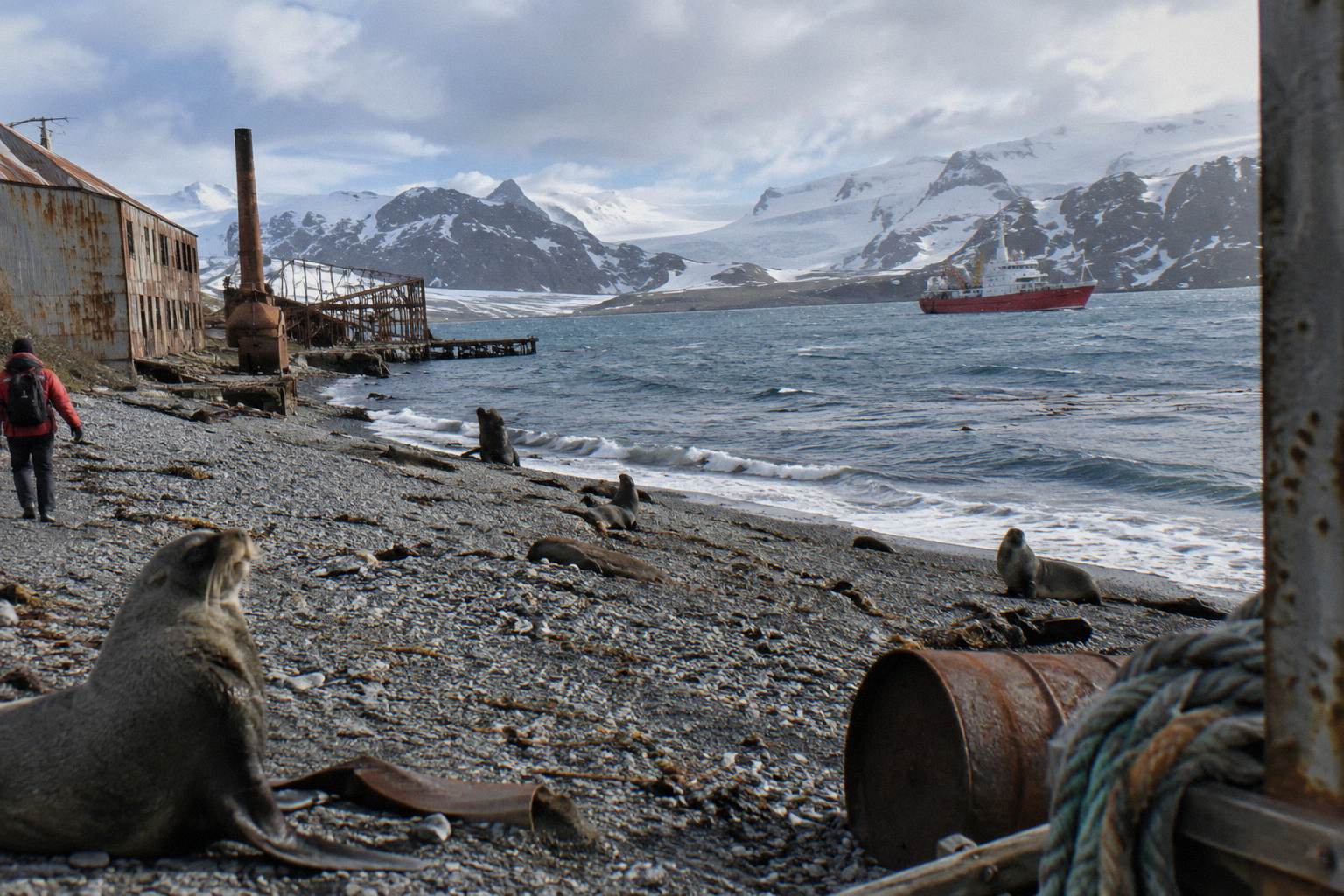
There is also a deeper, rarer version of the pilgrimage. The Ross Sea itineraries that sail from New Zealand or Australia, 26 to 34 days with 10 to 12 days in the Antarctic region, visit Shackleton's hut at Cape Royds alongside Scott's huts and the Ross Ice Shelf, and Heritage Expeditions runs a 28-day "In the Wake of Scott and Shackleton" voyage with departures in the January to February window, as Heritage's Ross Sea pages set out. One 2026-27 roundup puts these from about $33,075 per person. For a history traveller with the time, that is the route that touches the other half of the Shackleton era, and only a handful of departures sail it each season.
The Ross Sea departures themselves are worth understanding before you dismiss them on length. They sail from Bluff, Queenstown, Dunedin or Invercargill in New Zealand, or from Hobart in Australia, typically run 21 to 34 days, and concentrate in the January to February window, with highlights including the Ross Ice Shelf, Scott's huts at Cape Evans and Hut Point, and the emperor colonies. Aurora's 26-day Ross Sea Odyssey from Hobart is one example, aboard the Greg Mortimer from this site's roster. A related handful of voyages push on to East Antarctica and the sub-Antarctic islands, Macquarie Island with its royal penguins, Mawson's Huts at Commonwealth Bay, and the Auckland and Campbell islands, and the frequency across all of them is low: a few departures per season in total, run by operators such as Heritage, Aurora, Scenic and Ponant.
On the Weddell side, the emperor penguin voyages that use helicopters, such as Oceanwide's Weddell Sea sailings on Ortelius and Quark's Snow Hill itinerary on Ultramarine, put you in Weddell Sea ice, and operator notes are candid that success there depends on ice, with recent seasons running below a 50 percent chance of reaching the rookery. That is the character of the whole Shackleton route in one number: the sites are real, the voyages really go there, and the continent keeps the final vote on what you see. Our coverage at Cruises In Antarctica treats that uncertainty as a feature of the planning, not a flaw in the product.
If your heart is set on a specific site, the single best move is to match the departure, not the ship, to that site, and to hold a backup plan you genuinely like. A Falklands, South Georgia and Antarctica voyage that misses Point Wild can still give you Grytviken, King Haakon Bay, the walk and the Peninsula, if your departure lists them. A Peninsula classic that misses everything else gives you none of the story, however good the penguins are.
Common Questions About The Shackleton Route And Elephant Island
Can you land at Point Wild on Elephant Island?
Landings at Point Wild are rarely possible. Zodiac cruising along the shore is the common way visits happen, and most itineraries treat a landing there as a bonus rather than a scheduled stop.
Which cruises visit Elephant Island?
Elephant Island appears on voyages labelled "In Shackleton's footsteps" and on Falklands, South Georgia and Antarctica itineraries, which run 16 to 28 days.
Where is Shackleton buried?
At Grytviken on South Georgia, a stop offered on select South Georgia itineraries.
How long is a Shackleton route cruise?
The full route, covering Elephant Island and South Georgia's sites, runs 16 to 28 days and one 2026-27 roundup reports fares from about $17,809 per person. The Ross Sea version with Shackleton's hut runs 26 to 34 days from about $33,075.
Can you walk from Fortuna Bay to Stromness?
Yes, on select South Georgia itineraries. The walk is offered on select South Georgia itineraries, so check the day-by-day plan of your departure.
Can a voyage reach the Snow Hill emperor penguins on the Shackleton route?
Helicopter-equipped ships such as Oceanwide's Ortelius and Quark's Ultramarine run 11 to 15-day Weddell Sea voyages toward the Snow Hill rookery, from about $10,750 per person. Operator notes put the chance of reaching the colony in recent seasons at under 50 percent because of ice and weather.
More Routes And Landings
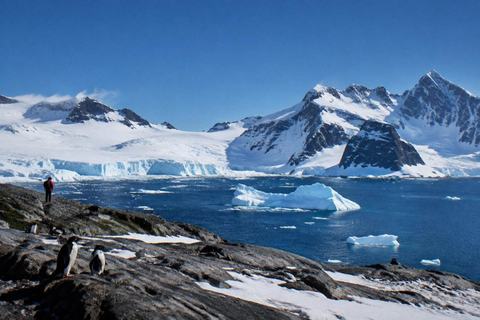 Peninsula CruisesThe classic Peninsula route explained: lengths, fares, landing sites and timing.Read the guide
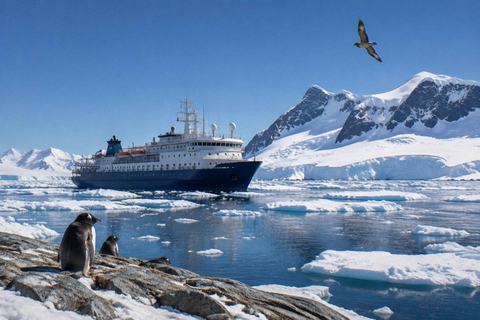 Antarctic CircleLonger, costlier voyages that push past 66 degrees south, and what the extra days buy.Read the guide
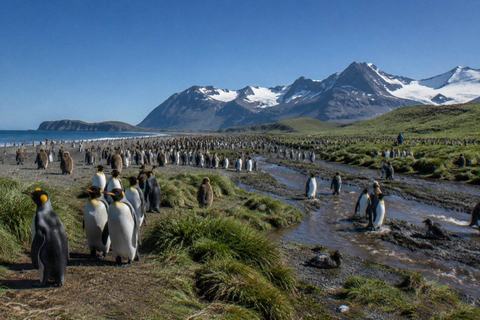 South Georgia CruisesThe 18-to-22-day Falklands, South Georgia and Peninsula itinerary, the premium wildlife cruise.Read the guide
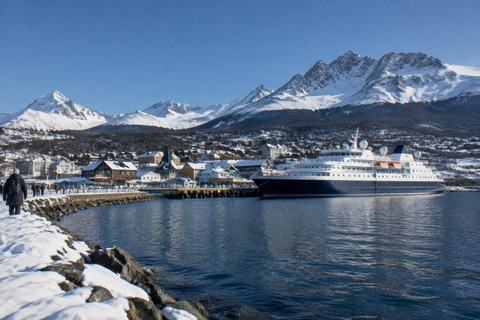 Cruises From UshuaiaShips, routes, fares and arrival logistics for the world's main Antarctica departure port.Read the guide