Where Is The Best Place To See Penguins?
 By Oleg G.
Penguin seekers have three distinct destinations to weigh: the Antarctic Peninsula for accessible gentoo, Adélie and chinstrap colonies, South Georgia for vast king penguin rookeries, and the Weddell Sea for emperor penguins reached by helicopter. The right answer depends on the species, the month and the kind of expedition you book.
Where Is The Best Place To See Penguins?
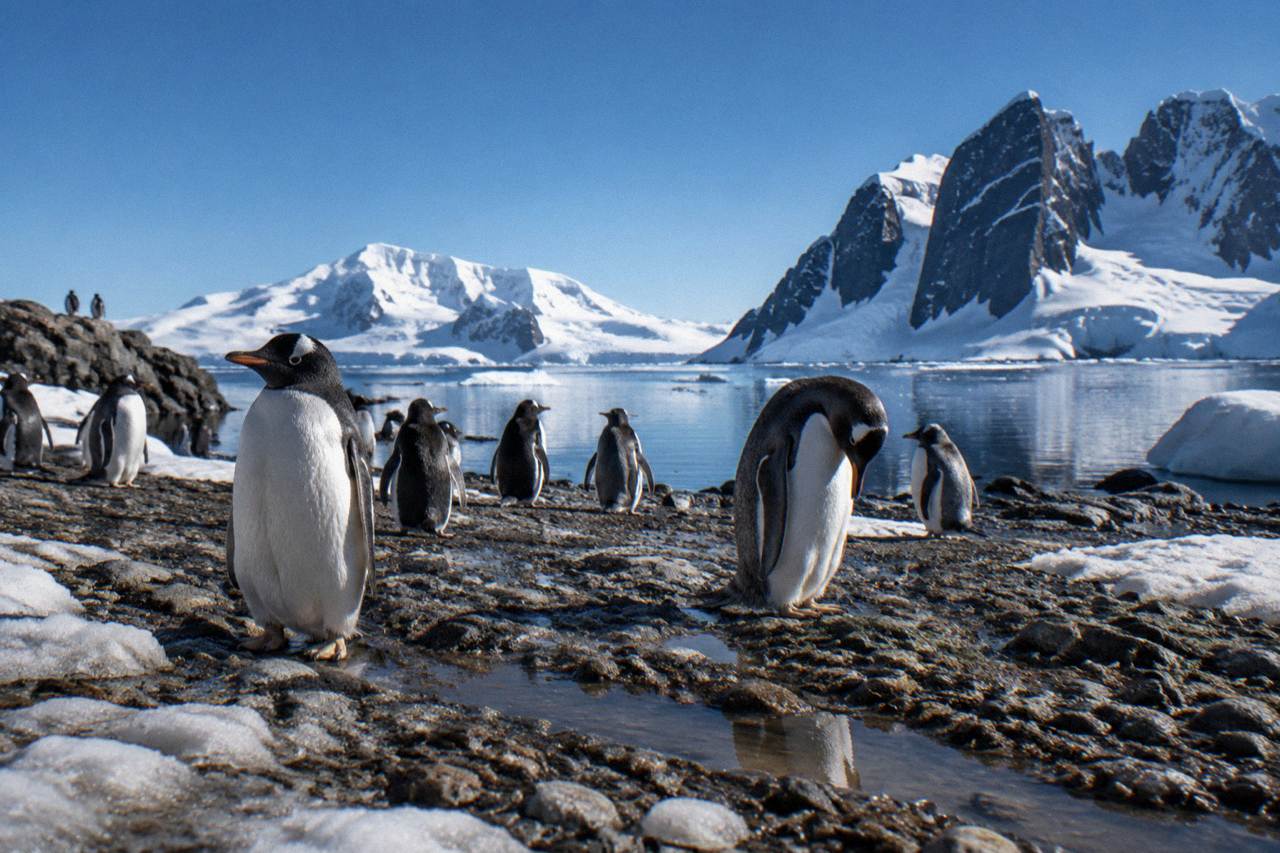
The single best place to see penguins in numbers most people cannot imagine is South Georgia, where king penguin colonies such as St. Andrews Bay hold roughly 250,000 breeding pairs. For a first Antarctic cruise, the Antarctic Peninsula is the practical answer: gentoo, Adélie and chinstrap colonies line the western shore and the South Shetland Islands, and nearly every expedition voyage there includes multiple landings among them.
The honest answer is that "best" splits into three questions. Which species do you want to see? How much time and money can you spend? And how do you feel about a two-day Drake Passage crossing versus a charter flight? An Antarctic Peninsula cruise of 10 to 12 days reaches gentoo and chinstrap colonies reliably. A South Georgia itinerary, usually 20 or more days combined with the Falklands and the Peninsula, puts you in front of king penguin rookeries that stretch to the horizon. A specialist Weddell Sea voyage, such as the helicopter-supported emperor penguin expeditions to Snow Hill Island, is the only realistic way to see emperors.
IAATO counted 85,195 landed visitors in the 2025-26 season, and the overwhelming majority of them saw penguins on the Antarctic Peninsula. The Peninsula is where the industry concentrates: the Antarctic Treaty Secretariat notes that approximately 98 percent of all tourism voyages occur in the Antarctic Peninsula during the austral summer. That concentration exists partly because the penguin colonies there are accessible, dense and predictable.
There are rules that shape every penguin landing, and they matter for planning. IAATO guidelines cap landings at 100 passengers ashore from a vessel at any one time, require a 1:20 ratio of actively guiding staff to visitors, and ask you to keep at least 5 metres from wildlife on land, with greater distances where species or site guidance requires it. Small ships land everyone quickly; very large ships cannot land at all, because vessels carrying more than 500 fare-paying passengers are prohibited from making landings in Antarctica. This site, Cruises In Antarctica, exists to help you match those rules to the right voyage.
Which Penguins Live Where?
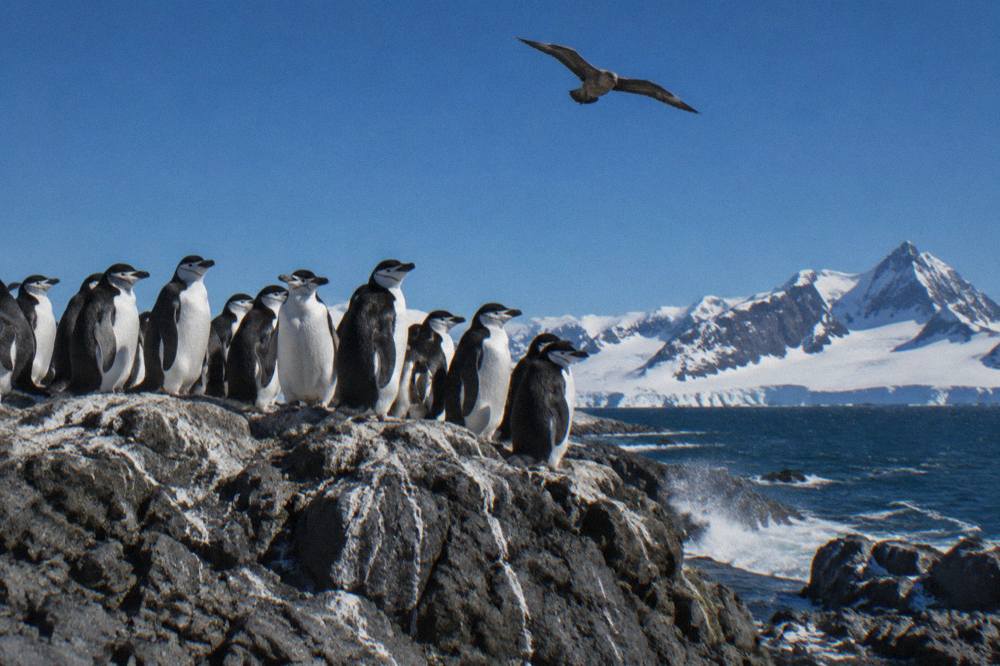
Seven penguin species breed in the wider Antarctic region, but a Peninsula cruise realistically delivers three: gentoo, Adélie and chinstrap. South Georgia adds king penguins and macaroni penguins in enormous numbers. Emperor penguins breed on sea ice in the Weddell Sea and are only reachable on specialist voyages, typically by helicopter. Rockhoppers appear in the Falklands on combined itineraries.
The split matters because travellers often picture emperors, the tall, amber-necked species from documentaries, and then book a standard Peninsula voyage that never comes near them. Emperors nest on fast ice deep in the Weddell Sea. The rookery at Snow Hill Island is the target of dedicated November and December expeditions, and those voyages use helicopters to reach the ice edge when conditions allow, which is why they are priced and staffed differently from a classic Peninsula trip.
Gentoos are the species most Peninsula visitors photograph at length. They nest on beaches and low hills across the western Peninsula and the South Shetlands, and their colonies have grown in recent decades. Adélies, the classic black-and-white tuxedo penguin, prefer pack ice edges and are more common on the southern and eastern flanks of the Peninsula. Chinstraps favour steep, rocky slopes on the South Shetland Islands, and their colonies can be loud, crowded and pungent in high summer.
South Georgia sits well to the northeast of the Peninsula and belongs to a different world climatically: green tussock grass, glacier fronts and beaches packed with fur seals as well as penguins. The king penguin colonies there, at St. Andrews Bay, Salisbury Plain and Gold Harbour, are among the largest aggregations of any penguin species anywhere. Poseidon Expeditions' South Georgia page describes St. Andrews Bay as holding more than 250,000 breeding pairs. Macaroni penguins, with their orange plumes, also breed there in large numbers on the island's southwestern coast.
If you are weighing a standard Peninsula trip against a longer combined itinerary, the species list is the deciding factor, and it is worth getting help before committing: compare penguin itineraries with a free consultation before you lock in a route. For a deeper look at the combined routes, our guide to the South Georgia and Antarctica cruise breaks down the full itinerary.
Antarctic Peninsula Landings: Gentoo, Adélie And Chinstrap
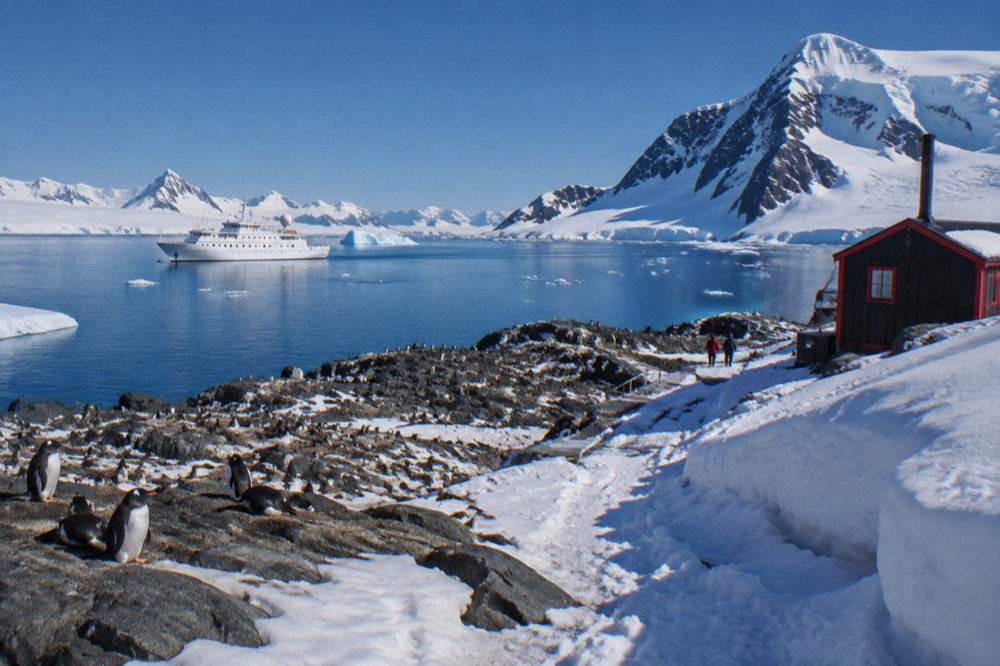
A classic 10 to 12 day Peninsula expedition typically spends four to six days on landings in the South Shetland Islands and along the western Peninsula, which usually means one or two penguin colony visits per day. Popular sites with current IAATO and Antarctic Treaty site guidelines include Half Moon Island, Neko Harbour, Baily Head on Deception Island and Port Lockroy.
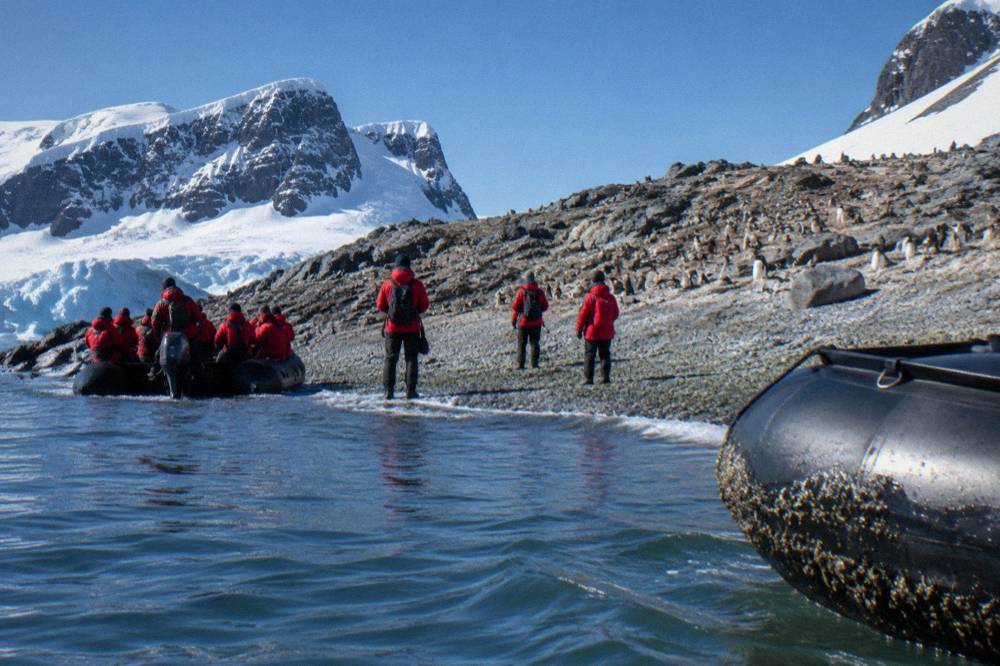
The rhythm of a landing is worth understanding before you book. The ship anchors off a site, Zodiacs ferry passengers ashore in groups, and guides stake out a perimeter before the first boot hits the beach. You walk slowly, you give penguins the right of way on their penguin highways, and you keep the mandated 5 metres of distance, though a curious gentoo will sometimes walk right up to you, which is allowed because the distance rule binds humans, not birds. Landings last a few hours, and with the 100-passenger cap, larger vessels rotate groups while smaller ones land everyone at once.
Port Lockroy, on Goudier Island, deserves special mention. The site pairs a gentoo colony with the historic British Base A, now run as a museum and post office by the UK Antarctic Heritage Trust, which has been carrying out structural conservation work there across recent seasons. It is one of the few places where you can mail a postcard from Antarctica and watch penguins peck at the museum floorboards in the same visit.
Timing within the season changes what you see. In November, rookeries are busy with courtship and nest-building, snow cover is at its maximum, and the landscapes look pristine. Penguin chicks typically begin hatching mid-December, and by late December into January the colonies are at their most chaotic: adults shuttling to the sea, chicks huddling in creches, skuas circling overhead looking for an unguarded egg. February brings molting adults and chicks testing the water. Each stage has its advocates, and there is no consensus among operators that one month is definitively the best. Our month-by-month guide to the best time to visit Antarctica covers the full trade-offs.
South Georgia: The King Penguin Spectacle
South Georgia is the best place on Earth to see king penguins, and it is not close. St. Andrews Bay alone holds roughly 250,000 breeding pairs, and the beaches at Salisbury Plain and Gold Harbour hold tens of thousands more, alongside elephant seals and fur seals. The catch is getting there: South Georgia itineraries run 20 to 23 days and cost substantially more than Peninsula-only voyages.
King penguins do not fit the familiar penguin template. They are nearly a metre tall, vividly coloured at the neck, and they breed on a 14-plus month cycle, which means a South Georgia beach in any month of the austral summer shows adults incubating eggs on their feet, woolly brown chicks in creches, and moulted juveniles all at once. On South Georgia, king penguin breeding activity peaks November through January, with early breeders laying from late November and chicks forming creches by January. December through February brings the full spectacle of incubating adults and fluffy chicks.
The experience is different in kind from a Peninsula landing. Where a Peninsula visit might involve a few thousand gentoos on a hillside, a South Georgia landing puts you among a colony that takes several minutes to walk along, with the noise and the smell arriving before the first penguin comes into view. Fur seals share the beaches, and visitors are briefed on keeping distance from them too.
The trade-off is time and money. A 20 to 23 day Falklands, South Georgia and Peninsula itinerary costs more and demands more sea days, including the open crossing to South Georgia itself. For many travellers it is the trip of a lifetime precisely because it stacks three destinations; for others, a Peninsula voyage plus a future South Georgia trip makes more sense. If that balance is what you are weighing, get help choosing a penguin voyage rather than guessing at itinerary lengths.
Emperor Penguins At Snow Hill
Emperor penguins are the hardest Antarctic species to see, because they breed on sea ice in the Weddell Sea, far from standard cruise routes. The realistic route is a specialist expedition to the Snow Hill Island rookery, which runs in November and December and uses ship-based helicopters to reach the ice when conditions allow. Expect a premium fare and a weather-dependent itinerary.
The emperor penguin life cycle drives the schedule. Emperors lay their eggs in the Antarctic winter, males incubate through the dark months, and chicks fledge in December and January, which means the November to early December window is when the rookery holds adults and downy chicks together. Operators such as Quark Expeditions run dedicated emperor penguin quests to Snow Hill in that window, and the voyages are built around helicopter flights from the ship to the sea ice, followed by a walk to the colony's edge under strict IAATO-style approach rules.
Two honest caveats belong here. First, ice conditions vary year to year, and no operator can promise helicopter access or a particular number of days at the ice edge; these voyages are sold with that uncertainty made explicit. Second, the ships that run these expeditions, such as Quark's Ultramarine with its two twin-engine helicopters, are upscale vessels, and the fares sit well above standard Peninsula trips. The emperor quest is a specialist purchase, not a casual upgrade.
For most penguin-focused travellers, the decision tree looks like this: gentoos and chinstraps close and cheap on the Peninsula, kings in overwhelming numbers on South Georgia, emperors on a premium helicopter voyage. If emperors are the goal, say so early in the planning, because the departure dates are few and they fill far in advance.
What Month Should You Choose For Penguins?
November offers courting penguins, maximum snow and pristine landings; mid-December through January is prime hatching for gentoo, Adélie and chinstrap; February brings molting adults and swimming lessons; and March delivers the strongest whale activity alongside fledging chicks. No single month is best for everything, so pick the month that matches the behaviour you most want to photograph.
In November, Peninsula temperatures can drop to around minus 5 degrees Celsius, rookeries are focused on courtship and nest-building, and Adélie and gentoo penguins display behaviours like stone-gifting. Late October and early November vessels encounter the most dramatic sea ice breakup, and elephant seal pups appear in the South Shetlands.
Mid-December into January is the chick window. Penguin chicks typically begin hatching mid-December on the Peninsula, most channels and inlets become ice-free by January, and humpback whale sightings increase near the coast from mid-January onward. Daylight runs close to 24 hours, and temperatures sit around 0 to 3 degrees Celsius through the January to March stretch. This is peak season and peak pricing for good reason.
February and March shift the story. Adults molt, chicks learn to swim, leopard seals become a possible sighting, and whale watching peaks in the krill-rich waters, with humpbacks, minkes and orcas all active. Blue-eyed cormorants fledge on the Peninsula in March. Photographers who want soft light and whale flukes often prefer this tail of the season, while photographers who want white landscapes and courtship rituals prefer November.
| Month | Penguin behaviour | Other highlights | Trade-offs |
|---|---|---|---|
| October to early November | Courtship, nest-building, stone-gifting | Maximum snow and ice, elephant seal pups in the South Shetlands | Coldest, some sites still ice-bound |
| Mid-November to mid-December | Eggs incubating, first chicks hatching mid-December | Pristine landings, fewer ships early on | Chicks not yet visible in early weeks |
| Late December to January | Peak chick hatching, creche formation | Near-24-hour daylight, humpbacks arriving | Peak fares, most crowded sites |
| February | Chicks fledging, adults molting | Fur seal abundance rises, leopard seals possible | Less snow, muddier landings |
| March | Fledging cormorants, chicks gone to sea | Best whale activity, softer light | Season winding down, weather less stable |
Which Ship And Route For Penguin Watching?
For penguin landings, ship size matters more than ship luxury: vessels carrying more than 500 passengers cannot land at all, and the 100-passengers-ashore cap means smaller ships cycle everyone onto the beach faster. The Oceanwide Expeditions ship Hondius, at 170 guests, the Lindblad National Geographic Endurance, at 138, and Quark's Ocean Explorer, at 138, all fit the small-ship model that penguin watching rewards.
The Hondius is a strong fit for a first penguin-focused Peninsula voyage. The operator states a capacity of 170 guests in 80 cabins, the ship was the first-registered Polar Class 6 vessel in the world in the operator's own wording, and it sails from Ushuaia on 11, 13 and 19 day itineraries. Antarctic Peninsula departures show fares from $7,800 per person, which places it in the value tier of the expedition market. Its sister ships Ortelius and Plancius run similar routes at comparable fares, Plancius from $7,050 per person. Our full Hondius Antarctica guide covers the ship in depth.
The National Geographic Endurance takes a different approach at a higher price point. Lindblad's ship page shows a starting-from fare of $11,900 for the 12 day Voyage to Antarctica, and the vessel carries 138 guests with a patented X-Bow hull designed to soften the Drake Passage crossing. Lindblad also bundles a pre-cruise Buenos Aires hotel, the charter flight to Ushuaia, alcoholic beverages, prepaid gratuities and an expedition jacket, which narrows the real gap between headline fares. Quark's Ocean Explorer, a 138 guest upscale vessel with 15 Zodiacs and verandas on almost all cabins, shares voyage-level Quark fares that start at $12,236 per person for Antarctic Explorer sailings, fares that are shared across Quark's fleet rather than exclusive to one ship.
| Ship | Class | Passengers | Ice class | From, per person | Voyage length | Departs from |
|---|---|---|---|---|---|---|
| HondiusOceanwide Expeditions | Small-Ship Budget | 170 | Polar Class 6 | from $7,800 | 11 to 19 days | Ushuaia |
| National Geographic EnduranceLindblad Expeditions (with National Geographic) | Standard Expedition | 138 | PC5 | from $11,900 | 12 to 22 days | Ushuaia |
| Ocean ExplorerQuark Expeditions | Upscale Expedition | 138 | 1A, PC6 | from $12,236 | 8 to 20 days | Ushuaia, Buenos Aires, Punta Arenas |
Each of these ships will get you onto penguin beaches. The differences that matter are price, bundled inclusions, cabin style and the feel of the onboard program, and those are exactly the trade-offs a short planning conversation resolves quickly. When you are ready to narrow it down, book a free Antarctica cruise consultation and put your species and month priorities on the table.
One planning note that has nothing to do with ships: the gateway. Ushuaia is the departure port for the Peninsula routes these vessels run, and the Buenos Aires to Ushuaia flight corridor is weather-prone in peak season, which is why arriving at least one night, ideally two, before embarkation is standard advice. Fly-cruise options from Punta Arenas skip the Drake Passage entirely on a roughly two hour charter flight to King George Island, trading sea days for weather dependence on the flight itself.
How Close Can You Actually Get To Penguins?
The rule is 5 metres minimum on land, and it binds you, not the penguins: IAATO's visitor guidelines state that visitors should in general keep at least 5 metres from wildlife, with greater distances where species or site guidance requires it. If a penguin approaches you, standing still and letting it pass is the correct response. Kneeling or sitting on the ground in wildlife areas is not permitted under current biosecurity protocols.
The 5 metre figure comes directly from the Antarctic Treaty visitor guidelines that IAATO enforces through its operators, and the stricter caveats matter at certain sites: nesting birds, molting penguins and animals showing stress all require more space, and drones must not be flown near wildlife. Guides mark approach boundaries at every landing, and the 1:20 staff ratio means someone is always watching both the penguins and the people.
Biosecurity is the other half of the contract. Visitors must carefully wash boots and clean all equipment, including clothes, bags, tripods, tents and walking sticks, before bringing them to Antarctica, and clean again between sites. That is why every expedition ship runs a boot-wash station at the gangway and why vacuum stations appear in the mudroom before each landing. These procedures protect penguin colonies from disease transfer between sites, a concern that has grown with the spread of highly pathogenic avian influenza in the wider region, and operators have kept enhanced biosecurity protocols in place through recent seasons.
None of this makes penguin viewing distant or sterile. Colonies sit right beside landing beaches, penguins wobble past visitors constantly, and a patient photographer standing still at the colony edge will usually get a close pass within minutes. The rules are about not interfering, not about keeping away.
Common Questions About Seeing Penguins In Antarctica
Where Is The Best Place To See Penguins?
For sheer numbers, South Georgia: king penguin colonies such as St. Andrews Bay hold roughly 250,000 breeding pairs. For accessibility on a first Antarctic cruise, the Antarctic Peninsula and the South Shetland Islands, where gentoo, Adélie and chinstrap colonies sit beside the landing beaches on nearly every voyage. For emperor penguins, the Snow Hill Island rookery in the Weddell Sea on a specialist helicopter-supported expedition.
What Month Is Best For Penguin Chicks?
Penguin chicks typically begin hatching mid-December on the Antarctic Peninsula, and prime hatching for gentoo, Adélie and chinstrap runs late December into January. By February, chicks are forming creches and learning to swim while adults molt. On South Georgia, king penguin chicks are present across the whole season because of the species' long breeding cycle.
Can You Touch Or Feed The Penguins?
No. IAATO guidelines require keeping at least 5 metres from wildlife on land, more where site or species guidance requires it, and touching or feeding wildlife is prohibited. If a penguin approaches you, stand still and let it pass. Kneeling or sitting on the ground in wildlife areas is also not allowed under current biosecurity protocols.
Which Penguins Will I See On A Standard Peninsula Cruise?
Mostly gentoo, chinstrap and Adélie penguins. Gentoo colonies are widespread across the western Peninsula and South Shetlands, chinstraps favour rocky slopes on islands like Half Moon, and Adélies concentrate near the pack ice edges to the south. Emperors do not appear on standard Peninsula routes; they breed on Weddell Sea ice and require a dedicated helicopter expedition.
Do Bigger Ships Still Let You Land At Penguin Colonies?
Only ships carrying 500 or fewer fare-paying passengers may make landings in Antarctica, and no more than 100 passengers from a vessel may be ashore at any one time. Very large cruise ships offer scenic cruising only, with no landings. Small expedition vessels land everyone quickly and often run multiple colony visits per day.
Is South Georgia Worth The Extra Days For Penguins?
If king penguins are your priority, yes: the colonies at St. Andrews Bay, Salisbury Plain and Gold Harbour are among the largest penguin aggregations on Earth, and no Peninsula voyage replicates them. The trade-off is itinerary length, typically 20 to 23 days combined with the Falklands and the Peninsula, and a correspondingly higher fare.