Is Ushuaia Worth Visiting?
 By Oleg G.
Most Antarctica passengers meet their ship in Ushuaia, and the city has quietly grown into a destination of its own. Here is what the numbers and the operator schedules actually say about whether extra nights are worth it.
Ushuaia prints "fin del mundo" on its souvenirs, and for most people sailing to Antarctica the label is operational rather than romantic: the expedition cruise leaves from here. In the 2025-26 season IAATO counted 85,195 visitors who landed on the continent, and the overwhelming share of them boarded small ships at this one Argentine port. That turns a casual question into a planning question. Is Ushuaia worth visiting on its own merits, or is it a waiting room with a mountain view?
The short answer, assembled from port reports, operator schedules and season data rather than brochures: the city earns one or two nights before boarding, and often a night after, but it does not replace the trip it launches. The setting is genuinely striking, the attractions are real if modest, and the buffer the city provides protects one of the most expensive itineraries most travellers will ever book. Cruises In Antarctica exists to take the expedition cruise side of that equation seriously, and the gateway city keeps solving the same problem from the other end.
This piece walks through the parts of the question that have verifiable answers: how many nights the schedules actually demand, what there is to do in the town, which ships sail from the pier and what they cost, what the stop adds to a trip budget, and what documents a US visitor needs.
Is Ushuaia Worth Visiting?
Yes, Ushuaia is worth visiting for most people, though the honest answer is practical rather than philosophical: the city earns about one or two nights, usually as a pre-cruise stop, and that brief stay is enough to see the essentials before moving on. Ushuaia is the boarding port for the majority of Antarctic Peninsula expedition cruises, its mountains and the Beagle Channel give it genuine scenic presence, and Tierra del Fuego National Park plus the maritime museum fill two days comfortably. As a standalone holiday destination beyond that, the city is a harder sell.
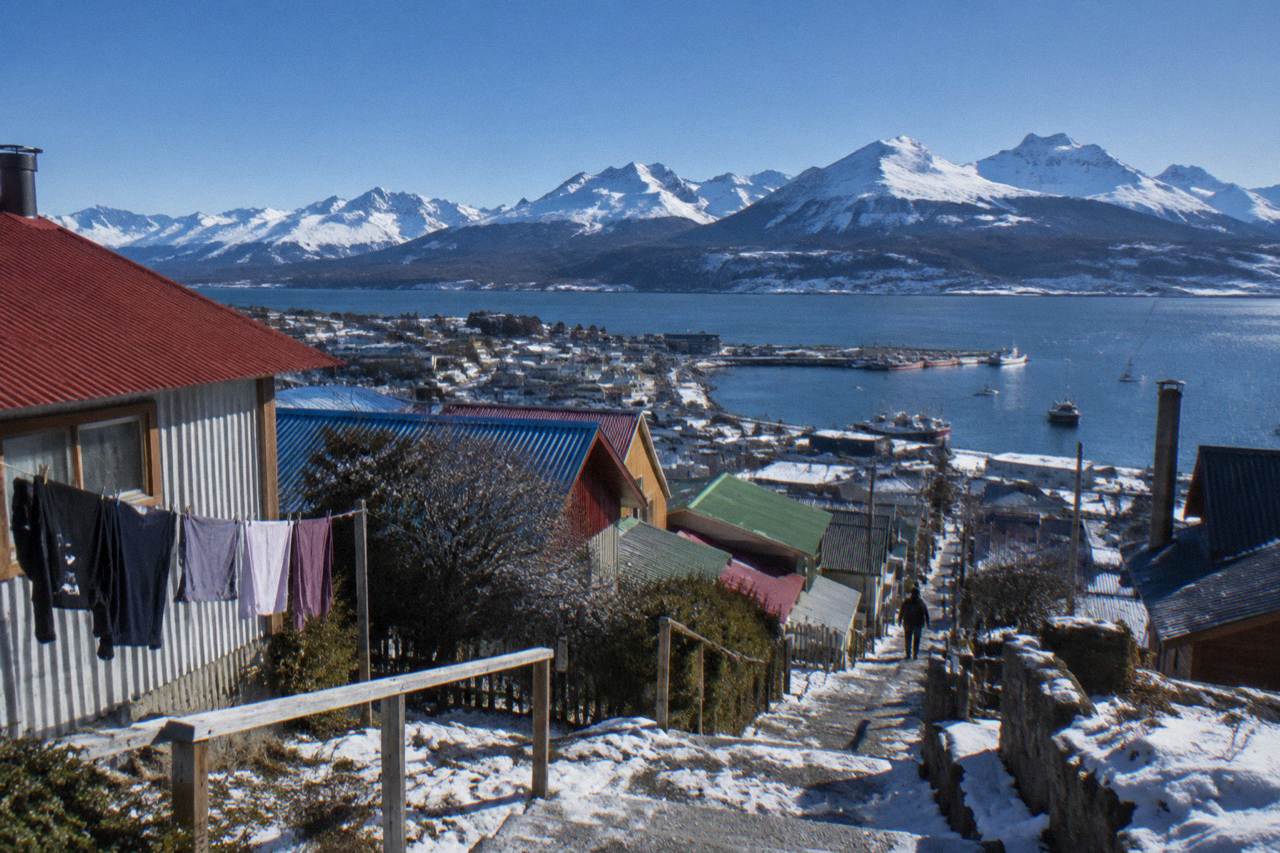
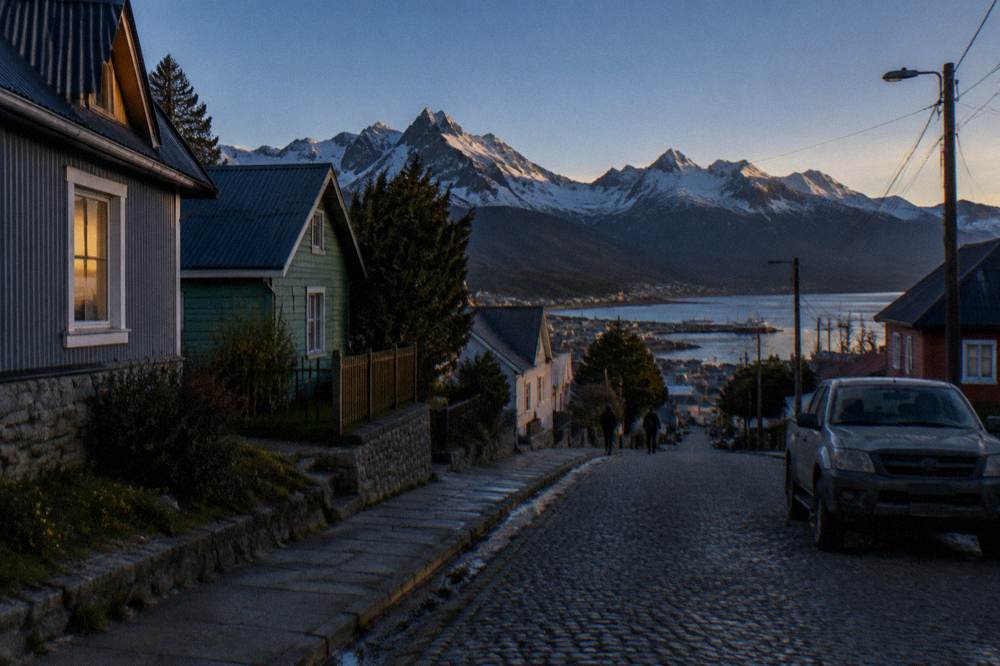
The case for the city starts with where it sits. Ushuaia runs along a narrow strip between the Beagle Channel and the Martial mountains, with the snowline close enough to study from the main street. Approximately 98 percent of Antarctic tourism voyages occur in the Peninsula region during the austral summer, according to the Antarctic Treaty Secretariat's tourism overview, and Ushuaia is the funnel most of those voyages pour through. A town of this size would be unremarkable almost anywhere else in the world. At the bottom of the continent, with expedition ships tied up along the waterfront and weather rolling in over the channel, it reads as exactly what it is: the departure lounge for the seventh continent.
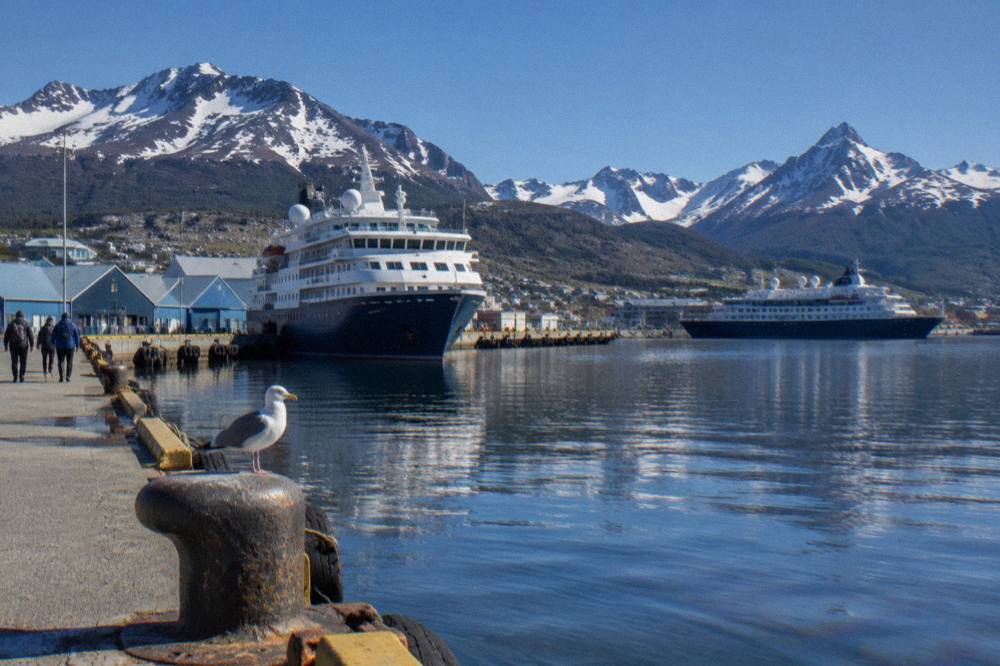
The port side of the city is changing fast enough that returning passengers notice the difference. Argentina's National Ports and Navigation Agency issued Resolution 51/2026, which set up dynamic berth allocation and entry sequencing at Ushuaia based on real-time capacity, alongside $2.5 million in upgrades to fenders and utilities for the 2026-27 season. The port is also operating under a federal intervention carrying a twelve-month term from early 2026, with a full suspension of its licence deferred specifically to protect the cruise season. Passengers see none of the paperwork. What they see is a waterfront that can hold several expedition ships at once and a town that has learned to absorb their crews and guests.
Scale explains the rest. In January 2026, at the peak of the austral summer, Ushuaia's hotels ran at roughly 80 percent occupancy while more than 43,720 cruise passengers moved through the port in that single month. A city of that size, at that occupancy, with that many people all needing dinner on the same three streets, behaves differently in February than it does in November. Worth, for a gateway town, is partly a question of when you arrive and how much of the city's rhythm you are willing to share with a ship's worth of fellow passengers.
How Many Nights Should You Stay Before An Antarctica Cruise?
Plan on two nights before boarding: that is the pattern port reports recommend, and it gives you a comfortable margin. If your budget or schedule forces a shorter stay, one night is the workable minimum, but treat it as the floor rather than the goal. The Buenos Aires to Ushuaia corridor is weather-sensitive in peak season, there are no direct flights from the United States, and an expedition ship does not wait for a delayed passenger. The buffer is insurance for the voyage itself, not a luxury added to it.
The reasoning is blunt. If your long-haul flight lands late in Buenos Aires, or the domestic leg south is delayed or cancelled by weather, a one-night buffer gives you a full spare day to rebook before the ship sails. Two nights give you that spare day plus time to actually see the city rather than the inside of a hotel. The expedition cruise you booked departs on schedule regardless: vessels leave Ushuaia on their published sailing days, and rejoining a voyage already at sea off the Peninsula is not a realistic option for a late passenger.
The flight structure explains why the corridor dominates every pre-cruise checklist. Travellers from the United States route through Buenos Aires, transferring between the international airport EZE and the domestic airport AEP, then flying the domestic leg to Ushuaia. Schedule analyses advise a buffer of four to five hours or more for the airport transfer alone, and port and airport reporting for 2026 put 78.8 percent of Ushuaia's outbound passengers on Buenos Aires routes. Aerolineas Argentinas flies the route roughly 27 times a week with JetSMART adding several weekly low-cost rotations, so rebooking is usually possible. Usually possible is not the standard you want on boarding day.
The discipline is even stricter on the Chilean side of the comparison. Fly-cruise passengers departing from Punta Arenas must be at their hotel by 14:00 the day before the charter flight under Polar Latitudes' rules, which also cap checked baggage at 20 kg for the flight to King George Island, as the operator's fly-cruise guide sets out. Whether you sail the Drake Passage from Argentina or fly over it from Chile, the operators have already decided that you need a gateway night before the expedition begins.
That two-night decision is the cheapest travel insurance you will ever buy, and it doubles as sightseeing time. If the sailing matters more than the city, one buffer night plus an early arrival into Buenos Aires works. If you want the national park and a channel trip without rushing, take the second night and book a room with a flexible rate, because January's occupancy figures leave little slack for late changes; our guide to Ushuaia hotels covers where the pre-cruise nights are best spent. And if the whole shape of the trip is still open, a free consultation can map the options before flights and hotels lock you in.
What Is There To Actually Do In Ushuaia?
The city's core attractions are Tierra del Fuego National Park, the Museo Marítimo y del Presidio inside the former prison, boat trips on the Beagle Channel to sea lion and cormorant colonies, and the Martial glacier area above town. Together they comfortably fill the two days a sensible pre-cruise buffer allows, and the channel trips in particular work as a small-scale preview of the wildlife waiting farther south. Beyond that list, the town is walkable and modest.
The national park is the headline excursion, a short drive west of the city along the shore of the Beagle Channel, with walking trails through southern beech forest and along the coast. A narrow-gauge heritage train runs to the park edge and back, and half-day and full-day visits both work depending on how much buffer you gave yourself. For most cruise passengers this is the single biggest thing Ushuaia offers beyond the waterfront, and it is the item most worth protecting a second night for. The town's own things to do in Ushuaia run deeper than one park, but the park anchors the list.
The Museo Marítimo y del Presidio occupies the city's former prison, and its galleries cover the convict history of the town alongside the seafaring stories of the region: Cape Horn, shipwrecks, and the early Antarctic expeditions that passed this way. For anyone about to sail the Drake Passage, the museum is useful context rather than filler. It answers, in exhibits rather than lectures, why the crossing you are about to make earned its reputation, and why the ships that carry passengers south are built the way they are.
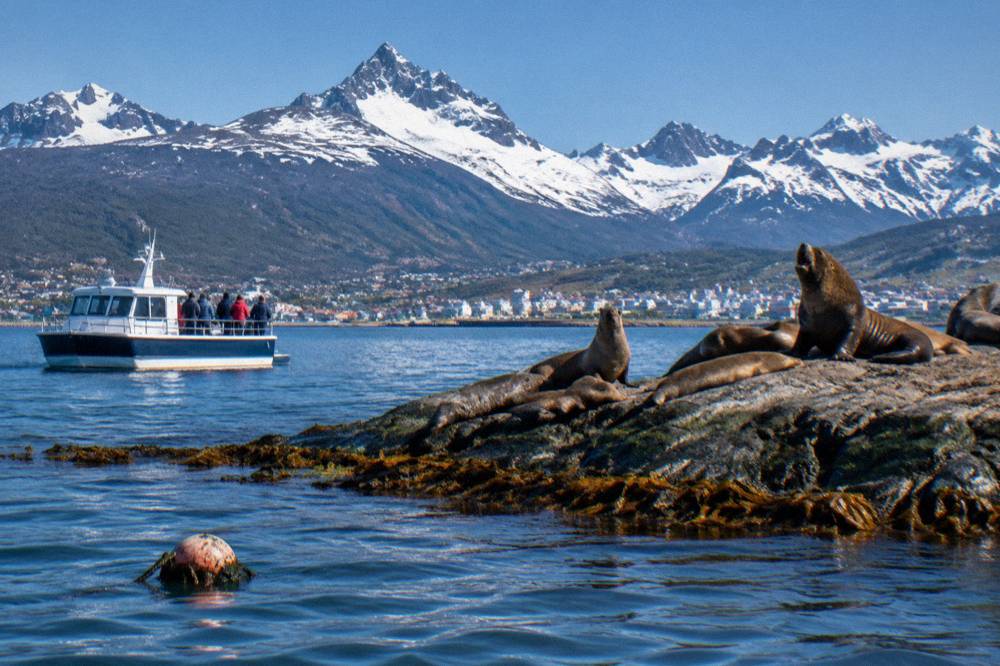
The Beagle Channel trips are the closest thing to a preview of the cruise itself. Boats run out to the Les Éclaireurs lighthouse and past colonies of sea lions and cormorants, and on a clear day the wind and the wildlife give a scaled-down taste of what the ship will deliver at full size in Antarctica. The main street back in town is small and walkable, lined with gear shops, restaurants serving king crab, and the inevitable end-of-the-world merchandise. What stands out in most accounts of the waterfront walk is how close the snow sits to the streets; the setting does more work than any single attraction in town.
Timing changes what you see, and not only in town. November on the Antarctic Peninsula can drop to -5°C, with penguin rookeries busy with courtship and nest-building, and Ushuaia is milder but still cold, with maximum snow on the mountains. Penguin chicks typically begin hatching mid-December, most channels become ice-free by January, and whale sightings increase from mid-January onward, with temperatures of 0-3°C common from January to March. Book your gateway nights with the season in mind: early sailings get a quieter, whiter town; January and February get the busiest streets and the fullest dining rooms.
How Does Ushuaia Connect To The Cruise Itself?
Ushuaia connects to the cruise directly as the port where you board: it serves as the embarkation point for most of the 2026-27 Antarctic Peninsula fleet, ranging from Oceanwide's budget small ships to Lindblad and Quark's upscale vessels. The connection runs both ways, since the city's tourism economy is organised around those sailings. The practical consequence for a visitor is that the ship choice, and with it the price of the whole trip, gets made while you are standing in the gateway city rather than before you arrive.
The sailing list from this one pier is long. Oceanwide Expeditions' Hondius, Ortelius and Plancius all depart from Ushuaia, as do Lindblad's National Geographic Endurance and Resolution, Aurora Expeditions' Sylvia Earle and Greg Mortimer, and Poseidon's Sea Spirit, alongside Atlas Ocean Voyages' World Navigator and World Traveller and the Seabourn expedition pair. Our guide to Antarctica cruises from Ushuaia works through the full list; the pattern that matters here is that the city hosts every price tier of the market, from the cheapest berths afloat to the top of the luxury segment.
For budget-conscious travellers, the Oceanwide ships show what sailing from Ushuaia costs. The Hondius, built in 2019 and the first-registered Polar Class 6 vessel in the world in the operator's own wording, carries 170 passengers in 80 cabins on voyages of 11, 13 or 19 days, with Antarctic Peninsula fares on the operator's page from $7,800 per person. It is a purpose-built polar ship rather than a converted one, which is unusual at this price point, and it sails the classic Drake crossing rather than a fly-cruise routing.
Her fleet-mates underline how tight the value band is. Ortelius, a former Russian research vessel built in 1989, carries 108 passengers in 50 cabins and posts the same $7,800 starting fare for its Peninsula departures. Plancius, a converted Dutch Navy oceanographic vessel rebuilt as a passenger ship in 2009, also carries 108 in 50 cabins and undercuts both at $7,050 on the operator's listing. Cost reporting places these entry-level Drake-crossing berths in the roughly $7,500 to $8,995 range for shared twin or triple cabins on ten-to-eleven-day voyages, which matches what the operator pages show.
The upscale tier sailing from the same port runs considerably higher, and the gap is mostly in the ship rather than the itinerary ashore. Lindblad's National Geographic Endurance, a 138-passenger Polar Code PC5 ship with the patented X-Bow, starts at $11,900 for its 12-day Voyage to Antarctica, a fare that bundles a pre-cruise Buenos Aires hotel, the charter flight to Ushuaia, alcoholic beverages, prepaid gratuities and an expedition jacket. Quark Expeditions' Ocean Explorer, also 138 passengers with verandas on almost all cabins, lists Antarctic Peninsula voyages from $12,236 per person; that is a voyage-level fare shared across Quark's Antarctic Explorer departures rather than a figure exclusive to one ship. Three ships from three operators illustrate the spread from the same pier.
| Ship | Class | Passengers | Ice class | From, per person | Voyage length | Departs from |
|---|---|---|---|---|---|---|
| HondiusOceanwide Expeditions | Small-Ship Budget | 170 | Polar Class 6 | from $7,800 | 11 to 19 days | Ushuaia |
| National Geographic EnduranceLindblad Expeditions (with National Geographic) | Standard Expedition | 138 | PC5 | from $11,900 | 12 to 22 days | Ushuaia |
| Ocean ExplorerQuark Expeditions | Upscale Expedition | 138 | 1A, PC6 | from $12,236 | 8 to 20 days | Ushuaia, Buenos Aires, Punta Arenas |
The fuller picture from the operator pages looks like this, for the ships a Ushuaia-based planner most often shortlists:
| Ship | Operator | Passengers | Voyage days | Peninsula fare from |
|---|---|---|---|---|
| Plancius | Oceanwide Expeditions | 108 | 10/11/13/15/19/21/33 | $7,050 |
| Hondius | Oceanwide Expeditions | 170 | 11/13/19 | $7,800 |
| Ortelius | Oceanwide Expeditions | 108 | 11/13/25 | $7,800 |
| National Geographic Endurance | Lindblad Expeditions | 138 | 12/16/21/22 | $11,900 |
| National Geographic Resolution | Lindblad Expeditions | 138 | 12/16/18/21/22/25 | $11,900 |
| Ocean Explorer | Quark Expeditions | 138 | 8/9/10/11/12/20 | $12,236 |
Reading the spread honestly: every ship in that table delivers the same regulatory framework ashore. IAATO rules cap landings at 100 passengers from a vessel at any one time, require a minimum 1:20 guide-to-visitor ratio, and prohibit vessels carrying more than 500 passengers from making landings at all, so the small-ship model is not a premium flourish, it is how landing-based tourism works in Antarctica. What the price gap buys is cabin size, ship polish and inclusions, not access to a different continent. If that spread of fares and ships is where your planning currently sits, a consultation can match a ship to your budget and narrow the field to the sailings that genuinely fit your dates.
What Does A Ushuaia Stop Add To The Total Trip Cost?
The gateway stay adds lodging, meals, a domestic flight and insurance to whatever the cruise fare costs, and one 2026 cost guide puts the realistic all-in budget for a mid-range ten-to-twelve-day Peninsula trip at $12,000 to $25,000 per person including fare, flights, gear, tips and cover. The Ushuaia portion itself is modest next to the voyage; the flights and the insurance are the line items that surprise people.
Start with the guide's own arithmetic, attributed where it should be. One 2026 cost guide reports recommended tips of about $16 per person per day on board, and sector reporting puts gratuities in a typical $15 to $25 per person per day band unless the line prepaid them, which Lindblad's bundled fares do. The same reporting notes that most expedition operators provide a complimentary parka, often yours to keep, and loan waterproof boots, so the gear line is smaller than many first-time planners fear. The big non-fare items are the flights, which we covered above, and insurance, which is not optional in practice.
The insurance point deserves its own sentence or two, because it is the item most often bought wrong. Travel insurance with medical evacuation cover is required or recommended by most operators and is not included in base fares; major lines impose high medical evacuation minimums plus full trip-cost cancellation cover, and proof is often required before departure or at check-in. Argentina, separately, formally requires health and medical coverage including evacuation for foreign visitors under its 2025 rule update. A policy that was adequate for a European city break will usually not clear an Antarctic operator's thresholds, and the quiet days in Ushuaia before boarding are the sensible moment to fix that gap rather than the check-in desk.
On the ground, the pre-cruise spend is a few hotel nights, transfers, a park excursion and meals, all of which flex with the season: January's roughly 80 percent occupancy pushes room rates and restaurant waits up at exactly the moment the port is busiest, while November and March buy you a quieter town. The bigger financial levers sit elsewhere in the booking. Early-booking offers for the 2026-27 and 2027-28 seasons commonly reach 10 to 30 percent off on select sailings, single supplements typically run from 25 percent extra up to 1.5 or 2 times the twin rate, and last-minute discounts exist but are limited in availability and uncommon for peak December sailings, which book furthest ahead. Deciding those levers is easier with help; a free consultation can talk through the whole itinerary, flights and gateway nights included.
Do You Need A Visa Or Special Documents For Ushuaia?
US citizens need no visa for Argentina for tourist stays of up to 90 days, and the same visa-free rule applies to Chile if the trip uses the Punta Arenas fly-cruise gateway; a valid passport is the only document in play. The operator, not the passenger, files the Antarctic environmental paperwork. The one personal requirement that starts in Ushuaia is biosecurity: boots and gear must be cleaned before they go south. For the full paperwork picture, including what to have ready for the Buenos Aires connection, read the US citizen visa guide for Ushuaia.
The reciprocity fees that once applied to US citizens for both Argentina and Chile have been abolished, which removes a layer of admin older guidebooks still describe. One caution from the entry guidance is worth repeating: travelling on an expired or damaged passport can result in denial of entry at the traveller's own expense, so check the document before booking anything non-refundable, which on this trip is nearly everything. Airlines generally prefer comfortable remaining validity even where authorities do not strictly demand it.
The Antarctic side is handled upstream of you. US rules require tour operators planning expeditions to Antarctica to submit environmental documentation to the EPA, and passengers file nothing themselves. What passengers do own is biosecurity, and it begins in the gateway: guidance requires carefully washing boots and cleaning all equipment including clothes, bags, tripods and walking sticks before bringing them to Antarctica, then cleaning again between sites. Once you are ashore, keep at least 5 metres from wildlife, with greater distances where species or site rules require them. The rules are short, and the expedition team will repeat them; following them is part of what makes the landing model work.
Common Questions About Visiting Ushuaia
Is Ushuaia Worth Visiting?
Yes, for most Antarctica cruise passengers, as a one-to-two-night stop. The city's attractions, Tierra del Fuego National Park, the maritime museum in the former prison, and Beagle Channel boat trips, fill two days comfortably, and the pre-cruise buffer protects you against weather delays on the Buenos Aires to Ushuaia flight corridor.
How Many Nights Should I Stay In Ushuaia Before A Cruise?
Two nights is the recommended pattern, one night the workable minimum. Domestic flights to Ushuaia are weather-prone in peak season, and if you miss the sailing the ship does not wait. Two nights give you a spare day plus time to see the city.
Can You Fly Direct To Ushuaia From The United States?
No. US travellers route through Buenos Aires, transferring between the international EZE airport and the domestic AEP airport, then flying the domestic leg south. Reports advise a buffer of four to five hours or more for the transfer.
Do US Citizens Need A Visa For Ushuaia?
No, US citizens enter Argentina visa-free for tourist stays of up to 90 days with a valid passport. The same visa-free rule applies to Chile if your trip uses the Punta Arenas fly-cruise gateway.
What Ships Sail To Antarctica From Ushuaia?
The majority of Peninsula expedition cruises depart from Ushuaia, including Oceanwide's Hondius, Ortelius and Plancius, Lindblad's National Geographic ships, Aurora Expeditions' vessels, and many others. Peninsula fares on the operator pages range from $7,050 per person on Plancius to over $12,000 on upscale ships.
Is Ushuaia Busy During Cruise Season?
Yes. In January 2026 hotels reached roughly 80 percent occupancy while more than 43,720 cruise passengers passed through the port, so book pre-cruise hotels and domestic flights early for peak months.