Do US Citizens Need A Visa For Ushuaia?
 By Oleg G.
No visa is required. US tourists can enter Argentina, including Ushuaia, for up to 90 days with a valid passport. The real planning work is elsewhere: the Buenos Aires connection, Argentina's health coverage rule, and the cruise departure timing.
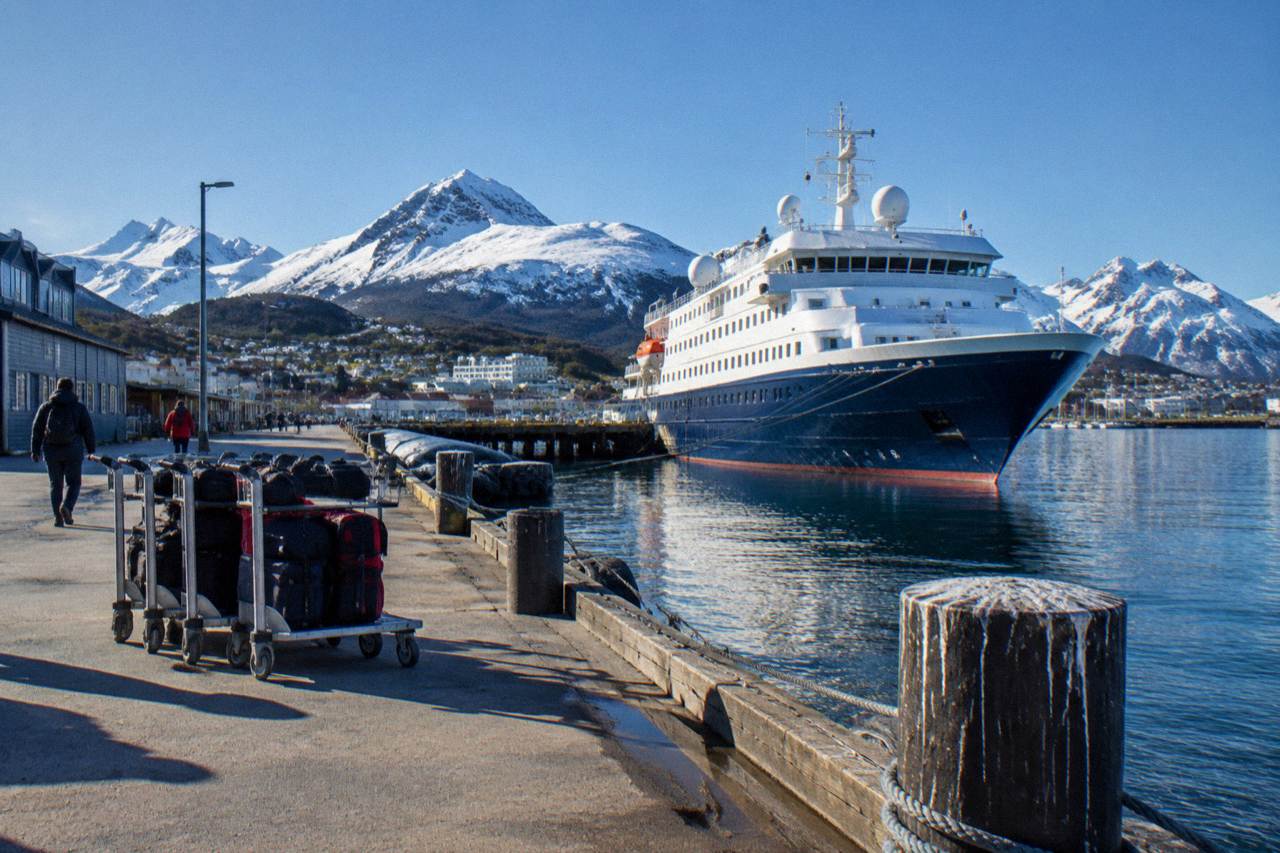
No. US citizens do not need a visa to visit Ushuaia for tourism. Argentina admits US passport holders visa-free for stays of up to 90 days, and the old reciprocity fee that once applied to Americans was abolished years ago. The answer comes from the US State Department's country information for Argentina, and it is worth a quick confirmation on the official page before you fly. What actually deserves your attention is everything around the visa question: the passport, Argentina's health coverage rule, and the fact that the Antarctic expedition cruises this question is really about depart from the same small port town.
Ushuaia is not a destination people fly to on its own, or at least not usually. It sits at the southern tip of Argentina, in Tierra del Fuego, and it is the port most Drake-sailing expedition ships leave from, the place where a cruise booking turns into an actual departure date. A reader asking about visas for Ushuaia is almost always asking in service of a bigger trip, so this article answers the border question first and then walks through the parts of the plan that genuinely trip people up: the domestic flight connection through Buenos Aires, the insurance requirement, and how the port city fits into an Antarctic cruise itinerary. The reporting here draws on the State Department's country pages, Argentina's migration annex, operator requirement listings and 2026 port coverage, and it flags wherever a figure rests on a single source.
Do US Citizens Need A Visa For Ushuaia?
No visa is required. US citizens entering Argentina as tourists may stay up to 90 days with a valid passport, and no reciprocity fee or entry permit applies. The State Department's country information page for Argentina states this directly, so confirm it on the official page before booking. Ushuaia has no separate entry regime; it is simply Argentine territory.
The detail worth flagging is the sourcing. The State Department's Argentina page gives the answer: no visa for up to 90 days, which is worth confirming on the official page before you fly. Argentina's own migration authority lists the United States among visa-exempt nationalities in its official annex, again read the same way. Both sources agree, and neither adds conditions beyond a valid passport for tourism travel. There is no separate permit for Tierra del Fuego, the province Ushuaia sits in, and no special documentation for travel to the port itself.
One practical note: your passport needs to be valid, and damaged or expired documents are a real problem. A logistics review of Argentina entry requirements notes that travelers arriving with expired or damaged passports can be denied boarding at their own expense, which is a far more common border failure for Americans than any visa issue. Check the expiry date and the physical condition of the document months before departure, not at the airport. If your passport is anywhere near renewal, do it before you book the cruise, because a renewal mid-booking can create name and document mismatches with airline and operator records.
For a sense of scale on the other side of the border question: Ushuaia's port and airport run hard during the austral summer. Port reporting from the 2026 season counted more than 43,720 cruise passengers moving through the town, and hotel occupancy in January 2026 reached roughly 80 percent. None of those visitors needed an Argentine visa if they were American, but all of them needed a passport that worked and a flight that arrived on time.
What Documents Do You Actually Need At The Argentine Border?
A valid US passport is the only document you need at Argentine immigration. No visa, no reciprocity fee, no advance authorization. Argentina does formally require foreign visitors to hold health or medical coverage, including evacuation, under a 2025 rule update, so your travel insurance documents are the second thing to have ready. Keep both accessible in your carry-on.
The insurance point deserves more space than it usually gets, because it is the one requirement that changed recently. A Patagonia travel requirements review notes that Argentina formally requires health and medical coverage, including evacuation, for foreign visitors as of the 2025 rule update. This aligns with what Antarctic operators demand anyway: a comparison of operator requirements shows minimum medical evacuation coverage of $500k at Quark Expeditions, $250k at Ponant and $150k at Lindblad, plus full trip-cost cancellation cover, with proof often required before departure or at check-in. If you are sailing to Antarctica from Ushuaia, the operator's insurance minimum is almost certainly stricter than the border's, so satisfying the cruise satisfies Argentina.
The practical packing of documents is simple. Passport, insurance certificate showing evacuation cover, and your cruise confirmation. Argentine immigration at Ushuaia's airport or, if you arrive overland, the land crossing, will stamp you in for up to 90 days. Americans routinely clear in minutes. The failure modes are all document-quality issues: an expired passport, a damaged photo page, a name on the airline ticket that does not match the passport. Each of those is a boarding denial risk at your US departure airport long before an Argentine officer sees you.
If your trip includes the Chilean side, the rules mirror each other. US citizens do not need a visa for Chile for tourist stays of 90 days or fewer on a tourist passport, per the State Department's Chile page. Chile's reciprocity fee was abolished in 2014. Some Antarctic fly-cruise itineraries start in Punta Arenas which means your entry point is Santiago rather than Buenos Aires, and the same passport logic applies with no additional paperwork. If you are weighing the two gateways, talk through gateway options with a specialist before committing, since the choice ripples into flights, hotels and insurance timing.
Getting To Ushuaia: Why The Buenos Aires Connection Matters
There are no direct flights from the United States to Ushuaia. US travelers fly into Buenos Aires, usually into Ezeiza for the long-haul leg, then transfer to Aeroparque for a domestic flight to Ushuaia, a corridor served by roughly 27 Aerolineas Argentinas flights a week plus JetSMART frequencies. Schedule buffers of at least one night, ideally two, are the standard advice.
The connection is the single most consequential logistics decision in this whole article, more than the visa answer. Flight schedule data from late September 2026 shows the Buenos Aires to Ushuaia corridor running from early morning through evening departures, with Aerolineas Argentinas operating about 27 weekly flights and JetSMART adding low-cost frequencies. But the corridor is weather-prone: schedule analyses describe the route that way in peak season, and airport analysis for 2026 found that 78.8 percent of Ushuaia's outbound passengers routed through Buenos Aires, which tells you how central that corridor is. Port and hotel reporting recommends arriving at least one night, ideally two, before a cruise departure.
The airport split inside Buenos Aires is where the plan most often bends. Long-haul arrivals from the United States land at Ezeiza, the international airport, while the domestic flights to Ushuaia leave from Aeroparque, a separate field on the other side of the city. The transfer between them is a real journey, not a terminal change, and schedule analyses of the corridor advise a buffer of four to five hours or more for it. Building that buffer into the arrival day, then overnighting in Buenos Aires and flying south the next morning, is the sequence that keeps a weather delay from becoming a missed ship.
That buffer advice matters because expedition ships do not wait. A vessel like Hondius has a fixed departure window from Ushuaia port, and if your domestic flight cancels the night before sailing, the ship sails without you. The recommended structure is: land at Ezeiza, allow a generous transfer window to Aeroparque, overnight in Buenos Aires, then fly to Ushuaia a full day or two before embarkation. It adds hotel nights and a day of travel, but it converts a single point of failure into a survivable delay.
There is also a seasonal wrinkle worth knowing. Flybondi suspended its Buenos Aires to Ushuaia route from late April 2026 through the May and June low season, citing low demand, with a plan to double frequency to six weekly from July. Capacity on the corridor flexes with the season, and in peak cruise months the flights fill with expedition passengers. Book the domestic leg early, and if the airline schedule looks thin, that is one more argument for the two-night buffer. If your dates are fixed around a specific cruise departure, get help sequencing flights and embarkation so the itinerary has slack built in.
Where Ushuaia Fits Into An Antarctic Expedition Cruise
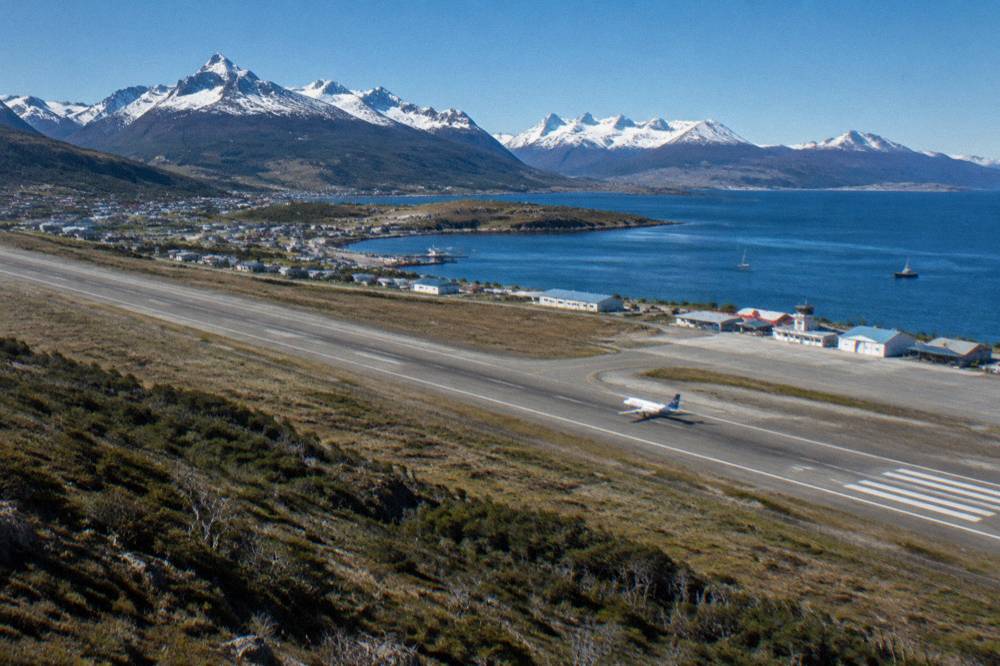
Ushuaia is the embarkation port for the majority of Antarctic Peninsula expedition cruises. Ships dock at the town's port, guests board in the late afternoon, and the vessel sails down the Beagle Channel toward the Drake Passage the same evening. Roughly 98 percent of Antarctic tourism voyages occur in the Peninsula region during the austral summer, and Ushuaia is the operational heart of that traffic.
The Antarctic Treaty System's tourism page states that approximately 98 percent of all tourism voyages occur in the Antarctic Peninsula during the seven-month austral summer from October to April, and Ushuaia is the port those voyages overwhelmingly use. The town's port has been undergoing upgrades for the 2026-27 season, including berth allocation changes through Resolution 51/2026 and around $2.5 million in fender and utility work, precisely because the cruise volume keeps growing. IAATO's figures for the 2025-26 season counted 85,195 landed visitors and 27,217 cruise-only passengers, and nearly every one of those trips touched a ship that provisioned or departed from this corridor.
The rules that shape a voyage also explain why the ships here are small. IAATO guidance limits landings to 100 passengers ashore from a vessel at any one time, requires a minimum 1:20 guiding staff-to-visitor ratio, and prohibits vessels carrying more than 500 fare-paying passengers from making landings at all. Only one ship may visit a site at any one time, which is why operators coordinate their itineraries rather than compete for the same beach at the same hour. A 170-guest ship can land its whole complement in two rotations under the 100-ashore rule; a vessel over 500 passengers can never land anyone. Ship size, in other words, is not a luxury question here, it is an access question.
Sailing from Ushuaia also means committing to the Drake Passage, and that is a decision worth making deliberately rather than by default. Expedition ships typically need about two days to cross each way, roughly four days of the voyage spent in open water, though Quark's own guidance notes that passages run 18 to 24 hours in optimal conditions and extend to 36 to 48 hours in rougher seas. One geographical summary puts rough conditions at around 30 percent of crossings and calmer ones at around 70 percent. The alternative is the fly-cruise model from Punta Arenas, which replaces the crossing with a roughly two-hour charter flight to King George Island, and sail-one-way, fly-one-way hybrids exist that halve the exposure. Our guide to the Drake Passage crossing works through the trade-offs in detail.
The ship that best illustrates the budget-friendly end of this is Hondius, an Oceanwide Expeditions vessel registered as the first Polar Class 6 passenger ship in the world, in the operator's own wording. She carries 170 guests in 80 cabins, was built in 2019, and sails 11, 13 and 19 day Antarctic voyages from Ushuaia, with fares from $7,800 per person on Peninsula departures in the 2026-27 season. For a US traveler whose visa question is really a cruise question, Hondius is the archetype: an expedition ship small enough to land passengers at IAATO-compliant sites, departing from a port you can enter with nothing but a passport.
For context on what else sails from the same dock, a comparison helps. The table below sets Hondius against two ships from different operators and classes, both of which also work Antarctic waters from the same gateway region.
| Ship | Operator | Passengers | Ice class | Voyage days | From fare (pp) |
|---|---|---|---|---|---|
| Hondius | Oceanwide Expeditions | 170 | Polar Class 6 | 11/13/19 | $7,800 |
| National Geographic Endurance | Lindblad Expeditions | 138 | PC5 | 12/16/21/22 | $11,900 |
| Ocean Explorer | Quark Expeditions | 138 | 1A, PC6 | 8-20 | $12,236 |
| Ship | Class | Passengers | Ice class | From, per person | Voyage length | Departs from |
|---|---|---|---|---|---|---|
| HondiusOceanwide Expeditions | Small-Ship Budget | 170 | Polar Class 6 | from $7,800 | 11 to 19 days | Ushuaia |
| National Geographic EnduranceLindblad Expeditions (with National Geographic) | Standard Expedition | 138 | PC5 | from $11,900 | 12 to 22 days | Ushuaia |
| Ocean ExplorerQuark Expeditions | Upscale Expedition | 138 | 1A, PC6 | from $12,236 | 8 to 20 days | Ushuaia, Buenos Aires, Punta Arenas |
The fare gap tells the real story. A National Geographic Endurance voyage starts at $11,900 per person for a 12 day itinerary, and Quark's Ocean Explorer shares voyage-level fares from $12,236 across its Antarctic Explorer sailings, fares that Quark also lists for its other ships. Hondius sits well below both, which is why it anchors the small-ship budget category on this site. None of these prices include your international flights, the Buenos Aires hotel night, or the insurance the border and the operator both want to see. A realistic all-in budget for a mid-range Peninsula trip, fare plus flights plus gear plus tips plus insurance, runs $12,000 to $25,000 per person according to one 2026 cost guide, and the cheapest berths on Drake-crossing itineraries begin around $7,500 to $8,995 in shared cabins. The visa is free; everything else is not. The ship profiles across Cruises In Antarctica track these gateway and fare details for every vessel on the roster.
Before You Board: Hotels, Timing And The Day Of Embarkation
Plan at least one night in Ushuaia before embarkation, ideally two, and treat the embarkation afternoon as fixed. Ships typically board in the mid to late afternoon and sail the same evening, so a morning arrival on sailing day leaves no margin. Ushuaia's hotels run near 80 percent occupancy in peak January, so book the pre-cruise nights when you book the cruise.
The hotel point follows directly from the flight corridor problem. With occupancy around 80 percent in January 2026 and more than 43,720 cruise passengers moving through town in the season, the good hotels near the port fill first. The standard pattern for expedition passengers is a two-night pre-cruise stay: one night as the flight buffer, one night to buy gear, walk the waterfront, and board rested. Some travelers add a third night for day trips into the surrounding Tierra del Fuego landscape, which is a reasonable use of the town but not a requirement. If you want a deeper look at where to stay, our guide to hotels near the Ushuaia cruise port covers the neighborhoods and the walk-to-port options.
A spare day is not wasted in Ushuaia. The port town has enough within reach of the dock to fill a morning, and the mountain-and-channel scenery around it fills the rest, which is one reason seasoned Antarctica travelers treat the buffer as a feature rather than an insurance premium. For a fuller rundown, our guide to things to do in Ushuaia covers how to use the extra time well.
Embarkation day itself is low-drama if your paperwork is in order. You will show your passport at check-in, hand over the insurance certificate if the operator asks for it, sit the mandatory IAATO safety and biosecurity briefing, and the ship will typically cast off down the Beagle Channel in the evening. Biosecurity matters more than most first-timers expect: the visitor guidelines require you to wash boots and clean all equipment, clothes, bags, tripods and walking sticks before bringing them to Antarctica, and again between sites. The ship's expedition team runs this process, but your gear needs to arrive cleanable, which is one reason the packing advice on this site keeps repeating closed-toe, washable, layered items.
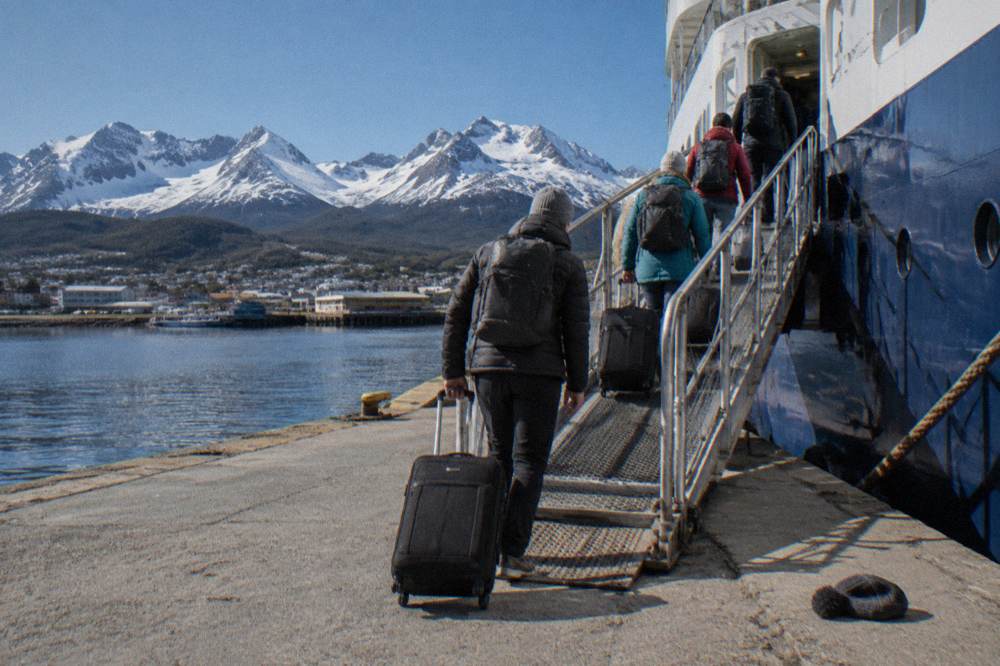
The timing question is really a season question. Antarctic expedition cruises from Ushuaia run roughly mid-October to mid-March, and the border answer does not change across those months: no visa, valid passport, insurance on hand. What changes is flight availability, hotel pressure and price. Early season has more ice and thinner crowds, December and January have the peak wildlife and the peak demand, and February to March brings the strongest whale activity. If the season choice is what you are actually weighing, get a free consultation on season timing before locking dates, because it interacts with fare, cabin choice and flight cost in ways that are hard to see from a single operator page.
Common Questions About US Citizens Visiting Ushuaia
Do US Citizens Need A Visa For Ushuaia?
No. US citizens may enter Argentina, including Ushuaia, visa-free for tourism stays of up to 90 days with a valid passport. The State Department's country page for Argentina confirms this, so verify on the official page before you travel. No reciprocity fee applies.
Do US Citizens Need A Visa For Chile If The Cruise Starts In Punta Arenas?
No. US citizens do not need a visa for Chile for tourist stays of 90 days or fewer on a tourist passport, per the State Department's Chile country information. Chile's reciprocity fee was abolished in 2014. A valid passport is the only document required.
Is A Visa Needed For Antarctica Itself?
No visa exists for Antarctica; no country owns the continent. Operators handle the required environmental documentation, and US-based operators file impact assessments with the EPA. Your Argentine or Chilean entry requirements, plus the operator's insurance minimums, are the only paperwork that touches you.
How Long Can A US Citizen Stay In Argentina?
Up to 90 days as a tourist. Antarctic cruise itineraries from Ushuaia run 8 to 34 days depending on ship and route, well within the limit. If you plan to add Patagonia travel before or after the cruise, the 90 day window still comfortably covers a typical trip.
Does Argentina Require Travel Insurance For US Visitors?
Argentina formally requires foreign visitors to hold health and medical coverage, including evacuation, under a 2025 rule update. Antarctic operators impose stricter minimums anyway, typically $150k to $500k in medical evacuation cover plus trip cancellation protection, with proof often required before departure.
Can I Fly Directly From The US To Ushuaia?
No. There are no direct US to Ushuaia flights. Travelers fly into Buenos Aires, transfer from Ezeiza to Aeroparque, then take the domestic flight south on a corridor served roughly 27 times a week by Aerolineas Argentinas. A buffer night in Buenos Aires and at least one night in Ushuaia before embarkation are the standard recommendations.