Lemaire Channel: Antarctica Narrowest Showpiece Passage
 By Oleg G.
The Lemaire Channel is a narrow passage between Booth Island and the Peninsula's Graham Coast, and it is one of the headline scenic transits of Peninsula itineraries. Whether your ship gets through depends on ice.
Quick answer: The Lemaire Channel sits at roughly 65°S, 64°W between Booth Island and the Graham Coast. Ships cruise it rather than land, and ice frequently blocks the transit, so operators treat it as a bonus, not a promise. Later months, once sea ice has receded, give better odds, and Peninsula voyages aboard ships like Hondius can attempt it.
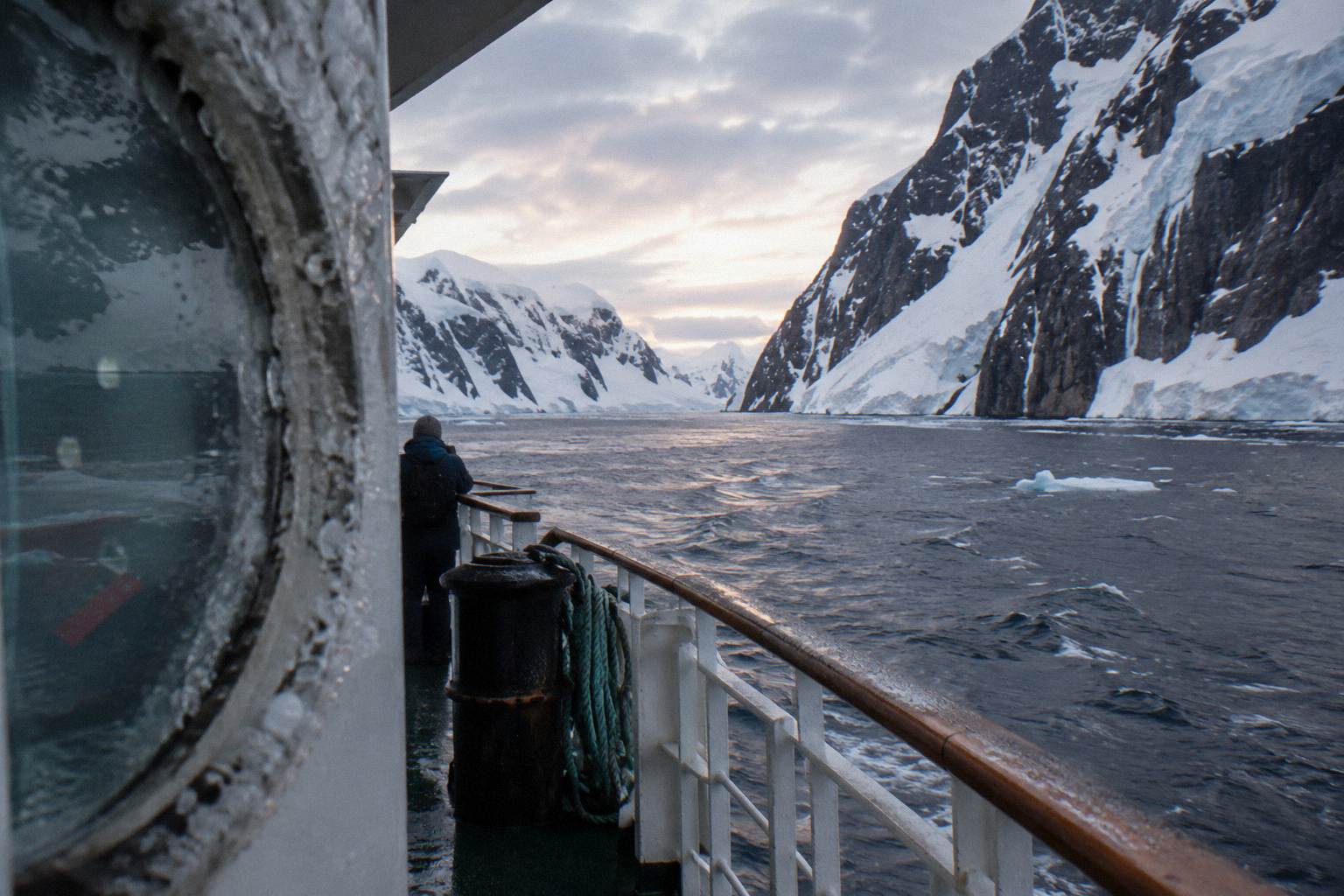
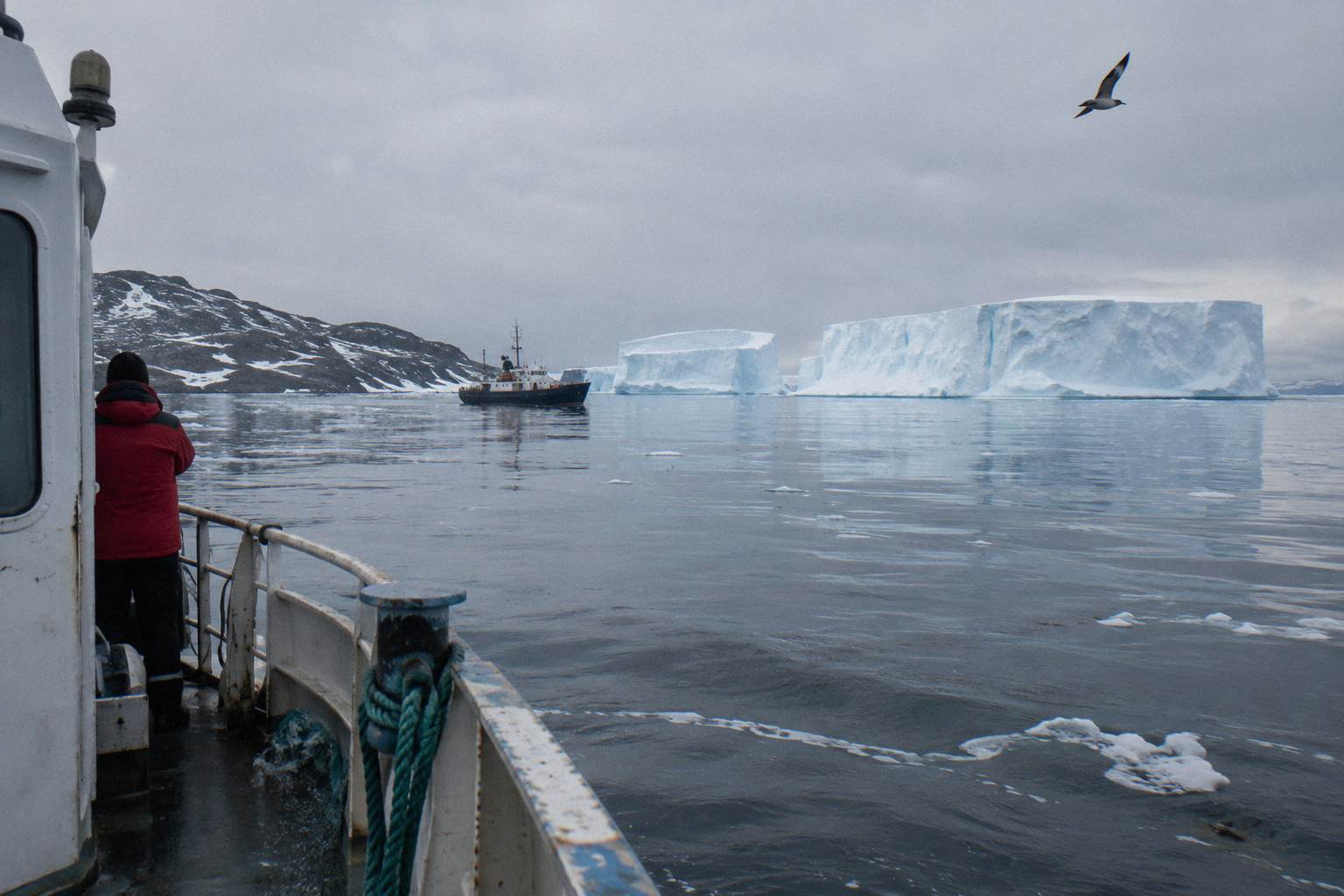
The Lemaire Channel is a headline moment on many Peninsula voyages: a ship easing through a narrow glacial strait with steep cliffs and glaciers on either side. It is a transit, not a landing, and that distinction shapes everything about how you plan for it. Nobody steps ashore here. The value is entirely in the passage itself, and whether you experience it depends on ice, weather and the route your captain chooses that morning.
This guide covers where the channel sits, what you actually see from the deck, how ice governs the transit, the nearby names Petermann Island and Pleneau Island, and which ships and months give a better chance of a full transit. The expedition cruise you book is a big variable, so choose that voyage with the channel in mind rather than treating it as a footnote.
Where Is The Lemaire Channel?
The Lemaire Channel runs between Booth Island and the Graham Coast of the Antarctic Peninsula at approximately 65°S, 64°W, a narrow glacial strait, and it is a cruising-only passage with no landings along its length. Steep cliffs and glaciers rise on both sides. Historic navigation of the strait dates to the Belgica in 1898.
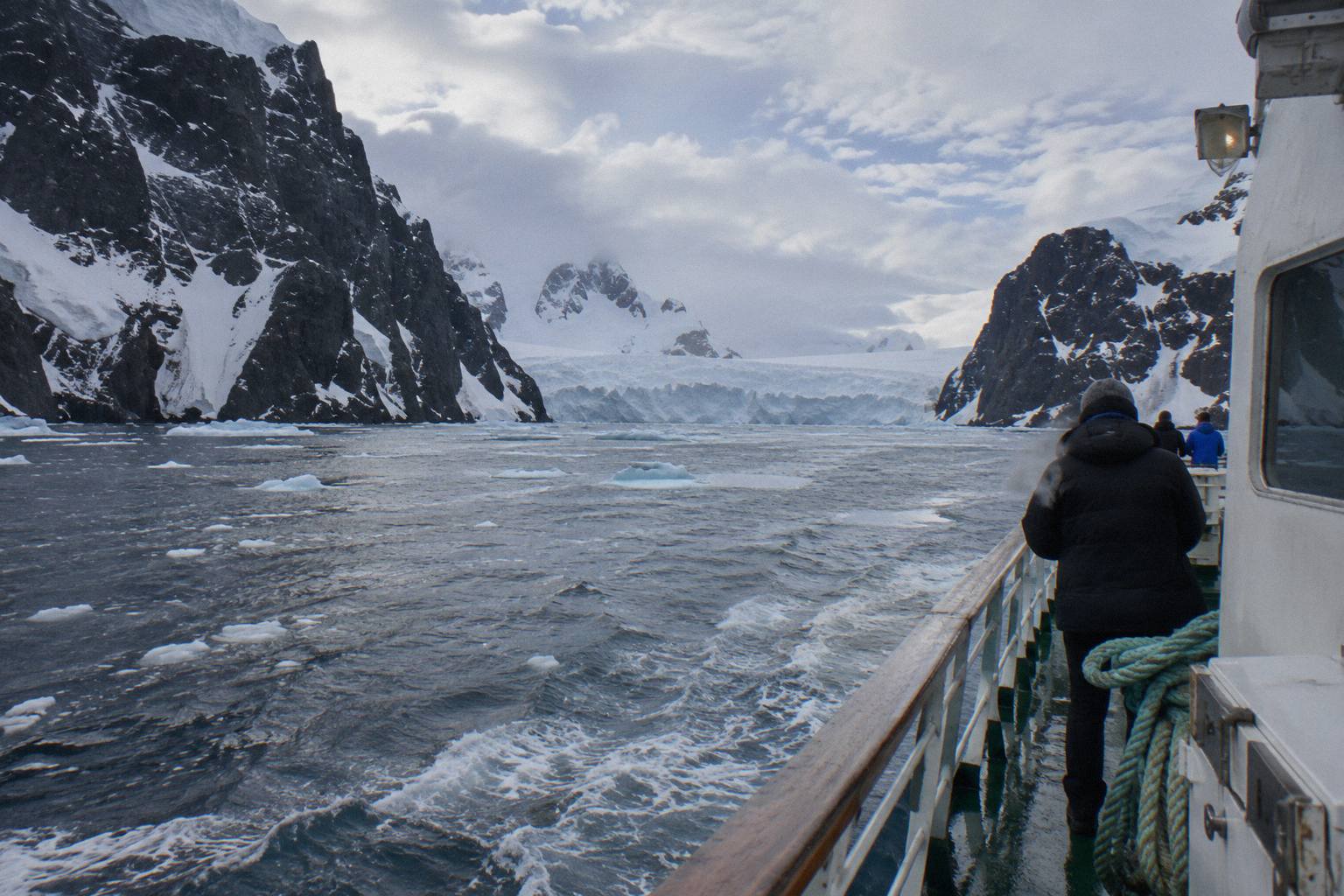
The channel is a scenic centrepiece of a Peninsula itinerary. Because it is a transit rather than a landing site, the IAATO shore rules, the 100-passenger limit and the 1:20 guide ratio, do not constrain it; the ship simply passes through. If you are comparing itineraries, a route that includes the Lemaire Channel is a route that reaches deeper down the Peninsula.
For how this passage fits the broader Peninsula itinerary, our Antarctic Peninsula cruise route guide covers the full sequence of channels and landing sites most ships follow.
What You Actually See On The Transit
Passengers see steep cliffs, glaciers and icebergs, with whales, seals and seabirds possible; the transit is a cruise with both sides of the ship in view. Humpback, orca and minke whales, seals and seabirds are all possible in and around the passage.
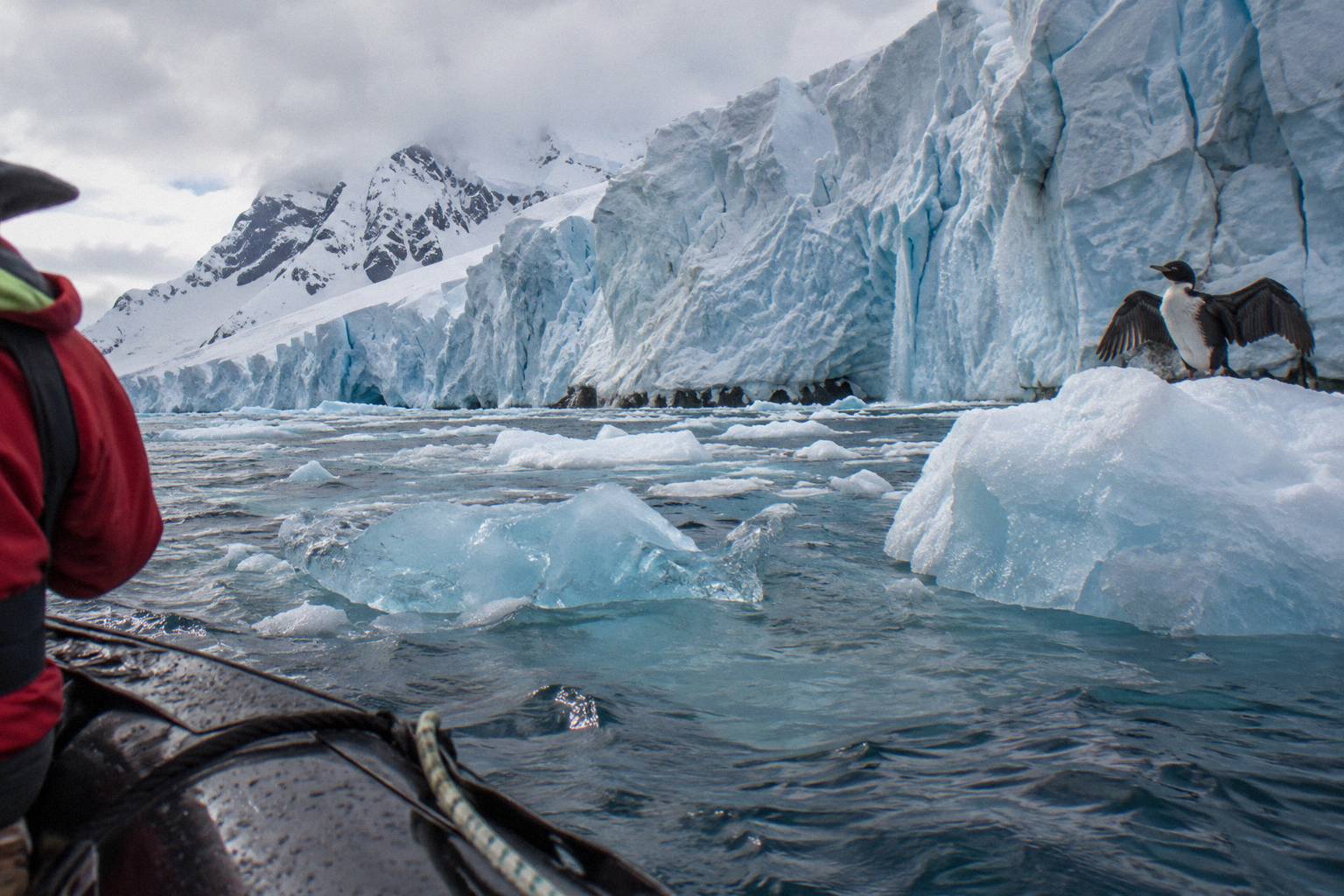
What makes the passage unusual among Antarctic experiences is intimacy. On most Peninsula landings you are a visitor standing on a beach; in the Lemaire Channel the landscape closes around the ship.
How Often Does Ice Block The Passage?
The Lemaire Channel is frequently attempted but often blocked by ice, especially early in the season, and ships reroute when it is; operators do not promise the transit, and there is no single published success rate, so treat the channel as a possible but never guaranteed highlight. Published accounts of the channel are blunt on this point: it is frequently attempted but often blocked by ice, particularly early in the season or in heavy ice years, forcing reroutes. Sea ice recedes through the summer, and published season guides describe less sea ice and better access from late January into February, so early-season transits are the ones most often blocked.
The practical implication for booking is that your month choice is your ice hedge. If the Lemaire Channel is a priority, choose a departure from late January onward, and choose a ship whose ice class and size suit narrow, ice-prone passages. A reroute is not a disaster, since the expedition team will hold alternatives, but early-season passengers expecting the postcard transit are the ones most likely to be disappointed.
The channel's ice sensitivity is a good moment to think about the ship itself. The vessel determines your ice class, your manoeuvrability and how much time you spend in the scenic areas rather than waiting offshore. If you want help weighing ship against season, a free consultation on ship and route costs nothing and maps your options across every operator.
Petermann Island And Pleneau Island: What Comes After The Channel
Petermann Island and Pleneau Island are names that appear alongside the Lemaire on Peninsula itineraries. The published material read for this guide gives no site detail for either, so check your departure's day-by-day plan. Any landing there follows the same framework as the rest of the Peninsula: a maximum of 100 passengers ashore at once, a 1:20 guide ratio, and one ship per site at a time, per the IAATO general visitor guidelines.
If you are choosing between itineraries, look at how many days the voyage spends on the Peninsula itself. A longer voyage with more Peninsula days gives the captain more chances to attempt the channel if ice blocks the first try.
Which Ships Sail The Lemaire Channel?
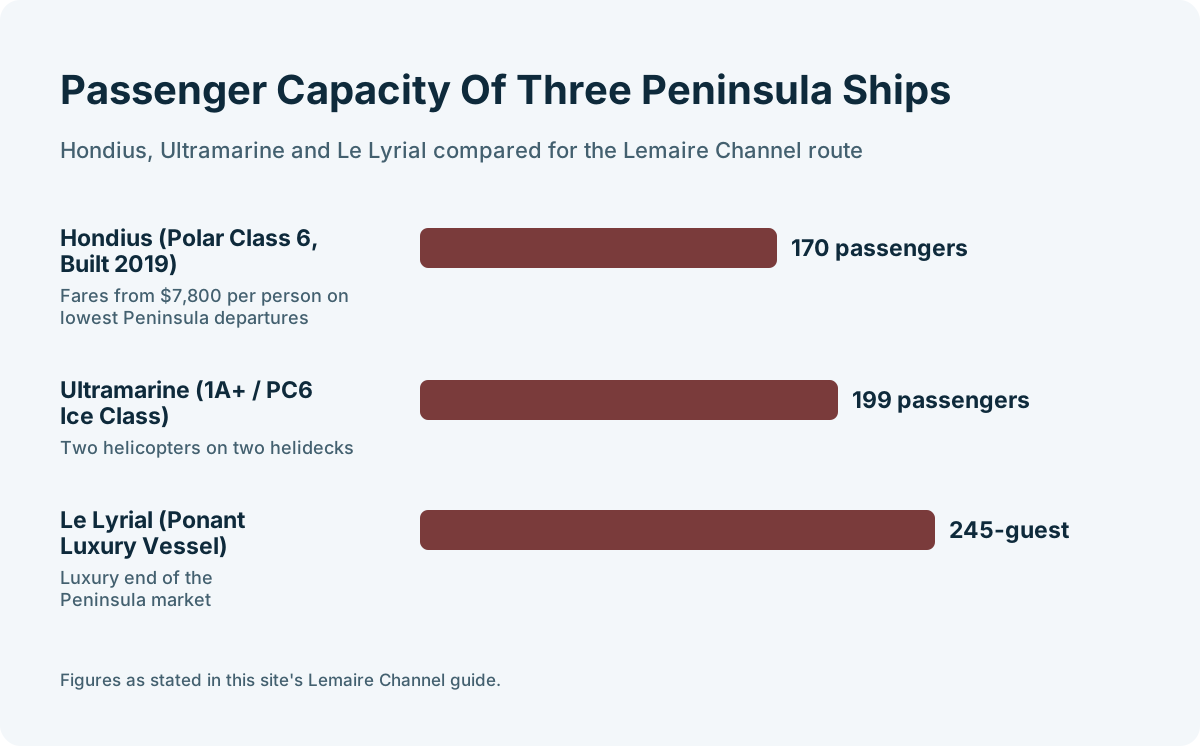
Any IAATO expedition vessel on a Peninsula route can attempt the channel; among the roster, Hondius, Ultramarine and Le Lyrial are three Peninsula ships worth comparing. Hondius is a Polar Class 6 ship of 170 passengers built in 2019; Ultramarine carries 199 passengers with a 1A+ / PC6 ice class and two helicopters; Le Lyrial is Ponant's 245-guest luxury vessel. The comparison below shows how differently three ships approach the same water.
| Ship | Class | Passengers | Ice class | From, per person | Voyage length | Departs from |
|---|---|---|---|---|---|---|
| HondiusOceanwide Expeditions | Small-Ship Budget | 170 | Polar Class 6 | from $7,800 | 11 to 19 days | Ushuaia |
| UltramarineQuark Expeditions | Upscale Expedition | 199 | 1A+, PC6 | from $12,236 | 12 to 14 days | Buenos Aires, Ushuaia |
| Le LyrialPonant | Luxury | 245 | – | from $26,780 | 18 days | Ushuaia, Buenos Aires |
Hondius is the featured ship here because it represents the value end of Peninsula cruising done properly: a 2019-built, ice-classed expedition vessel from Oceanwide Expeditions, sailing from Ushuaia with fares from $7,800 per person on the lowest Antarctic Peninsula departures. Its Polar Class 6 rating is the first such registration in the world by the operator's own wording, and its 170-guest capacity keeps landing rotations manageable. For a fuller profile, see our Hondius ship guide.
Ultramarine brings a different proposition: twin-engine helicopters on two helidecks, used on specific voyages such as the Snow Hill emperor trips. Le Lyrial represents the luxury end, a 245-guest Ponant vessel. None of these ships can promise the transit; the honest statement is that ice decides, and the ship decides how gracefully you handle the decision.
Best Months To Transit The Lemaire Channel
The channel's season is December to March when ice permits, and early-season transits carry the highest blockage risk. Sea ice recedes through the summer, so later months generally give better access, and whale numbers peak in February and March. Published season guides describe more sea ice and limited access in November, ice opening up in December and January, and less ice and better access from late January into February. Wildlife timing runs on a parallel clock: penguin chicks hatch around late December into January, and whale numbers peak in February and March, the same window in which ice is lower.
| Month | Ice in the channel | Odds of a full transit | What else you gain |
|---|---|---|---|
| November | More sea ice, frequent blockage | Lower | Courting penguins, pristine snow, shoulder fares |
| December | Opening up | Not stated | Longest daylight, chicks hatching late month |
| January | Opening up | Not stated | Hatching chicks |
| February | Less ice, better access | Not stated | Peak whale numbers |
| March | Variable, shorter days | Not stated | Whale activity, shoulder fares |
The month decision is a trade between certainty and price. November and March price lower; February combines lower ice with peak whale numbers. December and January carry the premium of peak wildlife and the longest daylight. If the channel is your priority and budget allows, target February; if price leads, November still delivers the scenery, with a real chance you reroute around the ice.
How The Channel Fits Into A Peninsula Itinerary
On a classic Peninsula voyage of 10 to 13 days, the Lemaire Channel shares the 4 to 6 days in Antarctic waters with every other site, after the Drake crossing. Published itineraries put channels like the Lemaire and bays like Paradise Bay inside those days, alongside sites such as Port Lockroy. Our Paradise Bay guide covers that neighbouring highlight.
Where the channel sits in the itinerary matters when you compare voyages. A 10-day trip may reach the channel only if the schedule holds; a 12-to-14-day trip has slack for a second attempt if ice blocks the first. When comparing itineraries, count the days allocated to the Peninsula itself, not the total trip length, because the Drake days are dead weight for scenery. Operators with more Peninsula days have more chances at the channel, and expedition teams plan alternates explicitly, holding options for the morning if the ice report is bad.
Choosing A Voyage Around The Channel
If the channel is a must-see, choose a February or early March departure on a ship with a genuine ice class and at least five Peninsula days, and read the itinerary's day-by-day plan rather than the marketing summary. The difference between a voyage that lists the channel and one that reliably delivers it is usually the schedule: the number of Peninsula days, the order of sites, and the operator's willingness to reroute for scenery.
| Decision | What to choose | Why |
|---|---|---|
| Month | February | Less ice, peak whales |
| Ship size | Under 200 passengers | Manoeuvrability in tight, icy water |
| Ice class | PC6 or equivalent | More options when brash ice fills the strait |
| Voyage length | 12+ days with 5+ Peninsula days | Slack for a second attempt |
| Route | Deep-south Peninsula itinerary | Channel on the planned route, not a maybe |
The honest caveat is that no operator guarantees the channel, and any sales copy that implies otherwise should lower your trust in that seller. What you control is the month, the ship and the schedule, and those choices improve the odds. This is exactly the kind of multi-variable decision where a specialist helps: the free Antarctica cruise consultation pairs you with a vetted expedition-cruise agency partner who can compare real itineraries against your channel priority.
What Happens When The Ship Cannot Get Through
When ice blocks the channel, the ship reroutes through alternate water or reverses course, and the expedition team substitutes other scenic cruising or landings; passengers lose the transit, but the day carries on with alternatives. Expedition leaders maintain multiple plans for exactly this scenario, and a blocked Lemaire usually means more time at other Peninsula sites on the plan.
Passengers who understand the reroute reality plan better. Book the month that maximizes your odds, choose a ship with real ice capability, and accept that Antarctic ice makes the final call. In my own research for this site, the advice that comes up again and again is to give the voyage enough Peninsula days to absorb a bad ice day. For more on the site behind this research, Cruises In Antarctica covers every route, ship and season on the Peninsula calendar.
The practical implication for passengers is that the Lemaire is never a guaranteed line item on any itinerary, and no operator presents it as one. If the channel is the single experience driving your booking, the honest advice is to treat it as a bonus rather than a goal. Itineraries with more Peninsula days give the bridge more scheduling flexibility to wait out ice or try the transit twice.
Common Questions About The Lemaire Channel
Can you land in the Lemaire Channel?
No. The channel is a ship transit only; there are no landing sites along it. Landings happen at other Peninsula sites, subject to IAATO site rules.
What is the best month to transit the Lemaire Channel?
Later in the season, from late January into February and March, when sea ice has receded and whale numbers peak. Early-season transits are the ones most often blocked by ice.
How wide is the Lemaire Channel?
It is a narrow glacial strait between Booth Island and the Graham Coast of the Peninsula at about 65°S, 64°W; the published material read for this guide gives no exact width.
What happens if ice blocks the channel?
The ship reroutes through alternate passages or reverses course, and the expedition team substitutes other scenic cruising or landings in the same area. A blocked transit does not cancel the day.
Do all Antarctic cruises include the Lemaire Channel?
It is frequently attempted on Peninsula itineraries, but it is never guaranteed. Voyages with more Peninsula days have more chances if the first attempt is blocked.
Which ships go through the Lemaire Channel?
Any expedition vessel on a Peninsula route can attempt it. Among the ships on our roster, Hondius, Ultramarine and Le Lyrial are three Peninsula ships worth comparing.
More Routes And Landings
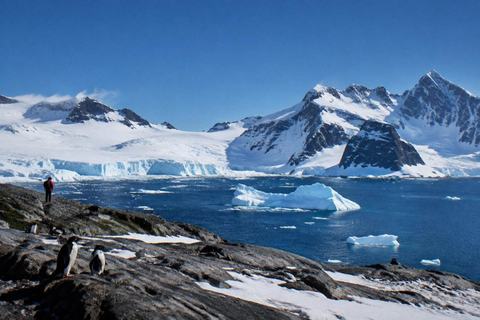 Peninsula CruisesThe classic Peninsula route explained: lengths, fares, landing sites and timing.Read the guide
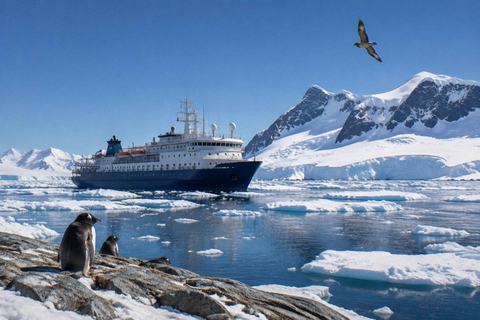 Antarctic CircleLonger, costlier voyages that push past 66 degrees south, and what the extra days buy.Read the guide
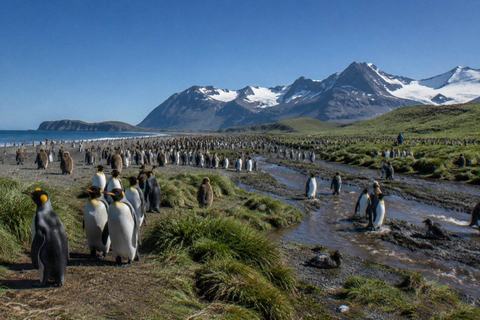 South Georgia CruisesThe 18-to-22-day Falklands, South Georgia and Peninsula itinerary, the premium wildlife cruise.Read the guide
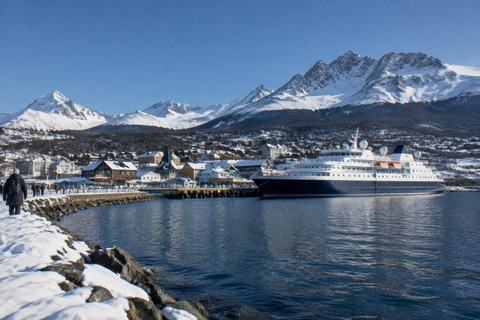 Cruises From UshuaiaShips, routes, fares and arrival logistics for the world's main Antarctica departure port.Read the guide