Paradise Bay Antarctica: Continental Landings, Glaciers And Brown Station
 By Oleg G.
Paradise Bay Antarctica sits at about 64 degrees south on the Antarctic Peninsula, a stop defined by glacier fronts, two research stations and Zodiac landings under IAATO limits. This guide covers the continental-landing question, Brown Station, wildlife, the best months and the ships that call.
Quick answer: Paradise Bay lies at roughly 64°S on the Antarctic Peninsula, with Argentina's Brown Station and Chile's Gonzalez Videla station on its shores. Ships reach it regularly between December and March. Zodiac landings and glacier cruising are the draw, gentoo penguins and seals the wildlife, under IAATO limits of 100 passengers ashore at a time.
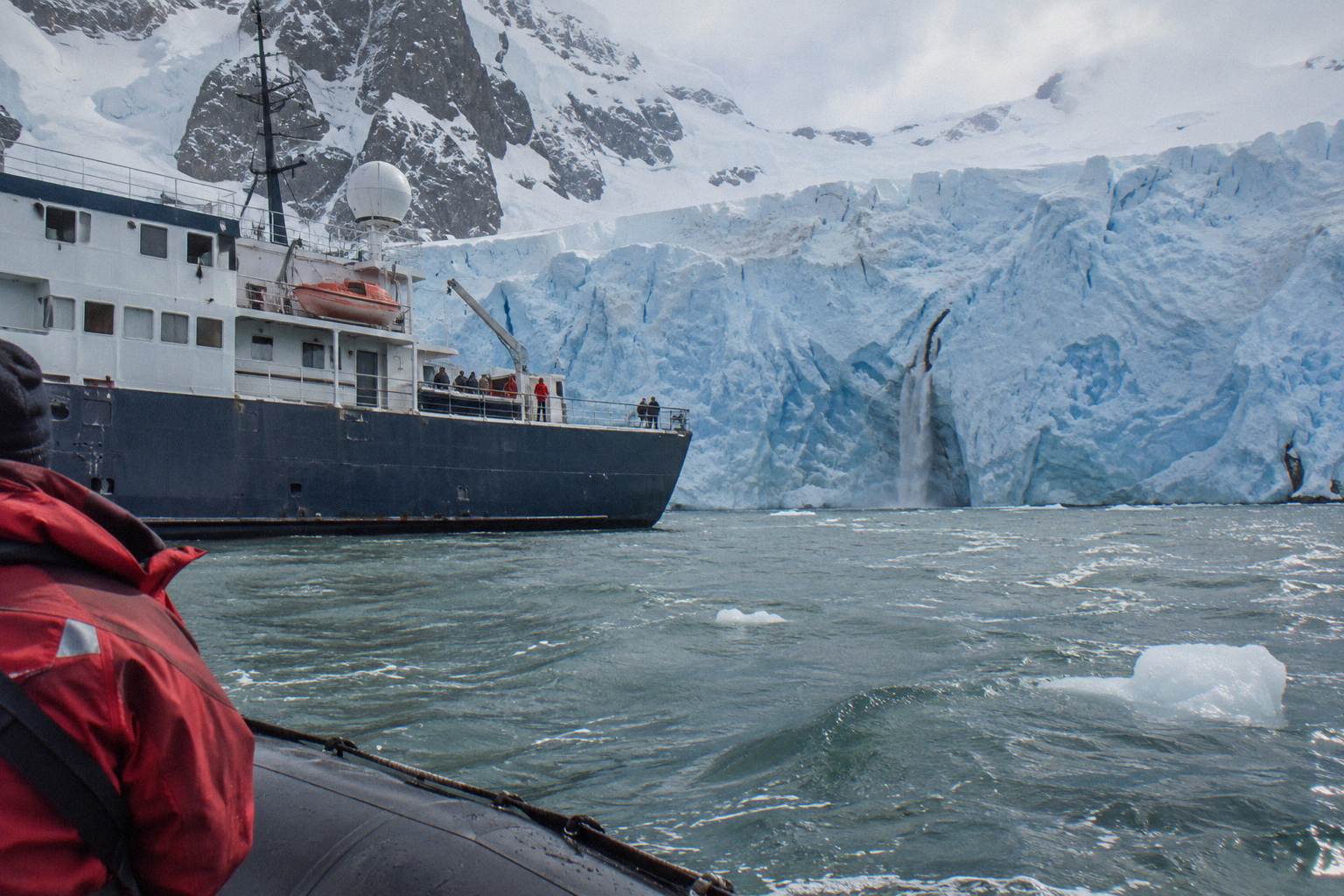
Roughly 98 percent of all tourism voyages in Antarctica take place in the Antarctic Peninsula during the seven-month austral summer that runs from October to April, and Paradise Bay is one of the stops those voyages work toward whenever ice allows. The bay sits at around 64 degrees south, framed by glacial scenery, with Argentina's Almirante Brown station and Chile's Gonzalez Videla station on its shores and gentoo penguins and seals among its recorded wildlife.
This guide lays out what the published guidelines and site descriptions actually say: where the bay sits, what happens ashore at Brown Station, what the Zodiac cruising delivers, and how the IAATO and Antarctic Treaty rules shape every visit. It also takes the continental-landing question seriously, because the answer is more specific than most cruise marketing suggests, and it names roster ships that sail routes calling here, from Oceanwide's budget workhorse Hondius to Quark's helicopter-equipped Ultramarine. Booking a cabin on the right vessel gets easier once you know which stops matter to you and why.
Everything below is drawn from published 2026-27 ship listings, Antarctic Treaty and IAATO documents, and published landing-site descriptions. The same approach sits behind the wider library at Cruises In Antarctica, where every ship, route and landing site on the standard itineraries has its own page.
Where Is Paradise Bay In Antarctica?
Paradise Bay sits at about 64 degrees south on the Antarctic Peninsula, the stretch of coast where almost all Antarctic voyaging happens. Argentina's Almirante Brown station and Chile's Gonzalez Videla station stand on its shores. Expedition ships reach the bay regularly between December and March, with ice and swell deciding what any single day allows.
The bay lies on the Antarctic Peninsula at roughly 64 degrees south, in the band of coastline where a classic Peninsula cruise route spends its landing days. Published site descriptions group it with the Peninsula's Zodiac-access stops rather than with the South Shetland islands to the north, and they list three ways travellers experience the place: a Zodiac landing on the shoreline, a station visit by arrangement, and Zodiac cruising inside the bay itself. That third option matters more here than at many stops, because glacial scenery is the listed headline of the site.
The gateways sit well to the north. On the current roster, Hondius and Greg Mortimer embark at Ushuaia in Argentina, while Ultramarine works from Buenos Aires and Ushuaia. Once a voyage is south, published descriptions note that ships reach the bay regularly, that December through March are the best months, and that ice and swell remain variable. Those three facts together explain why no two voyage logs ever read quite the same.
Demand gives the location its final context. The Antarctic Treaty Secretariat's tourism page puts approximately 98 percent of all tourism voyages in the Peninsula during the austral summer, and IAATO's operator-use reporting tracks which Peninsula sites absorb those visits across a season. Paradise Bay belongs to the set of sites in that reporting.
The quick facts, as published:
| Fact | What is published |
|---|---|
| Location | Roughly 64°S, Antarctic Peninsula |
| Stations ashore | Almirante Brown (Argentina), Gonzalez Videla (Chile) |
| Ways to experience it | Zodiac landing, station visit by arrangement, Zodiac cruising in the bay |
| Published wildlife | Gentoo penguins, seals |
| Continental status | Listed as a Peninsula site; the continental-landing flag sits with nearby Neko Harbour |
| Best months | December through March |
| Governing limits | IAATO caps of about 100 passengers ashore at a time, national program rules at the stations |
Is Paradise Bay A Continental Landing?
Published site descriptions classify Paradise Bay as an Antarctic Peninsula site reached by Zodiac, and attach the continental-landing flag to nearby Neko Harbour instead. Brown Station gives Paradise Bay its classic shore stop either way. If stepping on the continent itself is the goal, Neko Harbour is the site to confirm on your itinerary.
The question matters to a particular kind of traveller, the one keeping a list of continents stepped on. Cruise marketing often folds every Peninsula stop into the phrase continental landing, and published site descriptions draw the line more carefully. Paradise Bay is listed among Peninsula sites; the same descriptions put Neko Harbour a little further south at roughly 64 degrees 50 minutes south in Andvord Bay, as a continental landing and a rare one.
Neko Harbour comes with its own visitor guideline under the Antarctic Treaty system, revised in 2025. It caps visitors at 100 ashore at any one time, requires a one-to-twenty guide ratio, and bars landings between 22:00 and 04:00 except organised overnights; gentoo penguins, kelp gulls, skuas and Weddell seals are the recorded wildlife. The full Neko Harbour guideline is public, and our Neko Harbour landing guide walks through it in detail.
If the continent checkbox is the point of the trip, read the day-by-day plan of any voyage before you book, and check that Neko Harbour appears as a planned or possible stop rather than assuming every Peninsula itinerary includes it. A free Antarctica cruise consultation can shortlist the departures that genuinely carry it.
| Site | Landing type | Continental status | Caps and rules | Published wildlife |
|---|---|---|---|---|
| Paradise Bay | Zodiac landing or station visit by arrangement; Zodiac cruising | Peninsula site, not flagged continental | About 100 ashore at a time where guidelines apply; national program rules at the stations | Gentoo penguins, seals |
| Neko Harbour | Zodiac landing on a cobble and sand beach | Continental landing, described as rare | 100 ashore, 1:20 guide ratio, no landings 22:00 to 04:00 under the 2025 guideline | Gentoo penguins, kelp gulls, skuas, Weddell seals |
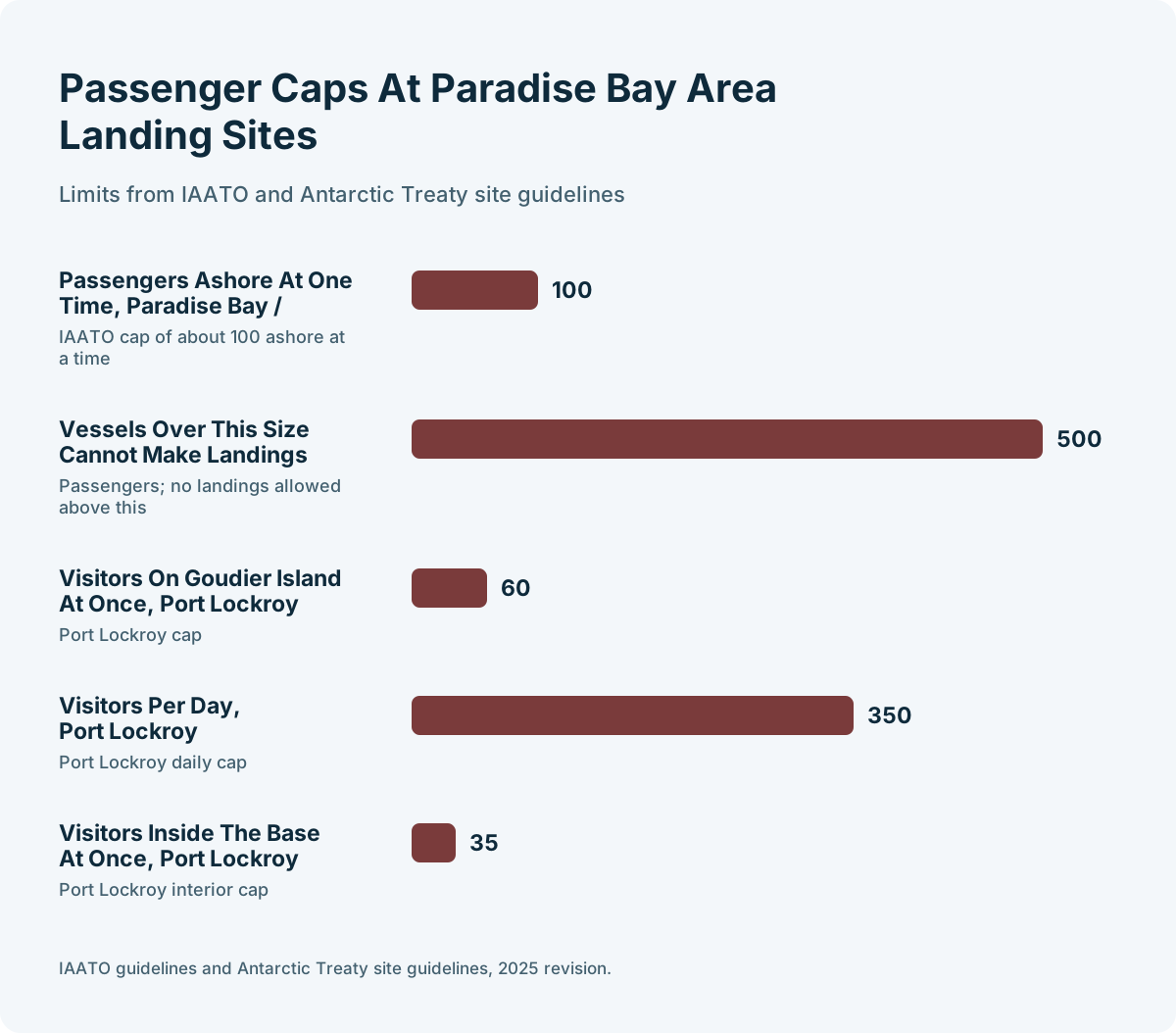
| Port Lockroy | Zodiac landing, museum and post office on Goudier Island | Not continental | 60 on the island at once, 350 per day, 35 inside the base at once | Gentoo penguin colony |
The distinction is not a ranking. Paradise Bay's station visits and glacier cruising stand on their own merits. The flag simply tells you which landing earns the continent checkbox, and knowing that before you book prevents an expensive surprise.
What You See Ashore At Brown Station And Gonzalez Videla
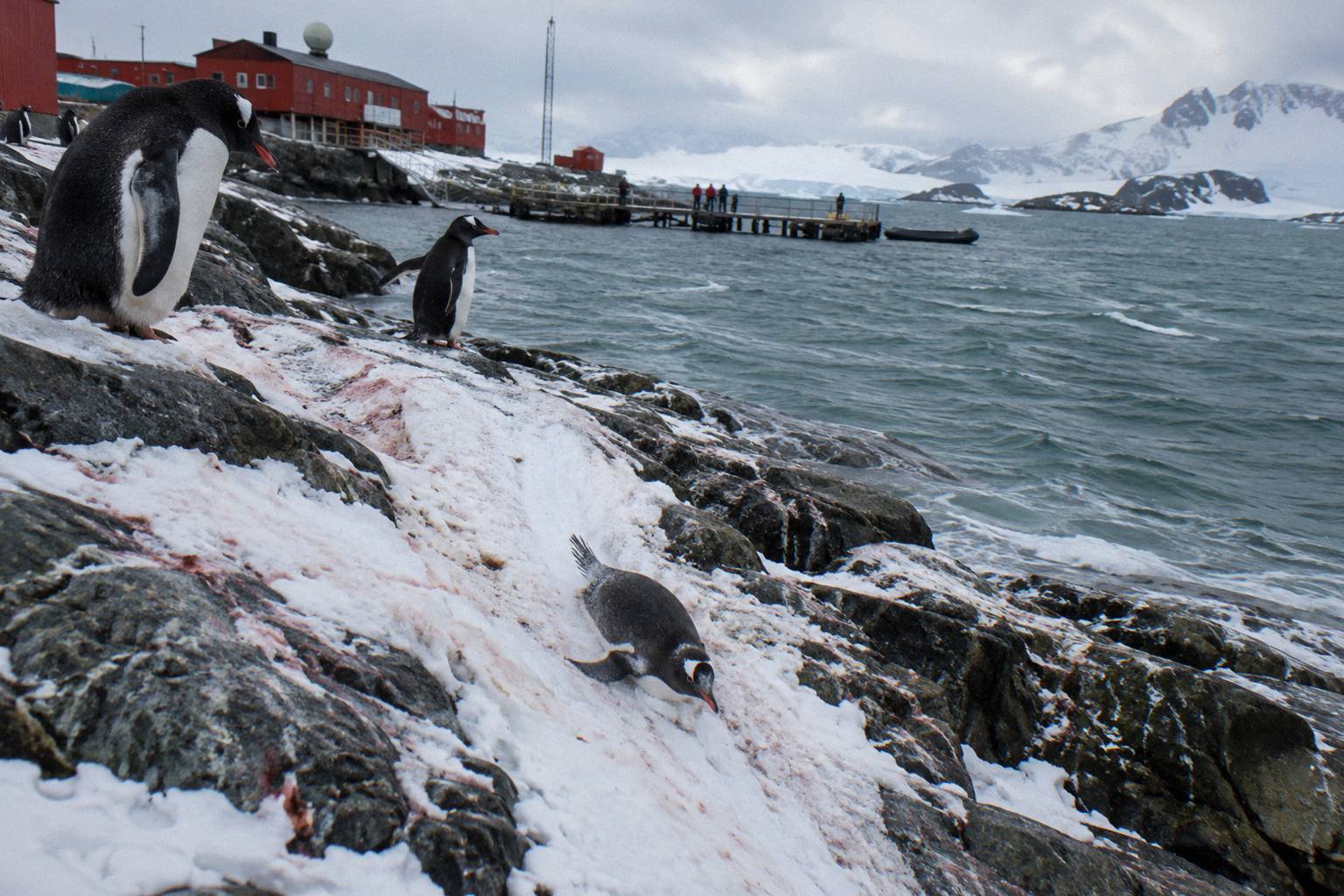
Ashore, the stops are working research stations rather than wilderness trails. Argentina's Almirante Brown base anchors the landing and gives it the name most voyage plans use, while Chile's Gonzalez Videla station stands in the same bay. Both are visited by arrangement only, and national program rules apply alongside the IAATO limits that govern every landing.
The site history here is a research-station history, a contrast with stops such as Whalers Bay on Deception Island, where whaling-era ruins are part of the visit. At Paradise Bay the buildings you walk among are stations that still function under their national programs, and that shapes what a visit looks like.
A station visit is not a museum tour. It happens by arrangement, meaning the operator coordinates with the station's program in a given season, and the terms can change from one year to the next. What a call includes varies, and the expedition team announces what is possible on the day.
What the shoreline itself offers is the gentoo presence on the published wildlife list, plus seals, against a backdrop of glacial scenery that needs no narration. Travellers who expect a long hike should adjust expectations: the bay itself, not the terrain, is the main event, and a call can split time between the shore and the water.
One planning note is worth making early. Because station access runs on arrangement, no operator can promise a Brown Station interior visit in advance, and honest itinerary language will say a call is planned or intended rather than guaranteed. Treat any voyage plan that lists Paradise Bay as a fixed certainty with some caution; published descriptions flag ice and swell as the variables.
Zodiac Cruising Among The Glacier Fronts
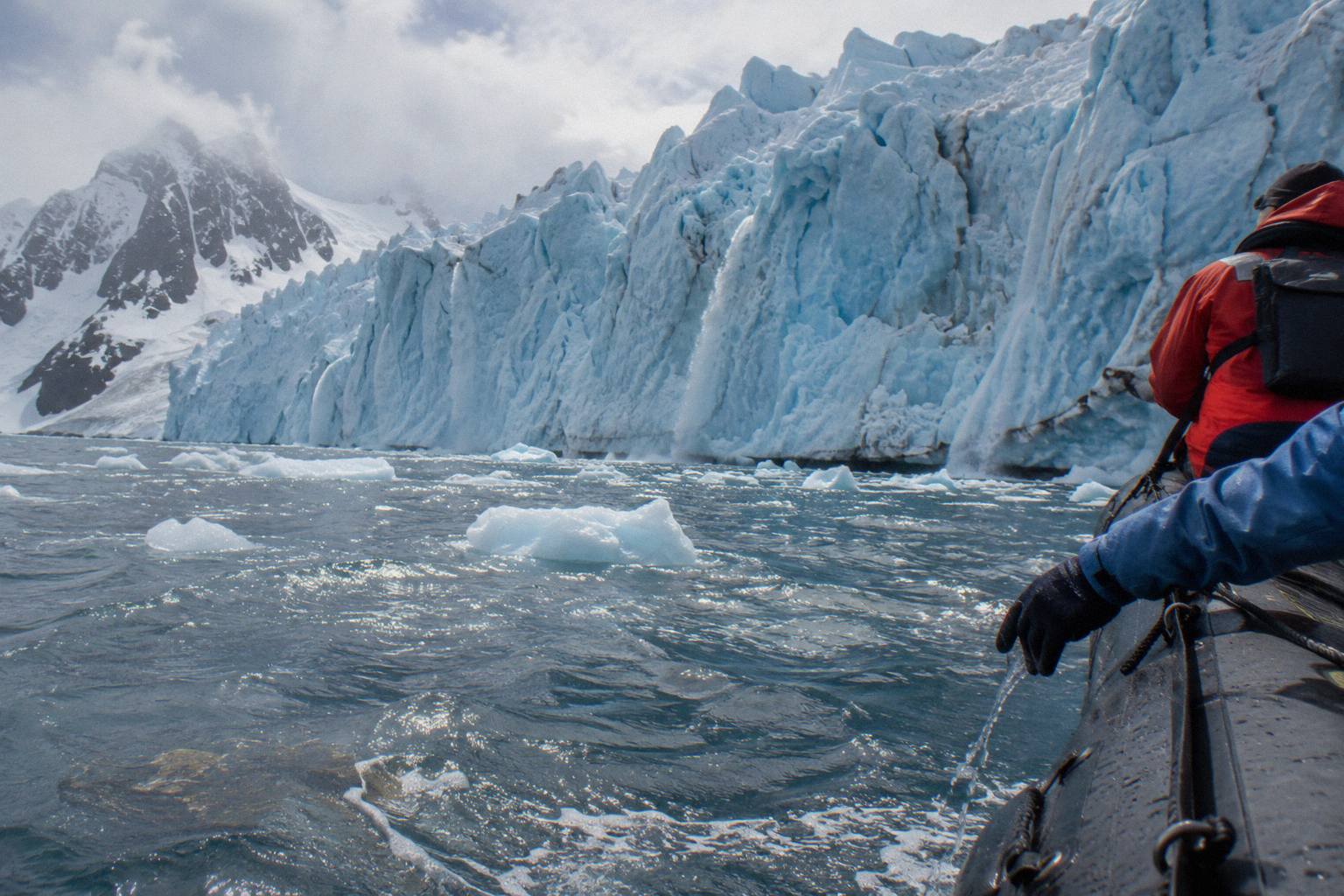
Zodiac cruising is half the reason Paradise Bay appears on itinerary plans at all. The bay's listed draw is glacial scenery, and Zodiac cruising in the bay is one of the three published ways to experience it.
Published site descriptions list Zodiac cruising in the bay as a core experience in its own right, not merely the transport between ship and shore. That matters on the days when a landing is off, because ice and swell can affect a landing, and a call that loses its landing may still offer cruising.
The same routes that call here thread the Peninsula's glacial geography. The Lemaire Channel, at roughly 65 degrees south, is the narrow glacial strait between Booth Island and the Graham Coast that many voyages transit on the same days, a ship-cruising passage with no landings that is described as frequently attempted but often blocked by ice, especially early in the season.
Scheduling keeps the water quiet. Under the IAATO framework only one ship may visit a site at any one time, so the Zodiacs you share the bay with are, in the ordinary case, your own ship's. That keeps the number of boats on the water to one ship's fleet.
Researching Peninsula stops for this site over two years, I have developed a soft spot for the harbour calls where the ship simply stops moving and the scenery does the work. Paradise Bay is exactly that kind of stop: glacial scenery is the site's listed headline, ahead of any wildlife or history claim.
Wildlife At Paradise Bay And The Five-Metre Rule
Gentoo penguins and seals are the wildlife published for Paradise Bay, and the rules around them are specific. Visitors keep at least five metres from wildlife on land, species and site guidance can require more, and drones must not be used near wildlife anywhere in Antarctica. Biosecurity cleaning applies to every item you bring ashore.
The published list for the bay is short: gentoo penguins and seals. Nearby Peninsula sites extend the cast on the same routes, with Neko Harbour adding kelp gulls, skuas and Weddell seals to its guideline, and the South Shetland stops carrying chinstrap colonies, elephant seals and seabirds. Anyone building a trip around species rather than scenery should read the site lists before choosing a route, because the Peninsula is not uniform.
The rules are printed in the general visitor guidelines and they apply at every landing. The IAATO visitor guidelines state the five-metre wildlife distance in general terms, note that species and site guidance may require more, and prohibit drone use near wildlife. They also carry the biosecurity instruction: boots and equipment, including clothes, bags, tripods and walking sticks, must be carefully washed before being brought to Antarctica, and cleaned again between sites.
Biosecurity is the rule visitors feel most directly, because it happens in front of you, on the gangway, on every single landing. If a voyage plan shows two landings in one day, expect the boot wash twice.
None of this makes the wildlife distant: five metres is close, and guides position groups with care.
The IAATO Limits That Shape Every Visit
Three caps shape every Paradise Bay visit: no more than 100 passengers from a vessel ashore at any one time unless site guidance requires fewer, a minimum one-to-twenty guide-to-visitor ratio while ashore, and only one ship at a site at any given time. Vessels carrying more than 500 passengers cannot make landings at all.
The 100-passenger cap is the number that changes the shape of a day. On a ship carrying 170 or 199 guests, not everyone can be ashore simultaneously, so the expedition team runs groups in rotation, and the time on land is bounded by the rotation. On ships at or under 100 guests, the whole ship can go at once. Neither version is worse, but they are different products, and the passenger count on your booking is what decides which one you bought.
The one-to-twenty guide ratio is the second number. At least one actively guiding staff member stands behind every twenty visitors ashore, which is why landings feel supervised rather than free-range. The treaty guidance states the ratio as a minimum for landings, and site-specific guidance can add stricter terms, as Port Lockroy does with its 60-visitors-on-island cap and 350-per-day ceiling.
The 500-passenger rule draws the hard line at the top of the market. Vessels carrying more than 500 passengers are prohibited from making landings in Antarctica, so the large cruise ships that include the Peninsula in South America itineraries deliver scenic sailing only. Our expedition versus traditional cruise guide unpacks that split in full; for Paradise Bay specifically, the practical translation is that seeing the bay from a deck and standing in it are two different purchases.
| Rule | What the guidelines state | What it means at Paradise Bay |
|---|---|---|
| Ashore cap | Maximum 100 passengers from a vessel ashore at any one time, unless site guidance requires fewer | Ships over 100 guests rotate groups; smaller ships land everyone at once |
| Guide ratio | Minimum one guide to twenty visitors while ashore | Landings run in guided groups, positioned around the penguins |
| Ship scheduling | Only one ship may visit a site at any one time | The bay hosts one vessel at a time, keeping water and beach quiet |
| Landing ban | Vessels with more than 500 passengers make no landings | Large cruise ships see the Peninsula scenery from the ship only |
| Station access | Station visits happen by arrangement, under national program rules | A Brown Station visit depends on the season's coordination, not a fixed promise |
| Biosecurity | Boots and equipment washed before arrival and between sites | Expect a boot wash at every gangway, every landing, twice on two-landing days |
Which Ships Call At Paradise Bay
Three roster ships that sail classic Peninsula routes show the price tiers: Oceanwide's Hondius from $7,800 per person, Aurora's Greg Mortimer from $19,521, and Quark's Ultramarine from $12,236 on voyage-level fares shared across three Quark vessels. Check each departure's plan for a Paradise Bay call.
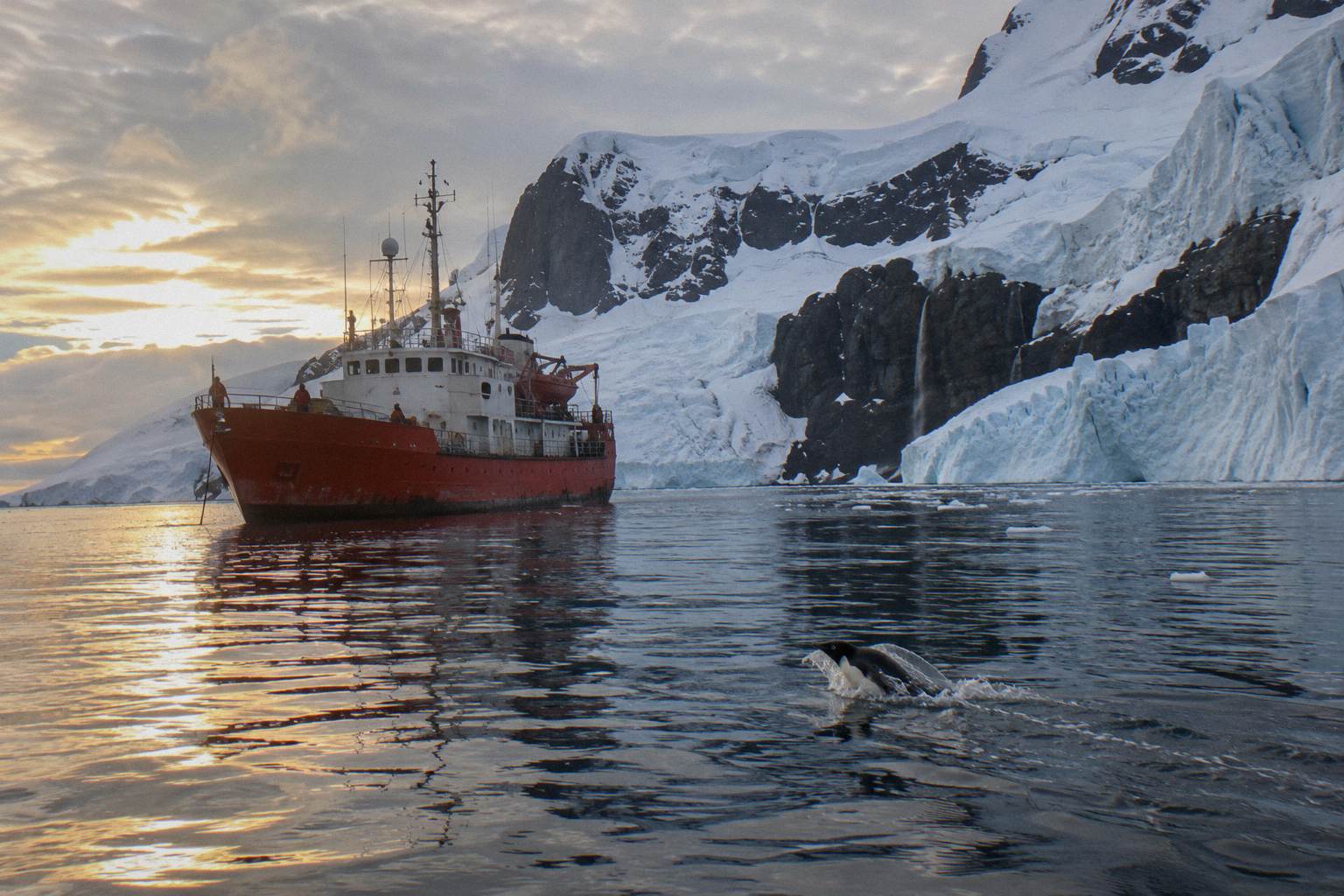
Hondius is the budget anchor of this comparison and this site's featured ship. The roster lists her as an Oceanwide Expeditions vessel in the small-ship budget class, built in 2019, carrying 170 passengers in 80 cabins, with a Polar Class 6 ice class the operator describes as equivalent to 1A-Super, a length of 107.6 metres, and voyages of 11, 13 and 19 days sailing from Ushuaia. Fares on the operator's Antarctic Peninsula departures start at $7,800 per person. Oceanwide also makes much of her being the first-registered Polar Class 6 vessel in the world, which is operator wording worth keeping attributed. The ship has her own page in our Hondius expedition ship guide.
Two other roster ships show what moving up the tiers buys. Greg Mortimer, Aurora Expeditions' 130-guest upscale vessel built in 2019 with an Ulstein X-BOW, sails from Ushuaia on voyages of 12 to 26 days with fares from $19,521 per person. Ultramarine, Quark's 199-guest ship, carries two twin-engine helicopters, 20 Zodiacs and two ready rooms, and works from Buenos Aires and Ushuaia on 12 and 14-day voyages. Set side by side, the three cover most of what the Peninsula market sells.
| Ship | Class | Passengers | Ice class | From, per person | Voyage length | Departs from |
|---|---|---|---|---|---|---|
| HondiusOceanwide Expeditions | Small-Ship Budget | 170 | Polar Class 6 | from $7,800 | 11 to 19 days | Ushuaia |
| Greg MortimerAurora Expeditions | Upscale Expedition | 130 | – | from $19,521 | 12 to 26 days | Ushuaia |
| UltramarineQuark Expeditions | Upscale Expedition | 199 | 1A+, PC6 | from $12,236 | 12 to 14 days | Buenos Aires, Ushuaia |
Read the numbers as a market map rather than a ranking. The fare gap between $7,800 and $19,521 buys a smaller guest count, an X-BOW hull and a different style of ship, while Ultramarine's headline is hardware: helicopters and a Zodiac fleet sized for fast rotations. Note the quirk in Quark's pricing, too, since the $12,236 figure is voyage-level and shared with two sister ships, so the same fare can appear under three names. If that choice feels like it needs a conversation, you can match a ship to your dates through the free consultation.
When To Go: Months, Ice And Swell
December through March are the published best months for Paradise Bay, and the bay is reached regularly across that window. What changes inside the window is ice and swell, the two variables published descriptions flag as the deciding factors in whether a given call ends in a landing, a station visit or cruising only.
The season around the bay is the season the treaty page describes: roughly 98 percent of voyages happen in the seven months from October to April, concentrated in the Peninsula. Within that, published site descriptions narrow Paradise Bay's best months to December through March, which lines up with the period when early-season ice has typically loosened its grip on the approaches and the daylight hours are longest.
Ice is the earlier-season variable. The neighbouring Lemaire Channel is often blocked by ice early in the season or in heavy years, forcing reroutes. A November call can deliver pristine, ice-dense scenery and a blocked beach; a February call more often delivers open water and easier landings. Neither month is a promise.
Swell is the variable that decides the beach itself. Published descriptions flag that ice and swell can affect landings. This is why experienced planners care less about the itinerary's list of names and more about how many landing days a voyage carries: more days in the Peninsula means more chances that one of them absorbs a closed call.
Most voyages bundle the bay with neighbours rather than visiting in isolation, so a lost call is usually rebalanced against Port Lockroy, Neko Harbour or the Lemaire transit on the following day. That redundancy is the quiet advantage of a 12 or 13-day Peninsula voyage over the shortest options, and it is worth weighing when the fare difference looks small.
How To Choose The Voyage That Includes It
Choosing among the voyages that call at Paradise Bay comes down to three questions: which ship class fits your budget, whether the itinerary lists Peninsula landings or only scenic sailing, and how much sea time you accept to reach them. A consultation can settle all three before you commit to a cabin.
Start with the landing question, because it filters everything else. A voyage on a vessel over 500 passengers will not land you anywhere in Antarctica, Paradise Bay included, so if standing ashore at Brown Station is the goal, the shortlist is expedition ships only. Within that, check that the day-by-day plan names Peninsula landing sites or landing days, not just scenic cruising, and remember that weather and ice hold final say on any given morning.
Then match the ship to the experience you want from the cap system. A 130-guest ship like Greg Mortimer rotates only a small second group under the 100-ashore cap; a 170 or 199-guest ship like Hondius or Ultramarine runs rotations, with the Zodiac fleet and ready rooms shaping how fast those rotations turn. Neither is the wrong product, but they produce different rhythms on the water, and the fare ladder from $7,800 upward reflects the differences.
Finally, weigh the sea time. Voyages that sail the Drake Passage both ways carry lower entry fares; fly-cruise options trade sea days for flight logistics and weather exposure on a different leg. Our fly or sail the Drake guide covers that trade in detail, and it applies directly to how many Peninsula mornings a booking like this one actually delivers.
The practical next step costs nothing. A free consultation on ships and seasons puts your dates, budget and landing priorities in front of someone who knows the 2026-27 departures, with no obligation attached, and it is the fastest way to confirm which sailings genuinely plan calls at this bay.
Common Questions About Paradise Bay
Is Paradise Bay a continental landing?
Published site descriptions classify Paradise Bay as an Antarctic Peninsula landing reached by Zodiac, and attach the continental-landing flag to nearby Neko Harbour in Andvord Bay instead. Brown Station still gives Paradise Bay a proper shore stop. If stepping on the continent itself matters, confirm Neko Harbour appears on the itinerary before booking.
Where is Paradise Bay in Antarctica?
The bay sits at roughly 64 degrees south on the Antarctic Peninsula, the region where about 98 percent of Antarctic tourism voyages operate. Argentina's Almirante Brown station and Chile's Gonzalez Videla station stand on its shores, and expedition ships reaching it regularly embark from gateways such as Ushuaia and Buenos Aires.
Can you visit Brown Station at Paradise Bay?
Station visits happen by arrangement between the operator and the station's national program, so access depends on coordination in a given season rather than a fixed promise. What a call includes varies, and no operator can guarantee an interior visit in advance.
What wildlife will I see at Paradise Bay?
Published descriptions list gentoo penguins and seals for the bay. Visitors must keep at least five metres from wildlife on land, with greater distances where species or site guidance requires, and drones must not be used near wildlife. Nearby Peninsula sites add species such as kelp gulls, skuas and Weddell seals.
When is the best time to visit Paradise Bay?
December through March are the published best months, within an overall season running October to April. Ice and swell remain variable across the window: early season can bring blocked approaches and pristine ice scenery, while later months typically offer easier landings and more open water for Zodiac cruising.
How many passengers can land at Paradise Bay at once?
IAATO rules cap landings at 100 passengers from a vessel ashore at any one time unless site guidance requires fewer, with a minimum one-to-twenty guide-to-visitor ratio and only one ship at a site at a time. Vessels carrying more than 500 passengers cannot make landings anywhere in Antarctica.
More Routes And Landings
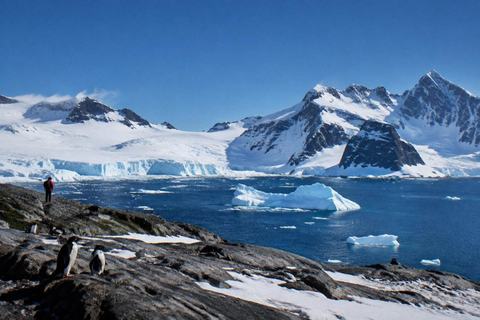 Peninsula CruisesThe classic Peninsula route explained: lengths, fares, landing sites and timing.Read the guide
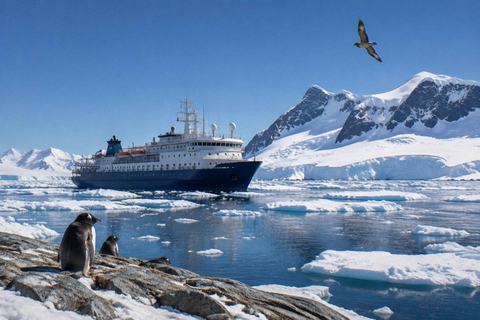 Antarctic CircleLonger, costlier voyages that push past 66 degrees south, and what the extra days buy.Read the guide
 South Georgia CruisesThe 18-to-22-day Falklands, South Georgia and Peninsula itinerary, the premium wildlife cruise.Read the guide
 Cruises From UshuaiaShips, routes, fares and arrival logistics for the world's main Antarctica departure port.Read the guide