Polar Latitudes And Albatros Expeditions: The Merged Antarctica Operator
 By Oleg G.
Polar Latitudes Expeditions now carries the merged operations of Polar Latitudes and Albatros Expeditions. Here is what the combined operator actually sails to Antarctica in 2026-27, what its fares cover, and where it publishes nothing at all.
Quick answer: Polar Latitudes Expeditions is the brand formed when Polar Latitudes and Albatros Expeditions merged, combining what the operator describes as over four decades of experience. For 2026-27 it runs Antarctic Peninsula and fly-cruise voyages from Ushuaia and Punta Arenas aboard ships including Ocean Albatros and Ocean Victory, with 11-day sample fares around $9,937 to $13,895 per person.
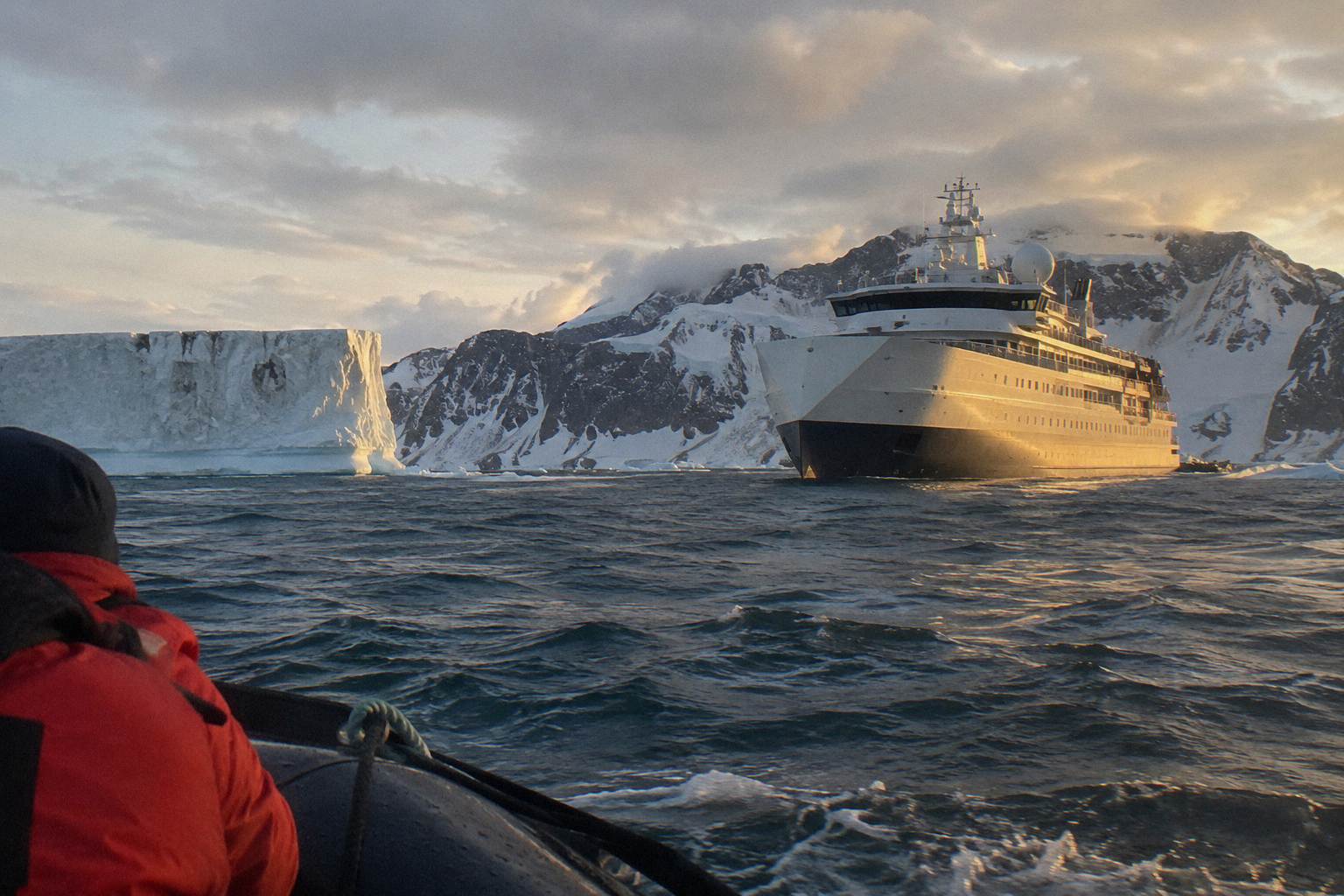
Polar Latitudes Expeditions is what happened when two long-running polar operators, Polar Latitudes and Albatros Expeditions, stopped competing and combined into a single brand. The operator's own about page describes the merger as bringing together over four decades of combined experience, with expanded itineraries and a new website under the Polar Latitudes name, and the legacy Albatros pages now redirect there. For a buyer shortlisting an Antarctic expedition cruise, that makes the operator harder to pin down from a single listing: the ships, the activity program and the booking terms come from both halves of the merged company, and some of what older reviews and articles say about "Albatros Expeditions" now describes a brand that no longer exists on its own.
This guide profiles the operator as it stands for the 2026-27 season: who is behind it, which ships it sails, what sample itineraries cost, what the fare covers, and where the operator simply does not publish the details a careful buyer wants. Where a figure is not published, the article says so plainly rather than estimating.
Who Is Polar Latitudes Expeditions?
Polar Latitudes Expeditions is the single brand formed by the merger and rebrand of Polar Latitudes and Albatros Expeditions, announced through the operator's about page and the redirect of the legacy Albatros site. The operator cites over four decades of combined experience across the two predecessor companies, and it sells Antarctic voyages, fly-cruise options and citizen-science-focused expedition programs under one name.
The merger is the single most important thing to understand about booking with this company in 2026-27. The operator's about page frames the combined business as a continuation of both companies' histories rather than a takeover, and the practical effect is that the fleet pages, activity programs and promotions that used to sit across two websites now sit under one. Older commentary, deck plans and fare lists that refer to Albatros Expeditions as a separate operator are out of date in that one respect: the brand survives only inside the merged company.
What the merged operator says about itself is fairly specific. Its passenger-to-staff ratio is advertised at 7:1 to 8:1, which matters because IAATO rules require at least one actively guiding staff member per twenty visitors ashore. The company also promotes twice-daily outings with an average of six hours off the ship on sailing days, a citizen science program, and a halal-friendly voyages option. It also sells fly-cruise options, with promotions advertising 15% savings on those itineraries.
What the operator does not publish is just as telling. Its main pages do not state cabin-by-cabin inclusions, a minimum age, or a solo-supplement policy. If any of those matter to your booking, the way to get a real answer is a free Antarctica cruise consultation, where a vetted expedition-cruise agency partner can pull the current terms for the specific departure you are weighing. The consultation costs nothing and carries no obligation.
The Polar Latitudes Antarctica Fleet For 2026-27
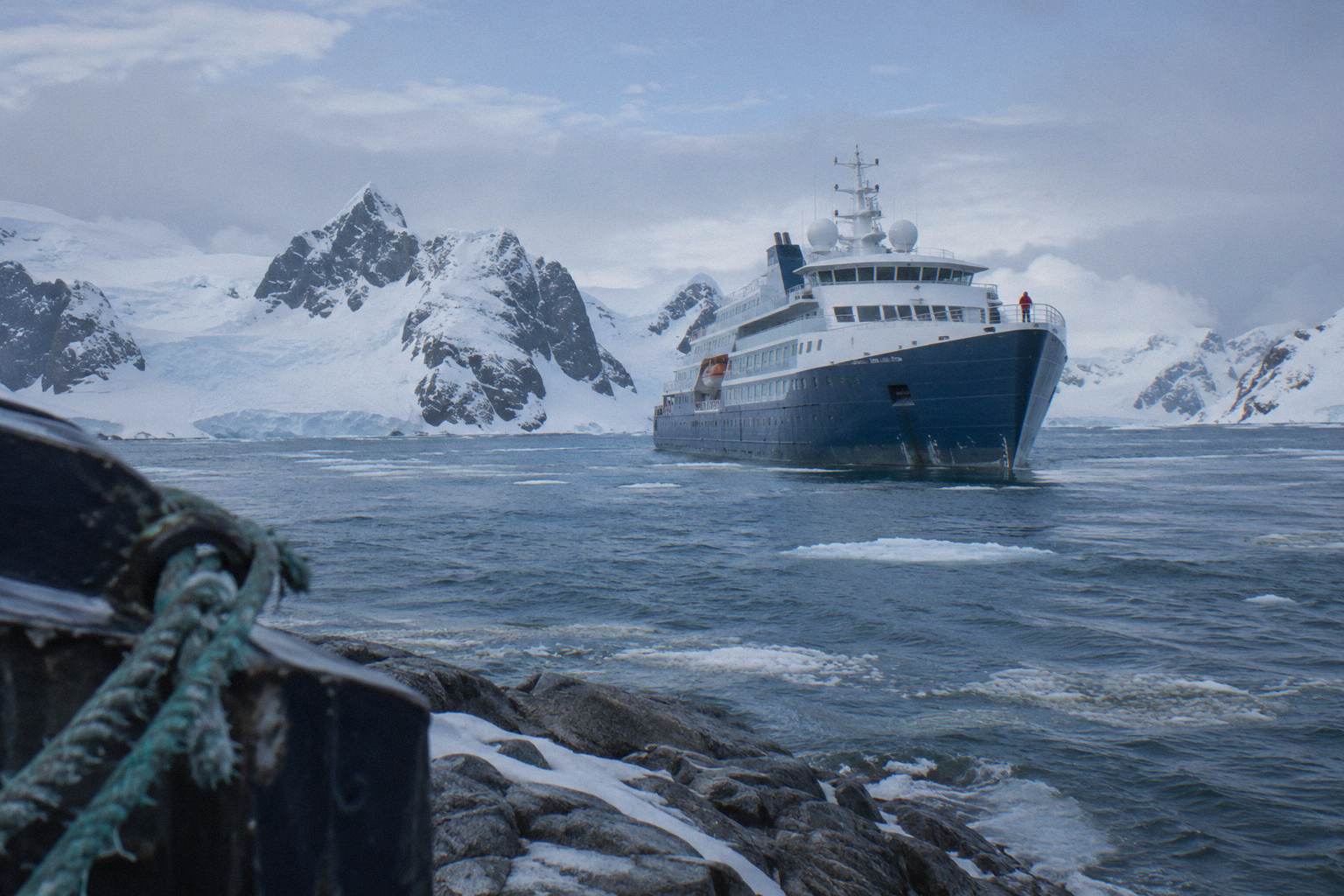
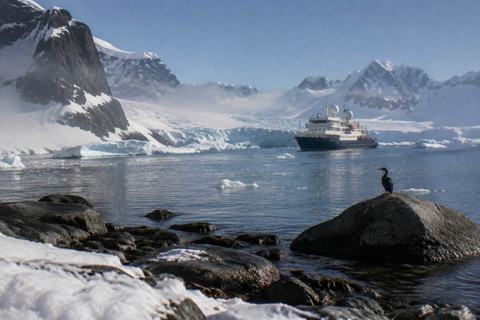
The 2026-27 Antarctic fleet of Polar Latitudes includes Ocean Albatros and Ocean Victory, two X-Bow expedition ships of about 104 metres, plus the 132-guest Discoverer added for the season. Ocean Albatros is an Ice Class 1A vessel with a patented X-Bow hull and a kayak program.
The fleet is where the merger shows most clearly. Ocean Albatros and Ocean Victory date from 2023 and 2021 respectively, and both carry a patented X-Bow hull. Ocean Albatros carries up to 199 guests in some sources (with other figures of 192 and 189 also cited), has 94 staterooms and suites, roughly 90% of them with panoramic balconies, two restaurants, a panorama sauna, a spa area, a gym and two Jacuzzis. Ocean Victory is the slightly older sister: 93 staterooms, similar 104.4-metre length, the same Ice Class 1A notation, and an infinity pool among her onboard facilities.
The third ship for 2026-27 is the Discoverer, reported by cruise industry news as a 132-guest vessel, the former Exploris One, added to the Polar Latitudes program for the season and replacing the Seaventure, which moved to another operator. Ocean Nova, an 80-passenger classic small-ship expedition vessel, sails Antarctica in 2026-27 for Polar Latitudes, alongside Ocean Albatros and Ocean Victory; she is no longer an Antarctica21 ship, where the new Magellan Discoverer took her place. Treat Ocean Nova's Antarctic availability for this season as uncertain and confirm before planning around her.
| Ship | Built | Guests | Ice class | Length | Key features |
|---|---|---|---|---|---|
| Ocean Albatros | 2023 | Up to 199 (other sources cite 192 or 189) | Ice Class 1A | 104.4 m | Patented X-Bow; 94 cabins, about 90% with balconies; 18 Zodiacs; kayak program; two restaurants; panorama sauna and spa |
| Ocean Victory | 2021 | Up to 189 (other sources cite 186 or 175) | Ice Class 1A | 104.4 m | Patented X-Bow; 93 staterooms; private balconies on most cabins; infinity pool; 18 Zodiacs; kayak program; two Jacuzzis |
| Discoverer | Not stated | 132 guests (industry reporting) | Not stated | Not stated | Added to the 2026-27 program, former Exploris One, replacing Seaventure |
Ocean Albatros's expedition hardware is the strongest part of the profile: 18 Zodiacs, a kayak program, camping on select voyages, snowshoeing and hiking, citizen science and a polar plunge are all listed as activities on her program. A current fare for her Antarctic voyages has not been published in a form this guide can quote, so no number is printed here; the operator's own expedition pages are where live pricing sits, and a consultation is the way to get it read for you.
Ocean Victory deserves equal attention, and not only because she is the ship the season's sample fares below attach to. She carries the same X-Bow hull form, the same Ice Class 1A notation and the same 18-Zodiac operation, with private balconies on most cabins and two Jacuzzis plus an infinity pool. Kayaking, camping on select voyages, snowshoeing and hiking, citizen science and polar plunge are listed on her program too.
For readers weighing the merged fleet against a nearby alternative, the trio comparison below adds Sea Spirit, a 114-guest, ice-strengthened ship operated by Poseidon Expeditions, a separate company. She is included because her price point and small-ship character put her on the same shortlists as the Polar Latitudes ships, not because Poseidon is part of the merger; her fares and policies are Poseidon's alone.
| Ship | Class | Passengers | Ice class | From, per person | Voyage length | Departs from |
|---|---|---|---|---|---|---|
| Ocean AlbatrosAlbatros Expeditions (sold via Polar Latitudes) | Standard Expedition | – | 1A | – | 10 to 11 days | Ushuaia |
| Ocean VictoryAlbatros Expeditions (sold via Polar Latitudes) | Standard Expedition | – | Ice Class 1A | – | – | Ushuaia |
| Sea SpiritPoseidon Expeditions | Small-Ship Budget | 114 | ice-strengthened hull | from $8,846 | 12 to 23 days | Ushuaia |
If ship size and hull shape are the deciding factors for you, the deeper dive is in the dedicated Ocean Albatros versus Ocean Victory comparison, which works through the differences cabin by cabin.
Itineraries, Lengths And Fares
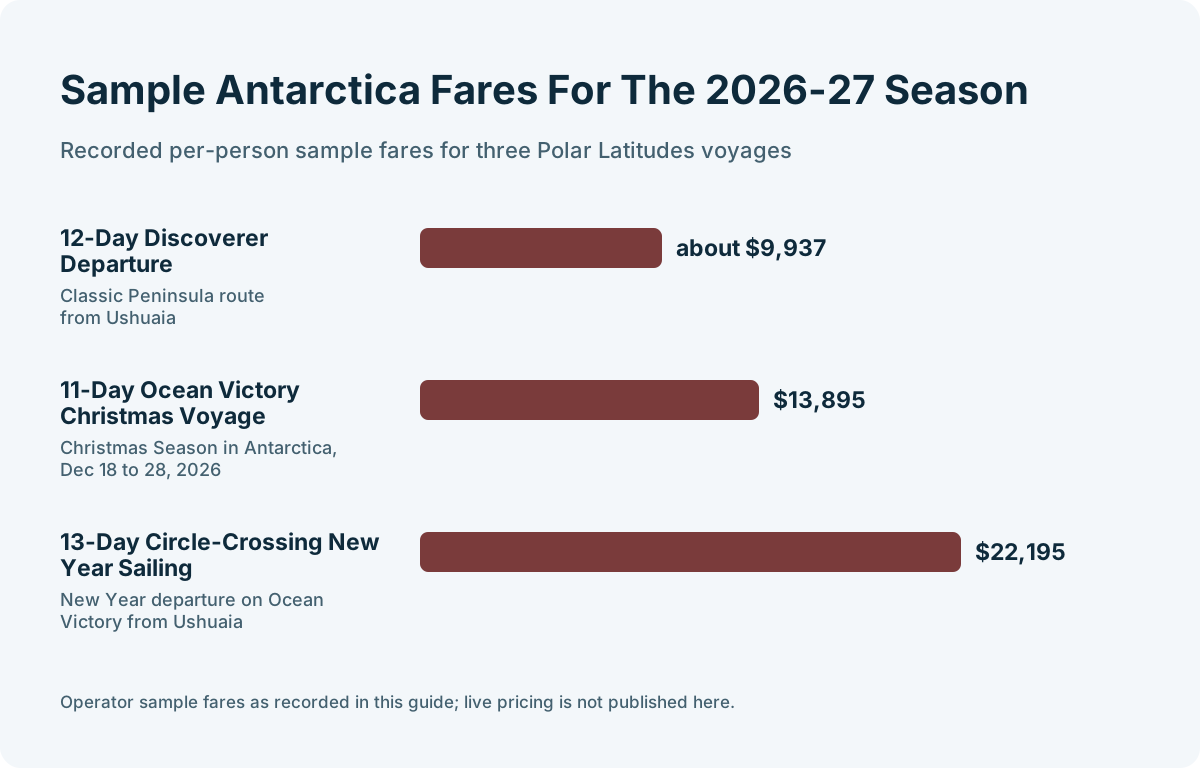
Polar Latitudes voyages to Antarctica in 2026-27 run roughly 11 to 13 days on classic Peninsula routes from Ushuaia, plus fly-cruise options through Punta Arenas. Sample fares range from about $9,937 per person for a 12-day Discoverer departure to $13,895 for an 11-day Ocean Victory Christmas voyage and $22,195 for a 13-day Circle-crossing New Year sailing.
The itinerary structure follows the patterns most Peninsula operators use. The operator lists an 11-day "Antarctica Springs to Life" voyage in November 2026, classic Peninsula round trips out of Ushuaia, and fly-cruise variants that use the roughly two-hour charter flight to King George Island to skip the Drake Passage sea crossing. The operator's fly-cruise page sets out the practical rules: guests must be at the Hotel Cabo de Hornos in Punta Arenas by 14:00 the day before the charter flight, and the Punta Arenas to King George Island leg carries a strict 20 kg checked baggage limit. Anyone comparing a sail-the-Drake voyage against a fly-cruise should also read the site's fly the Drake guide, because the two products differ in cost, risk and sea time more than most first-time buyers expect.
The voyage types themselves break down along familiar lines, with the caveat that only some departure dates and ships are known for each.
| Voyage type | Typical length | Gateway ports | Notes |
|---|---|---|---|
| Classic Antarctic Peninsula sailing | 10 to 13 days | Ushuaia | Sample 11 and 12-day departures listed for 2026-27 |
| Antarctic Circle crossing | 13 days | Ushuaia | Recorded sample: New Year's Antarctic Circle Crossing on Ocean Victory |
| Christmas season voyage | 11 days | Ushuaia | Recorded sample: Christmas Season in Antarctica, Dec 18 to 28, 2026 |
| Fly-cruise | Shorter sailing length plus charter flight | Punta Arenas to King George Island | About a two-hour flight each way; 20 kg checked baggage limit; 15% savings promoted |
| Longer combinations (Falklands, South Georgia) | Not stated | Ushuaia | No specific Polar Latitudes dates published for these |
The sample fares are worth setting side by side, with the caveat that they are sample departure fares, not a price list, and that cabin category and date move them substantially.
| Voyage | Ship | Length | Departure window | Sample from-fare (per person) |
|---|---|---|---|---|
| Antarctic Peninsula voyage (Discoverer sample) | Discoverer | 12 days | December 2026 | $9,937 |
| Christmas Season in Antarctica | Ocean Victory | 11 days | Dec 18 to 28, 2026 | $13,895 |
| New Year's Antarctic Circle Crossing | Ocean Victory | 13 days | Dec 27, 2026 to Jan 8, 2027 | $22,195 |
| Classic Peninsula sailing (Ocean Albatros program) | Ocean Albatros | 10 to 11 days | November 2026 onward | Not stated |
Two things stand out in that table. First, the December holiday departures carry a visible premium over the shoulder-season sample, which matches the general pricing pattern across all Antarctic operators, where November and March usually sit well below peak. Second, no 2026-27 fare for Ocean Albatros herself has been published in a form this guide can quote, and this site does not print a number where none exists. The operator promotes fly-cruise options with 15% savings advertised, which suggests the fly-cruise premium over comparable sailing voyages is at least partly offsettable, but that is a promotion, not a permanent price.
At this decision point, the honest move is to get the live numbers for the specific ship and dates you want. A free consultation on Polar Latitudes fares gets the current cabin-level pricing for Ocean Albatros, Ocean Victory or the Discoverer read for you, with no obligation attached.
What The Fare Includes And Excludes
Polar Latitudes does not publish an itemised inclusion list, so no definitive include and exclude breakdown can be given here. What it does publish is activity-level content: Zodiac excursions, kayaking, camping on select voyages, snowshoeing, citizen science and polar plunge appear as real program elements, while the operator's fly-cruise pages confirm charter flights, transfers and gateway hotel requirements on those products.
This is the weakest part of the operator's public profile, and a buyer should treat it as such. Across the operator's pages there is no published statement on whether parkas and boots are included or loaned, no gratuity policy, no drinks policy, no itemised list of what the fare covers versus what costs extra on board. That silence is not unusual in the expedition industry, where many operators leave cabin-level detail to the booking flow, but it does mean the only reliable way to compare a Polar Latitudes quote against, say, a Quark or Oceanwide quote is to have both inclusion lists in front of you in writing.
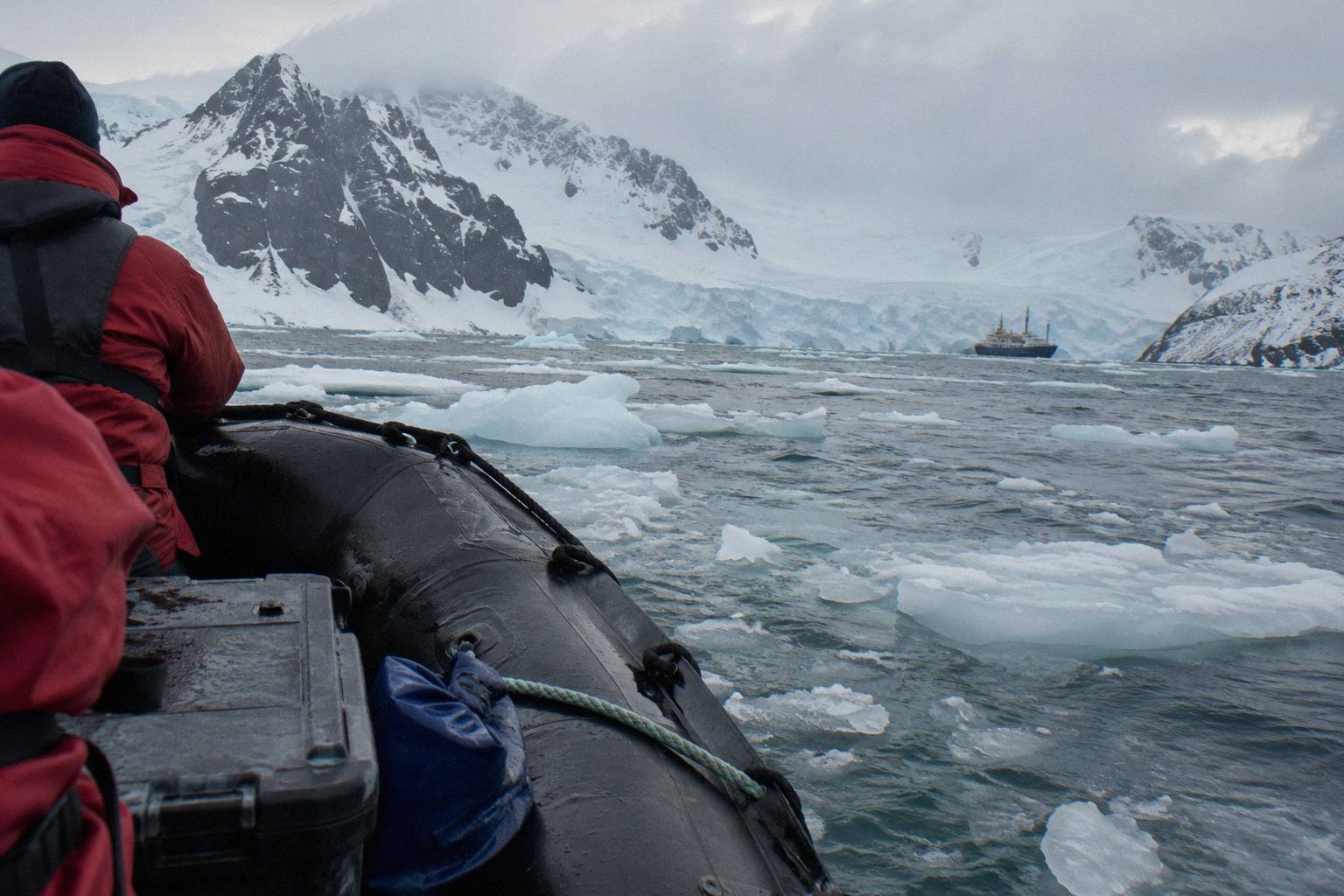
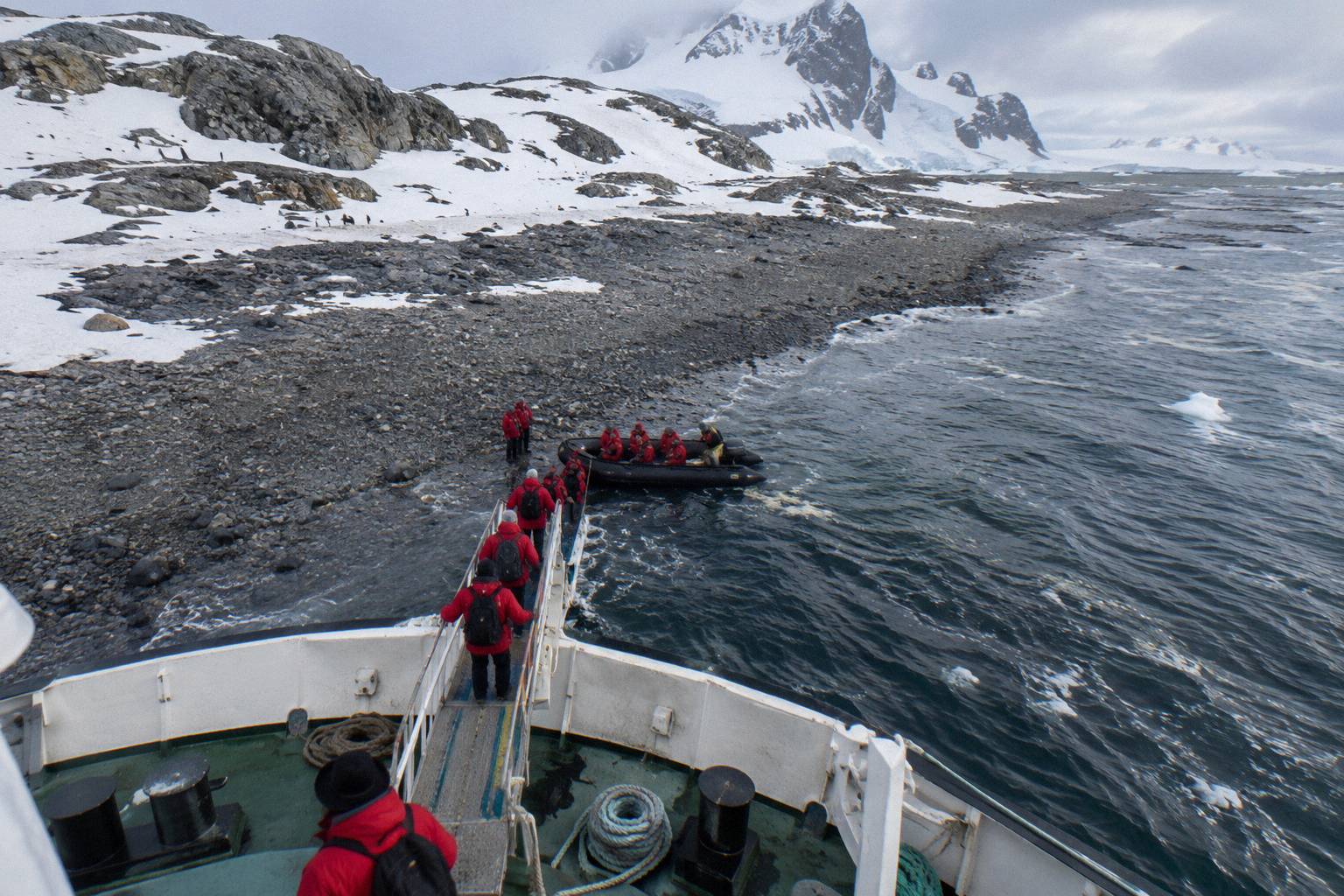
What can be said is which expedition activities the operator lists on the ships. Ocean Albatros and Ocean Victory both carry 18 Zodiacs, and the operator's activity program lists kayaking, camping on select voyages, snowshoeing and hiking, citizen science participation and the polar plunge. On the fly-cruise products, the charter flight between Punta Arenas and King George Island, the pre-flight hotel requirement and the baggage limit are all published. Nothing published states that kayaking or camping are free rather than paid options; across the market, optional activities typically cost $350 to $2,000, so assume nothing until your quote itemises them.
The practical implication for planning a budget: take the sample fare, add international flights to Ushuaia or Punta Arenas, insurance with the medical evacuation coverage most polar operators require, and an allowance for whatever the final inclusion list turns out to leave out. When two quotes arrive, compare them line by line: per-person double-occupancy basis, exact cabin category, single-supplement policy, gratuities, activity fees and cancellation terms. A consultation handles exactly this comparison, and the site's guide to comparing Antarctica cruise quotes walks through the checklist if you are doing it yourself.
Distinctive Features Of The Operator
Polar Latitudes sells itself on three published points: a 7:1 to 8:1 passenger-to-staff ratio, twice-daily outings averaging six hours off the ship, and a citizen science program woven into the voyages. The X-Bow hulls on Ocean Albatros and Ocean Victory, plus a halal-friendly voyages option, round out the profile.
The staff ratio is the headline. At 7:1 to 8:1, the operator staffs its landings well above the IAATO minimum of one guide per twenty visitors ashore, which translates into more interpretive attention per guest and more flexibility to split groups by interest or fitness. The advertised average of six hours off the ship across twice-daily outings is also a concrete, checkable promise, and it is a claim you can ask about before booking. Under IAATO rules no more than 100 passengers from a vessel may be ashore at any one time, and only one ship may visit a site at a time, so on these ships, whose published guest counts run up to around 199, groups rotate ashore; the small Discoverer, at 132 guests reported, sits closer to the whole-ship-ashore end of the scale. The full index of guides sits on Cruises In Antarctica.
The citizen science program is the operator's clearest identity marker. Rather than treating science as a lecture topic, the voyages invite passengers to contribute to ongoing research projects, which the operator lists as a core feature of the brand. For travellers who want their Antarctic trip to be more than photography, this is a genuine differentiator at this price tier, and it pairs naturally with the expedition hardware on the X-Bow ships.
The X-Bow hull deserves one honest caveat. The design is claimed to reduce wave impact, slamming and pitch, but no independent verification of specific performance claims has turned up. Treat the comfort benefit as claimed rather than proven. The halal-friendly voyages option, by contrast, is a simple published fact.
Minimum Age, Solo Travel And Booking Policies
Polar Latitudes publishes no minimum age and no solo or single-supplement policy on its main pages, and its 2026-27 booking terms are not published there either. Do not assume policies from the predecessor brands carry over; each needs confirming for the specific departure before you commit.
This is an area where the merger genuinely creates risk for a buyer. Albatros Expeditions and Polar Latitudes may have had different terms historically, and the merged brand's public pages publish neither a minimum age nor a solo-traveller policy. For comparison, single supplements across the industry typically range from 25% extra to double the twin rate, with sharing options sometimes available, but no Polar Latitudes figure is published. A solo traveller booking blind could therefore be surprised in either direction.
Booking mechanics are equally unpublished. No deposit percentage, final-payment deadline or cancellation ladder for Polar Latitudes is public, whereas comparable operators' terms are documented: Quark's 2026 terms, for instance, set a 25% deposit if booked 151 or more days before the voyage, with final payment due 150 days before Day 1. Nothing similar is published here. If you book this operator, get the deposit, payment and cancellation schedule in writing before paying anything, and check whether the departure requires specific insurance minimums, since most operators in this market require medical evacuation coverage without publishing a uniform figure.
The site's deposits and payments guide explains what a normal payment schedule looks like across the industry, and the solo travel guide covers the supplement landscape. Both will tell you what to insist on seeing from Polar Latitudes in writing, and a free consultation before you pay a deposit is the simplest way to have those terms confirmed for your exact voyage.
Recent News And Season Developments
The main 2026-27 developments are the Discoverer joining the fleet, a 132-guest ship reported by cruise industry news as the former Exploris One replacing the Seaventure, and the operator promoting fly-cruise options with 15% savings. The merger itself, first announced through the operator's channels, remains the defining change, with legacy Albatros pages redirecting to the Polar Latitudes site.
The Discoverer addition is the most concrete fleet news. Industry reporting describes her as a 132-guest vessel, the former Exploris One, built in Finland, joining the 2026-27 Antarctic program while the Seaventure moved to another brand. For buyers, a third hull means more departure dates and a mid-size option between the roughly 189-199-guest X-Bow sisters and the very small ships elsewhere in the market. Her ice class and cabin count are not published in that reporting, so beyond the guest figure, origin and builder country this site states nothing about her.
The fly-cruise promotion matters for a different reason. Fly-cruise products generally cost more per day than sailing voyages because of the charter flight, and industry comparisons put that premium in the $2,000 to $5,000 range over comparable sailing itineraries. A 15% saving on the operator's fly-cruise options can offset part of that, and for travellers who would otherwise never attempt the Drake Passage it changes the calculus entirely. The trade-off is weather risk: fly-cruise flights to the gravel strip on King George Island are delayed by fog, low cloud and wind, and the season's data on those delays is covered in the site's fly-cruise delays guide.
Beyond the fleet, no other 2026-27 announcements specific to this operator have surfaced: no new itineraries beyond those noted, no policy changes, no published expansions. The honest summary is that the merged brand's season is defined by the merger itself, the Discoverer and the fly-cruise push.
Who Polar Latitudes Suits, And Who Should Look Elsewhere
Polar Latitudes suits travellers who want an activity-heavy, science-flavoured mid-priced expedition on modern X-Bow ships with a strong staff ratio, and who are comfortable confirming booking terms through a consultation rather than a published policy page. It suits solo travellers and families least well, because neither policy is published, and it does not suit anyone who needs a luxury all-inclusive product or a documented inclusion list up front.
The fit is easiest to see by contrast. Against the budget small-ship tier, ships like Oceanwide's Plancius and Ortelius, the Polar Latitudes ships offer newer hardware, balcony cabins on most berths and a wider onboard facility list, at sample fares that start higher; the Oceanwide operator guide shows that trade-off in detail. Against the luxury tier, Silversea, Seabourn and Scenic, the offering is more adventurous and less inclusive: no butler, no published all-inclusive drinks list, but real kayaking, camping and citizen science programs in exchange. The Poseidon Expeditions guide covers a comparable small-ship, activity-first philosophy on Sea Spirit if that middle ground appeals.
Within its own tier, the operator's strongest cards are the staff ratio, the twice-daily outing structure and the merged fleet's schedule breadth across sailing and fly-cruise products from both Ushuaia and Punta Arenas. The weakest cards are the unpublished policies: minimum age, solo terms, inclusions and booking conditions all require confirmation per departure. A family, a solo traveller or anyone with a strict cancellation need should resolve those before a deposit, not after.
After two years of reading Antarctic operator pages, the impression this one leaves on me is of a company whose ships and activity program outrun its published paperwork. That gap is fixable in a single conversation, but it is a gap, and a buyer should know it exists before shortlisting the operator on ship specs alone.
Common Questions About Polar Latitudes And Albatros Expeditions
Are Polar Latitudes and Albatros Expeditions the same company now?
Yes. The two operators merged and rebranded into a single Polar Latitudes Expeditions brand with a combined website, and the legacy Albatros Expeditions pages redirect there. The operator describes the merger as bringing together over four decades of combined experience.
Which ships does Polar Latitudes sail to Antarctica in 2026-27?
Ocean Albatros and Ocean Victory, two 104.4-metre X-Bow expedition ships, sail the operator's Antarctic program, plus the 132-guest Discoverer added for the season. Ocean Nova sails Antarctica in 2026-27 for Polar Latitudes; Antarctica21 replaced her with the new Magellan Discoverer.
How much does a Polar Latitudes Antarctic cruise cost?
Sample 2026-27 fares run from about $9,937 per person for a 12-day Discoverer Peninsula voyage to $13,895 for an 11-day Ocean Victory Christmas departure and $22,195 for a 13-day New Year Antarctic Circle crossing. No published fare for Ocean Albatros is quoted here, so this site prints no number for her.
What is included in a Polar Latitudes fare?
The operator does not publish an itemised inclusion list. Zodiac excursions, kayaking, camping on select voyages, snowshoeing and hiking, citizen science and polar plunge are listed as real program activities, and fly-cruise products include the charter flight and gateway requirements, but drinks, gratuities, parkas and boots policies are not stated. Confirm inclusions in writing for your specific departure.
Does Polar Latitudes publish a minimum age or solo supplement?
No. The operator's pages publish no minimum age and no solo or single-supplement policy, and its 2026-27 booking terms are not public either. Industry-wide, single supplements typically range from 25% extra to double the twin rate, but no Polar Latitudes figure is published.
Is Polar Latitudes a good choice for a first Antarctic cruise?
It can be, for travellers who want an active, science-oriented mid-priced expedition on modern ships with a strong staff ratio. It is a weaker fit for anyone who needs documented family, solo or cancellation policies before booking, or who wants a fully inclusive luxury product, since none of those are published by the operator.
More Ship And Line Guides
 Mainstream LinesBig-brand Antarctica cruises sail past but never land; here is why, and what to book instead.Read the guide
 Viking AntarcticaViking Octantis and Polaris explained: specs, itineraries, fares and how they compare.Read the guide
 Silversea AntarcticaSilversea's three Antarctic ships, their voyages and how they compare with rival luxury lines.Read the guide
 Seabourn AntarcticaSeabourn's two expedition ships in Antarctica: what is verified, what is not, and how they compare.Read the guide