Weddell Sea Cruise: Emperor Penguins, Snow Hill And Big Ice
 By Oleg G.
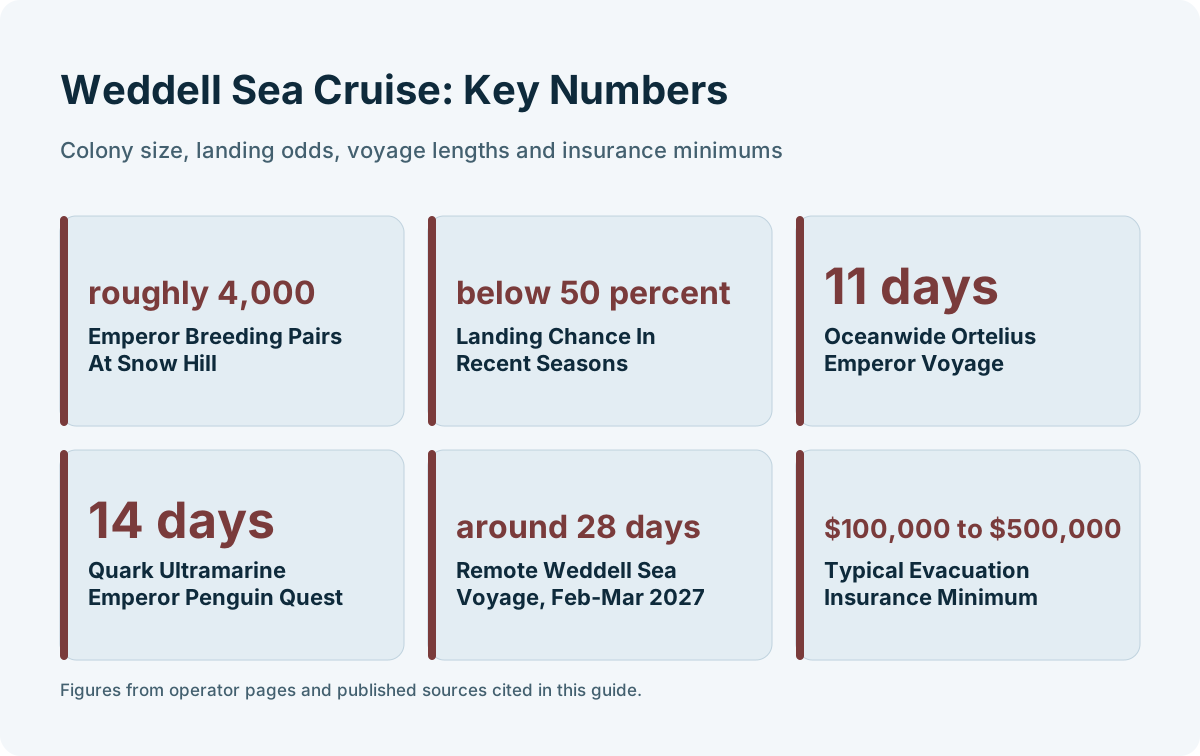
The Weddell Sea is Antarctica on its own terms: enormous tabular icebergs, a stubborn pack-ice frontier, and the Snow Hill emperor penguin colony that helicopter voyages are built around. It is the hardest headline in Antarctic cruising, and the operators who sail it are honest about the odds.
Quick answer: A Weddell Sea cruise is an Antarctic Peninsula itinerary that pushes east into heavy pack ice toward Snow Hill Island, Paulet Island and Brown Bluff, usually 11 to 15 days from Ushuaia. Emperor penguin voyages with helicopter access run from about $10,750 per person, and operators state success odds below 50 percent in recent seasons.
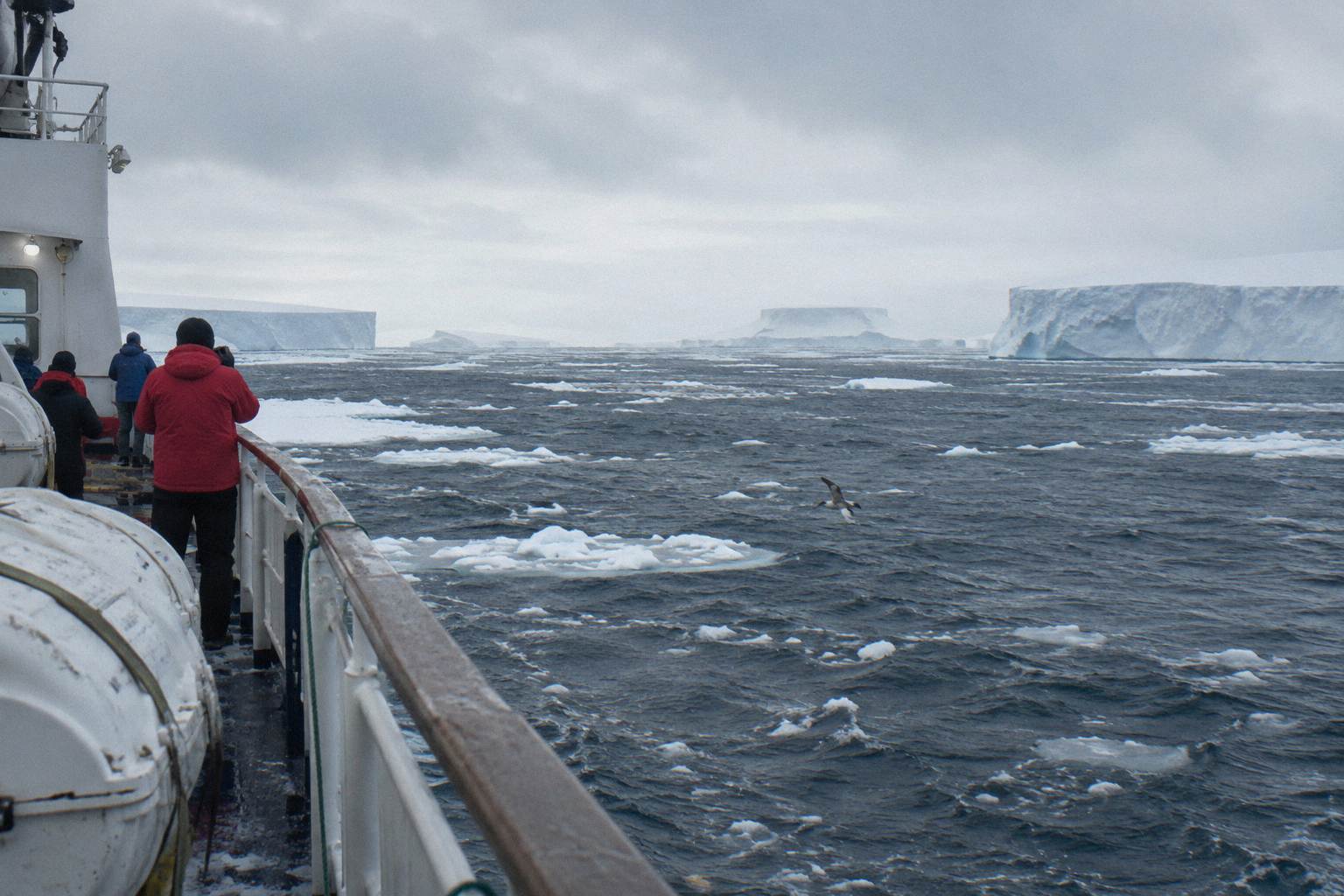
The Weddell Sea is the side of Antarctica that humbles itineraries. East of the Antarctic Peninsula, behind the Antarctic Sound, sits heavy pack ice, and beyond it, when the ice allows, the Snow Hill emperor penguin colony that dedicated helicopter voyages are built around. A Cruises In Antarctica reader planning this route is not planning a generic Peninsula cruise; they are planning an expedition with a real chance of being rewritten by ice, and the operators who sell it say so in print.
This guide covers what the Weddell Sea actually is, how the Snow Hill emperor penguin voyages work, which ships sail the route in 2026-27, what the honest success odds are, when to go and what it costs. Every figure here comes from operator pages and published sources, and where nothing published states something, the gap is left open rather than filled.
What Is The Weddell Sea And Why Sail It?
The Weddell Sea lies east of the Antarctic Peninsula, known for heavy pack ice and tabular icebergs. Itineraries reach it through the Antarctic Sound, and its headline sites are Paulet Island, Brown Bluff and the Snow Hill emperor penguin colony.
The sea lies east of the Antarctic Peninsula. Where the classic Peninsula route runs down the western coast, the Weddell Sea route pushes through the Antarctic Sound and into heavy pack ice. The reward is a different kind of scenery: tabular icebergs and a working pack-ice frontier.
For wildlife, the Weddell Sea side holds the Antarctic Peninsula's accessible emperor penguin link. The Snow Hill colony sits on sea ice, and the operators that sell it reach it by helicopter. Adélie penguins are the other signature: Paulet Island hosts an Adélie colony, and Brown Bluff is the other named landing on the route.
The trade-off is simple and every operator states it: ice decides. The same pack ice that makes the scenery makes the schedule. If that balance appeals, this route is worth the premium in both cost and uncertainty over a classic Peninsula sailing, and a free route consultation is the fastest way to check whether your dates line up with the ice window.
Snow Hill Island: Emperor Penguins By Helicopter
Snow Hill Island carries roughly 4,000 breeding pairs of emperor penguins on sea ice, accessed by helicopter from expedition ships. Oceanwide Expeditions runs dedicated 11-day helicopter voyages on Ortelius in November and December 2026, and Quark Expeditions runs a 14-day Emperor Penguin Quest on Ultramarine; both operators state that success depends on ice and weather.
The colony sits on sea ice, and the two operators named here reach it by helicopter. Oceanwide's Ortelius, a 1989-built former Russian research vessel rated UL1, equivalent to ice class 1A, carries helicopters on its Weddell Sea emperor voyages; the operator's page lists departures on 15 November and 25 November 2026, each around 11 days. Quark's Ultramarine, with 199 passengers and two twin-engine Airbus H145 helicopters on two helidecks, runs the 14-day Emperor Penguin Quest: Expedition to Snow Hill, with a November 2026 departure, and one 2026 voyage reported helicopter landings for 137 guests.
The mechanics matter more than the brochure. IAATO and Antarctic Treaty rules apply throughout: no more than 100 visitors ashore at a time, a minimum 1:20 guide-to-visitor ratio, and a general 5-metre wildlife distance that site guidance can extend. Every step depends on ice and weather conditions on the day.
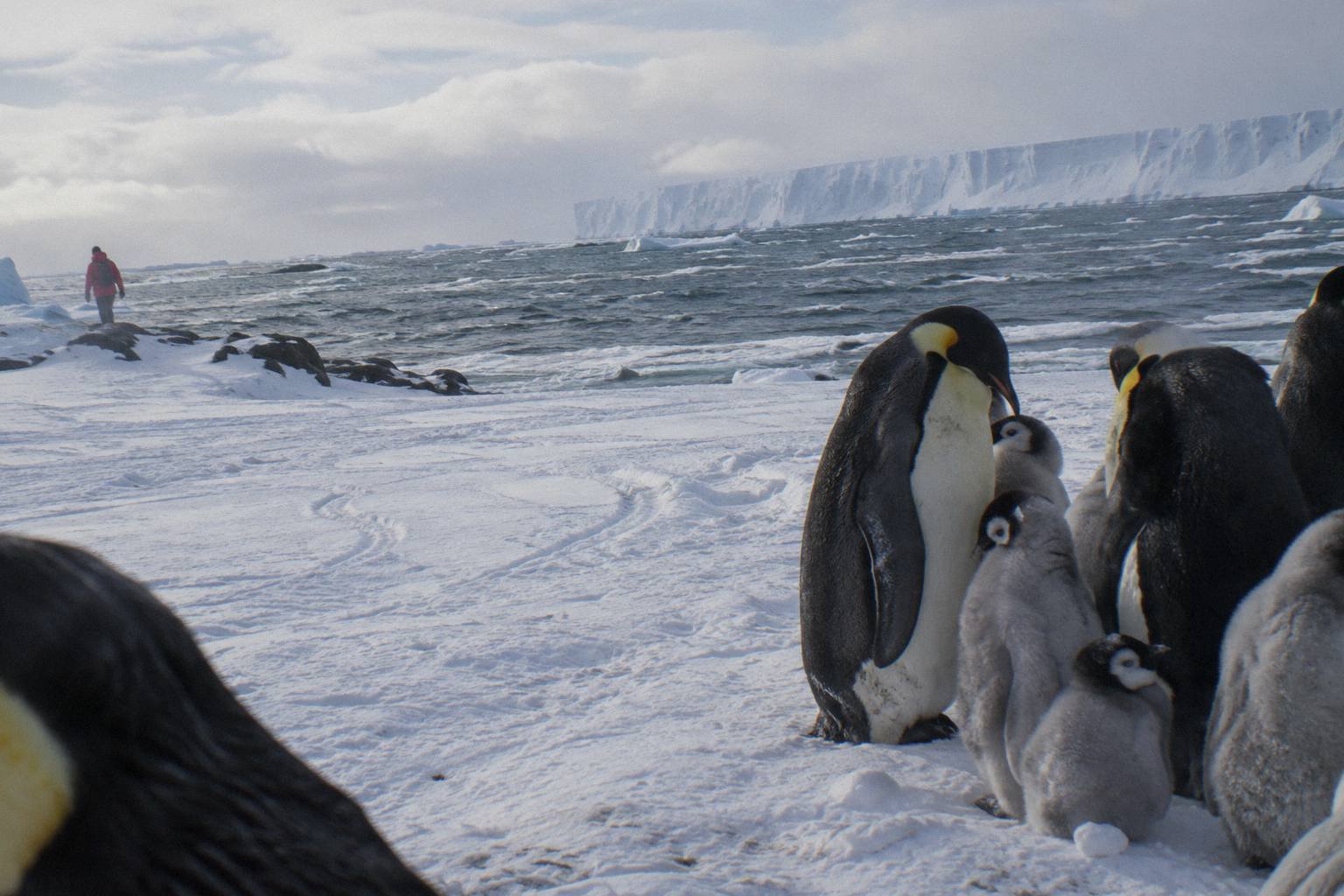
Honest odds are the core of this decision. Oceanwide's own materials note that success reaching the Snow Hill colony depends on ice and weather conditions, with operator notes indicating a chance below 50 percent in recent seasons. Quark's expedition reporting shows the upside: one 2026 voyage landed guests successfully. Neither operator sells this as a guaranteed sighting, and any adviser who does is overstating what the operators publish. What is guaranteed is the attempt: the Weddell Sea itself, the tabular bergs, the Sound, and the Adélie colonies that anchor the fallback itinerary.
Which Ships And Operators Sail The Weddell Sea?
Two ships run the Snow Hill emperor penguin voyages in 2026-27: Oceanwide's Ortelius and Quark's Ultramarine, which carries its own two helicopters. Oceanwide's Plancius also lists a roughly 10-day Weddell Sea Explorer voyage in March 2027, and Hondius, the newer PC6 ship in the Oceanwide fleet, is the natural comparison.
Ortelius is the specialist. At 90.95 metres and 108 passengers in 50 cabins, it is a small, ice-capable workhorse, a 1989 Gdynia-built former research vessel converted for passenger service, with 10 Zodiacs and helicopter operations on its remote Weddell Sea and emperor voyages. Oceanwide lists Antarctic Peninsula departures from $7,800 per person, and the dedicated Weddell Sea emperor voyages start higher, from about $10,750. Hondius, its fleet-mate, is a different proposition: built in 2019, 107.6 metres, 170 passengers in 80 cabins, and the first-registered Polar Class 6 vessel in the world in the operator's wording, with Antarctic voyages from $7,800 per person. The operator listings read for this guide do not show Hondius on a Weddell Sea departure; the helicopter emperor access belongs to Ortelius.
Quark's Ultramarine is the upscale version of the same idea: 199 passengers, 128 metres, ice class 1A+ and PC6, 20 Zodiacs in an internal hangar, and its own two helicopters, which is what makes the Emperor Penguin Quest possible. Quark's Antarctic Peninsula voyage fares, shared at the voyage level across Ultramarine, Ocean Explorer and World Voyager, start from $12,236 per person. The comparison below puts the three ships side by side.
| Ship | Class | Passengers | Ice class | From, per person | Voyage length | Departs from |
|---|---|---|---|---|---|---|
| OrteliusOceanwide Expeditions | Small-Ship Budget | 108 | UL1 | from $7,800 | 11 to 25 days | Ushuaia |
| UltramarineQuark Expeditions | Upscale Expedition | 199 | 1A+, PC6 | from $12,236 | 12 to 14 days | Buenos Aires, Ushuaia |
| HondiusOceanwide Expeditions | Small-Ship Budget | 170 | Polar Class 6 | from $7,800 | 11 to 19 days | Ushuaia |
A ship choice here is really a helicopter question. If standing at the Snow Hill colony is the point of the trip, the choice is Ortelius or Ultramarine, and the difference is cabin standard and price tier against two different helicopter operations. If the Weddell Sea's ice and Adélie colonies are enough, the non-helicopter Weddell Sea Explorer on Plancius is the voyage to price against the emperor departures. I have spent a long time weighing exactly this kind of trade-off in my own research, and the honest answer is that the emperor attempt justifies the premium only for travellers who accept that the attempt may be all they get.
For a deeper look at the specialist ship itself, see the site's Ortelius ship guide, and for how this route compares with the classic western coast, the Antarctic Peninsula cruise guide covers the standard itinerary in full.
Antarctic Sound, Paulet Island And Brown Bluff
The Antarctic Sound is the iceberg-filled gateway to the Weddell Sea, with Paulet Island's Adélie penguin colony and the Brown Bluff landing nearby. All three are standard targets on Weddell Sea itineraries, and all three are subject to the ice and swell conditions that govern the eastern side of the Peninsula.
The Sound is the gateway into the Weddell Sea, and published itinerary guides note that Antarctic Sound and Weddell Sea routes are heavily influenced by pack ice. That makes the transit the point where the itinerary's ambitions meet the ice, and it is why the Sound is best read as a possible highlight rather than a commitment.
Paulet Island, on the Weddell side of the Sound, hosts an Adélie penguin colony. Brown Bluff is the other named landing on Weddell Sea itineraries. Neither site is guaranteed; ice and weather decide both.
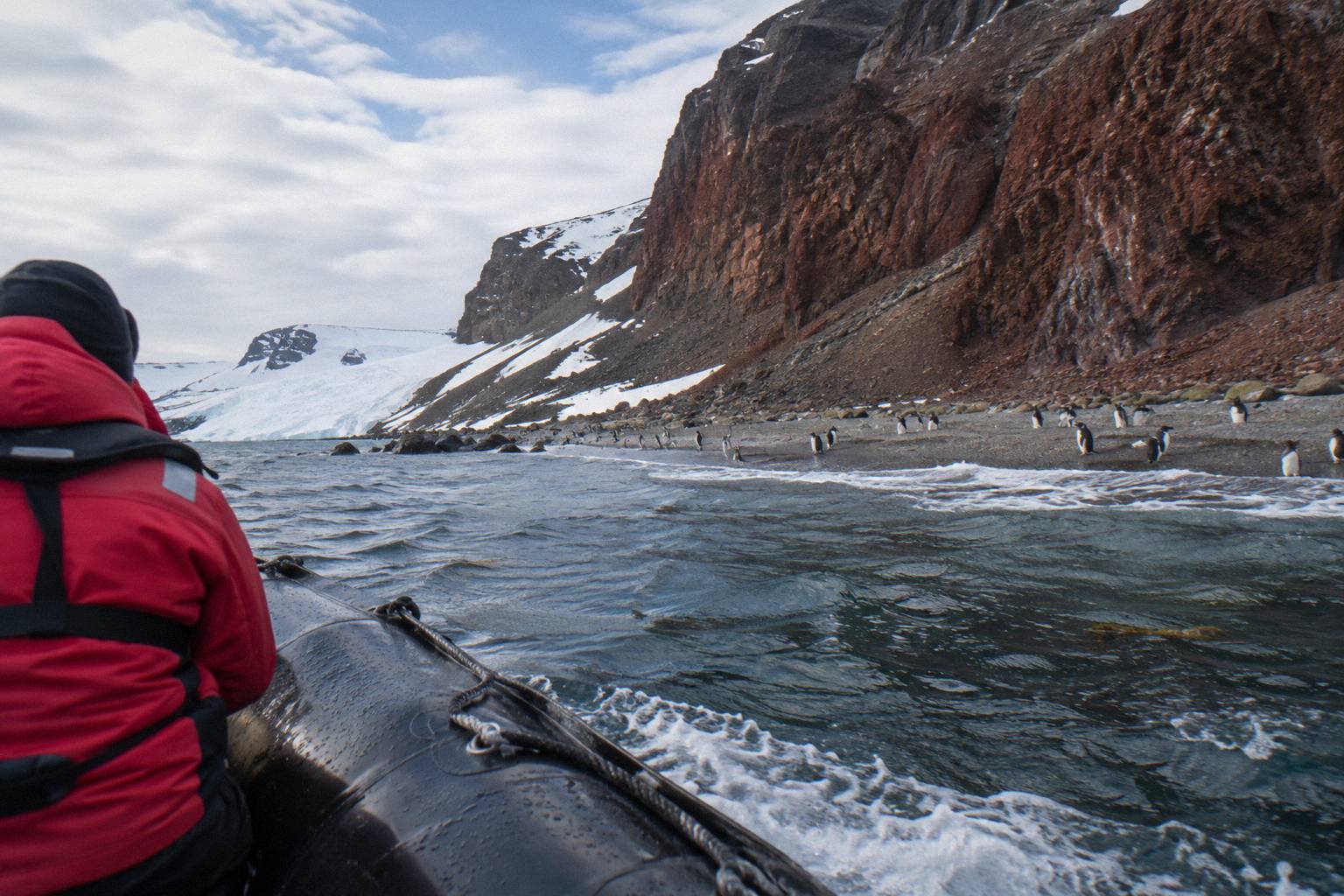
The table below sets out the main Weddell Sea targets and what each one offers.
| Site | What It Is | Wildlife | Landing Notes |
|---|---|---|---|
| Antarctic Sound | Iceberg-filled channel into the Weddell Sea | Not stated | Scenic transit; no landing |
| Paulet Island | Island on the Weddell side of the Sound | Adélie colony | Not stated |
| Brown Bluff | Landing site on Weddell Sea itineraries | Not stated | Not stated |
| Snow Hill Island | Emperor colony on nearby sea ice | About 4,000 breeding pairs of emperors | Helicopter access only, operator-dependent |
| Deep Weddell Sea | Interior of the sea, remote voyages | Not stated | Remote Weddell Sea voyage, around 28 days, Feb-Mar 2027 |
The deeper Weddell Sea appears on Oceanwide's long remote itineraries, such as the roughly 28-day Remote Weddell Sea voyage the operator lists for February and March 2027. Those are frontier sailings for travellers who want the sea's interior rather than its rim.
Ice Risk And Honest Success Odds
Operators state plainly that Weddell Sea itineraries depend on ice and weather, with the Snow Hill emperor landing chance noted below 50 percent in recent seasons, and Antarctic Sound routes are heavily influenced by pack ice. Every Weddell Sea voyage is sold as an attempt, not a promise, and the fallback is a strong Peninsula itinerary, so travellers should book the operator and the backup plan, not a single landing.
The operators are unusually direct here. Oceanwide's Weddell Sea materials say success reaching the emperor colony depends on ice and weather conditions, with operator notes indicating a below-50 percent chance in recent seasons. The 2026 reporting on Quark's Ultramarine voyage, where 137 guests made helicopter landings, shows the same coin's other face: when the window opens, it opens fully. What no source supports is any claim of a reliable landing, and this site will not manufacture one.
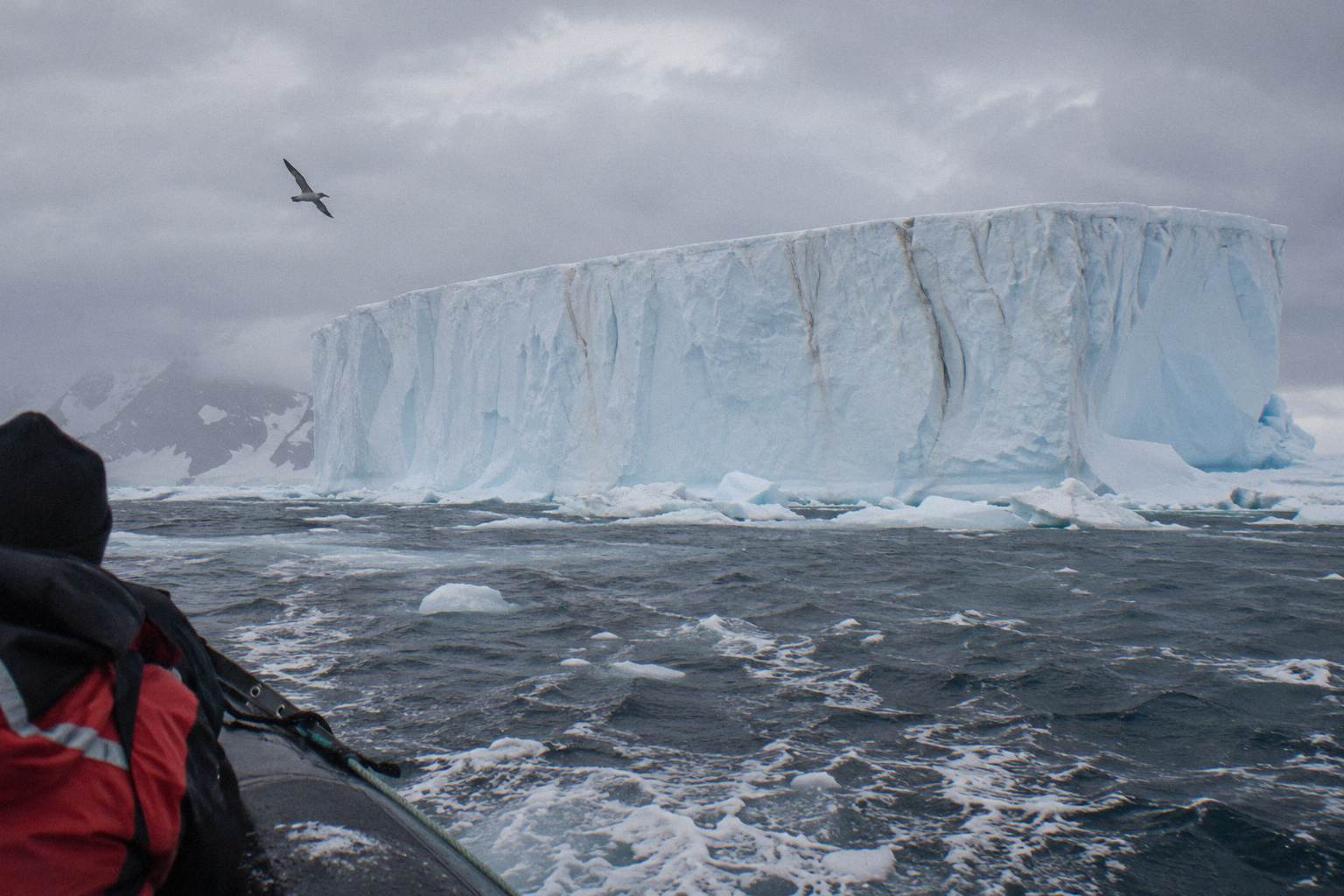
The broader route risk is smaller but real. The Sound and the eastern Peninsula sites sit behind ice that can arrive late in the season or persist through it, and expedition leaders hold plan A, B and C options, monitoring forecasts and switching sites for wind, swell or ice. The US National Ice Center publishes weekly Antarctic ice charts that operators use for planning, and the difference between a Weddell Sea itinerary and a western Peninsula one is precisely that the eastern plan has a higher chance of being rewritten. Travellers who would feel cheated by a reroute should book the classic Peninsula route instead; travellers who accept the gamble get the route's scenery as compensation either way.
Insurance and schedule buffers matter on this route. Operators require travel insurance with medical evacuation cover, with operator minimums typically ranging from $100,000 to $500,000 per person, and the site's Antarctica travel insurance guide covers those requirements in detail. If a helicopter flight or a Sound transit is lost to weather, force majeure clauses often limit an operator's liability to a refund of amounts paid, so the right question to ask before booking is what the fallback itinerary looks like on your specific departure.
When To Take A Weddell Sea Cruise
The Weddell Sea window is November to early March, and the emperor penguin voyages target November and December departures. Late January and February bring less sea ice and better access farther south, which is when the long remote Weddell Sea voyage sails.
Timing on this route is a wildlife decision before it is a price decision. The helicopter voyages cluster in November and the first half of December, the window operators target. Oceanwide's 2026 departures sit on 15 and 25 November; Quark's Emperor Penguin Quest runs in November. The operator listings read for this guide show no emperor departures outside that window.
Later in the season the ice retreats: published season guides describe less sea ice and better access farther south from late January into February, with whale numbers peaking in February and March. That is the season for the long remote Weddell voyages rather than the emperor attempt, and it suits travellers whose priority is big ice and whales rather than a specific penguin. The pricing pattern follows the standard Antarctic season: November and March shoulder fares run well below the December and January peak, with 11-to-13-day Peninsula voyages from roughly $6,900 to $8,500 in the shoulder months against substantially higher peak fares.
| Month | Ice In The Weddell Sea | Emperor Colony Access | Fare Level |
|---|---|---|---|
| November | More sea ice, limited access | Helicopter voyages running | Shoulder, below peak |
| December | Opening up | Early-December helicopter departures | Peak pricing |
| January | Opening up, easing late month | No departures listed | Peak pricing |
| February | Less ice, better access | No departures listed; Remote Weddell Sea voyage | Not stated |
| March | Variable, retreating | No departures listed; whales at peak | Shoulder, below peak |
For month-by-month detail across the whole season, the site's best time to visit Antarctica guide breaks down wildlife, daylight and prices for every month from October to April.
What A Weddell Sea Cruise Costs
Dedicated Weddell Sea and emperor penguin voyages start around $10,750 per person for 11-day helicopter departures on Ortelius, against Antarctic Peninsula entry fares from $7,800 on the Oceanwide fleet and from $12,236 on Quark's shared voyage fares. The long remote Weddell Sea sailing has no published fare in the listings read for this guide.
The fare ladder on this route has three rungs. The base is a standard Peninsula voyage that includes the Antarctic Sound as a weather window: Oceanwide's fleet fares start from $7,800 per person, Quark's from $12,236 at the voyage level. The second rung is the committed Weddell Sea itinerary, which one 2026-27 price source lists from about $10,750 per person on Ortelius for the 11-day Weddell Sea voyages. The third rung is the deep-remote material, the roughly 28-day Remote Weddell Sea voyage, with no published fare in the listings read for this guide.
| Voyage Type | Typical Length | Example Ship | Entry Fare (Per Person) |
|---|---|---|---|
| Classic Peninsula | 10-13 days | Hondius | From $7,800 |
| Weddell Sea with helicopters | 11 days | Ortelius | From about $10,750 |
| Emperor Penguin Quest | 14 days | Ultramarine | Not stated |
| Remote Weddell Sea | Around 28 days | Ortelius | Not stated |
What the fare buys matters here more than elsewhere. Oceanwide's ship pages state that gratuities are suggested at 10 to 15 EUR or USD per passenger per day as a blanket contribution. Quark's itinerary materials list parkas, boots and excursions among the inclusions. Neither operator's pages itemise drinks across the board, so budget for them. The realistic all-in figure for a mid-range Antarctic trip, fare plus flights, gear, tips and insurance, runs from about $12,000 to $25,000 per person for a 10-to-12-day voyage.
The deposit structure is worth knowing before you fall for a specific departure. Oceanwide takes a 20 percent deposit on confirmation with the balance due 60 days before departure, and full payment if the booking falls within two months of sailing; Quark's terms require a 25 percent deposit with final payment well in advance. Those are commitments, not holds, and on a voyage whose headline experience carries a below-50-percent success note, the cancellation terms deserve a read before the booking, not after. The site's deposits and payments guide covers the operators' terms side by side, and a free consultation on Weddell Sea departures will put the current fares, helicopter inclusions and cancellation terms for your dates in one place.
Common Questions About Weddell Sea Cruises
Can you see emperor penguins on a Weddell Sea cruise?
Yes, on dedicated helicopter voyages. The Snow Hill Island colony of about 4,000 breeding pairs sits on sea ice accessed by helicopter, and Oceanwide's Ortelius and Quark's Ultramarine run those voyages in November and December. Operators state that reaching the colony depends on ice and weather, with success odds noted below 50 percent in recent seasons.
How much does a Weddell Sea cruise cost?
Committed Weddell Sea voyages with helicopter access start around $10,750 per person for 11-day departures on Ortelius, against Antarctic Peninsula entry fares from $7,800 on the Oceanwide fleet and from $12,236 on Quark's voyage-level fares. The long remote Weddell Sea sailing of around 28 days has no published fare in the listings read for this guide.
When is the best time for a Weddell Sea cruise?
November and early December for the emperor penguin voyages, when the helicopter departures run. Late January and February bring less sea ice and better access farther south, and whale numbers peak in February and March, but no emperor departures are listed then.
Which ships sail the Weddell Sea?
Oceanwide's Ortelius is the specialist, a 108-passenger former research vessel that carries helicopters on its emperor voyages. Oceanwide's Plancius lists a roughly 10-day Weddell Sea Explorer voyage in March 2027. Quark's Ultramarine, 199 passengers with two Airbus H145 helicopters, runs the 14-day Emperor Penguin Quest.
Is a Weddell Sea itinerary risky compared with a Peninsula cruise?
Yes, in the sense that ice decides. Antarctic Sound routes are heavily influenced by pack ice, and the Snow Hill landing chance is noted below 50 percent in recent seasons. Every operator sells the voyage as an attempt with a strong Peninsula fallback, so book the operator and the backup itinerary rather than a single landing.
What happens if the helicopters cannot fly to Snow Hill?
The voyage continues on its fallback plan: the Antarctic Sound, Paulet Island's Adélie colony, Brown Bluff and the western Peninsula sites, depending on conditions. Force majeure clauses often limit an operator's liability, which is why the cancellation and insurance terms matter on this route.
More Routes And Landings
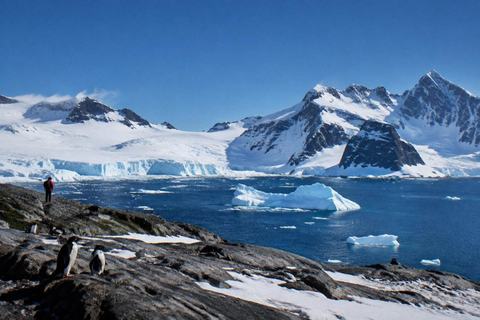 Peninsula CruisesThe classic Peninsula route explained: lengths, fares, landing sites and timing.Read the guide
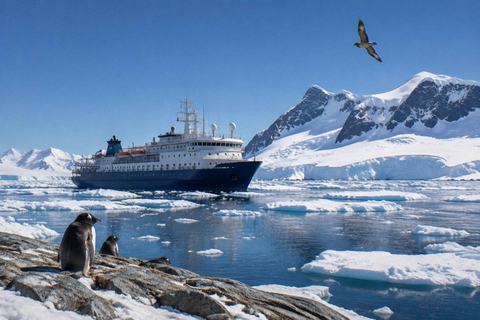 Antarctic CircleLonger, costlier voyages that push past 66 degrees south, and what the extra days buy.Read the guide
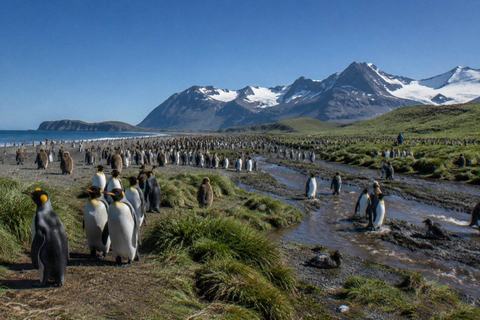 South Georgia CruisesThe 18-to-22-day Falklands, South Georgia and Peninsula itinerary, the premium wildlife cruise.Read the guide
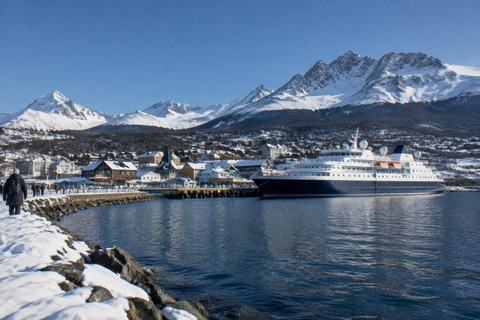 Cruises From UshuaiaShips, routes, fares and arrival logistics for the world's main Antarctica departure port.Read the guide