Why Are Expedition Cruises So Expensive?
 By Oleg G.
An Antarctica expedition cruise costs more than almost any other cruise on earth, and the price is not arbitrary. Small passenger counts, ice-classed ships, fuel burned in the world's most remote waters and a crew of guides, scientists and helicopter pilots all sit inside the fare.
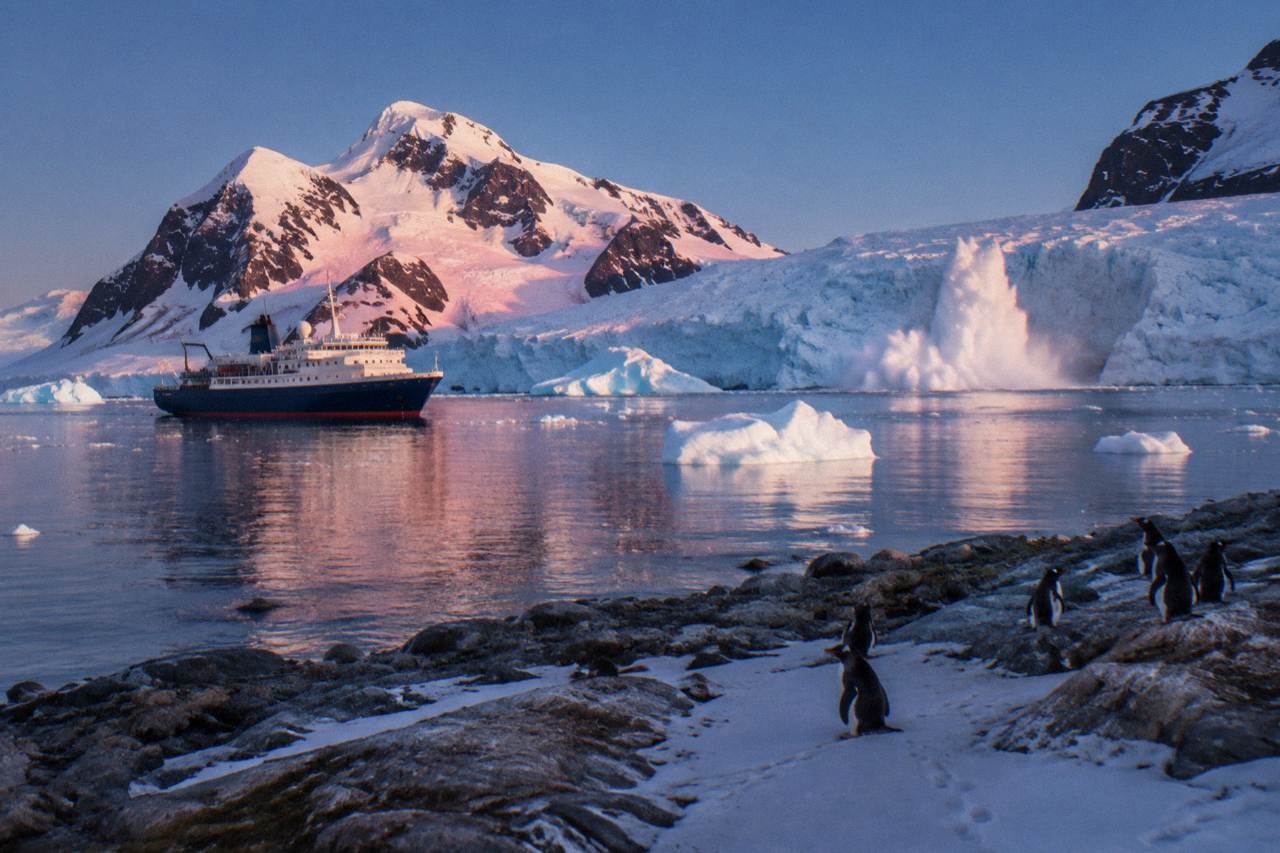
Why Are Expedition Cruises So Expensive?
Expedition cruises are expensive because the fare pays for a purpose-built ice-classed ship carrying a small number of passengers, a large expedition staff, Zodiacs and gear, and fuel and logistics in the most remote operating environment on earth. Published 2026-27 Antarctic Peninsula fares run from about $7,050 per person on small-ship budget vessels to $32,320 on luxury itineraries, and the spread reflects what each voyage includes rather than simple inflation.
The short answer is that you are not buying a cabin on a big ship. You are buying a berth on a vessel built or rebuilt to survive ice, carrying a fraction of the passengers a mainstream cruise ship holds, staffed by specialists, and sailing a thousand kilometres from the nearest supply port. Every one of those things costs money, and none of them can be diluted across three thousand passengers the way a Caribbean mega-ship spreads its costs.
The long answer is more interesting, because the price spread between ships is enormous and it maps cleanly onto what each fare actually buys. The cheapest published Peninsula fares in the 2026-27 season sit near $7,050 per person on Oceanwide Expeditions' Plancius, a converted Dutch Navy oceanographic vessel. At the other end, Ponant's Le Soléal lists a Ross Sea expedition from $32,320 per person. Between them sit dozens of ships at every price point, and understanding what drives the difference is the difference between overpaying and buying exactly the voyage you want.
This article walks through each cost driver in turn, with the real published fares from the 2026-27 season. If you are actively pricing a specific departure, a free consultation on your options costs nothing and carries no obligation.
What Are You Actually Paying For On An Expedition Cruise?
You are paying for access, not just accommodation: the fare covers a ship capable of reaching Antarctica, the staff and small craft that get you ashore, and the logistics of operating far from any port. A mainstream cruise ship spreads its costs over thousands of guests; an expedition ship carries between 80 and 200, so each berth carries a much larger share of the vessel's real cost of running.
Start with the arithmetic that governs everything else. Hondius, an Oceanwide Expeditions ship, carries 170 passengers in 80 cabins. Plancius carries 108. Antarctica21's Magellan Explorer carries 88 guests on air-cruises. Even the larger expedition vessels in the Antarctic fleet, such as Viking Octantis and Viking Polaris at 378 guests each, hold a fraction of the 3,000-plus passengers a mainstream mega-ship carries.
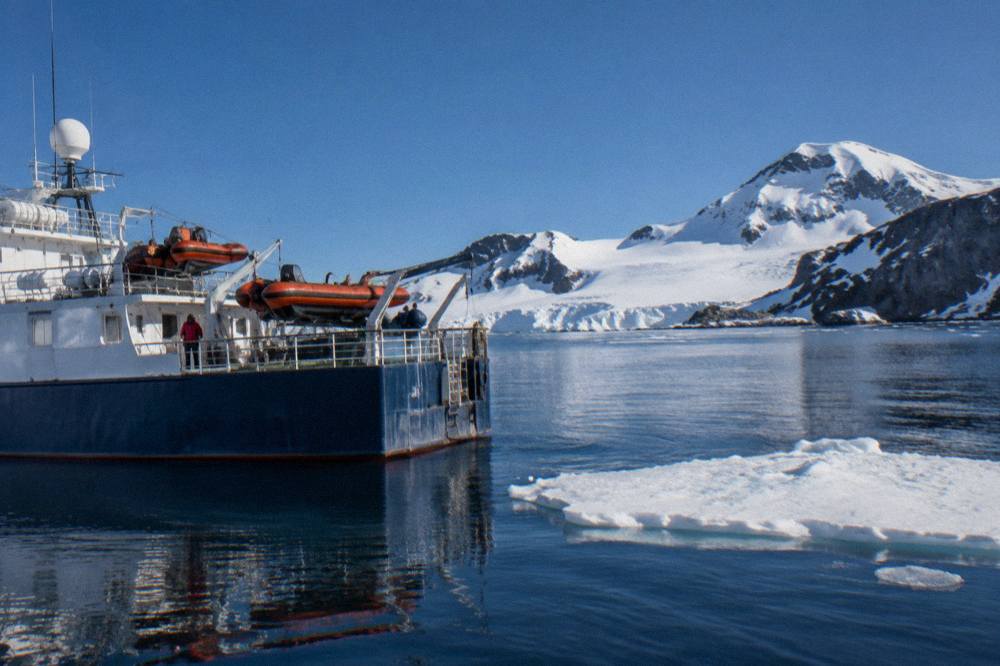
A cruise ship's biggest costs are the ship itself, its fuel, its crew and its maintenance. Divide those costs by 3,000 passengers and each one owes a small share. Divide the same kinds of costs by 108 passengers on a 89-metre vessel sailing to Antarctica, and each berth owes a great deal more. This is the single largest reason an expedition cruise costs multiples of a warm-water cruise of the same length.
There is a regulatory floor under the small numbers, too. IAATO rules, restated in ATCM Resolution 4 (2025), allow a maximum of 100 passengers ashore from a vessel at any one time, and vessels carrying more than 500 fare-paying passengers are prohibited from making landings in Antarctica at all. So a ship that wants to land its guests cannot be enormous, and a ship that is not enormous cannot spread its costs thinly. The rules that protect the continent also guarantee the price structure.
Why Do Ice-Classed Ships Cost So Much More To Build And Run?
Ice-classed and Polar Code hulls cost more to build, more to maintain, more to insure and more to fuel than ordinary cruise ships, and only a small global fleet qualifies. Hondius was the first-registered Polar Class 6 passenger vessel in the world; National Geographic Endurance and Resolution are PC5 Category A; Silver Endeavour carries a PC6 rating. That hardware premium is baked into every fare.
A Polar Code ship is not a normal ship with a thicker plate. Polar Class categories, set by the International Maritime Organization, impose structural requirements on the hull, the propeller, the rudder and the machinery spaces, along with cold-weather provisions for everything from lifeboats to fuel. Building to PC6 or PC5 means heavier steel, specialised systems and a shipyard capable of the work. The roster of ships that hold these ratings and carry passengers to Antarctica is short, which keeps demand for each berth high.
The table below shows how the hardware premium shows up across three very different ships at three price points:
| Ship | Operator | Passengers | Ice class | Published 2026-27 fare from |
|---|---|---|---|---|
| Hondius | Oceanwide Expeditions | 170 | Polar Class 6 | $7,800 pp |
| National Geographic Endurance | Lindblad Expeditions | 138 | PC5 Category A | $11,900 pp |
| Silver Endeavour | Silversea | 220 | PC6 | Fare needs a consultation |
Note what the last column does not say. Silversea does not publish a fare on its Antarctica pages, so no number appears; a current Silver Endeavour fare needs a consultation to pin down. The two published figures are real operator starting fares, and the gap between them is not primarily the hull. It is everything stacked on top of the hull, which is the subject of the next sections.
| Ship | Class | Passengers | Ice class | From, per person | Voyage length | Departs from |
|---|---|---|---|---|---|---|
| HondiusOceanwide Expeditions | Small-Ship Budget | 170 | Polar Class 6 | from $7,800 | 11 to 19 days | Ushuaia |
| National Geographic EnduranceLindblad Expeditions (with National Geographic) | Standard Expedition | 138 | PC5 | from $11,900 | 12 to 22 days | Ushuaia |
| Silver EndeavourSilversea | Luxury | 220 | PC6 | – | 6 to 13 days | King George Island, Puerto Williams |
How Much Do Staff, Zodiacs And Included Gear Add To The Fare?
A large share of an expedition fare buys the operation that gets you off the ship: Zodiacs, kayaks and sometimes helicopters, plus the guides and scientists who run them. IAATO requires a minimum 1:20 actively guiding staff-to-visitor ratio during landings, so every 100 guests ashore require at least five guides, and many ships carry well beyond the minimum.
Walk the deck of a Peninsula-bound expedition ship and count the things a mainstream cruise does not carry. Ultramarine carries two twin-engine Airbus H145 helicopters on two helidecks, an internal Zodiac hangar with 20 Zodiacs, and two ready rooms where passengers change into expedition gear. Ocean Explorer carries 15 Zodiacs. World Voyager carries 18. Those are not decorations; they are the tools of every landing, and they must be maintained, fuelled and crewed.
The staffing follows from the hardware. IAATO's ratio requirement means a ship cannot skimp on guides, and the industry's better-regarded lines staff above it. AE Expeditions plans 18 scientists across 11 of its 27 voyages for the 2026-27 season, focused on whale ecology, penguins, biodiversity and colossal squid research, according to a September 2026 industry report. Those specialists are on the payroll, and their salaries sit in the fare.
Then there is the gear. Most expedition operators provide a complimentary parka, often yours to keep, and loan waterproof boots, according to a 2026 cost guide. Lindblad bundles a pre-cruise Buenos Aires hotel, the charter flight to Ushuaia, alcoholic beverages, prepaid gratuities and an expedition jacket into its fare. When you compare a $11,900 starting fare against a $7,800 one, part of the difference is simply that one price includes things the other bills separately, or expects you to arrange yourself.
If you are weighing what a specific fare includes against another, compare inclusions before you commit through a free consultation; the differences are often worth more than the headline gap.
How Do Remote Logistics And Fuel Drive Up The Price?
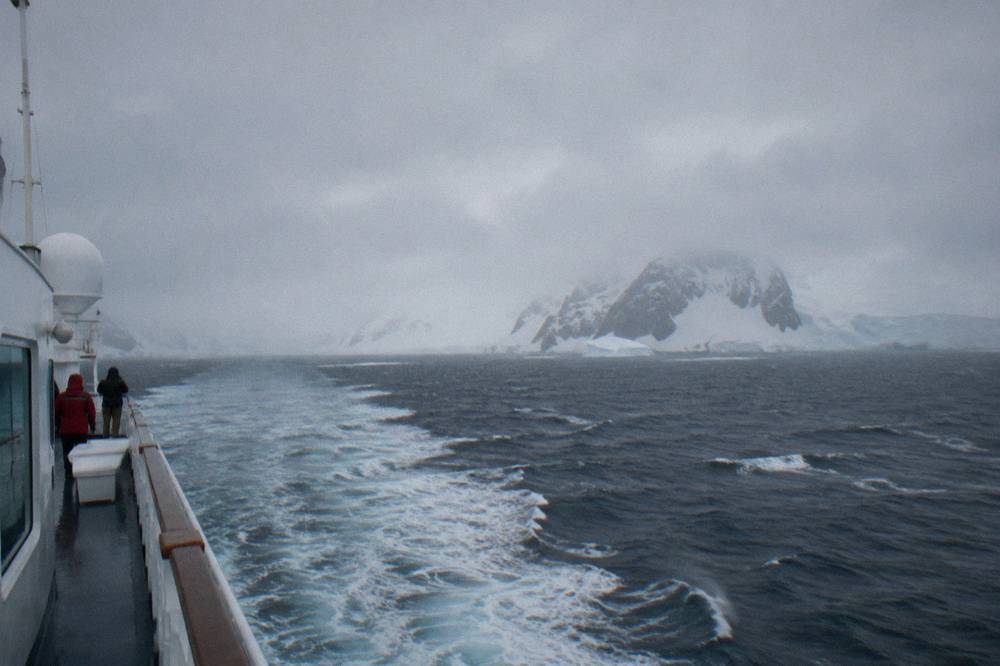
Antarctica has no ports, no bunkering and no supply chain, so every ship carries its fuel and provisions for the whole voyage and sails days from the nearest real port, which is usually Ushuaia. Fuel is a major operating cost, and a typical Drake Passage crossing alone takes roughly two days each way, which is two days of full-power steaming before the first landing is even possible.
The logistics chain explains a lot of the fare. Roughly 98 percent of all tourism voyages occur in the Antarctic Peninsula during the austral summer, according to the Antarctic Treaty Secretariat, and nearly all of them stage out of Ushuaia in Argentina or Punta Arenas in Chile. Ushuaia itself is at the end of a domestic flight corridor from Buenos Aires, with no direct US flights, so even the passengers' arrival logistics are expensive and weather-prone. The port had a heavy 2026 season, with reports of roughly 80 percent hotel occupancy in January amid the summer's cruise traffic.
Once the ship leaves Ushuaia, it is on its own. The Drake Passage crossing takes approximately two days each way on a classic Peninsula voyage, per operator guidance, so a 10- or 11-day itinerary contains about four days of pure transit. Those are four days of burning fuel, paying crew and serving meals with no landings to show for it. Some ships make the crossing faster in following conditions, and a fast crossing can take closer to a day, but nobody plans on it.
Fuel surcharges are rare or minimal in published 2026-27 pricing, according to operator comparisons, which means the fuel cost is simply inside the fare rather than added at the end. Insurance is another hidden line item: major operators impose high medical evacuation minimums and often require proof of cover before departure or at check-in, and travel insurance with medical evacuation cover is required or recommended by most operators and never included in the base fare. The remoteness that makes the trip extraordinary also makes every contingency expensive.
Is The Cheapest Antarctica Cruise Still An Expedition Cruise?
Yes, and the entry tier shows where the money goes. Oceanwide's Plancius lists Peninsula voyages from $7,050 per person, Hondius and Ortelius from $7,800, and G Adventures' Expedition from $7,439, all carrying the same Zodiacs, guides and landings as ships costing twice as much. The lower fares come from older, simpler ships and fewer included extras, not from a lesser Antarctic experience.
The budget tier is worth understanding because it isolates the irreducible costs. Plancius is a 1976-built converted Dutch Navy oceanographic vessel, rebuilt as a passenger ship in 2009, carrying 108 passengers. Ortelius is a former Russian research vessel built in Gdynia in 1989, also carrying 108. Neither has a spa, a helicopter or all-balcony suites. Both still cross the Drake, still launch Zodiacs, still land you at the same sites under the same IAATO rules, and still carry the guides those rules require.
Hondius sits at the top of this budget tier and is the clearest illustration of the principle. Built in 2019, it is a genuinely modern ship: the first-registered Polar Class 6 vessel in the world in the operator's own wording, 107.6 metres long, carrying 170 passengers in 80 cabins, sailing 11, 13 and 19-day voyages from Ushuaia. Its published Peninsula fares start at $7,800 per person, which is a fraction of the luxury lines' opening figures for the same waters and the same season.
The message for a reader pricing a first trip is that the expensive part of an expedition cruise, the ice-classed ship, the crew, the fuel and the landing operation, is present at every price point. What rises with the fare is comfort and inclusions: newer hulls, balconies, spas, included flights and drinks, helicopters and submarines. Whether those are worth doubling or quadrupling the fare is a personal question, not a safety question.
Where Do The Luxury Lines Justify Their Higher Fares?
Luxury operators charge two to four times the budget tier for the same destinations by adding suite accommodation, included flights and drinks, high crew-to-guest ratios and hardware such as helicopters, and by operating smaller or more exclusive vessels. Ponant's L'Austral lists Peninsula voyages from $18,700 per person and its Ross Sea Le Soléal expedition from $32,320, against Hondius at $7,800 for comparable Peninsula water.
Look at what the money buys at the top of the market. Silversea's Silver Endeavour carries 220 guests and a PC6 ice class rating and operates fly-cruise voyages from King George Island and Puerto Williams, some as short as six days, which means the fare includes charter aviation as well as the ship. Ponant's fleet, Le Boréal, Le Lyrial, L'Austral and Le Soléal, carries 245 to 264 passengers each and lists long-loop voyages: the Great Austral Loop on Le Boréal from $23,020, the same loop on Le Lyrial from $26,780, and the Ross Sea expedition from $32,320.
The luxury fare also buys scarcity. A six- or nine-day fly-cruise on Silver Endeavour compresses the whole Antarctic experience into a week by flying the Drake rather than sailing it, and fly-the-Drake options typically add roughly $2,000 to $5,000 over comparable sailing voyages due to charter flights, per operator comparisons (see Flying Over Antarctica). Antarctica21's Magellan Explorer and the new Magellan Discoverer run 8-day air-cruises from $13,795 per person, flying passengers from Punta Arenas to King George Island in about two hours. You pay for the days you do not spend at sea, and for the aircraft that make it possible.
None of this makes the luxury fare irrational. It makes it a different product. If your Antarctic cruise budget is a once-in-a-lifetime figure and your holiday time is short, a fly-cruise or a luxury suite may be the rational choice despite the price. If your priority is maximum time ashore per dollar, the budget tier wins on the arithmetic.
Can Timing, Cabin Choice Or Booking Strategy Lower The Price?
Yes, materially: early-booking offers for the 2026-27 and 2027-28 seasons commonly reach 10 to 30 percent off, entry-level berths in shared twin or triple cabins begin around $7,500 to $8,995 per person on Drake-crossing itineraries, and single supplements typically range from 25 percent extra to 1.5 to 2 times the twin rate. Peak December sailings book furthest ahead and discount least.
The cheapest berth on any given ship is a shared triple or quad, and the same voyage can vary by thousands of dollars purely on cabin category. A 2026 cost guide puts the realistic all-in budget for a 10- to 12-day mid-range Peninsula trip, fare plus flights plus gear plus tips plus insurance, at $12,000 to $25,000 per person. The fare is the biggest component but not the whole story, and the gap between a shared berth and a suite widens the all-in figure considerably.
Timing matters in two directions. Early booking secures better selection and rates, and peak December sailings can book 18 or more months ahead, while last-minute discounts exist but are limited in availability and cabin choice and are uncommon for peak departures. Operators also run seasonal promotions: one 2026 cost guide reports Atlas running savings of up to $6,779 per person plus onboard credit on 2026-27 departures, with fares scheduled to rise at the season boundary.
For solo travellers the supplement is the swing factor. Single supplements typically range from 25 percent extra to 1.5 to 2 times the twin rate, though some lines waive them on select sailings, and sharing options are often available in lower categories. If you travel alone, the supplement can move the total more than the choice of ship does, so it is worth checking before you fall in love with a specific vessel. A free consultation on solo pricing can surface the waived-supplement departures quickly.
Is An Expedition Cruise Ever Actually Good Value?
Measured per landing day rather than per night, an expedition cruise often compares well: the fare includes the Zodiac operation, the guiding, the gear and the meals that a land-based trip would bill separately, and no land-based alternative can deliver the same number of Antarctic landings. The 2025-26 season recorded 85,195 landed visitors, up about 6 percent from 80,455 the season before, which suggests the price is not deterring the people who want it.
The honest framing is that an expedition cruise is expensive and also hard to substitute. There is no hotel in Antarctica, no road in, and no way to buy the same access more cheaply; the IAATO vessel framework is the only practical door for a visitor. When you divide a $7,800 fare by the four to six landing days a classic Peninsula itinerary typically allocates in the South Shetland Islands and western Peninsula, the per-day figure starts to look like what a week of guided adventure travel costs anywhere genuinely remote.
Whether it is worth it is a question only you can answer, and other travellers answer it differently; travellers' accounts suggest the people who regret the price are rarely the ones who regret the trip. If you want help matching a budget to a specific ship and season, the team behind Cruises In Antarctica offers a free consultation with no obligation, and the roster pages on this site carry the published fares for every ship discussed here, including the Hondius guide and the Antarctica cruise cost breakdown.
Common Questions About Expedition Cruise Prices
Why Are Expedition Cruises So Expensive?
Because the fare covers a small ice-classed ship, a full expedition staff, Zodiacs and gear, and fuel and logistics in the world's most remote operating environment, divided among 80 to 200 passengers rather than thousands. Published 2026-27 Antarctic fares run from about $7,050 per person at the budget end to $32,320 at the luxury end.
What Is The Cheapest Antarctica Expedition Cruise?
The lowest published Peninsula fare in the 2026-27 season is on Oceanwide's Plancius, from $7,050 per person, followed by G Adventures' Expedition from $7,439 and Hondius and Ortelius from $7,800. These are shared-cabin starting fares on older, simpler ships that still make the same landings as vessels costing far more.
Why Do Luxury Expedition Ships Cost So Much More?
They add suite accommodation, included charter flights and drinks, high crew-to-guest ratios, and hardware such as helicopters and short fly-the-Drake aviation. Fly-cruise options typically add roughly $2,000 to $5,000 over comparable sailing voyages because of charter flight costs.
Do Expedition Cruise Prices Include Everything?
It varies by line. Lindblad bundles a pre-cruise hotel, charter flight, drinks, gratuities and a jacket; most operators provide a parka and loan boots. Travel insurance with medical evacuation cover is required or recommended by most operators and is not included in base fares.
Can You Reduce The Cost Of An Expedition Cruise?
Yes. Book a shared twin or triple cabin, target early-booking offers that commonly reach 10 to 30 percent off, avoid peak December departures, and check single-supplement policies if travelling alone, since supplements range from 25 percent extra to 1.5 to 2 times the twin rate.
Are Budget Expedition Ships Safe In Antarctica?
The ships that operate landings must meet Polar Code or equivalent ice-class standards and follow IAATO rules, including the 100-passenger landing cap and the 1:20 guide ratio. Older budget ships such as Plancius and Ortelius are fully certified for the same waters as the newest vessels.