Why Can't You Kneel In Antarctica?
 By Oleg G.
Antarctica has no police and no permanent residents, yet visitors are given strict instructions about how low they may get to the ground near wildlife. The rules come from the Antarctic Treaty system, IAATO guidelines and avian influenza biosecurity protocols, and every expedition cruise that makes landings enforces them.
Why Can't You Kneel In Antarctica?
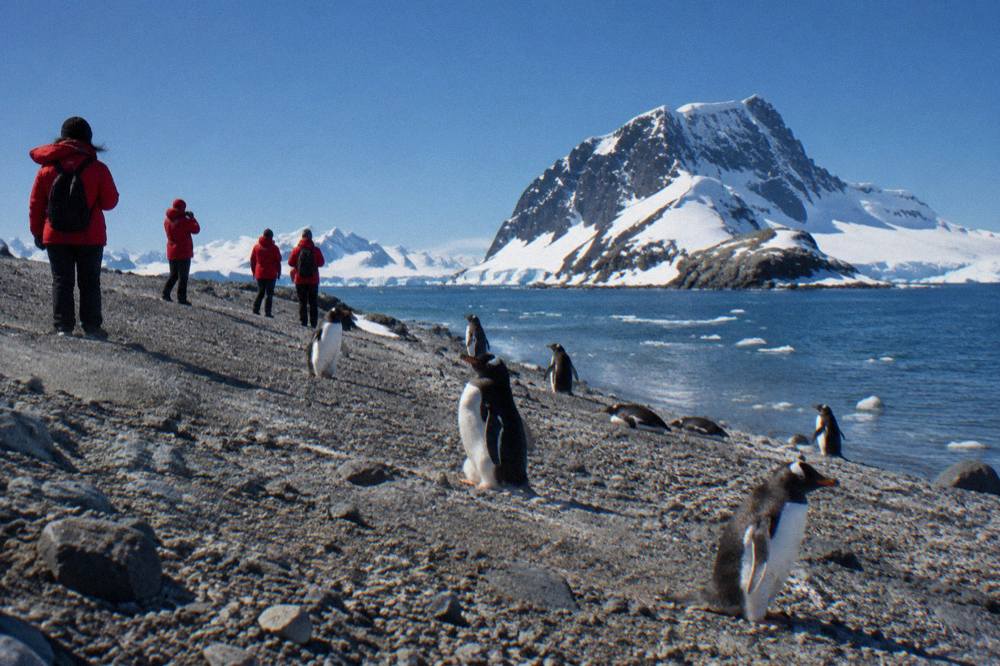
You are told not to kneel, sit or lie on the ground in Antarctica because of biosecurity and wildlife-disturbance rules, not because the continent is dangerous to touch. Under IAATO and Antarctic Treaty visitor guidelines, you must keep at least 5 metres from wildlife on land, and operators running enhanced avian influenza protocols ask guests not to sit, kneel or place bags on the ground in wildlife areas. The rules protect birds, seals and you.
The instruction surprises people. Antarctica is the one continent with no towns, no queues and no fences, so a first-time visitor reasonably assumes the freedom is total. Then, during the mandatory briefing on your expedition cruise, the expedition leader tells you not to get down on your knees for that eye-level penguin photograph, not to sit on the snow near a seal, and not to rest your backpack on the ground anywhere near wildlife. Some guests hear it as bureaucracy. It is not. It is a set of rules written in response to disease, disturbance and decades of accumulated experience about what happens when thousands of people a year step onto the same beaches.
The rules come from three directions at once. The Antarctic Treaty system produces general visitor guidelines that apply to everyone. IAATO, the International Association of Antarctica Tour Operators, turns those guidelines into operational procedures that its roughly 140 member operators must follow. And since the arrival of highly pathogenic avian influenza in the Southern Hemisphere, biosecurity protocols have added a further layer: pre-landing assessments and specific instructions about contact with the ground in wildlife areas. Your expedition cruise is the delivery mechanism for all three.
The scale behind the rule is worth understanding. IAATO recorded 85,195 landed visits in the 2025-26 season, plus 27,217 cruise-only passengers and 1,106 deep-field participants, for a total of 113,518 visitors. Nearly all of it concentrates on the Antarctic Peninsula during the austral summer: the Antarctic Treaty Secretariat notes that approximately 98 percent of tourism voyages occur on the Peninsula between October and April. A handful of beaches absorb a lot of boots, and every operator in the region coordinates through IAATO so that only one vessel visits a landing site at a time. If you are weighing which expedition cruise gives you real time ashore rather than a quick zodiac lap, a free consultation can narrow the options before you commit to a season and a ship.
What The Antarctic Treaty Guidelines Actually Say
The general visitor guidelines adopted under the Antarctic Treaty system say a maximum of 100 passengers may be ashore from a vessel at any one time, vessels with more than 500 passengers shall not make landings at all, and visitors must keep at least 5 metres from wildlife on land. They also require boots and equipment to be washed before arrival and cleaned again between sites.
Those four points are the skeleton of every landing you will ever make, and the sourced text is more specific than most travellers expect. The 5 metre rule appears in the ATCM general visitor guidelines: in general, keep at least 5 metres from wildlife on land, and species or site guidance may require more distance, for example around nesting birds or molting penguins. The biosecurity clause asks visitors to carefully wash boots and clean all equipment, including clothes, bags, tripods, tents and walking sticks, before bringing them to Antarctica, and to clean again between sites. The same document sets the 100-passenger cap and the one-vessel-per-site coordination rule.
Notice what is not in the treaty text: a clause that says "do not kneel". The treaty guidelines govern distance and hygiene. The kneeling instruction, where you hear it, comes from the operator-level application of those principles, and from avian influenza protocols that specifically address sitting, kneeling and contact with the ground in wildlife areas. That distinction matters for honesty. If a source only says operators discourage getting low near animals as stated, then that is what you should expect on your voyage: a briefing instruction grounded in biosecurity, not a treaty article with a penalty attached.
| Rule | What the sourced guidance says | Where it comes from |
|---|---|---|
| Wildlife distance | Keep at least 5 metres from wildlife on land; more where site or species guidance requires it | ATCM general visitor guidelines |
| Passengers ashore | Maximum 100 passengers ashore from a vessel at any one time, unless site guidance requires fewer | ATCM general visitor guidelines |
| Ship size | Vessels with more than 500 fare-paying passengers shall not make landings in Antarctica | ATCM Resolution and IAATO standards |
| Site coordination | Only one ship may visit a site at any one time | ATCM general visitor guidelines |
| Biosecurity | Wash boots and clean clothes, bags, tripods, tents and walking sticks before arrival and between sites | ATCM general visitor guidelines |
| Ground contact | No sitting or kneeling on the ground in wildlife areas under enhanced HPAI biosecurity protocols | Operator protocols referenced in 2025-26 season updates |
The guide-to-visitor ratio completes the picture: IAATO requires a minimum of one actively guiding staff member for every 20 visitors during landings. On a ship carrying 170 guests, that means at least nine staff walking the landing with you, and one of their jobs is watching how people behave around animals. The general visitor guidelines poster is the primary document behind all of this, and it is worth reading before your voyage so nothing in the briefing comes as a surprise.
How Bird Flu Changed The Way Landings Work
Since highly pathogenic avian influenza reached the Southern Hemisphere, Antarctic operators have run enhanced biosecurity protocols: pre-landing assessments, stricter boot and gear disinfection, and specific instructions against sitting, kneeling or lying on the ground in wildlife areas. No widespread site closures were reported for the 2025-26 or 2026-27 seasons, but the ground-contact rules remain in force.
This is the part of the answer most people miss. The kneeling instruction is not primarily about penguins feeling crowded. It is about a virus. Highly pathogenic avian influenza, HPAI, reached South America and the sub-Antarctic in recent seasons and caused mass mortality in seabird and seal colonies. Antarctica's wildlife has never been exposed to it, so a single introduction on a boot sole or a backpack strap is the scenario every operator plans against. Kneeling puts your clothing, your skin and your gear in direct contact with snow, guano and soil exactly where sick birds may have been.
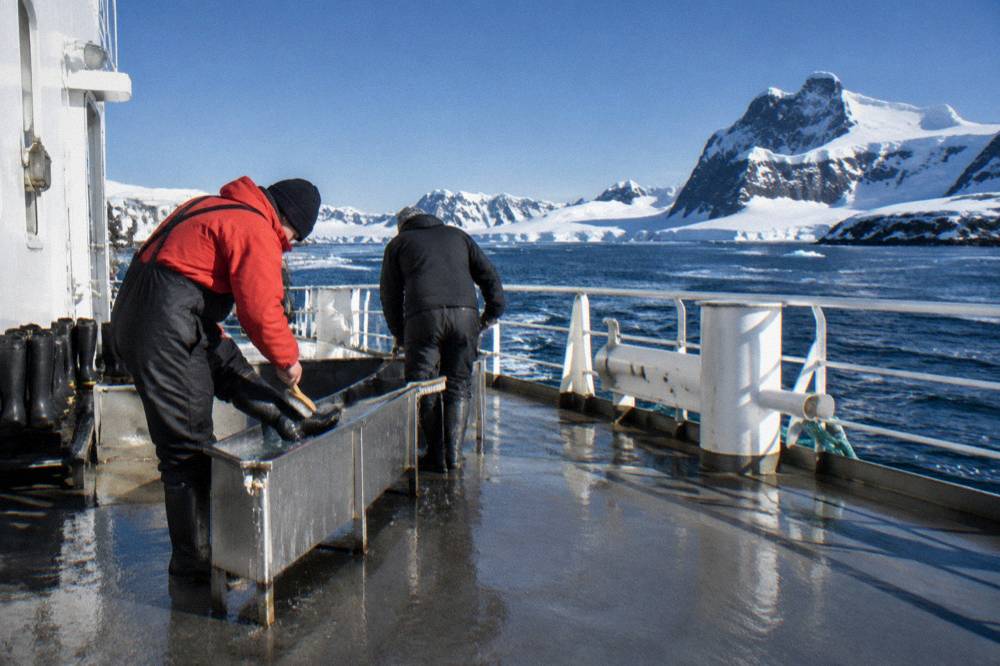
The protocols that follow are practical. Before every landing, expedition teams assess the site for signs of disease or unusual wildlife mortality. Boots are disinfected between every single landing, going ashore and coming back, not just once per day. Gear that touched the ground gets cleaned. And guests are asked not to sit, kneel or place items on the ground in wildlife areas, because the ground is the contaminated surface the protocols are trying to keep clean in both directions: your germs must not reach the colony, and the colony's germs must not ride back to the ship on your knees.
If this changes how you picture a landing, it should. The classic photographs of travellers sitting among penguins date from an era before HPAI reached these latitudes. Today's landing is a standing affair, or a crouch that keeps your clothing off the ground, with the 5 metre buffer doing most of the work. The pre-landing briefing is where the trip stops being a sightseeing run and becomes a carefully managed entry into someone else's habitat, and that framing changes how you watch the wildlife. For a fuller picture of what is restricted ashore, see what is not allowed in Antarctica, which covers drones, food and approach rules in one place.
What Counts As Disturbing Wildlife?
Disturbance in the sourced guidance means anything that changes an animal's behaviour: approaching closer than 5 metres, surrounding or cutting off its path to the water, touching, feeding, or using drones near wildlife. Nesting birds, molting penguins and animals showing stress require greater distances, and the guideline says you must give wildlife the right of way.
The 5 metre figure is a floor, not a target. The guidelines phrase it as a minimum, with species and site guidance sometimes demanding more, and the reason is that distance is the only tool that reliably prevents behavioural change. A penguin that stops walking to stare at you has already altered its behaviour. A seal that lifts its head, or a nesting bird that stands up, is spending energy it would otherwise conserve. Multiply that by dozens of visitors a day at a busy site and a colony can lose real foraging and resting time, which is why the rules lean conservative.
Kneeling interacts with disturbance in a second way. Getting low makes you smaller in silhouette, which sounds kind, but it also puts you at eye level with ground-nesting birds and at nose level with fur seals, and it dramatically extends the time you spend stationary in one spot. A person who kneels for a photograph tends to stay kneeling, and a stationary human near a penguin highway is an obstacle the birds must route around. The sourced guidance does not describe kneeling as a disturbance category by name; it addresses distance, movement and behaviour. Operators translate those principles into the instruction you hear in the briefing.
The behaviour list that the guidelines do name is worth knowing before you board any Antarctic expedition cruise:
| Behaviour in the guidance | Why it matters |
|---|---|
| Keep at least 5 metres from wildlife | Prevents behavioural change; site rules may demand more |
| Give wildlife the right of way | Animals must never have to detour around you |
| Never touch, feed or handle animals | Contact stresses animals and spreads disease in both directions |
| No drones near wildlife | Aerial approach causes panic responses in colonies |
| Do not surround animals or block access to water | Escape routes must stay open at all times |
| Clean gear between sites | Biosecurity, the same clause behind the ground-contact rules |
None of this is theoretical. IAATO launched its Antarctic Expedition App in September 2025, replacing the older Polar Guide app, to put the Field Operations Manual, wildlife guidance and biosecurity procedures on every expedition team member's phone, offline. The rules you hear on the beach are the same ones your guides are reading on the ship, and the IAATO announcement describes exactly what the app carries. When a guide asks you to stand up and step back, they are applying a documented standard, not a personal preference.
How Close Can You Actually Get To Penguins?
The sourced rule is 5 metres from wildlife on land, with greater distances where site or species guidance requires it, and penguins do not know the rule. If a penguin approaches you, the guidance still expects you to hold your position and avoid encouraging contact, and your expedition team will manage the situation on the landing.
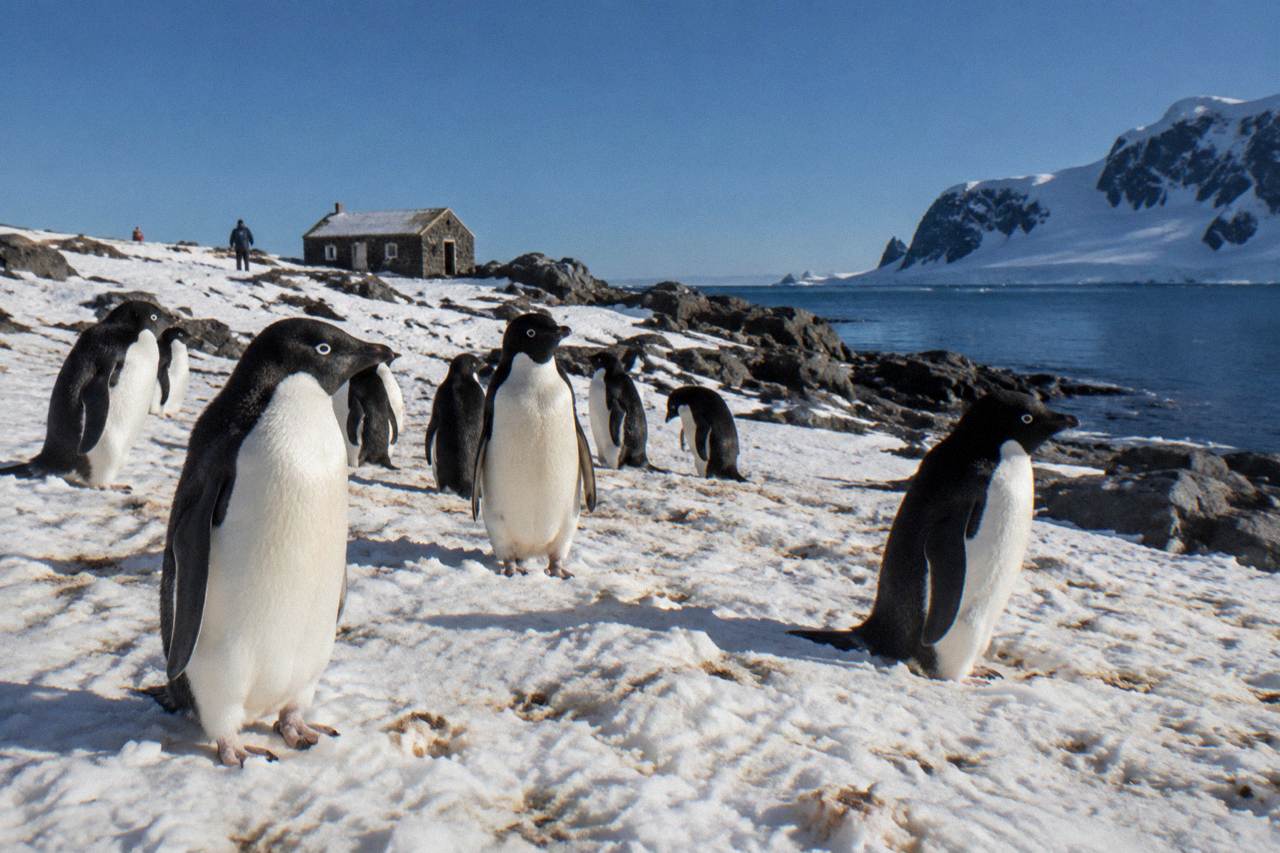
This is the question everyone eventually asks, and the honest answer has two halves. The rule half is simple: 5 metres minimum, more for nesting or molting animals. The reality half is that penguins are curious, territorial and completely unable to read IAATO guidelines. Gentoo and chinstrap penguins in particular will sometimes walk straight past a stationary group of visitors, and Adélie penguins on their stone highways will follow the same route day after day regardless of who is standing on it. When that happens, the animal controls the distance, and the visitor is expected not to close it further, not to reach out, and not to move toward the bird.
The kneeling question resurfaces here, because the eye-level penguin portrait is the single most requested photograph in Antarctica, and the 5 metre rule makes it hard to achieve while standing. Some photographers work with a long lens from a respectful distance. Others accept the composition they can get. What the rules do not permit is closing the gap yourself, and operators running HPAI protocols add the ground-contact restriction on top. A zodiac cruise can be the better answer for low-angle wildlife images: you shoot from near the water, the animals are at eye level already, and you never set foot in the colony at all.
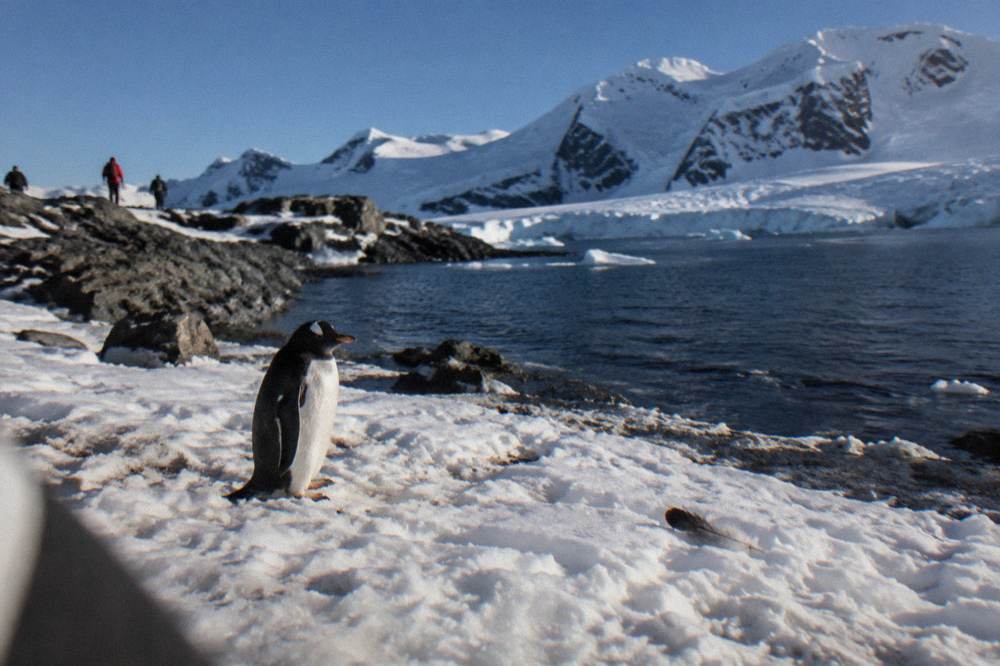
Site selection shapes how much of this you experience. Popular landing sites with current or recently updated ATCM and IAATO visitor guidelines include Whalers Bay and Baily Head on Deception Island, Half Moon Island, Neko Harbour and Port Lockroy, and each has its own approach distances, boundaries and capacity limits under Resolution 3 adopted at ATCM 48. If your priority is wildlife time rather than scenery, the choice of landing sites matters as much as the choice of ship, and an expert consultation can map itineraries to sites before you book anything.
What Happens If You Break The Rules On A Landing?
Nothing dramatic, and that is by design. There is no Antarctic police force; enforcement happens through your expedition team, who will correct behaviour on the spot, and through IAATO's operator framework, which audits compliance. Persistent disregard on a landing can end your shore time for the voyage, because the operator, not the visitor, answers to the treaty system.
The enforcement chain is the part outsiders find hardest to picture. The United States, like other Antarctic Treaty parties, requires nongovernmental operators, including tour operators, to submit environmental documentation to the EPA before running expeditions. The operator therefore carries the legal and reputational responsibility for what happens ashore. IAATO membership binds the operator to the field procedures, and IAATO coordinates the ship scheduler so that sites are not double-booked. Your guide with the radio on the beach is the last and most visible link in that chain.
In practice, corrections are quiet. A guide asks you to step back. A staff member repositions the group before the birds arrive. On rare occasions a guest who repeatedly ignores instructions is asked to stay on the ship for subsequent landings, and the expedition leader has full authority to do that. The system works precisely because almost everyone complies: the 85,195 landed visits in 2025-26 happened without widespread site closures, and the season ran under enhanced biosecurity protocols rather than lockdowns. The EPA page on Antarctic environmental documentation shows the regulatory layer that sits above all of it.
For travellers, the practical takeaway is that your conduct ashore is a condition of your voyage, written into the booking terms of every serious expedition cruise. You are not signing up to be policed; you are signing up as a temporary guest in a system that has kept Antarctic tourism functioning for decades. If that level of structure appeals to you, the kind of small-ship expedition cruise that takes these rules seriously is described in the guide to the Antarctic expedition cruise elsewhere on this site.
Which Ships Run The Landings Where This Matters?
The kneeling and distance rules apply on every vessel that makes landings, but they matter most on small expedition ships, where all guests go ashore in rotations and landing time is the core product. Ships like Hondius, National Geographic Endurance and Ocean Explorer all operate under the same IAATO framework, with different capacities, ice classes and price points.
Hondius, operated by Oceanwide Expeditions from Ushuaia, is a useful reference point for how the rules meet reality. She carries 170 guests in 80 cabins, was the first vessel in the world registered to Polar Class 6 in the operator's own wording, and runs 11, 13 and 19 day Peninsula voyages with fares from $7,800 per person. With 170 guests and the 100-passenger ashore cap, landings run in two rotations, and the 1:20 guide ratio means a substantial expedition team walks every beach. The kneeling instruction you hear in her briefing is the same one you would hear on any IAATO vessel.
Compare that with two ships from different tiers of the market. National Geographic Endurance, from Lindblad Expeditions with National Geographic, carries 138 guests, holds Polar Code PC5, and lists a 12 day Voyage to Antarctica from $11,900 per person, with the operator bundling a pre-cruise Buenos Aires hotel, charter flight to Ushuaia, alcoholic beverages, prepaid gratuities and an expedition jacket. Ocean Explorer, sailing with Quark Expeditions, carries 138 guests with an ice class of 1A and PC6, carries 15 zodiacs, and shares Quark's voyage-level fares, with Antarctic Explorer departures listed from $12,236 per person. All three run the same biosecurity and distance rules; what differs is cabin style, inclusions and how the landing rotations are scheduled.
| Ship | Class | Passengers | Ice class | From, per person | Voyage length | Departs from |
|---|---|---|---|---|---|---|
| HondiusOceanwide Expeditions | Small-Ship Budget | 170 | Polar Class 6 | from $7,800 | 11 to 19 days | Ushuaia |
| National Geographic EnduranceLindblad Expeditions (with National Geographic) | Standard Expedition | 138 | PC5 | from $11,900 | 12 to 22 days | Ushuaia |
| Ocean ExplorerQuark Expeditions | Upscale Expedition | 138 | 1A, PC6 | from $12,236 | 8 to 20 days | Ushuaia, Buenos Aires, Punta Arenas |
The ship choice therefore does not change the rules, but it changes how much the rules shape your day. On a 90 to 170 guest ship, everyone gets ashore at every landing, often twice a day. On vessels carrying more than 500 passengers, nobody gets ashore at all, because those ships are prohibited from making landings, which is why the cruise-only category exists at all: 27,217 passengers in 2025-26 saw Antarctica from the deck. If landings are the reason you are going, the ship's guest count is the first number to check, and the Hondius guide page on Cruises In Antarctica breaks down what a 170 guest ship does differently.
How Do You Choose A Voyage With Good Landing Time?
Check three numbers before anything else: the guest count, which sets how many rotations each landing needs; the number of voyage days spent on the Peninsula rather than crossing the Drake Passage; and the operator's staff-to-guest ratio, which must be at least 1:20 under IAATO rules. Then match the season to the wildlife you want, because landing rules and wildlife timing interact.
Landing time is the scarcest commodity on any Antarctic voyage, and the arithmetic is unforgiving. A ship carrying 170 guests needs two rotations per landing under the 100-passenger cap. A classic Peninsula itinerary typically allocates four to six days for landings in the South Shetland Islands and the western Peninsula, while Falklands, South Georgia and Peninsula combinations run 20 to 23 days. The more landing days you have, the more forgiving the schedule is when weather cancels a morning, and weather does cancel mornings.
Seasonality is the second filter. Penguin chicks typically begin hatching mid-December on the Peninsula, most channels and inlets become ice-free by January, and whale sightings, especially humpbacks, increase from mid-January onward. November brings maximum snow cover and courting penguins but temperatures that can drop to minus 5 degrees Celsius on the Peninsula, which is also when the most impressive sea ice breakup appears. February and March peak for whale watching and Antarctic Circle crossing attempts. None of this changes the kneeling rules, but it changes what you will be standing behind the 5 metre line looking at.
The third filter is the crossing itself. Traditional ship crossings of the Drake Passage take roughly two days each way, while fly-cruise options use a charter flight of roughly two hours from Punta Arenas to King George Island, skipping the passage entirely at the cost of weather dependence and typically a higher fare. Some travellers split the difference with sail-one-way, fly-the-other hybrid itineraries. Each choice trades days at sea for landing days, and the right answer depends on your budget, your sea legs and how much of the voyage you want to spend on the Peninsula itself. That is a genuinely individual decision, and a free Antarctica cruise consultation exists precisely to work through it with real schedules in front of you.
One last practical note. The rules you will be asked to follow, including the ground-contact instruction, are printed in the voyage handbook of every IAATO operator and repeated in the pre-landing briefing, so there is no situation in which you are expected to know them cold. Bring waterproof boots that can be disinfected, accept that the parka and loaner boots most operators provide will be scrubbed between every landing, and plan your photographs around standing compositions. The penguins will come close enough on their own.
Common Questions About Kneeling In Antarctica
Why Can't You Kneel In Antarctica?
Visitor guidelines require at least 5 metres from wildlife on land, and operators running enhanced avian influenza biosecurity protocols ask guests not to sit, kneel or lie on the ground in wildlife areas, because ground contact spreads disease in both directions and disturbs animals. The instruction is an operator-level application of Antarctic Treaty and IAATO guidance.
Is Kneeling On The Ground In Antarctica Illegal?
No single law bans kneeling. The Antarctic Treaty system sets binding principles and visitor guidelines, IAATO turns them into operational rules for member operators, and your expedition team enforces them as a condition of your voyage. Persistent non-compliance can cost you shore time on your own cruise.
How Far Must You Stay From Penguins In Antarctica?
The sourced guideline is at least 5 metres from wildlife on land, with greater distances where site or species guidance requires it, for example around nesting birds or molting penguins. If a penguin approaches you, hold still and do not close the gap yourself.
Why Do You Have To Wash Boots Between Landings?
The general visitor guidelines require boots and all equipment, including clothes, bags, tripods and walking sticks, to be cleaned before arrival and again between sites. Since avian influenza reached the region, disinfection between every landing has become standard practice on expedition ships.
Can You Sit Down Anywhere In Antarctica?
Operators may permit sitting on rock or snow well away from wildlife areas and landing zones, at the discretion of the expedition team, but under enhanced biosecurity protocols the default instruction is no sitting, kneeling or lying on the ground in wildlife areas. Follow the briefing for each specific site.
Do These Rules Apply On Every Antarctica Cruise?
They apply on every voyage that makes landings, because all landing operators work under the same IAATO framework. Ships carrying more than 500 passengers cannot make landings at all, so their guests experience Antarctica from the deck and never face the kneeling question.