Why Can't You Fly Over Antarctica Today?
 By Oleg G.
There is no scheduled airline route across Antarctica and no mainstream sightseeing overflight product. The flight that does exist is a two-hour charter from Punta Arenas to King George Island, and it exists to feed expedition cruises, not to replace them.
Why Can't You Fly Over Antarctica Today?
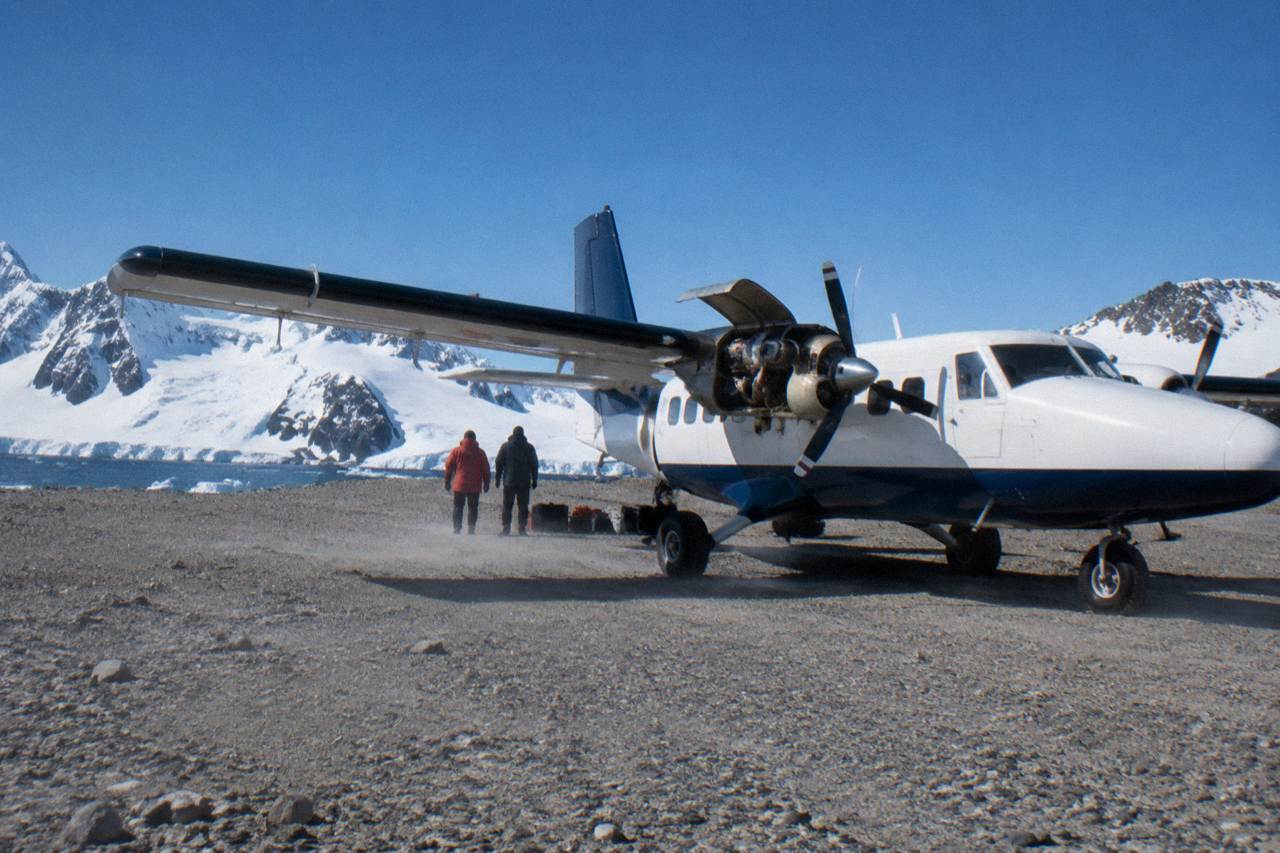
You cannot fly over Antarctica as a paying sightseer because no mainstream overflight product exists: there are no scheduled passenger routes across the continent, no tourist infrastructure at inland airstrips, and weather that changes too fast for reliable sightseeing schedules. What does exist is the fly-cruise: a roughly two-hour charter flight from Punta Arenas to King George Island that connects to an expedition cruise, a model operators have run since 2003.
The question usually arrives after someone looks at a globe and notices something odd. Every other continent has flight paths criss-crossing it. Antarctica has almost none. A handful of research and logistics flights cross the interior each season, and private adventure flights occasionally overfly the coast, but neither is something a traveller can book the way they book a scenic flight over Iceland or a glacier in Alaska. The gap is real, and it has specific causes rather than a single ban.
The first cause is demand shaped like a map. Roughly 98 percent of Antarctic tourism voyages happen on the Antarctic Peninsula during the austral summer, according to the Antarctic Treaty Secretariat's tourism page, and the Peninsula is the part of the continent closest to the South American gateway towns. That is where the expedition cruise industry built its entire operation: Ushuaia in Argentina for sailing departures, Punta Arenas in Chile for fly-cruise departures. Nobody built a parallel air-tourism network because nobody needed one.
The second cause is what the continent itself does to aircraft. We will get into the weather in detail further down, but the short version is that Antarctic flying conditions are hostile enough that even national Antarctic programs treat flights as flexible events, not fixed schedules. A sightseeing product needs to depart on the day it promises. Antarctica rarely promises anything.
There is also a regulatory and environmental layer. Antarctic tourism operates under the Antarctic Treaty system and IAATO's framework, which governs landings, vessel sizes and site conduct. The rules that exist are built around ships and shore visits; the framework for regular commercial overflights of the interior simply never developed, because the demand never justified building one.
So the honest answer to the question is not "you can't fly to Antarctica." You can, and thousands of people do each season on fly-cruise charters. The accurate statement is that you cannot fly over it as a mainstream tourist product, and the flight that does exist is a shuttle, not a tour. The rest of this article is about that shuttle: what it is, why it works, what it costs, and when it is the right way to start an Antarctica expedition cruise.
What Flying To Antarctica Actually Looks Like Today
The only mainstream tourist flight to Antarctica is the fly-cruise charter: a roughly two-hour flight from Punta Arenas to King George Island in the South Shetlands, followed by boarding an expedition ship already waiting there. Antarctica21 has run this air-cruise model since 2003, and several operators now offer versions of it. The flight is a means to reach a cruise, never a standalone sightseeing tour.
King George Island sits just off the northern tip of the Antarctic Peninsula, and it hosts the Teniente R. Marsh airstrip, a Chilean-run gravel runway that serves research bases and, in the summer season, tourist charters. The flight from Punta Arenas takes about two hours, and it replaces what would otherwise be roughly two days of sailing each way across the Drake Passage. That is the entire commercial logic: the flight does not show you Antarctica from the air as an experience in itself, it deletes four days of open-ocean transit from your itinerary.
Antarctica21's journal is explicit about the model: the air-cruise exists to skip the Drake Passage seas, using roughly two-hour flights to and from King George Island. The Chilean tourism board's own description of the product, published in late 2026, frames it the same way, an 8-day, 7-night Classic Antarctica air-cruise running November to early March with the charter flight as the gateway. The ship, not the plane, is the destination vehicle.
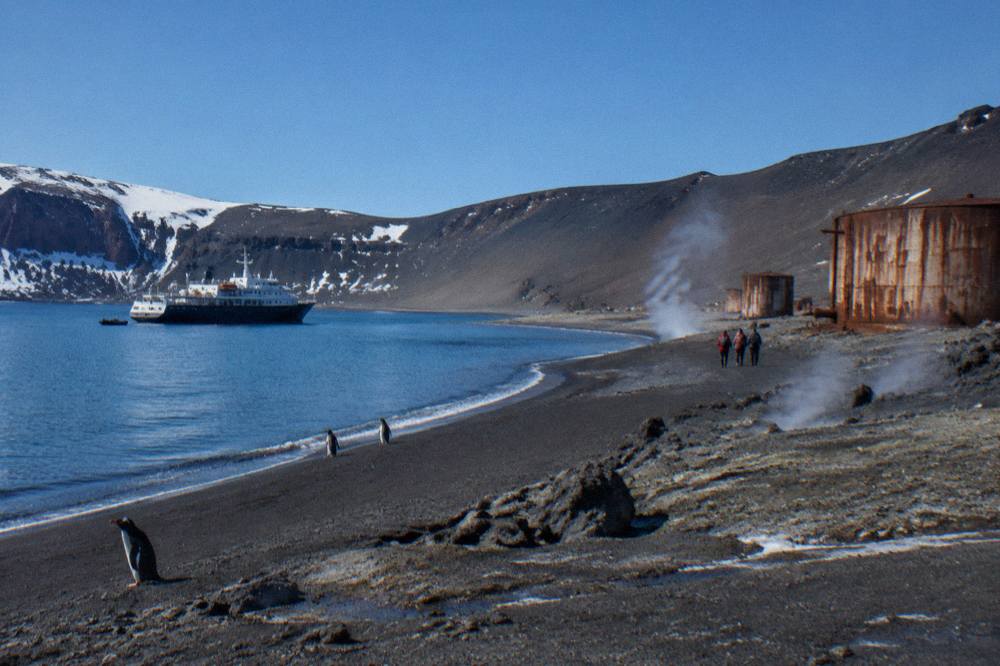
The practical details are stricter than a normal flight. Polar Latitudes, one of the operators running fly-cruise programs, requires guests to arrive at a designated Punta Arenas hotel by 14:00 the day before the charter, and applies a 20 kg checked baggage limit on the Punta Arenas to King George Island leg. The pre-flight day includes briefings and biosecurity gear checks, which are mandatory under IAATO rules: boots, bags, clothing and equipment must be cleaned before being brought into Antarctica, and cleaned again between landing sites.
The flagship ship for this model is the Magellan Explorer, an Antarctica21 vessel purpose-built for air-cruises. It carries 88 guests on air-cruise departures, was built in 2019, holds an LR PC6 ice class, and offers seven cabin categories plus a kayak program. Its Classic Antarctica air-cruise runs 8 days and 7 nights, with fares starting from $13,795 per person. For the 2026-27 season it is joined by a sister ship, the Magellan Discoverer, which the operator describes as its newest ship, entering its first Antarctic season.
If you are weighing whether the fly-cruise premium is worth it against a classic sailing voyage, the honest comparison depends almost entirely on how you feel about the Drake Passage, and a free consultation on fly-cruise options is the fastest way to lay your own odds against the fare difference. The consultation costs nothing and comes with no obligation; it simply matches your dates, budget and tolerance for open ocean against the departures that actually fit.
Why Sightseeing Overflights Never Became A Product
No operator sells mainstream sightseeing overflights of Antarctica because the economics and the environment both fail: the continent has no tourist air infrastructure outside one gravel airstrip, the interior is hours of flight from any gateway airport, and Antarctic weather cancels flights often enough that a fixed-date scenic product could not honour its own schedule. The fly-cruise charter survives precisely because the ship waits, and the itinerary absorbs delays.
Break that down. A sightseeing flight needs an aircraft, a departure point, a route, a paying load of passengers and a schedule it can keep. Antarctica supplies none of the supporting infrastructure. The gateway airports, Punta Arenas and Ushuaia, are small cities at the bottom of South America; the Antarctic interior is a further four to five hours of flight time away in each direction for most of it, over terrain with no diversion airports, no fuel stops and no emergency landing options worth the name.
Compare that with the one flight that does work commercially. Punta Arenas to King George Island is about two hours, the destination airstrip sits beside research bases with personnel and basic medical support, and the passengers are not buying the flight, they are buying a cruise the flight happens to start. If weather delays the charter by a day, the cruise program reshuffles and the passengers still get their Peninsula landings. A sightseeing overflight has no such shock absorber: if the flight cannot go, the product is simply cancelled, and cancelled products do not survive in a seasonal market.
The historical record matters too. Sightseeing overflights of Antarctica were attempted in the era of scheduled scenic flights from New Zealand and Australia, and one ended in a fatal crash on Mount Erebus when an Air New Zealand sightseeing flight struck the volcano in whiteout conditions, killing everyone aboard. That accident ended the era of scheduled Antarctic sightseeing flights. Nothing has replaced them at scale since, and no operator in the current IAATO framework offers an overflight as a bookable mainstream product.
There is also the question of what you would actually see. The Antarctic Peninsula, where all the famous scenery and wildlife sit, is a coastal strip best experienced at sea level, from a Zodiac, at the five-metre wildlife distance IAATO requires. From cruising altitude the penguin colonies are dots. The interior, the parts genuinely worth overflying, are far from any gateway and are buried in the same weather systems that make the whole continent an aviation challenge. The product that answers the demand is the expedition cruise, and the industry built that instead.
For a sense of how the two halves of the market compare, our guide on flying versus sailing the Drake works through the trade-offs in full, and the blog piece on which option ends up cheaper runs the actual numbers.
The Weather Problem: Why Antarctica Has No Reliable Flight Corridor
Antarctic flight operations are constrained by weather that changes faster than schedules can absorb: katabatic winds, whiteout conditions, rapidly forming cloud and fog at coastal airstrips, and extreme cold that affects both aircraft performance and runway condition. Even national Antarctic programs, with decades of experience, treat flights as weather-permitting events. A commercial sightseeing schedule cannot be built on weather-permitting.
The Teniente R. Marsh airstrip on King George Island is the clearest example. It is a gravel runway in one of the windiest corners of the planet, and fly-cruise operators plan their entire itineraries around the possibility that the charter cannot fly on its scheduled day. Passengers are told, before booking, that weather delays are part of the product: the flight may leave late, or a sailing departure may be substituted if the window closes entirely. Operators publish this openly because it happens regularly enough that hiding it would be dishonest. Other pages covering the same trip are gathered on Cruises In Antarctica.
The Drake Passage, which the flight replaces, has its own statistics, and they explain why the fly-cruise exists despite the weather risk. Sailing crossings take about two days each way, though conditions can compress or stretch that: Quark's operator guidance says passages run 18 to 24 hours in optimal conditions and 36 to 48 hours in rougher seas. The rough-versus-calm split is roughly 30 percent "Drake Shake" to 70 percent "Drake Lake" according to one geographical analysis of the passage. Neither mode is dangerous for a modern expedition ship, but four days of transit is four days not spent landing on the Peninsula.
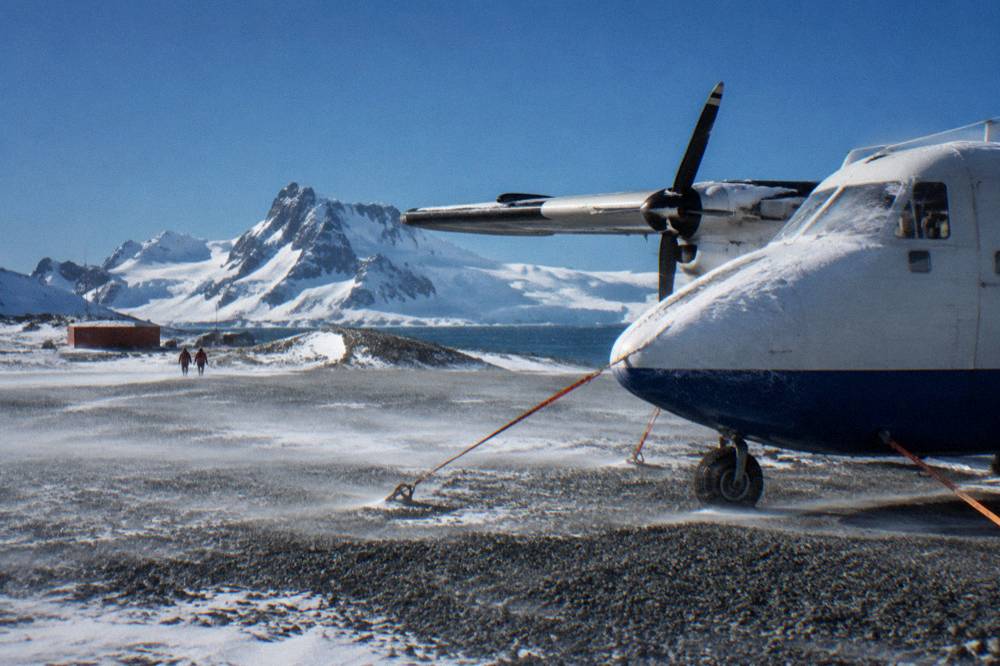
The interior is worse than the coast, not better. Katabatic winds, gravity-driven air currents that pour down from the polar plateau, can reach hurricane force with almost no warning, and they are a defining feature of continental Antarctica. Whiteout conditions remove the horizon entirely, which is the specific condition implicated in the Erebus disaster. These are not edge cases in Antarctic aviation; they are the operating environment, and they are why the research programs that do fly the interior use ski-equipped aircraft, flexible windows and contingency plans measured in days.
This is also why the fly-cruise is weather-dependent even though it avoids the Drake's seas. You trade sea state for sky state. The trade is usually worth it for travellers with limited days or a strong preference against open-ocean crossing, and usually not worth it for travellers who want the maximum number of days on the Peninsula per dollar, since fly-cruise fares carry a premium over comparable sailing voyages, commonly cited at roughly $2,000 to $5,000 per person for the charter flight component.
If your decision hinges on how your dates line up with the season and the flight windows, talk through the timing with a specialist before committing. November and March departures face different weather profiles from midsummer ones, and the consultation is free.
Fly-Cruise Vs Sailing The Drake: What Each Costs In Time And Money
A classic sailing expedition cruise from Ushuaia spends about four of its 10 to 12 days crossing the Drake Passage round-trip, with entry fares on the roster starting from $7,050 per person. A fly-cruise deletes those four days, compressing the trip to about 8 days, at fares from $13,795 per person on the Magellan Explorer. You pay a premium to buy back time.
Here is the comparison in numbers, using verified roster fares for the 2026-27 season.
| Factor | Sailing expedition cruise | Fly-cruise air-cruise |
|---|---|---|
| Gateway | Ushuaia | Punta Arenas |
| Drake transit | Roughly 2 days each way by sea | About 2 hours by charter flight |
| Typical length | 10 to 12 days | 8 days |
| Roster entry fare | From $7,050 pp (Plancius) | From $13,795 pp (Magellan Explorer) |
| Weather exposure | Sea state on the crossing | Flight delays at both ends |
| Time on the Peninsula | Fewer days in the full trip | More of the trip on the Peninsula |
| Baggage | Normal ship limits | 20 kg checked on the charter leg |
Two honest caveats belong beside that table. First, the sailing fare is for a longer voyage, so the per-night comparison is closer than the headline numbers suggest; you are comparing 10 to 12 days including the crossing against 8 days with almost none. Second, fly-cruise fares vary by departure and cabin, and the roster figures are entry points, not averages. A mid-season fly-cruise balcony cabin costs considerably more than the starting fare, and a last-minute triple cabin on a sailing ship can come in under it.
The ships themselves span the range. The Hondius, an Oceanwide Expeditions vessel sailing from Ushuaia, carries 170 passengers, was built in 2019 as the first-registered Polar Class 6 vessel in the world in the operator's wording, and lists Antarctic Peninsula departures from $7,800 per person. The Ocean Explorer, one of Quark Expeditions' upscale expedition ships, carries 138 passengers, holds a 1A/PC6 ice class, and shares Quark's voyage-level fares from $12,236 per person, a fare that also applies to its fleetmates Ultramarine and World Voyager. The Magellan Explorer, purpose-built for the fly-cruise model, carries 88 guests on air-cruises.
| Ship | Class | Passengers | Ice class | From, per person | Voyage length | Departs from |
|---|---|---|---|---|---|---|
| Magellan ExplorerAntarctica21 | Fly-Cruise | 96 (88 in Antarctica) | LR PC6 | from $13,795 | 8 days | Punta Arenas (fly) to King George Island |
| HondiusOceanwide Expeditions | Small-Ship Budget | 170 | Polar Class 6 | from $7,800 | 11 to 19 days | Ushuaia |
| Ocean ExplorerQuark Expeditions | Upscale Expedition | 138 | 1A, PC6 | from $12,236 | 8 to 20 days | Ushuaia, Buenos Aires, Punta Arenas |
The decision moment, if you are standing at it, is really a question about your calendar and your stomach rather than about ships. If you have two weeks, the sailing voyage gives you the full classic experience and the lower fare. If you have eight days and no appetite for the Drake Shake's 30 percent odds, the fly-cruise is the product built for you, and a free consultation on your dates and budget will tell you quickly which departures fit both.
What A Fly-Cruise Actually Involves, Day By Day
A typical 8-day fly-cruise runs like this: arrive in Punta Arenas and check in at the designated hotel by early afternoon the day before the flight, attend briefings and biosecurity gear checks, fly about two hours to King George Island the next day, then spend roughly five days on landings and Zodiac cruises along the Peninsula before flying back. The strict baggage limit and the mandatory pre-flight day are the two details that surprise people.
Day one is not a flight day. Operators require the Punta Arenas hotel arrival by 14:00 the previous day because the charter operation needs the whole group in one place for briefings, gear checks and the biosecurity procedures IAATO mandates. Your expedition boots and parka are fitted or issued, equipment is inspected and cleaned, and the flight plan is confirmed against the weather window. Miss that check-in and you miss the flight; there is no later departure to catch.
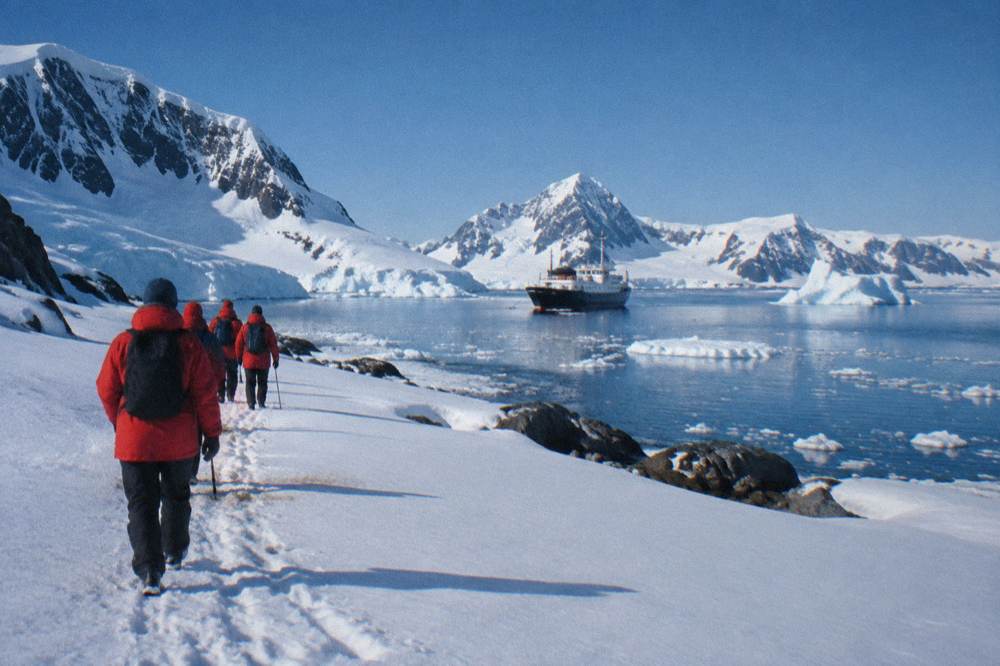
The flight day itself is short and unglamorous. Two hours in a charter aircraft, a landing on gravel at Teniente R. Marsh, a short transfer to the shore, and a Zodiac ride to the ship. From that point the product is a standard small-ship expedition cruise: landings limited to 100 passengers ashore at a time under IAATO rules, a one-to-twenty guide-to-visitor ratio, and only one vessel at a landing site at any given time. The Magellan Explorer's small guest count of 88 means the whole ship can land together within the rules, which is one of the quiet advantages of the fly-cruise fleet.
The return works in mirror image. The ship positions back to King George Island, the group flies to Punta Arenas, and the itinerary usually builds in a buffer day on the way home, because the same weather that delayed your outbound flight can delay the return. This is the structural difference from a sailing voyage: a Ushuaia round-trip ends where it started, on schedule, because the ship is the schedule. A fly-cruise's bookends are two flights that the continent gets a vote on.
Insurance requirements are worth flagging here. Operators impose high medical evacuation minimums on Antarctic trips, with a $250,000 minimum reported for Ponant by a specialist insurance comparison, plus full trip-cost cancellation cover. That last part matters more on a fly-cruise, where a weather-driven itinerary change is a documented possibility rather than a remote one. Our guide to Antarctica travel insurance covers the requirements in detail.
When A Fly-Cruise Is The Wrong Choice
A fly-cruise is the wrong product if you want the cheapest fare per day, if you want the classic rite-of-passage crossing of the Drake Passage, or if your dates fall in the shoulder edges of the season when flight cancellation risk runs highest. It is also wrong for travellers who want a long itinerary, because the model is built around short, compressed trips rather than 19 to 23-day voyages that include South Georgia and the Falklands.
Start with the money, since it is the most common deal-breaker. The entry fare gap between the cheapest sailing departure on the roster and the Magellan Explorer's air-cruise is real, and it widens with cabin category. Early-booking offers across the industry commonly reach 10 to 30 percent off, and select unsold sailings have seen steeper reductions, but those discounts apply to both models, so the gap tends to survive the promotions. If your budget is fixed and your appetite for the Drake is neutral, the sailing voyage buys you more Antarctica per dollar, full stop.
Then there is the experience question, which no fare table can settle. The Drake Passage crossing is two days of albatrosses, petrels, lectures and open Southern Ocean each way, and a meaningful share of Antarctica travellers describe it as part of the point rather than the price. One reported fast crossing with following winds took about a day instead of two, with a maximum wave of 11 feet, which is the pleasant end of a spectrum that also includes 50-knot gales. You cannot know in advance which you will get, and if that uncertainty reads as adventure rather than risk, the fly-cruise deletes something you would have valued.
Finally, the season edges. Fly-cruise operations concentrate on November through early March, and the shoulder weeks at each end carry the highest weather-delay odds, since spring and autumn systems are more volatile over the Strait of Magellan and the South Shetlands. Midsummer departures are the most flight-reliable and also the most expensive and earliest to sell out. If your only workable dates sit in the first or last fortnight of the season, ask specifically about the operator's delay and refund policy before booking anything.
Common Questions About Flying Over Antarctica
Why Can't You Fly Over Antarctica Today?
Because no mainstream sightseeing overflight product exists: there are no scheduled passenger routes across the continent, no tourist air infrastructure beyond one gravel airstrip on King George Island, and weather unreliable enough that even national Antarctic programs treat flights as flexible events. The only mainstream tourist flight is the fly-cruise charter, a roughly two-hour hop from Punta Arenas that connects to an expedition cruise.
Can You Fly To Antarctica Without Taking A Cruise?
Not through any mainstream commercial product. The fly-cruise charter flight to King George Island is only sold as part of a cruise package, and deep-field air tourism, which passed 1,000 participants in 2025-26 for the first time, is a specialist adventure-travel category rather than a bookable tourist flight.
Why Did Sightseeing Flights Over Antarctica Stop?
Scheduled sightseeing overflights from New Zealand and Australia ended after an Air New Zealand flight struck Mount Erebus in whiteout conditions, killing everyone aboard. No operator has since built a replacement product, and the current IAATO framework governs ship and landing-based tourism rather than commercial overflights.
Is The Fly-Cruise Flight Safe?
The charter flights use experienced polar operators flying a short, well-travelled route between Punta Arenas and King George Island, a route also used by national Antarctic programs. The main risk is not safety but delay: weather at either end can postpone the flight, which is why operators build buffer days and require passengers to arrive a day early.
How Much Does A Fly-Cruise Cost Compared With Sailing?
Roster fares for the 2026-27 season start from $13,795 per person for the Magellan Explorer's 8-day Classic Antarctica air-cruise, while sailing expedition cruises from Ushuaia start from $7,050 per person for 10 to 12-day voyages that include the Drake crossing. The fly-cruise premium for skipping the Drake is commonly cited at roughly $2,000 to $5,000 over a comparable sailing voyage.
Do You Still See The Drake Passage On A Fly-Cruise?
No. The roughly two-hour charter flight from Punta Arenas to King George Island bypasses the passage entirely in both directions, eliminating up to four days of sea transit. Some operators offer sail-and-fly hybrids that cross by ship one way and fly the other, halving the open-ocean exposure while keeping a taste of the classic crossing.