G Adventures Antarctica: The Expedition Ship And Budget-Minded Voyages
 By Oleg G.
G Adventures runs budget-friendly Antarctic Peninsula voyages on one chartered ship, with fares that anchor the value end of the market.
Quick answer: G Adventures sails Antarctica on the 128-passenger Expedition, a 1976-built ship with Ice Class 1A, on 11- and 14-day itineraries from Ushuaia from $7,439 per person. The fare includes a hotel night in Ushuaia, meals aboard and Zodiac excursions; flights, drinks and tips are extra.
Who Is G Adventures And What Do They Offer In Antarctica?
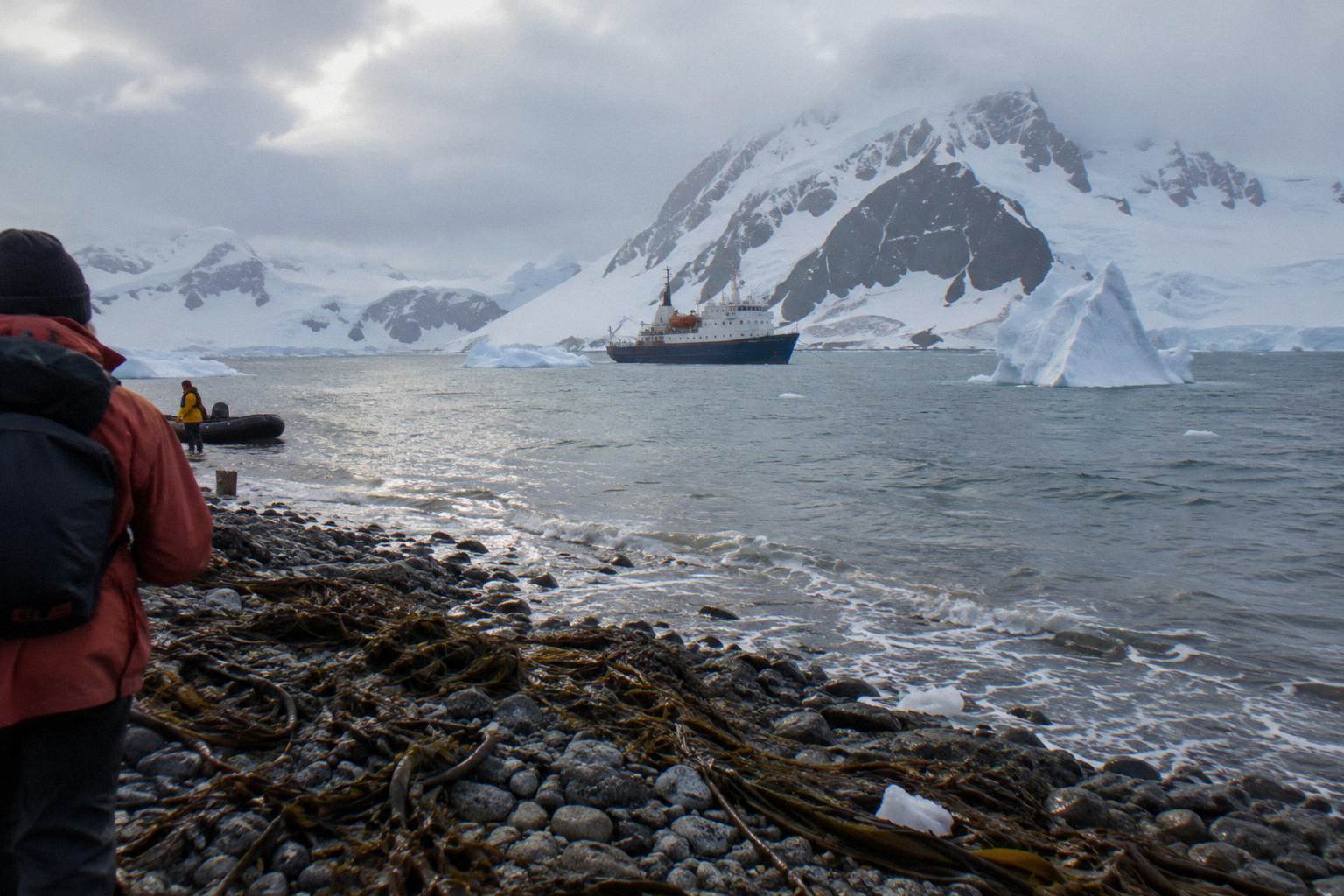
G Adventures is a Canadian small-group adventure travel company founded in 1990 that runs budget-minded expedition voyages to the Antarctic Peninsula on a single chartered ship, the 128-passenger Expedition, with fares from $7,439 per person for the 2026-27 season. The Toronto-based operator is an IAATO member and positions its Antarctic product firmly at the accessible end of the market: classic Peninsula itineraries rather than luxury trappings. The ship is chartered from SunStone and was formerly known as Ocean Adventurer before being renamed Expedition for the 2025-26 season; 2026-27 is its second season under the G Adventures banner. The pitch is simple and consistent, a genuine expedition cruise with Zodiac landings, expert guides and a sociable onboard atmosphere, at a price point well below the upscale lines.
For a buyer comparing operators, the useful frame is what G Adventures does not pretend to be. It is not a luxury product and does not market itself as one. The operator's Antarctica pages emphasise small-ship landings, citizen science and a communal travel style over suites, spas or included drinks. If your shortlist is Oceanwide's Plancius or Ortelius versus the Expedition, you are comparing three vessels that all sit in the small-ship budget class, and the differences come down to ship age, cabin types and activity inclusions rather than any fundamental difference in the landing experience itself.
Whether that appeals depends on the traveller. Some people want a quiet ship with a library and a spa; others want the shared-briefing energy of a group tour. G Adventures markets the second, with a sociable atmosphere as part of the pitch.
What Ship Does G Adventures Sail To Antarctica?
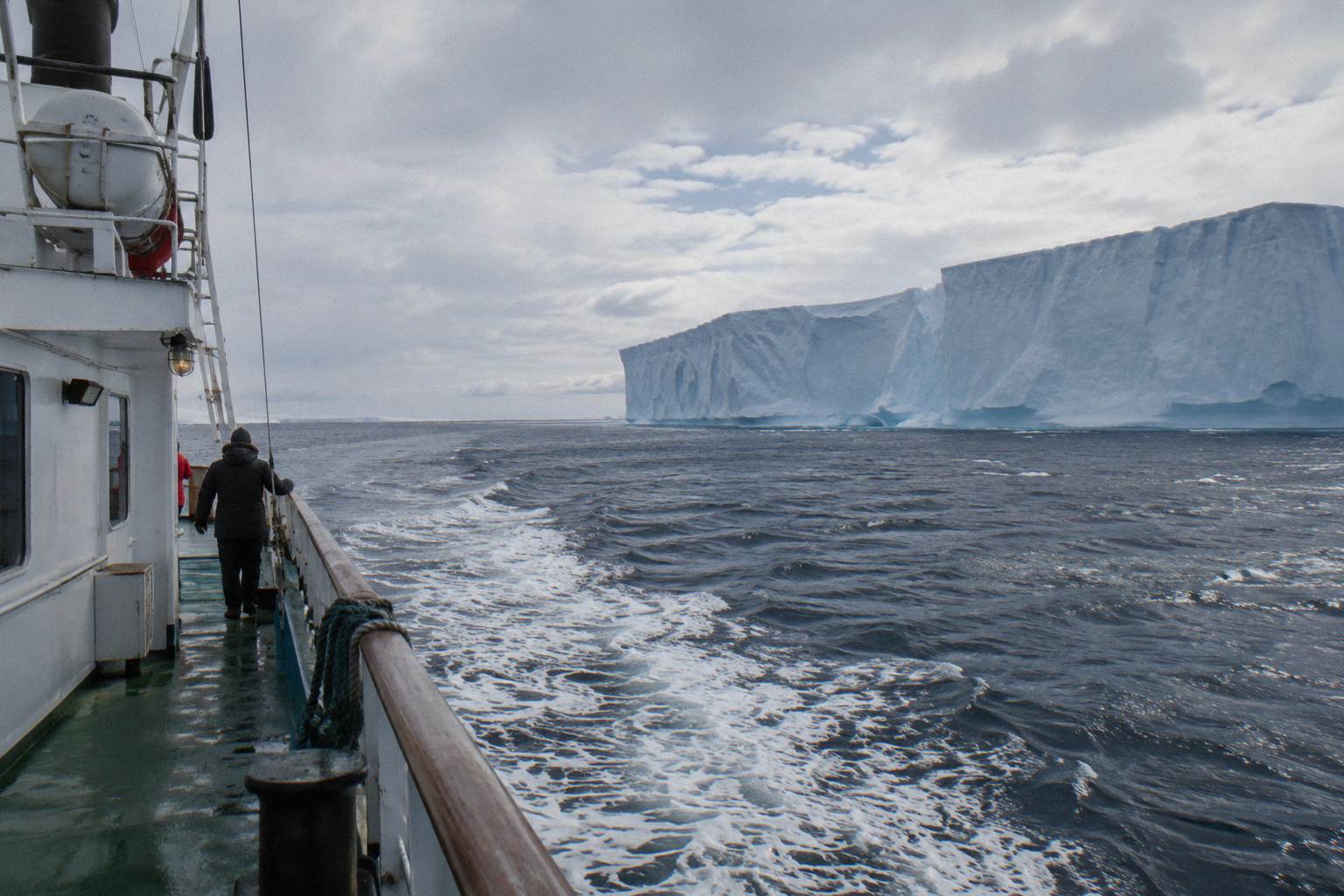
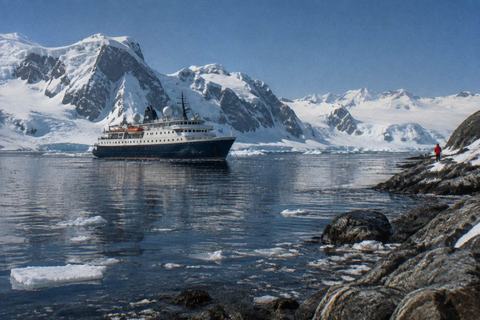
G Adventures sails Antarctica aboard a single vessel: the Expedition, a 128-passenger ship built in 1976 and holding an Ice Class 1A rating. From the port of Ushuaia, Argentina, the ship operates 11- and 14-day Antarctica itineraries, with fares starting at $7,439 per person for a voyage to the White Continent. The ship's age is worth knowing about. A 1976 build is the oldest in the budget tier alongside Oceanwide's Plancius (also 1976) and Ortelius (1989), and the ice class matters more than the build year: Ice Class 1A means the hull is reinforced for difficult first-year ice, the same class family that Oceanwide cites for its fleet. The operator does not publish cabin counts or detailed cabin categories for the Expedition on its main pages, so if a specific cabin type matters to you, that is a question for a consultation rather than something to assume from the listing.
The ship carries Zodiacs for landings and an expedition team of guides, which is the core of the product. G Adventures does not publish its expedition team size or guide-to-guest ratio; IAATO requires a minimum 1:20 staff-to-visitor ratio ashore on landings, and all IAATO operators work within that floor. At 128 passengers the ship sits comfortably inside the IAATO C1 category (13 to 200 passengers), which means landings are permitted, with no more than 100 guests ashore at a site at any one time and rotations used when the full complement cannot land together.
The operator does not publish a list of onboard amenities for the Expedition, so do not assume a pool, spa or theatre. That is the trade the fare makes: you pay for the destination, not the vessel.
How Does The Expedition Compare With Its Budget-Tier Rivals?
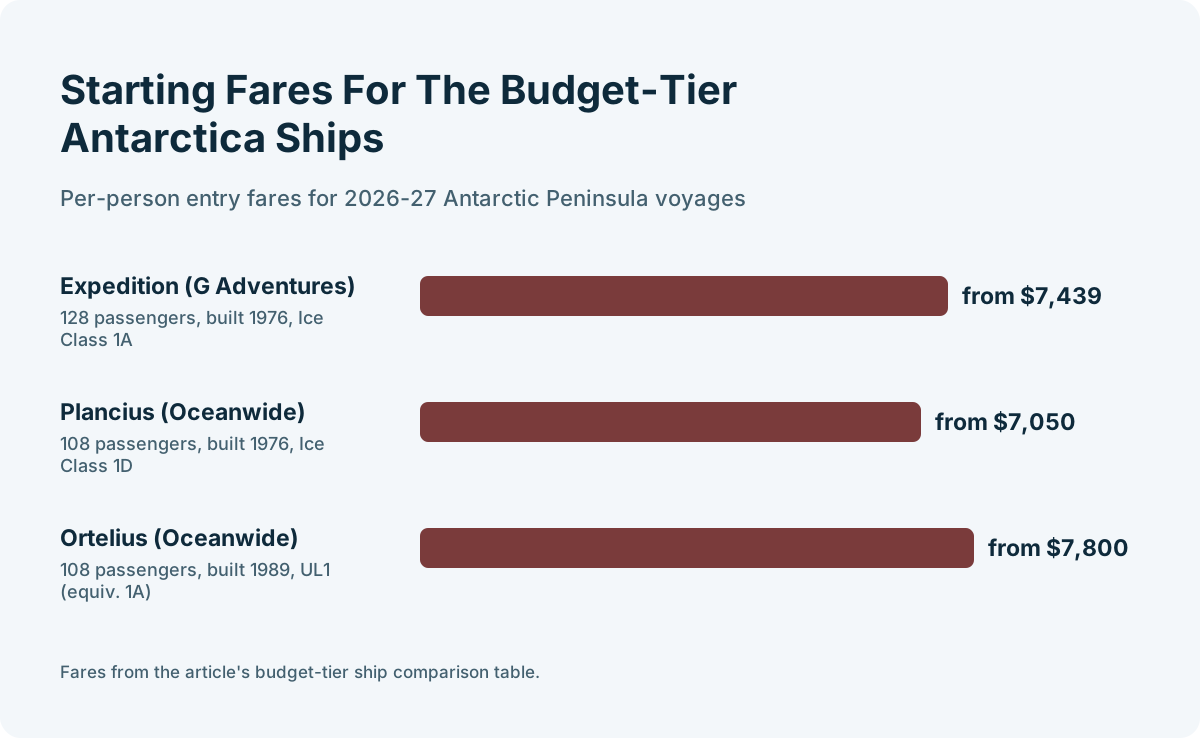
The Expedition competes directly with Oceanwide's Plancius and Ortelius, and the honest comparison shows Plancius with the lowest fare, Ortelius and the Expedition both rated at or equivalent to Ice Class 1A, and the Expedition with the largest passenger count. The natural comparison set is the small-ship budget tier, the three workhorses of the Peninsula that anchor the bottom of the market. The table below sets out the published figures for the three ships.
| Ship | Operator | Passengers | Built | Ice Class | Length | From price (pp) |
|---|---|---|---|---|---|---|
| Expedition | G Adventures | 128 | 1976 | Ice Class 1A | not published | from $7,439 |
| Plancius | Oceanwide Expeditions | 108 | 1976 | 1D | 89 m | from $7,050 |
| Ortelius | Oceanwide Expeditions | 108 | 1989 | UL1 (equiv. 1A) | 90.95 m | from $7,800 |
Plancius carries fewer passengers (108 versus 128) and edges the lowest fare, while Ortelius, rated UL1 (equivalent to 1A), is the ship Oceanwide uses for helicopter-accessed Weddell Sea voyages. The Expedition's selling points are the G Adventures brand experience: a sociable small-group atmosphere and a citizen science program run with the Polar Citizen Science Collective. If you want a deeper look at the Oceanwide pair, our Plancius vs Expedition comparison breaks down the differences, and the Hondius vs Ortelius guide covers Oceanwide's larger ship against the same stablemate.
A second way to slice the comparison is by what the base fare buys you. The table below summarises the published inclusion positions of the two operators.
| Item | G Adventures | Oceanwide |
|---|---|---|
| Parka | Included, kept | Not stated as included on ship page |
| Boots | Loaned | Loaned on Basecamp-style products |
| Hotel night before cruise | Included in Ushuaia | Not stated on ship page |
| Suggested tips | $10-15 per day | 10-15 EUR/USD per day |
| Kayaking | Add-on, about $1,099 | Free on Basecamp voyages |
| Camping | Add-on, about $399 | Free on Basecamp voyages |
The pattern is clear: Oceanwide bundles the adventure activities on its Basecamp departures, while G Adventures charges for them. If kayaking or camping is central to your trip, that difference can be worth several hundred dollars and should be priced into any quote comparison.
One practical point that the from-prices hide is cabin configuration. G Adventures does not publish the Expedition's cabin categories on its main pages, while Oceanwide's lowest per-berth prices come from quad and triple cabins. If you plan to book a twin rather than share with strangers, the gap between the operators can shift, and it is worth requesting a twin-specific quote from each before deciding.
A third consideration is the style of the voyage rather than the sticker price. The Expedition runs a program built around its expedition team and the citizen science partnership, and G Adventures positions the ship for travellers who want a social, group-oriented trip. Oceanwide's Basecamp sailings, by contrast, build free kayaking and camping into the voyage. If your priority is meeting people and joining a structured program, the Expedition fits well. If your priority is maximum time on the water and in the field, the Oceanwide pair has the stronger claim, and the inclusions table above is the deciding factor rather than the base fare.
Finally, note that all three ships are older vessels. The Expedition and Plancius both date to 1976, and Ortelius to 1989, so none offers the modern hardware of the newest polar ships. What you give up in contemporary design you gain in fare, and for many Peninsula itineraries the trade is a reasonable one.
What Itineraries And Prices Does G Adventures Run In 2026-27?
G Adventures runs two Antarctic products: the 11-day Antarctica Classic from Ushuaia from $7,439 per person, and a longer 13-day "in Depth" variant, with kayaking and camping available as paid add-ons on top of the base fare. The Classic itinerary sails roundtrip from Ushuaia, crosses the Drake Passage both ways and makes Zodiac landings on the Antarctic Peninsula when conditions allow. Longer voyages of up to 14 days are also listed for the ship. Sample November 2026 pricing showed the 13-day Classic in Depth from about $7,279 on sale, and the operator ran a 35% promotion on a November 2026 departure, so fares move with promotions and shoulder-season timing.
For context, entry-level berths across the Drake-crossing budget tier generally run $7,500 to $8,995 per person in shared twin or triple cabins, and November and March shoulder departures price well below the December-January peak. G Adventures' fares sit right at the bottom of that band. What you give up at that price is ship modernity and cabin space; what you keep is the landing experience itself, which is regulated identically across all IAATO operators: no more than 100 passengers ashore at a time and a minimum 1:20 guide ratio.
The month-by-month picture across the whole market is worth knowing when you pick a departure date. Shoulder months price lowest and peak months carry a premium, as the table below shows with real 2026-27 examples.
| Month | Example departure | Sample fare (pp) |
|---|---|---|
| November | G Adventures Expedition, 13-day | about $7,279 |
| November | Ocean Nova, 11-day | about $8,463 |
| December | Polar Latitudes Discoverer, 12-day | about $9,937 |
| January | G Adventures Expedition, 11-day | about $8,024 |
| February | Silversea Silver Cloud, 11-day | about $15,400 |
| March | Oceanwide Hondius, 11-day | about $6,900 |
What Does The Fare Include And Exclude?
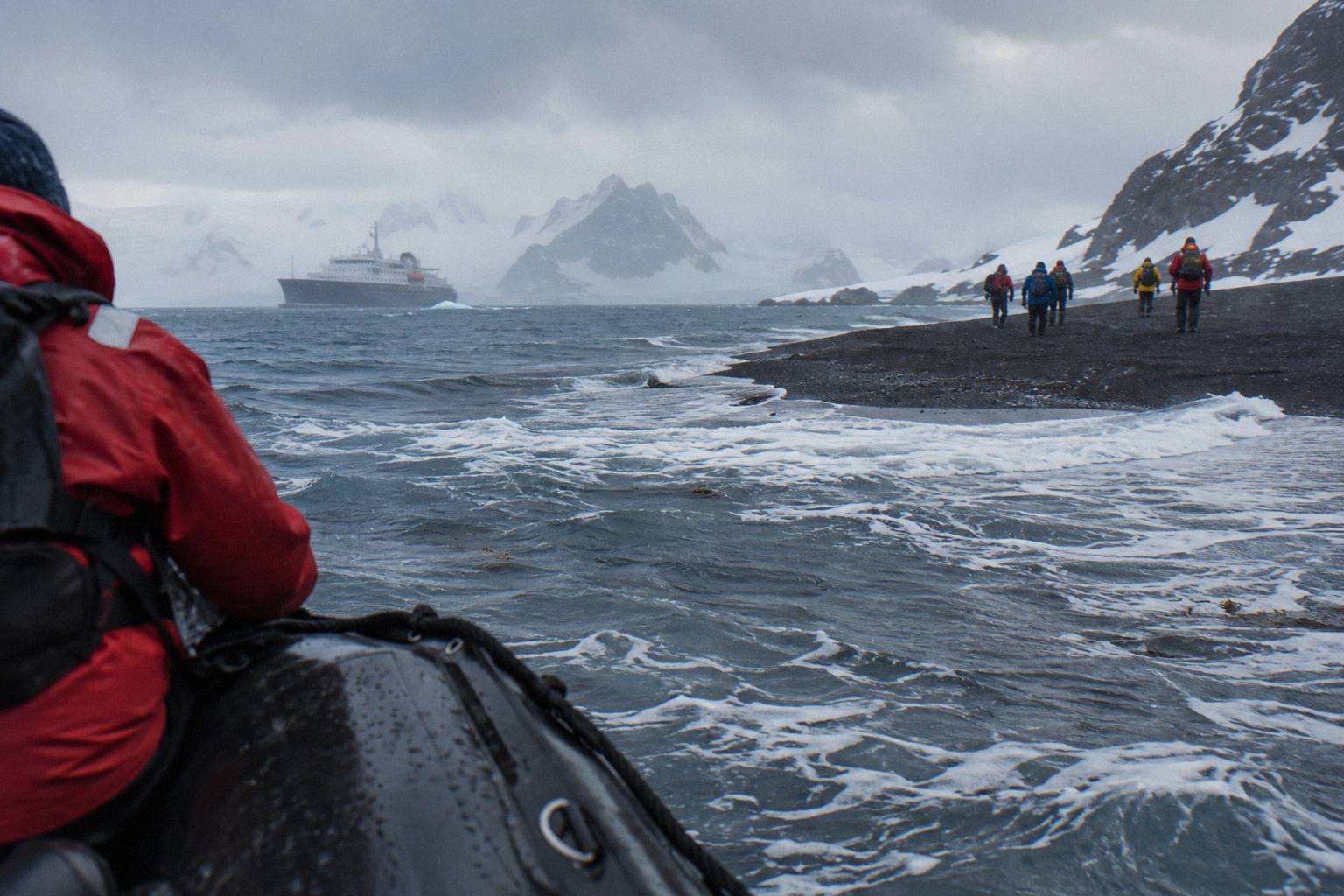
The fare includes a pre-cruise hotel night in Ushuaia, transfers, all meals aboard, Zodiac excursions, lectures, a loaned pair of boots and an expedition parka you keep; flights, drinks, tips and optional activities cost extra, and insurance is never in the base fare. The parka-and-boots pattern is standard across the budget tier: Oceanwide similarly suggests gratuities of 10-15 EUR/USD per passenger per day as a blanket contribution, while its Basecamp voyages bundle camping, kayaking and snowshoeing at no extra charge. G Adventures charges its adventure options separately, with kayaking around $1,099 and camping around $399 per person, so an active traveller should budget those on top of the base fare. Alcohol and tips of roughly $10-15 per day suggested are also outside the fare.
Insurance deserves a line of its own. Full travel insurance with medical evacuation coverage is required or strongly recommended by Antarctic operators and is never in the base fare; operator minimums for evacuation cover vary, typically from US$100,000 to $500,000 per person. Factor roughly $200 to $500 for a policy with the required coverage, and confirm G Adventures' own minimum before you buy a policy. The rest of the planning pages sit on Cruises In Antarctica.
A realistic all-in budget matters more than the headline fare. One 2026 cost guide reports that a realistic budget for a 10- to 12-day mid-range Peninsula trip, covering fare, flights, gear, tips and insurance, lands between $12,000 and $25,000 per person. The cruise fare is only the largest line of several.
If you are weighing whether the add-ons and inclusions stack up against other budget lines, a free consultation on the right cabin can compare two quotes line by line, including single-supplement policies and activity fees.
What Are The Distinctive Features Of The G Adventures Product?
G Adventures stands out through three defining features: Zodiac landings twice daily from a small expedition ship, a structured citizen science program that invites passengers to take part in real research projects, and a sociable group atmosphere. The operator's own materials point to these as the reasons to choose it. First, the small-ship format supports twice-daily landings weather permitting, the same operational reality every sub-200-passenger IAATO vessel enjoys. Second, the citizen science partnership with the Polar Citizen Science Collective gives guests structured participation in real research projects, a feature G Adventures shares with Intrepid's Antarctic program. Third, the atmosphere: the operator markets a sociable onboard style, which matters if onboard company is part of the trip for you.
The Expedition is not the ship for helicopter flights, submarines or spa days; none of those exist on this vessel. It is a straightforward expedition platform, closer in spirit to Plancius than to Quark's Ultramarine. Anyone choosing between the two should ask which matters more: the newer tonnage and helicopters of the upscale lines, or the several thousand dollars saved by sailing the older ship.
Who Should Choose G Adventures And Who Should Look Elsewhere?
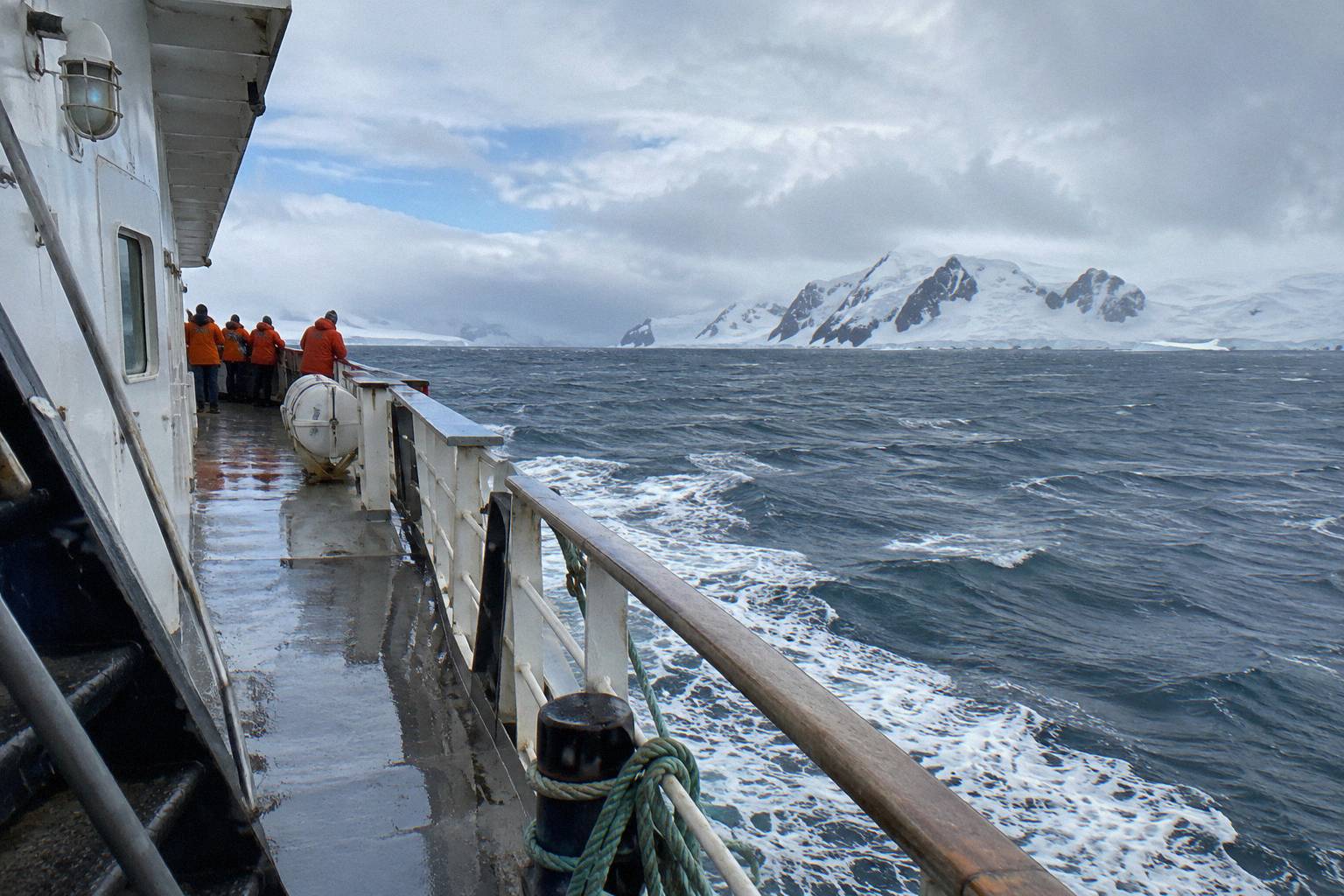
G Adventures suits budget-conscious travellers who want twice-daily landings when weather allows, a social onboard vibe and the lowest realistic entry price to Antarctic landings; it suits luxury travellers and activity maximalists less well, and the honest caveats are an old ship and unpublished policies. Choose it if the priority is getting ashore in Antarctica for the least money with a reputable IAATO operator, and if a sociable group atmosphere appeals. Look elsewhere if you want a modern ship, balconies or included drinks: Atlas Ocean Voyages and HX offer newer tonnage, and Oceanwide's Basecamp voyages bundle the adventure activities that G Adventures charges extra for.
Solo travellers should note that G Adventures waives the single supplement when you share a twin or triple with a same-gender traveller, a genuinely useful policy at this price point. Typical single supplements across the market run 25 to 100% of the twin fare, so the sharing option can save over a thousand dollars. Oceanwide also offers shared-cabin options for solo travellers, so the budget tier has real options for people travelling alone.
The honest caveats: the ship is old, the operator does not publish minimum age, solo-supplement percentages or detailed cabin specs on its main pages, and its 2026-27 schedule has been reported by third parties rather than confirmed on an operator schedule page. If any of those gaps is a dealbreaker, say so when you ask for a quote.
What Has Changed Recently With The Operator?
G Adventures relaunched its Antarctic program aboard the revamped Expedition ship for the 2025-26 season, and 2026-27 marks its second season in this configuration. Beyond that ship-specific update, the wider industry context remains unchanged in its fundamentals, so recent changes center on the operator's own vessel refresh rather than any broader shift. The former Ocean Adventurer was chartered from SunStone and renamed, and the operator's Antarctic operation remains a single-ship product. The operator is an IAATO member in good standing, and the regulatory frame is the same as everyone else's: IAATO recorded 113,518 total Antarctic visitors in the 2025-26 season, with 85,195 landed, and IAATO introduced a new voluntary geofenced whale area with a 10-knot speed restriction near the South Orkney Islands starting with the 2026-27 season.
None of this changes the product materially; it confirms the operator is operating inside the same regulatory frame as everyone else, and that the landing experience is standardised by IAATO rules rather than by brand.
How Does Booking Work And What Should You Ask About?
Booking works the standard polar way: you pay a deposit when you reserve, settle the balance before departure, and face cancellation penalties that grow steeper as the sailing date approaches. Before you commit, ask three questions: how large the deposit is, when the final balance falls due, and what the cancellation penalties will cost you at each stage. G Adventures does not publish its deposit and cancellation terms on its main pages, so get them in writing. Booking 12 to 18 months ahead is the usual advice for peak sailings, and shoulder dates in November and March offer both lower fares and more open berths.
Questions worth asking before you commit: the exact cabin category and its size, whether kayaking or camping berths remain available on your date, and the insurance minimums the operator will enforce. A chat with a polar cruise specialist costs nothing and will surface these details before any money changes hands.
| Ship | Class | Passengers | Ice class | From, per person | Voyage length | Departs from |
|---|---|---|---|---|---|---|
| Expedition (G Adventures)G Adventures | Small-Ship Budget | 128 | Ice Class 1A | from $7,439 | 11 to 14 days | Ushuaia |
| PlanciusOceanwide Expeditions | Small-Ship Budget | 108 | 1D | from $7,050 | 10 to 33 days | Ushuaia |
| OrteliusOceanwide Expeditions | Small-Ship Budget | 108 | UL1 | from $7,800 | 11 to 25 days | Ushuaia |
Common Questions About G Adventures Antarctica
How much does a G Adventures Antarctica cruise cost?
The 11-day Antarctica Classic starts from $7,439 per person, with sale fares on the 13-day variant observed around $7,279. Optional kayaking (about $1,099) and camping (about $399) cost extra, as do flights, drinks and tips.
What ship does G Adventures use in Antarctica?
The Expedition, a 128-passenger vessel built in 1976 with Ice Class 1A, chartered from SunStone. It was formerly the Ocean Adventurer and was renamed for the 2025-26 season.
Does G Adventures waive the single supplement?
Yes, when a solo traveller shares a twin or triple cabin with another same-gender traveller there is no single supplement. Booking a cabin alone incurs the standard supplement.
What is included in the fare?
A hotel night in Ushuaia, transfers, meals aboard, Zodiac excursions, lectures, loaned boots and a kept expedition parka. Flights, alcohol, tips, insurance and optional activities are excluded.
Is G Adventures a good choice for Antarctica?
It is among the lower-priced IAATO operators, with a sociable atmosphere. Travellers wanting modern ships, balconies or bundled adventure activities may prefer Oceanwide's Basecamp voyages or newer upscale lines.
Does G Adventures have a minimum age for Antarctica?
The operator does not publish a minimum age for its Antarctic voyages on its main pages; confirm the current policy before booking.
More Ship And Line Guides
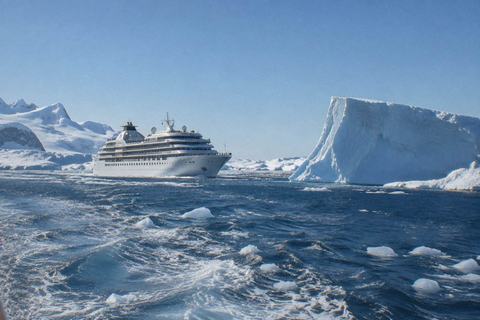 Mainstream LinesBig-brand Antarctica cruises sail past but never land; here is why, and what to book instead.Read the guide
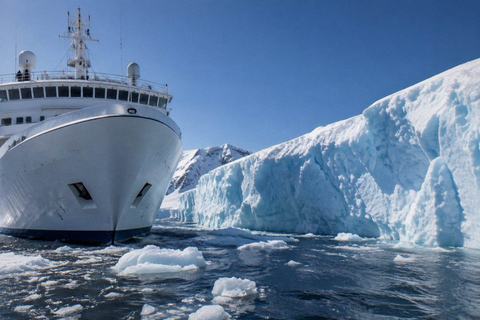 Viking AntarcticaViking Octantis and Polaris explained: specs, itineraries, fares and how they compare.Read the guide
 Silversea AntarcticaSilversea's three Antarctic ships, their voyages and how they compare with rival luxury lines.Read the guide
 Seabourn AntarcticaSeabourn's two expedition ships in Antarctica: what is verified, what is not, and how they compare.Read the guide